


Introduction: Why Plastic Compounding is Becoming a Strategic Investment Area
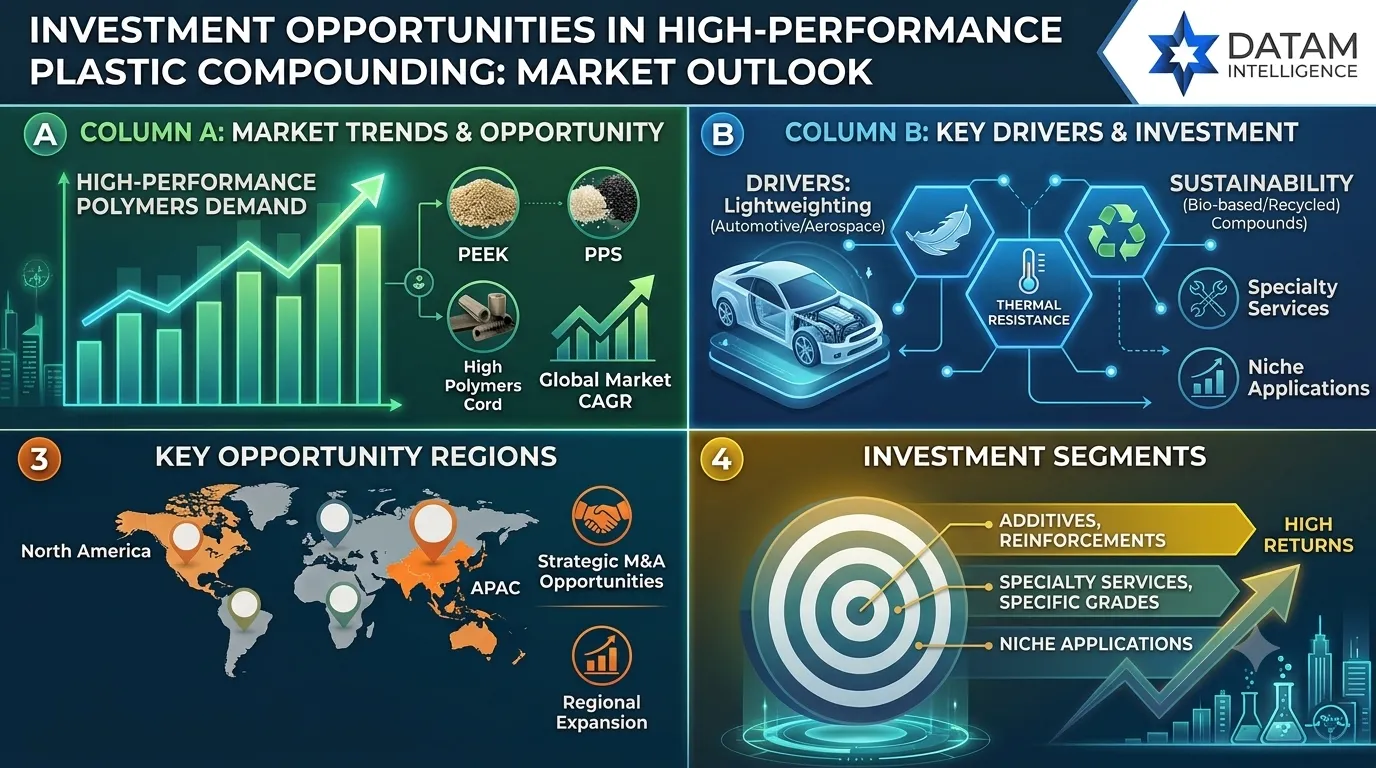
The global plastic compounding market is undergoing a significant transformation, driven by rising demand for lightweight, durable, and high-performance materials across industries. High-performance plastic compounding particularly engineering plastics, thermoplastic compounds, and specialty polymer blends is now a core enabler of innovation in automotive, electronics, healthcare, aerospace, and packaging sectors.
As industries shift toward electrification, miniaturization, and sustainability, compounded plastics are becoming critical in replacing traditional metals and reducing total system costs. This creates a compelling investment landscape for 2026 and beyond.
For investors, B2B manufacturers, and material science innovators, the sector presents a high-growth opportunity aligned with circular economy goals and advanced manufacturing trends.
Market Overview: High-Performance Plastic Compounding Landscape
High-performance plastic compounding involves blending base polymers with additives, reinforcements, fillers, and modifiers to achieve enhanced mechanical, thermal, and chemical properties.
Key material categories include:
- Engineering plastics (e.g., PA, PC, PBT, PET blends)
- High-performance thermoplastics (PEEK, PPS, PSU)
- Masterbatch systems (color, additive, and functional masterbatches)
- Recycled polymer compounds (mechanically and chemically recycled resins)
The demand is strongly influenced by:
- Electrification of vehicles (EV battery components, lightweight interiors)
- 5G and semiconductor expansion
- Medical-grade polymer applications
- Circular economy and regulatory pressure on plastic waste reduction
Need Insights Aligned with Your Exact Business Goals?
Request for Plastic Compounding Market report.
Key Growth Drivers Fueling Market Expansion
1. Automotive Lightweighting & EV Revolution
The shift toward electric vehicles is accelerating the use of lightweight polymer compounds to improve energy efficiency and battery range. High-performance plastics are replacing metal components in:
- Battery housings
- Interior structural parts
- Thermal management systems
This trend significantly increases demand for engineered polymer compounds.
2. Electronics & Electrical Miniaturization
The electronics industry requires materials with high thermal stability, flame resistance, and electrical insulation. Plastic compounding enables:
- Compact device design
- Heat-resistant connectors
- Durable semiconductor housings
This is a key driver for specialty compounds and advanced masterbatches.
3. Sustainability & Circular Economy Adoption
Recycled plastic compounding is gaining strong traction as manufacturers prioritize ESG compliance. Investments are increasing in:
- Mechanical recycling compounding lines
- Chemical recycling integration
- Bio-based polymer blends
This segment is expected to be one of the fastest-growing areas in the industry.
4. Healthcare & Medical Device Growth
High-performance plastics are increasingly used in:
- Surgical instruments
- Diagnostic devices
- Drug delivery systems
Their sterilization resistance and biocompatibility make them essential in modern healthcare manufacturing.
Request Sample Report
Gain early access to key trends in the plastic compounding market.
Investment Opportunities in 2026 Outlook
The 2026 outlook for the high-performance plastic compounding market reflects a strong structural growth trajectory driven by advanced material innovation, sustainability mandates, and expanding end-use applications across automotive, electronics, packaging, and industrial manufacturing. Investors are increasingly focusing on scalable technologies, circular economy models, and high-margin specialty segments that offer long-term competitive advantage and stable cash flow generation.
1. Advanced Compounding Technologies
Investment in advanced compounding technologies is creating significant value creation opportunities as manufacturers shift toward precision-engineered and high-performance material systems. Technologies such as twin-screw extrusion, reactive extrusion, and nanocomposite compounding are enabling superior material customization, efficiency, and functional performance.
Key Investment Highlights:
- Twin-screw extrusion systems enable high-efficiency mixing and scalable production of complex polymer formulations
- Reactive extrusion supports in-situ polymer modification, improving thermal, mechanical, and chemical properties
- Nanocomposite compounding (graphene, CNTs, nanoclays) delivers ultra-lightweight and high-strength materials
- High demand from EVs, aerospace, and advanced electronics enhances ROI potential
- Strong differentiation through R&D-driven material innovation and formulation expertise
2. Recycling-Based Compounding Facilities
Recycling-integrated compounding facilities are becoming a core investment theme as global regulatory frameworks and ESG mandates intensify. Closed-loop systems are increasingly being adopted to convert post-industrial and post-consumer waste into high-quality engineered compounds.
Key Investment Highlights:
- Closed-loop recycling systems ensure material recovery and reintegration into manufacturing cycles
- Alignment with EPR (Extended Producer Responsibility) regulations strengthens market compliance positioning
- Rising demand from OEMs for recycled-content materials in automotive and packaging
- Stable long-term contracts driven by ESG commitments and sustainability reporting requirements
- Growth in both mechanical and chemical recycling integration within compounding plants
3. Specialty Masterbatch Production
Specialty masterbatch production represents a high-margin, innovation-led segment within the plastic compounding value chain. It is driven by increasing demand for customized functional additives, color solutions, and performance-enhancing formulations across multiple industries.
Key Investment Highlights:
- High-margin product category with strong pricing power and customization value
- Critical applications in EV interiors, electronics housings, and medical devices
- Functional masterbatches enhance flame retardancy, UV resistance, and thermal stability
- Strong switching costs due to application validation and formulation dependency
- Lower raw material intensity compared to bulk polymer compounding
4. Bio-Based Polymer Compounding
Bio-based and biodegradable polymer compounding is gaining momentum as sustainability transitions shift from optional to mandatory compliance. This segment is expected to see accelerated adoption across packaging, consumer goods, and regulated industries.
Key Investment Highlights:
- Growth in PLA, PHA, and starch-based polymer blends for sustainable applications
- Increasing adoption in food packaging and single-use consumer products
- Regulatory push for plastic reduction and compostable material usage
- Long-term upside supported by carbon credits and ESG-driven incentives
- Ongoing improvements in cost competitiveness and scalability
5. Regional Expansion in Asia-Pacific
Asia-Pacific remains the dominant global hub for plastic compounding, offering strong manufacturing capabilities, cost advantages, and proximity to fast-growing end-use industries.
Key Investment Highlights:
- India emerging as a high-growth hub due to manufacturing incentives and policy support
- China maintains leadership in scale, infrastructure, and advanced material production
- Southeast Asia gaining traction as a diversification hub for global supply chains
- Strong demand from automotive, electronics, and construction sectors
- Attractive environment for joint ventures, greenfield investments, and capacity expansion
Strategic Outlook
Overall, the 2026 investment landscape in high-performance plastic compounding is defined by technology-led differentiation, sustainability integration, and geographic expansion. Investors focusing on advanced extrusion technologies, recycling infrastructure, and high-margin specialty compounds are positioned to capture the most resilient and scalable growth opportunities in the sector.
Competitive Landscape & Strategic Positioning
The market includes a mix of global polymer giants and specialized compounders focusing on niche applications. Competitive advantage is increasingly defined by:
- R&D capability in advanced materials
- Vertical integration with recycling systems
- Application-specific formulation expertise
- ESG compliance and carbon footprint reduction
Companies that can combine material innovation with sustainability will lead the next growth cycle.
Key Challenges for Investors
Despite strong growth potential, the market faces several challenges:
- Volatility in raw material prices (crude oil dependency)
- High capital expenditure for advanced compounding facilities
- Regulatory uncertainty in plastic usage and recycling
- Technical complexity in developing high-performance formulations
However, these challenges also create barriers to entry, protecting established and innovative players.
Future Outlook (2026 and Beyond)
The high-performance plastic compounding market is expected to witness sustained expansion as industries continue transitioning toward lightweight, sustainable, and high-efficiency materials.
Key future trends include:
- Increased adoption of AI-driven material design
- Expansion of chemical recycling integration
- Growth in electric mobility applications
- Rising demand for ultra-high-performance polymers (UHPPs)
Conclusion: Strategic Investment Timing is Critical
The high-performance plastic compounding market represents a strong long-term investment opportunity driven by structural demand shifts across multiple industries. Investors, manufacturers, and startups that position themselves early in advanced compounding technologies, recycling systems, and specialty applications are likely to capture significant market share by 2026.
For stakeholders seeking exposure to advanced materials, this market offers a compelling mix of growth, innovation, and sustainability alignment.