


Introduction
Had coffee in the evening and now cannot sleep? Tried a natural energy drink before a workout and suddenly felt shaky? Or switched from regular coffee to matcha, guarana, or yerba mate and wondered whether “natural caffeine” stays in your body longer?
Caffeine may feel like a quick boost, but it can remain active in the body for several hours. For many people, it improves alertness, focus, and energy. For others, especially when consumed late in the day or in high amounts, it can lead to jitters, anxiety, fast heartbeat, upset stomach, and poor sleep.
The question “how long does caffeine stay in your body?” does not have one identical answer for everyone. It depends on how much caffeine you consume, when you consume it, your metabolism, genetics, health status, medications, pregnancy status, and whether you are sensitive to stimulants.
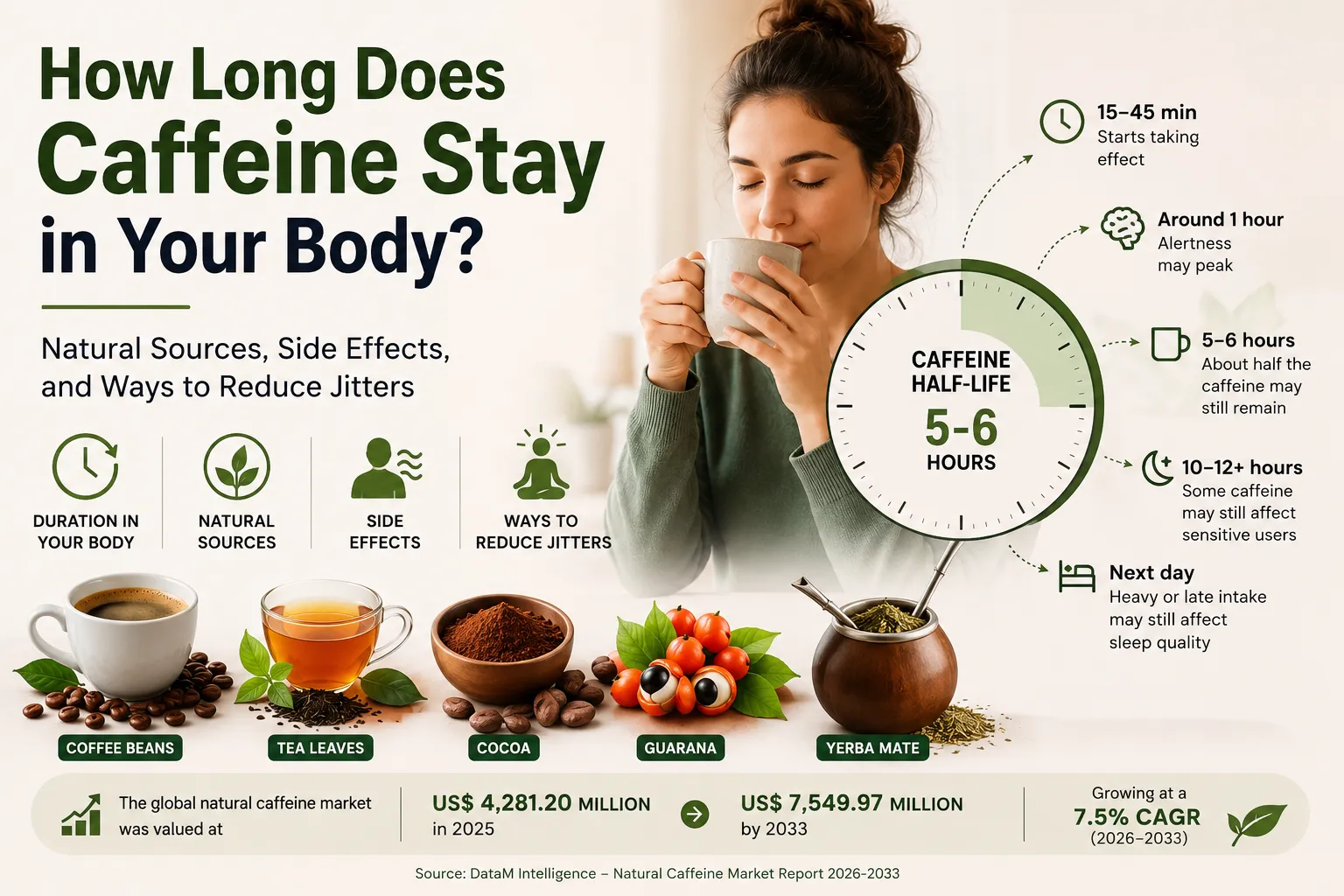
At the same time, caffeine is no longer limited to a morning cup of coffee. It is now found in cold brew, RTD tea, matcha drinks, guarana-based beverages, yerba mate, functional water, sports nutrition products, supplements, chocolate snacks, and even some personal care products. As consumers look for cleaner labels and plant-based energy, natural caffeine has become an important ingredient across the food, beverage, supplement, pharmaceutical, and cosmetics industries. DataM Intelligence reports that the global natural caffeine market reached US$4,281.20 million in 2025 and is expected to reach US$7,549.97 million by 2033, growing at a 7.5% CAGR during 2026–2033.
Request for Exclusive Sample of Global Natural Caffeine Market
What Happens When You Consume Caffeine?
Caffeine is a natural stimulant found in several plant sources, including coffee beans, tea leaves, cocoa, guarana, and yerba mate. Once consumed, it is absorbed into the bloodstream and affects the central nervous system. Its most noticeable effect is that it helps reduce the feeling of tiredness, which is why many people use coffee, tea, or energy drinks to stay alert.
Caffeine does not actually replace sleep. Instead, it temporarily changes how tired you feel. The CDC’s NIOSH guidance explains that caffeine is a stimulant that can aid alertness when used wisely, but it can also reduce sleep. The same CDC source notes that caffeine usually takes about 30 minutes, with a range of 15 to 45 minutes, to take effect and has a half-life of about 5 to 6 hours, although it can remain in the system much longer.
After caffeine enters the body, the liver metabolizes it. Over time, the amount of caffeine in the bloodstream gradually declines. This is why the “buzz” may fade after a few hours, even though some caffeine may still be present in your body.
How Long Does Caffeine Stay in Your Body?
For most healthy adults, caffeine can affect the body for several hours. Even when the obvious energy boost fades, caffeine may still remain in your system. The CDC notes that caffeine has a half-life of around 5 to 6 hours, meaning that roughly half of the caffeine from a drink may still be in the body after that period.
Here is a simple timeline:
| Time After Intake | What May Happen |
| 15–45 minutes | Caffeine may begin taking effect. |
| Around 1 hour | Alertness may peak for many people. |
| 5–6 hours | About half the caffeine may still remain in the body. |
| 10–12 hours or more | Some caffeine may still affect sensitive users, especially sleep. |
| Next day | Heavy or late-day intake may still affect sleep quality or morning tiredness. |
A practical example makes this easier to understand. Suppose you drink a beverage containing 200 mg of caffeine at 4 p.m. If your caffeine half-life is about 5 to 6 hours, around 100 mg may still be in your body at 9 or 10 p.m. Another portion may remain later into the night. That is why an afternoon coffee, energy drink, or strong tea can still interfere with sleep even when you no longer feel “energized.”
The key point is simple: caffeine lasts longer than the feeling of caffeine. You may stop noticing the alertness, but your nervous system may still be affected.
Natural Sources of Caffeine
Natural caffeine comes from plants. The most common natural caffeine sources include coffee beans, tea leaves, cocoa, guarana, and yerba mate. The FDA identifies coffee, tea, and chocolate as well-known caffeine sources and also notes that caffeine can appear in products consumers may not expect, including energy or protein bars, ice cream, chewing gum, dietary supplements, and some over-the-counter medications.
| Natural Source | Common Products |
| Coffee beans | Brewed coffee, espresso, cold brew, green coffee extract, supplements |
| Tea leaves | Black tea, green tea, matcha, RTD tea, functional tea beverages |
| Cocoa | Chocolate, cocoa drinks, functional snacks |
| Guarana | Energy drinks, sports drinks, supplements |
| Yerba mate | RTD mate drinks, herbal energy beverages |
| Kola nut | Some cola drinks and botanical energy products |
DataM Intelligence segments the natural caffeine market by type, including coffee, tea, cocoa, guarana, and others, and by application across food and beverages, pharmaceuticals, personal care and cosmetics, and others. It also highlights demand from functional beverages, energy drinks, ready-to-drink teas, fitness-centric beverages, organic products, and health-focused products.
Caffeine levels vary widely by product, serving size, brewing method, brand, and formulation. The FDA lists typical caffeine amounts for 12-fluid-ounce drinks as 37 mg for green tea, 71 mg for black tea, 113–247 mg for regular brewed non-specialty coffee, and 41–246 mg for energy drinks, while emphasizing that exact caffeine content can vary by product.
Does Natural Caffeine Last Longer Than Synthetic Caffeine?
This is one of the most common questions among people switching from regular energy drinks to coffee, matcha, yerba mate, guarana, or “clean caffeine” products.
The answer: natural caffeine and synthetic caffeine are handled similarly by the body.
The FDA states that there is no difference in how the body handles caffeine that naturally occurs in coffee and tea compared with caffeine added to products. The agency advises consumers to consider all caffeine sources in their diet, whether caffeine is naturally occurring or added.
However, the experience can still feel different depending on the product. A cup of green tea may feel different from a high-caffeine energy drink because the full product formula is different. Tea may contain other plant compounds. Matcha may be consumed more slowly. Energy drinks may include sugar, carbonation, guarana, taurine, B vitamins, or other ingredients. Coffee may deliver caffeine quickly depending on the strength and serving size.
So, caffeine itself is caffeine, but the format, dose, speed of consumption, other ingredients, and your sensitivity can change how it feels.
What Affects How Long Caffeine Stays in Your System?
Caffeine metabolism varies from person to person. The FDA notes that there is wide variation in how sensitive people are to caffeine and how quickly they eliminate it from the body. It also states that body weight, medications, medical conditions, pregnancy, breastfeeding, and individual sensitivity can influence how much caffeine is “too much” for a person.
Important factors include:
1. Amount consumed
A small cup of green tea will usually have a different effect than a large cold brew or a high-caffeine energy drink. More caffeine generally takes longer to fully clear.
2. Time of day
Caffeine consumed in the morning may not affect sleep for many people. Caffeine consumed in the late afternoon or evening is more likely to interfere with rest.
3. Body weight and metabolism
People process caffeine differently. Some feel strong effects from one small coffee, while others tolerate several caffeinated drinks.
4. Genetics
Genetic differences can affect how quickly your liver enzymes break down caffeine. This is one reason two people can drink the same coffee and have very different reactions.
5. Pregnancy and breastfeeding
Pregnancy can change caffeine metabolism, and the FDA recommends that people who are pregnant, trying to become pregnant, or breastfeeding speak with a health care provider about whether they should limit caffeine.
6. Medications and medical conditions
Certain medications and health conditions may increase caffeine sensitivity or change how caffeine is processed. People with heart rhythm concerns, anxiety disorders, high blood pressure, liver conditions, or medication interactions should be cautious and seek medical guidance.
7. Frequency of use
Daily caffeine users may build tolerance to some effects. Occasional users may feel stronger effects from smaller amounts.
8. Source and product format
Coffee, matcha, tea, guarana supplements, energy drinks, caffeine powders, and concentrated shots can deliver caffeine in different amounts and at different speeds.
Signs You Have Had Too Much Caffeine
Caffeine can be part of a healthy diet for many adults, but too much can cause uncomfortable or even risky effects. The FDA lists possible signs of consuming too much caffeine, including increased heart rate, heart palpitations, high blood pressure, insomnia or sleep disruptions, anxiety, jitters, upset stomach, nausea, and headache.
Common signs include:
| Symptom | What It May Feel Like |
| Jitters | Shaky hands, restless body, nervous energy |
| Anxiety | Racing thoughts, uneasiness, panic-like feeling |
| Insomnia | Trouble falling asleep or staying asleep |
| Fast heartbeat | Pounding, fluttering, or racing pulse |
| Upset stomach | Acidic feeling, nausea, digestive discomfort |
| Headache | Pressure, tension, or caffeine-related withdrawal headache |
| Palpitations | Noticeable irregular or strong heartbeat |
People who experience chest pain, fainting, severe palpitations, confusion, seizures, or severe vomiting after caffeine use should seek urgent medical care. The FDA has warned that pure or highly concentrated caffeine products can have serious health consequences, including death, and estimates that toxic effects such as seizures can be observed with rapid consumption of around 1,200 mg of caffeine, or less than half a teaspoon of pure caffeine.
How Much Caffeine Is Safe Per Day?
For most adults, the FDA cites 400 mg of caffeine per day as an amount not generally associated with negative effects. However, the same FDA guidance emphasizes that sensitivity and elimination speed vary widely between individuals.
That means 400 mg is not a personal target. It is a general reference point for healthy adults. Some people feel uncomfortable after 50–100 mg. Others may tolerate higher amounts without obvious symptoms. The safest approach is to pay attention to your own response, read labels, and consider total caffeine from all sources.
Caffeine may come from coffee, tea, chocolate, energy drinks, pre-workout products, supplements, protein bars, ice cream, gum, and certain medications. The FDA also notes that packaged foods must list caffeine in the ingredients when it is added as a stand-alone ingredient, but naturally caffeine-containing ingredients such as chocolate may be listed without separately listing caffeine.
Pregnant women, breastfeeding women, children, teenagers, people with heart conditions, people with anxiety symptoms, and people taking certain medications should seek medical advice before consuming high-caffeine products.
How to Get Caffeine Out of Your System: Can You Speed It Up?
A lot of people search for “how to get caffeine out of your system” after drinking too much coffee or an energy drink. The honest answer is that there is no instant way to remove caffeine from the body. Your liver needs time to metabolize it.
However, you can reduce discomfort while your body processes caffeine.
1. Stop taking more caffeine for the day
This sounds obvious, but it is the most important step. Do not add more coffee, tea, cola, energy drinks, pre-workout, or caffeine supplements if you already feel overstimulated.
2. Drink water
Water will not “flush” caffeine instantly, but hydration may help you feel better, especially if caffeine has contributed to dry mouth, headache, or dehydration-like discomfort.
3. Eat a balanced meal or snack
Food may help settle your stomach and reduce the sharp feeling of caffeine on an empty stomach. Choose something balanced, such as whole grains, fruit, yogurt, nuts, eggs, or a light meal with protein and carbohydrates.
4. Take a light walk
A gentle walk can help release restless energy. Avoid intense exercise if your heart is racing or you feel dizzy.
5. Practice slow breathing
Try slow breathing for a few minutes. Inhale through your nose, exhale slowly, and focus on relaxing your shoulders and jaw. This can help manage the anxious feeling that often comes with caffeine jitters.
6. Avoid alcohol and additional stimulants
Alcohol, nicotine, pre-workouts, decongestants, and other stimulants can make you feel worse or complicate your symptoms.
7. Give your body time
Because caffeine has a half-life of several hours, the most reliable solution is time. The CDC notes that caffeine’s half-life is about 5 to 6 hours, but it can remain in the system much longer.
8. Reduce caffeine gradually if you use it daily
If you consume caffeine every day and want to cut back, gradual reduction is usually more comfortable than stopping suddenly. The FDA notes that caffeine withdrawal is not considered dangerous but can be unpleasant.
Why Natural Caffeine Is Gaining Popularity
Natural caffeine is gaining attention because consumers want energy products that feel cleaner, simpler, and more plant-based. This trend is especially visible in beverages, where brands are using caffeine from green tea, coffee beans, guarana, yerba mate, and green coffee extract to position products around natural energy and clean-label appeal.
Functional beverages are one of the biggest growth areas. RTD tea, cold brew, energy drinks, focus beverages, sports drinks, and sugar-free plant-based energy products are all using natural caffeine as a key ingredient. DataM Intelligence identifies clean-label preferences, functional beverages, energy drinks, ready-to-drink teas, fitness-centric beverages, organic products, and ethical sourcing trends as important drivers for natural caffeine demand.
Natural caffeine is also used beyond drinks. In supplements, it may appear in focus, energy, metabolism, and sports nutrition formulas. In personal care and cosmetics, caffeine is used in products such as eye creams, body care, and skincare formulations. DataM Intelligence reports that natural caffeine applications span food and beverages, pharmaceuticals, personal care and cosmetics, and other categories.
For brands, natural caffeine is attractive because it supports several consumer-facing claims and product stories: plant-based energy, clean label, functional wellness, active lifestyle, no artificial caffeine, organic positioning, and premium botanical sourcing.
Natural Caffeine Market Outlook
Market Snapshot: Natural Caffeine
| Metric | Market Detail |
| Market size in 2025 | US$4,281.20 million |
| Expected size by 2033 | US$7,549.97 million |
| CAGR | 7.5% during 2026–2033 |
| Largest region | Asia-Pacific |
| Fastest-growing region | North America |
| Key types | Coffee, tea, cocoa, guarana, others |
| Key applications | Food and beverages, pharmaceuticals, personal care and cosmetics, others |
Request for Exclusive Sample of Global Natural Caffeine Market
DataM Intelligence reports that Asia-Pacific is the largest region in the natural caffeine market, while North America is the fastest-growing region. The report also segments the market by type form, application, distribution channel, and region.
As consumers look for natural energy, clean-label ingredients, and functional beverages, manufacturers are using caffeine from coffee, tea, guarana, green coffee, and yerba mate to differentiate products. This creates opportunities across beverages, supplements, sports nutrition, functional foods, pharmaceuticals, and personal care.
For companies, investors, ingredient suppliers, and product development teams, the shift toward natural caffeine is more than a health trend. It is a market opportunity linked to changing consumer behavior, clean-label product development, and demand for plant-based functional ingredients.
CTA: Explore detailed segmentation, competitive landscape, regional analysis, and growth opportunities in DataM Intelligence’s Natural Caffeine Market report.
FAQs
How long does caffeine stay in your body?
Caffeine can affect the body for several hours. The CDC notes that caffeine takes about 15 to 45 minutes to take effect and has a half-life of about 5 to 6 hours, although it can remain in the system much longer.
How long does natural caffeine last?
Natural caffeine usually lasts about as long as caffeine from other sources because the body handles naturally occurring and added caffeine similarly. The exact duration depends on dose, timing, metabolism, sensitivity, and the product consumed.
Does natural caffeine work differently from synthetic caffeine?
The FDA states that there is no difference in how the body handles caffeine that occurs naturally in coffee and tea and caffeine that is added to products. The overall experience may still feel different because products vary in caffeine amount, sugar, serving size, plant compounds, and other ingredients.
Which natural source has the most caffeine?
It depends on the product and serving size. Coffee and energy drinks often contain higher caffeine levels than tea, but exact amounts vary widely. The FDA lists regular brewed non-specialty coffee at 113–247 mg per 12-fluid-ounce serving and energy drinks at 41–246 mg per 12-fluid-ounce serving.
Can caffeine affect sleep after 6 hours?
Yes. Because caffeine has a half-life of about 5 to 6 hours, some caffeine may still remain in your body 6 hours after intake. Sensitive users may notice sleep disruption even later.
How can I reduce caffeine jitters?
Stop consuming more caffeine, drink water, eat a balanced snack or meal, take a gentle walk, practice slow breathing, avoid alcohol and other stimulants, and give your body time to metabolize caffeine.
Is 400 mg of caffeine safe?
For most adults, the FDA cites 400 mg per day as an amount not generally associated with negative effects. However, caffeine sensitivity varies widely, and some people should consume less or seek medical advice.
Is guarana caffeine stronger than coffee?
Guarana naturally contains caffeine and is often used in energy drinks and supplements. Whether it feels stronger than coffee depends on the total caffeine dose, serving size, product formula, and individual sensitivity.
Is green tea caffeine better than coffee caffeine?
Green tea usually contains less caffeine than coffee per serving, but “better” depends on your goal and tolerance. Some people prefer green tea because it feels gentler, while others prefer coffee for a stronger energy effect.
Why is natural caffeine used in energy drinks?
Natural caffeine is used in energy drinks because consumers increasingly want clean-label, plant-based, functional energy products. Sources such as green tea, coffee bean extract, guarana, and yerba mate help brands position products around natural energy and wellness-focused ingredients. DataM Intelligence identifies functional beverages and energy drinks as important demand areas for natural caffeine.
Read Complete Report on Natural Caffeine Market: https://www.datamintelligence.com/research-report/natural-caffeine-market