


Introduction
The global transition toward electric mobility is transforming the raw materials landscape. While lithium, nickel, cobalt, and graphite often dominate discussions around battery supply chains, another material is rapidly gaining strategic importance: High-Purity Alumina (HPA).
As electric vehicle (EV) manufacturers strive to improve battery safety, energy density, charging performance, and operational lifespan, battery developers are increasingly incorporating HPA into next-generation lithium-ion battery technologies.
The growing demand for EVs, energy storage systems, and advanced electronics is creating substantial opportunities across the alumina value chain. As a result, investors, battery manufacturers, materials suppliers, and automotive companies are paying closer attention to the role of high-purity alumina in future battery technologies.
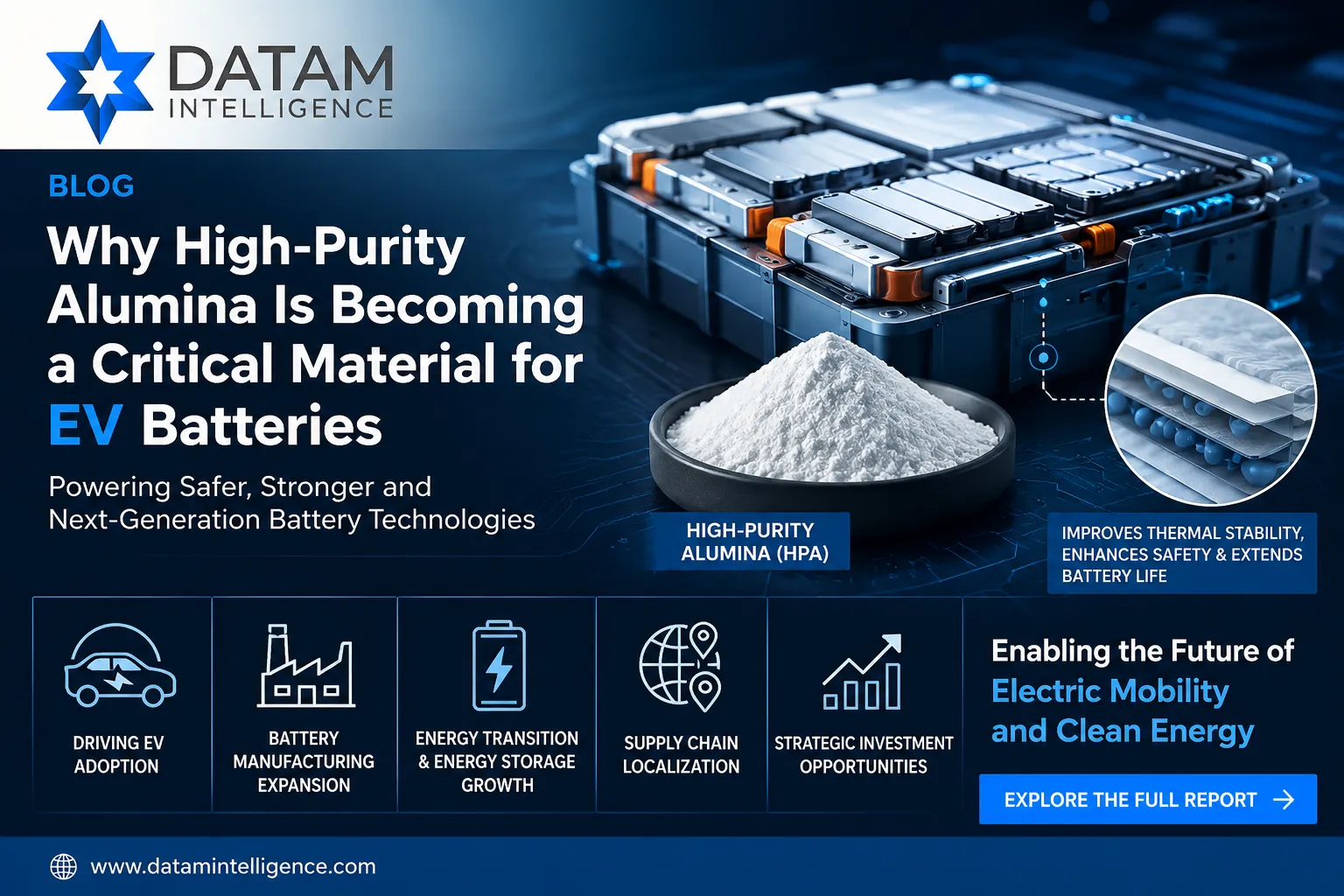
What Is High-Purity Alumina?
High-purity alumina is a specialized form of aluminum oxide (Al₂O₃) with purity levels typically exceeding 99.99%.
Unlike metallurgical-grade alumina used primarily in aluminum production, HPA offers exceptional properties, including:
- High thermal stability
- Superior electrical insulation
- Excellent corrosion resistance
- High mechanical strength
- Enhanced chemical purity
These characteristics make HPA suitable for demanding applications across:
- Lithium-ion batteries
- LED lighting
- Semiconductor manufacturing
- Sapphire glass production
- Advanced ceramics
- Medical devices
- Aerospace systems
Among these applications, the electric vehicle battery sector is emerging as one of the fastest-growing demand centers.
Why EV Batteries Need High-Purity Alumina
As battery energy density increases, thermal management becomes increasingly important.
Modern lithium-ion batteries generate significant heat during charging and discharging cycles. Without proper thermal protection, batteries face risks such as:
- Thermal runaway
- Performance degradation
- Capacity loss
- Safety incidents
- Reduced battery lifespan
High-purity alumina helps address these challenges.
Battery Separator Coatings
One of the most important applications of HPA in EV batteries is as a coating material for battery separators.
Battery separators act as physical barriers between the anode and cathode while allowing ions to flow between them.
HPA-coated separators provide:
- Improved thermal stability
- Better mechanical strength
- Enhanced safety performance
- Greater resistance to short circuits
- Extended battery life
As battery manufacturers pursue higher energy densities, separator performance becomes increasingly critical.
Supporting Fast-Charging Technologies
Consumers increasingly expect EVs to charge faster while maintaining safety and battery performance.
Fast charging generates additional heat within battery cells, placing greater stress on internal components.
High-purity alumina helps battery manufacturers improve:
- Heat resistance
- Thermal conductivity
- Charging stability
- Long-term battery reliability
As ultra-fast charging infrastructure expands globally, demand for HPA-enhanced battery materials is expected to rise significantly.
Enhancing Battery Safety
Battery safety remains one of the most important priorities for EV manufacturers.
While lithium-ion batteries have become increasingly reliable, thermal runaway events can still occur under extreme conditions.
High-purity alumina contributes to safer battery designs by:
- Improving separator integrity
- Increasing heat resistance
- Reducing internal short-circuit risks
- Supporting stable battery operation under high temperatures
For automakers, enhanced battery safety helps protect brand reputation while meeting increasingly stringent regulatory requirements.
The EV Boom Is Driving HPA Demand
Global EV adoption continues to accelerate.
Governments worldwide are implementing:
- Zero-emission vehicle mandates
- Fuel economy regulations
- EV purchase incentives
- Carbon reduction targets
At the same time, automakers are investing billions of dollars into battery production capacity.
This expansion is creating significant demand for battery-grade raw materials, including:
- Lithium
- Nickel
- Graphite
- Cobalt
- Manganese
- High-Purity Alumina
As battery gigafactories continue to emerge across North America, Europe, and Asia-Pacific, HPA consumption is expected to grow alongside battery manufacturing output.
Beyond EVs: Additional Growth Drivers for HPA
While EV batteries are a major demand driver, high-purity alumina is benefiting from growth across multiple industries.
LED Manufacturing
HPA is widely used in sapphire substrates for LED production.
The expansion of energy-efficient lighting solutions continues to support demand.
Semiconductor Manufacturing
Advanced semiconductor applications require highly pure materials capable of meeting strict performance standards.
HPA plays an important role in electronic components and wafer production processes.
Energy Storage Systems
Grid-scale battery storage projects are expanding globally to support renewable energy integration.
These systems rely on many of the same battery technologies used in electric vehicles, creating additional demand for HPA.
Advanced Ceramics
Industrial and aerospace applications increasingly utilize alumina-based ceramics due to their durability and thermal performance.
Supply Chain Challenges and Opportunities
Despite growing demand, HPA production remains relatively specialized.
Manufacturers face several challenges:
Production Complexity
Producing 4N and 5N purity alumina requires advanced refining technologies and strict quality controls.
Energy Costs
HPA manufacturing can be energy-intensive, making production economics sensitive to energy prices.
Supply Security
As demand grows, securing reliable sources of feedstock materials becomes increasingly important.
These challenges are creating investment opportunities for companies developing:
- New refining technologies
- Sustainable production methods
- Battery-grade alumina facilities
- Regional supply chain capabilities
Why Investors Are Watching High-Purity Alumina
High-Purity Alumina (HPA) is increasingly attracting attention from investors, battery manufacturers, advanced materials companies, and governments because it sits at the intersection of several powerful long-term growth trends. Unlike traditional commodity materials that are often tied to cyclical industrial demand, HPA is emerging as a strategic material supporting the global transition toward electrification, clean energy, advanced electronics, and high-performance technologies.
As industries seek safer, more efficient, and technologically advanced products, demand for specialty materials such as HPA is expected to accelerate. This has positioned HPA as one of the most promising opportunities within the broader critical minerals and battery materials ecosystem.
Electric Vehicle Adoption
One of the strongest demand drivers for high-purity alumina is the rapid growth of the electric vehicle (EV) industry.
Global automakers are investing hundreds of billions of dollars to expand electric vehicle production and transition away from internal combustion engine platforms. Governments worldwide are supporting this shift through emissions regulations, fuel economy standards, EV incentives, and net-zero carbon targets.
As EV production scales, battery manufacturers require increasing quantities of advanced materials capable of improving battery safety, thermal management, and operational performance. HPA plays a critical role in lithium-ion battery separator coatings, helping batteries withstand higher temperatures while reducing the risk of thermal runaway.
With EV sales expected to continue expanding over the next decade, demand for battery-grade HPA is anticipated to rise significantly, creating attractive long-term growth opportunities for producers and investors.
Battery Manufacturing Expansion
The global race to build battery manufacturing capacity is creating another major growth catalyst for HPA.
Battery gigafactories are being developed across:
- North America
- Europe
- China
- South Korea
- Japan
- India
- Southeast Asia
Automakers and battery manufacturers are investing heavily in localized battery production to secure supply chains and support growing EV demand.
Each new battery manufacturing facility increases demand for critical battery materials, including lithium, nickel, graphite, and high-purity alumina. As production volumes increase, suppliers capable of delivering battery-grade HPA are likely to benefit from expanding procurement contracts and long-term supply agreements.
Investors view this manufacturing expansion as a key indicator of future demand growth for specialty alumina products.
Energy Transition Initiatives
Beyond electric vehicles, global energy transition programs are creating additional opportunities for HPA.
Countries worldwide are accelerating investments in:
- Renewable energy generation
- Grid modernization
- Utility-scale energy storage systems
- Smart energy infrastructure
- Decarbonization technologies
Battery energy storage systems are becoming essential for balancing intermittent renewable energy sources such as solar and wind power. These systems rely on many of the same lithium-ion battery technologies used in electric vehicles, further increasing demand for battery materials.
As energy storage deployments expand globally, high-purity alumina is expected to play an increasingly important role in supporting safer, more reliable battery performance.
Supply Chain Localization and Resource Security
The COVID-19 pandemic, geopolitical tensions, and critical mineral supply disruptions have highlighted the importance of resilient supply chains.
Governments and manufacturers are increasingly focused on reducing dependence on concentrated sources of strategic materials by developing domestic and regional supply chains.
This trend is particularly evident across:
- United States
- European Union
- Japan
- South Korea
- Australia
- Canada
Many governments are offering incentives, grants, and policy support to encourage local production of critical battery materials, including high-purity alumina.
For investors, companies that can establish reliable regional HPA production capabilities may benefit from stronger demand, government support programs, and long-term supply agreements with battery manufacturers.
Growing Demand from Advanced Technologies
In addition to batteries, HPA demand is expanding across several high-growth technology sectors.
These include:
- Semiconductors
- LED lighting
- Sapphire substrates
- Advanced ceramics
- Aerospace systems
- Medical devices
- Precision electronics
The ability of HPA to serve multiple industries reduces dependency on a single market segment and creates diversified growth opportunities. This broad application base strengthens the long-term investment case for HPA producers and technology developers.
A Strategic Material for the Next Decade
Unlike many traditional industrial minerals, high-purity alumina is increasingly viewed as a strategic material supporting some of the world's most important technological and economic transformations.
The convergence of:
- Electric vehicle adoption
- Battery manufacturing expansion
- Energy storage deployment
- Semiconductor growth
- Supply chain localization
- Clean energy investments
is creating a favorable environment for sustained HPA demand growth.
As a result, investors are closely monitoring the high-purity alumina market as a potential beneficiary of the global electrification and energy transition megatrends. Companies that can scale production, secure feedstock supplies, and establish strong relationships within the battery and electronics value chains may be well positioned to capitalize on the significant opportunities emerging across this rapidly evolving market.
Regional Growth Opportunities
Asia-Pacific
Asia-Pacific currently dominates battery manufacturing and HPA consumption due to strong EV production and electronics manufacturing activity.
North America
Battery manufacturing investments are rapidly expanding across the United States and Canada, creating new demand opportunities for specialty alumina producers.
Europe
The European Union's focus on battery independence and sustainable mobility is driving investments throughout the battery value chain.
Analyst Perspective
High-purity alumina is transitioning from a niche specialty material into a strategic component of the global battery supply chain.
While lithium, nickel, and cobalt continue to receive significant attention, HPA's role in improving battery safety and performance is becoming increasingly important as battery technologies evolve.
The combination of EV adoption, battery manufacturing expansion, fast-charging technologies, and energy storage deployment is expected to support strong long-term demand for high-purity alumina.
Organizations involved in battery materials, specialty chemicals, advanced materials, and industrial minerals should closely monitor developments in the HPA market as new growth opportunities emerge.
Frequently Asked Questions
What is high-purity alumina used for in EV batteries?
High-purity alumina is primarily used as a coating material for lithium-ion battery separators to improve thermal stability, safety, and battery performance.
Why is HPA important for battery safety?
HPA helps prevent thermal runaway by increasing separator heat resistance and improving overall battery stability.
Which industries are driving demand for high-purity alumina?
Electric vehicles, energy storage systems, semiconductors, LED manufacturing, aerospace, and advanced ceramics are key growth sectors.
How does HPA support fast charging?
High-purity alumina improves thermal management and separator performance, helping batteries operate more safely during high-speed charging cycles.
Why are investors interested in the HPA market?
Growing EV adoption, battery manufacturing investments, energy transition initiatives, and expanding electronics demand are creating significant long-term growth opportunities.
Explore the Full Market Analysis
As demand for advanced battery materials continues to rise, understanding the broader alumina market becomes increasingly important for investors, manufacturers, and supply chain stakeholders.
Explore DataM Intelligence's comprehensive Alumina Market Report for detailed forecasts, competitive intelligence, pricing trends, regional analysis, and strategic growth opportunities.
Related Reports
The alumina market is closely linked to the broader aluminum value chain, battery materials ecosystem, mining sector, and advanced materials industry. As demand grows from electric vehicles, renewable energy infrastructure, electronics manufacturing, and industrial applications, understanding adjacent markets becomes increasingly important for identifying emerging opportunities and long-term investment trends. Explore the following related reports for deeper insights into the industries driving future alumina demand and technological innovation.
Bauxite Market
Understand the upstream raw material dynamics shaping alumina production costs, supply security, mining investments, and global refining capacity. Bauxite remains the primary feedstock for alumina production, making this market critical for understanding future supply trends.
Electric Vehicle Battery Materials Market
Gain insights into the rapidly evolving battery materials ecosystem supporting electric vehicle production, energy storage systems, and battery gigafactory expansion. Growing EV adoption is creating significant opportunities for specialty materials such as high-purity alumina.
Advanced Materials Market
Discover how specialty materials, including high-purity alumina, are enabling innovation across semiconductors, electronics, advanced ceramics, aerospace systems, and next-generation manufacturing technologies.