


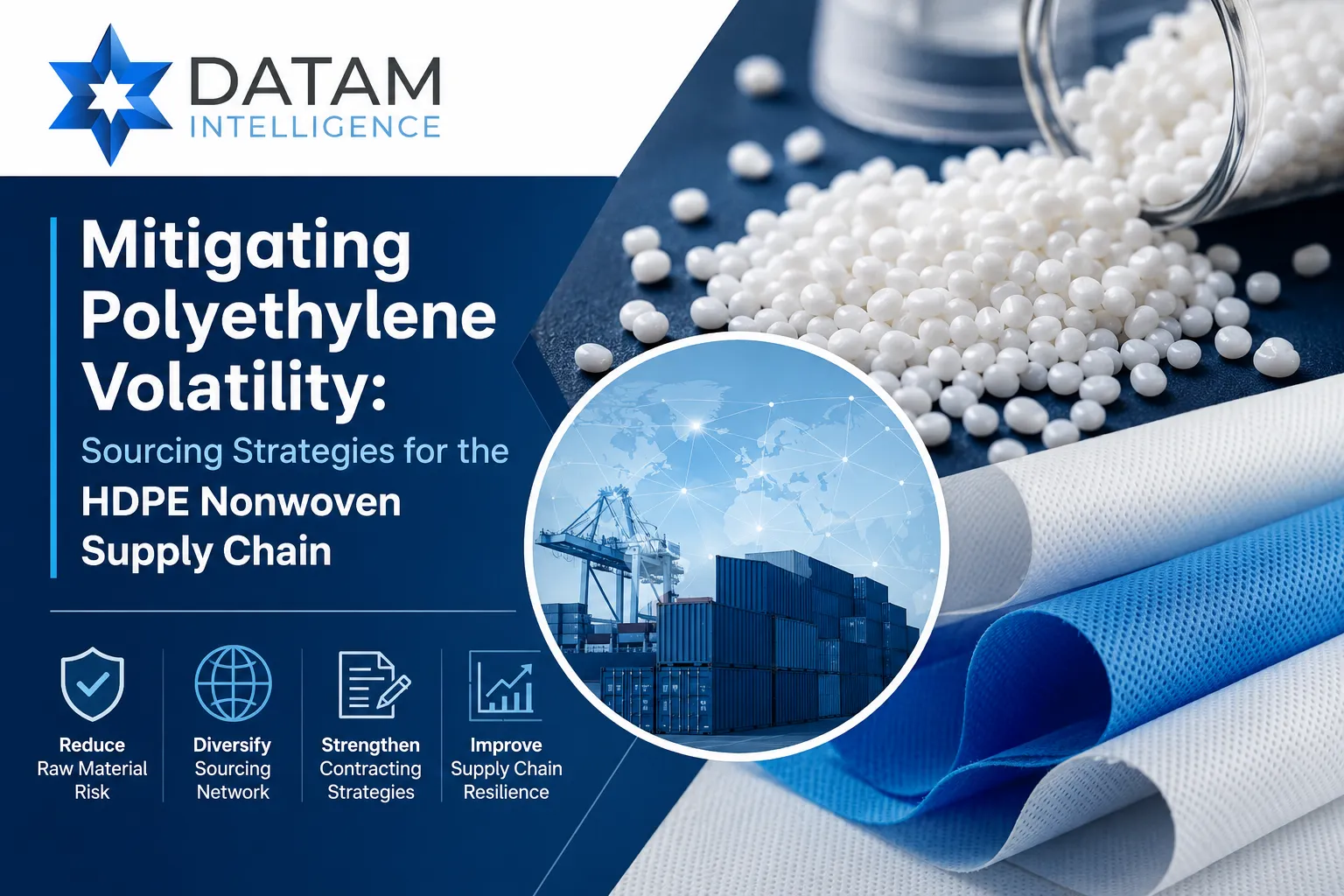
Polyethylene price volatility is one of the most critical challenges impacting the HDPE nonwoven supply chain. Fluctuations in crude oil prices, geopolitical disruptions, and shifting demand across industrial sectors continue to pressure procurement teams and manufacturers. To maintain cost stability and operational resilience, companies are increasingly adopting diversified sourcing strategies, long-term contracting models, and digital procurement tools. This article explores actionable approaches to reduce raw material risk and strengthen supply chain performance in the HDPE nonwoven market industry.
1. Why Polyethylene Volatility Matters in the HDPE Nonwoven Industry
HDPE (High-Density Polyethylene) is a key raw material used in nonwoven applications such as hygiene products, medical textiles, geotextiles, packaging, and industrial fabrics.
However, HDPE pricing is directly linked to upstream petrochemical markets, making it highly sensitive to:
- Crude oil price fluctuations
- Natural gas supply disruptions
- Global refining capacity constraints
- Transportation and logistics cost shifts
- Regional geopolitical instability
Even minor disruptions in ethylene supply chains can significantly impact production costs and profit margins for nonwoven manufacturers.
2. Key Drivers of Polyethylene Price Volatility
Crude Oil Dependency
HDPE production is heavily dependent on naphtha and ethylene derived from crude oil. Any oil price shock directly translates into polymer cost variation.
Supply-Demand Imbalance
Demand surges from packaging, hygiene, and medical sectors often outpace production capacity, leading to price spikes.
Energy and Utility Costs
Energy-intensive polymer production processes make HDPE sensitive to electricity and natural gas pricing fluctuations.
Global Trade Disruptions
Shipping delays, tariffs, and regional trade restrictions create irregular supply availability across markets.
Downloads this Sample Market Analysis Report
3. Strategic Sourcing Models for Risk Mitigation
To manage volatility effectively, procurement leaders are shifting toward structured sourcing strategies.
Multi-Region Supplier Diversification
Relying on a single geographic supply source increases exposure to regional disruptions.
Leading manufacturers now diversify sourcing across:
- Middle East petrochemical producers
- Asia-Pacific polymer hubs
- North American integrated suppliers
This reduces dependency risk and improves price negotiation leverage.
Hybrid Procurement Strategy (Contract + Spot Market)
A balanced procurement model includes:
- Long-term contracts for baseline demand stability
- Spot purchases for demand surges and price optimization
This hybrid approach ensures both cost control and flexibility.
Index-Linked Contracting
Contracts tied to crude oil or ethylene price indices help align procurement costs with market conditions, reducing unexpected margin pressure.
Strategic Supplier Partnerships
Instead of transactional buying, companies are forming long-term partnerships with polymer producers to secure:
- Priority allocation during shortages
- Stable pricing structures
- Supply chain visibility
4. Advanced Risk Management Techniques
Demand Forecasting with AI Analytics
AI-driven procurement platforms analyze:
- Historical consumption trends
- Market price signals
- Seasonal demand cycles
This enables more accurate purchasing decisions.
Inventory Buffer Optimization
Maintaining optimized safety stock reduces exposure to sudden price spikes without locking excessive working capital.
Alternative Material Integration
Some manufacturers are exploring partial substitution strategies using:
- Recycled HDPE (rHDPE)
- Polypropylene (PP) blends
This helps reduce dependency on virgin HDPE.
Hedging Through Financial Instruments
Large-scale buyers sometimes use commodity hedging mechanisms to stabilize long-term procurement costs.
5. Sustainability as a Supply Chain Stabilization Strategy
Sustainability is increasingly influencing procurement decisions in the HDPE nonwoven industry.
Key trends include:
- Adoption of recycled polymer feedstock
- Circular economy manufacturing models
- ESG-compliant supplier selection
- Reduced carbon-intensive sourcing routes
Sustainable sourcing not only improves environmental performance but also enhances long-term supply predictability.
6. Regional Supply Chain Dynamics
Asia-Pacific
- Cost-competitive production
- High demand volatility
- Rapid industrial expansion
Middle East
- Strong petrochemical integration
- Stable feedstock availability
- Competitive export pricing
North America
- Advanced production technology
- Strong contract-based procurement systems
Europe
- Sustainability-driven sourcing
- Higher production and compliance costs
Buy this Complete Market Research Analysis Report
7. Strategic Outlook for Manufacturers and Investors
The HDPE nonwoven supply chain is transitioning from a cost-driven model to a risk-managed procurement ecosystem.
Companies that outperform will be those that:
- Diversify sourcing networks
- Integrate predictive procurement systems
- Adopt hybrid contracting strategies
- Invest in sustainable polymer sourcing
For investors, procurement efficiency is becoming a key performance indicator of long-term profitability in polymer-based manufacturing sectors.
Conclusion
Polyethylene volatility is no longer a short-term disruption it is a structural challenge shaping the future of the HDPE nonwoven supply chain. Organizations that implement diversified sourcing strategies, digital procurement systems, and sustainability-driven sourcing models will be better positioned to maintain cost stability and competitive advantage in an increasingly unpredictable global market.