


The global nonwoven industry is undergoing rapid transformation as manufacturers seek materials that combine durability, lightweight performance, cost efficiency, and sustainability. Among the various materials used in nonwoven production, High-Density Polyethylene (HDPE) has emerged as a preferred choice for applications ranging from medical protective apparel and hygiene products to industrial packaging and agricultural covers.
As demand for advanced nonwoven solutions grows worldwide, manufacturers are investing heavily in next-generation HDPE nonwoven technologies to improve product performance, production efficiency, and environmental sustainability.
For manufacturers, understanding the future direction of HDPE nonwoven market technology is critical for maintaining competitiveness and identifying new growth opportunities.
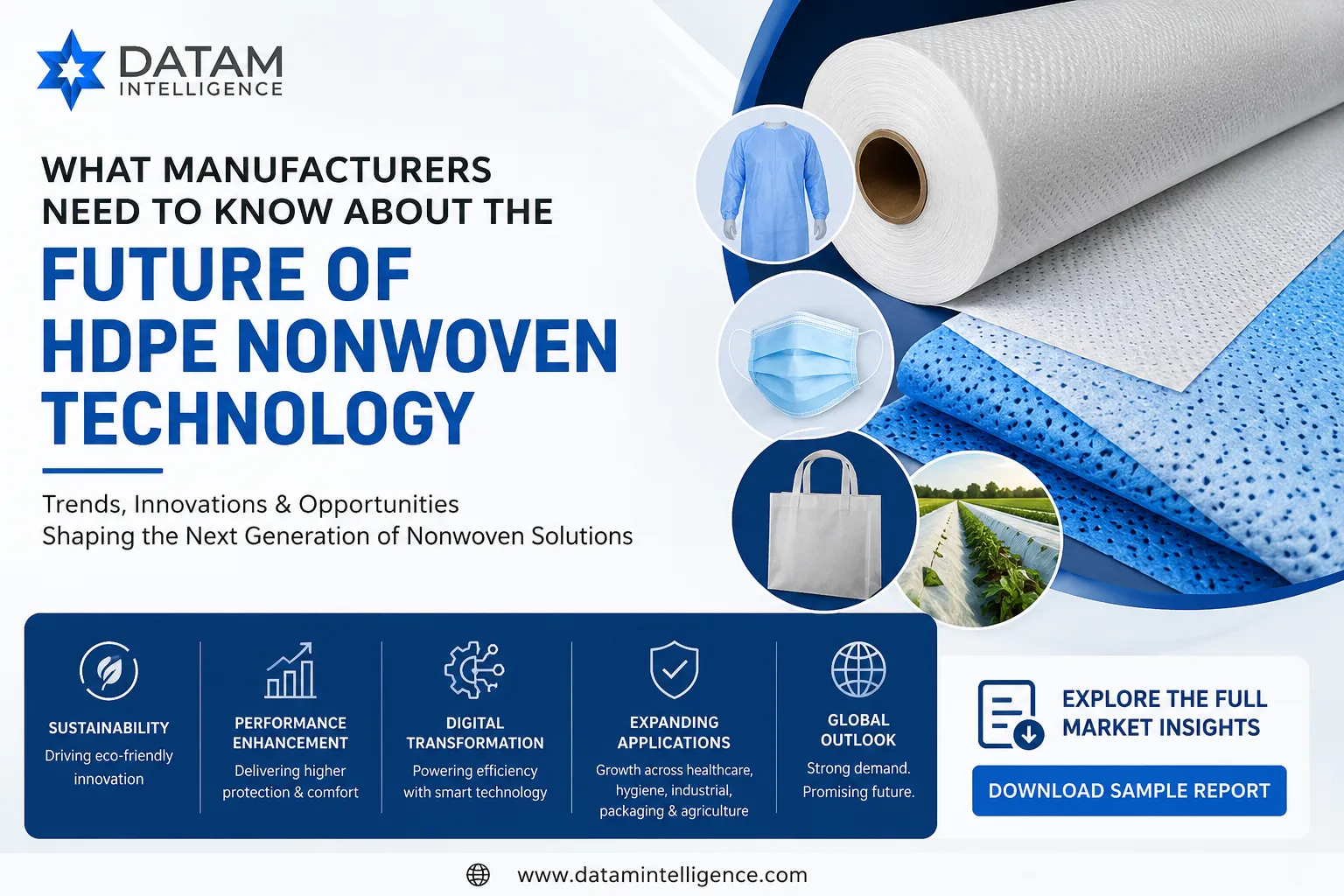
Want deeper insights into market size, growth forecasts, technology trends, competitive landscape, and regional opportunities?
➡️ Download the HDPE Nonwoven Market Sample Report
What Is HDPE Nonwoven Technology?
HDPE nonwoven technology refers to the production of engineered fabrics made from high-density polyethylene fibers that are bonded together without traditional weaving or knitting processes.
These materials offer several advantages:
- High strength-to-weight ratio
- Excellent chemical resistance
- Breathability
- Water repellency
- Lightweight construction
- Cost-effective manufacturing
- Recyclability potential
The unique characteristics of HDPE nonwoven fabrics have made them increasingly valuable in industries where durability and protection are essential.
Why Is Demand for HDPE Nonwoven Materials Growing?
Demand for HDPE nonwoven materials is growing because they provide lightweight protection, durability, chemical resistance, and cost-effective performance across healthcare, hygiene, packaging, agriculture, and industrial applications.
Several market forces are accelerating adoption:
Expansion of Healthcare Infrastructure
Healthcare systems continue to invest in infection prevention and disposable protective products. HDPE nonwoven fabrics are widely used in:
- Surgical gowns
- Protective coveralls
- Face mask components
- Medical drapes
- Sterile packaging solutions
The focus on infection control and workplace safety continues to support demand growth.
Rising Hygiene Awareness
Consumers increasingly prioritize hygiene and personal protection products. Manufacturers are responding by expanding production capacities for disposable and single-use nonwoven products.
Industrial Safety Requirements
Industries such as chemicals, construction, and manufacturing require protective garments capable of resisting contaminants while maintaining user comfort.
HDPE nonwoven materials offer an effective balance between protection and breathability.
Key Innovations Shaping the Future of HDPE Nonwoven Technology
Advanced Spunbond Manufacturing
Spunbond technology remains one of the most important manufacturing processes in the HDPE nonwoven industry.
Modern production lines now offer:
- Improved fiber uniformity
- Higher throughput
- Reduced energy consumption
- Enhanced fabric strength
- Better process control
These advancements help manufacturers improve productivity while maintaining product consistency.
Sustainable Material Development
Sustainability is becoming a major purchasing criterion across global industries.
Manufacturers are increasingly focusing on:
- Recyclable HDPE materials
- Circular economy initiatives
- Waste reduction programs
- Energy-efficient production systems
- Lower carbon footprint manufacturing
Companies that invest in sustainable innovation are likely to gain competitive advantages as environmental regulations become more stringent.
Smart Manufacturing and Automation
Industry 4.0 technologies are transforming nonwoven production facilities.
Emerging technologies include:
- AI-powered quality control
- Predictive maintenance systems
- Automated production monitoring
- Real-time performance analytics
- Digital supply chain integration
These technologies improve operational efficiency while reducing production downtime.
Emerging Applications Creating New Opportunities
Healthcare and Medical Textiles
Healthcare remains one of the largest consumers of HDPE nonwoven materials.
Growth opportunities include:
- Advanced protective clothing
- Single-use medical products
- Isolation gowns
- Sterile barrier systems
- Emergency preparedness supplies
Sustainable Packaging Solutions
As companies seek alternatives to traditional packaging materials, HDPE nonwoven products are finding applications in:
- Industrial packaging
- Protective wraps
- Reusable transport solutions
- E-commerce packaging systems
Agriculture and Environmental Protection
HDPE nonwoven materials are increasingly used in:
- Crop protection covers
- Weed control fabrics
- Greenhouse applications
- Soil stabilization systems
Their durability and weather resistance make them attractive for long-term agricultural use.
Challenges Manufacturers Must Address
While the outlook for HDPE nonwoven technology remains positive, manufacturers face several operational, regulatory, and competitive challenges that could impact profitability and long-term growth. Successfully navigating these obstacles will require strategic investments, supply chain resilience, and continuous innovation.
Raw Material Price Volatility
One of the most significant challenges facing HDPE nonwoven manufacturers is the fluctuation in polyethylene feedstock prices. HDPE is derived from petrochemical raw materials, making its pricing highly sensitive to crude oil and natural gas market dynamics.
Factors contributing to price volatility include:
- Fluctuations in global crude oil prices
- Geopolitical tensions affecting energy supplies
- Supply chain disruptions and transportation bottlenecks
- Changes in petrochemical production capacity
- Regional trade restrictions and tariffs
Sudden increases in raw material costs can significantly affect production margins, particularly for manufacturers operating under long-term supply contracts. To mitigate these risks, many companies are diversifying supplier networks, implementing strategic sourcing programs, and investing in advanced inventory management systems.
Environmental Regulations and Sustainability Expectations
Environmental compliance is becoming increasingly complex as governments and regulatory agencies worldwide introduce stricter rules regarding plastic waste management, carbon emissions, and product sustainability.
Key regulatory challenges include:
- Extended Producer Responsibility (EPR) requirements
- Plastic waste reduction initiatives
- Carbon footprint reporting obligations
- Recycling and circular economy mandates
- Sustainable packaging regulations
At the same time, customers and procurement teams are placing greater emphasis on environmentally responsible sourcing practices. Manufacturers are therefore under pressure to develop recyclable HDPE nonwoven products, reduce production waste, improve energy efficiency, and incorporate sustainability into their overall business strategies.
Companies that proactively adopt circular economy principles and invest in sustainable manufacturing technologies are likely to gain a competitive advantage as environmental standards continue to evolve.
Competitive Market Environment
The growing adoption of HDPE nonwoven materials across healthcare, hygiene, industrial, packaging, and agricultural sectors has attracted numerous domestic and international market participants. As competition intensifies, manufacturers face increasing pressure to differentiate themselves beyond pricing alone.
Key competitive challenges include:
- Entry of low-cost regional manufacturers
- Price pressure from large-volume buyers
- Rapid technological advancements
- Shorter product development cycles
- Increasing customer expectations for customized solutions
To remain competitive, manufacturers must continuously innovate by improving material performance, enhancing product functionality, and investing in advanced manufacturing technologies. Businesses that can deliver superior quality, sustainability, and application-specific solutions will be better positioned to capture market share in an increasingly crowded marketplace.
Supply Chain Resilience
Recent global disruptions have highlighted the importance of supply chain resilience within the nonwoven industry. Manufacturers must manage risks related to raw material availability, logistics delays, labor shortages, and transportation costs.
Building resilient supply chains through supplier diversification, regional sourcing strategies, and digital supply chain visibility tools is becoming essential for maintaining operational continuity and meeting customer demand.
Technology Investment and Workforce Development
As automation, artificial intelligence, and smart manufacturing become more prevalent, manufacturers must balance the need for technological upgrades with workforce development initiatives. Significant capital investments may be required to modernize production facilities and remain competitive.
Organizations that successfully integrate advanced technologies while developing skilled talent will be better equipped to improve productivity, reduce costs, and support future growth.
Future Outlook for HDPE Nonwoven Manufacturers
The future of HDPE nonwoven technology is expected to be driven by evolving customer requirements, sustainability mandates, technological advancements, and expanding end-use applications. As industries increasingly seek high-performance, cost-effective, and environmentally responsible materials, manufacturers must adapt their strategies to remain competitive and capture emerging growth opportunities.
Three major themes are expected to define the next phase of industry development.
Sustainability Will Become a Core Competitive Advantage
Sustainability is no longer simply a regulatory requirement, it has become a critical purchasing criterion for customers across healthcare, industrial, packaging, agriculture, and consumer goods sectors.
Governments worldwide are implementing stricter environmental regulations aimed at reducing plastic waste, promoting recycling, and lowering carbon emissions. Simultaneously, businesses are setting ambitious sustainability goals and increasingly evaluating suppliers based on their environmental performance.
As a result, HDPE nonwoven manufacturers are expected to focus on:
- Developing recyclable and reusable nonwoven products
- Reducing manufacturing waste and energy consumption
- Implementing circular economy initiatives
- Improving resource efficiency throughout production processes
- Investing in environmentally friendly manufacturing technologies
- Enhancing supply chain sustainability and transparency
Organizations that successfully align their operations with global sustainability objectives will be better positioned to secure long-term contracts, strengthen customer relationships, and meet evolving regulatory requirements.
Performance Enhancement Will Drive Product Innovation
End-users are demanding more from nonwoven materials than ever before. Modern applications require fabrics that deliver superior protection, durability, comfort, and functionality while maintaining cost efficiency.
Future product development efforts are expected to focus on:
Improved Barrier Protection
Healthcare and industrial customers increasingly require materials that provide enhanced resistance against liquids, chemicals, microorganisms, and contaminants without compromising breathability.
Lightweight and Durable Materials
Manufacturers are working to optimize fabric structures that maintain high strength while reducing material consumption and overall product weight.
Enhanced Comfort and Wearability
Protective apparel, medical garments, and hygiene products must balance safety with user comfort. Advances in fiber engineering and fabric design will continue to improve breathability and flexibility.
Multi-Functional Performance
Emerging applications may require additional functionalities such as:
- Antimicrobial properties
- UV resistance
- Flame retardancy
- Electrostatic protection
- Moisture management capabilities
Manufacturers capable of delivering application-specific solutions will be better positioned to differentiate themselves in increasingly competitive markets.
Digital Transformation Will Redefine Manufacturing Excellence
Industry 4.0 technologies are transforming manufacturing operations across the nonwoven sector. Digitalization is enabling manufacturers to improve productivity, reduce operational costs, enhance quality control, and increase supply chain visibility.
Key technologies expected to shape the future include:
Artificial Intelligence (AI)
AI-powered systems can analyze production data in real time, identify process inefficiencies, predict maintenance requirements, and optimize manufacturing performance.
Smart Automation
Advanced automation technologies help improve consistency, reduce labor dependency, and increase production throughput while minimizing errors.
Predictive Maintenance
Connected equipment and sensor-based monitoring systems allow manufacturers to identify potential failures before they occur, reducing downtime and maintenance costs.
Data-Driven Decision Making
Manufacturers are increasingly leveraging data analytics to optimize production schedules, improve inventory management, forecast demand, and enhance overall operational efficiency.
Digital Supply Chain Integration
End-to-end supply chain visibility enables companies to respond more effectively to disruptions, manage supplier relationships, and improve customer service levels.
Organizations that embrace digital transformation will gain significant advantages in productivity, quality assurance, and operational agility.
Expanding Opportunities Across End-Use Industries
The long-term outlook for HDPE nonwoven manufacturers remains promising due to expanding demand across multiple industries.
Healthcare and Medical Applications
Growing healthcare expenditures, aging populations, and increased focus on infection prevention are expected to drive demand for protective apparel, surgical products, and sterile packaging solutions.
Explore this Medical Nonwoven Disposables Market
Hygiene Products
Rising consumer awareness regarding personal hygiene and health protection will continue to support growth in disposable and single-use nonwoven products.
Industrial Safety
Industrial sectors are increasingly adopting advanced protective materials to improve workplace safety and comply with occupational health regulations.
Sustainable Packaging
The transition toward lightweight, durable, and recyclable packaging materials is creating new opportunities for HDPE nonwoven solutions.
Agriculture
Demand for crop protection fabrics, greenhouse covers, weed control solutions, and soil stabilization materials is expected to expand as agricultural productivity requirements increase globally.
Strategic Outlook
Looking ahead, the most successful HDPE nonwoven manufacturers will be those that balance sustainability, innovation, and digitalization. Companies that invest in advanced manufacturing technologies, develop high-performance products, and align with environmental objectives will be better positioned to capitalize on evolving customer demands and industry transformation.
As healthcare, industrial, hygiene, packaging, and agricultural sectors continue to expand, HDPE nonwoven materials are expected to play an increasingly important role in supporting performance, safety, and sustainability goals across the global economy.
Conclusion
HDPE nonwoven technology is evolving rapidly as industries seek materials that deliver protection, efficiency, and sustainability. Innovations in spun bond manufacturing, automation, and recyclable material development are creating new opportunities for manufacturers worldwide.
Companies that invest in advanced production capabilities, sustainable practices, and application-focused innovation will be well-positioned to benefit from the next phase of industry growth.
Explore the HDPE Nonwoven Market
Gain deeper insights into market trends, growth opportunities, competitive dynamics, regional outlooks, and future forecasts shaping the industry.