


The Critical Minerals Supercycle Becomes a Security Issue: What Buyers Must Prepare for in 2027
Supply security is replacing price as the defining procurement question for critical minerals.
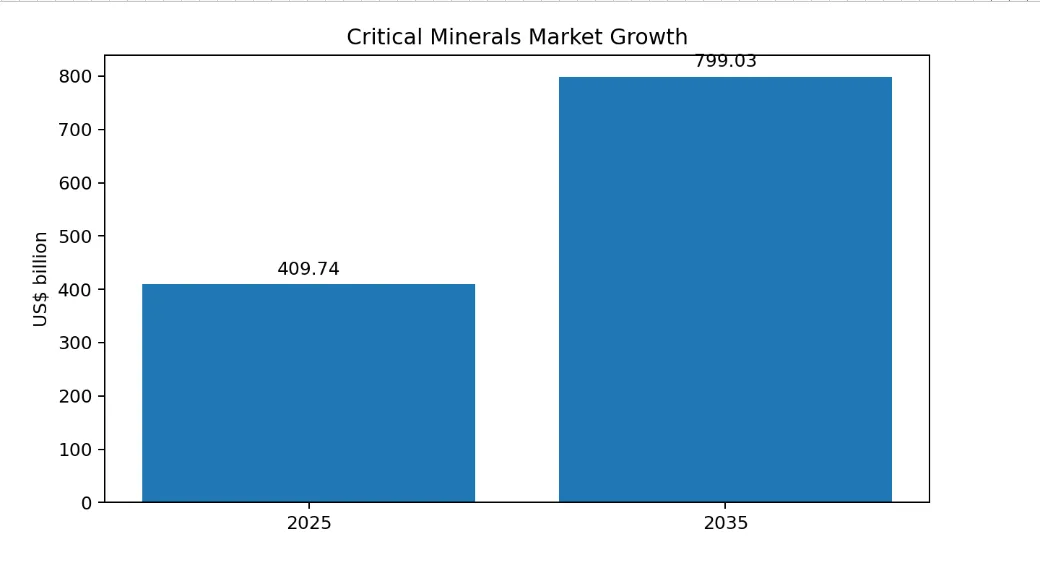
Critical minerals are entering a different market cycle. Demand from electric vehicles, grid storage, semiconductors and defense continues to expand, while refining and processing remain concentrated in a small number of countries. The result is a market where buyers can face disruption even when global mine output looks adequate. DataM Intelligence estimates that the Critical Minerals Market reached US$ 409.74 billion in 2025 and could reach US$ 799.03 billion by 2035. The growth opportunity is large, but the more immediate issue for procurement teams is whether qualified material will be available in the right geography, purity and processed form.
Explore the Critical Minerals Market: Supply Security, Growth & Strategic Opportunities
Get comprehensive insights into the Critical Minerals Market, including market size and forecasts, mineral-level trends, supply-chain bottlenecks, geopolitical risks, recycling opportunities, technology developments, competitive dynamics and country-level opportunities. Use DataM Intelligence’s analysis to identify high-growth markets, assess strategic supply risks and make informed investment, sourcing and market-entry decisions. Request a Sample Report Today!
Refining Concentration Turns the Minerals Cycle Into a Security Problem
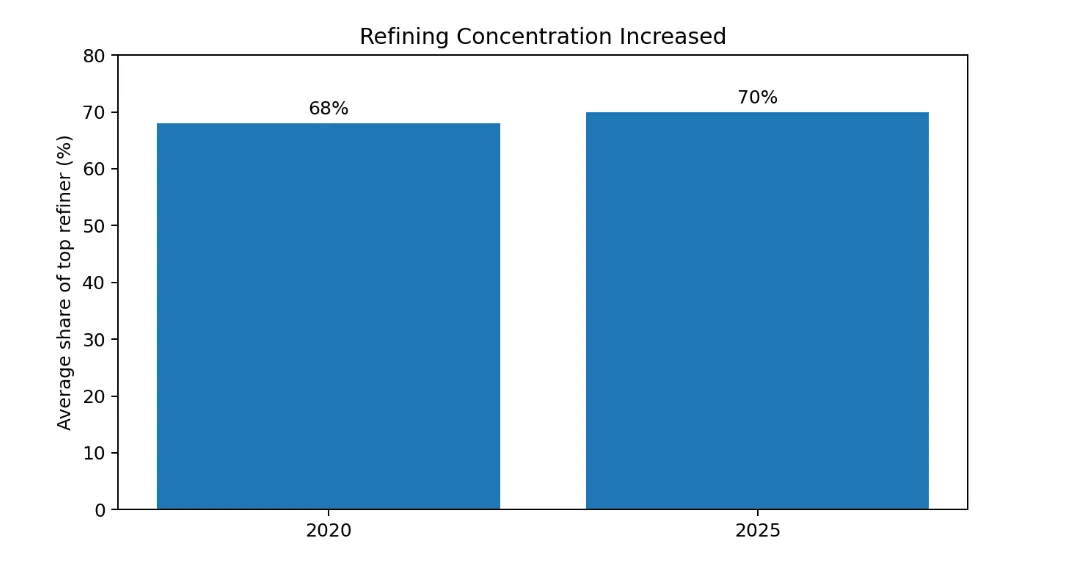
The 2026 Global Critical Minerals Outlook from the International Energy Agency shows why the market has become a security issue. The average share held by the largest refined supplier across key energy minerals reached 70% in 2025, up from 68% in 2020. China remains the leading refiner for most major energy minerals, while Indonesia holds a dominant position in nickel. For gallium, graphite, manganese and rare earths, China accounts for more than 90% of global refining supply according to the IEA. This concentration means that a disruption in one processing hub can affect batteries, power electronics, magnets and advanced manufacturing at the same time.
The problem is especially acute for materials that are difficult to substitute or are produced as byproducts. Gallium and germanium are essential for high performance electronics and optical systems. Tungsten and magnet rare earths remain important for defense and industrial equipment. A supply chain can therefore become constrained even when the mineral itself is not scarce in geological terms. Processing access, export licensing and qualified downstream capacity are increasingly the real bottlenecks.
The January 2027 Defense Deadline Makes Supply Chain Visibility Urgent
The United States is approaching a major compliance test. From January 1, 2027, U.S. defense procurement restrictions tighten around rare earth magnets plus materials including tungsten and tantalum sourced from China, Russia, Iran or North Korea. Industry groups have warned that alternative supply is still limited. The challenge is amplified by complex subcontracting networks where buyers may not know the origin of every magnet, alloy or processed input inside a finished system.
For industrial buyers outside defense, the deadline still matters because it can pull compliant supply into higher value government contracts. Defense buyers may secure material through long term agreements, government backed capacity and strategic inventory. Automotive, electronics and industrial users could then face tighter availability in non Chinese supply channels. Buyers entering 2027 should expect supplier qualification and traceability to become commercial differentiators rather than administrative exercises.
Europe Is Building a Diversification Framework That Changes Buyer Expectations
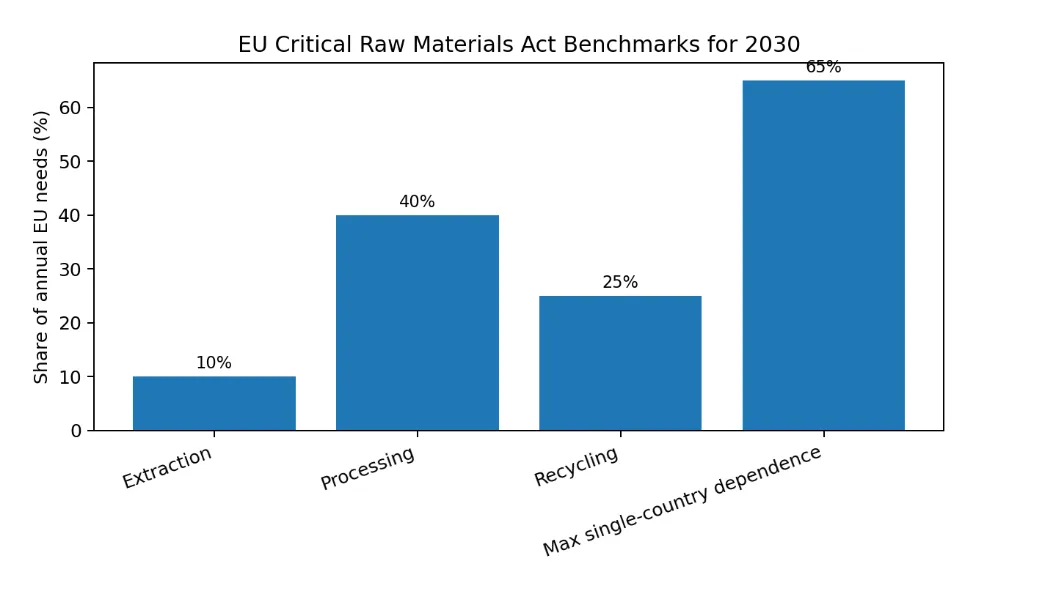
Europe is also moving from policy discussion into implementation. The EU Critical Raw Materials Act sets 2030 benchmarks covering at least 10% of annual needs from EU extraction, 40% from EU processing and 25% from recycling. It also aims to keep dependence on any single third country below 65% for each strategic raw material at relevant processing stages. These targets are pushing buyers toward supply chain stress testing, strategic stockpiles, local processing partnerships and circular material recovery.
The strategic implication is that mineral procurement is becoming more regional. Buyers will increasingly compare material origin, refining location, recycling content and political exposure alongside price. Companies with diversified processing footprints or allied sourcing can gain an advantage even when their nominal commodity cost is higher.
Explore the Rare Earth Elements Market: Supply Security, Growth & Strategic Opportunities
Get comprehensive insights into the Rare Earth Elements Market, including market size and forecasts, demand trends, permanent magnet applications, supply-chain dynamics, refining and processing developments, regional opportunities, competitive strategies, investment trends and emerging technologies. Use DataM Intelligence’s analysis to identify high-growth opportunities, assess supply risks and support informed sourcing, investment and market expansion decisions. Request a Sample Report Today!
Graphite, Rare Earths, Copper and Lithium Will Require Different Procurement Strategies
The critical minerals market cannot be managed with one sourcing playbook. Graphite is heavily exposed to Chinese processing and is central to battery anodes. Rare earths depend on separation, metal conversion and magnet manufacturing capacity. Copper faces a different challenge because grid expansion, data centers and electrification require very large volumes, while new mines can take many years to permit and develop. Lithium has more diversified resources, but battery grade conversion capacity and local qualification remain important.
This means buyers should separate mineral risk by value chain stage. A mining contract does not guarantee access to refined material. A refined material contract does not guarantee access to qualified components. Procurement teams need visibility from ore or recycled feedstock through processing, conversion and final component manufacture. The companies that build this map early will have more options when markets tighten.
What Buyers Must Prepare for Before 2027
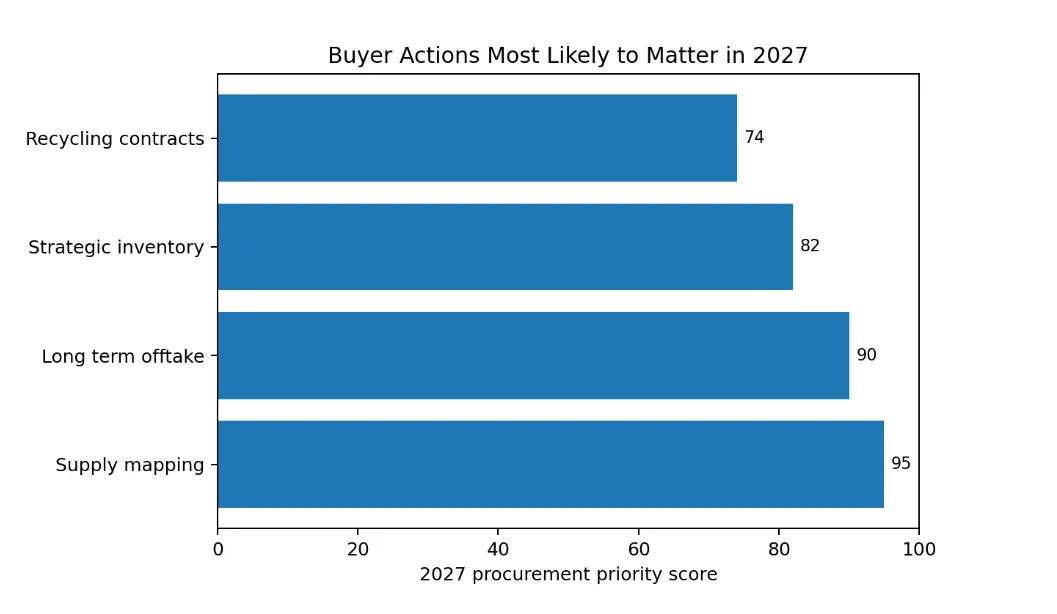
The first priority is supply mapping. Buyers need to identify where materials are mined, refined and converted before they enter tier one suppliers. This is especially important for rare earth magnets, graphite anodes, tungsten products and semiconductor related minerals. The second priority is long term offtake. Buyers with predictable demand can support new projects through committed volumes and price structures that make alternative supply economically viable.
The third priority is inventory policy. Strategic stockpiles can protect production against short disruptions, although they require working capital and clear shelf life management. The fourth priority is recycling. Battery recycling, magnet recovery and industrial scrap processing can provide regional material sources that are less exposed to trade restrictions. DataM Intelligence expects the Battery Recycling Market to grow from US$ 3.41 billion in 2025 to US$ 40.72 billion by 2035, showing how circular supply is becoming part of resource security planning.
Customize the Critical Minerals Market Report to Match Your Business Strategy
Get a Customized Critical Minerals Market report tailored to your specific business requirements. Define the scope, add or remove market segments, focus on specific countries or regions, and access customized data, metrics and forecasts.
The Winners Will Control Processing, Traceability and Alternative Supply
The next phase of the critical minerals supercycle will reward companies that solve physical availability. Mining remains essential, while refining, separation, recycling and component conversion are becoming more strategically valuable. The IEA warns that refining concentration reached record levels in 2025 even as governments accelerated diversification efforts. That creates a gap between policy ambition and commercial supply that will remain visible in 2027.
For buyers, the central question is changing from how much a mineral costs to whether production can continue if a trade route closes or an export license is delayed. Companies that secure diversified suppliers, trace material origin, contract recycling capacity and maintain appropriate inventories will be better positioned. Critical minerals are becoming part of corporate security planning because they now sit inside batteries, semiconductors, grid systems and defense equipment. The procurement teams that treat them as strategic inputs before shortages emerge will have the strongest negotiating position.