


Why the rise of pre owned apparel is one part of a larger shift toward resale, repair, rental, recycled fibers and product life extension
Executive signal
| Consumer pull | Regulatory push | Brand response | Market implication |
| Pre owned buying is now mainstream in the US and Europe. | Textile collection and producer responsibility are moving into formal policy. | Brands are building resale, repair, rental and recycled material models. | Circular fashion is becoming a revenue strategy and a compliance requirement. |
Pre Owned Apparel Is Becoming the Entry Point for Circular Fashion
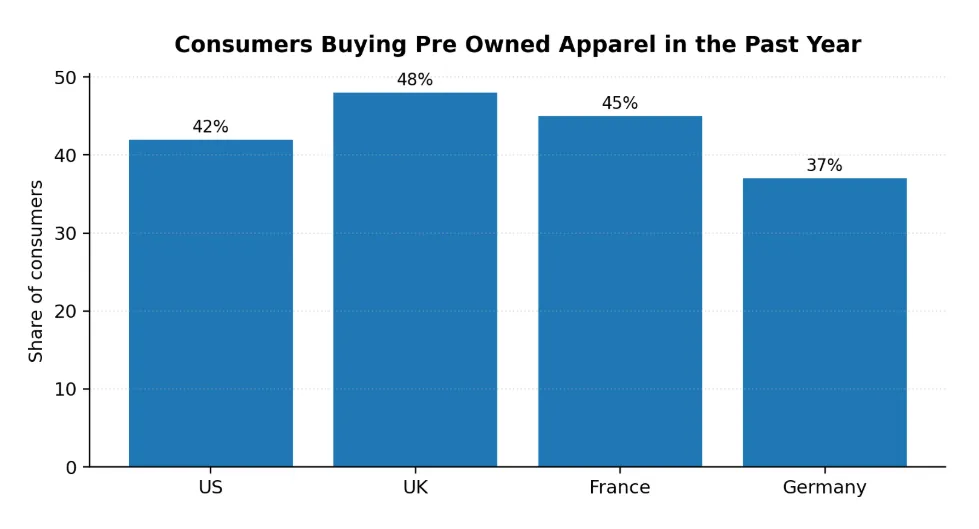
The growth of pre owned apparel in the US and Europe shows that circular fashion has moved into mainstream consumer behavior. Recent Bain research shows that 42% of US consumers bought secondhand clothing or accessories at least once in the past year. The figure was 48% in the UK, 45% in France and 37% in Germany. This level of participation means resale has moved from a niche behavior into a mainstream retail habit.
The more important point is what this says about circular fashion demand. Pre owned apparel is the most visible part of the shift, although the broader market also includes repair, rental, remaking, recycling, sustainable fibers and digital product traceability. For a wider market view, see the Circular Fashion Market report, which tracks how resale and reuse models are expanding across apparel, footwear and accessories.
Circular fashion is therefore becoming a commercial model rather than only a sustainability message. Consumers are responding to value, uniqueness and access. Regulators are pushing producers to take more responsibility for textile waste. Brands are trying to extend product life while finding new revenue pools outside traditional new product sales.
Get the Roadmap to the Global Circular Fashion Market
Download the Circular fashaion market free sample report to evaluate competitive brand strategies from top players like Patagonia, H&M, and Levi's. Gain instant access to our comprehensive table of contents, sample data charts, and research methodology.
The New Circular Fashion Consumer Is Young, Digital and Value Driven
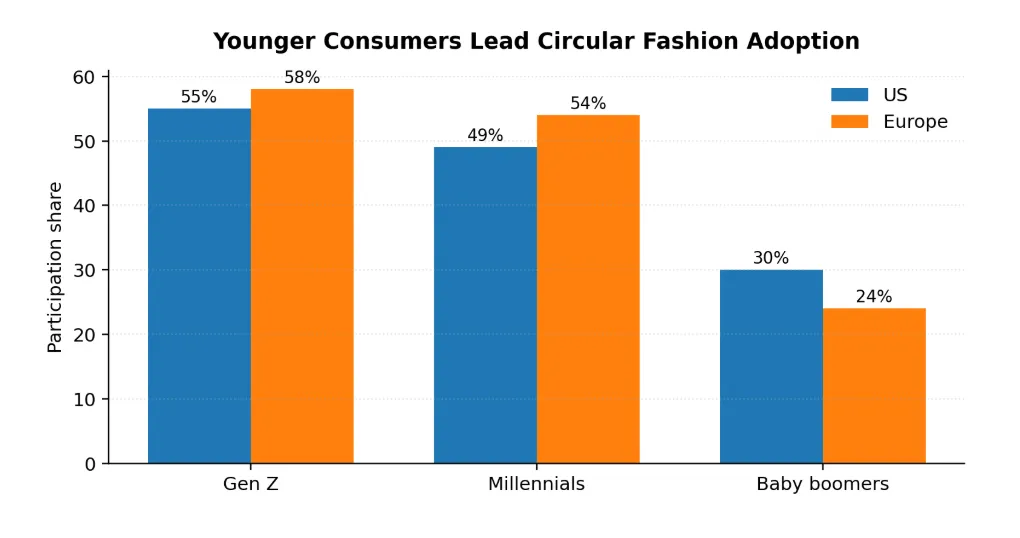
Younger consumers are leading the shift. Bain reports that Gen Z participation in pre owned apparel reached 55% in the US and 58% in Europe. Millennials are also highly active, with participation of 49% in the US and 54% in Europe. Baby boomers show lower participation, with 30% in the US and 24% in Europe.
This matters because circular fashion adoption is strongest among consumers who will shape fashion demand over the next decade. Younger shoppers are more comfortable buying through digital platforms, comparing prices, reselling items and treating ownership as more flexible. They are also more willing to buy product categories that older shoppers may avoid in resale, including footwear and trend led fashion.
The category is also being supported by price pressure. Bain found that three quarters of pre owned apparel and accessories shoppers cited saving money as one of their top motivations. This means circular fashion is benefiting from both sustainability awareness and affordability pressure. For brands that want to understand this wider shift in eco conscious apparel and retail transformation, the Sustainable Fashion Market report provides a broader demand outlook.
Circular Fashion Channels Are Splitting Between Store Discovery and Platform Scale
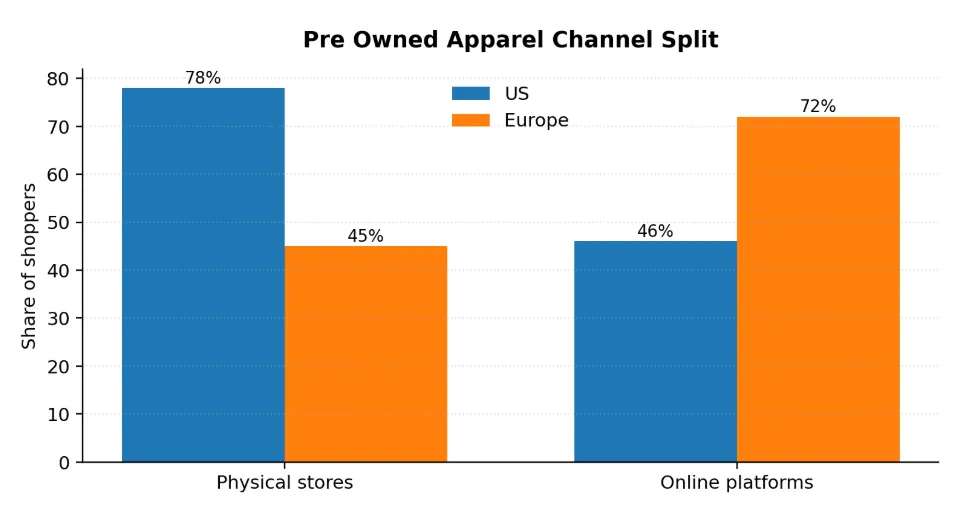
The channel story is different in the US and Europe. Bain research shows that US shoppers are more likely to buy pre owned apparel in physical stores, with 78% using stores compared with 46% using online resale platforms. Europe shows the opposite pattern, with 72% using online resale platforms and 45% using physical stores.
This channel split has strategic implications. The US market still carries a strong thrift store and consignment culture, which supports discovery and local inventory. Europe is more digitally platform driven, helped by resale marketplaces that make listing, shipping and discovery easier for consumers. Over time, the US market may move further online as resale platforms improve authentication, logistics and product search.
For brands, the channel question is central to circular fashion strategy. A brand owned resale program offers control over pricing, authenticity and customer data. A marketplace partnership can scale faster and reduce operational complexity. Luxury brands face an especially important decision because authentication and brand presentation directly affect consumer trust. The Secondhand Luxury Market report is relevant for companies evaluating authenticated resale, certified pre owned models and circular luxury positioning.
Savings Are Pulling Consumers Into Circular Models Faster Than Sustainability Alone
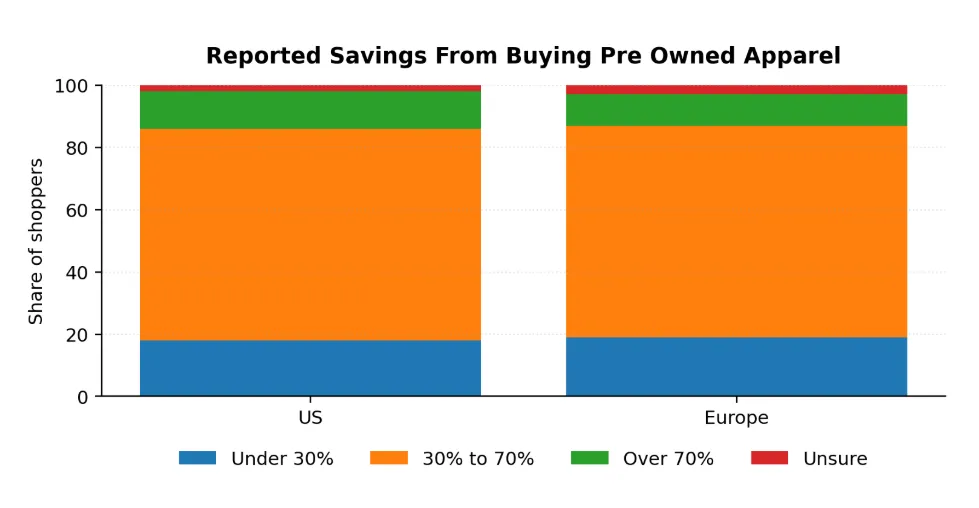
The economics of resale are one reason circular fashion is scaling. Bain found that 68% of pre owned shoppers in both the US and Europe believe they save between 30% and 70% compared with buying the same item new. This range creates a strong value proposition for consumers and a practical pricing benchmark for resale platforms.
The savings story also changes how brands should think about circular fashion. Resale can introduce consumers to higher quality products at lower entry prices. It can keep customers inside a brand ecosystem after the first sale. It can also reduce the appeal of lower quality fast fashion when consumers can access better products through resale at similar prices.
Circular fashion growth will depend on whether companies can make secondhand buying feel easy, trustworthy and comparable to buying new. That requires grading systems, product photography, logistics, returns management and data driven pricing. Without these capabilities, resale can remain fragmented and operationally expensive.
Circular Fashion Is Expanding Into Materials, Repair and Textile Recycling
Pre owned apparel is the first layer of circular fashion. The larger opportunity is to redesign how clothing is made, used, recovered and converted into new value. The Ellen MacArthur Foundation frames circular fashion around keeping products and materials in use at their highest value, while eliminating waste and pollution. This includes resale, repair, remaking, rental and textile recycling.
Regulation is accelerating this broader shift. The European Environment Agency notes that EU Member States must establish separate collection systems for used textiles from 2025. The European Commission has also advanced rules to strengthen textile circularity and producer responsibility. This means brands will face growing pressure to plan for collection, sorting, reuse and recycling rather than treating product sale as the end of responsibility.
Materials innovation will become especially important. Textile to textile recycling is still difficult because many garments contain blended fibers, dyes, coatings and trims that complicate recovery. Recycled polyester, sustainable textile fibers and mono material design will therefore play a larger role in the next phase of circular fashion. The Recycled Polyester Market report and Sustainable Textile Fibers Market report provide relevant insight into recycled fiber demand, closed loop textile opportunities and sustainable material substitution.
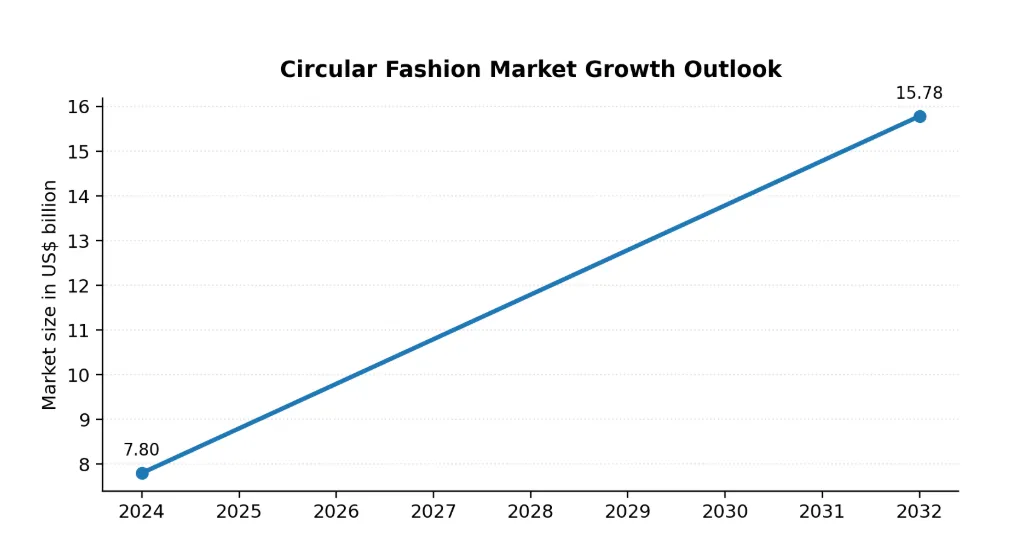
Brands Need Circular Revenue Models Beyond Sustainability Campaigns
Circular fashion is moving toward an operating model question. If brands continue to measure success mainly through new product volume, circular programs may remain small side initiatives. If brands begin measuring revenue from resale, repair, rental and recommerce, circularity can become part of the commercial growth model.
The strongest opportunities will likely sit in four areas. First, resale programs can extend customer lifetime value and bring value conscious consumers into premium categories. Second, repair services can improve loyalty and extend product life. Third, recycled materials can reduce dependence on virgin inputs. Fourth, digital product passports can improve traceability, authentication and future resale value.
This creates new requirements for retailers and apparel companies. They will need reverse logistics, condition grading, repair networks and product data infrastructure. They will also need to design garments that are easier to repair, reuse and recycle. Circular fashion therefore connects product design, retail operations, sustainability compliance and digital commerce into one strategy.
The 2026 Circular Fashion Outlook
The rise of pre owned apparel is an important signal, but it should be read as part of a larger market transformation. Circular fashion is becoming a response to consumer value pressure, textile waste regulation, supply chain risk and brand differentiation. The market is moving from occasional resale behavior toward a wider system built around product life extension and material recovery.
The next phase will be more demanding. Brands will need to prove that circular models reduce waste, protect margins and create better customer engagement. Platforms will need to improve trust, authentication and logistics. Material suppliers will need to scale recycled and sustainable fibers. Regulators will continue pushing the industry toward higher accountability for product end of life.
The key takeaway is clear. Pre owned apparel is becoming the consumer facing doorway into circular fashion, while the real market opportunity extends across materials, repair, digital traceability and new retail business models. Circular fashion now reaches far beyond selling old clothes again. It is becoming a blueprint for how the fashion industry can grow without depending only on higher new product volumes.