


Waste-to-Energy & Circular Infrastructure Perspective | 2026
| POLICY SIGNAL | IEA report for the Türkiye COP31 Presidency targets a 50% reduction in the projected growth of global municipal solid waste by 2035. |
| DECARBONIZATION | A full circularity package could avoid more than 1.5 GtCO₂e annually by 2035. Sustainable energy recovery from residual waste contributes at least 0.6 GtCO₂e. |
| COMMERCIAL QUESTION | Which cities and projects will convert residual waste into bankable power, heat, biomethane or fuel projects - and which technology providers are positioned to capture that shift? |
Waste Is Moving From a Disposal Problem to an Energy-System Variable
The November 11, 2026 IEA report changes the framing of waste infrastructure. It does not argue for incinerating more material. It places waste prevention first, recycling second and sustainable energy recovery as the route for residual streams that remain difficult or uneconomic to recycle. That hierarchy matters commercially because it gives WtE a clearer role inside a circular-economy policy framework rather than positioning it as a substitute for recycling.
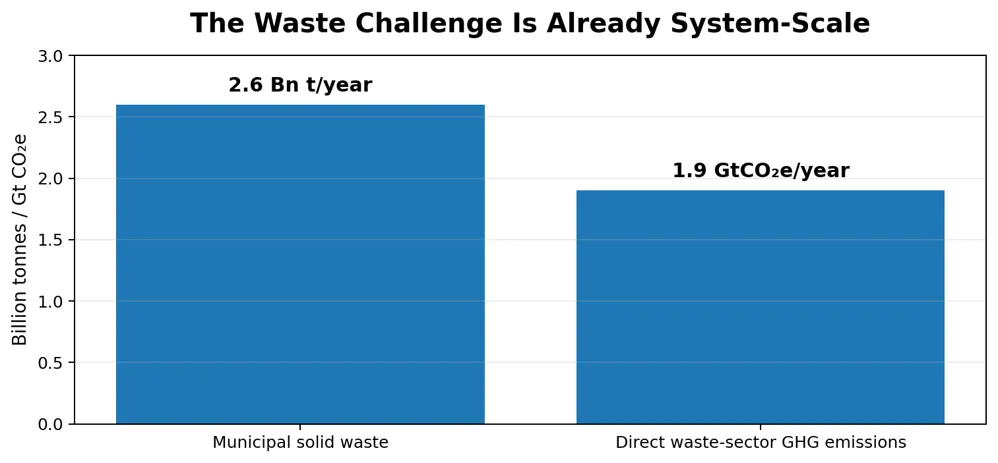
The world already generates around 2.6 billion tonnes of municipal solid waste each year. Direct waste-sector emissions are about 1.9 GtCO₂e annually, and methane accounts for roughly 85% of that footprint. The investment opportunity therefore sits where projects can simultaneously reduce uncontrolled disposal, cut methane and recover useful energy or fuels.
Request Sample: https://www.datamintelligence.com/download-sample/waste-to-energy-market
The 1.5 GtCO₂e Opportunity Is a Portfolio - Not a Single Technology Bet
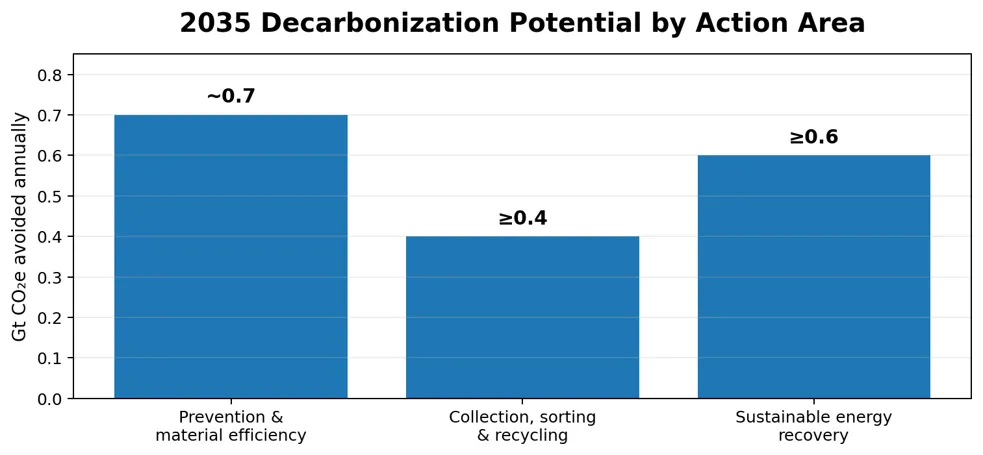
The IEA estimates that a comprehensive package of circularity and waste-management actions could cut global greenhouse gas emissions by more than 1.5 GtCO₂e annually by 2035. About 0.7 Gt comes from waste prevention and material efficiency, at least 0.4 Gt from stronger collection, sorting and recycling, and at least 0.6 Gt from sustainable energy recovery from residual waste.
For WtE developers, the implication is subtle but important: the investable feedstock pool is the residual fraction after prevention and recycling improve. Projects that assume unlimited mixed-waste availability may face policy risk. Projects designed around unavoidable residues, organics, biomethane and high-efficiency heat recovery fit the direction of travel much better.
Methane Avoidance Is Becoming the Highest-Value Climate Attribute
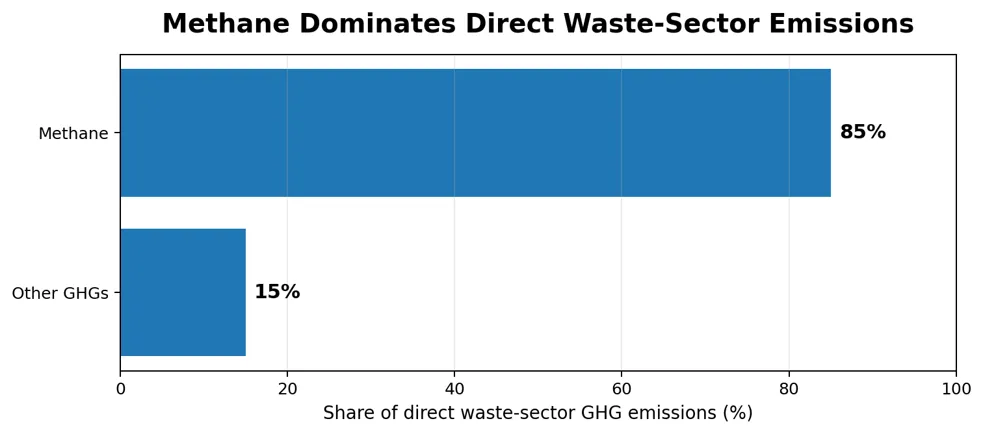
Waste-sector methane has a much larger near-term warming impact than carbon dioxide. The IEA estimates methane represents about 85% of direct waste-sector greenhouse gas emissions. That shifts project economics toward technologies that prevent organics from decomposing unmanaged in landfills - anaerobic digestion, landfill-gas capture, biomethane upgrading and controlled thermal treatment of non-recyclable residues.
This also changes how projects can be packaged for municipalities, utilities and infrastructure investors. A project can now be assessed not only on gate fees and power revenue, but also on avoided landfill methane, fuel displacement, local energy security and circular-economy compliance.
The Energy-Recovery Opportunity Is Expanding Beyond Electricity
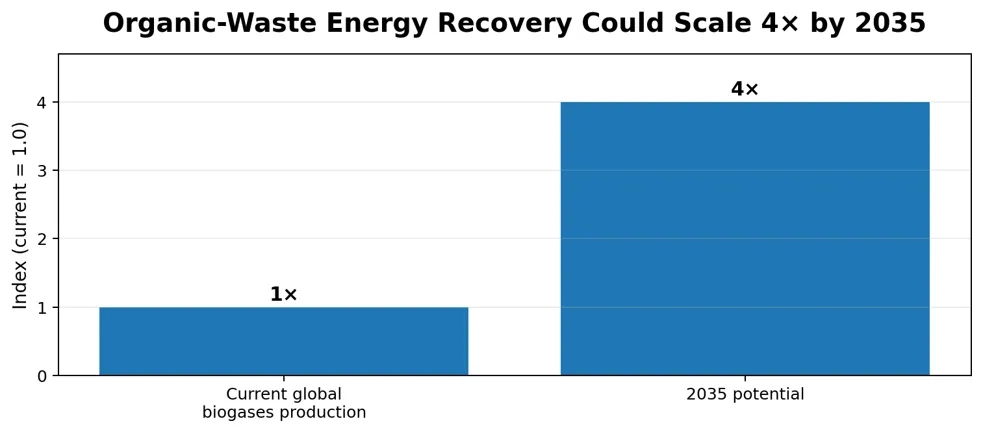
The IEA says global production of biogases could quadruple by 2035. That matters because the next generation of WtE projects is broader than mass-burn power. Organic waste can support biomethane for transport and industry, while residual solids can feed high-efficiency power, district heating and selected industrial thermal applications.
Request a Customized Report According to Your Business Strategy: https://www.datamintelligence.com/customize/waste-to-energy-market
Indore offers a useful operating example: its largest facility processes about 550 tonnes of organic waste per day into biomethane that fuels more than 400 city buses. That is the kind of municipal integration the new policy framework rewards - waste collection, emissions reduction and local energy supply linked in one system.
What This Means for the WtE Competitive Landscape
| Commercial signal | Why it matters | Likely WtE opportunity | What to track |
| 2035 waste-growth target | Prevention and recycling rise before disposal capacity | Residual-waste treatment, sorting integration | National waste plans, diversion rules |
| Methane in NDCs | Landfill emissions become a climate-policy KPI | Biogas, landfill-gas capture, AD | Methane baselines, carbon-credit rules |
| Residual waste definition | Feedstock quality matters more than gross waste volumes | RDF/SRF, high-efficiency thermal WtE | Recycling rates, calorific value, contamination |
| District heat / fuel demand | Energy recovery can monetize more than electricity | CHP, biomethane, industrial heat | Heat offtake, gas-grid access, transport demand |
| COP31 policy alignment | Projects gain policy relevance when they support circularity | Municipal PPPs, concessions, blended finance | Permitting, tenders, climate-finance eligibility |
The Commercial Takeaway: Residual Waste Is Becoming a Strategic Energy Feedstock
The IEA report is important because it narrows the legitimate role of WtE while simultaneously strengthening it. Waste prevention and recycling come first. But once those options are exhausted, residual waste is no longer treated purely as a disposal liability. It becomes a feedstock for methane avoidance, local fuels, heat and power.
That creates a more selective project pipeline. The strongest opportunities will be in markets where landfill methane remains high, waste collection is improving, recycling targets are becoming stricter and cities need dependable local energy or fuel. Developers that can document feedstock quality, emissions performance, energy offtake and circularity alignment are likely to be better positioned than projects built only around gross waste volumes.
For investors, EPCs, technology suppliers and municipalities, the key question is no longer simply “how much waste is available?” It is “how much residual waste remains after circularity measures - and which technology converts that residue into the highest-value climate and energy outcome?”
Use the Waste-to-Energy report to identify the countries, project pipelines, technologies, feedstock structures and policy frameworks most exposed to this circular-decarbonization shift. REQUEST THE REPORT