


Automotive Filters | Supply Chain Realignment Perspective | 2026
| MARKET SIGNAL | Chinese vehicle brands are gaining European registrations much faster than the traditional aftermarket catalog cycle can absorb. |
| SUPPLIER RESPONSE | MANN-FILTER has expanded to 242 applications across 133 models from 20+ Chinese manufacturers, targeting >82% coverage by end-2026. |
| COMMERCIAL QUESTION | Which brands, powertrains and filter categories will create the earliest replacement demand - and which wholesalers are positioned to stock them? |
The Aftermarket Is Being Forced to Prepare Before the Replacement Cycle Matures
Chinese electric and hybrid vehicles are no longer a niche import channel in Europe. Their registration base is expanding quickly enough that filter suppliers, wholesalers and workshops must build parts coverage before many vehicles reach their first major replacement interval. That creates an unusual aftermarket dynamic: catalog development, cross-referencing and regional inventory decisions are happening almost in parallel with new-car market penetration.
Request Executive Sample: https://www.datamintelligence.com/download-sample/automotive-filters-market
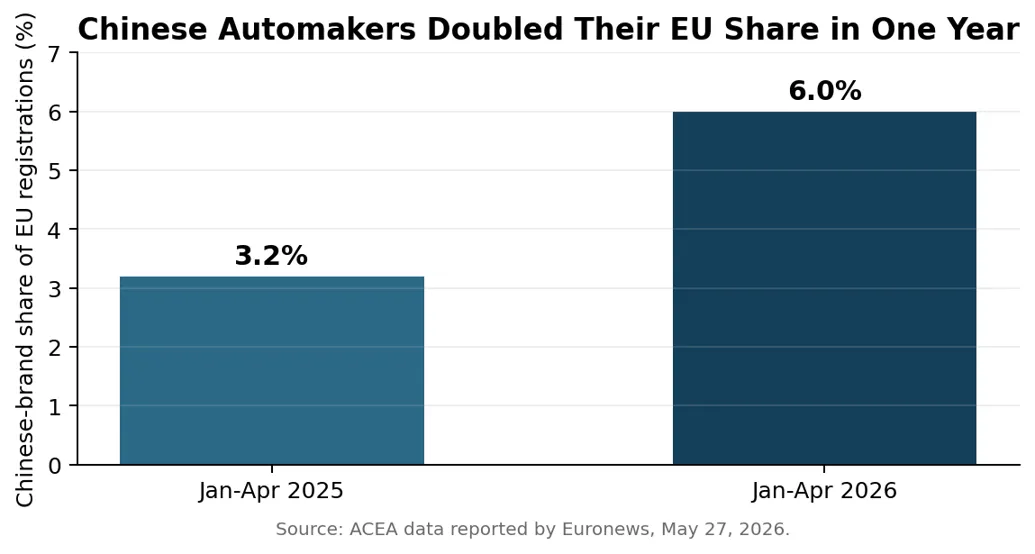
ACEA registration data reported in May showed Chinese brands at around 6.0% of EU registrations in January-April 2026, almost double the 3.2% recorded a year earlier. By August, broader Chinese-owned groups had reached 10.8% of total EU registrations in the monthly data, showing that the installed vehicle base is still expanding rapidly.
MANN-FILTER Is Treating Chinese Vehicles as a Core European Aftermarket Segment
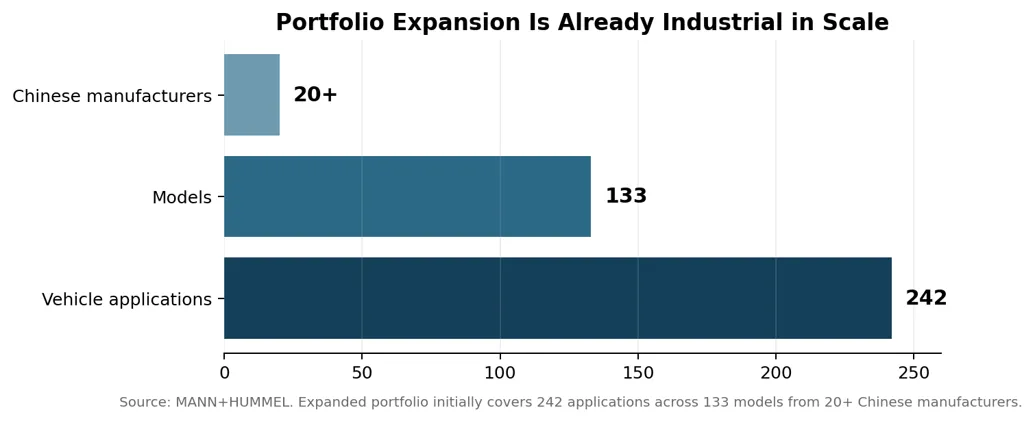
MANN+HUMMEL’s September 24, 2026 announcement is important because it shows how quickly a global filtration supplier is industrializing this segment. The company is bringing proven Chinese-market applications into Europe rather than waiting for a conventional vehicle-age curve to emerge. The initial expansion spans air, oil, fuel and cabin-air filters and is designed to serve both workshops and wholesalers.
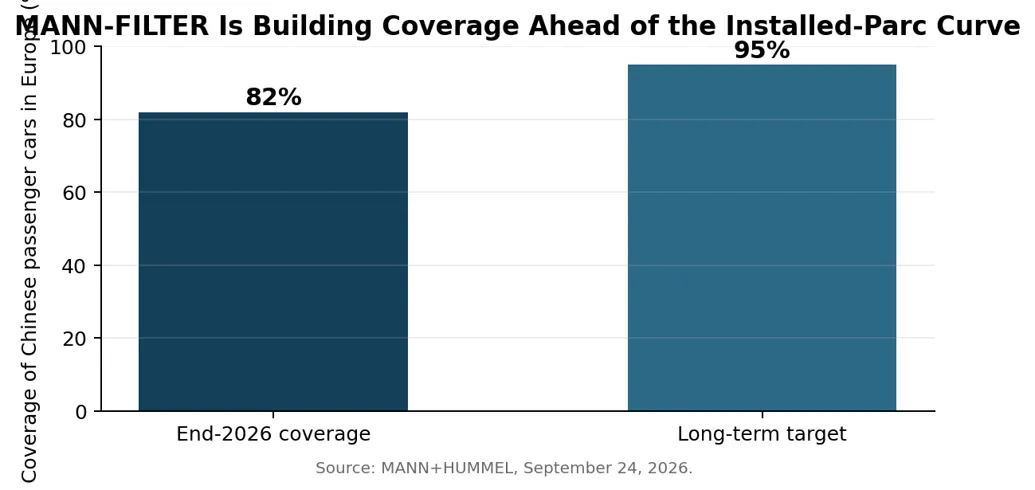
The strategic objective is not simply more SKUs. MANN-FILTER expects coverage of Chinese passenger cars in Europe to exceed 82% by the end of 2026 and has a stated long-term goal of 95%. That turns Chinese-brand support into a catalog completeness issue for distributors: a wholesaler that cannot identify the right cabin, air, oil or fuel filter for a fast-growing brand risks losing the entire workshop transaction.
EVs Change the Filter Mix - They Do Not Eliminate Aftermarket Filtration
Battery-electric vehicles remove engine oil and fuel filters, but they retain high-frequency cabin filtration demand and create greater emphasis on air-quality management, thermal systems and model-specific cabin-filter geometry. Plug-in hybrids and conventional hybrids add another layer because they preserve combustion-engine filtration while sharing many EV-style body and thermal architectures. For suppliers, the commercial problem is therefore powertrain-specific: a BYD BEV, an MG hybrid and a Chery plug-in hybrid do not create the same lifetime filter basket.
The New-Parc Growth Rate Is Faster Than Traditional Catalog Refresh Cycles
Request a Customized Report According to Your Business Strategy: https://www.datamintelligence.com/customize/automotive-filters-market
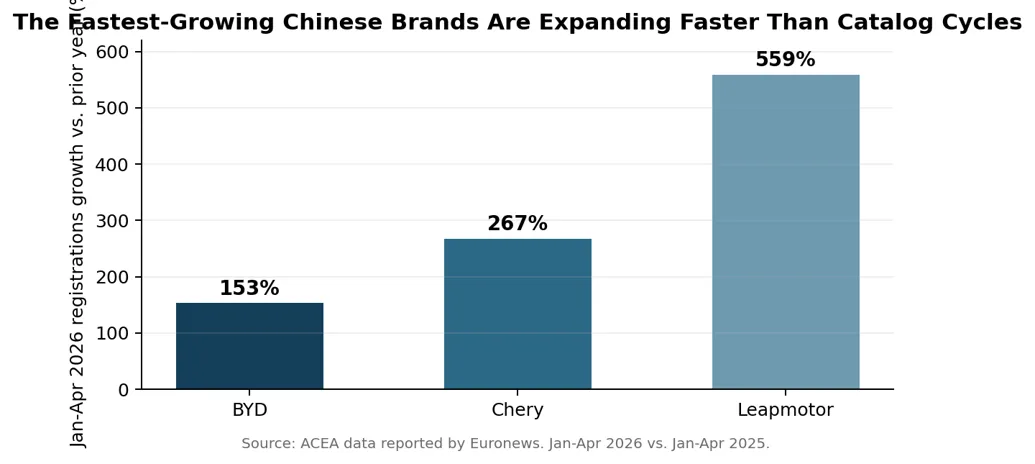
The growth rate of individual Chinese OEMs explains why reactive catalog management is no longer sufficient. BYD EU registrations more than doubled in the first four months of 2026. Chery expanded almost fourfold and Leapmotor increased more than sixfold. When model introductions are moving at this speed, aftermarket suppliers must map new VINs, platforms, engine families, cabin-filter dimensions and service intervals continuously rather than through annual catalog refreshes.
| 1 Vehicle parc grows Chinese EV/PHEV registrations accelerate | 2 Catalog gap opens New models arrive before broad aftermarket mapping | 3 Wholesalers re-index Cross-references, SKUs and local stock expand | 4 Replacement demand compounds Workshops need immediate fitment certainty |
This creates a different source of competitive advantage. In mature European parc, availability and price are often the main differentiators. In the Chinese-vehicle segment, accurate application mapping can be equally important. The supplier that knows which filter fits which newly launched variant can win the first replacement cycle and establish distributor preference before the category commoditizes.
Where the Automotive Filter Opportunity Is Concentrating
| Signal | Why it matters | Filter implication | Commercial action |
| Fast BEV growth | New parc forms quickly | Cabin filtration dominates recurring filter demand | Prioritize cabin-filter cross references and stock |
| PHEV / hybrid growth | ICE filtration remains relevant | Oil, air and fuel filters stay in the basket | Segment by powertrain, not brand alone |
| 20+ Chinese OEMs | High model fragmentation | Catalog complexity rises faster than volume | Automate application mapping and VIN data |
| Wholesaler urgency | Workshops need same-day identification | Availability becomes a trust signal | Localize high-velocity SKUs near service cluster |
The Aftermarket Winners Will Be Determined by Coverage Speed, Not Just Manufacturing Scale
The Chinese-vehicle expansion creates a race between vehicle parc growth and aftermarket readiness. Global filtration groups with local Chinese engineering history can reuse application knowledge, test data and OEM relationships. European wholesalers, meanwhile, must decide how quickly to add unfamiliar brands without overstocking slow-moving SKUs. Workshops need fitment confidence, while fleet operators need predictable maintenance availability before they commit to unfamiliar vehicle marques at scale.
This is why the most valuable market intelligence is no longer simply “How large is the automotive filter market?” The commercial questions are more operational: which Chinese brands are gaining parc fastest, which models are BEV versus PHEV, how quickly each model ages into replacement demand, which filter categories remain addressable and which suppliers already have validated European applications.
What Buyers Need From an Automotive Filters Market Report Now
• Chinese-brand parc growth by European country, model and powertrain
• Filter application coverage by supplier across cabin, air, oil and fuel filters
• New-model launch tracker and likely aftermarket replacement windows
• Wholesaler and distributor stocking patterns for Chinese vehicle parts
• Cross-reference mapping between OEM part numbers and independent aftermarket SKUs
• Pricing, lead times and availability by country for high-growth Chinese models
• EV versus hybrid lifetime filter-content analysis
• Supplier gap analysis identifying models with weak independent aftermarket coverage
Commercial implication: Chinese vehicle imports are creating an aftermarket before the parc is mature. Suppliers that map applications and localize inventory early can capture workshop preference before filter categories become commoditized.