


Introduction
The global semiconductor market industry is entering a new phase of competition as artificial intelligence (AI), cloud computing, autonomous systems, and advanced data infrastructure drive unprecedented demand for memory technologies.
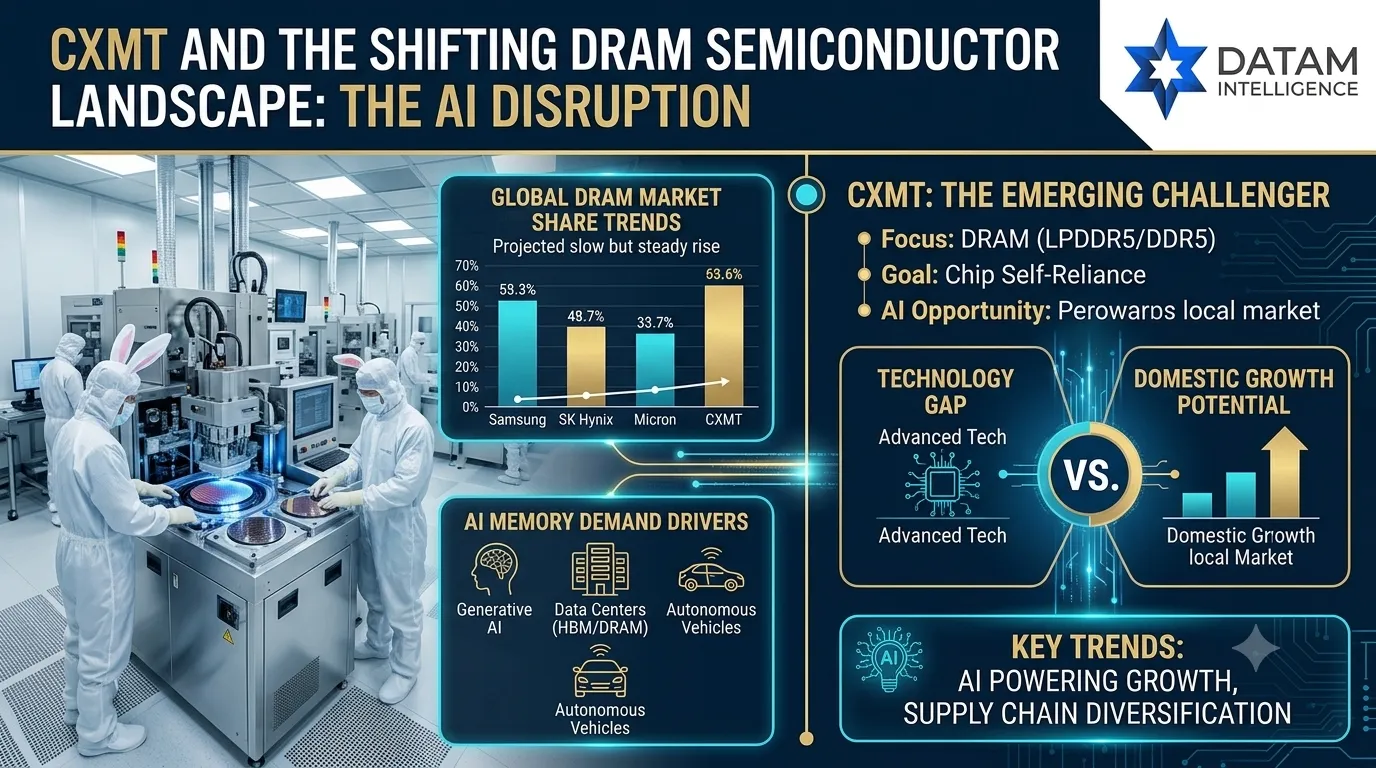
While companies such as Samsung Electronics, SK Hynix, and Micron Technology have historically dominated the memory semiconductor market, China’s ChangXin Memory Technologies (CXMT) is emerging as a potential disruptor in the global DRAM landscape.
CXMT’s expansion represents China’s broader ambition to strengthen semiconductor self-reliance and reduce dependence on foreign memory chip suppliers. As global demand for high-performance memory continues to accelerate, the company’s growth could reshape supply chains, pricing strategies, and competitive dynamics across the semiconductor ecosystem.
What Is CXMT and Why Does It Matter?
ChangXin Memory Technologies (CXMT) is one of China’s leading memory semiconductor manufacturers, focused primarily on DRAM (Dynamic Random-Access Memory) technology.
DRAM is a critical component used in:
- Artificial intelligence servers
- Data centers
- Smartphones
- Personal computers
- Automotive electronics
- Industrial applications
The company has become a strategic player in China’s semiconductor development roadmap, aiming to establish domestic capabilities in memory chip manufacturing.
Why Is the Memory Chip Market Becoming More Competitive?
The global memory chip market industry is undergoing a major transformation as technological advancements, rising data consumption, and shifting semiconductor strategies reshape the competitive landscape. Traditionally dominated by a small number of global players, the memory market is now experiencing increased competition due to the rapid expansion of artificial intelligence, growing demand for high-performance computing, and efforts by countries to strengthen domestic semiconductor capabilities.
As memory becomes a critical foundation for AI infrastructure, cloud platforms, autonomous systems, and connected devices, companies are investing heavily in advanced memory technologies, manufacturing capacity, and supply chain resilience. These developments are creating new opportunities for emerging semiconductor companies while increasing competitive pressure on established memory manufacturers.
1. Artificial Intelligence Is Driving Memory Demand Growth
The rapid adoption of artificial intelligence is one of the biggest factors increasing demand for advanced memory technologies. Modern AI models require enormous computing power and high-speed data access, making memory performance a critical factor in overall system efficiency.
Generative AI platforms, large language models (LLMs), machine learning applications, and AI-powered enterprise solutions depend on advanced memory architectures to process and manage massive datasets effectively. As organizations worldwide continue investing in AI infrastructure, memory chips have become a strategic component of next-generation computing systems.
Key memory technologies supporting AI growth include:
- DRAM (Dynamic Random-Access Memory):
Provides high-speed temporary data access required for servers, computing systems, and AI workloads. - High Bandwidth Memory (HBM):
Enables faster data transfer between processors and memory, making it essential for advanced AI accelerators and high-performance computing applications. - NAND Flash Memory:
Supports large-scale data storage requirements across enterprise servers, cloud platforms, and consumer electronics.
The growing demand for AI computing infrastructure is expected to accelerate innovation in memory technology as semiconductor companies compete to develop faster, more efficient, and higher-capacity solutions.
2. Semiconductor Supply Chain Diversification
Increasing geopolitical uncertainty, supply chain disruptions, and strategic technology competition have encouraged countries and companies to strengthen their semiconductor ecosystems. Memory chips have become a critical technology asset, leading governments to prioritize domestic manufacturing capabilities and reduce dependence on external suppliers.
China, in particular, has accelerated investments across multiple areas of the semiconductor value chain as part of its strategy to enhance technological self-reliance. The growth of CXMT reflects this broader initiative to develop domestic memory manufacturing capabilities and establish a stronger position in the global semiconductor market.
Key areas of semiconductor investment include:
- Advanced Semiconductor Manufacturing:
Expanding domestic chip production capacity to support long-term technology independence. - Memory Technology Development:
Increasing research and manufacturing capabilities in DRAM and other advanced memory solutions. - Chip Packaging and Testing:
Strengthening advanced packaging technologies required for high-performance computing and AI applications. - Semiconductor Equipment and Infrastructure:
Developing supporting ecosystems to improve manufacturing resilience and reduce supply chain vulnerabilities.
CXMT’s expansion aligns with this global shift toward semiconductor localization and supply chain diversification. While established memory manufacturers continue to maintain technological advantages, the emergence of new competitors is expected to increase innovation, reshape market dynamics, and create a more competitive global memory semiconductor ecosystem.
How Could CXMT Disrupt the Global Memory Chip Market?
Increasing DRAM Competition
The global DRAM market has historically been dominated by three major semiconductor companies Samsung Electronics, SK Hynix, and Micron Technology which together hold a significant share of the global memory semiconductor landscape. These companies have established strong competitive advantages through advanced manufacturing capabilities, extensive research and development investments, and long-standing relationships with technology customers worldwide.
The expansion of China’s CXMT into the DRAM market introduces a new competitive force that could gradually reshape industry dynamics. By increasing domestic memory production capacity and improving technological capabilities, CXMT has the potential to challenge existing market structures and encourage greater competition among global memory suppliers.
Potential Market Impacts:
- Increased Price Competition:
CXMT’s expansion could create additional supply capacity in the DRAM market, potentially influencing pricing strategies and increasing competitive pressure among established memory manufacturers. - Changes in Regional Supply Chains:
The growth of domestic memory production in China could encourage companies to diversify sourcing strategies and create new semiconductor supply chain networks across different regions. - Greater Investment in Memory Innovation:
Increased competition may push global memory leaders to accelerate investments in advanced DRAM technologies, manufacturing efficiency, and next-generation memory solutions. - New Semiconductor Ecosystem Partnerships:
CXMT’s development could lead to new collaborations across semiconductor manufacturing, equipment suppliers, technology providers, and downstream industries.
As CXMT continues to expand its capabilities, its impact on the global memory chip market will depend on its ability to overcome technology challenges, improve manufacturing efficiency, and compete with established leaders in advanced memory solutions. However, its emergence marks an important shift toward a more diversified and competitive global DRAM ecosystem.
CXMT’s Opportunities in the AI Semiconductor Era
The rapid expansion of artificial intelligence (AI), cloud computing, and high-performance computing is creating significant opportunities for memory semiconductor manufacturers. As AI applications become more complex, the demand for high-speed, high-capacity, and energy-efficient memory solutions is increasing across data centers, consumer electronics, automotive systems, and industrial applications.
For companies like CXMT, the AI-driven semiconductor transition represents an opportunity to expand beyond traditional memory applications and participate in emerging technology ecosystems where memory performance is becoming a critical factor in computing efficiency.
Key Growth Opportunities Include:
1. AI Data Centers and High-Performance Computing
AI data centers are becoming one of the largest growth drivers for advanced memory demand. Training and running large AI models require massive data processing capabilities, increasing the need for high-capacity and high-bandwidth memory solutions.
Key opportunities include:
- Supporting AI server infrastructure with advanced DRAM technologies.
- Expanding memory capacity for cloud computing and enterprise AI workloads.
- Developing solutions optimized for high-performance computing environments.
- Participating in the growing AI infrastructure supply chain.
As global investment in AI infrastructure continues to increase, memory manufacturers that can deliver scalable and efficient solutions will play an increasingly important role in supporting next-generation computing systems.
2. Edge AI Devices and Smart Technologies
The growth of edge AI is creating new demand for memory solutions closer to the point of data generation. Unlike traditional cloud-based processing, edge AI enables devices to analyze and respond to information locally, requiring efficient and reliable memory performance.
Growing application areas include:
- Smartphones and consumer electronics: Advanced AI features require faster and higher-capacity memory components.
- Automotive systems: Autonomous vehicles and intelligent driver-assistance technologies depend on memory for real-time data processing.
- Robotics and industrial automation: AI-powered machines require reliable memory infrastructure for decision-making and operational efficiency.
- Internet of Things (IoT) devices: Connected devices require optimized memory solutions for processing and storing large volumes of data.
CXMT’s ability to serve these expanding markets could create additional growth opportunities as AI becomes integrated into everyday devices and industrial systems.
3. Semiconductor Localization and Domestic Supply Chain Growth
China’s focus on semiconductor self-reliance is creating favorable conditions for domestic memory chip manufacturers. As technology companies and government initiatives prioritize supply chain security, locally produced semiconductor components are gaining strategic importance.
CXMT may benefit from:
- Growing demand from domestic technology companies seeking local memory suppliers.
- Increased investment in China’s semiconductor manufacturing ecosystem.
- Expansion of partnerships across chip design, manufacturing, packaging, and electronics industries.
- Reduced dependence on imported memory components.
While competing globally with established memory leaders will require continued technological advancement, CXMT’s position within China’s semiconductor ecosystem provides a strategic foundation for future growth.
Future Outlook
The AI semiconductor era is creating a broader shift in the memory industry, where performance, supply security, and technological independence are becoming key competitive factors. CXMT’s growth opportunities will depend on its ability to advance manufacturing capabilities, improve product competitiveness, and align with emerging demand from AI infrastructure, edge computing, and domestic semiconductor initiatives.
As AI adoption accelerates worldwide, memory manufacturers that can deliver scalable, reliable, and innovative solutions will be positioned to capture a larger role in the next phase of semiconductor industry growth. Challenges Facing CXMT
Despite its progress, CXMT faces several challenges before becoming a global memory leader.
Technology Gap
Leading memory manufacturers have decades of experience developing advanced DRAM technologies.
Competing at the highest levels requires:
- Advanced manufacturing processes
- Higher yields
- Improved efficiency
- Next-generation memory innovation
Competition From Established Leaders
Samsung, SK Hynix, and Micron continue investing heavily in:
- Advanced DRAM nodes
- AI memory solutions
- HBM technology
- Semiconductor research
Maintaining technological leadership remains a significant challenge for CXMT.
Semiconductor Equipment Restrictions
Advanced chip manufacturing depends on sophisticated semiconductor equipment and global supply networks.
Restrictions on access to advanced manufacturing technologies may impact China’s ability to rapidly close the technology gap.
Global Impact of CXMT’s Rise
CXMT’s emergence as a growing force in the memory semiconductor market could have significant implications across the global semiconductor ecosystem. As a new competitor in an industry historically dominated by a few major players, CXMT’s expansion may influence technology investments, supply chain strategies, pricing dynamics, and long-term market competition.
The company’s growth reflects a broader shift in the semiconductor industry, where regional manufacturing capabilities, supply chain resilience, and access to critical technologies are becoming increasingly important factors in global competitiveness.
Impact on Memory Chip Manufacturers
The rise of CXMT could encourage established memory leaders to accelerate investments in research and development, advanced manufacturing processes, and next-generation memory technologies. Companies such as Samsung, SK Hynix, and Micron may focus on improving production efficiency, expanding high-performance memory capabilities, and strengthening their technological advantages.
Potential impacts include:
- Increased investment in advanced DRAM and AI-focused memory solutions.
- Faster innovation cycles across memory semiconductor technologies.
- Greater focus on manufacturing efficiency and cost optimization.
- Expansion of strategic partnerships to strengthen competitive positioning.
Impact on Semiconductor Buyers
For semiconductor buyers, CXMT’s expansion could create a more diversified supplier landscape and provide additional sourcing opportunities. Increased competition among memory manufacturers may improve supply flexibility and influence pricing strategies across different market segments.
Potential benefits include:
- Greater supplier choice for electronics manufacturers and technology companies.
- Improved supply chain resilience through regional diversification.
- Potential changes in memory pricing and procurement strategies.
- Increased availability of memory solutions for emerging applications.
Impact on Investors
The growth of CXMT introduces new competitive dynamics within the memory semiconductor sector, creating both opportunities and challenges for investors. As new players enter the market, investors may closely evaluate factors such as technology progress, production capacity expansion, market share growth, and competitive positioning.
Key investment considerations include:
- Changing market dynamics among global memory manufacturers.
- Increased focus on semiconductor innovation and capacity expansion.
- Potential shifts in company valuations based on competitive performance.
- New opportunities within the broader semiconductor supply chain.
Impact on Technology Companies
Technology companies, including AI infrastructure providers, cloud service platforms, automotive manufacturers, and electronics producers, could benefit from evolving memory supply chains. A more competitive memory market may support greater flexibility in sourcing advanced memory components required for next-generation technologies.
Potential impacts include:
- Improved access to memory solutions for AI and high-performance computing applications.
- Greater supply chain flexibility for global technology manufacturers.
- New collaboration opportunities across semiconductor ecosystems.
- Support for the expansion of AI, automotive, and edge computing markets.
Future Industry Perspective
CXMT’s rise represents more than the entry of a new memory manufacturer; it highlights the ongoing transformation of the global semiconductor industry. As demand for AI infrastructure and advanced computing continues to grow, competition in memory technologies is expected to intensify.
While established companies maintain significant technological and manufacturing advantages, CXMT’s expansion could contribute to a more diversified semiconductor ecosystem, driving innovation, reshaping supply chains, and influencing the future direction of the global memory chip market.
Memory Chip Market Outlook
According to DataM Intelligence’s analysis of the memory chip market, the industry is expected to witness sustained growth as demand accelerates across artificial intelligence (AI), cloud computing, automotive electronics, enterprise infrastructure, and consumer technology applications. The increasing adoption of data-intensive technologies is creating a strong need for advanced memory solutions that can deliver higher speed, greater capacity, improved energy efficiency, and enhanced reliability.
The expansion of generative AI, large-scale data centers, and high-performance computing systems is becoming one of the primary drivers of memory semiconductor demand. AI workloads require advanced memory architectures to process and store massive volumes of data efficiently, increasing the importance of technologies such as DRAM, NAND Flash, and emerging high-performance memory solutions.
Beyond AI, industries such as automotive, telecommunications, industrial automation, and smart devices are also contributing to market growth. The transition toward connected vehicles, autonomous driving systems, edge computing, and Internet of Things (IoT) applications is increasing the requirement for reliable and high-capacity memory components across multiple sectors.
Key Trends Shaping the Future of the Memory Semiconductor Market:
- AI-Driven Demand Growth:
The rapid expansion of artificial intelligence applications is expected to remain a major growth catalyst for the memory chip industry. AI servers, machine learning platforms, and data center infrastructure require high-performance memory solutions to support faster processing, real-time analytics, and large-scale model training. - Advancement of Memory Technologies:
Continuous innovation in memory architecture will play a crucial role in meeting future computing requirements. Semiconductor companies are investing in advanced DRAM technologies, High Bandwidth Memory (HBM), next-generation NAND solutions, and energy-efficient memory designs to support evolving digital workloads. - Semiconductor Supply Chain Diversification:
Global supply chain disruptions and geopolitical developments are encouraging companies and governments to diversify semiconductor manufacturing and sourcing strategies. This shift is expected to create new opportunities for regional production hubs and strengthen supply chain resilience. - Regional Manufacturing Strategies:
Countries worldwide are increasing investments in domestic semiconductor manufacturing capabilities to secure critical technology infrastructure. Government initiatives, semiconductor incentives, and local production strategies are expected to influence future memory chip manufacturing trends. - Increasing Competition Among Global Players:
The memory semiconductor market is becoming increasingly competitive as established leaders and emerging manufacturers expand their capabilities. Companies are focusing on technology innovation, production efficiency, strategic partnerships, and capacity expansion to strengthen their market positions.
Future Market Perspective
The memory chip market industry is entering a transformative phase driven by the convergence of AI, digital transformation, and increasing global demand for computing power. As memory becomes a critical component of modern technology infrastructure, competition will extend beyond manufacturing scale toward innovation, supply chain control, and the ability to deliver advanced solutions for next-generation applications.
The rise of emerging players such as CXMT, combined with continued investments from established semiconductor leaders, is expected to reshape the competitive landscape. Going forward, companies that successfully develop advanced memory technologies while maintaining resilient supply chains will be best positioned to capture opportunities in the rapidly evolving semiconductor market.
Analyst Insight
CXMT’s emergence marks a significant shift in the global semiconductor market industry, where competitive advantage is expanding beyond processor innovation toward control of critical memory infrastructure. As artificial intelligence, cloud computing, and high-performance computing continue to scale, memory technologies such as DRAM and advanced AI memory solutions are becoming essential building blocks of the digital economy. Companies with strong memory capabilities will play a critical role in supporting the next generation of AI-driven applications.
The semiconductor industry has traditionally focused on advancements in logic chips and computing power; however, the rapid growth of generative AI and data-intensive workloads has elevated memory performance, capacity, and supply security to strategic priorities. CXMT’s growth reflects China’s broader ambition to strengthen domestic semiconductor capabilities and establish a stronger position in the global memory chip ecosystem.
Key Industry Implications:
- Increasing Global Competition:
CXMT’s expansion introduces a new competitive force into the DRAM market, challenging the long-standing dominance of established memory manufacturers and encouraging greater innovation across the industry. - AI-Driven Memory Demand Growth:
The rise of AI infrastructure, data centers, and advanced computing systems is increasing demand for high-performance memory solutions, making memory chips a strategic technology asset. - Supply Chain Transformation:
CXMT’s development could accelerate semiconductor supply chain diversification as companies and governments seek more resilient and geographically balanced technology ecosystems. - Pressure on Established Memory Leaders:
Global memory companies may increase investments in advanced manufacturing, next-generation memory technologies, and cost optimization to maintain their competitive advantage. - Strategic Importance of Semiconductor Independence:
CXMT’s progress highlights the growing importance of domestic semiconductor capabilities as countries compete to secure critical technologies for future digital infrastructure. - Long-Term Market Impact:
While CXMT still faces technology and manufacturing challenges, its expansion could reshape pricing dynamics, investment strategies, and competitive relationships within the global memory semiconductor market.
Overall, CXMT’s rise signals a broader transformation in semiconductor competition. The future of technology leadership will depend not only on developing faster processors but also on securing the advanced memory infrastructure required to power the AI economy. As AI adoption accelerates worldwide, memory chips will become a cornerstone of technological competitiveness, influencing innovation, investment, and global semiconductor strategies.
Key Strategic Takeaways
- CXMT is emerging as a strategic player in China’s semiconductor ecosystem:
ChangXin Memory Technologies (CXMT) represents China’s efforts to strengthen domestic memory chip manufacturing capabilities and reduce reliance on foreign semiconductor suppliers. - The global memory chip market is entering a new competitive phase:
The rise of CXMT introduces additional competition into a market historically dominated by Samsung Electronics, SK Hynix, and Micron Technology, potentially reshaping market dynamics and supplier strategies. - Artificial intelligence is becoming a major growth driver for memory demand:
The expansion of AI models, data centers, cloud computing, and high-performance computing is accelerating demand for advanced memory technologies, including DRAM, HBM, and NAND Flash. - Memory chips are becoming a critical technology asset in the AI era:
As AI workloads become more complex, memory performance, bandwidth, and capacity are becoming as important as processing power in enabling next-generation computing systems. - CXMT could influence global DRAM market dynamics:
Increased production capacity and technological advancement from CXMT may create greater price competition, encourage innovation, and push established memory manufacturers to accelerate investments in advanced solutions. - Semiconductor supply chain diversification is reshaping the industry:
Geopolitical factors, supply chain disruptions, and national semiconductor strategies are encouraging countries to develop localized manufacturing capabilities and create more resilient technology ecosystems. - Established memory leaders are increasing investments in innovation:
Companies such as Samsung, SK Hynix, and Micron are focusing on advanced DRAM technologies, AI-focused memory solutions, manufacturing efficiency, and next-generation semiconductor research to maintain their competitive advantage. - CXMT’s growth creates opportunities across emerging technology sectors:
AI data centers, edge AI devices, automotive electronics, robotics, and industrial automation are expected to drive future demand for advanced memory solutions. - Technology advancement remains a key challenge for CXMT:
Competing at the global level requires overcoming challenges related to advanced manufacturing processes, semiconductor equipment access, production efficiency, and next-generation memory development. - The future of the memory semiconductor market will be shaped by innovation, supply chain resilience, and strategic competition:
As AI adoption accelerates globally, companies that can deliver high-performance, scalable, and reliable memory technologies will play a critical role in shaping the future semiconductor landscape.
What is CXMT?
CXMT (ChangXin Memory Technologies) is a Chinese semiconductor company focused on developing DRAM memory chips and strengthening China’s domestic semiconductor capabilities.
Can CXMT compete with Samsung and SK Hynix?
CXMT is expanding its DRAM capabilities, but competing with Samsung and SK Hynix requires overcoming technology, manufacturing, and supply chain challenges.
Why are memory chips important for AI?
Memory chips provide the high-speed data access required by AI models, data centers, and advanced computing systems.
What is driving memory chip market growth?
AI adoption, cloud computing expansion, automotive electronics, and increasing digital data generation are major drivers of memory chip demand.