


As global agriculture faces increasing pressure to improve crop yields while reducing environmental impact, agricultural pheromones are emerging as one of the most effective tools in modern Integrated Pest Management (IPM) programs. Farmers, agribusiness companies, and crop protection specialists are increasingly adopting pheromone-based solutions to monitor, disrupt, and control pest populations without relying solely on conventional chemical pesticides.
The growing demand for sustainable agriculture, stricter pesticide regulations, and advances in precision farming technologies are accelerating the adoption of pheromone-based pest management strategies across major agricultural regions. As a result, agricultural pheromones are moving from niche biological control products to a core component of next-generation crop protection programs.
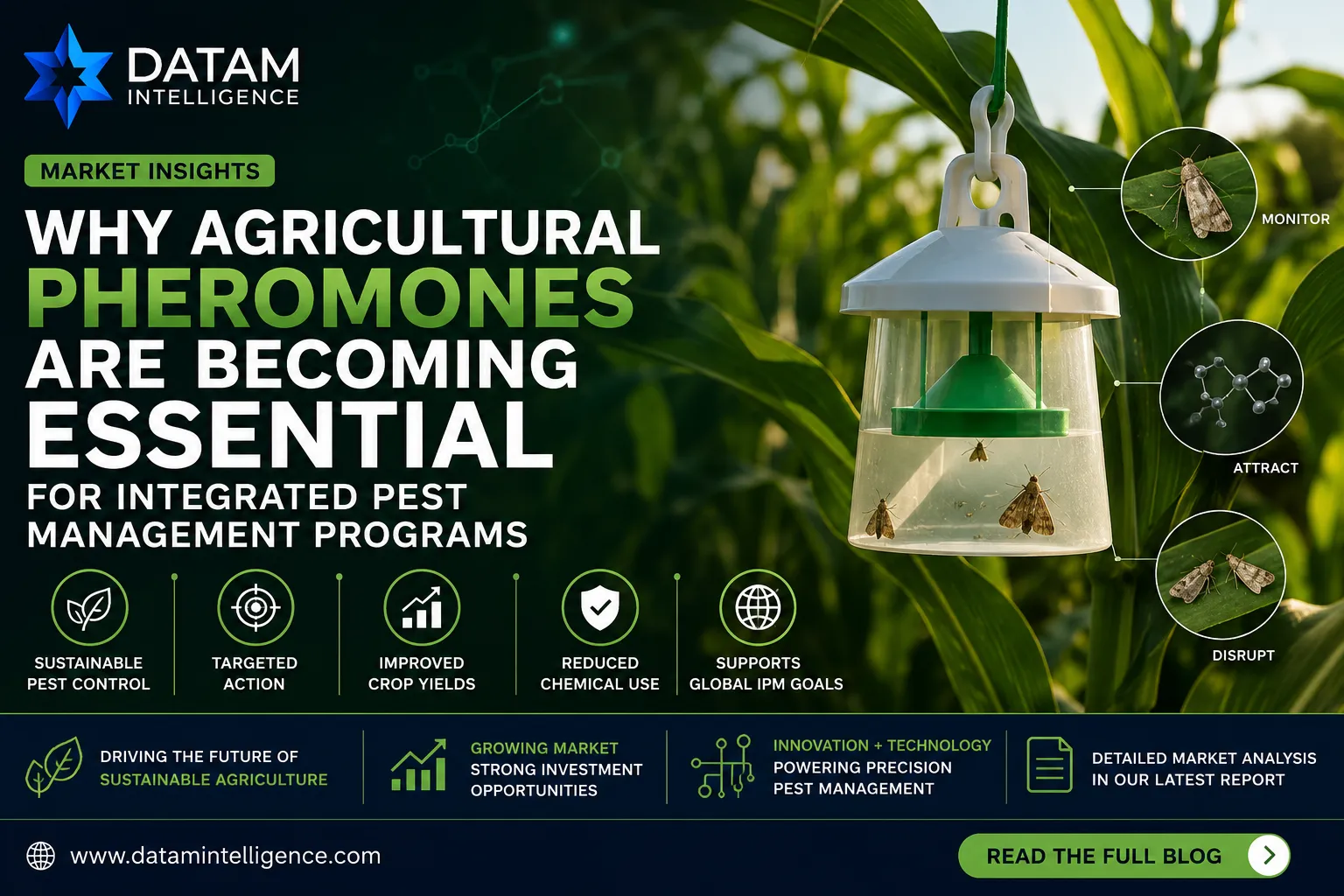
Agricultural pheromones are becoming essential for Integrated Pest Management (IPM) because they provide targeted pest control, reduce pesticide usage, support sustainable farming practices, and improve crop protection outcomes. By enabling early pest detection and mating disruption, pheromone-based solutions help farmers increase productivity while meeting environmental and regulatory requirements.
Download FreeSample Report
Gain a comprehensive overview of the global Agricultural Pheromones Market, including detailed insights on market size, growth drivers, key trends, competitive landscape, and future opportunities.
Access in-depth analysis of demand across crop protection applications, regional outlook, and emerging sustainable pest management solutions shaping the industry.
👉 Download the sample report now to explore data-driven insights and investment opportunities.
Understanding Agricultural Pheromones in Modern Crop Protection
Agricultural pheromones are naturally occurring chemical signals used by insects to communicate with members of the same species. Scientists have developed synthetic versions of these compounds that can be deployed in agricultural fields to influence insect behavior.
Common applications include:
- Pest monitoring and detection
- Mating disruption systems
- Mass trapping programs
- Population suppression strategies
- Early-warning pest surveillance
Unlike broad-spectrum pesticides, pheromones specifically target individual pest species, making them highly effective while minimizing impacts on beneficial insects and pollinators.
Why Integrated Pest Management Is Driving Pheromone Adoption
Integrated Pest Management focuses on combining biological, cultural, mechanical, and chemical control methods to achieve long-term pest suppression with minimal environmental impact.
Agricultural pheromones align perfectly with IPM objectives because they:
Reduce Dependence on Chemical Pesticides
Increasing concerns about pesticide resistance and residue regulations are encouraging growers to diversify pest management strategies. Pheromone-based solutions reduce unnecessary pesticide applications while maintaining effective pest control.
Improve Precision Pest Monitoring
Advanced pheromone traps provide real-time information on pest populations, allowing growers to make data-driven treatment decisions and optimize crop protection investments.
Support Resistance Management Programs
Because pheromones influence insect behavior rather than directly killing pests, they help reduce the selection pressure that contributes to pesticide resistance development.
Protect Beneficial Insects
Target-specific pheromone applications preserve pollinators, predators, and other beneficial organisms that contribute to agricultural ecosystem health.
The Rise of Precision Pest Management
The integration of pheromone technologies with precision agriculture platforms is creating new opportunities for growers.
Modern systems increasingly combine:
- Smart pheromone traps
- Remote monitoring sensors
- Artificial intelligence analytics
- Geographic information systems (GIS)
- Predictive pest forecasting tools
This shift toward precision pest management allows growers to identify infestations earlier, improve intervention timing, and reduce crop losses.
Sustainability Goals Are Accelerating Market Growth
Governments and food supply chains worldwide are placing greater emphasis on sustainable agricultural practices.
Agricultural pheromones help support sustainability objectives by:
- Lowering synthetic pesticide consumption
- Reducing environmental contamination
- Supporting biodiversity conservation
- Improving compliance with export regulations
- Enhancing consumer confidence in agricultural products
As sustainability becomes a strategic priority for agricultural producers, pheromone-based technologies are expected to capture a larger share of crop protection spending.
Investment Opportunities Across the Agricultural Pheromones Value Chain
The agricultural pheromones industry is increasingly attracting investor interest as global agriculture transitions toward more sustainable, technology-driven, and environmentally responsible crop protection strategies. Unlike traditional agrochemical segments that face mounting regulatory scrutiny, pheromone-based solutions benefit from strong alignment with long-term agricultural trends, making them an attractive area for strategic investment and innovation.
Several structural growth drivers are supporting the industry's expansion, including the rapid adoption of biological crop protection products, growing sustainability commitments from food producers, advancements in precision agriculture, and favorable regulatory frameworks encouraging reduced-risk pest management technologies. As a result, investors are identifying opportunities across multiple segments of the agricultural pheromones value chain.
Biological Crop Protection Expansion
The global shift toward biological crop protection is creating substantial demand for pheromone-based technologies. Growers are increasingly seeking alternatives to conventional pesticides that can deliver effective pest control while minimizing environmental impact and pesticide residue concerns. Agricultural pheromones are well-positioned to benefit from this transition due to their species-specific action and compatibility with integrated pest management programs.
Sustainable Agriculture Initiatives
Sustainability has become a strategic priority for governments, food manufacturers, retailers, and agricultural producers worldwide. Regulatory agencies are tightening restrictions on certain chemical pesticides, while consumers are demanding safer and more environmentally responsible food production methods. Pheromone-based pest management supports these objectives by reducing chemical inputs, protecting beneficial insects, and helping growers meet sustainability targets.
Precision Farming Adoption
The rise of precision agriculture is creating new opportunities for pheromone technologies. Modern farming operations increasingly rely on data-driven decision-making, and pheromone-based monitoring systems provide valuable real-time insights into pest populations and infestation risks. By integrating pheromone traps with digital farm management platforms, growers can optimize intervention timing, reduce crop losses, and improve overall operational efficiency.
Digital Agriculture Innovation
The convergence of agricultural pheromones with digital technologies is opening new investment avenues. Smart pheromone traps equipped with sensors, wireless connectivity, artificial intelligence, and predictive analytics are transforming pest monitoring from a manual process into an automated intelligence system. These innovations enable continuous field surveillance and support precision pest management strategies, creating opportunities for agritech companies and technology investors.
Regulatory Support for Reduced-Risk Pest Control Technologies
Government agencies across major agricultural markets are increasingly encouraging the adoption of reduced-risk crop protection solutions. Pheromone products often benefit from streamlined regulatory pathways compared to conventional pesticides because of their targeted mode of action and favorable environmental profiles. This regulatory support enhances market accessibility and strengthens the long-term growth outlook for companies operating in the sector.
Where Investors Are Finding Growth Opportunities
Investment opportunities are emerging throughout the agricultural pheromones ecosystem, including:
- Pheromone Manufacturing: Production of active pheromone ingredients and scalable manufacturing technologies.
- Advanced Formulation Technologies: Development of controlled-release systems, dispensers, and delivery mechanisms that improve field performance.
- Smart Monitoring Systems: Digital pheromone traps, remote sensing platforms, and AI-powered pest detection solutions.
- Agricultural Biotechnology: Research and development of next-generation biological crop protection products and species-specific pheromone applications.
- Integrated Pest Management Services: Consulting, monitoring, and implementation services that help growers deploy pheromone-based pest management programs effectively.
- Precision Agriculture Platforms: Integration of pheromone monitoring data with farm management software and predictive analytics systems.
Investor Outlook
As agricultural producers seek solutions that balance productivity, sustainability, and regulatory compliance, agricultural pheromones are expected to play an increasingly important role in future crop protection strategies. For investors, the sector offers exposure to several high-growth themes simultaneously, including biological agriculture, precision farming, digital agriculture, and sustainable food production. Companies that successfully combine pheromone science with advanced monitoring technologies and integrated pest management expertise are likely to be among the key beneficiaries of this evolving market landscape.
Challenges That Could Shape Future Adoption
Despite strong growth prospects, several factors may influence market development:
- Higher initial costs compared to traditional pesticides
- Limited awareness among smaller farming operations
- Regional differences in regulatory approvals
- Need for specialized application expertise
However, ongoing technological advancements and increasing commercialization are expected to improve accessibility and adoption rates.
What This Means for Agribusiness Leaders
For agribusiness companies, distributors, crop protection manufacturers, and investors, agricultural pheromones represent more than an alternative pest control solution. They are becoming a strategic component of the transition toward sustainable and data-driven agriculture.
Organizations that invest early in pheromone technologies, precision monitoring systems, and integrated pest management solutions are likely to benefit from growing demand as the agricultural sector prioritizes productivity, environmental stewardship, and regulatory compliance.
Conclusion
Agricultural pheromones are rapidly becoming essential to Integrated Pest Management programs because they combine precision, sustainability, and effectiveness in a single solution. As growers seek alternatives to traditional pesticide-intensive approaches, pheromone technologies are positioned to play an increasingly important role in modern crop protection strategies.
With advancements in precision agriculture, growing regulatory support, and rising demand for sustainable farming practices, agricultural pheromones are expected to remain a key growth segment within the global crop protection industry for years to come.
FAQ
Why are agricultural pheromones important in Integrated Pest Management?
Agricultural pheromones help monitor and control pest populations while reducing dependence on chemical pesticides, making them a core component of sustainable IPM programs.
How do pheromone traps work in agriculture?
Pheromone traps attract specific insect species using synthetic chemical signals, enabling farmers to monitor pest populations and determine optimal intervention timing.
What are the benefits of pheromone-based pest control?
Benefits include targeted pest management, reduced pesticide use, resistance management, environmental protection, and improved crop quality.
Which crops commonly use pheromone-based pest management?
Fruit crops, vegetables, vineyards, cotton, rice, and various field crops frequently use pheromone technologies for monitoring and mating disruption programs.
Are agricultural pheromones environmentally friendly?
Yes. Pheromones are highly species-specific and generally have minimal impact on beneficial insects, pollinators, and surrounding ecosystems.