


Agricultural Pheromones Market Overview
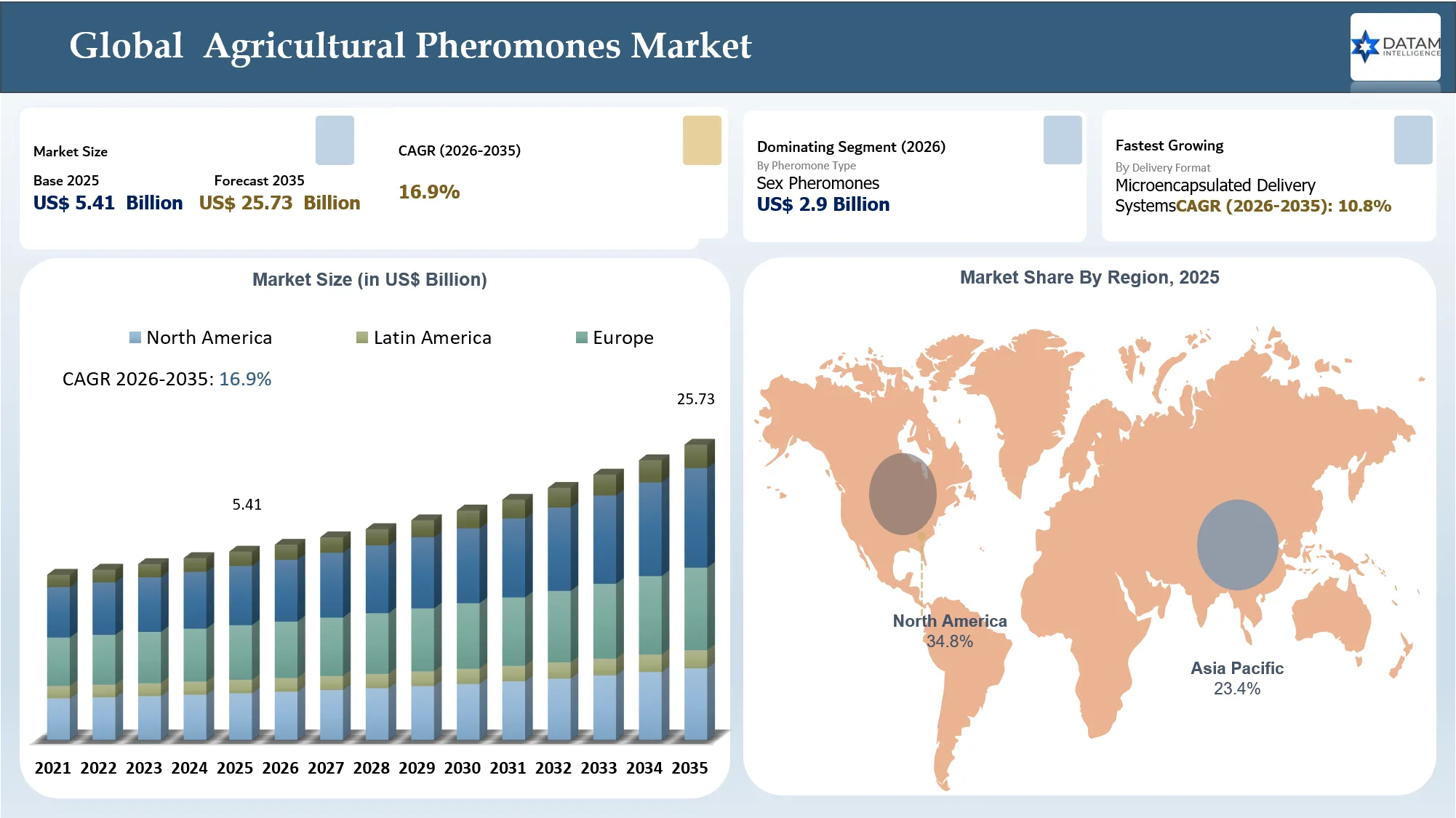
The Global Agricultural Pheromones Market stood at US$ 5.41 billion in 2025 and is expected to reach US$ 25.73 billion by 2035, growing with a CAGR of 16.9% during the forecast period 2026-2035.
The Global Agricultural Pheromones Market is gaining strategic importance as growers shift from chemical-heavy pest control toward targeted, residue-low and integrated pest management systems. Agricultural pheromones are used to influence insect behavior through mating disruption, monitoring and detection, mass trapping and attract-and-kill applications. Their role is strongest in high-value crops such as fruits, nuts, vegetables, vineyards, plantation crops, and protected cultivation, where pest damage directly affects yield, quality, export acceptance and farm profitability.
Market growth is being driven by increasing pesticide resistance, tightening residue standards, rising demand for sustainable farming and expanding adoption of IPM programs. EPA identifies pheromones as highly targeted, lower-risk pest control tools used in IPM to disrupt pest mating, while FAO highlights that IPM helps reduce pesticide residues and supports farm productivity by lowering crop losses. This strengthens the commercial positioning of pheromones as both a sustainability tool and a precision crop protection input.
The market is also evolving beyond basic lures and traps toward controlled-release dispensers, sprayable pheromones, microencapsulated formulations, smart traps and AI-enabled pest monitoring platforms. However, high initial cost, need for technical expertise and limited availability for minor crops continue to restrict adoption among small and price-sensitive farmers.
Agricultural Pheromones Market Key Takeaways
- North America held the highest market share at 34.8% in 2025, supported by mature IPM adoption, high-value specialty crop production, advanced pest monitoring, and strong residue-compliant crop protection demand.
- Europe remained the second-largest region with a 28.6% share in 2025, driven by strict pesticide regulations, sustainable farming policies and strong pheromone use across vineyards, orchards, and horticultural crops.
- Asia Pacific accounted for 23.4% share in 2025 and is expected to grow fastest, supported by expanding horticulture, rising pest pressure, export-oriented farming and increasing biological crop protection adoption.
- Sex pheromones dominated the pheromone type segment with 62.5% share in 2025, driven by strong usage in mating disruption, monitoring and mass trapping for moth-related pest control.
- Fruits and nuts led the crop type segment with 36.7% share in 2025, supported by high crop value, strict residue sensitivity, export quality requirements and recurring pest pressure in orchards and vineyards.
- Buyers are shifting from standalone lures and traps toward integrated pheromone-based IPM programs, combining mating disruption, monitoring, controlled-release formulations, digital traps, advisory support and residue-reduction strategies.
Agricultural Pheromones Market Scope
| Metrics | Details | |
| 2025 Market Size | US$ 5.41 Billion | |
| 2035 Projected Market Size | US$ 25.73 Billion | |
| CAGR (2026-2035) | 16.9% | |
| Largest Market | North America | |
| Fastest Growing Market | Asia-Pacific | |
| By Pheromone Type | Sex Pheromones, Aggregation Pheromones, Alarm Pheromones, Trail Pheromones, Host Marking Pheromones and Others | |
| By Function | Mating Disruption, Monitoring And Detection, Mass Trapping , Attract And Kill and Others | |
| By Crop Type | Fruits And Nuts, Vegetables, Field Crops, Plantation Crops, Greenhouse Crops, Floriculture Crops and Others | |
| By Pest Type | Moths, Beetles, Fruit Flies, Weevils, Borers, Leafminers, Aphids And Whiteflies and Others | |
| By Delivery Format | Dispensers, Lures, Traps, Sprayable Pheromones, Aerosol Puffers and Microencapsulated Delivery Systems | |
| By Formulation | Liquid Formulations, Solid Formulations, Gel Formulations, Microencapsulated Formulations and Controlled Release Formulations | |
| By Farming System | Conventional Farming, Organic Farming, Integrated Pest Management Farming and Protected Cultivation | |
| By End User | Commercial Farmers, Horticulture Producers, Plantation Growers, Greenhouse Growers, Pest Management Service Providers and Research And Extension Institutes | |
| By Distribution Channel | Direct Sales, Agrochemical Distributors, Agricultural Cooperatives, Specialty Crop Input Retailers and Online Sales Channels | |
| By Region | North America | U.S., Canada, Mexico |
| Europe | Germany, UK, France, Spain, Italy, Poland | |
| Asia-Pacific | China, India, Japan, Australia, South Korea, Indonesia, Malaysia | |
| Latin America | Brazil, Argentina | |
| Middle East and Africa | UAE, Saudi Arabia, South Africa, Israel, Turkiye | |
| Report Insights Covered | Competitive Landscape Analysis, Company Profile Analysis, Market Size, Share, Growth | |
Disruption Analysis
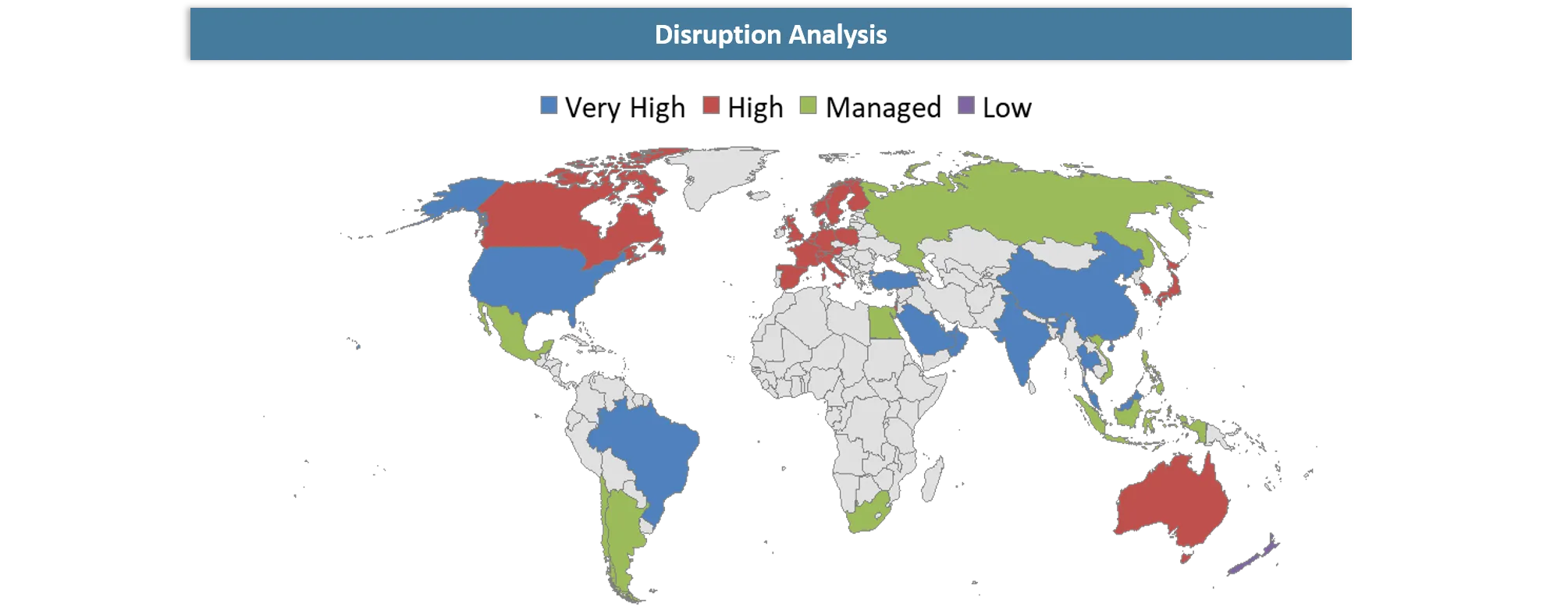
Agricultural Pheromones Are Redefining Crop Protection From Chemical-Heavy Pest Control To Precision, Residue-Low IPM Programs
The agricultural pheromones market is disrupting conventional crop protection by shifting pest control from broad chemical intervention to precision, species-specific pest management. Growers are increasingly using pheromone dispensers, lures, traps and mating disruption systems to reduce pesticide dependency, manage resistant pest populations and meet tightening residue standards in export-oriented crops. This shift is particularly strong in fruits, nuts, vegetables, vineyards and plantation crops, where pest damage directly affects quality, yield and market access.
The disruption is also changing the competitive landscape. Traditional agrochemical companies are expanding into biological and semiochemical solutions, while specialized pheromone players are gaining relevance through crop-specific pest programs and controlled-release technologies. Digital trapping, remote pest monitoring and data-led advisory models are further converting pheromones from standalone products into integrated pest intelligence platforms. As sustainability, food safety and precision agriculture become stronger purchase drivers, pheromone-based solutions are moving from niche IPM tools to strategic crop protection assets.
BCG Matrix: Company Evaluation
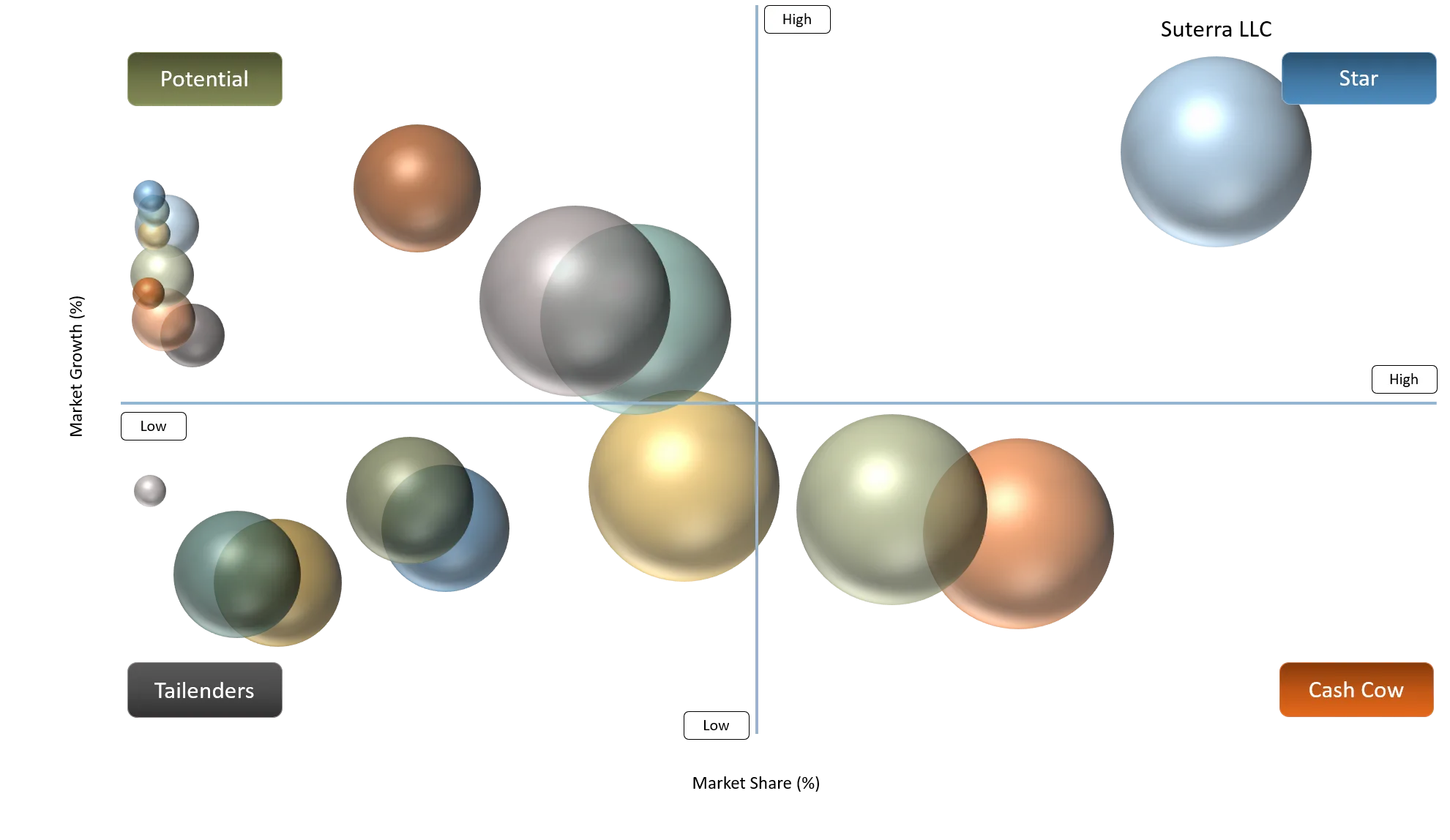
In the Agricultural Pheromones Market, Suterra LLC, Shin-Etsu Chemical Co., Ltd., Trécé Inc., CBC Group and Provivi, Inc. are categorized as major Stars due to their strategic fit within the growing market areas like mating disruption, monitoring, controlled release and crop-specific pest management programs. They carry more relevance in low-residue crop protection, pest management alternatives and sustainable solutions for broad-spectrum insecticides, especially on fruits, nuts, vineyards, vegetables, rice and corn. Competitive advantage lies in effectiveness in field conditions, species-specific pheromone compounds, dispensers, business relations and high crop value.
Russell IPM Ltd, Koppert B.V., Biobest Group NV, and Pherobank B.V. are stable Cash Cows owing to their repetitive consumption in connection with pheromone lures, traps, monitoring systems, and biological crop protection strategies, specifically within horticulture and greenhouse farming operations, or IPM-based farms. On the other hand, ISCA Inc., Semios, BedoukianBio, International Pheromone Systems, and Pherobio Technology Co. Ltd. come under the category of Question Marks because of their involvement in innovative and promising sectors like semiochemicals, intelligent traps, pest monitoring technologies, technical pheromones, and crop-specific solutions regionally, even when their scale is smaller compared to their market competitors. Lastly, Scentry Biologicals, Inc. is considered to be a niche player when it comes to monitoring solutions.
Agricultural Pheromones Market Dynamics
Rising Adoption Of Integrated Pest Management Programs Is Increasing Demand For Pheromone-Based Pest Control Solutions That Reduce Chemical Pesticide Dependency
The increasing use of integrated pest management programs is really driving the Agricultural Pheromones Market. More and more farmers are moving away from routine pesticide sprays towards targeted methods that tackle specific pests. Pheromone tools like mating disruption, monitoring traps, and mass trapping help growers catch pest issues early, cut back on needless insecticide use, and shield good bugs. These benefits are huge for fruit, nut, vegetable, vineyard, and greenhouse crops. With residue control, meeting export rules, and maintaining high crop quality crucial for profits in those sectors, pheromone strategies fit in perfectly.
As pests develop resistance to pesticides and governments get stricter about chemical use, pheromones look even better as a sustainable option. They work great with biological controls, organic practices, and low-residue systems, making them a key part of IPM plans. Commercial and export-focused farms love using these precise, eco-friendly tactics.
High Initial Cost Of Pheromone Dispensers, Lures And Monitoring Systems Limits Adoption Among Small And Price-Sensitive Farmers
The high initial cost still stands as a major issue for the Agricultural Pheromones Market, especially for small farmers in developing countries who are really cost-conscious. These farmers find that pheromone-based pest control usually needs more upfront money for things like dispensers, traps, lures, and field monitoring systems. This can be more expensive in the short term compared to using conventional insecticides.
This problem is even more noticeable in crops with low profit margins and smaller, less organized farms. Many growers go for quick fixes rather than preventive methods. Also, for pheromones to work well, pests need to be correctly identified and dealt with promptly, and fields have to be set up properly. All of this means a greater need for experts, which adds another layer of complexity.
If farmers aren't aware of the perks of pheromones, like less need for pesticides and improved crop quality down the line, they'll likely hold off on adopting the technology. Because of this, the use of these products remains mostly within high-value crops and those aimed at export markets.
Agricultural Pheromones Market Segmentation Analysis
The Global Agricultural Pheromones Market is segmented based on pheromone type, function, crop type, pest type, delivery format, formulation, farming system, end user, distribution channel, and region.
Sex Pheromones Dominate As The Core Revenue Segment In Agricultural Pheromones Market
Agricultural Pheromones are dominated by sex pheromones due to the large number of commercial applications compared to other types of pheromones. Sex pheromones have widespread adoption in controlling pests associated with moths, including codling moth, oriental fruit moth, grape berry moth, diamondback moth and pink bollworm. These are some of the common pests causing economic harm on various crops including fruits, nuts, vegetables, cotton and grapes. EPA classifies pheromones as selective, low risk pesticides used in IPM programs to disrupt pest mating, thus proving its use in commercial applications. The market also sees growth owing to the high demand for specialty crops, where prevention methods become economically viable. According to USDA ERS, fruit and tree nuts in the U.S. have US$28 billion per year in farm cash receipts while occupying under 2% of agricultural cropland area, proving the reason for farmers spending money on pest control. Thus, sex pheromones dominate the market based on the specificity of the pest, residues reduction, compatibility with IPM and extensive usage in premium crop systems.
Agricultural Pheromones Market Geographical Penetration
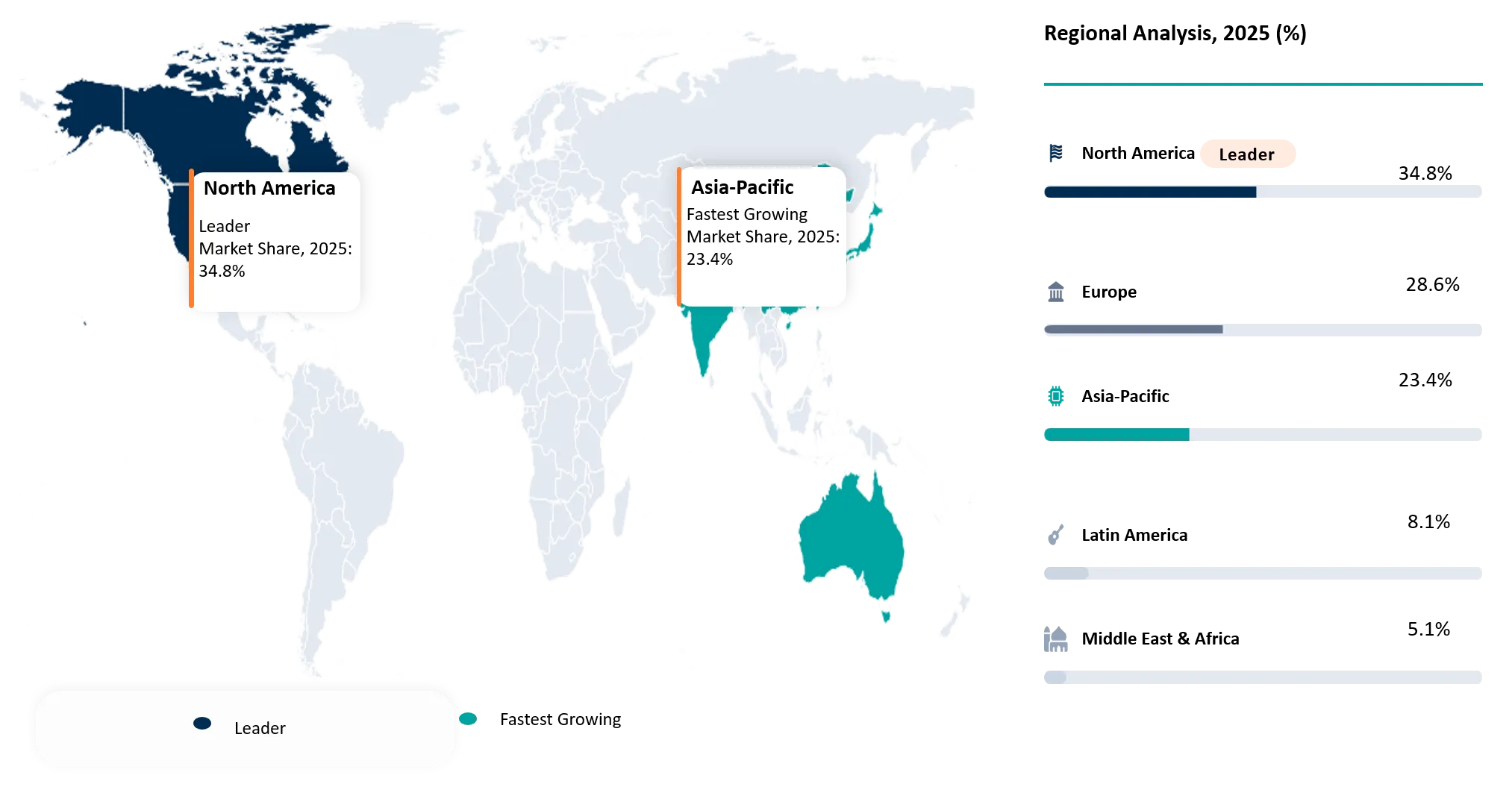
North America Leads The Agricultural Pheromones Market As High-Value Crop Protection Shifts Toward Residue-Low IPM Systems
North America leads the agricultural pheromones market thanks to its high-value specialty crops, mature pest management practices, and low-residue crop protection methods. Take California, for example; in 2024, its farms and ranches pulled in $61.2 billion, up 3.6% from the year before. Strawberries, pistachios, tomatoes, and carrots were key contributors. This is significant because the use of pheromones in high-value crops is extremely effective. These tactics include mating disruption, monitoring, and mass trapping, which boost yield, quality, and export potential. The USDA ERS reports that U.S. fruit and tree nut production, which earns around $28 billion yearly, only uses about 2% of total agricultural land. These products play a crucial role in intensive farming. The EPA supports pest management practices that embrace pheromones as they are seen as safer tools. This all increases adoption across orchards, vineyards, veggies, and protected growing spaces.
U.S. Agricultural Pheromones Market Trends
The U.S. leads North America in agricultural pheromone use, thanks to big specialty crop farms, wide use of advanced pest management, and strict limits on pesticides. These pheromones disrupt mating, help with monitoring pests, and make mass trapping easier. They’re super important in apples, grapes, berries, almonds, pistachios, citrus fruits, veggies, and greenhouse plants. In these crops, pest damage can seriously hurt yields and sell prices, even exports.
According to the USDA ERS, U.S. fruit and nut farmers rake in around $28 billion yearly from farm sales, using less than 2% of total farmland. This shows how valuable these niche crops are, justifying precise pest-control methods. Plus, the U.S. government backs specialty crops, defining them as fruits, veggies, nuts, dried fruits, and flowers through the USDA's Risk Management Agency. All this helps push pheromone use as growers look for low-residue, pest-targeted solutions for their integrated pest management systems..
Japan Agricultural Pheromones Market Outlook
Japan is an important market for agricultural pheromones in Asia Pacific, supported by high-value horticulture, strict food quality expectations and policy-led movement toward lower chemical pesticide dependency. The country’s vegetables and fruits remain commercially important crop groups, with OECD citing MAFF data that vegetables accounted for 25% and fruits for 10% of Japan’s total agricultural output value in 2024, creating a strong demand base for precision pest control in orchards, vegetables and protected cultivation. Japan’s MeaDRI strategy also aims to build integrated pest management systems that are not solely dependent on chemical crop protection products and targets a 50% reduction in chemical pesticide use by 2050 on a risk-equivalent basis. This policy direction strengthens the role of pheromone-based mating disruption, monitoring traps and mass trapping in residue-sensitive crop systems. Japan’s adoption will be led by growers seeking species-specific pest control, lower residue risk, better biodiversity alignment and improved field-level decision-making across fruits, vegetables, greenhouse crops and premium fresh produce supply chains.
Agricultural Pheromones Market Competitive Landscape
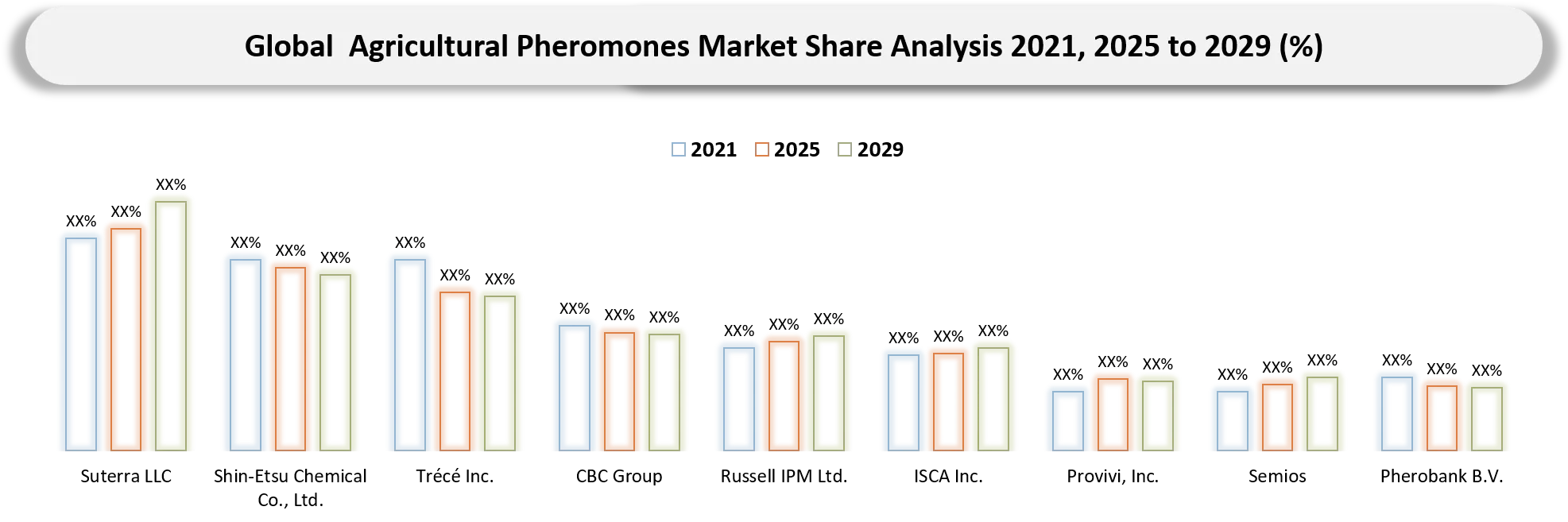
The market for pheromones in agriculture on a global scale features moderate consolidation. Competition within the industry is characterized by semiochemical firms and biological crop protection companies such as Suterra LLC, Shin-Etsu Chemical Co., Ltd., Trécé Inc., CBC Group, Russell IPM Ltd., ISCA Inc., Provivi, Inc., Semios, Pherobank B.V., Koppert B.V., Biobest Group NV, BedoukianBio, International Pheromone Systems, Scentry Biologicals, Inc. and Pherobio Technology Co., Ltd. Competitive advantage lies with those companies that produce more reliable products, provide species-specific pheromone formulations, have dispensers that last longer, effective lures, crop compatibility, and can help growers through technical assistance in the field. Firms having a strong portfolio in sex pheromones, mating disruption, monitoring lures, traps and controlled release are favored because adoption is highest in fruits, nuts, vineyards, vegetables and greenhouses. M2i Group is expanding their focus beyond being a European market leader to increased presence in Africa and Latin America alongside a growing focus on large acreage crops through their partnership with Pherobio.
The competition paradigm is moving from individual pheromone product offerings to pest management systems. Suterra, Shin-Etsu Chemical, Trécé, CBC Group, and Russell IPM will enjoy an upper hand because of their existing product lines, whereas Provivi and ISCA will bolster the market with their advanced semi-chemical technology and pest control measures. Semios brings in differentiation with its use of digital pest monitoring and data-driven crop protection, which demonstrates how the market is moving towards smart trap technology and precise agriculture. Koppert and Biobest stand to gain from their participation in wider biological crop protection networks, which facilitate offering of pheromones in combination with beneficial insects, biocontrol, and agronomic advice services. All in all, those players who will blend efficacy of pheromones with digital pest monitoring, agronomy, and logistics will have an edge over simple pheromone suppliers or trap vendors.
Key Companies
Major companies listed in the report are Suterra LLC, Shin-Etsu Chemical Co., Ltd., Trécé Inc., CBC Group, M2i Group, Russell IPM Ltd., ISCA Inc., Provivi, Inc., Semios, Pherobank B.V., Koppert B.V., Biobest Group NV, BedoukianBio, International Pheromone Systems, Scentry Biologicals, Inc. and Pherobio Technology Co., Ltd.
Agricultural Pheromones Market Recent Developments
In July 2026, Biobest Group NV expanded its biological crop protection portfolio with pheromone-based solutions for integrated pest management. The development focuses on reducing reliance on conventional chemical pesticides. This supports sustainable agricultural practices.
- In June 2026, Suterra LLC strengthened its pheromone-based pest management solutions with technologies designed for mating disruption and monitoring across major crops. The development improves pest control efficiency. This supports growers seeking residue-conscious crop protection.
- In May 2026, Provivi, Inc. advanced its pheromone-based crop protection technologies with solutions targeting key agricultural pests. The innovation focuses on species-specific pest control and reduced pesticide use. This benefits sustainable farming systems.
- In April 2026, ISCA Technologies, Inc. expanded its semiochemical-based pest management portfolio with pheromone solutions for monitoring and controlling agricultural insect populations. The development enhances integrated pest management strategies. This supports environmentally responsible crop production.
- In March 2026, Shin-Etsu Chemical Co., Ltd. strengthened its agricultural pheromone technologies with controlled-release formulations designed for long-lasting pest disruption. The development improves field performance and application efficiency. This supports large-scale crop protection.
AI Impact Analysis
AI is revving up the agricultural pheromones market by helping growers figure out pest pressures, use pheromone products better, and pick the right times for interventions. Traditionally, finding pests meant relying on manual scouting and slow reports, but now AI tools like image recognition, smart traps, and remote monitoring speed things up. These technologies quickly spot pests and send field-specific warnings, turning basic pheromone traps into effective, data-driven pest management systems.
Moreover, AI assists in planning mating disruption by checking pest numbers, crop growth stages, weather, and past issues. This way, farmers can tweak their pheromone use-adjusting placement, replacements, and handling techniques. For export markets and high-value crops, this means fewer unnecessary pesticide sprays and better quality control.
White Space Opportunities
In the agricultural pheromones market, there's a growing chance to create crop-specific and region-specific pest control. This is huge for high-value produce like fruits, nuts, veggies, and vineyards. Also, protected cultivation spots really benefit from residue control and export quality needs. Companies have big chances in long-lasting release products, sprayable pheromones, and smart traps that cut down on manual checking. Plus, there's a lot of room in developing regions of Asia Pacific, Latin America, the Middle East, and Africa. However, limited awareness and product access hold things back a bit. So, firms can expand by forming distributor-led advice models, government-supported integrated pest management programs, and combining pheromones with biocontrols. There's also untapped potential in minor crops and niche pests, where conventional insecticide replacements are thin on the ground but badly needed.
DMI Opinion
DMI thinks the agricultural pheromones market is shifting from a niche pest monitoring role to a key part of biological crop protection. This shift is being pushed by concerns about residue, export rules, and managing resistance. The biggest money-making chances are in premium crops like fruits, nuts, veggies, grapes, and tree plantations. For these, pests can hit yield, quality, and price hard.
Companies that just make lures or dispensers won't stand out much. But firms offering pheromone products alongside crop-specific guidance, digital traps, long-lasting formulas, and help with IPM will snag more valuable sales. DMI predicts that coordinated pheromone programs, not single products, will drive growth ahead, particularly in Asia Pacific and Latin America. There, expanding horticulture, export-driven farming, and tighter pesticide rules are boosting take-up of these methods.
Why This Report Matter in 2026?
This report is important in 2026 because agricultural pheromones are transitioning from a niche pest-monitoring tool to a key crop protection strategy. They help with residue control, export compliance, and resistance management. Farmers need to cut down on chemical pesticides while still keeping their yields high and quality intact, especially in fruits, veggies, nuts, vineyards, and plantation crops. Pheromone methods like mating disruption, mass trapping, and monitoring fit this bill, offering pest control that’s specific to the bug species and less harmful to other things. Plus, the market becomes more appealing in 2026 thanks to new tech like controlled-release dispensers, sprayable pheromones, digital traps, and AI-enhanced pest tracking. This report aids companies, distributors, investors, and exporters by highlighting where the biggest demand is, which crops and pests are the most promising, and how pheromones integrate into wider biological and precise farming practices.
Why Choose DataM?
- End-to-End Agricultural Pheromones Ecosystem Assessment: DataM provides detailed insights across pheromone types, pest management functions, crop categories, pest groups, delivery formats, formulations, farming systems, distribution channels and end users, helping clients understand where pheromone demand is commercially scaling.
- Commercially Feasible Segmentation: Our segmentation is built around measurable revenue pools such as pheromone type, function, crop type, pest type, delivery format, formulation, farming system, end user, distribution channel and region, reducing overlap and improving market-sizing accuracy.
- Crop and Pest-Specific Market Intelligence: The report evaluates demand across fruits and nuts, vegetables, field crops, plantation crops, greenhouse crops and floriculture crops, along with key pest groups such as moths, beetles, fruit flies, weevils, borers and leafminers.
- Competitive and Ecosystem Mapping: DataM tracks specialized pheromone manufacturers, biological crop protection companies, agrochemical players, lure and trap suppliers, controlled-release technology providers and digital pest monitoring platforms to provide a clear competitive view.
- Residue, Resistance and IPM-Led Analysis: The report assesses how pesticide residue pressure, insecticide resistance, export quality standards, sustainable farming adoption and integrated pest management programs are shaping pheromone-based crop protection demand.
- Decision-Ready Strategic Add-Ons: Clients receive actionable insights such as BCG matrix, white space opportunities, AI impact analysis, disruption analysis, market dynamics, recent developments, regulatory shifts and adoption priorities to support business planning.
- Client-Specific Growth Support: DataM helps companies identify high-growth crop categories, priority geographies, pest-specific opportunity areas, distributor partnerships, product gaps, formulation opportunities and commercialization strategies across the evolving Agricultural Pheromones Market.
Key Procurement Priorities and Buyer Evaluation Criteria
- Buyers in the Global Agricultural Pheromones Market are increasingly prioritizing providers that can deliver crop-specific pheromone solutions with proven field performance, reliable pest suppression, residue reduction support and strong experience across moths, fruit flies, borers, weevils, beetles and other commercially damaging pest groups.
- Procurement decisions are shifting from standalone lures and traps toward integrated pest management programs that combine mating disruption, monitoring and detection, mass trapping, attract-and-kill systems, advisory support and field-level pest pressure assessment.
- Commercial farms, greenhouse operators, orchard owners, plantation growers, agrochemical distributors and pest management service providers are evaluating vendors based on product efficacy, pheromone stability, dispenser longevity, crop compatibility, ease of field deployment and performance under local climatic conditions.
- Buyers are also giving higher importance to digital trap integration, remote pest monitoring, AI-enabled pest identification, technical agronomy support, residue compliance assistance, and the ability to reduce unnecessary insecticide applications while maintaining yield and export-quality standards.



























































