


Battery Passport Market Size
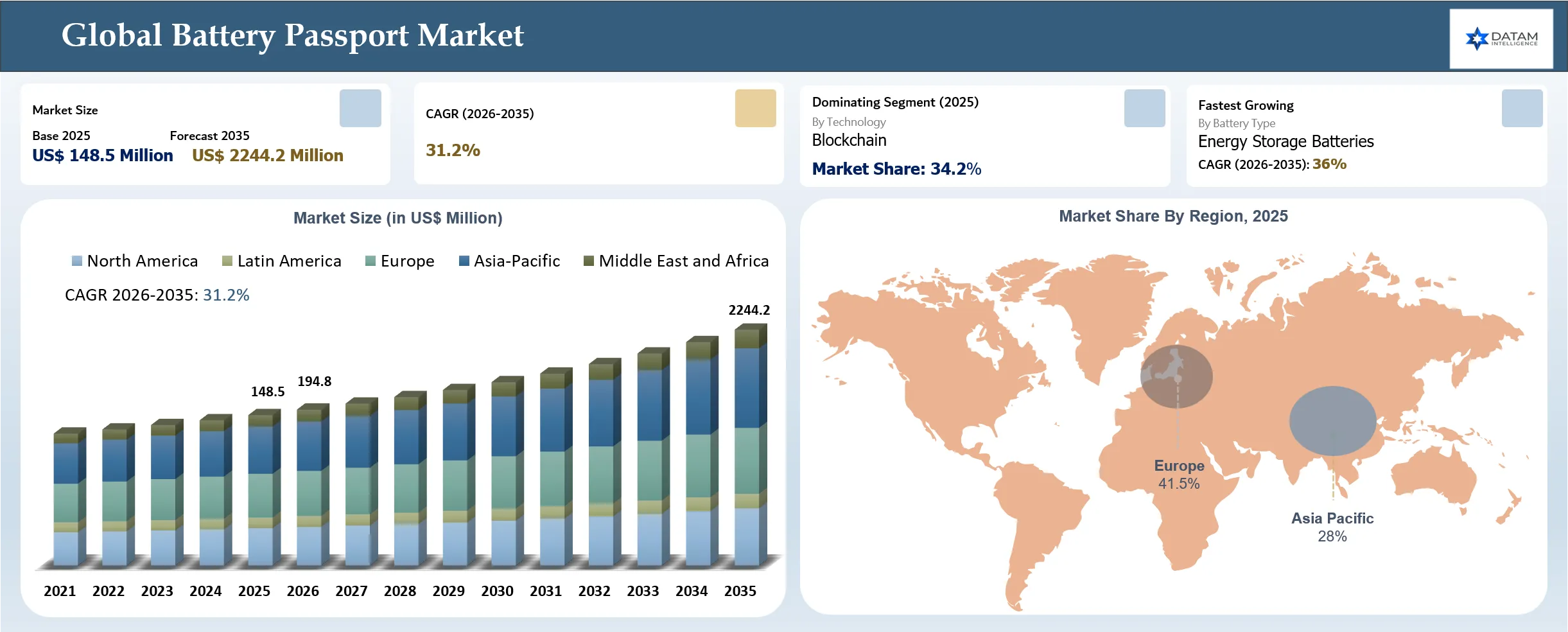
The Global Battery Passport Market reached US$148.5 million in 2025 and is expected to reach US$2,244.2 million by 2035, growing with a CAGR of 31.2% during the forecast period 2026-2035 This growth is due to the rapid expansion of electric vehicles (EVs), battery energy storage systems (BESS), and increasing regulatory requirements for battery traceability, sustainability, and circular economy compliance. The battery traceability systems have become a necessity due to increasing regulations from both automakers and government authorities.
In 2025, EV battery deployment reached 1.2 TWh, an increase of almost 30% according to the International Energy Agency, which indicates that significantly more batteries are entering into the market as to be tracked. The adoption of innovative technologies like blockchain, cloud computing, artificial intelligence, and IoT-enabled tracking systems will further improve battery passporting services, as technology like blockchain provides secure and tamper-proof storage of battery lifecycle data, improving transparency and trust across the supply chain.
The Global Battery Alliance (GBA) is working on 11 different pilot consortia, which are headed by some of the world’s largest battery producers like Contemporary Amperex Technology Co., Limited (CATL), EVE Energy Co., Ltd, Farasis Energy, FinDreams Battery, LG Energy Solution, Samsung SDI, Sunwoda and CALB Group Co. Ltd., who altogether hold 80% of the total market share for EV batteries worldwide, as these companies start integrating battery passports within their manufacturing and supply chains, more widespread use is anticipated in the automotive and battery industry sectors, ensuring compliance with regulations, sustainability practices, ethical sourcing, and circularity efforts.
Battery Passport market Key Takeaways
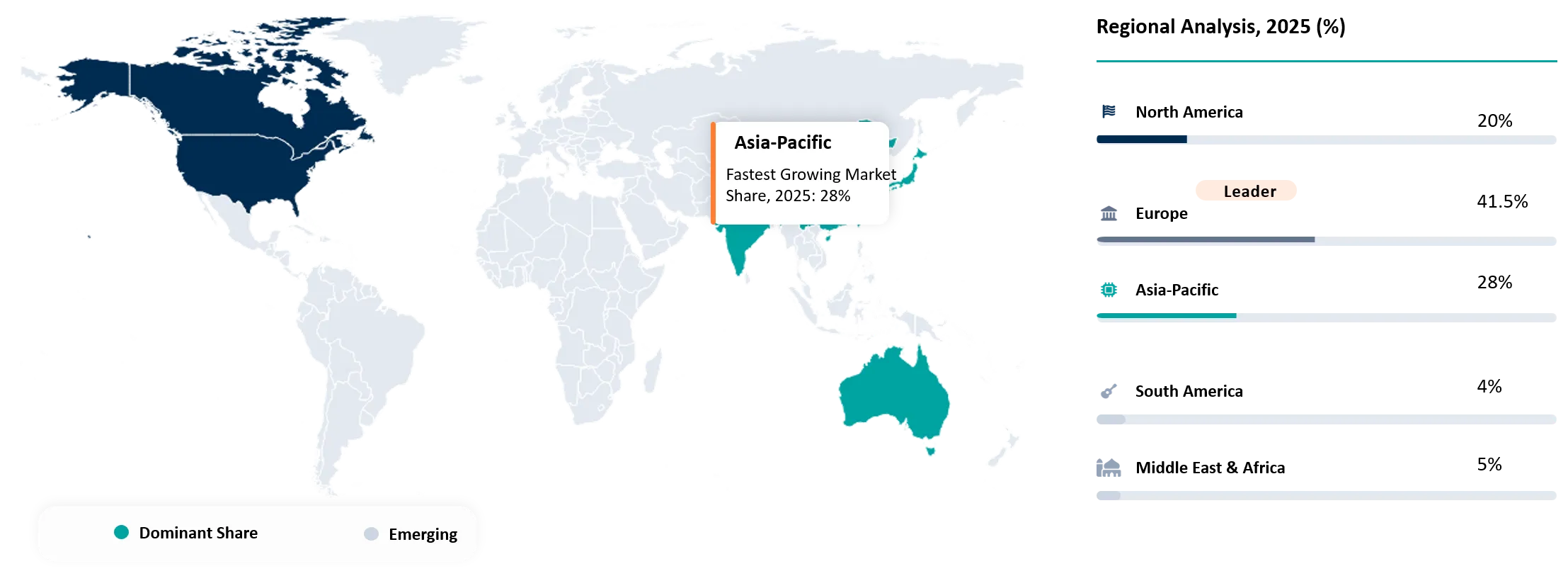
- Europe accounted for approximately 41.5% of the global Battery Passport Market in 2025, maintaining its leadership position due to the implementation of the EU Battery Regulation (EU 2023/1542), which mandates digital battery passports for electric vehicle and industrial batteries from 2027 onward.
- The Electric Vehicle (EV) segment holds the highest application market share among all other sectors in the Battery Passport market, with a market share of approximately 40%. The growth need for tracking batteries, their life cycle, sustainability, and regulation is further fuelling the adoption of battery passports by automakers and battery producers.
- Blockchain emerged as the leading technology in battery passport market, with a market share of 34.2%, as it can ensure that information about batteries is secure, transparent, and cannot be tempered making it the perfect tech for battery passport. Growing collaborations among automotive OEMs, battery makers, and digital solutions companies are continuing to facilitate faster adoption and implementation of blockchain-based battery passports ecosystems.
- The rapid growth in battery deployment is creating substantial opportunities for battery passport providers. According to the International Energy Agency (IEA), the worldwide demand for battery cells exceeded 1.2 TWh in 2025, with a yearly growth rate of nearly 30%, spurring the need for battery passports to enable traceability and sustainable reporting across the whole battery lifecycle.
Battery Passport Industry Trends and Strategic Insight
- The global demand for batteries is increasing rapidly and is set to increase 14 times by 2030. The EU could account for 17% of that demand, according to the European Commission. The regulatory frameworks are increasingly requiring manufacturers to provide transparent information regarding battery origin, carbon footprint, material composition, and end-of-life handling, driving large-scale adoption of battery passport platforms across electric vehicle and energy storage value chains.
- Industry participants are increasingly leveraging blockchain technology to create tamper-proof and verifiable records of battery lifecycle data. In addition, the Global Battery Alliance comprises over 140 organizations working together in battery traceability and sustainability efforts, many of which are looking into using blockchains for data sharing purposes.
- The integration of IoT sensors and connected battery management systems is enabling real-time tracking of battery performance, state of health, usage patterns, and degradation rates. This development enhances the value of battery passports by providing continuously updated lifecycle information.
- The integration of AI and advanced analytics into battery passport platforms is expected to enable predictive insights related to battery performance, degradation patterns, maintenance scheduling, and end-of-life forecasting. This evolution will transform battery passports from static records into intelligent lifecycle management systems.
Battery Passport Market Scope
| Metrics | Details | |
| 2025 Market Size | US$ 148.5 million | |
| 2035 Projected Market Size | US$ 2244.2 million | |
| CAGR (2026-2035) | 31.2% | |
| Largest Market | Europe | |
| Fastest Growing Market | Asia-Pacific | |
| By Component | Software, Services | |
| By Technology | Blockchain, Cloud Computing, IoT, AI & Analytics, Digital Identity Technologies | |
| By Deployment Mode | Cloud-Based, On-Premise, Hybrid | |
| By Battery Type | EV Batteries, Industrial Batteries, Energy Storage Batteries, Consumer Electronics Batteries | |
| By End User | Battery Manufacturers, Automotive OEMs, Recyclers, Raw Material Suppliers, Energy Storage Operators | |
| By Region | North America | U.S., Canada, Mexico |
| Europe | Germany, UK, France, Spain, Italy, Poland | |
| Asia-Pacific | China, India, Japan, Australia, South Korea, Indonesia, Malaysia | |
| South America | Brazil, Argentina | |
| Middle East and Africa | UAE, Saudi Arabia, South Africa, Israel, Turkiye | |
| Report Insights Covered | Competitive Landscape Analysis, Company Profile Analysis, Market Size, Share, Growth | |
Disruption Analysis
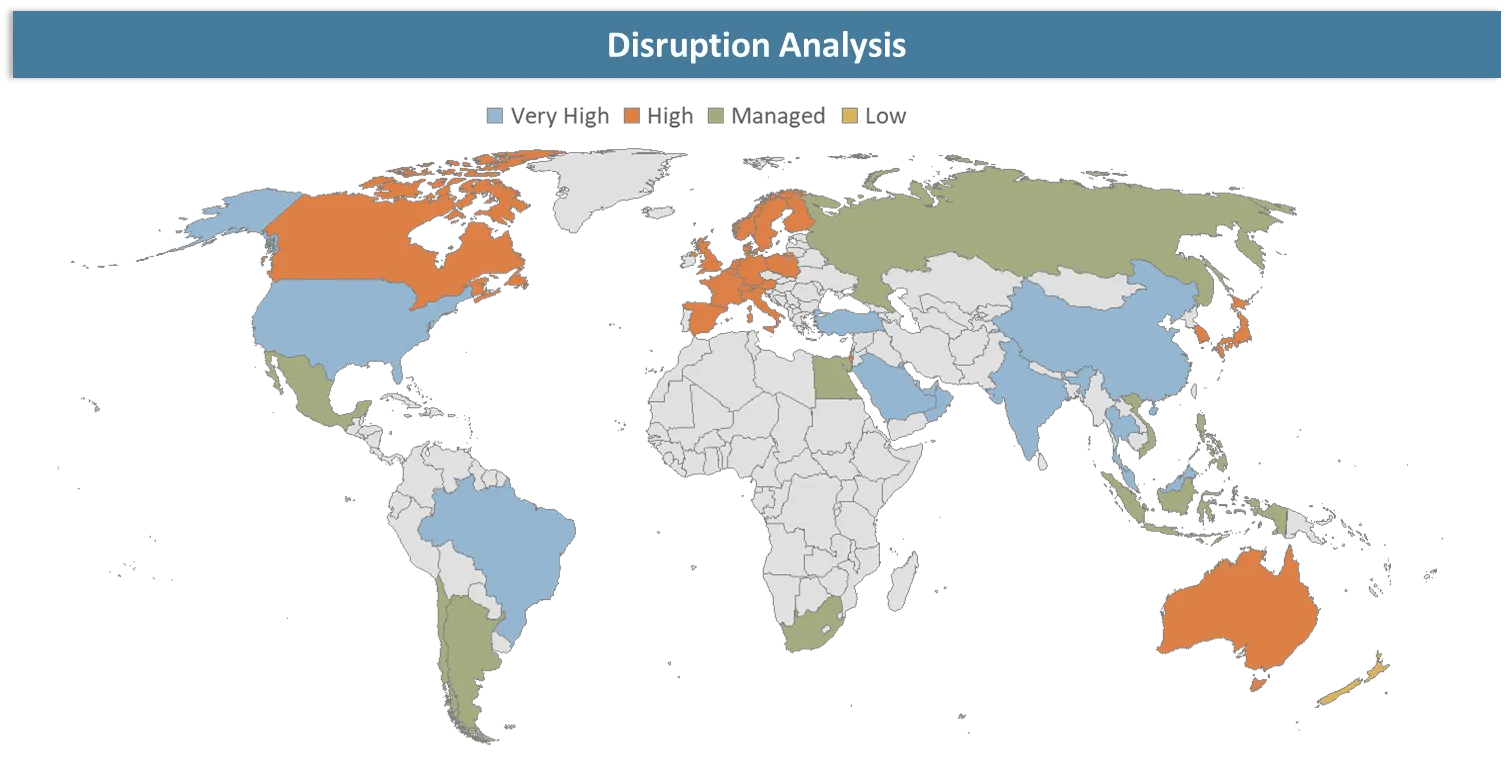
Regulatory Mandates and Supply Chain Transparency Requirements reshaping Battery Lifecycle Management Ecosystems
The major disruption in the Battery Passport Market is the consistent development in the regulatory and sustainability disclosure framework for batteries across their value chains globally. Governments and regulatory bodies are increasingly mandating comprehensive disclosure of battery composition, carbon footprint, sourcing practices, and end-of-life management, forcing manufacturers to move away from fragmented record-keeping systems toward standardized digital battery passport platforms.
The implementation of the EU Battery Regulation, which mandates the digital battery passport for EV batteries, industrial batteries over 2 kWh, and light means of transport batteries starting from 18 February 2027. This will drive the businesses to shift from paper-based data tracking to a digital tracking platform. The growing emphasis on circular economy models and responsible sourcing of critical minerals is transforming how batteries are managed, reused, and recycled.
Conventional battery management systems were primarily designed to support manufacturing and operational performance, whereas emerging battery passport solutions are enabling continuous tracking of battery assets from raw material extraction through recycling and second-life applications. As a result, battery manufacturers, automotive OEMs, recyclers, and raw material suppliers are restructuring their data management strategies and supply chain networks to support greater transparency, interoperability, and compliance.
BCG Matrix: Company Evaluation

Stars include Circulor, MineSpider, SAP, and Siemens because they possess strong capabilities in battery traceability, digital product passports, supply chain transparency, and lifecycle data management. These companies are actively collaborating with battery manufacturers, automotive OEMs, and industry initiatives to establish comprehensive battery passport ecosystems and are well-positioned to benefit from increasing regulatory requirements and sustainability mandates. Organizations like TATA Elxsi, Glassdome, and iPoint-systems are considered Question Marks because of their increasing prominence and investments in battery passport solutions. The organizations have been working with digital traceability, life cycle assessment, sustainability analytics, and battery data management.
The Tailenders segment consists of AVL and OPTEL Group who have an excellent base in engineering, traceability, manufacturing intelligence, and supply chain visibility technologies. Such companies have well-established customer relationships and technology platforms that can be used for battery lifecycle management. Company Everledger belongs to the Potential class owing to its competence in using blockchain for traceability and provenance. The company can help with the development of a battery passport since it has certain capabilities related to this area.
Batter Passport Market Dynamics
Driver Impact Analysis
| Driver | Market Growth Impact (%) | Demand Concentration | Impacted Use Case | Strategic Impact |
Rapid adoption of electric vehicles is generating unprecedented demand for battery traceability and lifecycle management
| 40% | Very High – EV battery manufacturers, automotive OEMs, battery suppliers | EV Battery Passports, Battery Lifecycle Tracking, Supply Chain Traceability, Regulatory Compliance | Acts as the primary growth engine for the market by creating large-scale demand for battery transparency, sustainability reporting, and end-to-end traceability across EV ecosystems. |
Growing focus on circular battery ecosystems is significantly driving the market
| 30% | High – Recyclers, second-life battery operators, energy storage providers, OEMs
| Battery Recycling, Second-Life Battery Management, Material Recovery, Circular Economy Platforms | Accelerates adoption of battery passports by enabling reuse, repurposing, recycling, and critical mineral recovery while supporting sustainability objectives. |
Advanced blockchain technology is integrating in battery passport, enhancing data integrity and trust
| 20% | Medium to High – Traceability platform providers, battery manufacturers, regulators, OEMs | Battery Traceability, Responsible Sourcing Verification, Carbon Footprint Tracking, Compliance Reporting | Strengthens stakeholder trust through secure and immutable battery records while enabling regulatory compliance and transparent supply chain management. |
Integration of IoT-enabled battery management systems is creating new opportunities for battery passport platforms
| 15% | Medium – Battery manufacturers, BESS operators, fleet operators, industrial battery users | Real-Time Battery Monitoring, State-of-Health (SOH) Tracking, Predictive Maintenance, Digital Twin Applications | Enhances the value proposition of battery passports by transforming them from static records into dynamic lifecycle management and predictive analytics platforms. |
Advanced blockchain technology is integrating in battery passport, enhancing data integrity and trust
The inclusion of innovative blockchain technology will be a key factor driving growth within the Battery Passport Market through providing tamper-free recording and tracking of data pertaining to the battery lifecycle within more complex international supply chains. With battery manufacturing companies, automobile OEMs, raw materials providers, and battery recyclers looking for better oversight of data related to their batteries' provenance and sustainability performance, battery passports based on blockchain technology will become increasingly important for the protection of data integrity and compliance.
The growing adoption of electric vehicles is creating a strong foundation for the Battery Passport Market. According to Neklar Group, the global electric vehicle sales are expected to cross the 250-million mark by 2030, generating demand for battery tracking and recording of battery origin, carbon footprint, composition, and lifecycle. Battery passports, especially systems based on blockchain technology, can resolve significant problems in the fields of data visibility, traceability, interoperability, and immutability in the complicated network of the battery supply chain.
For instance, in 2024, Volvo Cars, an automotive manufacturer, launched the world’s first electric vehicle battery passport before any imminent European Union legislation on the matter. With the collaboration of Circulor, which provides blockchain-powered traceability solutions, the passport allows for secure monitoring of raw materials used in batteries, carbon emissions, recycled content, and other lifecycle data. Such initiatives highlight the growing industry commitment to battery transparency and regulatory compliance, reinforcing the expanding demand for battery passport solutions globally.
Restraint Impact Analysis
| Restraint | Drag on Market Growth (%) | Primary Impact Area | Impacted Use Case | Strategic Impact |
Lack of Standardized Data Frameworks Interoperability across the battery value chain
| 25% | Data Integration & Ecosystem Connectivity | Battery Traceability, Cross-Platform Data Exchange, Digital Battery Passports, Regulatory Reporting | Creates significant barriers to seamless data s haring across stakeholders, increasing implementation complexity, deployment timelines, and compliance costs while slowing large-scale market adoption. |
Limited digital capabilities of lower-tier suppliers in battery supply chains | 20% | Supply Chain Digitization | Raw Material Traceability, Supplier Data Collection, Chain-of-Custody Tracking, ESG Reporting | Restricts end-to-end visibility by creating data gaps in upstream supply chains, reducing the effectiveness and reliability of battery passport systems. |
Creates barriers for SMEs and emerging-market suppliers | 15% | Technology Adoption & Infrastructure Investment | Battery Passport Deployment, Digital Compliance Systems, Lifecycle Data Management | High implementation costs for cloud infrastructure, IoT integration, blockchain platforms, and cybersecurity solutions discourage participation from smaller organizations, limiting ecosystem scalability. |
Uncertainty Surrounding Regulatory Harmonization Across Regions | 18% | Regulatory Compliance & Governance | Global Battery Passport Programs, International Supply Chain Traceability, Sustainability Reporting | Divergent regional regulations and reporting requirements increase compliance complexity and force organizations to manage multiple frameworks, delaying investment decisions and global standardization efforts. |
Lack of Standardized Data Frameworks Interoperability across the battery value chain
The problem that limits the widespread application of the battery passport solution is the lack of standardized data frameworks and interconnectivity between all the parties involved in the battery life cycle. Indeed, the battery passports work based on data sharing and collaboration between the players, which include mining enterprises, metal refiners, battery cell manufacturers, pack makers, automakers, logistics companies, companies working with batteries after their first use, and recycling centers. In spite of the fact that all the aforementioned organizations are involved in creating battery passports, they operate within their enterprise systems, data architecture, and methods for collecting and reporting data, making it difficult to integrate their approaches.
The crucial components of batteries often go through many hands, ranging from different suppliers, processors, manufacturers to the final customers. In order to keep track of their sources, carbon footprint, state of health, recycling, and other life cycle events, it is important that there should not be any inconsistency in information due to non-standardized information exchange processes. For instance, in 2025, the European Commission issued a Communication on the implementation of battery data sharing obligations in light of the amended Renewable Energy Directive that seeks to facilitate the standardization of data-sharing systems for battery-related information among producers, chargers, aggregators, and energy services companies. This move brought to attention the importance of standardization of data sharing systems and interoperable communications for batteries.
Battery Passport Market Segment Analysis
The global Battery Passport market is segmented based on Component, Technology, Deployment Mode, Battery Type, application, End User and region.
Blockchain Technology Strengthening Traceability and Data Integrity Across the Battery Lifecycle
Blockchain technology is dominating the technology segment in the Battery Passport Market, with a market share of 34.2%, primarily due to the increasing need for secure, transparent, and tamperproof monitoring of information related to batteries in a complex and dynamic supply chain. Blockchain technology is among the key technologies that have been employed in Battery Passports. Industry implementations, such as Volvo Car's battery passport built with Circulor employ Blockchain traceability. Moreover, industry-led initiative and solution providers such as Global Battery Alliance, Circulor, and MineSpider are helping to facilitate the use of blockchain-based battery passport systems.
Furthermore, through the implementation of automated smart contract mechanisms, companies operating in the manufacturing process will be able to decrease the costs related to regulatory audits and manual certifications for each battery unit by roughly 36% on average. Underpinned by the increasing demands associated with battery transactions on an international scale and growing sustainability standards. For instance, in 2025, Tata Technologies, an India-based engineering and product development digital services company, launched its digital battery passport WATTSync for traceability and sustainability of batteries by the automotive and battery industry in response to new requirements in global battery traceability and sustainability laws.
The WATTSync digital battery passport provides secure access to data that tracks batteries from source through end of life. It includes data on battery materials sourcing, carbon footprint, performance, and end of life. Such developments underscore the increasing role of blockchain technology in advancing battery passport adoption and supporting the transition toward a more transparent and sustainable battery value chain.
Battery Passport Market Geographical Penetration
Regulatory Leadership and Early Commercial Deployment Driving Europe’s Dominance in the Battery Passport Market
Europe dominates in the Battery Passport Market, with the 41.5% market share, driven by the EU Battery Regulation (EU 2023/1542), because of the regulatory structure of Europe, as well as early commercialization of the initiative and investments made into the sustainable battery value chain in the region. Europe is recognized as a global leader when it comes to battery traceability and transparency, owing to the presence of EU battery regulation that requires digital battery passports be deployed for electric vehicle and industrial batteries. This has led to increased adoption of battery passport solutions in the region by battery makers, automotive OEMs, recyclers, and technology firms. The leadership in the region is also reinforced by the massive investments being made in battery production as well as building up of battery ecosystems.
For example, in 2025, Kia Corporation, an automotive manufacturer, conducted a cell-level battery passport pilot in Europe to improve battery traceability and meet the new European Union battery regulation requirements. With the pilot project, it is possible to monitor materials used in battery production, as well as track manufacturing information, carbon emissions, and the life cycle of each individual battery cell. Such a step will facilitate the wider use of innovative Battery Passport systems in the region.
Germany Battery Passport Market Trends
The Germany's dominance in the European Battery Passport Market, with the 23.1% market share, is due to its robust automotive manufacturing sector, the early deployment of battery traceability technology, and significant financial investments in the creation of sustainable battery value chains. With Germany representing the largest automotive market and a major production location for EVs in Europe, battery passport solutions have gained prominence as a result of increasing regulation and business-driven sustainability efforts in the country.
Continuing along the same lines, there has been significant momentum in battery passport adoption in Germany, along with the rapid development of the country's electric vehicles and batteries. For example, in 2026, BMW Group, BASF, and Siemens, leading Germany-based automotive, chemicals, and industrial technology companies, collaborated to roll out a Digital Battery Passport service designed to facilitate the sharing of battery information and to enable companies to meet upcoming regulations from the European Union on batteries. The system will allow standardized information about the composition, carbon footprint, sourcing, and lifetime performance of batteries to be shared, thus increasing transparency, traceability, and compatibility in the battery value chain. This development will speed up the uptake of Battery Passport systems.
France Battery Passport Market Outlook
France emerges as one of the leading nations for growth in the European Battery Passport Market because of the increased emphasis on sustainable production of batteries, transparency of the battery value chain, and compliance with the latest European battery rules. The nation continues to enhance its standing in Europe’s battery network via major investments in battery gigafactories, electric vehicle assembly plants, and traceability software solutions. France becomes an important center for battery technology, with the help of various programs initiated by the national government to ensure the use of low-carbon energy and circular approaches to batteries while sourcing responsible raw materials.
For example, in 2026, Sigma Technology Origo, a Sweden-based product information management and digital traceability solutions provider, launched ORIGO Product Cloud in order to help facilitate the execution of EU Digital Battery Passports. The solution will allow companies to track data associated with the entire battery lifecycle, from raw materials through manufacturing, use, and recycling, including data on material composition, carbon footprint, supply chain, and sustainability measures. The goal of the product launch is to promote standardization of Battery Passport solutions for organizations to comply with future European Union regulations for batteries.
Battery Passport Market Competitive Landscape
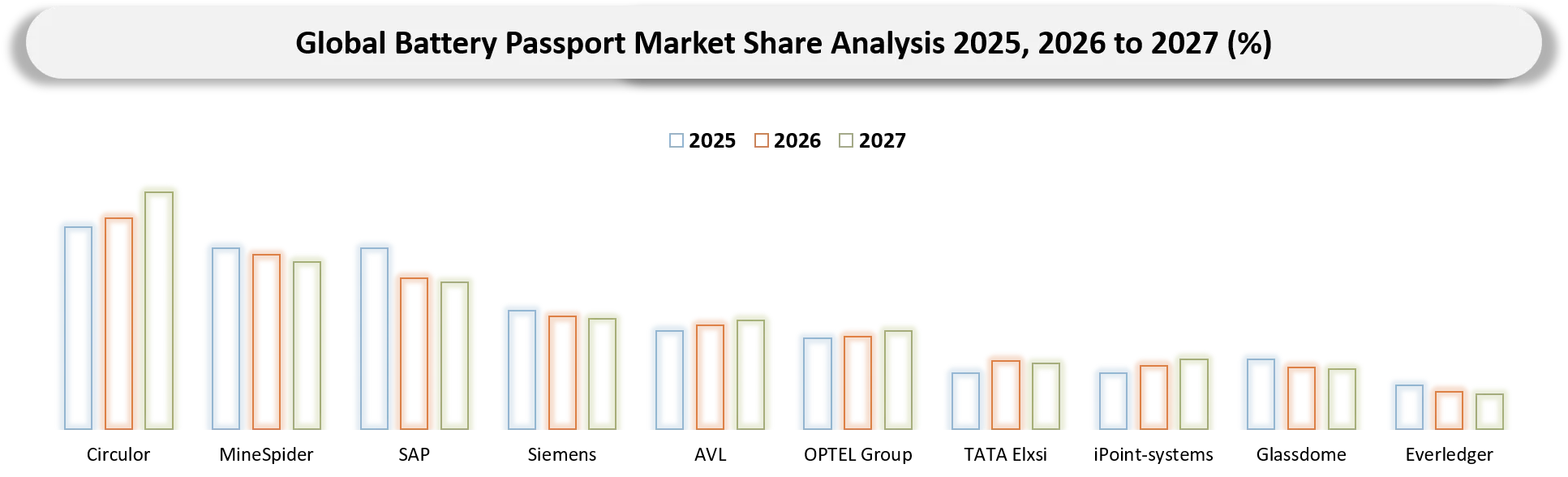
The market is characterized by three major sets of participants: digital traceability and life cycle management solutions vendors; industrial software and engineering services providers; and sustainability and compliance management platform providers. Leading providers of traceability and digital passport technology using blockchain and IoT technology include Circulor, MineSpider, Everledger, Glassdome, and OPTEL Group. Providers of industrial digitalization technology and enterprise applications that allow integration of battery passports into manufacturing, product life cycle management, and sustainability reporting include SAP, Siemens, AVL, and TATA Elxsi. In turn, iPoint-systems offers dedicated compliance management software. These players contribute to an ecosystem-dominated market, in which regulatory readiness and interoperability are crucial factors for success.
Key players in the Battery Passport Market include Circulor, MineSpider, SAP, Siemens, AVL, OPTEL Group, TATA Elxsi, iPoint-systems, Glassdome, and Everledger.
Battery Passport Market Key Developments
August 2026: Europe continued preparing for mandatory Battery Passports, with the European Commission confirming that the Digital Product Passport Registry became operational on July 20, 2026. The registry and supporting standards are designed to enable interoperable battery data exchange ahead of the February 2027 compliance deadline.
July 2026: The European Commission published updated guidance on Battery Passport data points, clarifying mandatory, optional, and conditional information requirements for EV, light means of transport, and industrial batteries. The guidance aims to improve consistency across the battery value chain.
June 2026: BatteryPass-Ready launched a test environment for digital Battery Passport implementations, allowing companies to validate data checks and simulate real-world Digital Product Passport scenarios before regulatory requirements take effect.
May 2026: Global Battery Alliance (GBA) continued its 2026 Battery Passport Operational Trials, involving 17 supply-chain partnerships whose participating cell manufacturers represent around 80% of global production. The trials are testing data exchange, third-party assurance, sustainability reporting, and certification approaches.
April 2026: The Battery Passport market continued shifting toward standardized digital traceability, with solutions increasingly integrating carbon-footprint data, material sourcing, battery performance, durability, repair, reuse, and recycling information. EU requirements will make passports mandatory from February 18, 2027 for EV batteries, LMT batteries, and industrial batteries above 2 kWh.
Key Procurement Priorities and Buyer Evaluation Criteria
- Organizations adopting Battery Passport technologies are beginning to choose providers who can offer an end-to-end solution for battery traceability platforms, providing security in data management for the lifecycle of batteries, regulatory compliance, and transparency in managing battery material sourcing and recycling processes.
- It is clear that procurement processes are increasingly being guided by new regulations in terms of battery sustainability, the circular economy, carbon footprint reporting, and responsible sourcing requirements for battery supply chains.
- Buyers assess suppliers through an assessment of their competencies in regard to blockchain data security, interoperability with multiple stakeholders, battery life cycle tracking, ESG performance measurement, carbon footprinting, and integration into legacy business and logistics management systems.
- Technology partners who help to ensure standardized data exchange between battery makers, automotive OEMs, raw material suppliers, regulators, recyclers, and energy storage companies while maintaining compliance with regional and international battery passport standards are highly sought after by companies.
Why Choose DataM?
- Data-Driven Insights: Dive into detailed analyses with granular insights such as pricing, market shares and value chain evaluations, enriched by interviews with industry leaders and disruptors.
- Post-Purchase Support and Expert Analyst Consultations: As a valued client, gain direct access to our expert analysts for personalized advice and strategic guidance, tailored to your specific needs and challenges.
- White Papers and Case Studies: Benefit quarterly from our in-depth studies related to your purchased titles, tailored to refine your operational and marketing strategies for maximum impact.
- Annual Updates on Purchased Reports: As an existing customer, enjoy the privilege of annual updates to your reports, ensuring you stay abreast of the latest market insights and technological advancements. Terms and conditions apply.
- Specialized Focus on Emerging Markets: DataM differentiates itself by delivering in-depth, specialized insights specifically for emerging markets, rather than offering generalized geographic overviews. This approach equips our clients with a nuanced understanding and actionable intelligence that are essential for navigating and succeeding in high-growth regions.
- Value of DataM Reports: Our reports offer specialized insights tailored to the latest trends and specific business inquiries. This personalized approach provides a deeper, strategic perspective, ensuring you receive the precise information necessary to make informed decisions. These insights complement and go beyond what is typically available in generic databases.
Target Audience
- Battery Manufacturers
- Automotive OEMs
- Recycling and Circular Economy Companies
- Raw Material Suppliers
- Energy Storage Operators
- Battery Traceability Platform Providers
- ESG & Sustainability Consulting Firms


























































