


MASH is moving into its first major competitive commercialization wave, where success is no longer driven only by clinical efficacy but by fibrosis improvement, metabolic benefit, safety profile, diagnosis enablement, payer acceptance and treatment accessibility. Rezdiffra and Wegovy currently represent the two approved treatment options in the United States for adults with non-cirrhotic MASH with moderate-to-advanced fibrosis, creating the foundation for a new competitive market in metabolic liver disease.
MASH is no longer just a pipeline opportunity; it is becoming a commercial, regulatory and market-access competition. Madrigal’s Rezdiffra has established first-mover leadership as the first approved MASH therapy, supported by strong early uptake and 2025 net product sales of US$958.4 million. However, Novo Nordisk’s Wegovy approval has shifted the competitive landscape by bringing GLP-1-based metabolic therapy directly into MASH, strengthening competition around weight loss, diabetes overlap, cardiometabolic benefit and physician familiarity.
The next phase of MASH competition will be shaped by companies that can demonstrate stronger fibrosis regression, durable MASH resolution, broader metabolic improvement and easier patient identification. Large pharma interest is accelerating, with Novo Nordisk expanding through Akero’s efruxifermin, Roche strengthening its pipeline through 89bio’s pegozafermin and GSK adding efimosfermin. Future competition will be driven by differentiated mechanisms such as thyroid hormone receptor beta agonists, GLP-1 and dual incretin therapies, FGF21 analogues, pan-PPAR agonists and anti-fibrotic approaches. The winning assets will be those that combine histological benefit, cardiometabolic value, safety, convenient dosing and payer-relevant evidence.
Disease Overview
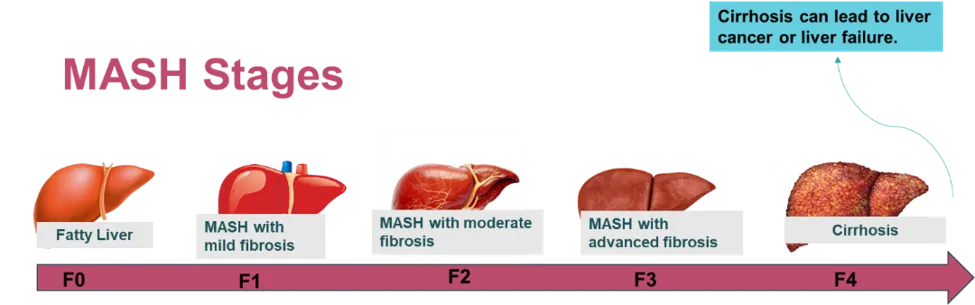
Metabolic Dysfunction-Associated Steatohepatitis (MASH) is a progressive metabolic liver disease characterized by liver fat accumulation, inflammation, hepatocellular injury and fibrosis. It is strongly associated with obesity, type 2 diabetes, insulin resistance, dyslipidemia and hypertension, making it a key hepatology and cardiometabolic care priority. MASH is clinically significant because disease progression can lead to advanced fibrosis, cirrhosis, liver failure and hepatocellular carcinoma. Early-stage disease is often asymptomatic, resulting in low diagnosis rates and delayed specialist referrals. Growing adoption of non-invasive diagnostics and emerging targeted therapies is reshaping the competitive landscape, especially for patients with moderate-to-advanced fibrosis.
Different Stages of MASH
Epidemiology Analysis
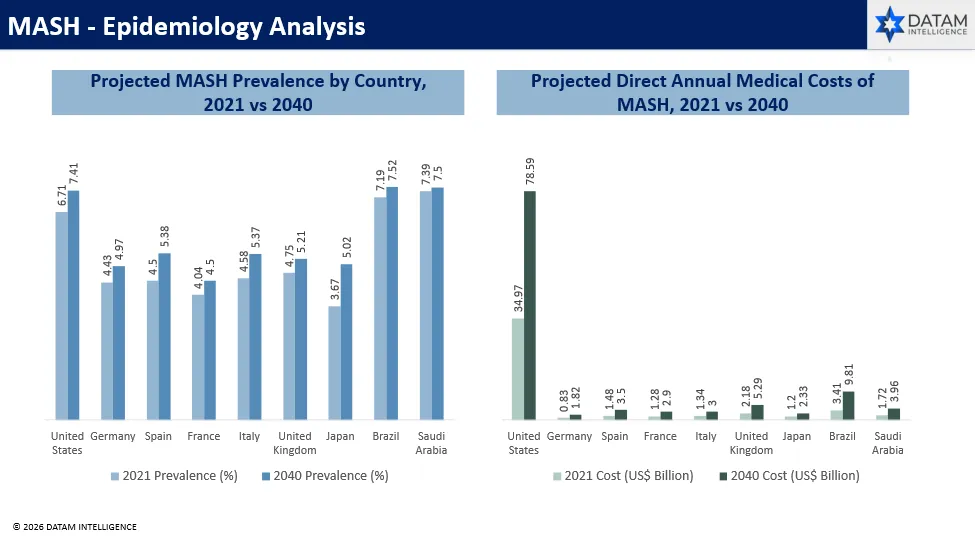
Globally, MASH represents a major underdiagnosed disease burden, with more than 250 million people estimated to be living with MASH, while nearly 9 out of 10 cases remain undiagnosed. The disease burden is strongly linked to obesity and metabolic dysfunction, with around 1 in 3 people with overweight or obesity potentially already having MASH.
Across major countries, Younossi et al. projected that MASH prevalence will increase between 2021 and 2040, with Brazil, Saudi Arabia and the United States showing among the highest prevalence levels. Japan shows one of the sharpest increases, rising from 3.67% in 2021 to 5.02% in 2040. The United States accounts for the largest direct annual medical cost, increasing from US$34.97 billion in 2021 to US$78.59 billion by 2040, followed by notable cost growth in Brazil, the United Kingdom, Saudi Arabia and Spain.
Approved Drugs
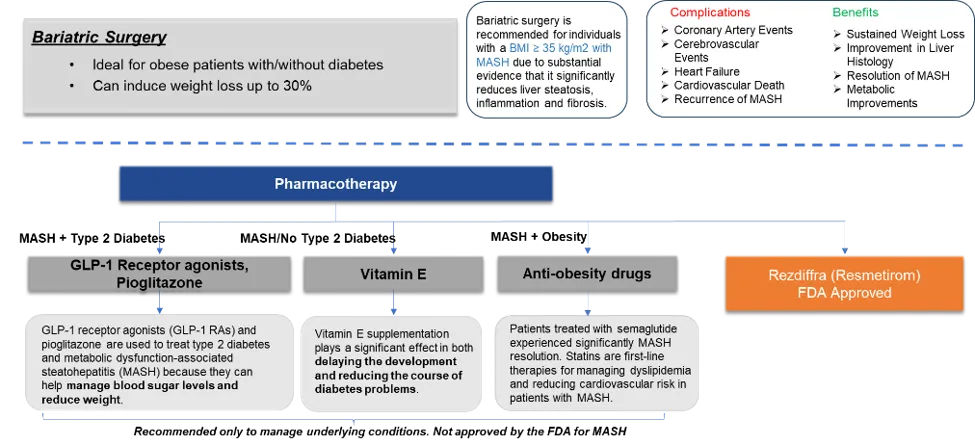
As of May 2026, the MASH treatment market is led by two FDA-approved drugs: Rezdiffra (resmetirom) and Wegovy (semaglutide). Rezdiffra, marketed by Madrigal Pharmaceuticals, is an oral thyroid hormone receptor beta agonist, while Wegovy, marketed by Novo Nordisk, is a once-weekly GLP-1 receptor agonist administered through subcutaneous injections. Both therapies are used for adults with non-cirrhotic MASH/NASH with moderate-to-advanced liver fibrosis.
In FY2025, Rezdiffra recorded net product sales of around USD 958.4 million, supported by strong physician adoption. Wegovy’s MASH-specific sales have not been separately disclosed, as the product is reported mainly within Novo Nordisk’s obesity care portfolio. Growth in the MASH treatment market is expected to remain positive, supported by rising diagnosis, broader fibrosis screening, increasing use of non-invasive testing, physician familiarity and payer coverage expansion. However, low diagnosis rates, fibrosis staging requirements, reimbursement controls, long-term outcomes evidence and treatment adherence may limit faster adoption.
Approved Drugs of MASH (Rezdiffra) - Sales
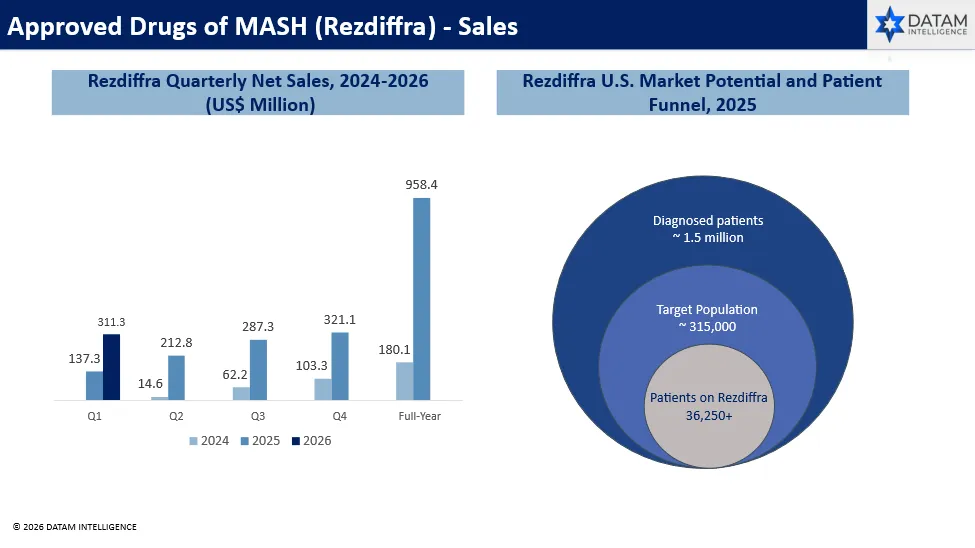
Rezdiffra has demonstrated strong early commercial uptake following its approval, with net product sales increasing from US$180.1 million in FY2024 to US$958.4 million in FY2025. Quarterly performance strengthened through 2025, rising from US$137.3 million in Q1 to US$321.1 million in Q4, reflecting growing physician adoption, patient initiation and market access expansion.
In Q1 2026, Rezdiffra generated US$311.3 million in net sales, indicating sustained demand in the eligible MASH population. The patient funnel shows around 1.5 million diagnosed patients, an estimated 315,000 target population, and over 36,250 patients on Rezdiffra by year-end 2025.
Pipeline Analysis
As of May 2026, the therapeutic pipeline for MASH is robust, encompassing various modalities aimed at slowing disease progression and preserving vision. Here's an overview of key investigational therapies across different classes:
| Sponsor | Intervention | Current Status | MoA | RoA | Modality |
| Nabiqasim Industries | Resmetirom | Phase IV | THR-beta agonist | Oral | Small molecule |
Haisco Pharmaceutical Group | HSK31679 | Phase III | THR-beta agonist | Oral | Small molecule |
| 89bio | Pegozafermin | Phase III | FGF21 analogue | Subcutaneous | Biologic / peptide |
| Akero Therapeutics | Efruxifermin | Phase III | FGF21 analogue | Subcutaneous | Fc-fusion protein |
| GSK | Efimosfermin alfa | Phase III | FGF21 analogue | Injectable | Biologic / peptide |
| Boehringer Ingelheim | Survodutide | Phase III | GLP-1 / glucagon dual agonist | Subcutaneous | Peptide |
| Regeneron Pharmaceuticals | ALN-CIDEB | Phase II | CIDEB gene silencing | Subcutaneous | siRNA |
| Regeneron Pharmaceuticals | ALN-HSD | Phase II | HSD17B13 gene silencing | Subcutaneous | siRNA |
| Innovent Biologics | IBI362 / Mazdutide | Phase II | GLP-1 / glucagon dual agonist | Subcutaneous | Peptide |
| United Bio-Technology | UBT251 | Phase II | GLP-1 / GIP / glucagon receptor agonist | Subcutaneous | Peptide |
| Rivus Pharmaceuticals | HU6 | Phase II | Mitochondrial uncoupling | Oral | Small molecule |
Fujian Shengdi Pharmaceutical | HRS-4729 + HRS9531 | Phase II | Incretin-based metabolic agonists | Subcutaneous | Peptide injectables |
| Cascade Pharmaceuticals | CS060380 + Semaglutide | Phase II | THR-beta agonist + GLP-1 receptor agonist | Oral + Subcutaneous | Small molecule + peptide |
| Qilu Pharmaceutical | QL2401 | Phase II | Recombinant fusion protein | Subcutaneous | Recombinant fusion protein |
| Eccogene | ECC4703 + ECC0509 | Phase II | THR-beta agonist + SSAO inhibitor | Oral | Small molecules |
| Corcept Therapeutics | Miricorilant | Phase II | Selective glucocorticoid receptor modulator | Oral | Small molecule |
| Yale University | Digoxin | Phase II | Repurposed metabolic / anti-inflammatory modulation | Oral | Small molecule |
Shanghai Jiao Tong University School of Medicine | Chiglitazar | Phase II | Pan-PPAR agonist | Oral | Small molecule |
Southern California Institute for Research and Education | Betaine | Phase II | Hepatic lipid metabolism modulation | Oral | Small molecule |
| Aligos Therapeutics | ALG-055009 | Phase II | THR-beta agonist | Oral | Small molecule |
| Sagimet Biosciences | TVB-2640 / Denifanstat | Phase II | FASN inhibitor | Oral | Small molecule |
Changchun Intellicrown Pharmaceutical | IMM-H014 | Phase I / II | Nrf2 pathway activation | Oral | Small molecule |
| OPKO Health | OPK-88006 | Phase I / II | GLP-1 / glucagon dual agonist | Oral / Subcutaneous | Peptide |
| Tangram Therapeutics | TGM-312-SC01 | Phase I / II | Hepatocyte-targeted gene silencing | Subcutaneous | GalNAc siRNA |
| Eli Lilly and Company | LY3849891 | Phase I | PNPLA3 gene silencing | Subcutaneous | GalNAc siRNA |
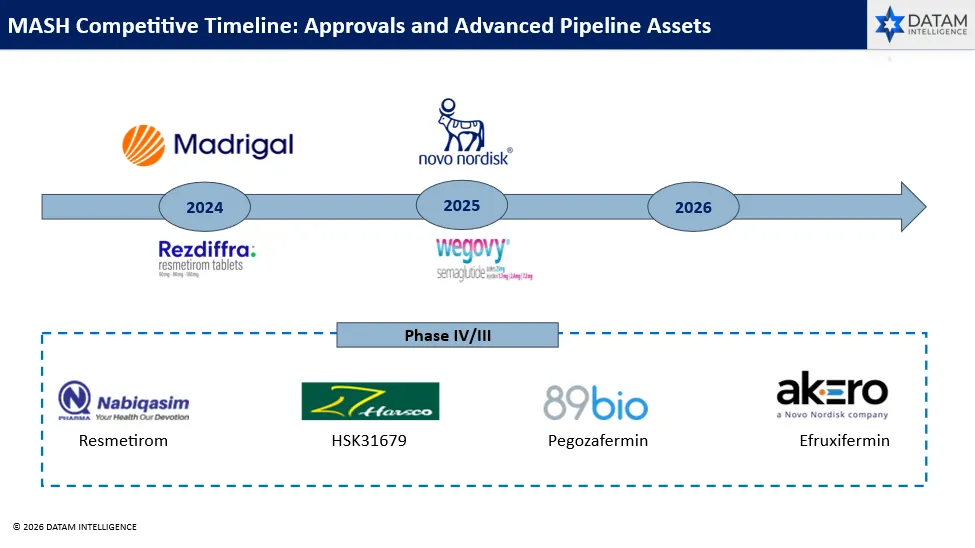
MASH Competitive Timeline: Approvals and Advanced Pipeline Assets
The MASH treatment landscape has rapidly shifted from no approved therapy to an active competitive market. Rezdiffra established first-mover leadership in 2024 as the first FDA-approved therapy for noncirrhotic NASH/MASH with moderate-to-advanced fibrosis, while Wegovy entered in 2025 as the first GLP-1-based approved option for MASH. By 2026, competition is expanding beyond approved products, with Phase IV and Phase III assets such as resmetirom, HSK31679, pegozafermin and efruxifermin strengthening the advanced pipeline. Future market dynamics will be shaped by fibrosis improvement, metabolic benefit, oral versus injectable positioning, safety, payer access and real-world adoption.
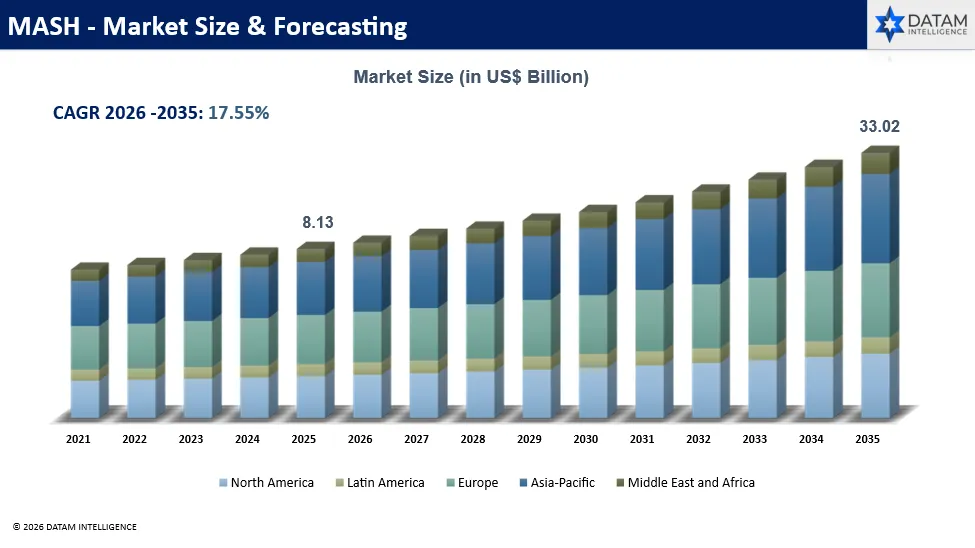
Market Size & Forecasting
The Global MASH Market stood at US$ 8.13 billion in 2025 and is expected to reach US$ 33.02 billion by 2035, growing with a CAGR of 17.55% during the forecast period 2026-2035.
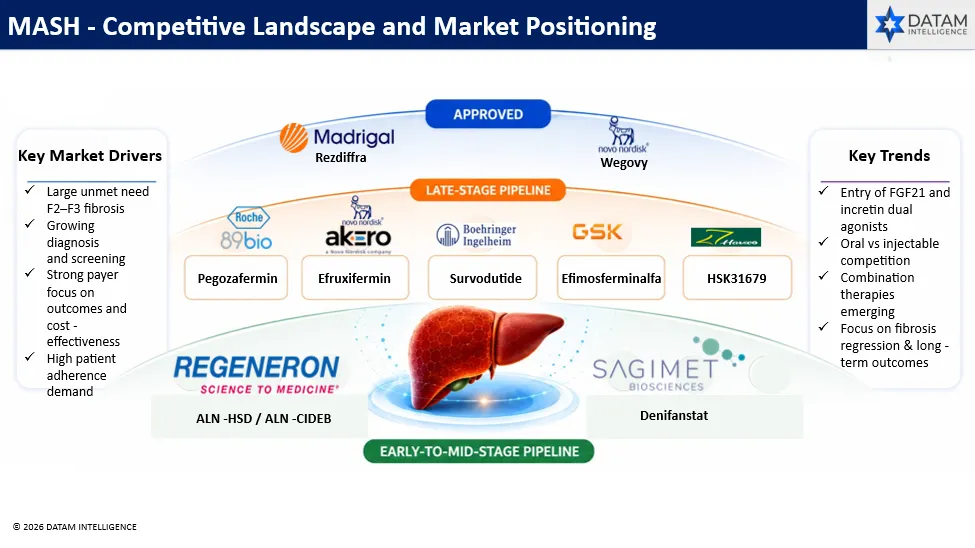
Competitive Landscape and Market Positioning
The MASH market is led by Rezdiffra and Wegovy, which have established the approved treatment segment. Competition is intensifying with late-stage assets such as pegozafermin, efruxifermin, survodutide, efimosfermin alfa and HSK31679, targeting fibrosis improvement, liver fat reduction and metabolic benefit. Early-to-mid-stage players such as Regeneron and Sagimet add further depth through gene-silencing and FASN inhibition approaches. Future leadership will depend on fibrosis regression, safety, dosing convenience, payer access and real-world adoption.
Summary Insights
The MASH is evolving from limited lifestyle-based management to approved drug therapy and multi-mechanism pipeline competition.
Rezdiffra and Wegovy dominate the approved treatment landscape for now, but face growing pressure from:
- Late-stage FGF21 analogues such as pegozafermin, efruxifermin and efimosferminalfa
- Incretin-based therapies such as survodutide and other GLP-1 / glucagon approache
- Oral differentiated assets such as HSK31679, lanifibranor and denifans
- Transformative gene-silencing approaches such as ALN-HSD, ALN-CIDEB and other RNA-based therapies
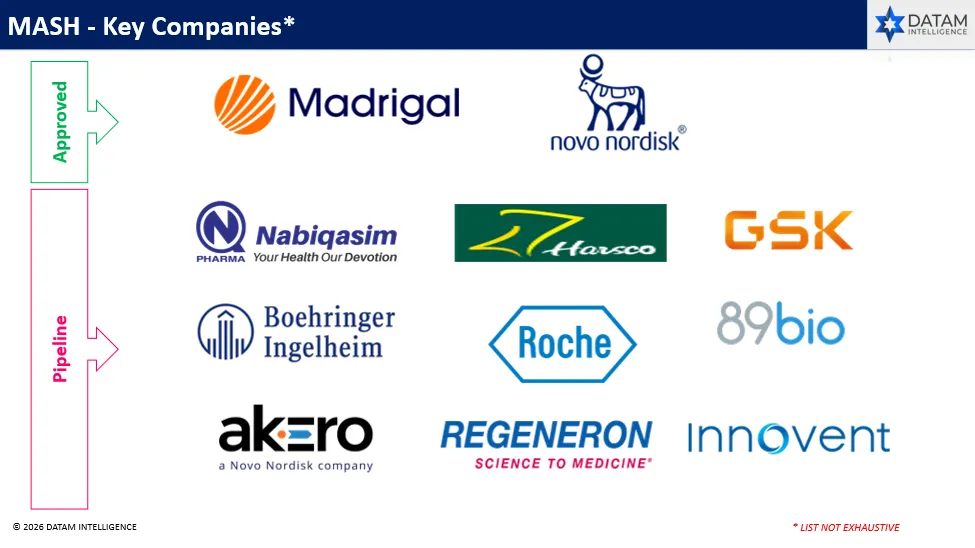
Key Companies:
Target Opportunity Profile (TOP)
Emerging MASH therapies must show clear advantages over Rezdiffra and Wegovy through stronger fibrosis improvement, MASH resolution, metabolic benefit, safety, convenient dosing and payer-relevant evidence. Future success will depend on delivering durable disease modification with clear clinical and commercial differentiation.
Target Opportunity Profile (TOP) – Competitive Attributes
| Dimension | Desired Profile for Emerging Therapies | Rationale |
| Safety |
| MASH patients often have multiple metabolic comorbidities, so broad tolerability and chronic-use safety are critical for adoption. |
| Efficacy |
| Future therapies must show clear benefit beyond liver fat reduction and demonstrate clinically meaningful disease modification. |
| Long-Term Outcomes |
| Payers and physicians will increasingly prioritize long-term outcomes, not only biopsy-based endpoints. |
| Treatment Convenience |
| Convenience will be a key differentiator because MASH requires long-term therapy in a largely asymptomatic patient population. |
| Patient Selection |
| Commercial uptake depends on identifying eligible patients without relying heavily on liver biopsy. |
| Market Access |
| Reimbursement will depend on proving value in high-risk patients and reducing long-term liver and metabolic complications. |
| Competitive Differentiation |
| Emerging assets must show a clear reason to switch, add-on or sequence against Rezdiffra and Wegovy. |
| Combination Potential |
| MASH is multifactorial, so future treatment may shift toward combination or sequencing strategies across liver and metabolic pathways. |
| Commercial Readiness |
| Success will depend not only on clinical efficacy but also on diagnosis expansion, physician confidence and payer adoption. |
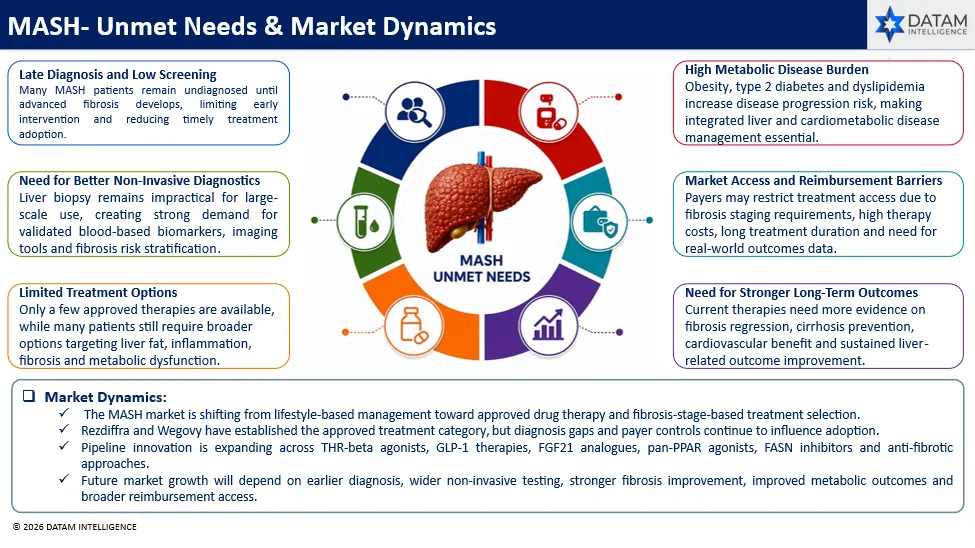
Unmet Needs & Market Dynamics
MASH presents a high unmet need as many patients remain undiagnosed until advanced fibrosis, while current treatment options are still limited in addressing the full spectrum of liver fat accumulation, inflammation, fibrosis and metabolic dysfunction. The market is evolving around earlier screening, non-invasive fibrosis assessment, long-term liver outcome evidence, improved metabolic control, payer access and the need for therapies that can deliver durable fibrosis regression and disease modification.
Strategic Summary
Emerging therapies in MASH will need to deliver clear clinical and commercial differentiation against approved treatments such as Rezdiffra and Wegovy to gain meaningful market share. Liver fat reduction or MASH resolution alone may not be sufficient. Future products must demonstrate stronger patient-relevant outcomes, including durable fibrosis regression, prevention of cirrhosis progression, cardiometabolic benefit, weight-loss impact, and long-term liver-related outcome improvement.
Safety, tolerability and treatment convenience will remain key adoption drivers, particularly as MASH patients often have obesity, type 2 diabetes, dyslipidemia and other chronic metabolic comorbidities. Therapies that offer oral dosing, longer dosing intervals, better adherence, lower monitoring burden or clear combination potential are likely to achieve stronger real-world uptake.
Differentiated mechanisms such as THR-beta agonists, GLP-1 and dual incretin therapies, FGF21 analogues, pan-PPAR agonists, FASN inhibitors and anti-fibrotic approaches may expand treatment options across broader MASH patient groups. Overall, market success will depend on a balanced profile combining fibrosis improvement, metabolic benefit, safety, convenience, payer acceptance and clear clinical differentiation.
Why Buy Our MASH Competitive Intelligence Report?
The MASH market is moving from an underdiagnosed liver disease area to a high-priority pharmaceutical opportunity, driven by first-in-class approvals, expanding late-stage pipelines and growing focus on metabolic comorbidities. Our report helps clients translate this complex landscape into clear strategic actions.
- Identify where competition is intensifying: Understand which companies are leading the MASH race, which assets are advancing fastest, and which mechanisms are likely to shape future treatment standards.
- Prioritize the right patient segments: Assess the most commercially relevant patient pools, including diagnosed MASH, non-cirrhotic MASH and patients with moderate-to-advanced fibrosis.
- Evaluate asset differentiation: Compare therapies based on clinical efficacy, fibrosis improvement, MASH resolution, safety, dosing convenience, metabolic benefits and expected physician preference.
- Track regulatory and launch readiness: Monitor approval timelines, label opportunities, trial outcomes, regulatory risks, and commercialization preparedness across key competitors.
- Support pricing and access planning: Understand payer concerns, reimbursement hurdles, diagnostic requirements and access barriers that may influence treatment uptake.
- Strengthen business development decisions: Identify attractive licensing, partnership, acquisition and investment opportunities across emerging biotech and late-stage pipeline companies.
