


Yttrium Market Size and Forecast
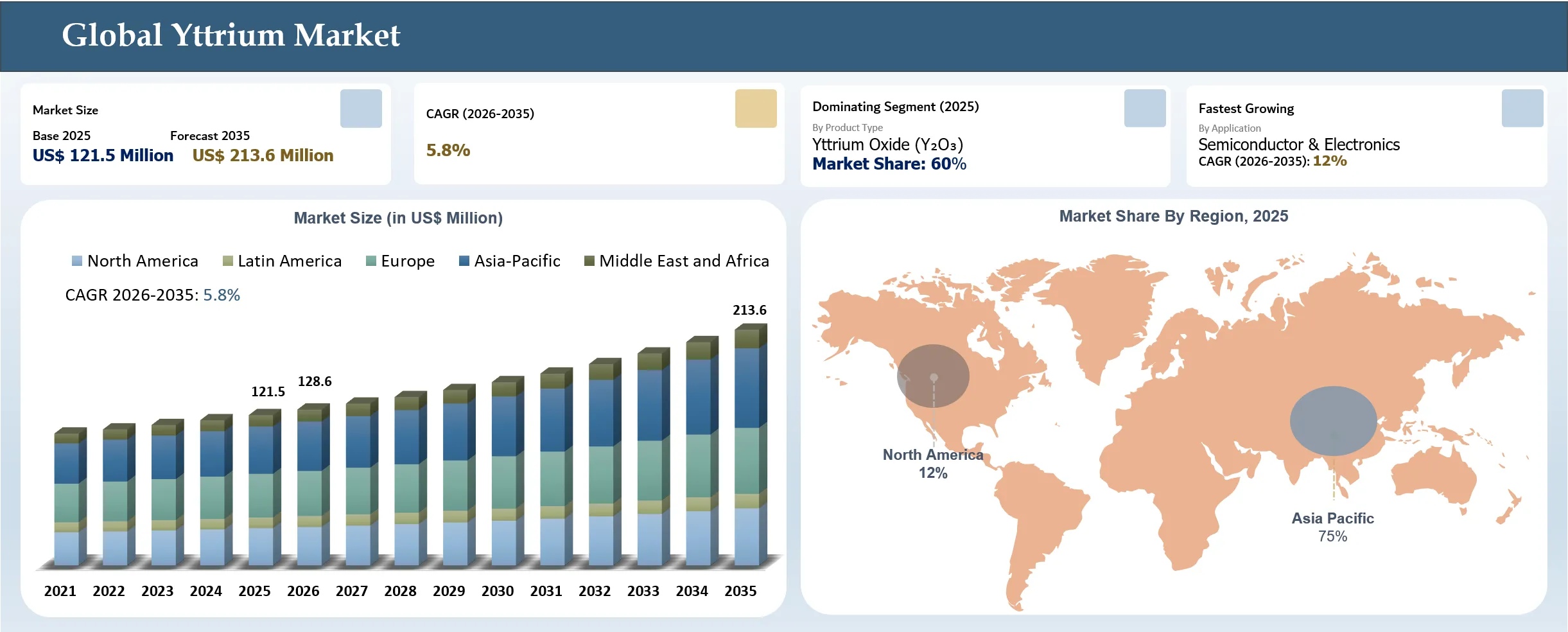
The global Yttrium market reached USD 121.5 million in 2025 and is expected to reach USD 213.6 million by 2035, growing with a CAGR of 5.8% during the forecast period 2026-2035. The market is witnessing steady expansion driven by the growing demand for high-purity yttrium compounds in advanced ceramics, phosphors, semiconductor manufacturing, aerospace coating, and clean energy applications. The global rare earth mine production was estimated at 390,000 metric tons in 2025, as per the U.S. Geological Survey (USGS) Mineral Commodity Summaries 2026, which bolsters the base of raw materials used for extracting and refining of yttrium.
In addition, SEMI has projected that the expenditure on 300mm semiconductor fab equipment will go up by 18% to USD 133 billion in 2026, owing to significant investments made in AI-enabled semiconductor manufacturing and advanced fabrication capabilities that should fuel the demand for yttrium-based electronics and specialty ceramics. Leading industry players like China Northern Rare Earth Group, Shenghe Resources, Iluka Resources, MP Materials, and LKAB Minerals are increasing their rare earth refining capabilities and value-added product production. Geographical concentration of rare earth refining capability and complex separation process is hindering market growth.
The continued restrictions on yttrium exports will lead to tightening of yttrium supplies globally, making it difficult for industries using rare earths that require performance to procure the rare earth elements, making their prices volatile. In July 2026, according to a Reuters report, China maintained its restrictions on exports of key heavy rare earth elements, including yttrium, to Japan throughout June 2026. Yttrium, gallium, dysprosium, and terbium were all exported by China to Japan in nil amounts according to China’s customs statistics, while yttrium was not exported by China to the US for the second time in a row. What is more important, the shortage of yttrium is affecting supply chains of the aerospace and semiconductor industries since yttrium is applied in thermal barrier coatings for aircraft engines’ blades.
U.S. Government Investments Accelerating Domestic Rare Earth Supply Chain Development and Yttrium Supply Resilience
In June 2026, the U.S. Department of Commerce’s CHIPS Program finalized a definitive agreement with USA Rare Earth for up to USD 1.6 billion, representing the largest investment opportunity in the U.S. rare earth sector. The major funding focus is on developing an integrated “Mine-to-Magnet” supply chain, including rare earth mining, separation, refining, metal processing, and permanent magnet manufacturing.
The highest investment area is expected to be domestic rare earth processing and magnet production capacity to support semiconductor, EV, defense, robotics, and clean energy industries. USA Rare Earth is expected to benefit through expansion of its mining-to-magnet operations, while downstream sectors including semiconductor manufacturers, EV companies, defense contractors, and renewable energy equipment producers gain improved access to domestically sourced rare earth materials.
Additional U.S. government investments include the Department of Energy’s USD 134 million funding to strengthen rare earth element supply chains and the USD 134 million Critical Material Innovation, Efficiency, and Alternatives funding program under the Office of Critical Minerals and Energy Innovation. These investments prioritize rare earth extraction, separation, refining, recycling, recovery technologies, and alternative material development.
Beneficiary companies include MP Materials, Energy Fuels, Ucore Rare Metals, and USA Rare Earth for mining and rare earth processing expansion; Phoenix Tailings and REEcycle for advanced extraction and recycling technologies; and engineering and technology providers such as Metso, Hatch, Bechtel, and Worley for processing plant development, equipment supply, and infrastructure deployment. These investments are expected to strengthen the overall rare earth ecosystem and indirectly support the yttrium market by improving domestic heavy rare earth processing capabilities and reducing dependence on overseas supply chains.
Yttrium Market Key Takeaways
- The Asia-Pacific region dominated global yttrium consumption in 2025, holding approximately 75% of the total market share. Within the Asia-Pacific region, China led the market by contributing approximately 68.9% of regional revenues.
- Yttrium Oxide (Y2O3) was the leading product segment in 2025, accounting for approximately 60% of total market revenue. Its dominance is sustained by high demand in aerospace thermal barrier coatings, semiconductor components, and advanced ceramics.
- Global rare earth mine production was estimated at 390,000 metric tons in 2025 according to the U.S. Geological Survey. China produced approximately 270,000 metric tons or 69% of the global total, while controlling up to 90% of global rare earth refining capacity.
- USA Rare Earth agreed to acquire the Serra Verde Group for an implied equity value of approximately USD 2.8 billion. The company also acquired Less Common Metals for USD 100 million in cash plus 6.54 million shares, alongside acquiring TMRC for USD 73 million.
Yttrium Market Industry Trends and Strategic Insight
- Growing Strategic Importance of Yttrium as a Critical Rare Earth Material, due to its application in high-performance ceramics, semiconductor components, phosphors, laser systems, superconductors, and aerospace thermal barrier coatings.
- Semiconductor Manufacturing Expansion Driving Yttrium-Based Material Demand such as yttria (Y₂O₃), which is used in semiconductor processing equipment components due to its plasma resistance, chemical stability, and high-temperature durability.
- Demand for yttrium oxide is increasing through the adoption of yttria-stabilized zirconia (YSZ) in aerospace turbine coatings, fuel cells, oxygen sensors, and industrial thermal protection systems.
- Yttrium-based ceramic electrolytes are gaining attention in solid oxide fuel cells (SOFCs) due to their ionic conductivity and thermal stability.
- Governments and industrial players are investing in domestic rare earth capabilities to secure supplies for defense, semiconductor, renewable energy, and advanced manufacturing sectors.
Yttrium Market Scope
| Metrics | Details | |
| 2025 Market Size | USD 121.5 Million | |
| 2035 Projected Market Size | USD 213.6 Million | |
| CAGR (2026-2035) | 5.8% | |
| Largest Market | Asia-Pacific | |
| Fastest Growing Market | North America | |
| By Product Type | Yttrium Oxide (Y₂O₃), Yttrium Metal, Yttrium Fluoride (YF₃), Yttrium Chloride (YCl₃), Yttrium Nitrate (Y(NO₃)₃), Other Yttrium Compounds | |
| By Purity Grade | High-Purity Yttrium (≥99.9%), Ultra-High Purity Yttrium (≥99.99%), Electronic/Research Grade Yttrium (≥99.999%), Others | |
| By Form | Powder, Metal Pieces / Ingots, Granules, Others | |
| By Application | Advanced Ceramics, Semiconductor & Electronics, Phosphors & Lighting Materials, Aerospace & Defense, Laser & Optical Materials, Energy Applications, Medical Applications, Others | |
| By Region | North America | U.S., Canada, Mexico |
| Europe | Germany, UK, France, Spain, Italy, Poland | |
| Asia-Pacific | China, India, Japan, Australia, South Korea, Indonesia, Malaysia | |
| Latin America | Brazil, Argentina | |
| Middle East and Africa | UAE, Saudi Arabia, South Africa, Israel, Türkiye | |
| Report Insights Covered | Competitive Landscape Analysis, Company Profile Analysis, Market Size, Share, Growth | |
Yttrium Market Disruption Analysis
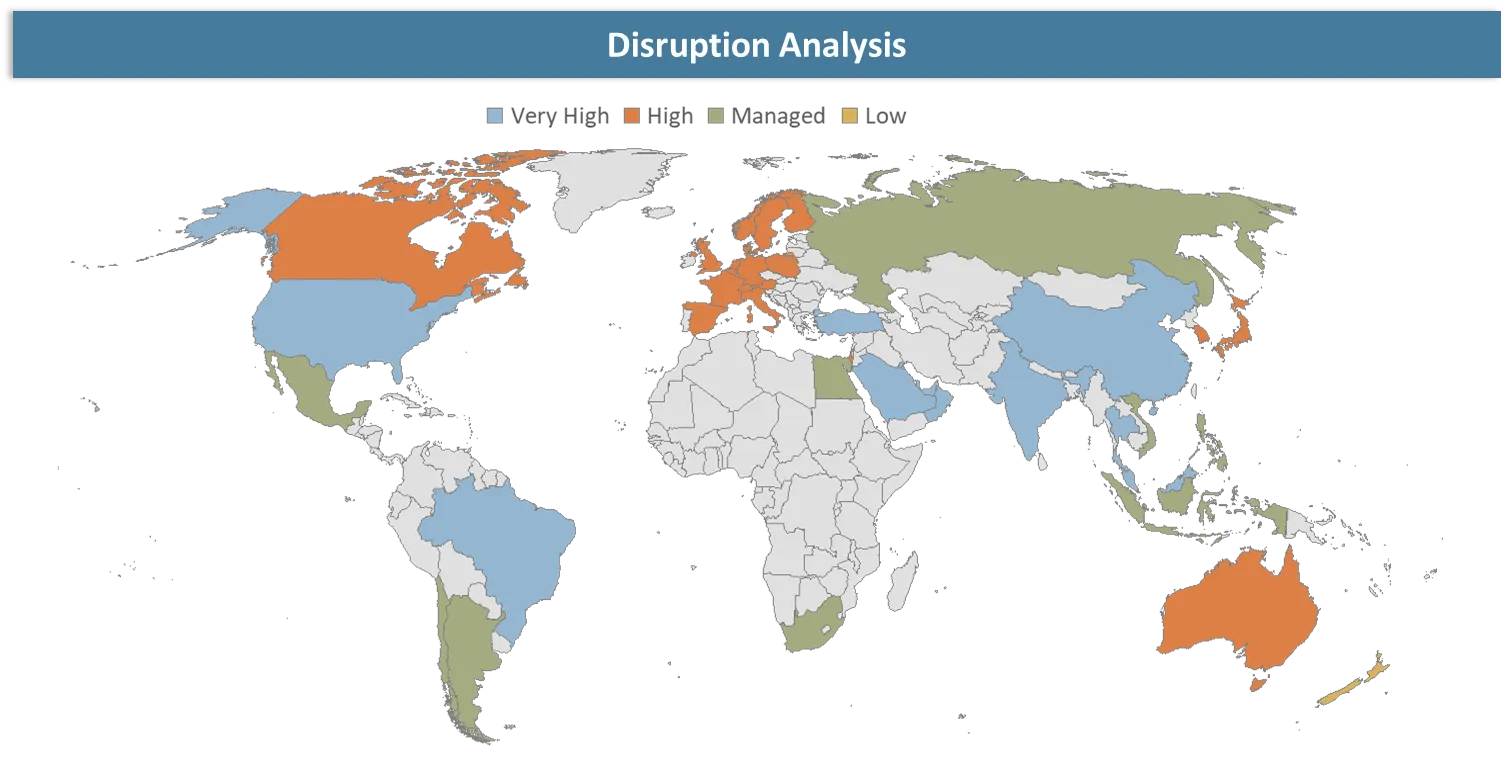
Rare Earth Supply Chain Geopolitical Disruptions Reshaping Yttrium Market Supply Dynamics
Geopolitical instability and export control measures relating to rare earths are responsible for the disturbance in the Yttrium Market, because the production of yttrium is dependent on the extraction and separation network of heavy rare earths. In April 2025, the Chinese government decided to introduce export controls on certain medium and heavy rare earth-related products, such as yttrium metal, yttrium alloy, yttrium oxide, and yttrium compounds, necessitating government clearance before the export of the material. This created further uncertainties for the industries that relied on yttrium-related products for use in semiconductors, thermal barriers in aviation, and optics.
Moreover, the disruption has resulted in concrete consequences in terms of the international yttrium trade patterns. According to the industry trade statistics of 2025, yttrium imports into the U.S. have decreased considerably as a result of the export license restrictions imposed by China, where China represents about 93% of U.S. yttrium supply exposure. The uncertain supply is causing some changes in manufacturers' strategies, since companies are increasingly looking for other sources of yttrium, managing their inventories, and considering rare earth processing capacities. Thus, the yttrium market is switching from a conventional supply chain based on raw materials to a supply chain based on security of supply.
Yttrium Market BCG Matrix: Company Evaluation
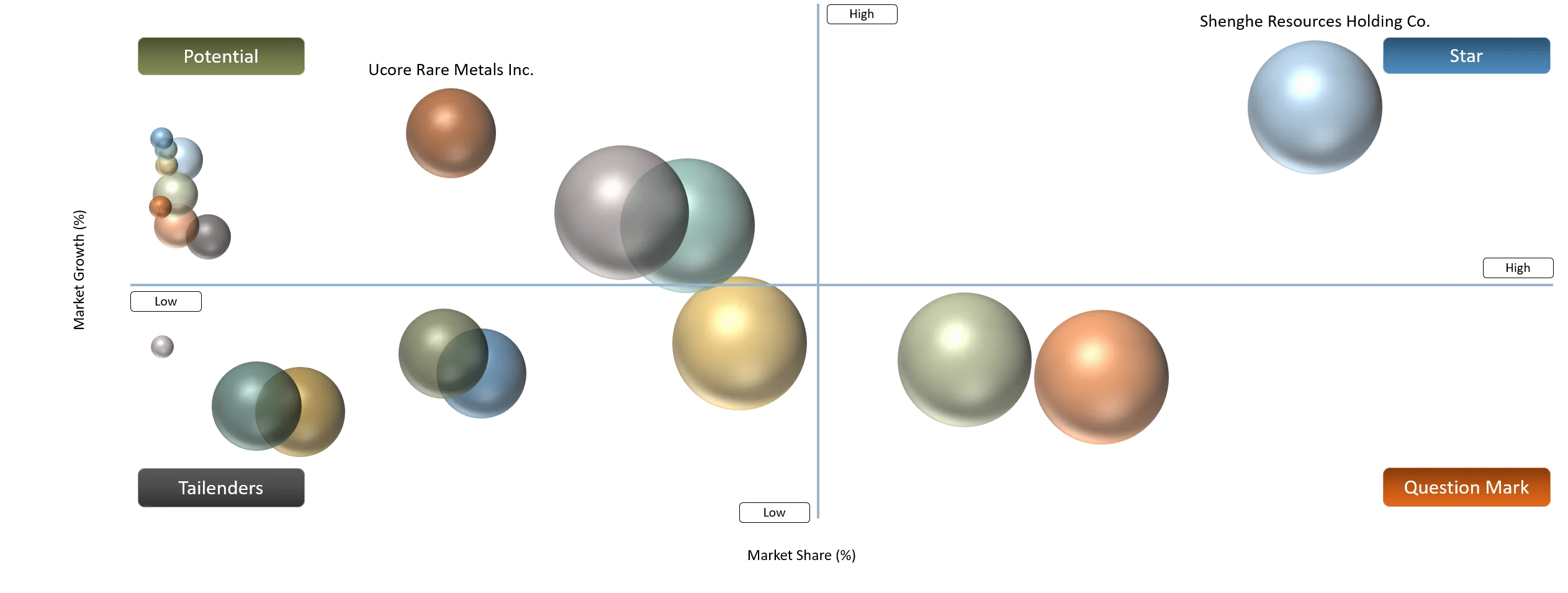
Star companies such as Shenghe Resources Holding Co., Ltd., Lynas Rare Earths Ltd., and Solvay SA are positioned due to their strong involvement in rare earth extraction, separation, refining, and production of high-purity rare earth compounds used in yttrium applications. Shenghe Resources benefits from its integrated rare earth supply chain and access to yttrium-bearing resources through Chinese rare earth processing networks. Question Mark companies, including MP Materials Corp., Iluka Resources Ltd., and Rainbow Rare Earths Ltd., are placed because they are expanding rare earth mining and downstream separation capabilities but are still developing their position in yttrium supply chains.
Potential companies such as Ucore Rare Metals Inc. and Vital Metals Ltd., due to their focus on building regional rare earth processing capabilities and developing alternative supply sources. Ucore is advancing rare earth separation technology through its RapidSX™ platform, targeting North American critical mineral supply chains. Tailenders include Shin-Etsu Chemical Co., Ltd., which is positioned within the yttrium production landscape because its primary strength lies in downstream rare earth-based functional materials rather than upstream yttrium mining and separation.
Yttrium Market Dynamics
Driver Impact Analysis
| Driver | Market Growth Impact (%) | Demand Concentration | Impacted Use Case | Strategic Impact |
Increasing adoption of yttria-stabilized zirconia (YSZ) in aerospace coatings, industrial ceramics, oxygen sensors, and solid oxide fuel cells is driving yttrium consumption. | 30% | Aerospace, energy, and industrial ceramic manufacturers in North America, Europe, and Asia-Pacific, with strong demand from China, Japan, South Korea, and the U.S. | Thermal barrier coatings for turbine engines, zirconia ceramics, oxygen sensors, SOFC electrolytes, and high-temperature components. | Strengthens yttrium demand through expansion of high-performance ceramic applications and increases the importance of reliable yttrium oxide supply for advanced material industries. |
Growing investments in advanced semiconductor fabrication are increasing demand for high-purity yttrium oxide. | 20% | Concentrated in Asia-Pacific semiconductor hubs including Taiwan, South Korea, Japan, and China, with increasing demand from the U.S. | Plasma-resistant semiconductor chamber components, electronic ceramics, and high-purity yttrium oxide coatings. | Drives demand for ultra-high-purity yttrium materials and encourages suppliers to expand refining capabilities for semiconductor-grade applications. |
Increasing utilization of yttrium-based thermal barrier coatings and high-temperature ceramic materials in turbine engines is supporting market growth. | 18% | Aerospace manufacturing regions including North America, Europe, and Asia-Pacific, led by aircraft engine manufacturers and maintenance providers. | Aircraft turbine blades, gas turbines, aerospace coatings, and industrial heat-resistant components. | Improves yttrium market value by shifting demand toward specialized high-performance materials rather than commodity applications. |
Rising deployment of clean energy technologies is boosting demand for yttrium-stabilized zirconia electrolytes used in fuel cell systems. | 15% | Demand concentrated in Asia-Pacific, Europe, and North America due to hydrogen infrastructure and clean energy investments. | Solid oxide fuel cells (SOFCs), hydrogen energy systems, and distributed power generation. | Creates long-term demand opportunities for yttrium compounds as industries adopt low-carbon energy technologies requiring advanced ceramic electrolytes. |
Increasing production of LED lighting and display components is driving demand for yttrium-based phosphors used for enhanced color performance and efficiency. | 12% | Concentrated in Asia-Pacific electronics manufacturing centers, particularly China, South Korea, Japan, and Taiwan. | LED phosphors, display materials, lighting technologies, and optical components. | Supports downstream yttrium compound demand and maintains yttrium relevance in advanced electronic and optical material applications. |
Increasing adoption of yttria-stabilized zirconia (YSZ) in aerospace coatings, industrial ceramics, oxygen sensors, and solid oxide fuel cells is driving yttrium consumption
The growing adoption of yttria-stabilized zirconia (YSZ) across aerospace, industrial, and energy applications is a key driver accelerating demand for yttrium-based materials. YSZ, produced by adding yttrium oxide (Y₂O₃) to zirconia, provides superior thermal stability, fracture toughness, corrosion resistance, and ionic conductivity, making it essential for gas turbine thermal barrier coatings, oxygen sensors, solid oxide fuel cells (SOFCs), and advanced ceramic components.
In 2025, the global aerospace industry continued expanding aircraft production and maintenance activities, with Airbus delivering 793 commercial aircraft in 2025, supporting demand for high-temperature ceramic coatings used in turbine engine components. This increasing focus on fuel efficiency and engine durability is encouraging the use of yttrium-containing ceramic coatings that improve component performance under extreme operating conditions.
With more use of solid oxide fuel cells as sources of clean energy and distributed power generation, there will be higher consumption of yttrium-based ceramic products like YSZ. According to the U.S. Department of Energy (DOE), solid oxide fuel cells are high-efficiency electrochemical energy conversion systems that use ceramic electrolytes such as yttria-stabilized zirconia (YSZ). YSZ is produced by adding yttrium oxide (Y₂O₃) to zirconia (ZrO₂); typically, 8 mol% yttria-stabilized zirconia (8YSZ) is widely used as an SOFC electrolyte because yttrium creates oxygen vacancies that enhance ionic conductivity. SOFC systems generally operate at approximately 800–1,000°C, enabling high electrical efficiency of more than 70% in combined heat and power (CHP) configurations.
Restraint Impact Analysis
| Restraint | Drag on Market Growth (%) | Primary Impact Area | Impacted Use Case | Strategic Impact |
Concentration of yttrium extraction and refining capacity within a few countries creates supply chain vulnerabilities and availability risks. | 20% | Global yttrium supply security, raw material availability, and price stability | Yttria-stabilized zirconia (YSZ) ceramics, aerospace coatings, semiconductor materials, solid oxide fuel cells (SOFCs), and phosphors | Increases dependence on limited suppliers, exposes manufacturers to export restrictions and geopolitical disruptions, and encourages companies to develop diversified sourcing strategies and regional refining capabilities. |
The technically challenging extraction and purification of yttrium from mixed rare earth ores increases production costs and limits large-scale supply expansion. | 15% | Rare earth separation efficiency, processing costs, and production scalability | High-purity yttrium oxide production for advanced ceramics, optical materials, and electronic applications | Restricts new market entrants, increases production expenses, and slows expansion of yttrium refining capacity required for emerging high-performance applications. |
Yttrium is primarily recovered as a by-product of rare earth processing, restricting direct production flexibility and supply scalability. | 18% | Supply flexibility, mining economics, and production planning | YSZ thermal barrier coatings, laser materials, superconductors, and specialty alloys | Limits the ability to independently increase yttrium output based on demand growth, creating supply-demand imbalance risks and increasing reliance on broader rare earth production trends. |
Low recovery rates from electronic waste, phosphors, and industrial residues restrict the contribution of secondary yttrium supply. | 12% | Recycling infrastructure, secondary raw material availability, and circular supply chains | Recycled yttrium for phosphors, ceramics, magnets, and advanced material manufacturing | Reduces opportunities for supply diversification, delaying circular economy adoption and maintaining dependence on primary rare earth extraction sources. |
Concentration of yttrium extraction and refining capacity within a few countries creates supply chain vulnerabilities and availability risks
One of the major challenges is the high concentration of global extraction and refining capacities in a limited number of countries, which is one of the biggest limitations hindering the sustainable development of the yttrium market. Yttrium is predominantly produced as a by-product of rare earth elements and not by mining operations. As per the U.S. Geological Survey (USGS) 2026 Mineral Commodity Summaries, global rare earth production continued to be geographically concentrated in 2025, and China continued to dominate in rare earth mine production and processing capacities. It exposes yttrium availability in the market to potential risks arising due to policies of governments and other factors like geopolitical tensions, which may affect industries requiring yttrium, including advanced ceramics, aerospace coatings, semiconductors, and solid oxide fuel cells.
The dependence on limited geographic sources to obtain raw materials used in the processing of rare earth elements makes the yttrium supply chain vulnerable. In May 2025, as per the International Energy Agency (IEA), there still exists a high concentration in the supply chain of critical minerals among a few countries that leads to many concerns, including supply disruption, export restrictions, and price instability. It is mentioned in the report that China dominates up to 90% of global capacity for rare earth elements refining. Being one of the rare earth elements, yttrium also requires the same infrastructure for its extraction, refining, and separation, and hence faces the availability risk.
Yttrium Market Segmentation Analysis
The global Yttrium market is segmented based on product type, purity grade, form, application, and region.
Yttrium Oxide (Y₂O₃) Dominating Product Segment Driving Broad-Based Demand Across Advanced Material Applications
The Yttrium Oxide (Y₂O₃) segment dominated the Yttrium Market, with a market share of about 60% in 2025, due to its broad range of applications in advanced ceramics, semiconductors, phosphors, optics, and aerospace. Y₂O₃ is the commercially most viable form of yttrium because of its good thermal stability, chemical stability, thermal expansion, and property enhancement in materials. The rising adoption of yttria-stabilized zirconia (YSZ) in thermal barrier coatings for aerospace turbine engines, ceramic components, and solid oxide fuel cells has been one of the key drivers behind the growth in the Y₂O₃ market between 2025 and 2026. In the semiconductor industry, high-purity yttrium oxide coatings find application in plasma etching systems owing to their strong resistance to corrosive fluoride plasmas.
Y₂O₃ is further justified in its strategic importance as a critical material for developing other compounds that are made from yttrium, enabling applications ranging from optical lasers, LED phosphors, and aerospace ceramics. With the rise in the development of materials that offer better durability and heat resistance, yttrium oxide is likely to continue being dominant in the market until 2026.
Yttrium Market Geographical Penetration
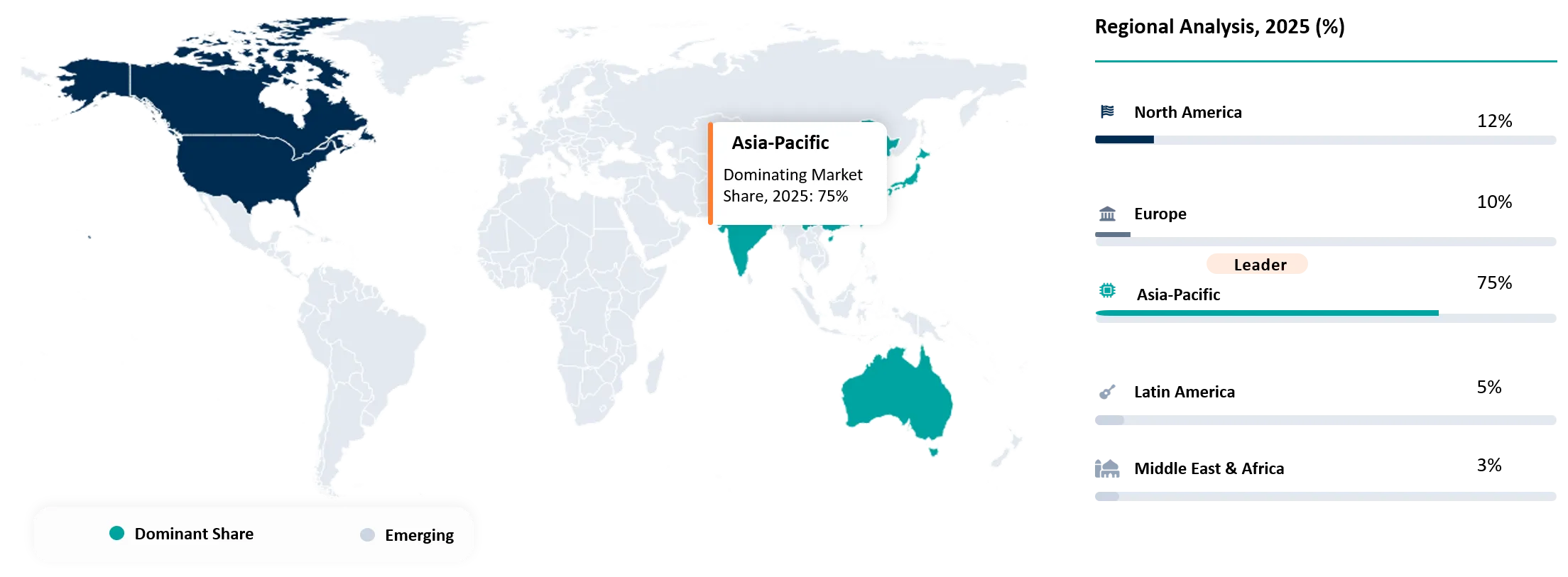
Strong Rare Earth Processing Ecosystem and Advanced Technology Adoption Driving Asia-Pacific Yttrium Market Dominance
The Asia-Pacific region dominated the yttrium market, contributing around 75% of the market share in 2025 due to the well-developed processing infrastructure, supply chain, and downstream manufacturing capacity in China, Japan, South Korea, and other countries within the region. The availability of large-scale rare earth separation plants, advanced ceramics production, semiconductor fabrication centers, and electronics manufacturing centers has helped Asia-Pacific become the key center for consumption and processing of yttrium compounds.
The collaboration increases the resilience of Asia-Pacific rare earth supply chains through the creation of a diverse supply of yttrium and other heavy rare earth metals that are not sourced from China. In March 2026, Sojitz Corporation, a Japan-based trading and investment company, and Lynas Rare Earths Ltd., a Australia-based rare earth mining and processing company, signed an MoU, via Japan Australia Rare Earth (JARE), aimed at enhancing the supply of medium and heavy rare earths into Japan. Under the agreement, Lynas will provide 75% of its medium and heavy rare earth production to Japan; thus, ensuring access to vital materials such as yttrium, samarium, lutetium, and gadolinium.
China Yttrium Market Trends
China holds a dominant position in the Asia-Pacific yttrium market, contributing to approximately 68.9% of the region's market share in 2025 owing to its rich rare earth mining, extraction, purification, and yttrium compounds manufacturing process. China's complete integration of rare earth minerals ensures high-level production of yttrium materials, especially yttrium oxide (Y₂O₃), which finds wide-ranging applications in advanced ceramics, semiconductor components, phosphors, optics, and energy sector.
As a result of the high presence of rare earth minerals in China, there are significant threats to the supply chain associated with yttrium because yttrium is dependent upon the same rare earth supply chain process as well. In February 2026, based on the U.S. Geological Survey (USGS), Rare Earths, the concentration of the supply of rare earth elements globally is very high, and China continues to dominate mining, separation, and refining of rare earths. Estimates of global mine production of rare earth oxides stood at about 390,000 metric tons in 2025, where China accounted for about 270,000 metric tons (about 69%) of the total global mine production.
Japan Yttrium Market Outlook
Japan is emerging as the fastest-growing market in the Asia Pacific yttrium market due to its advanced semiconductor manufacturing base, ceramic manufacturing capability, and rising demand for pure rare earth materials. While China dominates in bulk production capacity for yttrium, the yttrium market in Japan is growing owing to the consumption of high-purity yttrium oxide (Y₂O₃), ultra-high-purity yttrium chemicals, and specialty yttrium-based products.
Japanese efforts in exploring deep-sea rare earth resources will aid in providing a secure supply of heavy rare earth elements such as yttrium from sources other than China. In February 2026, as per the AP report, Japan successfully retrieved rare earth-rich seabed sediment near Minamitorishima island through the use of its research vessel named Chikyu. This recovery was carried out at a depth of 6,000 meters (around 19,700 feet) below the surface of the water and is said to be the world’s first-ever recovery of rare earth mud at this depth. The project is backed by the Japanese government’s efforts to utilize its own rare earth reserves and lessen its dependency on China.
Yttrium Market Competitive Landscape
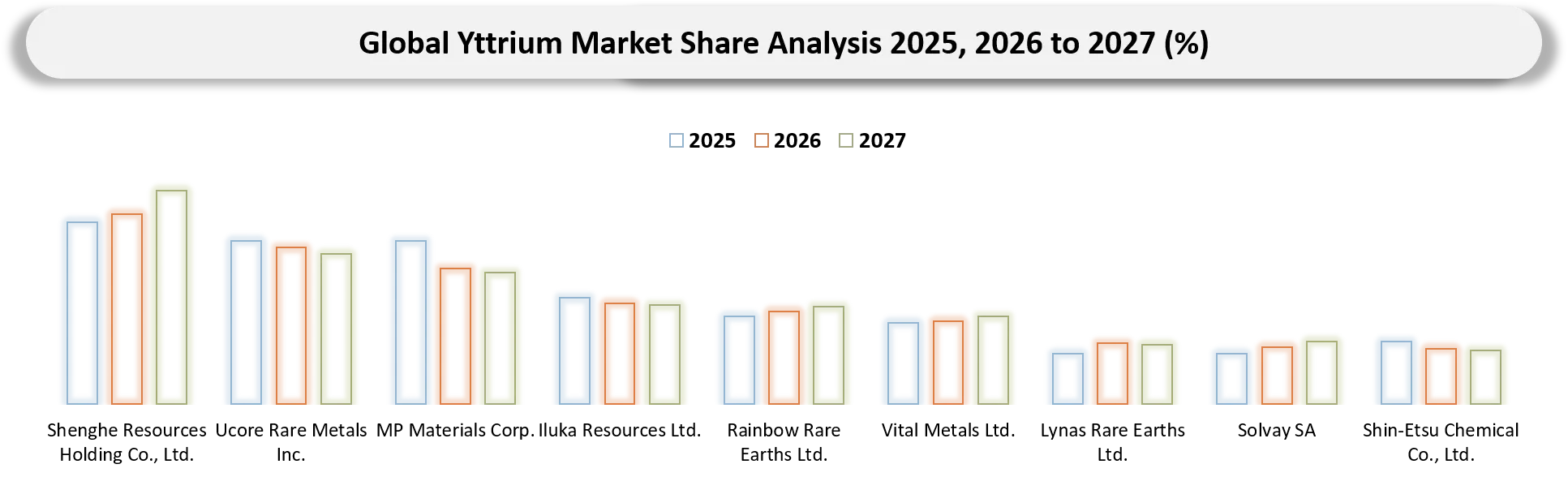
- The yttrium market is characterized by a supply-chain-driven competitive landscape involving rare earth mining and separation companies, specialty chemical producers, and advanced material manufacturers. Leading rare earth suppliers such as Shenghe Resources Holding Co., Ltd., MP Materials Corp., Lynas Rare Earths Ltd., Iluka Resources Ltd., Rainbow Rare Earths Ltd., and Vital Metals Ltd. focus on securing rare earth feedstock, separation capacity, and downstream processing capabilities, while companies such as Solvay SA and Shin-Etsu Chemical Co., Ltd. specialize in high-purity rare earth compounds and advanced material applications.
The market remains highly concentrated due to the limited availability of yttrium resources and the technical complexity involved in rare earth separation and refining. According to the U.S. Geological Survey (USGS) 2026 Mineral Commodity Summaries, global rare earth production and processing remain concentrated among a limited number of countries, with China maintaining a leading role in rare earth supply and processing capacity, influencing the availability of yttrium-based materials globally. Competitive differentiation in the yttrium market is increasingly driven by high-purity processing capabilities, supply chain diversification, and downstream material integration.
Companies with advanced separation technologies and the ability to produce ultra-high-purity yttrium compounds (≥99.99% and ≥99.999%) are gaining strategic importance due to rising demand from semiconductor manufacturing, optical technologies, and advanced ceramics. During 2025–2026, partnerships and capacity expansion initiatives focused on rare earth processing have accelerated as governments and industries prioritize secure access to critical minerals.
Yttrium Market Key Players
Key players include Shenghe Resources Holding Co., Ltd., Ucore Rare Metals Inc., MP Materials Corp., Iluka Resources Ltd., Rainbow Rare Earths Ltd., Vital Metals Ltd., Lynas Rare Earths Ltd., Solvay SA, and Shin-Etsu Chemical Co., Ltd.
Key Developments in the Yttrium Market
August 2026 – MP Materials Expands Heavy Rare Earth Processing Capacity
MP Materials announced further investments in its U.S. rare earth processing infrastructure to support domestic production of heavy rare earth elements, including yttrium-containing concentrates. The expansion aligns with U.S. efforts to reduce dependence on Chinese rare earth supply chains and strengthen critical mineral security.
- July 2026: Bayan Mining and Minerals Limited, Australia-based critical minerals exploration and processing technology company, partnered with The University of Queensland, Australia-based public research university, to advance its Yttrium Upgrade Processing Technology.
June 2026 – China Tightens Export Controls on Strategic Rare Earth Technologies
China introduced additional restrictions on rare earth processing and separation technologies, particularly those related to heavy rare earth elements. The move has accelerated investments in alternative yttrium refining and separation projects across North America, Australia, and Europe.
- May 2026: Pure Resources Limited, a Australia-based critical minerals exploration and development company, entered into a Strategic Partnership Projects (SPP) Agreement with UT-Battelle, LLC, a US-based research organization managing Oak Ridge National Laboratory (ORNL) for the U.S. Department of Energy, to develop an economic recovery method for heavy rare earth elements plus yttrium (HREE+Y) from the company’s Garnet Hills Project in Western Australia.
May 2026 – Arafura Rare Earths Advances Nolans Project
Arafura Rare Earths secured additional funding and progressed construction activities at its Nolans Rare Earth Project in Australia. The project is expected to contribute to future supplies of mixed rare earth oxides, including yttrium-bearing materials used in advanced technologies.
- April 2026: USA Rare Earth, Inc., a U.S.-based rare earth materials and technology company, entered into a definitive agreement to acquire Serra Verde Group (Brazil-based rare earth mining and processing company) for an implied equity value of approximately USD 2.8 billion.
- March 2026: USA Rare Earth, Inc., a USA-based rare earth materials and technology company, and Texas Mineral Resources Corp., a USA-based critical minerals exploration and mining company, announced a definitive agreement for USA Rare Earth to acquire all outstanding shares of TMRC in an all-stock transaction. Under the agreement, USA Rare Earth will issue 3,823,328 shares of its common stock to acquire TMRC, with the transaction valued at approximately USD 73 million based on USA Rare Earth’s share price on March 4, 2026.
February 2026 – Energy Fuels Expands Rare Earth Separation Capabilities
- Energy Fuels Inc. announced advancements at its White Mesa Mill rare earth processing facility in Utah, increasing its capability to process monazite concentrates containing heavy rare earth elements and yttrium. The expansion supports growing demand from defense, electronics, and clean energy industries.
January 2026 – European Union Launches Critical Raw Materials Initiatives
- The European Commission accelerated funding for rare earth and critical mineral projects under the Critical Raw Materials Act. Several projects involving heavy rare earth extraction and processing, including yttrium recovery technologies, received strategic support to strengthen regional supply security.
- November 2025: USA Rare Earth, Inc., a US-based rare earth materials and technology company) completed the acquisition of Less Common Metals Ltd. (LCM), a UK-based specialty rare earth metals and alloy manufacturer. The acquisition was completed through the purchase of Indian Ocean Rare Metals Pte Ltd. (Singapore-based holding company), which owned LCM, for a transaction value of USD 100 million in cash and 6.54 million shares of USA Rare Earth common stock.
- October 2025: Lynas Rare Earths Ltd., Australia-based rare earth mining and processing company, announced plans to construct a heavy rare earth separation plant in Malaysia to strengthen global rare earth supply chain diversification. The facility, located at Lynas’ existing Malaysian operations, will have an annual processing capacity of 5,000 metric tons of heavy rare earth feedstock and represents an investment of approximately A$180 million (around US$119 million).
Key Procurement Priorities and Buyer Evaluation Criteria
- Businesses sourcing materials containing yttrium have been opting for suppliers that have high-quality yttrium compounds available consistently in terms of supply capability, purity, and quality to cater to the needs of industries requiring yttrium compounds, like semiconductors, advanced ceramics, aerospace coatings, optical materials, and energy sector applications.
- Purchasers consider criteria such as purity of yttrium, stability of chemical composition, management of impurities, manufacturing scale, delivery and logistics issues, and conformity to industrial standards of quality when choosing vendors of yttrium. Particle size distribution, thermal stability, and overall performance characteristics of yttrium oxide matter in applications for high-tech ceramics and semiconductor machinery parts.
- Procurement decisions today are highly influenced by suppliers' competence in the process of separating and purifying rare earth elements, their skills in downstream processes, diversity in terms of geographical sourcing, and sustained supply of yttrium elements. Companies offering products for future applications such as semiconductor manufacturing, solid oxide fuel cells, aerospace heat barrier coatings, lasers, and optics have been preferred.
Why Choose DataM?
- Technological Innovations: Explores advancements in yttrium production, refining, and high-purity material processing, including developments in yttrium oxide (Y₂O₃), ultra-high-purity yttrium compounds, and advanced ceramic materials that support semiconductor manufacturing, aerospace coatings, optical technologies, energy systems, and next-generation electronic applications.
- Product Performance & Market Positioning: Evaluates how yttrium suppliers differentiate based on purity levels, material consistency, processing capabilities, supply reliability, and application-specific performance. The analysis highlights the competitive positioning of companies providing high-value yttrium materials for semiconductor-grade ceramics, laser systems, phosphors, and advanced industrial applications.
- Real-World Evidence: Highlights the adoption of yttrium-based materials across semiconductor fabrication equipment, aerospace thermal barrier coatings, solid oxide fuel cells, optical lasers, phosphors, and advanced ceramics, demonstrating benefits such as improved thermal resistance, enhanced durability, plasma corrosion resistance, and higher material performance.
- Market Updates & Industry Changes: Tracks key developments including rare earth supply chain diversification, new refining capacity investments, strategic partnerships, government initiatives for critical mineral security, and expansion of high-purity rare earth processing capabilities across Asia-Pacific, North America, and Europe to support growing demand for yttrium-based materials.
- Competitive Strategies: Analyzes how leading companies strengthen their market position through rare earth resource development, refining technology improvements, downstream material integration, strategic partnerships, and expansion of non-China supply chains to address increasing demand from semiconductor, aerospace, energy, and advanced manufacturing industries.
- Pricing & Market Access: Provides insights into yttrium pricing variations based on purity grade, compound type, processing complexity, supply availability, and end-use requirements. The report evaluates market access through rare earth producers, specialty chemical manufacturers, and advanced material suppliers supporting global yttrium supply chains.
- Market Entry & Expansion: Identifies growth opportunities driven by semiconductor industry expansion, AI and high-performance computing infrastructure, advanced ceramic adoption, renewable energy technologies, and strategic rare earth supply diversification while outlining strategies such as local processing investments, technology development, and long-term supply partnerships for global market expansion.
Target Audience
- Rare Earth Element Producers & Mining Companies
- Yttrium Compound Manufacturers & Specialty Chemical Companies
- Semiconductor Manufacturers & Advanced Materials Suppliers
- Advanced Ceramics & Industrial Material Companies
- Aerospace & Defense Companies
- Energy & Clean Technology Companies
- Electronics, Optical & Photonics Companies


























































