


Web3 Gaming Market Overview
Global Web3 Gaming Market reached US$ 28.32 billion in 2025 and is expected to reach US$ 149.48 billion by 2035, growing with a CAGR of 18.1% during the forecast period 2026-2035. The global Web3 gaming market is expanding rapidly as blockchain‑enabled play‑to‑earn mechanics, NFT asset ownership, and decentralized economies redefine how players engage with games and monetize digital experiences. Major developers and ecosystem platforms are responding by enhancing interoperability, token utility, and community governance across titles.
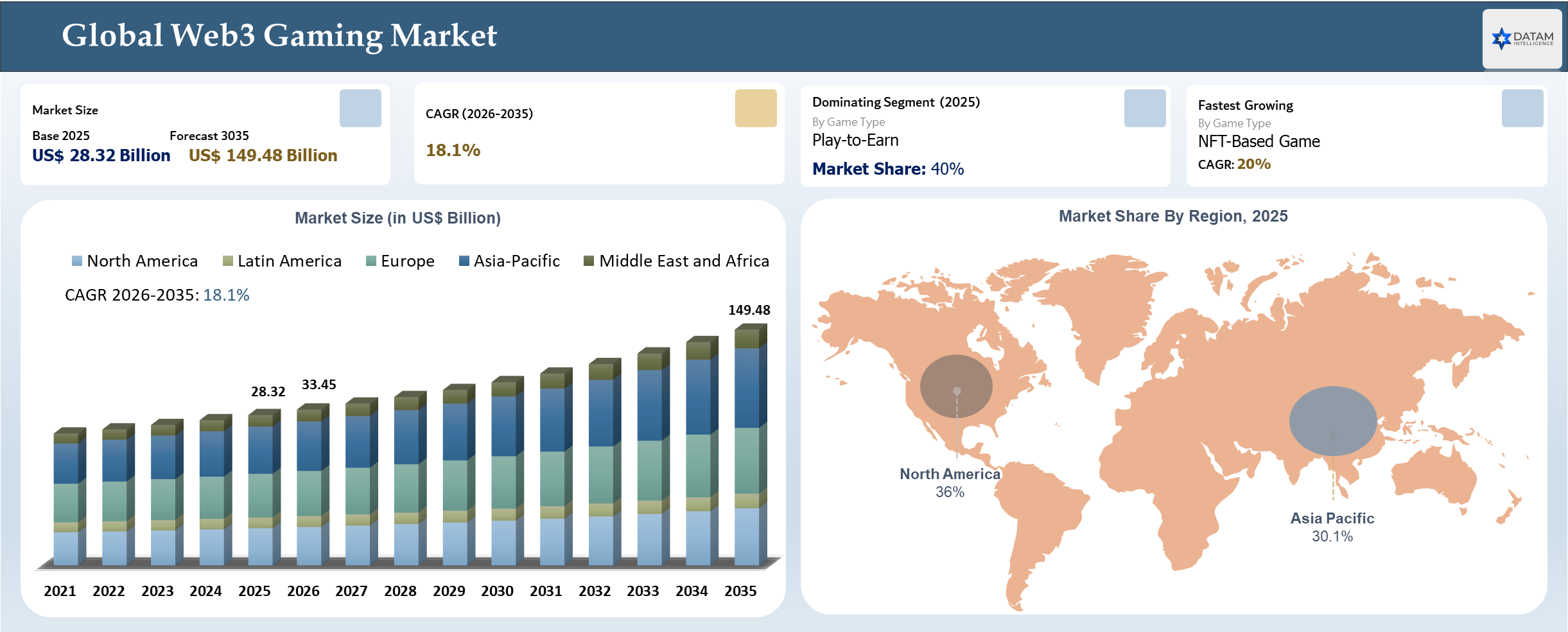
For example, in 2025, Illuvium, an Australia‑based Web3 RPG developer, launched its Illuvium Overworld 2.0 update with enhanced NFT utilities and cross‑chain support, allowing players to trade and upgrade collectible characters across multiple blockchains. Similarly, Gala Games, a US‑based Web3 gaming publisher, expanded its ecosystem with Gala Chain Beta, enabling developers to build games with native on‑chain token mechanics and reduced gas costs. The trend is evident in partnerships between gaming studios and blockchain infrastructure providers, new interoperable NFT standards, and cross‑platform wallet integrations, demonstrating that developers view scalable, asset‑owned, and community‑centric models as strategic drivers for mainstream Web3 gaming adoption.
Web3 Gaming Industry Trends and Strategic Insights
- Asia-Pacific is the fastest-growing region in the web3 gaming market, capturing a share of 30.1% in 2025.
- By game type, the play-to-earn is projected to be the largest market, holding a significant share of about 40% in 2025.
Global Web3 Gaming Market Size and Future Outlook
- 2025 Market Size: US$ 28.32 Billion
- 2035 Projected Market Size: US$ 149.48 Billion
- CAGR (2026-2035): 18.1%
- Largest Market: North America
- Fastest Market: Asia-Pacific
Market Scope
| Metrics | Details |
| By Game Genre | Role Playing Games (RPG), Strategy Games, Trading Card Games, Simulation Games, Sports and Racing, Others |
| By Game Type | NFT-Based, Play-to-Earn, Decentralized Games |
| By Device Type | Mobile, PC or Desktop, Consoles |
| By End-User | Casual Gamers, Hardcore Gamers, Investors or Speculators, Collectors, Community Builders |
| By Region | North America, South America, Europe, Asia-Pacific, Middle East and Africa |
| Report Insights Covered | Competitive Landscape Analysis, Company Profile Analysis, Market Size, Share, Growth |
Disruption Analysis
Shift from Centralized Gaming Models to Decentralized Web3 Economies Disrupting Industry Structure
A significant disruption in the Web3 gaming industry is the transition from the game economy model to blockchain-based systems for managing game assets and decentralized game economy infrastructure. Legacy gaming companies are now under threat from new blockchain-based gaming platforms where game assets are owned by players through NFTs and other cryptocurrencies. This change is resulting in less dependence on the gaming platform and greater interoperability within different games and metaverses. Consequently, established game publishers must contend with the competition from blockchain-oriented game developers who create game economies around tokens.
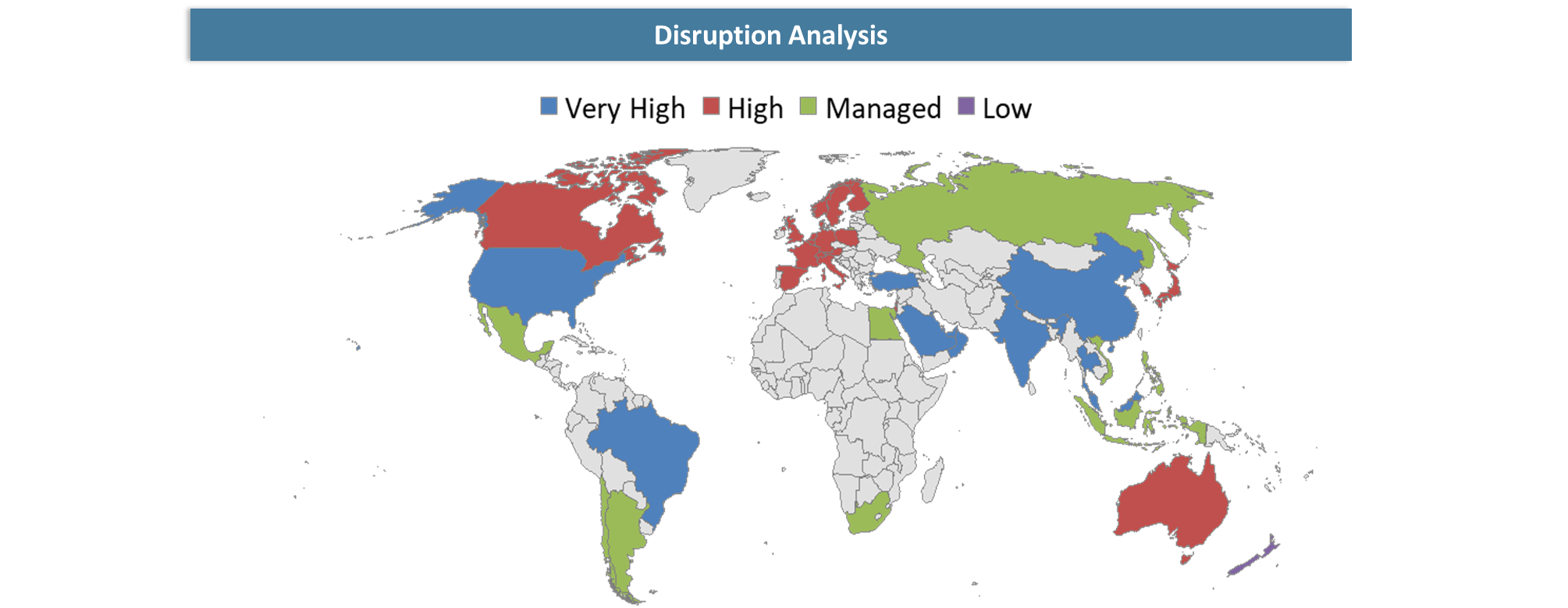
The next critical disruption in the Web3 gaming industry is related to the adoption of artificial intelligence-based technologies and cross-chain gaming infrastructure for the fast-paced development of game products and easy management of game assets in multiple ecosystems. Gaming guilds and metaverse gaming environments incorporate the play-to-earn or play-and-earn business model in which player participation becomes crucial to the generation of value. Therefore, traditional models of monetization that depend only on in-game purchases and subscriptions have become outdated and irrelevant.
BCG Matrix: Company Evaluation
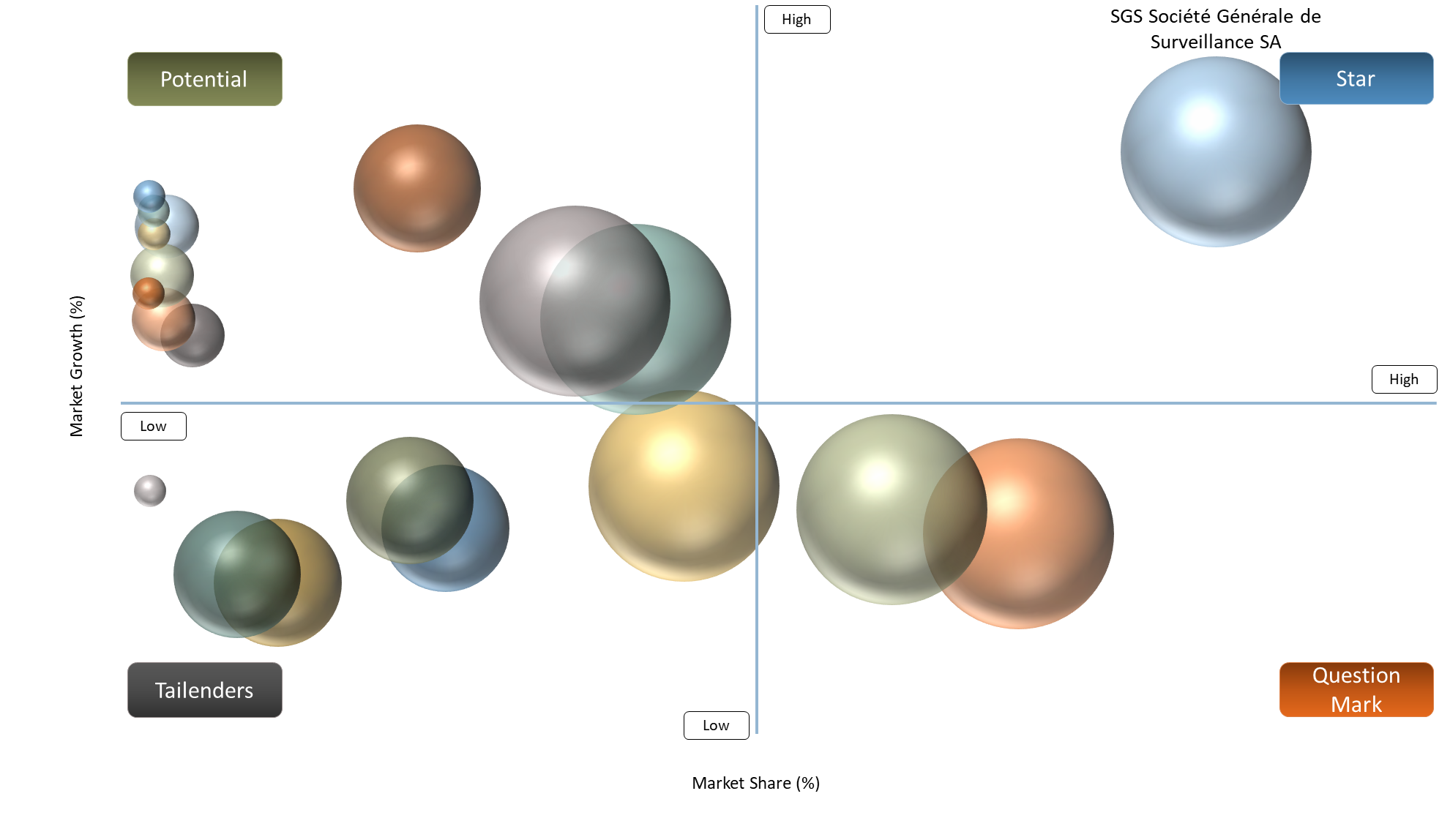
Market leaders such as Animoca Brands, Sky Mavis, and Dapper Labs are classified as Stars, driven by strong market share, large user ecosystems, and continuous expansion across NFT gaming and metaverse platforms. Companies including Immutable, Gala Games, Mythical Games, and Wemade fall under Question Marks, as they operate in high-growth segments but are still scaling adoption and monetization.
Emerging players such as Illuvium, Uplandme, PlayDapp, and WAX Labs are categorized as Potential, reflecting strong innovation and growth prospects despite relatively lower market share. Meanwhile, Enjin, Decentraland, Sorare, and Yield Guild Games are considered Tailenders, due to challenges in sustaining user engagement and increasing competition, despite early market presence.
Market Dynamics
Increasing Penetration of Smartphones and Mobile Devices
The rising adoption of smartphones and mobile devices drives the web3 gaming market, which has become the primary platform for blockchain-based games. In the second quarter of 2025, mobile devices accounted for 62.54% of global website traffic, with users spending an average of 3 hours and 45 minutes daily online.
Worldwide smartphone ownership reached 4.69 billion in 2025, projected to grow to 5.83 billion by 2028, while U.S. adults increased daily usage from 3 hours 38 minutes in 2021 to 5 hours 16 minutes in 2025. Mobile gaming is thriving, with 3.2 billion active gamers globally, expected to reach 3.5 billion by the end of 2025, and 49.6 billion mobile game downloads in 2024. High smartphone penetration, combined with play-to-earn and NFT-based games, enables developers to scale digital economies and deliver immersive Web3 gaming experiences directly to users’ devices.
Blockchain Integration & Technical Complexity Challenges
Despite the rapid expansion of the Web3 gaming ecosystem, the complexities of blockchain technology continue to hinder seamless adoption. Integrating decentralized networks, smart contracts, crypto wallets, and token economies into gaming platforms requires specialized development expertise and robust security frameworks. High development costs, interoperability issues across blockchains, and scalability constraints, such as network congestion and transaction latency, can negatively impact the gameplay experience.
Moreover, fluctuating gas fees and dependence on external blockchain infrastructure create unpredictability in operational expenses for developers. Ensuring regulatory compliance across multiple jurisdictions further complicates deployment strategies. Security vulnerabilities, including smart contract exploits and wallet breaches, increase reputational and financial risks. The technical and operational challenges make smaller studios cautious about large-scale blockchain integration, slowing mainstream penetration despite strong market potential.
Segmentation Analysis
The global web3 gaming market is segmented based on game genre, game type, device type, end-user, and region.
Expanding Monetization Opportunities and Tokenized Reward Models Drive Play-to-Earn Game Dominance
The Play-to-Earn (P2E) segment is leading growth with nearly 40% share in the global Web3 gaming market, as players increasingly seek real economic value from in-game participation. Unlike traditional gaming models, P2E platforms integrate blockchain-based token rewards, enabling users to earn tradable digital assets and cryptocurrencies through gameplay achievements, staking mechanisms, and competitive tournaments. This direct monetization structure attracts users in both developed and emerging economies, where gaming becomes not only entertainment but also a supplemental income opportunity.
Developers are strengthening P2E ecosystems by introducing sustainable tokenomics, NFT utility expansion, and cross-platform interoperability to retain user engagement. Enhanced transparency through smart contracts and decentralized ownership further builds player trust and long-term participation. For instance, in February 2026, Sky Mavis (Axie Infinity), a Singapore-based blockchain gaming company, introduced upgraded reward-balancing mechanisms and ecosystem incentives to improve token stability and player retention. Such strategic developments highlight how Play-to-Earn models continue to dominate by combining financial incentives with immersive gameplay experiences.
Expanding Digital Ownership and Marketplace Liquidity Driving Growth of NFT-Based Web3 Games
The NFT-based game segment is expanding rapidly as players increasingly demand verifiable digital ownership and tradable in-game assets within Web3 ecosystems. The games allow users to own unique NFTs such as characters, skins, weapons, and virtual land, which can be traded or monetized on decentralized marketplaces. The ownership-driven model strengthens long-term engagement while supporting sustainable in-game economies through blockchain transparency and smart contracts.
Ongoing blockchain advancements are improving scalability, reducing transaction costs, and enabling cross-chain interoperability, further accelerating adoption. Major technology firms are also building NFT-ready infrastructure to support gaming applications. For instance, in January 2025, Sony Group Corporation, a Japan-based entertainment and technology company, launched the Soneium public blockchain mainnet to support scalable Web3 applications, including NFT-based gaming and digital asset initiatives. These developments reinforce strong institutional backing and sustained growth in the NFT-based Web3 gaming segment.
Geographical Penetration
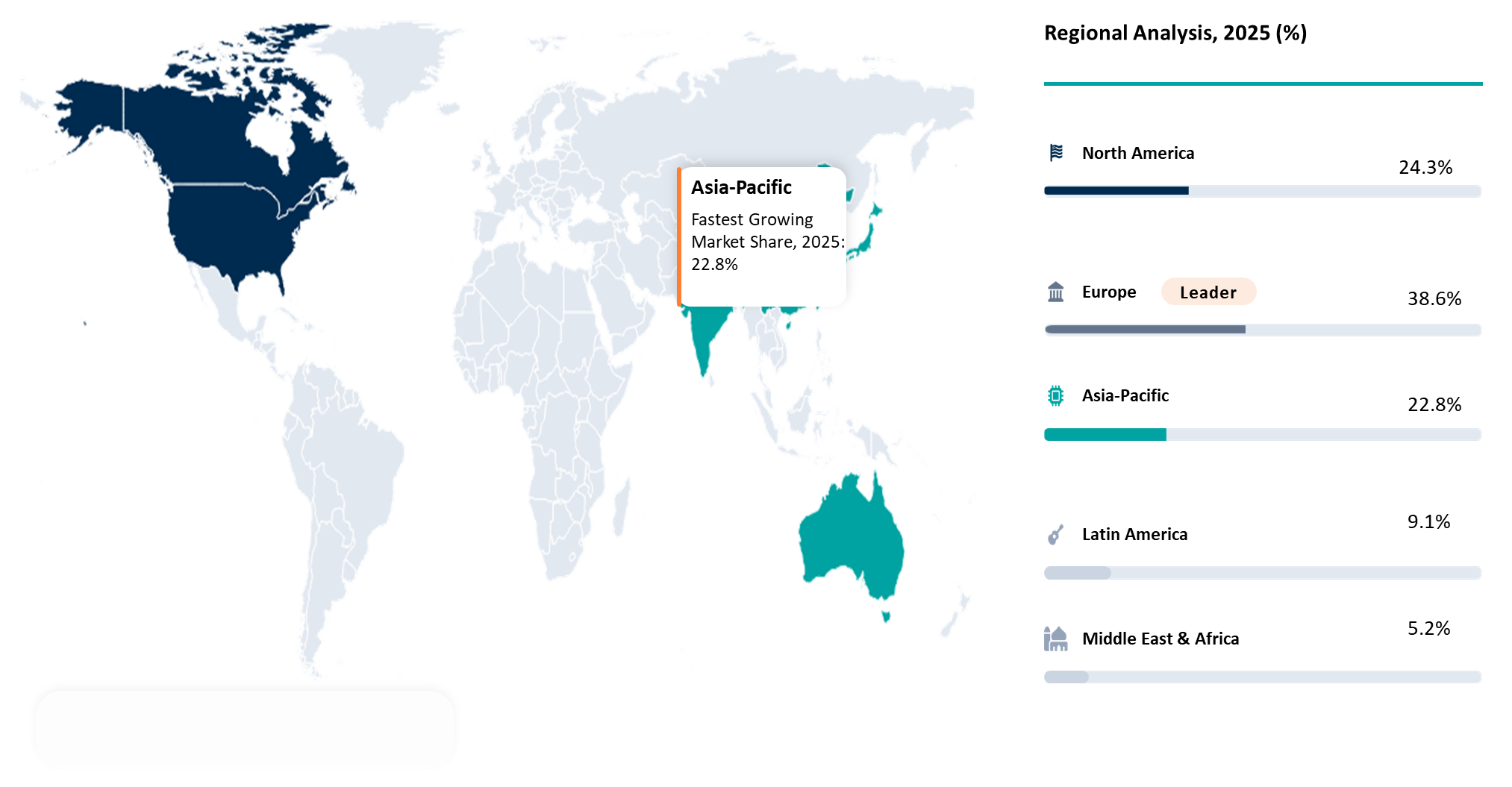
Expanding Web3 Gaming Adoption in Asia-Pacific
The Asia-Pacific Web3 gaming market is the fastest-growing region globally, accounting for nearly 30.1% share in 2025. Strong mobile gaming penetration, rising crypto adoption, and a tech-savvy youth population are accelerating blockchain-based gaming engagement across countries such as China, South Korea, Japan, and Southeast Asia. Governments and private investors are actively supporting digital asset innovation and blockchain ecosystems to strengthen regional competitiveness in decentralized technologies.
For instance, in 2025, Enjin, a Singapore-based blockchain gaming company, introduced the Bugis upgrade to the Enjin Blockchain along with new Marketplace pallet features to enhance NFT minting, distribution, and trading efficiency for Web3 gaming ecosystems. Such developments highlight how Asia-Pacific blockchain firms are strengthening NFT infrastructure and scalability, reinforcing the region’s strong growth momentum in the Web3 gaming market.
South Korea Web3 Gaming Market Outlook
South Korea is emerging as a prominent Web3 gaming market in Asia-Pacific, driven by high cryptocurrency adoption, advanced digital infrastructure, and a strong esports and online gaming culture. The country’s tech-savvy population and widespread use of digital wallets create a favorable environment for blockchain-based gaming ecosystems. Mobile gaming dominance further accelerates Web3 expansion, as developers integrate token rewards, NFT assets, and decentralized marketplaces into familiar mobile-first formats.
For instance, in 2025, Wemade, a South Korea-based game development company, continued expanding its blockchain gaming ecosystem through its WEMIX platform, onboarding new Web3 titles and strengthening NFT and token utility within its gaming portfolio. Such initiatives highlight South Korea’s strategic push to combine its strong gaming heritage with blockchain innovation, reinforcing its growing influence in the regional Web3 gaming market.
China Web3 Gaming Market Trends
China is a key growth market within the Asia-Pacific Web3 gaming market, supported by strong blockchain development activity and a large digital entertainment audience. Domestic and regional innovation has helped expand infrastructure and gaming use cases, even as regulatory frameworks evolve to support compliant blockchain deployment.
For example, in January 2025, Animoca Brands, a Hong Kong–based Web3 gaming and investment company, launched the Open Campus EDU Chain mainnet with US$150 million in total value locked to support blockchain education and gaming development. The initiative also included more than US$1 million in prizes to incentivize ecosystem participation, underlining efforts to foster developer engagement and scalable Web3 gaming solutions in the region.
Strengthening Web3 Gaming Infrastructure and Compliance Drives North America’s Market Leadership
North America is the dominant region in the global Web3 gaming market, driven by strong venture capital funding, high NFT trading volumes, and a mature gaming ecosystem. The region benefits from a concentration of VC-backed blockchain studios, advanced digital payment infrastructure, and early crypto adoption. Major Web3 publishers and infrastructure providers continue expanding NFT marketplaces, tokenized economies, and interoperable gaming ecosystems to support performance-intensive blockchain gaming experiences.
For instance, in February 2025, Forte, a US-based blockchain gaming infrastructure company, acquired Sealance, a compliance and identity technology firm, to strengthen privacy, identity verification, and regulatory compliance capabilities for Web3 game developers. This strategic move highlights North America’s focus on building secure, scalable, and regulation-ready Web3 gaming infrastructure, further reinforcing the region’s leadership in the global market.
U.S. Web3 Gaming Market Insights
The U.S. remains a central growth hub in the global Web3 gaming market, driven by robust venture capital activity, high levels of NFT trading, and an established base of game developers and blockchain studios. US organizations are increasingly investing in initiatives that support independent creators, expand game portfolios, and accelerate decentralized game experiences across mobile, PC, and console platforms.
In August 2025, Hytopia, a US-based Web3 gaming platform, expanded its US$250,000 Creator Fund, unlocking new opportunities for game developers and digital creators to build and scale Web3 gaming projects on its platform. This strategic expansion supports emerging studios with funding, technical resources, and ecosystem connections, reinforcing the United States’ leadership in fostering innovation and sustainable growth within the Web3 gaming market.
Canada Web3 Gaming Industry Growth
Canada is emerging as a growing market in the Web3 gaming ecosystem, driven by a mix of supportive tech infrastructure, strong developer communities, and rising interest in blockchain-based gaming. Canadian studios, particularly in Toronto and Vancouver, are increasingly launching NFT-enabled and play-to-earn games to engage both domestic and international players while leveraging local regulatory compliance and digital asset frameworks. In July 2025, Flashy Fun, a Canadian, Toronto-based blockchain gaming studio, launched Dig It, a Web3 mobile game offering players up to US$10 million in gold-backed rewards through tokenized in-game assets. This initiative highlights Canada’s focus on innovative Web3 gaming models that combine blockchain mechanics with real-world asset incentives, reinforcing its growing role in the global Web3 gaming market.
Regulatory Analysis
The Web3 gaming market is shaped by evolving regulations addressing digital assets, NFTs, cryptocurrencies, and blockchain-based game economies worldwide. In the United States, federal proposals such as the SEC’s guidance on digital assets, FinCEN regulations on cryptocurrency transactions, and state-level initiatives in New York and California regulate tokenized in-game assets, staking mechanisms, and NFT marketplaces, increasing compliance obligations for studios and platforms. In Canada, the Proceeds of Crime (Money Laundering) and Terrorist Financing Act (PCMLTFA) and provincial securities regulations govern the issuance and trading of NFTs and crypto tokens in games, requiring platforms to implement anti-money laundering (AML) and know-your-customer (KYC) processes.
In the European Union, the Markets in Crypto Assets (MiCA) framework and GDPR enforce secure handling of digital assets, data protection for users, and transparency in NFT-based transactions. Platforms must provide clear disclosures for token sales, NFT ownership, and user data usage. In Asia-Pacific markets such as China, regulators mandate strict oversight of blockchain gaming, token issuance, and NFT trading, including approvals for digital asset platforms and limits on in-game token rewards. South Korea and Japan have implemented licensing and consumer protection rules for blockchain games to mitigate financial risk. These regulations enhance transparency, protect user funds and digital ownership rights, and prevent financial misuse, but they also increase operational costs and compliance complexity for Web3 gaming platforms. At the same time, they encourage responsible innovation, creating opportunities for companies that can deliver compliant, secure, and user-trustworthy blockchain-based gaming experiences.
Competitive Landscape
- The global web3 gaming market is characterized by a competitive landscape that includes both established and regional players.
- Key players include Animoca Brands, Sky Mavis, Dapper Labs, Immutable, Gala Games, Enjin, Mythical Games, Wemade, Sorare, Uplandme, Illuvium, Decentraland, PlayDapp, WAX Labs, and Yield Guild Games.
Key Developments
- In 2025, Gamee, a Czech Republic-based Web3 gaming company and subsidiary of Animoca Brands, launched Moon Cards, a first-of-its-kind trading card game powered by memecoins to expand NFT-driven gaming experiences and enhance community engagement through tradable in-game assets and play-to-earn mechanics.
- In 2025, The Sandbox, a US-based Web3 gaming and metaverse platform, introduced a decentralized autonomous organization (DAO) to let token holders shape the game’s future, strengthening community governance and aligning platform evolution with player and stakeholder interests.
Why Choose DataM?
- Data-Driven Insights: Dive into detailed analyses with granular insights such as pricing, market shares, and value chain evaluations, enriched by interviews with industry leaders and disruptors.
- Post-Purchase Support and Expert Analyst Consultations: As a valued client, gain direct access to our expert analysts for personalized advice and strategic guidance, tailored to your specific needs and challenges.
- White Papers and Case Studies: Benefit quarterly from our in-depth studies related to your purchased titles, tailored to refine your operational and marketing strategies for maximum impact.
- Annual Updates on Purchased Reports: As an existing customer, enjoy the privilege of annual updates to your reports, ensuring you stay abreast of the latest market insights and technological advancements. Terms and conditions apply.
- Specialized Focus on Emerging Markets: DataM differentiates itself by delivering in-depth, specialized insights specifically for emerging markets, rather than offering generalized geographic overviews. This approach equips our clients with a nuanced understanding and actionable intelligence that are essential for navigating and succeeding in high-growth regions.
- Value of DataM Reports: Our reports offer specialized insights tailored to the latest trends and specific business inquiries. This personalized approach provides a deeper, strategic perspective, ensuring you receive the precise information necessary to make informed decisions. These insights complement and go beyond what is typically available in generic databases.
Target Audience 2026
- Manufacturers/ Buyers
- Industry Investors/Investment Bankers
- Research Professionals
- Emerging Companies


























































