


Water Treatment Chemicals Market Size
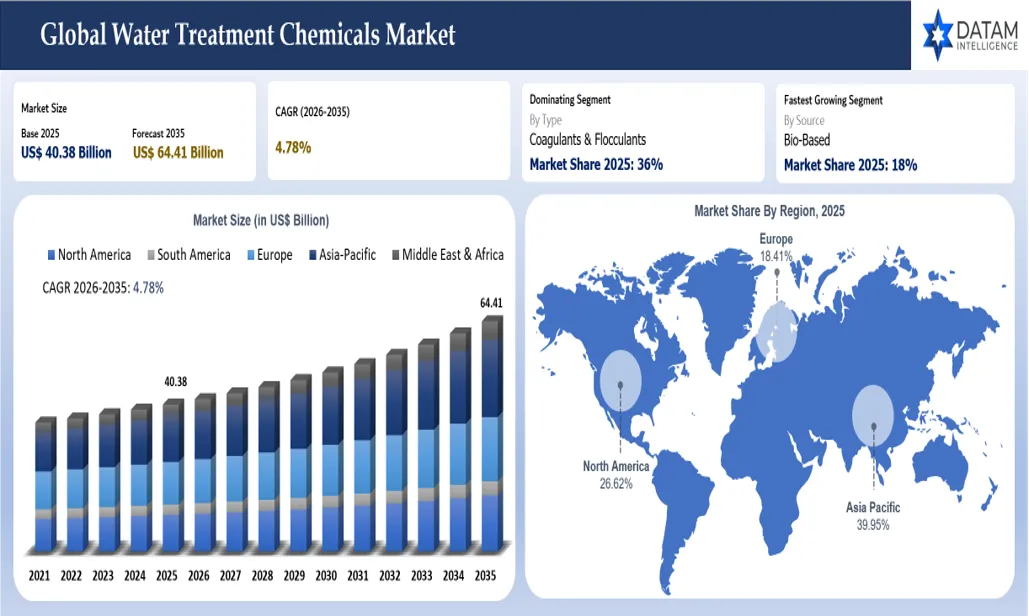
The global Water Treatment Chemicals market reached US$ 40.38 billion in 2025 and is expected to reach US$ 64.41 billion by 2035, growing with a CAGR of 4.78% during the forecast period 2026-2035.
The global market for water treatment chemicals is seeing continuous expansion, propelled by the growing dependence on chemically treated water in various sectors, such as power generation, oil and gas, food and beverage and pharmaceuticals. These sectors require high-performance chemicals to guarantee operating efficiency, uphold product quality and comply with stringent environmental regulations.
In recent years, the power generation industry comprised over 18% of global water withdrawals, highlighting the essential function of water treatment in sustaining energy infrastructure. Furthermore, the oil and gas industry, in which produced water accounts for around 75% of all extracted fluids, relies significantly on chemical treatments for both recycling and safe disposal.
The increasing utilization of enhanced oil recovery (EOR) methods intensifies the demand for water treatment chemicals. The market is experiencing growth from developing countries like China, India and Brazil, where industrial development and urbanization are driving investments in water infrastructure.
Water Treatment Chemicals Market Key Takeaways
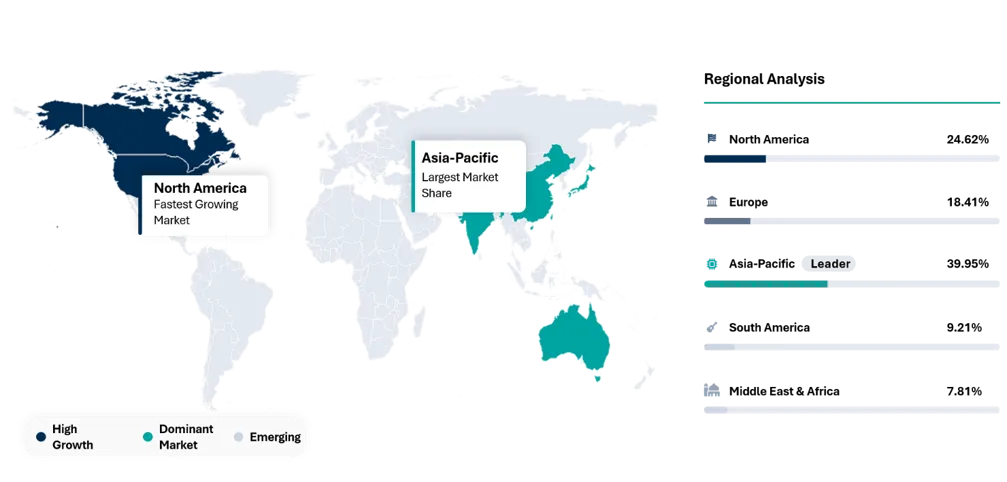
- The Asia-Pacific region occupied the largest market share in 2025 and will continue to be the fastest growing region due to fast-paced industrialization, urbanization, manufacturing growth and stringent rules on wastewater discharge in China, India and Southeast Asia.
- Growth in industrial water treatment has gained momentum owing to rising water usage in power generation, oil & gas production, chemicals production, food & beverages processing, pharmaceuticals and semiconductor manufacturing.
- Water recycling and reuse are emerging as key growth drivers as the industry gears up towards developing efficient wastewater treatment plants owing to the problem of water scarcity.
- The demand for specialty treatment chemicals is rising, especially for corrosion inhibitors, scale inhibitors, coagulants, flocculants, biocides and pH regulators in order to enhance treatment efficiency and protect equipment and improve water quality.
- Sustainability and digitalization have become the new trend in the market with manufacturers coming up with environmentally friendly solutions while AI-based monitoring systems reduce operational costs.
Water Treatment Chemicals Market Scope
| Metrics | Details | |
| 2025 Market Size | US$ 40.38 Billion | |
| 2035 Projected Market Size | US$ 64.41 Billion | |
| CAGR (2026-2035) | 4.78% | |
| Largest Market | North America | |
| Fastest Growing Market | Asia-Pacific | |
| By Type | Corrosion inhibitors, Scale inhibitors, Biocides & disinfectants, Coagulants & flocculants, Chelating agents, Anti-foaming agents, pH adjusters and stabilizers, Others | |
| By Application | Boiler water treatment, Cooling water treatment, Raw water treatment, Water Desalination, Others | |
| By Source | Synthetic, Bio-based | |
| By End-user | Residential, Commercial, Industrial | |
| By Region | North America | U.S., Canada, Mexico |
| Europe | Germany, UK, Russia, France, Spain, Italy, Poland | |
| Asia-Pacific | China, India, Japan, Australia, South Korea, Indonesia, Malaysia, Singapore, Vietnam, Thailand, Philippines, Taiwan | |
| South America | Brazil, Argentina | |
| Middle East and Africa | UAE, Saudi Arabia, South Africa, Israel, Turkiye, Nigeria | |
| Report Insights Covered | Competitive Landscape Analysis, Company Profile Analysis, Market Size, Share, Growth | |
Water Treatment Chemicals Market White Space & Investment Opportunities
- Specialty chemicals for water reuse and zero-liquid-discharge (ZLD) systems: The establishment of ZLD processes and advanced systems of treating wastewater has made it possible for advanced antiscalants and chemicals intended for membrane cleaning, coagulants and formulations meant for the control of clogging.
- PFAS and emerging-contaminant treatment solutions: Increasingly rigid rules regarding items like PFAS leave gaps in the market for new chemical solutions used to fight against substances that are difficult to eliminate by using processes like oxidation, coagulation and adsorption.
- Bio-based and biodegradable treatment chemicals: The growing influence of the need of finding less harmful alternatives has had a significant impact on investment in biodegradable materials for cleaning up waste as well as substances used to fight against scale.
- Intelligent chemical dosing and treatment optimization: The combination of chemicals with online water quality monitoring and sensors opens possibilities for the provision of optimized dosing systems from chemical providers, reducing the use of chemicals but retaining efficiency.
- Ultra-high-purity chemicals for semiconductor water treatment: Increasing the number of semiconductor manufacturers will lead to a special requirement for highly pure treatment chemicals and water treatment formulations.
Water Treatment Chemicals Market Buyer Decision-Making Criteria
The selection of chemicals used in water treatment will be driven by the efficiency of the process, the chemical compatibility with water composition, regulation requirements and the cost associated with the process.
Major decision-making criteria
- Treatment Efficacy and Dosage Efficiency
- Water Chemistry Compatibility
- Corrosion and Scale-Control Performance
- Regulatory and Environmental Compliance
- Total Cost of Treatment
- Process and Membrane Compatibility
- Supply Reliability and Technical Support
- Chemical Safety and Handling Requirements
Water Treatment Chemicals Market BCG Matrix: Company Evaluation
STAR
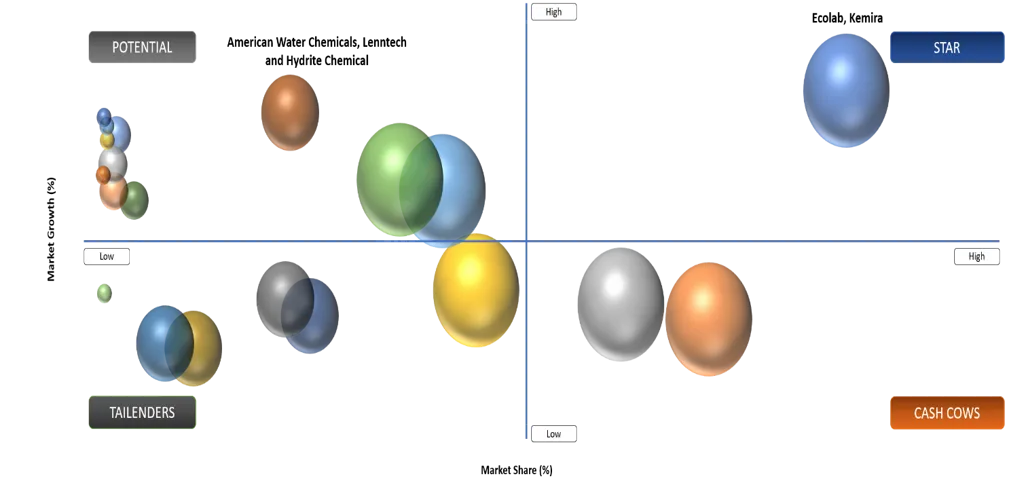
Ecolab, Kemira and Kurita Water Industries are classified as Stars due to their market presence, their diversified range of water-treatment chemicals and their involvement in high-growth applications like industrial water treatment, water reuse, membrane technologies and advanced water-management technologies. With their increasing investments in specialty chemicals, digital water management and efficient water treatment processes, they will further improve their capacity to capitalize on growth in the growing water-treatment markets.
POTENTIAL
The potential competitors in the industry are American Water Chemicals, Lenntech and Hydrite Chemical. These three competitors take advantage of opportunities in advanced water treatment techniques such as the use of membranes, desalination, industrial wastewater treatment and customized chemical treatments. The growing demand for recycled water and process water has created an opportunity for these players to gain competitive advantages.
Water Treatment Chemicals Market Dynamics
Driver Impact Analysis
| Driver | Market Growth Impact (%) | Demand Concentration | Impacted Use Case | Strategic Impact |
| Industrial Water Reuse & Recycling | 22% | Industrial facilities | Cooling water, boiler water, wastewater reuse | Drives demand for specialty chemicals enabling higher water recovery and controlling fouling, scaling and corrosion. |
Stringent Wastewater Discharge Regulations | 19% | Municipal & industrial | Effluent treatment, raw water treatment | Increases adoption of high-performance coagulants, flocculants, biocides and pH-control chemicals. |
Expansion of Water-Intensive Manufacturing | 17% | Semiconductors, chemicals, pharmaceuticals, food & beverage | Process water & high-purity water treatment | Creates demand for specialized, high-purity treatment chemicals and application-specific formulations. |
PFAS & Emerging Contaminant Regulation | 14% | U.S. and highly regulated markets | Drinking water & wastewater treatment | Creates opportunities for specialized contaminant-removal chemistries and integrated treatment solutions. |
Driver: Expansion of Industrial Water Reuse and Recycling
Industrial water reuse and recycling are increasingly becoming the foremost driver of the water treatment chemicals market as water-using industrial operations are moving from using water only once towards the use of water recycling and recovery solutions. Such industries as electricity generation, oil refining, chemical processing, semiconductor production and food and drink processing are implementing various chemical programs aimed at such problems as buildup of high concentration solids, scaling of membranes, formation of deposits, corrosion and biological growth during water recycling. Thus, the increasing use of reverse osmosis, ultrafiltration, membranes bioreactors and zero-liquid discharge systems is demonstrating increased demand for chemicals such as antiscalants, corrosion preventers, biocides, coagulants, flocculants and cleaning chemicals.
Restraint Impact Analysis
| Restraint | Drag on Market Growth (%) | Primary Impact Area | Impacted Use Case | Strategic Impact |
Volatility in Raw Material and Chemical Feedstock Prices | 18% | Production costs & pricing | All treatment chemical applications | Increases formulation costs and pricing pressure, encouraging suppliers to diversify sourcing and optimize formulations. |
Environmental Concerns Over Conventional Chemical Formulations | 15% | Regulatory compliance | Biocides, corrosion inhibitors & scale inhibitors | Restrictions on hazardous or persistent chemicals increase reformulation costs and accelerate demand for lower-toxicity alternatives. |
High Treatment and Chemical Operating Costs | 13% | Customer operating expenditure | Industrial wastewater & desalination | High chemical consumption can limit adoption, encouraging concentrated formulations, optimized dosing and chemical-reduction technologies. |
Complexity of Water Chemistry and Treatment Processes | 11% | Treatment performance | Boiler, cooling & membrane water treatment | Variable feedwater conditions require customized chemical programs and technical expertise, increasing implementation complexity and customer switching barriers. |
Restraint: Regulatory Pressure on Conventional Treatment Chemistries
Growing limitations on effective, long-lasting and environmentally damaging water-treatment chemicals are posing a trouble for traditional formulations. Biocides, corrosion and scale inhibitors and various other specialized chemicals are subject to strict examination regarding their aquatic toxicity, persistence, waste discharge and employee safety. With the regulations becoming more severe, chemical suppliers have to reformulate their products, undertake additional testing and prove ecological efficiency, which increases the costs for development and compliance. Moreover, this may prevent the usage of some distinct formulations with great operational performance and prolong product approval periods like in the case of municipal drinking water systems, industrial effluent treatment plants, cooling water cycles as well as membrane-based treatment procedures.
Water Treatment Chemicals Market Geographical Penetration
U.S. Water Treatment Chemicals Market Landscape
The US water treatment chemicals market enjoys robust demand for these products from municipal and industrial facilities such as power plants, oil and gas facilities, chemicals facilities, food and beverages producers, pharmaceutical plants and semiconductor makers, among others. The factors influencing the increasing uptake of the chemicals include aging infrastructure, stricter discharge standards, increased water reuse efforts and greater focus on contaminants such as PFAS. There is an increased preference for the use of specialty coagulants and flocculants, corrosion and scale inhibitors, biocides, membrane treatment chemicals and environmentally friendly formulations, alongside the increased adoption of digital and automatic chemical feed systems.
Japan Water Treatment Chemicals Market Outlook
The Japanese market for water treatment chemicals is propelled by state-of-the-art water facilities, high-quality water standards, water reclamation by industries and water-intensive manufacturing activities in the country. Shortage of water and the strong resource-efficiency culture is driving industries to adopt more recycling of wastewater, closed-water circuits and high-quality water purification process which requires the use of various water treatment chemicals including scale and corrosion inhibitors, coagulants and flocculants, biocides, membrane-treatment chemicals and pH control formulas. In addition, growth in the manufacturing of semiconductors in Japan is creating new demands for ultra-high-purity water treatment chemicals and wastewater treatment formulations.
Water Treatment Chemicals Market Competitive Landscape
- Global chemical majors compete by means of extensive portfolios that include coagulants, flocculants, inhibitors for corrosion and scale formation, biocides and specialty products for municipal and industrial water systems.
- Specialized water treatment companies compete on application know-how through provision of customized chemical treatment programs to cooling towers, boilers, membranes, desalination and industrial effluent systems.
- Water reuse and membrane treatment applications have increased competition among suppliers of antiscalants, membrane cleaning chemicals, fouling control chemicals and comprehensive treatment programs.
- Sustainability is fast becoming a crucial competitive factor that compels companies to innovate in terms of producing biodegradable, low toxicity and low dosage solutions to assist customers to comply with stricter environmental regulations.
- The process of digitalization is moving the competitive environment towards comprehensive solutions through the integration of chemical solutions with the monitoring of processes, dosing of chemicals, analysis and technical assistance at customers’ premises by top companies in this sphere.
Key Companies of the Water Treatment Chemicals Market
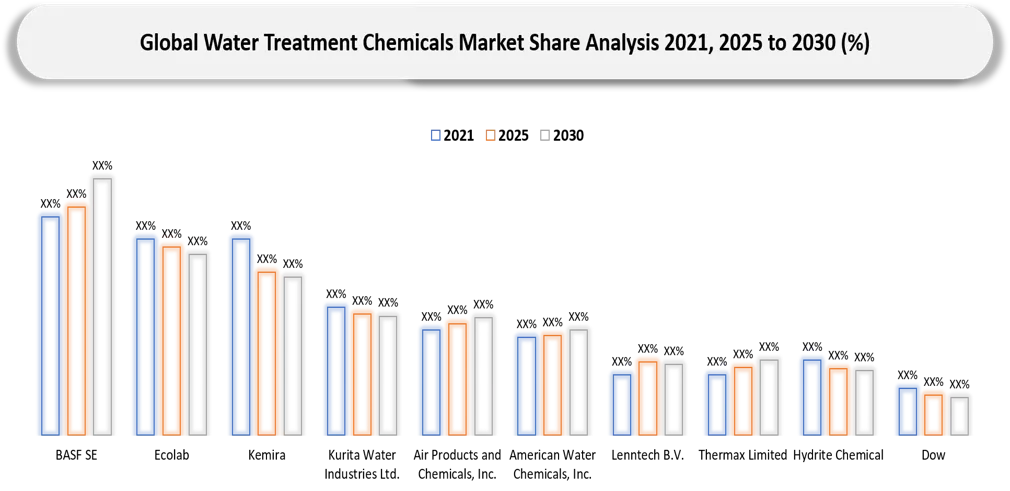
- BASF SE
- Ecolab
- Kemira
- Kurita Water Industries Ltd.
- Air Products and Chemicals, Inc.
- American Water Chemicals, Inc.
- Lenntech B.V.
- Thermax Limited
- Hydrite Chemical
- Dow
Water Treatment Chemicals Market Recent Developments
- Kemira - August 2026: Kemira purchased REPUR S.r.l. for the expansion of its sustainable water treatment offering with activated carbon reactivation and circular water treatment solutions.
- US EPA - August 2026: US Environmental Protection Agency initiated scientific research to enhance knowledge about possible health impacts related to exposure to PFAS, which is an important consideration for PFAS monitoring and treatment.
- Ecolab - July 2026: Ecolab made an acquisition of CoolIT Systems, enhancing its cooling solutions platform and increasing its water management needs in data center infrastructure.
- Kemira - June 2026: Kemira made an acquisition of Clear Water Technologies, LLC, improving its capabilities of industrial water treatment services in North America, especially in boilers and cooling water systems.
- Kurita Water Industries Ltd. - June 2026: Kurita formed a joint venture called Kurita Membrane India Pvt. Ltd., which is dedicated to advanced membrane and water treatment needs of India's growing semiconductor industry.
What DATAM Uniquely Provides
- Chemical-level market sizing: Market analysis in detail for corrosion inhibitors, scale inhibitors, biocides and disinfectants, coagulants and flocculants, chelating agents, antifoaming agents and pH adjustment agents and stabilizers.
- Application-specific demand intelligence: Measurement and comparison of market demand for boiler water treatment, cooling water treatment, raw water treatment, desalination and other applications.
- Water-reuse and ZLD opportunity mapping: Identification of areas with a high potential for chemical demand related to industrial water recycling, membrane treatment, high recovery technology and zero liquid discharge.
- Emerging-contaminant impact analysis: Evaluation of the impact of PFAS and other emerging contaminants regulations on chemical requirements, treatment methods and vendor possibilities.
- Industry-to-chemical demand linkage: Assessment of the link between industrial measures, water usage, regulatory impact and investment in infrastructure and actual need for certain water treatment chemical types.



























































