


Upcycled Fruit Extract Market Size and Overview
The global upcycled fruit extract market reached USD 34 million in 2025 and is expected to reach USD 61.2 million by 2035, growing with a CAGR of 6.06% during the forecast period 2026-2035. The market is gaining momentum as food and ingredient manufacturers increasingly convert surplus fruit and vegetable materials into high-value natural extracts for food, beverages, nutraceuticals, cosmetics, and supplements. According to the Upcycled Food Association, the proportion of global food losses and waste ranges from 30% to 40%, which is a considerable amount of untapped raw material for upcycled ingredients production.
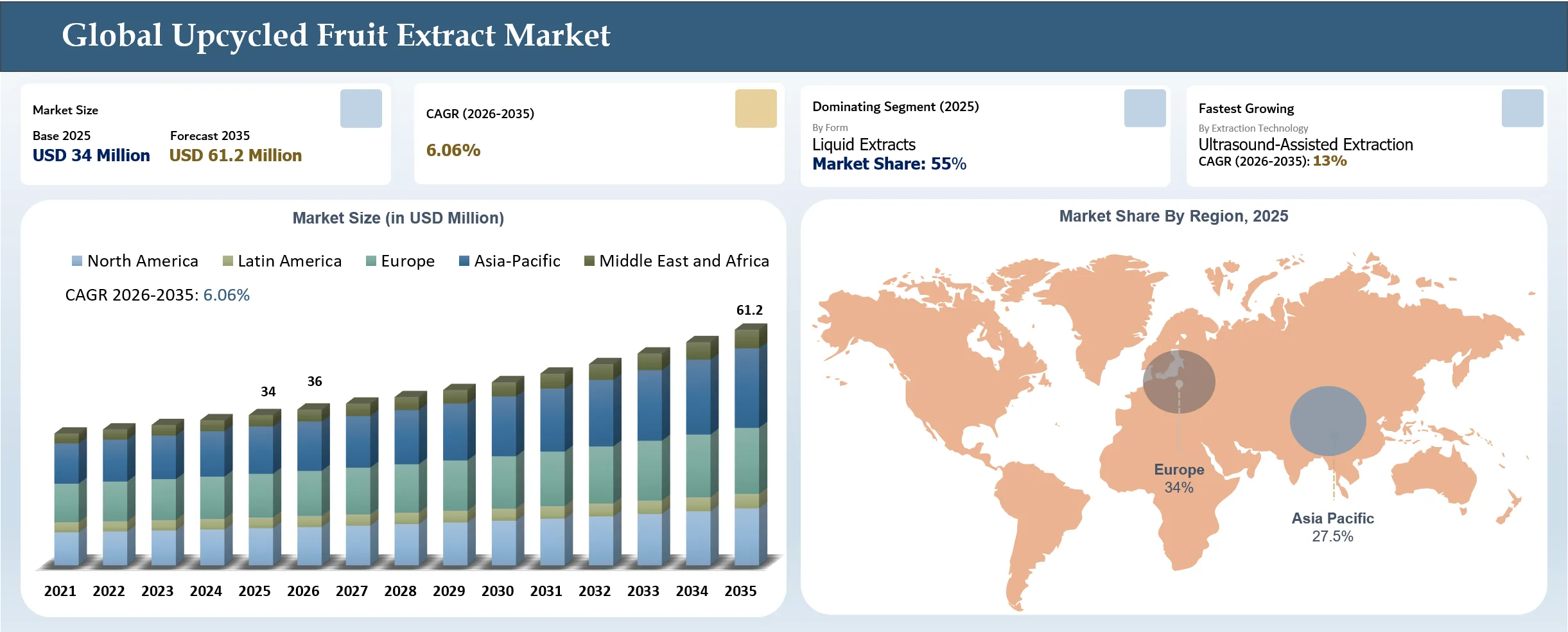
Moreover, the Upcycled Food Association (2025) states that 60% of consumers want to buy more upcycled food products, and 95% of consumers are ready to support food waste reduction efforts; thus, consumer acceptance of products made from recovered food sources is rather high. The technological development of the extraction process is also promoting the growth of the market. In April 2025, the Directorate-General for Research and Innovation of the European Commission, through the Agro2Circular project, announced the development of a technology for extracting antioxidants, fibers, and natural colorants from fruit and vegetable waste with purity up to 70% of recovered natural compounds.
The process was successfully tested on an industrial scale in Spain, Italy, and Lithuania. Such advancements are contributing to the commercial prospects of the upcycled fruit extracts due to the possibility of replacing artificial additives with natural ones while making the process more resource-efficient. At the same time, maintaining the uniformity of the quality of raw material, stability, and safety of bioactive compounds extracted, as well as standardizing the process of extraction, constitute major concerns.
With the growing focus on reducing food waste and capitalizing on the by-products from fruit processing, new developments are emerging in terms of upcycled ingredients. In July 2026, as per GuruFocus, Del Monte Corporation and Treatt launched a new line of upcycled fruit-derived extracts for beverages. The first line of extracts includes four extracts, namely pineapples, watermelons, mangos, and cantaloupes, that are produced from high-quality fruit ingredients that are created during the process at Del Monte but do not get utilized in the final cut produce. The Del Monte product is sold in more than 90 countries all over the world, and both the Del Monte and Treatt brands have been around for more than 135 years, highlighting the scale and experience supporting this upcycled fruit extract innovation.
White-Space Opportunities for Upcycled Fruit Extract in Circular Bio-Based Ingredient Development
In April 2026, the Circular Bio-based Europe Joint Undertaking (CBE JU) launched a €170.7 million (USD 198.0 million) funding call across 13 project areas, creating substantial opportunities for the upcycled fruit extract market, particularly in the conversion of fruit-processing residues into high-value nutritional and functional ingredients. The highest investment level of €20 million (USD 23.20 million) per area is allocated to four flagship categories: boosting biorefinery competitiveness through biotechnology, diversification of nutritional food ingredient sources, bio-based alternatives for fertilising and crop-protection products, and bio-based solutions for home and personal care.
Among these, the €20 million (USD 23.20 million) nutritional food ingredient diversification area represents the strongest direct opportunity for upcycled fruit extracts, while the €14 million (USD 16.24 million) allocation for biotech routes for valorisation of residual biomass is highly relevant for converting fruit peels, pomace, seeds, pulp residues, and other processing side streams into antioxidant-rich extracts, polyphenols, natural flavours, fibres, and functional ingredients.
Additional investments include €14 million (USD 16.24 million) each for bio-based additives, woody-residue-based chemicals and materials, circular bio-based thermosets, and films and coatings for circular packaging, while €6.5 million (USD 7.54 million) is allocated to addressing separation and purification challenges in biorefineries, creating opportunities for advanced extraction, fractionation, concentration, and purification technologies required in fruit-derived ingredient production.
The funding is expected to create opportunities for companies operating across the fruit upcycling and broader bio-based ingredient value chain, although no individual companies had been awarded funding under this 2026 call at the time of the announcement. In the natural food ingredients, fruit extracts, flavours, and nutritional ingredients area, companies such as Kerry Group, Döhler, Givaudan, Symrise, ADM, Ingredion, and IFF could potentially benefit through projects focused on natural extracts, bioactive compounds, flavour ingredients, and sustainable food ingredient development. In the residual biomass valorisation and biorefinery biotechnology area, companies such as Corbion, Novonesis, LanzaTech, and Biorizon Biotech could find opportunities in biotechnology-enabled conversion of agricultural and food-processing side streams into higher-value ingredients and materials.
In the extraction, separation, purification, and biorefinery processing area, technology providers including GEA Group, Alfa Laval, ANDRITZ, and Bühler Group could benefit from increased demand for industrial-scale extraction, fractionation, concentration, drying, and purification systems used to recover valuable compounds from fruit and other biomass residues. Meanwhile, companies operating in bio-based packaging and circular materials, including Stora Enso, UPM, Huhtamaki, and Mondi, could participate in projects developing circular films, coatings, bio-based additives, and packaging materials, while agricultural cooperatives, juice processors, food manufacturers, research organisations, and biorefineries could establish consortium partnerships to commercialize technologies that convert fruit-processing side streams into high-value extracts and other bio-based products across Europe.
Upcycled Fruit Extract Market Key Takeaways
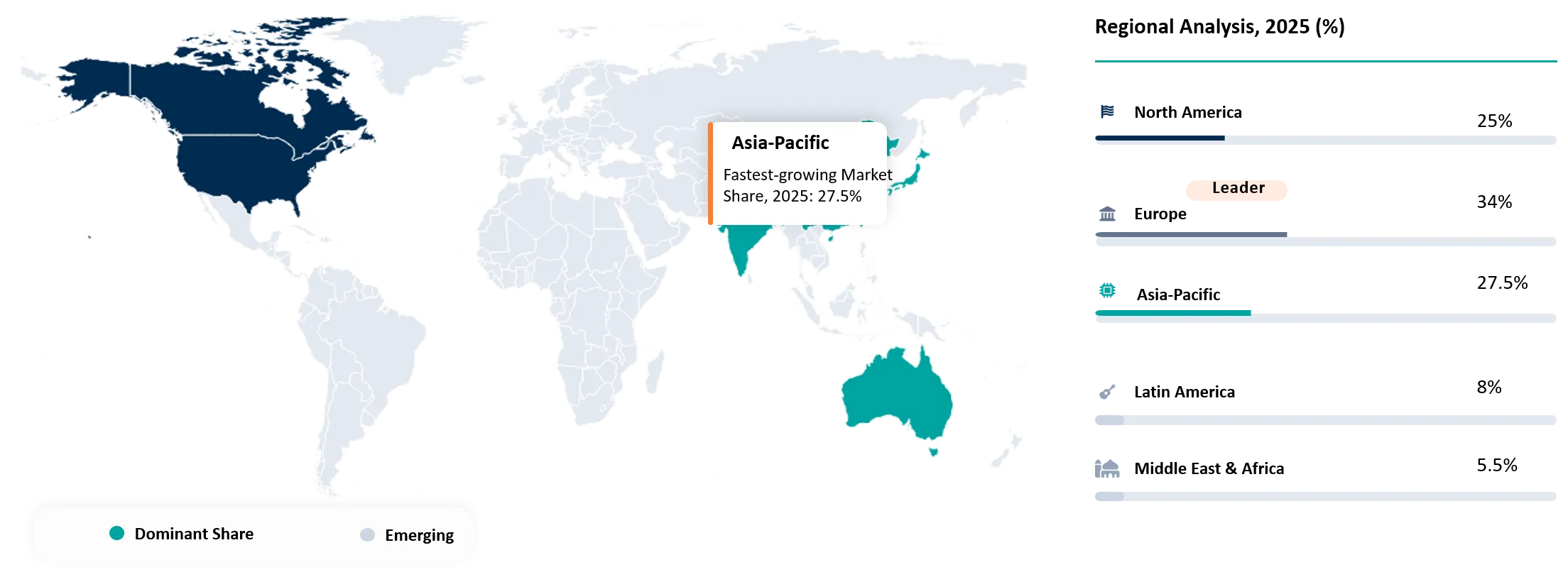
- Europe holds the largest market share at approximately 34% in 2025, supported by strong circular economy frameworks. Asia-Pacific represents the fastest-growing region, accounting for an estimated 27.5% of the global market in 2025.
- Liquid extracts dominate the form segment, securing approximately 55% of the market share in 2026. Green extraction technologies drive market growth, led by advanced extraction methods with a 32% market growth impact.
- Surging consumer demand for natural bioactive compounds like polyphenols and antioxidants drives market expansion, contributing a substantial 30% positive impact to overall market growth.
- The primary opportunity for the upcycled fruit extract market lies within circular bio-based ingredient development, backed by the Circular Bio-based Europe Joint Undertaking (CBE JU) €170.7 million ($198.0 million) funding call across 13 project areas.
Upcycled Fruit Extract Market Industry Trends and Strategic Insight
- Shift from waste management to ingredient valorization. Fruit-processing side streams are increasingly being positioned as commercially valuable feedstocks for extracting polyphenols, flavonoids, dietary fibres, natural pigments, essential oils, and other bioactive compounds rather than being directed solely toward animal feed, composting, or disposal.
- Advanced extraction technologies are becoming a key differentiator. Companies and research organizations are increasingly focusing on ultrasound-assisted extraction, microwave-assisted extraction, supercritical fluid extraction, membrane-based separation, and other low-impact processes to improve the recovery and quality of fruit-derived compounds.
- Beverage applications are emerging as an important commercialization pathway. Upcycled fruit extracts are increasingly being developed for beverage formulations because manufacturers can use them to provide authentic fruit profiles while supporting clean-label and responsible-sourcing strategies. The 2026 collaboration between Del Monte Corporation and Treatt reflects this movement toward dedicated beverage-grade upcycled extracts.
- Expansion beyond food and beverages is widening the addressable application base. Upcycled fruit-derived compounds are increasingly being evaluated for nutraceutical, pharmaceutical, cosmetic, and personal-care applications, particularly where antioxidant, antimicrobial, coloring, or functional properties provide additional product value.
- Consumer education remains a strategic commercialization requirement. While sustainability can support interest in upcycled products, industry research indicates that consumer familiarity with the term “upcycled food” remains uneven, increasing the importance of transparent labeling and communication focused on ingredient safety, quality, and product benefits.
Upcycled Fruit Extract Market Scope
| Metrics | Details | |
| 2025 Market Size | USD 34 Million | |
| 2035 Projected Market Size | USD 61.2 Million | |
| CAGR (2026-2035) | 6.06% | |
| Largest Market | Europe | |
| Fastest Growing Market | Asia-Pacific | |
| By Fruit Source | Citrus Fruits, Tropical Fruits, Melons, Berries, Pome Fruits, Stone Fruits, Grapes, Pomegranate, Other Fruits | |
| By Upcycled Raw Material | Peels & Skins, Pulp & Fruit Residues, Seeds & Kernels, Pomace, Cores & Rinds, Processing-Grade Fruit, Other | |
| By Extract Type | Polyphenol Extracts, Flavonoid Extracts, Carotenoid Extracts, Pectin-Rich Extracts, Anthocyanin Extracts, Antioxidant Extracts, Others | |
| By Extraction Technology | Conventional Solvent Extraction, Water-Based Extraction, Enzyme-Assisted Extraction, Ultrasound-Assisted Extraction, Microwave-Assisted Extraction, Supercritical Fluid Extraction, Enzyme-Assisted Extraction, Pulsed Electric Field Extraction, Other | |
| By Form | Liquid Extracts, Powder Extracts, Concentrated Extracts, Others | |
| By Certification | Upcycled Certified, Organic Certified, Non-GMO Verified, Clean Label, Fair Trade Certified, Other Certifications | |
| By Status | Organic Fruit, Non-Organic Fruit | |
| By Application | Food & Beverages, Dietary Supplements & Nutraceuticals, Functional Foods, Cosmetics & Personal Care, Pharmaceuticals, Natural Food Additives, Others | |
| By Region | North America | U.S., Canada, Mexico |
| Europe | Germany, UK, France, Spain, Italy, Poland | |
| Asia-Pacific | China, India, Japan, Australia, South Korea, Indonesia, Malaysia | |
| Latin America | Brazil, Argentina | |
| Middle East and Africa | UAE, Saudi Arabia, South Africa, Israel, Türkiye | |
| Report Insights Covered | Competitive Landscape Analysis, Company Profile Analysis, Market Size, Share, Growth | |
Upcycled Fruit Extract Market Disruption Analysis
Climate- and Seasonality-Driven Feedstock Volatility Disrupting the Upcycled Fruit Extract Supply Chain
The disruption in the upcycled fruit extracts market is increasingly associated with inconsistency and non-homogeneity in raw material availability, as manufacturers rely on fruit processing by-products such as peels, pomace, seeds, and pulp, which vary with the season and processing volumes. In March 2025, as per the Royal Society of Chemistry (RSC), “Sustainable Food Upcycling: Perspectives on Manufacturing Challenges and Certification Requirements for Large Scale Commercialization”, inconsistency, non-homogeneity in the availability of raw materials, and quality of input continue to be major bottlenecks in scaling up food upcycling operations. It is estimated that 25%-30% of food waste, including processing by-products and safe excess food, can be used for upcycling.
Such a supply-side disruption becomes even more important in the case of fruit-based extracts, as changes in the production of fruits have a direct influence on the amount of waste available for processing. In November 2025, according to the World Citrus Organisation (WCO), citrus production in the Northern Hemisphere in the 2025-2026 season will decline by 1.51% to 27.40 million tonnes, which will be a 5.13% decline from the four previous seasons' averages. In terms of citrus varieties, the largest proportion (51%) of all citrus production, oranges, is expected to fall by 2.16% to 13.86 million tonnes, and lemons, on the other hand, will be produced 12.38% fewer, at 4.23 million tonnes. Such an adjustment in production may lead to a disruption in the availability of citrus peels, among other wastes.
Upcycled Fruit Extract Market BCG Matrix: Company Evaluation
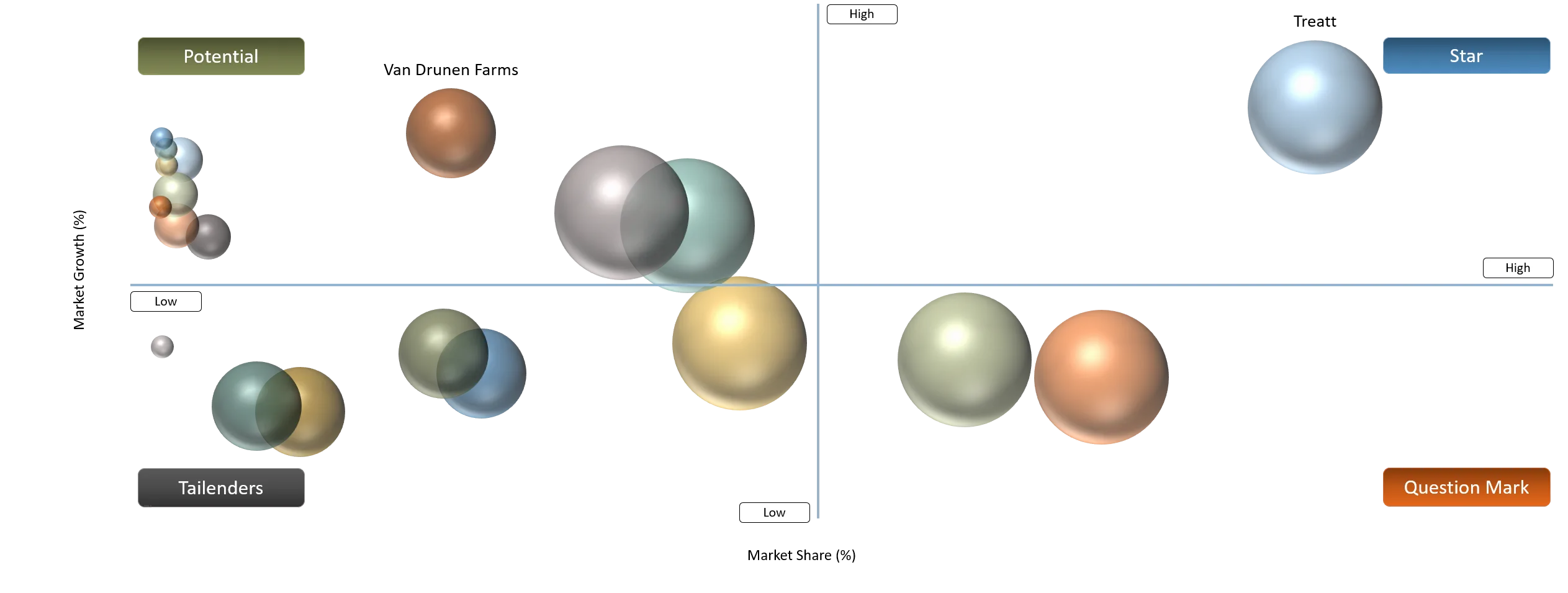
Stars include Treatt, Olam Food Ingredients (OFI), and Barry Callebaut because of their strong capabilities in transforming agricultural and fruit side streams into commercially valuable ingredients, combined with established global ingredient supply chains. The companies are well positioned to capture increasing demand for traceable, sustainable, and high-value fruit-derived extracts. International Flavors & Fragrances (IFF), dsm-firmenich, and Givaudan are categorized as Question Marks because they possess extensive expertise in natural extracts, flavors, fragrances, and bioactive ingredients but have comparatively less direct commercial concentration on the dedicated upcycled fruit extract category.
Potential candidates include Van Drunen Farms, Fresh Del Monte, and Upcycled Beauty Company because they have access to significant fruit and plant-based raw-material streams or specialized upcycling capabilities but have yet to establish the same level of global market penetration in standardized upcycled fruit extracts as leading ingredient companies. Farmacy Beauty is categorized as a Tailender because, despite utilizing sustainability-oriented and naturally derived ingredients in its beauty portfolio, its involvement in the upcycled fruit extract market remains primarily application-focused rather than centered on the large-scale production and commercial supply of upcycled fruit extracts.
Upcycled Fruit Extract Market Dynamics
Driver Impact Analysis
| Driver | Market Growth Impact (%) | Demand Concentration | Impacted Use Case | Strategic Impact |
Advances in green extraction technologies, including ultrasound-assisted, enzyme-assisted, and supercritical extraction, are improving the commercial recovery. | 32% | High: Polyphenol-, flavonoid-, pectin-, and antioxidant-rich extracts | Nutraceuticals; functional foods; natural food additives; cosmetics | Improves extraction yield and processing efficiency, enabling manufacturers to commercialize a wider range of fruit residues as standardized, high-value extracts. |
Rising demand for naturally derived bioactive ingredients is driving the recovery of polyphenols, flavonoids, antioxidants, and dietary compounds. | 30% | High: Nutraceuticals and functional foods | Dietary supplements; antioxidant formulations; functional beverages; healthy-aging products | Encourages manufacturers to prioritize standardized, bioactive-rich fruit extracts with measurable functional properties and stronger premium-market positioning. |
Growing incorporation of upcycled fruit-derived extracts into functional foods, nutraceuticals, and dietary supplements is expanding their high-value commercial applications. | 25% | Very High: Nutraceuticals, functional foods, and supplements | Capsules; powders; fortified foods; functional beverages | Shifts the market from bulk fruit-waste utilization toward higher-margin, application-specific extract formulations and ingredient partnerships. |
Circular bioeconomy initiatives are encouraging fruit processors to convert low-value processing residues into standardized, revenue-generating extract ingredients. | 23% | High: Food processors and ingredient manufacturers | Polyphenol extracts; pectin-rich extracts; natural antioxidants; multi-product biorefineries | Drives vertical integration and biorefinery development, allowing processors to create additional revenue streams from peels, pomace, seeds, and other fruit residues. |
Advances in green extraction technologies, including ultrasound-assisted, enzyme-assisted, and supercritical extraction, are improving the commercial recovery
The rapid advancement of green extraction techniques is a key driver accelerating the upcycled fruit extract market, as companies strive to extract greater quantities of bioactive compounds from fruit peels, pomace, seeds, and pulp with reduced solvents and reduced process effort. Techniques like ultrasonic-assisted extraction, enzyme-assisted extraction, and supercritical fluid extraction are helping to make the recovery of polyphenols, flavonoids, carotenoids, pectin, and other functional compounds from fruit waste economically feasible. The development of these techniques is helping to transform fruit waste into economically valuable components.
In parallel, developments in enzyme-assisted extraction are contributing to the increased commercial potential in the utilization of fruit waste. In March 2026, according to the HEP Journals, enzyme-assisted extraction from marang fruit peel and core generated pectin yields ranging between 3.06% and 7.05%. Cellulase-assisted extraction from the fruit core yielded the highest 7.05%. Moreover, the study proved that the isolated pectin was functional and could be used in foods, nutraceuticals, and industry applications. It is an example of how enzyme-assisted technology can be used to turn fruit waste into functional extracts and contribute to the increase in efficiency and commercial use of upcycled fruits.
Restraint Impact Analysis
| Restraint | Drag on Market Growth (%) | Primary Impact Area | Impacted Use Case | Strategic Impact |
Seasonal availability and compositional variability of fruit peels, pomace, and other by-products make it difficult to maintain consistent extract quality. | 27% | Raw material supply and extract standardization | Nutraceuticals; functional foods; food additives | Requires multi-source procurement, batch standardization, feedstock blending, and advanced quality testing to maintain consistent bioactive concentrations. |
Microbial spoilage and contamination risks in high-moisture fruit by-products require rapid processing and additional safety controls, increasing production complexity. | 25% | Food safety and feedstock stabilization | Food & beverages; dietary supplements; natural food additives | Increases investment in rapid stabilization, drying, cold storage, microbial testing, and traceability systems, raising production costs. |
Scaling green extraction technologies from laboratory to industrial production remains challenging. | 23% | Manufacturing scale-up and process economics | High-purity extracts; nutraceutical ingredients; cosmetic actives | Creates a scale-up gap requiring investment in industrial equipment, process optimization, and validation before laboratory technologies can achieve consistent commercial output. |
The absence of harmonized regulatory specifications and standardized certification frameworks for upcycled ingredients can delay broader commercialization. | 20% | Regulatory compliance and market access | Food ingredients; supplements; international product launches | Increases approval complexity and documentation requirements, encouraging companies to prioritize verified supply chains and recognized certification frameworks before expanding across markets. |
Seasonal availability and compositional variability of fruit peels, pomace, and other by-products make it difficult to maintain consistent extract quality
One of the key factors that restricts the upcycled fruit extract market is the seasonal nature and non-uniformity of the composition of the peel, pomace, seeds, and other processing waste of fruits. While in regular extraction of extracts, there are special raw materials available based on the set parameters of quality, in the case of upcycled extracts, the amount, type, ripeness, and processing conditions of fruits being processed in primary processing facilities are used. According to the Royal Society of Chemistry (RSC) in Sustainable Food Technology, non-uniform raw materials, inconsistency of inputs, and their quality were key obstacles in the commercialization of upcycled products.
In addition, a study published in Frontiers in Sustainable Food Systems demonstrated the extent to which seasonality can alter the composition of fruit and vegetable biowaste. In April 2025, according to Frontiers, the study found that dietary fiber content varied from 19.9 g/100 g dry weight in spring to 33.3 g/100 g dry weight in autumn, while insoluble dietary fiber ranged from 12.9 g/100 g in summer to 26.5 g/100 g in winter. Soluble dietary fiber also fluctuated significantly, ranging from 4.31 g/100 g in winter to 9.1 g/100 g in summer, and antioxidant activity varied from 12.5 μmol TE/g dry weight in summer to 34.4 μmol TE/g dry weight in spring. The findings from Frontiers in Sustainable Food Systems highlight how seasonal changes can materially alter the composition and functional properties of available biowaste feedstocks, making batch-to-batch standardization more difficult for upcycled fruit extract manufacturers.
Upcycled Fruit Extract Market Segment Analysis
The global upcycled fruit extract market is segmented based on fruit source, upcycled raw material, extract type, extraction technology, form, certification, status, application, and region.
Liquid Extracts Driving Dominance Through Direct Formulation Compatibility and Processing Simplicity
The liquid extracts segment dominates the upcycled fruit extract market by Form, holding approximately 55% market share in 2026, as liquid extracts can be used in beverages, functional foods, sauces, and other formulations directly without the need for reconstitution. It is important to consider the fact that liquid extracts can be used in beverage and food formulations directly without reconstitution due to their direct formulation capability.
In parallel, a study indicated the actual usage of liquid extracts derived from pomegranate by-products in beverage fortification. In May 2025, according to Wiley, the study added liquid extracts to pomegranate juice in quantities of 6% to 10% (g/100 mL) and indicated that fortified juices contained 30.1% to 46.6% higher concentration of total phenolic content in comparison with the control. The maximum total phenolic content was found in an amount of 6.23 mg GAE/mL, while the control had only 4.25 mg GAE/mL of total phenolic content. Moreover, there was noted the 27.4% to 49.4% increase in total flavonoid content was noted, indicating that liquid upcycled extracts can provide direct functional benefits to beverages. It is important to indicate that results provided by the Food Science & Nutrition study confirm the commercial benefit of liquid extracts in food and beverages, thus proving the leading position of liquid extracts in the upcycled fruit extract market.
Upcycled Fruit Extract Market Geographical Penetration
Strong Circular Economy Policies and Advanced Fruit-Processing Infrastructure Supporting Europe's Market Dominance
Europe is estimated to dominate the upcycled fruit extract market, accounting for approximately 34% market share in 2025 (estimated), supported by its strong circular-economy framework, established fruit-processing industry, and advanced capabilities in converting food-processing side streams into high-value ingredients. The region's regulatory focus on reducing food waste and improving resource efficiency is encouraging the valorization of fruit peels, pomace, seeds, and pulp into commercially viable extracts for food, nutraceutical, and cosmetic applications. The European Commission's circular bioeconomy initiatives continue to support technologies that convert agrifood residues into higher-value products, strengthening the commercial ecosystem for upcycled ingredients and extract manufacturing.
Europe's evolving regulatory framework presents a dual impact on the upcycled fruit ingredient sector, creating commercialization opportunities while increasing approval and compliance requirements. In September 2025, IntechOpen highlights regulatory opportunities and challenges for innovative and upcycled food and beverage ingredients in Europe, including products developed from side streams such as fruit pomace. The analysis identifies Regulation (EU) 2015/2283 on Novel Foods as a key consideration for ingredient manufacturers, biotechnology companies, beverage producers, and upcycling businesses, with the authorization process legally targeted at 17 months but averaging approximately 31 months in practice, creating a significant commercialization barrier for innovative ingredients.
The chapter also notes that the EU regulatory framework applies to companies developing upcycled products and innovative production processes, while consumer demand creates market potential, with a 2025 Deloitte study showing that 69% of consumers support replacing unhealthy beverages with healthier alternatives and 61% consider the availability of healthy beverages in supermarkets insufficient.
Germany Upcycled Fruit Extract Market Trends
Germany holds a dominant position in the European upcycled fruit extract market, supported by its established food-processing sector, advanced circular bioeconomy infrastructure, and growing research and commercialization activities focused on converting fruit-processing residues into high-value functional ingredients. The country's ecosystem enables collaboration between food processors, universities, research institutions, and bioeconomy organizations to improve the recovery of bioactive compounds from apple pomace and other fruit side streams.
The shift toward B2B commercialization highlights growing industrial demand for upcycled fruit-derived ingredients and creates new opportunities for scaling fruit side-stream valorisation across the European food and beverage sector. In February 2026, AKOUA GmbH, a Germany-based upcycling food-ingredient startup based in Ratingen, announced a strategic shift from direct-to-consumer operations toward the B2B market, focusing on the production and supply of upcycled cashew apple juice concentrate for food industry applications, including beverages, ice cream, and delicatessen products.
The company addresses a significant agricultural side-stream opportunity, as approximately 10 kg of cashew apples are generated as a by-product for every 1 kg of cashew kernels produced. AKOUA previously sold its consumer products in around 20 retail markets and, following approximately three years of D2C operations, redirected its strategy toward industrial partnerships in Germany and Europe in response to growing B2B interest.
UK Upcycled Fruit Extract Market Outlook
The UK is emerging as an important country in the European upcycled fruit extract market, supported by its growing circular food economy, strong food innovation ecosystem, and increasing research focus on converting food-processing by-products into high-value ingredients. UK universities and food innovation organizations are increasingly developing technologies for the recovery of bioactive compounds from fruit pomace, peels, and other side streams. This growing emphasis on sustainable ingredient production is strengthening opportunities for upcycled fruit extracts across functional foods, beverages, nutraceuticals, and natural ingredient applications.
The partnership demonstrates the increasing commercialization of fruit-processing side streams as premium natural ingredients, strengthening the integration of sustainable sourcing and circularity within beverage innovation. In July 2026, Del Monte Corporation, a U.S.-based vertically integrated producer, distributor, and marketer of fresh and shelf-stable produce, partnered with Treatt, a UK-based global manufacturer of natural extracts and ingredients, to launch an upcycled fruit extract range for beverage applications. The portfolio comprises four fruit-derived extracts—pineapple, watermelon, mango, and cantaloupe— produced from fruit materials generated during Del Monte's processing operations and converted into premium ingredients using Treatt's proprietary extraction expertise. The partnership combines Del Monte's fruit supply capabilities with Treatt's natural ingredient and extraction technologies to support clean-label beverage formulation and sustainable sourcing.
U.S. Upcycled Fruit Extract Market Outlook
The U.S. is a major country for the upcycled fruit extract market, supported by its large food-processing industry, established upcycled-food ecosystem, advanced ingredient innovation capabilities, and growing commercialization of fruit-processing side streams. The country has developed a strong ecosystem connecting food manufacturers, agricultural producers, ingredient technology companies, and certification organizations, enabling the conversion of underutilized peels, pomace, pulp, and other fruit residues into higher-value ingredients.
The initiative highlights the growing commercial potential of rescued and surplus fruit as a valuable raw material for new food and beverage products. In June 2026, Velum Fermentation, a U.S.-based craft brewery and fermentation company headquartered in Pittsburgh, Pennsylvania, partnered with 412 Food Rescue, a U.S.-based nonprofit food-rescue organization headquartered in Pittsburgh, to transform nearly 10,000 pounds of rescued strawberries and mixed berries into a limited-edition hard cider named “Saved by the Berry.” The initiative demonstrates the commercial potential of surplus fruit valorisation, while 412 Food Rescue, founded in 2015, has mobilized more than 26,000 volunteers, diverted over 39 million pounds of food from the waste stream, provided the equivalent of more than 33 million meals, and helped mitigate more than 83 million pounds of carbon dioxide emissions.
Expanding Fruit-Processing Capacity and Commercial Upcycling Activities Supporting Asia-Pacific Growth
The Asia-Pacific is the fastest-growing region in the upcycled fruit extract market, estimated to account for approximately 27.5% of the global market in 2025. The region's extensive production and processing of citrus, tropical fruits, bananas, mangoes, pineapples, and other fruits generate substantial volumes of peels, pomace, seeds, and pulp that can be converted into high-value extracts. Countries such as China, India, Japan, South Korea, Thailand, the Philippines, and Australia are strengthening research and commercial capabilities in circular food systems and green extraction technologies.
The development highlights the growing use of enzyme-assisted processing and fermentation technologies to convert underutilized fruit by-products into higher-value functional ingredients. In May 2026, Space Seed Holdings Inc., a Japan-based deep-tech venture builder based in Tokyo, jointly filed a patent application with the Butterfly Pea Research Institute Co., Ltd., a Japan-based biotechnology and functional food research company headquartered in Naha, Okinawa, for a technology that upcycles discarded banana peels into functional food and beverage ingredients through enzymatic treatment and fermentation. The process uses cellulase and pectinase to break down the peel's fibrous structure, followed by fermentation using black koji, enabling the production of ingredients for functional beverages, drink powders, supplements, confectionery, and fermented foods. The development addresses a substantial fruit-waste opportunity, as more than 3.5 million tonnes of banana peels are reportedly discarded annually worldwide during food-processing activities.
Japan Upcycled Fruit Extract Market Trends
Japan is one of the major countries in the Asia-Pacific upcycled fruit extract market, supported by its advanced food-processing infrastructure, strong technology capabilities, and increasing focus on converting agricultural and food-processing residues into high-value functional ingredients. Japan's established beverage, food ingredient, nutraceutical, and cosmetic industries provide multiple commercialization channels for extracts recovered from fruit peels, pomace, seeds, and other processing side streams.
The launch demonstrates the growing commercialization of upcycled fruit-derived extracts in Japan's functional beverage sector. In March 2026, Nikken Foods Co., Ltd., a Japan-based natural food ingredient, seasoning, and health-oriented food manufacturer headquartered in Shizuoka Prefecture, launched its upcycled “Aomikan Drink” by utilizing underused unripe Satsuma mandarins generated during the fruit-thinning process. The powder beverage contains Unshu mandarin extract powder, providing 12 mg of hesperidin and 4 mg of narirutin per serving, while combining the upcycled green mandarin resource with domestically sourced yuzu. The product is sold in a 30-sachet pack containing 10 g per sachet, demonstrating the commercial application of fruit-derived extracts in functional beverages.
Upcycled Fruit Extract Market Competitive Landscape
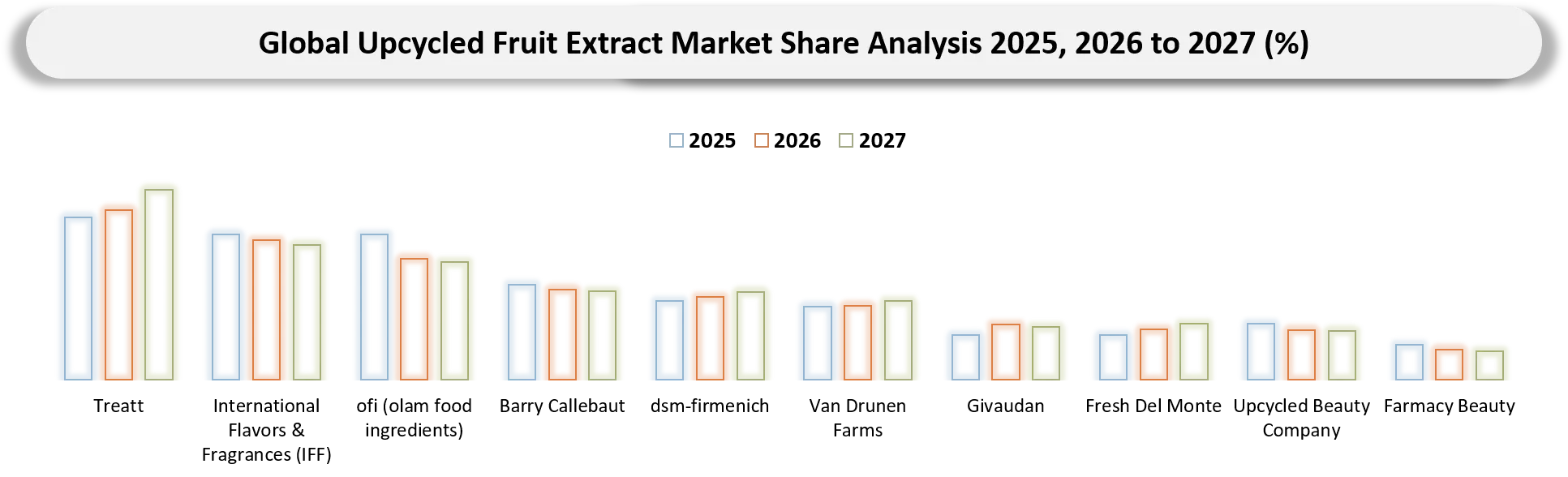
- The upcycled fruit extract market is characterized by three key participant groups: specialized natural extract producers and upcycling innovators, multinational flavor and ingredient companies, and integrated fruit processors and downstream consumer brands. Treatt and Fresh Del Monte are positioned as direct commercial participants in upcycled fruit extracts, demonstrated by their July 2026 launch of four fruit-derived extracts—pineapple, watermelon, mango, and cantaloupe—for beverage applications. IFF strengthens the competitive landscape through its upcycling platform, with more than 30 ingredients verified under the Upcycled Certified Program, while processing approximately 200,000 metric tons of citrus peels annually for pectin production. Barry Callebaut contributes through Upcycled Certified cacao fruit ingredients, while ofi, DSM-Firmenich, Van Drunen Farms, and Givaudan bring broader capabilities in sustainable ingredients, natural extracts, food formulation, and ingredient processing. Upcycled Beauty Company and Farmacy Beauty represent downstream personal-care participants utilizing the growing commercial potential of upcycled natural ingredients. It creates an ecosystem-driven and fragmented competitive landscape where access to fruit side streams, extraction technology, ingredient certification, supply-chain integration, and application development define competitiveness.
- Key players include Treatt (United Kingdom), International Flavors & Fragrances (IFF) (United States), ofi (olam food ingredients) (Singapore), Barry Callebaut (Switzerland), dsm-firmenich (Switzerland and the Netherlands), Van Drunen Farms (United States), Givaudan (Switzerland), Fresh Del Monte (United States), Upcycled Beauty Company (United Kingdom), and Farmacy Beauty (United States).
Key Developments
- March 2026: Senjaku Candy Co., Ltd., a Japan-based confectionery manufacturer, launched an enhanced version of its upcycled candy, “Mijukumono Desu ga.”, using extract derived from thinned, unripe Unshu mandarins from Ehime Prefecture that would otherwise largely be discarded.
- October 2025: Knuspr, a Germany-based online grocery retailer and subsidiary of the Czech Republic-headquartered Rohlik Group, introduced Germany's first dedicated retail category for upcycled food products in collaboration with TransFoodMission, a Hungary-based food upcycling and R&D company.
- November 2025: Carbiotix AB, a Sweden-based biotechnology company headquartered in Lund, signed a NutraCycle Joint Commercial Development Agreement with an unnamed global B2B beverage solutions provider operating across more than 50 countries.
- February 2025: Kaoba, a UK-based sustainable beverage startup headquartered in Rutland, England, launched a sparkling cacaojuice soda made from the leftover pulp of the cacaofruit, a by-product of chocolate production.
Key Procurement Priorities and Buyer Evaluation Criteria
- Organizations procuring upcycled fruit extracts are increasingly prioritizing suppliers capable of providing consistent, standardized extracts from traceable fruit by-products, with reliable concentrations of target bioactive compounds such as polyphenols, flavonoids, antioxidants, carotenoids, and pectin.
- The procurement decision-making process is increasingly influenced by the growing demand for circular and sustainably sourced ingredients, particularly across functional foods, beverages, nutraceuticals, dietary supplements, and cosmetics, where buyers require verifiable evidence of upcycled sourcing and responsible raw-material utilization.
- Buyers evaluate factors such as raw-material traceability, batch-to-batch compositional consistency, bioactive content, extraction method, microbial safety, contaminant testing, shelf stability, and regulatory compliance when selecting an upcycled fruit extract supplier.
Why Choose DataM?
- Extraction Technology & Innovation: Explores advancements in ultrasound-assisted, enzyme-assisted, supercritical fluid, and other green extraction technologies that improve the recovery of polyphenols, flavonoids, antioxidants, carotenoids, pectin, and other valuable compounds from fruit-processing by-products.
- Product Quality & Market Positioning: Evaluates how suppliers differentiate their upcycled fruit extracts based on bioactive concentration, raw-material traceability, extraction efficiency, ingredient standardization, certification, and suitability for food, nutraceutical, and cosmetic formulations.
- Real-World Evidence: Highlights the commercial utilization of fruit peels, pomace, seeds, pulp, and other processing residues in functional beverages, dietary supplements, natural food additives, functional foods, skincare, and personal care products, demonstrating the transition of fruit side streams into value-added ingredients.
- Market Updates & Industry Changes: Tracks key developments including new upcycled fruit extract launches, green extraction technology advancements, fruit-processing partnerships, circular bioeconomy initiatives, regulatory developments, and commercialization activities across Europe, North America, and Asia-Pacific.
- Competitive Strategies: Analyzes how leading companies expand through strategic sourcing partnerships, vertical integration with fruit processors, proprietary extraction technologies, Upcycled Certified ingredient development, and application-specific product innovation.
- Pricing & Market Access: Examines pricing variations based on fruit source, bioactive concentration, extraction technology, ingredient purity, certification, and processing complexity, along with market access through ingredient distributors, direct business-to-business supply, food manufacturers, nutraceutical companies, and cosmetic formulators.
- Market Entry & Expansion: Identifies growth opportunities across functional foods, beverages, dietary supplements, nutraceuticals, and cosmetics, while outlining strategies such as securing reliable fruit side-stream supply, investing in scalable green extraction technologies, obtaining sustainability certifications, and developing partnerships with food-processing companies to expand globally.
Target Audience
- Upcycled Fruit Extract Manufacturers and Ingredient Producers
- Fruit Processing Companies and Juice Manufacturers
- Food and Beverage Manufacturers
- Dietary Supplement and Nutraceutical Companies
- Functional Food and Functional Beverage Developers
- Natural Flavor, Color, and Food Additive Manufacturers
- Cosmetics and Personal Care Product Manufacturers


























































