


U.S. Smart Hospitals Market Overview
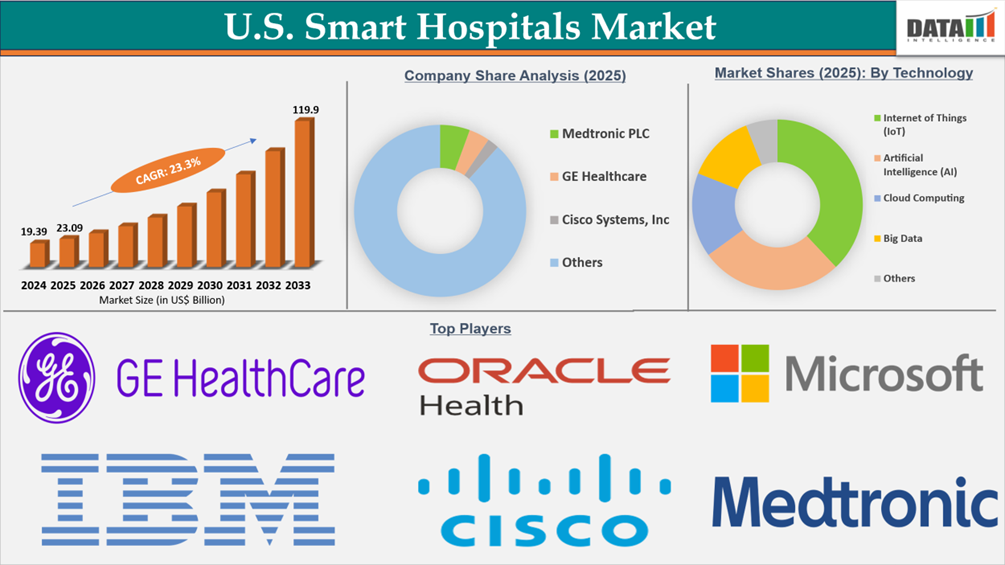
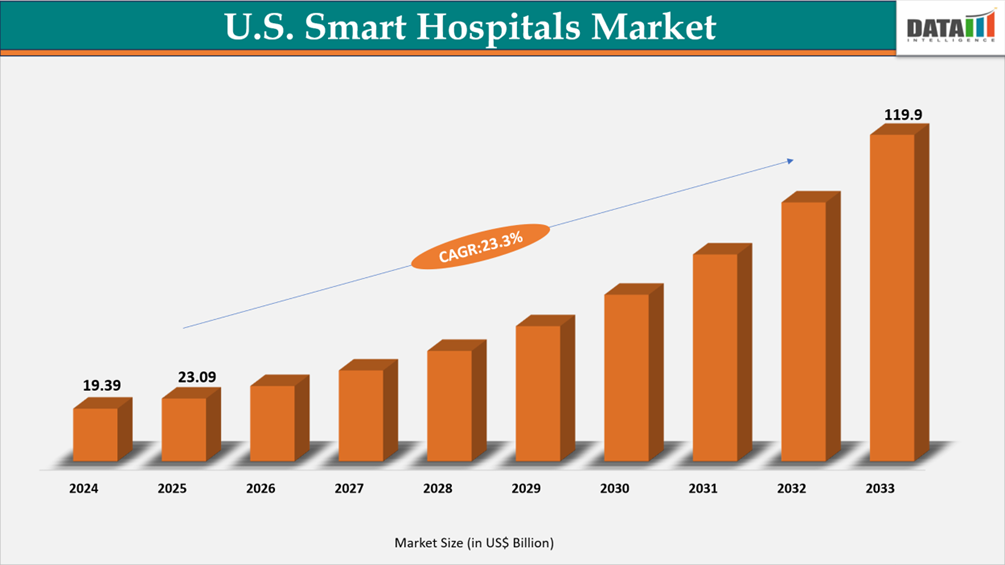
The U.S. Smart Hospitals Market reached US$ 19.39 Billion in 2024, rising to US$ 23.09 Billion in 2025 and is expected to reach US$ 119.9 Billion by 2033, growing at a CAGR of 23.3% from 2026 to 2033.
The U.S. Smart Hospitals Market is quickly expanding as hospitals use digital technologies, AI-assisted systems, IoT-enabled monitoring, telemedicine, and automated workflows to improve patient care, safety, and operational efficiency. Rising patient volumes and an aging population — over 78 million Americans are expected to be 65 or older by 2035 — are driving up hospital admissions and outpatient visits, putting additional operational pressure on clinical and administrative staff. pharmaceutical safety is a crucial driver: according to the World Health Organization, pharmaceutical errors account for significant healthcare expenses worldwide, and studies suggest that digital systems and automation can minimize errors by 30-50%, improving compliance and patient outcomes.
Hospitals are increasingly implementing smart systems like EHR-integrated predictive analytics, robotic logistics, automated dispensing machines, and remote monitoring tools to streamline workflows, optimize resources, and address staff shortages — with the U.S. Department of Health and Human Services projecting significant healthcare workforce gaps by 2032. Evidence from health IT investigations shows that these tools improve clinical decision-making, reduce diagnostic and pharmaceutical errors, and increase operational efficiency. While difficulties like as cybersecurity risks, system integration, and staff training persist, demographic pressures, patient safety concerns, and labor shortages are pushing adoption, putting the U.S. smart hospital sector on track for long-term growth.
Smart Hospitals Market Industry Trends and Strategic Insights
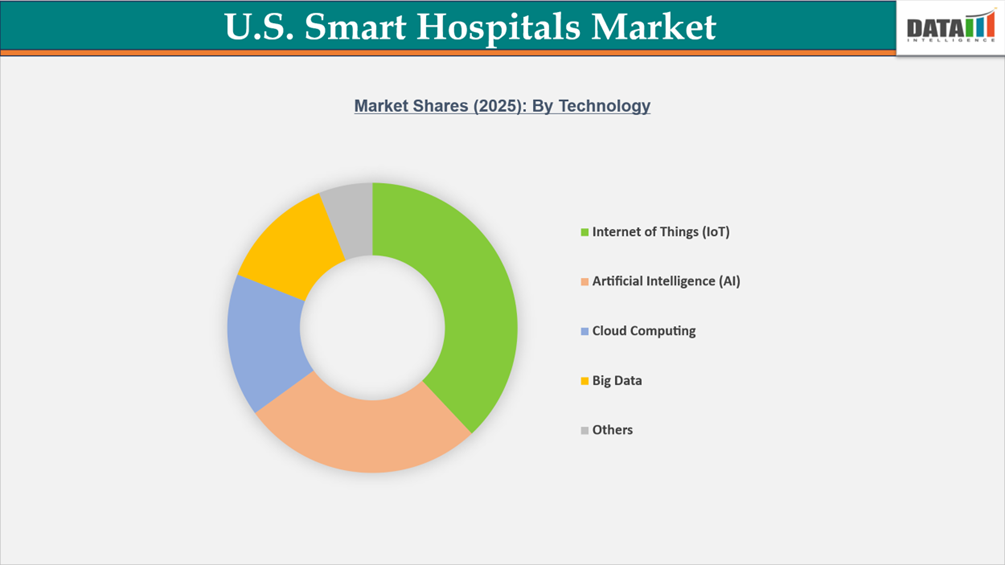
- By Technology, Internet of Things (IoT) led the U.S. Smart Hospitals Market, capturing the largest revenue share of 38% in 2025.
U.S. Smart Hospitals Market Size and Future Outlook
- 2025 Market Size: US$ 23.09 Billion
- 2033 Projected Market Size: US$ 119.9 Billion
- CAGR (2026–2033): 23.3%
Market Dynamics
Driving Operational Efficiency and Cost Optimization in U.S. Smart Hospitals Market
Operational efficiency and cost optimization refer to the use of sophisticated technology in hospitals to expedite workflows, eliminate waste, and maximize resource utilization, resulting in lower total healthcare costs. In smart hospitals, automation and AI-powered technologies handle basic administrative activities such as patient scheduling, invoicing, inventory management, and personnel allocation, decreasing manual workload and errors. Real-time data from IoT devices and linked equipment helps hospitals to monitor resource usage, such as bed occupancy, medical supplies, and energy consumption, enabling educated decisions that save time and money.
Predictive analytics can also anticipate patient admissions and equipment maintenance needs, avoiding costly delays or inefficiencies. Smart hospitals increase production while lowering operational costs, which is crucial in the high-cost healthcare system in the United States.
Segmentation Analysis
The U.S. Smart Hospitals Market is segmented based on component, technology, molecule type, application, connectivity, and end-user.
Internet of Things (IoT) in U.S. Smart Hospitals
The increased usage of Internet of Things technology is a primary driver of the U.S. Smart Hospitals market. IoT accounts for around 38% of the technology market, showing its critical role in allowing linked hospital operations. Hospitals are increasingly relying on IoT-enabled devices and sensors to monitor patients in real time, track essential medical equipment, and manage hospital assets more efficiently. The data collected by these devices enables artificial intelligence and predictive analytics, which aid in clinical decision-making, workflow automation, and operational efficiency. IoT also improves patient safety and care quality by allowing for faster interventions, fewer errors, and better resource utilization. The expansion of hospital-based digital infrastructure, combined with technical improvements and integration with AI and cloud platforms, has kept demand for IoT solutions high in smart hospitals across the United States.
Competitive Landscape
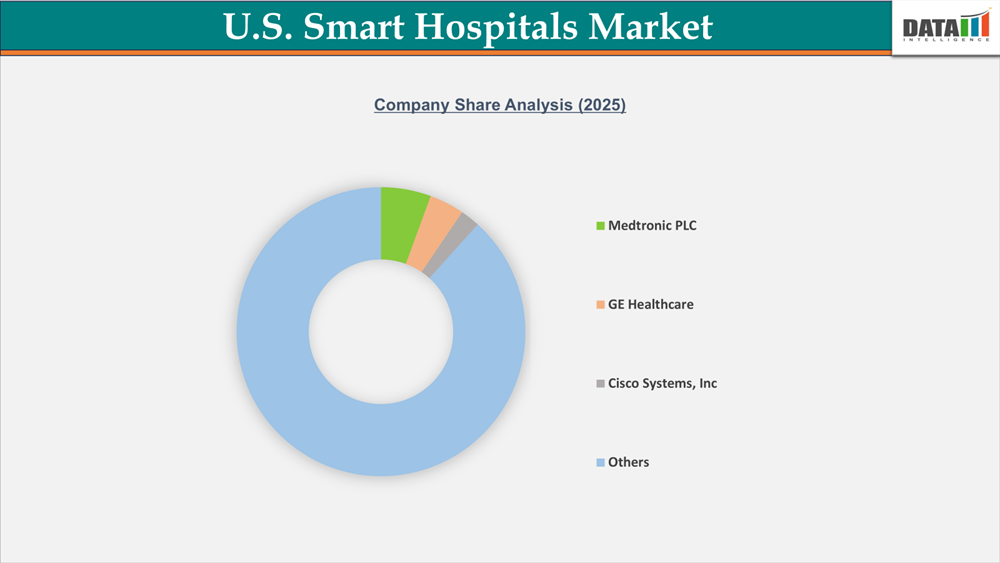
The competitive landscape in the United State Smart Hospitals Market is moderately consolidated, with significant participation from technology leaders such as GE Healthcare, . Microsoft Corporation, IBM, Cisco Systems, Oracle Health, and Medtronic PLC, which provide core infrastructure, cloud platforms, AI analytics, connected devices, and EHR systems to hospital networks. Honeywell International Inc., Siemens Healthineers AG, Koninklijke Philips N.V., and McKesson Corporation maintain a presence by offering facility automation, diagnostic imaging, patient monitoring, and healthcare logistics solutions, leveraging existing hospital partnerships and interoperability platforms.
Koninklijke Philips N.V., and Siemens Healthineers AG compete in the imaging, diagnostics, and integrated monitoring markets, which are driven by large hospital systems looking for operational efficiency, patient safety, and real-time clinical insights. Strategic alliances, technology licensing, and platform integration in AI-enabled clinical decision support, IoT connection, and automated workflows are significant competitive tactics influencing the U.S. Smart hospital business.
Key Developments
- In July 2025, GE Healthcare topped the U.S. FDA list of AI-enabled medical device authorizations, with 100 solutions certified, the highest among medical technology companies. This milestone highlights GE's ongoing investment in AI-powered imaging, patient monitoring, and analytics, with the goal of improving workflow efficiency, diagnostic accuracy, and clinical decision-making in smart hospitals across the United States. The result highlights a growing trend of AI usage in hospital operations, which enables speedier data-driven treatment while also supporting broader digital transformation programs throughout healthcare organizations.
What Sets This U.S. Smart Hospitals Market Intelligence Report Apart
- Latest Data & Forecasts – Comprehensive and up-to-date market intelligence with forecasts through 2033, covering U.S. demand across key segments including component, technology, application, connectivity, and end-user, with detailed value-based analysis and growth projections.
- Regulatory Intelligence – In-depth assessment of U.S. healthcare regulatory frameworks impacting smart hospital adoption and commercialization, including HIPAA compliance requirements, CMS reimbursement models, ONC interoperability mandates, FDA oversight for AI-enabled medical technologies, cybersecurity regulations, and federal digital health initiatives.
- Competitive Benchmarking – Structured benchmarking of leading technology providers, healthcare IT vendors, medical device manufacturers, cloud service providers, and system integrators based on solution portfolios, innovation capabilities, deployment models, pricing structures, strategic partnerships, and geographic presence across the U.S.
- Actionable Strategies & Cost Dynamics – Strategic insights into digital transformation roadmaps, ROI optimization models, pricing structures, interoperability challenges, cybersecurity investments, infrastructure modernization costs, and partnership strategies supported by expert perspectives from healthcare executives, digital health specialists, regulatory advisors, and technology providers.


























































