


U.S. MASH Diagnostics Market Size and Forecast 2026-2033
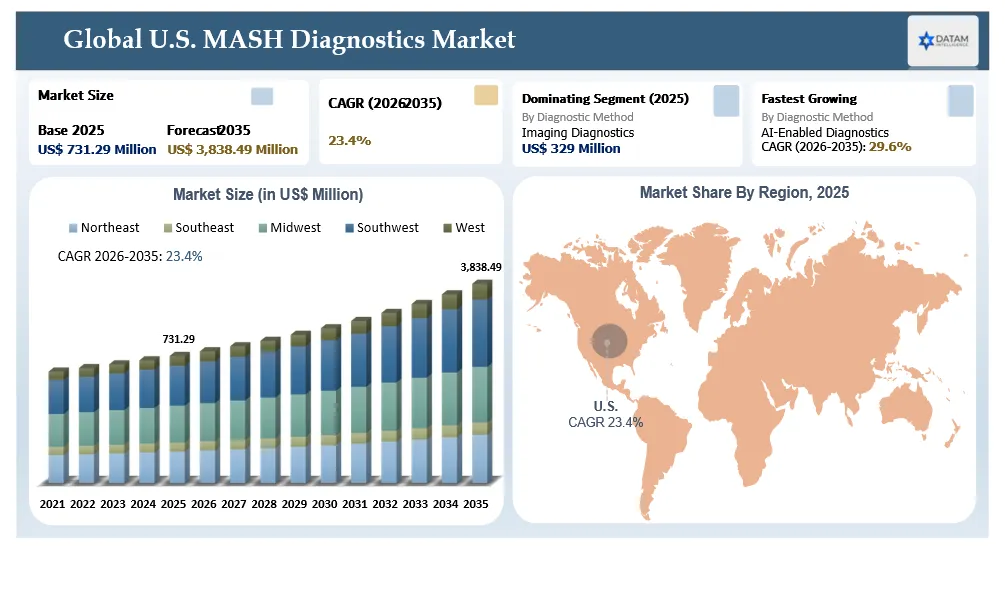
The U.S. MASH diagnostics market is moving from opportunistic detection of fatty liver toward a structured, treatment-linked pathway. The market report estimates value at US$ 731.29 million in 2025 and US$ 3,838.49 million by 2033. The commercial inflection is not simply a larger pool of liver tests: it is the need to identify patients with clinically significant fibrosis, exclude cirrhosis, document treatment eligibility and monitor response over time. This changes the revenue mix toward repeatable blood-based scores, specialty fibrosis biomarkers, elastography, quantitative imaging and digital pathology.
Demand is broadening beyond hepatology. Primary-care, diabetes, obesity and cardiometabolic practices are increasingly important entry points because most at-risk patients are managed outside specialist liver clinics. A sequential workflow - routine laboratory data and FIB-4 first, followed by ELF or vibration-controlled transient elastography for indeterminate or high-risk patients, and MRI-based assessment or biopsy for selected cases - offers the most scalable route to reduce underdiagnosis. The opportunity therefore depends on EHR automation, referral coordination and reimbursement as much as on test performance.
Treatment availability raises the economic value of accurate staging. Diagnostics now influence whether a patient is referred, treated, monitored or excluded because of cirrhosis or uncertain disease activity. This favors companies that can connect screening volume with confirmatory testing and longitudinal follow-up. It also creates demand for validated non-invasive endpoints in pharmaceutical trials, companion-diagnostic development and real-world evidence programs. The market remains constrained by uneven specialist capacity, inconsistent testing sequences, variable access to advanced imaging and gaps in payer coverage for newer biomarkers and software-enabled tools.
U.S. MASH Diagnostics Market Key Takeaways
- Therapy-linked fibrosis staging is the principal value driver: the highest-value decisions center on identifying non-cirrhotic patients with significant fibrosis, confirming eligibility and documenting response.
- The scalable U.S. pathway is sequential rather than single-test: FIB-4 or routine laboratory triage, then ELF or elastography, followed by MRI, MRE or biopsy only when needed.
- Growth is shifting upstream into diabetes, obesity and primary-care settings, making EHR automation and referral completion critical commercial capabilities.
- Blood-based testing and office-based elastography will generate the largest routine volumes; quantitative MRI, digital pathology and molecular tools will remain concentrated in specialist care, trials and complex cases.
- Reimbursement evidence, guideline alignment and workflow integration will determine adoption more strongly than analytical performance alone.
U.S. MASH Diagnostics Industry Trends and Strategic Insights
The strongest market positions will be held by platforms that reduce patient leakage between screening and treatment. Public laboratory networks can scale automated risk identification; imaging companies can extend fibrosis assessment through installed ultrasound and MRI systems; and diagnostics manufacturers can add specialty biomarkers to existing analyzer footprints. Specialist innovators remain important where they improve fibrosis quantification, pathology consistency or treatment-response measurement, but commercial scale will usually require partnerships with national laboratories, health systems or pharmaceutical sponsors.
U.S. MASH Diagnostics Market Scope
| Metrics | Details | |
| 2025 Market Size | US$ 731.29 Million | |
| 2033 Projected Market Size | US$ 3,838.49 Million | |
| CAGR (2026-2033) | 23.4% | |
| Largest Market | United States | |
| Fastest Growing Opportunity | Therapy-linked fibrosis staging | |
| By Diagnostic Workflow Stage | Initial Screening, MASH Confirmation, Fibrosis Staging, Treatment Monitoring, Disease Progression Surveillance and Emerging Technologies | |
| By Diagnostic Method | Imaging, Blood-Based, Histopathology, Molecular and AI-Enabled Diagnostics | |
| By Diagnostic Purpose | Screening, Confirmation, Fibrosis Staging, Therapy Eligibility, Companion Diagnostics, Monitoring and Surveillance | |
| By Disease Severity | MASLD, Early MASH, Mild, Moderate, Advanced and Severe Fibrosis, Cirrhosis and High-Risk Progression | |
| By End-User | Hospitals, Hepatology Clinics, Gastroenterology Clinics, Diagnostic Laboratories, Imaging Centers, Specialty Liver Centers and Ambulatory Centers | |
| By U.S. Region | Northeast, Southeast, Midwest, Southwest and West | |
| Report Insights Covered | Competitive Landscape Company Profiles Treatment Pipeline Ecosystem Mapping Market Size, Share and Growth | |
Why does this report matter in 2026?
The study covers the U.S. market by diagnostic workflow stage, method, purpose, disease severity, end-user and five major regions: Northeast, Southeast, Midwest, Southwest and West. It evaluates initial screening, confirmation, fibrosis staging, therapy eligibility, companion diagnostics, treatment monitoring and disease surveillance. Technology coverage includes routine blood testing, fibrosis scores, specialty biomarkers, ultrasound and elastography, MRI-PDFF, MRE, biopsy, digital pathology, molecular diagnostics and AI-enabled decision support.
The analysis also addresses the commercial infrastructure required to move patients through the pathway: analyzer and imaging installed bases, reference-laboratory reach, EHR integration, referral networks, specialist capacity, reimbursement, pharmaceutical trial demand and monitoring frequency. Competitive coverage includes diagnostic manufacturers, imaging vendors, national laboratories, biomarker developers, digital-pathology companies and treatment sponsors. Report insights are stated once in the market-scope table and are not duplicated.
U.S. MASH Diagnostics Market White Space & Investment Opportunities
- Automated patient identification: embed age, AST, ALT and platelet data into EHR or laboratory reporting so FIB-4 is calculated without an additional physician order.
- Second-line testing access: expand ELF, PRO-C3 and other validated fibrosis biomarkers through national laboratories and regional health-system networks.
- Office-based elastography: place portable or compact liver-stiffness assessment closer to endocrinology, obesity medicine and gastroenterology referral points.
- Therapy-linked monitoring: develop repeat-testing protocols that combine liver enzymes, stiffness, fat fraction and biomarkers to demonstrate response and persistence.
- Multimodal decision support: integrate laboratory, imaging and clinical-risk data to reduce discordant results, unnecessary biopsy and incomplete specialist referrals.
U.S. MASH Diagnostics Future Market Transformation
Over the forecast period, MASH diagnostics will evolve from episodic confirmation toward longitudinal risk management. Routine laboratories are likely to calculate FIB-4 automatically; high-risk patients will move into standardized second-line testing; and specialty centers will reserve MRE, MRI-PDFF or biopsy for unresolved cases, trial enrollment and complex treatment decisions. The growth of approved and late-stage therapies will make monitoring a recurring revenue pool rather than a one-time diagnostic event.
Commercial transformation will also depend on data connectivity. Health systems need closed-loop referral tools that confirm whether a flagged patient completed elastography, saw a specialist and initiated treatment. AI can improve image segmentation and pathology reproducibility, but adoption will require prospective validation, transparent performance across demographic groups, cybersecurity controls and reimbursement evidence. Vendors that bundle clinical evidence, workflow integration and payer support will convert innovation into routine use faster than stand-alone technology suppliers.
U.S. MASH Diagnostics Market Buyer Decision-Making Criteria
U.S. buyers assess MASH diagnostic solutions according to clinical validity, ability to identify F2-F3 fibrosis, ease of integration into existing laboratory or imaging workflows, reimbursement support, repeatability, turnaround time and access across community settings. Hospitals and specialty centers value accuracy and multimodal capability, while primary-care networks and reference laboratories prioritize scalability and low workflow burden. Pharmaceutical companies require validated endpoints and trial-enrichment performance. Across buyer groups, evidence that a solution can reduce unnecessary biopsy, improve referral efficiency and support treatment access is central to procurement decisions. This assessment reflects
Major Buyer Decision-Making Criteria
- Clinical Validity and Fibrosis-Staging Accuracy
- Installed-Base Integration and Workflow Fit
- Reimbursement, Coding and Payer Evidence
- Repeatability and Monitoring Utility
- Compatibility with Laboratory, Imaging and EHR Systems
- Regulatory Clearance and Guideline Alignment
- Cost Effectiveness and Scalable Patient Access
- Clinical Evidence and Product Roadmap
U.S. MASH Diagnostics Market Economic & Investment Analysis
Treatment-linked testing increases the addressable revenue per diagnosed patient because screening, confirmation, eligibility and monitoring occur at different points in the care pathway. Laboratory-based tools scale efficiently through existing analyzers and national logistics, while elastography and MRI require capital equipment, trained operators and scheduling capacity. The most attractive investments therefore combine high-volume front-end identification with a differentiated second-line or monitoring product.
Investment risk remains evidence-sensitive. A promising biomarker or algorithm must demonstrate clinical validity against fibrosis outcomes, fit into accepted testing sequences, achieve coding and coverage, and show that it reduces downstream cost or improves treatment selection. Partnerships with pharmaceutical companies can accelerate validation through clinical trials, but dependence on trial services alone may limit recurring clinical revenue. Diversified commercial channels and payer-grade health-economic evidence are important valuation differentiators.
U.S. MASH Diagnostics Investment Trends in the Market
- National laboratory networks are investing in specialty testing, algorithmic reporting and health-system collaborations that increase access without new imaging infrastructure.
- Imaging vendors are prioritizing software, elastography and quantitative applications that expand the clinical utility of existing ultrasound and MRI fleets.
- Pharmaceutical partnerships are funding biomarker validation, trial enrichment and treatment-response endpoints for F2-F3 and cirrhosis programs.
- Digital pathology investment is focused on reducing reader variability, standardizing trial endpoints and creating scalable image-management workflows.
- Venture and strategic capital is most defensible where products have a clear reimbursement pathway and can be deployed through established laboratories or health systems.
Strategic Indicators For U.S. MASH Diagnostics Market
High Regulation Impact
MASH diagnostics face a high regulatory burden because results may determine treatment eligibility, clinical-trial inclusion and exclusion of cirrhosis. Developers need analytical validation, clinically meaningful cutoffs, reproducibility across sites and evidence that performance is consistent in populations with diabetes, obesity and other comorbidities. Software and AI products also require change-control, cybersecurity and post-market monitoring plans.
High Investment Activity
Investment activity is concentrated in non-invasive fibrosis assessment, automated laboratory algorithms, digital pathology and quantitative imaging. Capital is attracted to platforms that can be validated in drug trials and then migrate into routine care. However, investors increasingly discount technologies that lack reimbursement evidence, national distribution or a clear route from research-use testing to regulated clinical use.
Diagnostic Pathway Disruption
The diagnostic pathway is being disrupted by the move from biopsy-first confirmation to sequential testing. Low-cost laboratory triage can identify risk at population scale, elastography or specialty biomarkers can refine fibrosis probability, and MRI or biopsy can be reserved for discordant or complex cases. This changes where revenue is generated and shifts influence toward primary care, diabetes networks and reference laboratories.
The disruption also changes referral economics. A positive screen has limited value unless the patient reaches confirmatory testing and specialist review. Closed-loop referral tools, standardized thresholds and patient navigation therefore become part of the diagnostic product. Companies that measure completed referrals and treatment starts can demonstrate more value to health systems than vendors selling an isolated test.
Pricing and Reimbursement Variability
Pricing varies widely by modality and care setting. Routine liver tests and calculated scores are inexpensive but generate high volume; specialty biomarkers and elastography carry higher unit value; MRI, MRE and biopsy are costly and capacity-constrained. Reimbursement uncertainty is greatest for newer biomarker panels, AI interpretation and repeated monitoring when payers view testing frequency as insufficiently standardized.
Procurement Pressure
Health-system procurement favors solutions that use existing analyzers, ultrasound platforms, MRI scanners and EHR interfaces. Buyers increasingly demand total-cost evidence, implementation support and measurable reductions in unnecessary biopsy or specialist visits. New capital equipment faces longer approval cycles unless it serves multiple clinical applications beyond MASH.
New Technology Adoption
Technology adoption is strongest when a tool fits a recognized sequential pathway and can be interpreted by non-specialists. Automated FIB-4, standardized elastography and laboratory biomarkers have an advantage because they are repeatable and can be embedded in routine workflows. Advanced MRI and molecular diagnostics will grow more selectively in tertiary centers, trials and unresolved cases.
Regional Expansion Opportunity
Regional expansion should prioritize areas with high diabetes and obesity burden, adequate primary-care and laboratory reach, and sufficient hepatology or gastroenterology capacity to absorb referrals. Expansion without specialist capacity can create screening volume but poor completion rates. Hub-and-spoke models and telehepatology can improve access in rural and underserved markets.
Government Policy Support
Federal regulation, CMS coverage decisions, commercial payer policies and professional-society guidance jointly determine adoption. Policy support for non-invasive testing can lower biopsy use and improve early referral, but inconsistent coding and local coverage can create uneven access. Vendors need parallel clinical, regulatory and reimbursement strategies rather than treating market access as a post-launch activity.
Pricing Intelligence
Pricing intelligence should compare the entire pathway, not only the test price. A higher-cost second-line test may be economically attractive if it prevents unnecessary MRI, biopsy or specialist visits. Vendors should quantify cost per correctly staged patient, referral completion, time to treatment decision and monitoring burden. Contracting models may increasingly combine test volume with workflow or outcome metrics.
| Therapy / Program | Sponsor | 2026 Status | Diagnostic Link | U.S. Market Implication |
Rezdiffra (resmetirom) | Madrigal Pharmaceuticals | FDA approved for non-cirrhotic MASH with F2-F3 fibrosis | Requires reliable fibrosis staging, cirrhosis exclusion and follow-up monitoring | Expands demand for FIB-4, ELF, VCTE/FibroScan, MRE and selective biopsy |
Wegovy (semaglutide) | Novo Nordisk | FDA accelerated approval for non-cirrhotic MASH with F2-F3 fibrosis | Connects obesity and diabetes pathways with liver staging and longitudinal monitoring | Broadens identification through metabolic clinics and increases repeat testing |
| Efruxifermin | Akero Therapeutics / Amgen | Phase 3 programs in F2-F3 and cirrhosis | Uses biopsy and non-invasive biomarkers or imaging for enrollment and response assessment | Supports trial demand for quantitative fibrosis and activity measures |
| Pegozafermin | 89bio / Roche | Late-stage development | Requires patient stratification, fibrosis endpoints and monitoring | Strengthens pharmaceutical demand for validated biomarkers and imaging endpoints |
AI Impact Analysis of U.S. MASH Diagnostics Market
AI can improve MASH diagnostics in four distinct areas: automated risk calculation from routine laboratory data; image segmentation and quantitative liver-fat or stiffness analysis; standardized digital-pathology scoring; and multimodal prediction that combines laboratory, imaging and clinical variables. The greatest near-term value is workflow consistency rather than autonomous diagnosis. Adoption will depend on external validation, interoperability, explainability and evidence that AI reduces turnaround time or specialist workload without widening demographic bias.
For clinical trials, AI-assisted pathology and imaging can reduce reader variability and improve endpoint reproducibility. In routine care, algorithms can prioritize high-risk patients and flag discordant results for specialist review. Commercial models may include software licenses, per-study fees or bundled analytics with imaging and laboratory platforms. Regulatory change management is a key issue because continuously updated models require controlled validation and transparent versioning.
Disruption Analysis of U.S. MASH Diagnostics Market
The market is being disrupted by the interaction of therapy approvals, automated screening and non-invasive fibrosis assessment. Screening volume is shifting toward primary and metabolic care, while specialist value is concentrating on ambiguous cases, treatment decisions and advanced monitoring. National laboratories and imaging vendors can use existing infrastructure to scale quickly, but specialist innovators can capture premium niches through superior quantification or trial evidence.
The principal competitive risk is commoditization at the front of the pathway. FIB-4 and routine liver tests are widely available, so differentiation must come from automated reporting, referral completion, second-line testing and longitudinal data. Companies that remain limited to a single modality may lose influence as buyers prefer integrated pathways. Partnerships across laboratories, imaging, software and pharmaceutical sponsors are therefore likely to intensify.
U.S. MASH Diagnostics Market BCG Matrix: Company Evaluation
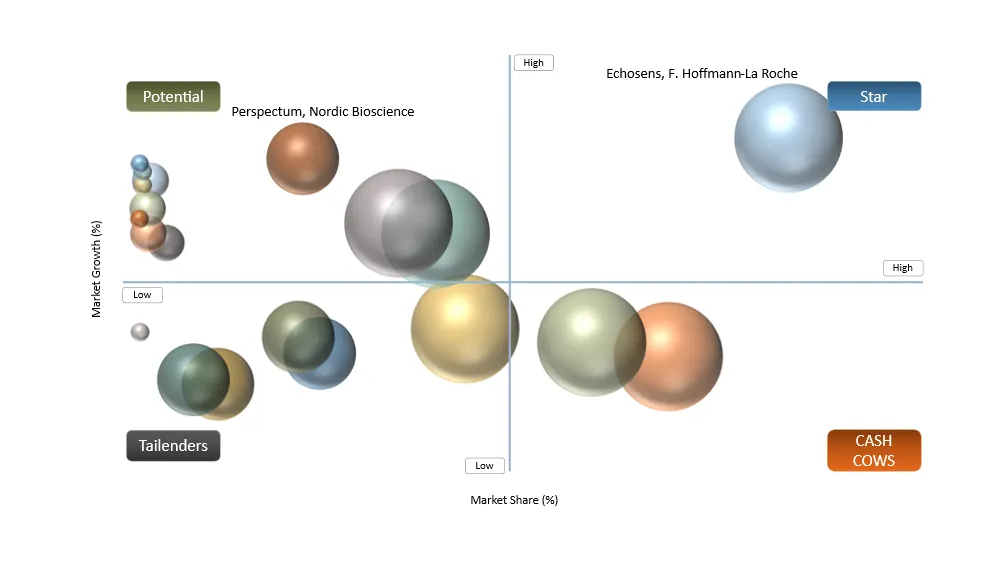
STAR
The BCG assessment places Echosens, F. Hoffmann-La Roche, Siemens Healthineers, GE HealthCare, and Koninklijke Philips among the strongest strategic positions, supported by established diagnostic capabilities, broad healthcare infrastructure, and growing demand for MASH screening and fibrosis assessment. Their strong clinical presence and technology portfolios provide a solid foundation for capturing opportunities from the increasing adoption of non-invasive MASH diagnostics.
POTENTIAL
Perspectum, Nordic Bioscience, BioPredictive, PathAI, and HistoIndex represent potential companies in the U.S. MASH diagnostics market. Their specialized capabilities in quantitative liver imaging, biomarkers, molecular diagnostics, AI-enabled pathology, and digital liver assessment provide opportunities for growth as non-invasive testing, precision diagnostics, and treatment-monitoring requirements expand.
MASH Diagnostics Ecosystem / Value-Chain Companies
| VALUE-CHAIN SECTION | MASH DIAGNOSTICS ECOSYSTEM PLAYERS | ROLE IN THE U.S. MARKET |
Routine Screening and Laboratory Triage | Quest Diagnostics; Labcorp; Roche Diagnostics; Siemens Healthineers; hospital laboratories | ALT, AST, platelet count, FIB-4 and routine liver-risk reporting. |
Blood-Based Fibrosis Biomarkers | Siemens Healthineers (ELF); Roche / Nordic Bioscience (Elecsys PRO-C3); BioPredictive | Second-line fibrosis assessment and patient stratification. |
Elastography and Point-of-Care Staging | Echosens; Siemens Healthineers; GE HealthCare; Philips | Liver stiffness and steatosis assessment after initial risk screening. |
Quantitative MRI and Advanced Imaging | Perspectum; GE HealthCare; Siemens Healthineers; Philips | MRI-PDFF, MRE and quantitative biomarkers for confirmation and monitoring. |
Histopathology and Digital Pathology | Roche; PathAI; Histoindex; academic pathology networks | Biopsy interpretation, automated fibrosis scoring and clinical-trial endpoints. |
Molecular and Multiomics Diagnostics | Rubió Metabolomics; biomarker developers; academic research centers | Emerging precision-risk assessment and companion-diagnostic development. |
Reference Laboratories and Commercialization | Labcorp; Quest Diagnostics; major health-system laboratories | National sample access, physician reach, reimbursement and test scaling. |
Pharmaceutical and Clinical-Trial Ecosystem | Madrigal Pharmaceuticals; Novo Nordisk; Akero / Amgen; 89bio / Roche; CROs | Patient identification, trial enrichment, endpoint assessment and monitoring. |
Care Delivery and Referral Networks | Primary-care groups; endocrinology and obesity clinics; gastroenterology and hepatology centers | Move at-risk patients from screening through staging, treatment and surveillance. |
Payers, Regulators and Guideline Bodies | CMS; commercial payers; FDA; professional societies | Shape coverage, evidence requirements, treatment access and diagnostic sequencing. |
The table maps representative U.S. ecosystem participants by workflow role; companies may operate in more than one value-chain section.
U.S. MASH Diagnostics Market Dynamics
Driver Impact Analysis
| Driver | Market Growth Impact (%) | Demand Concentration | Impacted Use Case | Strategic Impact |
Treatment Availability and Therapy Eligibility | 31% | Very High | F2-F3 identification, cirrhosis exclusion, payer documentation | Converts fibrosis staging into a treatment-access requirement. |
Primary Care and Metabolic-Risk Screening | 27% | High | FIB-4 automation, diabetes and obesity pathways | Expands the addressable population before specialist referral. |
Shift Toward Non-Invasive Testing | 23% | High | ELF, VCTE/FibroScan, MRI-PDFF, MRE | Reduces biopsy dependence and supports repeat assessment. |
AI, Digital Pathology and Multimodal Diagnostics | 19% | Medium-High | Automated scoring, imaging interpretation, trial endpoints | Improves consistency and creates differentiated workflow solutions. |
Major Driver: Treatment Availability and Non-Invasive Fibrosis Staging Accelerate Diagnostic Demand
Demand is accelerating because treatment availability turns fibrosis staging into a practical access requirement rather than a purely prognostic exercise. Sequential pathways using FIB-4 followed by ELF, VCTE or other elastography can identify patients efficiently and reserve MRI or biopsy for uncertain cases. The principal restraint is fragmentation: many at-risk patients are not tested, referrals are inconsistent, advanced imaging capacity is uneven and reimbursement policies vary. Market growth therefore depends on embedding liver-risk assessment into diabetes, obesity and primary-care workflows. This assessment reflects U.S. clinical workflow adoption, reimbursement conditions, treatment-linked testing demand, and the transition toward repeatable non-invasive fibrosis evaluation across primary care, laboratories, imaging centers and hepatology networks. This assessment reflects U.S. clinical workflow adoption, reimbursement conditions, treatment-linked testing demand.
Restraint Impact Analysis
| Restraint | Drag on Market Growth (%) | Primary Impact Area | Impacted Use Case | Strategic Impact |
Fragmented Referral Pathways | 31% | Primary Care to Hepatology | Risk identification and specialist referral | Causes patient leakage before confirmatory fibrosis testing. |
Uneven Access to Advanced Testing | 27% | Elastography, MRE and Specialty Biomarkers | Confirmation and staging | Limits adoption outside major centers and urban markets. |
Reimbursement and Coding Variability | 23% | Payer Coverage and Patient Cost | ELF, imaging, AI and repeat monitoring | Slows routine use despite clinical utility. |
Limited Specialist Capacity and Workflow Burden | 19% | Hepatology and Radiology | Interpretation, biopsy and longitudinal care | Extends wait times and increases the value of scalable triage. |
Major Restraint: Fragmented Referral Pathways and Uneven Access to Advanced Testing
The market is growing as the need for MASH diagnostics rises due to the accessibility of treatment, thus, making fibrosis staging more important to diagnose patients and identify whether they qualify for treatment. Using sequential diagnostics by utilizing FIB-4 first then proceeding to use either ELF, VCTE, or any elastography can help in risk stratification but using MRI and liver biopsy in case of uncertainty. However, fragmented pathways, lack of standardization in screening procedures, limited access to imaging modalities, and varying levels of coverage can hamper the uptake of diagnostics.
U.S. MASH Diagnostics Market Segmentation Analysis
Initial screening is the largest volume area of testing, while staging of fibrosis, selection for therapy, and treatment monitoring are valuable additional areas of opportunity. Blood tests lead the way in terms of scaleable triage due to accessibility and relatively low cost, in addition to being appropriate to be incorporated into primary care, diabetes management, and obesity management protocols. Non-invasive imaging tools like FibroScan and MRI-based tools become increasingly important for staging of fibrosis and decisions about treatment.
By Diagnostic Workflow Stage
Fibrosis Staging and Therapy Eligibility Lead Market Expansion
Initial screening accounts for the largest testing volume, but fibrosis staging, therapy eligibility and treatment monitoring generate higher-value opportunities. Blood-based diagnostics dominate scalable triage because they use routine samples and can be automated. Imaging and elastography provide stronger fibrosis characterization and repeatability, while histopathology remains important for complex cases and clinical trials. AI and molecular diagnostics are smaller today but are expected to grow faster as evidence, reimbursement and companion-diagnostic use expand. This assessment reflects U.S. clinical workflow adoption, reimbursement conditions,
By Diagnostic Method
Blood-Based and Elastography Diagnostics Support Scalable Growth
Blood tests and elastography can help drive scalable growth in the U.S. MASH diagnostics market through offering a cost-effective way of assessing liver damage, steatosis, and fibrosis without requiring an invasive process. Liver enzyme, FIB-4, NAFLD Fibrosis Score, and ELF tests are some of the blood-based tests that can help identify patients' risk factors. On the other hand, Fibroscan and magnetic resonance elastography are useful tests that can help assess patients' fibrosis.
U.S. MASH Diagnostics Market Geographical Penetration
The geographic analysis uses five major U.S. regions - Northeast, Southeast, Midwest, Southwest and West - to compare care infrastructure, metabolic-risk burden, specialist access and adoption of advanced diagnostics. It does not introduce additional subregions or state-level markets in the main analysis.
Northeast U.S. MASH Diagnostics Market Landscape
The Northeast benefits from dense academic medical centers, major health systems, reference-laboratory access and strong clinical-trial activity. Adoption of MRE, MRI-PDFF, digital pathology and specialty biomarkers is comparatively favorable in metropolitan hubs. The principal constraint is cost and uneven access outside large urban corridors. Commercial strategies should emphasize health-system integration, specialist networks and evidence generation.
Southeast U.S. MASH Diagnostics Market Landscape
The Southeast combines a large obesity and type 2 diabetes burden with rapidly growing metropolitan health systems, creating high screening and staging demand. Access to hepatology and advanced imaging remains uneven across rural areas, so office-based elastography, national laboratory testing and telehepatology are especially relevant. Patient navigation and payer alignment are important because referral leakage can be high.
Midwest U.S. MASH Diagnostics Market Outlook
The Midwest offers broad integrated delivery networks, strong regional laboratories and a large cardiometabolic-risk population. Academic centers support trials and advanced imaging, while community markets need scalable FIB-4 automation and elastography. Health-economic evidence and workflow simplicity are central procurement criteria. Hub-and-spoke models can connect community screening with specialist confirmation.
Southwest U.S. MASH Diagnostics Market Outlook
The Southwest has high diabetes and obesity prevalence and significant Hispanic and Indigenous populations that are often underrepresented in validation studies. Demand is strong for accessible blood-based screening, mobile or office-based elastography and culturally appropriate patient navigation. Long travel distances and specialist shortages increase the value of telehealth, regional centers of excellence and integrated laboratory referral programs.
West U.S. MASH Diagnostics Market Landscape
The West combines large integrated systems, advanced imaging capacity, digital-health adoption and substantial biotechnology and pharmaceutical activity. California and other major markets support quantitative MRI, AI pathology and clinical trials, while rural and mountain areas still face access gaps. Commercial opportunities include enterprise imaging partnerships, EHR-enabled screening and regional laboratory networks that connect community patients to specialty liver care.
U.S. MASH Diagnostics Market Competitive Landscape
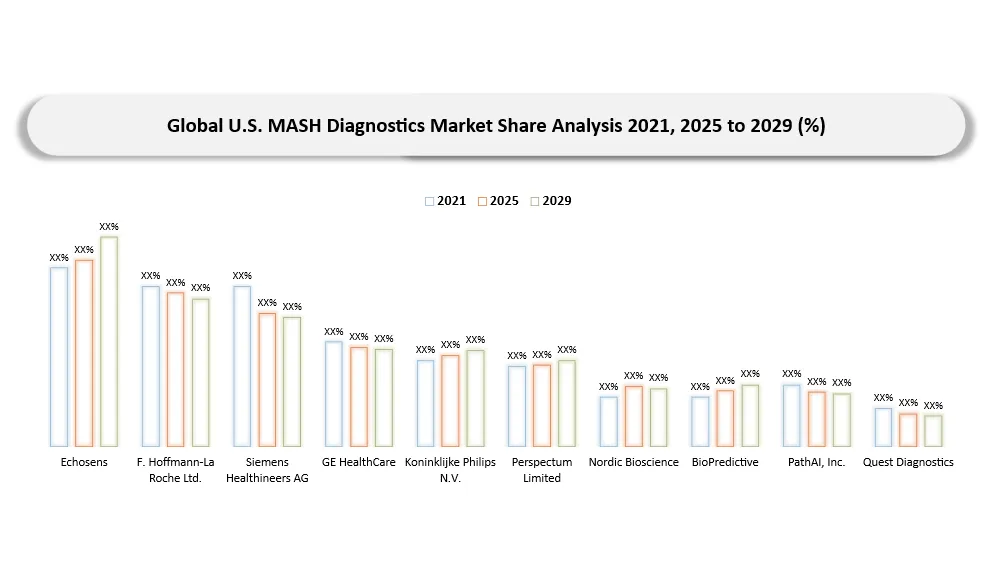
- The market is moderately consolidated among major platform providers but fragmented by modality. Roche and Siemens combine laboratory and pathology infrastructure, while GE HealthCare and Philips leverage broad imaging installed bases.
- Specialist companies differentiate through elastography, quantitative MRI, collagen biomarkers, metabolomics and AI-assisted pathology. Their technology can be highly MASH-specific, but commercialization often depends on partnerships with national laboratories, health systems or pharmaceutical sponsors.
- Competitive advantage increasingly comes from pathway integration: automated risk identification, second-line testing, specialist referral and longitudinal monitoring. A stand-alone test without workflow support is less likely to achieve broad health-system adoption.
- Market share will be shaped by clinical evidence, reimbursement, installed-base leverage and the ability to support treatment eligibility. Public companies benefit from distribution and capital scale; private innovators remain important sources of differentiated technology and partnership targets.
Top Five Public Companies for Q1-Q2 2026 Analysis
F. Hoffmann-La Roche Ltd.
Roche Diagnostics reported CHF 3.253 billion of sales in Q1 2026 and CHF 6.735 billion for the first half, implying approximately CHF 3.482 billion in Q2, a sequential increase of about 7.0%. Diagnostics grew 3% at constant exchange rates in both Q1 and the first half; North American diagnostics grew 8% at constant exchange rates in the first half, while pathology sales grew 11%. The sequential improvement reflects core-laboratory, immunodiagnostic, clinical-chemistry, pathology and molecular demand, partly offset by pricing reform in China. The MASH link is direct through cobas laboratory infrastructure, Elecsys PRO-C3 development with Nordic Bioscience, companion-diagnostic capabilities and the planned PathAI acquisition, which strengthens digital pathology and biomarker discovery.
Siemens Healthineers AG
Siemens Healthineers Diagnostics moved from a 3.1% comparable revenue decline and 2.1% adjusted EBIT margin in fiscal Q1 2026 to a 6.5% decline and 0.9% margin in fiscal Q2. The weaker Q2 result was attributed mainly to structural change in the Chinese diagnostics market, with tariffs, currency effects and inflation also pressuring profitability. This was not a U.S. MASH-specific decline, but it illustrates the value of higher-growth specialty applications. Siemens remains strategically relevant through the ELF test, laboratory automation, ultrasound, MRI and elastography. In U.S. MASH pathways, those assets can support FIB-4 follow-up, fibrosis staging, cirrhosis exclusion and treatment monitoring.
GE HealthCare
GE HealthCare revenue increased from US$ 5.131 billion in Q1 2026 to approximately US$ 5.289 billion in Q2, a sequential increase of about 3.1%. Adjusted EBIT margin improved from 13.5% to 14.2%. Q1 profitability was affected by a resolved Pharmaceutical Diagnostics supplier issue, tariffs and higher memory-chip, oil and freight costs; Q2 benefited from record organic orders growth, stronger backlog and broad adoption of new products, although Patient Care Solutions remained weak. MASH relevance is concentrated in advanced imaging: ultrasound, elastography, MRI, MRE and enterprise imaging software can support non-invasive fibrosis confirmation and repeat monitoring as treatment-linked imaging demand expands.
Koninklijke Philips N.V.
Philips group sales increased from EUR 3.9 billion in Q1 2026 to EUR 4.4 billion in Q2, a sequential increase of roughly 12.8%. Adjusted EBITA margin rose from 9.0% to 16.4%; approximately 4.2 percentage points of Q2 margin reflected a U.S. tariff refund, so the underlying improvement was more modest. Comparable sales grew 4% in both quarters, with Q2 growth across all segments. Diagnosis & Treatment grew 2% in Q2 and posted a 13.9% adjusted EBITA margin including the tariff benefit. The MASH link is through ultrasound, elastography-enabled imaging, MRI and enterprise informatics that can embed liver assessment within existing U.S. radiology workflows.
Quest Diagnostics Incorporated
Quest Diagnostics revenue increased from US$ 2.90 billion in Q1 2026 to US$ 3.04 billion in Q2, a sequential increase of about 4.8%. Organic growth accelerated from 9.0% to 10.0%, while adjusted diluted EPS rose from US$ 2.50 to US$ 3.12. The company raised full-year revenue and EPS guidance after robust volume and disciplined execution. Quest does not report a MASH-specific revenue line, but its national laboratory network is highly relevant to scalable liver-risk identification through ALT, AST, platelet testing, FIB-4 calculation and commercialization of specialty fibrosis assays. Its reach can move MASH screening from specialist clinics into routine primary-care and metabolic-risk testing.
U.S. MASH Diagnostics Market Major Pain Points
- Patient identification remains inconsistent because many EHR and laboratory systems do not calculate or surface FIB-4 automatically.
- Referral leakage is high: abnormal scores do not always lead to elastography, specialty biomarkers or hepatology review.
- Access to VCTE, MRE and advanced MRI is uneven outside large metropolitan and academic centers.
- Payer coverage, coding and repeat-testing policies vary for specialty biomarkers, software and treatment monitoring.
- Discordant non-invasive tests create uncertainty about when MRI, biopsy or specialist adjudication is required.
- Specialist capacity is limited relative to the potential diabetes and obesity screening population.
- Many emerging tools have strong trial evidence but insufficient prospective, real-world and health-economic evidence for routine adoption.
U.S. MASH Diagnostics Market Recent Developments
- In July, 2026 Treatment approvals have increased demand for reliable identification of non-cirrhotic patients with significant fibrosis and for repeat assessment after therapy initiation.
- In April, 2026 Roche and Nordic Bioscience launched Elecsys PRO-C3 on cobas analyzers, illustrating how specialized fibrosis biomarkers can scale through established laboratory infrastructure.
- In May, 2026 Roche agreed to acquire PathAI, strengthening digital pathology, companion diagnostics and AI-assisted biomarker development.
Quantitative imaging companies continue to generate health-economic evidence for MRI-based biomarkers in treatment selection and monitoring. Health systems and laboratories are expanding automated liver-risk reporting and sequential pathways that connect FIB-4 with elastography or specialty testing. Pharmaceutical trials are increasing demand for standardized non-invasive endpoints, central imaging review and digital pathology.
Analyst View / Opinion on U.S. MASH Diagnostics Market
- The largest unmet need is not another isolated test; it is a closed pathway that identifies at-risk patients, confirms fibrosis, completes referral and documents treatment response.
- Front-end screening will become increasingly commoditized, so value will migrate toward second-line stratification, workflow integration and longitudinal data.
- National laboratories are positioned to scale patient identification, while imaging vendors and specialty companies will compete for confirmatory and monitoring value.
- Biopsy will remain important for discordant cases and trials, but routine growth will be led by repeatable non-invasive methods.
- Winners will demonstrate payer value through fewer unnecessary biopsies, faster treatment decisions and higher referral completion rather than analytical accuracy alone.
Why Choose DATAM?
- Integrated market sizing with clinical-pathway analysis rather than a technology-only view.
- U.S.-specific assessment of reimbursement, referral pathways, care settings and regional access.
- Competitive mapping across laboratory, imaging, pathology, biomarker and pharmaceutical ecosystems.
- Treatment-pipeline linkage showing how therapy eligibility and monitoring affect diagnostic demand.
- Company analysis that separates public financial performance from private-company technology positioning.
- Decision-ready recommendations for market entry, partnerships, evidence generation and commercialization.
What DATAM Uniquely Provides
- A value-chain table linking named companies to each diagnostic workflow role.
- A treatment-pipeline table connecting drug programs with staging, eligibility and monitoring requirements.
- Five-region U.S. geographic analysis with no additional subregional proliferation.Public-company Q1-Q2 2026 financial comparison using official investor disclosures.
- Separate analysis of regulatory, reimbursement, technology, procurement and investment indicators.


























































