


Threading Tools Market Overview
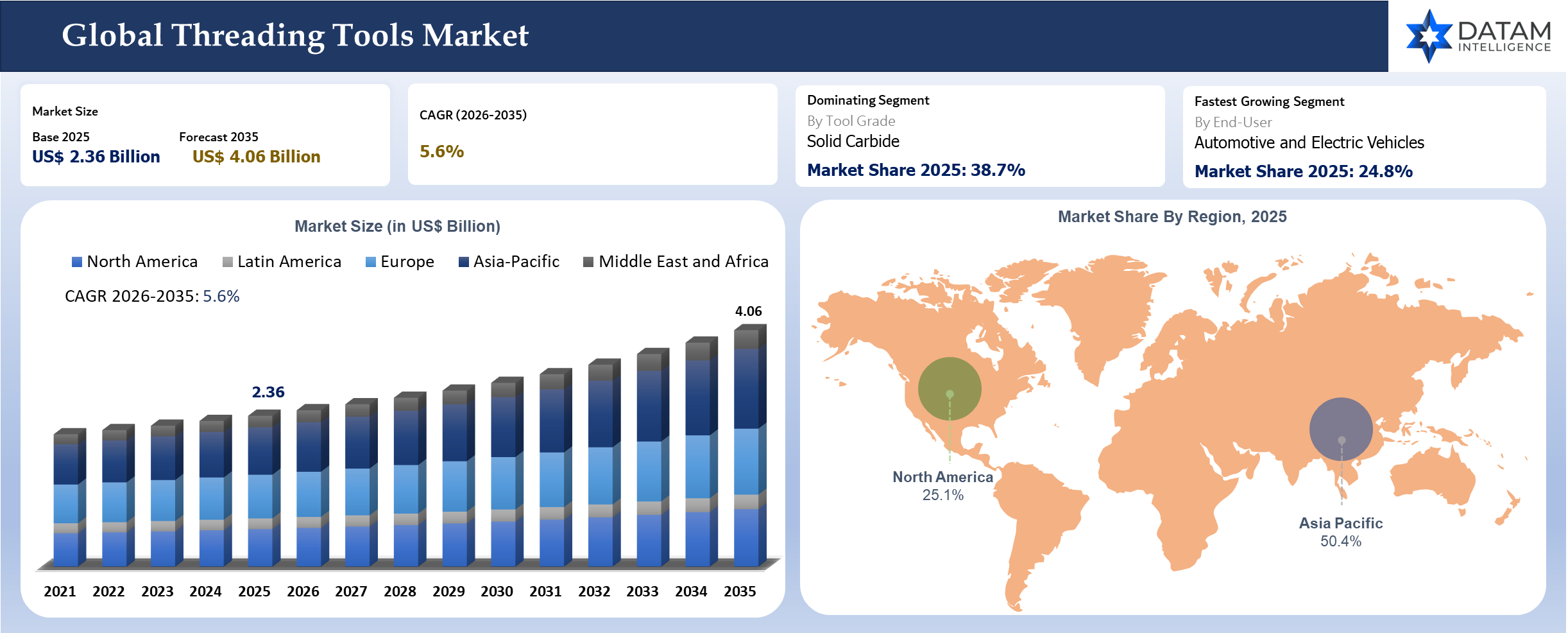
The global threading tools market reached US$ 2.36 billion in 2025 and is expected to reach US$ 4.06 billion by 2035, growing with a CAGR of 5.6% during the forecast period 2026-2035. With the growing need for fasteners designed with utmost precision, automobile parts that are light in weight, aerospace equipment, heavy machinery and oil & gas pipelines around the world, there is a growing use of threading tools in various industries. In order to meet the requirements of modern industries that are now increasingly relying on machining at higher speeds and automation in manufacturing, a lot of attention is being paid to carbide inserts for threading, thread milling machines, threading taps and dies, along with threading tools that can be used in CNC machines.
Programs of industrial modernization driven by governments are also making considerable contributions towards the growth of sophisticated machining and tooling facilities around the globe. For example, the Horizon Europe initiative of the European Union has allocated more than €95 billion for advanced manufacturing and industrial automation technology and sustainable manufacturing processes for the period between 2021-2027, thus promoting the use of precise cutting and threading devices in aerospace, automobile and energy industries.
In addition, India's "Make in India" and Production Linked Incentives (PLI) initiatives have facilitated the growth of local manufacturing of machines and precision engineering. As per the Indian government, the export value of engineering goods from the country has crossed US$ 109 billion in FY2024 and consequently, there has been an increasing demand for superior threading devices in the manufacture of automobiles, industrial machines and heavy engineering industries.
Threading Tools Industry Trends and Strategic Insights
- The rise in the use of CNC-based automated machining tools has led to an increased need for threading inserts and thread mills that can meet tight tolerance requirements and provide an exceptional finish on products in aerospace and automotive industries.
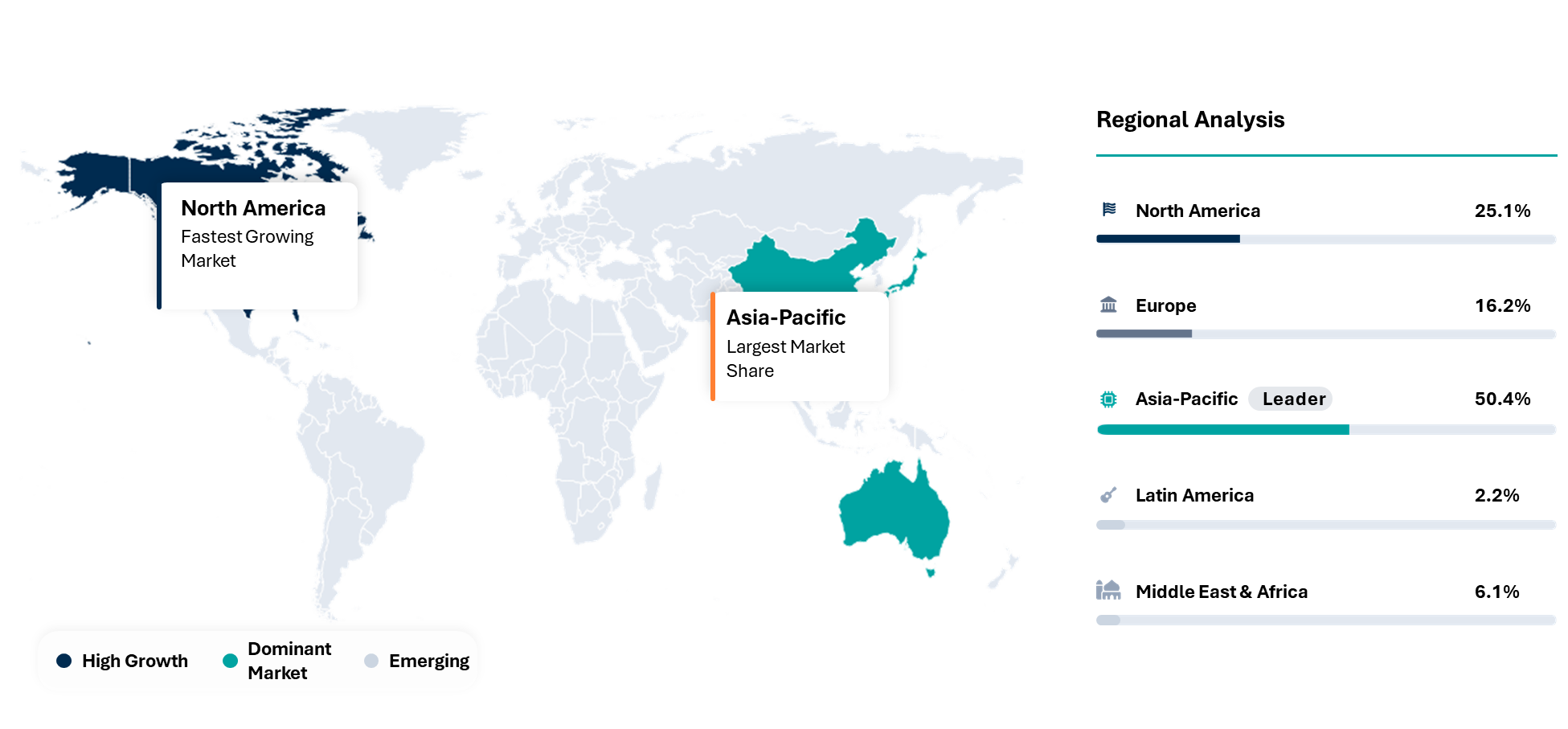
- Asia-Pacific is the biggest market for global threading tools in 2025, owing to the high production levels from nations like China, Japan, India and South Korea as a result of growth in the automotive, electronic and industrial machinery industries.
- The oil & gas industry and power generation industry are increasingly adopting premium threading tools for use in high-pressure applications and corrosion-resistant conditions.
- Advanced technology like digital tool tracking, predictive maintenance systems and AI-based machining optimizations are becoming key competitive advantages among top threading tool manufacturers.
Market Scope
| Metrics | Details | |
| 2025 Market Size | US$ 2.36 Billion | |
| 2035 Projected Market Size | US$ 4.06 Billion | |
| CAGR (2026-2035) | 5.6% | |
| Largest Market | Asia-Pacific | |
| Fastest Growing Market | Asia-Pacific | |
| By Tool Grade | High Speed Steel (HSS), Solid Carbide, Cermet | |
| By Machine Type | Machining Center, CNC Turning Machines (Turning Center), Swiss Type Automatic Lathes (Sliding Head Lathes), Multi-Tasking Machines (Mill Turn Machines), Other | |
| By Workpiece Detail | P Steel, M Stainless Steel, K Cast Iron, N Non-Ferrous Metals, S Super Alloys and Titanium, H Hardened Materials, Plastic | |
| By End-User | Automotive and Electric Vehicles, Aerospace and Defense, General Machining, Job Shops, Die and Mold, Industrial Machinery, Construction and Agriculture Equipment, Energy and Power Generation, Oil and Gas, Mining, Rail, Marine and Shipbuilding, Electronics and Consumer, Appliances, Semiconductor Equipment and Precision Parts, Medical Devices, Dental, Bearing Manufacturing, Others | |
| By Region | North America | U.S., Canada, Mexico |
| Europe | Germany, UK, France, Spain, Italy, Poland | |
| Asia-Pacific | China, India, Japan, Australia, South Korea, Indonesia, Malaysia | |
| Latin America | Brazil, Argentina | |
| Middle East and Africa | UAE, Saudi Arabia, South Africa, Israel, Turkiye | |
| Report Insights Covered | Competitive Landscape Analysis, Company Profile Analysis, Market Size, Share, Growth | |
Strategic Indicators For Threading Tools
High Regulation Impact
The global threading tool manufacturing industry is facing stiffening regulatory enforcement as per the amendments made to the European Union Machinery Directive 2006/42/EC, OSHA machining safety standards in the USA and BIS tool quality certification regulations in India. The European Union is introducing tougher tungsten carbide sourcing guidelines and REACH chemical regulations for tool coating operations. China has stringent export license regulations on high-precision carbide inserts, which will influence global availability. The Japanese JIS standards have strengthened the dimensional accuracy requirement for aerospace threading tools. Germany and the USA have the most intense enforcement efforts because of higher demand for machining in automotive and aerospace industries.
High Investment Activity
The investments are primarily made in Germany, USA, Japan and China and are influenced by the trend towards reshoring in precision machining and electrification of automobiles that requires related tooling. The German investments include continued CAPEX growth in ultra-precision CNC tools manufacturing hubs (Baden-Württemberg). The investments in the US will be based on aerospace machining, reshoring and military manufacturing upgrading efforts. The Japanese investments will revolve around the need for precision in micro-threading and semiconductor machinery tools. The Chinese investments will be in expanding their domestic production of carbide tooling to limit reliance on imports.
Supply Chain Disruption
Disruption in the supply chain is primarily limited to China, Germany, India and the US owing to carbide input raw material supply issues, logistics volatility and shortages of machining-grade steel. China remains dominant when it comes to tungsten carbide powder supplies; thus, there is an element of geopolitical risk associated with supply. Germany is faced with energy price-induced constraints with respect to manufacturing processes that affect heating cycles of tools. India’s problem lies in its reliance on imported precision tool steels and coatings. Reshoring in the US creates a strain on the CNC tool capacity in the country.
Pricing Volatility
The pricing environment is inherently volatile, driven by tungsten carbide price movements and cobalt supply challenges. The Chinese government’s export policies related to the intermediate forms of rare metals significantly affect global pricing standards for inserts. There is pressure on pricing in Germany and Japan arising from sintering operations that require high-energy inputs. Pricing in the US is affected by the resurging demand caused by reshoring of aerospace machining applications. In India, pricing trends are influenced by import-led inflation resulting from depreciation against the US dollar. The EV shift in the automotive industry drives increased demand for precision threading tools, leading to higher pricing categories.
Procurement Pressure
There is increasing procurement pressure in USA, Germany, Japan and India due to the need for increased tool life, improved precision tolerance and optimized cost per part. The Automotive OEMs are reducing the number of suppliers to avoid fragmented tooling processes. Aerospace contractors have strict qualification cycles, causing prolonged procurement timelines. Companies in Germany are adopting long-term tooling contract agreements in order to avoid any sort of fluctuations. There is price sensitivity related to procurement in India; however, there is an increase in the requirement for high-quality imported threading tools.
New Technology Adoption
Technological advancements in Germany, Japan, US and China are growing at an increasing pace, supported by CNC automation technology and AI machining optimization techniques. Smart threading devices fitted with wear-sensing features are facilitating proactive maintenance activities. Tooling systems are becoming more reliable through the adoption of digital twin technology in machining operations. Japan is at the forefront in developing innovative micro-precision threading machines for use in electronics production plants. Germany is adopting Industry 4.0 machining analysis tools in its tooling systems. The US aerospace industry is implementing AI-based adaptive feed rate systems.
Regional Expansion Opportunity
Europe is highly attractive for expansion due to Germany, Italy and Switzerland's precision machining markets. The trend toward automotive electric vehicles and aircraft manufacturing hubs stimulates demand for precision threading tools. Europe is known for premium high-margin business opportunities and favorable contractual relations based on Industry 4.0 implementation.
In the Asia-Pacific, including China, India, Japan and South Korea, growth is fastest in terms of volumes sold. In China, the dominance in production scale prevails; in India, there is a higher demand for machining that requires cost sensitivity, while in Japan and South Korea, there is more adoption of precision threading tools.
Government Policy Support
Policy backing from the government is favorable in the United States, China, Germany and India due to manufacturing incentives and localization policies. Incentives related to US CHIPS and the IRA contribute indirectly to machining tool demand for the production of electric vehicles and semiconductors. The Industrie 4.0 policy in Germany encourages the use of intelligent machining tools. Made in China 2025 in China aims at promoting tool self-sufficiency in the country through subsidies. In India, the PLI scheme contributes to manufacturing of automobiles and capital goods, resulting in increased threading tool demand.
Import, Export and Pricing Intelligence
The international trade of threading tools is mainly done through countries that manufacture precision tools, including Germany, China, Japan and United States. The imports of threading tools are mainly fueled by requirements in the automotive industry and the aerospace machining industry, while the exports come from manufacturers of precision tools.
| HS Code | Reporter | Trade Flow | 2025 Trade Value (US$ Million) | Interpretation |
| HS 820740 | USA | Import | 160.99 | USA dominates high-precision threading tools imports due to strong consumption |
| HS 820740 | Italy | Import | 51.75 | Italy acts as a consolidated import hub for industrial-grade threading tools. |
| HS 820740 | China | Export | 3.92 | China leads volume-driven exports in low-to-mid precision threading tools |
| HS 820740 | Japan | Export | 136.78 | Japan is strong in ultra-precision threading tools for automotive & aerospace. |
| HS 820740 | United States | Export | 51.98 | US exports niche high-value threading tools for oil & aerospace applications |
The prices for threading tools depend on the fluctuations in the price of the raw material carbide, coating techniques and the need for precise tolerances. High-priced products prevail in the European and Japanese markets because of their requirement for high-quality machining, whereas Asia offers competitive prices. OEM agreements, tool regrinding and online tool tracking affect pricing.
Company Coverage Preview
Sandvik AB, Kennametal Inc. and IMC Group (ISCAR) have cornered the market for threading tools with their robust carbide research, CNC compatibility and aerospace-grade precision ranges. Sandvik has been pioneering digital ecosystems for machining, Kennametal concentrates on material science for developing durable tooling products and ISCAR invests in innovative insert geometries for high-performance cutting. These companies have operations worldwide with vertically-integrated manufacturing capabilities and extensive OEM relationships. The competitive edge has shifted from designing innovative tools to managing them effectively throughout their life cycle using AI technology.
AI Impact Analysis
AI is revolutionizing threading tools using predictive models of tool wear, adaptive computer numerically controlled machining and process optimization algorithms. Germany and the United States have pioneered the implementation of AI in their machining centers, minimizing downtime and waste levels. Japan uses AI in precise micro-threading of electronics components. China has industrialized AI-based automatic tool-sharpening machines in its mass production lines. AI-powered digital twins are used to simulate tool wear, thereby enhancing tool selection decisions. Cloud-based machining analytics systems enable OEMs to make optimal selections of threading tools in real-time.
Disruption Analysis
The most important disruptive factors relate to the fast adoption of Industry 4.0 innovations in machining processes, where customers now expect smart tooling systems that can perform predictive maintenance, tool life management and optimized machining operations. Companies like Sandvik Coromant, Walter AG and Kennametal Inc. have been stepping up their investments in smart tooling platforms and cloud-based machining analytics for improved performance and minimal downtime.
Another important disruptor relates to the shift towards electric vehicles and aerospace materials, where threading operations need highly precise and high-temperature resistant threading tools for machining titanium, composite, stainless steel and superalloy materials. Threading inserts made out of carbides and coatings are now displacing conventional high-speed steel tools, especially among lower-cost producers. Additive manufacturing and hybrid machining systems have also impacted threading operations through the creation of more intricate parts without requiring much post-processing.
Automation-ready tooling that is compatible with robotic CNC cells is changing consumer preferences among industrial manufacturers. With supply chain localization being driven by the geopolitical instability and volatility of raw materials, there is pressure for manufacturers to localize production and source more broadly. Sustainability is an emerging disruptor, with customers requesting tools made out of sustainable materials, tools with long-life cycles and energy-efficient machining practices. Competitive disruption is further fueled by Asian manufacturers’ cost advantage through cheaper alternative precision tooling offerings, which compete against established Western precision tools on price and efficiency. Companies that do not have the financial ability to develop advanced tooling technologies and high-performance threading solutions will soon fall behind.
BCG Matrix: Company Evaluation

Sandvik Coromant, Kennametal Inc., ISCAR Ltd. and Walter AG are categorized as stars because of their high global market presence, state-of-the-art carbide threading technologies, digital machining solutions and large number of OEM collaborations in the aerospace, automotive and precision engineering industries. Such organizations can take advantage of Industry 4.0 integration, intelligent tooling systems and increasing needs for automation in CNC machining.
The potential companies have highly advanced technologies and excellent expertise in threading, but lack the same level of global market presence when compared to some multinational organizations. Potential players need to expand further into growing Asian and Latin American markets. The cash cows earn consistent income from their existing industrial distribution channels and comprehensive range of consumable tooling products, especially in conventional machining processes. The market favors those organizations that focus more on coated carbide inserts, machine optimization using AI, custom threading geometries and sustainable tooling products. Future BCG repositioning will be influenced by strategic acquisitions, intelligent factory collaborations and applications in electric vehicle manufacturing.
Market Dynamics
Growing Demand from Automotive and Electric Vehicle Manufacturing
The fast growth in the manufacture of automobiles, especially electric cars, has been largely boosting the market for threading tools. Contemporary automobiles contain thousands of threads that must be manufactured to fit specific parts such as engines, transmissions, battery packs, brakes and chassis structures. In addition, producers of electric vehicles need precision-threaded parts made of light metals like aluminum to be used in batteries and transmissions.
OEMs in the automotive industry have already made use of multi-axis computer numerical control (CNC) machine centers that can perform multiple tasks, such as turning, drilling and threading simultaneously. In Japan, automotive parts makers have employed fast threading machines for the manufacture of transmissions and engines of hybrid cars, which require high accuracy and better durability. The growing demand for lightweight materials, such as titanium, stainless steel and carbon composite, is boosting the demand for threading tools capable of handling difficult material processes.
High Tool Wear and Machining Complexity Restrain Market Expansion
The biggest hurdle faced by the global threading tools market is the growing intricacy that comes from machining high-end materials used in aerospace, energy and medical industries. High-end materials, such as Inconel, titanium alloy and hardened steels, create excessive amounts of heat while being machined, resulting in rapid wear and tear of tools, chipping and inaccuracies in the process. As per the U.S. Department of Energy, use of advanced nickel-based superalloys in aerospace turbines leads to a reduction of life of conventional cutting tools by over 50% in comparison with steel machinery.
Higher costs will be incurred in relation to tool change frequencies, which will affect the production time of such companies. This is because small-scale and medium-scale machining firms find it difficult to purchase expensive coating systems for their tools and advanced machining tool platforms due to their high costs. Ineffective coolant control, vibrations and chip removal during threading activities pose problems to manufacturers. In light of this, regulations concerning the safety and sustainability of the machining process have compelled the development of new tooling systems with environmental coatings.
Segment Analysis
The global threading tools market is segmented based on the tool grade, machine type, workpiece detail, end-user and region.
Industrial Machinery Segment Leads Market Demand
The area of industrial machinery is among the biggest users of threading tooling owing to widespread use in machinery construction, hydraulics, pump and compressor construction and heavy machinery. The development of global industrial production and investment in automatic factories ensures a continuing high demand for threading operations. UNIDO reported an increase of around 2.3% in the global output of manufacturing in 2024, driven by the rise in machinery production in Asia-Pacific and Europe.
For companies involved in the manufacture of heavy-duty machinery, the need for accurate threads is ever-growing in order to enhance assembly efficiency and extend the life of their products. The integration of CNC thread cutting processes within flexible manufacturing cells by firms that manufacture robots, conveyors and other automatic manufacturing machines has been gaining momentum. Several machine tool makers in Europe made investments in digital machining tools featuring advanced technologies for thread checking and process monitoring during the year 2024. Manufacturers of heavy equipment in China and India have also adopted indexable thread turning inserts.
Aerospace and Defense Manufacturing Drives Precision Tooling Adoption
Threading machines represent an important area of development within the aerospace and defense industry, since aircraft engines and components, such as landing gears, require high-precision threading. According to IATA, world passengers' traffic exceeded pre-crisis records in 2024, increasing aircraft manufacturing and maintenance processes all over the globe. Threading machines are extensively used by aerospace producers to mill and tap titanium and nickel-based alloys with very high accuracy.
Defense modernization projects in the U.S., Europe and Asia-Pacific have also driven up the requirement for advanced threading equipment in the production of vehicles, submarines and missiles for the armed forces. Suppliers are designing customized coatings and tool geometry to reduce vibrations and facilitate efficient chip removal when machining deep holes in aerospace alloys.
Geographical Penetration
U.S. Threading Tools Market Trends
The U.S. threading tool market is being fueled by the presence of advanced aerospace, automotive, oil & gas, medical devices and precision engineering industries, which make use of high-accuracy machining operations for both internal and external threading. With the rising usage of CNC machines, multi-axis lathes and automatic machines for metal cutting processes, there is an increasing need for carbide inserts, thread mills and precision taps that can perform metal-cutting operations on hard metals such as titanium and steel. The rise in manufacturing activity for aerospace components, defense equipment and reshoring trends has added to the demand for threading tools.
The incorporation of advanced Industry 4.0 technologies in machining is another significant trend that drives the U.S. threading tools market. Currently, manufacturers are increasingly employing intelligent tooling systems with capabilities such as automated predictive maintenance, tool life monitoring and process optimization to minimize disruptions and increase efficiency. As such, the U.S. aerospace sector remains a prominent consumer of quality threading tooling products, driven by the increasing complexity of machining activities involved in aircraft engine production and manufacture of other structural parts.
In addition, advancements in the production of electric vehicles (EVs) and semiconductors are generating further demand for miniature threading products. The adoption of coated carbides, cermets and PCD threading tools improves machining performance in hard-to-work materials, which is common in various applications, including EV production, surgical implants and energy projects. Consistent investment in modernizing manufacturing facilities, in tandem with robust government efforts towards reshoring initiatives and semiconductor production, will keep the need for advanced threading tools at bay.
Japan Threading Tools Market Outlook
Japan still ranks amongst the most technologically advanced threading tool market in the world, considering that it is a world leader in machine tools, automotive systems, robots and ultra-precise engineering. Japanese companies focus on micrometer precision of machining operations, spindle speeds and high-quality surface finishes, generating significant demand for advanced threading insertions, taps and thread milling technology. The extensive export-driven industrial sector in Japan, especially in the automotive, electronics and robotics industries, ensures continuous growth opportunities for advanced threading tools. Japanese companies are now extensively employing multifunctional computer numerical control machines and machining cells that need high durability threading tooling systems.
Technological innovations are evident in Japan in relation to intelligent machining tools, nanotech coating and energy-efficient carbides to tackle the increasing need for the machining of high-temperature alloys, lightweight metals and micro-machining processes. The emergence of the semiconductor manufacturing industry and investments in automated manufacturing plants have generated the need for very fine-threading tools that can be utilized in the manufacture of precise assembly parts and electronic gadgets. Demand for imported machinery from North America and other regions of Asia was steady throughout 2024 as Japanese tooling firms managed to continue producing at similar levels even as their home market did not exhibit much improvement.
An increasing emphasis among Japanese firms on sustainability initiatives such as the development of tools with longer life cycles, coolant-saving technologies and energy-efficient machines is being made to cut down wastage. As part of its strengths in robotics and automated production lines, Japan has seen many intelligent threading systems being employed owing to their ability to monitor cutting operations in real-time. Japan’s investment in advanced technologies including AI-powered machining optimization, will go a long way towards maintaining its dominance in the field of high-precision threading tools.
India Threading Tools Market Trends
The Indian market for threading tools has seen considerable expansion, driven by the growing manufacturing activities in the automobile industry, industrial machinery, railway industry, aerospace industry and various industrial development projects initiated by the government. The Make in India campaign, PLI schemes and infrastructure developments have spurred the manufacturing activities in the country and created demand for precision tools, including CNC machining and tooling tools. India has emerged as one of the fastest-growing automotive manufacturers in the world, which has generated significant demand for tapping machines, dies, thread milling tools and carbide tapping tools in automobiles, including engines, transmission parts and electric vehicles. Increasing manufacturing activities of machinery, energy equipment and defense equipment have further strengthened the demand for threading tools from big companies as well as small- and medium-sized machine shops.
An emerging trend impacting the market of threading machines in India is the growing preference of domestic firms for automated machining technology systems and digital manufacturing processes. Industrial firms are adopting computerized numerical control turning centers and robotic machining stations to increase efficiency and save production costs. In addition, the development of India’s electronics manufacturing capabilities and ambition in the semiconductor sector is fostering demand for smaller and highly precise threading machines to be used in small assembly and electronics. On top of that, the growing industrial clusters and increased exports of engineering products in India are leading manufacturers to enhance their tooling systems that produce high-quality tools meeting international standards.
Finally, the growing interest in electric vehicle manufacturing and renewable energy generation infrastructure projects is also offering prospects for threading tools applications in battery packs, wind turbines and precision electrical systems. With rising industrial investments, the increasing localization of component manufacturing and favorable policies supporting advanced manufacturing capabilities, India is forecast to continue being an attractive market for threading tools.
Competitive Landscape
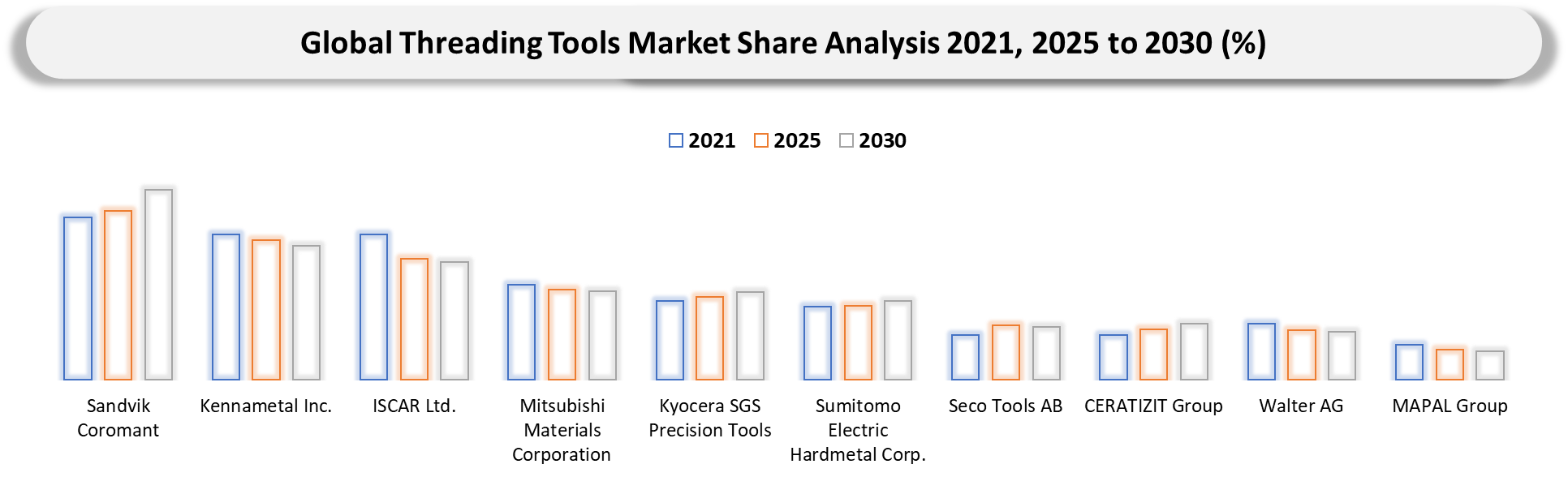
- The global threading tools market features intense competition among multinational cutting tool manufacturers, precision tooling specialists and regional machine tool suppliers focused on innovation, durability and machining efficiency.
- Key players include Sandvik Coromant, Kennametal Inc., ISCAR Ltd., Mitsubishi Materials Corporation, Seco Tools AB, Dormer Pramet, Walter AG, OSG Corporation, Tungaloy Corporation and Emuge-Franken.
- Companies compete through advanced coating technologies, tool geometry optimization, additive manufacturing integration and digital machining platforms capable of improving tool life and reducing operational downtime.
Strategic investments are increasingly focused on AI-enabled machining analytics, sustainable cutting technologies, solid carbide tool development and automated tool management systems designed for Industry 4.0 manufacturing environments.
MAJOR PAIN POINTS
- High raw material price volatility for carbide, high-speed steel (HSS), cobalt and tungsten, increasing production costs and pressuring manufacturer margins.
- Frequent tool wear and reduced tool life during high-speed threading operations, leading to higher replacement costs and machine downtime.
- Growing demand for ultra-precision threading in aerospace, automotive and medical industries, creating challenges in maintaining dimensional accuracy and surface finish.
- Limited compatibility of conventional threading tools with advanced materials such as titanium alloys, hardened steel and composites.
- Rising competition from low-cost regional manufacturers, especially in Asia-Pacific, is intensifying pricing pressure for premium tooling brands.
- Shortage of skilled machinists and CNC programmers capable of optimizing threading operations and minimizing machining errors.
- Increasing demand for customized and application-specific threading tools, resulting in longer design cycles and higher inventory management complexity.
- Supply chain disruptions affecting availability of cutting tool substrates, coatings and precision components, delaying production schedules.
- Difficulty in achieving consistent thread quality in high-volume manufacturing environments due to vibration, chip evacuation and thermal instability issues.
Rapid technological advancements in CNC machining and smart manufacturing require continuous investment in coated tools, digital monitoring and automation integration.
KEY DEVELOPMENTS
- March 2026 – Sandvik Coromant introduced CoroTap 100-PM straight-flute taps, improving chip breaking efficiency and uninterrupted ISO P threading operations globally.
- January 2026 – Sandvik Coromant partnered with MachiningCloud, enabling streamlined tooling-data access, assembly creation and CAM integration for machinists globally.
December 2025 – Kennametal Inc. integrated tooling data with Hexagon WORKNC CAM, accelerating digital machining workflows and setup precision improvements.
ANALYST VIEW / OPINION
- Adoption of CNC-integrated threading tools is accelerating precision manufacturing efficiency across automotive industry.
- Demand for carbide and coated threading tools is increasing due to durability advantages.
- The aerospace sector is expanding requirement for high-precision internal and external threading applications globally.
- Multi-functional tooling solutions reducing machining cycle times and improving operational productivity significantly.
- Smart manufacturing investments are boosting automated threading tool adoption across industrial production facilities.
- Rising electric vehicle production is increasing demand for lightweight component threading solutions worldwide.
- Asia-Pacific maintains a dominant manufacturing position supported by large-scale industrial infrastructure investments.
- Tool manufacturers are prioritizing customized threading solutions for complex geometries and specialized materials.
- Sustainability initiatives encouraging longer-lasting, recyclable and energy-efficient threading tool development strategies.
- Competitive intensity is increasing through technological innovation, strategic partnerships and aftermarket service expansion.
TARGET AUDIENCE
| INDUSTRY | WHO SHOULD BUY THIS REPORT? | REASON TO BUY THIS REPORT |
| Automotive & EV Manufacturers | Manufacturing Engineering Teams, Thread Machining Specialists, Procurement Managers | Analyze demand for precision threading tools used in engines, transmissions, EV battery housings and fastener production. |
| Aerospace & Defense Companies | Aerospace Production Engineers, CNC Threading Teams, Supply Chain Managers | Evaluate high-precision threading solutions for titanium, composites and aerospace-grade components. |
| Industrial Machinery Manufacturers | Plant Operations Teams, Industrial Engineers, Production Managers | Optimize threading efficiency, tooling durability and automated machining operations |
| Oil & Gas Equipment Manufacturers | Pipe Threading Specialists, Maintenance Engineers, Procurement Teams | Assess heavy-duty threading tool requirements for pipelines, valves, drilling equipment and energy infrastructure |
| Construction & Infrastructure Companies | Fabrication Managers, Industrial Maintenance Teams, Tooling Procurement Departments | Understand threading tool demand for structural assemblies, piping systems and infrastructure projects. |
| Metal Fabrication & Engineering Companies | Workshop Supervisors, CNC Programmers, Machining Operations Teams | Identify efficient threading solutions for precision fabrication and component manufacturing |
| Heavy Equipment & Mining Machinery Manufacturers | Production Engineering Teams, Tooling Specialists, Operations Managers | Evaluate durable threading tools for abrasive and large-scale machining environments |
| Railway & Marine Equipment Manufacturers | Mechanical Engineering Teams, Fabrication Departments, Production Heads | Analyze threading tool requirements for transportation and shipbuilding applications |
| Medical Device Manufacturers | Precision Manufacturing Teams, R&D Engineers, Quality Assurance Departments | Study micro-threading technologies for surgical instruments and miniature precision components |
| Electronics & Semiconductor Equipment Manufacturers | Advanced Manufacturing Teams, Automation Engineers, Product Development Teams | Assess ultra-precision threading technologies for electronics and semiconductor equipment production |
| Pipe & Tube Manufacturing Companies | Pipe Processing Teams, CNC Machine Operators, Production Supervisors | Understand threading machine demand for industrial piping and tube fabrication operations |
| CNC Machine Tool Manufacturers | Product Development Teams, Automation Integration Specialists, Strategy Managers | Identify trends in CNC threading systems, automation and smart manufacturing integration |
| Threading Tool & Insert Manufacturers | Product Innovation Teams, Competitive Intelligence Departments, Sales Strategy Teams | Benchmark competitor products, threading technologies and material advancements |
| Carbide, HSS & Coating Material Suppliers | Technical Sales Teams, Market Intelligence Departments, R&D Teams | Evaluate future demand for advanced threading tool materials and coatings |
| Industrial Automation & Smart Factory Providers | Industry 4.0 Teams, Smart Manufacturing Consultants, Automation Engineers | Analyze integration opportunities between threading operations and automated production systems |
| Industrial Distributors & Tooling Suppliers | Category Managers, Regional Sales Teams and Inventory Planning Departments | Understand regional demand trends and optimize threading tool product portfolios |
| Contract Manufacturing & Job Shops | Business Owners, CNC Workshop Managers, Production Planning Teams | Identify profitable machining sectors and advanced threading technology adoption opportunities |
| Research Institutes & Universities | Manufacturing Research Teams, Industrial Engineering Faculties, Material Science Researchers | Study developments in threading technologies, automation and precision machining systems |
| Government & Defense Manufacturing Organizations | Defense Production Units, Industrial Development Authorities, Railway Workshops | Support industrial modernization and strategic manufacturing capability enhancement. |
| Investors & Industrial Consulting Firms | Investment Analysts, Market Intelligence Teams, Industrial Consultants | Evaluate market growth opportunities, competitive landscape and investment potential in threading technologies |
WHY CHOOSE DATAM?
- Data-Driven insights: Dive into detailed analyses with granular insights such as pricing, market shares and value chain evaluations, enriched by interviews with industry leaders and disruptors.
- Post-Purchase Support and Expert Analyst Consultations: As a valued client, gain direct access to our expert analysts for personalized advice and strategic guidance, tailored to your specific needs and challenges.
- White Papers and Case Studies: Benefit quarterly from our in-depth studies related to your purchased titles, tailored to refine your operational and marketing strategies for maximum impact.
- Annual Updates on Purchased Reports: As an existing customer, enjoy the privilege of annual updates to your reports, ensuring you stay abreast of the latest market insights and technological advancements. Terms and conditions apply.
- Specialized Focus on Emerging Markets: DataM differentiates itself by delivering in-depth, specialized insights specifically for emerging markets, rather than offering generalized geographic overviews. The approach equips our clients with a nuanced understanding and actionable intelligence that are essential for navigating and succeeding in high-growth regions.
- Value of DataM Reports: Our reports offer specialized insights tailored to the latest trends and specific business inquiries. The personalized approach provides a deeper, strategic perspective, ensuring you receive the precise information necessary to make informed decisions. The insights complement and go beyond what is typically available in generic databases.
WHAT DATAM UNIQUELY PROVIDES
- Proprietary machining-level segmentation mapping across threading tool geometries, coatings and application-specific industrial use cases with quantified demand drivers.
- Real-time OEM procurement intelligence tracking automotive, aerospace and heavy engineering tooling contracts across global manufacturing ecosystems.
- Raw material linkage models connecting tungsten carbide, cobalt and steel pricing directly with threading tool cost structures.
- Competitive benchmarking dashboards comparing precision tolerance, tool life efficiency and CNC compatibility across global manufacturers.
- Supply chain risk scoring system evaluating geopolitical exposure, export controls and logistics disruptions impacting tooling availability.
- AI-driven forecasting models predicting threading tool demand shifts across EV, aerospace and industrial automation sectors globally.
- Trade flow intelligence integrating HS code-level import-export tracking with regional pricing volatility and manufacturing dependency analysis.


























































