


Terbium Market Size and Overview
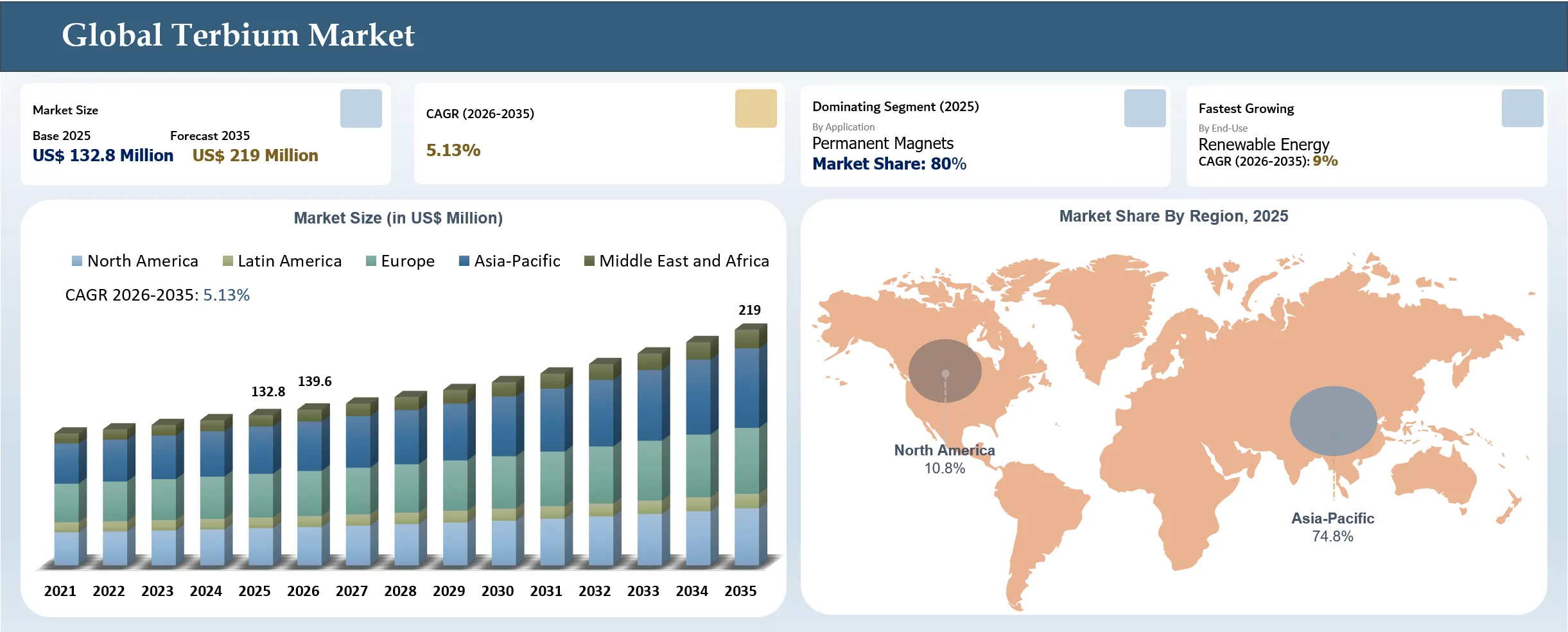
The global Terbium market reached USD 132.8 million in 2025 and is expected to reach USD 219 million by 2035, growing with a CAGR of 5.13% during the forecast period 2026-2035. Market expansion is supported by the increasing strategic importance of terbium for high-grade permanent magnets, modern electronics, defense mechanisms, and eco-friendly lighting. The average price of rare earth oxide in 2025 was around US$1,010 per kilogram, according to the Mineral Commodity Summaries 2026 prepared by the U.S. Geological Survey (USGS); however, there is full import dependency in the United States on heavy rare metals and elements. The report has also highlighted that China imposed restrictions on the export of metals and compounds containing terbium in April 2025, indicating the vulnerability of the supply chain. The International Energy Agency (IEA) has stated that consumption of rare earth metals related to magnets, including terbium, has grown twice since 2015 and will increase another one-third by 2025.
These supply limitations have led to increased investment in alternative sources of rare earth production, recycling, and stockpiling outside China. In June 2026, according to The Oregon Group, the continuous restriction of seven rare earth elements being exported from China has resulted in the tightening of supply in the global market and consequently the increase in prices of critical elements like terbium. The article stated that there has been an increase of 4-5 times in the prices of terbium oxide at about $4,500/kg and that the current amount of terbium, dysprosium, and yttrium being exported is about 50% less than before the restrictions.
White Space Opportunities for Terbium Supply Chain Localization and Recycling
In September 2025, the Government of India approved a ₹1,500 crore (approximately USD 175 million) incentive scheme under the National Critical Mineral Mission (NCMM) to accelerate the recovery of critical minerals from e-waste, lithium-ion batteries, end-of-life vehicles (ELVs), industrial waste, and mining tailings. The largest share of the investment is directed toward establishing advanced recycling infrastructure capable of extracting high-value rare earth elements such as terbium, dysprosium, neodymium, samarium, and praseodymium, along with battery minerals including lithium, cobalt, nickel, and graphite. Additional investments are focused on collection networks, automated dismantling facilities, hydrometallurgical and pyrometallurgical processing plants, research and development, and domestic refining capabilities to reduce India's dependence on imported critical minerals, particularly from China. The initiative is expected to create significant opportunities across the rare earth recycling, battery recycling, urban mining, and critical mineral processing value chains while strengthening domestic supply security for electric vehicles, renewable energy, electronics, and defense manufacturing.
The investment is expected to benefit companies involved in battery recycling, e-waste processing, critical mineral recovery, and advanced material manufacturing. Battery recyclers such as Attero Recycling, Lohum, ACE Green Recycling, and Gravita India are well positioned to expand lithium-ion battery recycling and critical mineral extraction capacity, while metal recovery and refining companies including Hindustan Zinc, Vedanta Limited, Tata Steel, and JSW Steel could benefit from investments in strategic mineral processing and circular economy initiatives. In addition, rare earth and mining organizations such as IREL (India) Limited, National Aluminium Company (NALCO), Coal India Limited, and Mineral Exploration and Consultancy Limited (MECL) are expected to gain opportunities through domestic exploration, rare earth processing, and supply chain development projects. The funding also creates opportunities for engineering firms, technology providers, and equipment manufacturers involved in recycling plant construction, separation technologies, and mineral refining as India expands its domestic critical mineral ecosystem.
Terbium Market Key Takeaways
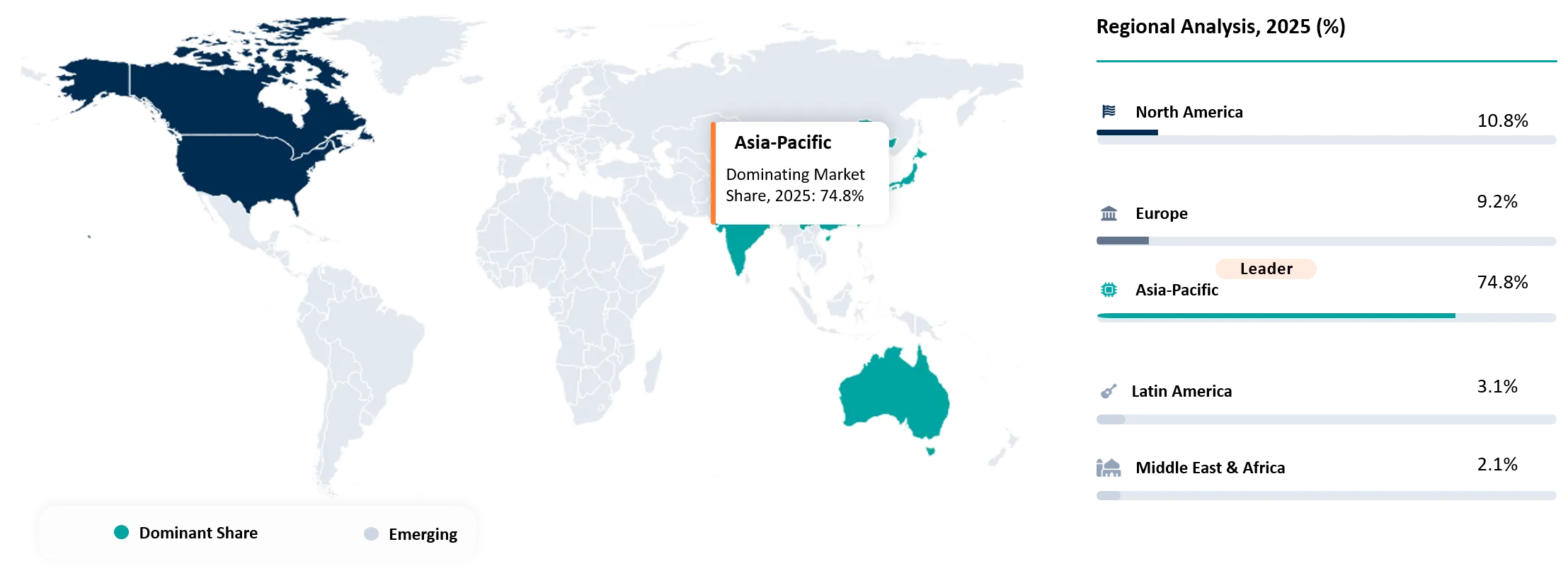
- The Asia-Pacific region held a dominant 74.8% share of the global terbium market. China specifically produced 60% of global magnet rare earth mining output and 91% of refined magnet rare earths.
- The permanent magnets application segment dominated the market, accounting for 80% of total global terbium demand in 2025. Permanent magnets consume 95% of all rare earths, with China controlling 94% of global sintered magnet production in 2024.
- China controls 98% of the global heavy rare earth metal supply chain through its refining and ion-adsorption clay resources. Chinese ion-adsorption clays contribute 53.8% of China's terbium output, accounting for 39.5% of total global production.
- In September 2025, India approved a ₹1,500 crore (~$175 million) incentive scheme under the National Critical Mineral Mission. The initiative focuses on extracting high-value rare earths like terbium from e-waste, lithium-ion batteries, and tailings.
Terbium Market Industry Trends and Strategic Insight
- Permanent magnet applications are becoming the dominant demand center for terbium, as manufacturers increase terbium additions in NdFeB magnets to improve coercivity and thermal stability for electric vehicle traction motors, offshore wind turbines, industrial robotics, and aerospace actuators.
- Heavy rare earth refining capacity is emerging as the principal competitive differentiator, shifting investment away from upstream mining toward solvent extraction, oxide purification, metal production, and magnet manufacturing.
- Defense, aerospace, and AI infrastructure are emerging as high-value consumption sectors, expanding terbium demand beyond conventional automotive and renewable energy applications due to increasing deployment of high-performance permanent magnets in radar systems, precision-guided equipment, robotics, and AI data center infrastructure.
- Chinese export controls have transformed terbium from a specialty material into a strategic critical mineral, prompting OEMs to secure long-term supply agreements, establish inventory buffers, and qualify alternative suppliers to mitigate procurement risks.
- Regional price premiums are reshaping procurement strategies, as export restrictions have widened the price gap between Chinese and international heavy rare earth markets, encouraging localized processing investments and regional supply agreements.
Terbium Market Scope
| Metrics | Details | |
| 2025 Market Size | USD 132.8 Million | |
| 2035 Projected Market Size | USD 219 Million | |
| CAGR (2026-2035) | 5.13% | |
| Largest Market | Asia-Pacific | |
| Fastest Growing Market | North America | |
| By Product Type | Terbium Oxide (Tb₄O₇), Terbium Metal (Tb), Terbium Fluoride (TbF₃), Terbium Chloride (TbCl₃), Other Terbium Compounds | |
| By Purity | Standard Purity (<99.9%), High Purity (99.9%–99.99%), Ultra-High Purity (≥99.99%), Others | |
| By Application | Permanent Magnets, Phosphors, Magnetostrictive Materials, Optical Glass, Solid-State Lasers, Electronic Ceramics, Fuel Cells, Others | |
| By End-Use | Automotive, Renewable Energy, Electronics & Semiconductor, Aerospace & Defense, Healthcare & Medical Devices, Industrial Equipment & Automation, Telecommunications, Others | |
| By Region | North America | U.S., Canada, Mexico |
| Europe | Germany, UK, France, Spain, Italy, Poland | |
| Asia-Pacific | China, India, Japan, Australia, South Korea, Indonesia, Malaysia | |
| Latin America | Brazil, Argentina | |
| Middle East and Africa | UAE, Saudi Arabia, South Africa, Israel, Türkiye | |
| Report Insights Covered | Competitive Landscape Analysis, Company Profile Analysis, Market Size, Share, Growth | |
Terbium Market Disruption Analysis
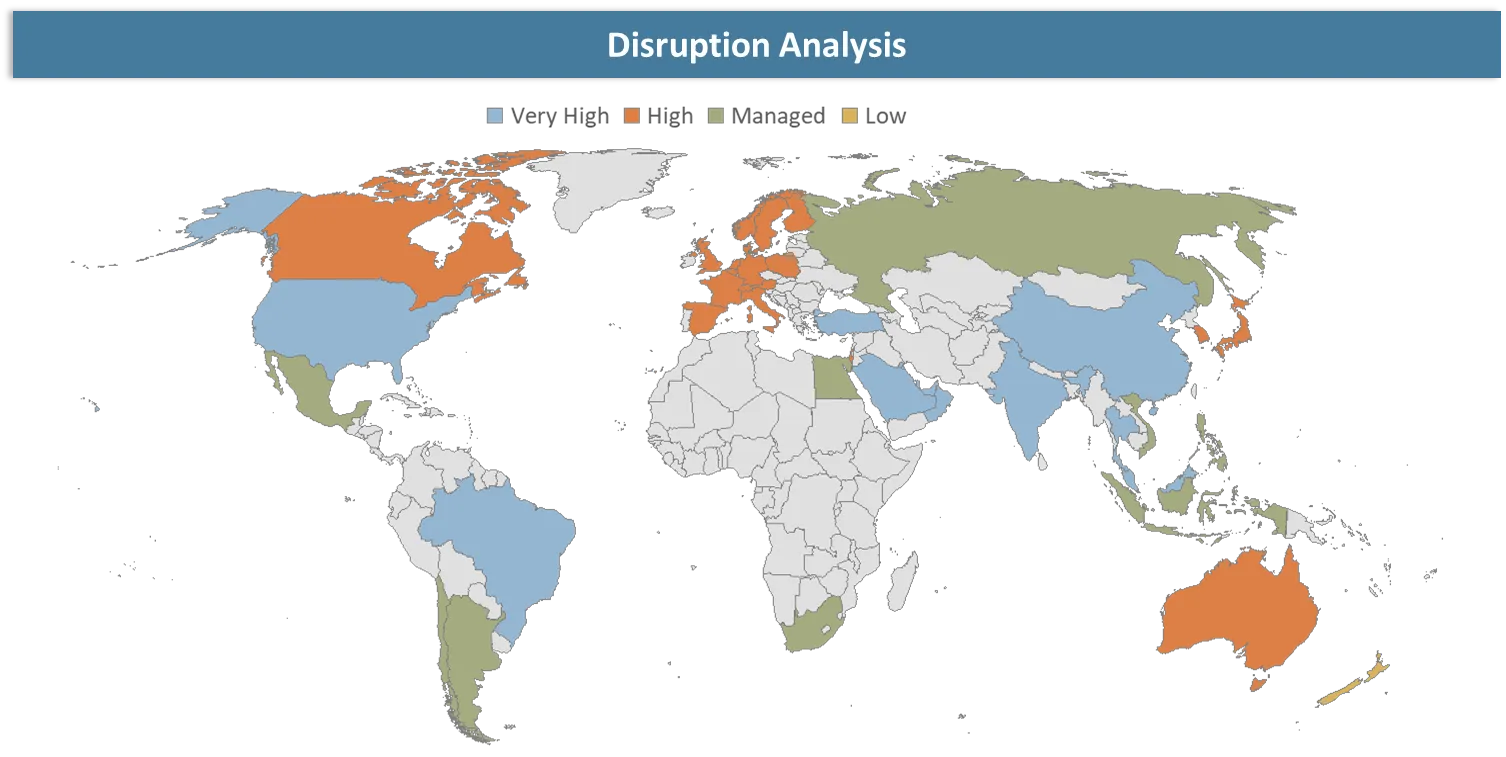
China Export Controls Reshaping Global Terbium Supply Chains and Accelerating Rare Earth Diversification
Disruption in the Terbium Market mainly stems from the increased geopolitical control over the supply chain of heavy rare earth elements after China enforced export controls over terbium-related products in 2025. This has brought uncertainties to many industries that depend on terbium compounds such as the producers of permanent magnets, suppliers of electric vehicles, renewable energy firms, and defense contractors. The disruption has expedited the efforts of many international manufacturers in looking for other sources of supply, refining capability in their regions, and strategic inventories.
This high import dependency highlights the vulnerability of the U.S. terbium supply chain to any possible disruptions in international trade and political instability. The heavy reliance on imports from China is hastening the pace of attempts to process and recycle terbium domestically. As per the U.S. Geological Survey (USGS) Mineral Commodity Summaries 2026, the United States imported 100 metric tons of heavy rare earth compounds and metals in 2025 and maintained 100% net import dependence on these minerals. It was also noted by the same publication that the terbium compounds and metals imported in the United States in the years 2021–2024 were 100% sourced from China.
Terbium Market BCG Matrix: Company Evaluation
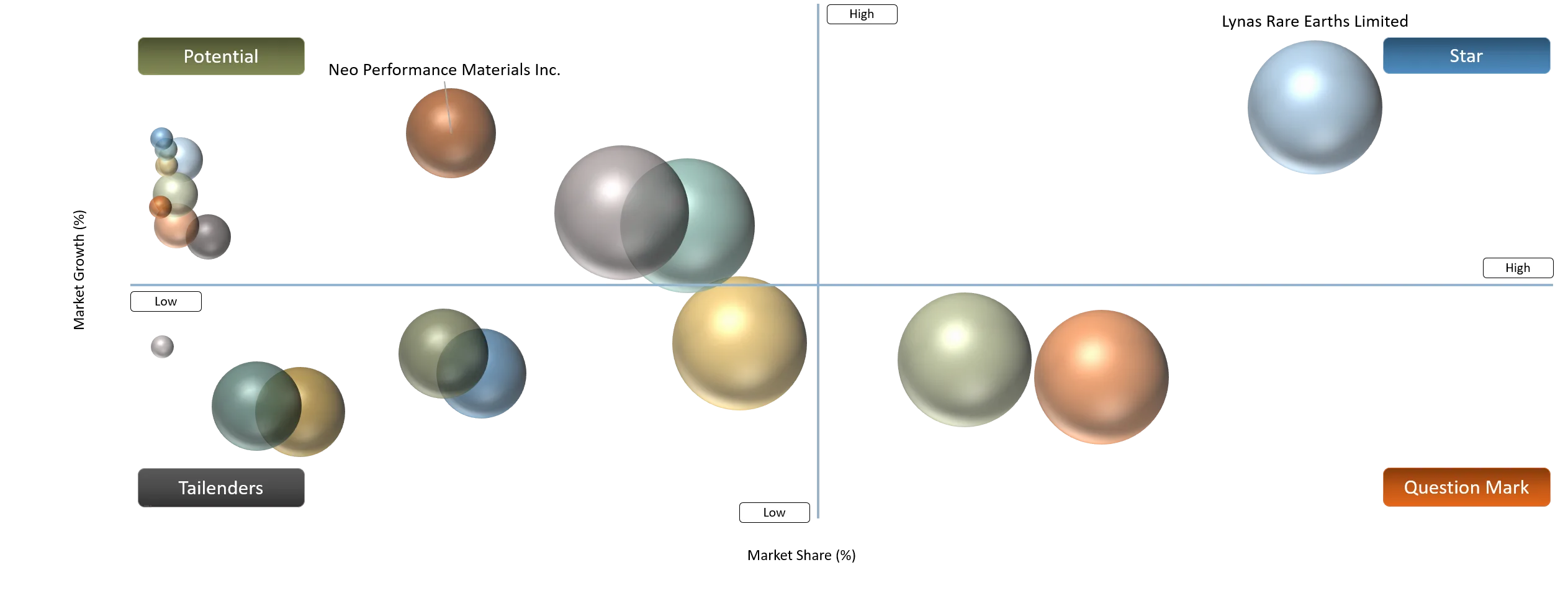
Stars include Lynas Rare Earths Limited and Shin-Etsu Chemical Co., Ltd. because they have strong strategic positions in the rare earth value chain, advanced downstream processing capabilities, and established customer relationships in high-value applications such as permanent magnets, electronics, and clean energy technologies. Question Marks include Energy Fuels Inc., Iluka Resources Limited, Arafura Rare Earths Limited, and Ionic Rare Earths Limited because they are expanding their involvement in rare earth processing, heavy rare earth separation, and recycling but are still developing commercial-scale terbium supply capabilities.
Potential companies include Neo Performance Materials Inc. and Solvay SA because they possess established rare earth material processing expertise and downstream capabilities but have a more limited role in primary terbium production. Tailenders include Stanford Advanced Materials, American Elements, and Rare Earth Salts due to their primary focus on specialty material distribution, high-purity chemical supply, and research-grade rare earth compounds rather than large-scale terbium mining or refining operations.
Terbium Market Dynamics
Driver Impact Analysis
| Driver | Market Growth Impact (%) | Demand Concentration | Impacted Use Case | Strategic Impact |
Rising demand for terbium-enhanced permanent magnets in electric vehicles, wind turbines, robotics, and industrial motors is driving market growth. | 40% | High concentration in NdFeB permanent magnet applications, particularly EV traction motors, industrial automation, and high-temperature magnetic systems. | Electric vehicle motors, wind turbine generators, robotics actuators, industrial motors, aerospace systems | Strengthens terbium’s position as a strategic heavy rare earth material and increases focus on securing long-term supply agreements and alternative sourcing channels. |
Increasing deployment of renewable energy infrastructure, particularly direct-drive wind turbines, is accelerating terbium consumption through demand for high-performance rare earth. | 25% | Concentrated in wind energy and high-efficiency power generation equipment requiring durable permanent magnets. | Direct-drive wind turbines, offshore wind generators, renewable power equipment | Accelerates investment in rare earth refining capacity and supply chain diversification to support clean energy expansion. |
Growing adoption of advanced electronics, display technologies, and energy-efficient lighting systems is supporting demand for terbium-based phosphors and specialty compounds. | 15% | Concentrated in consumer electronics, display panels, LED lighting, and specialty optical materials. | Displays, fluorescent lighting, electronic components, optical devices | Supports demand for high-purity terbium compounds and maintains niche applications beyond magnet markets. |
Government initiatives to secure critical mineral supply chains are encouraging investments in terbium extraction, separation, refining, and recycling capabilities outside China. | 20% | Concentrated in regional rare earth processing ecosystems across North America, Europe, Japan, and Australia.
| Rare earth separation plants, refining facilities, strategic mineral projects | Reduces dependence on concentrated supply sources and accelerates development of non-China terbium supply chains. |
Increasing focus on rare earth recycling and recovery from end-of-life magnets is creating additional terbium supply sources and supporting circular material strategies. | 10% | Concentrated in secondary rare earth recovery from permanent magnets and electronic waste streams. | Magnet recycling, e-waste recovery, industrial scrap processing | Improves supply resilience, reduces reliance on primary mining, and supports circular economy initiatives for critical minerals. |
Rising demand for terbium-enhanced permanent magnets in electric vehicles, wind turbines, robotics, and industrial motors is driving market growth
The growing deployment of electric vehicles (EVs), wind turbines, robotics, and highly efficient industrial motors is accelerating demand for terbium-enhanced NdFeB (neodymium iron boron) magnets made with terbium. In the making of NdFeB magnets, terbium is added in small quantities to improve coercivity, high thermal stability, and the ability to withstand demagnetization under extreme temperatures. Based on the IEA Global EV Outlook 2026, the global number of electric cars sold surpassed the 20 million mark in 2025 and represented about 25% of new car sales globally, thereby boosting the demand for NdFeB permanent magnets containing terbium.
Terbium is increasingly being utilized in rare-earth magnets, which have gained importance in the manufacture of electric cars, wind turbines, robots, and industrial motors. In January 2026, according to the Rare Earth Exchanges, the study highlighted that terbium demand has shifted significantly toward permanent magnets, with magnets accounting for 90% of the demand after 2021 compared to 74.5% coming from fluorescent lighting applications in 2007. Further findings from the analysis indicate that there are ion adsorption clays in China that make up 53.8% of terbium produced in China, amounting to about 39.5% of the total terbium produced globally, and recycling potentials have 381.8 tonnes of terbium from fluorescent lamps and appliances.
Restraint Impact Analysis
| Restraint | Drag on Market Growth (%) | Primary Impact Area | Impacted Use Case | Strategic Impact |
Limited availability of heavy rare earth deposits restricts terbium production capacity and increases dependence on a small number of mining and processing regions. | 30% | Raw material availability and global supply chain diversification | Permanent magnets, wind turbines, EV traction motors, defense systems | Increases supply risk and accelerates investments in alternative rare earth mining, refining projects, and strategic stockpiling initiatives. |
Complex and costly separation processes for terbium extraction from rare earth ores increase production expenses and limit new market entrants. | 25% | Rare earth separation technology, processing costs, and refining capacity | High-purity terbium oxide, terbium metal, specialty compounds | Restricts production scalability, raises manufacturing costs, and creates competitive advantages for established rare earth processors. |
High price volatility of terbium oxide due to supply constraints and export policy changes creates uncertainty for downstream manufacturers. | 20% | Pricing stability and procurement planning | NdFeB permanent magnets, electronics, advanced material applications | Encourages long-term supply contracts, supplier diversification, and material optimization strategies among end users. |
Limited commercial-scale recycling infrastructure for terbium-containing materials restricts secondary supply availability and circular economy adoption. | 15% | Secondary raw material supply and recycling ecosystem development | End-of-life permanent magnets, electronic waste recovery, industrial scrap recycling | Slows development of circular terbium supply chains and increases reliance on primary mining sources. |
Limited availability of heavy rare earth deposits restricts terbium production capacity and increases dependence on a small number of mining and processing regions
Terbium availability is among the key restrictions that affect the Terbium Market, as terbium is not obtained as a separate mineral but is extracted mainly as a minor product from certain heavy rare earth ores. The scarcity of terbium containing deposits means that the production is limited and depends on the number of available mining locations with appropriate geological conditions. As stated by the US Geological Survey Mineral Commodity Summaries 2026, rare earth ore mine production amounted to about 390,000 metric tons of rare earth oxide equivalent in 2025, whereas terbium was among the minor heavy rare earth elements.
This concentration effect on the production of heavy rare earth results in vulnerabilities on the terbium supply chain due to constraints on production growth and greater susceptibility to export restrictions, geopolitical events, and fluctuations in prices. In May 2026, as per Rare Earth Exchanges, the global supply of heavy rare earth metals such as terbium and dysprosium remains highly concentrated due to scarcity of these materials geologically availability and processing capabilities. The analysis highlighted China accounts for 98% of the world’s heavy rare earth metal supply chains via its ion-adsorption clays and refinement capabilities, which pose huge dependency risks to the rest of the world. In particular, it was pointed out that heavy rare earth metals have limited ability to grow production because there are no deposits except those available in China, making the world highly dependent on certain mining and processing zones.
Terbium Market Segmentation Analysis
The global Terbium market is segmented based on product type, purity, application, end-use, and region.
Permanent Magnets Application Driving Dominant Demand for Terbium Market
The permanent magnets segment holds a dominate position in the Terbium Market with about 80% of the total demand for terbium in 2025, due to the increasing use of terbium-containing NdFeB magnets. Terbium is used in NdFeB magnets for higher coercivity, better heat resistance, and demagnetization resistance; thus, they can be employed in harsh operating conditions such as electric vehicle motors, wind generator turbines, robotics, and industrial automation systems. The electrification of transport and development of the renewable energy sector have caused the growing need for high-efficiency magnets with heavy rare earths.
Terbium demand in permanent magnets contributed nearly 80% to the market in 2025. In addition, the rising prominence of rare earth elements used in magnets also drives this segment of the market; according to the IEA, there has been a doubling of the demand for neodymium, praseodymium, dysprosium, and terbium since 2015, and it is expected to rise by about a third in 2030. Approximately 95% of rare earths are consumed by permanent magnets, while China holds a 94% share in global sintered magnet production in 2024.
Terbium Market Geographical Penetration
Asia-Pacific Leadership Driven by Integrated Rare Earth Mining and Magnet Manufacturing Ecosystem
Asia-Pacific region is dominating in the Terbium Market, with a about 74.8% of global market share owing to the presence of mature ecosystem of rare earth mining, extraction, refining, and magnet manufacturing facilities in the region. Due to the presence of key players of rare earth industry in the region like China, the processing of terbium metal becomes easier and gets used in high value applications like NdFeB permanent magnets, electronic devices, renewable energy devices, and industrial systems.
Increasing the capability of Lynas Malaysia for separating rare earths marks an important milestone in making efforts towards diversifying terbium supply chains across the world, away from China. In May 2025, Lynas Rare Earths Ltd., an Australia-based company engaged in mining and producing advanced materials from rare earths, began the manufacture of separated HREEs from the company’s Lynas Malaysia plant in Kuantan, Malaysia, thus being the only commercial producer of separated heavy rare earth products outside China. The company installed a new production line for heavy rare earths which started production of dysprosium oxide (Dy₂O₃) and terbium oxide (Tb₄O₇) production scheduled for June 2025.
China Terbium Market Trends
China holds a dominant position in the Asia-Pacific Terbium Market due to its developed rare earth mining base, rare earth separation capabilities, refinement facilities, and permanent magnet manufacturing. China's vertically integrated rare earth industry allows for the efficient production of terbium materials and their further transformation into advanced materials that go into the manufacture of NdFeB permanent magnets, electric vehicles, wind turbines, robotics, industrial automation, and military purposes. According to the IEA Rare Earth Elements Report 2025, China produced around 60% of global production of magnet rare earths from mining and 91% of refined magnet rare earths.
In June 2026, Jinli Permanent Magnet Technology Co., Ltd., a China-based; manufacturer of rare earth permanent magnets and magnetic materials, made a declaration of their plan to invest CNY 22.08 million (USD 3.1 million) in the acquisition of equity interest in Rare Earth Exchange for developing a rare earth trading platform. The objective behind this investment was to reinforce the company’s upstream supply chain strategy by ensuring better availability of rare earth raw material, securing supply of rare earth and also optimizing sourcing of key ingredients like terbium, dysprosium, neodymium, and other rare earths for making high performance permanent magnets.
India Terbium Market Outlook
India is emerging as a fast-growing country in the Asia-Pacific Terbium Market because of the increasing emphasis laid by the nation on critical minerals security, growing domestic rare earth processing capacity, and rising requirements for terbium-based permanent magnets in electric mobility, renewables, electronic, and industrial applications. India has considerable rare earths reserves, especially monazite-bearing deposits, present in the coastal areas of the country, which can be used in the future as an input to develop the value chain for heavy rare earths.
The joint venture will aid India’s plans to establish its own rare earth processing capacity and lessen reliance on imports of heavy rare earth elements such as terbium. In July 2026, Nexon Geochem Pvt. Ltd., India-based company that manufactures advanced materials and rare earth magnets, signed a Memorandum of Understanding (MoU) with Giredmet, a Russia-based State Research and Design Institute of Rare Metal Industry. It is owned by Rosatom State Corporation. The objective of the agreement is to create a comprehensive rare earth processing ecosystem in India.
Terbium Market Competitive Landscape
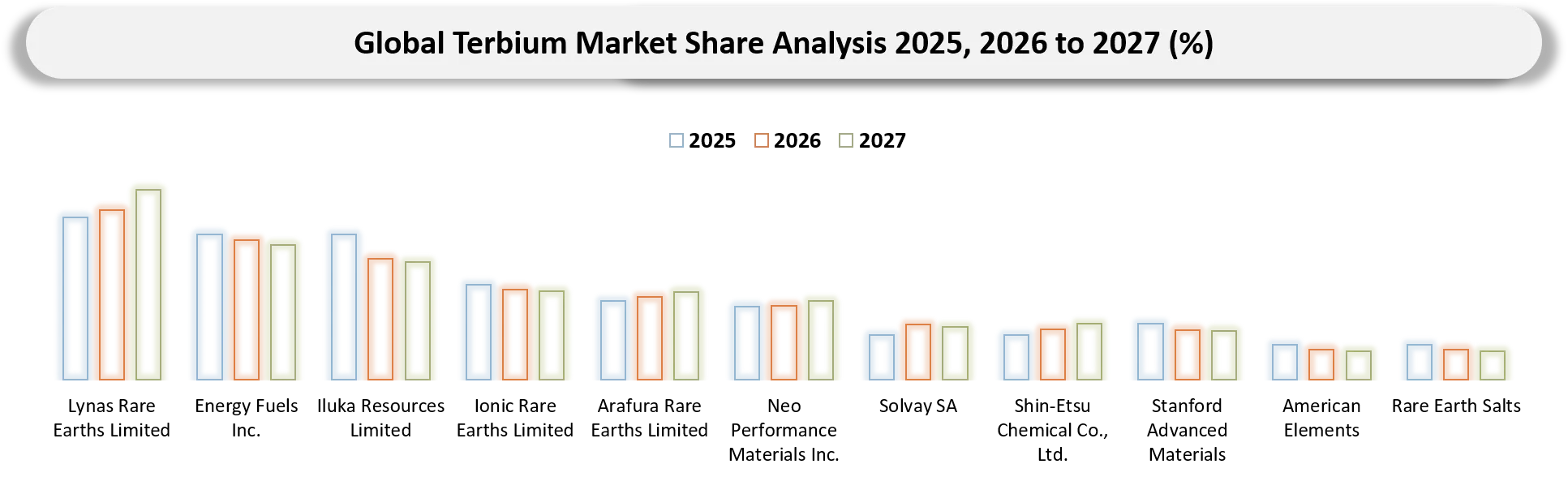
- The Terbium Market is characterized by a supply-chain-driven competitive structure involving rare earth mining companies, separation and refining specialists, advanced materials manufacturers, and specialty chemical suppliers. Leading players such as Lynas Rare Earths Limited, Energy Fuels Inc., Iluka Resources Limited, Ionic Rare Earths Limited, and Arafura Rare Earths Limited are focused on expanding rare earth mining, separation, and processing capabilities outside China to strengthen global heavy rare earth supply diversification. Companies including Neo Performance Materials Inc., Solvay SA, and Shin-Etsu Chemical Co., Ltd. operate in downstream rare earth processing, specialty materials, and high-performance magnet supply chains, while Stanford Advanced Materials, American Elements, and Rare Earth Salts serve specialized markets through high-purity terbium compounds, research materials, and specialty chemical distribution. The competitive environment is primarily defined by access to rare earth resources, heavy rare earth separation expertise, refining capacity, and long-term supply agreements with permanent magnet and advanced technology manufacturers. The competitive landscape is shifting toward supply chain localization, heavy rare earth separation development, and recycling-based supply strategies as manufacturers seek alternatives to concentrated supply sources. Companies such as Ionic Rare Earths and Energy Fuels are investing in rare earth recovery and processing technologies, while Lynas Rare Earths and Iluka Resources are expanding integrated rare earth supply chains to support future demand from permanent magnets, electric mobility, renewable energy, and defense applications.
- Key players include Lynas Rare Earths Limited, Energy Fuels Inc., Iluka Resources Limited, Ionic Rare Earths Limited, Arafura Rare Earths Limited, Neo Performance Materials Inc., Solvay SA, Shin-Etsu Chemical Co., Ltd., Stanford Advanced Materials, American Elements, and Rare Earth Salts.
Key Developments
- October 2025: Sojitz Corporation, a Japan-based diversified trading company involved in chemicals, metals, energy, and resource supply chains, began importing heavy rare earth elements (HREEs) produced by Lynas Rare Earths Ltd., an Australia-based rare earth mining and processing company, into Japan to reduce dependence on China-controlled rare earth supply chains.
- August 2025: American Resources Corporation (ARC), a U.S.-based critical mineral and resource development company, through its subsidiary ReElement Technologies Corporation, a U.S.-based rare earth separation and critical material processing technology company, established a joint venture with Exigo Battery Solutions Pvt. Ltd., an India-based battery recycling and critical material recovery company, to develop a secure rare earth supply chain through rare earth magnet recycling.
- November 2025: the Government of India approved the ₹7,280 crore (approximately USD 816 million) Scheme to Promote Manufacturing of Sintered Rare Earth Permanent Magnets (REPM) to establish a domestic rare earth magnet manufacturing ecosystem.
- April 2026: USA Rare Earth, Inc., a U.S.-based rare earth mining, processing, and permanent magnet manufacturing company, announced a definitive agreement to acquire Serra Verde Group, a Brazil-based rare earth mining and processing company, for approximately USD 2.8 billion.
- November 2025: Solvay S.A., Belgium-based specialty chemicals and advanced materials company, and Noveon Magnetics Inc., U.S.-based rare earth permanent magnet manufacturer, entered into a supply agreement to strengthen the rare earth magnet supply chain.
Key Procurement Priorities and Buyer Evaluation Criteria
- Suppliers of terbium and compounds of terbium are evaluated according to their capacity to deliver high purity terbium compounds consistently, supply availability, and their conformance with quality requirements for permanent magnets, phosphors, electronics materials, and other industrial uses.
- The process of selection of suppliers is greatly impacted by the increasing need for diversification in the supply chain, security in the sources of heavy rare earths, and decreased reliance on regions where there is high concentration of production, especially for those applications that use terbium-based NdFeB permanent magnets.
- Buyers consider various aspects like terbium purity levels, chemical composition uniformity, traceability of source materials, production capacity, processing abilities, and supply agreements when choosing rare earth suppliers and partners.
Why Choose DataM?
- Critical Mineral Supply Chain Analysis: Explores developments across the terbium value chain, including rare earth mining, extraction, separation, refining, recycling, and downstream applications, providing insights into supply availability, processing capabilities, and strategic sourcing trends for high-performance materials.
- Product Performance & Market Positioning: Evaluates terbium suppliers based on product purity levels, compound availability, processing expertise, and application suitability across permanent magnets, phosphors, magnetostrictive materials, electronic ceramics, and advanced industrial materials, highlighting competitive differentiation among leading rare earth companies.
- Real-World Evidence: Highlights the adoption of terbium-containing materials in NdFeB permanent magnets, electric vehicle motors, wind turbines, robotics, defense systems, and advanced electronics, demonstrating terbium’s role in improving magnetic performance, thermal stability, and operational efficiency.
- Market Updates & Industry Changes: Tracks key industry developments including rare earth export controls, new mining and separation projects, recycling initiatives, supply chain diversification efforts, and regional investments across Asia-Pacific, North America, and Europe to assess changes in global terbium availability.
- Competitive Strategies: Analyzes how leading companies such as Lynas Rare Earths Limited, Energy Fuels Inc., Iluka Resources Limited, Neo Performance Materials Inc., and Shin-Etsu Chemical Co., Ltd. strengthen their market position through resource expansion, refining capacity development, strategic partnerships, and advanced rare earth processing technologies.
- Pricing & Market Access: Evaluates terbium pricing dynamics based on purity grades, oxide and metal forms, supply constraints, geopolitical factors, and procurement channels, while assessing how manufacturers access terbium through rare earth producers, specialty chemical suppliers, and advanced material distributors.
- Market Entry & Expansion: Identifies growth opportunities driven by electric mobility, renewable energy infrastructure, industrial automation, and critical mineral localization strategies, while outlining expansion approaches such as alternative sourcing, recycling development, regional processing facilities, and long-term supply agreements.
Target Audience
- Rare Earth Mining & Processing Companies
- Permanent Magnet Manufacturers
- Automotive & Electric Vehicle Manufacturers
- Renewable Energy Companies
- Electronics & Semiconductor Companies
- Aerospace & Defense Organizations
- Industrial Automation & Robotics Companies


























































