


Soy Flour Market Size
The global soy flour market reached an estimated US$ 3.46 billion in 2025 and is expected to reach US$ 5.63 billion by 2035, growing at a CAGR of 5.0% during 2026-2035. Demand is supported by soy flour’s combination of protein, water binding, emulsification, browning control and cost efficiency across bakery, meat systems, prepared foods, animal feed and industrial adhesives. The category sits between commodity soybean meal and higher-priced soy protein concentrates or isolates, allowing formulators to improve nutrition and functionality without adopting the full cost structure of highly purified proteins.
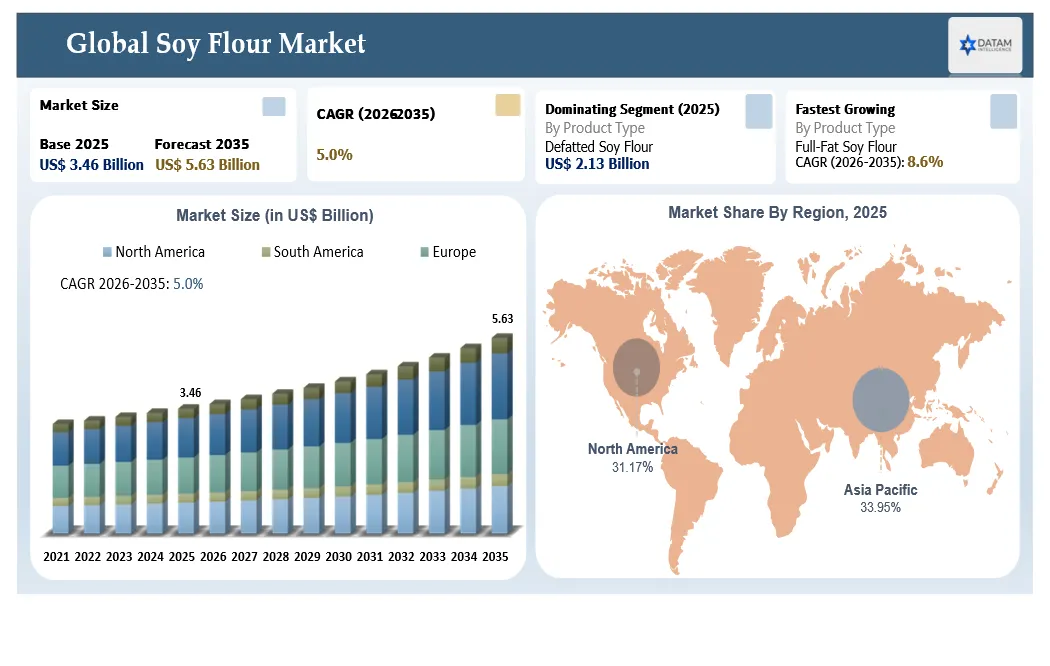
Defatted soy flour represents the largest commercial product type because it is widely available from integrated crushing operations and offers a concentrated protein base with flexible food, feed and industrial uses. Full-fat flour remains important where native oil, energy density and flavor are useful, while low-fat and specialty-processed products address specific texture, dispersibility and shelf-life requirements. Non-GMO and organic grades command premiums in Europe, North America and selected Asian markets, although identity preservation and segregation add cost.
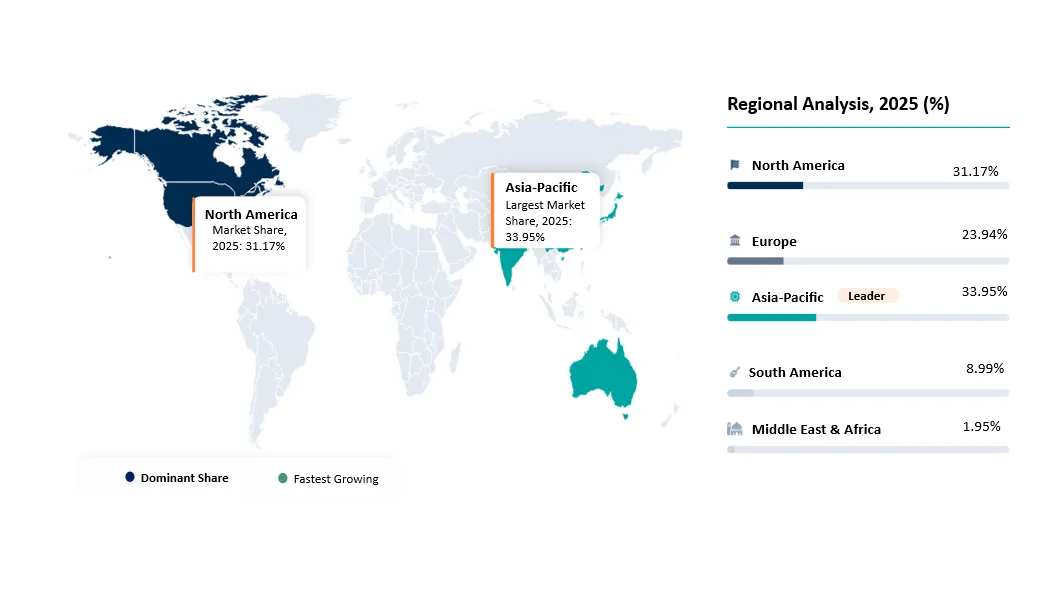
Asia-Pacific is the largest market due to soybean processing capacity, a broad food manufacturing base, growing livestock and aquaculture industries and established use of soy ingredients. North America remains a major technology and demand center, supported by integrated crushers, large bakery and meat-processing industries, and investment in plant-protein applications. Europe emphasizes traceability, non-GMO sourcing and allergen disclosure, while South America benefits from soybean availability but exports a large share of its output as beans, meal and oil rather than higher-value flour.
Soy Flour Market Key Takeaways
- Defatted soy flour leads by value and volume because crushing infrastructure creates abundant raw material and broad functionality across food, feed and industrial formulations.
- Bakery and prepared foods remain the largest food applications, while plant-based meat, high-protein snacks and clean-label binding systems provide faster growth.
- Asia-Pacific holds the largest regional share, supported by China, India and Southeast Asia, while North America leads in specialty processing, branded ingredients and advanced formulation.
- Non-GMO and organic soy flour are premium segments because identity preservation, certification and segregation increase costs but support cleaner labels and export access.
- Soybean prices, crushing margins, energy costs and freight strongly influence flour pricing, particularly for suppliers without integrated oilseed processing.
- Flavor control, trypsin inhibitor reduction, protein dispersibility and microbiological quality are central buyer criteria for food-grade adoption.
- Industrial adhesives and wood-panel applications create a distinct opportunity for enzyme-active and modified soy flour as manufacturers seek lower-formaldehyde systems.
- Future market leadership will depend on consistent functionality, application support, traceable sourcing, multi-region supply and the ability to tailor heat treatment and particle size.
Soy Flour Industry Trends and Strategic Insights
- Food manufacturers are using soy flour as a multifunctional ingredient rather than only as a low-cost protein extender, increasing demand for tighter specifications and application-specific grades.
- Plant-based food developers are blending soy flour with concentrates, isolates, wheat proteins and starch systems to balance cost, texture and nutritional claims.
- Bakers are increasing use in bread, cookies, cakes and nutrition bars for water retention, color development, crumb structure and protein enrichment.
- Feed formulators are evaluating full-fat and heat-treated flour for young-animal, aquaculture and pet-food applications where digestibility and energy density are important.
- Identity-preserved non-GMO and organic supply chains are expanding, but premiums remain vulnerable to crop availability, certification cost and segregation losses.
- Modified soy flour for bio-based adhesives is gaining strategic interest in wood products, paper and construction materials as formaldehyde reduction becomes a procurement priority.
- AI-enabled process control, near-infrared testing and automated milling improve protein consistency, heat-treatment control and rapid release of finished lots.
- Supplier differentiation is moving toward technical service, sensory improvement, microbiological assurance and customer-specific blending rather than commodity price alone.
Soy Flour Market Scope
| Metrics | Details |
| 2025 Market Size | US$ 3.46 Billion |
| 2035 Projected Market Size | US$ 5.63 Billion |
| CAGR (2026-2035) | 5.0% |
| Largest Market | Asia-Pacific |
| Fastest Growing Market | Asia-Pacific |
| By Product Type | Full-Fat, Defatted and Low-Fat Soy Flour |
| By Nature | Conventional, Non-GMO and Organic |
| By Form | Fine Powder, Coarse/Granulated and Instantized/Dispersible |
| By Grade | Food, Feed and Industrial |
| By Processing Method | Toasted/Heat-Treated, Untoasted/Enzyme-Active and Extruded/Modified |
| By Application | Bakery, Meat Products, Plant-Based Foods, Snacks, Nutrition, Feed, Adhesives and Others |
| By End Use Industry | Food & Beverage, Animal Nutrition, Nutraceuticals, Industrial, Foodservice and Others |
| By Distribution Channel | Direct Sales, Distributors, Online B2B, Retail/E-commerce and Others |
| Report Insights Covered | Market Size, Share, Growth, Trade, Ecosystem, Competition and Company Profiles |
Why does this report matter in 2026?
The year 2026 is a strategically important period for soy flour because soybean processing economics, protein-market consolidation and customer demand for affordable nutrition are changing at the same time. Major agribusiness companies are expanding or reorganizing soy protein assets, while food manufacturers are reassessing ingredient systems after several years of inflation, weak consumer spending in some plant-based categories and volatility in freight and energy costs. Soy flour benefits when formulators seek lower-cost protein and functionality, but it faces competition from concentrates, isolates, pea protein, wheat gluten and native starch systems.
The report matters because soy flour is not a single standardized commodity. Commercial value differs by fat content, heat treatment, protein solubility, particle size, enzyme activity, microbiological status, non-GMO certification and end-use performance. A bakery flour cannot automatically serve infant nutrition or enzyme-active adhesive applications. The study separates these value pools and maps the processing, quality and channel requirements that determine addressable demand.
Timing also matters for investment. Decisions on dehulling, toasting, air classification, extrusion, microbial control, non-GMO segregation and regional warehouses can influence customer qualification for the remainder of the decade. Companies that treat soy flour as a specialty ingredient platform rather than a by-product of crushing can capture higher margins and defend relationships with bakery, meat, nutrition and industrial customers.
Soy Flour Market White Space & Investment Opportunities
- Premium non-GMO and organic soy flour with verifiable identity preservation, low pesticide residues and region-specific certification.
- Low-flavor and light-color grades for bakery, beverages, bars and plant-based foods where conventional soy notes limit inclusion rates.
- Instantized and highly dispersible soy flour for dry mixes, nutritional powders and high-protein beverages.
- Enzyme-active and chemically modified grades for low-formaldehyde plywood, particleboard, paper and packaging adhesives.
- Microbiologically controlled food-grade flour for ready-to-eat applications with limited downstream heat treatment.
- Regional processing in India, Southeast Asia, Africa and the Middle East to reduce import dependence and use locally available soybean crops.
- Application laboratories that help customers replace part of higher-cost isolates or animal proteins without sacrificing texture or yield.
- By-product integration using hulls, oil and protein streams to improve plant economics and reduce waste.
Soy Flour Future Market Transformation
The market is expected to transform from a broad commodity category into a layered portfolio of standardized bulk grades and higher-value functional systems. Commodity defatted flour will continue to serve feed, bakery and meat-extension applications, but faster growth will come from specialty grades with controlled flavor, defined protein dispersibility, optimized particle size and documented sustainability. Suppliers will increasingly sell performance outcomes such as water binding, fat retention, dough handling, emulsion stability or adhesive strength rather than only protein content.
Digital quality systems will strengthen traceability from soybean origin to final lot. Near-infrared analysis, inline moisture measurement, automated toasting and statistical process control can reduce variability. Customers will expect electronic certificates, allergen controls, sustainability documentation and faster technical response. Integration with crushing remains an advantage, but independent ingredient companies can compete through customization, small batches, sensory improvement and closer application support.
Soy Flour Market Buyer Decision-Making Criteria
Buyers prioritize protein content, moisture, fat level, particle size, protein dispersibility index, urease activity, microbiological limits, flavor, color and lot-to-lot consistency. The relative importance varies by application. Bakery customers emphasize dough performance, water absorption and browning, meat processors emphasize yield and emulsion stability, feed companies evaluate digestibility and anti-nutritional factors, while adhesive producers require enzyme activity and bonding strength.
Commercial decisions also depend on supply continuity, soybean origin, GMO status, certification, allergen documentation, technical service, minimum order quantities and logistics. Large customers increasingly require dual sourcing and contingency plans because soybean crop conditions, transport disruption or plant shutdowns can affect delivery. Suppliers that provide formulation support and rapid problem solving can defend premiums even when commodity soybean meal prices fall.
Soy Flour Market Economic & Investment Analysis
Soy flour economics are linked to the soybean crushing complex. Revenue from oil, meal, hulls and specialty protein products influences the transfer price of flakes used for flour production. Integrated crushers can optimize the product mix and absorb short-term volatility, while independent millers must manage raw material contracts and inventory more carefully. Capital requirements are moderate for basic milling but rise significantly for dehulling, solvent extraction, advanced heat treatment, air classification, microbial reduction and identity-preserved handling.
Investment returns improve when facilities can produce several grades from the same raw material stream and serve food, feed and industrial customers. Food-grade margins depend on quality systems, traceability and customer qualification rather than scale alone. Industrial adhesive grades can use different specifications and create outlet flexibility. Investors should model soybean basis, crushing margin, energy, labor, yield loss, freight, certification premiums and the cost of maintaining segregated non-GMO or organic lines.
Soy Flour Investment Trends in the Market
- Integrated agribusiness companies are expanding soy protein and ingredient portfolios to capture value beyond commodity meal and oil.
- Capital is moving toward heat-treatment control, low-flavor processing, extrusion, air classification and microbial reduction.
- Non-GMO and organic investments focus on contract farming, identity preservation, dedicated storage and verified chain of custody.
- Food companies are funding application work that reduces recipe cost by combining soy flour with concentrates, isolates and starch systems.
- Industrial users are investing in soy-based adhesive technologies to lower formaldehyde exposure and improve environmental positioning.
- Regional processors are adding flexible lines that can switch between full-fat, defatted and specialty flour according to crop economics and customer demand.
Strategic Indicators for Soy Flour Market
High Regulation Impact
Food and feed safety rules, allergen labeling, GMO disclosure, pesticide limits, microbial standards and solvent-residue requirements shape market access. Organic and non-GMO claims require additional documentation and segregation. Industrial adhesives face chemical-emission and building-material standards that can favor bio-based systems.
High Investment Activity
Investment is concentrated in integrated soy processing, protein functionality, non-GMO supply chains and application laboratories. Large agribusiness companies are consolidating soy protein assets, while regional manufacturers are upgrading lines to serve higher-value food markets.
Supply Chain Disruption
Crop weather, river levels, port congestion, trade restrictions and energy shortages can disrupt soybean and flour availability. Concentration of exports in the Americas and processing in selected Asian markets creates exposure to freight and policy changes.
Pricing Volatility
Soy flour pricing responds to soybean, soybean meal, oil and energy markets. Non-GMO and organic premiums can widen quickly when crop availability falls. Freight and packaging add a larger percentage to delivered cost for low-density or small-lot products.
Procurement Pressure
Large buyers seek indexed pricing, dual sourcing, consistent functionality and rapid complaint resolution. Commodity buyers push for meal-linked discounts, while specialty customers pay premiums for performance, certification and technical support.
New Technology Adoption
Inline spectroscopy, automated toasting, low-flavor processing, extrusion, air classification and digital quality management improve consistency. Modification technologies expand use in beverages, meat alternatives and adhesives.
Regional Expansion Opportunity
India, Southeast Asia, Africa and the Middle East offer growth through bakery industrialization, protein fortification, feed production and import substitution. Local processing must address soybean quality, scale, food safety and distribution.
Government Policy Support
Protein security, domestic oilseed processing, school nutrition and bio-based materials policies can support demand. Conversely, export controls, GMO rules and anti-deforestation requirements may increase compliance costs.
Pricing Intelligence
Food-grade toasted flour generally commands a premium over feed-grade material, while non-GMO, organic, instantized and microbiologically controlled grades can add substantial premiums depending on region, crop and certification availability.
Disruption Analysis of Soy Flour Market
The market is being disrupted by the convergence of plant-protein innovation, agribusiness consolidation and pressure on food manufacturers to reduce formulation costs. Soy protein concentrates and isolates offer higher purity, but soy flour can regain share when customers need balanced functionality at lower cost. Improved flavor and particle control allow higher inclusion rates in applications that previously required more purified ingredients.
Bio-based adhesives represent a second disruption pathway. Wood-panel and construction companies are seeking lower-emission bonding systems, increasing interest in enzyme-active or modified soy flour. Adoption will depend on water resistance, curing speed, storage stability and compatibility with existing production lines. Suppliers able to bridge food and industrial technology can diversify demand and improve asset utilization.
Soy Flour Market BCG Matrix: Company Evaluation
STAR
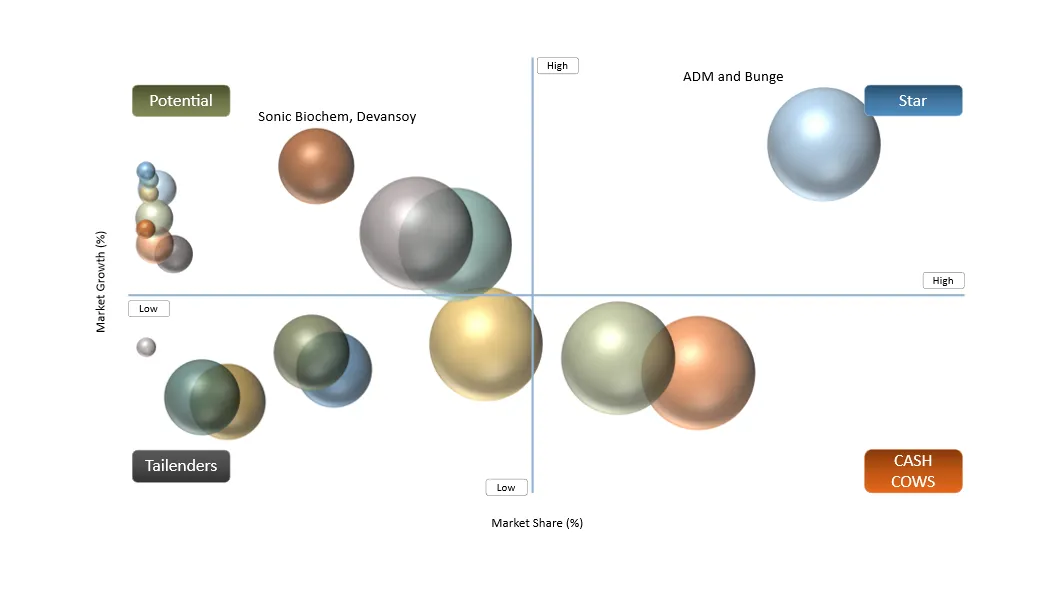
ADM and Bunge are positioned as Stars because they combine global soybean origination, crushing, protein-ingredient capabilities and large customer networks. Their ability to manage crop flows, co-products and multi-region supply provides cost and reliability advantages. Cargill and CHS also have strong integrated positions, although soy flour is one component within broader agribusiness portfolios.
POTENTIAL
Specialty ingredient producers such as Sonic Biochem, Devansoy, Foodchem and regional non-GMO processors represent Potential players. They can gain share through customized grades, flexible minimum orders, rapid application support and identity-preserved sourcing. Their growth depends on reliable raw material access, food-safety systems and the ability to compete against vertically integrated suppliers.
Soy Flour Market Dynamics
Driver Impact Analysis
| Driver | Market Growth Impact | Demand Concentration | Impacted Use Case | Strategic Impact |
| Bakery and prepared-food growth | High | Asia-Pacific, North America, Europe | Bread, biscuits, cakes, mixes and processed foods | Supports volume growth and rewards consistent toasted grades. |
| Cost-effective plant protein | High | Global food and feed markets | Meat extension, plant-based foods and nutrition | Positions soy flour as a lower-cost alternative to isolates and animal proteins. |
| Animal nutrition expansion | Medium-High | Asia-Pacific, South America, Middle East | Young-animal, aquaculture and pet-food formulations | Increases demand for digestible full-fat and heat-treated products. |
| Bio-based adhesive adoption | Medium | Wood panels and construction materials | Plywood, particleboard and paper bonding | Creates premium industrial outlets for enzyme-active and modified flour. |
Driver: Rising Use in Bakery, Meat and Prepared Foods
Soy flour improves water absorption, dough handling, browning, crumb structure, protein content and yield. In meat and prepared foods, it supports emulsification, fat binding and moisture retention. These benefits make it attractive when manufacturers must control cost without sacrificing process performance. Demand is especially resilient in high-volume products where small formulation savings create meaningful economic value.
Restraint Impact Analysis
| Restraint | Drag on Market Growth | Primary Impact Area | Impacted Use Case | Strategic Impact |
| Soybean and energy price volatility | High | Manufacturing cost and contract pricing | All product types | Encourages indexed contracts, inventory discipline and integrated sourcing. |
| Allergen and GMO concerns | High | Consumer acceptance and labeling | Food and nutritional products | Increases demand for transparent labels and alternative proteins. |
| Flavor and anti-nutritional factors | Medium-High | Maximum inclusion level | Bakery, beverages and plant-based foods | Requires optimized heat treatment, deodorization and formulation support. |
| Competition from refined proteins | Medium | Premium food applications | Sports nutrition and high-protein formulations | Pushes flour suppliers toward functionality, cost and clean-label differentiation. |
Restraint: Allergen, Flavor and Processing Constraints
Soy is a major allergen in many markets, requiring segregation, labeling and sanitation controls. Some consumers also avoid soy because of GMO concerns or dietary preferences. Beany flavor, bitterness and residual anti-nutritional factors can limit inclusion when heat treatment is insufficient or excessive. Suppliers must balance trypsin inhibitor reduction with protein solubility and functional performance.
Soy Flour Market Segmentation Analysis
The global soy flour market is segmented by Product Type, Nature, Form, Grade, Processing Method, Application, End Use Industry, Distribution Channel and region.
By Product Type
Defatted Soy Flour Will Remain the Largest Segment
Defatted soy flour leads because it is produced from widely available soybean flakes after oil extraction and offers high protein with low fat. It is used in bakery, meat systems, feed, nutrition and industrial adhesives. Full-fat flour grows in energy-dense feed and specialty food applications, while low-fat products serve formulations requiring intermediate lipid content.
By Nature
Non-GMO and Organic Grades Will Outpace Conventional Growth
Conventional soy flour dominates volume due to scale and cost. Non-GMO products grow faster in Europe, North America and premium Asian channels, supported by clean-label positioning and customer policies. Organic remains smaller because crop availability, yield, certification and segregation produce high premiums.
By Form
Fine Powder Will Continue to Lead
Fine powder is the standard format for bakery, meat, dry mixes and feed because it disperses easily and integrates with existing handling systems. Instantized and dispersible forms record faster growth in beverage, nutrition and high-protein applications, where dust control and wetting performance are important.
By Grade
Food Grade Will Generate the Highest Value
Food-grade soy flour commands the largest value share because it requires tighter microbiological, flavor, allergen and functional specifications. Feed grade is significant by volume and depends more directly on soybean meal economics. Industrial grade serves adhesives and other bio-based applications with application-specific enzyme and bonding requirements.
By Processing Method
Toasted and Heat-Treated Flour Will Dominate
Heat treatment reduces trypsin inhibitors and urease activity, improves flavor and makes soy flour suitable for most food and feed uses. Untoasted enzyme-active flour remains important for bleaching, dough conditioning and adhesive systems. Extruded and modified grades gain share where texture, dispersibility or bonding performance justify a premium.
By Application
Bakery and Confectionery Will Remain the Largest Application
Bakery leads through bread, cookies, cakes, crackers, mixes and nutritional snacks. Meat and prepared foods remain important for water and fat binding. Plant-based foods offer faster growth but are more sensitive to flavor and consumer perceptions. Animal feed and industrial adhesives create large volume outlets with different quality specifications.
By End Use Industry
Food and Beverage Will Lead Commercial Value
Food and beverage companies purchase the widest range of specifications and pay premiums for technical support, traceability and microbiological assurance. Animal nutrition contributes substantial volume. Industrial and construction-material uses can grow faster from a smaller base as soy-based adhesives gain acceptance.
By Distribution Channel
Direct Sales Will Retain the Largest Share
Large bakery, meat, feed and industrial customers buy directly under annual or formula-based contracts. Ingredient distributors are essential for smaller customers, multi-country logistics and technical service. Online B2B channels expand transparency and access but remain limited for strategic high-volume accounts.
Soy Flour Market Geographical Penetration
U.S. Soy Flour Market Landscape
The U.S. market benefits from large soybean production, integrated crushing, advanced food processing and strong bakery, meat and plant-protein industries. Demand is supported by cost optimization, protein enrichment and industrial adhesive innovation. Non-GMO supply is available but commands a premium because most domestic soybean acreage uses biotechnology traits. Suppliers compete on technical service, microbial control and reliable nationwide logistics.
China Soy Flour Market Trends
China is a major soybean importer, crusher and food manufacturer. Soy flour demand spans bakery, noodles, processed meat, snacks, feed and industrial applications. Large processing capacity supports scale, but profitability depends on imported soybean costs, crushing margins and domestic demand. Food-grade suppliers are investing in quality, low-flavor products and application support.
India Soy Flour Market Outlook
India has a significant non-GMO soybean base and uses soy flour in bakery, protein fortification, institutional nutrition, meat alternatives and feed. Export opportunities exist for identity-preserved products. Growth is constrained by variable crop quality, fragmented processing and price sensitivity, but government nutrition programs and expanding packaged food support long-term demand.
Germany Soy Flour Market Outlook
Germany emphasizes non-GMO sourcing, allergen disclosure and traceability. Demand comes from bakery, meat alternatives, processed foods and industrial adhesives. Buyers often require European or identity-preserved origin and detailed sustainability documentation. Competition from pea, wheat and fava proteins is strong, making functionality and cost critical.
Brazil Soy Flour Market Outlook
Brazil is one of the world’s largest soybean producers and crushers, providing strong raw material access. Domestic use is concentrated in animal nutrition and food processing, while export infrastructure is oriented toward beans, meal and oil. Higher-value flour investment can improve local value capture, particularly for bakery, feed and industrial applications.
Middle East and Africa Soy Flour Market Outlook
The region offers growth through bakery industrialization, meat processing, affordable protein fortification and animal feed. Many countries rely on imported soybean meal or flour, creating exposure to freight and currency. Regional milling, blending and distribution partnerships can improve service, but food-safety systems and consistent raw material supply are essential.
Soy Flour Market Competitive Landscape
- Competition combines integrated agribusiness companies with specialized soy ingredient manufacturers and regional millers.
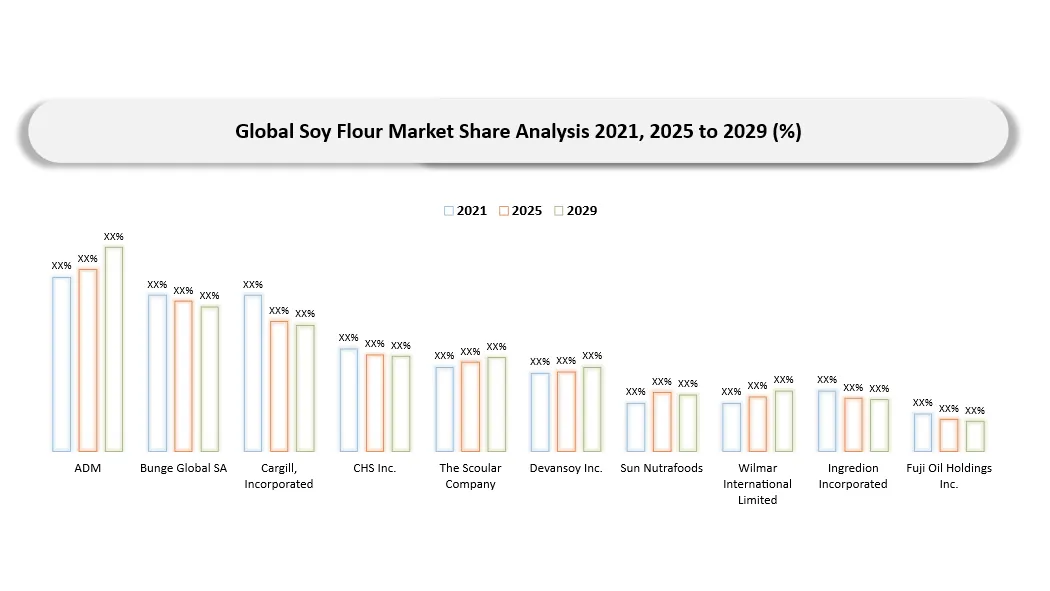
- ADM, Bunge, Cargill and CHS benefit from soybean origination, crushing scale, co-product economics and global customer relationships.
- Specialists compete through non-GMO supply, low-flavor grades, customized heat treatment, smaller minimum orders and application support.
- Chinese and Indian producers exert price pressure in export markets, particularly for conventional defatted flour and feed-grade products.
- Food-grade differentiation depends on microbial assurance, allergen controls, protein functionality and reliable documentation rather than protein percentage alone.
- Market consolidation in soy protein assets is increasing the strategic value of integrated flour, concentrate, lecithin and oil portfolios.
Market Ecosystem
| Value Chain Sector | Representative Companies / Organizations | Role in the Ecosystem | Key Growth Factors |
| Seed genetics and farm inputs | Bayer, Corteva, Syngenta, BASF, regional seed companies | Provide soybean genetics, crop protection and agronomic systems | Yield, protein traits, non-GMO availability and climate resilience |
| Farm production and cooperatives | U.S., Brazilian, Argentine, Indian and Chinese growers; cooperatives | Produce and aggregate conventional, non-GMO and organic soybeans | Crop economics, weather, certification and contract premiums |
| Origination and trading | ADM, Bunge, Cargill, CHS, Wilmar, Olam Agri | Originate, store, transport and hedge soybeans and products | Global network, logistics, risk management and working capital |
| Crushing and defatting | ADM, Bunge, Cargill, CHS, Wilmar, regional crushers | Produce flakes, meal, oil and flour feedstock | Crushing margin, scale, extraction yield and energy efficiency |
| Soy flour manufacturing | ADM, Bunge, Sonic Biochem, Devansoy, Foodchem, regional millers | Mill, toast, modify and standardize soy flour | Particle control, heat treatment, microbial quality and flexibility |
| Specialty modification and formulation | Ingredion, Kerry, Fuji Oil, Bühler customers, contract processors | Develop dispersible, extruded, blended and application-specific systems | R&D, sensory control, pilot plants and customer collaboration |
| Ingredient distribution | Brenntag, IMCD, Azelis, Barentz, Prinova, regional distributors | Provide warehousing, technical sales and local access | Portfolio breadth, regional stock, credit and technical support |
| Food and feed manufacturers | Bakery, meat, plant-based, snack, nutrition and feed companies | Convert soy flour into finished products | Consumer demand, recipe economics, claims and manufacturing capacity |
| Industrial users | Wood-panel, plywood, paper and adhesive manufacturers | Use enzyme-active or modified flour in bio-based bonding systems | Emission standards, adhesive performance and plant compatibility |
| Testing and certification | SGS, Intertek, Eurofins, NSF, organic and non-GMO certifiers | Verify safety, composition, claims and chain of custody | Regulatory complexity, export access and customer assurance |
Public Company Q1-Q2 2026 Performance Comparison
| Public Company | Q1-Q2 2026 Performance | Soy Flour Exposure | Growth Drivers and Constraints |
| ADM (NYSE: ADM) | Q1 2026 net earnings were US$298 million and adjusted EPS was US$0.71. Management raised full-year adjusted EPS guidance to approximately US$4.15-US$4.70, supported by expected improvement in crushing and ethanol. | Direct through global soybean origination, crushing and food/animal nutrition ingredient systems. | Constructive crushing conditions, biofuel policy clarity and productivity support earnings. Constraints include commodity volatility, execution risk and uneven nutrition demand. |
| Bunge Global (NYSE: BG) | Q1 2026 adjusted EPS was US$1.83 versus US$1.81 a year earlier. Results were supported by soybean and softseed processing, and full-year adjusted EPS guidance was raised to US$9.00-US$9.50. | Direct through soybean processing, refining and expanded soy protein concentrate, lecithin and crush assets. | Improved processing margins, expanded footprint and integration benefits support growth. Working capital, interest expense and commodity swings remain constraints. |
| Ingredion (NYSE: INGR) | First-half disclosures emphasized specialty-ingredient mix, productivity and disciplined pricing. The company’s direct soy-flour exposure is smaller than its starch and sweetener base, so performance is best read as adjacent formulation demand. | Adjacent through texture, plant-protein, nutrition and formulation systems used with soy flour. | Specialty mix, cost savings and demand for clean-label systems support growth. Exposure is constrained by limited direct soybean crushing and customer destocking risk. |
| Wilmar International (SGX: F34) | During Q1-Q2 2026 Wilmar highlighted financing, sustainability and expansion initiatives, including a West African agri-food joint venture. Half-year results were scheduled for later reporting. | Direct and adjacent through oilseed crushing, flour, feed and consumer-food operations across Asia. | Scale, Asian distribution and integrated processing support growth. Commodity margins, regulatory issues and regional competition remain key constraints. |
| Olam Group (SGX: VC2) | In April 2026 Olam completed the first tranche sale of a 44.58% stake in Olam Agri to SALIC for about US$1.88 billion. The transaction changed ownership exposure during the first half of 2026. | Indirect through Olam Agri’s grains, oilseeds, feed, processing and value-added businesses. | Portfolio restructuring and strategic capital support growth investment, while ownership transition, commodity volatility and execution complexity constrain comparability. |
Key Companies of Soy Flour Market
- ADM
- Bunge Global SA
- Cargill, Incorporated
- CHS Inc.
- The Scoular Company
- Sonic Biochem Extractions Pvt. Ltd.
- Foodchem International Corporation
- Devansoy Inc.
- Sun Nutrafoods
- Wilmar International Limited
- Ingredion Incorporated
- Fuji Oil Holdings Inc.
- Olam Group / Olam Agri
- Bühler Group
- Kerry Group
Company Profiles
ADM
ADM is one of the most integrated participants in the soy value chain, with global origination, crushing, transportation and human and animal nutrition capabilities. Its competitive advantage is the ability to optimize soybeans across oil, meal, lecithin, flour and more refined protein streams. The company can support large customers with multi-region supply, application development and quality systems. Soy flour growth is linked to bakery, meat, feed and cost-effective plant-protein demand, while margins remain exposed to crop and crushing economics.
Bunge Global SA
Bunge combines global soybean processing with refining, merchandising and specialty ingredients. The 2026 acquisition of selected soy protein concentrate, lecithin and crush assets strengthened its ability to serve food and feed customers across a broader protein portfolio. Competitive priorities include integration, customer cross-selling, sustainability and utilization of an expanded processing footprint. Soy flour can benefit from access to standardized flakes and large customer relationships.
Cargill, Incorporated
Cargill is a major private agribusiness company with soybean origination, crushing, food ingredients, animal nutrition and global logistics. It competes through scale, risk management and formulation expertise. Its soy portfolio can serve flour, protein, lecithin, oil and feed markets. Customer relationships in bakery, meat and animal nutrition create opportunities to bundle soy flour with other functional ingredients.
CHS Inc.
CHS is a farmer-owned cooperative with strong North American oilseed processing and agricultural supply capabilities. Its position supports reliable soybean sourcing and access to meal and flour streams. CHS is relevant to food, feed and industrial customers that value domestic origin, cooperative supply and integrated logistics. Growth depends on processing margins, plant utilization and customer qualification for specialty grades.
The Scoular Company
Scoular is a private agribusiness and ingredient company active in commodity management, food ingredients, feed and international trade. It can participate through sourcing, distribution and tailored protein solutions. Its strength is flexibility and customer service across mid-sized accounts that may not fit the scale requirements of the largest crushers.
Sonic Biochem Extractions Pvt. Ltd.
Sonic Biochem is an Indian soy ingredient specialist with products across flour, grits, textured proteins and related systems. The company benefits from India’s non-GMO soybean base and export opportunities. Competitive differentiation depends on identity preservation, food safety, flavor control and application support for bakery, meat alternatives and nutrition.
Foodchem International Corporation
Foodchem supplies food ingredients globally and participates in soy flour through export-oriented distribution and sourcing. Its value proposition is broad portfolio access, flexible quantities and international documentation. Competitive success depends on supplier qualification, consistency, logistics and technical responsiveness.
Devansoy Inc.
Devansoy is a North American soy ingredient supplier focused on food-grade soy products. It is positioned to serve customers seeking domestic sourcing, specialty grades and technical support. Its competitiveness depends on non-GMO availability, flavor, microbiological quality and close formulation collaboration.
Sun Nutrafoods
Sun Nutrafoods participates in soy-based ingredients for food, nutrition and feed applications. Regional suppliers like Sun Nutrafoods can compete through lower minimum orders, faster customization and proximity to emerging-market customers. Scaling quality systems and securing consistent soybeans are central execution priorities.
Wilmar International Limited
Wilmar is a large Asian agribusiness with oilseed crushing, flour, feed, consumer foods and extensive distribution. Its integrated model provides cost and market access advantages across China and Southeast Asia. Soy flour opportunities are linked to food processing, feed, bakery and regional import substitution. Commodity margins and regulatory complexity influence performance.
Ingredion Incorporated
Ingredion is primarily known for starches, sweeteners, texture systems and specialty ingredients. Its relevance to soy flour is adjacent through formulation, plant protein and clean-label systems. Partnerships or blended solutions can help customers combine soy flour with starches and hydrocolloids to optimize texture, cost and nutrition.
Fuji Oil Holdings Inc.
Fuji Oil has deep expertise in plant-based food ingredients, oils, fats and soy proteins. Although its portfolio emphasizes more refined protein systems, it influences soy flour demand through technology, customer formulations and substitution decisions. Its strengths include sensory improvement, Asian market access and application research.
Olam Group / Olam Agri
Olam Agri participates in grains, oilseeds, feed and value-added processing. The 2026 ownership transition to SALIC changes its strategic context but preserves broad agricultural infrastructure. Soy flour relevance comes through oilseed processing, regional supply chains and food/feed customers. Capital allocation and integration under the new ownership structure will shape future expansion.
Bühler Group
Bühler supplies milling, extrusion, thermal treatment and process automation technologies. It is an enabling company rather than a soy flour producer. Its equipment influences yield, particle size, heat treatment, energy efficiency and product consistency. Growth is supported by plant-protein investment and modernization of regional mills.
Kerry Group
Kerry is a public taste and nutrition company with application expertise across bakery, meat, beverages and prepared foods. Its exposure is mainly downstream and adjacent, using soy flour within broader formulation systems. Kerry can influence demand through recipe development, flavor masking and texture optimization.
Soy Flour Market Major Pain Points
- Volatility in soybean, soybean meal, energy and freight costs.
- Beany flavor, bitterness and color limitations in high-inclusion foods.
- Allergen labeling and sanitation requirements across shared facilities.
- Variation in protein dispersibility, urease activity and water absorption between lots.
- Limited non-GMO and organic supply during weak crop years.
- Competition from soy concentrates, isolates, pea protein, wheat gluten and other functional ingredients.
- Microbiological risk in ready-to-eat products with limited downstream heat treatment.
- Customer qualification periods and formulation dependence that slow supplier switching.
Soy Flour Market Recent Developments
- March 2026: Bunge completed the acquisition of IFF’s soy protein concentrate, lecithin and crush business, broadening its soy ingredient and processing capabilities.
- April 2026: Bunge reported stronger first-quarter results driven in part by soybean and softseed processing and raised its 2026 adjusted EPS outlook.
- May 2026: ADM reported first-quarter 2026 results and raised adjusted EPS guidance, citing expected improvement in crushing after U.S. biofuel policy clarity.
- April 2026: Olam Group completed the first tranche sale of a 44.58% stake in Olam Agri to SALIC for approximately US$1.88 billion, changing ownership across a major global agricultural platform.
- June 2026: Wilmar announced a joint venture with TGI Group for West African agri and food businesses, reinforcing regional food-processing and distribution exposure.
Analyst View / Opinion on Soy Flour Market
- The soy flour market should deliver steady rather than explosive growth because it serves mature, high-volume applications but continues to gain value through specialty processing and protein fortification.
- Defatted toasted flour will remain the commercial core, while non-GMO, organic, instantized and low-flavor grades create the strongest margin expansion.
- Asia-Pacific will remain the largest market, but North America and Europe will set many specifications for quality, traceability and sustainable sourcing.
- Integrated crushers have structural cost advantages, yet specialists can defend attractive niches through customization, technical service and small-lot flexibility.
- Plant-based food volatility does not eliminate the opportunity because soy flour also serves bakery, meat processing, feed and industrial adhesives.
- Companies should treat protein dispersibility, flavor, microbial control and application data as commercial assets rather than routine quality parameters.
- The strongest portfolios will combine flour with concentrates, textures, lecithin and formulation support, allowing customers to optimize total recipe cost.
- Long-term leadership will depend on reliable soybean origin, digital traceability, multi-region supply and the ability to translate processing variables into customer performance.
Soy Flour Market Target Audience
| Industry | Who Should Buy This Report? | Reason to Buy This Report |
| Soybean Processing | Crushers, millers, extraction companies and cooperatives | Assess capacity, product mix, specialty-grade opportunities and processing economics. |
| Food and Beverage | Bakery, meat, snack, plant-based and prepared-food manufacturers | Evaluate functionality, supplier options, formulation trends and cost-saving opportunities. |
| Animal Nutrition | Feed mills, aquaculture, pet-food and premix companies | Understand digestibility, heat treatment, pricing and regional supply. |
| Nutraceuticals | Nutrition brands, contract manufacturers and ingredient suppliers | Identify dispersible, non-GMO and protein-enrichment opportunities. |
| Industrial Materials | Adhesive, plywood, paper and construction-material producers | Assess enzyme-active and modified soy flour for bio-based bonding. |
| Distribution | Ingredient distributors, traders and online B2B platforms | Evaluate product gaps, regional demand and inventory strategies. |
| Investment and Consulting | Private equity, investors, banks and strategy teams | Support market entry, capacity planning, M&A and competitive benchmarking. |
Why Choose DATAM?
- Data-driven insights combining market sizing, soybean economics, processing technology, application demand and country-level trade.
- Post-purchase analyst consultations for market entry, customer mapping, capacity planning and formulation strategy.
- Annual updates covering crop conditions, trade policy, capacity, transactions, pricing and competitive developments.
- Specialized focus on emerging markets, non-GMO supply chains and regional processing rather than generalized global summaries.
- Actionable analysis that connects commodity inputs with specialty ingredient margins and buyer qualification requirements.
What DATAM Uniquely Provides
- Ten-year forecasts across product type, nature, form, grade, processing, application, end use, channel and region.
- Value-chain analysis from seed and farm production through crushing, milling, modification, distribution and finished products.
- Competitive benchmarking of integrated agribusiness companies, specialists, distributors and technology providers.
- Buyer-focused analysis of protein functionality, flavor, allergen control, non-GMO sourcing, microbial quality and supply reliability.
- Country-level views linking soybean availability, food-processing demand, feed growth, industrial uses and trade.
- Public-company performance comparison and a detailed market ecosystem table.


























































