


Software as a Medical Device Market Size & Overview
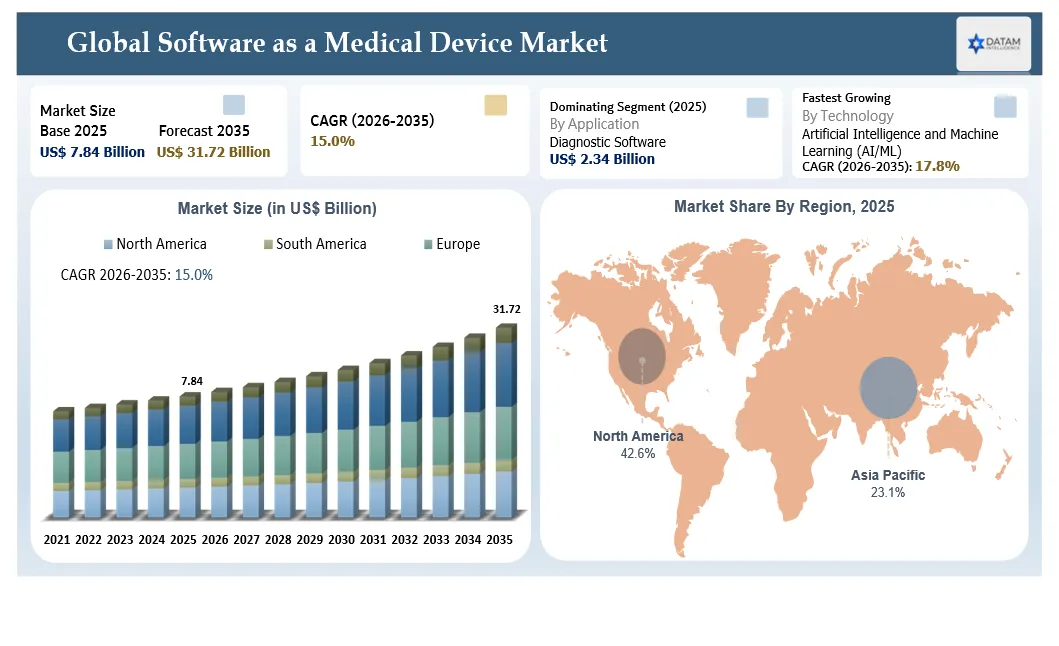
The global Software as a Medical Device (SaMD) market reached an estimated US$ 7.84 billion in 2025 and is expected to reach US$ 31.72 billion by 2035, growing with a CAGR of 15.0% during the forecast period 2026-2035. The market includes standalone diagnostic algorithms, clinical decision-support systems, patient-monitoring software, digital therapeutics, treatment-planning platforms and regulated applications that perform a medical function independently of dedicated hardware. Growth is being shaped by the convergence of clinical digitization, artificial intelligence, cloud delivery, connected care and a more mature regulatory framework for software-based medical products.
Radiology and medical imaging remain the largest commercial application because image-analysis algorithms have accumulated a broad installed base, measurable workflow value and substantial authorization activity. Cardiology, neurology, pathology, women’s health and respiratory care are expanding as software moves from narrow detection tasks toward risk prediction, triage, longitudinal monitoring and therapy selection. Cloud deployment and subscription models are reducing the upfront burden of adoption, while enterprise agreements allow health systems to deploy multiple applications through a common integration, governance and monitoring framework.
Market growth through 2035 will depend on the ability of developers to demonstrate clinical benefit, integrate with existing workflows, manage cybersecurity and maintain performance after deployment. AI-enabled products require representative datasets, transparent intended use, change management and real-world monitoring. The FDA’s digital-health guidance portfolio and the August 2025 final guidance on predetermined change control plans provide a clearer route for planned modifications to AI-enabled device software functions. Europe continues to apply medical-device software classification under the MDR and related MDCG guidance, increasing evidence and quality-system requirements for many products.
| Metric | Details |
| 2025 Market Size | US$ 7.84 Billion |
| 2035 Projected Market Size | US$ 31.72 Billion |
| CAGR (2026-2035) | 15.0% |
| Largest Market | North America |
| Fastest Growing Market | Asia-Pacific |
| Largest Product Type | Diagnostic Software |
| Fastest-Growing Technology | Artificial Intelligence and Machine Learning |
| Dominant End User | Hospitals and Health Systems |
Software as a Medical Device Market Key Takeaways
- North America held the largest market share in 2025 due to high digital-health spending, active FDA authorization, strong venture investment and broad integration of imaging and cardiovascular software into clinical workflows.
- Diagnostic software represented the largest product category because radiology, pathology, cardiology and ophthalmology applications can demonstrate measurable improvements in detection, triage and interpretation efficiency.
- AI and machine learning will record the fastest technology growth as developers move from single-task algorithms toward multimodal prediction, workflow orchestration and continuous performance monitoring.
- Cloud-based deployment is gaining share because it enables rapid updates, centralized cybersecurity, multi-site scaling and subscription-based procurement, although high-risk products may continue to use hybrid or edge architectures.
- Hospitals and health systems remain the largest buyers, but pharmaceutical companies, payers and public-health organizations are becoming important customers for companion software, patient stratification and population monitoring.
- Predetermined change control plans are becoming strategically important because they can support planned AI modifications without a new marketing submission for every change covered by an authorized plan.
- Cybersecurity, interoperability, dataset representativeness and real-world performance monitoring are now core commercial capabilities rather than secondary technical functions.
- Long-term market leadership will depend on clinical utility, workflow integration, regulatory execution, implementation support and the ability to maintain performance across diverse sites and patient populations.
Software as a Medical Device: Industry Trends and Strategic Insights
- The market is shifting from isolated applications toward enterprise AI platforms that manage deployment, integration, performance monitoring, user access and governance across multiple clinical departments.
- Healthcare providers increasingly demand evidence of workflow impact, including turnaround time, alert burden, avoided downstream testing and clinician adoption, alongside conventional sensitivity and specificity metrics.
- Multimodal SaMD combining imaging, waveform, laboratory, genomic and clinical-record data is emerging, but it increases validation, explainability and data-governance complexity.
- Regulatory strategy is moving earlier in product development as developers align intended use, risk classification, training data, clinical validation and post-market monitoring before scaling commercial teams.
- Partnerships between software developers, hardware manufacturers, electronic health record vendors, cloud providers and specialist distributors are becoming central to market access.
- Outcome-based and per-use commercial models are expanding where software can demonstrate direct value in diagnosis, treatment selection, readmission reduction or workflow productivity.
Software as a Medical Device Market Scope
| Metrics | Details |
| 2025 Market Size | US$ 7.84 Billion |
| 2035 Projected Market Size | US$ 31.72 Billion |
| CAGR | 15.0% |
| By Product Type | Diagnostic Software, Clinical Decision Support, Monitoring and Alerting, Digital Therapeutics, Treatment Planning and Workflow Software |
| By Clinical Application | Radiology, Cardiology, Neurology, Oncology and Pathology, Ophthalmology, Women’s Health, Diabetes, Behavioral Health and Others |
| By Deployment Mode | Cloud-Based, On-Premise, Edge and Hybrid |
| By Technology | AI and Machine Learning, Rules-Based Software, Signal Processing and Computer Vision, Digital Biomarkers and Predictive Analytics |
| By Risk Class | Low, Moderate and High Risk |
| By End User | Hospitals, Specialty Centers, Ambulatory Care, Patients, Life-Science Companies, Payers and Public Health |
| By Business Model | Subscription, License and Maintenance, Per-Use, Outcome-Based and Enterprise Agreements |
Why does this report matter in 2026?
The year 2026 is a strategic inflection point for the SaMD market because regulatory expectations are becoming more explicit while clinical adoption is expanding beyond pilot programs. The FDA now maintains a frequently updated AI-enabled medical-device list and has published final guidance for predetermined change control plans, alongside lifecycle, cybersecurity, clinical decision-support and quality-system guidance. These developments give developers a clearer framework for design, submission, modification and post-market monitoring, but they also raise the execution standard for evidence, documentation and governance.
The report matters because the market is not a single software category. Commercial opportunity differs sharply by intended use, clinical specialty, risk class, workflow integration, reimbursement and user type. A radiology triage algorithm, a digital therapeutic and a cloud-based cardiac monitoring platform require different validation, pricing, sales channels and post-market controls. The study separates these models and identifies where adoption is driven by regulated clinical value rather than general digital transformation.
The timing is also important for investment and product planning. Decisions on data partnerships, cloud architecture, quality systems, cybersecurity, interoperability and clinical-study design made in 2026 will influence authorization and market access for the remainder of the decade. Companies that build evidence and governance after commercial launch will face slower procurement and higher remediation costs. The report therefore supports portfolio prioritization, regulatory planning, partnership strategy and international expansion.
Software as a Medical Device Market White Space & Investment Opportunities
- AI-enabled diagnostic support in underserved specialties and lower-resource settings where specialist interpretation is limited and software can improve triage or referral quality.
- Enterprise governance and monitoring platforms that help health systems validate, deploy and continuously supervise multiple SaMD applications through a common infrastructure.
- Predetermined change control planning services, model monitoring and evidence-generation tools for developers seeking controlled iterative improvement of AI-enabled products.
- Multimodal clinical software combining imaging, physiological signals, laboratory results and longitudinal records to support earlier diagnosis and personalized treatment.
- Digital therapeutics and monitoring solutions linked to reimbursable care pathways in cardiometabolic disease, behavioral health, rehabilitation and chronic respiratory conditions.
- Localization platforms that support regulatory documentation, language adaptation, clinical validation and data-governance requirements across Europe, Asia-Pacific and emerging markets.
Software as a Medical Device Future Market Transformation
The market is expected to transform from a collection of narrow software products into an integrated clinical intelligence layer across healthcare delivery. Diagnostic and monitoring applications will increasingly exchange data with electronic health records, imaging systems, laboratory platforms, wearable devices and patient applications. The strongest products will not simply generate a score. They will deliver actionable information within the clinical workflow, document user response and support follow-up across settings.
AI-enabled SaMD will also move toward planned lifecycle change. Predetermined change control plans can allow specific modifications to be reviewed prospectively, creating a controlled route for improvement without repeated submissions for every covered update. This will favor companies with mature data operations, validation processes and post-market surveillance. Developers that cannot monitor drift, subgroup performance or cybersecurity exposure will find it harder to maintain trust and procurement access.
By 2035, leading franchises are likely to combine regulated software, cloud infrastructure, clinical evidence, implementation services and real-world monitoring. Enterprise buyers will prefer vendors that can support multiple sites, integrate with existing systems and demonstrate sustained operational value. This creates recurring revenue beyond the initial product license and increases the strategic importance of interoperability, customer success, clinical education and governance services.
Software as a Medical Device Market Buyer Decision-Making Criteria
Healthcare buyers prioritize clinical utility, regulatory status, workflow fit, cybersecurity and total implementation burden. Accuracy remains essential, but performance must be relevant to the intended population and use environment. Buyers evaluate false-positive burden, time saved, integration with PACS or electronic health records, clinician training, downtime procedures and the ability to audit recommendations. High-risk applications require stronger evidence, clear human oversight and defined escalation pathways.
Procurement decisions also depend on commercial flexibility and vendor support. Hospitals compare enterprise subscriptions, per-study pricing and multi-year platform agreements against expected productivity, avoided cost and patient outcomes. They assess implementation timelines, interface costs, data residency, service-level commitments, update processes and liability allocation. Products supported by transparent validation, local references and responsive technical teams are better positioned for renewal and expansion.
Software as a Medical Device Market Economic & Investment Analysis
SaMD is becoming an investable medical-device category because software can scale across sites with lower incremental manufacturing cost than hardware, while regulated clinical functions support higher value than general healthcare applications. Revenue quality varies, however, according to reimbursement, contract duration, renewal rates and dependence on a small number of enterprise customers. Investors should distinguish between products with durable clinical integration and those that remain dependent on pilots or innovation budgets.
Commercial planning should separate authorized product availability from activated clinical use. A clearance does not guarantee adoption if integration, workflow redesign, reimbursement or clinician trust remain unresolved. Forecasting therefore applies filters for regulatory status, technical deployment, user activation, patient or study volume, renewal and geographic expansion. Enterprise sales cycles can exceed a year, particularly where cybersecurity, legal and procurement reviews are complex.
Investment value is highest for platforms with differentiated data access, strong evidence, recurring revenue and the ability to extend into adjacent indications. AI-enabled products can create operating leverage, but continuous monitoring, cloud costs, regulatory updates and customer support reduce the apparent margin advantage. Companies should model implementation and post-market obligations as core cost centers. Strategic buyers increasingly favor businesses with mature quality systems, interoperable architecture and a credible path to multi-product deployment.
Software as a Medical Device Market Investment Trends
- Capital is moving toward clinically validated AI platforms that can expand across several specialties rather than single-purpose algorithms with limited commercial reach.
- Health-system partnerships and data-access agreements are receiving greater investment because representative data and external validation are essential for authorization and adoption.
- Developers are funding cybersecurity, model monitoring, quality management and regulatory operations earlier in the lifecycle to reduce submission and procurement risk.
- Enterprise deployment platforms are attracting interest because they create recurring revenue from integration, governance and monitoring across multiple SaMD applications.
- Investors are increasingly evaluating reimbursement and workflow economics before funding late-stage commercialization, particularly in digital therapeutics and remote monitoring.
- Cross-border partnerships are expanding as companies seek regulatory, distribution and clinical-validation capabilities in Europe, Japan, South Korea, Australia, India and the Gulf.
Strategic Indicators for Software as a Medical Device Market
High Regulation Impact
SaMD is shaped by intended use, risk classification, evidence, quality systems and post-market obligations. The IMDRF definition provides a common foundation, while national regulators apply different pathways. In the U.S., products may use 510(k), De Novo or PMA pathways depending on risk and predicate availability. In Europe, medical-device software classification under the MDR can raise many products into higher classes, increasing notified-body and clinical-evidence requirements. Regulatory planning must therefore begin before software architecture and data collection are fixed.
High Investment Activity
Investment is concentrated in AI-enabled diagnostics, cardiovascular monitoring, pathology, oncology decision support, digital biomarkers and enterprise deployment. Capital favors products with authorization, clinical validation and established customer references. Funding is also moving toward infrastructure businesses that provide data curation, cloud delivery, model monitoring and regulatory support. Valuation depends increasingly on recurring revenue, gross retention, implementation cost and the number of products that can be commercialized through one platform.
Supply Chain Disruption
The SaMD supply chain is digital, but it is still exposed to cloud outages, cybersecurity incidents, third-party libraries, data vendors and integration partners. A change in an operating system, API or electronic-health-record interface can interrupt performance even when the core algorithm is unchanged. Developers are strengthening software bill of materials controls, vendor qualification, redundancy, incident response and version management. Business continuity must cover both technical infrastructure and regulatory documentation.
Pricing Volatility
Pricing varies from low-cost per-study tools to enterprise subscriptions and high-value digital therapeutics. Competitive pressure is strongest where many products address similar imaging tasks. Prices are more defensible when software changes treatment decisions, reduces specialist workload or supports reimbursement. Discounts may be tied to volume, multi-site deployment or portfolio bundling. Buyers increasingly request outcome evidence and usage transparency before renewing premium contracts.
Procurement Pressure
Hospital procurement combines clinical review, information security, legal, privacy, integration, finance and user acceptance. Small vendors can face long sales cycles and expensive proof-of-concept requirements. Buyers seek predictable support, transparent updates, audit trails, interoperability and contractual protection for downtime or cybersecurity events. Vendors with standardized implementation, local references and enterprise governance capabilities can shorten the path from pilot to scaled deployment.
New Technology Adoption
Adoption is accelerating for multimodal AI, foundation-model components, federated learning, edge inference, synthetic data and digital biomarkers. Technology alone does not create a medical-device advantage. Developers must link innovation to intended use, clinical evidence and lifecycle control. Foundation-model functionality may increase flexibility, but it raises questions about validation, output variability, transparency and change management. Adoption will be strongest where new methods improve measurable clinical or operational outcomes.
Regional Expansion Opportunity
North America remains the largest market, while Asia-Pacific is expected to grow fastest through hospital digitization, local AI development and expanding regulatory pathways. Europe offers a large clinical market but requires careful MDR classification and notified-body planning. Japan, South Korea, Australia, Singapore and the Gulf provide opportunities for products with strong local partners and evidence. Expansion strategy should account for data residency, language, local workflow and reimbursement rather than relying on regulatory transfer alone.
Government Policy Support
Governments support digital health through regulatory modernization, health-data infrastructure, AI strategies and reimbursement pilots. Policy can accelerate adoption when it creates clear pathways for remote monitoring, digital therapeutics or clinical decision support. It can also increase compliance through cybersecurity, privacy and AI governance requirements. Companies should track both medical-device regulation and broader health-data or AI legislation because product obligations increasingly overlap.
Pricing Intelligence
Subscription pricing is common for cloud-based software, while per-study models fit imaging and diagnostic workflows. Enterprise agreements can bundle applications, support and monitoring across sites. Outcome-based contracts remain limited but are expanding where software can demonstrate measurable reductions in readmission, time to treatment or unnecessary testing. Pricing strategy should separate core software, implementation, integration, premium analytics and ongoing performance monitoring.
AI Impact Analysis of Software as a Medical Device Market
AI is the central growth engine of the SaMD market. Machine learning and deep learning support image interpretation, waveform analysis, risk prediction, triage and treatment planning. AI can increase sensitivity to subtle patterns, prioritize urgent cases and reduce repetitive work. The FDA’s AI-enabled medical-device list illustrates the breadth of authorization activity, particularly in radiology, while recent entries also include cardiovascular, obstetric and other applications. This creates a growing installed base for monitoring, governance and periodic improvement.
AI also changes the product lifecycle. Performance can shift as clinical practice, hardware, population mix or data pipelines change. Developers need representative training and validation, subgroup analysis, human-factors testing, cybersecurity and post-market monitoring. Predetermined change control plans can support planned modifications, but only when the scope, methodology and impact assessment are defined and reviewed. The commercial advantage therefore belongs to companies that combine model performance with disciplined lifecycle management.
Disruption Analysis of Software as a Medical Device Market
SaMD is disrupting traditional medical devices by moving diagnostic and therapeutic capability onto general-purpose computing platforms. Software can be updated faster, distributed across regions and integrated into workflows without replacing physical equipment. It also allows new entrants to compete with established device manufacturers. At the same time, hardware companies are embedding standalone software into broader platforms, using installed equipment and service networks to accelerate adoption.
The second disruption is the shift from point products to enterprise orchestration. Health systems are limiting uncontrolled proliferation of algorithms and demanding central governance, integration and monitoring. This favors platform vendors and strategic partnerships. Digital therapeutics and remote monitoring are also changing care delivery by extending regulated intervention outside hospitals. Competitive advantage is moving toward vendors that can connect clinical value, data governance and operational implementation.
Software as a Medical Device Market BCG Matrix: Company Evaluation
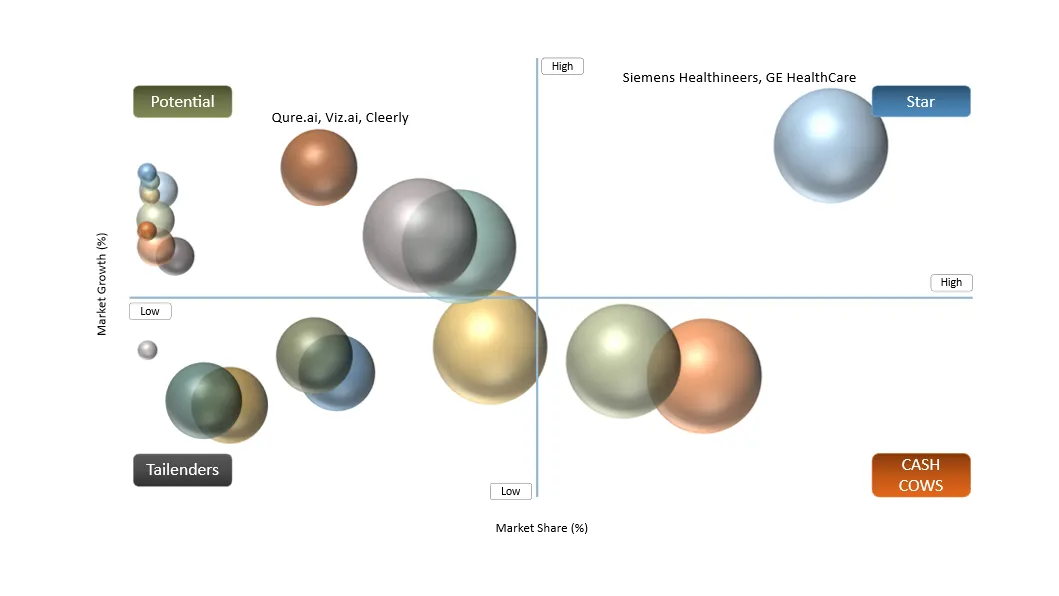
| Quadrant | Representative Companies | Rationale |
| Stars | Siemens Healthineers, GE HealthCare, Philips, Aidoc | Broad clinical reach, established hospital relationships, expanding AI portfolios and strong growth exposure. |
| Potential | Qure.ai, Viz.ai, Cleerly, PathAI, Ibex Medical Analytics, Brainomix | High-growth specialist platforms with differentiated clinical applications and expanding geographic reach. |
| Cash Cows | Canon Medical Systems, ResMed, iRhythm Technologies | Established installed bases and recurring software or monitoring revenue with strong customer retention. |
| Tailenders | Small single-indication developers without reimbursement or integration scale | Technically viable products that face constrained sales reach, evidence gaps or heavy dependence on pilots. |
STAR
Siemens Healthineers, GE HealthCare, Philips and Aidoc are positioned as Stars because they combine rapid growth exposure with broad clinical reach. The large imaging companies can distribute software through existing equipment, service and enterprise relationships. Aidoc has built a multi-condition clinical AI platform and enterprise deployment model. Their position is reinforced by integration capability, regulatory experience, implementation resources and access to large healthcare customers.
POTENTIAL
Qure.ai, Viz.ai, Cleerly, PathAI, Ibex Medical Analytics and Brainomix represent Potential players. They have differentiated products in imaging, cardiovascular care, pathology, oncology and stroke. Their growth depends on continued authorization, reimbursement, evidence, geographic expansion and successful integration into complex workflows. Strategic partnerships with health systems, pharmaceutical companies and device manufacturers can accelerate scale.
Software as a Medical Device Market Dynamics
Driver Impact Analysis
| Driver | Market Growth Impact | Demand Concentration | Impacted Use Case | Strategic Impact |
| AI-enabled diagnostic adoption | High | Radiology, cardiology and pathology | Detection, triage and interpretation | Expands authorized product use and enterprise deployment. |
| Remote and connected care | High | Chronic disease and ambulatory care | Monitoring and digital therapeutics | Creates recurring software demand beyond hospitals. |
| Hospital productivity pressure | Medium-High | Global health systems | Workflow automation and decision support | Supports ROI-based purchasing and broader clinician adoption. |
| Regulatory clarity for planned AI changes | Medium | U.S. and advanced markets | Adaptive and iterative AI products | Improves lifecycle planning and supports controlled updates. |
Driver: AI-Enabled Diagnostic Adoption Creates a Scalable Clinical Market
AI-enabled diagnostic software is expanding because it can address large volumes of imaging, waveform and clinical data while specialist capacity remains constrained. Radiology leads due to digital data availability, measurable interpretation tasks and integration with PACS. Cardiology, pathology and ophthalmology are following as algorithms demonstrate clinically relevant detection, quantification and prioritization. Each authorization increases confidence in regulated software and creates demand for integration, governance, monitoring and user training. Commercial success depends on converting technical accuracy into faster decisions, fewer missed findings and improved workflow consistency.
Restraint Impact Analysis
| Restraint | Drag on Market Growth | Primary Impact Area | Impacted Use Case | Strategic Impact |
| Regulatory and evidence complexity | High | Product development | High-risk and novel SaMD | Raises cost, extends timelines and favors experienced developers. |
| Cybersecurity and data governance | High | Deployment and post-market | Cloud and connected products | Increases procurement scrutiny and ongoing monitoring costs. |
| Interoperability barriers | Medium-High | Implementation | Hospital enterprise deployment | Creates integration delays and limits multi-site scaling. |
| Uncertain reimbursement | Medium | Commercialization | Digital therapeutics and monitoring | Restricts adoption outside innovation budgets. |
Restraint: Regulatory Validation and Integration Complexity Slow Commercial Scale
SaMD developers must translate a rapidly evolving software product into a stable intended use, risk classification and evidence package. High-risk products require robust clinical validation and may face long review or notified-body timelines. After authorization, hospitals may still require cybersecurity testing, interface development, workflow redesign and local validation. These steps create a gap between regulatory clearance and revenue. Smaller companies can struggle to fund evidence and implementation simultaneously. The most effective strategies combine early regulatory planning, modular architecture, standardized integration and a focused launch through reference centers.
Software as a Medical Device Market Segment Analysis
The global software as a medical device market is segmented based on product type, clinical application, deployment mode, technology, risk class, end user, business model, and region.
By Product Type
Diagnostic Software Will Continue to Lead Commercial Value
Diagnostic software is expected to remain the largest product category through 2035 because it addresses high-volume workflows with measurable clinical outputs. Radiology, cardiology, pathology and ophthalmology products can support detection, quantification, prioritization and interpretation. Clinical decision-support and monitoring software will grow as hospitals seek continuous risk assessment and workflow coordination. Digital therapeutics offer significant long-term potential but depend more heavily on reimbursement, patient engagement and sustained behavioral outcomes. Treatment-planning software remains valuable in oncology, surgery and interventional care where precision and workflow integration justify premium pricing.
By Clinical Application
Radiology and Medical Imaging Will Retain the Largest Share
Radiology will retain the largest application share because imaging data are digital, standardized and generated at high volume. The specialty has accumulated the largest number of AI-enabled authorizations and established integration with PACS and worklists. Cardiology is expanding through ECG analysis, ambulatory monitoring and imaging quantification. Oncology and pathology are gaining value through digital slides, biomarker analysis and treatment selection. Neurology and women’s health are emerging as developers improve multimodal prediction and remote monitoring. Future growth will depend on demonstrating that software changes care rather than simply producing additional information.
By Deployment Mode
Cloud-Based SaMD Will Record the Fastest Growth
Cloud deployment is expected to grow fastest because it supports rapid rollout, centralized updates, multi-site access and subscription pricing. It also enables vendors to monitor performance and cybersecurity across customers. Hospitals may retain on-premise systems for high-risk, latency-sensitive or data-residency requirements. Edge and hybrid architectures are gaining relevance when inference must continue during connectivity interruptions or when raw data should remain local. Deployment decisions will depend on clinical urgency, integration, security policy, data volume and the vendor’s ability to guarantee service levels.
By Technology
AI and Machine Learning Will Drive Market Expansion
AI and machine learning will generate the fastest growth as products move from rules-based logic toward pattern recognition and prediction. Computer vision dominates medical imaging, while signal processing supports ECG, respiratory and neurological applications. Digital biomarkers and predictive analytics are expanding through wearables and longitudinal data. Rules-based software remains important where transparency and deterministic behavior are required. The competitive advantage of AI will depend less on novelty and more on representative data, clinical utility, lifecycle management and the ability to monitor performance across diverse sites.
By Risk Class
Moderate-Risk Products Will Form the Largest Commercial Segment
Moderate-risk products are expected to form the largest segment because many diagnostic and decision-support applications can reach the market through established pathways while still supporting meaningful clinical value. Low-risk products face more price competition and may overlap with non-device software. High-risk SaMD can command strong value but requires more extensive evidence, regulatory review and post-market control. Developers must align intended use and user dependence carefully, because small changes in claims can alter risk classification and commercialization requirements.
By End User
Hospitals and Health Systems Will Remain the Dominant Buyers
Hospitals and health systems will remain the largest buyers because they control clinical workflows, imaging volumes, enterprise data and procurement. Diagnostic centers and ambulatory providers are expanding adoption through cloud-based products with lower implementation burden. Patients are direct users of digital therapeutics and monitoring software, but payer or provider sponsorship often determines scale. Pharmaceutical and medical-device companies are using SaMD for companion diagnostics, patient stratification and evidence generation. Payers and public-health organizations represent a growing opportunity for population-level risk management.
By Business Model
Subscription and SaaS Models Will Gain Share
Subscription and SaaS models will gain share because they align revenue with ongoing updates, support and cloud delivery. Per-study pricing fits high-volume imaging and monitoring workflows, while enterprise agreements simplify procurement across departments. Perpetual licenses remain in on-premise environments but create less predictable recurring revenue. Outcome-based models are strategically attractive, yet they require agreed endpoints and reliable attribution. The strongest vendors will combine a base subscription with usage, integration and premium monitoring components to balance predictability and growth.
Software as a Medical Device Market Geographical Penetration
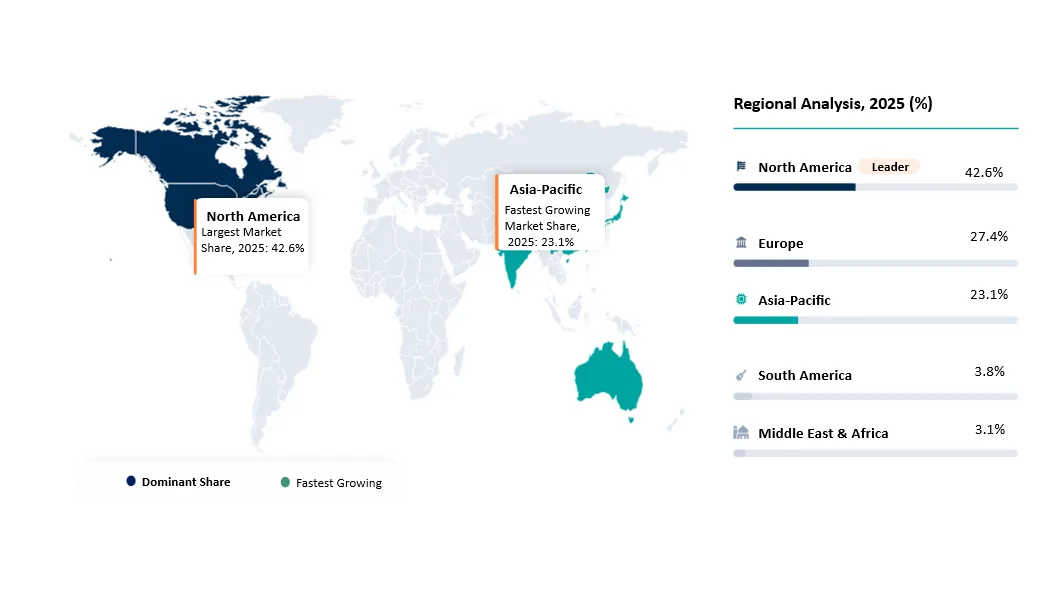
| Region | 2025 Share | Position |
| North America | 42.6% | Largest Market |
| Europe | 27.4% | Second-Largest |
| Asia-Pacific | 23.1% | Fastest Growing |
| South America | 3.8% | Emerging |
| Middle East and Africa | 3.1% | Early-Stage Growth |
Asia-Pacific Software as a Medical Device Market Outlook
China is an important growth market with rapid hospital digitization, large imaging volumes and a broad domestic AI developer base. The market supports imaging, pathology, screening and clinical decision-support applications, but approval, data localization and procurement differ from Western markets. Domestic partnerships and local evidence are essential. Leading hospitals can scale products quickly, while lower-tier facilities provide longer-term opportunity for software that extends specialist capacity. India presents strong long-term potential through large patient volumes, limited specialist availability and rapid adoption of cloud healthcare platforms. Imaging triage, ophthalmology, pathology, tuberculosis screening, maternal care and remote monitoring are important opportunities. Pricing must reflect constrained budgets, and commercialization often depends on diagnostic chains, hospital groups, government programs or international health partnerships. Local validation and offline or low-bandwidth functionality can improve adoption outside major cities.
Germany Software as a Medical Device Market Outlook
The European Software as a Medical Device market is expanding rapidly, driven by AI integration, structured national reimbursement frameworks and shifting regulatory compliance demands. Growth is propelled by the rising need for chronic disease management and remote patient monitoring. Germany is a leading European market supported by advanced hospitals, medical-device manufacturers and digital-health reimbursement initiatives. SaMD developers must navigate EU MDR classification, clinical evidence, quality systems and notified-body capacity. Hospital procurement also requires data protection, interoperability and local validation. Opportunity is strongest in imaging, cardiology, remote monitoring and software linked to reimbursable digital care. Partnerships with university hospitals and German device companies can accelerate evidence and distribution.
Middle East and Africa Software as a Medical Device Market Outlook
The region is heterogeneous. The UAE, Saudi Arabia and Israel are investing in digital hospitals, AI and advanced diagnostics, while many African markets require accessible software that works with limited specialist capacity and connectivity. Partnerships with government health systems, hospital groups and telecom providers are important. Data residency, procurement and clinician training shape adoption. Imaging, screening, remote monitoring and population health offer the strongest near-term opportunities.
U.S. Software as a Medical Device Market Landscape
The U.S. is the largest national market because it combines active FDA authorization, high hospital software spending, large clinical datasets and deep venture investment. The FDA’s AI-enabled medical-device list continues to expand, with radiology representing the largest concentration and cardiovascular, obstetric, gastroenterology and other specialties gaining presence. The August 2025 final guidance on predetermined change control plans gives sponsors a structured option for planned AI modifications. Adoption is strongest where products integrate with existing workflows and can demonstrate time savings, earlier intervention or reduced diagnostic variability.
Japan Software as a Medical Device Market Trends
Japan offers a large technology-oriented healthcare market with strong imaging, cardiovascular and medical-device capabilities. Local regulatory strategy, language, clinical evidence and integration with hospital systems influence launch timing. Domestic device companies provide partnership opportunities for global developers. Growth is supported by workforce pressure, aging demographics and interest in AI-assisted diagnosis. Commercialization benefits from relationships with specialist societies and reference hospitals.
Software as a Medical Device Market Competitive Landscape
- Competition includes established imaging and device manufacturers, specialized AI companies, digital-therapeutic developers, monitoring platforms and clinical-software vendors.
- Large device companies use installed hardware, service networks and hospital relationships to distribute software, while focused developers differentiate through clinical depth and speed of innovation.
- Enterprise buyers increasingly prefer vendors that can support integration, governance and monitoring across multiple applications, creating pressure on single-product companies to partner or consolidate.
- Regulatory execution, cybersecurity, workflow evidence and implementation quality are becoming stronger differentiators than algorithm accuracy alone.
- Partnerships with electronic health record vendors, cloud providers, hospital groups and pharmaceutical companies are central to scaling distribution and data access.
- Market consolidation is expected as strategic buyers seek authorized products, clinical datasets, specialist teams and recurring software revenue.
Key Companies of the Software as a Medical Device Market
- Siemens Healthineers
- GE HealthCare
- Philips
- Canon Medical Systems
- Aidoc
- Viz.ai
- HeartFlow
- Qure.ai
- Tempus AI
- Butterfly Network
- iRhythm Technologies
- ResMed
- AliveCor
- Cleerly
- PathAI
- Ibex Medical Analytics
- Brainomix
- Oura Health
- Anumana
- Median Technologies
Software as a Medical Device Market Major Pain Points
- Complex and evolving regulatory requirements across jurisdictions.
- Long clinical-validation and hospital procurement cycles.
- Cybersecurity exposure and dependence on third-party software or cloud infrastructure.
- Interoperability challenges across imaging, electronic health record and device ecosystems.
- Dataset bias, performance drift and limited generalizability across sites or populations.
- Uncertain reimbursement for digital therapeutics and remote monitoring applications.
- Clinician alert fatigue and resistance when software does not fit workflow.
- Difficulty converting pilots into enterprise-scale recurring contracts.
Software as a Medical Device Market Recent Developments
- January 2026: The FDA listed final Clinical Decision Support Software guidance among its digital-health guidance documents, providing updated clarity on software functions that may or may not fall under device oversight.
- January 2026: The FDA issued final General Wellness guidance for low-risk devices, helping developers distinguish general wellness functions from regulated medical-device claims.
- August 2025: The FDA issued final guidance on predetermined change control plans for AI-enabled device software functions, covering planned modifications, modification protocols and impact assessment.
- June 2025: The FDA issued final cybersecurity guidance for medical devices, reinforcing quality-system and premarket documentation expectations for connected and software-based products.
- Throughout 2025 and early 2026: The FDA continued adding AI-enabled devices across radiology, cardiovascular, obstetric, gastroenterology and other panels, demonstrating continued authorization activity beyond a single specialty.
Analyst View / Opinion on Software as a Medical Device Market
The market is moving from experimentation toward institutional adoption, but commercial winners will be fewer than the number of authorized products. Hospitals are rationalizing algorithm portfolios and demanding enterprise governance, integration and evidence. A high-performing model that creates new alerts without improving decisions will struggle to renew. Developers should therefore design for workflow, adoption and monitoring from the beginning rather than treating these activities as post-clearance implementation.
- The SaMD market will sustain double-digit growth as AI-enabled diagnostics, monitoring and digital therapeutics become embedded in routine care.
- Radiology remains the largest near-term application, while cardiology, pathology and multimodal decision support offer strong expansion potential.
- Cloud and subscription models will gain share, but hybrid deployment will remain important for latency, resilience and data-residency requirements.
- Predetermined change control plans can become a competitive advantage for companies capable of disciplined AI lifecycle management.
- Health systems will favor vendors that integrate clinical value, cybersecurity, interoperability and implementation support.
- Long-term leadership will depend on recurring enterprise adoption, evidence of patient or workflow benefit and reliable post-market performance.
Software as a Medical Device Market Target Audience
| Industry | Who Should Buy This Report? | Reason to Buy This Report |
| SaMD Developers | Founders, product leaders, regulatory teams and commercial executives | Assess market size, segmentation, authorization strategy and competitive positioning. |
| Medical-Device Companies | Digital-health leaders, portfolio teams and business development | Identify software partnerships, acquisitions and platform opportunities. |
| Hospitals and Health Systems | CIOs, CMIOs, clinical leaders and procurement teams | Evaluate adoption trends, buyer criteria, pricing and implementation risks. |
| Cloud and Data Providers | Healthcare business units and partnership teams | Understand regulated software infrastructure and data-governance demand. |
| Pharma and Biotechnology | Digital medicine, companion diagnostic and evidence teams | Assess SaMD applications in patient selection, monitoring and treatment support. |
| Investors and Consulting | Venture capital, private equity, banks and advisors | Evaluate growth, funding, consolidation and commercial risk. |
| Regulators and Payers | Policy, reimbursement and public-health stakeholders | Understand evidence, governance, access and system impact. |
Why Choose DATAM?
- Data-driven insights combining market sizing, regulatory pathways, authorization activity, clinical adoption and country-level opportunity.
- Post-purchase analyst consultations for market entry, segmentation, partnership strategy and custom commercial modeling.
- Annual updates covering guidance, authorization, funding, partnerships, cybersecurity and competitive changes.
- Specialized focus on emerging markets and implementation realities rather than generalized digital-health summaries.
- Actionable analysis linking product design, evidence, workflow integration, pricing and enterprise procurement.
What DATAM Uniquely Provides
- Ten-year forecasts across product type, application, deployment, technology, risk class, end user, business model and region.
- SaMD-specific analysis separating regulated medical functions from general healthcare software and wellness applications.
- Buyer-focused evaluation of evidence, cybersecurity, interoperability, implementation and renewal criteria.
- Regulatory analysis covering FDA, IMDRF and European medical-device software requirements.
- Country-level views connecting digital maturity, authorization, hospital procurement and growth opportunity.
- Strategic recommendations for partnerships, enterprise deployment, lifecycle monitoring and international expansion.
Questions This Report Answers
- How will the global software-as-a-medical-device market evolve from 2025 through 2035?
- Which product types, clinical applications and technologies offer the strongest growth?
- How will AI lifecycle guidance and predetermined change control plans affect competition?
- Which deployment and business models support the strongest recurring revenue?
- What evidence, cybersecurity and integration barriers constrain hospital adoption?
- Which regions offer the best balance of regulatory clarity, digital maturity and growth?
- How should companies build partnerships for data, validation, distribution and enterprise integration?



























































