


Smart Water Valves Market Size and Overview
The global smart water valves market was valued at US$2.8 billion in 2025 and is projected to reach US$6.7 billion by 2035, growing at a CAGR of 9.2% during 2026–2035. The global smart water valves market is driven by the expansion of smart water infrastructure, growing adoption of automated water management systems, rising demand for water conservation and leak detection, growing deployment of connected irrigation systems, and the continuous need for remote monitoring and automated control of water flow and pressure across residential, commercial, industrial, municipal and agricultural applications.
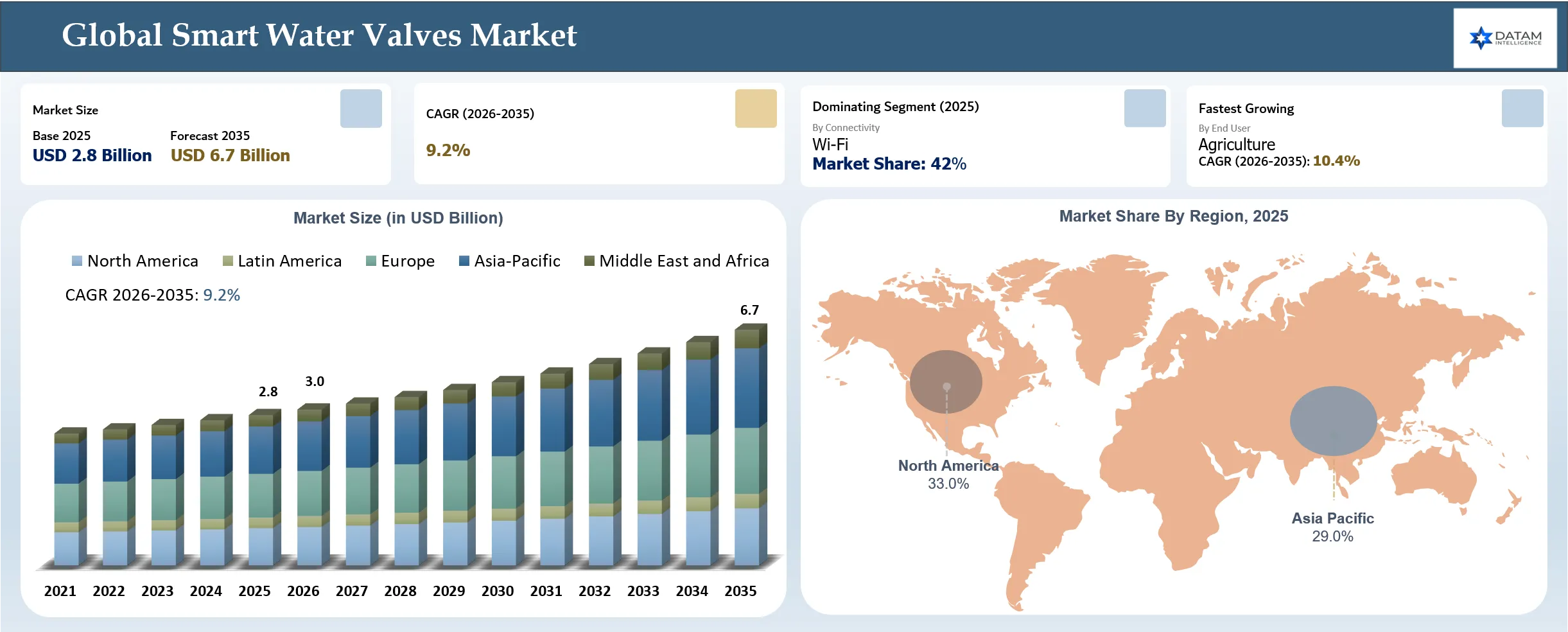
Increasing water losses, aging distribution infrastructure, and rising water scarcity are driving the adoption of smart water valves for automated flow regulation, pressure management, leak isolation, and remote network control. For instance, the U.S. EPA estimates that water systems lose an average of 14% of treated water through leaks. At the same time, UN-Water projects global water demand to increase by 20–30% by 2050, increasing the need for efficient water management across municipal, industrial, commercial, residential, and agricultural applications.
Smart Water Valves Market Key Takeaways
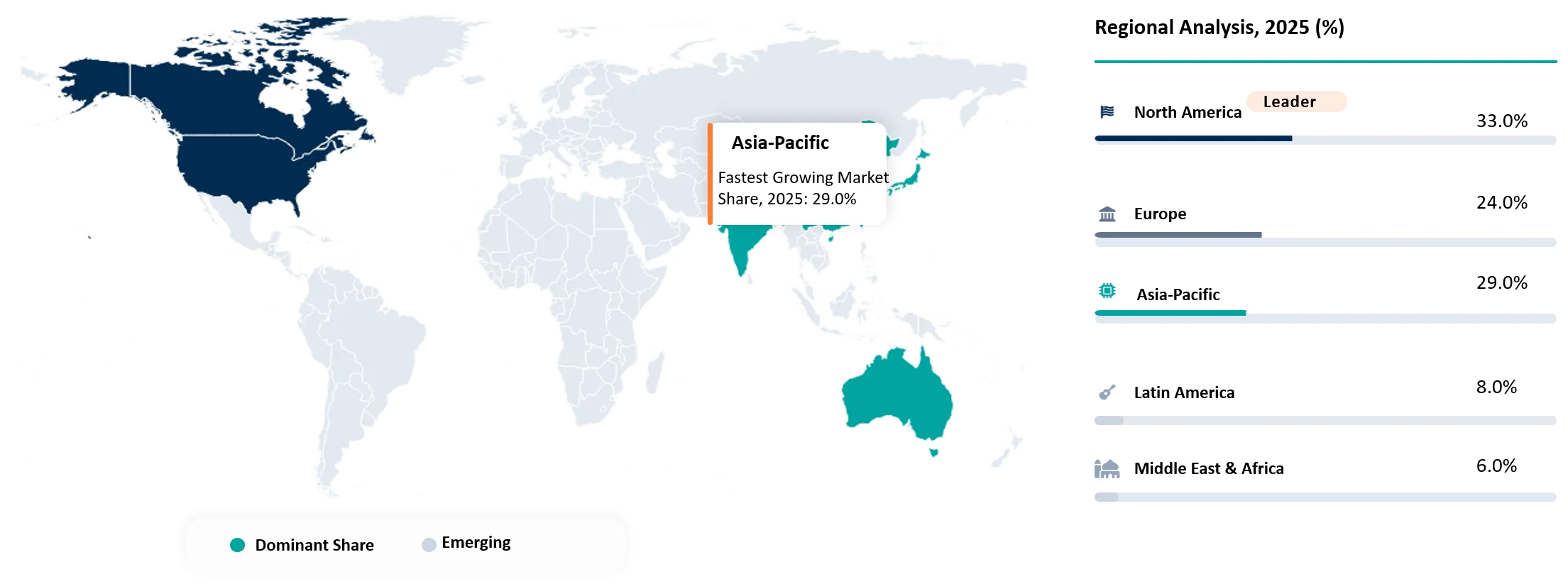
- North America held the largest regional market share, accounting for approximately 33% of the global smart water valves market in 2025, supported by aging water infrastructure, increasing investments in water-network modernization, growing adoption of connected water-management technologies, and rising demand for automated leak detection and shutoff solutions. The United States and Canada remain major contributors due to established smart-home adoption, municipal water infrastructure requirements, and increasing deployment of IoT-enabled valves across residential, commercial, industrial, and utility applications.
- Wi-Fi dominated the global smart water valves market by connectivity, accounting for approximately 42% of the market in 2025, supported by its widespread compatibility with residential, commercial, and building water-management systems. Wi-Fi-enabled smart valves can connect with mobile applications, cloud platforms, and smart-building networks to enable remote operation, automated shutoff, leak detection, and real-time water-flow monitoring.
- Agriculture is expected to be the fastest-growing end-user segment, registering an estimated CAGR of 10.4% during 2026–2035, driven by increasing adoption of automated irrigation, precision agriculture, water conservation technologies, and IoT-enabled farm-management systems. Smart valves enable remote flow control, automated irrigation scheduling, and integration with soil-moisture sensors, weather systems, and irrigation controllers, supporting more efficient water use across farms, greenhouses, and other agricultural applications.
Smart Water Valves Market Industry Trends and Strategic Insight
- Adoption of connected and automated valve technologies is increasing as utilities, buildings, industries, and agricultural operators require remote flow control, leak detection, and automated shutoff. Manufacturers are integrating smart actuators, sensors, and Wi-Fi, Bluetooth, and cellular connectivity into valve systems.
- Expansion of water conservation and leakage reduction practices is increasing as end users focus on reducing water losses and improving operational efficiency. Smart valves support automated flow regulation, pressure management, leak detection, and irrigation control.
- Integration of IoT, cloud, and SCADA technologies is increasing as water operators require real-time monitoring and remote management. Connected valves provide flow, pressure, valve-position, and system-status data to support automated control and predictive maintenance.
- Shift toward integrated smart water management systems is increasing as utilities and end users connect smart valves with water meters, sensors, irrigation controllers, building management systems, and digital platforms. This integration enables centralized monitoring, automated flow adjustment, remote valve operation, and faster response to leaks and abnormal water usage.
Smart Water Valves Market Scope
| Metrics | Details | |
| 2025 Market Size | USD 2.8 Billion | |
| 2035 Projected Market Size | USD 6.7 Billion | |
| CAGR (2026-2035) | 9.2% | |
| Largest Market | North America | |
| Fastest Growing Market | Asia-Pacific | |
| By Valve Design | Ball Valves, Gate Valves, Butterfly Valves, Globe Valves, Check Valves, Pressure-Reducing Valves, Others | |
| By Product Type | Motorized Smart Water Valves, Solenoid Smart Water Valves, Pneumatic Smart Water Valves, Others | |
| By Connectivity | Wi-Fi, Bluetooth, Zigbee, Cellular, Ethernet/Wired, Other | |
| By End User | Residential, Commercial, Industrial, Municipal & Utilities, Agricultural | |
| By Region | North America | U.S., Canada, Mexico |
| Europe | Germany, United Kingdom, France, Italy, Spain, Netherlands, Switzerland, Sweden, Norway, Denmark, Belgium, Poland, Austria, Ireland, Portugal, Greece, Finland, and Rest of Europe. | |
| Asia-Pacific | China, Japan, India, South Korea, Australia, New Zealand, Singapore, Malaysia, Thailand, Indonesia, Vietnam, Philippines, Taiwan, and Rest of Asia Pacific. | |
| Latin America | Brazil, Argentina, Rest of Latin America | |
| Middle East and Africa | UAE, Saudi Arabia, South Africa, Israel, Türkiye, Rest of Middle East and Africa | |
| Report Insights Covered | Competitive Landscape Analysis, Company Profile Analysis, Market Size, Share, Growth | |
Smart Water Valves Market Disruption Analysis
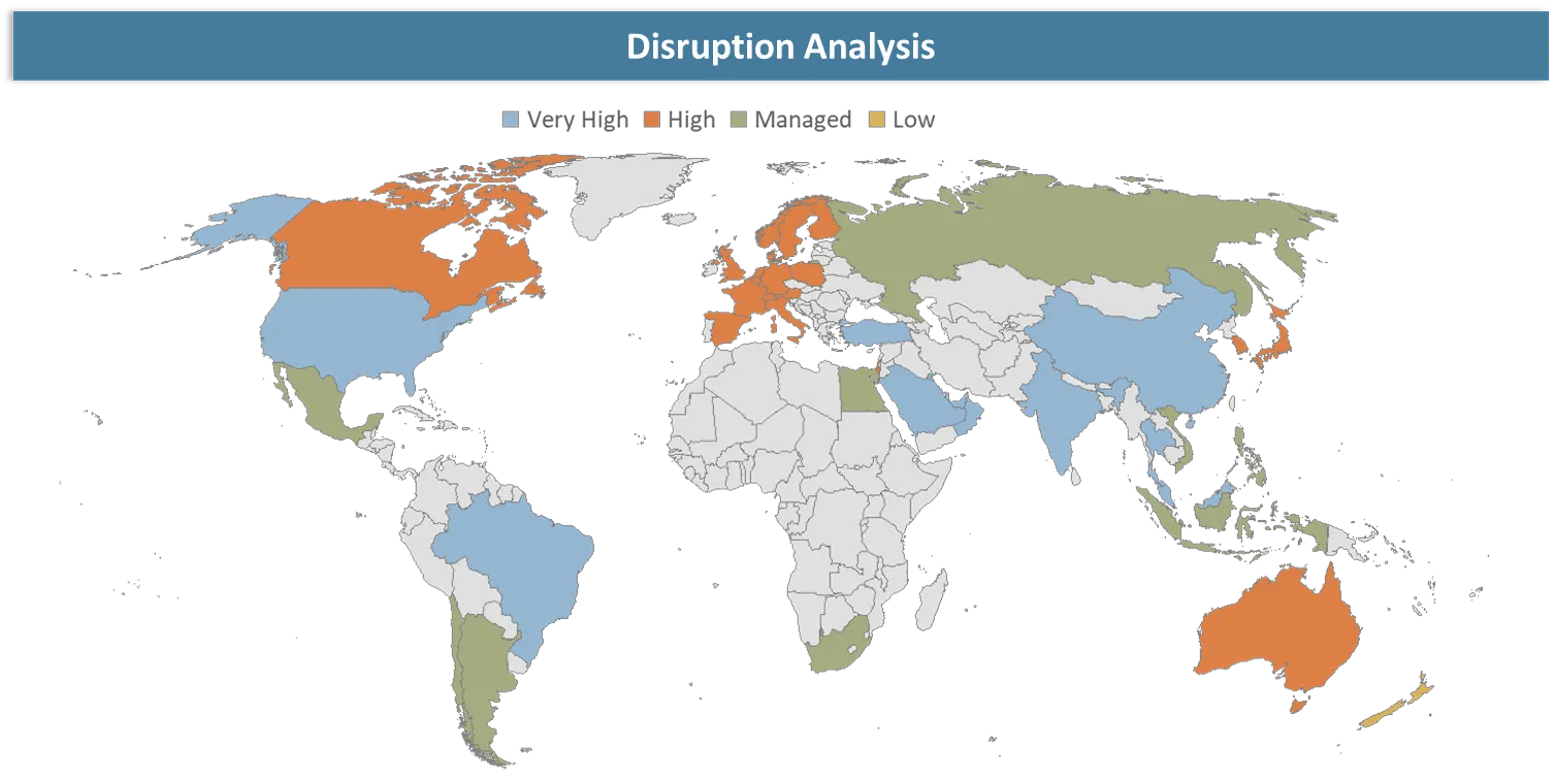
Shift Toward Connected and Digitally Integrated Smart Water Valve Systems
The global smart water valves market is shifting from conventional manually operated valves toward connected, automated, and remotely controlled systems. Smart valves integrate actuators, sensors, and communication technologies to regulate water flow, pressure, and shutoff functions with limited manual intervention. This is improving operational control across municipal networks, commercial buildings, industrial facilities, and residential water systems.
Integration with IoT, cloud platforms, SCADA, building management systems, and smart irrigation networks is also reshaping the market. These technologies enable centralized valve monitoring, remote operation, automated irrigation, and faster response to abnormal flow conditions. Manufacturers are therefore moving beyond standalone valve products toward connected solutions that combine valve hardware with monitoring, communication, and digital control capabilities.
Smart Water Valves Market BCG Matrix: Company Evaluation
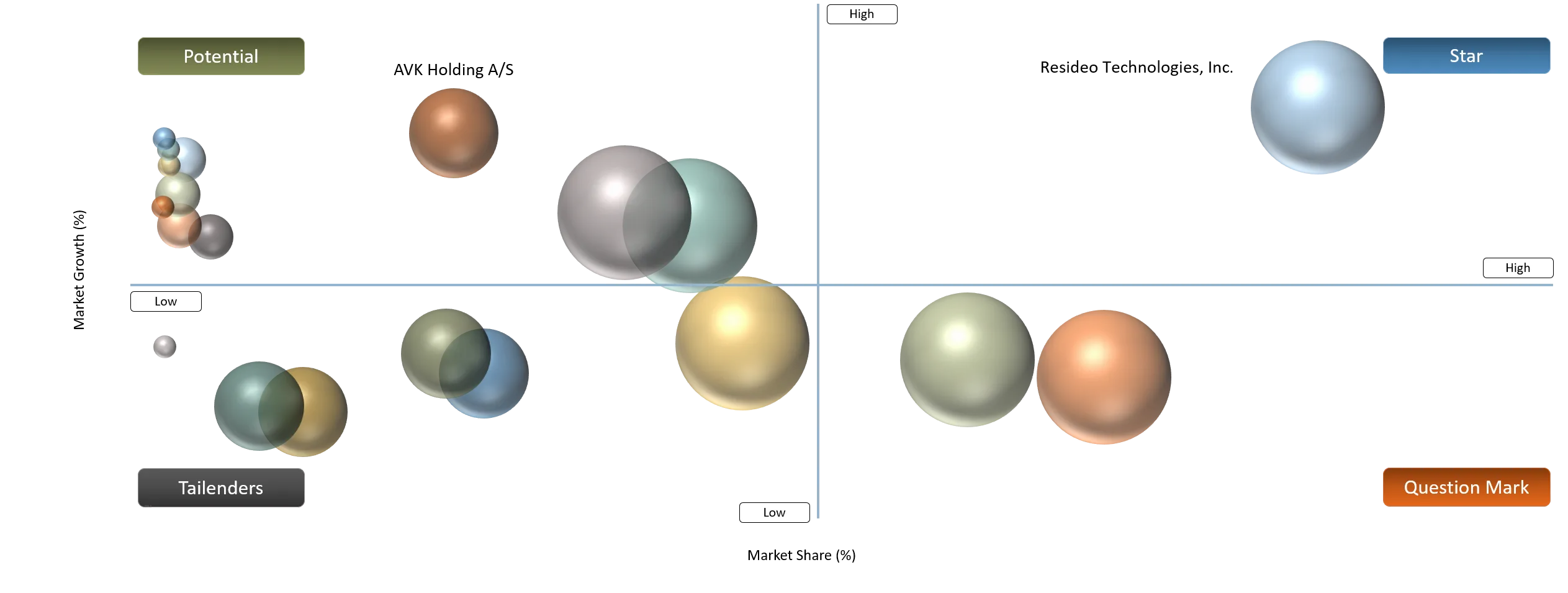
CLA-VAL Company, Resideo Technologies, Inc., Belimo Holding AG, Moen Inc., and Georg Fischer Ltd. (GF Piping Systems) are positioned as Stars, supported by established smart valve portfolios, connected technologies, strong customer bases, and exposure to municipal, commercial, residential, and industrial water-management applications. Danfoss, Emerson Electric Co., and AVK Holding A/S are positioned as Potential Stars, reflecting established valve and automation portfolios, digital capabilities, and broad applications across water infrastructure and industrial systems.
Cair Euromatic Automation Ltd., Badger Meter, Inc., Geospace Technologies Corporation, and Rain Bird Corporation are positioned as Question Marks, with established valve, monitoring, irrigation, and connected water-management capabilities but comparatively narrower global positioning. Orbit Irrigation Products, Inc. and AquaFlow Technologies Inc. are positioned as Tailenders, reflecting more focused product portfolios and stronger concentration in specific irrigation or water-management applications.
Smart Water Valves Market Dynamics
Driver Impact Analysis
| Driver | Market Growth Impact (%) | Demand Concentration | Impacted Smart Water Valve Areas | Strategic Impact |
Increasing Water Losses and Leakage Detection Requirements | 30% | Strong demand across North America, Europe, Asia-Pacific, and the Middle East, particularly in water-stressed cities and aging municipal networks. | Smart shutoff valves, leak detection valves, pressure-control valves, remotely actuated valves | Increases adoption of connected valves that can detect abnormal flow, isolate leaks, automate shutoff, and reduce non-revenue water losses. |
Modernization of Aging Water Distribution Infrastructure | 25% | High concentration across North America and Europe, with expanding demand across rapidly urbanizing markets in Asia-Pacific and the Middle East. | Motorized valves, smart control valves, pressure-reducing valves, electronically actuated valves | Supports replacement of manually operated valves with remotely monitored and automated systems, improving network control, reliability, and maintenance efficiency. |
Growing Water Scarcity and Conservation Requirements | 20% | Strong demand across water-stressed regions of Asia-Pacific, the Middle East, Africa, North America, and Southern Europe. | Smart irrigation valves, flow-control valves, automated shutoff valves, pressure-management valves | Encourages precise water-flow regulation, automated scheduling, and remote control to reduce unnecessary consumption across agricultural, municipal, commercial, and residential applications. |
Expansion of Smart Water and Digital Utility Infrastructure | 15% | Concentrated in technologically advanced markets across North America, Europe, and Asia-Pacific, with growing adoption in emerging urban water networks. | IoT-enabled valves, cellular valves, Wi-Fi valves, SCADA-connected valves, digitally controlled valves | Drives integration of valves with IoT, cloud platforms, SCADA, AMI, and water-management software, enabling centralized monitoring, diagnostics, and remote operation. |
Growth of Smart Irrigation and Automated Water Management | 10% | Strong demand across agricultural regions in Asia-Pacific, North America, Europe, Latin America, and the Middle East. | Smart irrigation valves, solenoid valves, motorized valves, wireless-connected valves | Expands demand for automated irrigation control, remote scheduling, flow monitoring, and weather- or sensor-based water management, reducing manual intervention and improving water-use efficiency. |
Expansion of Smart Water and Digital Utility Infrastructure
The expansion of intelligent water infrastructure is increasing demand for smart valves that can operate as part of digitally managed water networks. Utilities are adopting telemetry, advanced metering, real-time controls, and SCADA to collect and manage operational data remotely. The U.S. EPA identifies these technologies as established components of intelligent water systems that improve access to timely data and support operational decision-making.
Major manufactures such as AVK Smart Water uses IoT sensors on valves and other network assets to transmit pressure, flow, temperature, and valve-position data to cloud platforms and third-party systems such as SCADA and GIS. Similarly, GF Piping Systems' NeoFlow combines intelligent pressure regulation with optional flow and water-quality monitoring for water distribution networks. These developments are increasing the role of connected valves in remote monitoring, pressure management, leakage reduction, and automated network control.
Restraint Impact Analysis
| Restraint | Market Growth Impact (%) | Demand Concentration | Impacted Use Case | Strategic Impact |
High Initial Cost of Smart Valve Systems | 30% | Strong impact across price-sensitive markets in Asia-Pacific, Latin America, the Middle East, and Africa, particularly among smaller utilities and commercial users. | Smart shutoff valves, IoT-enabled valves, motorized valves, automated irrigation valves | Higher upfront costs for valves, sensors, actuators, gateways, and control platforms can delay replacement of conventional valves and extend purchasing cycles. |
Complexity of Integration with Existing Water Infrastructure | 25% | Significant impact across municipal, industrial, and commercial water networks with large installed bases of conventional valves and legacy control systems. | SCADA-connected valves, remotely actuated valves, smart pressure-control valves, building water systems | Integration with legacy SCADA, BMS, communication networks, and existing piping can require additional hardware, engineering, and installation work, increasing deployment complexity. |
Cybersecurity and Data Privacy Risks | 20% | High impact in connected municipal, industrial, commercial, and critical water infrastructure across North America, Europe, and Asia-Pacific. | IoT valves, cloud-connected valves, cellular valves, remotely controlled systems | Network-connected valves create additional cybersecurity requirements, increasing the need for authentication, encryption, secure communications, software updates, and continuous system monitoring. |
Limited Connectivity and Technical Infrastructure | 15% | Stronger impact in rural, agricultural, remote, and developing regions where reliable internet, cellular networks, or digital infrastructure may be limited. | Wireless smart valves, cellular valves, LoRaWAN valves, remote irrigation systems | Poor connectivity can limit real-time monitoring and remote control, reducing the operational benefits of connected valves and increasing reliance on local or manual control. |
Maintenance and Skilled Workforce Requirements | 10% | Broad impact across municipal utilities, industrial facilities, commercial buildings, and agricultural installations, particularly where technical resources are limited. | Motorized valves, sensor-integrated valves, automated control systems, IoT-enabled valves | Smart valves require periodic sensor, actuator, communication, software, and control-system maintenance, increasing technical requirements compared with conventional manually operated valves. |
Complexity of Integration with Existing Water Infrastructure
Integrating smart water valves into existing water networks can be complex because many municipal, industrial, and commercial systems still use manually operated valves, legacy SCADA systems, older controllers, and different communication protocols. For instance, Emerson’s intelligent valve and actuator solutions can connect valve assets with digital monitoring and control systems, while Danfoss NovoCon actuators communicate with building management systems through protocols such as BACnet and Modbus. Integrating these technologies with existing infrastructure may require system upgrades, configuration, and compatibility testing, which can increase project complexity and deployment time.
Smart Water Valves Market Segmentation Analysis
The global smart water valves market is segmented based on valve design, product type, connectivity, end user and region.
Wi-Fi Connectivity Gains Adoption Through App-Based Water Management
Wi-Fi is anticipated to hold the largest share of the smart water valves market due to its widespread compatibility with residential, commercial, and building water-management systems. Wi-Fi-enabled smart valves can connect directly with mobile applications, cloud platforms, and smart home or building networks, supporting remote monitoring, automated shutoff, leak detection, and real-time water-flow management.
Manufacturers are expanding smart water valve portfolios with Wi-Fi connectivity, app-based control, and automated valve operation across residential, commercial, and potable-water applications. For instance, in August 2025, Connexion Developments Ltd introduced the ABVM WiFi WRAS Approved Smart Ball Valve, a connected motor-actuated valve designed for drinking-water, residential, commercial, industrial, agricultural, and irrigation applications. The valve provides remote opening and closing through the Smart Life App over Wi-Fi and features custom timer settings, visual valve-position indication, and power-failure memory.
Smart Water Valves Market Geographical Penetration
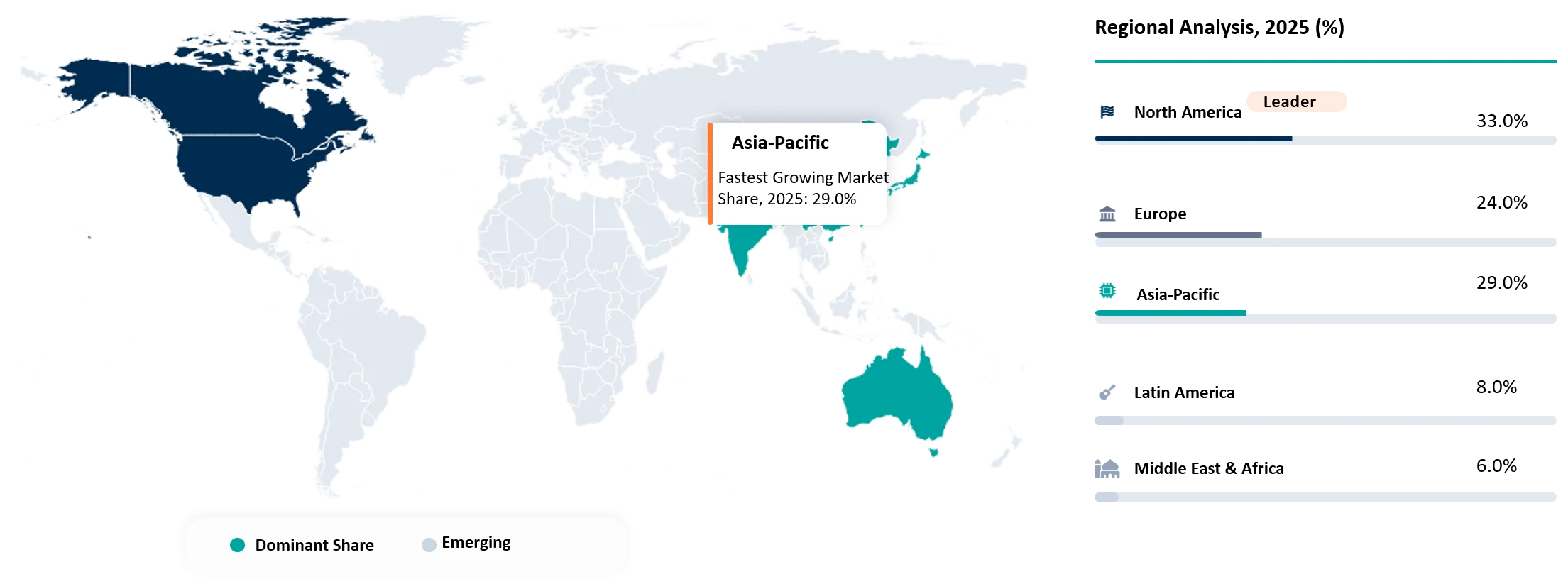
North America Smart Water Valves Market Growth Driven by Water Infrastructure Upgrades and Digitalization
North America is anticipated to account for a significant share of the smart water valves market, supported by high residential water consumption, aging water infrastructure, and continued investment in water and wastewater systems. Canada is expanding investment in water infrastructure, with 1,418 water and wastewater projects funded under the Investing in Canada Infrastructure Program across 1,012 communities as of March 31, 2025. In addition, 101 water and wastewater projects were completed during fiscal 2024–25, supporting modernization of water infrastructure and creating an environment for connected monitoring and control technologies.
U.S Smart Water Valves Market Trends
The U.S. smart water valves market is supported by aging water infrastructure, significant water losses, increasing investment in distribution networks, and growing adoption of digital water-management technologies. The U.S. EPA estimates that public drinking-water systems require US$625 billion over 20 years, including US$422.9 billion for distribution and transmission infrastructure, creating a substantial replacement and modernization requirement for valves and related control equipment.
Product developments are increasingly integrating smart valve functions with mobile applications and filtration systems, expanding adoption in residential water management. For instance, in February 2025, GE Appliances, announced the GE Profile Smart Water Valve with integrated filtration, a whole-home water-management solution that combines water filtration with smart leak detection and remote water shutoff. Powered by the SmartHQ app, the valve enables homeowners to monitor water usage and remotely shut off the water supply, while its integrated filtration system reduces sand, sediment, and chlorine taste and odor.
Asia Pacific Smart Water Valve Market Expands with Smart Water Infrastructure
Asia Pacific is experiencing increasing demand for smart water valves due to rapid urbanization, water-infrastructure modernization, rising water conservation requirements, and the adoption of digital water-management technologies. Nation such as India is modernizing water infrastructure through the Jal Jeevan Mission, which had connected over 15.72 crore rural households to tap-water supplies by October 2025. The program's use of IoT monitoring, flow measurement, and water-quality systems is supporting demand for automated and connected water valves.
China Smart Water Valves Market Trends
China represents a significant growth market for smart water valves due to large-scale water infrastructure investment, leakage-control programs, expansion of digital water-management systems, and modernization of urban water networks. In 2025, China invested more than US$190.7 billion in water-conservancy facilities, with 47,563 water-conservancy projects undertaken during the year. This continued infrastructure spending supports the deployment of automated flow-control, pressure-management, remote monitoring, and smart valve technologies across municipal and industrial water systems.
China’s smart water valve product landscape is evolving toward connected, automated, and sensor-enabled valve systems that support remote control, flow monitoring, leak detection, and intelligent irrigation. For instance, in May 2026, SONOFF launched the Hydro DUO, a dual-channel Zigbee smart water valve designed for automated irrigation. The valve provides independent control of two watering zones, supports up to six watering schedules per channel, and incorporates a flow meter for water-use monitoring.
Japan Smart Water Valves Market Trends
Japan's smart water valves market is supported by the extensive installed water network and the increasing need to modernize aging infrastructure. Japan's water infrastructure is facing increasing replacement pressure, with approximately 746,000 km of water pipelines, of which 25.3% have exceeded the statutory 40-year service life. The pipeline renewal rate stood at only 0.61%, indicating a substantial gap between the existing replacement pace and the level required to address aging infrastructure. More than 20,000 water-leak incidents annually further increase the need for advanced monitoring, automated shutoff, and remotely controlled valve systems.
Japan is also accelerating the adoption of digital technologies in water management. For instance, in March 2025, the Tokyo Metropolitan Government established its Water Smart Meter Implementation Policy, targeting the installation of approximately 1 million smart meters at public facilities and locations where meter reading is difficult between FY2025 and FY2028, with the longer-term objective of achieving installation across all households during the 2030s. The initiative is expected to increase the availability of real-time water-use data and support more efficient maintenance and facility management.
Smart Water Valves Market Competitive Landscape
- CLA-VAL Company, Resideo Technologies, Inc., Belimo Holding AG, Moen Inc., Georg Fischer Ltd. (GF Piping Systems), Danfoss, AVK Holding A/S, Emerson Electric Co., Rain Bird Corporation, and FrankEver are among the notable players in the global smart water valves market. Competition is primarily focused on smart valve functionality, connectivity, remote monitoring and control, leak detection, pressure and flow management, system integration, product reliability, and development of connected water-management solutions for residential, commercial, industrial, municipal, and agricultural applications.
- CLA-VAL Company (United States), Resideo Technologies, Inc. (United States), Belimo Holding AG (Switzerland), Moen Inc. (United States), Cair Euromatic Automation Ltd. (India), Badger Meter, Inc. (United States), Geospace Technologies Corporation (United States), Rain Bird Corporation (United States), Georg Fischer Ltd. (Switzerland), Danfoss (Denmark), AVK Holding A/S (Denmark), Orbit Irrigation Products, Inc. (United States), Emerson Electric Co. (United States), AquaFlow Technologies Inc. (United States), and FrankEver (China) are among the key companies operating in the global smart water valves market.
Key Developments
- August 2025: Connexion Developments Ltd introduced the ABVM WiFi WRAS Approved Smart Ball Valve, a connected motor-actuated valve designed for drinking-water, residential, commercial, industrial, agricultural, and irrigation applications. The valve provides remote opening and closing through the Smart Life App over Wi-Fi and features custom timer settings, visual valve-position indication, and power-failure memory.
- January 2025: FrankEver launched the FK-BV03 Smart Water Valve, a Tuya-enabled valve designed for remote water-flow control, scheduling, voice control, and automated irrigation applications. The product was introduced as a new smart water valve with a dedicated valve design for residential and irrigation water management.
- November 2024: Aqara announced the global availability of its Smart Valve Controller T1, a retrofit smart water valve controller designed to provide remote and automated control of household water shutoff valves. The device enables automatic water shutoff when connected to leak sensors and supports Matter-enabled smart-home integration.
- January 2024: GE Appliances announced the GE Profile Smart Water Valve with Integrated Filtration, with commercial launch planned for Q2 2025. The smart valve connects with the SmartHQ app to enable remote monitoring of water usage and remote shutoff to help protect homes from water leaks. The product combines water filtration with digitally controlled water-valve functionality.
Key Procurement Priorities and Buyer Evaluation Criteria
- Refractory Smart water valve buyers prioritize products that provide reliable flow control, automated shutoff, leak detection, remote operation, and continuous monitoring while maintaining compatibility with existing water infrastructure.
- Evaluation is based on criteria such as valve type, flow capacity, pressure rating, response time, actuator performance, connectivity, communication range, leak-detection capability, battery life or power requirements, IP protection, automation features, compatibility with water systems, and reliability under different operating conditions.
- Buyers consider factors including product cost, installation expenses, connectivity and gateway requirements, software or subscription costs, maintenance requirements, replacement frequency, energy consumption, expected service life, and total cost of ownership. Reliable product availability, technical support, and ease of integration are also considered when selecting smart valve suppliers.
- Preference is given to manufacturers with proven valve performance, broad product portfolios, multiple connectivity options, strong sensor and actuator capabilities, reliable manufacturing quality, cybersecurity features, technical expertise, and the ability to provide customized solutions for residential, commercial, industrial, municipal, and agricultural applications.
- Municipal water utilities, industrial facilities, commercial buildings, residential users, and agricultural operators particularly prioritize suppliers that can provide reliable remote monitoring, automated flow and pressure control, leak detection, rapid shutoff, system integration, and technical support while reducing manual valve operation and water losses.
Why Choose DataM?
- Technological Innovations: Examines advancements in smart water valve technologies, including IoT connectivity, Wi-Fi, Bluetooth, cellular communication, smart actuators, sensors, automated shutoff, leak detection, and remote monitoring systems.
- Product Performance & Market Positioning: Evaluates smart valves based on flow capacity, pressure rating, response time, connectivity, actuator performance, leak detection, automation, durability, power requirements, and compatibility with existing water infrastructure.
- Real-World Evidence: Highlights deployment of smart water valves across municipal water networks, residential buildings, commercial facilities, industrial plants, agricultural irrigation systems, and water-treatment applications.
- Market Updates & Industry Changes: Tracks product launches, smart valve upgrades, connectivity developments, infrastructure projects, partnerships, acquisitions, manufacturing expansions, and digital water-management initiatives across major regions.
- Competitive Strategies: Analyzes strategies including product innovation, IoT integration, geographic expansion, partnerships, software integration, customized solutions, and expansion into municipal, industrial, commercial, residential, and agricultural applications.
- Pricing & Market Access: Examines smart valve costs based on valve type, size, materials, connectivity, sensors, actuators, software requirements, installation, maintenance, and system integration. It also evaluates direct sales, distributors, online channels, and system integrators.
- Market Entry & Expansion: Identifies opportunities driven by water infrastructure modernization, leakage reduction, water conservation, smart irrigation, digital utilities, and automated building water management, while assessing local partnerships, distribution expansion, and connected product development.
Target Audience
- Smart Water Valve Manufacturers and Connected Valve Suppliers
- Municipal Water Utilities and Water Distribution Companies
- Water and Wastewater Treatment Plants and Operators
- Residential Water Management and Smart Home Solution Providers
- Commercial Building Owners, Facility Managers, and Property Management Companies
- Industrial Water Management and Process Industry Operators
- Agricultural Irrigation Companies and Smart Irrigation Operators
- Plumbing, HVAC, and Building Water-System Contractors





























































