


Smart Switchgear Market Size and Overview
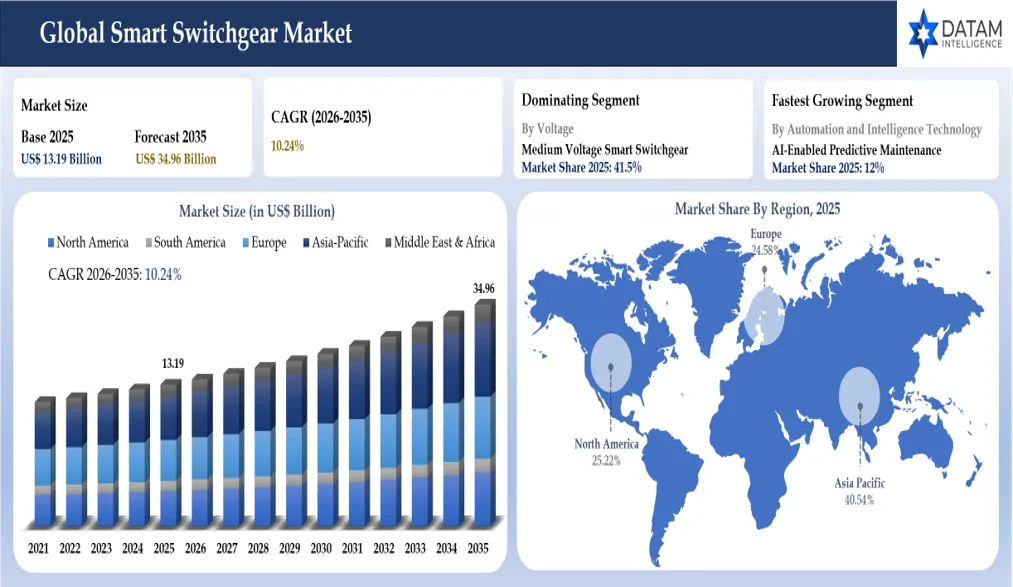
The global smart switchgear market reached US$ 13.19 billion in 2025 and is expected to reach US$ 34.96 billion by 2035, growing with a CAGR of 10.24% during the forecast period 2026-2035.
The demand for smart switchgear is being driven by grid modernisation, increasing application of renewable energy and rising power consumption owing to data centres and industrial plants. Smart switchgear combines circuit breakers, intelligent electronic devices (IEDs), digital relays and protection devices as well as other sensors and telecommunication systems thus providing live maintenance status and detection of power flaws. With the help of the IEC 61850 protocol, newly developed smart equipment makes communication between devices easy and better coordination of work at substations available. Further development of smart switchgear is made possible by the creation of solar and wind plants and energy storage systems that require new types of protection and constant monitoring of electrical consumption.
The transition to switchgear and condition-based maintenance free of SF₆ has also been a considerable factor driving the market. Under European Union Regulation (EU) 2024/573, restrictions on the commissioning of new medium-voltage switchgear that uses fluorinated greenhouse gases took effect on 1 January 2026 for equipment rated up to and including 24 kV. Further restrictions are scheduled to begin on 1 January 2030 for switchgear rated above 24 kV and up to 52 kV, subject to applicable exemptions. Such regulatory developments foster the adoption of technologies like clean air insulation and vacuum interrupting technology among others. On the other hand, there are opportunities opening up in areas like continuous temperature monitoring, partial discharge detection and breaker condition analysis. Nevertheless, there are several factors that affect their implementation including cost of implementation, compatibility with existing systems, cybersecurity needs and availability of products at different voltages.
Smart Switchgear Market Key Takeaways
- The medium voltage smart switchgear is the dominating voltage segment in 2025, with 41.5% market share. The segment’s development is fueled by the demand generated from utilities’ distribution systems, industries, renewables plants and data centers that need secure power distribution and protection system automation.
- AI-powered predictive maintenance is expected to grow with highest growth rates in the technology segment at an indicative CAGR of 14.5% during 2026-2035. Growth will be fueled by the adoption of equipment health analytics, temperature sensors, partial discharge sensing and predictive fault diagnosis.
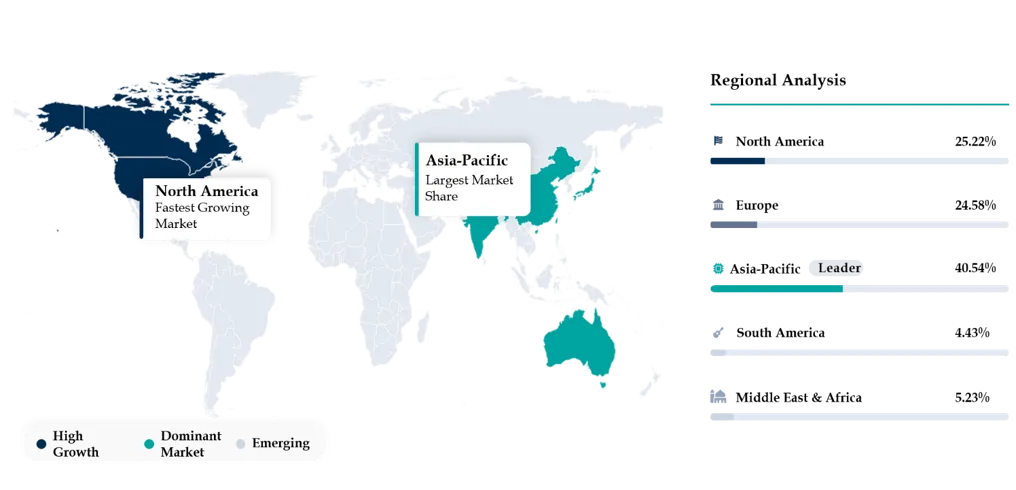
- The Asia-Pacific region accounted for 40.54% share of the global market for smart switchgear in 2025 due to its modernized electrical grids, increasing infrastructure for power transmission, implementation of renewable energy sources and industrialization in countries such as China, India, Japan and South Korea.
- The trend towards SF₆ free switchgears is enabling new opportunities in the development of environmentally friendly insulation materials, vacuum interrupters and other environmentally conscious products. European Union regulations coming into effect since 2026 are driving medium voltage product development and purchases.
- Rising investments in artificial intelligence data centers, renewable energy sources, battery storage systems and digital substations have led to an increased requirement for switchgears that contain IEDs, sensors, remote monitoring and automatic fault detection systems.
Smart Switchgear Industry Trends and Strategic Insights
- The market trend is shifting towards SF₆-free smart switchgear, which makes use of environmentally friendly solutions such as air-insulated and other alternative insulating systems.
- There has been rising adoption of predictive maintenance solutions, which includes solutions like temperature sensor-based fault detection, partial discharge monitoring and equipment health management.
- Digital substations are resulting in the growing adoption of communication based on IEC 61850, intelligent electronic devices and automatic protection solutions.
- There is an increasing need for compact and modular switchgear in data centers, urban substations and commercial buildings where space utilization and incremental capacity are crucial.
- The inclusion of cybersecurity has become an essential part of procurement as the switchgear is connected to the SCADA systems and the industrial network and needs secured communication and access.
Smart Switchgear Market Scope
| Metrics | Details | |
| 2025 Market Size | US$ 13.19 Billion | |
| 2035 Projected Market Size | US$ 34.96 Billion | |
| CAGR (2026-2035) | 10.24% | |
| Largest Market | Asia-Pacific | |
| Fastest Growing Market | North America | |
| By Voltage | Low Voltage (Up to 1 kV), Medium Voltage (Above 1 kV to 52 kV) and High Voltage (Above 52 kV) | |
| By Component | Circuit Breakers, Switches and Disconnectors, Protection Relays, Sensors and Instrument Transformers, Intelligent Electronic Devices (IEDs), Switchgear Automation Controllers, Embedded Monitoring Hardware, Monitoring and Control Systems, Communication Devices and Other Components | |
| By Digitalization and Connectivity Technology | Digitally Integrated Switchgear, IoT-Enabled Switchgear, Communication-Enabled Switchgear, Remote Monitoring and Control Connectivity and Cloud-Connected Switchgear Monitoring | |
| By Automation and Intelligence Technology | Automated Switching and Protection, Controller-Based Switchgear Automation, Condition-Based Monitoring and Diagnostics, AI-Enabled Predictive Maintenance and Intelligent Fault Detection & Isolation | |
| By Insulation Type | Air-Insulated Switchgear (AIS), Gas-Insulated Switchgear (GIS), Solid-Insulated Switchgear and Hybrid-Insulated Switchgear | |
| By Installation Type | Indoor and Outdoor | |
| By Application | Power Generation, Power Transmission and Distribution, Renewable Energy and Energy Storage, Industrial Facilities, Buildings and Infrastructure, Data Centers and Digital Infrastructure, Transportation Electrification and Oil & Gas Infrastructure | |
| By Region | North America | U.S., Canada, Mexico |
| Europe | Germany, UK, Russia, France, Spain, Italy, Poland | |
| Asia-Pacific | China, India, Japan, Australia, South Korea, Indonesia, Malaysia, Singapore, Vietnam, Thailand, Philippines, Taiwan | |
| South America | Brazil, Argentina | |
| Middle East and Africa | UAE, Saudi Arabia, South Africa, Israel, Turkiye, Nigeria | |
| Report Insights Covered | Competitive Landscape Analysis, Company Profile Analysis, Market Size, Share, Growth | |
Why does this report matter in 2026?
The market for smart switchgears is increasingly significant in 2026 as there are efforts being made to modernize the existing electrical grid infrastructure due to the aging nature of the current one, growing power needs and the increasingly complex nature of electricity networks. There are efforts being made in relation to the increase in the number of data centers, renewable energy plants and industrial operations that use electricity and the need for switchgear with built-in electrical protection and control capabilities. On the other hand, the evolution towards digitized substations and communication based on IEC 61850 is having an impact on the equipment specification and upgrade process. This report will provide insights into the areas where the demand for intelligent switching and protection systems is developing.
Furthermore, this report will be equally relevant in 2026 owing to the increasing need to address environmental considerations, cyber security issues, procurement problems for components and even higher costs incurred when using digitally-enabled equipment. The use of SF₆ free switchgears in selected applications is shaping the technology and also the development of predictive maintenance and monitoring solutions through sensors offers a chance to distinguish products. Through the study of market segmentation, demand in the region, competitive position, technology usage and investment options, the report assists producers, utilities, EPC contractors and investors to discover favorable applications and make the right priorities in the field of product development.
Smart Switchgear Market White Space & Investment Opportunities
- Adoption of digital sensors, fault detection and remote monitoring for retrofit of traditional switchgears can generate investment opportunities due to modernization of electrical infrastructure without replacement of equipment.
- Introduction of medium-voltage smart switchgears without SF₆ provides investment opportunities in response to the demand for environmentally-friendly electrical devices while retaining intelligence protection features.
- An opportunity exists for the application of AI-driven predictive maintenance systems in analyzing the performance data of the switchgear to be able to detect potential signs of wear and tear to avoid any breakdowns.
- The increasing number of high density data centers presents an opportunity for the use of digitally monitored small-sized switchgear to enable efficient power distribution, fast fault isolation and real-time monitoring of the equipment.
- Opportunities exist to invest in secure digital substations through cybersecurity enabled communication gateways and smart devices compliant with IEC 61850 standards.
Smart Switchgear Future Market Transformation
The future of the smart switchgear industry will see the shift in demand from traditional electrical protection devices to a combination of intelligence devices, condition monitoring, automatic fault isolation and predictive maintenance through the use of intelligent electronic devices. An increased application of digital substations based on IEC 61850 technology will enable rapid communication among devices for protection and control, while AI technology may offer advanced fault prediction and asset management through sensor data. The growth in renewable energy, energy storage and data centers with high energy density will drive demand for smart switchgear. On the other hand, the advancement of SF₆-less insulations and the security of digital communication networks is going to transform the design process, purchasing criteria and differentiation strategies, which will increase the importance of interoperability, cybersecurity and lifecycle performance in the coming years.
Smart Switchgear Market Buyer Decision-Making Criteria
The performance of electrical safety, digital monitoring, compatibility with pre-existing energy infrastructure and total cost of ownership are the parameters on which buyers in the smart switchgear domain assess various pieces of equipment. While utility operators take into account the following factors: interruption capacity, reliability of the grid and digital substation integration, other industries and data centers focus more on such matters: continuous energy supply, rapid disconnection of the fault and predictive maintenance. In addition to the above-mentioned aspects, the process of procurement takes into consideration compliance with relevant IEC standards, protection security of smart devices, insulation technology, supplier service capabilities and parts availability.
Major Buyer Decision-Making Criteria
- Electrical Performance and Protection
- Digital Monitoring and Automation
- System Compatibility and Interoperability
- Safety and Regulatory Compliance
- Cybersecurity and Data Protection
- Total Cost of Ownership
- Reliability and Lifecycle Performance
- Supplier Capability and After-Sales Support
- Insulation Technology and Environmental Impact
- Scalability and Future Readiness
Smart Switchgear Market Economic & Investment Analysis
The economic prospects in the smart switchgear market depend on capital investments in electric power transmission and distribution infrastructure, digital substation development, industrial electrification and power infrastructure. Utilities and industries should consider their cost of investing in intelligent switchgear along with its benefits, which can include reduced unplanned shutdowns, quicker fault detection and better maintenance through condition-based operations. Decisions regarding the allocation of capital will be determined by the demand for electricity, interest rates, upgrading of facilities and replacement of old switchgears. At the same time, growing demands from data centers and greater deployment of renewables are leading to investments in electrical distribution systems that provide reliable switching, protection and equipment monitoring.
Opportunities for investments lie in the development of sensor-enabled medium voltage switchgear, digital substation technology, insulation systems that do not use SF₆ and systems that monitor assets through software. Manufacturers can increase their market competitiveness by creating a larger line of modular products, by providing solutions that will allow for the conversion of existing traditional switchgear into smart devices and through the incorporation of digital monitoring capabilities that will not require replacing the equipment completely. However, the returns from investments are dependent on the voltage level, installation complications, cost of digitalization and lifecycle savings that can be made. The investor and the manufacturer should take into account the budget for utility modernization, industrial projects and environmental policies while assessing the potential of growth, product innovation and partnerships in smart switchgear market.
Smart Switchgear Investment Trends in the Market
- The investments in research and development of SF₆ free switchgear are helping to evolve towards clean air insulation systems, new insulating techniques and digitally controlled medium voltage equipment for fulfilling changing environmental standards.
- Funding is going towards smart manufacturing plants and digitized manufacturing, which includes automated assembly, precise testing and quality control systems to ensure increased switchgear reliability and efficient manufacturing process.
- Investments in digital substations are also helping to implement IEC 61850-enabled intelligent electronic devices, process bus structures and automated protection schemes in order to upgrade the power utilities infrastructure.
- Investment in highly reliable switchgear in data centers becomes more and more strategically important because there is a demand for small electrical distribution equipment with constant monitoring and quick troubleshooting due to the growing network of computer systems.
- The partnership between switchgear, software and automation companies grows stronger as a strategy for investment in solutions which involve electrical protection, asset health monitoring, remote monitoring and communication features.
Strategic Indicators for Smart Switchgear Market
High Regulation Impact
Regulatory regulations are playing a major role in the smart switchgear market by imposing stringent control on the insulating gases, electrical safety standards, energy efficiency standards and cybersecurity for power infrastructure systems that are connected to the Internet. The restriction phases for SF₆ gas in certain switchgear applications that have been put into effect by the European Union have led to the development of alternate solutions like clean air insulation and the IEC standards and grid codes are dictating requirements for protection coordination, performance of the switchgear and interoperability of digital substations. However, compliance with such regulations not only makes manufacturers work hard to develop and certify their products but also offers a chance for suppliers providing environmentally compliant, digitally-enabled switchgears with secure communication and monitoring systems.
High Investment Activity
Growing investments in the smart switchgear industry are being made for the design of digitized equipment that not only has an ability to provide protection but can monitor, control and predict maintenance needs. Investment is being made by the manufacturers in the development of sensor-integrated medium and high voltage switchgear, intelligent electronic devices, digital substation systems and SF₆-free insulation technologies to cater to the changing demands of utilities and industries. Modern grid, renewable energy integration and growing data centers are offering growth avenues to make investment in manufacturing, product development and system integration. Collaboration among switchgear companies, automation companies and software companies is also helping to deliver interoperable solutions.
Supply Chain Disruption
Disruption in the supply chain may occur as a result of insufficient availability of semiconductors, microcontrollers, communication modules, sensors and other special electronic components needed for intelligent monitoring and protection of the system. The reliance on certain vendors for such elements as circuit breakers, protection relays, sensors for voltage and currents, as well as high-grade insulation materials, increases time of manufacturing process and procurement expenses. The lack of copper, electric steel and gases used as insulation substitutes may influence the schedule of manufacturing processes and prices of the equipment. Such problems are especially significant in case of digital switchgear because delays with electronic parts will hinder the process of manufacturing despite the presence of all the main electrical components.
Pricing Volatility
Fluctuations in the price of the smart switchgear market occur due to the variations in the cost of copper, electrical steel, semiconductor parts, sensors and specific insulation materials. Industry reports have confirmed that the prices of switchgear have risen by 11.2% year on year in May 2025, whereas the cost of copper has risen to around 64% in a span of 30 months as reported in 2026. Cost variations, along with increased costs for intelligent electronic systems and digital supervision systems, affect final costs for equipment, project budgets and purchasing times, depending on voltage grade, insulation technology and automation requirements.
Procurement Pressure
Procurement difficulties experienced within the smart switchgear industry arise from prolonged circuit breaker and intelligent devices delivery times, which could lead to postponed project completion despite having access to other equipment. Any developments in grid modernization, digital substations and data centers depend on strict adherence to voltage ratings and interruption capabilities, as well as communications and insulation specifications. This limits the possibility of substituting components and choosing suppliers. Moreover, buyers should take into account not only the cost of purchase but also the reliability of the equipment, its safety, compatibility of the system and future expenditures for service.
New Technology Adoption
The use of new technology in the smart switchgear market is now characterized by the deployment of condition monitoring using artificial intelligence, digital twins and sensor technology for electrical protection and distribution applications. Partial discharge sensors, thermal monitoring sensors and other forms of real-time equipment diagnostics are used to detect any insulation degradation, overheating and faults developing within the equipment before they lead to equipment failures. There is also the adoption of the IEC 61850 communication standard along with edge computing and cloud monitoring technologies that allow for quicker exchange of data and management of assets within digital substations. Concurrently, there are developments being made in the form of SF₆ free switchgears that use new insulating methods, whereas utilities and industries are evaluating these products considering reliability, operability within existing systems, cybersecurity issues and overall costs.
Regional Expansion Opportunity
Market expansion in the smart switchgear industry will be driven by investments in grid modernization, renewable integration, electrification of industries and digitalization efforts in both developing and developed economies. The Indian and Southeast Asia markets present opportunities in the use of sensors with medium voltage switchgear for expanding electricity distribution networks, upgrading substations and integrating solar and wind energy sources into the grid. In the Middle Eastern region, there is potential to supply switchgear solutions due to the development of industrial projects, large infrastructural projects and data centers. Europe holds the opportunity for the sale of SF₆-free smart switchgear. Manufacturers can enhance regional penetration through local manufacturing, product certification according to utility specifications, collaboration with EPC companies and service systems that can provide commissioning and maintenance services.
Government Policy Support
The favorable conditions for the growth of the smart switchgear market are being created through government policies aimed at modernizing the smart grids, installing digital substations, incorporating renewable energy into the power grid and enhancing reliability of the electricity distribution. Infrastructure investments favor the adoption of intelligent protection relays and automation switching devices in addition to real-time monitoring of the equipment by the utilities in order to enhance the performance of the power grids and minimize the number of blackouts. In India, the government program Revamped Distribution Sector Scheme (RDSS) favors improvements of the distribution infrastructures and operations, thus creating opportunities for the adoption of digital switchgear. In Europe, regulations that limit SF₆ use in some applications of switchgear are pushing companies to explore new types of insulation techniques, including air-insulated techniques. Such policies affect the way equipment is specified, purchased and invested in by companies, especially those trying to improve their electricity grid and introduce renewable energy sources.
Pricing Intelligence
The pricing for smart switchgear is dependent on the voltage rating, capability of interruption, insulation technologies used, digital capability and customization required. Traditional switchgear is relatively cheaper compared to smart switchgear due to incorporation of sensors, intelligent devices, communication, remote control and monitoring software among others. The decision-making process takes into account the cost of owning the product including its installation, commissioning, maintenance, software incorporation and reduced downtime and not the cost of purchasing the product. Manufacturers can increase the competitiveness of their pricing strategy through modular designs, retrofit digital technology and scalable monitoring packages.
| HS Code | Reporter | Trade Flow | 2025 Trade Value | Interpretation |
| HS 85 | China | Exports | US$ 972 billion | Major global supplier of electrical machinery, electronic equipment and components |
| HS 85 | Hong Kong, China | Exports | US$ 421 billion | Major re-export and electronics trading hub |
| HS 85 | China | Imports | US$ 590 billion | Demand for imported electrical machinery, electronic components and equipment |
| HS 85 | United States | Imports | US$ 511 billion | Large market for imported electrical equipment and components |
Note: HS Chapter 85 trade values represent global trade in electrical machinery, equipment and related components in 2025. These figures provide a broad indication of international electrical equipment trade activity but do not directly measure the smart switchgear market, as the chapter covers a wide range of products beyond switchgear.
AI Impact Analysis of Smart Switchgear Market
The smart switchgear industry is being revolutionized by artificial intelligence through the ability to predict fault occurrence, assess equipment status and plan maintenance based on electrical and environmental information. The machine learning models are capable of using temperature changes, partial discharge levels, switching operations, load conditions and other factors that give an indication about the insulation condition to diagnose the occurrence of wear, overheating and deteriorating insulation. This will allow utilities and industries to shift from regular to condition-based maintenance. In addition to diagnosing faults, artificial intelligence-supported analysis of fault can also be used to detect any recurring equipment problems and maintenance prioritization.
The use of AI is having an impact on smart switchgear design as well due to the use of AI along with intelligent electronic devices, substation automation software and asset management systems. Using AI, systems will be able to perform equipment loading, planning and fault response analysis using the information collected from the switchgear, load forecasting and generation by renewable energy sources. But for AI to be useful in such scenarios, there must be good sensor data, proper fault history data, compatibility with existing protection systems and also proper cybersecurity measures. Instead of replacing the deterministic relays and protective interlocks, the artificial intelligence systems should be used as complementary technology in the cases where protection is dependent on quick actions. Companies that use AI with proven electrical protection and diagnostics can have competitive advantage in power generation, industrial, renewable energy and data center applications.
Disruption Analysis of Smart Switchgear Market
There is a major shift in the smart switchgear industry in terms of its structure where the existing electromechanical products are giving way to digitally enabled solutions involving intelligent electronics, sensors, communication capabilities and equipment health analysis. This is affecting the competitive landscape in that apart from the expertise in electrical engineering, digitalization and interoperability and lifetime service are gaining significance. Also, the innovation in SF₆-free switchgear technology is challenging the traditional design of products, especially in medium-voltage applications, where manufacturers are employing clean air and other forms of insulation technologies to meet environmental demands while still delivering good electrical properties.
The other key area where the disruptive force can be found is the integration of smart switchgear along with diagnostics through artificial intelligence, digital substations and power management systems. The competitive environment is evolving from simple switching and protection against faults to an integration of condition monitoring, predictive maintenance, secure access to remote areas and common communication protocols. This presents an opportunity for software, sensing and industrial automation companies to partner with switchgear makers while leaving their competitors vulnerable due to their lack of digitization. Nevertheless, the development is still hindered by such factors as retrofitting, security issues, the quality of data, certifications and higher costs of updating legacy systems. Companies which blend reliable electrical protection capabilities with flexible digital features and reduced lifecycle costs are well-positioned to respond to this competitive paradigm shift.
Smart Switchgear Market BCG Matrix: Company Evaluation
STAR
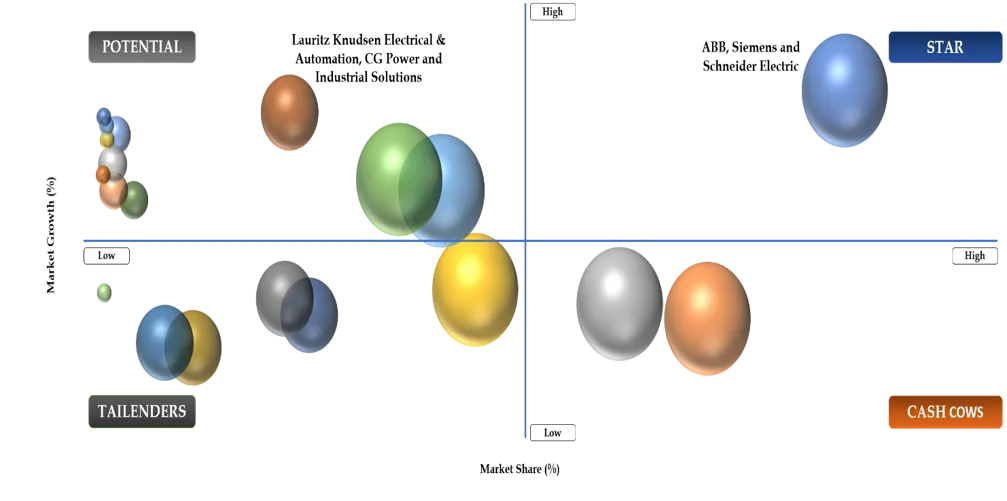
Companies from the Star category include ABB, Siemens and Schneider Electric owing to their existing switchgear offerings, digital substations and investments in intelligent protection, connection monitoring and SF₆-free products. With the global footprint, established relationships with the utilities and industry and their ability to combine electrical equipment with automation and digital management systems, they can benefit from the need for advanced power distribution solutions. The development of digitally-enabled switchgear further proves the competitiveness of these companies with the growing demand from utilities to upgrade electrical networks and data centers and industrial customers to ensure power distribution reliability.
POTENTIAL
Lauritz Knudsen Electrical & Automation, CG Power and Industrial Solutions, CHINT Group and LS ELECTRIC are some of the firms that can fall under the Potential category due to their possibilities for expansion in digitally integrated switchgears, distribution automation and intelligent electric protection. Their potential growth could be driven by the modernization of regional grids, electrification of industries and increased demand for monitoring systems. Their strengths can further be enhanced in areas such as automation controllers, digital substations, equipment diagnostics and remote monitoring.
Smart Switchgear Market Dynamics
Driver Impact Analysis
| Driver | Market Growth Impact (%) | Demand Concentration | Impacted Use Case | Strategic Impact |
Grid Modernization and Smart Grid Investments | 30% | North America, Europe, Asia-Pacific | Digital substations, automated power distribution and remote grid monitoring | Accelerates replacement of conventional switchgear with intelligent, connected systems |
| Renewable Energy Integration | 25% | China, India, Germany, United States | Solar and wind power connections, grid interconnection and power flow management | Increases demand for intelligent switching, fault isolation and real-time monitoring |
Industrial Automation and Electrification | 25% | Asia-Pacific, North America, Europe | Manufacturing plants, process industries and electrified industrial facilities | Drives adoption of predictive maintenance, automated protection and operational efficiency |
Data Center Expansion and Reliable Power Demand | 20% | United States, China, India, Europe | Hyperscale data centers, colocation facilities and critical power distribution | Strengthens demand for digitally monitored switchgear, rapid fault detection and power reliability |
Driver: Grid Modernization and Digital Substation Deployment
The requirement to update older transmission and distribution grids has led to an increase in demand for smart switchgears, as companies need more advanced equipment that will improve the monitoring and protection processes within the grid. Intelligent electronic devices, sensors for instantaneous supervision and communication systems based on IEC 61850 used in digital substations allow for line switching and fault detection to occur automatically and in a timely manner, hence facilitating coordinated protection. Increasing use of renewable energy sources contributes as well to the growing demand for smart switchgear that is capable of handling reverse flow of electric power, ensures real-time monitoring and guarantees reliable power supply.
Restraint Impact Analysis
| Restraint | Drag on Market Growth (%) | Primary Impact Area | Impacted Use Case | Strategic Impact |
High Initial Investment and Installation Costs | 30% | Capital expenditure and procurement budgets | Utility substations, industrial facilities and commercial buildings | Delays upgrades from conventional to smart switchgear, particularly among cost-sensitive buyers |
Integration Complexity with Legacy Electrical Infrastructure | 25% | System compatibility and modernization timelines | Existing substations, aging industrial plants and brownfield installations | Increases engineering costs, commissioning time and the complexity of integrating digital monitoring systems |
Cybersecurity and Data Protection Concerns | 20% | Operational technology security and network resilience | Connected substations, remotely monitored grids and industrial power networks | Encourages additional spending on secure communication, access controls and system validation |
Shortage of Skilled Technical Personnel | 25% | Installation, commissioning and maintenance capabilities | Digital substations, automated distribution networks and advanced industrial facilities | Slows deployment and increases dependence on specialist integrators and vendor support |
Restraint: High Integration Costs and Legacy System Compatibility
Expensive nature of integration of the smart switchgear into the already existing electrical networks is one of the most important barriers, especially when it comes to utility companies and industrial companies having a lot of installed non-smart equipment. The integration needs sensors, intelligent devices, communication interfaces, upgrading of protection systems, commissioning, different communication standards and control structures may lead to the difficulties with interoperability. However, these costs and complications could increase the project timeline as well as reduce the adoption of the technology in cases where the savings from lower maintenance cost, equipment downtime and other factors cannot justify the initial cost of implementation.
Smart Switchgear Market Segmentation Analysis
The global smart switchgear market is segmented based on the voltage, component, digitalization and connectivity technology, automation and intelligence technology, insulation type, installation type, application and region.
By Voltage
Medium Voltage Smart Switchgear Maintains a Strong Position in Grid Modernization
The medium voltage smart switchgear had a market share of about 41.5% globally in 2025 due to its increasing application across utility distribution grids, industries, renewable energy generation plants and data centers. The medium voltage smart switchgear is applicable where integration of digital protection relays, intelligent electronic devices and remote sensing is required. The increasing grid modernization and installation of renewable energy sources will drive demand during the forecast period.
By Automation and Intelligence Technology
AI-Driven Fault Prediction Emerges as a Key Growth Area in Smart Switchgear
Predictive maintenance through AI is expected to register growth of a CAGR of 14.5% in the period 2026–2035, which is more than the CAGR of 10.24% for the overall market for smart switchgear. Growth will be fueled by increased use of equipment health analytics, constant temperature monitoring, partial discharge detection and data-driven fault prediction. The utilities and industrial organizations are beginning to employ these technologies to help spot equipment degradation earlier and avoid unnecessary downtime.
Smart Switchgear Market Geographical Penetration
China Smart Switchgear Market Trends
The Chinese market for switchgears is witnessing huge growth due to huge investments in UHV transmission infrastructure, smart substations and intelligent distribution networks as well as renewable power generation. The installation of sensor-based switchgears and intelligent electronic devices in power grids will assist utilities in detecting faults and automating the switching process as well as cutting down maintenance efforts. Solar and wind energy facilities have increased, thus leading to the creation of the need for digital monitoring of switchgears that can cope with fluctuating power flows and increase grid reliability and local firms are developing expertise in intelligent protection systems, machine condition monitoring and green insulation technology such as SF₆-free systems.
U.S. Smart Switchgear Market Landscape
The U.S. smart switchgear industry is driven by the modernization of aged transmission and distribution equipment, increased power consumption by hyperscale data centers and renewables integration within the power system. More utilities are utilizing digitally equipped smart switchgear that incorporates intelligent electronic devices, condition monitoring and automated fault isolation in order to increase grid resiliency and avoid unexpected failures. The construction of data centers is generating new opportunities for reliable, small-size and monitored electrical power distribution systems, while industrial sites are upgrading their electrical equipment by integrating intelligent protections and prediction-based maintenance to avoid disturbances. The move towards non-SF₆ medium voltage switchgear and enhanced cybersecurity for connected power grid assets is another key trend affecting the industry.
Germany Smart Switchgear Market Analysis
The German market for smart switchgear devices is being influenced by Germany’s energy transition, integration of renewable power sources and the upgrade of its distribution network systems to cope with the decentralized electricity generation system. The increase in the generation capacity of solar and wind energy is resulting in the growing demand for digitally controlled switchgear devices capable of handling fault isolation, real-time diagnostics and managing fluctuations in the power flow. The German utilities and industries are looking to adopt digital substations, intelligent protection relays and condition monitoring systems to enhance the reliability of assets and minimize downtime due to maintenance issues. Moreover, the limitations set by the EU concerning SF₆ in certain applications in switchgear systems have spurred interest in other forms of insulation technology, which may be environmentally friendly and digital medium-voltage devices.
Japan Smart Switchgear Market Outlook
In Japan, the growth of smart switchgear is supported by modernization of existing electricity grid infrastructure, increase in the level of digitalization of substations and efficient distribution of power across industry and urban grids. Digitalized switchgear and intelligent protection relays together with remote fault detection systems will be used by the Japanese utilities companies to enhance the reliability of their operations and maintenance of the electric grid and its resistance to earthquakes and other natural disasters. Renewable energy development, including offshore wind farms and distributed solar power generation, increases the need for advanced switches and protection devices that are capable of handling variable flows of electricity. In addition, the well-developed sector of automation and energy efficiency in Japan creates an opportunity for small sensor-based switchgears that offer predictive maintenance capabilities and improved environmental performance.
Smart Switchgear Market Competitive Landscape
- ABB, Siemens and Schneider Electric are among the major producers of integrated switchgears that incorporate electrical protection, intelligent electronic equipment, digital monitoring systems and substation automation systems.
- The impact of competition is being shaped by the growth in SF₆-free switchgear, especially for medium voltage uses, where manufacturers are developing new insulation technology that will comply with environmental regulations but preserve the performance and safety of the product.
- Sensor integration, along with the integration of protection relays, automation controllers and predictive maintenance software into the product range, is becoming a significant competitive advantage, allowing suppliers to provide equipment health analytics along with its protective and switching capabilities.
- Local competitors, such as CG Power, CHINT, LS ELECTRIC and Lauritz Knudsen Electrical & Automation, are competing based on localized product range, distribution systems, tailored solutions for specific applications and pricing that is geared to utilities and industrial needs.
- Digital substations and power distribution are facing increased competition through strategic partnerships among switchgear producers, automation suppliers and IT firms because of the role played by interoperability, cybersecurity, lifecycle costs and after-sales services in supplier selection.
Public Company Q1-Q2 2026 Performance Comparison
The table below compares publicly listed companies with direct exposure to the smart switchgear market. Financial metrics reflect company-wide or relevant business-segment performance, where available, because standalone smart switchgear revenue is generally not disclosed separately. Performance drivers therefore distinguish overall corporate results from developments directly related to smart switchgear, digital substations, grid automation and intelligent electrical distribution.
| Company | Q1–Q2 2026 Performance | Smart Switchgear Exposure | Key Performance Driver |
| ABB Ltd. | Q1 revenue: US$8.73 billion; Q2 revenue: US$9.48 billion | Low- and medium-voltage switchgear, circuit breakers, digital protection and substation automation | Electrification demand, utility modernization, data center investment and expansion of regional manufacturing capacity |
| Siemens AG | Q1 revenue: US$20.82 billion; Q2 revenue: US$21.78 billion | Smart Infrastructure portfolio, medium-voltage distribution, grid technologies and digital substation solutions | Utility grid upgrades, intelligent electrical distribution, industrial electrification and digital infrastructure demand |
| Schneider Electric SE | Q1 revenue: US$10.65 billion; Q2 revenue: US$12.61 billion | Connected switchgear, EcoStruxure digital platforms, medium-voltage distribution and SF₆-free AirSeT products | Data center expansion, digital energy management, demand for connected electrical equipment and environmental regulations |
| Eaton Corporation plc | Q1 revenue: US$7.45 billion; Q2 revenue: US$8.53 billion | Low-voltage switchgear, electrical distribution, monitoring technologies and critical-power systems | Data center orders, grid investment, electrical infrastructure demand and expansion of integrated power-management solutions |
| GE Vernova Inc. | Q2 revenue: US$11.10 billion | High-voltage switchgear, gas-insulated switchgear, circuit breakers, grid automation and digital substations | Transmission grid investment, strong electrification orders, grid equipment demand and data center infrastructure expansion |
Note: Financial figures represent company-wide or relevant segment performance, not standalone smart switchgear revenue. Reporting periods differ by company fiscal calendar.
Key Companies of Smart Switchgear Market
- ABB Ltd. (Switzerland)
- Siemens AG (Germany)
- Schneider Electric SE (France)
- Eaton Corporation plc (Ireland)
- GE Vernova Inc. (United States)
- Hitachi Energy Ltd. (Switzerland)
- Mitsubishi Electric Corporation (Japan)
- Toshiba Energy Systems & Solutions Corporation (Japan)
- Lauritz Knudsen Electrical & Automation (India)
- HD Hyundai Electric Co., Ltd. (South Korea)
- Fuji Electric Co., Ltd. (Japan)
- CG Power and Industrial Solutions Limited (India)
- Havells India Limited (India)
- Legrand Group (France)
- Lucy Electric (United Kingdom)
- S&C Electric Company (United States)
- Powell Industries, Inc. (United States)
- CHINT Group (China)
- LS ELECTRIC Co., Ltd. (South Korea)
- alfanar Group (Saudi Arabia)
Company Profiles of Smart Switchgear Market
ABB Ltd.
ABB is a well-known worldwide manufacturer of electric equipment, with a wide variety of products that include switchgears for different services, including utilities, factories, sustainable energy projects, data centers and engineering constructions. Its goods involve low voltage and medium voltage switchgears, circuit breakers, protective relays, digital monitoring and controlling devices. Now, ABB is extending its portfolio of switchgears free from SF6 for major and minor distribution, including methods based on dry-air insulation and vacuum switch technologies.
Competitive considerations include the development of SF₆-free products, the improvement of digital monitoring and condition-based maintenance solutions, better integration into substation automation systems and customer support via configuration software and lifecycle services.
Siemens AG
Siemens is present in the market of smart switchgears under Siemens Smart Infrastructure division that provides electrical distribution products, protection and control systems and digital technologies for buildings, industries and energy infrastructure. The product range of Siemens helps to integrate switchgears with intelligent electrical distribution systems and automation.
The key priorities of competition are to integrate switchgears with digital power management systems, develop intelligent protection and monitoring features, ensure high levels of interoperability among electrical installations and create solutions for industrial electrification and commercial buildings and data centers.
Schneider Electric SE
Schneider Electric is one of the top suppliers of intelligent equipment for electricity distribution, digital circuits and providing energy management for enterprises as well as utility companies. The range of products consists of medium voltage switchgear along with low voltage power distribution systems and systems for protection that implement Smart technology. The AirSeT product line uses vacuum technology and clean air insulation in its medium voltage products.
The competitive priorities for Schneider Electric are growing in digitally enabled and SF₆ free switchgear, real time monitoring, predictive maintenance capabilities and scalable power distribution for data centers, renewable projects and electricity grids.
Eaton Corporation plc
Eaton engages in the smart switchgear industry through its electrical distribution and power management product line that caters to industrial sites, commercial sites, data centers and critical infrastructure. Its products include low voltage switchgear, digital monitoring devices and condition monitoring devices aimed at enhancing electrical safety and equipment reliability.
Competitive challenges include the need to advance in embedded monitoring technology, the incorporation of digital diagnostics into electrical distribution, critical power solutions and competitive differentiation based on equipment safety, remote monitoring, lifecycle solutions and minimal maintenance needs.
GE Vernova Inc.
GE Vernova provides grid equipment and digital solutions through the Grid Solutions segment, which includes Gas-Insulated Switchgear, Air-Insulated Switchgear, Circuit Breakers, Substation Automation and Protection & Control Technologies. Products offered by the firm cater to transmission and distribution grids, power generating stations and renewable power generation facilities. Digital monitoring and diagnostics as well as automation solutions are provided by the firm, which assist grid operators in improving network visibility and equipment management.
Competitive priorities consist of improving digital substation technology, providing solutions for grid automation and monitoring, designing smaller and retrofittable switchgear designs and assisting utilities in acquiring equipment for grid expansion, renewable energy integration and high voltage power transmission.
Hitachi Energy Ltd.
Hitachi Energy provides high-voltage switchgear, circuit breakers, gas-insulated and air-insulated switchgear, hybrid switchgear and digital substation technologies. Amongst other products, the company also provides its portfolio of digital switching and control systems, monitoring systems and equipment for the transmission grids and critical infrastructure. Moreover, Hitachi Energy provides its EconiQ eco-efficient portfolio in order to contribute to the reduction of environmental footprints from electrical equipment.
The strategic priorities of the company include the development of digital monitoring and condition-based maintenance systems, eco-efficient high-voltage switchgear, digital substation integration and reliable switching solutions for grid operators for transmission grid expansion, connection of renewable energy sources and critical electrical infrastructure.
Smart Switchgear Market Major Pain Points
- Retrofitting costs for incorporating sensors, intelligent electronics, communications and control software into the existing conventional switchgear may result in postponement of modernization efforts.
- Compatibility problems arising between smart switchgear and existing protection relays, SCADA systems and substation automation systems pose challenges that raise the complexities and costs involved in their installation.
- The rise in connectivity and remote management of smart switchgear leads to new cybersecurity risks in that unauthorized access, vulnerable software and communication breakdowns threaten power supply systems.
- The presence of flawed sensors, disruptions in data transfers and erroneous alerts adversely affect performance of condition monitoring systems, making the detection of problems such as overheating, insulation failure and electricity faults difficult.
- The shortage of specialists in the area of electrical protection and industrial communication technologies, digital monitoring and cybersecurity affects the installation, commissioning and maintenance of smart switchgears.
Smart Switchgear Market Recent Developments
- Siemens Energy India - September 2026: Launched India’s first 145 kV SF₆ free circuit breaker through its Blue High Voltage technology range for Goa Electricity Department, which is a breakthrough in the deployment of eco-friendly electrical products in India.
- ABB - September 2026: Unveiled the Infinitus portfolio of direct current solutions for artificial intelligence (AI) data centers, comprised of solid-state transformers along with DC protection and power distribution technology. Though broader in scope than the traditional switchgear, it is applicable to the future generation of electrical protection and distribution systems.
- Schneider Electric - September 2026: Introduced software-defined medium-voltage switchgear for artificial intelligence (AI) data centers. This new technology will allow ordering, manufacturing and commissioning to be done three times faster than before through pilot testing in an actual Equinix data center.
- Hitachi Energy - August 2026: Developed 300 kV gas-insulated switchgear as well as 245 kV and 420 kV circuit breakers, further expanding its EconiQ portfolio of SF₆-free high-voltage equipment towards more sustainable transmission systems.
- GE Vernova - August 2026: Added 170 kV SF₆-free gas-insulated switchgear and a 420 kV, 63 kA SF₆-free circuit breaker to its range of technology aimed at improving the grid.
Analyst View / Opinion on Smart Switchgear Market
- The market for smart switchgear products is set to experience consistent growth in view of the modernization of substations and power distribution systems through the use of digital controls, automation and remote switching technologies for greater reliability in the network.
- The shift towards SF₆-free insulation technologies will impact future product development, especially in medium voltage systems where producers have to strike a balance between meeting environmental requirements, achieving satisfactory electrical parameters and ensuring small dimensions and low costs.
- The integration of smart electronic devices, condition monitoring sensors and predictive maintenance programs is one of the main competitive advantages that allows producers to provide asset management solutions, as opposed to mere switching and protection products.
- The expansion of data centers, use of renewable energy sources and increased industrial electrification create different demand scenarios for smart switchgear capable of working in demanding environments, monitoring itself continuously and isolating faults quickly and efficiently.
- Market adoption will rely on the ability of the manufacturers to show the lifecycle benefits of their products, make them compatible with existing systems and meet cybersecurity standards, given the high initial investment required.
Target Audience of Smart Switchgear Market
| INDUSTRY | WHO SHOULD BUY THIS REPORT? | REASON TO BUY THIS REPORT |
| Electrical Equipment Manufacturing | Switchgear manufacturers, electrical equipment OEMs and component suppliers | Identify product innovation opportunities, competitive positioning and demand for digitally enabled switchgear. |
| Power Generation | Power plant operators, EPC contractors and electrical system integrators | Assess opportunities to improve equipment reliability, fault detection and operational efficiency. |
| Power Transmission and Distribution | Transmission utilities, distribution companies and grid operators | Evaluate smart grid investments, substation modernization and intelligent protection requirements. |
| Renewable Energy | Solar developers, wind farm operators and renewable energy EPC companies | Understand demand for smart switching, grid interconnection and automated fault isolation. |
| Industrial Manufacturing | Factory owners, plant engineering teams and industrial automation providers | Assess the benefits of predictive maintenance, remote monitoring and reduced electrical downtime. |
| Data Centers | Hyperscale operators, colocation providers and critical power infrastructure planners | Evaluate intelligent power distribution solutions that support high availability and rapid fault detection. |
| Commercial Real Estate and Buildings | Commercial property developers, facility managers and building automation companies | Identify opportunities for connected electrical distribution, energy monitoring and building-level automation. |
| Electric Vehicle Infrastructure | EV charging network operators, charging equipment manufacturers and infrastructure developers | Assess requirements for intelligent protection and reliable power distribution across charging networks. |
| Engineering, Procurement and Construction (EPC) | Substation contractors, electrical engineering firms and turnkey project developers | Benchmark suppliers, evaluate switchgear technologies and support equipment selection for infrastructure projects. |
| Investment and Financial Services | Private equity firms, venture capital investors, investment banks and strategy consultants | Evaluate market growth prospects, competitive dynamics, technology adoption and investment opportunities in smart electrical infrastructure. |
Why Choose DATAM?
- Data-Driven insights: Dive into detailed analyses with granular insights such as pricing, market shares and value chain evaluations, enriched by interviews with industry leaders and disruptors.
- Post-Purchase Support and Expert Analyst Consultations: As a valued client, gain direct access to our expert analysts for personalized advice and strategic guidance, tailored to your specific needs and challenges.
- White Papers and Case Studies: Benefit quarterly from our in-depth studies related to your purchased titles, tailored to refine your operational and marketing strategies for maximum impact.
- Annual Updates on Purchased Reports: As an existing customer, enjoy the privilege of annual updates to your reports, ensuring you stay abreast of the latest market insights and technological advancements. Terms and conditions apply.
- Specialized Focus on Emerging Markets: DataM differentiates itself by delivering in-depth, specialized insights specifically for emerging markets, rather than offering generalized geographic overviews. The approach equips our clients with a nuanced understanding and actionable intelligence that are essential for navigating and succeeding in high-growth regions.
- Value of DataM Reports: Our reports offer specialized insights tailored to the latest trends and specific business inquiries. The personalized approach provides a deeper, strategic perspective, ensuring you receive the precise information necessary to make informed decisions. The insights complement and go beyond what is typically available in generic databases.
What DATAM Uniquely Provides
- Thorough breakdown of the smart switchgear market by voltage, components, technology, insulation, installation, application and end users to reveal demand tendencies in different areas of the electric power industry.
- Comparison of the performance of big switchgear companies based on the variety of products they have, the degree of digitalization, development of SF₆-free technologies and ability to provide smart electrical grid solutions.
- Estimation of technology implementations based on intel devices, monitoring systems with the usage of sensors, arranged troubleshooting processes and digitally controlled power substations to understand the prospects of technology use.
- Study of the possible customer demand generated by the greening of the electrical grid, introduction of renewable energy into use and increased demand for electricity among clients.
- Evaluation of entry opportunities, capabilities of retrofitting, problems of interoperability and issues regarding cybersecurity that may help companies in creating the proper competitive strategy in the smart switchgear sector.


























































