


Smart Power Tools Market Size and Overview
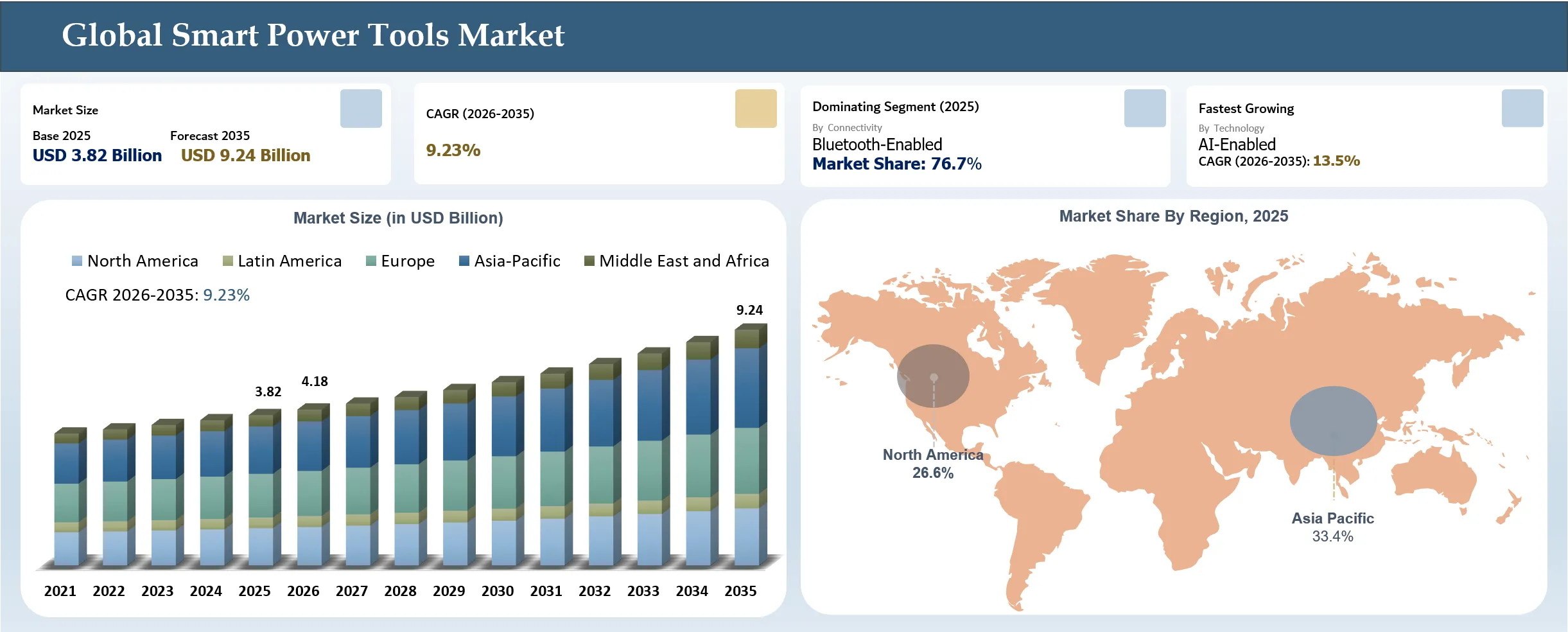
The global smart power tools market reached USD 3.82 billion in 2025 and is expected to reach USD 9.24 billion by 2035, growing with a CAGR of 9.23% during the forecast period 2026-2035. The market is increasing at a consistent pace owing to the rising integration of connectivity for asset tracking, cloud-based inventory management systems, real-time tool management systems, and battery-operated devices in the industrial and construction sector. In January 2026, DEWALT reported that the company’s Tool Connect Site Manager allows construction companies to monitor in real-time the position and state of tools in various sites, arrange maintenance schedules, assign tools to workers or sites, and make reports about the usage of the tools, the frequency of repairs, and costs related to it. The electrification of heavy-duty operations is also fueling the demand for smart cordless tools; DEWALT reported that the company’s POWERSHIFT platform consists of six concrete power tools that are powered by a single 554 Wh battery providing 5,500 watts of continuous power or 7 horsepower and therefore can be used to run a core drill, backpack vibrator, vibrator, screed, rammer, and plate compactor. Companies like DEWALT, Milwaukee Tool, Hilti, Bosch, and Makita are creating ecosystems of connected and battery-operated tools to meet the growing demands for real-time asset management, cordless functionality, and productivity.
There is tremendous progress being made in the field of smart power tool innovation with regard to developments in connected battery technology and AI-powered machines. In January 2026, according to InvestorPlace/Wedbush, Litheli showcased its next-generation battery-driven power tools at CES 2026, reflecting how it has progressed with its Infinity Power Share (IPS) battery share technology from being used in handheld tools to outdoor and automated tools. At the same time, Litheli unveiled two of its AI-VISION robotic lawn mowers: Eyeon 500 and Skope 800. The features include mapping, artificial intelligence-based obstacle avoidance, multiple zone management, and app control. Also, the Cyber Mower M21 from Litheli got the CES Innovation Awards 2026 Honoree designation. All the above advancements indicate Litheli’s diversification of intelligent battery and connected equipment, which drives the smart power tools market.
White-Space Opportunities for Smart Power Tools through Strategic Technology Funding
In November 2025, the European Innovation Council (EIC) Work Programme opened more than USD 1.63 billion (€1.4 billion) in funding opportunities focused on strategic technologies, breakthrough innovation, and scaling high-potential companies, creating a significant opportunity for smart power tools through adjacent technology areas rather than direct power-tool funding. The EIC Accelerator represents the largest individual funding area at USD 739.62 million (€634 million), supporting startups and SMEs developing high-impact innovations capable of creating new markets or disrupting existing ones. Other major allocations include USD 350 million (€300 million) under STEP Scale Up for strategic technology scale-ups, while the EIC Pathfinder and EIC Transition programme provide funding for early-stage breakthrough research and commercialization. The strongest opportunities relevant to smart power tools are concentrated around advanced manufacturing, robotics and autonomous systems, artificial intelligence, digital technologies, advanced materials, energy-storage technologies, and resource-efficient technologies, creating opportunities for innovations such as AI-enabled tools, autonomous equipment, connected tool ecosystems, advanced battery systems, lightweight materials, and intelligent tool-management platforms.
The investment can benefit companies developing technologies across these adjacent areas. In robotics and autonomous systems, companies such as ABB, Siemens, FANUC, KUKA, and Universal Robots can benefit from greater innovation and scale-up opportunities for robotic and automated technologies that can support autonomous power equipment. In AI and connected technologies, companies such as Bosch, Hilti, Stanley Black & Decker, and Techtronic Industries (TTI) could potentially leverage relevant EIC-supported innovations for intelligent tool controls, connectivity, predictive maintenance, and digital tool ecosystems. In advanced batteries and energy storage, companies such as Northvolt, Verkor, Saft, and Varta operate in technology areas relevant to higher-performance battery systems for cordless equipment, while advanced-materials innovation can support lightweight, durable, and high-performance power-tool components. Overall, the USD 739.62 million (€634 million) EIC Accelerator allocation represents the strongest immediate funding pool, while the USD 350 million (€300 million) STEP Scale Up allocation provides another significant opportunity for companies commercializing strategic technologies that can eventually be integrated into next-generation smart power tools.
Smart Power Tools Market Strategic Takeaways
- The Asia-Pacific region dominated the global market in 2025 with the largest share of 33.4%, supported by rapid industrialization, large-scale manufacturing operations, and the strong presence of major power-tool manufacturers across China, Japan, and South Korea.
- The Bluetooth-enabled connectivity segment held a dominant position in 2025 with a substantial 76.7% market share, as Bluetooth Low Energy modules are widely integrated into professional cordless tools for configuration, monitoring, and data exchange with mobile devices and digital platforms.
- The Bluetooth-enabled connectivity segment held a dominant position in 2025 with a substantial 76.7% market share, as Bluetooth Low Energy modules are widely integrated into professional cordless tools for configuration, monitoring, and data exchange with mobile devices and digital platforms.
- A significant white-space opportunity exists in the European Innovation Council's USD 1.63 billion (€1.4 billion) funding programme for strategic technologies, with the EIC Accelerator alone offering USD 739.62 million (€634 million) for high-impact startups and SMEs developing AI, autonomous systems, advanced batteries, and connected technologies.
Smart Power Tools Market Industry Trends and Strategic Insight
- Connected tool ecosystems are becoming a core product strategy, with manufacturers moving beyond standalone cordless equipment toward integrated platforms that connect tools, batteries, tags, mobile applications, and cloud-based asset-management systems.
- Asset intelligence is emerging as a major differentiator for professional tools, as contractors increasingly require visibility into tool location, availability, assignment, utilization, and maintenance rather than simply purchasing equipment.
- Predictive maintenance and tool-health monitoring are gaining strategic importance, with connected battery and tool data increasingly being used to identify maintenance requirements and minimize unexpected equipment interruptions.
- The industry is progressing from basic connectivity toward context-aware tool control. Bluetooth connectivity, digital tool identification, configurable operating parameters, usage monitoring, and cloud-based data exchange are creating a foundation for more sophisticated automated control and analytics, although current commercial products remain primarily focused on connected management rather than fully autonomous operation.
- Strategic differentiation is increasingly centered on the complete tool-battery-software combination, rather than motor performance or individual tool specifications alone. Manufacturers with proprietary battery architectures and established digital platforms have an advantage because they can extend new tools into an existing ecosystem while retaining users across multiple applications.
Smart Power Tools Market Scope
| Metrics | Details | |
| 2025 Market Size | USD 3.82 Billion | |
| 2035 Projected Market Size | USD 9.24 Billion | |
| CAGR (2026-2035) | 9.23% | |
| Largest Market | Asia-Pacific | |
| Fastest Growing Market | Asia-Pacific | |
| By Tool Type | Drills and Drivers, Saws, Grinders, Sanders and Polishers, Impact Wrenches, Hammers | |
| By Connectivity | Bluetooth-Enabled, Wi-Fi-Enabled, Cloud-Connected, Near-Field Communication (NFC), Others | |
| By Technology | IoT-Enabled, Sensor-Enabled, AI-Enabled, Connected Tool Management, Digital Torque Control, Others | |
| By Power Source | Cordless, Corded, Pneumatic | |
| By Application | Construction, Automotive, Manufacturing and Industrial, Aerospace, Energy and Utilities, DIY, Other Applications | |
| By Region | North America | U.S., Canada, Mexico |
| Europe | Germany, UK, France, Spain, Italy, Poland | |
| Asia-Pacific | China, India, Japan, Australia, South Korea, Indonesia, Malaysia | |
| Latin America | Brazil, Argentina | |
| Middle East and Africa | UAE, Saudi Arabia, South Africa, Israel, Türkiye | |
| Report Insights Covered | Competitive Landscape Analysis, Company Profile Analysis, Market Size, Share, Growth | |
Smart Power Tools Market Disruption Analysis
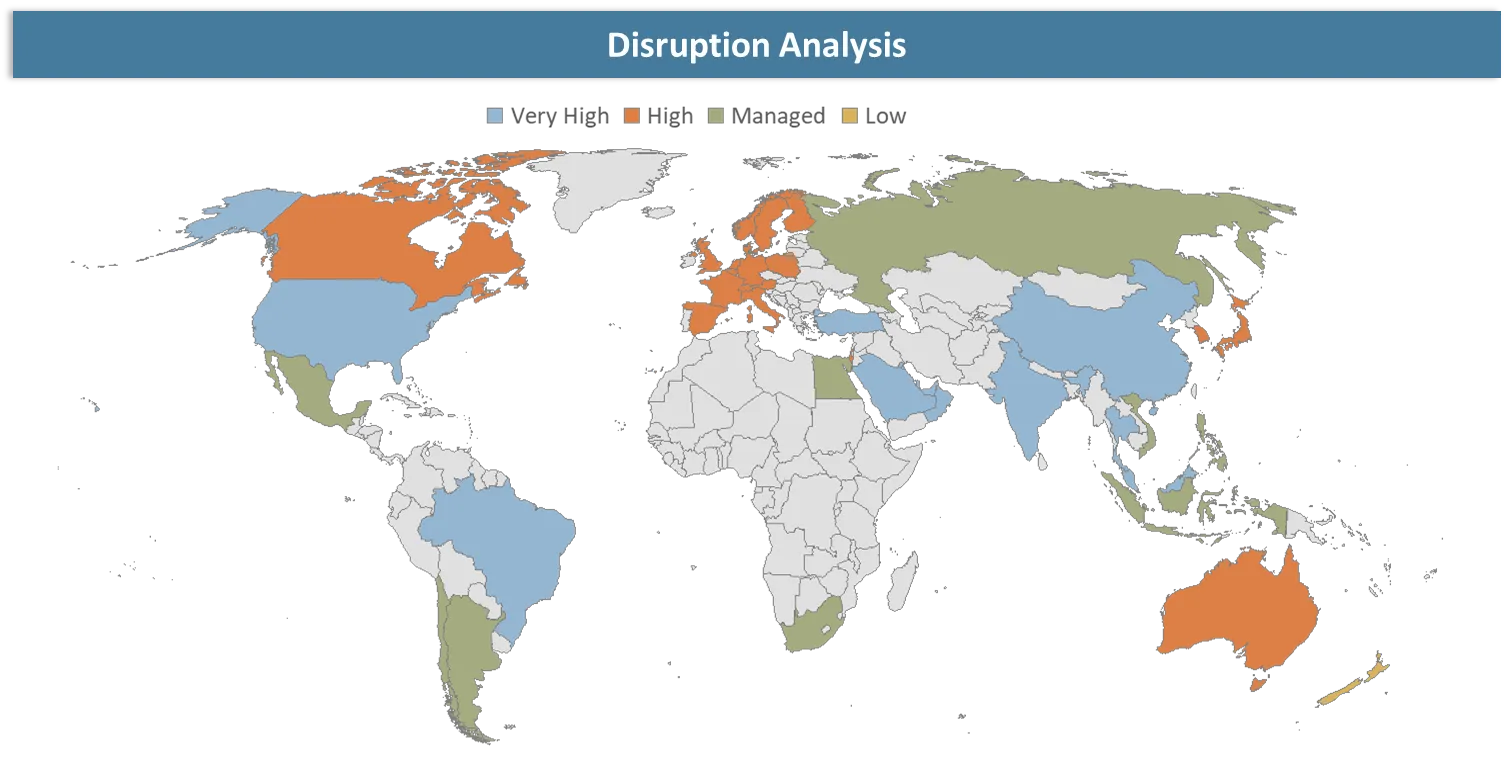
Shift from Standalone Power Tools Toward Connected and Data-Driven Tool Ecosystems Reshaping the Smart Power Tools Landscape
The disruption in the smart power tools market is primarily associated with the rapid transition from standalone power tools towards connected, data-producing, and digitally controlled tools ecosystem. In October 2025, Hilti, extended its Nuron platform by introducing over 60 more robust tools and accessories, integrating cordless technology for breaking, concrete cutting, wood cutting, and soil compaction uses. It was also revealed that Nuron ecosystem includes more than 120 electrical tools, batteries, and chargers, which shows that manufactures are moving away from single tool designs towards common batteries and connected tool platforms. Moreover, Hilti revealed that integration of ON! Track asset management software with Nuron results in up to 20% reduction in unplanned downtime for contractors.
At the same time, the disruption is being intensified due to the electrification of the heavy-duty equipment used for construction and substitution of gas-powered equipment for battery-powered solutions. According to DEWALT, the company's POWERSHIFT technology is capable of generating up to 60% fewer CO2e emissions when used than gas-powered equipment. Therefore, cordless platforms become more suitable for use in difficult professional conditions as alternatives to gas-powered ones. The Tool Connect Site Manager, the connected asset-management solution introduced by DEWALT, drives the industry towards real-time equipment tracking, utilization control, maintenance management, and jobsite asset intelligence. Thus, the industry's competitive landscape is changing from purely tool-based performance to the combination of ecosystems featuring connected hardware, similar battery architectures, fleet software, maintenance intelligence, and fewer emissions.
Smart Power Tools Market BCG Matrix: Company Evaluation

Stars include Stanley Black & Decker, Inc., Techtronic Industries Co. Ltd. (TTI), Robert Bosch GmbH, and Makita Corporation because they have strong positions in cordless and connected professional power tools, broad product ecosystems, and substantial capabilities in battery platforms, digital connectivity, and tool-management technologies. Question Marks include Hilti Corporation, Atlas Copco AB, Snap-on Incorporated, and Ingersoll Rand Inc. because they possess strong professional and industrial tool positions but have greater exposure to specialized applications and industrial equipment compared with the broader consumer-professional ecosystems of the leading cordless-tool players.
Potential includes Koki Holdings Co., Ltd., Festool GmbH, and Panasonic Corporation, which benefit from established engineering capabilities, professional-user relationships, and cordless-tool or battery technologies but have comparatively narrower smart-tool ecosystems than the leading companies. Tailenders include Kyocera Corporation, whose involvement in smart power tools remains comparatively limited relative to the major dedicated power-tool manufacturers and diversified industrial tool companies.
Smart Power Tools Market Dynamics
Driver Impact Analysis
| Driver | Market Growth Impact (%) | Demand Concentration | Impacted Use Case | Strategic Impact |
Rising adoption of IoT-enabled and connected tools is driving demand for real-time performance monitoring. | 24% | High in construction, industrial manufacturing, fleet management, and professional maintenance | Real-time tool tracking, utilization monitoring, condition monitoring, predictive maintenance, digital torque/performance monitoring, and remote asset management | Shifts competition from standalone tool hardware toward connected ecosystems combining tools, batteries, sensors, mobile applications, and cloud-based fleet platforms. |
Increasing automation in construction and manufacturing is accelerating the use of smart power tools. | 22% | Very High in industrial manufacturing, automotive assembly, aerospace, construction, and infrastructure | Automated fastening, precision assembly, torque-controlled applications, robotic/tool-assisted workflows, production-line quality control, and digital work instructions | Accelerates replacement of manually controlled tools with sensor-enabled and electronically controlled equipment. |
Growing demand for cordless and battery-powered tools is supporting market growth through improved portability, runtime, and user flexibility. | 23% | Very High in construction, infrastructure, field service, maintenance, woodworking, and professional DIY | Remote jobsites, concrete work, drilling, fastening, cutting, repair and maintenance, outdoor applications, and locations without convenient mains power | Common battery platforms are becoming ecosystem anchors, encouraging customers to standardize across multiple tool categories. |
Advancements in brushless motor and battery technologies are increasing tool efficiency, durability, torque performance, and operating life. | 19% | High across professional construction, industrial manufacturing, automotive, woodworking, and maintenance | High-torque drilling and fastening, heavy-duty cutting, grinding, continuous-duty applications, and high-load professional operations | Improves the performance gap between cordless and conventional corded equipment while supporting lighter, more efficient, and longer-running tool architectures. |
Rising emphasis on workplace safety and precision is increasing adoption of sensor- enabled tools. | 12% | High in automotive assembly, aerospace, industrial manufacturing, construction, and professional maintenance | Precision fastening, torque verification, overload protection, anti-kickback control, vibration reduction, dust management, operator safety monitoring, and quality assurance | Moves smart power tools toward quality- and safety-critical applications where documented operating parameters and controlled tool performance are required. |
Rising adoption of IoT-enabled and connected tools is driving demand for real-time performance monitoring
The rapid development of infrastructure for connected devices is reinforcing the technological base for power tools equipped with IoT capabilities. Manufacturers have begun to equip their products with such technologies as wireless connectivity, embedded sensors, asset identification, and digital data transfer. In October 2025, according to IoT Analytics, the number of IoT-connected devices is projected to grow to 21.1 billion units in 2025, growing at a rate of 14% YoY. Such developments indicate a rapidly expanding technology landscape within which power tools will be able to become a part of the connected industrial and jobsite ecosystem. This will provide users with the possibility to track information about the equipment in real time.
In parallel, the use of IoT technologies in industry is becoming more focused on equipment monitoring and predictions. In May 2025, according to MDPI, one of the peer-reviewed studies defines IIoT as a system that includes sensors, machines, and processing capabilities to enable real-time monitoring, predictions, and autonomous operation of machines. This fact makes connected power tools more strategic due to the possibility of utilizing tool-generated data for other purposes, not just using it locally. Thus, the requirement for smart power tools able to operate online, collect operational data, monitor conditions, and integrate with digital management systems increases.
Restraint Impact Analysis
| Restraint | Drag on Market Growth (%) | Primary Impact Area | Impacted Use Case | Strategic Impact |
High battery replacement and maintenance costs increase the total cost of ownership and constrain adoption of cordless smart power tools. | 1.2% | Battery lifecycle economics, aftermarket costs, fleet operating expenses | Professional construction, industrial maintenance, automotive repair, heavy-duty cordless applications | Encourages manufacturers to improve battery durability, cycle life, repairability and modularity while expanding battery-sharing platforms and refurbishment programs to reduce lifecycle costs. |
Interoperability and platform fragmentation make it difficult to integrate smart tools from different manufacturers into a unified digital ecosystem. | 0.9% | Tool-to-platform compatibility, connectivity, fleet management, software integration | Multi-brand professional tool fleets, construction sites, industrial maintenance and rental fleets | Increases demand for open communication standards, API-based platforms and cross-brand connectivity; manufacturers that build interoperable ecosystems can reduce switching barriers and accelerate fleet-level adoption. |
Cybersecurity and data -privacy concerns associated with connected tools and the transmission of tool-usage data can discourage adoption. | 0.7% | IoT security, cloud platforms, user data, connected-tool management | Connected construction sites, industrial facilities, enterprise fleet monitoring and predictive maintenance | Requires stronger device authentication, encrypted data transmission, secure cloud architecture and transparent data policies; cybersecurity investment becomes an important prerequisite for enterprise deployment. |
Volatility in lithium, cobalt, copper, and electronic-component costs can increase manufacturing costs and pressure smart power tool pricing. | 1.0% | Battery costs, electronics, motors, supply chain and manufacturing margins | High-performance cordless tools, industrial tools, battery packs and connected smart-tool systems | Encourages material diversification, long-term supplier contracts, alternative battery chemistries, localized sourcing and design optimization to protect margins and limit price increases. |
High battery replacement and maintenance costs increase the total cost of ownership and constrain adoption of cordless smart power tools
One of the significant constraints hindering the widespread adoption of cordless smart power tools is the high price of battery replacement and maintenance that adds up to the cost of ownership of these devices during their entire service life. In October 2025, as per Yahoo Shopping, an article about Ryobi batteries, replacement batteries could range from around USD 45 to USD 300, depending on voltage and storage capacity. Additionally, Ryobi 18V and 40V batteries come with a three-year limited warranty, whereas 80V batteries are guaranteed for five years. However, well-maintained batteries may potentially last more than six years. Such costs of battery replacement might comprise a considerable share of the total investment in wireless tools, especially in case users need multiple batteries to keep working uninterruptedly.
In addition, battery degradation and maintenance considerations can lead to higher life cycle costs. According to Yahoo Shopping, most of the batteries for cordless tools typically last for about 1,000-2,000 charges, whereas poor storage conditions, extreme weather, and repetitive charging may degrade batteries faster. The study highlights that inappropriate conditions for maintenance can decrease Ryobi battery lifetime to two years or even less, compared to six or more years with proper battery maintenance. Thus, additional costs associated with frequent battery purchases as well as necessary maintenance measures can result in increased cost of ownership of cordless smart power tools. Such costs can be especially high for professional users and small contractors who have to deal with many tools, thus limiting usage of the technology in spite of its benefits in terms of mobility, connectivity, and efficiency.
Smart Power Tools Market Segment Analysis
The global smart power tools market is segmented based on tool type, connectivity, technology, power source, application, and region.
Bluetooth-Enabled Connectivity Driving High Adoption of Smart Power Tools
The Bluetooth-enabled segment remains in the dominant position in the connectivity space in the smart power tools market, with a 76.7% market share in 2025, owing to the rising usage of connectivity technology in cordless drills, impact drivers, rotary hammers, grinders, and other types of professional power tools. The adoption of connected devices is being promoted through the increasing ecosystem of wireless devices, and the Wi-Fi Alliance and Bluetooth SIG have revealed in 2026 that Bluetooth and Wi-Fi together ship almost 10 billion devices annually. This signifies the wide deployment of connectivity technology in connected devices. Bluetooth connectivity is best suited for smart power tools as it facilitates communication with mobile devices and digital platforms for configuring, monitoring, and exchanging data. The 2025 Global Tools catalogue of Bosch Professional has mentioned Bluetooth connectivity as an integrated component of their professional tool lineup.
Leading power-tool manufacturers like Bosch have also used Bluetooth connectivity within professional tool solutions to enhance performance and personalization, along with digital management of tools. One of the products from Bosch connected-tool line is the GDX 18V-200 C cordless impact driver/wrench with the highest torque of 200 Nm, and along with that, there is the GCY 42 Bluetooth 4.0 Low Energy module with only 0.01 kg weight, which shows that Bluetooth connectivity has been introduced even in high-performance cordless tools. Bosch has also mentioned that through Bluetooth connectivity, one can personalize, control, get information from, and interact with the tools. The introduction of Bluetooth and Wi-Fi connectivity in around 10 billion devices yearly in 2026, and using Bluetooth Low Energy in the portfolio of professional power tools of Bosch has made Bluetooth connectivity the most popular category of connectivity within the smart power tools market.
Smart Power Tools Market Geographical Penetration
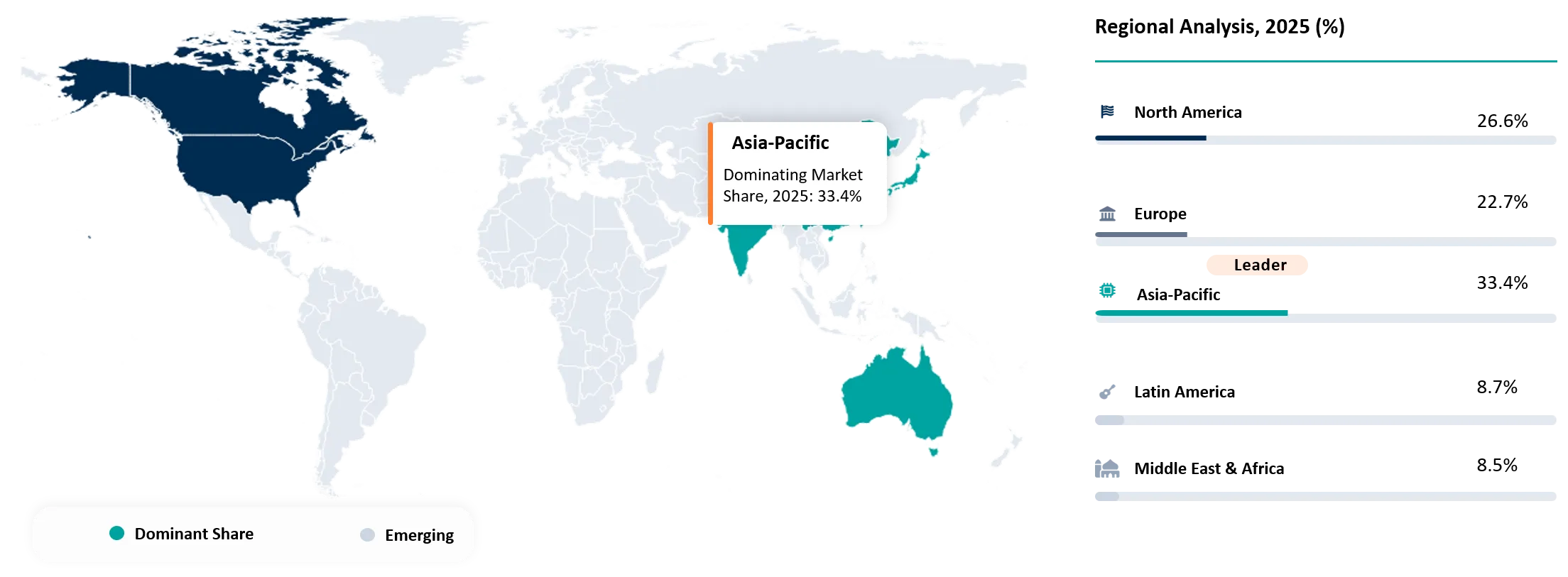
Rapid Adoption of Connected Cordless Tools and Manufacturing Expansion in Asia-Pacific
The Asia-Pacific region dominates the smart power tools market, accounting for 33.4% of the market in 2025, supported by rapid industrialization, expanding construction and infrastructure activity, large-scale manufacturing operations, and the presence of major power-tool manufacturers across China, Japan, South Korea, and Southeast Asia. The region's strong electronics and manufacturing ecosystem is accelerating the adoption of cordless and connected power tools, as industrial users and professional contractors increasingly seek portable, efficient, and digitally enabled equipment.
The shift toward integrated lithium-battery platforms is accelerating the development of connected and intelligent cordless power tools. In February 2026, Woting Technology, a China-based technology innovation company focused on intelligent power tools, launched its 20V Smart Lithium-Battery Tool Ecosystem, introducing more than 20 products across six core categories, including drills, impact wrenches, hammers, grinders, and saws. The company developed these tools around a common 20V smart lithium-battery platform, with integrated planning of key electric-drive components to improve cross-product compatibility and accelerate expansion into additional tool categories.
China Smart Power Tools Market Trends
China is in a dominant position in the Asia-Pacific smart power tools market owing to its large-scale manufacturing base, expanding industrial activity, strong construction and infrastructure ecosystem, and established presence of global and domestic power-tool manufacturers. The country's extensive manufacturing and engineering ecosystem creates strong demand for professional drills, impact drivers, grinders, saws, and other cordless equipment used across industrial production, construction, assembly, and maintenance applications. The continued shift toward cordless and connected tools is also strengthening China's position, as manufacturers increasingly integrate lithium-ion battery platforms, digital connectivity, and intelligent control functions into professional equipment.
The integration of automation, intelligent recognition, and digital technologies is accelerating the evolution of conventional power tools into smart, connected equipment. In November 2025, Jiangsu Dongcheng Power Tools Co., Ltd. (Dongcheng), a China-based power-tool manufacturer, showcased its DongCheng, DCA, and DCK brands at the 138th Canton Fair in Guangzhou, China, presenting power tools, garden tools, smart devices, and intelligent drilling solutions. The company highlighted its newly launched DCKBOT drilling robot, an intelligent MEP construction solution equipped with automatic control, visual intelligent recognition, and BIM-data integration, enabling multi-task, multi-angle, and multi-depth drilling while targeting improved construction efficiency, lower labor costs, and higher drilling accuracy. Dongcheng also introduced more than 500 new manual tools across 12 major categories to overseas markets, expanding its broader “electric + manual” tool ecosystem.
Japan Smart Power Tools Market Outlook
Japan is an important country in the Asia-Pacific smart power tools market owing to its highly developed manufacturing ecosystem, strong engineering capabilities, established power-tool manufacturers, and early adoption of cordless and digitally enabled equipment. The country's advanced automotive, machinery, electronics, and construction industries create consistent demand for professional drills, impact drivers, grinders, saws, and precision fastening tools. Japan's emphasis on high-performance manufacturing and automation is also encouraging the adoption of smart power tools that offer greater precision, battery efficiency, connectivity, and data-based tool management.
Strategic consolidation among leading power-tool manufacturers is accelerating the integration of advanced battery, motor, torque-control, and IoT technologies. In March 2026, Makita Corporation, a Japan-based manufacturer of electric power tools, gardening equipment, pneumatic tools, and household equipment, agreed to acquire the power-tool business of Panasonic Corporation’s Electric Works Company, also headquartered in Japan, subject to regulatory approvals. The acquired business develops, manufactures, and sells power tools, factory and construction fastening equipment, and factory-related IoT solutions across Japan and overseas. The business generated approximately ¥1 trillion in annual revenue. Wait — official sources do not support that figure; the reported business revenue is approximately USD 7.1 billion (around ¥1 trillion), and it has approximately 31,000 employees according to industry reporting.
Rapid Commercialization and Connected Tool Adoption in North America
The North America region is a major player in the smart power tools market, accounting for 26.6% of the market in 2025, supported by the region's mature construction and industrial sectors, established professional contractor base, high adoption of cordless equipment, and strong presence of leading power-tool manufacturers. The region is increasingly moving toward connected and digitally managed power tools, as contractors and industrial users seek greater productivity, equipment visibility, tool customization, and fleet-management capabilities. The combination of established tool brands, advanced digital infrastructure, and continued investment in construction and manufacturing is supporting the commercialization of smart power tools across professional and industrial applications.
Advances in high-performance cordless platforms and battery technology are expanding the capabilities of professional smart power tools. In May 2026, Greenworks, a U.S.-based battery-powered outdoor and power-tool manufacturer, launched its new Greenworks Pro 24V POWERALL professional power-tool lineup exclusively through Walmart across the U.S. The expansion introduced professional cordless tools including a 24V impact driver delivering up to 2,200 in-lb. of torque, a 24V impact wrench producing up to 1,500 Nm (1,100 ft-lb.), and a 7-1/4-inch circular saw. Greenworks’ tabless battery technology provides 38% more power under load, while rapid charging can reach 80% capacity in 15 minutes; its broader 24V POWERALL ecosystem now covers more than 200 compatible tools and devices, with USB-C batteries capable of functioning as power banks.
U.S. Smart Power Tools Market Trends
The U.S. is in a dominant position in the North American smart power tools market owing to its large construction and industrial base, high adoption of cordless equipment, strong professional contractor ecosystem, and presence of leading power-tool manufacturers such as Stanley Black & Decker, Milwaukee Tool, and DEWALT. The country's emphasis on jobsite productivity, equipment tracking, battery-powered platforms, and connected tool management is accelerating the transition from conventional power tools toward smart and digitally enabled equipment. The combination of extensive construction activity, industrial manufacturing, and established tool brands provides a strong environment for the commercialization of connected drills, impact drivers, grinders, saws, and other professional equipment.
Expansion of retail distribution is strengthening the adoption and accessibility of cordless and connected power-tool platforms across the U.S. market. In June 2026, SKIL, the flagship power-tool brand of Chervon Group, a China-based power-tool and outdoor power-equipment manufacturer, expanded its U.S. retail presence through a nationwide partnership with Tractor Supply Company (TSC), a U.S.-based rural lifestyle retailer headquartered in Brentwood, Tennessee. The rollout made SKIL’s corded and cordless power tools and outdoor equipment available across Tractor Supply stores nationwide and online, with the initial assortment comprising more than 30 SKIL tools and accessories, including drills, circular saws, impact drivers, and staplers.
Smart Power Tools Market Competitive Landscape
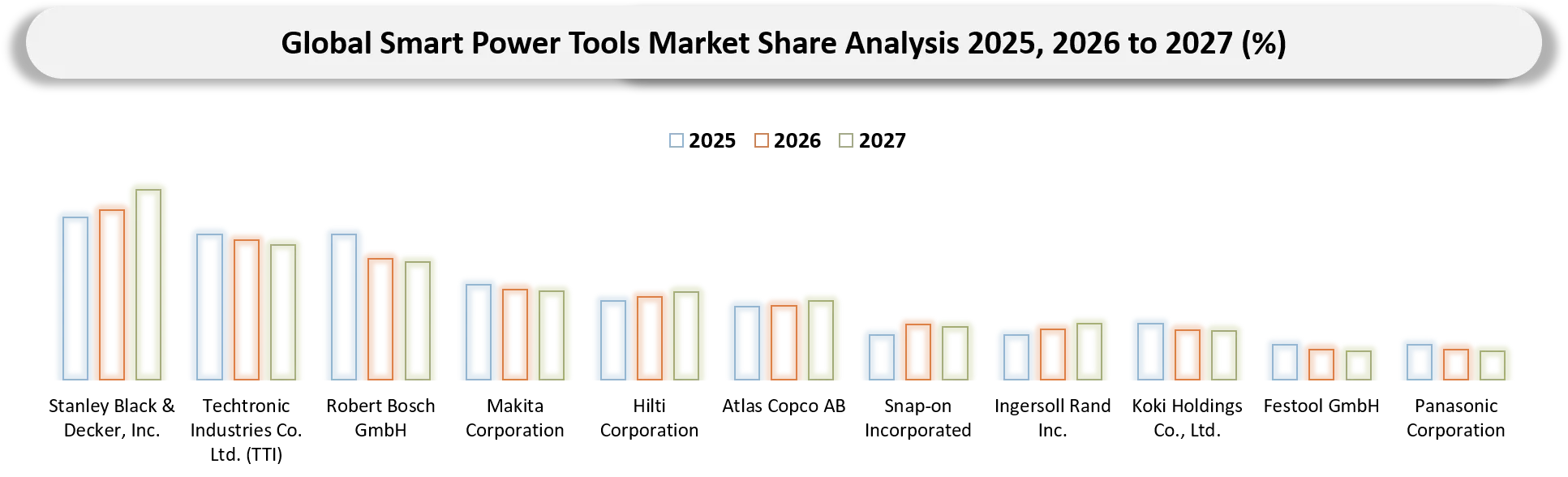
- The market is characterized by three key participant groups: diversified power-tool manufacturers, cordless and connected-tool specialists, and professional and industrial tool providers. Stanley Black & Decker, Techtronic Industries (TTI), Robert Bosch, Makita, and Koki Holdings compete through broad cordless portfolios, battery platforms, connected-tool ecosystems, and product innovation; Hilti, Atlas Copco, Snap-on, and Ingersoll Rand focus on professional, industrial, fastening, and high-productivity applications; while Festool, Panasonic, and Kyocera differentiate through precision tools, battery technologies, specialized professional equipment, and application-specific solutions. The competitive landscape is increasingly shaped by cordless platform compatibility, smart connectivity, battery performance, tool durability, ergonomics, digital fleet management, and after-sales service. This creates an ecosystem-driven competitive environment where product innovation, technology integration, professional-user relationships, and breadth of connected tool platforms define competitiveness.
- Key players include Stanley Black & Decker, Inc. (U.S.), Techtronic Industries Co. Ltd. (Hong Kong), Robert Bosch GmbH (Germany), Makita Corporation (Japan), Hilti Corporation (Liechtenstein), Atlas Copco AB (Sweden), Snap-on Incorporated (U.S.), Ingersoll Rand Inc. (Ireland), Koki Holdings Co., Ltd. (Japan), Festool GmbH (Germany), Panasonic Corporation (Japan), and Kyocera Corporation (Japan).
Key Developments
- October 2025: Hilti Corporation, a Liechtenstein-based construction technology and power-tool manufacturer, expanded its Nuron 22V cloud-connected cordless platform with more than 60 new heavy-duty tools and accessories for breaking, concrete cutting, wood cutting, and soil compaction.
- March 2026: Makita Corporation, a Japan-based power-tool manufacturer, announced an agreement to acquire the power-tool business of Panasonic Corporation’s Electric Works Company (PEW), also headquartered in Japan.
- June 2026: OX GROUP Global, a U.S.-based professional tools manufacturer based in Rochester, New York, acquired SMART Tool Group, a UK-based multi-tool blade and power-tool accessory brand, with the transaction effective June 1, 2026.
- March 2026: SPESYN, a Hong Kong-based precision hardware and smart power-tool developer, launched the SPESYN Tool 3 (ST3) through Kickstarter, targeting makers, DIY users, engineers, and professional users.
- February 2026: ACI Smart Tools, a Bangladesh-based power- and hand-tool business under ACI Motors Ltd., entered into a strategic partnership with Pickaboo.com, a Bangladesh-based e-commerce platform, to expand online access to its tool portfolio across the country.
Key Procurement Priorities and Buyer Evaluation Criteria
- Organizations procuring Smart Power Tools increasingly select suppliers based on their ability to provide high-performance cordless tools, durable construction, long battery runtime, ergonomic designs, and application-specific performance for professional construction, manufacturing, automotive, maintenance, and industrial operations.
- The procurement decision-making process is increasingly influenced by the transition toward cordless platforms, connected tools, Bluetooth-enabled functionality, brushless motors, advanced battery systems, and digitally managed tool fleets. Buyers are therefore evaluating suppliers based on their ability to provide scalable tool ecosystems that can support multiple applications while reducing equipment downtime and improving jobsite productivity.
- Buyers consider factors such as tool power and torque, battery capacity and compatibility, operating runtime, charging speed, durability, ergonomics, safety features, connectivity, tool tracking, and total cost of ownership when selecting smart power-tool suppliers. Compatibility across a common battery platform is particularly important for professional users because it enables multiple tools to operate using the same battery ecosystem and reduces the need for additional equipment and accessories.
Why Choose DataM?
- Technological Innovations: Explores advancements in smart power tools, including brushless motor technology, lithium-ion battery platforms, Bluetooth connectivity, IoT-enabled tools, intelligent sensors, electronic controls, and digital fleet-management systems, enabling improved power efficiency, longer operating time, precision, safety, and tool productivity across professional applications.
- Product Performance & Market Positioning: Evaluates how different players differentiate their smart power tools based on torque, power output, battery runtime, charging speed, durability, ergonomics, weight, connectivity, operating efficiency, and tool-platform compatibility, highlighting competitive positioning across construction, manufacturing, automotive, infrastructure, woodworking, and maintenance applications.
- Real-World Evidence: Highlights the adoption of smart power tools across construction sites, industrial manufacturing facilities, automotive assembly operations, infrastructure projects, and professional workshops, demonstrating benefits such as improved productivity, cordless mobility, real-time tool monitoring, equipment tracking, customized tool settings, and reduced downtime.
- Market Updates & Industry Changes: Tracks key developments including new cordless tool launches, advanced battery platforms, connected-tool ecosystems, Bluetooth-enabled products, smart fleet-management solutions, manufacturing capacity expansion, and strategic investments across North America, Europe, and Asia-Pacific, supporting the industry's transition from conventional power tools toward connected and intelligent equipment.
- Competitive Strategies: Analyzes how leading companies expand through cordless-platform development, brushless motor innovation, connected-tool technologies, strategic partnerships, product launches, acquisitions, and digital ecosystem expansion to address increasing demand for high-performance and digitally managed power tools.
- Pricing & Market Access: Examines pricing variations based on tool type, power output, battery technology, connectivity features, application requirements, durability, and professional-grade specifications, while assessing distribution through direct sales, authorized dealers, hardware stores, industrial distributors, e-commerce platforms, and professional tool networks.
- Market Entry & Expansion: Identifies growth opportunities driven by cordless tool adoption, construction and infrastructure development, industrial automation, connected jobsite technologies, fleet management, and demand for battery-powered equipment, while outlining strategies such as localized manufacturing, cordless platform expansion, technology differentiation, distribution partnerships, and connected-tool ecosystem development.
Target Audience
- Power Tool Manufacturers & OEMs
- Construction & Infrastructure Companies
- Industrial & Manufacturing Companies
- Professional Contractors & Tradespeople
- Fleet & Asset Management Providers
- Battery & Component Suppliers
- Distributors, Dealers & Retailers


























































