


Single-Cell Protein Ingredients Market Size and Overview
The global single-cell protein ingredients market reached USD 332.5 million in 2025 and is expected to reach USD 987.5 million by 2035, growing with a CAGR of 11.5% during the forecast period 2026-2035. The market is growing commercially due to the increasing relevance of microbial protein ingredients as substitutes for resolving the supply shortage problem related to conventional protein ingredients, especially fishmeal. In May 2026, according to the Feed and Additive, the CFI state of the industry report, the current annual output of SCP in the aquafeed industry in 2025 amounted to 30,000-40,000 metric tonnes, with the prospect of growing to 150,000-500,000 metric tonnes by 2030, which means that the market will expand more than tenfold.
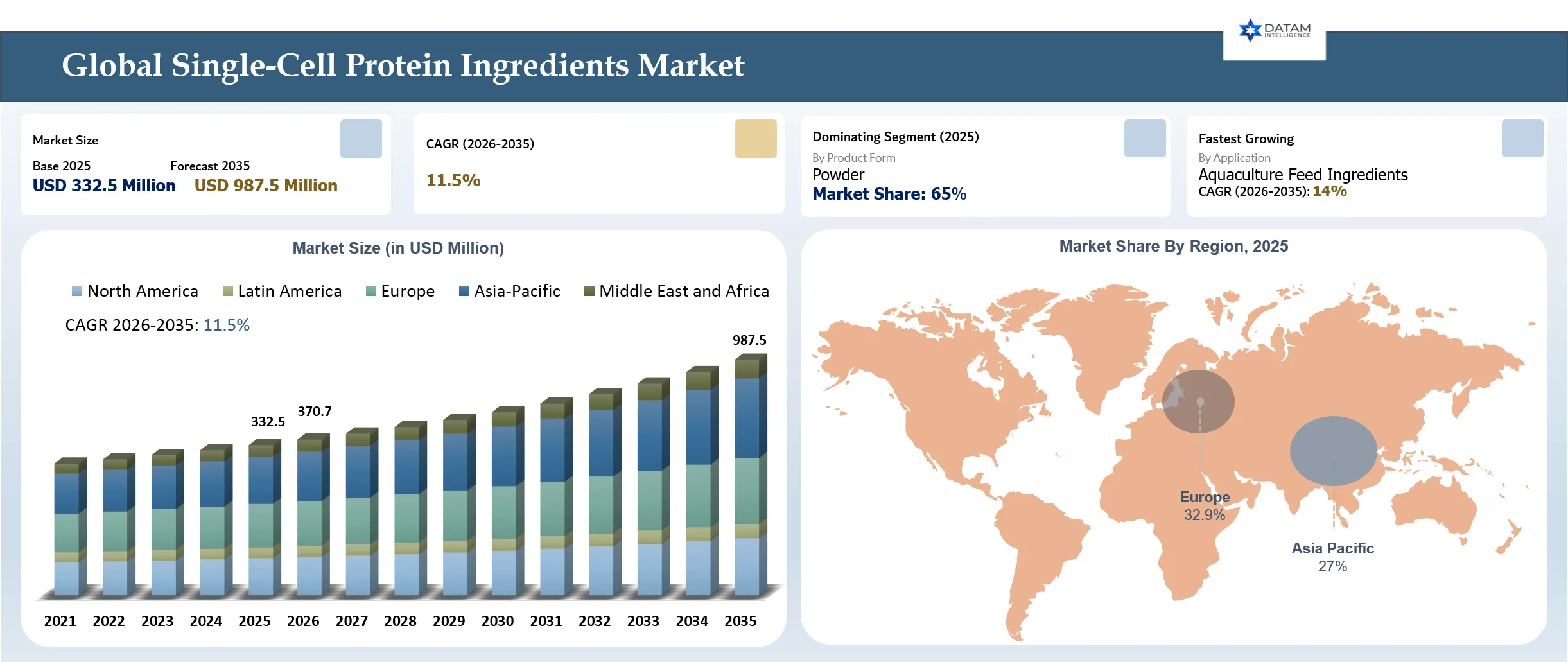
Microbial protein ingredients can completely substitute fishmeal in shrimp diets and partially in some types of fish feed without compromising the development and health of animals. The shortage of fishmeal is expected to occur as early as 2028, with a potential 25% excess demand over the supply by 2030, thus giving an additional boost to the market potential for bacterial, yeast, fungi, and algae-based protein ingredients. However, capital-intensive operations, high operating expenses, lack of regulations, and unreliable raw material supply remain obstacles to large-scale manufacturing.
Public funding in the research and scale-up of SCP production is contributing to speeding up the commercialization of SCP as an ingredient in foods. According to CORDIS (European Commission), the PROSCALE project has been funded for the scaling up of the production of single-cell proteins for use in food products. The total budget of the project is EUR 8.57 million (USD 9.93 million), out of which EUR 6.99 million (USD 8.11 million) comes from the European Union, and the time span for the project is from September 2026 to August 2030. The purpose of the PROSCALE project is to take forward the technologies of three types of SCP production, that is, mycoprotein, bacterial SCP, and yeast SCP, from TRL 5 to TRL 7, producing multipurpose ingredients containing at least 50% protein while targeting a 15%-30% reduction in production costs.
White-Space Opportunities for Regional Expansion and Large-Scale Single-Cell Protein Production
Saudi Arabia and the broader Middle East region are emerging as significant opportunities for large-scale single-cell protein production, driven by the availability of natural gas feedstock, government-backed industrial development, and increasing focus on food security. In March 2026, SIIG and Unibio announced the development of a SAR 1.4 billion (approximately USD 373 million) bio-protein production project in Jubail Industrial City, representing one of the largest identified investments in industrial-scale SCP production. The project, structured as an 80:20 joint venture between SIIG and Unibio, is designed to produce 50,000 tonnes of single-cell protein annually in its initial phase, while longer-term expansion plans could increase capacity beyond 300,000 tonnes annually.
The investment builds upon SIIG's earlier USD 70 million investment in Unibio, demonstrating continued capital concentration in Saudi Arabia's gas-fermentation and microbial protein infrastructure. Saudi Arabia is therefore likely to attract particularly high investment because its abundant dry natural gas resources can provide a locally available feedstock for methane-based SCP production. Beyond Saudi Arabia, Europe represents another important investment area, supported by the PROSCALE project, which has secured an EU contribution of EUR 6.99 million (approximately USD 8.1 million) to scale fungal, yeast, and bacterial SCP production for food applications.
These investments are expected to generate opportunities across the single-cell protein ingredient value chain, particularly for companies providing fermentation technology, feedstock integration, bioprocessing equipment, downstream processing, and food and feed formulation capabilities. In Saudi Arabia and the wider Middle East, Unibio is positioned to benefit directly through the deployment and commercialization of its gas-fermentation technology and Uniprotein ingredient platform, while SIIG benefits from expanding into high-value biotechnology and sustainable protein production.
Other companies operating in microbial and gas-fermentation protein technologies, including Calysta, String Bio, Solar Foods, NovoNutrients, and Deep Branch, could also find opportunities to expand their technologies in gas-rich regions where methane, carbon dioxide, and renewable energy resources can support large-scale SCP production. Companies such as Solar Foods, ENOUGH, The Protein Brewery, Kynda, and Unibio are positioned to benefit from the growing European focus on sustainable and food-grade protein ingredients, alongside research and innovation programs such as the PROSCALE consortium. Overall, the strongest opportunity appears to be in Saudi Arabia and the wider Middle East for large-scale methane-based SCP production, while Europe offers opportunities for food-grade and circular microbial proteins, creating differentiated regional expansion opportunities for companies across the single-cell protein ingredients market.
Single-Cell Protein Ingredients Market Key Takeaways
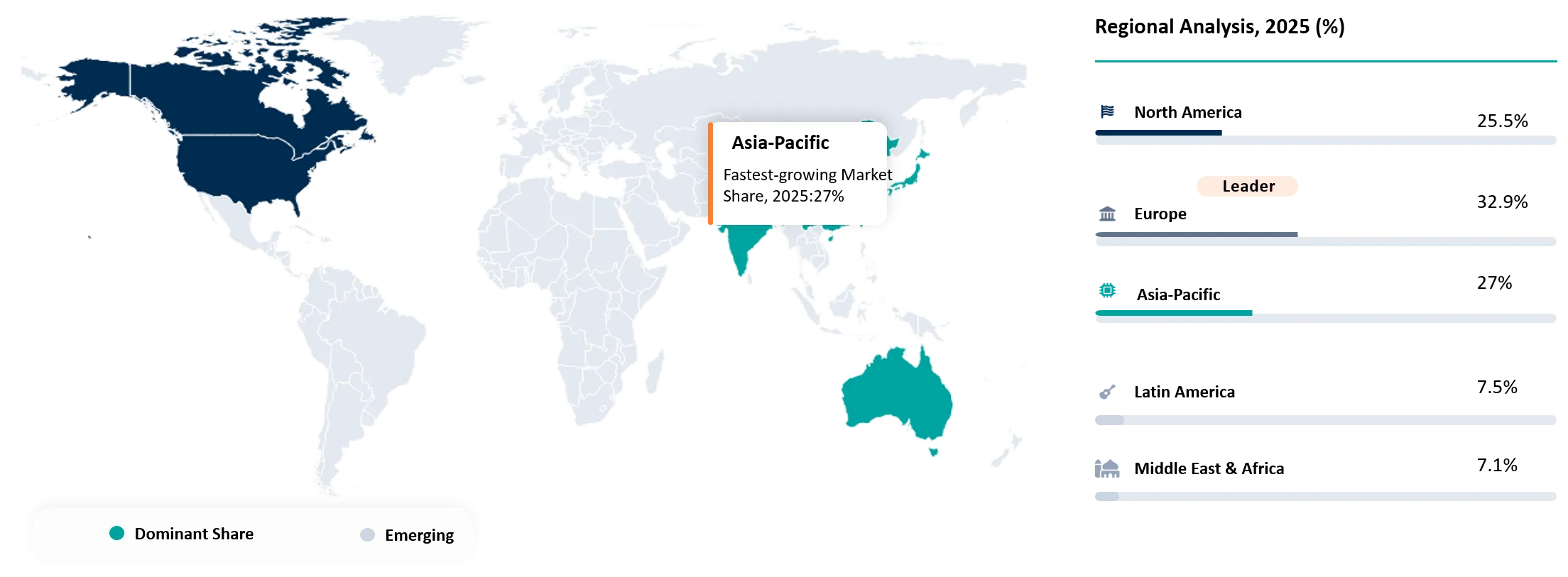
- Europe led the global single-cell protein ingredients market with a 32.9% market share in 2025. The Asia-Pacific region followed as the second-largest geographic market, holding 27.0% of total market value.
- Powdered single-cell protein held a dominant 65% market share in 2025 due to its superior storage stability and processing versatility. A study on Ralstonia eutropha highlighted dried SCP nutritional values of 71.87g crude protein per 100g and an 85.73% true digestibility rate.
- The AlFunFeed project secured €1.23 million (USD 1.33 million) under Horizon Europe to develop fungi-based SCP from seaweed waste. Scheduled from September 2025 to August 2028, the project spans research entities across Spain, Italy, Portugal, and Greece.
- In March 2026, SIIG and Unibio announced an 80:20 joint venture to construct a SAR 1.4 billion (USD 373 million) bio-protein plant in Jubail Industrial City. The initial phase targets 50,000 tonnes of annual SCP production, with plans for long-term expansion exceeding 300,000 tonnes annually.
Single-Cell Protein Ingredients Market Industry Trends and Strategic Insight
- The industry is shifting from pilot-scale validation to commercial capacity deployment, with SCP producers increasingly prioritizing scalable production facilities and long-term customer offtake agreements over technology demonstration alone.
- Gas fermentation is emerging as a strategic production platform, particularly for bacterial SCP, as methane, hydrogen, and other C1-based feedstocks reduce dependence on conventional agricultural raw materials and enable geographically flexible production systems.
- Feedstock selection is becoming a core competitive differentiator, with producers increasingly adopting a feedstock-first strategy that matches microbial strains with locally available agricultural residues, industrial sidestreams, CO₂, or other low-cost substrates.
- Consumer adoption strategies are shifting toward familiar food formats and improved sensory performance, as the industry recognizes that microbial origin alone is insufficient to drive adoption without acceptable taste, texture, product positioning, and consumer trust.
- Circular production models are gaining strategic importance, particularly where SCP facilities can utilize industrial by-products or waste-derived feedstocks to simultaneously improve feedstock economics and strengthen sustainability positioning.
Single-Cell Protein Ingredients Market Scope
| Metrics | Details | |
| 2025 Market Size | USD 332.5 Million | |
| 2035 Projected Market Size | USD 987.5 Million | |
| CAGR (2026-2035) | 11.5% | |
| Largest Market | Europe | |
| Fastest Growing Market | Asia-Pacific | |
| By Microorganism Source | Bacteria-Based Single-Cell Protein, Yeast-Based Single-Cell Protein, Filamentous Fungi-Based Single-Cell Protein, Microalgae-Based Single-Cell Protein | |
| By Production Technology | Submerged Fermentation, Solid-State Fermentation, Gas Fermentation, Precision Fermentation, Phototrophic Cultivation, Others | |
| By Product Form | Powder, Paste, Liquid, Others | |
| By Ingredient Type | Protein-Rich Whole Biomass, Protein Concentrates, Protein Isolates, Protein Hydrolysates, Peptide-Based Protein Ingredients, Others | |
| By Application | Food & Beverage Ingredients, Animal Feed Ingredients, Aquaculture Feed Ingredients, Dietary Supplement Ingredients, Pet Food Ingredients, Sports Nutrition Ingredients, Clinical & Medical Nutrition Ingredients, Others | |
| By Region | North America | U.S., Canada, Mexico |
| Europe | Germany, UK, France, Spain, Italy, Poland and Rest of Europe | |
| Asia-Pacific | China, India, Japan, Australia, South Korea, Indonesia, Malaysia and Rest of Asia-Pacific | |
| Latin America | Brazil, Argentina and Rest of Latin America | |
| Middle East and Africa | UAE, Saudi Arabia, South Africa, Israel, Türkiye and Rest of Middle East and Africa | |
| Report Insights Covered | Competitive Landscape Analysis, Company Profile Analysis, Market Size, Share, Growth | |
Single-Cell Protein Ingredients Market Disruption Analysis
Fishmeal Supply Constraints Reshaping Aquafeed Protein Sourcing and Accelerating Single-Cell Protein Adoption
The disturbance in the single-cell protein ingredients market is mostly associated with the growing dependence of the aquafeed supply chain on proteins sourced from the oceans and thus the need for diversifying protein sources. In December 2025, according to IFFO - The Marine Ingredients Organisation, fishmeal production was estimated to hit 5.4 million tonnes by 2025, while fishmeal production in IFFO-monitored areas increased by 7% till October 2025. Although there was growth in production, the variations in production as well as dependency on fishing made aquafeed producers vulnerable to supply disruptions, thereby hastening the adoption of fermentation-derived microbial proteins as a substitute for traditional protein sources.
In addition, rising fishmeal consumption from expansion of the aquaculture industry is causing an imbalance in the traditional equation of supply and demand of marine components in feed. As stated by IFFO, domestic aquaculture output kept growing in important farming zones of China, while total fishmeal usage in China’s aquaculture sector exceeded that of last year’s for the same period. It is forcing the aqua feed companies to vary their protein formulation strategies and the SCP makers to market bacteria, yeast, and fungi-based ingredients as scalable options.
Single-Cell Protein Ingredients Market BCG Matrix: Company Evaluation
Stars include Solar Foods, Calysta, and Unibio because these companies have established strong positions in next-generation microbial protein production and are actively commercializing large-scale fermentation technologies. The technology scalability, commercial partnerships, and focus on high-growth alternative protein applications position them within the star category of the single-cell protein ingredients market. Question Marks include Enifer, 3FBIO, String Bio, and MicroHarvest because these companies are developing innovative fungal-, microbial-, and fermentation-derived protein ingredients but remain in earlier stages of commercial scale-up and market penetration.
Potential companies include Angel Yeast, Lallemand, Lesaffre, and Archer Daniels Midland (ADM) because they possess established expertise in yeast, fermentation, food ingredients, and global distribution infrastructure that can support stronger participation in the SCP ingredients market. The existing manufacturing capabilities and customer networks provide a strategic advantage for expansion into microbial protein ingredients, although SCP may currently represent a developing or relatively smaller part of their overall business portfolios. Tailenders include Kiverdi and DSM-Firmenich AG because their direct involvement in dedicated large-scale single-cell protein ingredient production remains comparatively limited or less commercially established than specialized SCP producers.
Single-Cell Protein Ingredients Market Dynamics
Driver Impact Analysis
| Driver | Market Growth Impact (%) | Demand Concentration | Impacted Use Case | Strategic Impact |
Rising demand for sustainable alternative proteins is driving the adoption of single-cell protein ingredients. | 30% | High - Aquaculture Feed, Animal Feed, and Alternative Food Proteins | Replacement of fishmeal and conventional animal-derived proteins with sustainable microbial protein ingredients | Accelerates market adoption by positioning SCP as a scalable and resource-efficient alternative protein source, particularly in aquafeed and animal nutrition. |
Advancements in fermentation and microbial engineering technologies are improving production efficiency, scalability, and the functionality of single-cell protein ingredients. | 28% | High - Food Ingredients and Feed Manufacturing | Large-scale microbial fermentation, improved protein yields, and development of functional SCP ingredients | Reduces production constraints and improves commercial scalability, enabling manufacturers to develop higher-quality and application-specific SCP ingredients. |
Increasing focus on circular bioeconomy practices is supporting SCP production using agro-industrial residues and non-grain feedstocks as cost-effective raw materials. | 22% | Medium-High - Animal Feed, Aquafeed, and Sustainable Food Production | Conversion of agricultural residues, food-processing waste, and industrial by-products into microbial protein | Strengthens the cost-efficiency and sustainability proposition of SCP production while creating opportunities for waste-to-protein business models. |
Expansion of high-protein and functional food products is increasing demand for microbial protein ingredients. | 20% | Medium-High - Functional Foods, Nutritional Supplements, and High-Protein Foods | Protein fortification, dietary supplements, sports nutrition, and functional food formulations | Expands SCP adoption beyond feed applications and supports product diversification into higher-value human nutrition and functional food segments. |
Rising demand for sustainable alternative proteins is driving the adoption of single-cell protein ingredients
The growing demand for sustainable and resource-efficient alternative protein sources is a key driver accelerating the adoption of single-cell proteins as ingredients. The increasing pressures associated with animal protein production due to issues related to carbon emissions, land use, water usage, and food security are leading food and feed producers to look for microbial protein substitutes. The production of single-cell proteins through microbes, as well as alternate feedstocks to provide protein-rich ingredients, is an environmentally sustainable strategy. The significance of SCP ingredients is increasing in various industries such as food, animal feed, aquaculture, and nutrition.
In parallel, the increased demand to decrease reliance on traditional proteins from marine sources is increasing the use of SCPs in aquaculture. In May 2026, according to We Are Aquaculture, citing the Centre for Feed Innovation, SCPs produced for the purpose of manufacturing aqua feed had reached about 30,000 to 40,000 metric tonnes in 2025 and are expected to reach a level of 150,000 to 500,000 metric tonnes by 2030. Moreover, the report suggested that SCPs can fully replace fishmeal for shrimps and also replace up to 50% of fishmeal in the case of some fish feeds without any decrease in their performance. Additionally, fishmeal shortages are predicted to arise as early as 2028, and the demand would be expected to exceed the supply by up to 25% of the total production by 2030. The rising demand for alternatives to traditional proteins is expected to increase the usage of SCPs, especially in the fast-growing aquaculture and animal feed sectors.
Restraint Impact Analysis
| Restraint | Drag on Market Growth (%) | Primary Impact Area | Impacted Use Case | Strategic Impact |
Complex regulatory approval requirements for novel microbial ingredients can delay commercialization. | 30% | Regulatory Compliance and Market Entry | Human Food, Functional Foods, Dietary Supplements, and Novel Protein Applications | Delays product launches and increases regulatory compliance costs, particularly for novel microbial strains requiring extensive safety and toxicological validation. |
Limited consumer acceptance and familiarity with microbial-derived proteins continue to restrict mainstream adoption. | 28% | Consumer Adoption and Market Penetration | Human Food, Meat Alternatives, Functional Foods, and Protein-Enriched Products | Slows mainstream adoption and requires companies to invest in consumer education, familiar product formats, branding, and sensory improvement to build trust. |
Food safety and quality concerns, including potential toxins, allergens, contamination, and high nucleic acid content, require extensive testing and processing, increasing production complexity. | 24% | Product Safety and Quality Assurance | Human Food, Dietary Supplements, Animal Feed, and Aquafeed | Increases testing, quality-control, and downstream processing requirements, raising production costs and extending product development timelines. |
Technical challenges in maintaining consistent quality at commercial scale can hinder large-scale production and limit the broader adoption of single-cell protein ingredients. | 18% | Production Scalability and Manufacturing Consistency | Large-Scale Food Production, Animal Feed, and Aquafeed | Limits reliable large-volume supply and increases operational risks, making consistent fermentation control and process standardization critical for commercial expansion. |
Complex regulatory approval requirements for novel microbial ingredients can delay commercialization
One of the key restraints that is preventing the extensive commercialization of SCPs is the elaborate regulatory process of gaining approval due to the novel nature of the microbial components used. Due to the fact that a number of SCPs are made from bacteria, fungi, yeasts, and microalgae, companies have to develop comprehensive safety and technical information before the commercialization of their products. The approval process may include information regarding microbial identification, whole-genome sequencing, manufacturing process, composition, toxicological studies, allergenicity, antimicrobial resistance, virulence factors, and secondary metabolites. The requirements lead to an increase in the time and money required by SCP manufacturers to take their products from development through to market, especially if new strains of microbes have not been used before by humans.
In addition, regulation deadlines and the need for large scientific dossiers can seriously impact the commercialization of novel microbial proteins. In September 2025, as per Protein Production Technology, between 2022 and 2025, out of the 194 new food dossiers submitted in the EU, only 18 were related to alternative proteins, and most of those came from microbial protein sources. The proportion of alternative protein dossiers that used plants was 22%, insects 11%, and cell-based 5.6%. In spite of the great number of microbial innovations, there were just two microbe-based proteins in the EU Union List at the moment.
Moreover, while theoretically the EU review procedure takes around 18 months, one month of which is validation, nine months for EFSA risk assessment, and seven months for adoption by the European Commission, on average the risk assessment takes 19 months, counting the clock stops, and five years or more for complex applications. Even determining whether the food item should be considered a novel food requires a 6- to 18-month consultation. Therefore, all these long periods, scientific dossiers, and uncertain approval paths can greatly increase development costs and delay market introduction of novel single-cell protein ingredients.
Single-Cell Protein Ingredients Market Segment Analysis
The global single-cell protein ingredients market is segmented based on microorganism source, production technology, product form, ingredient type, application, and region.
Powder Form Dominates the Single-Cell Protein Ingredients Market Due to Superior Storage Stability and Application Versatility
The powder segment is dominating the single-cell protein ingredients market, with a significant market share of 65% in 2025, due to its benefits like better storage stability, transportation efficiencies, and easy usage in different types of formulations. Single-Cell Proteins are usually produced through processes where microbial biomass is extracted and further dried or stabilized, thereby helping in producing ingredients which can be transported even at long distances and are fit for large-scale operations. At the Centre for Feed Innovation, most single-cell proteins used in the application of feeds are made into dry meals, making their usage in feed mills feasible. Making the use of powdered SCP highly appropriate for bulk purposes like aquaculture feed, livestock feed, protein supplements, and nutrition.
In addition, the growing availability of high-protein powders of microbial ingredients is bolstering the market leadership of this product segment in human nutrition and functional foods. In May 2026, according to a PubMed study on SCP derived from Ralstonia eutropha, the percentage of crude protein was 71.87 ± 5.05 g per 100 g of the dry weight, and 45% of all the amino acids were essential ones, highlighting the nutritive value of the dried microbial protein ingredients. The study also showed 85.73% true digestibility, confirming the appropriateness of powdered SCP in protein-enriched food compositions. In addition, in June 2026, Ambrosia Collective introduced Planta Powered by Solein, which is a protein powder produced with the help of air-based microbial protein, confirming the commercialization of SCP-derived powders. High stability, rich content of proteins, and flexibility of formulation make powders highly popular in the market.
Single-Cell Protein Ingredients Market Geographical Penetration
Strong Alternative Protein Innovation and Circular Bioeconomy Investments Driving Europe’s Market Leadership
Europe dominates the single-cell protein ingredients market, accounting for 32.9% of the market share in 2025, supported by its strong alternative protein ecosystem, advanced biotechnology capabilities, and increasing investments in sustainable food production. The region has established a favorable environment for microbial protein innovation through extensive research infrastructure, fermentation expertise, and circular bioeconomy initiatives.
The European Union-backed PROSCALE project was launched to scale up the production of fungal, yeast, and bacterial single-cell proteins for food applications. The project aims to advance three continuous biomass fermentation processes from Technology Readiness Level (TRL) 5 to TRL 7, producing three multipurpose SCP ingredients containing at least 50% protein. The 16-partner consortium further demonstrates Europe's strong collaborative ecosystem for accelerating the commercialization and market adoption of single-cell protein ingredients.
The AlFunFeed project, coordinated by the University of Vigo (Spain), a public research university, is developing fungi-based single-cell protein ingredients from seaweed waste for sustainable aquafeed applications. The European consortium includes ODS Protein (Spain), a biotechnology company responsible for adapting fungal fermentation technology; Università Politecnica delle Marche (Italy), a public research university; CIIMAR (Portugal), a marine and environmental research center; and the University of Thessaly (Greece), a public research university.
The project received €1.23 million (approximately USD 1.33 million) in funding through the Sustainable Blue Economy Partnership under Horizon Europe and is scheduled to run from September 2025 to August 2028, highlighting growing European investment in sustainable fungal single-cell proteins for aquaculture feed.
Germany Single-Cell Protein Ingredients Market Trends
Germany holds a dominant position in the European single-cell protein ingredients market, supported by its advanced biotechnology infrastructure, strong fermentation capabilities, and increasing commercialization of microbial protein technologies. The country's established bioeconomy ecosystem enables close collaboration between biotechnology companies, research institutions, industrial fermentation facilities, and agricultural supply chains, supporting the transition of single-cell protein production from pilot-scale operations to commercial manufacturing. Germany's strong industrial infrastructure and access to agro-industrial side streams further support cost-efficient microbial protein production and strengthen the country's position in the European market.
Germany is strengthening its position in sustainable protein production through government-backed investments and the expansion of industrial-scale microbial fermentation capacity. In February 2026, MicroHarvest, a Germany-based biomass fermentation startup, secured up to €5.46 million (approximately USD 6.32 million) in funding from the German federal government's energy and resource efficiency program to support industrial-scale single-cell protein (SCP) production. The company plans to establish a factory at the Leuna Chemical Park in Saxony-Anhalt, Germany, with an annual production capacity of 15,000 tonnes of SCP and approximately 25 new jobs expected. Using agricultural and food industry by-products, particularly molasses, MicroHarvest produces microbial protein through biomass fermentation in around 24 hours, highlighting the scale-up of sustainable SCP ingredient production in Germany.
UK Single-Cell Protein Ingredients Market Outlook
The UK is gaining prominence in the European single-cell protein ingredients market due to its strong biotechnology ecosystem, established industrial fermentation capabilities, and growing government focus on sustainable alternative proteins. The country has developed significant expertise in biomass fermentation and microbial food production, providing a foundation for the commercialization of protein-rich ingredients derived from microorganisms. In June 2025, the UK Government highlighted increasing interest and commercialization activity in alternative dietary proteins, including algal, microbial, and precision-fermented proteins, driven by technological advancements and the need for more sustainable protein production.
The global SCP industry is undergoing strategic consolidation, with companies increasingly prioritizing large-scale commercial production over geographically dispersed research operations. In November 2025, Calysta, a U.S.-based gas fermentation and single-cell protein biotechnology company, announced the closure of its R&D laboratories in the United Kingdom and the United States as it shifted its focus toward commercial-scale manufacturing. The company produces FeedKind, a non-GMO single-cell protein derived through microbial fermentation using methane-based carbon sources. Through its joint venture Calysseo with Adisseo, Calysta operates a commercial facility in Chongqing, China, with an annual production capacity of 20,000 tonnes, while approximately 70% of the facility's output is allocated to the pet food segment.
U.S. Single-Cell Protein Ingredients Market Outlook
The U.S. is emerging as a significant market for the single-cell protein ingredients market, supported by its large health and performance nutrition sector, strong food technology ecosystem, and increasing commercialization of novel microbial proteins. Growing consumer demand for high-protein, sustainable, and functional food products is creating opportunities for SCP ingredients across protein powders, ready-to-drink beverages, nutritional bars, and other fortified food applications. In September 2025, Solar Foods identified the U.S. Health & Performance nutrition segment as a core market valued at approximately USD 10 billion, consuming around 500 kilotonnes of protein powder annually, demonstrating the substantial addressable demand for alternative protein ingredients.
The growing adoption of sustainable alternative proteins is accelerating the commercialization of single-cell protein ingredients across the U.S. food and nutrition industry. In June 2026, Solar Foods Oyj, a Finland-based food technology and sustainable protein company, received an order for its Solein single-cell protein ingredient from an innovative lifestyle company in the United States. The order supports the development of Solein-based consumer products intended for the U.S. market, where Solar Foods is initially focusing on the Health & Performance nutrition segment. The development marks continued commercialization of Solein in the United States, with the company already working with multiple customers and having introduced its first Solein-based consumer product in the country.
Expanding Alternative Protein Commercialization and Aquaculture Demand Driving Asia-Pacific Market Growth
The Asia-Pacific region is a major market for the single-cell protein ingredients market, accounting for 27.0% of the global market share in 2025, supported by the region's large aquaculture industry, growing food demand, expanding biotechnology capabilities, and increasing interest in sustainable alternative proteins. Countries including China, Japan, Singapore, South Korea, and Australia are strengthening their microbial fermentation and alternative protein ecosystems to address growing protein requirements while reducing dependence on conventional agricultural and marine resources. The region's extensive aquaculture production base is particularly supporting demand for single-cell protein ingredients as alternatives to fishmeal and other conventional feed proteins.
The growing commercialization of single-cell protein ingredients through collaborations between global food companies is expanding their presence across Asia-Pacific consumer markets. In March 2025, Ajinomoto Co., Inc., a Japan-based multinational food and biotechnology company, expanded its Atlr.72 sustainable food brand in Singapore by introducing three Solein-powered ice cream flavors. The products use Solein, a single-cell protein ingredient supplied by Solar Foods Oyj, a Finland-based food technology and sustainable protein company. Solar Foods and Ajinomoto established their strategic product development partnership in 2023, supporting the commercialization of microbial protein-based foods in Asia-Pacific. Ajinomoto operates in 34 countries and regions, sells products in more than 130 countries and regions, and reported sales of ¥1.4392 trillion (USD 9.9 billion) in fiscal 2023, highlighting its significant scale in advancing Solein-based food products.
Japan Single-Cell Protein Ingredients Market Trends
Japan is one of the major countries in the Asia-Pacific single-cell protein ingredients market due to its advanced food biotechnology ecosystem, strong fermentation capabilities, and early commercialization of novel microbial protein ingredients. The country's established expertise in microbial fermentation, combined with growing demand for sustainable and alternative protein sources, is supporting the development of single-cell proteins for food and nutrition applications. Japan has also emerged as an important market for microbial protein commercialization, with companies focusing on integrating novel proteins into familiar consumer food formats, helping improve consumer acceptance and accelerate market adoption.
Growing investment and cross-border partnerships are accelerating the commercialization and scale-up of fungal-based protein ingredients in Japan. In May 2025, NoMy (Norwegian Mycelium AS), an Oslo, Norway-based fermentation and mycoprotein technology company, secured a new funding round led by Nippon Beet Sugar Manufacturing Co., Ltd. (Nitten Sugar), a Japan-based beet sugar producer and publicly listed agri-food company. The investment expanded their partnership, established in April 2024, to commercialize fungal mycoprotein using side streams from sugar beet processing. Nitten contributed €1.25 million (approximately USD 1.42 million) to the funding round, alongside investors including TD Veen, EIT Food, and Farvatn Venture, with the proceeds supporting the scale-up of NoMy's sustainable protein technology across Japan, Norway, and Europe.
Single-Cell Protein Ingredients Market Competitive Landscape
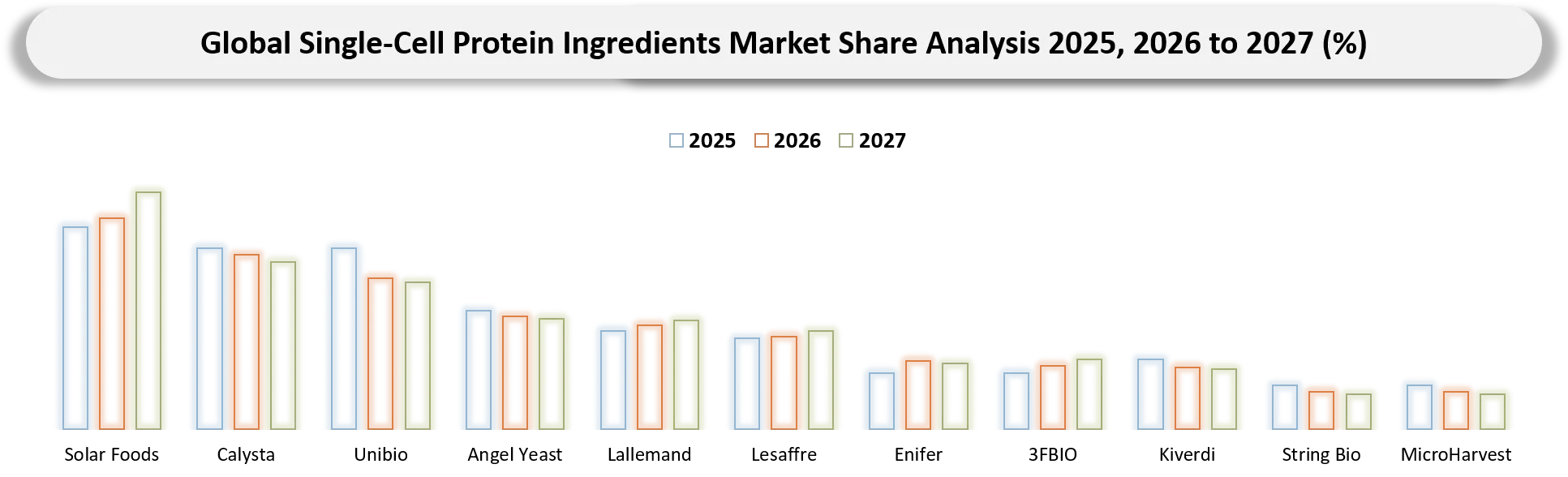
- The market is characterized by three key participant groups: dedicated single-cell protein innovators, established yeast and fermentation ingredient producers, and diversified food and nutrition companies. Solar Foods, Calysta, Unibio, Enifer, 3FBIO, Kiverdi, String Bio, and MicroHarvest lead in developing and scaling microbial protein technologies for food, aquafeed, and animal nutrition applications; Angel Yeast, Lallemand, and Lesaffre focus on yeast-based fermentation and protein ingredient production; while Archer Daniels Midland (ADM) and DSM-Firmenich AG leverage their broader food, nutrition, formulation, and distribution capabilities to support alternative protein applications. This creates a highly technology-driven and ecosystem-based landscape where fermentation efficiency, production scalability, regulatory capabilities, feedstock optimization, product functionality, and strategic partnerships define competitiveness.
- Key players include Solar Foods (Finland), Calysta (United States), Unibio (Denmark), Angel Yeast (China), Lallemand (Canada), Lesaffre (France), Enifer (Finland), 3FBIO (United Kingdom), Kiverdi (United States), String Bio (India), MicroHarvest (Germany), Archer Daniels Midland (ADM) (United States), and DSM-Firmenich AG (Switzerland/Netherlands - dual headquarters).
Key Developments
- May 2026: the PROSCALE project, coordinated by VTT Technical Research Centre of Finland, a Finland-based state-owned research and technology organization, secured €6.99 million (USD 7.98 million) in funding from the Circular Bio-based Europe Joint Undertaking (CBE JU).
- July 2026: the ALGANOVA project, coordinated by Idener Research & Development, a Spain-based research and technology organization, received €5.7 million (approximately USD 6.6 million) in EU funding from the Circular Bio-based Europe Joint Undertaking (CBE JU).
- May 2026: Pacifico Biolabs, a Germany-based alternative protein and biomass fermentation startup, raised €7 million (USD 8.1 million) in a Series A funding round backed by Stray Dog Capital, TGFS, Sprout & About Ventures, Simon Capital, FoodLabs, and a regional brewery partner.
- July 2026: Biosphere, a U.S.-based biomanufacturing technology company, acquired NovoNutrients, a U.S.-based gas fermentation and single-cell protein biotechnology company.
- June 2026: TA Vital Co. Ltd., a Vietnam-based health and nutrition ingredient distribution company, signed a Memorandum of Understanding (MOU) with Sophie's Bionutrients Pte. Ltd., a Singapore-based microalgae biotechnology company, to advance microalgae-derived ingredients and alternative protein solutions across the Asia-Pacific region.
Key Procurement Priorities and Buyer Evaluation Criteria
- Organizations investing in the Single-Cell Protein Ingredients Market are increasingly selecting suppliers based on their ability to provide consistent, high-quality, and scalable protein ingredients with reliable nutritional composition, supply security, and competitive production economics.
- Procurement decision-making is increasingly influenced by the growing demand for sustainable alternative proteins, circular bioeconomy practices, reduced dependence on conventional protein sources, and the expanding use of microbial proteins across food, animal feed, aquafeed, and nutritional applications.
- Buyers consider factors such as protein content and amino acid profile, digestibility, product purity, sensory characteristics, safety standards, regulatory approval status, batch-to-batch consistency, and shelf stability when selecting single-cell protein ingredient suppliers.
Why Choose DataM?
- Technological Innovations: Explores advancements in microbial fermentation, strain development, biomass processing, and feedstock utilization that are improving the production efficiency, nutritional quality, scalability, and commercial viability of single-cell protein ingredients.
- Product Performance & Market Positioning: Evaluates how different players develop SCP ingredients based on protein content, amino acid profile, digestibility, functionality, sensory characteristics, and production efficiency, highlighting how companies differentiate through proprietary fermentation technologies and application-specific product development.
- Real-World Evidence: Highlights the adoption of single-cell protein ingredients across aquaculture feed, animal nutrition, functional foods, protein powders, and sustainable food products, demonstrating benefits such as high protein density, reduced dependence on conventional protein sources, and improved resource efficiency.
- Market Updates & Industry Changes: Tracks key developments such as new SCP production facilities, commercial-scale fermentation projects, product launches, regulatory approvals, strategic partnerships, and investments across Europe, North America, and Asia-Pacific, supporting the transition of microbial proteins from pilot-scale development to commercial production.
- Competitive Strategies: Analyzes how leading companies expand through fermentation capacity scaling, proprietary microbial technologies, strategic partnerships, feedstock optimization, and product diversification to address growing demand across food, aquafeed, and animal nutrition markets.
- Pricing & Market Access: Explains pricing variations based on production technology, feedstock costs, protein concentration, processing requirements, regulatory compliance, and production scale, along with market access through direct ingredient supply, food and feed manufacturers, distributors, and strategic partnerships.
- Market Entry & Expansion: Identifies growth opportunities driven by rising demand for sustainable alternative proteins, expansion of aquaculture production, circular bioeconomy initiatives, and increasing investment in fermentation infrastructure, while outlining strategies such as regulatory approvals, commercial-scale capacity expansion, technology differentiation, and partnerships to support global market growth.
Target Audience
- Single-Cell Protein Ingredient Manufacturers and Producers
- Food and Beverage Manufacturers
- Animal Feed and Aquafeed Manufacturers
- Biotechnology and Fermentation Companies
- Nutritional Supplement and Sports Nutrition Companies
- Alternative Protein Startups and Investors
- Agriculture, Food Security, and Circular Bioeconomy Organizations


























































