


Silicon-Carbon Market Size and Overview
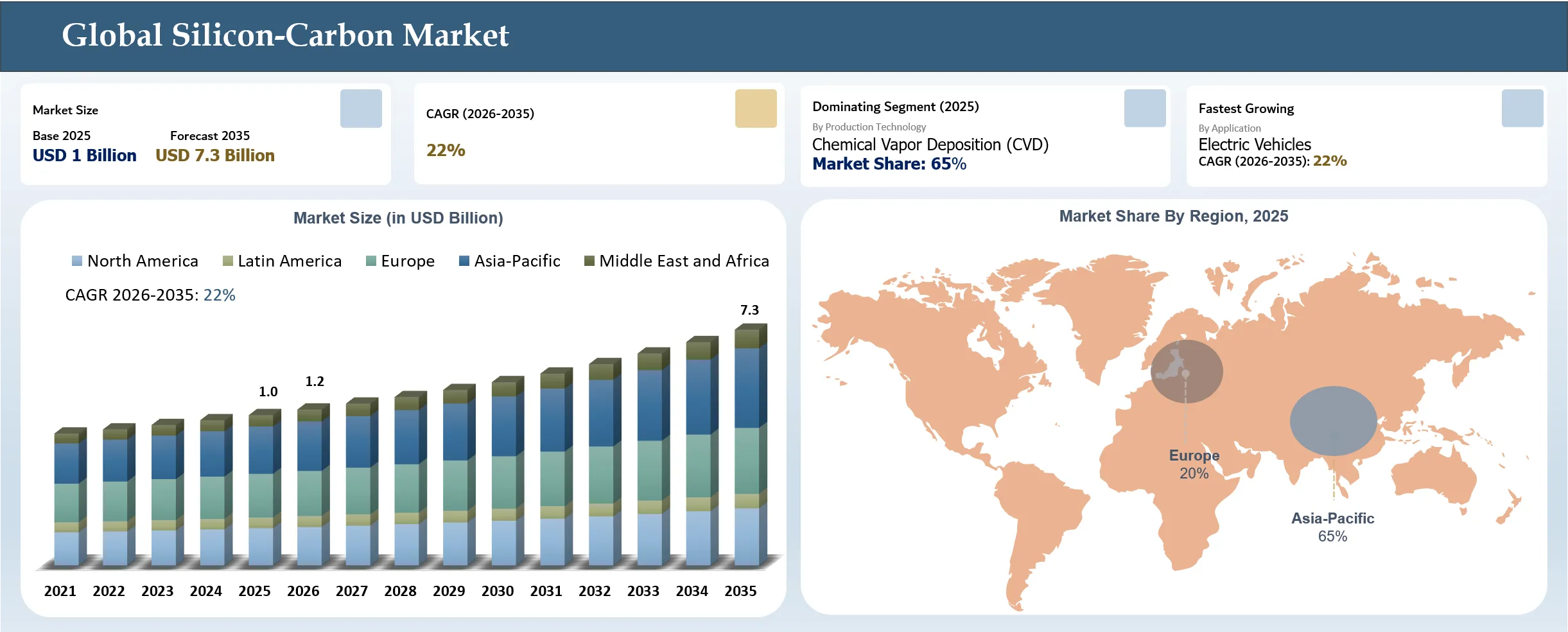
The global silicon-carbon market reached USD 1 billion in 2025 and is expected to reach USD 7.3 billion by 2035, growing with a CAGR of 22% during the forecast period 2026-2035. The market is entering a rapid capacity-expansion phase, driven by increasing demand for silicon-anode materials and investments in commercial production. Specifically, in August 2025, Group14 Technologies secured USD 463 million in Series D funding and acquired the remaining 75% interest in the South Korean joint venture and gained full ownership of the manufacturing facility that produces the silicon-carbon composite material SCC55 at an EV scale; the company also noted that it secured USD 1 billion in total equity funding. In May 2026, according to Shanghai Metals Market (SMM), several Chinese silicon-carbon capacity expansion projects were reported, including the USD 741 million (5 billion yuan) investment by Tianmu Pioneer into 50,000 tonnes/year of silicon-carbon anode capacity, while Qingdao Huateng was developing 39,000 tonnes/year capacity and Shijiazhuang Nasi New Energy Materials was developing 500 tonnes/year silicon-carbon anode capacity. According to SMM, Chinese silicon-based anode capacity expansion is expected to peak in 2027, although rapid capacity additions could intensify competition and create overcapacity pressures.
Sila’s recent financing underscores the increasing commercialization and large-scale production of Si-C anode materials in the U.S. In July 2026, according to BatteryIndustry.net, Sila Nanotechnologies, Inc., a U.S.-based battery technology and advanced materials company, secured USD 300 million in private financing to scale up production of its silicon-anode technology in the United States. This will go toward the development of the second phase of the expansion at Sila’s manufacturing plant in Moses Lake, Washington, which has a current production capacity of 2 GWh in the first phase and can be expanded to 250 GWh over the next five years. The Titan Silicon® from Sila is a Si/C anode technology that has an energy density that is 20-40% higher than standard graphite anodes.
White-Space Opportunities for U.S. Domestic Silicon-Carbon Anode and Critical-Mineral Supply Chain Development
In August 2026, the U.S. government announced USD 3 billion in investments across critical-mineral and battery projects to expand domestic production and reduce dependence on Chinese supply chains, creating significant opportunities in silicon-carbon anode manufacturing, critical-mineral processing, domestic battery-material production, strategic mineral mining, and defense-oriented material supply chains. The highest single investment is USD 1.4 billion in Sila Nanotechnologies through a conditional Department of Defense loan to expand lithium-ion battery-part production, making silicon-carbon anodes and advanced battery materials the most significant investment area directly relevant to the Silicon-Carbon Market. Other major investments include a USD 400 million conditional loan to Sunrise Energy Metals for scandium development, a USD 150 million conditional loan to Niron Magnetics for domestic magnet production, and USD 58 million in U.S. Export-Import Bank loans to Westwater Resources, Global Advanced Metals, and 5E Advanced Materials for critical-material projects. The administration is also supporting a USD 12 billion strategic minerals stockpile, expanding opportunities across rare earths, tungsten, germanium, scandium, lithium, graphite, and other strategic materials.
The investment is expected to create significant opportunities across the upstream-to-downstream silicon-carbon and battery-material value chain. Sila Nanotechnologies is positioned to benefit through silicon-carbon anode manufacturing and battery-material production, Sunrise Energy Metals through scandium processing, Niron Magnetics through advanced permanent-magnet manufacturing, Westwater Resources through graphite production and battery-anode materials, Global Advanced Metals through tantalum processing, and 5E Advanced Materials through boron production and advanced materials. The broader investment strategy is also expected to benefit companies involved in rare-earth production, critical-mineral processing, mining infrastructure, and domestic supply-chain development, with Energy Fuels benefiting through rare-earth and critical-mineral processing, MP Materials through rare-earth mining and magnet supply-chain development, Lithium Americas through domestic lithium production, and NioCorp through critical-mineral extraction and processing, while creating additional white-space opportunities for silicon feedstock suppliers, Si/C anode manufacturers, mineral refiners, battery-material processors, mining technology providers, advanced-material producers, and localized U.S. critical-mineral supply-chain companies.
Silicon-Carbon Market Strategic Takeaways
- The Asia-Pacific region dominated the global silicon-carbon market by accounting for over 65% of the total market share in 2025. China led regional production by manufacturing more than 60% of all global battery cells in 2025.
- Chemical Vapor Deposition (CVD) dominated the production technology segment, commanding a 65% market share in 2025. CVD-processed Si-C composite materials exhibit a specific capacity above 1,400 mAh/g, an 85.2% Coulombic efficiency, and 84% capacity retention at 4C.
- Silicon provides a theoretical specific capacity of 4,200 mAh/g compared to standard graphite's 372 mAh/g. However, silicon experiences over 300% volumetric expansion during battery cycling, whereas traditional graphite swells by only about 10%.
- The U.S. government announced USD 3 billion in critical-mineral and battery project investments, led by a USD 1.4 billion conditional loan to Sila Nanotechnologies. Additional allocations include a USD 400 million loan to Sunrise Energy Metals, a USD 150 million loan to Niron Magnetics, and a USD 12 billion strategic minerals stockpile fund.
Silicon-Carbon Market Industry Trends and Strategic Insight
- Silicon-carbon technology is moving beyond pilot validation toward dedicated manufacturing platforms capable of supplying automotive and high-volume battery programs.
- Rather than immediately eliminating graphite, manufacturers are increasingly developing silicon-carbon systems that can be integrated with existing graphite-based electrode architectures, reducing the need for complete cell-design changes.
- The competitive proposition is shifting beyond higher anode capacity toward silicon-carbon formulations that can simultaneously support high energy density and rapid charging, particularly for EV applications.
- Capital is increasingly directed toward upstream material synthesis, dedicated anode-material plants, regional manufacturing capacity, and technology scale-up rather than isolated laboratory development.
- Reducing reliance on conventional graphite supply is becoming an important value proposition, particularly as battery manufacturers and governments seek greater control over critical battery-material supply chains.
Silicon-Carbon Market Scope
| Metrics | Details | |
| 2025 Market Size | USD 1 Billion | |
| 2035 Projected Market Size | USD 7.3 Billion | |
| CAGR (2026-2035) | 22% | |
| Largest Market | Asia-Pacific | |
| Fastest Growing Market | Europe | |
| By Material / Anode Type | Silicon-Carbon Composite, Silicon-Graphite-Carbon Composite, Silicon-Oxide/Carbon (SiOx-C), Silicon-Carbon Nanotube (Si-CNT) Composite, Silicon-Carbon Nanofiber (Si-CNF) Composite, Others | |
| By Composite Structure | Silicon Nanoparticles–Carbon, Silicon Nanowires–Carbon, Silicon–Carbon Core-Shell, Silicon–Carbon Yolk-Shell, Silicon–Carbon Porous Composite, Others | |
| By Production Technology | Mechanical Ball Milling, Spray Dryingm, Chemical Vapor Deposition (CVD), Pyrolysis / Carbonization, Mechanofusion, Magnesiothermic Reduction, Sol-Gel / Wet Chemical Synthesis, Others | |
| By Battery Chemistry | Nickel Manganese Cobalt Oxide (NMC), Lithium Iron Phosphate (LFP), Nickel Cobalt Aluminum Oxide (NCA), Lithium Cobalt Oxide (LCO), Lithium Manganese Oxide (LMO), Lithium Nickel Manganese Oxide (LNMO), Others | |
| By Carbon Matrix | Graphite, Amorphous Carbon, Graphene, Carbon Nanotubes, Other Carbon Materials | |
| By Battery Form | Pouch, Prismatic, Cylindrical, Others | |
| By Application | Consumer Electronics, Electric Vehicles, Energy Storage Systems, Power Tools & E-Mobility, Aerospace & Defense, Other Industrial Applications | |
| By Region | North America | U.S., Canada, Mexico |
| Europe | Germany, UK, France, Spain, Italy, Poland | |
| Asia-Pacific | China, India, Japan, Australia, South Korea, Indonesia, Malaysia | |
| Latin America | Brazil, Argentina | |
| Middle East and Africa | UAE, Saudi Arabia, South Africa, Israel, Türkiye | |
| Report Insights Covered | Competitive Landscape Analysis, Company Profile Analysis, Market Size, Share, Growth | |
Silicon-Carbon Market Disruption Analysis
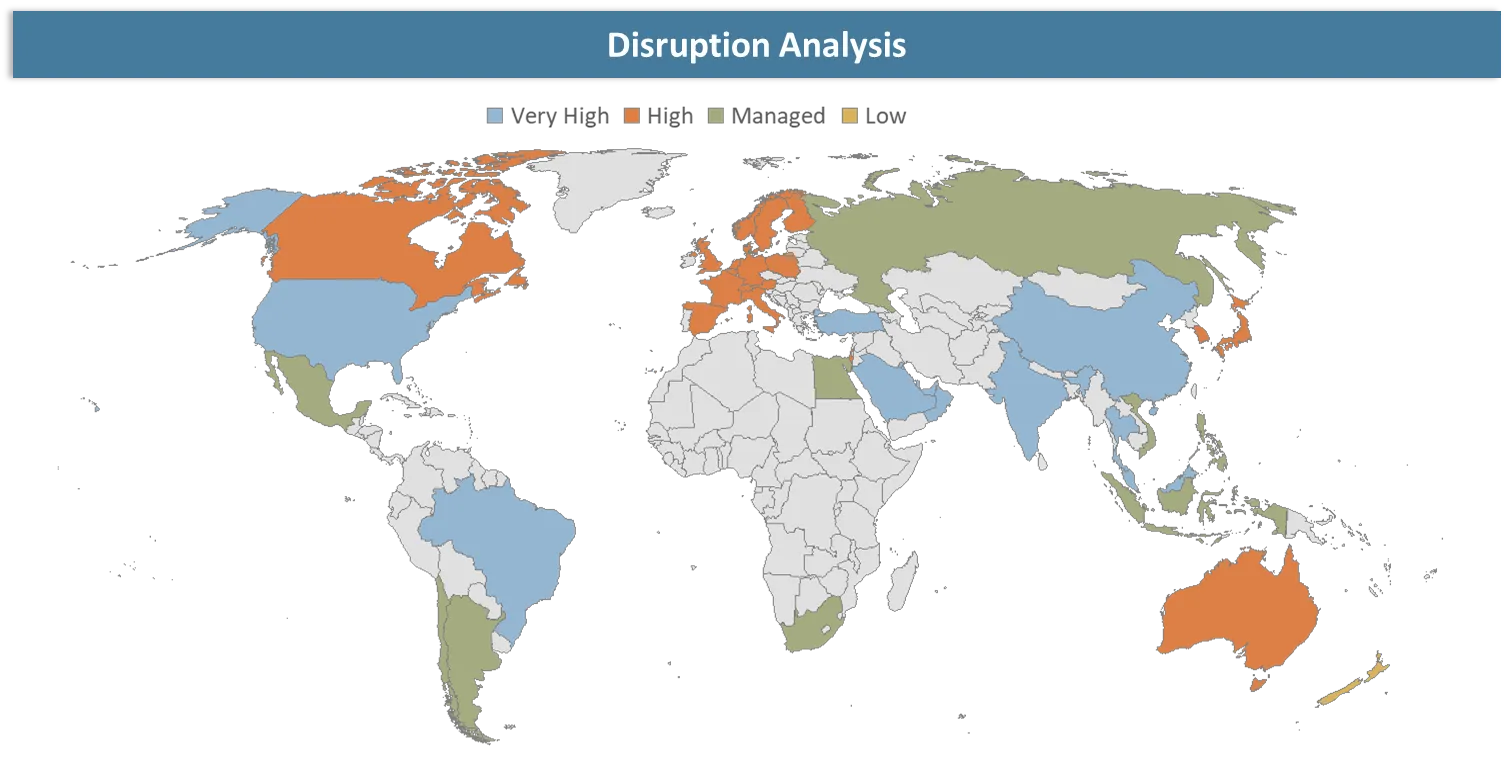
Shift from Graphite-Dominant to Silicon-Carbon Anode Architectures Reshaping the Lithium-Ion Battery Landscape
The disruption in the silicon-carbon market can be attributed primarily to the growing popularity of silicon-carbon composite anodes as a replacement for graphite-based anodes. Silicon-carbon designs leverage the capacity of silicon for lithium storage along with the ability of the carbon structure to provide improved electrical conductivity and handle silicon’s expansion due to cycling. In June 2025, according to ScienceDirect, a study report highlighted that silicon-carbon composites were a major strategy for overcoming the challenges of capacity and stability faced by silicon anodes, with carbon engineering increasingly focused on controlling composite morphology and cycling behavior.
Moreover, commercialization of silicon-carbon technology is causing disruption in battery design, manufacturing, and application needs, especially within electric mobility, aviation, drones, and high-performance electronics sectors. In July 2025, Amprius delivered 450 Wh/kg SiCore batteries to several customers of its drone business, suggesting the evolution of silicon-carbon technology from the development phase to the commercialization stage. Meanwhile, Sionic Energy and Group14 Technologies presented a graphite-free, 100% silicon-carbon anode platform in December 2025, which will be able to achieve a 400 Wh/kg energy density level. As a result of these technological developments, battery manufacturers are increasingly focusing on anode development for silicon-carbon technology with advanced electrolytes and electrode structures that can control silicon expansion and cycle performance.
Silicon-Carbon Market BCG Matrix: Company Evaluation
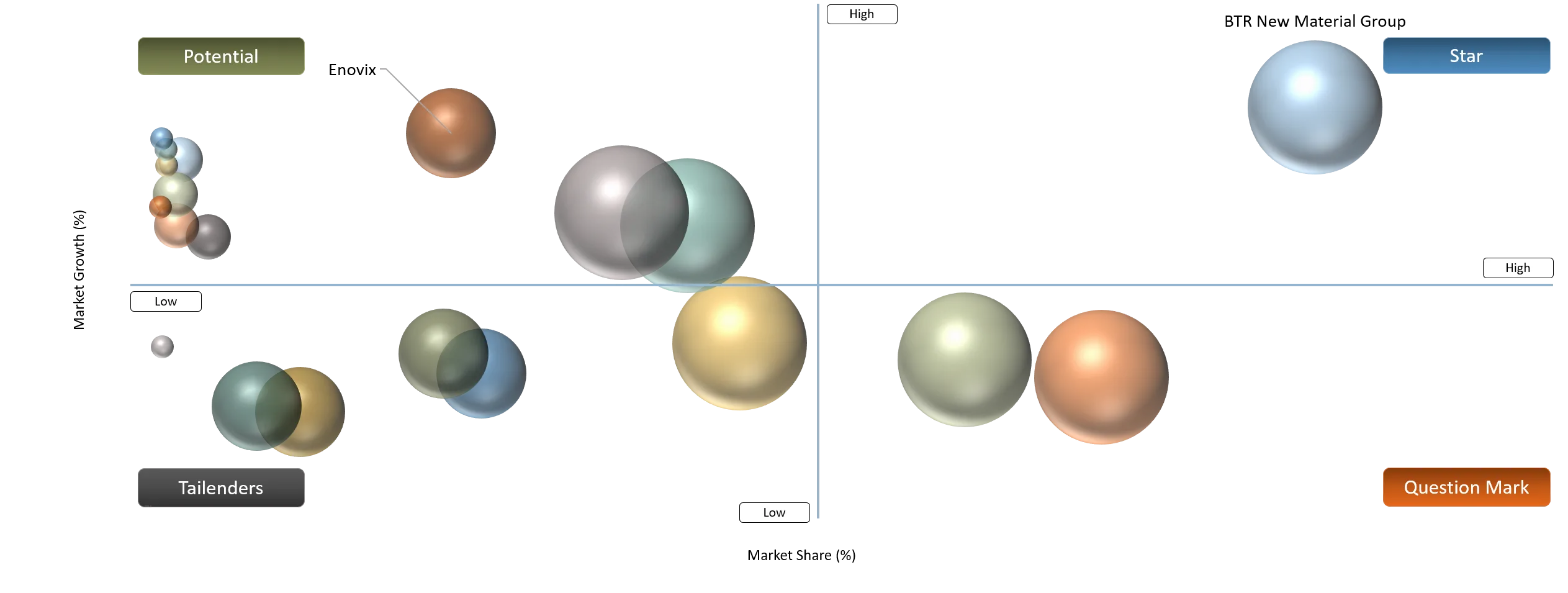
Stars include BTR New Material Group, Group14 Technologies, Nexeon, and Sila Nanotechnologies, as these companies have strong positions in advanced silicon-based anode technologies and are actively moving toward commercial-scale production. BTR benefits from its established anode-material manufacturing base and silicon-carbon product portfolio, while Group14 has developed its SCC55® silicon-carbon material and expanded commercial manufacturing. Question Marks include Shin-Etsu Chemical, Sicona Battery Technologies, OneD Battery Sciences, and Resonac, which possess differentiated silicon-based anode technologies but have comparatively narrower commercial penetration in the silicon-carbon market.
Potential includes Enovix, which has a differentiated silicon-anode architecture and is progressing toward commercial battery deployment, particularly in compact electronics. Its technology provides a pathway toward higher energy density, but the company's position is more closely associated with proprietary battery-cell designs than with supplying silicon-carbon anode material to the broader battery industry. Tailenders are not strongly represented among these ten companies, because the selected companies are already active in silicon or silicon-carbon anode development.
Silicon-Carbon Market Dynamics
Driver Impact Analysis
| Driver | Market Growth Impact (%) | Demand Concentration | Impacted Use Case | Strategic Impact |
Rising demand for higher battery energy density is accelerating the adoption of silicon-carbon anodes. | 30% | High – Asia-Pacific, North America, Europe | Electric Vehicles, Smartphones, Laptops, Wearables, Drones | Drives substitution of graphite with higher-capacity Si-C architectures and prioritizes suppliers capable of increasing silicon loading while controlling expansion. |
Growing demand for fast-charging batteries is supporting silicon-carbon development because engineered Si/C structures can improve lithium-ion transport and charging capability. | 22% | High – Asia-Pacific, North America | Electric Vehicles, Smartphones, Power Tools, Drones | Shifts competition toward Si-C formulations that combine rapid charging with cycle stability, increasing the importance of interface engineering and electrode optimization. Recent 2026 research demonstrated 10–80% charging in 9 minutes using a CVD-derived Si-C anode. |
Limitations of graphite anodes are creating a strong substitution opportunity for silicon-carbon materials. | 20% | High – Global, led by Asia-Pacific | EV Batteries, Consumer Electronics, Energy Storage | Creates structural demand for silicon-carbon alternatives as manufacturers seek higher anode capacity beyond conventional graphite limitations. |
Increasing commercialization of silicon-carbon anode materials is driving market development. | 16% | High – Asia-Pacific, North America, Europe | EV Batteries, Consumer Electronics, Advanced Battery Systems | Moves the market from laboratory development toward commercial qualification, scalable production, and long-term supply agreements; manufacturing scalability is becoming a key competitive differentiator. |
Growing adoption of high-capacity batteries in consumer electronics is supporting silicon-carbon deployment. | 12% | Very High – Asia-Pacific, particularly China and South Korea | Smartphones, Tablets, Wearables, Laptops | Enables manufacturers to increase battery capacity without proportionally increasing device thickness; silicon-carbon adoption is already expanding across smartphones and premium consumer devices. |
Rising demand for higher battery energy density is accelerating the adoption of silicon-carbon anodes
The rapid push for higher battery energy density is a key driver accelerating demand for silicon-carbon anodes in batteries. The urgent need to raise the capacity of batteries by improving the energy density of their electrodes is driven by the fact that most battery producers today face the limitation of graphite capacity. In May 2025, Group14 Technologies and BASF announced that their silicon-based electrode offered about four times higher energy capacity compared to a regular graphite anode when tested at elevated temperatures and provided more than 500 charge cycles at 45°C. This performance superiority has been pushing battery researchers to use more silicon in their anodes in order to store more energy in the same size battery, especially for electric cars, consumer products, and other such applications that have limited space and weight restrictions.
Rising need for batteries with higher energy level has spurred studies on the use of silicon in the anode as opposed to traditional graphite electrodes. In September 2025, according to RSC Advances, silicon is identified as a potential high-energy-density anode material due to its theoretical specific capacity of 4,200 mAh/g compared to 372 mAh/g of graphite. The review points out that silicon may help to increase the energy density of batteries, but the use of silicon is hindered by issues such as more than 300% volumetric expansion, interface instability, and slow kinetics of reactions. This review assesses approaches such as alloying of material, nano structuring, designing composites, binders, current collector design, and electrolyte optimization to enhance the performance of Si anodes.
Restraint Impact Analysis
| Restraint | Drag on Market Growth (%) | Primary Impact Area | Impacted Use Case | Strategic Impact |
Silicon’s large volume changes during cycling cause particle pulverization and electrode degradation, limiting the cycle life of silicon-carbon anodes. | 18% | Cycle life & electrode durability | EV batteries & high-energy lithium-ion batteries | Accelerates investment in engineered Si-C architectures, carbon frameworks, coatings, and expansion-buffering technologies. |
Repeated silicon expansion and contraction continuously damages the SEI, increasing lithium consumption and interfacial resistance. | 15% | Interface stability & lithium efficiency | Fast-charging EV batteries & consumer electronics | Drives demand for stable SEI-forming strategies, surface coatings, electrolyte optimization, and advanced carbon encapsulation. |
High irreversible lithium consumption during the first cycle reduces usable capacity and limits the commercial performance of silicon-carbon anodes. | 12% | Initial Coulombic Efficiency & energy utilization | EV cells, smartphones & portable electronics | Increases focus on prelithiation, surface engineering, and high-ICE Si-C formulations to improve commercial cell efficiency. |
Achieving consistent silicon distribution, structural stability, and electrochemical performance during large-scale Si-C production remains difficult. | 13% | Manufacturing scalability & yield | Mass-produced EV and energy-storage batteries | Favors suppliers with scalable deposition, coating, and quality-control capabilities while increasing qualification barriers for new Si-C producers. |
Silicon’s large volume changes during cycling cause particle pulverization and electrode degradation, limiting the cycle life of silicon-carbon anodes
One of the main restraints hindering the widespread adoption of Si-C anodes is the severe volume expansion of silicon during lithiation and delithiation, where the volume expansion could be over 300%, creating high mechanical stress in the anode structure. The constant volume change results in cracking, pulverization, loss of electrical contact, and degradation, which contributes to the fast capacity fading process and limited life of the Si-C anodes. In April 2025, according to RSC Advances, found that the approximate 300% volume expansion of silicon can break the structure of the electrode and lead to fast capacity loss, whereas another study from 2025 showed that the expansion was 300-400%, which continuously disrupts the SEI and increases lithium consumption.
High volume expansion associated with silicon on multiple battery cycles is still a significant challenge for ensuring long-term battery performance in Si/C anodes. In June 2026, as per IEST Battery, the silicon-based anodes swell about 300%, while the graphite anodes swell only about 10% in their volume during cycling, resulting in cracking, crushing, fracturing, loss of contact with current collectors, and capacity reduction. The study evaluates PAA versus CMC/SBR binders in the silicon carbon (Si/C) electrodes and indicates that PAA shows lower resistivity and lower maximum (21.00% vs. 22.44%) and irreversible deformation (17.24% vs. 18.31%) under compression, supporting improved structural stability and cycle performance of Si/C electrodes.
Silicon-Carbon Market Segmentation Analysis
The global silicon-carbon market is segmented based on material/anode type, composite structure, production technology, battery chemistry, carbon matrix, battery form, application, and region.
Chemical Vapor Deposition (CVD) Technology Driving High-Performance Silicon-Carbon Anode Production
The chemical vapor deposition (CVD) segment dominates the production technology landscape in the silicon-carbon market, with a 65% market share in 2025, due to its capability to precisely deposit silicon either inside or on top of the carbon matrices and manage the structure of the final composite. In 2025, an analysis published in Energy Storage Science and Technology emphasized that CVD allows for in-situ confined growth of silicon particles within carbon porous matrices, where carbon acts as a matrix with high conductivity and mechanical properties, and silicon provides a high specific capacity. The reduction in size of silicon particles under 150 nm can decrease the problem of pulverization and volume expansion.
The growing focus on scalable high-energy density lithium-ion batteries is further cementing the use of CVD in electric vehicles, consumer electronics, and energy storage applications. In October 2025, according to ACS publications, describes the scalable application of CVD in creating micron-sized Si-C composite materials containing uniform few atomic layer silicon on nanoporous carbon, where optimal deposition temperatures were between 450 and 525°C, while the material created had a specific capacity above 1,400 mAh/g, 85.2% Coulombic efficiency, capacity decay below 5% per 100 cycles, and 84% capacity retention at 4C. Full cells made of NMC also retained 84% of the capacity after 200 cycles, making the technology applicable to high-energy density batteries. This advantage is pushing CVD to become the dominant production technology, which takes up 65% of the Silicon-Carbon Market in 2025.
Silicon-Carbon Market Geographical Penetration
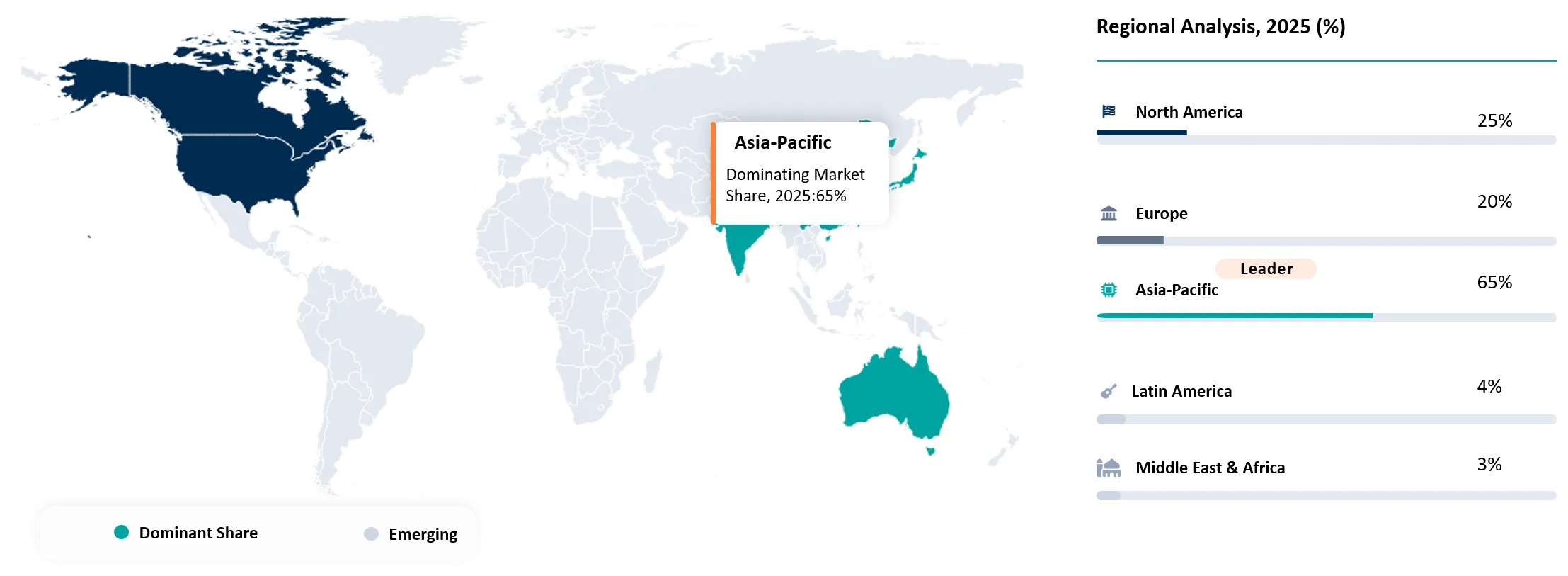
Rapid Battery Manufacturing Expansion and Silicon-Carbon Anode Commercialization in Asia-Pacific
Asia-Pacific region holds the dominant position in the silicon-carbon market because of the high concentration of lithium-ion battery manufacturing facilities, electric vehicle manufacturing, consumer electronic devices, and battery materials supply chains within China, Japan, South Korea, and other countries in Asia. Asia-Pacific held more than 65% of the total share of the global Silicon-Carbon Market in 2025 due to fast-growing battery cell manufacturing and the growing popularity of anode materials with high energy density. China is still one of the biggest players in the market for batteries in the region, with its ongoing investments in the manufacturing capacity of lithium-ion batteries and silicon-carbon anodes for electric vehicles and consumer electronics. With the combination of battery manufacturers, raw materials providers, and EV manufacturers in the region, the technology can be developed more quickly, and the Asia-Pacific will continue to be the most dominant market.
Strategic alliances and investments are helping fast-track the localization of cutting-edge Si/C technology within India’s battery materials value chain. In May 2025, Himadri Speciality Chemical Ltd., an India-based specialty chemicals and advanced battery-materials company, committed an additional USD 9.31 million (₹81.48 crore) investment in Sicona Battery Technologies, an Australia-headquartered battery-materials technology company, following its earlier USD 6.06 million (₹58 crore) investment for a 12.39% stake in 2023. Alongside the investment, Himadri secured exclusive rights to access, localize, manufacture, and commercialize Sicona’s Silicon-Carbon (SiCx®) anode technology in India. When blended with conventional graphite at 5–20%, the SiCx® material is designed to increase battery energy density by 20% and improve charging performance by 40%, supporting the localization and commercialization of advanced silicon-carbon anode materials in India.
China Silicon-Carbon Market Trends
China holds a dominant position in the Asia-Pacific silicon-carbon market because of the existence of large-scale battery manufacturing infrastructure, rising electric vehicle production, and active development of anode materials. In 2025, more than 60% of all battery cells were produced in China. Thus, there was an adequate manufacturing infrastructure for further application of silicon-carbon anodes in batteries. Due to the presence of a complete battery value chain with participation of producers of silicon-carbon materials, electrodes, battery cells, and electric vehicle companies, there will be a quick introduction of anode materials with high energy density. The dominance of producers of batteries and further investments in new battery materials allow China to introduce silicon-carbon anodes quickly.
Collaborations involving strategic technologies are helping to hasten the commercial and industrial production of silicon-carbon-based materials for the lithium-ion batteries of the future. In November 2025, Shanghai Putailai New Energy Technology Co., Ltd. (Putailai), a China-based lithium-ion battery materials and automation-solutions company, signed a Joint Development Agreement with OneD Battery Sciences (OneD Material Inc.), a U.S.-based battery technology company, to finalize product designs and scale production of next-generation silicon-graphite (carbon-silicon) anode materials for lithium-ion batteries. The collaboration combines Putailai’s established carbon/graphite substrates and manufacturing capabilities with OneD’s SINANODE® technology, which adds nanosilicon to artificial and natural graphite; OneD also has a patent portfolio of more than 220 issued patents worldwide. The companies aim to accelerate high-volume production of low-cost Si/C anode materials and optimize products for customers across Asia, Europe, and the United States, supporting higher-energy-density battery commercialization.
Japan Silicon-Carbon Market Outlook
Japan is one of the key players in the Asia-Pacific silicon-carbon market, due to its well-established battery materials industry, advanced lithium-ion battery research and development capabilities, and dominance of automobile and electronics companies. Over the period of 2025-2026, Japan kept improving its domestic battery manufacturing industry and future-generation battery technologies. In June 2026, Japan’s Ministry of Economy, Trade and Industry (METI) updated its Battery Industry Strategy to the Battery and Power Industry Strategy with objectives for creating domestic battery manufacturing industry capacity up to 150 GWh/year in the range of 2030-mid 2030s and a threefold increase in the battery-related sales of Japanese companies in the international market during the 2025-2035 period. This development will create opportunities for higher energy density anode materials like silicon-carbon.
The automotive industry is investing in innovative anode materials to bring the next-generation batteries into market use. In May 2026, Honda Motor Co., Ltd., a Japan-based automotive manufacturer, invested an undisclosed amount in Nexeon Ltd., a UK-based advanced battery-materials company, through Honda’s Xcelerator Ventures open-innovation program to accelerate the development and commercialization of Nexeon’s silicon-based and advanced silicon-carbon anode materials for lithium-ion batteries. Nexeon has raised more than USD 200 million from investors and is developing its first large-scale anode-material production facility in Gunsan, South Korea, which is designed to produce tens of thousands of tonnes of silicon anode material annually. The investment supports Nexeon’s scale-up of high-energy-density anode materials designed to improve battery energy density and charging performance.
Rapid Battery Manufacturing Expansion and Silicon-Carbon Technology Commercialization in North America
North America is a significant region in the silicon-carbon market owing to the growth of local manufacturing capabilities of lithium-ion batteries, the production of electric vehicles, and the investments in high-end silicon-based anode materials. In 2025, the North American market accounted for approximately 25% of the entire Silicon-Carbon Market, where the United States is the dominant contributor owing to its growing ecosystem of battery materials and the localization of battery supply chains. North America’s blend of battery makers, advanced material producers, automakers, and manufacturing programs supported by the government will boost the commercialization of silicon-carbon anodes. In January 2025, the U.S. Department of Energy (DOE) declared to invest up to USD 725 million for the strengthening of domestic capabilities for the production of battery-critical materials and advanced batteries.
Expansion of domestic manufacturing capacity is accelerating the commercialization of silicon-carbon anode materials for next-generation batteries in North America. In September 2025, Sila Nanotechnologies, a U.S.-based private advanced battery-materials and technology company, began operations at its automotive-scale silicon-anode manufacturing plant in Moses Lake, Washington. The facility spans more than 600,000 square feet across 160 acres and initially supports 2–5 GWh of production capacity, with the capability to expand to up to 250 GWh within five years. The plant will produce Sila’s Titan Silicon Si/C anode material for applications including electric mobility, consumer electronics, drones, AR/VR, and satellites, marking a major step toward large-scale U.S. silicon-carbon anode manufacturing.
U.S. Silicon-Carbon Market Trends
U.S. is dominating the North American silicon-carbon market due to the presence of an increasing domestic ecosystem in terms of battery manufacturing firms, the significant investments made in anode materials technology, and also the increasing commercialization of batteries with silicon. The existence of battery manufacturers, electric vehicle manufacturers, advanced materials firms, and manufacturing programs backed by the government can enable collaboration along the value chain of silicon-carbon and also speed up the commercialization process of high-energy anodes. This would boost the domestic battery supply chain and increase the demand for silicon-carbon anode material in electric vehicles and energy storage systems.
Advancements in silicon-carbon anode chemistry are improving the durability and energy-density performance of next-generation lithium-ion batteries. In May 2025, BASF SE, a Germany-based global chemical company, and Group14 Technologies, a U.S.-based advanced silicon-battery materials company, collaborated on a market-ready silicon-anode solution combining BASF’s Licity 2698 X F binder with Group14’s SCC55 silicon-carbon technology. The solution supports silicon-dominant anodes with up to 70% silicon content, while test cells exceeded 1,000 cycles with 80% capacity retention at room temperature and achieved more than 500 cycles at 45°C, with nearly 4× the capacity of traditional graphite anodes.
Silicon-Carbon Market Competitive Landscape
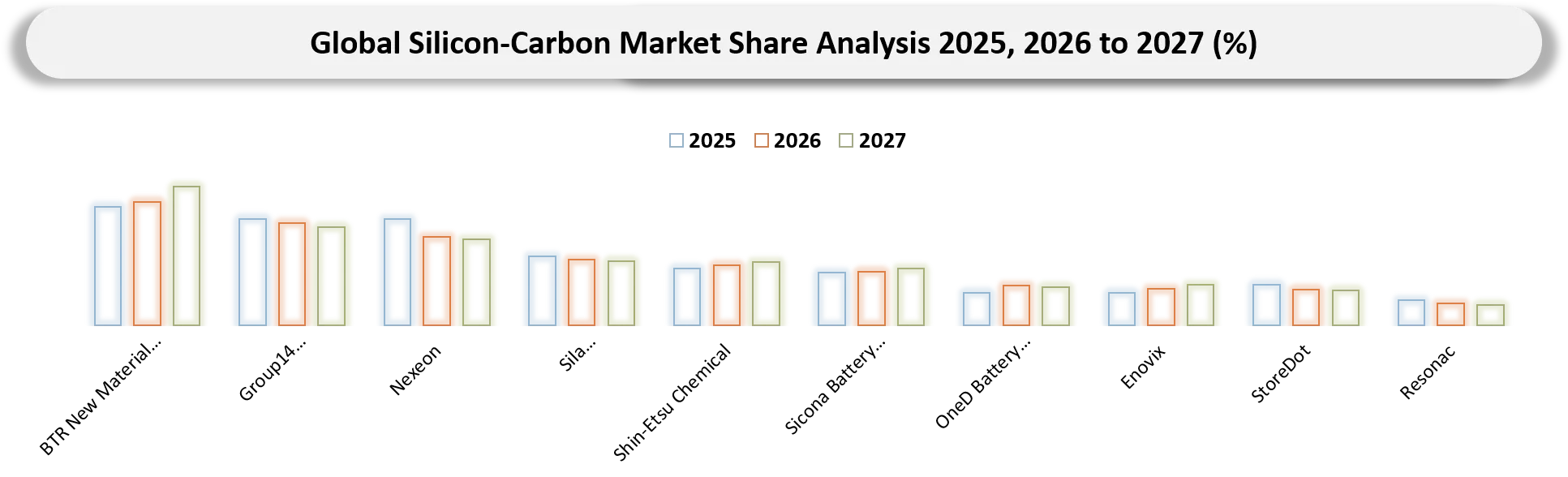
- The market is characterized by three key participant groups: established battery-material manufacturers, advanced silicon-carbon anode technology developers, and battery technology companies. BTR New Material Group, Shin-Etsu Chemical, and Resonac represent established material suppliers with capabilities across silicon-based and carbon-based anode materials; Group14 Technologies, Nexeon, Sila Nanotechnologies, Sicona Battery Technologies, and OneD Battery Sciences focus on proprietary silicon-carbon architectures, silicon-rich materials, and scalable anode technologies; while Enovix and StoreDot concentrate on integrating silicon-based anode technologies into high-energy-density and fast-charging battery platforms. This creates a technology-driven competitive landscape where material performance, silicon loading, cycle stability, scalability, manufacturing compatibility, intellectual property, and partnerships with cell manufacturers and automotive OEMs define competitiveness.
- Key players include BTR New Material Group, Group14 Technologies, Nexeon, Sila Nanotechnologies, Shin-Etsu Chemical, Sicona Battery Technologies, OneD Battery Sciences, Enovix, StoreDot, and Resonac.
Key Developments
- December 2025: Sionic Energy, a U.S.-based advanced silicon-battery and electrolyte technology company, partnered with Group14 Technologies, a U.S.-based advanced silicon-battery materials company, to demonstrate high-energy-density silicon-carbon (Si-C) anodes using Group14’s SCC55 material and Sionic’s Rapid Integration Silicon Platform.
- May 2025: Sicona Battery Technologies, an Australia-based next-generation battery-materials company, entered into a strategic licensing agreement with Himadri Speciality Chemical Ltd., an India-based specialty chemicals and advanced battery-materials company, to scale Sicona’s SiCx® silicon-carbon (Si/C) anode technology.
- December 2025: Sunrise New Energy Co., Ltd., a China-based battery-anode materials manufacturer, received USD 730,000 in funding for the Guizhou Provincial Science and Technology Major Project titled “Key Technologies and Engineering of Novel Silicon-Carbon Anode Materials for Lithium-ion Batteries.”
- July 2025: Jiangxi Jiangtong Xiying New Energy Technology Co., Ltd., a China-based new-energy battery-materials company, began full-scale construction of a 1,000-tonne-per-year silicon-carbon anode material project in Gongqing City, Jiangxi Province.
- October 2025: Solidion Technology Inc., a U.S.-based advanced battery technology and materials company, unveiled its PEAK Series UPS system for AI data centers, incorporating its proprietary 5500 battery cell with silicon-carbon anode technology.
Key Procurement Priorities and Buyer Evaluation Criteria
- Organizations investing in the Silicon-Carbon Market increasingly select suppliers based on their ability to provide high-performance silicon-carbon anode materials that deliver high energy density, improved cycle life, fast-charging capability, and compatibility with large-scale lithium-ion battery manufacturing.
- The procurement decision-making process is increasingly influenced by the growing demand for higher-energy-density EV batteries, fast-changing consumer electronics, energy storage systems, and advanced battery platforms, encouraging buyers to prioritize suppliers with scalable silicon-carbon production technologies and consistent material performance.
- Buyers consider factors such as silicon content, specific capacity, initial Coulombic efficiency, cycle stability, volume-expansion control, electrical conductivity, particle morphology, and material consistency when evaluating silicon-carbon anode suppliers and technology partners.
Why Choose DataM?
- Technological Innovations: Explores advancements in silicon-carbon anode technologies, including silicon nanoparticle–carbon composites, silicon-carbon core-shell structures, porous silicon-carbon architectures, CVD deposition, and advanced carbon matrices, enabling higher energy density, improved cycle stability, controlled silicon expansion, and faster charging for next-generation lithium-ion batteries.
- Product Performance & Market Positioning: Evaluates how different players differentiate silicon-carbon anode materials based on specific capacity, silicon loading, initial Coulombic efficiency, cycle life, fast-charging performance, energy density, and compatibility with existing battery manufacturing processes across electric vehicles, consumer electronics, and energy storage applications.
- Real-World Evidence: Highlights the commercialization and application of silicon-carbon technologies in electric vehicles, smartphones, wearables, power tools, and energy storage systems, demonstrating benefits such as increased energy density, reduced charging time, extended driving range, and improved battery performance.
- Market Updates & Industry Changes: Tracks key developments such as silicon-carbon anode production capacity expansions, commercial battery launches, new material platforms, manufacturing technology advancements, and regional investments across Asia-Pacific, North America, and Europe, supporting the transition toward higher-performance battery technologies.
- Competitive Strategies: Analyzes how leading companies expand through production-scale investments, proprietary silicon-carbon material development, strategic partnerships, customer qualification, technology licensing, and integration with existing lithium-ion battery manufacturing platforms to address growing demand for high-energy-density batteries.
- Pricing & Market Access: Explains pricing variations based on silicon content, carbon matrix, material structure, production technology, purity, performance specifications, and manufacturing scale, along with access through anode-material suppliers, battery-cell manufacturers, automotive OEMs, and strategic supply agreements.
- Market Entry & Expansion: Identifies growth opportunities driven by electric vehicles, consumer electronics, fast-charging batteries, energy storage systems, and power tools, while outlining strategies such as regional production expansion, technology differentiation, strategic partnerships, customer qualification, and integration with established battery supply chains.
Target Audience 2026
- Silicon-Carbon Anode Material Manufacturers
- Lithium-Ion Battery Manufacturers
- Electric Vehicle (EV) Manufacturers
- Consumer Electronics Companies
- Battery Materials & Chemical Companies
- Battery Technology & R&D Organizations
- Energy Storage System (ESS) Developers


























































