


Seaweed-Based Beverage Market Size and Overview
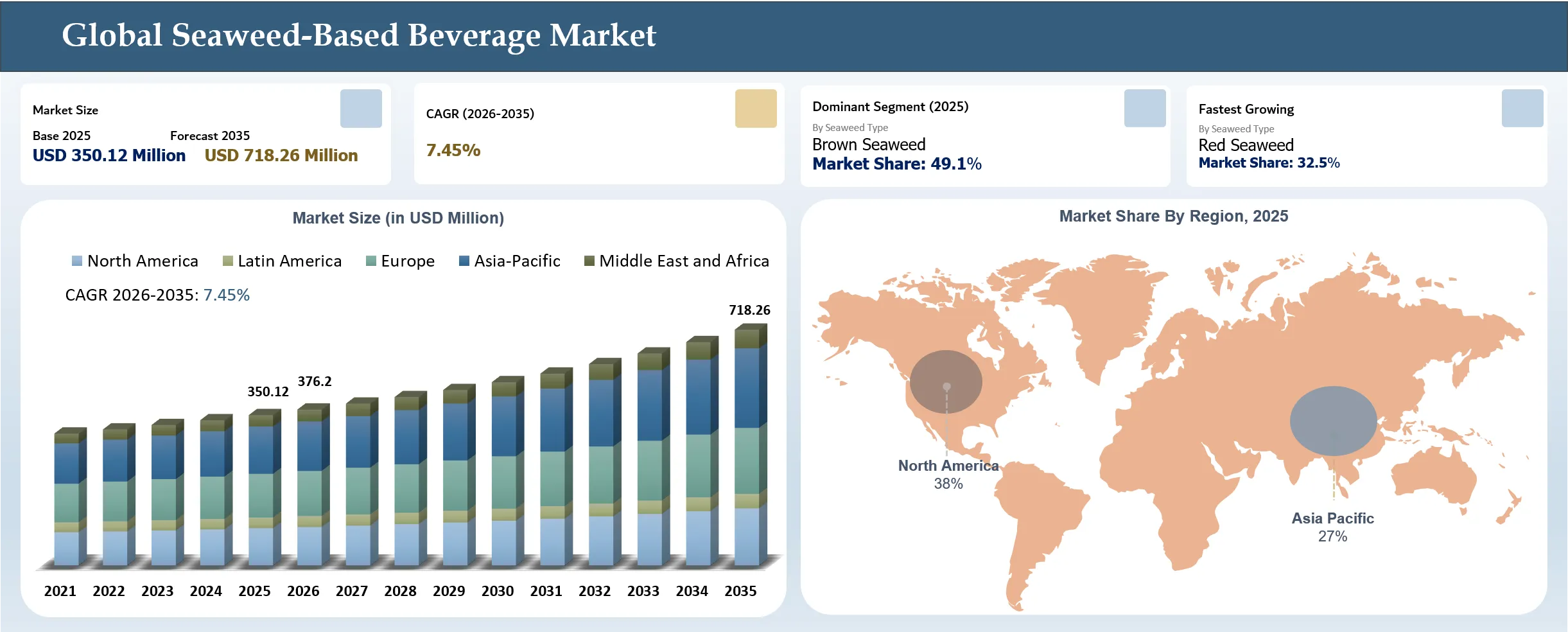
The global seaweed-based beverage market reached USD 350.12 million in 2025 and is expected to reach USD 718.26 million by 2035, growing with a CAGR of 22.5% during the forecast period 2026-2035. The market is emerging as a differentiated segment within the functional beverage industry, driven by growing demand for marine-derived nutrition, low-sugar beverages, digestive health and clean-label formulations. Sea moss, red seaweed, kelp and other marine ingredients are increasingly being incorporated into ready-to-drink beverages, wellness drinks, juices, teas and functional formulations. Product development is also shifting from traditional seaweed-infused beverages toward more consumer-friendly formats that combine marine ingredients with fruit, botanical and functional components, creating new opportunities for everyday wellness consumption.
Industry commercialization is accelerating as beverage companies introduce seaweed-based products into mainstream retail channels. In January 2026, Aqua Theon’s OoMee received the Best New Drink Concept recognition in the 2025 Beverage Digest Awards and introduced a new ready-to-drink canned Matcha formulation combining agar-agar, fruit and organic green tea. Since its spring 2025 launch, OoMee had expanded to 700+ retail stores and surpassed 100,000 units sold within six months, highlighting the increasing commercialization of marine-ingredient beverages and the potential for seaweed-based formulations to gain broader consumer adoption.
White-Space Opportunities from Government Investment in Seaweed Cultivation and Processing
Government investment in seaweed production is creating white-space opportunities for companies developing scalable cultivation, processing and ingredient-supply capabilities for downstream food and beverage applications. In January 2025, the U.S. Department of Energy announced $25 million through its HAEJO program to advance deep-water seaweed cultivation toward million-ton-scale production, with technologies targeting lower cultivation costs, autonomous monitoring, offshore harvesting and biomass processing. The program also includes collaboration with South Korean seaweed experts, strengthening international technology development.
The investment creates opportunities beyond primary cultivation, particularly for beverage-grade seaweed processing, standardized extracts, functional ingredients and supply-chain infrastructure. HAEJO specifically aims to reduce cultivation costs by a factor of four and increase the scale of U.S. domestic seaweed cultivation by three orders of magnitude, while developing market-enabling technologies for larger-scale production. As commercial beverage applications expand, suppliers capable of converting scalable seaweed biomass into consistent, food-grade ingredients can address emerging gaps in quality, traceability, processing capacity and reliable raw-material supply.
Seaweed-Based Beverage Market Key Takeaways
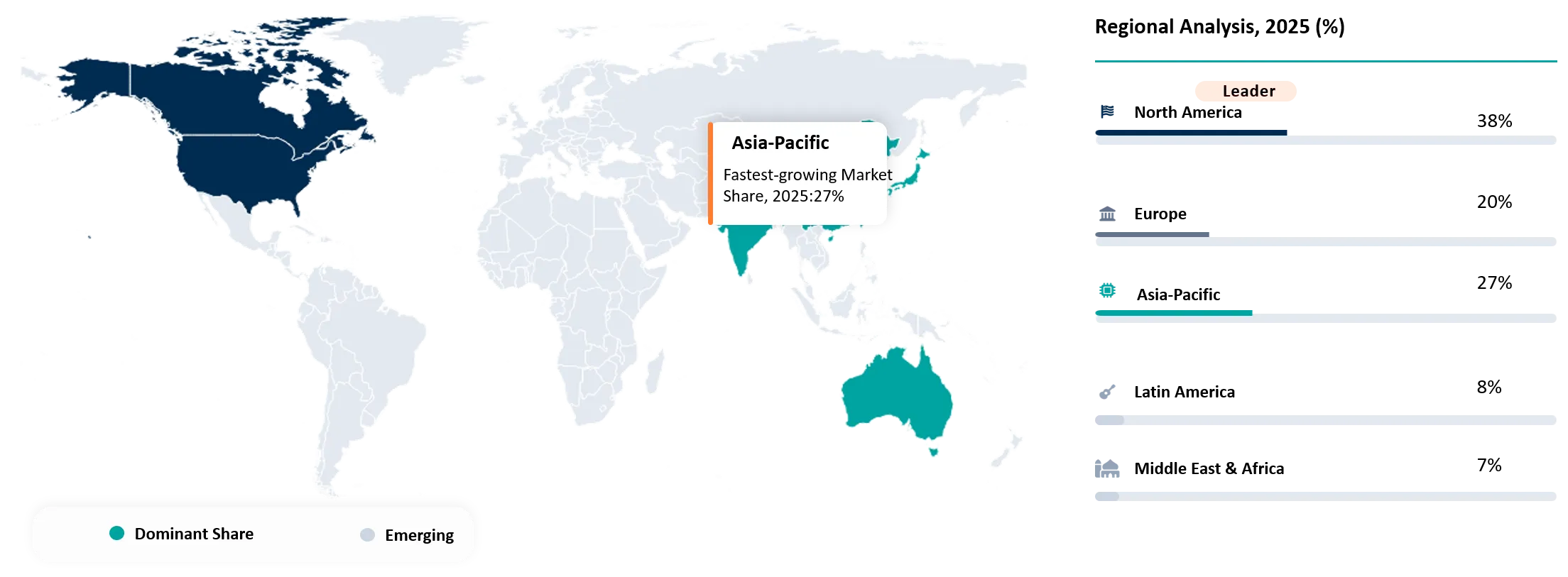
- North America dominated the seaweed-based beverage market with an estimated 38% share in 2025, supported by established functional beverage consumption, sea moss product availability, and developed retail and e-commerce channels. Asia-Pacific followed with approximately 27%, driven by established seaweed cultivation, processing capabilities, and expanding functional beverage consumption.
- Brown Seaweed dominated the seaweed-based beverage market with a reported 49.1% share in 2024, reflecting its broad use across kelp, kombu, wakame, and other brown-seaweed formulations. Red Seaweed represented the fastest-growing seaweed type with 32.5% market share, supported by expanding sea moss and red-seaweed beverage applications.
- The U.S. and Canada remain the principal North American markets, supported by established sea moss beverage brands, functional beverage distribution, specialty health-food retail, and e-commerce penetration. The U.S. represents the leading country within North America, while Canada provides an established seaweed cultivation and processing base.
- China, Japan, South Korea, and India remain key Asia-Pacific markets, supported by established seaweed cultivation, food-processing capabilities, traditional seaweed consumption, and expanding functional beverage applications. Asia-Pacific is expected to register the fastest regional growth, with China positioned as the leading market within the region.
Seaweed-Based Beverage Market Industry Trends and Strategic Insight
- Functional formulations are shifting seaweed beverages beyond basic hydration. Beverage developers are combining seaweed ingredients with electrolytes, minerals, fruit extracts, botanicals, adaptogens, and other functional ingredients to target hydration, digestive health, energy, immunity, and wellness occasions. Aqua Theon’s OoMee, launched in 2025, uses agar-agar from red seaweed with fruit-based formulations and low-calorie positioning, illustrating the move toward differentiated functional RTD beverages.
- Sea moss and red-seaweed formulations are expanding within mainstream RTD formats. Commercial products are moving from traditional sea moss preparations toward canned and bottled beverages designed for conventional retail distribution. OoMee expanded to more than 700 retail stores and exceeded 100,000 units sold within six months of its spring 2025 launch, indicating broader retail commercialization of seaweed-based beverage formats.
- Multi-functional seaweed beverages are combining marine ingredients with complementary wellness actives. OMOSS combines Irish sea moss with lion’s mane, ashwagandha, ginkgo, and lemon balm, while other products combine sea moss with fruit, botanical, and energy ingredients. This formulation approach is broadening seaweed beverages from single-ingredient positioning toward targeted wellness propositions.
- Seaweed beverage development is placing greater emphasis on processing, safety, and formulation consistency. Iodine variability, heavy metals, inorganic arsenic, microbiological quality, flavor, and shelf stability require tighter control of species selection and processing conditions. In 2025, Codex/FAO/WHO discussions specifically highlighted iodine as a safety consideration for brown seaweeds such as kelp, reinforcing the need for standardized ingredient specifications and quality-control protocols.
Seaweed-Based Beverage Market Scope
| Metrics | Details | |
| 2025 Market Size | USD 350.12 Million | |
| 2035 Projected Market Size | USD 718.26 Million | |
| CAGR (2026-2035) | 7.45% | |
| Largest Market | North America | |
| Fastest Growing Market | Asia-Pacific | |
| By Seaweed Type | Red Seaweed, Brown Seaweed, Green Seaweed, Others | |
| By Packaging | Can, Plastic Bottle, Glass Bottle, Carton, Pouch, Others | |
| By Functional Benefit | Hydration, Electrolyte & Mineral, Digestive & Gut Health, Immune Support, Energy & Vitality, Sports & Recovery, Cognitive & Mental Wellness, Weight Management, Beauty & Skin Health, Antioxidant, General Nutrition, Others | |
| By Formulation Base | Water-Based, Fruit-Based, Vegetable-Based, Tea-Based, Plant-Milk-Based, Fermented, Others | |
| By Consumer Age | Children, Teenagers, Adults, Seniors | |
| By Distribution Channel | Supermarkets & Hypermarkets, Convenience Stores, Specialty & Health Food Stores, Pharmacies & Drugstores, Online Retail / E-Commerce, Others | |
| By Region | North America | U.S., Canada, Mexico |
| Europe | Germany, UK, France, Russia, Spain, Italy, Netherlands, Switzerland, Rest of Europe | |
| Asia-Pacific | China, India, Japan, Australia, South Korea, New Zealand, Singapore, Rest of Asia-Pacific | |
| Latin America | Brazil, Argentina, Chile, Rest of Latin America | |
| Middle East and Africa | UAE, Saudi Arabia, South Africa, Qatar, Kuwait, Rest of Middle East & Africa | |
| Report Insights Covered | Competitive Landscape Analysis, Company Profile Analysis, Market Size, Share, Growth | |
Seaweed-Based Beverage Market Disruption Analysis
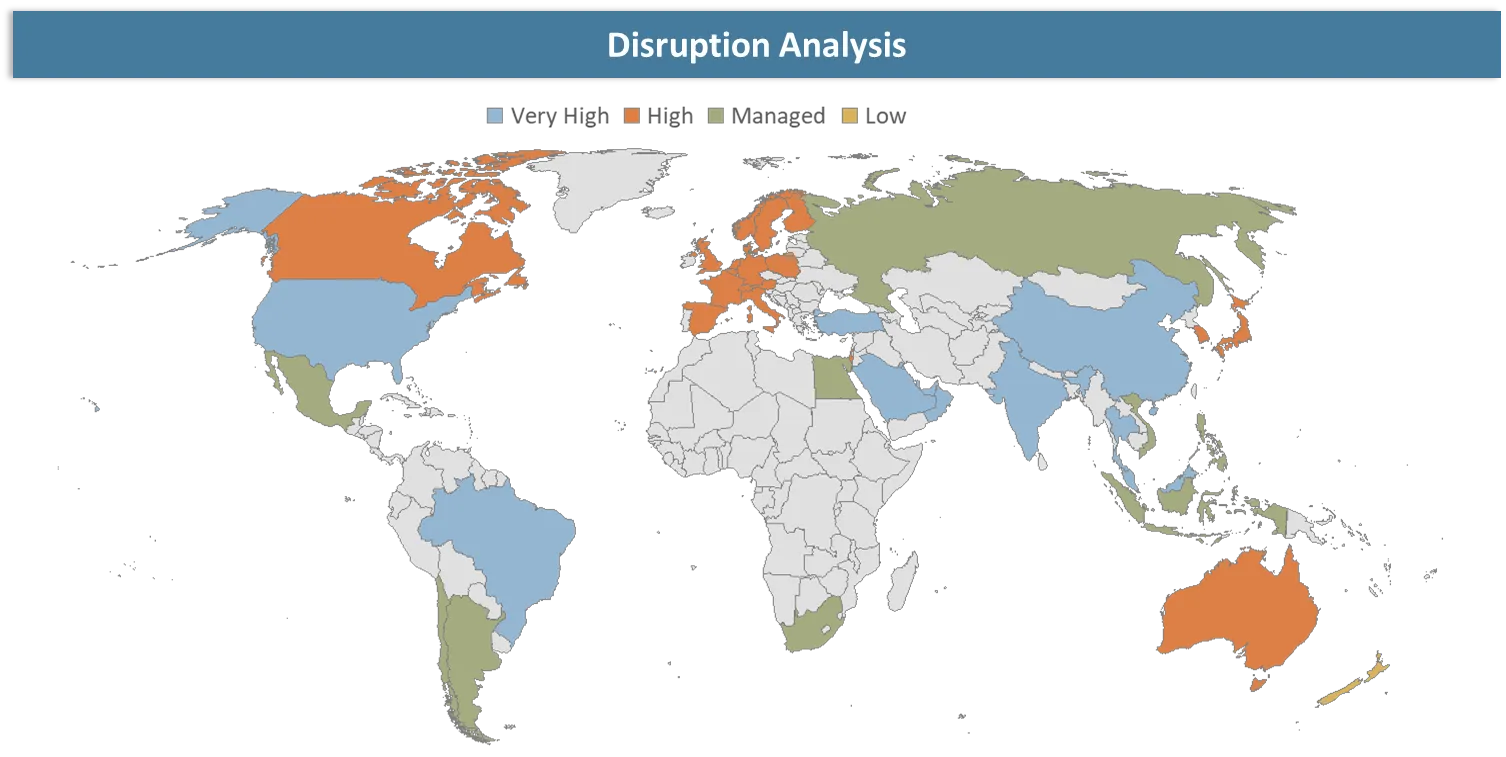
Shift from Conventional Seaweed Drinks to Targeted Functional Beverages
Seaweed-based beverages are shifting from traditional seaweed-infused drinks toward targeted functional products that combine marine ingredients with specific wellness benefits such as hydration, energy, gut health, minerals, and antioxidant support. This transition is broadening the category beyond niche health beverages and positioning seaweed as a functional ingredient within mainstream wellness consumption.
In January 2026, Arden’s Garden launched Sea Moss Energy, a 2-ounce wellness shot combining St. Lucia sea moss gel, fruit juices, and green tea, delivering 106 mg of caffeine and 40 calories per serving. The launch followed the company's 2025 Tropical Sea Moss Smoothie, demonstrating how manufacturers are extending sea moss across multiple functional beverage formats rather than limiting it to conventional drinks. The development indicates a shift toward benefit-specific seaweed beverages, increasing competitive pressure on undifferentiated seaweed drinks and encouraging manufacturers to combine seaweed with complementary functional ingredients, recognizable flavors, and convenient formats such as wellness shots.
Seaweed-Based Beverage Market BCG Matrix: Company Evaluation
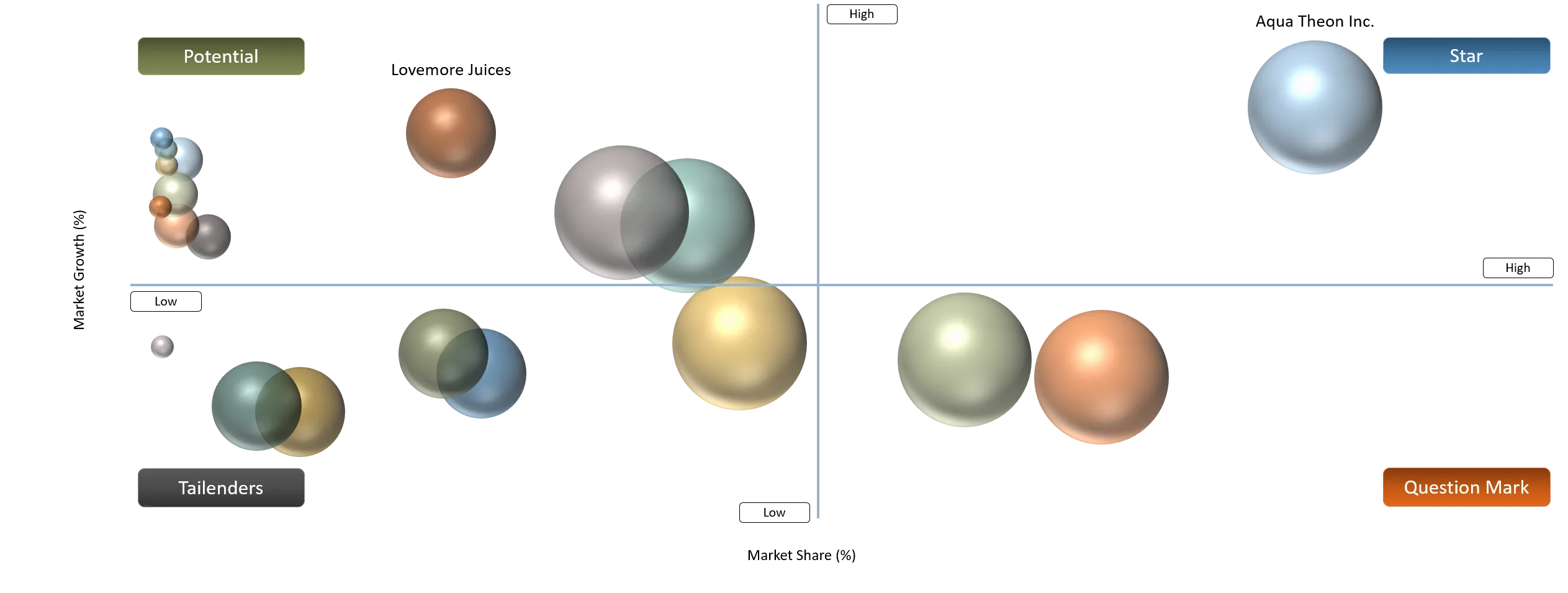
Aqua Theon Inc., Wana Beverage, ACMFOOD Beverage Co., Ltd., and GUSO BIOTECH SDN BHD are positioned as Stars, supported by dedicated seaweed or sea moss beverage portfolios, manufacturing capabilities, and expanding functional-beverage positioning. Wana and ACMFOOD have particularly broad OEM/ODM and export capabilities, while GUSO has an established seaweed-health-beverage focus and Aqua Theon has developed the OoMee red-algae beverage platform.
Lovemore Juices and OMOSS are positioned as Potential Stars, supported by differentiated sea moss beverage offerings but comparatively narrower geographic and portfolio scale. NAWON F&B and Sipzen are categorized as Question Marks, reflecting participation in seaweed-based beverages but more limited publicly visible market penetration. Fokus Labs and NuocRongBien are classified as Tailenders, given their narrower commercial footprint and comparatively limited seaweed-beverage portfolio visibility. The competitive landscape is shaped by manufacturing scale, product variety, functional positioning, seaweed sourcing, formulation capabilities, packaging, certifications, and distribution reach.
Seaweed-Based Beverage Market Dynamics
Driver Impact Analysis
| Driver | Market Growth Impact (%) | Demand Concentration | Impacted Use Case | Strategic Impact |
Seaweed minerals enable differentiated nutritional positioning across functional beverage formulations. | 25% | High demand concentration among functional beverage manufacturers targeting mineral-rich, wellness-oriented and nutrient-focused consumers. | Functional waters, sea moss beverages, nutritional drinks, wellness beverages. | Encourages manufacturers to position seaweed beverages around naturally occurring minerals and nutritional differentiation, strengthening premium functional beverage opportunities. |
Low-sugar formulations strengthen seaweed beverages' alignment with wellness-oriented consumption occasions. | 20% | Strong demand concentration among health-conscious consumers seeking reduced-sugar, clean-label and better-for-you beverage alternatives. | Low-sugar functional drinks, wellness beverages, seaweed waters, health beverages. | Supports product development around reduced sugar and recognizable ingredients, improving compatibility with evolving health and wellness purchasing preferences. |
Seaweed-derived fibers support formulation around digestive and prebiotic health benefits. | 20% | Demand concentrated among gut-health-focused consumers and functional beverage manufacturers developing digestive wellness products. | Gut-health beverages, functional drinks, prebiotic beverages, sea moss drinks. | Expands seaweed beverages beyond general nutrition by enabling digestive-health positioning and increasing opportunities for multifunctional formulations. |
Marine-origin ingredients create differentiated positioning within increasingly crowded functional beverage aisles. | 20% | Concentrated among premium beverage brands seeking distinctive ingredients, sustainability narratives and differentiated product positioning. | Premium functional beverages, sea moss drinks, botanical beverages, wellness drinks. | Enables brands to differentiate through marine-origin ingredients, supporting premium positioning and reducing reliance on conventional functional beverage ingredients. |
Non-alcoholic occasions expand opportunities for benefit-oriented seaweed beverage consumption. | 15% | Demand concentrated among younger consumers, wellness-oriented consumers and consumers reducing alcohol consumption. | Social beverages, sparkling drinks, functional refreshments, wellness beverages. | Creates additional consumption occasions for seaweed beverages and encourages development of convenient, flavorful alternatives suited to everyday and social consumption. |
Expansion of Seaweed Processing Capacity Strengthens Functional Beverage Ingredient Supply
The expansion of seaweed processing is improving the availability of functional ingredients for food and beverage formulation, including fermented seaweed ingredients. In August 2025, SEADLING launched its second seaweed processing facility in Sabah, Malaysia, designed to produce and develop seaweed-based functional ingredients for human, animal, and plant applications. The facility increased the company's processing capacity and strengthened its ability to develop functional and fermented seaweed ingredients.
The expansion also reflects growing commercialization of processed seaweed ingredients beyond raw seaweed. In April 2026, SEADLING reported exports of fermented seaweed products to the United States, Singapore, and India, indicating broader international movement of processed seaweed ingredients. For beverage manufacturers, greater processing capacity can improve access to standardized seaweed inputs and enable development of functional drinks using fermented, nutritional, and other value-added seaweed ingredients.
Restraint Impact Analysis
| Restraint | Drag on Market Growth (%) | Primary Impact Area | Impacted Use Case | Strategic Impact |
Iodine variability complicates dosage standardization across seaweed beverage formulations. | 25% | Formulation consistency, nutritional control, regulatory compliance | Sea moss drinks, functional waters, nutritional beverages | Increases formulation and testing requirements, making standardized iodine levels essential for consistent product quality and compliant nutritional positioning. |
Marine contaminants require rigorous sourcing, testing, and quality-control protocols. | 25% | Raw-material quality, testing, traceability, supply-chain control | Seaweed waters, juices, functional beverages, sea moss drinks | Raises quality-control costs and sourcing requirements, encouraging manufacturers to strengthen supplier qualification, contaminant testing, and traceability systems. |
Seaweed's marine flavor profile can constrain mainstream consumer acceptance. | 20% | Taste acceptance, formulation development, consumer adoption | Seaweed drinks, functional waters, smoothies, juices | Increases the need for flavor masking, fruit combinations, botanical ingredients, and formulation innovation to improve sensory acceptance. |
Novel-food requirements can lengthen commercialization timelines across European markets. | 15% | Regulatory approval, product development, market entry | Novel seaweed beverages, functional drinks, new seaweed species | Extends product commercialization timelines and increases regulatory requirements, encouraging manufacturers to prioritize permitted seaweed species and established ingredients. |
Marine Contaminant Risks Increase Quality-Control Requirements for Seaweed Beverages
Seaweed can accumulate elements from the surrounding marine environment, creating additional testing requirements for beverage-grade raw materials. In February 2025, EFSA raised safety objections to the placing on the EU market of dried Durvillaea incurvata because of its cadmium, iodine and inorganic arsenic content. EFSA concluded that the assessed levels could pose a safety risk to human health, highlighting the need for species-specific assessment of seaweed intended for food applications.
The issue extends beyond individual species, as EFSA identifies seaweed among foods where contaminant exposure requires monitoring, with arsenic and other metals requiring particular attention. Government-supported European monitoring has included macroalgae for toxic metals such as lead, cadmium, mercury, arsenic and nickel. These requirements increase raw-material screening, supplier qualification, analytical testing and batch-control needs for manufacturers incorporating seaweed into commercial beverages.
Seaweed-Based Beverage Market Segment Analysis
The global seaweed-based beverage market is segmented based on seaweed type, packaging, functional benefit, formulation base, consumer age, distribution channel and region.
Expansion of Brown Seaweed Cultivation Strengthens Supply for Functional Beverage Applications
Brown seaweed, particularly kelp and related species, is gaining relevance as a scalable source of minerals and functional compounds for food and beverage applications. In May 2025, the FAO/WHO Codex Committee on Contaminants in Foods highlighted that iodine is a key food-safety consideration for seaweed, particularly brown seaweeds such as kelp where iodine can accumulate at very high concentrations. The Codex review also referenced processing research on Saccharina latissima (sugar kelp), including studies examining nutrient composition and methods for reducing potentially undesirable elements.
The upstream scale of seaweed cultivation further reinforces brown seaweed's commercial availability. FAO data identify brown seaweeds as a major component of global farmed seaweed production, with countries such as China, Korea and Japan supporting large-scale cultivation of kelp and other brown seaweed species. Increasing cultivation and processing of these species provides beverage manufacturers with access to established marine biomass streams for mineral-rich waters, functional beverages and other seaweed-based formulations, while encouraging greater emphasis on species selection, iodine management and standardized processing.
Seaweed-Based Beverage Market Geographical Penetration
Government-Led Seaweed Innovation Expands Downstream Beverage Opportunities in North America
North America is developing its seaweed supply and processing ecosystem through public-sector investment, creating a stronger foundation for downstream food and beverage applications. In January 2025, the U.S. Department of Energy announced USD 25 million through the HAEJO program to advance deep-water seaweed cultivation toward million-ton-scale biomass production, including offshore cultivation, monitoring, harvesting and processing technologies. The program also includes collaboration with South Korean seaweed researchers and industry participants. This investment is directly relevant to beverage manufacturers through its focus on scalable seaweed biomass and processing infrastructure.
The commercial beverage side is also gaining traction in the U.S. In 2025, Aqua Theon launched OoMee, a red-seaweed-based functional beverage, with the company reporting more than 100,000 units sold within its first six months and distribution across 700+ retail locations. The product uses agar derived from red seaweed in a fruit-forward RTD formulation, demonstrating commercialization of seaweed-derived ingredients in familiar beverage formats. The combination of upstream cultivation investment and downstream RTD commercialization positions North America around scalable seaweed supply and functional beverage innovation.
U.S. Seaweed-Based Beverage Market Trends
The U.S. is the strongest country-level example of seaweed beverages moving into mainstream functional beverage channels. Aqua Theon's OoMee entered the U.S. market in May 2025 as a red-seaweed-based beverage and subsequently expanded to more than 700 retail locations, while the company reported more than 100,000 units sold during its first six months. The product uses agar-agar from Japanese red seaweed and combines it with fruit-based formulations, providing a consumer-friendly format for marine-derived ingredients.
Investment activity around the company further demonstrates commercial development within this specific category. In March 2026, Aqua Theon raised USD 13 million in seed funding, with approximately USD 5 million allocated to the OoMee beverage line. The funding is intended to expand the company's marine-plant product platform, making this one of the more directly relevant recent investment developments for the U.S. seaweed-based beverage segment.
Canada Seaweed-Based Beverage Market Outlook
Canada has stronger evidence around seaweed food processing and domestic ingredient supply than around dedicated seaweed beverage launches. In 2025, the Government of Canada provided funding to Acadian Seaplants for a cultivated-seaweed food-product quality project, addressing quality enhancement within seaweed food production. The project is relevant to beverage manufacturers at the ingredient level because consistent quality and processing are important when seaweed is incorporated into food and beverage formulations. Government of Canada: Seaweed Food-Product Quality Project
Canada is also strengthening domestic seaweed-processing capacity through support for Cascadia Seaweed, which is developing large-scale cultivation and processing capabilities. However, I would classify this as an upstream supply-chain development rather than a direct beverage-market development. Therefore, the Canadian opportunity is better positioned around reliable domestic seaweed ingredients and processing rather than claiming a strong recent beverage-launch trend.
Brown-Seaweed Functional Ingredients Expand Beverage Opportunities in Asia-Pacific
Asia-Pacific has a strong connection to seaweed-derived functional ingredients through its established cultivation, processing and food-use ecosystem. In February 2026, China's National Health Commission approved alginate oligosaccharide as a new food ingredient, followed by Qingdao issuing the first food-production license for the ingredient in April 2026. Derived from brown algae such as kelp, the ingredient is being commercialized for functional-food applications associated with intestinal and brain health.
The development expands the range of standardized brown-seaweed-derived ingredients available for food formulation, providing an alternative to whole-seaweed powders, gels and extracts. Qingdao authorities have also reported industrial cooperation agreements for commercialization and development of the ingredient. For beverage manufacturers, the development is relevant to future formulations using standardized marine-derived functional ingredients, particularly products positioned around digestive health, cognitive wellness and functional nutrition
Japan Seaweed-Based Beverage Market Trends
Japan is expanding the use of algae-derived ingredients in convenient functional beverage formats. In October 2025, Japanese companies Euglena and Prolab Holdings launched MO ZYME, a powdered wellness drink incorporating Euglena microalgae and fermentation-oriented ingredients. The product is positioned around daily wellness and convenient consumption, reflecting continued development of algae-based functional beverage formats in Japan.
Although Euglena is a microalgae rather than conventional macroalgae used in seaweed beverages, the launch is relevant to the broader marine-algae beverage ecosystem because it demonstrates commercialization of algae-derived ingredients in convenient wellness drinks. The development also indicates potential for Japanese beverage manufacturers to incorporate marine-origin functional ingredients into powdered, portable and daily-consumption formats, alongside conventional RTD seaweed beverages.
Seaweed-Based Beverage Market Competitive Landscape
- Key players include Aqua Theon Inc., Wana Beverage, ACMFOOD Beverage Co., Ltd., GUSO BIOTECH SDN BHD, Lovemore Juices, OMOSS, NAWON F&B, Sipzen, Fokus Labs, NuocRongBien
Key Developments
- March 2026: Aqua Theon, a Tokyo-based marine-plant beverage company, raised USD 13 million in seed funding, with USD 5 million earmarked for expanding its OoMee seaweed-based functional beverage line, supporting further product and commercial expansion.
- May 2025: Aqua Theon launched OoMee, a red-seaweed-based, uncarbonated functional beverage using agar-agar as its marine-derived prebiotic ingredient, introducing a low-sugar, fruit-flavored format positioned around digestive wellness and appetite management.
- October 2025: Japanese companies Euglena and Prolab Holdings introduced MO ZYME, a jointly developed powdered wellness drink combining Euglena microalgae with fermentation-oriented ingredients, extending algae-derived ingredients into convenient daily functional beverage formats.
- January 2025: The U.S. Department of Energy announced USD 25 million through its HAEJO program to develop deep-water seaweed cultivation toward million-ton-scale biomass production, including offshore cultivation, harvesting, dewatering and processing technologies.
- March 2025: Canada's National Research Council awarded CAD 2.63 million to Cascadia Seaweed for a large-scale ocean farm and high-throughput, low-energy seaweed processing technologies, targeting greater domestic availability of cost-effective seaweed biomass.
- June 2025: Canada's National Research Council provided additional IRAP support to Cascadia Seaweed for intellectual-property development associated with commercialization of innovative seaweed products and processes.
Key Procurement Priorities and Buyer Evaluation Criteria
- Ingredient quality and safety compliance are primary procurement considerations, as beverage manufacturers evaluate iodine levels, heavy metals, contaminants, microbiological quality, species identity, traceability and consistency. These parameters directly influence formulation safety, regulatory compliance and batch-to-batch product consistency.
- Supply reliability and processing scalability are also critical, with beverage manufacturers assessing annual availability, seasonal supply variability, processing capacity, lead times and supplier production scalability. Buyers increasingly prefer suppliers capable of providing consistent beverage-grade seaweed volumes across multiple production cycles.
- Functional performance and formulation compatibility influence ingredient selection, particularly compatibility with water-based, fruit-based, tea-based, plant-based and fermented beverages. Buyers assess mineral content, fiber functionality, solubility, flavor profile, color, stability and compatibility with complementary functional ingredients.
- Total cost of ownership and supplier support remain important commercial criteria, covering ingredient pricing, processing costs, testing, logistics, minimum order quantities and technical support. Buyers also assess suppliers' ability to provide standardized specifications, documentation, formulation assistance and scalable supply as seaweed beverage portfolios expand.
Why Choose DataM?
- Technological Innovations: Evaluates advancements in seaweed-based beverage technologies, including sea moss processing, seaweed extraction, fermentation, mineral retention, flavor optimization, functional ingredient integration, shelf-life enhancement, and sustainable processing methods supporting differentiated beverage formulations.
- Product Performance & Market Positioning: Assesses seaweed-based beverages based on nutritional composition, iodine and mineral content, functional benefits, taste profile, formulation stability, shelf life, packaging, clean-label positioning, and differentiation across functional beverage categories.
- Real-World Evidence: Highlights commercial launches, retail distribution, manufacturing expansions, product introductions, processing facilities, formulation developments, and market deployments across sea moss drinks, functional waters, juices, teas, smoothies, sparkling beverages, wellness shots, and fermented beverages.
- Market Updates & Industry Changes: Tracks seaweed beverage launches, processing-facility expansions, cultivation developments, ingredient innovations, sustainability initiatives, strategic partnerships, regulatory developments, and commercialization activities across North America, Europe, Asia-Pacific, Latin America, and other key markets.
- Competitive Strategies: Analyzes how leading companies strengthen their positions through product innovation, seaweed sourcing, functional formulations, private-label manufacturing, OEM/ODM partnerships, retail expansion, sustainable packaging, geographic expansion, and integration of seaweed processing with beverage manufacturing.
- Pricing & Market Access: Examines beverage pricing and procurement considerations based on seaweed species, ingredient concentration, formulation complexity, packaging format, functional ingredients, production scale, and distribution model, alongside purchasing channels involving retailers, distributors, beverage manufacturers, foodservice operators, and e-commerce platforms.
- Market Entry & Expansion: Identifies opportunities created by rising demand for functional beverages, sea moss products, mineral-rich drinks, gut-health formulations, hydration products, and sustainable ingredients, while evaluating strategies including local sourcing, contract manufacturing, private labeling, retail partnerships, direct-to-consumer expansion, and regional product adaptation.


























































