


RuBisCO Protein Market Size and Overview
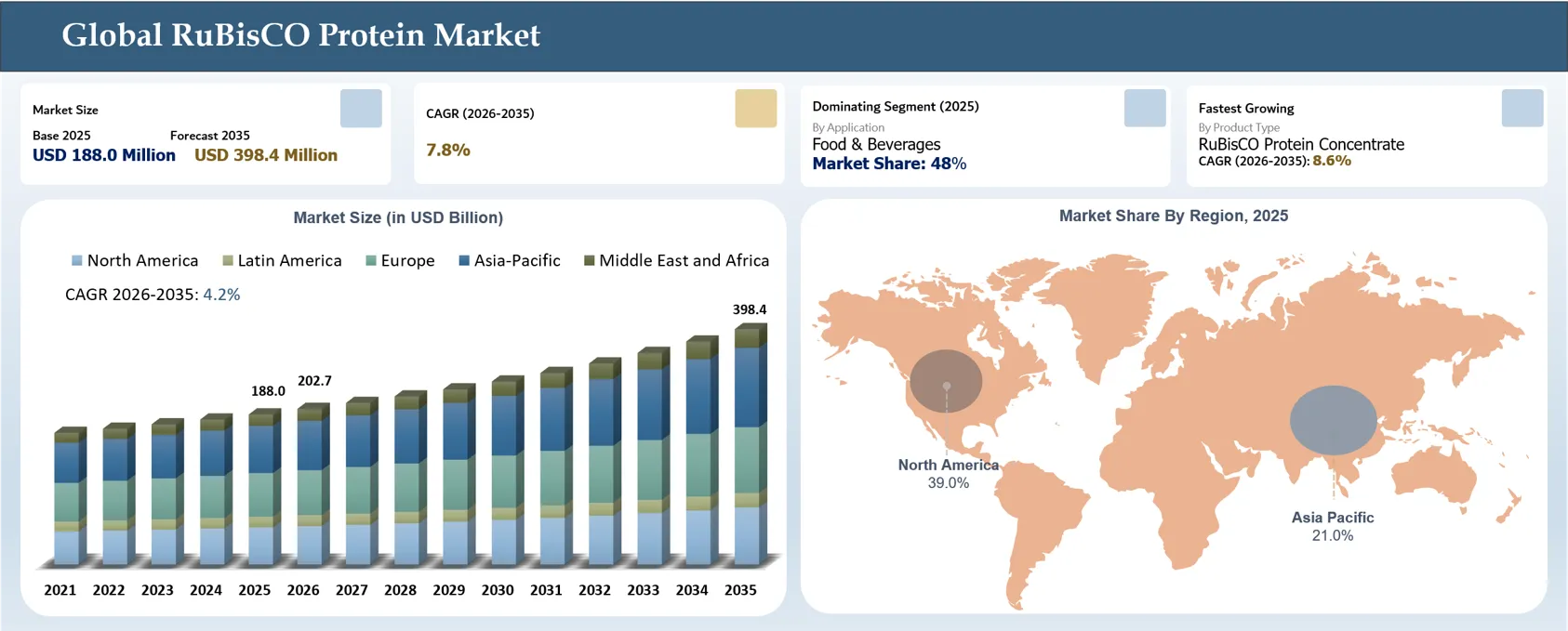
The global RuBisCO protein market was valued at approximately USD 188.0 million in 2025 and is projected to reach USD 398.4 million by 2035, expanding at a CAGR of 7.8% during 2026–2035. The growing adoption of plant-based foods and the increasing demand for plant-derived proteins are creating opportunities for alternative protein ingredients such as RuBisCO. In 2026, high-protein plant-based feed accounts for 30% of total EU feed protein use, equivalent to approximately 21.4 million tonnes of protein, highlighting the substantial role of plant-derived proteins in the European protein supply.
In Europe, protein demand is influenced by livestock feed requirements, consumer demand for protein-containing foods, and emerging applications associated with circularity and bioenergy. In the United States, foodservice broadline distributor sales of plant-based protein foods reached $291 million in 2025, demonstrating continued demand for plant-based protein products across foodservice channels. At the consumer level, the continued presence of branded plant-based products at higher price points indicates that taste and quality remain important purchasing considerations.
Trends are supporting the development of alternative plant protein sources, including RuBisCO, which can be recovered from green leaves and other plant biomass and developed into functional protein ingredients for food and beverage applications. These trends are supporting the development of alternative plant protein sources, including RuBisCO, which can be recovered from green leaves and other plant biomass and developed into functional protein ingredients for food and beverage applications.
Increasing Investment in RuBisCO Protein Production Technologies
The RuBisCO protein market is witnessing increasing commercial and technological activity as food ingredient companies explore RuBisCO as an alternative plant-based protein source. Companies are exploring methods for extracting and purifying RuBisCO from green leaves and other aquatic plant material, as well as increasing its applications in drinks, plant milk, meat alternatives, baking products, and other nutritional foods. For instance, in September 2024, Sustainable Planet Ltd. announced that it had developed a patented method to extract RuBisCO protein isolate from water lentils (Wolffia). The UK-based agri-tech firm is creating the protein as a sustainable source of plant protein compared to traditional sources like soy and pea. The company highlights that the production process of water lentils takes much less water than soybean production and can be grown on non-arable land, hence, making protein production more efficient.
RuBisCO Protein Market Strategic Takeaways
- North America is expected to hold the highest regional market share, accounting for approximately 39% of the global RuBisCO protein market in 2025, supported by stronger commercial-scale production activity, investment in RuBisCO extraction technologies, and the presence of companies such as Plantible Foods developing commercial food applications. Europe is expected to account for around 27%, supported by its established alternative-protein ecosystem, food-processing capabilities, and growing interest in sustainable and functional protein ingredients.
- Dietary Supplements & Sports Nutrition is expected to be the fastest-growing application segment, supported by increasing demand for complete, highly digestible protein sources and convenient protein formats. The segment is expected to grow at approximately 8.5–9% CAGR during the forecast period, while Food & Beverages is expected to remain the dominant application segment, supported by expanding use of RuBisCO in beverages, bakery products, dairy alternatives, sauces, plant-based foods, and other functional food applications.
- Partnerships between RuBisCO producers, food-ingredient companies, and food manufacturers are becoming strategically important, enabling producers to access established distribution networks, application expertise, and regional markets. Such collaborations are supporting application development, commercialization, production scale-up, and entry into markets such as Japan and other Asia-Pacific countries, where RuBisCO adoption is still developing.
RuBisCO Protein Market Industry Trends and Strategic Insight
- RuBisCO producers are increasingly investing in cultivation, extraction, filtration, and purification technologies to improve protein yield, production efficiency, and supply capacity, supporting the transition from pilot-scale operations toward commercial manufacturing. Companies such as Plantible Foods has upgraded its protein filtration system and introduced a higher-yielding lemna strain to increase RuBisCO production efficiency.
- Application-specific RuBisCO formulations are gaining importance as producers adapt the protein to different food and processing environments, focusing on solubility, stability, sensory properties, and functional performance. These formulations are being developed for applications including acidic beverages, sports nutrition, bakery products, dairy alternatives, sauces, and plant-based foods.
- The commercialization of consumer-facing RuBisCO products is expanding the market beyond ingredient development, with companies moving toward finished food and beverage products. Leaft Foods introduced Leaft Blade, a ready-to-drink beverage containing 17 g of RuBisCO protein for the performance nutrition market, demonstrating the potential for RuBisCO in consumer-facing protein products.
- Strategic partnerships between RuBisCO producers and food-ingredient companies are supporting commercialization by providing access to food manufacturers, distribution networks, application expertise, and regional markets. Leaft Foods’ partnership with Lacto Japan is supporting the introduction of Rubisco Protein Isolate to Japanese food manufacturers across plant-based foods, bakery products, and sports nutrition.
RuBisCO Protein Market Scope
| Metrics | Details | |
| 2025 Market Size | USD 188.0 Million | |
| 2035 Projected Market Size | USD 398.4 Million | |
| CAGR (2026-2035) | 7.8% | |
| Largest Market | North America | |
| Fastest Growing Market | Asia-Pacific | |
| By Source | Forage Crops, Vegetable & Crop Leaves, Aquatic Biomass, and Other Green Biomass | |
| By Product Type | RuBisCO Protein Isolate and RuBisCO Protein Concentrate | |
| By Application | Food & Beverages, Dietary Supplements & Sports Nutrition, Animal Feed, and Other Applications | |
| By Form | Powder and Liquid | |
| By Region | North America | U.S., Canada, Mexico |
| Europe | Germany, UK, France, Spain, Italy, Poland | |
| Asia-Pacific | China, India, Japan, Australia, South Korea, Indonesia, Malaysia | |
| Latin America | Brazil, Argentina | |
| Middle East and Africa | UAE, Saudi Arabia, South Africa, Israel, Türkiye | |
| Report Insights Covered | Competitive Landscape Analysis, Company Profile Analysis, Market Size, Share, Growth | |
RuBisCO Protein Market Disruption Analysis
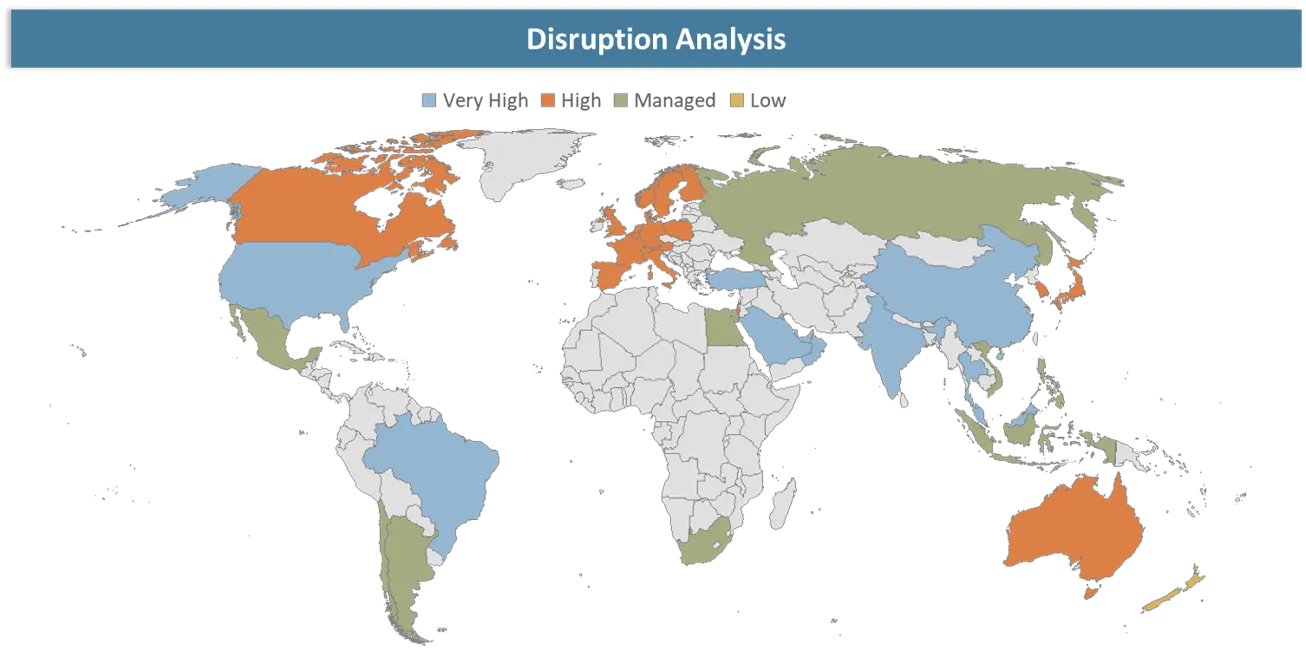
Transition from Protein Development to Commercial-Scale Production
The RuBisCO protein market is undergoing a significant transition from laboratory and pilot-scale development toward commercial-scale production and application development. Companies are investing in improved biomass cultivation, extraction, purification, filtration, and processing technologies to increase protein yield and production efficiency. This is changing the competitive landscape by enabling RuBisCO producers to move beyond technology validation and supply commercial ingredients and finished products to food manufacturers. Increasing production capacity is also supporting the development of protein isolates, concentrates, ready-to-drink beverages, and application-specific ingredients for food, beverage, and sports nutrition markets. As producers improve manufacturing efficiency and secure commercial customers, the market is shifting from a technology-focused stage toward a scalable ingredient and product commercialization model.
RuBisCO Protein Market BCG Matrix: Company Evaluation

Plantible Foods, Inc. and Leaft Foods Limited can be classified as Star competitors due to their relatively advanced commercialization of RuBisCO protein, established production platforms, expanding application portfolios, and active development of consumer-facing and food-industry products. Their activities across protein ingredients, beverages, sports nutrition, plant-based foods, and functional food applications position them well to benefit from increasing commercialization of RuBisCO protein. FUDI Protein Inc., Proleri, Inc., and Alfa-Ruby can be categorized as high-growth players, supported by their focus on developing scalable RuBisCO production technologies, alternative biomass sources, and food-grade protein applications. Their continued technology development, commercialization efforts, and expansion of potential food and beverage applications provide opportunities for growth as the RuBisCO ingredient ecosystem develops. While, Rubisco Foods, Day 8 Inc., and Aspyre Foods, Inc. can be considered emerging/specialized competitors, with activities centered on developing RuBisCO extraction platforms, novel plant-based protein technologies, and application-specific solutions. Their market positions are supported by technological development and efforts to improve the commercial utilization of RuBisCO across food and nutrition applications.
RuBisCO Protein Market Dynamics
Driver Impact Analysis
| Driver | Market Growth Impact (%) | Demand Concentration | Impacted Use Case | Strategic Impact |
Growing Demand for Sustainable and Alternative Protein Sources | 30% | Strong demand concentration in North America, Europe, and Asia-Pacific, supported by increasing interest in sustainable protein sources and diversification away from conventional animal and seed-based proteins. | Plant-based foods, protein beverages, dairy alternatives, sports nutrition, dietary supplements, and high-protein foods. | Expands the addressable market for RuBisCO by positioning it as a sustainable, complete plant-derived protein for food and nutrition applications. |
High Nutritional Value and Complete Amino Acid Profile of RuBisCO | 25% | Strong potential across North America and Europe, with growing opportunities in Asia-Pacific due to increasing demand for high-quality protein and sports nutrition products. | Protein beverages, sports nutrition, dietary supplements, meal replacements, plant-based foods, and functional foods. | Supports adoption of RuBisCO as a high-quality alternative protein by offering all essential amino acids and favorable protein digestibility characteristics. |
Growing Demand for Functional and Clean-Label Protein Ingredients | 18% | Strong activity in North America and Europe, where food manufacturers are reformulating products with clean-label and multifunctional ingredients; adoption is expanding in Asia-Pacific. | Plant-based meat, dairy alternatives, bakery products, sauces, dressings, beverages, and egg-replacement formulations. | Increases demand for RuBisCO beyond protein enrichment by leveraging its binding, emulsification, foaming, and gelling functionality, allowing manufacturers to replace or reduce conventional functional ingredients. |
Expansion of Plant-Based and Protein-Fortified Food & Beverage Applications | 15% | High demand concentration in North America and Europe, with increasing commercial development in Asia-Pacific. | Plant-based meat and seafood, dairy alternatives, protein coffee and beverages, bakery products, confectionery, sauces, and nutritional products. | Broadens RuBisCO's application base and encourages ingredient producers to develop application-specific RuBisCO formulations for different food and beverage categories. |
Increasing Commercialization and Production Scale of RuBisCO Protein | 12% | Strong commercialization activity in North America, New Zealand, and Europe, with partnerships expanding access to Asian markets such as Japan. | Commercial food ingredients, RTD protein beverages, sports nutrition, plant-based foods, and food-service formulations. | Increased production capacity, strategic partnerships, and commercial product launches can improve availability, supply reliability, and cost competitiveness, accelerating market adoption. |
Expansion of RuBisCO Protein into Performance Nutrition and RTD Beverages
The expansion of RuBisCO protein into performance nutrition and ready-to-drink (RTD) beverages is creating new commercial opportunities for the ingredient beyond traditional food applications. Growing demand for convenient, protein-rich products is encouraging ingredient developers to introduce proteins that can provide high nutritional value, complete amino acid profiles, fast digestibility, and functional benefits in convenient formats. RuBisCO is particularly suited to this trend because it can be derived directly from green leaves and offers nutritional characteristics comparable with established protein sources. The development of consumer-facing products also provides food manufacturers with a pathway to demonstrate the practical application and commercial viability of RuBisCO protein. For instance, in August 2025, Leaft Foods launched Leaft Blade, a ready-to-drink beverage containing 17 g of RuBisCO protein, targeting the performance nutrition and pre-workout market. The launch represents the commercialization of RuBisCO in a consumer-facing beverage and supports the expansion of its applications across sports nutrition, functional beverages, and convenient protein supplementation.
Restraint Impact Analysis
| Restraint | Drag on Market Growth (%) | Primary Impact Area | Impacted Use Case | Strategic Impact |
High Production Costs and Limited Manufacturing Scale | 30% | Specialized extraction systems, biomass cultivation, downstream purification, processing infrastructure, and scale-up requirements. | RuBisCO protein isolates and concentrates, food ingredients, protein beverages, sports nutrition, and dietary supplements. | Increases production costs and capital requirements and can limit price competitiveness against established proteins such as soy, pea, whey, and egg, particularly during early-stage commercial scaling. |
Complexity of RuBisCO Extraction and Purification | 25% | Efficient separation of RuBisCO from plant biomass while maintaining protein functionality, purity, yield, and sensory quality. | High-purity protein isolates, functional food ingredients, beverages, dairy alternatives, and clean-label formulations. | Creates technical barriers to commercial-scale production and requires specialized extraction and purification technologies, increasing processing complexity and development costs. |
Limited Commercial Availability and Supply Capacity | 20% | Small number of commercial producers, limited production facilities, biomass availability, and scale-up constraints. | Large-volume food and beverage applications, protein fortification, sports nutrition, and food ingredient supply. | Limits the ability of food manufacturers to secure consistent large-scale supplies and can delay broader adoption until production capacity and supply reliability improve. |
Formulation and Functional -Performance Challenges Across Applications | 15% | Protein solubility, stability, taste, color, processing compatibility, and interactions with other food ingredients. | Protein beverages, acidic beverages, plant-based dairy, bakery products, sauces, meat alternatives, and egg-replacement products. | Requires application-specific formulation and R&D, increasing development time and costs and making it difficult to achieve consistent performance across diverse food and beverage applications. |
Limited Consumer and Manufacturer Awareness of RuBisCO Protein | 10% | Limited familiarity with RuBisCO as a food protein, relatively small number of commercial products, and lack of established market positioning. | Consumer protein beverages, sports nutrition, plant-based foods, dietary supplements, and functional foods. | Slows market penetration and requires producers to invest in product education, application demonstrations, branding, and partnerships with food manufacturers to establish RuBisCO as a viable protein source. |
Formulation and Functional-Performance Challenges Across Applications
RuBisCO’s functional performance can vary across food and beverage systems due to differences in pH, temperature, processing conditions, solubility, and interactions with other ingredients. As a result, manufacturers may require application-specific formulation and processing adjustments to maintain protein stability, dispersibility, texture, and functionality. For instance, Leaft Foods developed Rubisco Protein Concentrate (RPC) specifically for low-pH applications such as juices and smoothies, with the ingredient designed to remain stable at pH 3–3.5. The development of a dedicated formulation for acidic beverages highlights the technical requirements involved in adapting RuBisCO across different product categories. Such formulation requirements can increase R&D costs, product-development time, and validation requirements, potentially slowing the adoption of RuBisCO in new food and beverage applications.
RuBisCO Protein Market Segmentation Analysis
The global RuBisCO protein market is segmented based on source, product type, application, form and region.
Food and Beverage Applications Dominate RuBisCO Protein Market as Commercial Adoption Expands
Food & beverages is expected to dominate the RuBisCO protein market by application, supported by its high nutritional value and ability to improve the texture and stability of food products. RuBisCO can be used in various products such as plant-based milk and dairy substitutes, meat substitutes, beverages, baked products, sauces, and eggs substitutes. Various commercial companies such as Leaft Foods and FUDI Protein that have already used RuBisCO in their products in various food categories.
The growing application potential of RuBisCO in food and beverage formulations is encouraging these companies to develop commercial ingredient solutions for plant-based products. For instance, in October 2023, ICL Food Specialties and Plantible Foods launched ROVITARIS Binding Solution powered by Rubi Protein, a functional ingredient system based on RuBisCO protein for plant-based meat and seafood applications. This solution was developed by the companies as a label-friendly substitute for chemically modified binders like methylcellulose with the intention of enhancing the binding, gelling, taste, and texture of formulations based on plants. The introduction of the product has been marked as a commercially viable RuBisCO ingredient for use in food.
RuBisCO Protein Market Geographical Penetration
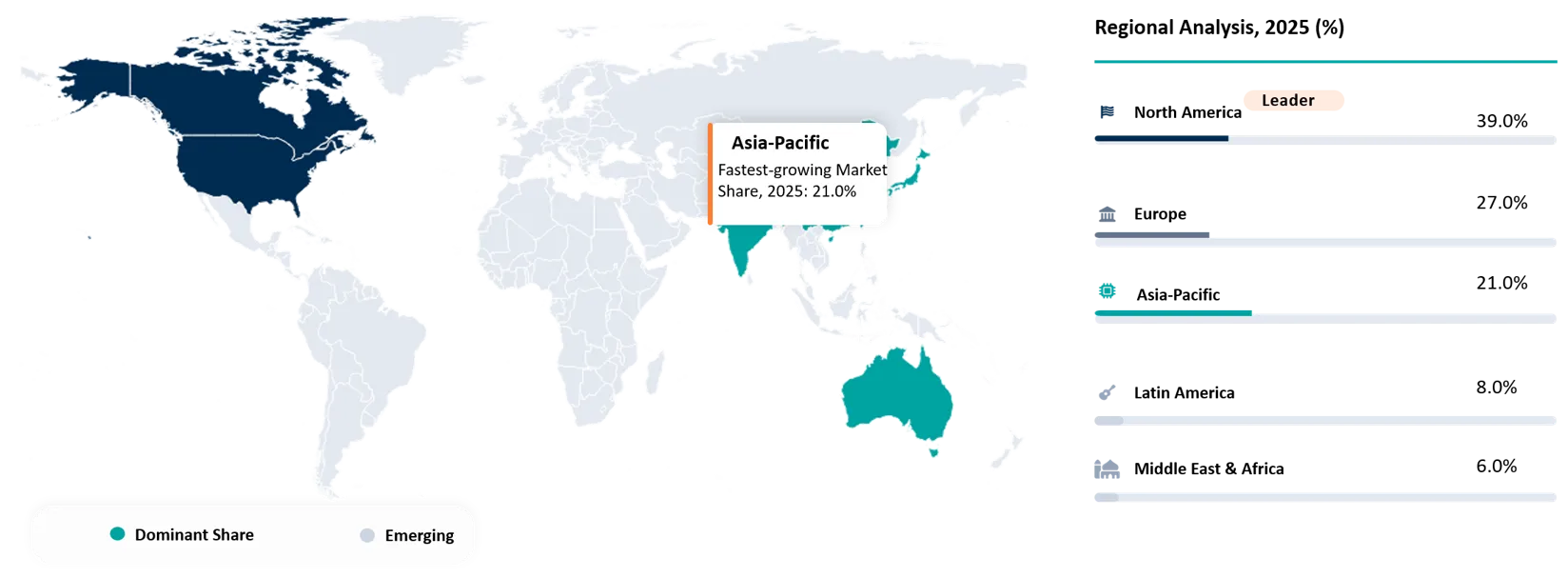
Growing Commercialization and Production Capacity of RuBisCO Protein in North America
The North American RuBisCO protein market is supported by increasing demand for plant-based and functional protein ingredients, along with growing investment in sustainable protein production technologies. Recent investments in RuBisCO production are supporting the transition of the ingredient from emerging technology to commercial-scale manufacturing. For instance, in August 2026, Plantible Foods raised $35 million in debt and equity financing to expand its RuBisCO protein production facility in Eldorado, Texas. The funding is expected to increase annual Rubi Protein production capacity five-fold to more than 1,000 metric tons and support the company in meeting growing customer demand. Plantible also introduced a new Lemna strain that increased protein yield by more than 40%, strengthening the scalability of its RuBisCO protein production.
Increasing Commercialization and Regulatory Acceptance of RuBisCO Protein in the U.S.
The U.S. RuBisCO protein market is supported by the expansion of plant-based and functional food formulations, with manufacturers incorporating alternative proteins into beverages, dairy alternatives, meat substitutes, and other food products. The development of RuBisCO-based ingredients with functional properties such as emulsification, foaming, gelling, and binding further supports its adoption by food manufacturers, particularly as companies develop cleaner-label and high-protein formulations. The market has entered the commercial stage with the development of RuBisCO protein products and clearance for their application as food ingredients by food manufacturers.
The regulatory clearances, launch of products and capacity expansions show that there have been increasing efforts made for the commercial viability of RuBisCO protein as food ingredient in the US. For instance, in February 2026, Plantible Foods received a “No Questions” letter from the U.S. Food and Drug Administration (FDA) regarding its GRAS Notice (GRN 001256) for Rubi Protein, a water-lentil (Lemna)-derived ingredient composed primarily of RuBisCO. The regulatory milestone made Plantible the first company to receive FDA acknowledgment for the use of isolated RuBisCO protein in food applications. Following the completion of the FDA review, Plantible announced plans to expand production capacity at its Eldorado, Texas facility to support demand across food and beverage applications, including baked goods, beverages, dairy alternatives, protein bars, snacks, soups and plant-based meat products.
Growing Protein Demand and Emerging Commercial Opportunities for RuBisCO Protein in Canada
The Canadian RuBisCO protein market is at an emerging stage, supported by the country's established protein-ingredient industry, growing demand for high-protein foods, and increasing interest in plant-based and alternative protein sources. The development of RuBisCO as a functional plant protein provides opportunities for food manufacturers to diversify protein sources and develop applications across beverages, dairy alternatives, snacks, bakery products and other protein-rich foods. Canada's established protein ingredient trade and expanding high-protein food applications provide a favorable environment for the commercialization of emerging proteins such as RuBisCO. According to Agriculture and Agri-Food Canada exports of protein ingredients reached approximately US$344.9 million (141.3 thousand tonnes) in 2025, while packaged foods containing high-protein ingredients generated approximately US$1.36 billion in sales in Canada in 2025.
Rising Demand for Sustainable Plant-Based Proteins and Expanding Functional Nutrition Applications Driving Market Growth
The Asia Pacific RuBisCO protein market is in an emerging growth phase, supported by increasing demand for sustainable plant-based proteins, rising consumer awareness of health and nutrition, and expanding applications of alternative protein ingredients across food, beverages, and dietary supplements. Countries across Asia Pacific are witnessing increasing acceptance of plant-based diets, particularly among younger consumers who are driving demand for healthier and environmentally sustainable food products.
The expansion of functional food and beverage markets, along with increasing innovation by ingredient manufacturers and food companies, is expected to further support the integration of RuBisCO protein into mainstream nutrition products. Across Asia Pacific, rising consumer interest in plant-based foods and sustainable nutrition is encouraging food manufacturers to expand alternative protein portfolios. In South Korea, companies such as CJ CheilJedang, through its vegan food brand Plantable, and Pulmuone, with its expanded plant-based protein offerings, are strengthening the region’s alternative protein ecosystem and creating opportunities for emerging plant-derived proteins such as RuBisCO protein.
Growing Acceptance of Plant-Based Diets and Youth-Led Consumption Expanding Alternative Protein Opportunities
The China RuBisCO protein market is in an emerging stage, supported by growing demand for plant-based and alternative proteins, increasing consumer interest in healthy and sustainable foods, and expansion of protein-rich food and beverage applications. The country's large food-processing industry and growing alternative-protein ecosystem provide opportunities for the development and commercialization of RuBisCO-based ingredients.
Growing consumer acceptance of plant-based foods is supporting opportunities for alternative protein ingredients in China. Growing consumer acceptance of plant-based foods is supporting opportunities for alternative protein ingredients in China. In 2024, ProVeg Asia surveyed 1,000 consumers in Beijing, Shanghai and Guangzhou to assess attitudes toward plant-based diets and awareness of their health and environmental benefits. The study highlights growing opportunities for plant-based and alternative-protein products in China. In addition, China's Gen Z population of approximately 264 million accounted for 40% of purchases of new plant-based products in 2023, supporting future demand for alternative protein ingredients.
Growing Adoption of RuBisCO Protein Across Japan’s Functional Food and Nutrition Market
The Japan RuBisCO protein market is supported by rising demand for plant-based and alternative proteins, increasing consumer focus on health and nutrition, and growing interest in sustainable food ingredients. Japan’s advanced food-processing industry, strong functional-food sector, and established demand for high-protein products create opportunities for the development and commercialization of RuBisCO-based ingredients. Growing interest in clean-label, plant-derived, and nutritionally functional proteins, particularly among health-conscious consumers, is expected to support RuBisCO protein adoption across food, beverages, sports nutrition, and dietary supplement applications.
Furthermore, partnerships between international RuBisCO producers and Japanese food ingredient companies are helping introduce RuBisCO-based ingredients to local food manufacturers and expand their commercial applications. For instance, in September 2025, Leaft Foods partnered with Lacto Japan Co., Ltd. to introduce its Rubisco Protein Isolate to the Japanese market and accelerate commercialization among food manufacturers. The partnership targets applications across plant-based foods, bakery products, and sports nutrition, leveraging Rubisco’s nutritional and functional properties, including its ability to replace eggs, emulsifiers, and gelling agents. The companies are already working with several Japanese food manufacturers and aim to build a business worth tens of millions of dollars over the next five years.
RuBisCO Protein Market Competitive Landscape
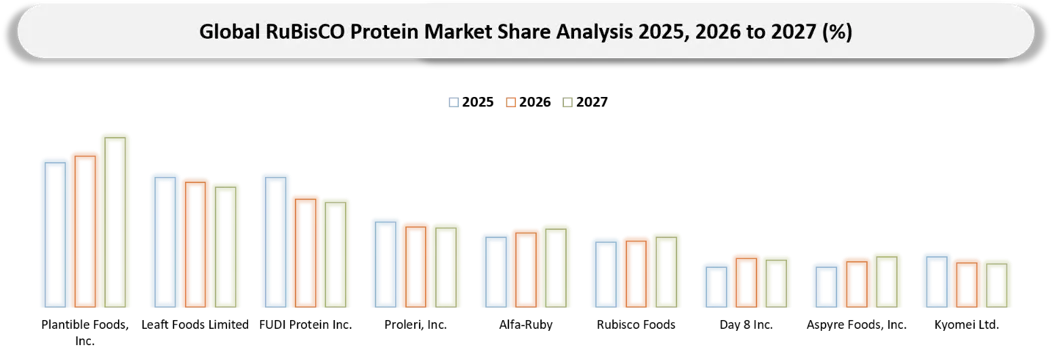
- The global RuBisCO protein market is characterized by the presence of specialized plant-protein companies, biotechnology firms, and food-ingredient developers focused on extracting, purifying, and commercializing RuBisCO as a functional protein ingredient for food and nutritional applications.
- Plantible Foods, Inc., Leaft Foods Limited, FUDI Protein Inc., Proleri, Inc., Alfa-Ruby, Rubisco Foods, Day 8 Inc., Aspyre Foods, Inc., and Kyomei Ltd. are among the notable players due to their RuBisCO extraction technologies, protein isolation capabilities, product development activities, and focus on commercial food applications.
- Plantible Foods strengthens its position through its Rubi Protein ingredient derived from Lemna, supported by large-scale production capabilities and applications across beverages, bakery products, dairy alternatives, plant-based meat, sauces, and other food products. Leaft Foods focuses on RuBisCO protein extracted from green leaves and offers protein ingredients for applications including beverages, dairy alternatives, bakery products, and sports nutrition.
- FUDI Protein develops RuBisCO-based protein ingredients for food and beverage applications, with emphasis on nutritional and functional properties. Proleri participates through its leaf-based protein technology and development of RuBisCO-rich protein ingredients for food applications.
- Alfa-Ruby focuses on RuBisCO protein extraction and development of functional plant-protein ingredients, while Rubisco Foods is involved in the development and commercialization of RuBisCO-based protein products.
- Day 8 Inc. contributes through plant-based protein development using photosynthetic biomass, while Aspyre Foods focuses on sustainable protein ingredients and food applications. Meanwhile, Kyomei Ltd. participates through its development of RuBisCO-based protein solutions and technologies for food and nutrition applications.
- Plantible Foods, Inc. (United States), Leaft Foods Limited (New Zealand), FUDI Protein Inc. (New Zealand), Proleri, Inc. (United States), Alfa-Ruby (United States), Rubisco Foods (United States), Day 8 Inc. (United States), Aspyre Foods, Inc. (United States), and Kyomei Ltd. (Japan).
Key Developments
- September 2025: Leaft Foods partnered with Lacto Japan Co., Ltd. to introduce its Rubisco Protein Isolate to the Japanese market and accelerate commercialization among food manufacturers. The partnership targets applications across plant-based foods, bakery products, and sports nutrition, leveraging Rubisco’s nutritional and functional properties, including its ability to replace eggs, emulsifiers, and gelling agents. The companies are already working with several Japanese food manufacturers and aim to build a business worth tens of millions of dollars over the next five years.
- August 2025: Leaft Foods launched Leaft Blade, its first consumer-facing ready-to-drink beverage containing 17 g of Rubisco protein, targeting the performance nutrition and sports beverage market. The product uses Rubisco extracted from green leaves and provides a complete protein with fast digestibility, expanding the commercial application of Rubisco into ready-to-drink protein beverages and demonstrating its use in consumer-facing functional nutrition products.
- February 2026: Plantible Foods received a “No Questions” letter from the U.S. Food and Drug Administration (FDA) regarding its GRAS Notice (GRN 001256) for Rubi Protein, a water-lentil (Lemna)-derived ingredient composed primarily of RuBisCO. The regulatory milestone made Plantible the first company to receive FDA acknowledgment for the use of isolated RuBisCO protein in food applications.
Key Procurement Priorities and Buyer Evaluation Criteria
- Buyers prioritize RuBisCO protein solutions with proven probiotic viability, stability, and controlled release performance to ensure effectiveness across demanding applications such as dietary supplements, functional foods, beverages, nutraceuticals, and pharmaceutical formulations.
- Evaluation is based on criteria such as encapsulation efficiency, probiotic survival rate, protection against heat, moisture, oxygen, gastric acidity, and processing conditions, release characteristics, encapsulation materials, manufacturing capabilities, quality certifications, production capacity, and experience developing application-specific probiotic formulations.
- Buyers consider factors including shelf-life stability, viability during storage, gastrointestinal survival, scalability, batch-to-batch consistency, supply chain reliability, delivery capabilities, regulatory compliance, and the ability to provide customized encapsulation solutions based on specific strain, formulation, and processing requirements.
- Preference is given to technology providers with expertise in probiotic-specific microencapsulation, protective coating systems, freeze-drying encapsulation, matrix encapsulation, protein- or lipid-based encapsulation, and multilayer microcapsule technologies, supported by appropriate food, nutraceutical, pharmaceutical, or feed-grade standards and quality systems.
- Food and beverage, dietary supplement, nutraceutical, pharmaceutical, and animal-health buyers particularly prioritize suppliers with proven probiotic strain protection, validated processing performance, testing and stability capabilities, scalable manufacturing infrastructure, regulatory expertise, and the ability to support long-term commercial production with consistent probiotic viability and product quality.
Why Choose DataM?
- Technological Innovations: Explores advancements in data center power infrastructure technologies, including intelligent power distribution systems, high-efficiency UPS solutions, medium-voltage switchgear, digital power monitoring platforms and AI-enabled energy management systems that improve reliability, operational efficiency, scalability and power optimization for hyperscale, colocation and enterprise data centers.
- Product Performance & Market Positioning: Evaluates how different players deliver power infrastructure solutions based on power efficiency, system reliability, scalability, uptime performance, energy management capabilities and integration with renewable energy sources, highlighting how leading companies differentiate through advanced electrical architectures, modular designs and solutions optimized for AI-driven high-density computing environments.
- Real-World Evidence: Highlights adoption of advanced power infrastructure solutions across hyperscale data centers, cloud facilities, AI computing campuses and enterprise data centers, demonstrating benefits such as improved power availability, reduced energy losses, enhanced operational continuity, optimized electricity management and support for increasing rack power densities.
- Market Updates & Industry Changes: Tracks key developments such as AI data center expansion, utility partnerships, renewable power integration, hyperscale facility investments, grid infrastructure upgrades and deployment of next-generation power distribution systems across North America, Asia-Pacific and Europe, supporting the transition toward sustainable and resilient data center ecosystems.
- Competitive Strategies: Analyzes how leading companies expand through product innovation, strategic partnerships, acquisitions, global service network expansion and development of integrated power management solutions to address rising demand for reliable electricity supply driven by AI, cloud computing and high-performance computing applications.
- Pricing & Market Access: Explains pricing variations based on power capacity, equipment type, efficiency ratings, customization requirements and integration complexity, along with access through electrical equipment manufacturers, data center infrastructure providers, system integrators and utility partnerships supporting global deployment.
- Market Entry & Expansion: Identifies growth opportunities driven by AI infrastructure growth, hyperscale data center development, edge computing adoption, renewable energy integration and digital transformation, while outlining strategies such as regional manufacturing expansion, energy-efficient product development, ecosystem partnerships and customized power solutions to strengthen global market presence.
Target Audience
- Probiotic Ingredient Manufacturers and Encapsulation Technology Providers
- Nutraceutical, Dietary Supplement, and Functional Food Manufacturers
- Food and Beverage Companies Developing Probiotic Products
- Pharmaceutical and Healthcare Product Manufacturers
- Animal Health, Feed, and Veterinary Probiotic Companies
- Contract Development and Manufacturing Organizations (CDMOs/CMOs) and Private-Label Probiotic Manufacturers
- Food Ingredient Distributors, Nutraceutical Ingredient Suppliers, and Specialty Raw Material Companies
- Research Institutions, Biotechnology Companies, and Probiotic Strain Developers


























































