


RSV Vaccine Market Size and Overview
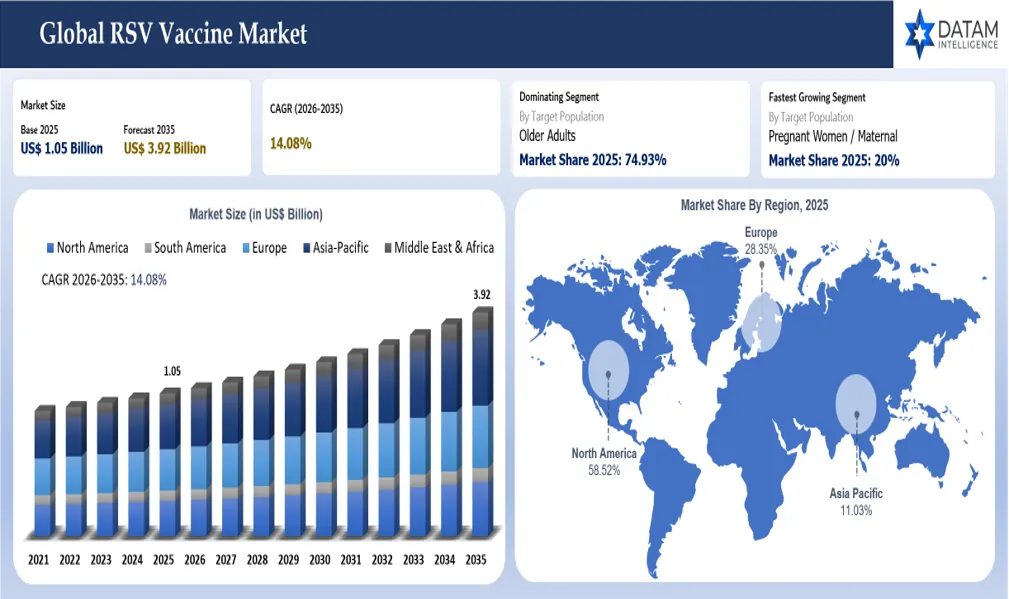
The global RSV vaccine market size reached US$ 1.05 billion in 2025 and is expected to reach US$ 3.92 billion by 2035, growing with a CAGR of 14.08% during the forecast period 2026-2035.
The RSV vaccine market is growing as adult vaccination schemes expand and maternal immunization opens up a second prevention route. According to the CDC guidelines in the United States, vaccination is recommended for people aged 75 years & above and for those aged 50 to 74 years with added risk factors. At present, Arexvy, Abrysvo and mResvia are available for adult immunization. Thus, the market is transitioning from the initial usage among senior citizens to the broader diapason of high-risk categories of individuals although competition gradually revolves around aspects as vaccine efficacy, protection duration, safety, vaccine technologies, pricing and reimbursement.
As per the World Health Organization (WHO), there are more than 3.6 million hospitalizations and 100,000 deaths in children below five years of age caused by RSV every year, thus indicating that the disease burden is quite high, making protective measures necessary for mothers and babies. RSV immunization in mothers will help the vaccine market grow not only through the vaccination of adults but also by way of protecting babies through transplacental antibodies. Growth of the market up until 2035 will be contingent upon vaccination, national program adoption, reimbursement, economic procurement, physician endorsement, seasonality and under-penetrated emerging markets.
RSV Vaccine Market Key Takeaways
- The Older Adults held a majority market share of around 74.93% in the RSV vaccine market during 2025 owing to well-established vaccine guidelines, high prevalence of RSV diseases and increasing use of vaccinations amongst older age groups.
- Maternal RSV Vaccination was the fastest growing population in the market, registering a CAGR of around 20%, attributed to growing use of immunizations amongst pregnant women through placental antibody delivery to infants.
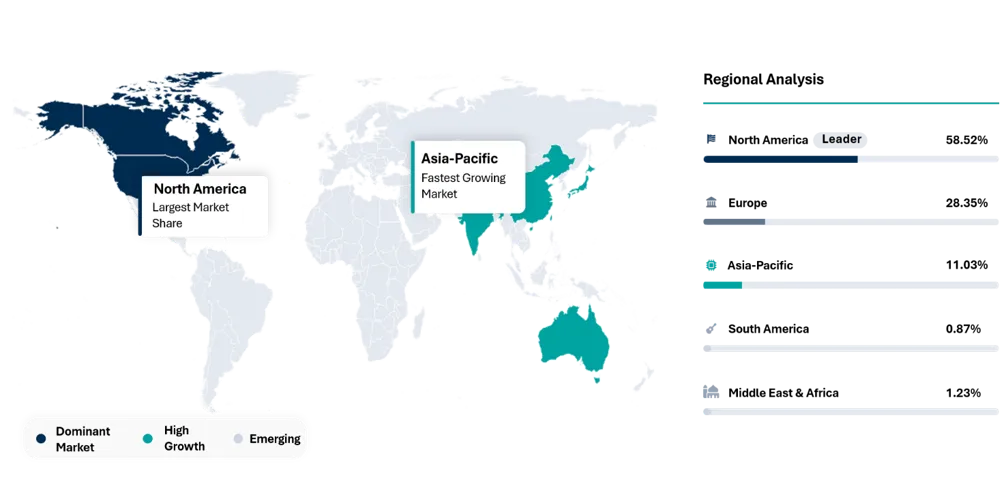
- The North America region dominated the global RSV vaccine market with a 58.52% share in 2025 due to existing guidelines for adult vaccinations, reimbursement processes and availability of vaccines such as Arexvy, Abrysvo and mResvia.
- There is increasing competition within the different platforms of adjuvanted recombinant protein, recombinant protein and mRNA vaccines, whereby manufacturers emphasize on issues related to protection duration, safety, immune response and population-specific positioning.
- Maternal immunization program expansion and adult vaccination within emerging markets have presented new opportunities to manufacturers of RSV vaccines, along with factors such as affordability, reimbursement, vaccination and health care infrastructure.
RSV Vaccine Industry Trends and Strategic Insights
- Expansion of Adult Vaccination Eligibility: Recommendations for broader adult groups and at-risk individuals are increasing the scope of the targetable RSV vaccine market among the older patients.
- Competition Across Vaccine Platforms: Adjuvanted recombinant, non-adjuvanted recombinant and mRNA platforms are contributing to the differentiation of the products through efficacy, longevity, safety and immune response.
- Rise of Maternal Immunization: The development of RSV vaccines targeting pregnant women is forging a new path for protecting infants and extending the market outside adult vaccination.
- Increasing Focus on Vaccination Uptake: Manufacturers are putting more focus on pharmacy delivery, health care professional training, access to reimbursements and campaign efforts related to seasonality.
- Growing Importance of Real-World Evidence: Real-world effectiveness, durability, safety and health-economics data are becoming increasingly important for consumers in the process of positioning, getting recommendations and gaining access to the market.
RSV Vaccine Market Scope
| Metrics | Details | |
| 2025 Market Size | US$ 1.05 Billion | |
| 2035 Projected Market Size | US$ 3.92 Billion | |
| CAGR (2026-2035) | 14.08% | |
| Largest Market | North America | |
| Fastest Growing Market | Asia-Pacific | |
| By Vaccine Type | Recombinant Protein-Based, mRNA-Based, Viral Vector Vaccines, Live Attenuated Vaccines and Other Vaccine Types | |
| By Target Population | Older Adults, Young Adults, Pregnant Women / Maternal, Infants and Children | |
| By Age Group | 18-30 Years, 31-49 Years, 50-59 Years, 60-74 Years and 75 Years & Above | |
| By Dose Regimen | Single-Dose and Repeat-Dose / Revaccination | |
| By Antigenic Composition | RSV A-Specific, RSV B-Specific, RSV A+B / Bivalent and Other Antigenic Compositions | |
| By End-User | Hospitals & Health Systems, Physicians Offices / Specialty Clinics, Retail Pharmacies, Public Health & Government Programs and Other Healthcare Facilities | |
| By Distribution Channel | Government / Public Procurement, Hospital & Institutional Procurement, Retail Pharmacy and Specialty Distributors | |
| By Region | North America | U.S., Canada, Mexico |
| Europe | Germany, UK, Russia, France, Spain, Italy, Poland | |
| Asia-Pacific | China, India, Japan, Australia, South Korea, Indonesia, Malaysia, Singapore, Vietnam, Thailand, Philippines, Taiwan | |
| South America | Brazil, Argentina | |
| Middle East and Africa | UAE, Saudi Arabia, South Africa, Israel, Turkiye, Nigeria | |
| Report Insights Covered | Competitive Landscape Analysis, Company Profile Analysis, Market Size, Share, Growth | |
Why does this report matter in 2026?
The RSV vaccine market is entering an important stage of commercialization in 2026, where established vaccines are in for market share with existing players operating in the older adult, high-risk adult and maternal immunization segments. This is leading to the emergence of new target populations and changes in the ways of differentiating between various recombinant, adjuvanted and messenger RNA vaccines.
The significance of this report lies in the fact that market growth relies mostly on vaccine uptake, product differentiation, sustainability of immunity, reimbursement and availability of vaccines. As there are several commercial vaccines fighting for season demand, it is crucial to understand manufacturer strategies, changing target audiences, technology positioning and regional adoption for identifying the market segments and opportunities with the strongest growth potential.
RSV Vaccine Market White Space & Investment Opportunities
- Untapped High-Risk Adult Vaccination: There is plenty of untapped potential in terms of enhancing vaccination in 50-74-year-old patients who have risk factors associated with them.
- Maternal Immunization Infrastructure: Development of pathways for obstetrics and prenatal care patients for maternal vaccinations can present an opportunity for adoption of RSV vaccines to protect infants.
- Next-Generation RSV Vaccines: Manufacturers are turning to the development of vaccines with an extended shelf-life, broadened effectiveness, better tolerability and an easier administration as a major area of investment for differentiation.
- Emerging-Market Market Entry: The increasing understanding of the significance of RSV infections as well as the growing adult immunization capacity of countries in Asia-Pacific, Latin America and the Middle East & Africa has been creating opportunities for entering new markets.
- Real-World Evidence & Commercial Analytics: Investment in data related to the effectiveness of vaccine, health economic modelling, patient segmentation and uptake of vaccination can help with reimbursement and commercialization.
RSV Vaccine Future Market Transformation
Market for the RSV vaccine would shift from the predominantly matured-adult opportunity into a multi-population immunization market involving not only the matured adults but also high-risk young adults and maternal vaccination. Three vaccines approved by the FDA for adult vaccination including Arexvy, mResvia and Abrysvo have also created a competitive environment where vaccine platform, durability, safety and population-specific position would define market shares.
Transformation in the future will be influenced by vaccination coverage, delivery channels, evidence from the real world and possible changes in dosing regimens. The current guidelines still rely on only one dose per adult, but the CDC still studies how long the immunity lasts and whether there is any benefit of administering further doses, opening up possible opportunities for the future of revaccinations and innovative products. Another important opportunity for expanding markets is maternal immunizations. Maternal vaccination will be one other major route for achieving market growth as manufacturers and healthcare systems strive towards providing improved immunity against severe RSV disease in babies.
RSV Vaccine Market Buyer Decision-Making Criteria
Buyer decisions in the RSV vaccine market have become significantly dependent on a number of factors, which include effectiveness, safety, duration of protection, eligibility of the target population, availability, administration and costs of purchase. Providers of healthcare, pharmacists, public health programs and institutional buyers also look at the robustness of real-world evidence, the terms of reimbursement, the seasonality of supply and the appropriateness of the vaccines for certain populations such as elderly and pregnant patients.
Major Decision-Making Criteria
- Real-World Vaccine Effectiveness
- Safety and Tolerability Profile
- Duration of Protection
- Eligible Population Coverage
- Vaccine Platform and Immune Response
- Maternal Immunization Suitability
- Acquisition Cost and Reimbursement
- Seasonal Supply Reliability
- Storage and Administration Requirements
- Clinical and Health-Economic Evidence
RSV Vaccine Market Economic & Investment Analysis
The RSV vaccine market offers a lucrative investment avenue because of increased vaccination among older individuals, high-risk groups and maternal vaccination programs. Economic benefit of RSV vaccination is highly dependent on the prevention of hospitalization associated with RSV. According to CDC economic modeling studies, vaccination has proved to be economically favorable among older and high-risk adults, but vaccination cost, prevalence rate of disease, vaccine efficacy and duration of efficacy are still important considerations for investors.
From an investment point of view, market growth will hinge on vaccination coverage, economics of reimbursement, procurement economics, health care delivery infrastructure and geographic access. WHO sees access and market dynamics in the future as key factors when evaluating RSV immunization products and investments in immunizations of adults generally have the potential to yield significant economic gains. The most relevant opportunities exist in markets that are under-penetrated and emerging markets. Opportunities are especially applicable to low-penetration groups and developing countries, whereas future evidence regarding durability and any further dosage strategies might affect the long-term commercial opportunity.
RSV Vaccine Investment Trends in the Market
- Adult RSV Vaccine Capacity Expansion: Growing investment is being made in scale-up production and commercialization capacity as the adult RSV vaccines are expected to continue to be the largest segment of supply in the coming years.
- Maternal RSV Vaccine Funding: Government and philanthropic funding is becoming increasingly focused on maternal RSV vaccine programs and financing structures to increase their availability in low-income markets.
- Next-Generation Vaccine Pipeline Investment: Investment is flowing into next generation vaccine pipeline candidates and platforms that offer differentiation in terms of longevity, wider protection and targeted populations.
- Emerging Market Commercialization: Investors have started to analyze LMIC market penetration, national uptake of vaccination and distribution networks, given that the WHO has forecasted a major long-term trend in terms of the changing demand for RSV vaccines in LMICs.
- Supply-Chain and Manufacturing Localization: Investments have moved from vaccine development into manufacturing capacity, regional manufacturing, supply chains and multiple dose formulations to improve affordability and accessibility.
Strategic Indicators For RSV Vaccine Market
High Regulation Impact
The RSV vaccine market faces a significant regulatory impact since the marketing, indications, safety labeling and positioning depend on substantial amounts of clinical evidence and regulation. New indications for the RSV vaccines have been approved by the FDA, which means that these vaccines can be marketed among other risk groups of adults and post-marketing safety studies have led to labeling changes for some RSV vaccines. Hence, approvals, indications, safety, clinical evidence and post-marketing become important factors of competitive positioning and market growth.
High Investment Activity
Investment in the RSV vaccine market is currently at a high level, driven by new developments in RSV immunization products, increased manufacturing capacity and greater investments into maternal immunization initiatives. The scope of investments is widening from traditional adult vaccines towards maternal vaccines, novel technologies and RSV vaccines that can be distributed at scale in developing countries. WHO keeps track of RSV immunization products pipeline, whereas Gavi set up an RSV maternal vaccine program for its 2026-2030 strategy period.
Supply Chain Disruption
In the RSV vaccine market, vulnerabilities in the supply chain arise due to the concentration of suppliers, the need for specialized manufacturing, the pattern of seasonal demand and the requirement for coordinated procurement and production planning. According to WHO, the present risk to access arises from the lack of supplier diversification, which is crucial, especially for maternal RSV vaccines. The differences in demand signals and country uptake add to the difficulty in scaling up manufacturing and meeting demand. Therefore, issues of supplier diversification, production capacity, demand forecasting, procurement coordination and regional production capabilities are essential for securing the supply of RSV vaccines as the vaccination process becomes global.
Pricing Volatility
The RSV vaccine market differs in pricing from product to product and channel to channel as a result of differences in vaccine technologies, pricing, sales contracts and distribution methods.
The CDC’s adult vaccine price list for 2026–27 lists Arexvy’s contract price around US$146.12 per dose, Abrysvo’s at around US$160.95 per dose and mResvia’s price at just above US$162.16 per dose. On the other hand, prices in the private sector stand in the $319–321 range. The large differences between channel prices, together with the existence of competitive pricing among the three products available in the market, lead to the significance of procurement conditions, reimbursement terms, negotiated prices and purchasing volume as the major determinants of the RSV vaccine market economics.
Procurement Pressure
The RSV vaccine market is subject to procurement issues, considering that there exists a trade-off between the cost of procurement, limited health budgets, uncertainty at the national level about the adoption of vaccines and immunization priorities. National-level adoption policies regarding RSV vaccination have a great impact on demand predictions and manufacturing strategies and pooling procurement can be an option for more effective procurement. With the expansion of RSV vaccination programs among adult and pregnant women, volume purchasing and other procurement considerations will remain important factors shaping market access and manufacturer opportunities.
New Technology Adoption
In the RSV vaccine market, differentiated vaccine technologies are being used and the current products include adjuvanted recombinant prefusion F-protein, recombinant prefusion F-protein and mRNA vaccines. Arexvy, Abrysvo and mResvia illustrate the growing diversity in technology within the market, with ongoing efforts in product development aimed at enhancing longevity, immunogenicity, population-specific protection and scalable production capabilities. Technology selection is thus emerging as an increasingly critical criterion for product differentiation and competitive positioning among adult and maternal RSV vaccine markets.
Regional Expansion Opportunity
The RSV vaccines market has considerable potential for growth regionally in low and middle-income countries where there is an increased prevalence of RSV diseases, yet access to immunization products is restricted. According to the WHO, by 2040, there will be about ~75% programmatic need for RSV immunization products by low and middle-income countries on a worldwide scale due to gradual implementation of the RSV immunization programs at the national level. These opportunities chances for manufacturers to grow due to affordable prices, pooled purchasing, maternal immunization schemes, local regulatory clearance and improved health care delivery system infrastructure.
Government Policy Support
The RSV vaccine market is being boosted through the rising level of support from the government and global public health policies, especially maternal vaccination that offers protection against serious RSV infections in infants. Based on issues such as feasibility, cost-effectiveness and estimated coverage rate, WHO encourages nations to introduce a maternal RSV vaccine or a long-lasting monoclonal antibody; on the other hand, Gavi has set up an RSV maternal vaccine program for the developing nations eligible for this program. The 2026 WHO prequalification of a multi-dose maternal RSV vaccine presentation will make a strong addition to the policy and procurement landscape because of its potential for scalability and cost-effectiveness.
Pricing Intelligence
The RSV vaccine market has shown a significant discrepancy between the prices charged through public-sector contract purchasing and those in the private sector. For example, under the CDC adult vaccination price list in the U.S. for the years 2026-27, the contract price for Arexvy will be US$146.12 per dose, while for Abrysvo, it will be US$160.95 and for mResvia, US$162.16. On the other hand, private-sector prices are found to be US$321.05, US$319.07 and US$319.00 respectively. This pricing structure brings out the significance of the procurement channel employed, negotiation tactics, reimbursement schemes and payers for the total revenue earned from vaccines as well as the economics of the manufacturers.
| HS Code | Reporter | Trade Flow | 2025 Trade Value | Interpretation |
| 3002.41 (Human Vaccines) | United States | Exports | US$6.5 Billion | The U.S. is a major exporter of human vaccines, with RSV vaccine shipments supported by the international commercialization of Pfizer's Abrysvo across adult and maternal indications. |
| 3002.41 (Human Vaccines) | Belgium | Exports | US$13.8 Billion | Belgium is a major European vaccine manufacturing and export hub, with RSV-related exports supported by GSK's Arexvy supply chain. |
| 3002.41 (Human Vaccines) | Japan | Imports | US$2.7 Billion | Japan's substantial human-vaccine imports reflect reliance on international vaccine supply and provide an important commercial channel as RSV vaccination expands among older adults. |
| 3002.15 (Immunological Products) | France | Exports | US$8.5 Billion | France is a major exporter of immunological products, with RSV-related passive immunization products such as Beyfortus contributing to demand within this broader trade category. |
AI Impact Analysis of RSV Vaccine Market
The use of artificial intelligence in estimating the demand for RSV vaccines as well as in targeting populations is becoming more prevalent due to the integration of RSV seasonality, epidemiological surveillance, demographics, healthcare utilization and vaccination coverage. The use of AI-based models may enable stakeholders to predict the need for seasonal vaccines, determine areas that have high risk of RSV or low levels of vaccination and allocate vaccines to the right populations through adults and maternal vaccination programs. During clinical trials, AI can help in the selection of patients, choice of trial sites, biomarker studies and identifying the determinants for vaccine response.
AI technologies are also enhancing post-launch evidence generation and commercial decision making within the RSV vaccine market. Machine learning analyses of real-world healthcare and claims data could be used to assess the efficacy, hospital admissions prevention, safety and longevity of protection offered by the vaccine in both older adults and other eligible populations. This would be useful for differentiating products, developing market access plans, conducting reimbursement discussions, planning seasonal distribution and uncovering underserved markets in terms of vaccinations as the competition among recombinant, adjuvanted and mRNA-based RSV vaccines increases.
Disruption Analysis of RSV Vaccine Market
The RSV vaccine market is experiencing disruption through competing vaccine platforms for diverse adult and maternal populations. With the advancement in the development of recombinant prefusion F-protein, protein-based adjuvanted and mRNA vaccines, competition will be based on durability of immunity, efficacy, safety, dosing strategy and production scale-up. At the same time, maternal RSV vaccination is providing another route of protection for infants, thus broadening the business opportunity beyond adult vaccination.
There is also disruption through novel access and business models. Vaccination through the pharmacy channel, prenatal care incorporation, public health purchases and data-driven identification of target populations are making use of physician office channels less necessary. Real world efficacy studies and health economics evaluations are becoming more important in driving payments and purchases. Thus, future market success will depend not only on vaccine efficacy, but also on accessibility, affordability, reliability of supply, distribution coverage and health system value.
RSV Vaccine Market BCG Matrix: Company Evaluation
STAR
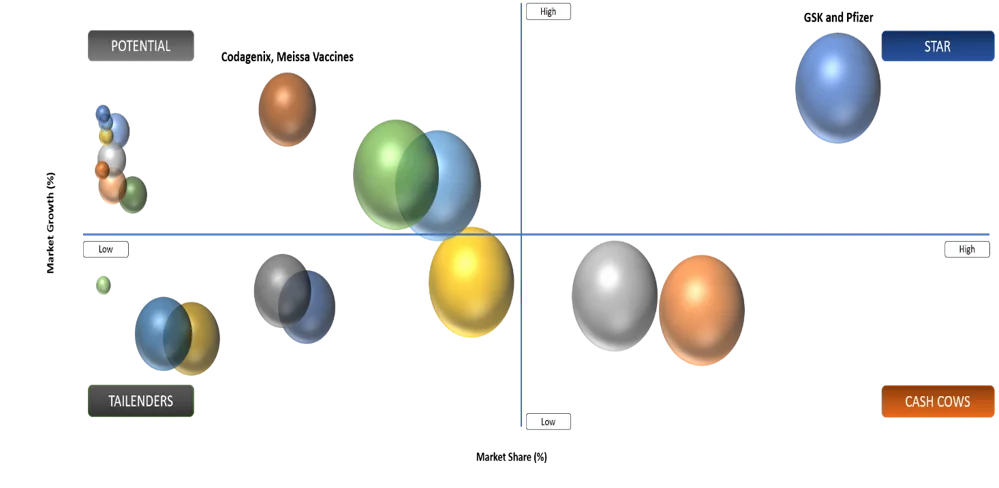
GSK and Pfizer fall into the Star category because the commercial market presence of Arexvy and Abrysvo in large adult RSV vaccination markets is well established. Their position is supported by regulatory approval, the existing provider and pharmacy supply chain, the growth of the older adult population eligible for vaccination and the additional maternal RSV vaccine label from Pfizer to protect babies. The presence of Moderna’s mResvia creates additional competitive pressure via its mRNA platform and growth into the adult market space, leading to higher reliance on differentiating products according to effectiveness, durability, safety, adoption and reimbursement.
POTENTIAL
The advancement of the RSV programme has built a considerable opportunity for Codagenix, Meissa Vaccines, Blue Lake Biotechnology and Virometix, as they focus on innovative vaccines instead of relying on existing commercial products. The market potential of these candidates hinges on their ability to establish clinical efficacy, seek regulatory approval, deliver sustained protection, permit manufacturing scalability and meet the needs of unaddressed demographics such as young adults, infants and populations worldwide.
RSV Vaccine Market Dynamics
Driver Impact Analysis
| Driver | Market Growth Impact (%) | Demand Concentration | Impacted Use Case | Strategic Impact |
| Expansion of Older-Adult RSV Vaccination | 35% | North America & Europe | Prevention of severe RSV disease in older adults | Expands the core commercial population and strengthens demand for adult RSV vaccines. |
| Growth of Maternal RSV Immunization | 25% | North America & Europe | Protection of infants through maternal vaccination | Creates a distinct maternal vaccination pathway and expands prenatal-care distribution opportunities. |
| Increasing RSV Disease Awareness & Diagnosis | 20% | North America, Europe & Asia-Pacific | RSV prevention among high-risk populations | Supports physician recommendation, patient awareness and vaccination uptake. |
| Expansion into Emerging Markets | 20% | Asia-Pacific, Latin America & Middle East & Africa | Adult and maternal RSV prevention | Creates long-term volume opportunities through national program adoption and expanded vaccine access. |
Driver: Expansion of RSV Vaccination Across Older Adults and Maternal Populations
The main factor impacting the market for RSV Vaccines is vaccination growth beyond the older adult community to include more groups with higher risk and maternal health initiatives. In the United States, it is recommended that people above the age of 75 and those aged between 50 and 74 and at risk receive RSV Vaccination, plus there is the opportunity for safety of babies through maternal vaccination with the help of Abrysvo. This will create the need for vaccinations in adult vaccination, prenatal services, pharmacies and community services which will provide more opportunities for production and distribution of vaccines.
Restraint Impact Analysis
| Restraint | Drag on Market Growth (%) | Primary Impact Area | Impacted Use Case | Strategic Impact |
| High Vaccine Acquisition Costs | 30% | Reimbursement & affordability | Adult and maternal vaccination programs | Limits adoption where public-health budgets and patient affordability are constrained. |
| Low Vaccination Uptake | 28% | Demand generation | Older-adult immunization | Reduces realized market potential despite expanding eligibility and vaccine availability. |
| Seasonal Demand Concentration | 22% | Inventory & supply planning | Pre-season adult vaccination | Creates forecasting challenges and increases the importance of seasonal manufacturing and distribution planning. |
| Evolving Clinical & Safety Evidence | 20% | Regulatory & market access | Repeat-dose and broader-population strategies | Requires continued evidence generation and may delay indication expansion or additional-dose adoption. |
Restraint: Low Realized Vaccination Uptake Among Eligible Adults
The key limitation is the discrepancy between the growing eligible population and the levels of RSV vaccination coverage in practice, especially in the older population and among those with comorbidities. Generally speaking, RSV vaccination is reliant on the season and on the factors triggered by a physician’s recommendation, awareness of patients, reimbursement and timely administration of the vaccination. That being said, merely changing regulations does not guarantee an increase in demand for the vaccine because of the difference in reimbursement and supply policies across the countries that adds more confusion to vaccine manufacturers seasonal volume planning.
RSV Vaccine Market Segment Analysis
The global RSV vaccine market is segmented based on the vaccine type, target population, age group, dose regimen, antigenic composition, end-user, distribution channel and region.
By Target Population
Older Adults Drive the Current RSV Vaccine Market
Older Adults were the prevailing target population segment in 2025, holding a market share of about 74.93%, owing largely to the susceptibility to the occurrence of RSV infections with a high probability of being hospitalized in this age group. The well-established recommendations for adults over 75 years and at increased risk adults aged 50-74 years in the leading markets have formed the largest pool for Arexvy, Abrysvo and mResvia vaccines.
By Target Population
Maternal Immunization Emerges as the Fastest-Growing Segment
The segment of pregnant women / maternal vaccination is growing at a rapid pace of about 20% CAGR as health systems adopt maternal vaccination strategies to give passive immunity to newborns during their early months of life. The segment is creating a distinct demand pathway through prenatal-care physicians, maternity hospitals and mass vaccination programs and growth is increasingly related to the implementation of programs, vaccination rates and awareness regarding the risk of RSV-related hospitalization in newborns.
RSV Vaccine Market Geographical Penetration
U.S. RSV Vaccine Market Landscape
The U.S. RSV vaccine market is the most commercially developed RSV vaccine market, with guidelines from the CDC recommending use of vaccines in adults 75 years and older and in those between 50 and 74 years who have a high risk of severe RSV disease. There are three FDA-approved adult vaccines available on the market namely GSK's Arexvy, Pfizer's Abrysvo and Moderna's mResvia, where CDC guidelines do not recommend preference of one vaccine over another. Abrysvo’s maternal indication provides an additional pathway for infant protection, while Medicare and private insurance provide coverage pathways for eligibility groups. Considering the fact that there are 42,000-76,000 annual cases of RSV-related hospitalizations among individuals over 65 years old, market growth will be increasingly influenced by vaccination uptake, provider recommendations, reimbursement and evidence of real-world effectiveness.
Japan RSV Vaccine Market Outlook
Japan RSV vaccine market is entering into a key expansion period due to wider eligibility criteria and the development of immunization avenues among adults and mothers. The Arexvy from GSK is eligible for all adults who are 60 years old and above along with those aged 50 to 59 years at high risk. This expansion in May 2026 makes this the first RSV vaccine in Japan which is available for adults between 18 and 49 years of age at high risk. In addition to that, Abrysvo from Pfizer is another avenue for growth since Japan sees its maternal RSV vaccine in the context of RSV prevention for infants and approves its use in the country’s routine immunization schedule starting April 2026.
China RSV Vaccine Market Trends
The China RSV vaccine market represents a developing high potential market, as a consequence of high burden of RSV disease in elderly patients, combined with progress in regulatory efforts towards adult RSV vaccination. GSK's Arexvy application for regulatory assessment was filed in February 2026 for adult use 60 years and older and upon regulatory approval, would become the first available adult RSV vaccine in China. The population 60 years and older in China is expected to suffer from more than 6 million cases of RSV infections each year, leading to more than 350,000 RSV infections, representing high unmet demand for prophylactic vaccination. Positive results of Phase III clinical trials regarding immunogenicity and safety of the vaccine in Chinese adults represent one of the factors supporting market prospects, while future market growth will rely on regulatory approval, pricing, reimbursement, physician recommendation and adoption among the rapidly aging population.
United Kingdom RSV Vaccine Market Analysis
UK RSV vaccine market is growing with more eligibility of NHS, maternal immunization and increased programme uptake, leading to the creation of multiple demand channels, not just limited to the 75-year-old group. From April 2026, there was an expansion of the older adult programme in England for people 80 years old and above and those staying in older adult care homes and further expansion of the programme from September 2026 to 65-74 year olds who are immunosuppressed and those with chronic respiratory diseases. The maternal immunization programme is another key channel for the UK market with 62.1% uptake of the RSV vaccine for women giving birth in April 2026. By July 2026, 63.2% of older adults had been vaccinated, but significant differences across regions and socio-economic classes suggest that there is still room for opportunity to improve coverage and expand vaccine utilization.
Germany RSV Vaccine Market Projection
Germany RSV vaccine market is forecasted to experience sustained growth driven by statutory coverage and STIKO guidelines targeting a wide population of older adults. As per STIKO guidelines, a one-time RSV vaccine is recommended for all adults aged 75 years and above, while adults aged between 60 and 74 with severe comorbidities and care home residents are indicated for vaccination on indication-based criteria. Currently, three RSV vaccines recommended for adults in Germany include Arexvy, Abrysvo and mResvia with no product preferences, hence creating competition between protein and mRNA vaccines. As vaccination is subsidized by statutory health insurance for the recommended groups of individuals, the future growth of the market will likely rely more on the vaccination rate, the recommendation of doctors, administering vaccines during the season and vaccinating adults aged 60-74 at a high risk.
RSV Vaccine Market Competitive Landscape
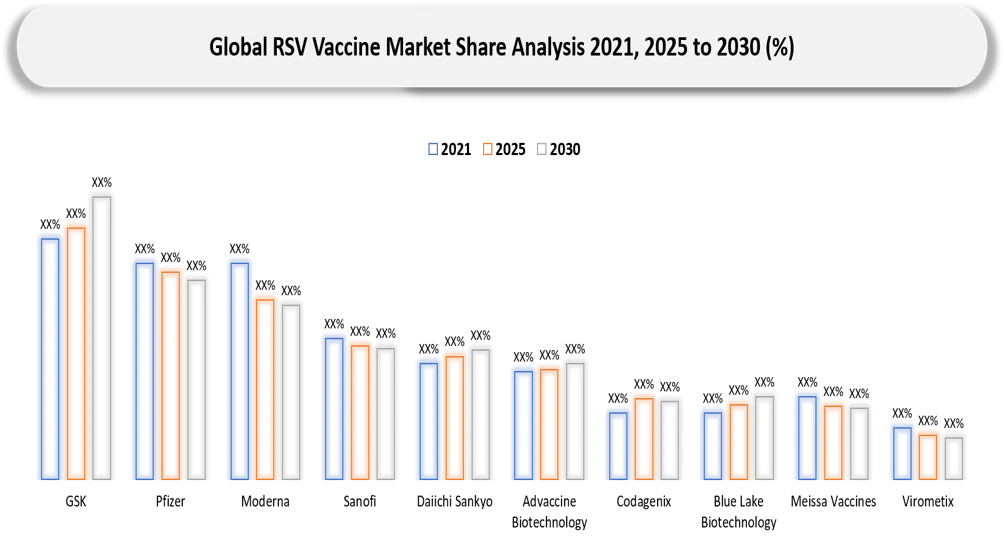
- Commercial players GSK, Pfizer and Moderna have emerged at the forefront with their products Arexvy, Abrysvo and mResvia by competing in the area of RSV adult vaccines on account of differences in vaccine technology, clinical data, safety and duration of efficacy.
- Maternal vaccines are carving out a separate competitive arena for themselves, with the Pfizer vaccine Abrysvo aimed for vaccinating pregnant mothers for protecting infants, whereas other players are concentrating mainly on adult immunizations.
- Product differentiation is moving towards practical performance, with companies creating proof of efficacy for prevention of emergency department visits and hospitalization related to RSV following launch to facilitate doctor endorsement and market entry.
- Country-level competition is greatly affected by how regulatory bodies and insurance handle the vaccines and other vaccines which lead to the demographic differences in eligibility and recommendations, public procurement procedures along with insurance coverage is shaping the potential eligible population for the specific vaccine.
- Developers of the next generation vaccines are looking for the areas of improvement for the existing market addressable segments including longevity of effect, coverage for age segment and a different platform for vaccine delivery which potentially introduces new level in competition as different products are being tested in the clinical trials.
Public Company Q1-Q2 2026 Performance Comparison
The following table provides a comparison of five publicly listed companies that have direct commercial or development-stage exposure to the RSV vaccine market. Financial parameters are stated on a company-wide basis, while RSV-specific parameters are included wherever separately disclosed. This allows comparison of overall corporate performance alongside each company's exposure to marketed or investigational RSV vaccines.
| Company | Q1–Q2 2026 Performance | RSV Vaccine Exposure | Key Performance Driver |
| GSK | H1 2026 revenue: US$21.65 billion, up approximately 3% reported / 5% CER. Q2 revenue was approximately US$11.35 billion. | Arexvy; Q2 2026 sales were approximately US$0.27 billion, up more than 100%. | Growth in Vaccines and Specialty Medicines, with strong Arexvy performance and expanded RSV eligibility in Japan. |
| Pfizer | H1 2026 revenue: US$29.48 billion, up 4% reported and 2% operationally; Q2 revenue was US$15.03 billion. | Abrysvo; H1 2026 revenue was US$388 million, up 42% reported / 38% operationally. | Growth in launched/acquired products and continued Abrysvo demand across adult and maternal vaccination. |
| Moderna | H1 2026 revenue: US$534 million, compared with US$250 million in H1 2025; Q2 revenue was US$145 million. | mResvia; RSV-specific revenue is not separately disclosed in the reported H1 results. | International vaccine sales, respiratory portfolio expansion and mResvia regulatory and procurement activity. |
| Sanofi | H1 2026 revenue: approximately US$25.86 billion, up 11.1% reported / 15.7% CER; Q2 revenue was approximately US$13.56 billion. | RSV vaccine development exposure through next-generation RSV/hMPV vaccine programmes rather than a marketed RSV vaccine. | Pharma launches, Dupixent growth and continued investment in vaccine and pipeline development. |
| Daiichi Sankyo | Q1 FY2026 revenue: approximately US$3.60 billion, up 21.1% year over year; reported operating profit was approximately US$0.53 billion. | VN-0200, an investigational RSV vaccine candidate. | Strong growth from Enhertu and Datroway, while RSV remains a pipeline exposure rather than a major disclosed revenue contributor. |
Note: Financial periods differ because companies follow different fiscal calendars. Company-level revenue should not be interpreted as RSV vaccine revenue unless separately disclosed. The comparison combines reported financial performance with RSV-specific commercial or pipeline exposure to assess each company's position in the RSV vaccine market.
Key Companies of RSV Vaccine Market
- GSK (United Kingdom)
- Pfizer (United States)
- Moderna (United States)
- Sanofi (France)
- Daiichi Sankyo (Japan)
- Advaccine Biotechnology (China)
- Codagenix (United States)
- Blue Lake Biotechnology (United States)
- Meissa Vaccines (United States)
- Virometix (Switzerland)
- Clover Biopharmaceuticals (China)
- EuBiologics (South Korea)
- Immorna (United States)
- CSPC Pharmaceutical Group (China)
- Maxvax Biotechnology (China)
- Baiyiwuyou (China)
- Innorna (Shenzhen Shenxin Biotechnology) (China)
- Guangzhou Patronus Biotech (China)
- Suzhou Abogen Biosciences (China)
- Bavarian Nordic (Denmark)
Company Profiles
GSK
GSK is one of the prominent producers of RSV vaccines with Arexvy, which is an adjuvanted recombinant prefusion F-protein vaccine that has been approved for use among older adults and some at-risk adults. It is also developing the use of Arexvy among other adult age categories, as well as growing its RSV pipeline.
Key competitive priorities include increasing penetration among eligible adult populations, gathering evidence on real world effectiveness, sustaining differentiation through the adjuvanted technology and market access through reimbursement and national immunization programs.
Pfizer
Pfizer is involved in RSV vaccinations for adults and mothers using Abrysvo, which is an RSV recombinant prefusion F-protein vaccine. The maternal indication for this vaccine gives Pfizer a unique competitive advantage since this makes it possible to vaccinate mothers during their pregnancy to give their babies protection after birth up to six months.
Competitive priorities for this vaccine involve increasing the uptake of adult and maternal programmes, building evidence in various populations, increasing uptake among doctors and prenatal care and competing on access and efficacy of the vaccine.
Moderna
The company participates in the adult RSV vaccines market segment through its product mResvia, which is a mRNA-based vaccine. The mRNA technology platform used for mResvia differentiates it from the recombinant protein vaccines used by GSK and Pfizer. Moderna is also researching the applicability of RSV vaccines in other areas than its adult focus area.
Priorities for competition include exploiting mRNA manufacturing capabilities, showing resilience and efficacy, extending the range of respiratory vaccines and increasing commercial penetration among eligible adult populations.
Sanofi
The company Sanofi has been actively involved in developing its vaccine strategy for RSV and this is especially targeted towards pediatric and next generation respiratory protection with particular emphasis on its live attenuated RSV vaccine program and mRNA technology program. The pediatric program is centered on intranasal vaccination and is being studied among babies and toddlers.
Competitive priorities for the company include clinical development of pediatrics, safety and efficacy in children, scalable manufacturing processes and using its portfolio for respiratory health.
Daiichi Sankyo
There is ongoing development of an RSV vaccine using a protein approach by Daiichi Sankyo, with clinical development efforts focusing on older-adult individuals. The program offers another Japanese pharmaceutical company competing in a field where adult RSV vaccination has been growing for different ages and risks.
Competitive priorities will include clinical development, proof of immunogenicity/protection in elderly people, regulatory approval and commercial positioning versus current recombinant and mRNA vaccines.
Codagenix
CodaVax-RSV is being developed by Codagenix as an intranasal live attenuated RSV vaccine through the application of its synthetic biology technology. This vaccine program will be assessed for pediatric uses and will induce mucosal and cellular immune responses. It offers a promising alternative to existing vaccines that use injection of proteins or mRNA.
Competitive advantages are improving clinical trials involving children, showing efficacy and safety in children, demonstrating intranasal delivery and scaling up production to accommodate more people.
Meissa Vaccines
The Meissa Vaccines company is creating MV-012-968, which is a live attenuated RSV vaccine to be administered via nasal route based on the genetically engineered RSV platform. MV-012-968 is already at Phase II stage and is under development for both pediatric and other indications.
The main competition priorities are proving the efficacy of protection, defining the safety profile of live attenuated vaccine, further pediatric development and differentiation of intranasal immunization from injectable RSV vaccines.
Blue Lake Biotechnology
BLB201 by Blue Lake Biotechnology is an intranasal RSV vaccine based on PIV5 expressing full-length RSV F protein. The focus of this company’s development is on pediatric and elderly patients, while their live-vector vaccine is designed to overcome certain limitations of conventional protein-based and mRNA vaccines for use in children.
Competitive priorities are pediatric clinical development, demonstration of protection via intranasal delivery, advantages of the PIV5 platform and production scale-up for pediatric vaccination programs.
Virometix
V-306 is a RSV vaccine candidate that is being developed by Virometix using its proprietary synthetic virus-like particles technology. The vaccine candidate expresses the neutralizing epitope of the RSV F protein and has shown safety, tolerability and immunogenicity during Phase I clinical trials.
Competitive considerations include moving V-306 towards later stage development, demonstrating durability and broad immunity, validation of the synthetic particle platform and economics of manufacturing.
Innorna (Shenzhen Shenxin Biotechnology)
The IN006 vaccine, which is a bivalent mRNA RSV vaccine that works against both RSV-A and RSV-B through prefusion F-protein, is being produced by Innorna. The company had enrolled and administered the vaccine to patients in the Phase II clinical trials in September 2025, making the IN006 an emerging Chinese RSV vaccine programme.
Competition strategy should focus on the development of Phase II, providing protection against both RSV-A and RSV-B, regulatory development in China and utilization of domestic mRNA production facilities.
RSV Vaccine Market Major Pain Points
- Low Adult Vaccination Uptake - inadequate information on RSV risks and lack of recommendation by doctors is hindering vaccine uptake by eligible adults.
- Pricing and Reimbursement Barriers - cost of procurement of vaccines, disparity in payers’ coverage and need for reimbursement can impact cost-effectiveness of RSV vaccines.
- Seasonal Demand Concentration - association between the timing of vaccinations and RSV outbreaks makes it difficult to forecast and plan supply as well as provide pre-season vaccination.
- Fragmented Eligibility and Delivery Pathways - age cut-off criteria, risk-based recommendations, maternal programs, health care settings and national policies make market entry and vaccine administration challenging.
- Limited Long-Term Evidence - recent development and commercialization of vaccines raises questions about the longevity of immunity and the need for revaccinations.
RSV Vaccine Market Recent Developments
- CSPC Pharmaceutical Group - August 2026: CSPC noted that its SYS6057 recombinant RSV vaccine has been approved for clinical trials by the FDA of the United States on August 25, 2026 after getting approval from China on July 30, 2026. This vaccine is based on pre-fusion F-protein antigen with second-generation nano-adjuvant system.
- Moderna - August 2026: The United States FDA approved mResvia on August 7, 2026 with a approval letter, which is a regulatory development pertaining to the marketed mRNA RSV vaccine.
- GSK - July 2026: GSK reported that Arexvy sales have reached £0.2 billion in Q2 2026, up by over 100%, in addition to noting the expanded approval of Arexvy in Japan for adults aged 18-59 years who are at higher risks of developing RSV.
- EuBiologics - July 2026: EuBiologics announced that the company’s EuRSV vaccine has completed phase 1 clinical trials in South Korea, with safety and immunogenicity observed in 100 healthy adults aged 19-80 years and immunity lasting for 52 weeks.
- RSV Vaccine Program in the UK - July 2026: Guidance was issued by the UK government for expansion of RSV vaccination to 65 to 74 year old patients who have specific clinical risk factors and thus increase the pool of eligible RSV patients.
Analyst View / Opinion on RSV Vaccine Market
- The adult population remains the main source of commercial sales revenues, driven by recommendations targeting an aging population and at-risk patient groups in major geographies.
- Maternal immunization offers an entirely distinct business model, in that RSV vaccine sales are linked to pregnancy care delivery and prevention of diseases among infants rather than adults.
- The nature of competition has evolved past just the approval of the vaccines, with Arexvy, Abrysvo and mResvia competing on the basis of the technology used, safety, effectiveness and target market positioning.
- Vaccine utilization would become more of a determining factor in terms of commercialization than just eligibility alone, thus recommendation by doctors, cost coverage, distribution through pharmacies, seasonal administration and awareness are essential.
- Effectiveness of real world experience and period of protection would play an important role in product positioning and dosing strategy in the future, as post-launch data accumulates for adults at-risk.
RSV Vaccine Market Target Audience
| INDUSTRY | WHO SHOULD BUY THIS REPORT? | REASON TO BUY THIS REPORT |
| Vaccine & Pharmaceutical Manufacturers | RSV vaccine manufacturers and vaccine portfolio managers | Evaluate competitor positioning, product performance, pipeline development and market expansion opportunities. |
| Biotechnology | RSV vaccine developers and emerging vaccine technology companies | Identify opportunities in next-generation RSV vaccine platforms, durability and differentiated formulations. |
| Contract Development & Manufacturing | Vaccine-focused CDMOs and biologics manufacturers | Assess future manufacturing demand, production capacity requirements and partnership opportunities. |
| Healthcare Providers | Hospitals, health systems and vaccination networks | Understand RSV vaccination demand across older adults, high-risk populations and maternal immunization. |
| Retail Pharmacy | Pharmacy chains and vaccination service providers | Evaluate opportunities created by pharmacy-based adult RSV vaccination and seasonal demand. |
| Government & Public Health | Health ministries and national immunization programs | Support RSV vaccine procurement, budget planning, population targeting and program implementation. |
| Payers & Insurers | Health insurers and reimbursement decision-makers | Assess reimbursement requirements, cost-effectiveness and the economic impact of RSV vaccination. |
| Investors & Private Equity | Healthcare investors and life-science investment funds | Identify high-growth vaccine segments, emerging technologies, companies and regional opportunities. |
| Distribution & Cold-Chain | Vaccine distributors and specialized healthcare logistics providers | Assess seasonal distribution requirements, inventory planning, cold-chain needs and regional supply opportunities. |
| Healthcare Consulting & Market Intelligence | Pharmaceutical consultants, strategy firms and market intelligence teams | Support market-entry, competitive benchmarking, commercialization, pricing and geographic expansion strategies. |
Why Choose DATAM?
- Data-Driven insights: Dive into detailed analyses with granular insights such as pricing, market shares and value chain evaluations, enriched by interviews with industry leaders and disruptors.
- Post-Purchase Support and Expert Analyst Consultations: As a valued client, gain direct access to our expert analysts for personalized advice and strategic guidance, tailored to your specific needs and challenges.
- White Papers and Case Studies: Benefit quarterly from our in-depth studies related to your purchased titles, tailored to refine your operational and marketing strategies for maximum impact.
- Annual Updates on Purchased Reports: As an existing customer, enjoy the privilege of annual updates to your reports, ensuring you stay abreast of the latest market insights and technological advancements. Terms and conditions apply.
- Specialized Focus on Emerging Markets: DataM differentiates itself by delivering in-depth, specialized insights specifically for emerging markets, rather than offering generalized geographic overviews. The approach equips our clients with a nuanced understanding and actionable intelligence that are essential for navigating and succeeding in high-growth regions.
- Value of DataM Reports: Our reports offer specialized insights tailored to the latest trends and specific business inquiries. The personalized approach provides a deeper, strategic perspective, ensuring you receive the precise information necessary to make informed decisions. The insights complement and go beyond what is typically available in generic databases.
What DATAM Uniquely Provides
- Population-Level Demand Mapping for older adults, high-risk adults and maternal immunization to determine the commercially most attractive RSV vaccination populations.
- Country-Level Immunization Policy Analysis for age eligibility criteria, approval status, reimbursement policies, official recommendation and expansion plans in key RSV markets.
- Vaccine Platform & Competitor Comparison between Arexvy, Abrysvo and mResvia on various platforms such as technology, target audience, clinical studies and safety concerns.
- Vaccination Adoptions & Market Access Intelligence associating adoption, physician recommendation, procurement methods, reimbursement and seasonal administration with actual market access.
- White-Space & New Opportunity Assessment focusing on underpenetrated adult segments, maternal vaccinations, expansion in emerging countries and next generation of RSV vaccines.


























































