


Ring Main Unit Market Size & Forecast 2035
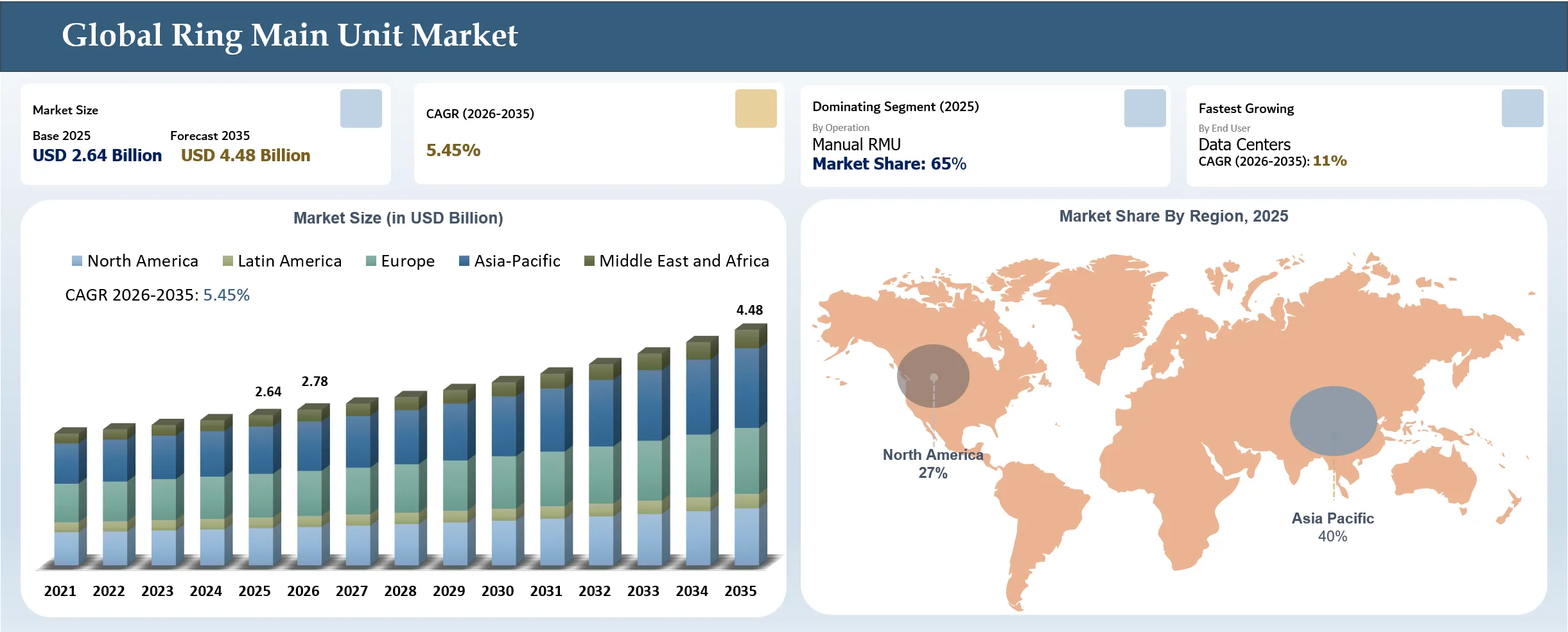
The global Ring Main Unit market size reached USD 2.64 billion in 2025 and is forecasted to reach USD 4.48 billion by 2035, growing with a CAGR of 5.45% during the forecast period 2026- 2035. The market expansion is driven by rising investments in electricity distribution infrastructure, since the demand for global electricity increased by about 3% in 2025, as stated by the International Energy Agency (IEA). The increasing incorporation of renewable sources of energy is also contributing to RMU adoption, as 692 GW of new renewable capacity was added in 2025, as the International Renewable Energy Agency (IRENA) reported, which has led to the need for more efficient and reliable grid connections, distribution automation, and switches. The utilities have also started using intelligent and eco-friendly RMUs with digital technologies, while the EU F-gas Regulation, which came into effect in 2025, is pushing utilities to replace switchgear based on SF₆ with SF₆-free alternatives. Major companies, such as Schneider Electric, Hitachi Energy, Siemens AG, and ABB Ltd., are launching innovative digital and eco-efficient RMUs to meet the changing demands of utilities. Nonetheless, the high cost of installation, difficult retrofit process, and tight compliance with the medium-voltage standards are impeding market expansion.
The rising shift to SF₆-free medium voltage gear is driving innovation in the Ring Main Units (RMU) industry due to increasing environmental concerns, regulatory requirements, and digitization of the electricity grid. In August 2026, according to EQ Mag Pro, Schneider Electric, together with BSES Rajdhani Power Limited (BRPL), launched India's first SF₆-free Smart Ring Main Unit (RMU) pilot project to promote cleaner and more sustainable medium-voltage power distribution. The pilot makes use of the RM AirSeT solution by Schneider Electric that uses clean air insulation in place of SF₆ gas, enabling utilities to reduce GHG emissions as well as improve the reliability of the grid via digitalization and smart automation. This is an important step towards faster adoption of eco-friendly RMUs in India’s power distribution system.
White-Space Opportunities for Ring Main Unit (RMU) Driven by European Union Recovery and Resilience Facility (RRF) Clean Energy Investments
In October 2025, the European Union's Recovery and Resilience Facility (RRF) is creating significant opportunities for the Ring Main Unit (RMU) Market by accelerating investments in electricity distribution infrastructure, renewable energy integration, and grid digitalization. Among all energy-related measures, energy efficiency receives the highest investment, with USD 86.9 billion (€75.4 billion) allocated for residential and public building renovations and USD 14.0 billion (€12.1 billion) for industrial energy efficiency, supporting the electrification and modernization of low- and medium-voltage distribution systems. Additional investment areas include USD 30.4 billion (€26.4 billion) for renewable energy deployment, USD 28.4 billion (€24.6 billion) for electricity networks, smart grids, battery storage, and smart metering, and more than USD 11.5 billion (€10 billion) for hydrogen infrastructure and renewable hydrogen projects. The RRF will also support the development and modernization of over 10,000 km of electricity transmission and distribution networks and enable the integration of 61 GW of new renewable energy capacity across Europe. These investments will drive extensive deployment of Ring Main Units (RMUs) for underground cable networks, secondary substations, renewable energy interconnections, industrial parks, commercial buildings, and urban power distribution projects, particularly across Italy, Spain, France, Poland, Portugal, and the Czech Republic.
The investment program is expected to create substantial procurement opportunities across the Ring Main Unit value chain. RMU and medium-voltage equipment manufacturers including Schneider Electric, Siemens, ABB, Hitachi Energy, Eaton, Lucy Electric, Ormazabal, CG Power and Industrial Solutions, GE Vernova, and HD Hyundai Electric are well positioned to benefit from rising demand for SF₆-free Ring Main Units, gas-insulated and air-insulated RMUs, medium-voltage switchgear, digital secondary substations, protection relays, transformers, and distribution automation solutions required for grid expansion and renewable energy integration. Grid technology suppliers such as Schneider Electric, Siemens, Hitachi Energy, ABB, and GE Vernova are expected to benefit from investments in smart grids, grid automation, and distribution management systems, while EPC and electrical infrastructure companies including VINCI Energies, Bouygues Energies & Services, Ferrovial, Sacyr, Jacobs, and AECOM are likely to secure contracts for substation construction, distribution network modernization, underground cable installations, renewable energy grid connections, and smart distribution infrastructure. These investments will accelerate the replacement of aging medium-voltage equipment and significantly increase demand for compact, digital, and environmentally friendly SF₆-free RMUs across European utility and industrial distribution networks.
Ring Main Unit Market Strategic Takeaways
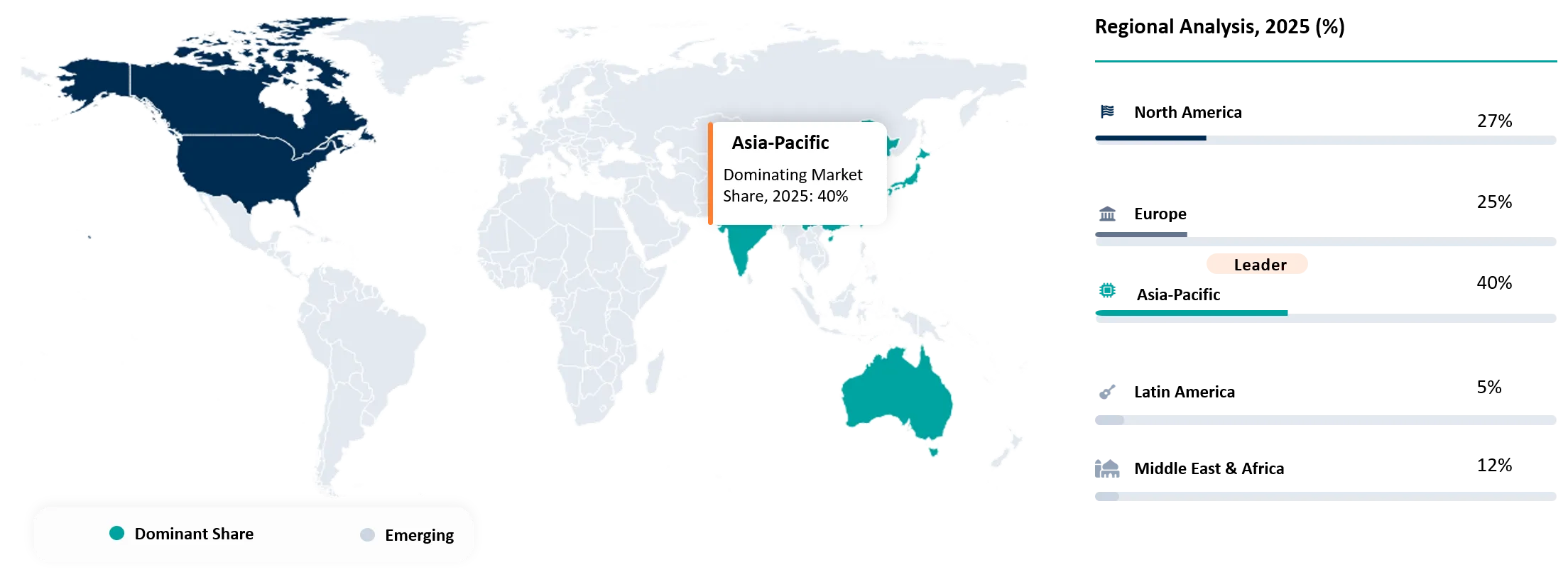
- Asia-Pacific holds the largest share of the global RMU market at approximately 40% in 2025. North America accounts for the second-largest market share at approximately 27% in 2025.
- Manual RMUs dominated the market by operation type, holding a 65% market share in 2025. Schneider Electric alone reported exceeding 2.5 million installed medium-voltage RMU modules globally by 2025.
- Global electricity demand grew by approximately 3% in 2025, boosting distribution switchgear expansion. Concurrently, the International Renewable Energy Agency reported 692 GW of new renewable capacity added globally in 2025.
- The EU Recovery and Resilience Facility allocated USD 86.9 billion (€75.4 billion) for building energy efficiency and USD 14.0 billion (€12.1 billion) for industrial efficiency. It also dedicated USD 30.4 billion (€26.4 billion) to renewable energy deployment alongside USD 28.4 billion (€24.6 billion) for electricity networks, smart grids, and storage.
Ring Main Unit Market Industry Trends and Strategic Insight
- Utilities are moving from conventional manually operated RMUs toward digitally connected RMU platforms integrated with remote monitoring, fault passage indicators, IoT sensors, SCADA communication, and advanced protection systems.
- Aging electricity distribution infrastructure across developed economies is driving replacement and retrofit activities, while emerging economies are expanding medium-voltage networks to support urban electrification. RMUs are becoming critical components in underground distribution systems, smart cities, industrial parks, and utility modernization projects due to their compact footprint and network reliability benefits.
- The rapid deployment of solar farms, wind power projects, battery energy storage systems, and microgrids is increasing the requirement for reliable medium-voltage switching and protection equipment.
- Urbanization and increasing underground power distribution requirements are driving demand for compact RMU configurations that provide high switching reliability within limited installation areas.
- RMU manufacturers are increasingly establishing regional production capabilities and strengthening supplier networks to reduce lead times, meet local content requirements, and improve service support.
Ring Main Unit Market Scope
| Metrics | Details | |
| 2025 Market Size | USD 2.64 Billion | |
| 2035 Projected Market Size | USD 4.48 Billion | |
| CAGR (2026Ring Main Unit2035) | 5.45% | |
| Largest Market | Asia-Pacific | |
| Fastest Growing Market | Asia-Pacific | |
| By Insulation Type | Gas-Insulated Ring Main Unit (GIS RMU), Air-Insulated Ring Main Unit (AIS RMU), Solid Dielectric Insulated Ring Main Unit, Others | |
| By Installation | Indoor, Outdoor | |
| By Voltage | Up to 11 kV, 11 kV–24 kV, 25 kV–36 kV | |
| By Component | Load Break Switch RMU, Fuse-Protected RMU, Circuit Breaker RMU, Switch Disconnector RMU, Others | |
| By Operation | Manual RMU, Motorized / Automated RMU | |
| By End User | Power Utilities, Industrial, Commercial, Data Centres, Transportation, Renewable Energy, Telecommunications, Water & Wastewater, Government & Défense, Others | |
| By Region | North America | U.S., Canada, Mexico |
| Europe | Germany, UK, France, Spain, Italy, Poland | |
| Asia-Pacific | China, India, Japan, Australia, South Korea, Indonesia, Malaysia | |
| Latin America | Brazil, Argentina | |
| Middle East and Africa | UAE, Saudi Arabia, South Africa, Israel, Türkiye | |
| Report Insights Covered | Competitive Landscape Analysis, Company Profile Analysis, Market Size, Share, Growth | |
Ring Main Unit Market Disruption Analysis
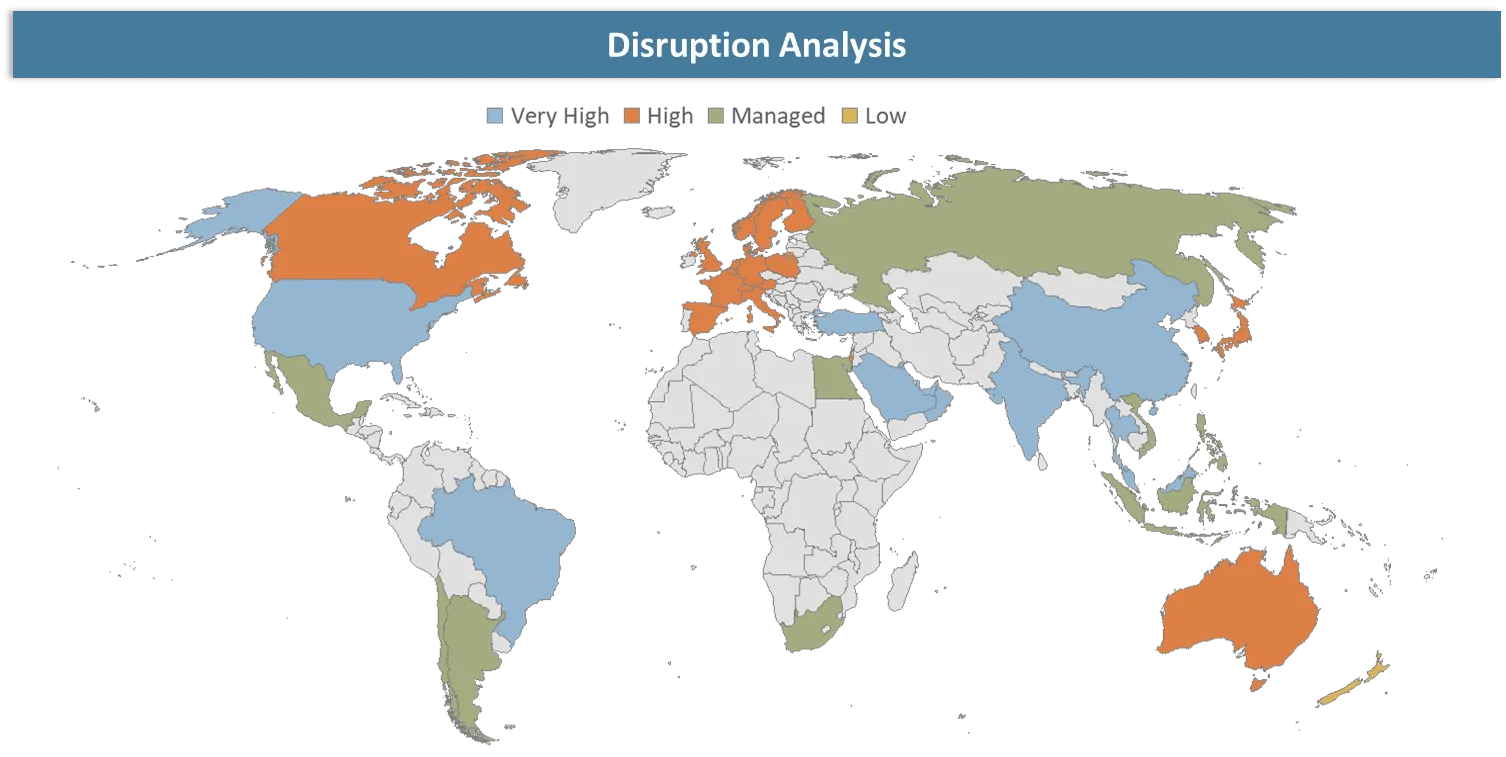
Digitalization and Smart Grid Integration Transforming Medium-Voltage Distribution Networks
The primary disruption in the Ring Main Units (RMUs) Market has been driven by the rapid shift from conventional switchgear systems toward intelligent, connected, and automation-enabled RMU solutions. This transition has been made possible through the development of digital RMU systems that are fitted with IoT sensor technology, IEDs, remote monitoring tools, SCADA, and protection solutions to make sure utilities have real-time network visibility and quicker fault detection capabilities. The increasing level of complexity in current electrical networks is playing an important role in this trend, as operators prefer using predictive maintenance, automated fault isolation, and asset management over manual inspection processes. As per the International Energy Agency (IEA), over 2,500 GW of renewable generation, large load, and energy storage projects were pending grid connection queues in 2026.
The expansion of distributed energy resources, renewables integration, electric mobility, and digital infrastructures is also influencing the demand for RMUs as it has raised the need for flexible and remotely controllable medium-voltage equipment. According to the International Energy Agency (IEA), meeting electricity demand growth through 2030 will require annual grid investments to increase by about 50%, making it reach the mark of around 400 billion USD from the current level. In this way, the investments in the field are paving the way for utilities and infrastructure to go for digital RMUs, which would facilitate automation and monitoring. In this scenario, companies such as Schneider Electric, Hitachi Energy, Siemens, and ABB are also changing their product strategies for RMUs towards connectivity- and automation-ready solutions.
Ring Main Unit Market BCG Matrix: Company Evaluation

Stars include ABB Ltd., Schneider Electric, and Siemens AG because these companies hold strong positions in the global Ring Main Unit (RMU) market through extensive medium-voltage switchgear portfolios, strong utility partnerships, and continuous investment in smart RMUs, SF₆-free technologies, and digital grid solutions. These companies are leading the transition toward intelligent distribution networks by integrating remote monitoring, automation capabilities, and sustainable insulation technologies into their RMU offerings. Question Mark category companies such as Eaton Corporation plc, Lucy Group Ltd., and Ormazabal are positioned because they possess strong technological capabilities and established positions in medium-voltage distribution equipment but operate in a highly competitive environment dominated by larger electrification companies.
The Potential category includes LS Electric Co., Ltd., Fuji Electric Co., Ltd., Toshiba Energy Systems & Solutions Corporation, and CHINT Group, as these companies benefit from increasing demand for medium-voltage distribution equipment across Asia-Pacific, renewable energy projects, and industrial infrastructure development. These players have strong regional manufacturing capabilities and growing RMU product offerings but have comparatively lower global penetration and brand influence than leading European and North American electrification companies. Tailenders include TGOOD Global Ltd. and ENTEC Electric & Electronic Co., Ltd. because their RMU businesses are more concentrated in specific regional markets or specialized distribution applications compared with global RMU leaders.
Ring Main Unit Market Dynamics
Driver Impact Analysis
| Driver | Market Growth Impact (%) | Demand Concentration | Impacted Use Case | Strategic Impact |
Expansion of medium-voltage distribution networks driven by rising electricity demand, urbanization, and grid infrastructure development is accelerating RMU deployment. | 30% | Asia-Pacific, Middle East & Africa, and Latin America due to rapid urban expansion, electrification programs, and new distribution infrastructure projects. | Electric utilities, urban power distribution networks, commercial complexes, industrial parks, and infrastructure projects. | Increases demand for compact and reliable RMU solutions, encouraging manufacturers to expand medium-voltage product portfolios and strengthen regional manufacturing capabilities. |
Increasing investments in smart grid modernization are driving demand for intelligent RMUs. | 25% | Europe, North America, and developed Asia-Pacific markets where utilities are implementing digital grid automation and remote monitoring systems. | Smart grids, automated distribution networks, utility substations, renewable energy integration, and critical infrastructure. | Accelerates adoption of digital RMUs with IoT sensors, SCADA compatibility, remote operation, and predictive maintenance capabilities, shifting RMUs from passive equipment to intelligent grid assets. |
Replacement of aging electrical distribution infrastructure in developed markets is creating demand for advanced and efficient RMU systems. | 20% | North America and Europe, where aging medium-voltage networks require modernization, replacement, and reliability improvements. | Utility distribution networks, underground cable systems, industrial power networks, and municipal infrastructure. | Creates long-term replacement demand and drives preference toward advanced RMUs offering improved reliability, lower maintenance requirements, and enhanced operational efficiency. |
Rising adoption of SF₆-free and sustainable switchgear technologies is accelerating the development and deployment of environmentally compliant RMU solutions. | 20% | Europe, North America, and environmentally regulated markets adopting low-carbon electrical infrastructure standards. | Utility networks, renewable energy projects, commercial buildings, and sustainable infrastructure developments. | Pushes manufacturers toward eco-efficient RMU innovation, including pure-air insulation, vacuum technology, and solid dielectric solutions to meet regulatory requirements. |
Growth of distributed energy resources and microgrid deployments is creating demand for flexible RMU solutions capable of managing decentralized power networks. | 15% | Asia-Pacific, North America, and Europe due to expansion of renewable generation, battery storage, and decentralized energy systems. | Solar farms, wind projects, battery energy storage systems (BESS), microgrids, industrial campuses, and remote power networks. | Expands RMU applications beyond conventional utilities and increases demand for flexible, automated, and remotely controllable medium-voltage switching solutions. |
Increasing investments in smart grid modernization are driving demand for intelligent RMUs
The increasing deployment of smart grid network systems is accelerating demand for intelligent RMUs that can effectively help build automatic distribution systems, remotely control distribution systems, and monitor them in real-time. From traditional distribution systems, utilities have started migrating towards digitized distribution systems to make their operations more reliable and less costly while giving them operational visibility. As per the International Energy Agency (IEA), digital transformation of the global electricity grids has become essential due to the increased demand for electricity coming from data centers, electrification, and renewable sources, with an expected doubling of global data center electricity consumption by 2030 compared to 2024.
Rising investments in smart grids and digitizing distribution systems are accelerating the adoption of intelligent power devices that ensure high reliability, automation, and efficiency of the grid system. In July 2026, as per Switchgear Magazine, the Indian Government launched a Smart Pad Mounted Substation at Gandhi Nagar (Delhi). In order to modernize the urban power distribution infrastructure, this compact smart substation is installed and utilizes a SCADA system for its real-time monitoring and faster fault detection. It takes 80% less space than the traditional substation, which makes it to be used in dense urban areas where land is scarce. In addition, the government of Delhi emphasized that during the last year, an investment of INR 1,427 crore (USD 148 million) has been made by the government in the power sector that will aid the construction of new substations, strengthen the grid, upgrade the old infrastructure, and implement smart grids.
Restraint Impact Analysis
| Restraint | Drag on Market Growth (%) | Primary Impact Area | Impacted Use Case | Strategic Impact |
Complex installation, integration, and maintenance requirements for digitally enabled RMUs can create deployment challenges, particularly in developing markets. | 12% | Deployment complexity, skilled workforce availability, and integration costs | Smart grid projects, utility distribution automation, and remote monitoring-enabled RMU installations | Slows adoption of intelligent RMUs by increasing project timelines, engineering requirements, and lifecycle service costs, particularly in emerging markets. |
Stringent regulatory requirements & evolving standards for medium-voltage switchgear can increase compliance costs and prolong product approval timelines. | 10% | Certification, testing requirements, and product development costs | Utility-grade RMU installations, renewable energy interconnection, and critical infrastructure projects | Increases time-to-market and compliance expenses while favoring established manufacturers with strong testing and certification capabilities. |
Competition from alternative medium-voltage switchgear configurations, including conventional switchgear panels and compact substations, can constrain RMU adoption in certain applications. | 8% | Technology preference, procurement decisions, and application suitability | Industrial facilities, commercial buildings, and decentralized power distribution networks | Limits RMU penetration where customers prioritize lower-cost conventional solutions or integrated compact substation alternatives. |
Slow replacement cycles of existing RMU installations due to long equipment lifespans can reduce immediate demand growth in mature markets. | 10% | Replacement demand, retrofit adoption, and infrastructure upgrade cycles | Established utility networks, urban electricity distribution, and aging grid infrastructure modernization | Restricts short-term market expansion by delaying replacement investments and shifting demand toward selective upgrades and retrofit solutions. |
Complex installation, integration, and maintenance requirements for digitally enabled RMUs can create deployment challenges, particularly in developing markets
One of the major restraints affecting the adoption of digitally powered Ring Main Units (RMUs) is the level of intricacy involved in their installation, integration, and maintenance over the lifecycle of use. Modern RMUs fitted with automation technology, remote monitoring functionality, smart protective devices, and communication modules have to be seamlessly integrated with existing utility grids, SCADA systems, and distribution management systems. Emerging markets still maintain older distribution infrastructures and face the need to integrate advanced RMU solutions, which necessitates further network modifications and specialist engineers.
Intelligent RMUs are contributing to better automation, monitoring, and efficiency in power distribution networks for utilities. In August 2025, according to RW Energy, the Kenya 11 kV Ring Main Unit (RMU) Controller Intelligent Retrofit Study highlights the digitalization of an existing medium-voltage distribution network by means of intelligent RMU retrofitting. The study describes the process of installing the Three-Remote feature into the 11 kV RMU network using FTU/DTU distribution terminal units, wireless communication devices, and encrypted gateways. The project was launched in 2023 in urban and suburban areas in Kenya and is designed to operate at a rated voltage of 11 kV and frequency of 50 Hz. The result of the RMU intelligent retrofit was real-time monitoring of current, voltage, switching device status, and RMU condition; telemetry accuracy was ≤0.5%, remote control reaction time was ≤50 ms, protection reaction time was ≤50 ms, and action accuracy was 100%.
Ring Main Unit Market Segment Analysis
The global Ring Main Unit market is segmented based on insulation type, installation, voltage, component, operation, end user, and region.
Manual RMU Dominance Driven by Extensive Deployment in Conventional Medium-Voltage Distribution Networks
The Manual RMU segment holds a dominant position in the Ring Main Unit (RMU) Market by operation type, with a market share of around 65% in 2025, because of the extensive use of such RMUs within the traditional medium-voltage electric power distribution network. Manual RMUs continue to be favored by utilities and industrial organizations owing to their economic, ease-of-use, reliability, and compatibility characteristics with existing distribution networks. Although automated RMUs are becoming popular due to their advanced features, manual RMUs still find considerable application in the distribution network around the world.
The continued relevance of manual RMUs is reflected by the large-scale deployment of RMU systems in the market by prominent vendors. In 2025, Schneider Electric reported that its RMU portfolio had surpassed 2.5 million installed MV RMU modules globally, emphasizing the sizeable installation base of traditional and intelligent RMU systems in secondary distribution grids. Further, ABB is still providing SafeRing and SafePlus RMU platforms for secondary distribution grids such as utilities, industries, transportation, renewable energy, and data centers, emphasizing the importance of miniaturized RMU systems in medium voltage networks. Although there is an increasing acceptance of automated RMUs owing to smart grid upgrades, manual RMUs remain highly prevalent due to ease of deployment and cost benefits.
Ring Main Unit Market Geographical Penetration
Grid Modernization and Renewable Energy Expansion Driving Asia-Pacific RMU Market Leadership
Asia-Pacific holds a dominant position in the Ring Main Unit (RMU) Market, accounting for approximately 40% market share in 2025, driven by rapid development of the electricity distribution network, increasing urbanization, increased utilization of renewable energy sources, and modernization of medium voltage distribution systems in China, Japan, South Korea, and Southeast Asia. The presence of robust utilities in the region, along with its increasing industrialization and growing demand for efficient power distribution systems, has been driving the uptake of RMUs in various applications, including secondary substations, commercial applications, renewable energy projects, and industries.
With the rising trend of sustainable energy distribution, there is a quick move towards SF6-free ring main units (RMUs) to achieve low carbon emissions through an efficient medium voltage system. In March 2025, Schneider Electric, a French-based energy management and industrial automation company, collaborated with Tata Power Company Limited, an India-based integrated power utility company, to deploy 11 kV SF₆-free Ring Main Units (RMUs) utilizing the RM AirSeT solution of Schneider Electric in Mumbai and Delhi, India. The objective behind such a collaboration is to replace the traditional SF₆ RMUs with pressurized air-insulated RMUs in order to ensure the provision of sustainable medium-voltage power distribution. It will result in up to 75% lower carbon footprint in comparison to conventional SF₆ RMUs and up to 50% lower lifecycle costs.
China Ring Main Unit Market Trends
China holds a dominant position in the Asia-Pacific Ring Main Unit Market because of the well-developed power distribution systems, the scale of the grid renewal activities, fast implementation of renewable sources, and the need for medium voltage switchgear. The country boasts an immense power transmission and distribution system along with increasing investment in smart grid and electricity infrastructure projects that lead to the extensive use of RMUs. The presence of such companies as State Grid Corporation of China and China Southern Power Grid allows for the continuous implementation of medium voltage distribution systems.
The increasing demand for environmentally sustainable medium-voltage distribution devices is driving the growth of SF₆-free Ring Main Units (RMUs) in China. In May 2026, Rockwill, a China-based medium-voltage switchgear and electrical equipment manufacturer, launched its 24 kV Dry Air Ring Main Unit (RMU), a compact SF₆-free air-insulated solution designed specifically for sustainable medium-voltage power distribution applications. The new RMU is built using 100% dry pure air insulation technology with zero Global Warming Potential (GWP=0) without the need for fluorinated gases. Rated parameters of the product include voltage of 24 kV, current of 630 A, short-time withstand current of 20 kA/3s, and rated frequency of 50 Hz. Its compact size includes a single functional unit of 325 mm and overall dimensions of the three-unit configuration of 1,330 mm × 975 mm × 780 mm, enabling deployment in space-constrained applications.
Japan Ring Main Unit Market Outlook
Japan is one of the major countries in the Asia-Pacific Ring Main Units (RMUs) Market, because of its advanced electricity distribution system, grid reliability, and the growing use of smart grid systems. With the aging of the Japanese power generation system, high requirements for electricity reliability, and a growing number of renewable power plants, there is an increased need for compact and reliable medium voltage distribution equipment. In Japan, RMUs are becoming increasingly popular for various uses in urban electricity distribution networks, commercial buildings, industrial facilities, and renewable energy production facilities.
The cooperation between international suppliers of electrical equipment and local partners has significantly improved RMU supply chains in Japan and sped up the installation of medium voltage distribution infrastructure. In December 2025, according to Switchgear Magazine, ABB, a Switzerland-based electrification, automation, and power technology company, entered into a strategic partnership with Kyoritsu Denki Seisakusyo, a Japan-based electrical engineering and switchboard manufacturing company, to strengthen the domestic supply of SafeRing/SafePlus Ring Main Unit (RMUs) in Japan. As part of the strategic relationship, ABB will manufacture and assemble important parts of the RMU, and Kyoritsu Denki Seisakusyo will be in charge of engineering, assembly, pre-shipping tests, sales, and after-sales activities for RMUs in Japan. The joint effort will focus on supplying 12-24 kV modular medium voltage ring main units that are in line with international standards like IEC and ISO 9001 certification.
Grid Modernization and Renewable Energy Integration Driving North America RMU Market Growth
North America region plays a key role in the Ring Main Unit (RMU) Market, with the total share estimated to be around 27% in 2025, due to increased spending on electricity distribution upgrades, renewable energy integration, and renewal of the existing aging infrastructure of the medium voltage grid system in the US and Canada. The presence of advanced utility network systems, along with increased demand for power distribution and use of smart grid technology, is expected to help in deploying RMUs in different application areas including utility, commercial, industrial, data centers, and renewable energy sectors.
Greater investment in the manufacture of electrical equipment domestically is improving the power distribution supply chain in North America, providing more sophisticated medium-voltage solutions. In June 2026, PR Newswire reported that Schneider Electric, a French-based energy management, industrial automation, and electrical distribution equipment company, has partnered with National Electrical Manufacturers Association (NEMA), a U.S.-based electrical manufacturing trade organization, to obtain NEMA Make It American certification in more than 20 U.S. supply chain facilities. Facilities certified by NEMA are spread across several states of the U.S., including California, Iowa, Indiana, Kentucky, Massachusetts, Missouri, Nebraska, North Carolina, Ohio, South Carolina, Tennessee, and Texas. These facilities produce important electrical equipment like low- and medium-voltage switchgear, circuit breakers, variable speed drives, and motor control centers for the development of domestic power infrastructure. The certification process is in line with the USD 700 million investment planned by Schneider Electric in U.S. domestic manufacturing for compliance with Build America, Buy America (BABA) requirements.
U.S. Ring Main Unit Market Trends
The U.S. holds a dominant position in the North America Ring Main Unit (RMU) Market owing to its vast electricity distribution network, increased investments in grid modernization initiatives, integration of renewable energy sources, and the rising requirement for reliable medium-voltage power distribution systems. The vast electricity distribution network in the country, along with the development of distributed energy sources and smart grid technology, has resulted in a rapid adoption of RMUs in various sectors such as utility, industrial, commercial, renewable energy, and data centers. The availability of key electrical equipment suppliers in the country has contributed to increased deployment of advanced RMU systems.
The increasing need for a reliable medium voltage power distribution network in the U.S. is prompting manufacturers to increase their production capacity locally. In April 2026, Eaton, a Ireland-based intelligent power management company, announced the expansion of its manufacturing operation in U.S. by constructing a new plant with the capacity of producing 370,000 square feet of medium voltage switchgear manufacturing facility in Bellevue, Nebraska, U.S. It is planning to invest more than USD 30 million to boost the production of AIS and GIS solutions amid the increasing demand for such solutions from AI data centers, utilities and other industrial power distribution applications. The plant will start production in the first half of 2027 and is expected to create over 200 jobs in the process of engineering, manufacturing, and production.
Ring Main Unit Market Competitive Landscape
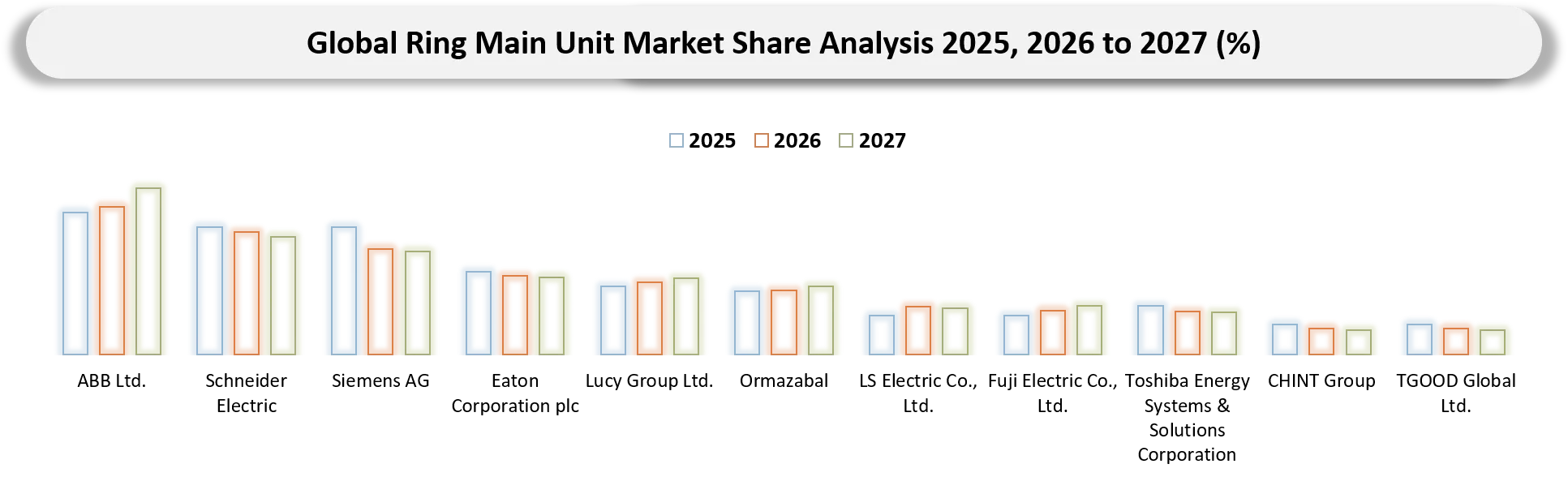
- The Ring Main Unit (RMU) Market is characterized by the presence of global electrical equipment manufacturers, medium-voltage switchgear specialists, and regional power distribution solution providers, where competitiveness is determined by product reliability, SF₆-free technology development, digitalization capabilities, utility partnerships, and manufacturing scale. Leading companies such as ABB Ltd., Schneider Electric, Siemens AG, Eaton Corporation plc, and Ormazabal hold strong positions through extensive medium-voltage switchgear portfolios, global service networks, and long-term relationships with power utilities. Emerging players including Lucy Group Ltd., LS Electric Co., Ltd., Fuji Electric Co., Ltd., Toshiba Energy Systems & Solutions Corporation, CHINT Group, TGOOD Global Ltd., and ENTEC Electric & Electronic Co., Ltd. are strengthening their presence through cost-effective RMU solutions, smart grid-compatible products, and regional infrastructure projects. The market remains moderately consolidated, with the top manufacturers collectively accounting for a significant portion of global RMU revenues, while regional suppliers compete through localized manufacturing and customized distribution solutions.
- Key players in the Ring Main Unit Market include ABB Ltd., Schneider Electric, Siemens AG, Eaton Corporation plc, Lucy Group Ltd., Ormazabal, LS Electric Co., Ltd., Fuji Electric Co., Ltd., Toshiba Energy Systems & Solutions Corporation, CHINT Group, TGOOD Global Ltd., and ENTEC Electric & Electronic Co., Ltd.
Key Developments
- August 2026: Mingri Electric Co., Ltd., a China-based electrical equipment manufacturer specializing in medium- and low-voltage switchgear, transformers, and Ring Main Units (RMUs), officially shipped its 10 kV Outdoor Ring Main Unit (RMU) for medium-voltage power distribution applications.
- May 2025: Lucy Electric, a UK-based intelligent switchgear, automation, and electrical distribution solutions company, launched Lucy Electric Digital Solutions Ltd, a wholly owned subsidiary focused on accelerating digital transformation in electricity distribution networks.
- October 2025: ABB Beijing Switchgear Systems Co., Ltd., a China-based medium-voltage switchgear manufacturing subsidiary of ABB, a Switzerland-based electrification, automation, and power technology company, celebrated its 30 years of operations and partnership in China with customers and launched new sustainable switchgear products.
- May 2026: Huatech (Xiamen Huadian Switchgear Co., Ltd.), a China-based medium-voltage switchgear and intelligent power distribution equipment manufacturer, showcased its self-developed Airing eco-friendly Ring Main Unit (RMU) at the 2026 BRICS New Industrial Revolution Exhibition held in Xiamen, China.
- April 2026: Lucy Group, a UK-based infrastructure and sustainable technology group, completed the acquisition of Nuventura GmbH, a Germany-based SF₆-free medium-voltage switchgear technology company, to expand its primary SF₆-free switchgear capabilities.
Key Procurement Priorities and Buyer Evaluation Criteria
- Organizations' interest in buying RMUs has become more focused on manufacturers who can offer switchgear products that are both reliable, safe to operate, have an extended lifespan, have a compact design, and are compatible with current electricity distribution grids. The buyers consider the supplier's capability in providing reliable RMUs that can facilitate efficient power distribution, fault isolation, and other operations in the electric network grid.
- The decision-making process regarding the procurement of new assets has become significantly affected by the increasing need for the development of smart grids, the incorporation of renewable energy, distribution automation, and digital monitoring features. Utility companies are now paying attention to suppliers of RMUs that can offer automated operations, remote monitoring capabilities, and compatibility with SCADA systems.
- The buyer takes into account issues like reliability of the equipment, insulation technology, voltage level, switchgear performance, safety approvals, maintenance needs, life cycle costs, and environmental approvals when choosing RMU manufacturers. The ability to offer equipment without SF₆ gas, equipment that is easy to maintain, and equipment approved by international standards like IEC 62271-200 has become an important consideration.
Why Choose DataM?
- Technological Innovations: Explores advancements in Ring Main Unit (RMU) technologies, including automated RMUs, smart monitoring systems, SF₆-free insulation solutions, and digitalized medium-voltage switchgear platforms, enabling improved grid reliability, remote operation, reduced maintenance requirements, and enhanced integration with smart grid infrastructure.
- Product Performance & Market Positioning: Evaluates how different RMU manufacturers differentiate their solutions based on switching reliability, insulation technology, fault protection capability, compact design, lifecycle cost efficiency, and automation readiness, highlighting how leading players strengthen their market position across utility, renewable energy, industrial, commercial, and critical infrastructure applications.
- Real-World Evidence: Highlights the adoption of RMU solutions across electric utilities, renewable energy projects, industrial facilities, data centers, transportation infrastructure, and urban distribution networks, demonstrating benefits such as improved power continuity, faster fault isolation, reduced downtime, and enhanced operational efficiency.
- Market Updates & Industry Changes: Tracks key developments such as SF₆-free RMU launches, smart grid modernization projects, digital RMU deployments, utility infrastructure investments, and regional distribution network upgrades across Asia-Pacific, North America, and Europe, supporting the transition toward intelligent and sustainable medium-voltage power systems.
- Competitive Strategies: Analyzes how leading companies expand through new product launches, strategic partnerships, regional manufacturing expansion, technology development, and integration of automation and communication capabilities to address increasing demand for reliable and digitally enabled medium-voltage distribution solutions.
- Pricing & Market Access: Explains pricing variations based on RMU insulation type, voltage rating, automation level, protection configuration, customization requirements, and installation environment, along with market access through utilities, electrical contractors, EPC companies, and industrial infrastructure developers.
- Market Entry & Expansion: Identifies growth opportunities driven by grid modernization, renewable energy integration, electrification trends, data center expansion, and smart distribution networks, while outlining strategies such as SF₆-free technology adoption, localized manufacturing, utility partnerships, and digital solution development to expand globally.
Target Audience
- Electrical Utilities and Distribution Network Operators
- RMU Manufacturers and Medium-Voltage Switchgear Companies
- Renewable Energy Developers and Independent Power Producers (IPPs)
- Industrial and Manufacturing Facilities
- Commercial Infrastructure Developers
- Data Center Operators and Digital Infrastructure Companies
- Transportation Infrastructure Companies
Suggestions for Related Report


























































