

Rapid STI Testing Market Size and Overview
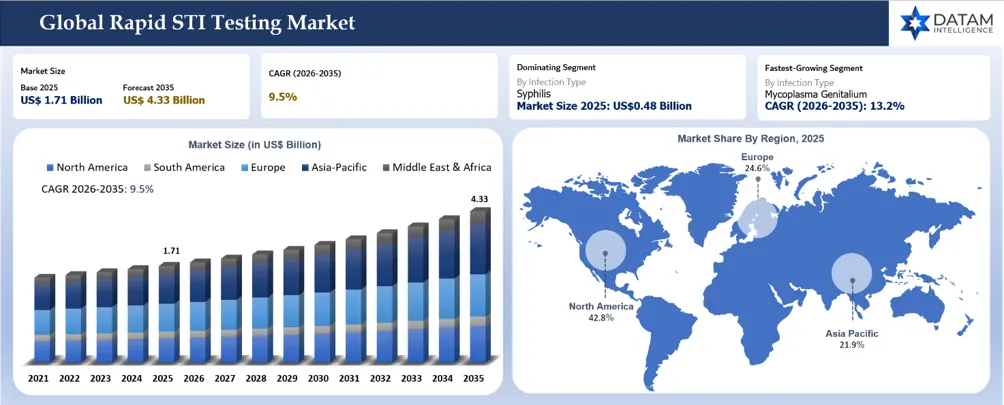
The global rapid STI testing market reached US$1.71 billion in 2025 and is expected to reach US$4.33 billion by 2035, growing with a CAGR of 9.5% during the forecast period 2026-2035.
Market growth is shifting beyond conventional laboratory-based screening toward decentralized diagnostics, rapid molecular testing and consumer-accessible self-testing solutions. Increasing sexually transmitted infection prevalence, expanding public health screening initiatives and demand for confidential testing are accelerating adoption across hospitals, sexual health clinics and community healthcare settings. Rapid immunoassays remain widely utilized because of their affordability, operational simplicity and suitability for resource-constrained environments. However, limitations in diagnostic sensitivity and pathogen coverage are creating opportunities for advanced molecular technologies offering improved accuracy and faster clinical decision-making.
The commercialization of portable PCR platforms, multiplex molecular assays and at-home STI testing solutions is reshaping diagnostic accessibility and competitive positioning. The U.S. FDA's March 2025 authorization of Visby Medical's at-home molecular test for chlamydia, gonorrhea and trichomoniasis, delivering results in approximately 30 minutes, represents a significant advancement in decentralized diagnostics. Syphilis testing maintains a leading revenue position through established screening programs, while Mycoplasma genitalium testing presents emerging opportunities driven by increasing clinical recognition and antimicrobial resistance concerns. Competitive differentiation increasingly depends on multiplex detection capabilities, turnaround time, diagnostic reliability, testing affordability and integration with digital healthcare services.
The next competitive inflection point will involve the development of affordable, highly accurate molecular diagnostic platforms capable of detecting multiple STI pathogens while minimizing infrastructure and operator requirements. Growing adoption of smartphone-integrated diagnostics, digitally connected testing services and automated result interpretation could further strengthen patient accessibility and continuity of care. Manufacturers are expected to prioritize scalable production, recurring consumable revenues, regulatory approvals and partnerships with public health agencies and healthcare providers. Long-term market leadership will depend on achieving an optimal balance between diagnostic performance, cost per test, geographic accessibility and integration of rapid detection with timely treatment pathways.
Rapid STI Testing Market Key Takeaways
- Sustained Market Expansion Through 2035: The global rapid STI testing market was valued at US$1.71 billion in 2025 and is projected to reach US$4.33 billion by 2035, registering a CAGR of 9.5% during 2026-2035. Growth is supported by expanding STI screening programs, increasing adoption of rapid molecular diagnostics and rising demand for decentralized and confidential testing solutions.
- Syphilis Testing Maintains Market Leadership: The syphilis segment accounted for an estimated 28.1% market share, equivalent to US$480.51 million in 2025, supported by established antenatal screening programs, affordable rapid immunoassays and increasing government procurement of HIV/syphilis dual-testing kits across public healthcare systems.
- Mycoplasma Genitalium Emerges as the Fastest-Growing Segment: Mycoplasma Genitalium testing is projected to register an estimated 13.2% CAGR during 2026-2035, driven by increasing clinical recognition, growing antimicrobial resistance concerns and expanding adoption of multiplex molecular diagnostics for targeted pathogen detection and treatment guidance.
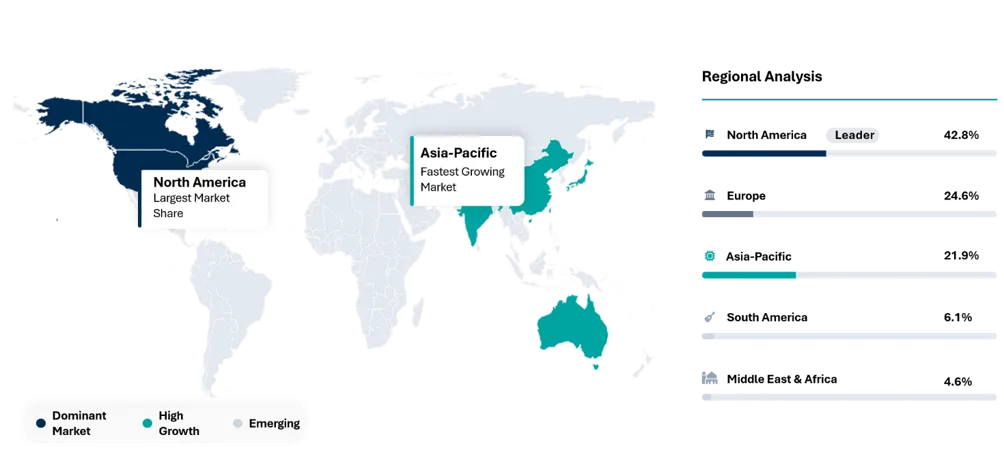
- North America Maintains Regional Dominance: North America accounted for approximately 42.8% of the global rapid STI testing market in 2025, equivalent to US$731.88 million, supported by established diagnostic infrastructure, advanced point-of-care molecular platforms, expanding self-testing accessibility and strong institutional screening demand.
- At-Home Molecular Testing Reshapes Competitive Strategy: Future competitive positioning will increasingly depend on rapid multiplex pathogen detection, affordable molecular testing platforms, diagnostic accuracy and integration with digital healthcare services. The emergence of approximately 30-minute at-home molecular STI tests is accelerating opportunities for consumer-accessible diagnostics, while manufacturers prioritize scalable production, regulatory compliance and recurring consumable revenues.
Rapid STI Testing Market Industry Trends and Strategic Insights
- The market is transitioning from conventional laboratory-dependent STI screening toward decentralized molecular diagnostics, multiplex testing and consumer-accessible self-testing solutions. Diagnostic value is increasingly assessed through clinical sensitivity, specificity, turnaround time, pathogen coverage and the ability to support timely treatment decisions across diverse healthcare settings.
- Rapid immunoassays remain widely adopted for HIV and syphilis screening because of their affordability, operational simplicity and established use in public health programs. However, portable PCR platforms and cartridge-based molecular technologies are gaining traction for chlamydia, gonorrhea and trichomoniasis detection, particularly where improved diagnostic accuracy and same-visit clinical management are priorities.
- Mycoplasma genitalium testing represents an emerging high-growth opportunity, driven by increasing clinical recognition, antimicrobial resistance concerns and demand for targeted molecular diagnostics. Commercial adoption will depend on assay availability, multiplex integration, reimbursement coverage and the ability to identify resistance-associated genetic markers that support appropriate treatment selection.
- At-home molecular testing, smartphone-integrated diagnostics and digitally connected sexual health services are reshaping traditional diagnostic delivery models. The commercialization of approximately 30-minute at-home molecular STI tests demonstrates the potential for confidential, consumer-operated screening. Future adoption will depend on regulatory authorization, affordable pricing, accurate self-administration and integration with telehealth consultations and treatment pathways.
- Sustainable competitive advantage will increasingly require more than rapid pathogen detection. Manufacturers offering affordable multiplex platforms, reliable clinical performance, simplified sample collection, scalable consumable production and strong regulatory compliance will be better positioned to secure institutional procurement contracts, expand geographic penetration and capture recurring revenues. Partnerships with public health agencies, digital healthcare providers and community screening networks will remain important for long-term commercial growth.
Rapid STI Testing Market Scope
| Metrics | Details | |
| 2025 Market Size | US$1.71 Billion | |
| 2035 Projected Market Size | US$4.33 Billion | |
| CAGR (2026-2035) | 9.5% | |
| Largest Market | North America | |
| Fastest Growing Market | Asia-Pacific | |
| By Product Type | Rapid Test Kits, Reagents and Consumables, Rapid Testing Instruments | |
| By Testing Technology | Immunoassay-Based Rapid Testing, Molecular Rapid Testing, Others | |
| By Infection Type | HIV, Syphilis, Chlamydia, Gonorrhea, Trichomoniasis, Hepatitis B, Hepatitis C, Genital Herpes (HSV), Human Papillomavirus (HPV), Mycoplasma Genitalium, Others | |
| By Test Configuration | Single-Pathogen Tests, Dual-Pathogen Tests, Multiplex Tests | |
| By Sample Type | Blood-Based Tests, Urine-Based Tests, Swab-Based Tests, Oral Fluid-Based Tests, Others | |
| By Testing Setting | Clinical Point-of-Care Testing, Home-Based Testing, Community and Outreach Testing, Near-Patient Laboratory Testing | |
| By End User | Hospitals, Diagnostic Laboratories, Specialty and Sexual Health Clinics, Primary Care Clinics, Public Health and Community Healthcare Organizations, Homecare Consumers, Others | |
| By Distribution Channel | Direct Institutional Sales, Medical Device Distributors, Retail Pharmacies, Online Sales Channels, Public Procurement and Tender Channels | |
| By Region | North America | U.S., Canada, Mexico |
| Europe | Germany, UK, France, Spain, Italy, Poland | |
| Asia-Pacific | China, India, Japan, Australia, South Korea, Indonesia, Malaysia, Singapore, Vietnam, Thailand, Philippines, Taiwan | |
| South America | Brazil, Argentina | |
| Middle East and Africa | Israel, Saudi Arabia, UAE, Turkiye, South Africa, Nigeria | |
| Report Insights Covered | Competitive Landscape Analysis, Company Profile Analysis, Market Size, Share, Growth | |
Why does this report matter in 2026?
The global rapid STI testing market is entering a critical growth phase in 2026, driven by increasing sexually transmitted infection prevalence, expanding screening initiatives and growing demand for accessible, confidential diagnostics. According to the World Health Organization, more than 1 million curable STI infections occur daily worldwide, highlighting substantial unmet diagnostic needs. In February 2026, WHO introduced a consolidated operational handbook to strengthen STI prevention, diagnosis and treatment delivery, reinforcing opportunities for decentralized testing. Meanwhile, the shift toward point-of-care molecular diagnostics, multiplex assays and self-testing solutions is reshaping competitive positioning, creating opportunities for diagnostic manufacturers, healthcare providers and public health procurement agencies.
This report provides decision-makers with actionable intelligence on market size, infection-specific testing demand, technology adoption, competitive positioning and regional commercialization opportunities. The FDA's March 2025 authorization of Visby Medical's at-home molecular test for chlamydia, gonorrhea and trichomoniasis, delivering results in approximately 30 minutes, demonstrates the industry's evolving innovation landscape. By evaluating product differentiation, regulatory pathways, pricing dynamics, distribution strategies and emerging market opportunities, the report enables manufacturers, investors and healthcare stakeholders to prioritize high-potential segments, identify competitive gaps and develop evidence-based growth strategies through 2035.
Rapid STI Testing Market White Space & Investment Opportunities
- Affordable Multiplex STI Testing: Invest in cost-effective multiplex diagnostic platforms capable of detecting chlamydia, gonorrhea, trichomoniasis and other sexually transmitted infections from a single patient sample. Affordable multi-pathogen testing represents a significant commercial opportunity, particularly in resource-constrained healthcare systems where individual testing costs and limited laboratory infrastructure restrict comprehensive screening.
- Expansion of At-Home Self-Testing: Develop discreet, user-friendly and clinically validated rapid STI self-testing solutions that deliver reliable results without requiring healthcare facility visits. Growing demand for privacy, convenience and early diagnosis creates opportunities for integrated home-testing platforms, digital consultations and direct-to-consumer distribution models, particularly among underserved and younger populations.
- Rapid Molecular Diagnostic Innovation: Advance portable, cartridge-based molecular testing systems offering high analytical accuracy, simplified sample preparation and shorter turnaround times. Investment opportunities exist in compact PCR and isothermal amplification technologies that reduce instrument costs, expand near-patient testing capabilities and support same-visit diagnosis and treatment decisions across primary care and sexual health clinics.
- Underserved Geographic Markets: Expand affordable rapid STI testing across rural communities, low-income countries and regions with limited diagnostic infrastructure. Opportunities exist in instrument-free testing kits, low-cost consumables, decentralized distribution networks and public-private partnerships supporting broader screening coverage through community health centers, mobile clinics and government-funded sexual health programs.
- Digital Integration and Care Connectivity: Invest in digitally connected STI testing platforms integrating smartphone-based result interpretation, electronic health records, telemedicine and confidential patient notification systems. Integrated diagnostic and care pathways can improve patient follow-up, accelerate treatment referrals and strengthen screening program efficiency while creating opportunities for subscription-based digital services and recurring testing partnerships.
- Antimicrobial Resistance and Treatment Guidance: Develop rapid molecular diagnostics capable of identifying STI pathogens alongside clinically validated antimicrobial resistance markers, particularly for gonorrhea and Mycoplasma genitalium. Faster access to resistance information could support more targeted treatment decisions, reduce unnecessary antibiotic use and create premium diagnostic opportunities for manufacturers serving sexual health clinics, hospitals and public health laboratories.
Rapid STI Testing Market Future Transformation
The global rapid STI testing market is expected to undergo significant transformation through 2035, shifting from conventional laboratory-dependent screening toward decentralized, technology-enabled and patient-centric diagnostic models. Advances in portable molecular platforms, multiplex pathogen detection and instrument-free rapid assays will improve diagnostic accessibility, shorten turnaround times and support earlier treatment decisions. Increasing adoption of at-home self-testing, smartphone-integrated diagnostics and community-based screening programs will reshape service delivery, particularly across underserved populations. Meanwhile, manufacturers are expected to prioritize affordable cartridge-based systems, simplified sample collection and high-sensitivity testing technologies to address growing demand for accurate and convenient STI diagnosis.
The next phase of transformation will be defined by stronger integration between diagnostics, digital healthcare and public health surveillance. Artificial intelligence-assisted result interpretation, connected testing platforms and automated patient referral systems are expected to improve testing efficiency and continuity of care. Growing concerns over antimicrobial-resistant gonorrhea will also encourage development of rapid diagnostics capable of identifying resistance-associated genetic markers to guide treatment selection. Competitive differentiation will increasingly depend on affordability, diagnostic accuracy, regulatory approvals and distribution reach. Manufacturers investing in scalable manufacturing, recurring consumable revenues and partnerships with public health agencies will be better positioned to capture emerging opportunities.
Rapid STI Testing Market Buyer Decision-Making Criteria
Major Buyer Decision-Making Criteria:
- Diagnostic Accuracy, Sensitivity and Specificity
- Speed of Test Results and Turnaround Time
- Single-Pathogen and Multiplex Testing Capabilities
- Ability to Detect Asymptomatic and Early-Stage Infections
- Ease of Sample Collection and Testing Procedure
- Point-of-Care, At-Home and Decentralized Testing Compatibility
- Testing Technology and Molecular Diagnostic Capabilities
- Regulatory Approvals, Clinical Validation and Quality Certifications
- Instrument Portability, Automation and Infrastructure Requirements
- Cost per Test, Instrument Pricing and Consumable Expenses
- Testing Throughput, Scalability and Operational Efficiency
- Supply Reliability, Distribution Network and Technical Support
- Digital Connectivity, Data Integration and Patient Privacy
- Reimbursement Coverage, Public Procurement Eligibility and Total Cost of Ownership
Rapid STI Testing Market Investment Trends
- Investment is increasingly targeting portable PCR platforms, isothermal amplification technologies and cartridge-based molecular testing systems capable of delivering accurate STI results within shorter turnaround times, enabling decentralized diagnosis across hospitals, sexual health clinics and primary care settings.
- Diagnostic manufacturers are prioritizing research and development investments in multiplex rapid testing platforms capable of detecting chlamydia, gonorrhea, trichomoniasis, HIV and syphilis through pathogen-specific test combinations, reducing repeat testing requirements, improving clinical workflows and creating recurring revenue opportunities through consumables.
- Capital allocation is expanding toward clinically validated self-testing kits, discreet sample collection technologies and consumer-friendly diagnostic platforms. Growing emphasis on privacy, convenience and direct-to-consumer healthcare is encouraging investment in e-commerce distribution, home-based molecular diagnostics and integrated telehealth services.
- Public health funding and development grants are supporting low-cost, instrument-free STI testing technologies for resource-constrained healthcare systems. In September 2025, Rapidemic received a US$2.7 million Gates Foundation grant to develop its RapiDetect CT/NG molecular test, targeting chlamydia and gonorrhea detection in under 15 minutes.
- Investment is increasingly focusing on smartphone-integrated result reporting, telehealth consultations, digital prescriptions and confidential patient follow-up. Visby Medical's December 2025 national launch of its at-home PCR STI test through consumer distribution partnerships illustrates the commercial potential of connected diagnostics and integrated testing-to-treatment pathways.
- Investors are prioritizing clinically validated rapid STI diagnostic technologies with regulatory authorization, scalable manufacturing and recurring test-consumable revenue potential. In June 2025, Visby Medical announced approximately US$55 million in financing, with the potential to reach US$65 million, to accelerate commercialization of its FDA-authorized at-home STI testing platform.
Strategic Indicators for Global Rapid STI Testing Market
High Regulation Impact
The global rapid STI testing market faces high regulatory scrutiny because diagnostic accuracy directly influences treatment decisions, infection transmission and public health outcomes. Regulatory authorities assess clinical sensitivity, specificity, sample compatibility, false-positive and false-negative rates, usability and manufacturing quality before authorizing rapid diagnostic products. The U.S. FDA's March 2025 authorization of Visby Medical's at-home molecular test for chlamydia, gonorrhea and trichomoniasis established an important regulatory precedent for over-the-counter STI diagnostics. Manufacturers must demonstrate reliable performance across symptomatic and asymptomatic populations while meeting region-specific requirements for clinical validation, labeling, quality management and post-market surveillance. Increasing regulatory emphasis on self-testing reliability and molecular diagnostic performance is expected to favor manufacturers with established clinical evidence, validated testing technologies and strong compliance capabilities.
High Investment Activity
Investment activity is strengthening across rapid molecular diagnostics, multiplex STI testing platforms and at-home diagnostic technologies as manufacturers prioritize faster results, improved accessibility and recurring consumable revenues. Capital allocation is increasingly directed toward portable PCR systems, instrument-free molecular assays, automated sample processing and digitally connected diagnostic solutions. Growing demand for decentralized testing is encouraging investments in compact analyzers, cost-effective test cartridges and scalable manufacturing infrastructure. Strategic investors and diagnostic manufacturers are also focusing on technologies capable of detecting multiple sexually transmitted infections from a single sample while reducing testing complexity and operational costs. Investment decisions increasingly depend on regulatory readiness, clinical performance, intellectual property strength, commercialization potential and distribution capabilities. Companies developing affordable, highly accurate testing solutions with strong applications across primary care, community screening and home-based diagnostics are expected to attract greater strategic investment through 2035.
High Rapid Molecular Testing Adoption
The global rapid STI testing market is witnessing increasing interest in molecular point-of-care technologies that combine laboratory-level analytical performance with faster clinical decision-making. Portable PCR platforms, cartridge-based nucleic acid amplification systems and emerging isothermal technologies are expanding diagnostic capabilities beyond conventional laboratories. Adoption opportunities are particularly significant for chlamydia, gonorrhea and trichomoniasis testing, where timely detection can support same-visit clinical management and reduce patient loss to follow-up. The FDA-authorized Visby Medical Women's Sexual Health Test demonstrates the feasibility of approximately 30-minute molecular testing in home environments. Future adoption will depend on affordability, test-menu expansion, workflow simplicity, reimbursement and compatibility with primary care and community-based healthcare infrastructure. Molecular platforms offering multiplex capabilities, minimal operator intervention and shorter turnaround times are expected to strengthen competitive differentiation.
Regional Expansion Opportunity
Regional expansion opportunities remain substantial because STI testing accessibility, diagnostic infrastructure, healthcare expenditure and screening coverage vary considerably across global markets. North America represents an important commercial opportunity for advanced molecular point-of-care diagnostics, at-home self-testing and integrated digital sexual health services. Europe offers opportunities through established healthcare systems, public screening programs and decentralized diagnostic adoption, although country-specific regulatory and reimbursement requirements influence commercialization. Asia-Pacific presents considerable potential through expanding diagnostic infrastructure, private healthcare networks and demand for affordable rapid testing solutions. Latin America, Africa and parts of the Middle East offer opportunities for low-cost immunoassays, mobile screening initiatives and public health procurement. Successful regional expansion will require localized pricing, regulatory registration, dependable distribution partnerships and diagnostic products suited to varying healthcare infrastructure and patient affordability.
Government Policy Support
Government policy plays an important role in expanding rapid STI testing through national screening strategies, public health procurement, diagnostic accessibility programs and international disease elimination initiatives. The World Health Organization's global health sector strategies target a 90% reduction in gonorrhea and syphilis infections by 2030, reinforcing the need for accessible and timely diagnostic services. WHO's 2025 recommendations on STI service delivery emphasize decentralized care, integrated healthcare services, task sharing and digital health interventions. Public health authorities increasingly recognize the importance of early identification, confidential testing and improved diagnostic coverage among underserved populations. Government-supported screening programs, international procurement initiatives and regulatory pathways for self-testing products can create opportunities for diagnostic manufacturers. However, funding availability, reimbursement policies, procurement pricing and healthcare implementation capacity remain important factors influencing market adoption and commercial expansion.
Value-Based Pricing Intelligence
Value-based pricing in the global rapid STI testing market increasingly depends on diagnostic accuracy, turnaround time, multiplex detection capabilities and measurable improvements in clinical workflows rather than product pricing alone. Healthcare providers and public procurement agencies evaluate total testing costs, including instrument acquisition, consumables, staff requirements, quality controls, confirmatory testing and infrastructure expenses. Premium molecular platforms must demonstrate economic value through faster diagnosis, reduced repeat visits and improved treatment initiation compared with conventional diagnostic pathways. Lower-cost lateral flow assays remain important in resource-constrained settings, where affordability and operational simplicity often outweigh advanced technological features. Manufacturers offering flexible pricing models, scalable consumable supply, validated clinical performance and dependable technical support will be better positioned to secure institutional contracts, government tenders and long-term diagnostic partnerships. Future competitive positioning will increasingly depend on balancing diagnostic performance, accessibility and total cost per actionable result.
AI Impact Analysis of Rapid STI Testing Market
Artificial intelligence is expected to transform the global rapid STI testing market by improving diagnostic accuracy, automating result interpretation and accelerating the development of next-generation point-of-care testing technologies. AI-enabled image analysis can support interpretation of lateral flow assays, reduce operator variability and improve consistency in result reporting, particularly in decentralized healthcare settings. Machine learning algorithms can assist molecular assay development, biomarker identification and multiplex test optimization, enabling manufacturers to improve analytical performance and shorten product development cycles. Integration of AI with smartphone-based diagnostics, portable molecular analyzers and digital testing platforms could strengthen accessibility, workflow efficiency and testing standardization across clinics, community healthcare facilities and home-based environments.
AI integration is also expected to strengthen market opportunities through predictive analytics, diagnostic workflow optimization and connected sexual health services. Machine learning models can help identify screening gaps, optimize testing resource allocation and support earlier referral of high-risk populations. A 2026 review of AI-enhanced point-of-care diagnostics highlighted an HIV rapid-test reading system achieving 95.9% sensitivity and 99% specificity in field validation involving 11,374 tests. However, clinical validation, algorithm bias, data privacy and regulatory compliance will remain critical adoption considerations. Manufacturers combining validated AI capabilities with affordable testing platforms and secure digital connectivity could gain competitive advantages through improved operational efficiency, differentiated products and stronger institutional partnerships.
Disruption Analysis of Rapid STI Testing Market
The global rapid STI testing market is experiencing significant disruption as portable molecular diagnostics, multiplex testing platforms and at-home self-testing solutions challenge traditional laboratory-dependent diagnostic models. Advances in cartridge-based PCR, isothermal amplification and simplified sample processing are enabling faster pathogen detection with reduced infrastructure requirements. The FDA's March 2025 authorization of Visby Medical's at-home molecular test for chlamydia, gonorrhea and trichomoniasis, delivering results in approximately 30 minutes, illustrates the potential shift toward consumer-controlled diagnostics. These developments are creating competitive pressure on conventional laboratory testing providers while encouraging manufacturers to prioritize affordability, diagnostic accuracy, decentralized accessibility and multi-pathogen detection capabilities.
Competitive disruption is also accelerating through direct-to-consumer distribution, digital healthcare integration and changing institutional procurement priorities. Traditional diagnostic providers face growing pressure to offer faster testing workflows, flexible pricing and connected patient services as pharmacies, telehealth platforms and community screening programs expand diagnostic access. The World Health Organization's 2025 self-testing implementation toolkit reinforces opportunities for decentralized HIV, syphilis and hepatitis C screening. However, regulatory compliance, diagnostic reliability, reimbursement limitations and patient follow-up remain critical barriers to widespread adoption. Future market leadership will depend on scalable manufacturing, recurring consumable revenues, clinically validated technologies and effective integration of rapid testing with treatment pathways.
Global Rapid STI Testing Market BCG Matrix: Company Evaluation
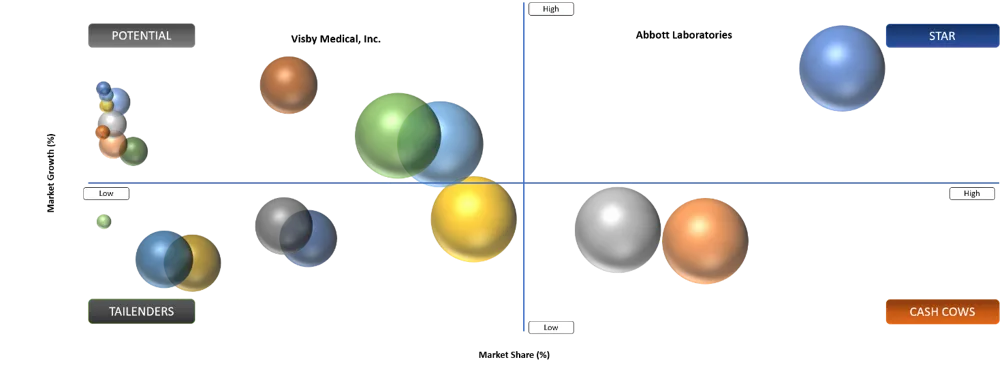
STAR
Abbott Laboratories, Danaher Corporation, F. Hoffmann-La Roche Ltd and OraSure Technologies, Inc. are positioned in the Star category based on their established rapid diagnostic portfolios, international distribution capabilities, institutional procurement relationships and competitive positioning in decentralized STI screening. Abbott maintains a strong presence through its Bioline HIV/Syphilis Duo and Bioline Syphilis 3.0 tests, supporting government-funded screening and maternal healthcare programs. Danaher strengthens its position through Cepheid's GeneXpert platform, including Xpert CT/NG and Xpert TV molecular assays, while Roche competes through its cobas liat molecular diagnostic platform. OraSure Technologies maintains a differentiated position through OraQuick HIV self-testing solutions, supporting confidential screening and decentralized healthcare delivery.
These companies benefit from established commercialization infrastructure, regulatory experience, product portfolios and access to public health procurement channels. Growing demand for rapid molecular diagnostics, multiplex infection detection and home-based self-testing is expected to support continued portfolio expansion. Competitive leadership will increasingly depend on diagnostic sensitivity, turnaround time, instrument affordability, test cartridge pricing and geographic accessibility. Manufacturers combining high-volume rapid immunoassays with advanced molecular testing capabilities will be better positioned to secure institutional contracts, strengthen recurring consumable revenues and expand market penetration through 2035.
POTENTIAL
Visby Medical, Inc., binx health, Inc., bioLytical Laboratories Inc., MedMira Inc., CTK Biotech, Inc., ACON Laboratories, Inc., Trinity Biotech plc, Atomo Diagnostics Limited and Premier Medical Corporation Private Limited are positioned in the Potential category based on their specialized rapid STI diagnostic portfolios, technological differentiation and opportunities for commercial expansion. Visby Medical is advancing at-home molecular testing for chlamydia, gonorrhea and trichomoniasis, while binx health focuses on point-of-care molecular CT/NG testing. bioLytical Laboratories offers INSTI rapid HIV and syphilis testing solutions, including its multiplex antibody test delivering results in approximately one minute. MedMira, CTK Biotech and ACON Laboratories contribute to competition through rapid immunoassay technologies and affordable infectious disease screening products.
These companies represent opportunities in consumer-accessible diagnostics, decentralized molecular testing, multiplex immunoassays and cost-sensitive public health screening programs. Trinity Biotech, Atomo Diagnostics and Premier Medical Corporation provide additional competitive diversity through HIV testing products, self-testing solutions and screening technologies suited to different healthcare environments. Progression toward the Star category will depend on commercial scale, product authorization, clinical validation, distribution partnerships, manufacturing capacity and recurring testing revenues. Companies capable of reducing cost per test while maintaining diagnostic accuracy and expanding access across underserved populations could capture opportunities in institutional procurement, retail diagnostics and integrated sexual healthcare services.
Rapid STI Testing Market Dynamics
Driver Impact Analysis
| Driver | Market Growth Impact (%) | Demand Concentration | Impacted Use Case | Strategic Impact |
Expansion of Decentralized STI Screening Across High-Risk Populations | 15.2% | High across North America and Europe; expanding across Asia-Pacific and Africa | Rapid HIV, syphilis, chlamydia and gonorrhea screening in primary care and community healthcare settings | Increases testing volumes, expands diagnostic coverage and strengthens recurring institutional procurement |
Commercialization of At-Home Molecular STI Self-Testing | 13.8% | High in North America; emerging across Europe and developed Asia-Pacific markets | Confidential home-based detection of chlamydia, gonorrhea and trichomoniasis | Creates direct-to-consumer revenue opportunities and accelerates adoption of premium rapid molecular tests |
Adoption of Multiplex Point-of-Care Molecular Diagnostics | 12.6% | High across North America, Europe and Japan; increasing in China and South Korea | Simultaneous detection of multiple STI pathogens during a single patient visit | Improves diagnostic efficiency, supports same-visit treatment decisions and drives cartridge-based consumable revenues |
Integration of Rapid STI Testing Into Government Screening Programs | 11.4% | High across public health systems in Africa and Asia-Pacific; sustained demand in Europe and North America | HIV and syphilis screening in antenatal care, mobile health programs and public health clinics | Expands bulk procurement opportunities, supports affordable test adoption and increases screening access in underserved regions |
Driver: Expansion of Decentralized STI Screening Across High-Risk Populations
The expansion of decentralized STI screening is emerging as a major growth driver for the global rapid STI testing market, supported by increasing efforts to reach populations underserved by conventional healthcare systems. Community health centers, mobile clinics, sexual health outreach programs and primary care facilities are increasingly integrating rapid diagnostics to improve early infection detection and reduce dependence on centralized laboratories. Screening initiatives targeting sexually active adolescents, men who have sex with men, sex workers and other populations with elevated STI exposure risks are creating demand for affordable, confidential and easy-to-administer tests. Rapid HIV and syphilis assays, alongside emerging point-of-care molecular platforms for chlamydia and gonorrhea, are particularly relevant to expanding diagnostic coverage.
In July 2025, the World Health Organization introduced updated recommendations promoting decentralized STI services, integrated healthcare delivery and targeted screening among populations with elevated infection risks. WHO also recommended screening intervals of six or twelve months for certain priority populations, depending on individual risk and available resources. These policy developments are expected to strengthen demand for rapid testing kits, portable molecular analyzers and multiplex diagnostic consumables. For manufacturers, expanding decentralized screening creates opportunities through government procurement, institutional partnerships and recurring test volumes. Companies offering clinically validated, affordable and easy-to-use diagnostics will be better positioned to capture demand across underserved geographic markets and community healthcare networks.
Restraint Impact Analysis
| Restraint | Drag on Market Growth (%) | Primary Impact Area | Impacted Use Case | Strategic Impact |
Diagnostic Sensitivity Gaps in Low-Cost Rapid STI Assays | 13.4% | Clinical reliability, false-negative risk and physician confidence | Rapid chlamydia, gonorrhea and syphilis screening, particularly among asymptomatic patients | Increases confirmatory testing requirements and limits adoption of lower-sensitivity assays |
High Cost of Molecular Point-of-Care Testing Platforms | 12.6% | Instrument affordability, cartridge pricing and healthcare procurement budgets | Multiplex molecular STI testing in community clinics, primary care centers and resource-constrained facilities | Restricts large-scale deployment and increases pressure on manufacturers to reduce cost per test |
Stringent Regulatory Validation and Market Authorization Requirements | 11.3% | Clinical development expenditure, product approval timelines and market entry | At-home STI self-tests, multiplex molecular assays and new rapid diagnostic technologies | Delays commercialization, increases compliance costs and favors manufacturers with established regulatory capabilities |
Limited Reimbursement and Weak Testing-to-Treatment Connectivity | 10.2% | Patient affordability, screening participation and continuity of care | Home-based self-testing, community STI screening and decentralized diagnostic programs | Reduces testing uptake and repeat purchases while limiting the commercial value of integrated diagnostic services |
Restraint: Diagnostic Sensitivity Gaps in Low-Cost Rapid STI Assays
Diagnostic sensitivity limitations in low-cost rapid assays represent a significant restraint for the global rapid STI testing market, particularly in detecting asymptomatic infections and cases with low pathogen concentrations. Conventional antigen-based rapid tests for chlamydia, gonorrhea and certain other sexually transmitted infections may demonstrate lower sensitivity than laboratory-based nucleic acid amplification tests, increasing the risk of false-negative results and delayed treatment. Performance differences across specimen types, infection stages and testing environments further complicate clinical adoption. Healthcare providers must balance affordability and testing accessibility against diagnostic reliability, particularly when screening high-risk populations. These limitations create additional demand for confirmatory testing, increasing healthcare expenditure and reducing the operational advantages associated with rapid point-of-care diagnostics.
In 2025, the World Health Organization published updated technical requirements for rapid chlamydia antigen tests, emphasizing clinical performance validation and reliable diagnostic results. Such requirements highlight the commercial challenges facing manufacturers of affordable rapid assays, particularly in low-resource healthcare environments. Inadequate sensitivity can weaken clinician confidence, restrict institutional procurement and increase dependence on laboratory-based molecular testing. Manufacturers must invest in improved antigen detection, optimized sample processing and rigorous clinical validation to address these limitations. Companies that successfully balance high diagnostic sensitivity with affordability, operational simplicity and regulatory compliance will be better positioned to strengthen market acceptance and expand decentralized STI screening programs.
Rapid STI Testing Market Segment Analysis
The global rapid STI testing market is segmented based on the product type, testing technology, infection type, test configuration, sample type, testing setting, end user, distribution channel and region.
Syphilis Testing Leads Market Revenue, While Mycoplasma Genitalium Emerges as the Fastest-Growing Infection Segment
The syphilis segment is estimated to dominate the global rapid STI testing market in 2025, accounting for approximately 28.1% of total revenue, equivalent to US$480.51 million. Market leadership is supported by widespread adoption of affordable rapid antibody tests, established antenatal screening programs and government-funded HIV/syphilis dual-testing initiatives. The World Health Organization's emphasis on eliminating mother-to-child transmission of syphilis continues to strengthen institutional procurement and decentralized screening demand. Rapid syphilis assays offer operational advantages through minimal infrastructure requirements, relatively low testing costs and suitability for community healthcare settings. Manufacturers such as Abbott Laboratories, bioLytical Laboratories and CTK Biotech are supporting market accessibility through established rapid immunoassay portfolios and distribution networks.
Meanwhile, the Mycoplasma Genitalium segment is projected to register the fastest growth, with an estimated 13.2% CAGR during 2026-2035, driven by increasing clinical recognition of persistent infections and demand for molecular diagnostics. Growing concerns regarding antimicrobial resistance are encouraging targeted pathogen identification and resistance-guided treatment strategies. Advances in multiplex molecular assays, portable analyzers and automated nucleic acid amplification technologies are expected to expand testing capabilities across sexual health clinics and point-of-care settings. However, high molecular testing costs and limited routine screening recommendations may constrain widespread adoption.
Rapid STI Testing Market Geographical Penetration
U.S. Rapid STI Testing Market Landscape
The U.S. rapid STI testing market is witnessing significant transformation, supported by persistent infection burdens, expanding screening initiatives and growing adoption of decentralized diagnostic technologies. According to the U.S. Centers for Disease Control and Prevention (CDC), its September 2025 surveillance release reported approximately 2.25 million cases of chlamydia, gonorrhea and syphilis in 2024, despite an 8.5% decline from 2023. This substantial disease burden continues to reinforce demand for accessible screening and early diagnosis. Meanwhile, the U.S. FDA's March 2025 authorization of Visby Medical's first fully at-home molecular test for chlamydia, gonorrhea and trichomoniasis, delivering results in approximately 30 minutes, represents a significant advancement in consumer-accessible STI diagnostics.
The competitive landscape is evolving as Abbott Laboratories, Danaher Corporation, OraSure Technologies and emerging molecular diagnostic developers strengthen their positions across rapid immunoassays, point-of-care platforms and self-testing solutions. Growing emphasis on confidential testing, multiplex pathogen detection and same-visit clinical management is creating opportunities for diagnostic manufacturers and digital healthcare providers. However, reimbursement limitations, regulatory compliance, testing affordability and inconsistent screening access remain important commercialization challenges. Future growth will increasingly depend on clinically validated molecular technologies, cost-effective consumables, integrated telehealth services and partnerships with public health agencies, primary care networks and retail healthcare providers.
Japan Rapid STI Testing Market Outlook
The Japan rapid STI testing market is gaining strategic importance in 2026, supported by persistent sexually transmitted infection risks, government screening initiatives and increasing demand for confidential, accessible diagnostics. According to Japan's Ministry of Health, Labour and Welfare, 890 new HIV infections and AIDS cases were reported in 2025, including 624 HIV infections and 266 AIDS diagnoses. Additionally, HIV antibody testing declined to 107,083 tests in 2025, highlighting opportunities to improve screening participation and diagnostic accessibility. These developments are strengthening the case for rapid HIV testing, syphilis screening and decentralized diagnostic services. Japan's established healthcare infrastructure and growing interest in convenient testing solutions provide opportunities for portable molecular platforms, multiplex assays and home-based diagnostic technologies.
Competitive opportunities are emerging across rapid immunoassays, molecular point-of-care diagnostics and digitally connected sexual health services. Domestic diagnostic manufacturers and international suppliers can strengthen market positioning through affordable test kits, simplified sample collection and partnerships with hospitals, specialty clinics and public health centers. Japan's November 2025 revision of its national STI prevention guidelines emphasizes improved testing access, education and healthcare delivery. Demand for privacy-focused screening and faster treatment decisions could support wider adoption of self-testing and multiplex diagnostics. However, regulatory requirements, reimbursement considerations, diagnostic accuracy and established laboratory testing practices remain commercialization challenges. Future growth will depend on validated technologies, localized distribution strategies and effective integration of rapid testing into preventive healthcare pathways.
Rapid STI Testing Market Competitive Landscape
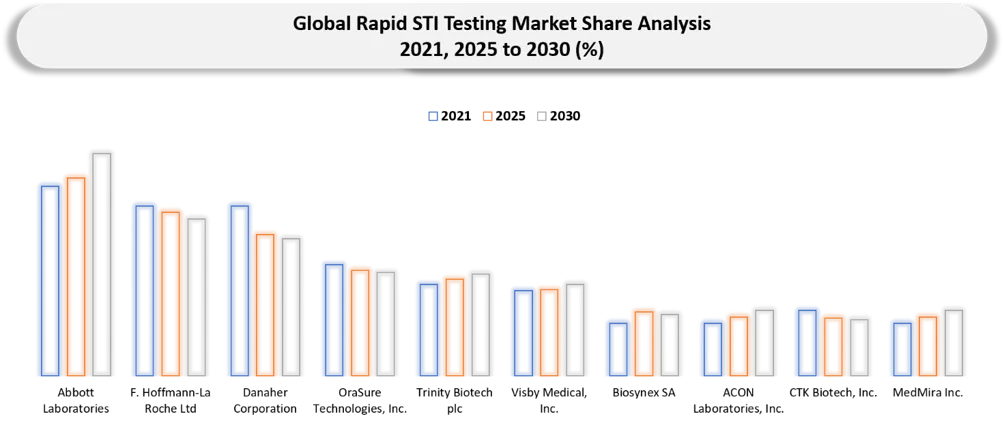
- The global rapid STI testing market features a competitive mix of multinational diagnostic manufacturers, specialized molecular testing developers and regional rapid assay suppliers competing on diagnostic accuracy, turnaround time, affordability and testing accessibility. Abbott Laboratories, Danaher Corporation, F. Hoffmann-La Roche Ltd and OraSure Technologies, Inc. maintain competitive positions through established diagnostic portfolios, distribution networks and institutional relationships. Meanwhile, Visby Medical, Inc., binx health, Inc. and bioLytical Laboratories Inc. contribute to competitive differentiation through at-home molecular testing, point-of-care platforms and rapid immunoassay solutions. Growing demand for multiplex pathogen detection and decentralized screening is encouraging manufacturers to prioritize product innovation, simplified workflows and recurring consumable revenues.
- Competitive intensity is expected to increase as manufacturers expand product portfolios, strengthen regulatory approvals and pursue strategic partnerships with healthcare providers, public health agencies and digital health platforms. The U.S. FDA's March 2025 authorization of Visby Medical's at-home molecular STI test, delivering results in approximately 30 minutes, demonstrates the growing commercial potential of consumer-accessible diagnostics. Established players are leveraging manufacturing scale and procurement relationships, while emerging companies compete through technological differentiation and specialized testing applications. Pricing pressure remains particularly significant in government-funded screening programs, whereas premium molecular platforms face increasing expectations for clinical accuracy and operational efficiency. Future competitive advantage will depend on scalable commercialization, regulatory compliance, affordable multiplex testing and integrated diagnostic-to-treatment solutions.
Key Companies of Rapid STI Testing Market
- Abbott Laboratories (United States)
- F. Hoffmann-La Roche Ltd (Switzerland)
- Danaher Corporation (United States)
- OraSure Technologies, Inc. (United States)
- Trinity Biotech plc (Ireland)
- Visby Medical, Inc. (United States)
- Biosynex SA (France)
- ACON Laboratories, Inc. (United States)
- CTK Biotech, Inc. (United States)
- MedMira Inc. (Canada)
- nal von minden GmbH (Germany)
- SEKISUI Chemical Co., Ltd. (Japan)
- binx health, Inc. (United States)
- bioLytical Laboratories Inc. (Canada)
- Atomo Diagnostics Limited (Australia)
- QuidelOrtho Corporation (United States)
- Premier Medical Corporation Private Limited (India)
- InTec PRODUCTS, INC. (China)
- Access Bio, Inc. (United States)
- SD BIOSENSOR, Inc. (South Korea)
Rapid STI Testing Market Major Pain Points
- Diagnostic Accuracy Gaps and False-Negative Results: Conventional rapid antigen-based assays for certain sexually transmitted infections may demonstrate lower sensitivity than molecular diagnostics, particularly among asymptomatic patients and individuals with low pathogen concentrations. Variability in test performance, specimen quality and testing procedures increases the risk of missed infections, delayed treatment and continued transmission.
- Limited Access to Decentralized STI Testing: Inadequate diagnostic infrastructure, shortages of trained healthcare personnel and uneven availability of rapid testing technologies restrict screening access across rural and resource-constrained regions. Dependence on centralized laboratories can increase turnaround times, require additional patient visits and contribute to missed opportunities for early infection detection.
- High Cost of Rapid Molecular Diagnostic Platforms: Portable PCR analyzers, molecular test cartridges and multiplex diagnostic systems involve considerable instrument acquisition, consumable and maintenance expenses. Budget limitations among community clinics, smaller healthcare facilities and public health agencies can restrict adoption of advanced rapid testing technologies, despite their potential clinical and operational advantages.
- Incomplete Pathogen Coverage and Multiplex Testing Limitations: Many commercially available rapid STI tests detect only individual pathogens or a limited combination of infections. Differences in assay availability, specimen compatibility and diagnostic sensitivity complicate comprehensive screening for chlamydia, gonorrhea, syphilis, trichomoniasis and Mycoplasma genitalium. Limited multiplex capabilities can increase testing costs, sample collection requirements and diagnostic workflow complexity.
- STI-Related Stigma and Low Screening Participation: Concerns regarding confidentiality, social judgment, relationship consequences and disclosure of sexual health information discourage individuals from seeking timely STI testing. These barriers are particularly relevant among adolescents, marginalized populations and communities with limited access to confidential healthcare services, contributing to delayed diagnosis and undetected infections.
- Limited Antimicrobial Resistance Detection Capabilities: Conventional rapid STI tests generally provide pathogen detection without comprehensive antimicrobial susceptibility information. This limitation is particularly significant for gonorrhea and Mycoplasma genitalium, where antimicrobial resistance complicates treatment selection. Limited availability of affordable resistance-associated molecular assays can increase dependence on laboratory-based testing and restrict personalized treatment strategies.
- Fragmented Testing-to-Treatment Pathways: Decentralized testing and home-based self-testing do not consistently provide integrated access to clinical consultations, treatment prescriptions, partner notification and follow-up services. Delays between positive test results and appropriate treatment can reduce the public health benefits of rapid diagnosis, particularly when patients lack reliable referral mechanisms or affordable healthcare access.
- Complex Regulatory, Reimbursement and Procurement Requirements: Differences in diagnostic approval pathways, clinical validation standards, reimbursement policies and government procurement criteria create commercialization challenges for rapid STI testing manufacturers. Premium molecular tests may face reimbursement limitations, while cost-sensitive public health tenders place pressure on product pricing. Manufacturers must balance diagnostic performance, regulatory compliance, affordability and supply reliability to achieve sustainable market penetration.
Rapid STI Testing Market Recent Developments
- October 2026: bioMérieux received U.S. FDA clearance and a CLIA waiver for its BIOFIRE SPOTFIRE Vaginitis Panel, enabling approximately 20-minute molecular detection of Trichomonas vaginalis and other vaginal infections, with U.S. commercialization planned for early 2027.
- August 2026: Readily Diagnostics announced funding from the Gates Foundation to develop affordable molecular point-of-care testing for chlamydia, gonorrhea and trichomoniasis, including capabilities targeting gonorrhea antimicrobial resistance detection.
- July 2026: Abbott's Determine Syphilis Advanced rapid diagnostic test received World Health Organization prequalification, strengthening opportunities for accessible syphilis screening across public health programs and resource-constrained healthcare settings.
- June 2026: OraSure Technologies received U.S. FDA clearance for its Colli-Pee Dx Urine Collection Kit, supporting at-home specimen collection for laboratory-based molecular testing of chlamydia, gonorrhea, trichomoniasis and Mycoplasma genitalium.
- January 2026: Visby Medical announced expanded consumer access to its FDA-authorized at-home molecular STI testing platform through digital healthcare and laboratory service partnerships, supporting confidential screening and integrated treatment pathways.
- December 2025: Visby Medical announced the nationwide U.S. launch of its Women's Sexual Health Test, enabling approximately 30-minute at-home molecular detection of chlamydia, gonorrhea and trichomoniasis through consumer distribution and digital healthcare partnerships.
- October 2025: Visby Medical received U.S. FDA clearance for its Men's Sexual Health Test, expanding its rapid molecular diagnostic portfolio for chlamydia and gonorrhea detection using male urine specimens.
- July 2025: The World Health Organization prequalified Abbott's Determine Antenatal Care Panel, comprising rapid diagnostic tests for HIV, hepatitis B and syphilis, supporting integrated maternal healthcare screening and prevention of mother-to-child transmission.
- March 2025: Visby Medical received U.S. FDA De Novo authorization for its Women's Sexual Health Test, introducing the first fully at-home molecular diagnostic test capable of detecting chlamydia, gonorrhea and trichomoniasis in approximately 30 minutes.
- January 2025: Roche received U.S. FDA clearance and CLIA waivers for its cobas liat CT/NG and CT/NG/MG molecular assays, enabling approximately 20-minute detection of sexually transmitted infections in decentralized clinical settings.
Analyst View / Opinion on Rapid STI Testing Market
- The market is transitioning from conventional laboratory-dependent screening toward decentralized molecular diagnostics, multiplex testing and at-home self-testing solutions that enable faster pathogen detection, improved accessibility and timely clinical decision-making.
- Abbott Laboratories, Danaher Corporation, F. Hoffmann-La Roche Ltd and OraSure Technologies are strengthening competition through established rapid immunoassay and molecular diagnostic portfolios, while Visby Medical and binx health are advancing differentiated point-of-care and consumer-accessible STI testing technologies.
- Diagnostic technology selection will increasingly depend on clinical sensitivity, specificity, turnaround time, pathogen coverage, specimen compatibility, testing infrastructure, cost per result and suitability for screening symptomatic and asymptomatic populations across different healthcare settings.
- Portable PCR platforms, isothermal nucleic acid amplification technologies, multiplex molecular assays and smartphone-integrated diagnostics are expected to accelerate innovation beyond conventional lateral flow immunoassays. Growing clinical attention to Mycoplasma genitalium and antimicrobial-resistant gonorrhea will create opportunities for rapid pathogen identification and resistance-associated molecular testing.
- Sustainable market leadership will require clinically validated diagnostic accuracy, affordable multiplex testing, simplified sample collection, minimal infrastructure requirements and reliable results across diverse patient populations. Manufacturers demonstrating measurable improvements in testing efficiency, patient follow-up and timely treatment initiation will strengthen their competitive positioning.
- Commercial success will increasingly depend on regulatory authorization, government procurement partnerships, scalable manufacturing, competitive consumable pricing, reimbursement coverage and integration with digital healthcare services. Companies combining broad geographic distribution, recurring testing revenues and effective testing-to-treatment pathways will be better positioned to capture long-term growth opportunities through 2035.
Rapid STI Testing Market Target Audience
| INDUSTRY | WHO SHOULD BUY THIS REPORT? | REASON TO BUY THIS REPORT |
| Diagnostic and Medical Device Companies | Rapid diagnostic test manufacturers, molecular diagnostic developers, point-of-care testing companies and multiplex assay developers | Assess market potential, technology adoption, infection-specific demand, competitive positioning and commercialization opportunities across rapid STI diagnostic platforms. |
| Pharmaceutical and Biotechnology Companies | STI therapeutic developers, infectious disease biotechnology companies, antimicrobial developers and companion diagnostic partners | Evaluate diagnostic gaps, pathogen-specific testing demand, antimicrobial resistance detection opportunities and partnerships supporting targeted treatment pathways. |
| Digital Health and At-Home Testing Companies | Telehealth providers, STI self-testing platform developers, digital diagnostic companies and online sexual healthcare providers | Identify opportunities in confidential home-based testing, digital result reporting, virtual consultations, consumer adoption and integrated testing-to-treatment services. |
| Healthcare Providers | Hospitals, sexual health clinics, primary care networks, diagnostic laboratories and community healthcare providers | Understand rapid testing technologies, diagnostic performance, testing workflows, patient screening requirements and opportunities to improve same-visit clinical management. |
| Payers and Market Access Organizations | Health insurers, reimbursement agencies, health technology assessment bodies, pharmacy benefit managers and healthcare consultants | Evaluate testing costs, reimbursement coverage, clinical utility, budget impact and the economic value of decentralized STI screening technologies. |
| Public Health and Community Organizations | Sexual health associations, HIV prevention organizations, community screening networks, nonprofit healthcare providers and patient advocacy groups | Identify underserved populations, screening accessibility gaps, confidential testing opportunities and strategies to improve early detection and treatment linkage. |
| Government and Regulatory Bodies | Public health authorities, diagnostic regulatory agencies, government procurement departments and national STI prevention programs | Support screening policies, diagnostic procurement, regulatory planning, infection surveillance and equitable access to affordable rapid STI testing solutions. |
| Investors and Financial Institutions | Private equity firms, venture capital investors, institutional investors, investment banks and healthcare investment funds | Assess market growth potential, emerging molecular diagnostic technologies, competitive risks, investment opportunities, strategic partnerships and acquisition prospects. |
| Market Research and Consulting Firms | Strategy consultancies, competitive intelligence teams, healthcare advisory firms and commercial due diligence specialists | Support market-entry strategies, competitive benchmarking, product portfolio optimization, pricing analysis, opportunity assessment and investment decision-making. |
| Research Organizations | Clinical research organizations, academic institutions, universities, infectious disease research centers and diagnostic innovation institutes | Analyze emerging assay technologies, diagnostic sensitivity gaps, antimicrobial resistance testing, clinical validation requirements and unmet diagnostic needs. |
| Medical Device Distributors and Retail Channels | Diagnostic equipment distributors, medical supply companies, retail pharmacy chains, e-commerce platforms and home-testing distributors | Evaluate distribution opportunities, product demand, pricing structures, procurement requirements, inventory planning and geographic expansion potential for rapid STI testing products. |
Why Choose DATAM?
- Data-Driven Insights: Access granular intelligence on the global rapid STI testing market, covering market size, infection-specific revenue shares, testing volumes, diagnostic technology adoption, rapid immunoassays, molecular testing platforms, product pricing, competitive positioning and regional screening demand, supported by primary interviews with diagnostic manufacturers, healthcare providers and industry experts.
- Post-Purchase Support and Expert Analyst Consultations: Engage directly with our healthcare analysts for customized guidance on diagnostic technology selection, product portfolio positioning, market entry, competitor benchmarking, distribution strategies, regulatory requirements and commercialization opportunities across point-of-care, community-based and at-home STI testing markets.
- White Papers and Case Studies: Receive periodic insights on rapid STI diagnostic innovations, multiplex molecular assays, portable PCR platforms, at-home self-testing technologies, regulatory developments, product launches, antimicrobial resistance detection and evolving procurement strategies across public and private healthcare systems.
- Annual Updates on Purchased Reports: Stay informed through annual updates covering new diagnostic product approvals, technology advancements, clinical validation studies, strategic partnerships, acquisitions, pricing developments, government screening initiatives and competitive shifts. Terms and conditions apply.
- Specialized Focus on Emerging Markets: Gain country-specific intelligence on STI screening volumes, diagnostic accessibility, testing infrastructure, government procurement, reimbursement conditions, affordability and commercial opportunities across high-growth markets in Asia-Pacific, Latin America, Africa and the Middle East.
- Value of DataM Reports: Obtain tailored market intelligence addressing specific business questions related to rapid diagnostic accuracy, multiplex pathogen detection, molecular testing adoption, cost per test, self-testing commercialization, infection-specific demand, distribution gaps, antimicrobial resistance testing, competitive differentiation and investment opportunities beyond conventional market databases.
What DATAM Uniquely Provides
- In-depth segmentation of the global rapid STI testing market by product type, testing technology, infection type, test configuration, sample type, testing setting, end user, distribution channel and region, supported by revenue estimates, testing demand analysis and growth forecasts.
- Competitive analysis of leading rapid STI diagnostic manufacturers covering product portfolios, diagnostic sensitivity and specificity, pathogen detection capabilities, turnaround time, multiplex testing, regulatory approvals, instrument compatibility, pricing strategies, distribution networks and commercialization opportunities.
- Comprehensive assessment of infection-specific testing demand across HIV, syphilis, chlamydia, gonorrhea, trichomoniasis and Mycoplasma genitalium, including asymptomatic screening, high-risk populations, antenatal testing, decentralized diagnostics, home-based self-testing, unmet diagnostic needs and regional accessibility gaps.
- Actionable intelligence on rapid diagnostic kit pricing, molecular instrument costs, consumable economics, reimbursement policies, regulatory pathways, government procurement, public health screening programs, distribution strategies, strategic partnerships, acquisition activity and investment opportunities across established and emerging markets.
- Analyst forecasts identifying high-growth infection categories, commercially attractive diagnostic technologies, regional expansion opportunities and emerging competitive threats across lateral flow immunoassays, portable PCR systems, isothermal nucleic acid amplification, multiplex molecular testing, at-home self-testing and antimicrobial resistance detection technologies.