


Radiopharmaceutical CDMO and CMO Services Market Overview
The global radiopharmaceutical CDMO and CMO services market reached approximately US$ 3.48 billion in 2025 and is projected to reach US$ 8.47 billion by 2035, expanding at a CAGR of 9.3% during 2026–2035. Market growth is being driven by the increasing outsourcing of radiopharmaceutical development and manufacturing as sponsors seek specialized partners with secure isotope access, radiochemistry expertise, hot-cell infrastructure, aseptic processing capabilities, validated quality systems and time-critical regional distribution networks.
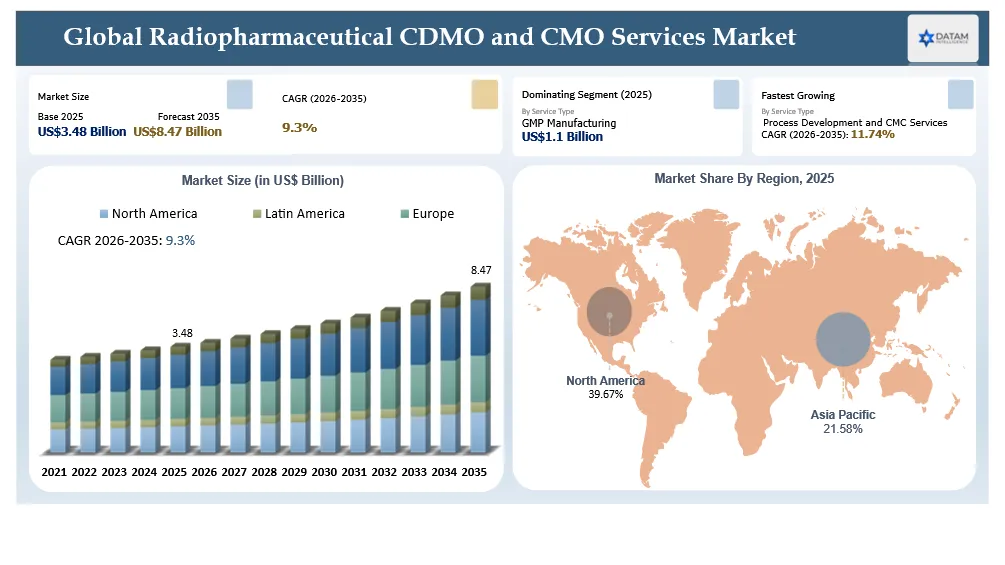
GMP manufacturing remains the largest service segment, supported by increasing requirements for validated drug-substance and drug-product production, analytical testing, batch release and repeat commercial supply. Meanwhile, process development, radiolabeling and conjugation services are gaining importance as biotechnology companies advance radioligand therapies without establishing capital-intensive in-house manufacturing infrastructure. Oncology remains the dominant therapeutic area, while Lutetium-177 and Actinium-225 are shaping investment priorities as targeted beta- and alpha-emitting radiotherapies progress toward larger-scale clinical and commercial manufacturing.
| Provider / Platform | Footprint | Core Capability | Strategic Relevance |
| Eckert & Ziegler | Europe / North America | Radioisotopes, radiopharma development, GMP manufacturing, hot-cell services | Medical segment and pharma radioisotopes are core growth drivers |
| Telix Manufacturing Solutions | North America / Europe / Australia / Japan | Radiopharmacies, isotope production, clinical and commercial manufacturing | Expanding multi-region production network and third-party manufacturing services |
| Jubilant Radiopharma | United States / Canada | Radiopharma manufacturing, radiopharmacy distribution, PET/SPECT portfolio | Integrated manufacturing and one of the largest U.S. radiopharmacy networks |
| Cardinal Health Nuclear & Precision Health Solutions | United States | Nuclear pharmacy, theranostics support, Ac-225 capabilities, distribution | National logistics reach and expanding theranostics infrastructure |
| AtomVie Global Radiopharma | Canada / North America | Development, GMP manufacturing, analytical and commercial services | Specialized radiopharmaceutical CDMO focused on clinical-to-commercial scale |
Radiopharmaceutical CDMO and CMO Services Market Key Takeaways
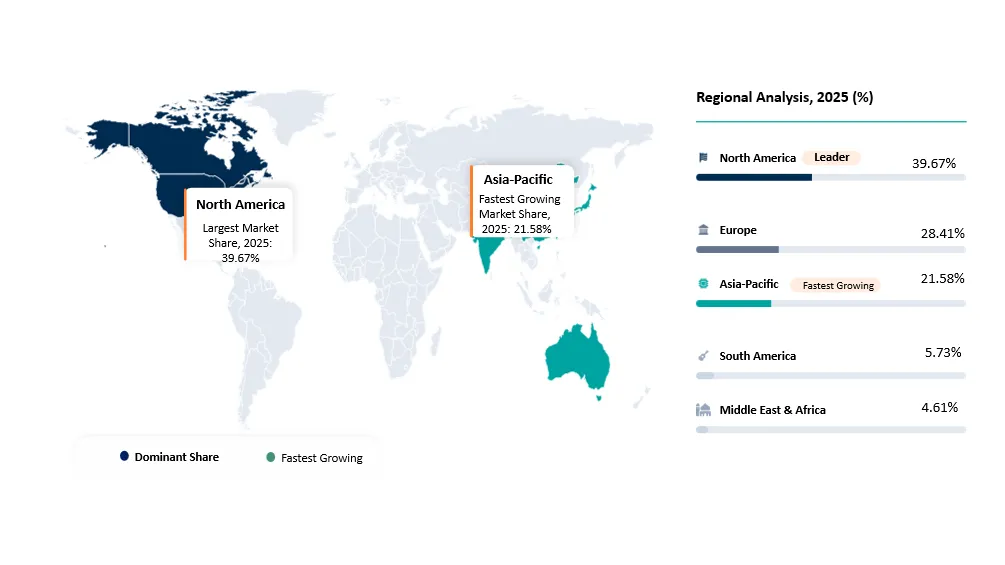
- North America is the largest market because it combines the deepest radiopharmaceutical pipeline, high PET/SPECT utilization, established radiopharmacy networks and strong investment in commercial radioligand therapy infrastructure.
- GMP drug-substance and drug-product manufacturing is the largest service segment, while process development and radiolabeling are expected to grow fastest as early-stage biotechnology sponsors outsource technical development.
- Diagnostic products still account for the largest service volume, but therapeutic radiopharmaceuticals generate higher manufacturing complexity and are expected to deliver faster value growth through 2035.
- Fluorine-18 remains the largest isotope-linked service pool due to PET imaging volumes, while Lu-177 is the fastest-scaling beta-therapy isotope and Ac-225 represents the most strategically important emerging alpha-emitter opportunity.
- Isotope access, regional redundancy, quality systems, hot-cell availability and ability to meet same-day or next-day distribution windows are becoming decisive supplier-selection criteria.
- Integrated CDMOs that can support isotope sourcing, development, GMP manufacturing and distribution are better positioned than single-service providers as sponsors seek fewer handoffs and lower technology-transfer risk.
- Commercial manufacturing requires multi-site comparability, validated release methods, shipping qualification and backup isotope arrangements, creating higher switching costs and longer customer relationships than conventional early-stage services.
- Asia-Pacific is expected to grow fastest as cyclotron capacity, domestic radiopharma pipelines, hospital nuclear medicine infrastructure and local manufacturing regulations expand.
Radiopharmaceutical CDMO and CMO Services Industry Trends and Strategic Insights
- Radiopharma outsourcing is moving earlier in the development cycle because sponsors want manufacturing input during candidate selection, radiochemistry optimization and CMC planning rather than after proof of concept.
- Lu-177 capacity is scaling through reactor-linked supply and regional finishing networks, while Ac-225 strategies increasingly combine long-term isotope contracts, internal production options and multiple qualified sources.
- Theranostic development is increasing demand for CDMOs that can handle both diagnostic and therapeutic isotopes while maintaining shared targeting-vector chemistry and regulatory documentation.
- Regionalized manufacturing models are gaining importance because physical decay limits shipping distance, making facility location and logistics infrastructure part of product strategy.
- Automated synthesis modules, closed-system dispensing, digital batch records and remote monitoring are being adopted to improve radiation safety, repeatability and labor productivity.
- Large pharmaceutical companies are selectively internalizing strategic capacity while still using CDMOs for geographic redundancy, surge volume, early-stage programs and specialized isotopes.
Radiopharmaceutical CDMO and CMO Services Market Scope
| Metrics | Details | |
| 2025 Market Size | US$ 3.48 Billion | |
| 2035 Projected Market Size | US$ 8.47 Billion | |
| CAGR (2026-2035) | 9.3% | |
| Largest Market | North America | |
| Fastest Growing Market | Asia-Pacific | |
| By Service Type | Isotope Sourcing and Supply Services, Process Development and CMC Services, Radiolabeling and Conjugation Services, GMP Manufacturing, Aseptic Fill Finish Services, Analytical Testing, Quality Control and Batch Release, Packaging, Labeling and Distribution Services | |
| By Modality | Diagnostic Radiopharmaceuticals, Therapeutic Radiopharmaceuticals | |
| By Radioisotope | Fluorine-18, Gallium-68, Technetium-99m, Lutetium-177, Actinium-225, Iodine-131, Zirconium-89, Copper-64, Copper-67, Lead-212 and Others | |
| By Targeting Vector | Small Molecules, Peptides, Antibodies and Antibody Fragments, Proteins, Nanoparticles and Others | |
| By Development Stage | Preclinical Development, Phase I Clinical Development, Phase II Clinical Development, Phase III and Registration and Commercial Manufacturing | |
| By Therapeutic Area | Oncology, Neurology, Cardiology, Endocrinology and Others | |
| By End User | Pharmaceutical and Biotechnology Companies, Academic and Research Institutions, Hospitals and Nuclear Medicine Centers, Independent Radiopharmacy and Diagnostic Imaging Networks and Others | |
| By Contract Model | Project-Based Contracts, Clinical Supply Agreements, Long-Term Commercial Supply Agreements, Dedicated Capacity Agreements, Strategic Manufacturing and Technology Transfer Partnerships | |
| By Region | North America | U.S., Canada, Mexico |
| Europe | Germany, UK, France, Spain, Italy, Poland | |
| Asia-Pacific | China, India, Japan, Australia, South Korea, Indonesia, Malaysia, Singapore, Vietnam, Thailand, Philippines, Taiwan | |
| South America | Brazil, Argentina | |
| Middle East and Africa | Israel, Saudi Arabia, UAE, Turkiye, South Africa, Nigeria | |
| Report Insights Covered | Competitive Landscape Analysis, Company Profile Analysis, Market Size, Share, Growth | |
Why does this report matter in 2026?
The year 2026 is an important inflection point because radiopharmaceutical pipelines are moving from small clinical batches into multi-region Phase III and commercial supply. This shift changes outsourcing from a technical support function into a strategic capacity decision. Sponsors must secure isotope supply, reserve hot-cell capacity, validate release methods and establish redundant manufacturing before approval. The cost of being late can be measured in missed treatment slots, launch delays and inability to serve geographically dispersed patients.
The market is also being reshaped by targeted radiotherapeutics. Lu-177 programs have created a clear commercial template, while Ac-225 and other alpha emitters are driving investment in isotope production, purification, shielding, waste management and high-containment manufacturing. Diagnostic growth remains important because PET and SPECT infrastructure creates the clinical networks through which theranostics can scale.
This report therefore matters for companies deciding whether to build, buy or outsource radiopharmaceutical capabilities. It identifies which service categories are capacity constrained, which isotope ecosystems require early contracting and where regional manufacturing networks can create competitive advantage through proximity, redundancy and regulatory readiness.
Radiopharmaceutical CDMO and CMO Services Market White Space & Investment Opportunities
- Commercial-scale Actinium-225 and next-generation alpha-emitter manufacturing remains a major capacity gap, with isotope availability, purification capability, shielding and radioactive-waste handling constraining broader clinical and commercial adoption.
- Multi-site Lutetium-177 manufacturing networks offer attractive recurring revenue opportunities as sponsors prioritize geographic redundancy, secured capacity and shorter delivery routes to treatment centers.
- Integrated development-to-commercial CDMO platforms can capture greater program value by reducing technology-transfer risk across radiochemistry development, analytical validation, GMP manufacturing, aseptic processing and distribution.
- Regional manufacturing hubs in Asia-Pacific and the Middle East represent attractive white-space opportunities as nuclear-medicine infrastructure expands and localized production reduces radioactive decay losses associated with long-distance transportation.
- Investment in automated dispensing, closed-system production and digital manufacturing systems can improve facility throughput, radiation safety and operating efficiency while reducing dependence on scarce specialist labor.
- Specialized analytical, release-testing and stability capabilities for alpha-emitting radiopharmaceuticals remain comparatively underdeveloped, creating opportunities for quality-service providers capable of supporting emerging therapeutic programs from clinical development through commercialization.
Radiopharmaceutical CDMO and CMO Services Future Market Transformation
The market is shifting from fragmented, site-specific radiopharmacy production toward standardized, distributed manufacturing networks designed around proximity to patients and isotope half-life constraints. Sponsors are increasingly expected to centralize process development, analytical methods and CMC controls at a lead site before transferring validated processes to regional GMP facilities. This hub-and-spoke model can improve manufacturing consistency, reduce transport-related decay losses and support more reliable multi-region commercial supply.
Manufacturing operations will become progressively automated, digitally integrated and capacity optimized. Closed synthesis systems, robotic dispensing, digital batch records, radiation-monitoring platforms and predictive maintenance can increase throughput while limiting operator exposure and dependence on scarce specialist labor. Providers that combine automation with robust quality systems and regulatory documentation will be better positioned to manage multiple programs and improve facility utilization.
By 2035, competitive advantage is likely to concentrate among providers that combine secured isotope access, multi-site GMP capacity, end-to-end CMC capabilities and regional distribution infrastructure. As isotope suppliers, CDMOs, radiopharmacies and product developers increasingly expand across adjacent parts of the value chain, vertically integrated platforms are expected to gain strategic importance and reshape traditional outsourcing boundaries.
Radiopharmaceutical CDMO and CMO Services Market Buyer Decision-Making Criteria
Radiopharmaceutical sponsors prioritize technical fit and schedule reliability before unit price. Buyers assess whether a supplier has the correct isotope licenses, hot-cell configuration, shielding, synthesis and dispensing equipment, aseptic capability, analytical methods and release infrastructure for the intended product. They also evaluate prior experience with the isotope and targeting vector, radiation-safety record, regulator inspection history and ability to scale without forcing a major process redesign.
Commercial buyers place additional weight on isotope security, redundancy, geographic reach and logistics performance. A provider may be technically capable but unsuitable if it depends on one isotope source, lacks backup hot cells or cannot support a same-day shipping window. Transparent capacity planning, quality metrics, deviation management and tech-transfer governance therefore have direct commercial value.
Radiopharmaceutical CDMO and CMO Services Market Economic & Investment Analysis
Radiopharmaceutical CDMO economics are driven by high fixed investment and high switching costs. Hot cells, shielded isolators, cyclotron or isotope-handling infrastructure, radiation monitoring, sterile processing areas and specialized analytical laboratories require capital before utilization is visible. Once qualified for a sponsor, however, providers can generate recurring revenue through clinical batches, validation campaigns, commercial manufacturing and distribution services.
Investment returns improve when a facility supports multiple isotopes or programs with compatible shielding and contamination-control requirements. Integrated facilities can also capture development fees before commercial launch and build customer lock-in through validated methods and regulatory documentation. The main risks are underutilized capacity, isotope shortages, launch delays and product-specific infrastructure that cannot be repurposed easily.
Strategic investors should therefore evaluate signed capacity reservations, pipeline stage, isotope access, geographic differentiation and the share of revenue tied to repeat commercial manufacturing. Companies with contracted access to scarce isotopes and a credible path from clinical to commercial scale are likely to command higher strategic value than facilities competing only on early-stage batch production.
Radiopharmaceutical CDMO and CMO Services Investment Trends in the Market
- Capital investment is increasingly directed toward new hot-cell suites, shielded aseptic dispensing lines and regional manufacturing facilities as providers prepare for higher clinical and commercial radiopharmaceutical volumes.
- Investment in Actinium-225 production, purification and handling infrastructure is increasing as developers seek commercial-scale alpha-emitter availability, diversified sourcing and stronger isotope supply security.
- Radiopharmacy networks are being integrated with manufacturing platforms to strengthen control over dose preparation, regional distribution and treatment-center access.
- Companies are acquiring isotope-production technologies and distributed manufacturing assets to reduce third-party dependence and strengthen control across critical supply-chain activities.
- Private capital is increasingly targeting specialized CDMOs with validated GMP facilities because qualified radiopharmaceutical infrastructure is capital intensive, strategically scarce and difficult to replicate.
- Investment in automated synthesis, dispensing systems, digital batch records and quality platforms is increasing to improve throughput, reduce radiation exposure and address skilled-labor constraints.
Strategic Indicators for the Radiopharmaceutical CDMO and CMO Services Market
High Regulation Impact
Radiopharmaceutical CDMO and CMO operations face an unusually complex compliance environment combining pharmaceutical GMP, radiation protection, nuclear-material licensing, hazardous-material transport and radioactive-waste management. Regulatory exposure increases further when sponsors introduce new isotopes, transfer manufacturing between sites or scale from clinical to commercial production. Providers with mature quality systems, validated release procedures, strong inspection histories and well-defined comparability strategies are therefore better positioned to secure late-stage and long-term commercial programs.
High Investment Activity
Investment is accelerating as radioligand therapies and theranostic programs move toward Phase III and commercial supply. Capital deployment is increasingly focused on hot-cell capacity, shielded aseptic systems, isotope-production infrastructure, automated synthesis and dispensing platforms and geographically distributed manufacturing sites. The strategic priority is shifting from adding standalone capacity to building resilient networks capable of supporting multi-isotope, multi-product and multi-region commercial supply.
Supply Chain Disruption
Radiopharmaceutical supply chains remain structurally vulnerable because radionuclides cannot be inventoried in the same way as conventional pharmaceutical materials. Reactor outages, accelerator downtime, enriched-target shortages, customs delays and radioactive decay can directly disrupt manufacturing schedules and patient treatment. As a result, isotope diversification, dual sourcing, backup production routes and regional manufacturing redundancy are becoming essential elements of commercial supply strategy.
Pricing Volatility
Service pricing remains sensitive to isotope availability, target-material costs, hot-cell utilization, manufacturing complexity and required delivery windows. Scarce therapeutic radionuclides, particularly emerging alpha emitters, can command higher pricing because of constrained supply and more demanding production, purification, shielding and quality-control requirements. Providers with secured isotope access and flexible capacity are better positioned to manage volatility and protect contract economics.
Procurement Pressure
Service pricing remains sensitive to isotope availability, target-material costs, hot-cell utilization, manufacturing complexity and required delivery windows. Scarce therapeutic radionuclides, particularly emerging alpha emitters, can command higher pricing because of constrained supply and more demanding production, purification, shielding and quality-control requirements. Providers with secured isotope access and flexible capacity are better positioned to manage volatility and protect contract economics.
New End User Adoption
Automation is becoming central to radiopharmaceutical manufacturing scale-up. Automated synthesis modules, closed-system dispensing, robotic handling, digital batch records and remote monitoring can improve batch consistency, operator safety and facility throughput. At the same time, emerging isotope-production and purification technologies have the potential to diversify supply routes, reduce dependence on constrained sources and improve commercial availability of therapeutic radionuclides.
Regional Expansion Opportunity
Asia-Pacific represents a major capacity-expansion opportunity as cyclotron infrastructure, nuclear-medicine utilization, oncology treatment capacity and domestic radiopharmaceutical pipelines increase. Demand for localized manufacturing is particularly important because isotope decay limits the economics of centralized long-distance supply. Selected Middle Eastern markets also present attractive opportunities through investment in nuclear medicine, oncology infrastructure, local PET production and technology-transfer partnerships.
Government Policy Support
Government involvement can materially influence market development through national cancer strategies, nuclear-medicine infrastructure programs, isotope-security initiatives and incentives for domestic pharmaceutical manufacturing. Policy support can accelerate local production and reduce reliance on imported radionuclides. However, market entry remains highly country-specific because nuclear licensing, radiation protection, transportation rules and reimbursement frameworks differ considerably across jurisdictions.
Pricing Intelligence
Radiopharmaceutical CDMO and CMO pricing is primarily determined by isotope cost, development complexity, GMP batch requirements, analytical workload, hot-cell occupancy, release urgency and distribution distance. Commercial contracts are increasingly incorporating capacity-reservation fees, minimum-volume commitments, isotope pass-through clauses and multi-year supply provisions. Consequently, pricing is evolving from a simple per-batch manufacturing model toward a broader capacity-and-supply-assurance model, particularly for late-stage radioligand therapy programs.
AI Impact Analysis of the Radiopharmaceutical CDMO and CMO Services Market
AI is expected to improve operational efficiency across radiopharmaceutical CDMO and CMO services through production scheduling, predictive maintenance, digital quality management and supply-chain optimization. AI-enabled analytics can help optimize hot-cell utilization, isotope procurement, batch sequencing and delivery windows, reducing downtime and radioactive decay losses. Predictive tools can support equipment maintenance and improve facility utilization, while digital batch-record analysis can strengthen deviation detection and process consistency. AI can also support technology transfer, multi-site standardization and regulatory knowledge management. Its near-term value will be highest in capacity optimization, quality intelligence and logistics coordination, while validated human oversight remains essential.
Disruption Analysis of Radiopharmaceutical CDMO and CMO Services Market
The market is being disrupted by the shift from diagnostic-only nuclear medicine toward high-value targeted radiotherapeutics. Therapeutic products require larger isotope volumes, more complex dosimetry and stricter capacity planning than diagnostic tracers. This increases demand for specialized CDMO support and raises the strategic value of isotope access.
A second disruption is vertical integration. Product companies are acquiring radiopharmacy networks, isotope technologies and manufacturing facilities, while CDMOs are expanding toward isotope supply and distribution. This convergence can reduce the addressable outsourced pool for some activities but also creates larger integrated service platforms that can support external sponsors.
Radiopharmaceutical CDMO and CMO Services Market BCG Matrix: Company Evaluation
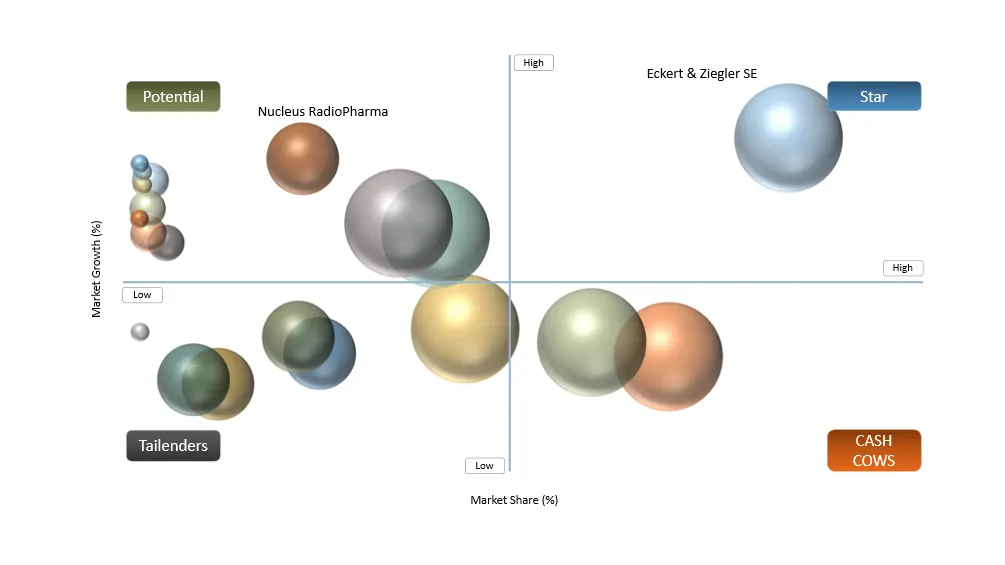
STAR
Eckert & Ziegler SE belongs to the Star category due to its strong position across radioisotope supply, radiopharmaceutical development and GMP contract manufacturing. The company supports programs from early-stage development through clinical and commercial production, backed by isotope access, specialized hot-cell infrastructure, radiolabeling expertise and established manufacturing capabilities. Its growing exposure to Lutetium-177, Actinium-225 and other therapeutic radionuclides strengthens its position as radioligand therapies move toward larger commercial volumes. Long-term supply agreements, technology-transfer capabilities and expansion of regional manufacturing infrastructure further support its leadership in the Radiopharmaceutical CDMO and CMO Services Market.
POTENTIAL
Nucleus RadioPharma is considered a Potential competitor because of its expanding end-to-end radiopharmaceutical CDMO platform focused on clinical and commercial manufacturing of targeted radiotherapies. The company is strengthening its competitiveness through investment in distributed manufacturing capacity, regional production infrastructure and partnerships supporting radiopharmaceutical development and commercialization. Its focus on reducing transportation constraints, improving manufacturing redundancy and supporting emerging therapeutic isotopes positions it well to capture new outsourcing opportunities. As radioligand therapy pipelines advance and sponsors seek additional qualified manufacturing capacity, Nucleus RadioPharma has significant potential to expand its presence in the market.
Radiopharmaceutical CDMO and CMO Services Market Dynamics
Driver Impact Analysis
| Driver | Market Growth Impact (%) | Demand Concentration | Impacted Use Case | Strategic Impact |
| Radioligand therapy pipeline expansion | 36% | High in oncology | Lu-177 and alpha-emitter programs | Raises demand for clinical-to-commercial GMP capacity and isotope contracts. |
| Increasing outsourcing by biotech sponsors | 26% | North America & Europe | CMC development and manufacturing | Allows asset-light developers to avoid large fixed infrastructure investments. |
| Growth of PET/SPECT and theranostics | 21% | Global nuclear medicine centers | Diagnostic and paired diagnostic/therapy supply | Expands recurring dose production and regional manufacturing demand. |
| Regional manufacturing and redundancy | 17% | Commercial programs | Distributed manufacturing networks | Reduces decay loss, launch risk and dependence on a single site. |
Driver: Expansion of Radioligand Therapy and Outsourcing of Specialized Manufacturing
Radioligand therapy is creating a step change in outsourced manufacturing demand because many developers do not own hot cells, isotope production assets or radiopharmacies. Each clinical program requires radioactive material sourcing, conjugation or labeling, GMP batch production, release testing and coordinated delivery. When a program advances, the service requirement expands from occasional clinical batches to recurring regional production, creating a long-duration revenue opportunity for qualified CDMOs.
Restraint Impact Analysis
| Restraint | Drag on Market Growth (%) | Primary Impact Area | Impacted Use Case | Strategic Impact |
| Isotope supply constraints | 33% | Raw material and schedule | Lu-177, Ac-225, Ga-68 | Requires multi-source procurement, inventory planning and alternative production routes. |
| High capital and regulatory burden | 28% | Facility expansion | Hot cells, aseptic suites, QC labs | Raises barriers to entry and extends capacity build timelines. |
| Short half-life logistics | 22% | Distribution | PET diagnostics and short-lived tracers | Limits geographic radius and makes regional production essential. |
| Specialized workforce shortage | 17% | Operations and quality | Radiochemistry, QA/QC, radiation safety | Constrains throughput and increases labor cost. |
Restraint: Isotope Supply, Capacity and Regulatory Complexity
The main constraint is the interdependence of isotope supply, licensed infrastructure and release timing. A sponsor may have a validated product but still be unable to manufacture if a reactor is offline, an enriched target is unavailable or the qualified hot cell is occupied. Because radionuclides decay continuously, inventory cannot be built in the same way as conventional pharmaceuticals. Capacity planning must therefore incorporate source redundancy, transport, production yield and contingency manufacturing.
Radiopharmaceutical CDMO and CMO Services Market Segment Analysis
The global radiopharmaceutical CDMO and CMO services market is segmented based on the service type, modality, radioisotope, targeting vector, development stage, therapeutic area, end user, contract model, and region.
By Service Type
GMP Manufacturing to Remain the Largest Service Segment
GMP manufacturing represents the largest service segment as late-stage clinical and commercial radiopharmaceutical programs require validated drug substance and drug product manufacturing, controlled aseptic processing, in-process testing and qualified batch release. Demand is also strengthening for process development, radiolabeling and CMC support as emerging radiopharmaceutical developers increasingly outsource specialized activities that require dedicated infrastructure and radiochemistry expertise. Integrated providers capable of supporting programs from development through repeat commercial manufacturing are positioned to capture a larger share of outsourced spending.
By Modality
Therapeutic Radiopharmaceuticals to Record the Fastest Value Growth
Therapeutic radiopharmaceuticals are expected to generate faster value growth as radioligand therapy programs move into late-stage clinical development and commercial supply. Compared with diagnostic products, therapeutic programs involve more complex isotope sourcing, manufacturing scheduling, radiation handling, quality control and patient-specific supply coordination. Diagnostic radiopharmaceuticals will continue to support substantial recurring production volumes through established PET and SPECT imaging networks.
By Radioisotope
Fluorine-18 Leads Current Demand While Lutetium-177 and Actinium-225 Drive Capacity Investment
Fluorine-18 remains the leading isotope-linked service category due to its established PET imaging base and recurring production requirements. Lutetium-177 is becoming increasingly important for commercial radioligand therapies, while Actinium-225 is emerging as a strategic alpha-emitter opportunity constrained by isotope availability and specialized manufacturing requirements. Providers capable of handling multiple radionuclides with qualified hot cells, analytical systems and radioactive-waste infrastructure are better positioned to support diversified sponsor pipelines.
By Targeting Vector
Small Molecules and Peptides Lead While Antibody-Based Programs Increase Development Complexity
Small molecules and peptides account for a significant share of radiopharmaceutical development because of their extensive use in prostate-specific membrane antigen and somatostatin receptor-targeted programs. Antibodies and antibody fragments involve different biological half-lives, conjugation approaches and isotope-selection requirements, increasing analytical and development complexity. Growing interest in alternative targeting platforms is also expanding opportunities for specialized radiochemistry and formulation support.
By Development Stage
Commercial Manufacturing to Expand as Radiopharmaceutical Pipelines Mature
Commercial manufacturing is expected to become increasingly important as more radiopharmaceutical programs progress from early clinical batches into repeat commercial production. Preclinical and Phase I programs generate significant development activity, while Phase II and Phase III programs require progressively stronger process control, analytical validation and manufacturing consistency. Registration and launch preparation further increase demand for process validation, multi-site technology transfer, shipping qualification, capacity reservation and manufacturing redundancy.
By Therapeutic Area
Oncology to Continue Dominating Outsourced Radiopharmaceutical Demand
Oncology represents the leading therapeutic area due to the concentration of targeted radiopharmaceutical development in prostate cancer, neuroendocrine tumors and a growing range of solid tumors. Oncology programs are also driving demand for beta- and alpha-emitting therapeutic radionuclides and associated manufacturing capacity. Neurology and cardiology remain important areas for diagnostic radiopharmaceuticals, while endocrinology and other clinical applications contribute additional specialized demand.
By End User
Pharmaceutical and Biotechnology Companies to Generate the Highest-Value Contracts
Pharmaceutical and biotechnology companies represent the highest-value customer group because they require integrated development, regulatory, validation, clinical-supply and commercial-manufacturing support. Academic and research institutions remain important sources of early-stage radiopharmaceutical programs and novel isotope research. Hospitals, nuclear medicine centers and independent imaging or radiopharmacy networks generate demand for prepared doses, regional manufacturing and time-sensitive distribution services.
By Contract Model
Long-Term Commercial Supply Agreements to Gain Importance as Programs Reach Commercial Scale
Long-term commercial supply agreements are becoming increasingly important as radiopharmaceutical programs transition from clinical development to recurring commercial manufacturing. Sponsors require assured isotope access, reserved hot-cell capacity, validated production processes and reliable regional supply over multiple years. Clinical supply and project-based contracts remain important during early development, while dedicated capacity agreements are gaining relevance for reserved hot-cell capacity, validated production processes and reliable regional supply high-volume radioligand therapies where manufacturing availability can directly affect treatment scheduling and product launches. Strategic manufacturing partnerships and technology-transfer agreements are also expanding as sponsors establish multi-site production networks and manufacturing redundancy.
Radiopharmaceutical CDMO and CMO Services Market Geographical Penetration
U.S. Radiopharmaceutical CDMO and CMO Services Market Landscape
The U.S. represents the leading national market for radiopharmaceutical CDMO and CMO services, supported by a strong radiopharmaceutical development pipeline, extensive PET and SPECT infrastructure, established radiopharmacy networks and growing investment in theranostics. Demand is particularly concentrated around Lutetium-177 commercial supply, Actinium-225 development, regional PET manufacturing and multi-site production. Sponsors increasingly value partners capable of integrating clinical-trial manufacturing with nationwide radiopharmacy distribution and commercial-scale supply.
Germany Radiopharmaceutical CDMO and CMO Services Market Outlook
Germany is a major European hub for isotope technology, radiochemistry, radiopharmaceutical manufacturing and nuclear medicine research. Its established technical capabilities and hospital infrastructure support demand for specialized CDMO and CMO services across diagnostic and therapeutic radiopharmaceuticals. Commercial opportunities are increasingly linked to therapeutic isotope manufacturing, European batch release, cross-border supply and regional manufacturing networks, supported by established industry participants such as Eckert & Ziegler and ITM.
Japan Radiopharmaceutical CDMO and CMO Services Market Outlook
Japan has a mature nuclear medicine ecosystem and established diagnostic imaging infrastructure. Demand is increasingly shifting toward local manufacturing of novel PET tracers and targeted radiopharmaceutical therapies, supported by domestic pharmaceutical partnerships and specialized isotope production. Short radionuclide distribution windows and country-specific regulatory requirements strengthen the need for in-country manufacturing, release and distribution capabilities, creating opportunities for localized CDMO partnerships.
China Radiopharmaceutical CDMO and CMO Services Market Trends
China is expanding cyclotron infrastructure, oncology treatment capacity and domestic radiopharmaceutical development pipelines. Increasing investment in GMP manufacturing and local isotope production is strengthening opportunities for specialized CDMOs, contract manufacturers and technology-transfer partners. The market remains fragmented across hospital and provincial capabilities, creating scope for providers that can establish standardized manufacturing, reliable isotope access and scalable regional production networks.
Brazil Radiopharmaceutical CDMO and CMO Services Market Outlook
Brazil represents an important Latin American radiopharmaceutical market, with nuclear medicine activity concentrated in major urban centers. Market development is strongly influenced by local isotope availability, public-sector procurement and the logistical challenges associated with importing or transporting short-lived radionuclides. Opportunities are therefore concentrated around regional production partnerships, localized radiopharmacy capacity and manufacturing models that reduce dependence on long-distance supply.
Middle East and Africa Radiopharmaceutical CDMO and CMO Services Market Outlook
The Middle East and Africa market remains at an earlier stage of radiopharmaceutical manufacturing development, although selected Gulf countries, Israel and South Africa are investing in nuclear medicine, oncology and local pharmaceutical production. The strongest opportunities are associated with regional PET production, hospital-linked manufacturing, technology transfer and partnerships with established international isotope suppliers, helping improve local access and reduce dependence on imported radiopharmaceuticals.
Radiopharmaceutical CDMO and CMO Services Market Competitive Landscape
- Competition is led by specialized radiopharmaceutical CDMOs, integrated nuclear medicine companies and radiopharmacy networks that combine radionuclide access, radiochemistry expertise, GMP manufacturing and time-critical distribution capabilities.
- Isotope security and qualified manufacturing capacity are becoming major competitive differentiators, particularly for Lutetium-177, Actinium-225 and other emerging therapeutic radionuclides where supply availability and dedicated hot-cell capacity can directly influence clinical and commercial timelines.
- Long qualification and technology-transfer processes create strong customer retention, as sponsors generally prefer manufacturing partners with established regulatory compliance, validated analytical methods, proven batch-release capabilities and experience handling specific isotopes and targeting vectors.
- Competition is intensifying through investment in new hot cells, aseptic manufacturing suites, automated radiochemistry systems and geographically distributed production facilities, enabling providers to support larger clinical pipelines and transition programs into multi-site commercial supply.
- Competitive positioning is increasingly determined by end-to-end service capabilities, isotope sourcing reliability, clinical-to-commercial scalability, regulatory execution, manufacturing redundancy and the ability to deliver radiopharmaceutical products within strict release and distribution windows.
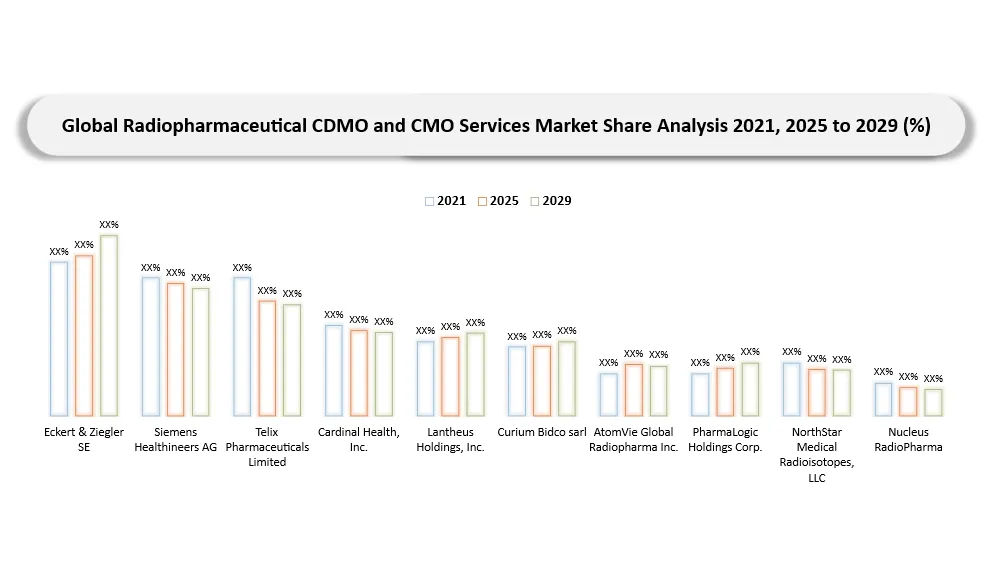
Key Companies of Radiopharmaceutical CDMO and CMO Services Market
- Eckert & Ziegler SE (Germany)
- Curium Bidco sarl (Luxembourg)
- Telix Pharmaceuticals Limited (Australia)
- Cardinal Health, Inc. (United States)
- AtomVie Global Radiopharma Inc. (Canada)
- Lantheus Holdings, Inc. (United States)
- Nucleus RadioPharma (United States)
- NorthStar Medical Radioisotopes, LLC (United States)
- SpectronRx (United States)
- SOFIE Biosciences, Inc. (United States)
- PharmaLogic Holdings Corp. (United States)
- Cyclotek (Aust) Pty Ltd (Australia)
- Isotopia Molecular Imaging Ltd. (Israel)
- Siemens Healthineers AG (Germany)
- ROTOP Pharmaka GmbH (Germany)
- ABX advanced biochemical compounds GmbH (Germany)
- C Ray Therapeutics (Chengdu) Co., Ltd. (China)
- Global Medical Solutions, Ltd. (United States)
- RadioMedix, Inc. (United States)
- BWX Technologies, Inc. (United States)
Company Profiles
Eckert & Ziegler SE
Eckert & Ziegler SE is a well-established radiopharmaceutical and isotope-technology company with capabilities spanning medical radioisotopes, radiopharmaceutical development and contract manufacturing. Its competitive strength is anchored in isotope expertise, GMP-qualified infrastructure and growing exposure to therapeutic radionuclides. The company is particularly well positioned as demand increases for reliable isotope supply and scalable manufacturing support across clinical and commercial programs.
Strategically, Eckert & Ziegler’s differentiation lies in combining isotope access with manufacturing capabilities and regulatory experience. Continued investment in medical capacity, therapeutic-isotope production and regional manufacturing infrastructure should strengthen its ability to support higher-value radiopharmaceutical programs and long-term commercial supply.
Curium Bidco sarl
Curium operates as a major nuclear medicine platform with established diagnostic and therapeutic radiopharmaceutical capabilities, manufacturing infrastructure, regulatory expertise and broad commercial reach. Its scale and existing customer relationships provide a strong base for manufacturing partnerships, lifecycle support and geographic expansion.
Its competitive advantage is strongest where customers require reliable commercial production, established regulatory systems and access to an integrated radiopharmaceutical supply network. Expansion into therapeutic radiopharmaceuticals and stronger isotope-security strategies could further increase its strategic relevance.
Telix Pharmaceuticals Limited
Telix Pharmaceuticals has developed Telix Manufacturing Solutions as an integrated radiopharmaceutical manufacturing and distribution platform supporting both internal programs and third-party customers. Its network of radiopharmacies and manufacturing facilities across the U.S., Europe, Australia and Japan provides a geographically diversified production footprint and strengthens supply-chain resilience.
Telix’s strategic advantage comes from combining product development with manufacturing, isotope capabilities and regional distribution. Continued expansion of multi-site GMP production and third-party manufacturing services could increase utilization of its infrastructure while positioning Telix as a broader clinical-to-commercial radiopharmaceutical manufacturing partner.
Cardinal Health, Inc.
Cardinal Health participates through its Nuclear & Precision Health Solutions operations, combining a broad nuclear pharmacy network with theranostics support, specialty pharmaceutical distribution and expanding Actinium-225 capabilities. Its national logistics infrastructure enables support for clinical and commercial radiopharmaceutical programs requiring time-sensitive preparation and delivery.
Its key differentiator is downstream reach rather than a conventional standalone CDMO model. Integration of isotope capabilities, nuclear pharmacy operations and nationwide distribution gives Cardinal Health a strong position in regionalized manufacturing and commercial dose-delivery models.
Public Company's Latest Performance Comparison
| Public Company | Latest Performance | Radiopharma CDMO/CMO Exposure | Key Growth Drivers |
| Eckert & Ziegler SE | Q1 2026 sales €72.9M, +7% YoY; Medical segment €41.5M vs €34.4M prior year | Direct: pharma radioisotopes and radiopharma services are core Medical segment activities | Growth in pharmaceutical radioisotopes, radiotherapeutic demand and capacity expansion. |
| Telix Pharmaceuticals | Q1 revenue US$230M; Q2 revenue US$247M, +21% YoY; Q2 TMS revenue US$45M | Direct: Telix Manufacturing Solutions includes radiopharmacies, facilities and third-party service revenue | Precision Medicine growth, RLS network, facility expansion, Zr-89 capability and Lu-based GMP production. |
| Lantheus Holdings | Q1 2026 worldwide revenue US$377.3M, +1.2% YoY | Adjacent/direct manufacturing exposure through radiopharmaceutical portfolio and acquired production assets | PYLARIFY/Neuraceq demand, product transitions, manufacturing integration and radiotherapeutic pipeline. |
| Cardinal Health | Q2 FY26 revenue US$65.6B, +19% YoY; Q3 Pharmaceutical & Specialty revenue US$56.1B, +11% YoY | Direct through Nuclear & Precision Health Solutions; company results mostly broader pharmaceutical distribution | Specialty growth, national nuclear pharmacy network and expanded Ac-225 production capabilities. |
Note: Public companies generally do not disclose standalone Radiopharmaceutical CDMO/CMO revenue. The comparison therefore uses the closest reported company or segment performance and separately identifies the degree of direct exposure to outsourced radiopharmaceutical manufacturing and distribution.
Market Ecosystem Table
| Value Chain Sector | Representative Companies / Organizations | Role in the Market |
| Isotope Production & Enriched Targets | Eckert & Ziegler, NorthStar Medical Radioisotopes, SHINE Technologies, ITM, Isotopia, Curium | Provides radionuclides, enriched targets and purification inputs that determine upstream supply security. |
| Radiopharmaceutical CDMO/CMO | AtomVie Global Radiopharma, Nucleus RadioPharma, SpectronRx, Evergreen Theragnostics, Eckert & Ziegler | Process development, GMP manufacture, fill-finish, analytical testing, release and commercial scale-up. |
| Integrated Radiopharma Platforms | Curium, Telix, Jubilant Radiopharma, Lantheus, ITM | Combines product development or commercialization with manufacturing, isotope access and/or distribution. |
| Radiopharmacy & Distributed Production | Cardinal Health, RLS/Telix, Jubilant Radiopharma, PharmaLogic, SOFIE, PETNET Solutions | Produces and distributes short-lived diagnostic and therapeutic doses close to treatment centers. |
| Automation & Synthesis Equipment | Comecer, Trasis, Eckert & Ziegler equipment platforms, Synthra, GE HealthCare modules | Provides hot cells, isolators, synthesis modules, dispensing and radiation-safety equipment. |
| Analytical / QC / Release | Specialist CDMO labs, hospital radiopharmacies, GMP quality laboratories | Performs radionuclidic/radiochemical purity, sterility, endotoxin, identity, potency and release testing. |
| Logistics & Dangerous Goods | Specialty couriers, air freight providers, local nuclear logistics partners | Coordinates time-critical Class 7 transport, packaging, tracking and chain of custody. |
| Sponsors & End Users | Novartis, Bayer, AstraZeneca, Eli Lilly, Telix, Lantheus, hospitals, nuclear medicine centers | Generates development and commercial demand for radiopharmaceutical manufacturing services. |
| Regulators & Standards | FDA, EMA, NRC/state authorities, IAEA, USP, Ph. Eur., local nuclear regulators | Defines pharmaceutical GMP, radiation-safety, transport, isotope and facility requirements. |
Radiopharmaceutical CDMO and CMO Services Market Major Pain Points
- Limited and Concentrated Supply of Therapeutic Radioisotopes: Dependence on constrained supplies of radionuclides such as Lutetium-177 and Actinium-225 creates procurement and production-scheduling risks. Reactor outages, target-material shortages or limited qualified sources can delay clinical and commercial manufacturing programs.
- Short Half-Life and Time-Critical Distribution Requirements: Radioactive decay limits inventory holding and transportation distances, requiring tightly coordinated manufacturing, batch release and delivery. Production or logistics delays can result in dose losses, missed treatment schedules and greater reliance on regional manufacturing networks.
- High Capital and Regulatory Burden for Specialized Manufacturing: Radiopharmaceutical production requires significant investment in hot cells, shielding, aseptic suites and specialized analytical infrastructure, alongside compliance with pharmaceutical GMP, radiation-safety, nuclear-licensing and transport requirements.
- Scaling Clinical Processes Into Multi-Site Commercial Manufacturing: Processes developed for small clinical batches can be difficult to transfer into repeatable commercial production across multiple sites. Sponsors must address process validation, technology transfer, shipping qualification, isotope sourcing and capacity reservation before commercial launch.
- Shortage of Specialized Radiopharmaceutical Manufacturing Talent: Limited availability of experienced radiochemists, quality-control professionals, qualified persons, radiation-safety specialists and trained operators can restrict facility throughput, complicate scale-up and increase operating costs as manufacturing capacity expands.
Radiopharmaceutical CDMO and CMO Services Market Recent Developments
- May 2026- NorthStar Medical Radioisotopes, LLC entered a multi-year strategic agreement with QSA Global to establish a reliable Radium-226 target-material supply chain supporting commercial-scale, no-carrier-added Actinium-225 production.
- April 2026- Cardinal Health, Inc. expanded Actinium-225 production at its Indianapolis Center for Theranostics Advancement with a new high-capacity production line; the company reported that weekly Ac-225 output had quadrupled since late 2024.
- June 2025- PharmaLogic Holdings Corp. completed the acquisition of a majority stake in Agilera Pharma AS, expanding its radiopharmaceutical CDMO capabilities across development, clinical and commercial manufacturing and international distribution.
- March 2025- Eckert & Ziegler SE and AtomVie Global Radiopharma Inc. signed a global supply agreement for non-carrier-added Lutetium-177 to support AtomVie’s radiopharmaceutical CDMO programs from early-stage development through commercialization.
- December 2024- Siemens Healthineers AG completed the acquisition of Advanced Accelerator Applications Molecular Imaging from Novartis, adding 13 PET radiopharmaceutical manufacturing sites in Europe to its radiopharma production network.
- October 2024-NorthStar Medical Radioisotopes, LLC opened a 52,000-square-foot radiopharmaceutical CDMO facility in Beloit, Wisconsin, supporting development and dose manufacturing for isotopes including Ac-225, Lu-177, Cu-64, Cu-67 and In-111.
- August 2024- Eckert & Ziegler SE signed a multi-year agreement to serve as the European CMO for Telix Pharmaceuticals’ Phase III ProstACT GLOBAL study, including GMP-grade Lutetium-177 supply from its Berlin facility.
Analyst View / Opinion on Radiopharmaceutical CDMO and CMO Services Market
- The radiopharmaceutical outsourcing market is moving from project-based clinical support toward strategic capacity partnerships tied to multi-year commercial supply.
- Therapeutic radiopharmaceuticals will create disproportionate value growth because they require more complex isotope sourcing, shielding, scheduling and release than high-volume diagnostics.
- Isotope security is becoming a commercial differentiator equal to manufacturing quality; CDMOs without diversified supply arrangements may struggle to win late-stage programs.
- Regional manufacturing networks will become essential for commercial scale because physical decay limits the usefulness of centralized global production.
- Integrated platforms that combine development, GMP manufacturing, isotope sourcing and distribution will be better positioned for large pharmaceutical sponsors seeking fewer handoffs and faster technology transfer.
- Ac-225 offers the strongest long-term upside but also the highest supply and infrastructure risk; Lu-177 remains the more established near-term commercial opportunity.
- Providers should invest in standardized multi-site transfer, digital quality systems and automated production before capacity becomes constrained by labor rather than hot-cell space.
- M&A and strategic partnerships will remain active because qualified radiopharma infrastructure is scarce, slow to build and difficult to replicate.
Radiopharmaceutical CDMO and CMO Services Market Target Audience
| INDUSTRY | WHO SHOULD BUY THIS REPORT? | REASON TO BUY THIS REPORT |
| Radiopharmaceutical Developers | Chief medical, CMC, operations and supply-chain teams | Select CDMO partners, plan isotope sourcing, evaluate scale-up and launch readiness. |
| Pharma & Biotechnology | Portfolio, business development and external manufacturing teams | Assess outsourcing models, capacity, partnership and acquisition opportunities. |
| CDMOs & CMOs | Strategy, commercial and site leaders | Benchmark service portfolios, identify white space and prioritize capacity investments. |
| Isotope Suppliers | Production, sales and alliance teams | Understand downstream demand, contracting patterns and high-growth isotopes. |
| Hospitals & Nuclear Medicine Networks | Radiopharmacy and nuclear medicine leaders | Evaluate supply availability, regional production and theranostic infrastructure. |
| Investors & Consulting | Private equity, venture capital and strategy teams | Assess market growth, capacity scarcity, company positioning and M&A opportunities. |
| Equipment & Technology Suppliers | Hot-cell, synthesis, automation and QC vendors | Identify facility-expansion demand and technology adoption priorities. |
| Market Research and Consulting | Consulting and Market Intelligence Firms | To support strategic planning, competitive benchmarking and client advisory services. |
Why Choose DATAM?
- Data-driven insights combining market sizing, pipeline analysis, isotope supply, manufacturing capacity and country-level access.
- Post-purchase analyst consultations for CDMO selection, capacity planning, market entry and partnership strategy.
- Annual updates covering facility expansions, regulatory changes, isotope developments, M&A and commercial launches.
- Specialized focus on emerging radiopharmaceutical manufacturing hubs rather than generalized pharmaceutical outsourcing.
- Actionable analysis connecting technical manufacturing constraints with commercial strategy and investment decisions.
What DATAM Uniquely Provides
- Ten-year forecasts across service type, modality, radioisotope, targeting vector, scale, therapeutic area, end user and engagement model.
- Dedicated analysis of Lu-177, Ac-225, F-18 and other key isotope ecosystems.
- Competitive benchmarking of integrated radiopharma platforms, specialist CDMOs and radiopharmacy networks.
- Market ecosystem mapping from isotope production and hot-cell equipment through manufacturing, distribution and end users.
- Public-company 2026 performance comparison linked to radiopharmaceutical exposure and growth drivers.
- Strategic recommendations for capacity reservation, regionalization, supplier diversification and market entry.


























































