


Power Distribution Materials Market Size and Overview
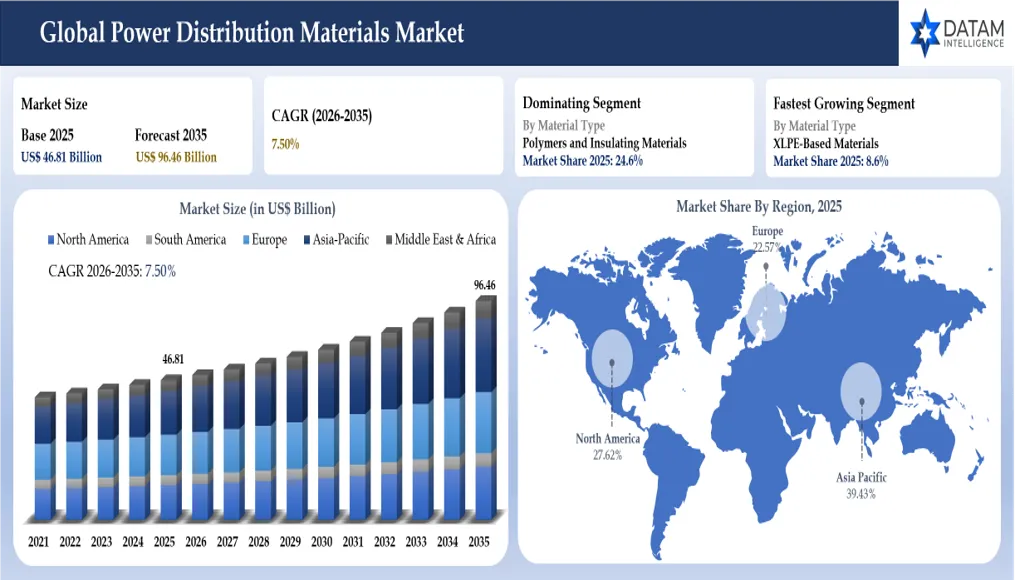
The global power distribution materials market reached US$ 46.81 billion in 2025 and is expected to reach US$ 96.46 billion by 2035, growing with a CAGR of 7.50% during the forecast period 2026-2035.
The market is seeing the changes owing to the upgrading of distribution networks, undergrounding and electrification of new load centers. The utilities are increasingly moving from the use of traditional conductor and insulation technology to high capacity aluminum and copper conductors, XLPE cable system, composite and polymer insulators and anti-corrosion hardware. Another factor contributing to demand is the fast pace at which charging stations for electric vehicles, roof-top solar plants, batteries and data center loads are being added. The latter is adding to the demand for upgrade of feeders, transformers, large conductors and protection devices. In India, Revamped Distribution Sector Scheme (RDSS) entails an expenditure of around ₹3.03 lakh crore on continuous investment in distribution network and its related material.
The trend of material demand is moving towards advanced, resilient and environment-friendly material. Copper and aluminum continue to be important materials for use as conductors and transformers, whereas XLPE, PVC, silicone rubber, epoxy resins, composite materials and ester fluids are used as insulators. The aging of the transmission and distribution system has increased the need for replacing transformers, underground cables, overhead lines, insulators, connecting systems and line hardware. On the other hand, recycled polymers, low-carbon aluminum, natural ester fluids and other environmentally friendly materials have opened up new product markets because of the focus on lifecycle, sustainability and environmental considerations by utility and infrastructure providers.
Power Distribution Materials Market Key Takeaways
- The market shares of polymers & insulating materials stood at around 24.6% in 2025 owing to widespread use of XLPE, PVC, polyethylene, silicone rubber and epoxy resins in the distribution cables, insulation, connectors and transformer parts.
- Materials based on XLPE are anticipated to grow at the highest rate, recording a 8.6% CAGR owing to the rising usage of underground medium voltage and high voltage distribution cables that demand high dielectric strength, heat resistance, water resistance and longevity.
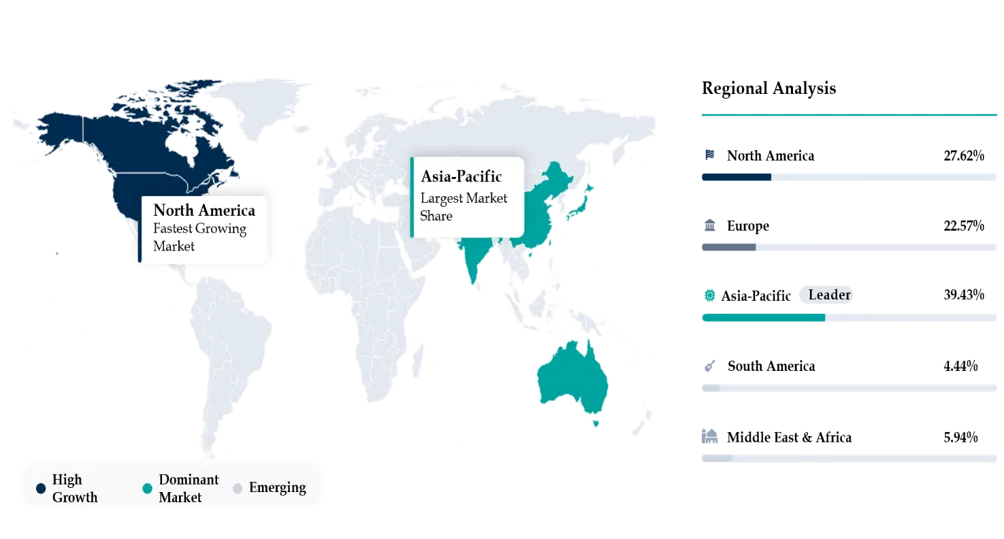
- Asia-Pacific region held the largest market share of the global power distribution materials market at 39.43% in 2025 due to significant investments in distribution grids in China and India, urban electrification, renewable energy integration, development of electric vehicle infrastructure and aging electrical grid replacements.
- The increased use of low carbon aluminium, recycled polymer material, natural ester fluid and composite materials is prompting the industry players to invest in distribution materials that have reduced environmental impact and retain electrical performance and mechanical durability.
- Increased investments in the modernization of grids, underground distribution systems, renewable energy connections, EV charging systems, data centers and distribution networks is increasing the demand for large conductor material, XLPE cables, composite insulators, transformers, corrosion-resistant fittings, connectors and advanced insulation systems.
Power Distribution Materials Industry Trends and Strategic Insights
- Shift Toward High-Performance Distribution Materials: Utilities are now opting for low-loss conductors, XLPE insulated cables, composite insulators, line hardware resistant to corrosion and high temperature material to improve the capacity of the system while increasing the useful life of the assets with minimum maintenance.
- Accelerating Underground Distribution Infrastructure: Increasing congestion in urban areas, harsh weather and the need for reliability are making utilities move towards the use of underground distribution cables and other accessories that resist moisture.
- Material Demand Rising From Distributed Energy Integration: The increase in rooftop solar systems, energy storage devices, electric vehicle charging stations and distributed generation is altering the loading patterns in electricity distribution networks, leading to an increased demand for upgraded electrical conductors, two-way power compatible devices, insulation systems and reinforcement materials.
- Increasing Focus on Grid Resilience and Environmental Durability: Utilities are increasingly focusing on materials that are capable of functioning in high temperature, humidity, flood, salt, wildfire and extreme weather conditions, leading to a growing demand for composite insulators, water and weatherproof cables, galvanized hardware and protective materials.
- Strategic Localization of Critical Material Supply Chains: Manufacturing companies are increasingly opting for local production of copper, aluminum, electrical polymers, special transformer materials or equipment components for avoiding risks connected with the instability of commodity rates, the geopolitical situation, or lengthy procurement operations.
Power Distribution Materials Market Scope
| Metrics | Details | |
| 2025 Market Size | US$ 46.81 Billion | |
| 2035 Projected Market Size | US$ 96.46 Billion | |
| CAGR (2026-2035) | 7.50% | |
| Largest Market | North America | |
| Fastest Growing Market | Asia-Pacific | |
| By Product Type | Distribution Transformers, Power Distribution Cables, Overhead Conductors, Insulators, Switchgear Components, Circuit Breakers, Fuses, Disconnectors & Isolators, Connectors & Terminations, Cable Joints & Accessories, Overhead Line Hardware, Poles & Supporting Structures, Lightning & Surge Arresters, Earthing & Grounding Materials, Transformer Accessories, Metering & Connection Components and Other Distribution Materials | |
| By Mateial Type | Metals, Ceramics & Glass, Polymers, Resins & Insulating Compounds, Composite Materials and Insulating Fluids | |
| By Distribution Voltage | Low Voltage (Up to 1 kV), Medium Voltage (Above 1 kV to 36 kV) and High Voltage (Above 36 kV to 110 kV) | |
| By Installation Type | Overhead, Underground and Hybrid | |
| By Equipment Installation | Pole Mounted, Pad Mounted, Indoor, Outdoor Ground Mounted and Substation | |
| By Application | Grid Expansion, Grid Modernization, Aging Infrastructure Replacement, Distribution Network Reinforcement, Rural Electrification, Urban Electrification, Renewable Energy Integration, Distributed Energy Resource Integration, EV Charging Infrastructure, Data Centers, Microgrid Interconnection, Industrial Power Distribution and Commercial Power Distribution | |
| By End-User | Electric Utilities, Distribution System Operators, EPC Contractors, Industrial Facilities, Commercial Facilities, Residential Infrastructure Developers, Renewable Energy Developers, EV Infrastructure Developers, Data Center Operators and Government & Municipal Authorities | |
| By Region | North America | U.S., Canada, Mexico |
| Europe | Germany, UK, Russia, France, Spain, Italy, Poland | |
| Asia-Pacific | China, India, Japan, Australia, South Korea, Indonesia, Malaysia, Singapore, Vietnam, Thailand, Philippines, Taiwan | |
| South America | Brazil, Argentina | |
| Middle East and Africa | UAE, Saudi Arabia, South Africa, Israel, Turkiye, Nigeria | |
| Report Insights Covered | Competitive Landscape Analysis, Company Profile Analysis, Market Size, Share, Growth | |
Why does this report matter in 2026?
The significance of the power distribution materials market was amplified in the year 2026 driven by the rise in demand for electricity, grid improvement, renewable energy implementation, the need for EV chargers, data center growth and obsolete distribution assets. Utilities do not only expand their capacity but also replace their worn out conductors, transformers, cables, insulators, connectors and protective apparatus while changing their distribution networks to allow for both changes in the direction of power flow and variability in flows. Thus, utilities are more interested in understanding what material categories are in the highest demand, as well as where the capital investment in the infrastructure is happening and what new technologies are entering the newly developing market.
This report is significant since material availability, price volatility of commodities, lead time for transformers and cables, technical requirements and localized supply chains could impact the implementation of distribution projects in 2026. The decision on materials has been increasingly driven not only by the initial cost but also by lifecycle performance, environmental sustainability, efficiency, resiliency and availability. A market assessment thus enables the stakeholders to recognize high growth material areas, technology substitution options, supply chain issues in different regions, localization opportunities and utility buying priorities, which will guide their capacity-building and investment decisions.
Power Distribution Materials Market White Space & Investment Opportunities
- Advanced Conductor Materials for Capacity-Constrained Networks: There is potential for companies to invest in conductors materials that will enable utility companies to increase their transfer capacity in the existing networks without having to open new rights-of-way.
- Next-Generation Underground Cable Materials: The increasing installation of underground distribution systems means there is room for development of high-performance XLPE insulated cables and joints and terminations that are moisture-resistant and accessories that have high resistance to corrosion.
- Composite and Polymer-Based Insulation Systems: Suppliers have the opportunity to serve utility companies who want to replace their old porcelain insulation systems with lighter-weight polymeric and composite versions with better contamination ratings and more mechanical/elemental durability.
- Resilient Materials for Extreme-Weather Distribution Networks: There is potential investment opportunities with regards to fireproof cables, weatherproof coatings, corrosion resistant line hardware, flood resistant equipment and high temperature resistant materials.
- Localized Production of Critical Distribution Materials: There are possibilities for local manufacturing of aluminum and copper conductors, distribution cables, transformer parts, connections, insulators and safety devices reducing reliance on the supply chain and building a strategic reserve close to important utility markets.
Power Distribution Materials Future Market Transformation
The market for power distribution materials is anticipated to undergo a significant change from a primarily hardware-focused commodity sector to that of a materials-based performance-driven ecosystem owing to the evolving demands in the distribution networks which now require solutions for handling higher loads, distributed generation, battery storage systems, EV charging systems and the increasingly exigent operating environment. The future procurement will likely favor the use of high-temperature low-sag and improved conductivity conductors; modern composite and polymer insulators; XLPE cable systems of high quality; hardware with improved corrosion and fire resistance; compact fittings for underground systems, as well as transformer materials which have a longer service life contributing to increased efficiency, durability and lifecycle economics. Additionally, one should expect that both utilities and manufacturers will become more focused on the traceability of materials, recycling options, domestic materials sourcing, modular design, predictive management of assets and electronic procurement options which will transfer advantages from quantity to quality.
Power Distribution Materials Market Buyer Decision-Making Criteria
Buyers in the power distribution materials market, especially electric utilities, distribution firms, EPC contractors and construction companies, look at materials for their functional reliability instead of simply the price charged. The procurement consideration hinges on a number of factors including compliance with standards, operating capabilities, statistics of service life and durability and installation and replacement needs. In large utility projects, factors such as vendor qualification, testing certifications, standardized specifications, delivery capacity and proven field performance can determine whether a material is accepted for network deployment.
Major Decision-Making Criteria
- Technical compliance and utility approvals
- Electrical, thermal and mechanical performance
- Reliability and service life
- Environmental and corrosion resistance
- Lifecycle cost
- Supply capacity and lead time
- Compatibility with existing networks
- Safety, testing and certification
- Raw-material and supply-chain security
- Recyclability and environmental performance
Power Distribution Materials Market Economic & Investment Analysis
Economic outlook of the power distribution materials market depends on investments made by utilities, power demand growth, grid reinforcement and replacement of aging distribution equipment. Investments are being increasingly focused on distribution transformers, conductors, cables, insulators, connectors, protection devices and underground network materials as utilities increase their capacities and enhance reliability of electricity supply. On the other hand, the fluctuations in prices for copper and aluminum, energy prices, cost of production and transportation costs affect the price level for materials and profit margins of manufacturers. The growing necessity to integrate distributed energy resources, including solar energy, battery energy storage and electric vehicle charging, leads to more investment into distribution materials.
In terms of investing, possibilities are arising from advanced conductors, composite insulators, XLPE cables, durable outdoor hardware, transformers and localized manufacturing. Investors are considering suppliers in the light of manufacturing capabilities, availability of raw material, utility qualification, visibility of orders, management of lead times and performance advantages over the life cycle rather than capacity alone. The regional manufacturing of critical materials will help decrease the vulnerability of any international supply shocks. Manufacturers that differentiate their materials and qualify them for utilities will have more long-term purchase relations and replacement needs.
Power Distribution Materials Investment Trends in the Market
- Expansion of Distribution-Grid Modernization Spending: Utilities are investing more money on the replacement of old conductors, cables, insulators, transformers, connectors and protective equipment, thus providing continuous buying chances to manufacturers of distribution materials.
- Investment in Underground Distribution Materials: Urbanization and demands for reliability have boosted investments in XLPE cables, cable joints, terminations, duct installation systems and accessories that are corrosion resistant.
- Capital Flow Toward High-Capacity Conductors: Investments are being directed at high temperature low sag conductors, higher conductivity conductors and composite conductor systems, which allow increased distribution capacity without having to increase infrastructure proportionately.
- Growing Investment in Grid-Resilient Materials: There are increased investments being made by utilities on materials that are resistant to weather such as cables, composite insulators, coated line hardware, fire resistant material and corrosion resistant material to help decrease the amount of outages from the environment.
- Localization of Distribution-Material Manufacturing: Strategic investments are being made for growing regional output in terms of copper and aluminum conductors, power lines, insulation materials, connectors, transformer components and also other important distribution hardware aimed at ensuring supply reliability and avoiding dependency on imported materials.
Strategic Indicators for Power Distribution Materials Market
High Regulation Impact
The power distribution materials market experiences significant regulation effects since distribution cables, transformers, conductors, insulators, switchgear parts, connectors and protection devices have to meet specific electrical safety requirements and testing standards before being used on a wide scale. Electrical safety regulations affect the qualifications of conductors, insulation properties, fire protection, transformer efficiency, grounding, dielectric strength and mechanical durability. Moreover, requirements of utility companies may include vendor approval, type testing, plant inspection, traceability and certification, which lead to higher qualification costs and longer introduction period to the market. On the other hand, increased emphasis on energy efficiency, hazardous substances, recyclability, material safety and resilience is forcing manufacturers to change their materials and components, along with an increase in the demand for conforming and better-performing distribution products.
High Investment Activity
The market for power distribution materials is experiencing growth in investment as companies in the utilities and infrastructure sectors are increasing their spending on improvements to the distribution grid that include new construction of distribution lines, implementation of new technologies to replace old infrastructure, construction of underground power lines, adding capacity and achieving network resilience. Money is being invested in facilities that produce transformers, conductors, cables, composite insulators and other power distribution equipment, while manufacturers are increasing local production to avoid lengthy delivery times. Additionally, investment is moving toward materials that enable EV and solar-powered technology to operate more efficiently. This is promoting wise investment in automation, innovations in materials, local production, recycling capabilities and supply contracts with utility companies.
Supply Chain Disruption
The power distribution materials market is susceptible to supply chain disruption due to the fact that key input materials like copper, aluminum, electrical grade polymers, transformer steels, specialized insulation materials and many more are procured through the complex web of international supply chains. Price volatility in the case of copper and aluminum, shipping delays, energy prices, political instability, as well as restricted manufacturing capacities of specialized distribution transformers, cables and other components may increase the procurement time and the cost of the projects. This situation is especially true for utilities that need to work on fixed-project schedules, when the lack of even one component like distribution transformers, cable accessories, insulators, connectors and protective devices may cause a delay in deployment of the entire network. This situation is forcing companies to look for alternative sources of supplies, produce more locally, manage their inventories strategically, develop standardized components where possible and establish longer-term supply relationships.
Pricing Volatility
The power distribution materials market sector has to deal with the issue of price instability because copper and aluminium are the main factors affecting the value of conductors, distribution cables, transformer windings, connectors and the other electrical parts. As per LME reports of September 9, 2026, the price of copper experimentally hit $14,671/ton on the date, while the aluminium price reached around $3,352/ton. As for India, the price of copper was estimated to be around ₹1,408/kg on September 24, 2026 and about ₹349.95/kg in late September 2026, concerning the September 30 contract for aluminium on MCX. Such developments may result in great pressure on manufacturers in terms of the costs of production of wires, transformers and other electric devices, producing obstacles for forming quotations and long-term contracts.
Procurement Pressure
There is rising procurement pressure in the power distribution materials market owing to the fact that the utilities and the EPC companies will have to source transformers, conductors, cables, insulators, connectors, switch gear parts and line hardware, all of which will come with lead times, volatile prices for copper and aluminum and complex technical specifications. The distribution projects may have requirements for vendor approval from the utilities, type tests, defined insulation and thermal rating criteria, performance-related environmental criteria and compatibility with existing network equipment. This reduces the number of sources available to the buyer. Meanwhile, there are also projects for grid modernization, undergrounding, renewables, EV chargers and infrastructure upgrades. Consequently, buyers are increasingly looking at the supplier’s capacity, reliability of delivery, availability of raw materials, certifications, total lifecycle costs and the ability to supply standardized or customized products for project execution.
New Technology Adoption
Innovation of technologies is resulting in a shift in the power distribution materials market from the traditional materials to new-age materials offering high capacity, less losses, longer life and environmental resilience. High-temperature low-sag conductors, advanced-conductivity conductors, composite-core conductors, polymeric and composite insulators, advanced XLPE cables, fire-resistant and moisture-resistant cable materials, corrosion-resistant line hardware and advanced transformer insulation materials are some of the materials being considered by utilities for their modernized distribution networks. Integration of rooftop solar energy, battery storage systems, EV charging stations and other distributed energy resources is resulting in an increased need for materials which can handle high loading and power flow changes. Material engineering, automated quality control, recyclable insulation materials and design for specific applications are among the measures adopted by manufacturers in response to these challenges.
Regional Expansion Opportunity
The power distribution materials market will witness growth in regional expansion in Asia Pacific, North America and select Middle Eastern and Latin American countries due to grid expansion, aging infrastructure replacements, electrification, renewables integration and distribution system reinforcement, which increase demand for materials. The Indian and Chinese markets present huge regional expansion prospects through extensive grid modernization and electrification efforts that create demand for conductors, distribution transformers, cables, insulators, connectors and line hardware. The United States is expected to offer regional expansion in demand for replacement transformers, innovative conductors, underground cables and distribution system materials. Southeast Asia, the Middle East and Latin America provide new opportunities for expansion as utilities connect renewables to their grids and improve their distribution systems. Establishing local manufacturing and distribution channels and obtaining utility-approved vendor status, gives suppliers the edge in entering new markets.
Government Policy Support
The power distribution material market is being supported by government policies, which include programs aimed at grid modernization, distribution loss reduction, electrification, grid resilience, renewable energy incorporation and manufacturing of electrical equipment within the country. The Government of India has been using the Revamped Distribution Sector Scheme (RDSS) program in India to facilitate replacement and reinforcement of conductors, distribution transformers, substations, underground and aerial bunched cables and other electrical equipment of the grid. The U.S. government has also been implementing policies that will support the manufacturing of distribution transformers, grid equipment, advanced conductors and other distribution material within the country due to supply chain bottlenecks. China is also investing heavily in improvements to the distribution grids and intelligent networks. Such policies provide visibility for the material suppliers and encourage locally made materials, efficient materials, standard parts and robust distribution equipment.
Pricing Intelligence
Pricing intelligence in the power distribution materials market is now becoming more reliant on individual project's material specifications, purchase quantity, voltage level and total installed cost, rather than on a common commodity price indicator. For instance, a current proposal for an Indian distribution network includes replacement of old 16/25/63 kVA distribution transformers with new ones having minimum 100 kVA capacity, along with 77 circuit-km of 3×300 sq. mm underground 11 kV cable, 138 circuit-km of HT aerial-bunched cable and 68 circuit-km of 11 kV reconductoring. Changes in such specifications have a significant impact on costs associated with each distribution project, since higher capacity transformers, thicker conductors, underground cables and accessories will need different amounts of materials to be installed, along with different qualifications. This makes buyers benchmark price of transformers by kVA, price of cables/conductors by km, accessory price by connection and total installed cost by circuit-km, instead of comparing unit prices only.
| HS Code | Reporter | Trade Flow | 2025 Trade Value | Interpretation |
| 8504 (Electrical transformers, static converters and inductors) | United States | Imports | US$36 billion | Indicates strong U.S. import demand for transformer and related electrical equipment used in distribution infrastructure. |
| 8504 (Electrical transformers, static converters and inductors) | China | Exports | US$55 billion | Highlights China’s significant role as a global manufacturing and export base for transformer-related electrical equipment. |
| 8504 (Electrical transformers, static converters and inductors) | Germany | Imports | US$14 billion | Reflects substantial German demand for insulated conductors and cable products relevant to distribution networks. |
| 8504 (Electrical transformers, static converters and inductors) | Germany | Exports | US$13 billion | Indicates Germany’s important export activity in transformer and related electrical equipment supporting distribution infrastructure. |
AI Impact Analysis of Power Distribution Materials Market
AI is shaping the power distribution materials sector by allowing utility companies and manufacturers to anticipate their material and component needs through asset condition information, load profiles, outage reports, weather conditions and plans for expansion of the electric grid. AI-enabled asset analytics helps identify the distribution transformers, cables, wires, insulators and other tools that will fail soon, thus enabling the utility companies to plan ahead and change them before the problems arise. By using AI in load forecasting, utility companies can better plan for localized demand caused by electric vehicle chargers, solar panels on rooftops and data centres, as well as find out where new transformers, wires, cables and other devices will be needed.
Artificial intelligence is also changing the field of production processes, quality assurance and acquisition of materials. Companies are using machine learning technologies to collect information about products, such as their advantages and defects, as well as machine operations. Predictive analytics enhance the efficiency of using materials and scheduling processes. In terms of procurement, AI has the capability to integrate commodity price changes, supplier performance, lead times, inventories and schedules for improved decision making for copper, aluminum, insulation, cables, transformers and distribution hardware. It presents new business opportunities for suppliers who integrate forecasting and quality systems supported by AI with flexible manufacturing and traceable distribution-materials supply chains.
Disruption Analysis of Power Distribution Materials Market
The shift from traditional, standardized grid equipment to more functional and application-specific materials is driving a revolution in the power distribution materials market. High-temperature low sag conductors, composite core conductors, polymeric and composite insulators, cutting-edge XLPE cable systems and hardware that is able to resist corrosion and fire are changing how electric companies deal with limitations in capacity and asset lifetime. At the same time, the rise in underground electricity distribution and widespread use of distributed solar energy, battery storage and EV charging are affecting which materials will now be used in distribution, resulting in more demand for small, thermally efficient, moisture-resistant and bidirectional power devices.
A different disruption is happening with the market's procurement and supply chain structure. Utilities have shifted their focus to lifecycle performance, resilience, material sourcing, domestic sourcing and reliable delivery. The shortage of distribution transformers, increased volatility in copper and aluminum prices, the increase of lead times on special materials and a lack of standard specifications in utilities are compelling manufacturers to put production close to the market, standardize designs and research alternative materials and components. This allows suppliers to achieve significant competitive advantages through advanced material use in scalable production that is approved by utility companies and has reliable delivery.
Power Distribution Materials Market BCG Matrix: Company Evaluation
STAR
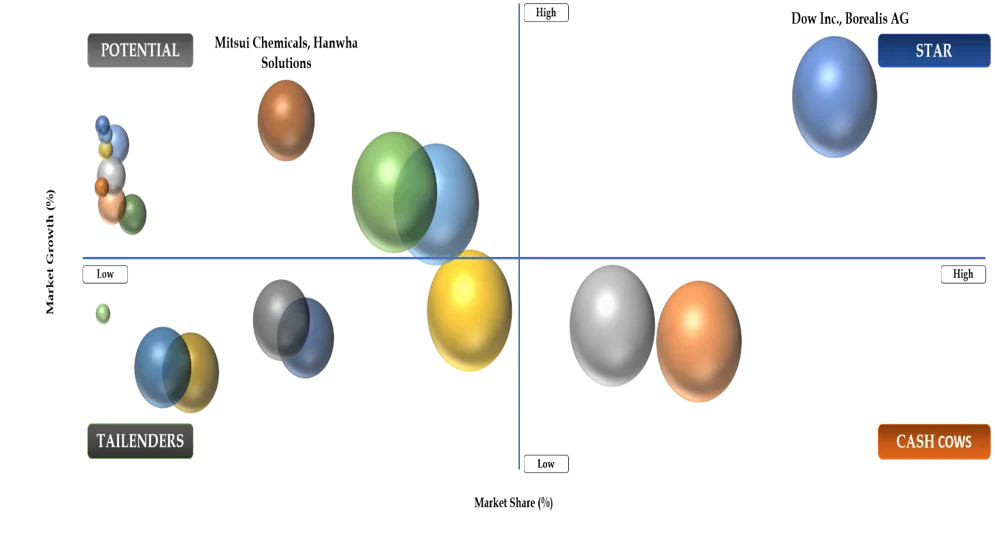
Dow Inc., Borealis AG and SABIC serve as the Star companies due to their impressive portfolio of polyethylene, XLPE-like products, engineering resins and other specialty materials that are employed in power distribution. Their existing manufacturing capabilities and extensive range of electrical materials are expected to capitalize on increased demand for underground distribution cables, advanced insulators and modernizing infrastructure materials. Moreover, development in renewable energy, EV charging, distributed generation and data centers electricity requirements are expected to drive this demand.
POTENTIAL
Potential is a category that includes companies such as Mitsui Chemicals, Hanwha Solutions, LG Chem, Arkema, DuPont and Syensqo. These companies chances to grow are limited to higher performance insulators, high temperature resistant polymers, advanced resins, composites and more durable components for power distribution. Expanding product lines, gaining certification, regional production facilities and collaborating with cable and power distribution component manufacturers will give them more chances to enter the power distribution materials market.
Power Distribution Materials Market Dynamics
Driver Impact Analysis
| Driver | Market Growth Impact (%) | Demand Concentration | Impacted Use Case | Strategic Impact |
Distribution Grid Modernization & Aging-Asset Replacement | 32% | North America, Europe, Japan | Replacement of aging conductors, transformers, cables, insulators and line hardware | Creates sustained replacement-driven demand and favors suppliers with utility-approved, long-life materials |
Renewable & Distributed Energy Integration | 27% | China, India, U.S., Europe | Grid reinforcement for solar PV, battery storage and distributed generation | Increases demand for higher-capacity conductors, cables, transformers and advanced insulation systems |
Electrification & EV Charging Infrastructure Expansion | 22% | China, U.S., Europe, India | Distribution capacity upgrades for EV charging and new electrical loads | Drives localized network reinforcement and demand for higher-rated distribution materials |
Grid Resilience & Underground Distribution Investment | 19% | U.S., Japan, Europe, urban Asia-Pacific | Underground cables, weather-resistant hardware, composite insulators and resilient distribution networks | Supports premium materials with higher environmental durability, longer service life and lower maintenance requirements |
Driver: Distribution Grid Modernization and Capacity Reinforcement
The main driving factor behind the power distribution materials market is the growing need to replace and strengthen the existing aged infrastructure, as the utilities upgrade their conductors, distribution transformers, cables, insulators, connectors and protection devices in order to increase their capability to cope with increased loads and connections from distributed energy. The rise in charging stations for electric vehicles, rooftop solar panels, batteries, data centers and industrial electrification leads to an increase in load and need for stronger conductors, transformers, underground cables and better insulation systems. This is especially relevant since utilities are now upgrading their systems by substituting standard parts with better quality materials capable of performing under conditions of increased heat and increased life span.
Restraint Impact Analysis
| Restraint | Drag on Market Growth (%) | Primary Impact Area | Impacted Use Case | Strategic Impact |
| Copper & Aluminum Price Volatility | 30% | Material costs and supplier margins | Conductors, cables, transformer windings and connectors | Encourages metal-cost pass-through mechanisms, material optimization and alternative conductor designs |
Long Lead Times for Distribution Transformers & Specialized Components | 27% | Procurement and project schedules | Distribution transformers, specialty cables and protection components | Favors suppliers with localized manufacturing, capacity expansion and strategic inventory |
Complex Utility Specifications & Qualification Requirements | 23% | Product certification and market entry | Cables, insulators, connectors and protection hardware | Raises qualification costs and favors vendors with established utility approvals and testing capabilities |
| Aging Infrastructure Compatibility Constraints | 20% | Installation and network integration | Replacement of conductors, cables, transformers and line hardware | Increases engineering and retrofit requirements and creates demand for compatible replacement materials |
Restraint: Raw-Material Cost Exposure and Specialized Component Lead Times
The reliance of the distribution industry on copper, aluminum, electrical-grade polymers, transformer steels and specific insulation materials is a significant hindrance along with the time-consuming qualification processes regarding the technology as well as production of distribution components. Fluctuations caused by changes in prices of copper and aluminum influence the prices of conductors, cables, transformer windings and connectors. Availability problems and delays in obtaining distribution transformer, specialty cables and utility-approved components prevent completion of the plans. The situation is aggravated by the specific technological standards and certification requirements of the utility companies for their suppliers, preventing quick substitution of suppliers and leading to increased costs of purchases, requirements for raw materials and time of implementation of projects.
Power Distribution Materials Market Segment Analysis
The global power distribution materials market is segmented based on the product type, material type, distribution voltage, installation type, equipment installation, application, end-user and region.
By Material Type
Polymers and Insulating Materials Lead Demand Across Distribution Cables and Electrical Components
Power distribution materials market was dominated by polymers and insulating materials in 2025 with 24.6% market share owing to high usage of XLPE, PVC, Polyethylene, Silicone Rubber and Epoxy systems in distribution cables, transformers, connectors and insulation parts. High demand for polymers and insulating materials was also driven by underground distribution, grid modernization, renewable energy incorporation and aging electrical infrastructure replacement.
By Material Type
XLPE-Based Materials Expand Rapidly With the Growth of Underground Distribution Networks
Materials based on XLPE are forecasted to grow at the fastest rate, with an anticipated CAGR of 8.6%, owing to their increased use in underground medium voltage and high voltage cables. XLPE’s high dielectric strength, thermal stability, moisture resistance and longevity make it ideal for use in grid reinforcement, renewables connections, EV infrastructure and other distribution applications.
Power Distribution Materials Market Geographical Penetration
U.S. Power Distribution Materials Market Landscape
The U.S. power distribution materials market is driven by aging distribution networks, high energy demand, grid upgrades and limited supply chain access for vital materials. Distribution transformers are particularly a problem, as the U.S. Department of Energy estimates that distribution transformer delivery times have risen from 3-6 months in 2019 to 12-30 months in 2023, with over 80,000 distribution transformer variants used in the United States, complicating standardization. In 2026, DOE initiatives are aimed at achieving domestic manufacture of distribution and power transformers, components, materials and other grid equipment, while also focusing on advanced conductors, alternative transformer materials and advanced insulators. The U.S. has put more focus on high-performance conductors, distribution transformers, cables, insulation solutions, connectors and robust hardware parts. This increase in focus has shifted the manufacturers thinking towards developing local suppliers and production capacity in the country.
Japan Power Distribution Materials Market Outlook
The power distribution materials market of Japan will be driven by aging distribution network, growing demand for electricity due to DX and GX, renewable energy use and need for making the network more resilient. The 2025 Energy Policy of Japan emphasizes that there is a need for increased investments in the development of transmission and distribution networks in order to facilitate decarbonization, secure electricity supply and replacing aging assets, while the 2026 Electricity Policy Measures of METI foresee rising electricity demand in Japan due to DX and GX. This is leading to the consistent growth of demand for distribution cables, overhead conductors, transformers, insulators, poles, connectors, switchgear parts and other power network materials, including those that can withstand earthquakes, typhoons, humidity and other environmental factors in Japan. Japan’s grid strategy for the future also includes replacement of aged distribution lines, underground distribution cables, pole-mounted transformers and associated components.
China Power Distribution Materials Market Trends
The power distribution material market in China is experiencing growth due to the modernization of distribution grids on a large scale, integration of renewable energy sources, increased electricity usage and shift towards flexible and digitized distribution networks. The total investment made in 2025 in the Chinese power grid is estimated to be CNY 639.5 billion (around US$92 billion), out of which CNY 321.8 billion has been invested in the distribution grids of 110 kV and below, accounting for more than half of the total grid investments. The fast development of distributed solar, battery storage and electric vehicles is contributing to the creation of limitations in the distribution network, resulting in a need for high capacity conductors, distribution cables, transformers, insulators, connections, protection equipment and components of the flexible grid. The grid development policy in China for 2026 also focuses on the importance of flexible, intelligent and digital distribution grids and the upgrading of the present infrastructure, which will continue the demand for high-quality distribution material and grid hardware.
India Power Distribution Materials Market Analysis
Various projects aimed at improving distribution-network efficiency such as loss-reduction and modernization initiatives are primarily fueling the growth of the power distribution materials market in India. It is reported that the Revamped Distribution Sector Scheme (RDSS) had approved the financing amounting to around ₹1.53 trillion by the end of February 2026, which includes construction or upgrading of new substations, distribution transformers, replacement of outdated power distribution wires, undergrounding of high-tension and low-tension electricity wires and other related modernization works. The data from the Ministry of Power indicates that the amount of ₹2.83 trillion being spent on modern distribution networks and introduction of smart meters has resulted in a significant increase in demand for the production of power cables, low-tension aerial cables, distribution transformers, substations, underground wires, isolators, connectors and other hardware. High electricity demand and the steady introduction of renewable energies contribute to the need for a resilient and efficient network and ensures long-term demand for power distribution materials among Indian DISCOMs.
Power Distribution Materials Market Competitive Landscape
- Polymer and Insulation Material Suppliers Strengthen Their Position: The competition focuses on suppliers of XLPE, polyethylene, silicone rubber, epoxy resins and various other electrical-grade materials that increase the insulation of cables, their thermal properties, moisture resistance and service life.
- Material Performance Is Becoming a Key Differentiator: Suppliers are competing by means of higher-temperature insulation systems, better dielectric characteristics, low-loss materials, corrosion-resistant substances and composite solutions used in tough distribution grid conditions.
- Cable and Conductor Material Demand Is Reshaping Competition: The rise in underground cable systems, the supplying of electricity to grid markets and the creation of renewable energy sources are increasing the need for high-performing polymers, copper, aluminum and specialized conductors. This is encouraging suppliers to make new grades that are suitable for specific applications.
- Regional Production and Supply Security Are Increasingly Important: The fluctuations in costs for copper, aluminum, polymers and insulating liquids are leading many suppliers to relocate production to various regions, look for alternative suppliers and form closer relationships with manufacturers of cables, transformers and electrical components.
- Strategic Partnerships and Product Qualification Drive Market Access: Long utility qualification processes and technical requirements underline how crucial it is to engage with cable manufacturers, transformer makers and electrical components producers when it comes to commercial penetration; especially in terms of contemporary insulator materials, complex systems and cutting-edge distribution devices.
Public Company Q1-Q2 2026 Performance Comparison
The table below compares five publicly listed companies with direct or strategically relevant exposure to the power distribution materials market. Financial metrics are company-wide because revenue specifically attributable to power-distribution materials is generally not separately disclosed. The exposure column therefore identifies the relevant material categories supplied by each company.
| Company | Q1–Q2 2026 Performance | Power Distribution Materials Exposure | Key Performance Driver |
| Dow Inc. | US$21.89 billion revenue | Supplies polyethylene and polymer materials used in power-cable insulation, jacketing and related electrical applications | Higher polyethylene prices and improved Performance Materials & Coatings volumes; H1 sales increased 7% YoY. |
| LyondellBasell Industries N.V. | US$16.37 billion revenue | Supplies polyethylene, polypropylene and polymer materials used in electrical insulation and cable applications | Improved market conditions, pricing and commercial execution; H1 sales increased from US$15.34 billion in 2025. |
| LG Chem Ltd. | US$18.2 billion revenue | Supplies polyethylene, specialty polymers and advanced materials relevant to electrical insulation and power-infrastructure applications | Improved petrochemical spreads, higher-value advanced-material sales and stronger Q2 performance. H1 revenue was KRW26.42 trillion. |
| DuPont de Nemours, Inc. | US$3.50 billion revenue | Supplies electrical insulation materials, engineering polymers and dielectric materials for electrical and industrial applications | Organic growth, favorable product mix and productivity; Q2 sales were approximately US$1.8 billion, up 4% YoY. |
| Arkema S.A. | US$5.1 billion revenue | Supplies specialty polymers, high-performance polymers, resins and advanced materials used in electrical and energy applications | Growth in specialty materials and stronger performance in Adhesive and Coating Solutions; Q2 EBITDA increased 7.4% YoY. |
Note: Company-level financial performance should not be interpreted as power distribution materials revenue. The companies have diversified businesses and the reported financial periods also differ by fiscal calendar. Exposure refers to material products relevant to power-distribution applications rather than dedicated market revenue.
Key Companies of Power Distribution Materials Market
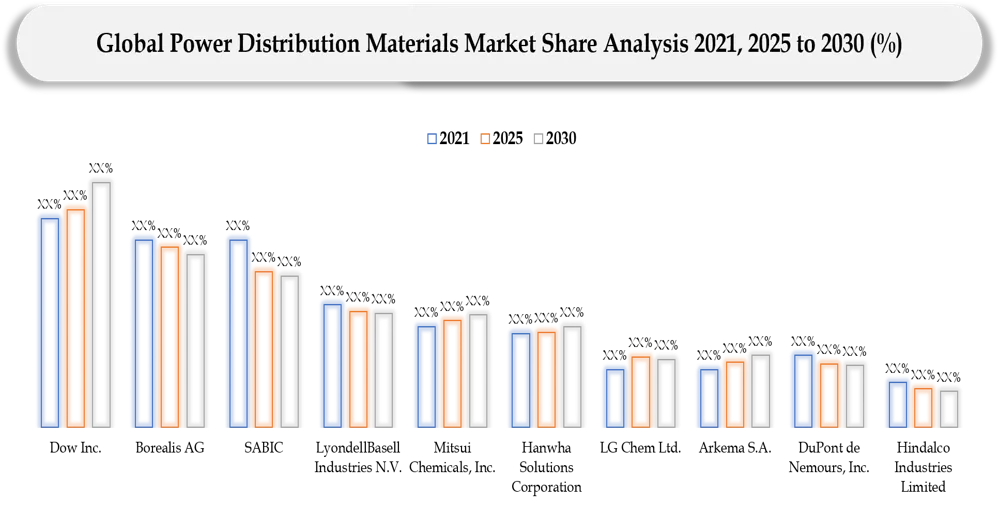
- Dow Inc. (U.S.)
- Borealis AG (Austria)
- SABIC (Saudi Arabia)
- LyondellBasell Industries N.V. (Netherlands)
- Mitsui Chemicals, Inc. (Japan)
- Hanwha Solutions Corporation (South Korea)
- LG Chem Ltd. (South Korea)
- Arkema S.A. (France)
- DuPont de Nemours, Inc. (U.S.)
- Syensqo S.A. (Belgium)
- Huntsman Corporation (U.S.)
- Hexion Inc. (U.S.)
- Olin Corporation (U.S.)
- 3M Company (U.S.)
- Nouryon (Netherlands)
- Nynas AB (Sweden)
- M&I Materials Ltd. (U.K.)
- Hindalco Industries Limited (India)
- Norsk Hydro ASA (Norway)
- APAR Industries Limited (India)
Company Profiles of Power Distribution Materials Market
Dow Inc.
Dow is one of the leading suppliers of polyethylene and specialty polymers that are widely used in insulation and cables. The material range supplied by the company is of great importance for the power distribution industry, where there is a need for highly efficient materials with excellent dielectric properties, moisture resistance and thermal stability.
The competitive priorities include the expansion of use of electrical grade polymers, development of advanced materials for cables, support of the systems with higher voltage and underground distribution, etc.
Borealis AG
As a significant polyolefin manufacturer, Borealis maintains its presence in the energy sector by manufacturing such types of polymers as polyethylene for power cable insulation and jacketing. The Borealis Borlink product range is focused on the needs of high voltage and medium voltage cables. As a result, this company can be considered an active player in the market of modern distribution cable materials.
Competitive priorities include the development of Borlink products, electrical-grade compounds, underground cable systems, improved insulation properties and reliability, recyclable and carbon-reduced materials.
SABIC
SABIC offers polyethylene and engineering thermoplastics that are used in various electrical and energy applications. The material portfolio offered by SABIC includes the use of materials for electrical insulation, electrical infrastructure and components that require resistance to heat, chemical, moisture and mechanical stress.
The competitive priorities of SABIC include offering high performance electrical materials, materials for high temperature and tough distribution environments, more recyclable and low carbon materials, material processing improvements and collaborations with electrical component and cable manufacturers.
LyondellBasell Industries N.V.
LyondellBasell manufactures polyethylene, polypropylene and advanced polymer compounds that relate to electrical insulation, cables and distribution system. LyondellBasell offers variety of polyolefins that can be used as materials for applications requiring electrical insulation and environmental protection.
Competitive advantages are the expansion of the presence of electrical grade polymers, development of performance in cable materials, underground distribution applications, circular and lower-carbon polymers and dependable regional supplies for cable and component makers.
Mitsui Chemicals, Inc.
Mitsui Chemicals provides specialty polymers and functional materials for electrical insulation, cables and other electrical infrastructure components. The company's materials platform offers opportunities in applications where high heat resistance, electrical insulation, strength and long-term environmental stability are required.
Competitive objectives consist of advanced electrical grade polymer development, insulation applications for high performance, compact and higher capacity distribution component support, material durability and process improvement and downstream electrical material manufacturer cooperation.
Hanwha Solutions Corporation
Hanwha Solutions produces various grades of polyethylene and specialty chemicals, such as materials used in insulation and cable products. The polymer product line can meet needs for insulation cables and protective materials that require electrical, thermal and mechanical properties.
Competitive concerns include expanding usage of electrical-grade polyethylene products, enabling underground and high-capacity distribution cables, enhancing insulation materials' durability and production efficiency, creating environmentally sustainable polymer products and boosting supply capabilities for increasing Asian and international power infrastructure needs.
Power Distribution Materials Market Major Pain Points
- Copper and Aluminum Price Volatility: The frequent price changes in copper and aluminum cause uncertainty on the part of manufacturers and utilities, since there is a very high content of materials in conductors, cables, winding of transformers and connections.
- Long Procurement Cycles for Specialized Components: Distribution system implementations can be hampered by transformers, specialist cables, composite insulators, connectors and specialist protection components that take longer time to manufacture or qualify according to utility specification standards.
- Compatibility Issues With Aging Distribution Infrastructure: Adding modern cable, conductor, connector and protection materials into an older system made up of poles, substations, transformers and distribution systems can be difficult.
- Environmental Degradation of Outdoor Materials: Distribution system materials placed outside are subject to high humidity, salt, sun damage, temperature changes, corrosion, storms and environmental pollution.
- Fragmented Technical Standards and Utility Specifications: As manufacturers are obliged to comply with a range of electrical voltage requirements, different material requirements, testing verification processes, certification specifications and requirements of utility-approved vendors, the cost of product certification rises, making it hard to enter different markets quickly.
Power Distribution Materials Market Recent Developments
- August 2026 - Hanwha Solutions Corporation: Hanwha Solutions successfully validated CHBA-8241RC, which is a power cable jacket compound made of 50 percent post-consumer recycled polyethylene with reduced carbon emissions of 34 percent as compared to conventional products.
- August 2026 - Hindalco Industries Limited: Hindalco inaugurated its first 30,000-ton per year capacity for Superfine Precipitated Aluminium Trihydrate (PPT ATH) at Karnataka, India. This specialized material would be used in wires and cables, polymer insulators and thermal insulation applications, boosting supplies of halogen-free cable fire protection materials.
- July 2026 - Borealis AG: Borouge International, the Borealis-ADNOC joint venture, has initiated its large-scale capacity expansion project for power cable materials in Asia, Europe and Middle East. The project consists of a new semicon facility in South Korea and expanded XLPE production capacity in Sweden and UAE for catering to the rising needs of medium and high voltage cables.
- July 2026 - SABIC: SABIC has launched LNP THERMOCOMP OFM compounds of PPS resin suitable for high-voltage power modules. These compounds offer high thermal resistance, electrical strength, thermal shock resistance and fire retardant properties.
- July 2026 - Norsk Hydro ASA: Hydro entered into a five-year deal with Nexans to deliver about 85,000 tons of low-carbon aluminum wire rod until 2026–2030. This would be used in medium-voltage power networks, overhead lines and other electricity infrastructure in Europe, boosting supplies of low-carbon conductor materials.
Analyst View / Opinion on Power Distribution Materials Market
- Distribution-grid modernization will increasingly determine material demand: Replacements of worn conductors, cables, insulators, transformers, connectors and protective devices are emerging as an infrastructure-based source of demand, alleviating dependence solely on greenfield electrification.
- Material performance is becoming a procurement differentiator: Electrical utilities will increasingly evaluate distribution materials by their loss of electricity, thermal properties, environmental resistance, expected lifetime, maintenance considerations and overall lifecycle costs, instead of just the cost of purchase.
- Undergrounding will reshape the material mix: The trend towards more underground distribution grids will mean increased use of XLPE insulated cables, accessories, joints, terminations and moisture resistant materials.
- Distributed energy resources will raise material-performance requirements: Greater use of distributed sources such as solar PV, batteries, electric vehicle chargers and others will force the need for distribution systems to adapt to changing power flows and increased loads, leading to greater demands for improved conductors, cables, insulators and connectors.
- Supply-chain resilience will become a strategic competitive factor: Manufacturers with secure access to materials such as copper, aluminum, electrical grade polymers, specialized insulators and components will be more capable of participating in distribution grid procurement programs.
Target Audience of Power Distribution Materials Market
| INDUSTRY | WHO SHOULD BUY THIS REPORT? | REASON TO BUY THIS REPORT |
| Electric Utilities & Distribution Companies | Procurement Heads, Grid Planning Managers | Assess distribution-material demand, replacement requirements and grid-modernization spending |
| Distribution Transformer Manufacturers | Strategy Heads, Product Managers | Evaluate transformer demand, capacity requirements, material costs and regional opportunities |
| Cable & Conductor Manufacturers | Business Development & Product Managers | Identify demand for distribution cables, underground cables and advanced conductors |
| Electrical Component Manufacturers | Commercial & Engineering Managers | Assess opportunities for insulators, connectors, terminations, arresters and line hardware |
| Grid Infrastructure & EPC Companies | Procurement Managers, Project Directors | Forecast material requirements and optimize sourcing for distribution-network projects |
| Raw Material Suppliers | Copper, Aluminum, Polymer & Insulation Suppliers | Track downstream demand for critical materials used in distribution components |
| Renewable Energy Developers | Grid Integration & Procurement Teams | Assess distribution-material requirements for solar, storage and distributed-generation connections |
| EV Charging Infrastructure Providers | Network Planning & Procurement Managers | Evaluate distribution upgrades and material requirements created by EV charging loads |
| Investors & Private Equity Firms | Investment Analysts, Corporate Development Teams | Identify high-growth material categories, manufacturing opportunities and supply-chain risks |
| Government & Regulatory Authorities | Energy Policy & Infrastructure Planning Officials | Support distribution-grid modernization, electrification, resilience and domestic manufacturing initiatives |
Why Choose DATAM?
- Data-Driven insights: Dive into detailed analyses with granular insights such as pricing, market shares and value chain evaluations, enriched by interviews with industry leaders and disruptors.
- Post-Purchase Support and Expert Analyst Consultations: As a valued client, gain direct access to our expert analysts for personalized advice and strategic guidance, tailored to your specific needs and challenges.
- White Papers and Case Studies: Benefit quarterly from our in-depth studies related to your purchased titles, tailored to refine your operational and marketing strategies for maximum impact.
- Annual Updates on Purchased Reports: As an existing customer, enjoy the privilege of annual updates to your reports, ensuring you stay abreast of the latest market insights and technological advancements. Terms and conditions apply.
- Specialized Focus on Emerging Markets: DataM differentiates itself by delivering in-depth, specialized insights specifically for emerging markets, rather than offering generalized geographic overviews. The approach equips our clients with a nuanced understanding and actionable intelligence that are essential for navigating and succeeding in high-growth regions.
- Value of DataM Reports: Our reports offer specialized insights tailored to the latest trends and specific business inquiries. The personalized approach provides a deeper, strategic perspective, ensuring you receive the precise information necessary to make informed decisions. The insights complement and go beyond what is typically available in generic databases.


























































