


Polysorbate Market Size and Overview
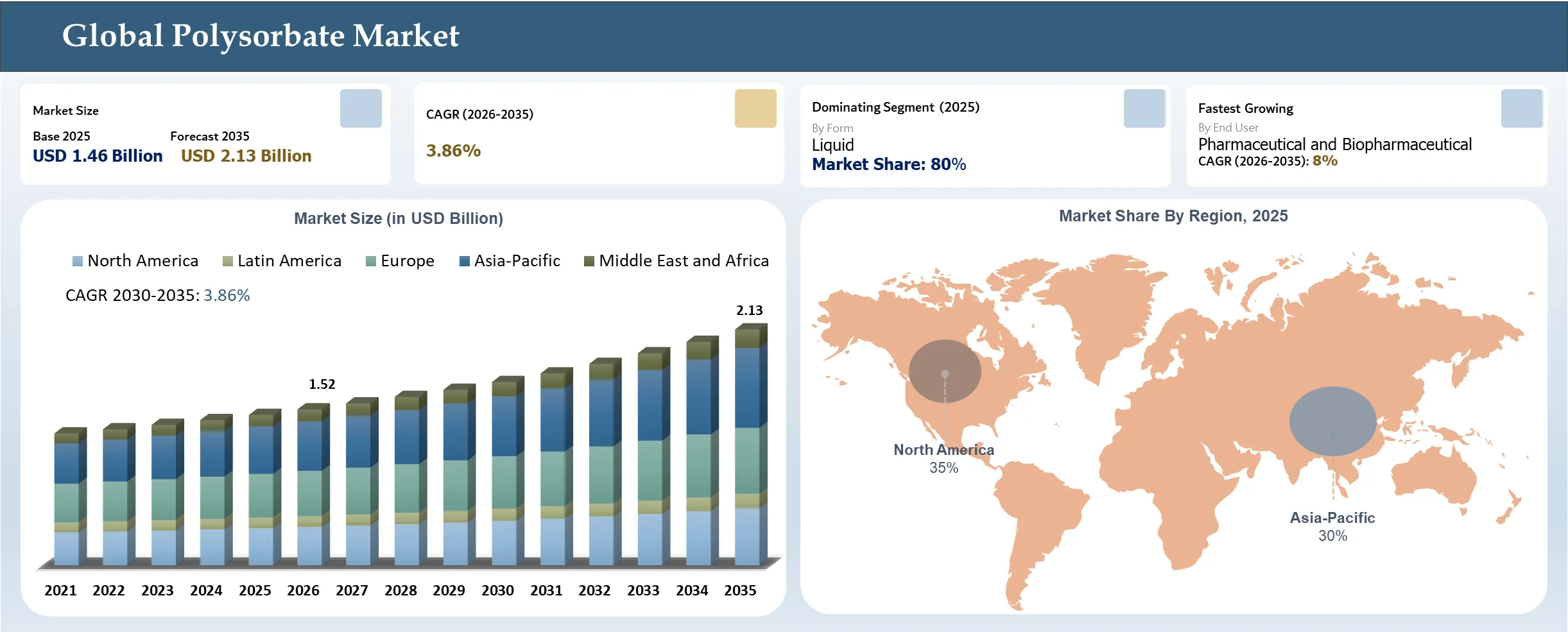
The global polysorbate market reached USD 1.46 billion in 2025 and is expected to reach USD 2.13 billion by 2035, growing with a CAGR of 3.86% during the forecast period 2026-2035. The market demand is supported by the use of polysorbate 20 and polysorbate 80 in pharmaceutical formulations, biologics, food processing, and personal-care products. In September 2025, Evonik Industries launched the MaxiPure Polysorbate 80 product line, which is an ultra-high-purity surfactant intended for use in injectable and biopharmaceutical preparations with over 98% oleic acid content, conforming to Ph. Eur., USP, JP, and CP monographs.
In April 2025, ACS Chemical Biology reported that inhibiting the PPARγ pathway in Chinese hamster ovary (CHO) manufacturing cells decreased levels of polysorbate-degrading enzymes while retaining high monoclonal antibody productivity. The changes show how essential the use of pure excipients and degradation control technology is becoming in biopharmaceutical production. However, polysorbate degradation and inconsistent batch-to-batch composition remain problems in drug formulation.
White-Space Opportunities for the Polysorbate Market through Bio-Based Surfactants and Sustainable Pharmaceutical Ingredients
In April 2026, the Circular Bio-based Europe Joint Undertaking (CBE JU) launched a funding call worth approximately USD 199.7 million (€170.7 million) across 13 topics to accelerate the development and scale-up of sustainable bio-based industries in Europe. The largest individual allocations are approximately USD 23.4 million (€20 million) each for four flagship areas: biotechnology-enabled biorefineries, sustainable bio-based fertilising and crop-protection products, bio-based solutions for home and personal care, and diversification of nutritional food ingredients.
The home and personal care category offers the closest potential connection to the Polysorbate Market because it could support sustainable formulation ingredients, surfactant technologies, and bio-based alternatives, subject to the specific project requirements. Additional allocations of approximately USD 16.4 million (€14 million) each support residual biomass valorisation through biotechnology, bio-based additives that improve recyclability or biodegradability, chemicals and materials derived from woody residues, circular bio-based thermosets, and films and coatings for circular packaging.
The funding is expected to create potential opportunities for companies across the bio-based chemicals and sustainable ingredients value chain. In the home and personal care sector, Croda International, BASF, Evonik Industries, Clariant, and Nouryon could explore sustainable surfactants, emulsifiers, renewable feedstocks, and bio-based formulation ingredients. For biotechnology-enabled biorefineries, companies such as Novonesis, Genomatica, and LanzaTech could potentially contribute fermentation technologies, biocatalysis, and biological conversion processes.
In biomass valorisation and bio-based chemical production, Avantium, Neste, and UPM could explore renewable raw materials, biomass conversion, and sustainable chemical intermediates. For separation and purification technologies, Sartorius, Merck KGaA, and Thermo Fisher Scientific could potentially support process development, filtration, purification, and analytical testing. In bio-based additives, polymers, and circular packaging materials, Arkema, Covestro, and NatureWorks could investigate renewable material formulations, recyclable additives, and bio-based polymer technologies.
Polysorbate Market Key Takeaways
- North America captured the largest regional share at 35% of the total polysorbate market in 2025. Meanwhile, the Asia-Pacific region accounted for a 30% market share while standing out as the fastest-growing region.
- Liquid polysorbate dominated the global market by securing an 80% market share in 2025. The major share is driven by over 90% of biopharmaceutical companies using Polysorbate 80 in their product offerings.
- Pharmacopoeial standards mandate a minimum 58% oleic acid content in pharmaceutical-grade Polysorbate 80. Conversely, Polysorbate 20 relies on a lauric acid content requirement strictly maintained between 40% and 60%.
- The Circular Bio-based Europe Joint Undertaking launched a USD 199.7 million (€170.7 million) funding call in April 2026. The initiative allocates around USD 23.4 million (€20 million) across four flagship areas, including personal care alternatives.
Polysorbate Market Industry Trends and Strategic Insight
- Pharmaceutical developers are refining formulation design, raw-material specifications, and storage conditions to manage enzymatic hydrolysis and oxidation that can affect polysorbate stability and contribute to fatty-acid particle formation.
- Polysorbate selection is increasingly being considered alongside protein stability, manufacturing processes, filtration, and storage requirements rather than as a standalone ingredient-purchasing decision.
- Manufacturers and drug developers are placing greater emphasis on identifying fatty-acid ester profiles, peroxide-related impurities, and degradation products to improve batch consistency and support formulation troubleshooting.
- Suppliers that can demonstrate consistent composition, low impurity levels, and dependable performance in sensitive drug formulations can differentiate their products from conventional polysorbate grades.
- Producers should align analytical methods and release specifications with the intended application, particularly for injectable and biologic formulations where degradation products and particulate matter require careful evaluation.
Polysorbate Market Scope
| Metrics | Details | |
| 2025 Market Size | USD 1.46 Billion | |
| 2035 Projected Market Size | USD 2.13 Billion | |
| CAGR (2026-2035) | 3.86% | |
| Largest Market | North America | |
| Fastest Growing Market | Asia-Pacific | |
| By Type | Polysorbate 20, Polysorbate 40, Polysorbate 60, Polysorbate 80, Polysorbate 65, Others | |
| By Grade | Food Grade, Pharmaceutical Grade, Cosmetic Grade | |
| By Form | Liquid, Paste, Powder | |
| By End-User | Pharmaceutical and Biopharmaceutical, Food and Beverage, Cosmetics and Personal Care, Nutraceutical and Dietary Supplement, Industrial Chemical Manufacturers, Research Laboratories and Academic Institutions, Others | |
| By Region | North America | U.S., Canada, Mexico |
| Europe | Germany, UK, France, Spain, Italy, Poland, Netherlands, Switzerland | |
| Asia-Pacific | China, India, Japan, Australia, South Korea, Indonesia, Malaysia | |
| Latin America | Brazil, Argentina | |
| Middle East and Africa | UAE, Saudi Arabia, South Africa, Israel, Türkiye | |
| Report Insights Covered | Competitive Landscape Analysis, Company Profile Analysis, Market Size, Share, Growth | |
Polysorbate Market Disruption Analysis
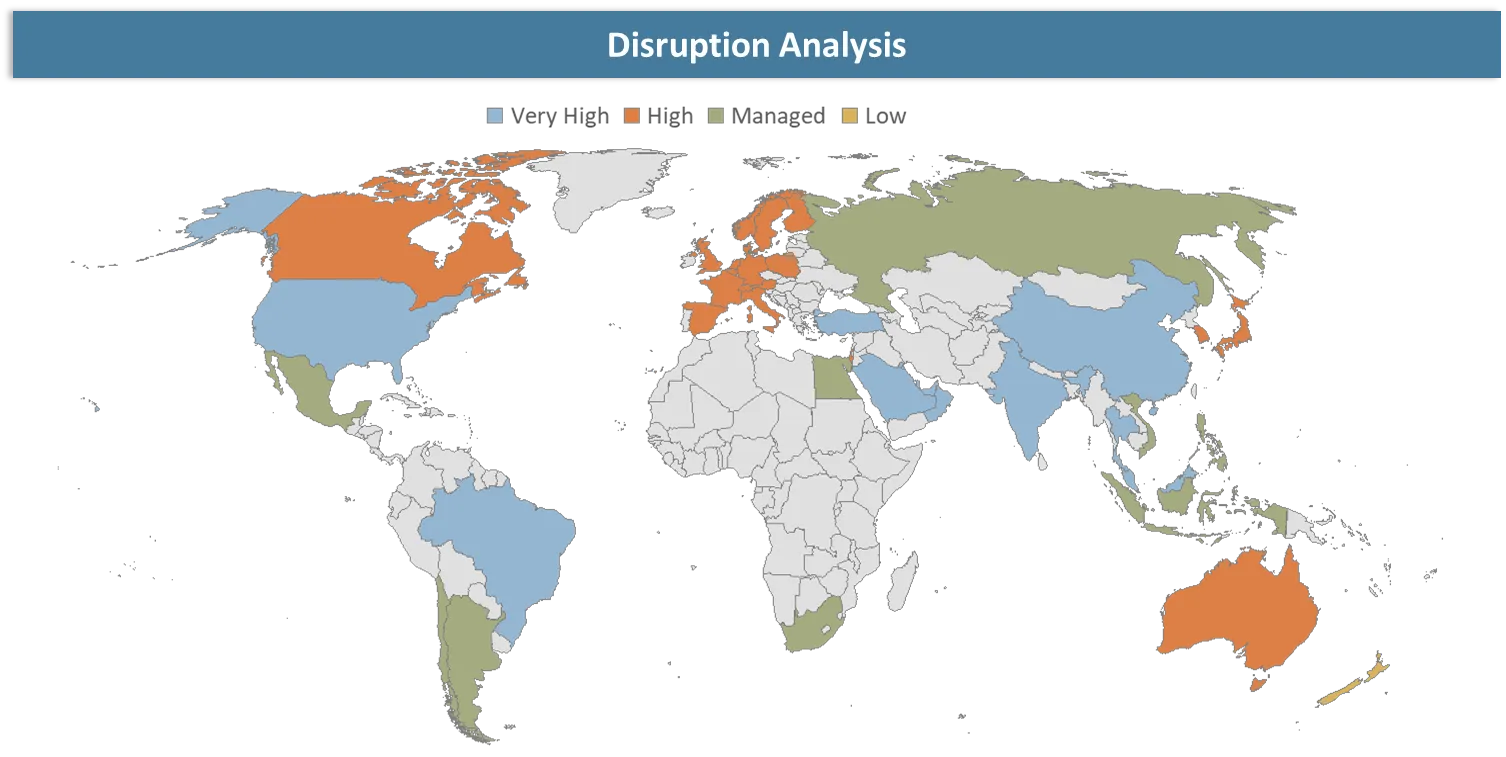
Emergence of Alternative Surfactants Reshaping the Biopharmaceutical Formulation Landscape
The disruption in the polysorbate market is primarily associated with the growing evaluation of alternative surfactants to address formulation instability and compositional variability in biological drug products. Both polysorbate 20 and 80 have been long-standing excipients; however, the vulnerability of both substances to enzymatic degradation and oxidation has motivated manufacturers of pharmaceuticals to consider other excipients like poloxamer 188. The transition is influencing the choice of excipients and the approach to formulation development, especially in the case of delicate biopharmaceuticals that need stable formulation from production through administration.
With the emphasis on finding alternative surfactants, the strategy of biopharmaceutical formulation has changed since companies strive to reduce the instability that polysorbates present. In September 2025, according to PubMed, 14 pharmaceutical companies belonging to the IQ Consortium gave their responses and found that the use of poloxamer 188 had already been made in 23 biological drug products. The study found that due to compositional and stability issues of polysorbates, the investigation of alternative surfactants was carried out, and the potential benefits and hindrances of poloxamers and other surfactants were considered. The results show that there is a diversification of excipient selection by pharmaceutical companies beyond using only polysorbate 20 and polysorbate 80.
Polysorbate Market BCG Matrix: Company Evaluation
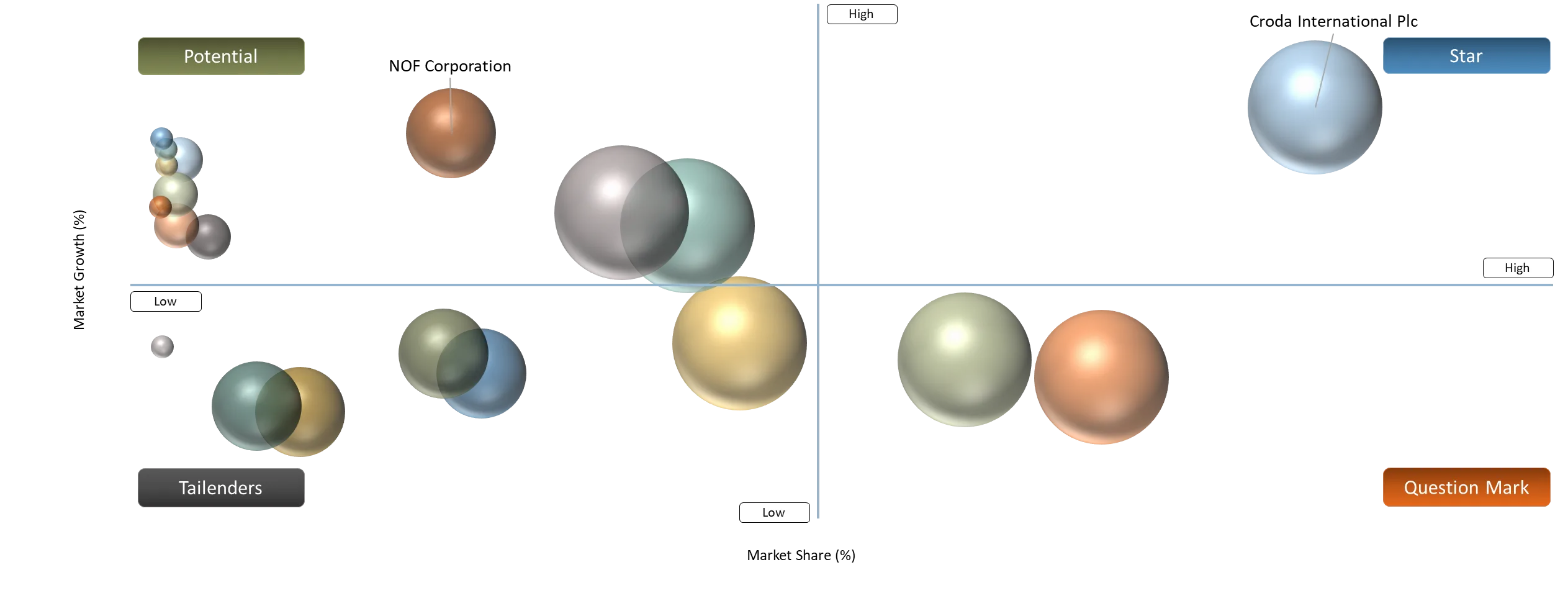
Stars include Croda International Plc and BASF SE because of their established pharmaceutical excipient portfolios and specialised polysorbate offerings for demanding applications. Question Marks include Evonik Industries AG, Merck KGaA, and SEPPIC in the specialised pharmaceutical-grade polysorbate segment because their product portfolios and formulation expertise create opportunities in high-purity excipients, while their relative growth and market shares specifically attributable to polysorbates remain difficult to establish.
Potential include NOF Corporation, KLK OLEO, and Sanyo Chemical Industries, Ltd. because of their surfactant manufacturing expertise and polysorbate-related product offerings. Tailenders include KAO Corporation and PCC Exol SA for this illustrative assessment because their broader chemical and surfactant portfolios span applications beyond polysorbates, making their relative competitive positions in this specific market less clear.
Polysorbate Market Dynamics
Driver Impact Analysis
| Driver | Market Growth Impact (%) | Demand Concentration | Impacted Use Case | Strategic Impact |
Continued research into polysorbate-based formulations and mixed-micelle systems supports their role in improving therapeutic protein stability. | 20% | North America and Europe, particularly biopharmaceutical R&D and formulation development | Monoclonal antibody formulations, biologics, protein stabilization, and mixed-micelle drug delivery systems | Encourages development of high-purity, low-variability polysorbates and formulation solutions that improve protein stability and reduce aggregation. |
Increasing development of biologics, monoclonal antibodies, and biosimilars drives demand for polysorbates to prevent protein aggregation and maintain drug stability. | 35% | North America and Europe, with expanding demand in Asia-Pacific pharmaceutical manufacturing | Injectable biologics, monoclonal antibodies, biosimilars, and other protein-based medicines | Supports demand for pharmaceutical-grade polysorbate 20 and polysorbate 80, with greater emphasis on quality consistency, impurity control, and regulatory compliance. |
Growing use of polysorbates as emulsifiers in ice cream, bakery products, and other processed foods drives demand. | 25% | North America, Europe, and Asia-Pacific food-processing industries | Ice cream, bakery products, processed foods, and oil-in-water food emulsions | Creates opportunities for food-grade polysorbates that improve emulsification, texture, product uniformity, and shelf stability, subject to regional food regulations. |
Increasing production of creams, lotions, shampoos, and skincare products supports polysorbate demand for mixing oil- and water-based ingredients and stabilising formulations. | 20% | Asia-Pacific, North America, and Europe, particularly personal-care manufacturing hubs | Skincare creams, lotions, shampoos, cleansers, and cosmetic emulsions | Strengthens demand for cosmetic-grade polysorbates with reliable emulsification performance, formulation compatibility, and suitable quality specifications. |
Continued research into polysorbate-based formulations and mixed-micelle systems supports their role in improving therapeutic protein stability
The continued research in polysorbate-based formulations and mixed micellar systems has enhanced the applications of these materials in the stabilisation of proteins used for therapeutic purposes, especially those biological agents that are sensitive to aggregation and interfacial stresses. Polysorbate 20 and polysorbate 80 have been widely employed as protective agents for protein stabilisation, whereas the use of polysorbates in combination with phospholipids is becoming a novel means to achieve stabilisation without using high surfactant concentrations.
The development of mixed micelles of phospholipids and polysorbates will create new opportunities for the improvement of protein stability while minimising reliance on surfactant-based formulations. In March 2026, PubMed reported that phosphatidylcholine-polysorbate 20 mixed micelles gave a level of protection similar to that offered by polysorbate 20 only in agitation experiments with bovine serum albumin and a monoclonal antibody. It was possible to form mixed micelles at total surfactant concentrations up to 20 mg/mL with 50% phospholipid content, and up to 50 mg/mL with 40% phospholipid content. Both of these concentrations were higher than the commonly used 0.01-2 mg/mL surfactant concentration range in biopharmaceutical formulation.
Restraint Impact Analysis
| Restraint | Drag on Market Growth (%) | Primary Impact Area | Impacted Use Case | Strategic Impact |
Susceptibility to oxidation and enzymatic hydrolysis can reduce polysorbate content and cause fatty-acid particle formation in biopharmaceutical formulations. | 20% | Biopharmaceutical formulation stability and quality control | Injectable biologics, monoclonal antibodies, and other protein-based medicines | Increases stability-testing requirements and formulation development costs, encouraging suppliers to improve polysorbate purity, degradation resistance, and quality consistency. |
Exploration of alternatives such as poloxamers in biological drug formulations may limit polysorbate demand. | 15% | Pharmaceutical excipient selection and formulation development | Biologics, monoclonal antibodies, and biosimilar formulations | Creates competitive pressure on polysorbate suppliers to demonstrate stability, compatibility, and performance advantages while strengthening their high-purity product portfolios. |
Variations in fatty-acid composition and the complex chemical profile of polysorbates can create challenges in maintaining consistent quality across batches of pharmaceutical excipients. | 18% | Raw-material quality, batch consistency, and regulatory compliance | Pharmaceutical-grade polysorbate 20 and polysorbate 80 used in biologic drug formulations | Raises analytical characterization and supplier qualification requirements, favoring manufacturers with robust quality systems and tighter control of raw materials and production processes. |
Permitted uses and maximum usage levels for polysorbates in food products vary by application and jurisdiction, limiting formulation flexibility for food manufacturers. | 12% | Food regulatory compliance and product formulation | Bakery products, frozen desserts, and other processed foods where polysorbates are permitted | May restrict product reformulation and market expansion, increasing the need for region-specific regulatory assessments and compliant emulsifier alternatives. |
Susceptibility to oxidation and enzymatic hydrolysis can reduce polysorbate content and cause fatty-acid particle formation in biopharmaceutical formulations
One of the major restraints affecting the polysorbate market is the susceptibility of polysorbates, particularly polysorbate 20 and polysorbate 80, to oxidation and enzymatic hydrolysis in biopharmaceutical formulations. The degradation pathways can reduce the concentration of intact surfactant and generate degradation products, including free fatty acids that may form visible or subvisible particles. Such changes can compromise formulation stability, complicate quality control, and increase the risk of product rejection, making surfactant stability a critical consideration in biologics manufacturing.
Polysorbate instability still poses a major formulation problem during biopharmaceutical manufacturing due to the potential effects of surfactant alterations on product quality and stability. In October 2025, according to EJPPS (European Journal of Parenteral and Pharmaceutical Sciences), degradation of polysorbate 20 and polysorbate 80 occurs mainly via hydrolysis and oxidation. It indicates that pharmaceutical-grade polysorbate 80 should have a minimum content of 58% oleic acid, while in polysorbate 20, the content of lauric acid is to be in the range of 40% to 60%. The importance of the composition of fatty acids in polysorbates is obvious. Hydrolysis caused by the activity of host-cell enzymes like lipases and phospholipases can lead to precipitation of free fatty acids and formation of particles.
Polysorbate Market Segment Analysis
The global polysorbate market is segmented based on type, grade, form, end-user, and region.
Liquid Polysorbates Dominate the Market Due to Formulation Versatility and Pharmaceutical-Grade Stability
The liquid segment dominates the polysorbate market, with a market share of 80% in 2025, is the dominant one on account of its convenience in handling, dose precision, and suitability for mass production within the pharmaceutical, food processing, and personal care sectors, mainly due to its use as an emulsifier, solubiliser, and stabiliser. The capacity of the liquid form to mix easily in a solution makes it suitable for injectable drugs, biologicals, creams, lotions, and processed food products.
According to Croda Pharma, over 90% of biopharmaceutical companies utilise polysorbate 80 in their product range. Super Refined Polysorbate 80 from Croda Pharma is characterised as a clear liquid with no colour. It has a density of 1.076 g/cm³ and an HLB of 15.00. It can be used in pharmaceuticals, injectables, oral, topical, pulmonary and ophthalmic formulations, serving as an emulsifier and solubilising agent. It has been purified by the elimination of polar impurities such as oxidation by-products, which contributes to the stability of the active pharmaceutical ingredient. The properties stress the role of liquid polysorbates in pharmaceutical production and account for the predominance of the market segment.
Polysorbate Market Geographical Penetration
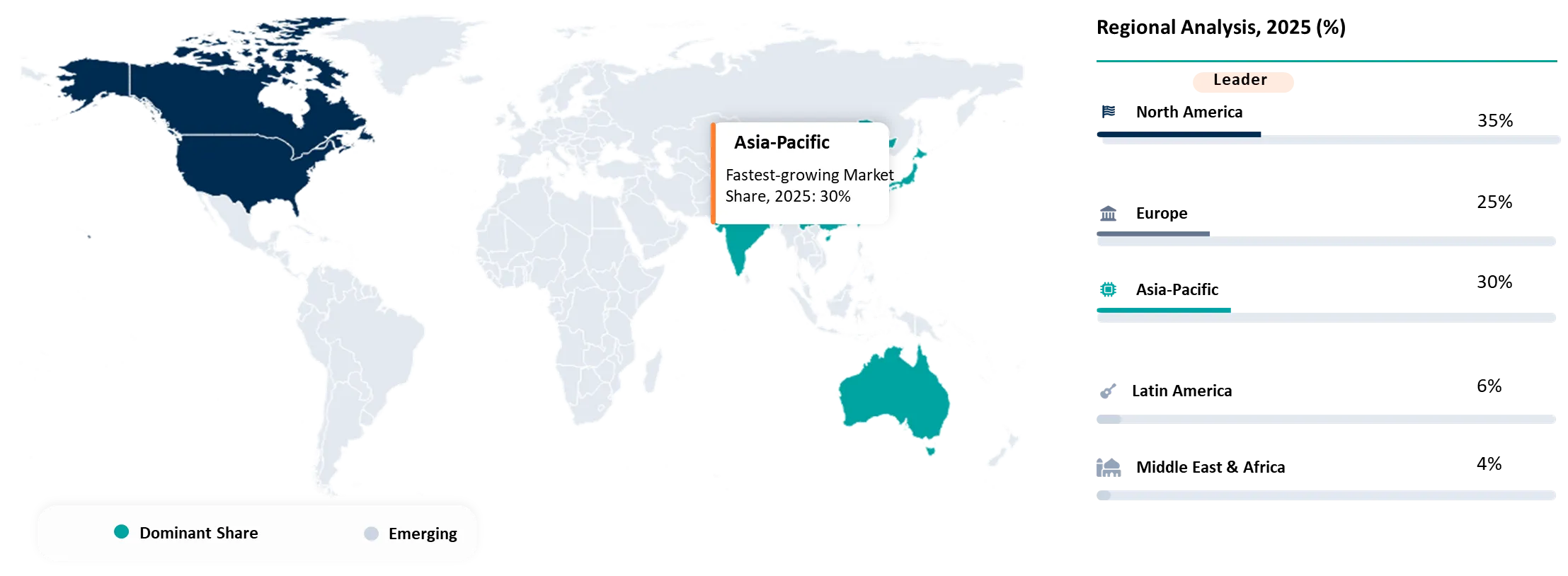
Strong Pharmaceutical Infrastructure and High-Purity Excipient Demand in North America
North America is a dominant region in the polysorbate market, with a market share of 35% in 2025, supported by its well-established pharmaceutical and biotechnology industries, strong demand for biologics and injectable drug formulations, and the presence of major pharmaceutical ingredient manufacturers. The region's advanced drug development ecosystem and stringent quality requirements are driving demand for high-purity polysorbates, particularly Polysorbate 20 and Polysorbate 80, which are widely used as excipients in pharmaceutical formulations, vaccines, and biologic medicines.
The strategic partnership strengthens the distribution network for personal care ingredients across the United States, improving market accessibility and technical support for formulators. In April 2025, BASF SE, a Germany-based global chemical manufacturer, and Azelis Group NV, a Belgium-based speciality chemicals and food ingredients distributor, BASF announced a strategic partnership with Azelis to make its U.S. companies, DeWolf Chemical and Ross Organic, the sole distributors of BASF’s personal care portfolio in the United States, effective July 1, 2025. The collaboration aims to improve nationwide access to personal care ingredients, technical support, and formulation expertise.
U.S. Polysorbate Market Trends
The U.S. holds a dominant position in the North American polysorbate market, supported by its established pharmaceutical and biotechnology industries, extensive biologics development capabilities, and strong demand for high-quality pharmaceutical excipients. Polysorbate 20 and Polysorbate 80 are important formulation ingredients used in biologics, vaccines, injectable medicines, and other pharmaceutical products to improve solubility and help prevent protein aggregation. The presence of major pharmaceutical manufacturers, contract development and manufacturing organisations (CDMOs), and excipient suppliers strengthens collaboration across drug development and manufacturing.
The partnership strengthens the U.S. distribution network for personal and home care ingredients, improving product accessibility and formulation support for manufacturers. In March 2026, Ashland Inc., a U.S.-based global additives and speciality ingredients manufacturer, and IMCD N.V., a Netherlands-based speciality chemicals and ingredients distributor, announced a strategic partnership with IMCD US, LLC, appointing it as the exclusive U.S. distributor of Ashland’s personal and home care ingredients, effective April 1, 2026. The partnership aims to expand access to skin care, hair care, oral care, and home care ingredients while strengthening technical support and formulation capabilities in the U.S. market.
Canada Polysorbate Market Outlook
Canada is one of the major countries in the North American polysorbate market and is supported by its expanding pharmaceutical and biomanufacturing ecosystem, growing biologics production capabilities, and investments in domestic vaccine and therapeutic manufacturing. Polysorbate 20 and Polysorbate 80 are important excipients in pharmaceutical formulations, particularly biologics, vaccines, and injectable medicines, where they help maintain formulation stability.
A regulatory update expands the permitted applications of polysorbate 80 in Canada’s food industry, creating additional formulation opportunities for food manufacturers. In September 2025, Health Canada, the federal department responsible for national public health, announced a regulatory change extending the permitted use of polysorbate 80 in Canada. Following a premarket safety assessment, the department authorised polysorbate 80 as an emulsifying agent in unstandardized dips at a maximum concentration of 0.05%, effective October 20, 2025.
Rapid Pharmaceutical Manufacturing Expansion and Biologics Demand in Asia-Pacific
The Asia-Pacific is the fastest-growing region in the polysorbate market, with a market share of 30% in 2025, driven by expanding pharmaceutical manufacturing, increasing biologics and vaccine production, and rising investments in domestic drug-development capabilities across China, India, Japan, South Korea, and other regional markets. Polysorbate 20 and Polysorbate 80 are widely used in pharmaceutical formulations, particularly in biologics and injectable medicines, to support solubility and formulation stability.
The bulk shipment reflects active cross-border trade in food-grade polysorbates across Asia-Pacific, strengthening supply links between Chinese manufacturers and Malaysian food producers. In December 2025, Henan Chemsino Industry Co., Ltd., a China-based food ingredients manufacturer and supplier specialising in emulsifiers and other functional ingredients. The company reported exporting 28 tons of Tween 60 (Polysorbate 60) to Malaysia for use in food formulations. The shipment highlights cross-border trade in food-grade polysorbates within the Asia-Pacific region and demonstrates the role of Chinese suppliers in meeting regional demand for emulsifying ingredients.
Japan Polysorbate Market Trends
Japan holds an important position in the Asia-Pacific polysorbate market due to its well-established pharmaceutical industry, advanced biotechnology research capabilities, and strong emphasis on pharmaceutical quality and formulation stability. The country has established expertise in developing and manufacturing biologics, vaccines, injectable medicines, and other complex pharmaceutical products that require reliable excipients.
NOF Corporation’s participation highlights the growing importance of high-purity polysorbates in pharmaceutical formulations and vaccine development. In September 2026, NOF CORPORATION, a Japan-based chemical manufacturer specialising in pharmaceutical ingredients, drug-delivery systems, and life science materials, announced its participation in CPHI Milan 2026, held from October 6-8, 2026, at Fiera Milano, Italy, where it showcased its ultra-pure Polysorbate 80 for drug and vaccine formulations alongside lipid nanoparticles, PEG derivatives, and other pharmaceutical ingredients at Booth #1F97.
Polysorbate Market Competitive Landscape
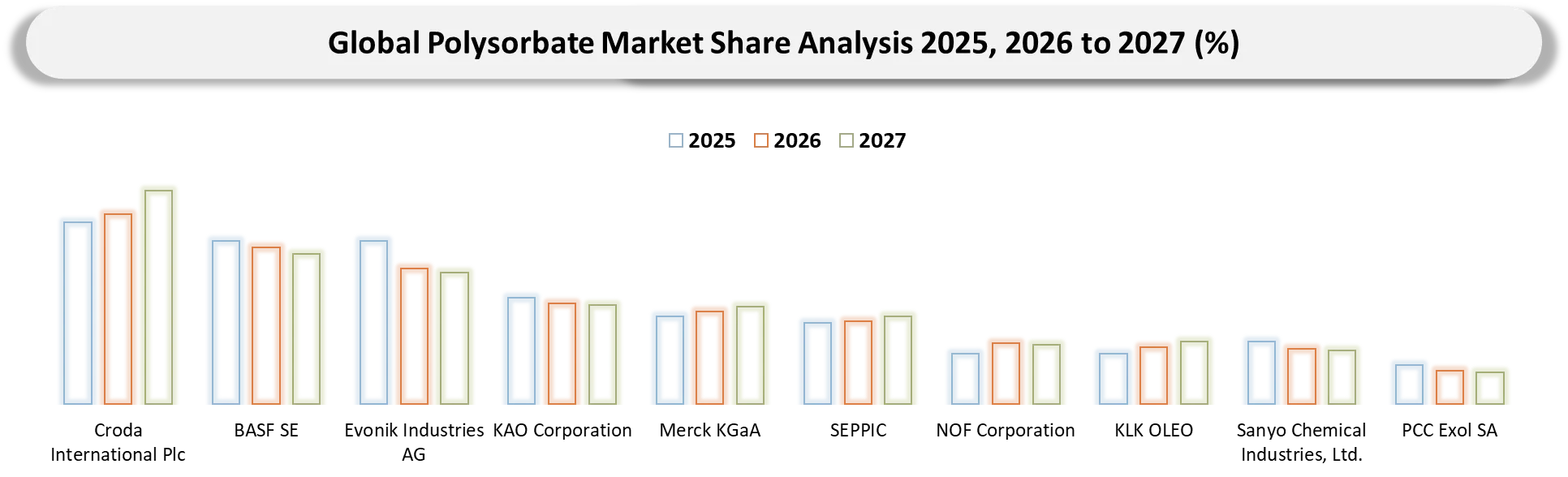
- The polysorbate market is characterised by three major participant groups: diversified speciality chemical manufacturers, pharmaceutical-grade excipient suppliers, and oleochemical and surfactant manufacturers. Croda International Plc, BASF SE, Evonik Industries AG, KAO Corporation, Merck KGaA, SEPPIC, NOF Corporation, KLK OLEO, Sanyo Chemical Industries, Ltd., and PCC Exol SA compete through product quality, manufacturing capabilities, regulatory compliance, application expertise, and global distribution networks. Croda focuses on advanced pharmaceutical excipients and drug-delivery solutions, BASF supplies pharmaceutical-grade polysorbates and sorbitan esters, and Evonik is expanding its position in high-purity excipients for injectable and biopharmaceutical applications.
- Key players include Croda International Plc (United Kingdom), BASF SE (Germany), Evonik Industries AG (Germany), KAO Corporation (Japan), Merck KGaA (Germany), SEPPIC (France), NOF Corporation (Japan), KLK OLEO (Malaysia), Sanyo Chemical Industries, Ltd. (Japan), and PCC Exol SA (Poland).
Key Developments
- June 2025: Musim Mas, a Singapore-based integrated palm oil, oleochemicals, and speciality ingredients manufacturer, through its subsidiary Masurf Inc., agreed to acquire Stepan Philippines Quaternaries, Inc.’s manufacturing facility in Bauan, Batangas, Philippines, to expand its surfactant portfolio for fabric softeners, personal care, home care, and industrial applications.
- September 2025: Henan Chemsino Industry Co., Ltd., a China-based food ingredients manufacturer and supplier specialising in emulsifiers and functional ingredients, participated in FI Asia Thailand 2025.
- October 2026: Seppic, a France-based speciality ingredients manufacturer and subsidiary of Air Liquide, expanded its MONTANOX HPB range of high-purity polysorbates for biopharmaceutical applications.
- September 2026: Brenntag SE, a Germany-based global chemicals and ingredients distributor, announced an exclusive distribution partnership with Indovinya Belgium N.V., part of Thailand-based Indorama Ventures, a global speciality chemicals and surfactants manufacturer.
Key Procurement Priorities and Buyer Evaluation Criteria
- Organizations procuring polysorbates are increasingly selecting suppliers based on their ability to provide consistent-quality Polysorbate 20 and Polysorbate 80 that meet the requirements of pharmaceutical, biotechnology, personal care, and food applications. Buyers prioritize product purity, batch-to-batch consistency, reliable supply, and compliance with relevant pharmacopoeial and industry standards.
- Procurement decisions are increasingly influenced by the growing demand for biologics, vaccines, injectable medicines, and advanced drug formulations, where polysorbates play an important role in solubilization and formulation stability. Buyers also assess suppliers' capabilities to provide specialised grades with controlled impurity levels, low peroxide content, and appropriate specifications for sensitive pharmaceutical applications.
- Buyers consider factors such as chemical composition, purity specifications, residual impurities, peroxide levels, product stability, documentation quality, and compliance with applicable standards, including the United States Pharmacopoeia (USP), European Pharmacopoeia (Ph. Eur.), and Japanese Pharmacopoeia (JP), when selecting polysorbate suppliers. For pharmaceutical applications, they also evaluate manufacturing quality systems, traceability, certificates of analysis, and change-control procedures.
Why Choose DataM?
- Product Innovations & Quality Advancements: Explores developments in Polysorbate 20, Polysorbate 80, high-purity pharmaceutical excipients, and specialized surfactant formulations, highlighting their roles in improving solubilization, formulation stability, and performance across pharmaceutical, biotechnology, personal care, and food applications.
- Product Performance & Market Positioning: Evaluates how manufacturers differentiate their polysorbate products based on purity, peroxide levels, batch-to-batch consistency, regulatory compliance, formulation compatibility, and cost efficiency, identifying competitive advantages across pharmaceutical-grade and industrial applications.
- Real-World Applications & Industry Adoption: Examines polysorbate usage in biologics, vaccines, injectable medicines, cosmetics, skincare products, and food formulations, demonstrating the importance of emulsification, solubilization, and stabilization in diverse end-use industries.
- Market Updates & Industry Changes: Tracks developments during 2025–2026, including new product launches, pharmaceutical excipient innovations, manufacturing expansions, and changes in regulatory expectations, highlighting their implications for polysorbate suppliers and end-use manufacturers.
- Competitive Strategies: Analyses the strategies of leading companies, including Croda International Plc, BASF SE, Evonik Industries AG, KAO Corporation, Merck KGaA, SEPPIC, NOF Corporation, KLK OLEO, Sanyo Chemical Industries, Ltd., and PCC Exol SA, focusing on product development, quality differentiation, strategic collaborations, and supply-chain strengthening.
- Pricing & Market Access: Assesses the factors influencing polysorbate pricing, including raw material costs, manufacturing processes, purity requirements, pharmacopoeial compliance, packaging, and distribution. It also evaluates supplier qualification requirements and access to pharmaceutical, personal care, food, and industrial customers.
- Market Entry & Expansion: Identifies growth opportunities arising from increasing biologics production, vaccine manufacturing, pharmaceutical formulation development, and demand for specialized surfactants across North America, Europe, and Asia-Pacific, while examining strategies for product differentiation, regulatory compliance, capacity expansion, and regional market penetration.
Target Audience 2026
- Polysorbate Manufacturers and Suppliers
- Pharmaceutical and Biopharmaceutical Companies
- Personal Care and Cosmetics Manufacturers
- Food and Beverage Manufacturers
- Raw Material Suppliers and Chemical Distributors
- Research and Development Organisations
- Procurement and Supply Chain Managers


























































