


PFAS testing Market Size and Overview
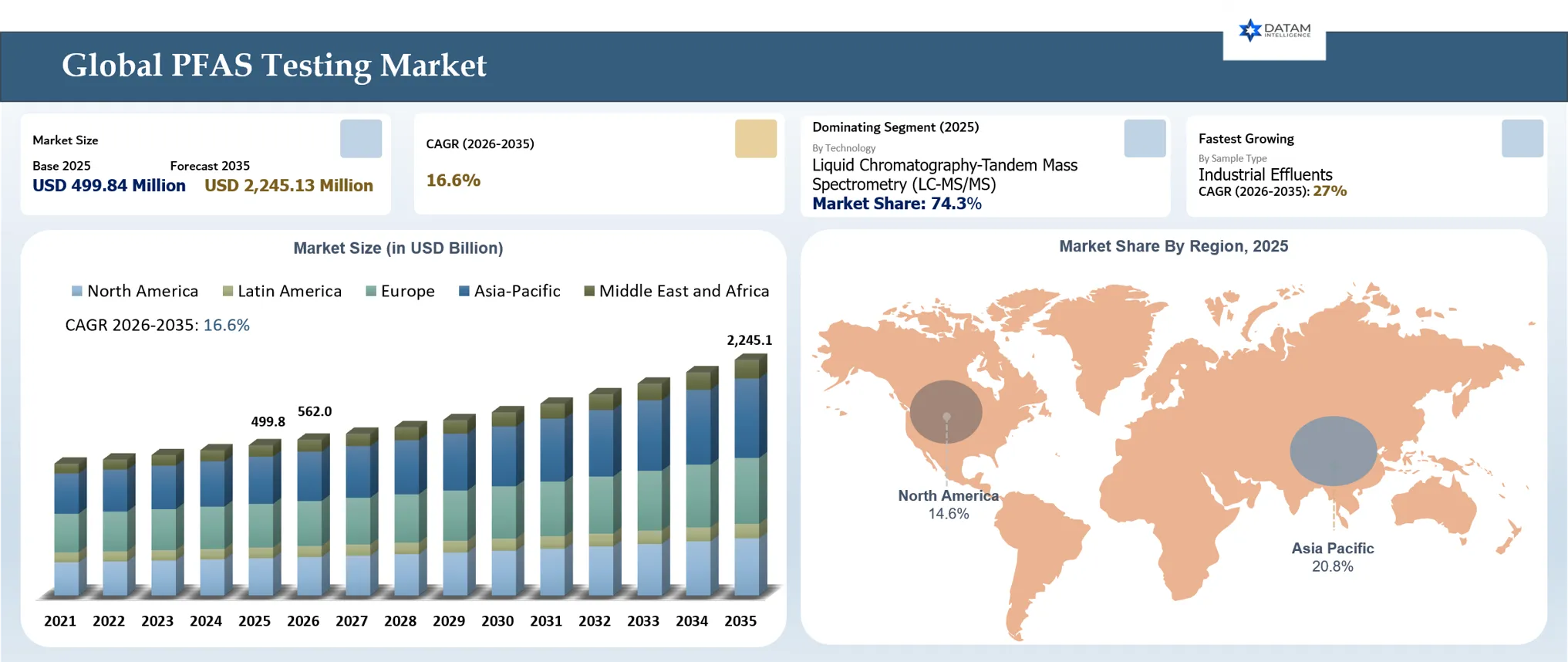
The global PFAS testing market Size reached USD 499.84 million in 2025 and is expected to reach USD 2,245.13 million by 2035, growing with a CAGR of 16.6% during the forecast period 2026-2035. The market is experiencing a structural transformation driven by accelerated regulatory developments, advancements in analytical science and expanding compliance obligations across industrial value chains. The regulatory environment underwent a significant change during 2025-2026, establishing a stronger foundation for long-term market growth. In March 2026, the European Chemicals Agency (ECHA) ECHA initiated the final consultation on the proposed EU REACH Annex XVII PFAS restriction, where there was a class-wide approach introduced that covers more than 10,000 PFAS substances. Thus, the shift from compound-based to class-wide restrictions means an increasing need for PFAS analysis in different industries. The national regulations are making product compliance testing even more rigorous. Decree No. 2025-1376 of France that came into effect from January 2026 set out legally binding residual concentration requirements for PFAS in textiles, footwear, cosmetic products, ski wax, and water repellents, thus requiring laboratory confirmation of their concentrations prior to marketing in the French market. This regulation has been a very clear example of analytical compliance through measurement.
Furthermore, in the US, the Environmental Protection Agency of the United States (EPA) expedited its lifecycle approach to managing PFAS throughout 2026. The EPA increased its regulatory coverage by means of the proposed Sixth Unregulated Contaminant Monitoring Rule (UCMR 6), guidance for biosolids, additional reporting from industry under TSCA, updated guidance on PFAS destruction and disposal, and drinking water protections.
Growing Regulatory Actions and Remediation Investments in PFAS Monitoring
The U.S. Environmental Protection Agency (EPA) has kept evolving the management of PFAS with the help of a life cycle-oriented approach that is based on protecting drinking water, reducing contamination and enforcing PFAS regulations. In May 2026, EPA announced of nearly $1 million in funding for PFAS and emerging contaminant control in drinking water supports utilities in identifying and addressing PFAS contamination. These regulatory actions are anticipated to promote monitoring in municipal water utilities, environmental labs and industrial parties. This is anticipated to enhance the uptake of PFAS test kits, advanced analysis techniques like LC-MS/MS and other test products, including reference standards and controls. Similarly, in April 2026, the DEC of New York State began conducting hearings concerning CleanEarth's initiative of implementing a PFAS remediation pilot project using about 5,000 tons of polluted soil in Fort Edward. Such activities demonstrate how there is an increasing interest in PFAS remediation projects and, consequently, the increasing demand for environmental sampling and site characterization as well as treatment and laboratory testing.
PFAS Testing Market Strategic Takeaways
- North America held the highest regional market share accounting for about 44.5% of the total market in 2025, attributable to strict PFAS regulations, rising demand for drinking water testing and analysis, and increased testing practices in both municipal water utilities and industries. Europe held about 29.4% of the market share in 2025 owing to growing PFAS regulations in the EU framework and increasing environmental monitoring activities.
- Liquid Chromatography-Tandem Mass Spectrometry (LC-MS/MS) accounted for about 74.3% of the total market share of the PFAS testing market by technology in 2025. The extensive usage of the Liquid Chromatography Tandem Mass Spectrometry (LC-MS/MS) technology is based on the high sensitivity of the technology, acceptance by regulations, and detection of trace level PFAS compounds.
- Industrial waste samples were found to be the fastest growing segment among all other sample types, with an estimated CAGR of 27% during the forecast period 2026–2035. Rising emphasis on the monitoring of PFAS discharges by the industry, including EPA efforts through the Clean Water Act and Plan 16 of the Preliminary Effluent Guidelines Program, will lead to higher demands for PFAS characterization and testing of wastewater within various industries including semiconductors, chemicals, batteries, and oil & gas.
PFAS Testing Market Industry Trends and Strategic Insight
- Laboratories are expanding PFAS target analyte lists beyond legacy compounds such as PFOA, PFOS, and PFHxS to address broader regulatory definitions and increasing monitoring requirements for short-chain, ultra-short-chain, precursor, and replacement PFAS.
- Commercial laboratories are expanding PFAS testing capabilities by adopting advanced analytical methods and broader analyte coverage. In April 2026, Cotecna India CPS expanded its PFAS portfolio to 62 analytes using LC-MS/MS and GC-MS/MS for diverse consumer and industrial applications.
- Human biomonitoring studies are expanding PFAS analyte coverage through broader testing panels and advanced screening approaches. In October 2025, researchers developed a 26-analyte PFAS panel, enabling detection of emerging compounds beyond conventional legacy PFAS.
- PFAS testing is evolving from reactive contamination assessment toward continuous compliance monitoring as governments strengthen regulatory oversight, expand routine monitoring obligations, and tighten reporting requirements.
PFAS testing Market Scope
| Metrics | Details | |
| 2025 Market Size | USD 499.84 Million | |
| 2035 Projected Market Size | USD 2,245.13 Million | |
| CAGR (2026-2035) | 16.6% | |
| Largest Market | North America | |
| Fastest Growing Market | Asia-Pacific | |
| By Offering | PFAS Testing Services, Certified Reference Materials and Standards, Sample Preparation Products, Laboratory Consumables, Software and Data Management Solutions, Regulatory and Consulting Services, Others | |
| By Testing Method | EPA 533, EPA 537 / 537.1, EPA 1633, ASTM Methods, ISO Methods, Proprietary/In-House Methods, Others | |
| By Technology | Liquid Chromatography-Tandem Mass Spectrometry (LC-MS/MS), High-Resolution Mass Spectrometry (HRMS), Gas Chromatography-Mass Spectrometry (GC-MS), Combustion Ion Chromatography (CIC), Total Organic Fluorine (TOF) Analysis, Non-Targeted Analysis (NTA), Others | |
| By PFAS Type | Long-Chain PFAS, Short-Chain PFAS, Ultra-Short-Chain PFAS, Fluoropolymers, Others | |
| By Sample Type | Drinking Water, Groundwater, Wastewater, Soil & Sediment, Air Emissions, Biosolids & Sludge, Food & Beverage, Biological Samples, Industrial Effluents, Consumer Products, Others | |
| By Application | Regulatory Compliance Testing, Environmental Investigation & Remediation, Industrial Process & Manufacturing Testing, Product Safety & Quality Assurance, Biological & Healthcare Testing, Research & Development, Others | |
| By Region | North America | U.S., Canada, Mexico |
| Europe | Germany, UK, France, Spain, Italy, Poland | |
| Asia-Pacific | China, India, Japan, Australia, South Korea, Indonesia, Malaysia | |
| Latin America | Brazil, Argentina | |
| Middle East and Africa | UAE, Saudi Arabia, South Africa, Israel, Türkiye | |
| Report Insights Covered | Competitive Landscape Analysis, Company Profile Analysis, Market Size, Share, Growth | |
PFAS testing Market Disruption Analysis
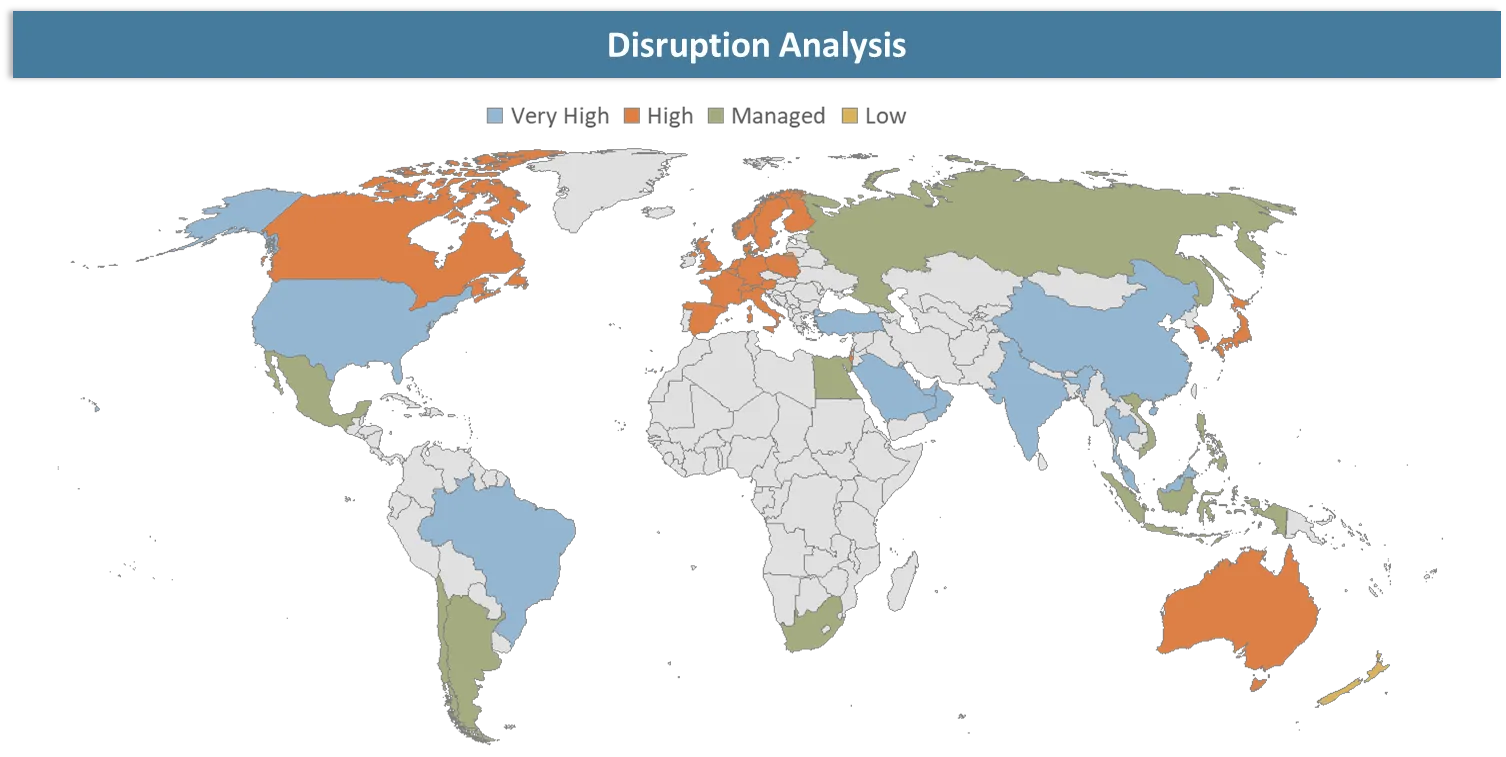
Global PFAS Regulatory Expansion Enhancing Testing and Monitoring Demand
The fast-moving PFAS regulatory landscape is changing laboratory test requirements in terms of increasing the number of regulated PFAS substances, reducing concentration levels and increasing compliance expectations from laboratories for end-use industries. With the ever-evolving regulatory landscape, laboratories need to constantly improve their analytical techniques, increase analytes analyzed, increase detection capabilities, and improve their quality assurance protocols to meet stricter regulatory standards. The current regulatory landscape is causing constant investment in the latest analytical instruments, methods development, certified reference materials (CRMs), and lab accreditations, along with a growing need for PFAS testing and regulatory compliance services. In November 2025, the EU REACH PFAS restriction proposal, PFOS limits under the POPs Regulation, the Packaging and Packaging Waste Regulation (PPWR), and national PFAS restrictions in France and Denmark, have greatly increased the laboratory test requirements. These requirements include laboratories having capabilities to conduct tests at lower detection limits, more analytes analyzed, products and packaging testing, and traceability to prove regulatory compliance.
PFAS testing Market BCG Matrix: Company Evaluation
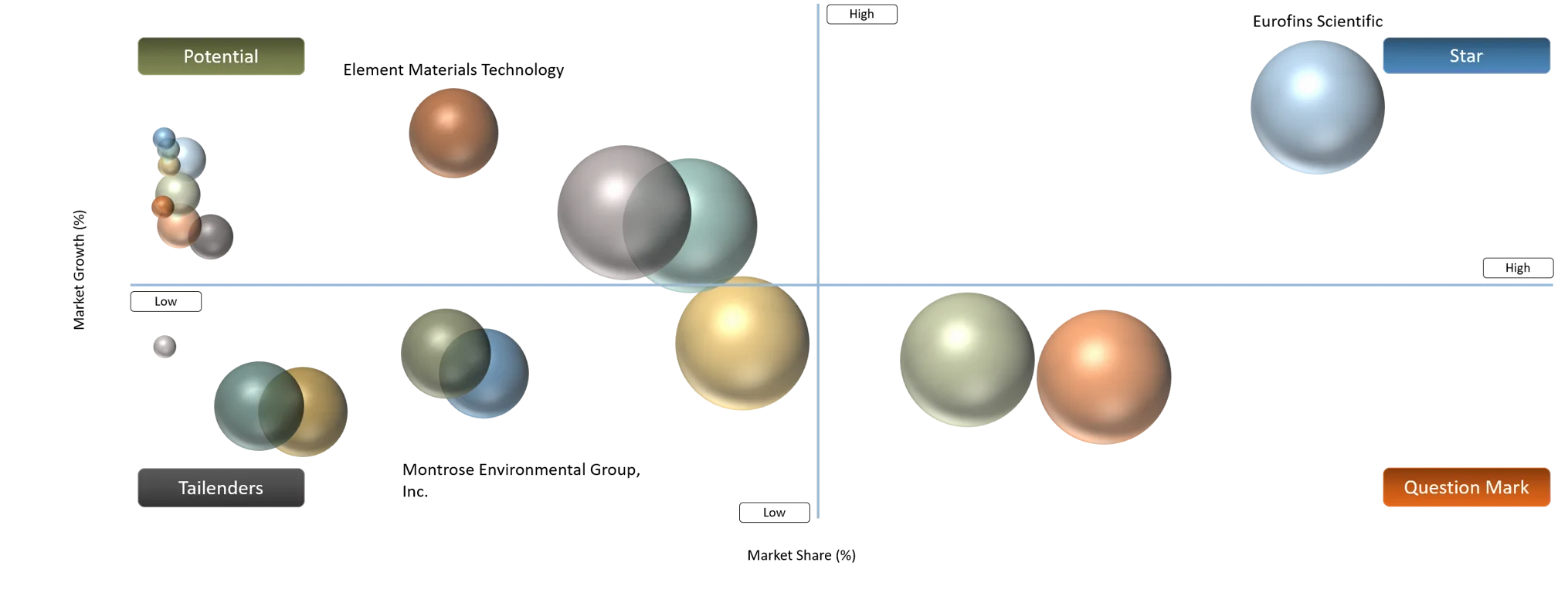
Eurofins Scientific and SGS are classified as Star competitors owing to their robust competitive position in PFAS testing. These two companies have a wide network of laboratories globally, wide range of PFAS testing services, and constant investment in analytics which helps them take advantage of regulatory and environmental compliance demands. Element Materials Technology demonstrates strong growth potential, driven by expanding PFAS testing capabilities and specialized analytical expertise, while ALS Limited maintains a Cash Cow position through its established environmental testing business and stable revenue from long-term compliance monitoring programs. While, Montrose Environmental Group, Inc. and other regional laboratories occupy the Tailender segment, where growth is primarily driven by niche environmental expertise, localized regulatory support and opportunities to expand laboratory infrastructure and accredited PFAS testing services.
PFAS testing Market Dynamics
Driver Impact Analysis
| Driver | Market Growth Impact (%) | Demand Concentration | Impacted Use Case | Strategic Impact |
Stringent PFAS Regulations Increasing Mandatory Testing Requirements | 25% | Strong demand in North America and Europe due to stricter drinking water standards, discharge regulations and compliance requirements. | Drinking water monitoring, wastewater testing, industrial compliance testing and regulatory assessments. | Increases adoption of accredited laboratories, PFAS analytical services, reference standards and routine monitoring programs. |
Expansion of Standardized LC-MS/MS-Based PFAS Analytical Methods | 25% | High concentration among environmental laboratories, commercial testing providers and research organizations requiring accurate trace-level detection. | PFAS analysis across water, soil, sediment, biosolids and industrial samples. | Accelerates investment in advanced instruments, validated methods and laboratory testing capabilities. |
Growth in Site Investigation and Remediation Projects | 20% | Concentrated in regions with identified PFAS contamination sites, including North America, Europe and industrial regions of Asia-Pacific. | Contaminated site assessment, groundwater monitoring, soil testing and remediation verification. | Expands demand for environmental sampling, PFAS characterization and long-term monitoring services. |
Expansion of Drinking Water Monitoring Programs and Public Health Initiatives | 15% | Increasing demand from municipal utilities, government agencies and water management organizations. | Drinking water quality testing, source water assessment and treatment performance evaluation. | Supports recurring testing requirements and expansion of PFAS laboratory capacity. |
Expansion of PFAS Drinking Water Standards and Environmental Compliance Regulations
The increase in regulatory standards, monitoring programs and expanded PFAS coverage is generating the need for more analytical testing. Agencies such as U.S. Environmental Protection Agency (EPA) have developed a robust PFAS regulatory program with the development of the National Primary Drinking Water Regulation (NPDWR) and the proposed Sixth Unregulated Contaminant Monitoring Rule (UCMR 6). The NPDWR sets legally binding Maximum Contaminant Levels (MCLs) for some of the PFAS and mandates the public water systems to undertake initial and continuous compliance monitoring, public disclosure of the PFAS concentration and assessment of treatment efficacy where there is exceedance of the MCL. The proposed UCMR 6 further broadens monitoring of additional unregulated contaminants throughout the nation, resulting in increased analytical testing in public water supply systems. Besides drinking water, the increased reporting requirements under Toxic Substances Control Act (TSCA) and Toxics Release Inventory (TRI), coupled with expansion of analytical methods for multiple media, is increasing mandatory PFAS testing in wastewater, groundwater, soil, sediments, biosolids, landfill leachate, industrial effluent and remediation projects.
In Europe, some of the most stringent PFAS regulations are being enforced. The proposal for a restriction under REACH Annex XVII, an innovative substance class system is being put in place which can bring PFAS chemicals amounting to over 10,000 under regulation. In addition to REACH, there is the Drinking Water Directive which requires PFAS monitoring in all Member States, the Packaging and Packaging Waste Regulation (PPWR) which sets limits for PFAS concentrations in food contact packaging from August 2026, the Urban Wastewater Treatment Directive which makes PFAS monitoring mandatory in treated wastewater and Commission Regulation (EU) 2023/915.
Restraint Impact Analysis
| Restraint | Drag on Market Growth (%) | Primary Impact Area | Impacted Use Case | Strategic Impact |
Extremely low detection limit requirements increase quality control complexity | 25% | Analytical sensitivity, method validation, laboratory quality control and testing costs. | Trace-level PFAS analysis in drinking water, wastewater, soil and complex environmental matrices. | Increases laboratory operational challenges, requiring advanced instrumentation, strict contamination control, skilled personnel and higher testing costs. |
Limited availability of isotope-labelled standards for emerging PFAS | 20% | Calibration accuracy, quantitative analysis and method development for emerging PFAS compounds. | Non-targeted analysis, emerging PFAS identification and regulatory testing of new compounds. | Limits expansion of testing capabilities and increases dependency on specialized CRM suppliers for reliable quantification. |
High cost of advanced PFAS analytical instruments and laboratory setup | 20% | Capital investment, laboratory infrastructure and technology adoption. | Commercial environmental laboratories, research facilities and industrial testing laboratories. | Restricts adoption among smaller laboratories and increases investment requirements for LC-MS/MS, HRMS and related analytical platforms. |
Complexity of PFAS analysis across diverse sample matrices | 15% | Sample preparation, analytical method selection and testing turnaround time. | Testing of wastewater, biosolids, food products, textiles, industrial materials and contaminated sites. | Requires specialized workflows, matrix-specific validation and experienced technical expertise, increasing testing complexity. |
Growing Need for Defensible Ultra-Trace PFAS Measurements Increasing Laboratory Method Validation and Compliance Burden
The tightening regulations on PFAS now demand that laboratories be able to measure PFAS at very low parts-per-trillion (ppt) levels in drinking water, wastewater, groundwater, soil, sediments, biosolids, food and various other samples. At such trace levels of PFAS, any small contamination in the laboratory, whether it comes from the reagents, solvents, sample collection devices, or even from the mass spectrometer itself, may affect analytical outcomes. For reliable ultra-trace-level quantification, laboratories will need to adopt rigorous QA/QC procedures, which involve contamination controls, PFAS-free lab materials, certified reagents, isotope dilution, blank checks and method validation on the appropriate matrix. The industry also recommends using contamination controls in the form of PFAS delay columns and PFAS-free fluidic materials to limit system interferences during LC-MS/MS analysis. Such stringent analytical requirements lead to increased operational, method development, analyst training, turnaround times and compliance expenses. With the ongoing expansion of PFAS regulations in drinking water, wastewater, groundwater, soil, sediments, biosolids, food and consumer products, data defensibility at ultra-trace levels has become more challenging for testing laboratories.
PFAS testing Market Segmentation Analysis
The global PFAS testing market is segmented based on offering, testing method, technology, PFAS type, sample type, application and region.
LC-MS/MS Dominance in PFAS Testing Driven by Regulatory Compliance and Analytical Advancements
Liquid Chromatography-Tandem Mass Spectrometry is the most prevalent testing technology utilized for PFAS testing and accounts for more than 74% of the market share in 2025. The method of Liquid Chromatography Tandem Mass Spectrometry (LC-MS/MS) has emerged as the standard analytical platform for targeted PFAS analysis owing to its capability to analyze a variety of PFAS at trace level concentrations and satisfying the performance criteria set by the regulatory authorities. Analytical methods including United States EPA Methods 533, 537.1, and 1633A and international standards like ISO and ASTM have recommended the use of LC-MS/MS for the determination of PFAS in environmental samples.
In August 2025, Shimadzu Corporation introduced LCMS-8065XE Triple Quadrupole LC-MS/MS, which was capable of handling high sensitivity and high throughput quantification of the samples, particularly in terms of environmental studies, including those involving PFAS analysis. The launch reflects continued development of LC-MS/MS platforms capable of addressing the increasing analytical requirements associated with low-level PFAS detection. Shimadzu further expanded the application of LC-MS/MS through an ISO 21675-based PFAS testing workflow for industrial wastewater, enabling the simultaneous analysis of 30 short- and long-chain PFAS compounds. This development demonstrated the growing use of standardized LC-MS/MS workflows beyond conventional drinking-water testing and into more complex industrial matrices.
PFAS testing Market Geographical Penetration
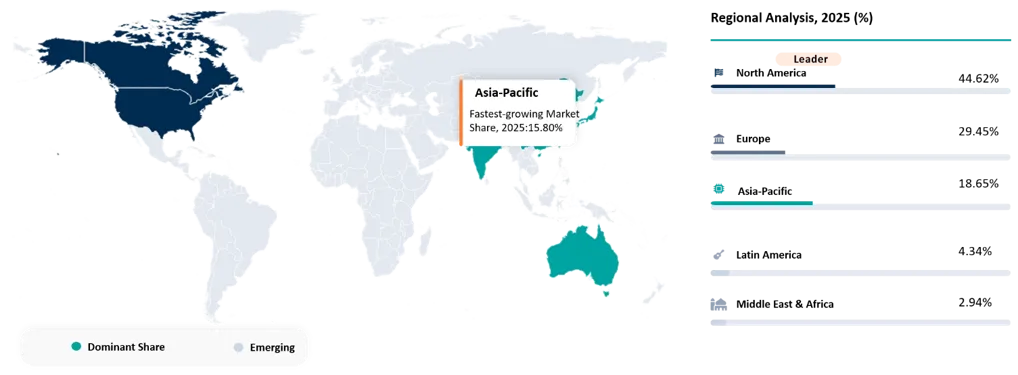
Expansion of PFAS Detection and Remediation Programs Strengthening Regional Testing Demand in North America
North America is experiencing strong growth in the PFAS testing market due to increasing regulatory actions, rising demand for drinking water monitoring, expansion of environmental testing programs and growing adoption of advanced analytical technologies. Government investments in PFAS detection, monitoring and remediation programs are driving demand for PFAS testing services across North America. Funding initiatives are enabling large-scale sampling of public water systems, contamination assessment and implementation of treatment strategies, increasing the need for advanced PFAS analytical testing. In May 2024, the U.S. Environmental Protection Agency (EPA) awarded US$18.9 million to the New Mexico Environment Department (NMED) through the Bipartisan Infrastructure Law to assess PFAS and other emerging contaminants in public water systems and disadvantaged communities. The funding supports PFAS sampling across the state, evaluation of contamination levels and development of remediation and mitigation plans. Such government-funded PFAS monitoring programs are expanding testing requirements for municipalities, environmental laboratories and water management organizations across North America.
U.S. PFAS Testing Market Trends
U.S. is dominating the North America PFAS testing market because of implementation of stringent PFAS regulations, Expansion of PFAS testing capabilities, mandatory drinking water monitoring requirements and increasing environmental compliance obligations. Federal and state regulatory actions are driving municipalities, industries and environmental laboratories to conduct regular PFAS analysis across drinking water, wastewater, soil and other environmental matrices. For instance, in April 2024, the U.S. EPA finalized the National Primary Drinking Water Regulation (NPDWR) for PFAS, establishing enforceable limits for six PFAS compounds, including PFOA, PFOS, PFHxS, PFNA and HFPO-DA (GenX Chemicals). The regulation requires public water systems to conduct PFAS monitoring and compliance testing, increasing demand for PFAS analytical testing services.
Moreover, EPA is making substantial investments for enhancing PFAS testing and treatment projects. Under the Infrastructure Investment and Jobs Act, the organization has provided US$1 million worth of funding to support states, territories, public water systems and private well owners in dealing with PFAS pollution through detection, monitoring and remediation measures. Beside these, establishment of specific PFAS testing laboratories and analysis services is promoting the growth of the United States PFAS testing market. For example, in June 2026, an environmental diagnostics company Biota based in Colorado established a new 7,500 square foot PFAS testing laboratory and innovation center in Longmont for enhancing PFAS testing services. This testing center helps in developing fast PFAS testing technologies and high throughput analytical tools that enable utilities, environmental groups and government authorities to obtain PFAS data quickly.
Asia-Pacific PFAS Testing Market Growth Driven by Regulatory Expansion and Advanced Detection Technologies
Asia-Pacific is projected to become the fastest-growing market for PFAS testing throughout the forecast period (2026-2035), growing at a CAGR of around 20.8%, driven by the implementation of stringent PFAS policies, increasing use of PFAS testing to monitor drinking water and stringent environmental compliance requirements and adoption of advanced PFAS testing techniques in countries such as China, Japan, South Korea, Australia, Singapore and India. Growing regulatory interest towards PFAS management in the Asia-Pacific region will lead to an increase in the need for advanced PFAS testing solutions. In countries such as China, Japan, South Korea and Australia, there are stringent monitoring and discharge requirements for PFAS that necessitates regular PFAS testing. For instance, China has introduced its first local PFAS discharge standard for chemical industrial parks in 2025, Japan has introduced compulsory PFOS and PFOA monitoring requirements in drinking water since 2026 and Australia has upgraded PFAS guideline values for drinking water.
Furthermore, growing Adoption of Advanced PFAS Detection Technologies in Asia-Pacific: The increasing need for rapid and reliable PFAS monitoring solutions is encouraging technology providers to expand their presence across Asia-Pacific. For instance in February 2026, NanoFrontier Inc. expanded its PFAS detection reagent technology into India, with plans to introduce PFAS detection solutions and explore local manufacturing opportunities. The company’s participation in the BIO ASIA 2026 Startup Delegation Program in Hyderabad highlights the growing adoption of innovative PFAS detection technologies and strengthening of PFAS testing capabilities across the Asia-Pacific region.
Expansion of PFAS Drinking Water Standards and Defense-Related Monitoring Activities Driving Testing Adoption in Japan
Japan’s tightening regulatory framework for PFAS is increasing the need for analytical testing among water utilities, industries, and manufacturers. The government is moving PFOS and PFOA management from voluntary monitoring toward mandatory compliance requirements, creating demand for reliable PFAS measurement methods. For instance, in June 2025, Japan’s Ministry of the Environment announced amendments to water quality regulations, establishing PFOS and PFOA as regulated parameters under drinking water standards. From April 2026, water suppliers were required to conduct PFOS and PFOA testing and comply with the established limits. The regulation maintains a combined limit of 50 ng/L for PFOS and PFOA, increasing the need for routine monitoring by water operators.
Additionally, increasing PFAS detection in drinking water systems is encouraging more frequent monitoring and contamination assessment activities at military facilities in Japan. Regulatory requirements and Department of Defense monitoring policies are supporting systematic PFAS analysis to evaluate water quality and manage potential exposure risks. For instance, in October 2024, Yokota Air Base conducted base-wide drinking water sampling under the U.S. Department of Defense PFAS monitoring policy and analyzed 29 PFAS compounds. The testing detected multiple PFAS substances, including PFOS at 8.5 ppt and PFOA at 5.1 ppt, leading to continued evaluation and mitigation planning.
Europe’s Expanding PFAS Testing Landscape Supported by Contamination Concerns and Innovation
Europe held a significant market share of approximately 29.5% of the global PFAS testing market in 2025, supported by strengthening PFAS regulations, increasing environmental monitoring requirements and growing demand for compliance testing across industrial and municipal applications. Growing evidence of PFAS contamination across Europe is increasing the need for comprehensive monitoring and analytical testing. According to the European Environment Agency (EEA), 51–60% of European rivers exceeded PFOS quality standards during 2018–2022, with exceedance rates reaching 100% in some coastal waters. In addition, approximately 23,000 PFAS-contaminated sites have been identified across Europe, while 94% of European tap water samples contained trifluoroacetic acid (TFA) according to PAN Europe (2024). These widespread contamination findings are increasing the need for expanded PFAS monitoring programs, advanced analytical testing capabilities and regular environmental assessments across Europe to identify contamination sources and support regulatory compliance.
European laboratories and research institutions are investing in advanced analytical technologies such as LC-MS/MS, LC-HRMS and rapid detection methods to improve PFAS identification and quantification. Initiatives such as WSSE Warsaw’s LC-MS/MS PFAS testing expansion (Poland), TESTEX’s non-targeted PFAS analysis using LC-HRMS (Switzerland) and WFBR’s rapid detection research (Netherlands) are supporting the adoption of advanced PFAS testing solutions.
PFAS Hotspots Across the EU
| Location | Initial source of contamination
| Source of human exposure
| Results of human biomonitoring
|
Italy: Veneto
| Emissions from industrial site contaminating soil and both surface water and groundwater
| Drinking water
| Twelve PFAS found in human serum
|
| Sweden: Ronneby | Firefighting foam used since 1985 at military airport | Drinking water | Elevated levels of PFHxS, PFOS, PFOA |
| Netherlands: Dordrecht | PFAS polymer production site | No data in the publications reviewed | - |
| Belgium: Zwijndrecht | PFAS production site | Local egg consumption | Elevated PFAS levels |
| Denmark: Korsør | Firefighting foam used at military training centre | Meadow and cows | Elevated PFOS levels |
| Germany: Gendorf (Altoetting), Bavaria | Airborne emissions from industrial site leading to groundwater contamination | Drinking water | Elevated PFOA levels |
| Germany: Arnsberg | Large-scale contamination from soil additive; illegal disposal of sewage sludge from paper industry in a biowaste mixture; contamination of drinking water reservoir | Drinking water, fish | Levels of PFOA 4–8 times higher in residents who received contaminated drinking water; high PFOS levels in anglers fishing in both contaminated lake and rivers in the area |
| Germany: Rastatt | Most likely PFAS contaminated paper sludge mixed together with compost | Drinking water, food (agricultural products such as crops, e.g. strawberries and asparagus) | Elevated PFOA levels in residents who received contaminated drinking water |
PFAS testing Market Competitive Landscape
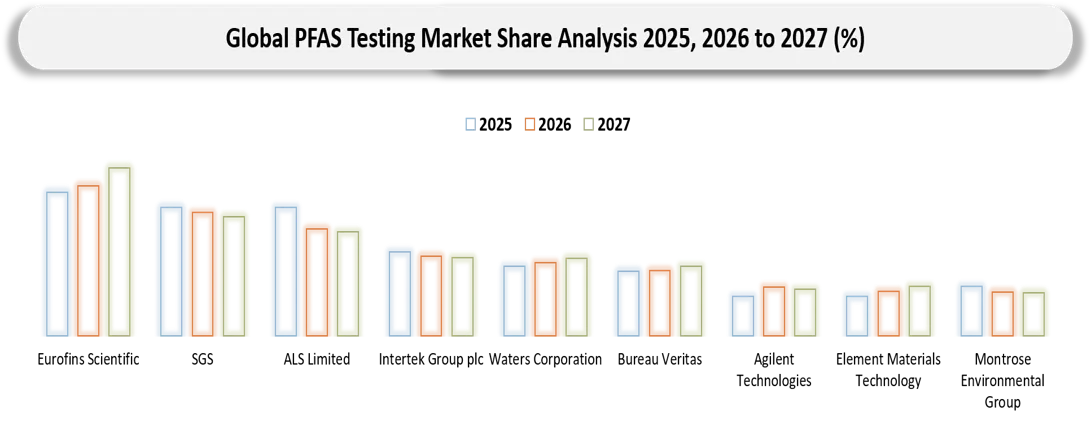
- The PFAS testing market is characterized by three key participant groups: analytical testing laboratories, environmental testing service providers and analytical instrument and technology solution providers. Eurofins Scientific, SGS, ALS Limited, Intertek Group plc and Bureau Veritas dominate the PFAS testing market due to their robust environmental testing capabilities, accreditation of their laboratories and comprehensive analysis in drinking water, wastewater, soil, sediment, industrial and consumer products. Eurofins Scientific and SGS are major companies that benefit from their wide presence across laboratories globally and broad range of PFAS testing services offered. Meanwhile, ALS Limited, Intertek and Bureau Veritas have an edge because of their experience in environmental testing and regulation compliance testing. Waters Corporation and Agilent Technologies boost the competition in the market through provision of advanced instruments such as LC-MS/MS and High-Resolution Mass Spectrometry used for trace level detection and method development of PFAS. Element Materials Technology and Montrose Environmental Group enhance the PFAS testing market due to specialized environmental testing, remediation services and PFAS testing.
- Key players include Eurofins Scientific, SGS, ALS Limited, Intertek Group plc, Waters Corporation, Bureau Veritas, Agilent Technologies, Element Materials Technology and Montrose Environmental Group.
Key Developments
- December 2025: Eurofins Medical Device Services North America launched the industry’s first GMP-compliant PFAS testing and screening solution for medical devices. The platform combines total organic fluorine screening, supply-chain assessments, extractables and leachables testing, toxicological risk assessment and stability studies.
- February 2026: SGS introduced its “No PFAS Detected” certification for food-contact materials, enabling manufacturers to demonstrate that products meet defined PFAS testing requirements and strengthen compliance credibility across the food-contact supply chain.
- February 2026: ALS expanded PFAS testing support for firefighting foams and portable fire extinguishers under EU Regulation 2025/1988, offering accredited targeted PFAS analysis, PFAS precursor screening and regulation-aligned reporting.
- In March 2026, SGS collaborated with Textile Exchange through a joint presentation at Intertextile Shanghai 2026, addressing PFAS regulatory trends, testing approaches and practical transition strategies for the textile industry.
- September 2025: ALS announced the upcoming launch of an OTM-50-based air-testing method in Canada to assess volatile fluorinated compounds associated with PFAS destruction and remediation. The method supports evaluation of destruction efficiency and analysis of industrial air emissions.
Key Procurement Priorities and Buyer Evaluation Criteria
- Favor laboratories and solutions that provide PFAS methods which comply with regulatory standards, have low detection limits and can reliably quantify in challenging sample matrices.
- Assessment using criteria such as certifications (ISO/IEC 17025), proven test capabilities, qualified staff and successful PFAS analytical performance.
- Consider rapid turnaround, quality control, sample handling and capacity for large-scale monitoring programs.
Why Choose DataM?
- Technological Innovations: Explores advancements in data center power infrastructure technologies, including intelligent power distribution systems, high-efficiency UPS solutions, medium-voltage switchgear, digital power monitoring platforms and AI-enabled energy management systems that improve reliability, operational efficiency, scalability and power optimization for hyperscale, colocation and enterprise data centers.
- Product Performance & Market Positioning: Evaluates how different players deliver power infrastructure solutions based on power efficiency, system reliability, scalability, uptime performance, energy management capabilities and integration with renewable energy sources, highlighting how leading companies differentiate through advanced electrical architectures, modular designs and solutions optimized for AI-driven high-density computing environments.
- Real-World Evidence: Highlights adoption of advanced power infrastructure solutions across hyperscale data centers, cloud facilities, AI computing campuses and enterprise data centers, demonstrating benefits such as improved power availability, reduced energy losses, enhanced operational continuity, optimized electricity management and support for increasing rack power densities.
- Market Updates & Industry Changes: Tracks key developments such as AI data center expansion, utility partnerships, renewable power integration, hyperscale facility investments, grid infrastructure upgrades and deployment of next-generation power distribution systems across North America, Asia-Pacific and Europe, supporting the transition toward sustainable and resilient data center ecosystems.
- Competitive Strategies: Analyzes how leading companies expand through product innovation, strategic partnerships, acquisitions, global service network expansion and development of integrated power management solutions to address rising demand for reliable electricity supply driven by AI, cloud computing and high-performance computing applications.
- Pricing & Market Access: Explains pricing variations based on power capacity, equipment type, efficiency ratings, customization requirements and integration complexity, along with access through electrical equipment manufacturers, data center infrastructure providers, system integrators and utility partnerships supporting global deployment.
- Market Entry & Expansion: Identifies growth opportunities driven by AI infrastructure growth, hyperscale data center development, edge computing adoption, renewable energy integration and digital transformation, while outlining strategies such as regional manufacturing expansion, energy-efficient product development, ecosystem partnerships and customized power solutions to strengthen global market presence.
Target Audience 2026
- Data Center Operators and Hyperscale Companies
- Cloud Service Providers and Technology Companies
- Electrical Equipment Manufacturers and Power Solution Providers
- Data Center Infrastructure Developers and Investors
- Utility Companies and Energy Providers
- System Integrators and Engineering, Procurement & Construction (EPC) Companies
- Government Bodies and Regulatory Authorities





























































