

PET Imaging Agents Market Size and Overview
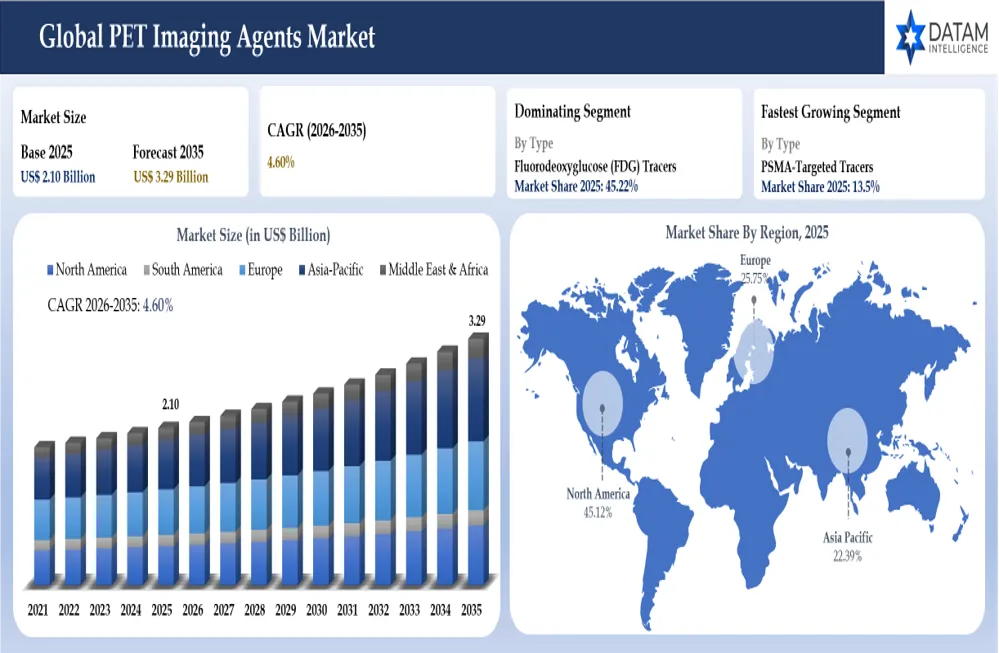
The global PET imaging agents market reached US$ 2.10 billion in 2025 and is expected to reach US$ 3.29 billion by 2035, growing with a CAGR of 4.60% during the forecast period 2026-2035.
The market is propelled by the rise in demand for molecular imaging for disease diagnosis and characterization, especially in oncology, neurology and cardiology. FDG continues to be an important radiotracer that is used for assessment of glucose metabolism in cancer and other disorders, while Ga-68 and F-18 PSMA-based tracers aid in the imaging of prostate cancer. Amyloid PET tracers also play an important role in the field of neurological imaging, especially when evaluating the amyloid status of certain patients who have been screened for Alzheimer’s disease. Future marketing prospects will be based on the clinical value of the disease-specific radiotracers, as well as approval and reimbursement for new imaging agents.
The need for the supply chain is one of the key features of the market since radioisotopes are characterized by short physical half-life and need to be produced, checked and delivered in a proper way. Physical half-life of Fluorine-18 is about 110 minutes which means that it is crucial to schedule production and deliver doses properly. Investments in cyclotrons, generator systems of Gallium-68, automatic synthesis of radiopharmaceuticals and special delivery chain can make supply more reliable. However, high costs of production, complicated infrastructure, regulatory aspects and reimbursement are still among the main obstacles for development of the market.
PET Imaging Agents Market Key Takeaways
- Fluorodeoxyglucose (FDG) tracers dominated the PET imaging agents market in 2025, with market share of 45.22%, owing to its application in diagnosing, staging, detecting recurrence of cancer and monitoring patient response to therapy.
- PSMA based PET radiotracers were expected to grow at an estimated 13.27% CAGR from 2026 to 2035 owing to the rising utilization of these radiotracers for the diagnosis and treatment of prostate cancer.
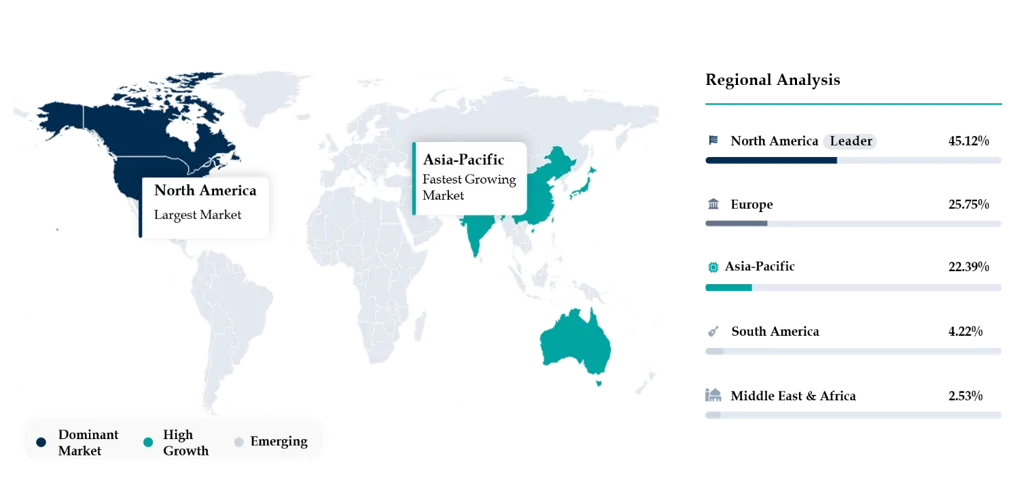
- The North America region dominated the global PET imaging agents market in 2025, with 45.12% market share, owing to advanced PET/CT systems, higher demand for oncology imaging in the region and presence of established distribution channels for radiopharmaceuticals.
- The increasing use of amyloid and tau PET tracers will increase the application of molecular imaging in the field of neurology, especially in the assessment of the pathology associated with Alzheimer’s disease in suitable patients.
- Increased investments in cyclotron, gallium-68 generators, radiopharmaceutical synthesis and special distribution channels will provide opportunities to enhance tracer production and reliability. Nonetheless, the limited shelf-life of radionuclides, strict quality standards and high cost of infrastructure will be hindering factors for growth in the market.
PET Imaging Agents Industry Trends and Strategic Insights
- The PET imaging agents market is changing its focus to include designated oncologic radiotracers, which include prostate-specific membrane antigen (PSMA) agents for patients with prostate cancer and developing fibroblast activation protein inhibitor (FAPI) agents, thus widening the diagnosis options from only using traditional fluorodeoxyglucose (FDG) PET scans.
- The coupling of PET imaging and targeted radionuclide therapy is making theranostics more effective, especially in the context of prostate and neuroendocrine cancers, in which the imaging modalities help identify patients who will respond to treatment.
- Increased demand for neuro-imaging is promoting the development and application of amyloid and tau PET radiotracers for diagnosing Alzheimer’s disease and related disorders, thus providing prospects for specialty radiopharmaceuticals in medical diagnosis and research.
- The shorter half-lives of popularly used PET radioisotopes are prompting investment in cyclotrons, Gallium-68 generators and specialty radiopharmacies for ensuring the accessibility of tracers, reducing the delays in delivery and expanding the scope of PET imaging services.
- Increased competition between radiopharmaceutical manufacturers is resulting from the diversification of the pipelines of companies in terms of oncology, cardiology and neurology applications, while clinical validation, licensing, manufacturing capabilities and partnership are becoming key commercialization factors for novel PET imaging drugs.
PET Imaging Agents Market Scope
| Metrics | Details | |
| 2025 Market Size | US$ 2.10 Billion | |
| 2035 Projected Market Size | US$ 3.29 Billion | |
| CAGR (2026-2035) | 4.60% | |
| Largest Market | North America | |
| Fastest Growing Market | Asia-Pacific | |
| By Type | Fluorodeoxyglucose (FDG) Tracers, PSMA-Targeted Tracers, Somatostatin Receptor Tracers, Amyloid PET Tracers, Tau PET Tracers, FAPI-Targeted Tracers, Sodium Fluoride Tracers, Cardiac Perfusion PET Tracers, Estrogen Receptor Imaging Tracers, Amino Acid and Brain Tumor Imaging Tracers and Other PET Imaging Agents | |
| By Radionuclide Type | Fluorine-18 (F-18), Gallium-68 (Ga-68), Carbon-11 (C-11), Nitrogen-13 (N-13), Oxygen-15 (O-15), Rubidium-82 (Rb-82), Copper-64 (Cu-64), Zirconium-89 (Zr-89) and Other Radionuclides | |
| By Application | Oncology, Neurology, Cardiology, Infectious Disease and Inflammation and Other Applications | |
| By End User | Hospitals, Diagnostic Imaging Centers, Specialty Clinics, Academic and Research Institutes and Other End Users | |
| By Distribution Channel | Hospital and Healthcare Facility Pharmacies, Radiopharmaceutical Distribution Networks, Direct Supply from Radiopharmaceutical Manufacturers, Specialized Nuclear Medicine Suppliers and Other Distribution Channels | |
| By Production Method | Cyclotron-Based Production, Radionuclide Generator-Based Production, Reactor-Based Production and Other Production Methods | |
| By Region | North America | U.S., Canada, Mexico |
| Europe | Germany, UK, Russia, France, Spain, Italy, Poland | |
| Asia-Pacific | China, India, Japan, Australia, South Korea, Indonesia, Malaysia, Singapore, Vietnam, Thailand, Philippines, Taiwan | |
| South America | Brazil, Argentina | |
| Middle East and Africa | UAE, Saudi Arabia, South Africa, Israel, Turkiye, Nigeria | |
| Report Insights Covered | Competitive Landscape Analysis, Company Profile Analysis, Market Size, Share, Growth | |
Why does this report matter in 2026?
The PET imaging agents market is becoming increasingly important to strategic considerations in 2026 due to the development of molecular imaging beyond FDG-based diagnostics to include targeted agents for prostate cancer, neurology and other specific indications. The use of PSMA-targeted PET imaging, the further development of FAPI tracers and an expansion of the use of amyloid PET imaging are all influencing the development strategies of the leading radiopharmaceutical companies. Moreover, the combination of PET diagnostics with the new targeted radioligand therapy is enhancing the importance of imaging agents in treatment decision-making and diagnosis. It is crucial to know what categories of agents already have proven clinical use, what categories are being developed and which lack regulatory approval and clinical data in order to develop commercial opportunities in 2026.
Market development will also rely on radiopharmaceutical manufacturing capabilities, isotope availability and distribution infrastructure owing to the short radionuclides’ half-lives. The development of cyclotrons, gallium-68 generators, automated synthesizers and regional radiopharmacy distribution networks may impact the access to specialized tracers and the ability of manufacturers to service their hospitals and PET centers. Reimbursement strategies, manufacturing cost and regulatory issues will play role in commercial viability of new tracers in various countries. This report will help the stakeholders to analyze the market potential for specific tracers, competitive strategies, supply chain constraints and investment priorities in product and radiopharmaceutical development in 2026.
PET Imaging Agents Market White Space & Investment Opportunities
- Potential areas of investments include the design of new PET imaging tracers including PSMA tracers for the diagnosis of prostate cancer and FAPI tracers for solid tumors, which could provide additional information on tumors beyond the standard FDG tracer.
- Potential investment in the production of Amyloid and Tau PET imaging tracers opens up possibilities for the pharmaceutical and biotechnology industry to develop more diagnostic tools for Alzheimer’s disease.
- There is an investment opportunity in areas where there is insufficient production of radiotracers, restricted transportation and radioactive isotopes have short half-lives, thus making the use of PET scanning services difficult.
- Investing in radiopharmaceuticals companies system and manufacturing plants and implementing automated synthesis systems as well as other technical solutions enables the manufacturers to improve batch control and to fulfill regulatory requirements.
- The strategic alliances that radiopharmaceutical invention companies, hospitals, diagnostic imaging networks and nuclear pharmacies make assist with the clinical uptake of new products as well as the establishment of distribution networks and commercialization of the latest PET products in oncology, neurology and cardiology.
PET Imaging Agents Future Market Transformation
The PET imaging agents market is projected to move from an imaging market dominated by Fluorine-18 Fluorodeoxyglucose (FDG) for diagnostic purposes towards a more specialized molecular imaging platform to enable accurate diagnosis and therapy decision-making. The wider adoption of PSMA-targeted imaging agents, further validation of FAPI imaging and developments in amyloid PET agents may increase the usage of PET in oncological and neurological imaging and contribute to closer integration of diagnostics and radiopharmaceutical treatments. Developments in automated production of radiopharmaceuticals, small-scale systems for production and regional networks in radiopharmacy should facilitate the availability of tracers and solve challenges regarding the delivery of radionuclides with short half-lives. At the same time, AI imaging technology may increase the reliability of interpreting clinical outcomes and assess patients’ responses to various therapies. The speed of the transition will be determined by clinical evidence, regulatory permissions, reimbursement practices, production capabilities and stability of isotope supply, favoring the participants that integrate full range of tracers with advanced production and delivery system.
PET Imaging Agents Market Buyer Decision-Making Criteria
Buyers of PET imaing agents such as hospitals, businesses providing structural imaging services, departments of nuclear imaging and radiopharmacy regard particular items based on their diagnostic effectiveness, clinical information, permits for sale, expenses and adequacy of supply. Furthermore, given the short half-life of PET tracers and the special needs concerning handling of these products decisions concerning purchases are influenced by the aspects of timing, compatibility with imaging facility equipment and quality of supply.
Major Buyer Decision-Making Criteria
- Diagnostic Accuracy and Clinical Utility
- Regulatory Approval and Clinical Evidence
- Tracer Availability and Delivery Reliability
- Total Cost and Reimbursement
- Infrastructure and Protocol Compatibility
- Product Quality and Patient Safety
- Tracer Specificity and Clinical Application
- Supplier Reliability and Technical Support
PET Imaging Agents Market Economic & Investment Analysis
The economic profile of the PET imaging agents market can be defined by the highly capital intensive process of radiopharmaceuticals manufacturing, the increasing need for molecular imaging and the economic viability of targeting certain tracers. Investment opportunities include not only the development of the target tracers but also cyclotrons manufacturing, gallium-68 generators, automatic radiopharmaceutical manufacturing technologies, quality control and regional distribution of the products. While FDG tracers have the advantage of being well known in the clinical practice, the PSMA tracers and other targeted disease specific tracers have an opportunity to be used in the specialized diagnostics. However, the returns of investments depend on the clinical evidence, regulatory approval, reimbursement schemes, efficiency of manufacturing and timely delivery of radiopharmaceuticals.
On the side of investing, tracers that have differentiation through their tracer portfolio, access to isotopes, well-built networks of hospitals and solid radiopharmaceutical distribution systems would possibly be in a better position to consider sustainable growth for the future. Strategic collaboration among tracers' manufacturers, pharma organizations, nuclear medicine providers and radiopharmacy organizations can possibly assist in sharing the cost and effort in developing clinical data and commercializing the product. Funding and investments in the emerging fields of FAPI tracers and amyloid PET tracers would provide other investment possibilities, which need to be carefully analyzed in terms of clinical acceptance, regulatory status, reimbursement and competition. However, expansion into new geographic regions also needs market-by-market evaluation, since the availability of cyclotrons, nuclear medicine infrastructure and health care spending varies considerably in other countries.
PET Imaging Agents Investment Trends in the Market
- Investments in dedicated radiopharmaceutical pipelines are helping with the development of PSMA ligands for prostate cancer diagnosis and FAPI ligands for more general tumor visualization, leading to the emergence of differentiated PET diagnostic products.
- Investment in theranostic platforms that comprise PET imaging compounds and targeted radiopharmaceutical therapies is growing in the areas of prostate cancer and neuroendocrine tumors in order to enhance patient selection and therapy management.
- The investments in cyclotrons, 68 Ga generator systems and radiopharmaceutical production facilities are increasingly strategic as companies try to increase the local production and decrease reliance on distant distribution of tracers.
- Investments in automation of the radiotracer production process, equipment for quality control and special facilities for manufacturing are increasing due to the need to meet the production requirements of imaging agents that are used in PET scans.
- Strategic investments and collaboration of radiopharmaceutical manufacturers, diagnostic imaging companies, hospitals and networks of nuclear pharmacies are contributing to clinical studies and distribution and commercialization of the new imaging agents used in PET scans.
Strategic Indicators for PET Imaging Agents Market
High Regulation Impact
The PET imaging agents market is characterized by high regulatory standards pertaining to the approval of radiopharmaceuticals, the use of radioactive materials, manufacturing practices and patient safety. There are defined standards of radiochemical purity, identification of radionuclides, consistency of dose and manufacturing quality associated with these agents and their relatively short radioactivity half-life makes it extremely difficult to test for quality control purposes and release these products into the market in a timely manner. The regulations also differ according to the specific country, tracer and intended use of these compounds, which may include specialized agents such as PSMA-targeted and amyloid PET tracers. These requirements will lead to increased development expenses, increased commercialization time periods and will also act as entry barriers for small scale manufacturing firms, giving an advantage to those that already have experience and proper facilities.
High Investment Activity
PET imaging agents market investments are now concentrating more and more on growing the portfolio of targeted radiotracers, enhancing isotope production facilities and improving the process of manufacturing and distribution of radiopharmaceuticals. Companies are working on developing and commercializing prostate-specific membrane antigen (PSMA)-targeted agents, amyloid PET tracers and new fibroblast activation protein inhibitor (FAPI) imaging. Investments in new technologies such as cyclotrons, gallium-68 sources, automated synthesis systems and radiopharmacy networks will help improve the accessibility of tracers. Collaboration between radiopharmaceutical companies, pharmaceutical firms, hospitals and nuclear medicine providers can help save on clinical research expenses and support the commercialization processes. However, companies have different priorities in investment depending what clinical data they have, what progress has been made in regulatory matters and whether they could provide enough supply of the product.
Supply Chain Disruption
The PET imaging agents market is susceptible to disruption along its supply chain as the tracer agents need to pass through various links from isotope producers to cyclotrons to radiopharmaceutical manufacturing units and then through quality control laboratories and finally to PET imaging centers before any appreciable loss of radioactivity takes place. Any issues with cyclotrons, problems in isotope production, lack of target chemicals, transport issues, or failures during manufacturing can affect the supply of tracers and lead to the rescheduling of scans at hospitals. In particular, this is very important for the production and distribution of the relatively short-lived radionuclides fluorine-18 and gallium-68, which have tight deadlines associated with them. Market players can increase the reliability of the supplies through investing in the creation of regional production facilities, alternative sources of supplies when possible, automation in production and better demand prediction. Nevertheless, all of these actions involve large financial outlay and special people.
Pricing Volatility
Pricing volatility in the PET imaging agents market is a result of various factors such as radionuclide production costs, cyclotron availability, special manufacturing needs and also timely distribution. The half-life of fluorine-18 is around 110 minutes and that of gallium-68 is around 68 minutes. Both these radionuclides have restricted viability and can lead to a problem of wastage of doses in case of cancellations or delays in delivery. The range of prices for PET-CT scans in India is between ₹7,999 and ₹65,500 for standard whole-body FDG protocols and ₹17,500 to ₹98,000 for specialized tracer settings, namely, PSMA, DOTA and F-DOPA, depending on the provider and the hospital at which the service is performed. The figures given here are for the procedures that include the final price of the imaging conducted and not only of the radiotracer used. Differences in production and supply of the tracers used contribute to the pricing strategy of the PET imaging agents market.
Procurement Pressure
In the PET imaging agents market, procurement pressure comes from the fact that there is a need to procure reliable sources of radiotracers while managing costs involved in production, quality control, shipping and management of radioactivity. Hospitals and diagnostics imaging centers have to plan their procurement process in relation to their patients' schedules since the half-life of Fluorine-18 is about 110 minutes and that of Gallium-68 is about 68 minutes. They will also have to assess issues like regulatory compliance, reliability of suppliers, availability of dosage, among others. In the case of special PET imaging agents like PSMA-targeted and Amyloid PET radiotracers, lack of availability of suppliers in certain geographical locations can further limit the procurement process.
New Technology Adoption
PET imaging agents market technology adoption involves innovation of targeted radiotracers, improvement of radiopharmaceutical manufacturing process and enhancement of PET imaging process quality. Innovations such as PSMA-targeted radiotracers are improving molecular imaging for prostate cancer, whereas amyloid PET tracers have been developed for evaluation of amyloid burden in patients with Alzheimer's disease and FAPI radiotracers are under development for wider use in oncology. As far as radiopharmaceuticals production is concerned, innovations in this area include development of automated synthesis modules, quality control improvements and gallium-68 generators. Image reconstruction using AI algorithms and quantitative analysis of radiotracers' behavior will make the imaging process more efficient. Technology adoption requires clinical trials and regulatory approvals as well as proper imaging devices.
Regional Expansion Opportunity
The regional expansion strategy in the PET imaging agents market requires radiopharmaceutical production and distribution to be extended from existing centers of nuclear medicine practice into new cities and developing health care markets. For example, in Asia-Pacific, there is a chance for vendors to build regional cyclotron facilities, networks of gallium-68 generators and cooperation with hospital groups to promote the access to FDG and specialized tracers like PSMA agents. The potential growth for the PET imaging agents market in India, China and Southeast Asia correlates with the growth of demand in cancer imaging but is also hampered by several issues related to cost-effectiveness, regulations and limited accessibility to nuclear medicine facilities. However, due to the short lifetime of isotopes used, the geographical expansion strategy implies the presence of geographically dispersed production capacity, stable isotope supply and delivery planning.
Government Policy Support
The support from the government policy can have an impact on Japan’s PET imaging agents market, through the approval process of pharmaceutical products, regulation of the radioactive isotopes production, radiation protection requirements and the reimbursement of imaging diagnostics. The public funding for the construction and development of the nuclear medicine equipment, as well as the financing of medical research and cancer diagnostics, may contribute to the promotion of PET imaging agents market in Japan. The governmental regulation and reimbursement system in Japan plays a significant part in defining the availability and feasibility of specialized tracers, including PSMA-targeted tracers. Expansion of the market requires the approval, reimbursement, radiation protection and pharmaceutical quality standards compliance of each product.
Pricing Intelligence
Price intelligence in the PET imaging agents market revolves around the assessment of the cost and commercial value of individual radiotracers in terms of their indication, manufacturing difficulty, activity levels and reimbursement status. The use of extant FDG tracers is characterized by a predictable execution of the clinical procedure and the overall established supply chain, while specific imaging agents, for instance, PSMA-based and neuron amyloid PET tracers, may have completely different price structures due to their specific indications, requirements for medical evidence and their availability. The buyer must clearly differentiate the price of acquiring the radiotracers from the entire cost of PET examination, which might include not only the price of scanner machines but also the cost of radiopharmacy, personnel and facility. Thus, comparing the prices at different sellers necessarily involves constant evaluation of the terms of the tracer, dose, procedure protocol, reimbursement and other services. This information can be useful for manufacturers in finding appropriate pricing strategies, for hospitals in signing contracts with respective suppliers and for investors in evaluating the commercial relevance of new types of PET imaging agents.
| HS Code | Reporter | Trade Flow | 2025 Trade Value | Interpretation |
| 284440 | United States | Imports | US$ 717 million | Imports of radioactive elements and isotopes, including materials potentially used in medical applications. |
| 284440 | Germany | Imports | US$ 304 million | Imports of radioactive materials used in medical, industrial and research applications. |
| 284440 | Canada | Exports | US$ 495 million | Exports of radioactive elements and isotopes, potentially supporting medical isotope supply chains. |
| 284440 | Netherlands | Exports | US$ 414 million | Exports of radioactive materials used across healthcare, industrial and research applications. |
Note: HS Code 284440 represents broader trade in radioactive elements and isotopes and does not exclusively cover PET imaging agents. The 2025 trade values are indicative proxy data and should not be interpreted as direct imports or exports of PET radiopharmaceuticals.
AI Impact Analysis of PET Imaging Agents Market
AI is enhancing the clinical relevance of PET tracers through improved image reconstruction, tracer uptake quantification and molecular image analysis. AI-based software can help in reducing noise, faster image acquisition and standardization of image analysis procedures for FDG, PSMA and amyloid PET tracers. In oncology applications, AI-assisted analysis will enable quantification of tracer uptake in lesions and help in assessing response to treatments, whereas in neurological applications, AI will help in analyzing the pattern of amyloid deposition associated with Alzheimer's disease. These benefits will enhance the usefulness of existing PET tracers as well as facilitate the use of specific tracers which have disease-related molecular information.
There are other applications of AI in PET radiopharmaceuticals, including development, production and distribution of radiopharmaceuticals. The use of machine learning algorithms can assist scientists to investigate molecular targets and choose the right tracer candidates while optimizing the process of developing radiopharmaceuticals. However, experimentation and validation are still necessary for the development process. Predictive analytics can be used for predicting production schedules in relation to cyclotrons, demand forecasts from imaging facilities and deliveries based on the limited shelf lives of the radionuclides like fluorine-18 and gallium-68. However, widespread application of this technology will require proper imaging datasets, system integration into hospital and radiopharmacy IT, regulatory approvals and clinical validation. Therefore, AI is expected to assist in the development and delivery of PET imaging agents and not substitute existing radiotracers or radiopharmacy infrastructure.
Disruption Analysis of PET Imaging Agents Market
The PET imaging agents market is undergoing disruption due to the changing trends from the usage of traditional metabolic agents to advanced and specific molecular agents targeted at certain diseases. Although fluorine-18 fluorodeoxyglucose (FDG) continues to be a key part of oncological imaging procedures, PSMA-targeted agents are revolutionizing the field of prostate cancer imaging through providing enhanced precision in primary lesion and metastasis detection as well as assisting in selecting patients for radioligand therapy. FAPI tracers may become either a substitute or addition to the FDG agents for selected indications but still need to be assessed in practice. As for neurology, the use of amyloid-targeting PET agents is evolving in the field of Alzheimer’s disease. All these trends make competition in the radiopharmaceutical market fiercer since now companies need to compete not only with FDG agents.
The second disruption is coming from developments in radiotracer manufacturing and supply models. The traditional PET radiotracers usually require local cyclotrons and precise coordination in distribution due to fast degradation of radionuclides used like fluorine-18 and gallium-68. Automation in radiopharmaceutical manufacturing, mini-cyclotrons, gallium-68 generators and distributed radiopharmacy model might help to diversify manufacturing and widen the availability of unique radiotracers. However, the increasing link between PET diagnostics and targeted radionuclide therapy is driving competition toward diagnostic and therapeutic radiopharmaceuticals platforms. This might become an advantage for those companies which can offer differentiation in radiotracer development along with manufacturing, regional supply chains and medical cooperation.
PET Imaging Agents Market BCG Matrix: Company Evaluation
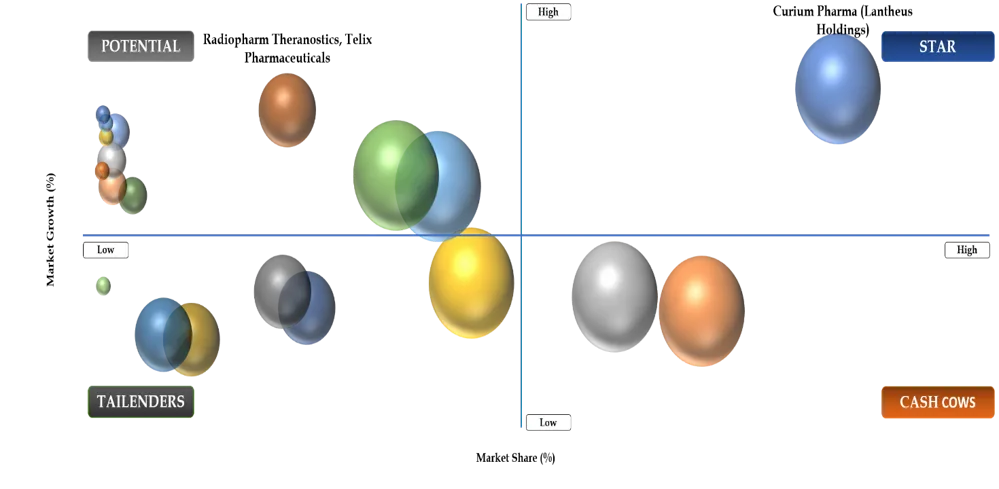
STAR
Firms like Curium Pharma (Lantheus Holdings) exemplify high market potential owing to the fact that they have an existing portfolio of commercial radiotracers, as well as PET agents which are oncology focused, among other products which have gained a larger reach. PSMA imaging demand, Amyloid PET imaging compounds and specific diseases radiopharmaceuticals provide growth potential, while investing in manufacturing facilities and distribution systems enhances their competitive positions within these commercially growing segments.
POTENTIAL
Radiopharm Theranostics, Telix Pharmaceuticals and ImaginAb are three firms that have shown great potential for growth due to their investigative radiotracers and targeted molecular imaging. The success of these three companies will be based on the results of the clinical trials, approval from relevant regulatory bodies, reimbursement and their ability to scale up the production and distribution of their products. Those drugs that aim to treat specific diseases such as pancreatic cancer and prostate cancer may have different market niches if their efficacy is proven clinically.
PET Imaging Agents Market Dynamics
Driver Impact Analysis
| Driver | Market Growth Impact (%) | Demand Concentration | Impacted Use Case | Strategic Impact |
| Rising Prevalence of Cancer | 30% | North America, Europe, Asia-Pacific | Cancer detection, staging and treatment monitoring | Increases demand for FDG and targeted oncology PET tracers |
| Increasing Adoption of Precision Diagnostics | 25% | North America and Europe | PSMA PET imaging and targeted tumor detection | Accelerates development of disease-specific radiotracers |
| Growing Prevalence of Neurological Disorders | 20% | North America, Europe, Japan | Alzheimer's disease diagnosis and neurological assessment | Expands demand for amyloid and tau PET imaging agents |
| Expansion of PET Imaging Infrastructure | 15% | Asia-Pacific and emerging markets | PET/CT imaging in hospitals and diagnostic centers | Encourages radiotracer manufacturing capacity and wider distribution |
Driver: Growing Adoption of Targeted PET Tracers for Oncology and Theranostics
Growing use of prostate-specific membrane antigen (PSMA)-targeted PET tracers is aiding the growth in Japan’s PET imaging agents market due to its use in diagnosing and staging prostate cancer and recurrence of the disease along with selection of suitable patients for targeted radioligand therapy. As FDG-based PET tracers help identify areas of higher glucose metabolism, the PSMA-targeted agents are capable of recognizing certain molecular markers that have a strong link to prostate cancer. The growing number of aged people and requirement for advanced cancer diagnostics in Japan is creating an opportunity for specialized PET tracers.
Restraint Impact Analysis
| Restraint | Drag on Market Growth (%) | Primary Impact Area | Impacted Use Case | Strategic Impact |
| High Production and Distribution Costs | 30% | Emerging markets and smaller healthcare facilities | Routine oncology and neurological PET imaging | Encourages cost optimization and centralized production networks |
| Short Half-Life of Radioisotopes | 25% | Regions with limited cyclotron and radiopharmacy access | Time-sensitive PET tracer delivery | Increases the need for local manufacturing and efficient logistics |
| Stringent Regulatory Approval Requirements | 20% | Global radiopharmaceutical development and commercialization | Introduction of novel PET imaging agents | Raises development costs and extends commercialization timelines |
| Limited PET Imaging Infrastructure | 15% | Developing countries and underserved regions | Advanced cancer and neurological diagnostics | Restricts patient access and slows radiotracer adoption |
Restraint: Short Radionuclide Half-Lives and Radiotracer Distribution Constraints
The short half-lives of popular PET isotopes pose a serious problem in terms of producing, transporting and administering PET tracers in Japan. Fluorine-18 has a half-life of about 110 minutes, whereas gallium-68 has a half-life of 68 minutes, which means that very tight coordination is needed in order to reduce the decay of these substances prior to clinical applications. Such requirements present a major problem in obtaining specialized tracers in hospitals or diagnostic centers situated far away from cyclotrons, radiopharmacies, or gallium-68 generators. To increase the availability of radiopharmaceuticals in regions far from hospitals, it is essential to develop reliable regional production and distribution networks and create specialized infrastructure and systems for scheduling, which may make it not only more expensive but potentially lead to lack of availability of the latest PET imaging agents.
PET Imaging Agents Market Segment Analysis
The global PET imaging agents market is segmented based on the type, radionuclide type, application, end-user, distribution channel, production method and region.
PET Imaging Agents Market Geographical Penetration
PET Imaging Agents Market Competitive Landscape
- Market conditions have been defined by existing radiopharmaceutical firms such as Lantheus Holdings, Curium Pharma and GE HealthCare that are benefiting from having diverse radiotracer inventories, unique manufacturing capabilities and nuclear medicine distribution networks to solidify their market standing.
- In addition, competition has begun moving away from traditional FDG tracers to next-generation PET imaging radiotracers such as PSMA tracers for prostate cancer and other radiopharmaceuticals meant for better tumor detection, diagnosis and characterization of particular diseases.
- Product differentiation is driven by various different aspects like clinical proof, regulatory order, diagnostic efficacy and the clinical significance of the remedy for certain groups of people with health issues, particularly concerning oncology and neurology.
- Manufacturing volume and delivery reliability are still among the main components of competitors' activities, since PET imaging products have a very short half-life and require particular production conditions and delivery systems.
- Partnerships, licensing deals, acquisitions and collaborations have been critical in developing new products, obtaining next-generation tracer technology, geographical expansion and growth in the areas of oncology, neurology and cardiology.
Public Company Q1-Q2 2026 Performance Comparison
The table below compares five publicly listed companies with direct or strategically relevant exposure to the PET imaging agents market. Financial results are company-wide or segment level unless PET specific figures are explicitly disclosed.
| Company | Q1–Q2 2026 Performance | PET Imaging Agents Exposure | Key Performance Driver |
| Lantheus Holdings, Inc. | H1 2026 revenue: US$765.5 million, up 2.0% year over year. | PYLARIFY (PSMA PET) and Neuraceq (amyloid PET). | PYLARIFY generated US$481.3 million in H1 sales; Neuraceq generated US$75.1 million. |
| GE HealthCare Technologies Inc. | Q2 2026 total revenue: US$5.3 billion, up 5.7% year over year. | PET radiopharmaceuticals and diagnostic imaging products through Pharmaceutical Diagnostics. | Growth in Pharmaceutical Diagnostics and Advanced Imaging Solutions. |
| Telix Pharmaceuticals Limited | H1 2026 revenue: US$477 million, up 22% year over year. | PSMA-targeted PET imaging products, including Illuccix and Gozellix. | Growth in precision medicine products and continued investment in its late-stage pipeline. |
| Novartis AG | H1 2026 net sales: US$27.5 billion, calculated from Q1 and Q2 reported results. | Related radiopharmaceutical exposure through Pluvicto, a radioligand therapy rather than a PET imaging agent. | Specialty medicines and radioligand therapy; relevance is broader than PET diagnostics. |
| Cardinal Health, Inc. | First three quarters of FY2026 revenue: US$190.6 billion, up 17% year over year. | Radiopharmaceutical distribution and nuclear pharmacy services through Nuclear and Precision Health Solutions. | Growth in Pharmaceutical and Specialty Solutions and Nuclear and Precision Health Solutions. |
Note: Financial periods differ: Lantheus, Telix and Novartis report calendar half-year results, GE HealthCare's figure is Q2 only and Cardinal Health follows a fiscal year. These company-wide figures should not be interpreted as total PET imaging agent market revenue.
Key Companies of PET Imaging Agents Market
- Curium Pharma (Lantheus Holdings) (USA)
- GE HealthCare Technologies Inc. (USA)
- Siemens Healthineers AG (Germany)
- Novartis AG (Switzerland)
- Bracco Imaging S.p.A. (Italy)
- Cardinal Health, Inc. (USA)
- Jubilant Radiopharma (Canada)
- Eli Lilly and Company (USA)
- Telix Pharmaceuticals Limited (ITM Isotope Technologies Munich) (Australia)
- Yantai Dongcheng Pharmaceutical Group Co., Ltd. (China)
- Isologic Innovative Radiopharmaceuticals Inc. (Canada)
- RadioMedix, Inc. (USA)
- ImaginAb, Inc. (USA)
- Radiopharm Theranostics Limited (Australia)
- FutureChem Co., Ltd. (South Korea)
- Nihon Medi-Physics Co., Ltd. (Japan)
- DuChemBio Co., Ltd. (South Korea)
- PET Pharm Biotech Co., Ltd. (Taiwan)
- Cyclopharm Limited (Australia)
- Eckert & Ziegler SE (Germany)
Company Profiles of PET Imaging Agents Market
PET Imaging Agents Market Major Pain Points
- Short half-lives of radionuclides used for PET scanning, especially Carbon-11 and Oxygen-15, present substantial difficulties as imaging agents have to be synthesized in the vicinity of use and given in a tight time frame.
- High cost of cyclotrons, radiochemistry equipment, quality control laboratories and shielded facilities makes the expansion of imaging agent production capacity difficult, especially in areas where nuclear medicine is poorly developed.
- The access to advanced diagnostic techniques in healthcare systems that don't have much production capacity, regulatory approvals, or distribution networks is hindered by inadequate availability of specialized radiotracers such as PSMA-targeted, FAPI, amyloid and tau PET agents.
- The process of clinical development and commercialization of new PET imaging agents is complicated by regulatory approval processes, during which developers have to introduce evidence of safety, imaging efficiency, manufacturing stability and clinical success.
- Inadequate reimbursement and high patient costs for some PET imaging scans can limit patients' access and hinder the adoption of new radiotracers, especially where clinicians have to justify their use against existing technologies.
PET Imaging Agents Market Recent Developments
- Curium Pharma - September 2026: Broadened commercial rights to PYLCLARI across 56 countries, thereby enlarging the scope for international distribution of this PSMA targeting PET imaging agent for prostate cancer imaging.
- Isologic Innovative Radiopharmaceuticals - September 2026: Launched a new $30M facility in Lachine, Quebec to increase radiopharmaceutical manufacturing capability in order to meet demands for diagnostic imaging.
- Radiopharm Theranostics - September 2026: Positive results seen from Phase I imaging study of RAD301, an investigational radiopharmaceutical under development for pancreatic ductal adenocarcinoma.
- Curium Pharmaceuticals - August 2026: Has acquired all global rights for the development, manufacturing and commercialization of ABS-011, an investigational radiopharmaceutical based on Gallium-68 PET imaging technology directed at HER2. The Phase 2b drug candidate could be used for whole body HER2 imaging in breast and gastric cancers.
- Lantheus Holdings - August 2026: Has got U.S. FDA approval for Tauklarify (florquinitau F 18 injection), a novel tau PET imaging agent used for the detection of tau neurofibrillary tangles in adults with cognitive impairment who are suspected of having Alzheimer’s disease.
Analyst View / Opinion on PET Imaging Agents Market
- The PET imaging agents market is set to grow further due to the increasing importance of molecular imaging for diagnosing various cancers and assessing the status of disease progression and therapeutic effectiveness, which would drive the demand for both traditional FDG tracers and other molecular agents.
- PSMA targeted PET agents present a significant market opportunity because of their importance in prostate cancer detection, staging and monitoring, while the upcoming use of FAPI tracers could pave the way for new applications of molecular imaging.
- The growth of theranostic medicine will affect the competition in the market by increasing the importance of PET agents that are used for identifying patients eligible for targeted radionuclide therapies.
- The growth of the market will not only be due to the use of new tracers, but also because of investments in cyclotrons, gallium-68 generators, radiopharmaceutical manufacturing facilities and specialized distribution networks that guarantee the availability of agents despite the clinical time window.
- Companies that have innovative tracers, strong clinical proof, regulatory experience and good production capabilities are expected to seize new opportunities, but high development expenses, reimbursement restrictions and unequal access to PET systems impede growth in various markets.
Target Audience of PET Imaging Agents Market
| INDUSTRY | WHO SHOULD BUY THIS REPORT? | REASON TO BUY THIS REPORT |
| Radiopharmaceuticals | PET Imaging Agent Manufacturers | Identify market growth opportunities and emerging tracer demand |
| Pharmaceuticals | Pharmaceutical Companies | Evaluate product development and commercialization opportunities |
| Biotechnology | Biotechnology Companies | Assess novel radiotracer pipelines and targeted imaging technologies |
| Nuclear Medicine | Nuclear Medicine Departments and PET Imaging Facilities | Understand clinical demand and radiotracer adoption trends |
| Healthcare | Hospitals and Healthcare Networks | Evaluate PET imaging adoption and diagnostic service expansion |
| Diagnostic Imaging | Diagnostic Imaging Center Operators | Assess regional demand and opportunities to expand PET/CT services |
| Contract Manufacturing | Radiopharmaceutical CDMOs | Identify manufacturing demand and contract production opportunities |
| Medical Isotopes | Radioisotope Producers and Suppliers | Evaluate isotope demand, production capacity and supply-chain opportunities |
| Distribution and Nuclear Pharmacy | Radiopharmaceutical Distributors and Nuclear Pharmacy Networks | Assess distribution opportunities and radiotracer supply-chain requirements |
| Investment and Consulting | Investors, Private Equity Firms and Healthcare Consultants | Evaluate market potential, competitive positioning and investment opportunities |
Why Choose DATAM?
- Data-Driven insights: Dive into detailed analyses with granular insights such as pricing, market shares and value chain evaluations, enriched by interviews with industry leaders and disruptors.
- Post-Purchase Support and Expert Analyst Consultations: As a valued client, gain direct access to our expert analysts for personalized advice and strategic guidance, tailored to your specific needs and challenges.
- White Papers and Case Studies: Benefit quarterly from our in-depth studies related to your purchased titles, tailored to refine your operational and marketing strategies for maximum impact.
- Annual Updates on Purchased Reports: As an existing customer, enjoy the privilege of annual updates to your reports, ensuring you stay abreast of the latest market insights and technological advancements. Terms and conditions apply.
- Specialized Focus on Emerging Markets: DataM differentiates itself by delivering in-depth, specialized insights specifically for emerging markets, rather than offering generalized geographic overviews. The approach equips our clients with a nuanced understanding and actionable intelligence that are essential for navigating and succeeding in high-growth regions.
- Value of DataM Reports: Our reports offer specialized insights tailored to the latest trends and specific business inquiries. The personalized approach provides a deeper, strategic perspective, ensuring you receive the precise information necessary to make informed decisions. The insights complement and go beyond what is typically available in generic databases.
What DATAM Uniquely Provides
- DATAM offers a thorough analysis of PET imaging agents in terms of their demand based on the type of tracer, radionuclide, clinical applications and end users, focusing on FDG, PSMA, FAPI, amyloid and tau PET imaging agents.
- DATAM conducts a competitive evaluation of current radiopharmaceutical companies as well as new tracer development companies by reviewing their product line-ups, clinical pipeline, regulatory status and commercialization plans.
- DATAM analyses the effect of radionuclide half-life periods, availability of cyclotrons, capacity of gallium-68 generators and radiopharmacy distribution network in the production of PET tracers.
- DATAM’s approach includes recognizing investment prospects in targeted oncology imaging, neurological radiotracers, theranostic applications and specialized radiopharmaceutical production through technological development and unresolved medical issues.
- DATAM matches the opportunities for business growth to the existing obstacles in the process of commercialization, such as clinical validation, approvals, reimbursement issues, costs of production and problems with the supply chain that helps clients in forming their strategy for launching the product in the market.
Questions This Report Answers
- What is the current size of the global PET imaging agents market and what growth is expected through 2035?
- Which PET imaging agent types and radionuclides dominate the market and which segments are expected to grow fastest?
- How are oncology, neurology and cardiology applications influencing demand for PET imaging agents?
- Which regions offer the strongest market opportunities and what factors support regional growth?
- How are radiopharmaceutical production capacity, regulatory requirements, reimbursement policies and emerging tracer technologies shaping the competitive landscape?