


PET Foam Market Size and Overview
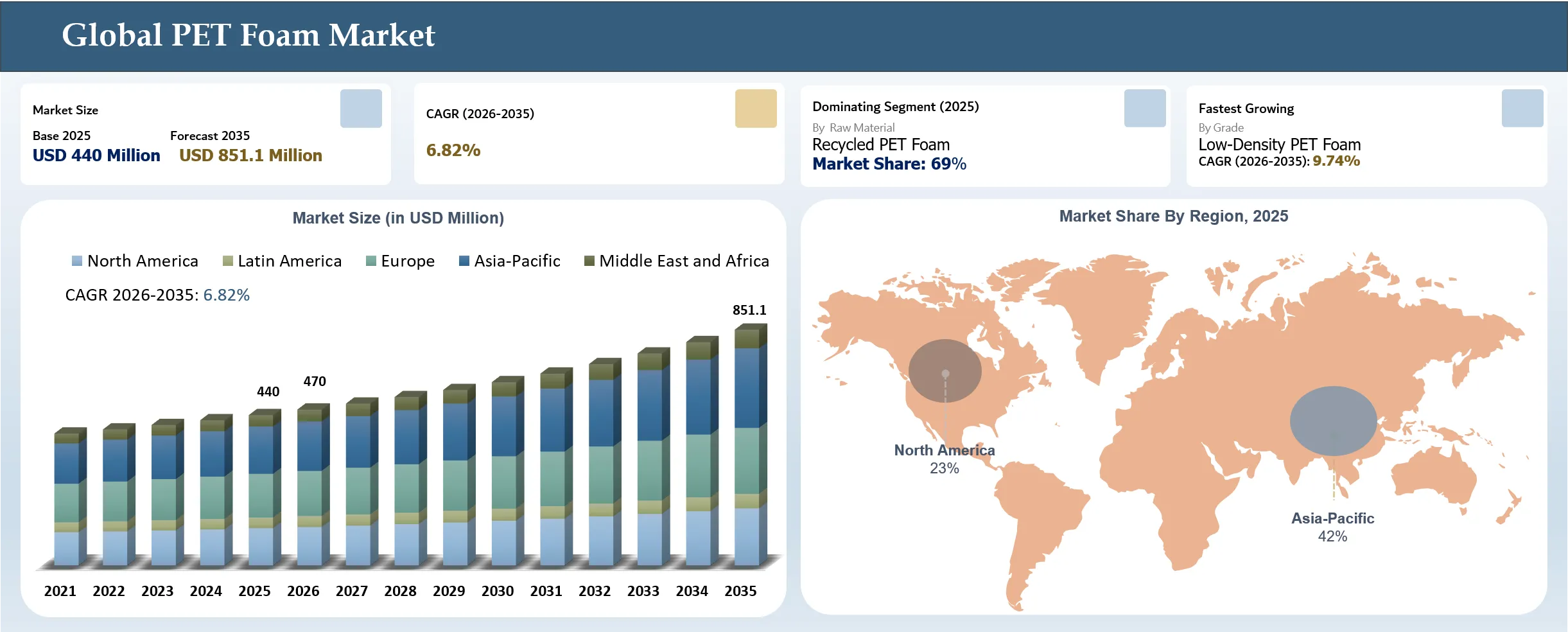
The global PET foam market reached USD 440 million in 2025 and is expected to reach USD 851.1 million by 2035, growing with a CAGR of 6.82% during the forecast period 2026-2035. Market expansion is facilitated by the increasing deployment of wind energy, which uses PET foam as the core of turbine blades. According to the International Renewable Energy Agency (IRENA), the global wind power capacity additions in 2025 were 158.7 GW, while global capacity additions for all renewables were 692 GW, at 15.5% growth. The International Energy Agency (IEA) also reported that global wind additions in 2025 totaled 160 GW, and India experienced over a doubling of wind additions to more than 6 GW. The growing wind-turbine production market is boosting demand for lightweight PET foam core material where stiffness, fatigue strength, and reduced structural weight are required. Sustainability is another factor increasing the importance of this material; Armacell reported in 2026 that their ArmaPET product line has recycled more than 5 billion PET bottles into post-consumer PET structural foams used in applications such as wind-turbine blades and transportation structures.
The growing adoption of RPET foam in thermal insulation products is contributing to innovation within sustainable building systems. In March 2026, according to Interempresas, Technoform, a Germany-based manufacturer of polymer-based thermal insulation solutions, launched its new RPET Foam, which is a 100% recycled PET closed-cell foam for use as a thermal insulator in aluminum systems. The material boasts a thermal conductivity rating of λ = 0.030 W/m·K and is designed to be able to undergo both lacquering and anodizing without damaging its structure, being fully recyclable when the time comes. The launch highlights the use of recycled PET as a lightweight and sustainable alternative for thermal-break applications.
White-Space Opportunities for PET Foam in Wind Energy and Composite Core Materials
In January 2026, Gurit Holding AG, a Switzerland-based advanced composite-materials company, announced a five-year, approximately USD 307.25 million (CHF 250 million) supply agreement with a leading wind-turbine OEM for core-material kits using its OptiCore technology, with volume commitments covering both offshore and onshore wind platforms across multiple regions. The agreement represents a significant opportunity for the PET Foam market because growing demand for lightweight structural core materials in wind-turbine blades creates opportunities for PET foam suppliers to expand into OEM blade programs, although Gurit did not specify that the contracted kits are PET foam. The highest-opportunity area is wind-turbine blade structural cores, while additional investment areas include offshore and onshore wind projects, blade manufacturing, lightweight composite structures, recyclable core materials, core-kitting facilities, and regional wind supply chains. Gurit’s agreement is expected to generate approximately CHF 250 million in net sales over five years, providing strong evidence of sustained commercial demand for engineered core materials.
The agreement is expected to create significant opportunities across the PET foam value chain. Companies benefiting from this opportunity include Gurit, 3A Composites, DIAB, Armacell, CoreLite, GE Vernova, Vestas, and Siemens Gamesa, with benefits spanning structural core materials, PET foam, composite blade manufacturing, turbine production, and wind-energy infrastructure. Gurit is the most directly positioned beneficiary through the USD 307.25 million (CHF 250 million) agreement and its core-kitting and OptiCore capabilities, while 3A Composites, DIAB, Armacell, and CoreLite can benefit from expanding demand for lightweight and recyclable structural-core materials in wind blades. GE Vernova, Vestas, and Siemens Gamesa can benefit from increased turbine and blade manufacturing activity, which subsequently increases demand for lightweight composite materials and core components. Gurit has also identified recycled PET, specialized foams, offshore wind, onshore wind, marine, and industrial lightweighting applications as growth areas, with its 2025 strategy highlighting new recycled-PET applications and increasing specialized-foam sales.
PET Foam Market Strategic Takeaways
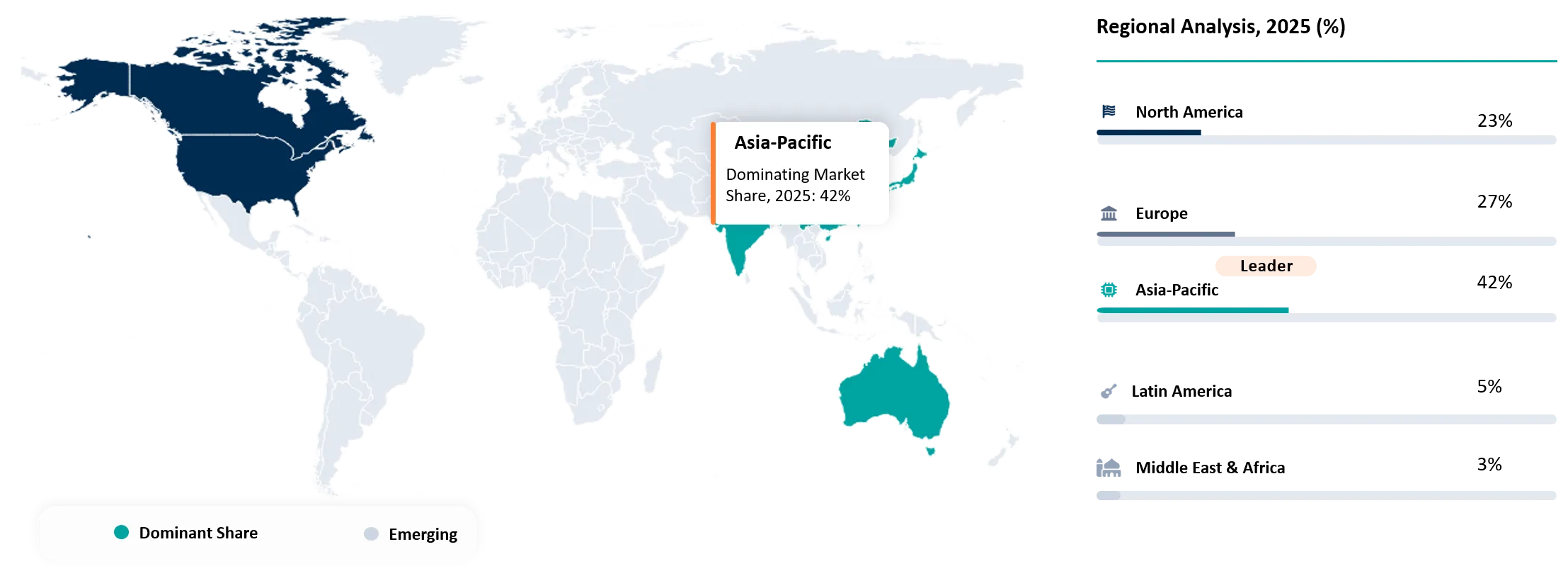
- Asia-Pacific held a commanding 42% share of the global PET foam market in 2025. It is currently identified as both the largest and the fastest-growing regional market.
- Recycled PET foam dominated the raw material segment with a 69% market share in 2025, while the Asia-Pacific region led geographically with a 42% market share. Furthermore, market supply remains highly concentrated, with the top two manufacturers accounting for approximately 60% of the global market.
- Armacell achieved a 95.9% recycled PET feedstock utilization rate across its Belgium, Canada, and China factories in 2025 after converting over 5 billion PET bottles into structural foam. Utilizing recycled PET flakes in production resulted in 37% fewer emissions compared to using virgin PET material.
- Gurit Holding AG secured a 5-year supply agreement valued at approximately USD 307.25 million (CHF 250 million) with a leading wind-turbine OEM. This deal delivers OptiCore technology core-material kits to support both onshore and offshore wind platform commitments.
PET Foam Market Industry Trends and Strategic Insight
- Lower resin uptake is becoming an important purchasing criterion because the total composite cost is influenced not only by the foam core but also by the resin required during infusion; therefore, foam formulations that retain structural performance while reducing resin consumption can improve the economics of large sandwich structures.
- Product development is targeting structural and semi-structural automotive applications, including battery boxes, seat-back panels, floor panels, wheelhouse protection, parcel shelves, and interior components, reflecting increasing demand for lightweight materials compatible with electrified-vehicle architectures.
- Flexible PET foam sheets and particle-foam solutions allow manufacturers to move beyond flat sandwich cores toward thermoformed and three-dimensional components, increasing PET foam's addressable applications in transportation and industrial products.
- Prioritize recycled-content structural grades. High recycled-PET utilization is becoming commercially viable while retaining the mechanical characteristics required for composite applications.
- Target wind and electrified transportation. These sectors offer strong strategic fit because lightweighting, structural efficiency, and material circularity directly influence component design.
PET Foam Market Scope
| Metrics | Details | |
| 2025 Market Size | USD 440 Million | |
| 2035 Projected Market Size | USD 851.1 Million | |
| CAGR (2026-2035) | 6.82% | |
| Largest Market | Asia-Pacific | |
| Fastest Growing Market | Asia-Pacific | |
| By Raw Material | Virgin PET Foam, Recycled PET Foam | |
| By Grade | Low-Density PET Foam, Medium-Density PET Foam, High-Density PET Foam | |
| By Product Form | Foam Sheets, Foam Boards, Foam Rolls, Foam Core Panels, Custom-Shaped Foam Cores, Others | |
| By Foaming Technology | Extrusion Foaming, Supercritical CO₂ Foaming, Chemical Foaming, Physical Foaming, Thermoformable Foaming, Others | |
| By Thickness | <3 mm, 3–6 mm, >6–10 mm, >10 mm | |
| By Application | Wind Energy, Transportation, Marine, Building & Construction, Packaging, Industrial, Others | |
| By Region | North America | U.S., Canada, Mexico |
| Europe | Germany, UK, France, Spain, Italy, Poland | |
| Asia-Pacific | China, India, Japan, Australia, South Korea, Indonesia, Malaysia | |
| Latin America | Brazil, Argentina | |
| Middle East and Africa | UAE, Saudi Arabia, South Africa, Israel, Türkiye | |
| Report Insights Covered | Competitive Landscape Analysis, Company Profile Analysis, Market Size, Share, Growth | |
PET Foam Market Disruption Analysis
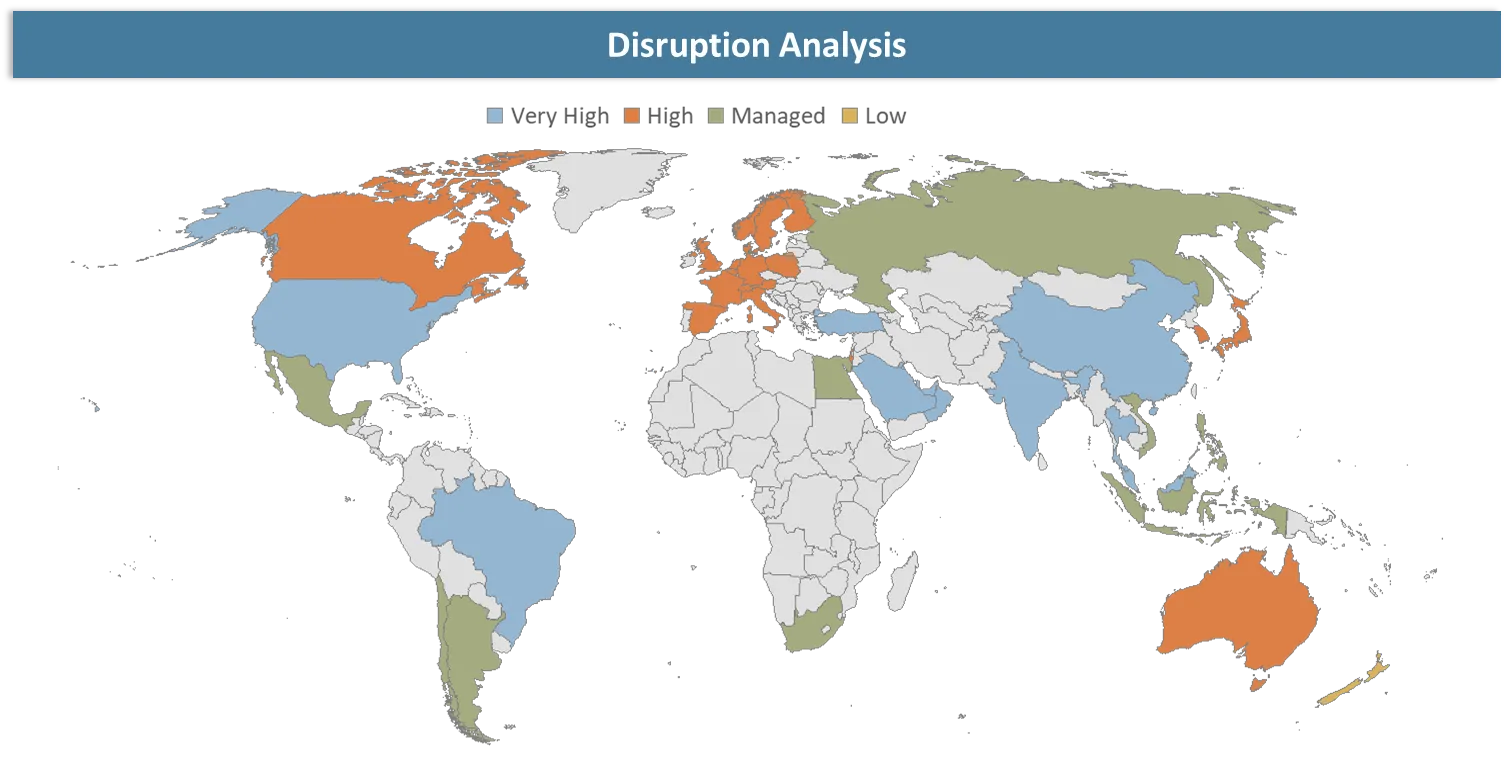
Recycled-PET Feedstock Integration Transforming PET Foam into a Circular Structural-Core Material
The disruption in the PET foam market is primarily associated with the integration of post-consumer PET waste into structural foam manufacturing, transforming recycled plastic from a waste stream into a high-value structural-core material. According to Sage Journals, a study conducted in 2025 showed that thermoplastic sandwich panels can be manufactured using 100% recycled PET foam core from consumer bottle waste, which was proven to bond properly with the skin in the appropriate manufacturing processes. This has disrupted the core materials used by bringing in lightweight structures made from recycled materials.
Moreover, the technical properties of recycled PET foam are widening the scope of its applicability beyond the traditional use of lightweight panels. According to Sage Journals, an experimental study conducted in 2025 on the sandwich panels of recycled PET foam concluded that reinforced panels were able to withstand impact energy of up to 52.5 J, which indicated a 162.5% increase in the energy at perforation threshold as compared to the hybrid configuration. This will make the competition move beyond the use of recycled PET to the development of recycled PET foam for certain specifications.
PET Foam Market BCG Matrix: Company Evaluation
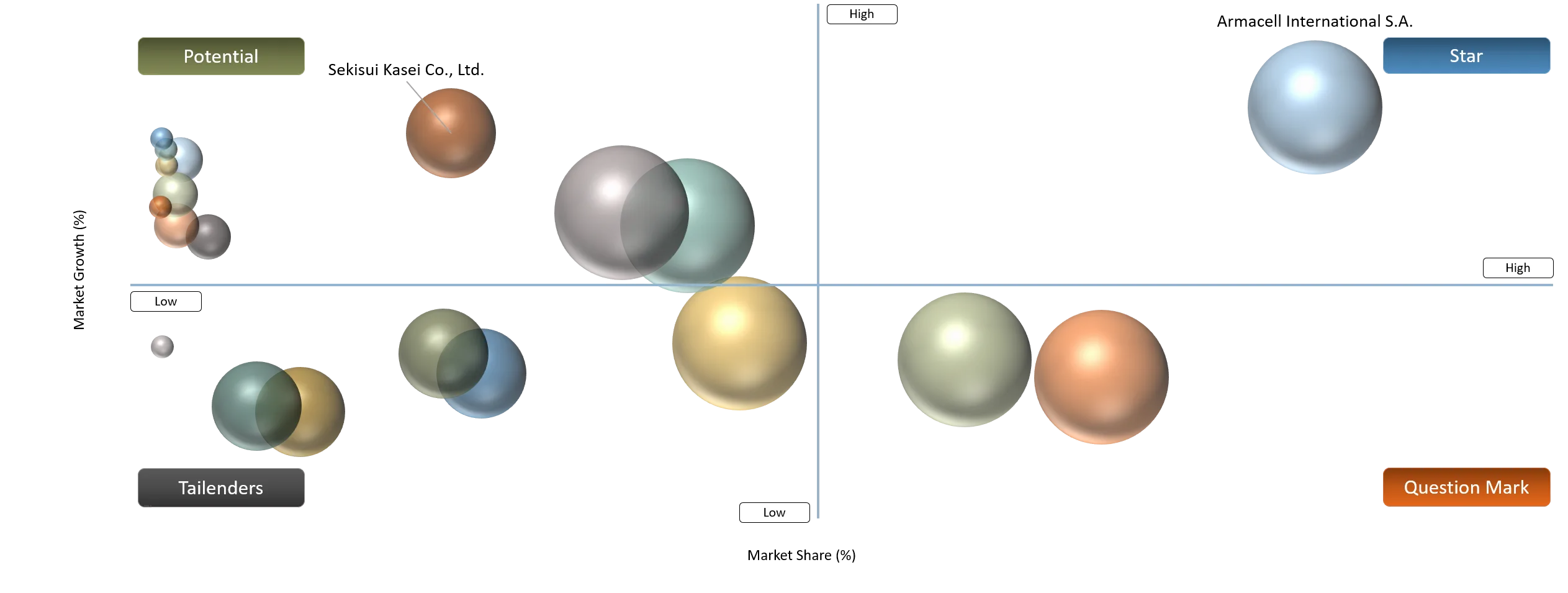
Stars include Armacell International S.A., 3A Composites Core Materials, and DIAB Group because they have strong positions in structural PET foam and established relationships across high-volume applications such as wind energy, transportation, marine, and composite structures. These companies have broad PET foam portfolios, established manufacturing capabilities, and strong technical expertise, allowing them to benefit from the shift toward lightweight and recyclable structural-core materials. Question Mark companies such as CoreLite, Inc. and Carbon-Core Corp. are placed because they have established PET foam offerings and are expanding their presence in structural composite applications but operate at a smaller scale than the leading global suppliers.
The Potential category includes Sekisui Kasei Co., Ltd., JLON Composite Material Co., Ltd., and Sky Composites, which benefit from growing demand for PET foam and expanding composite-material applications, particularly across Asia-Pacific. These companies possess relevant PET foam or composite-core manufacturing capabilities but have comparatively lower global market penetration and brand recognition than the leading European and North American suppliers. Tailenders include Hitex Composites and TOPOLO New Materials because their PET foam activities and international market presence remain comparatively limited relative to the established structural-core manufacturers.
PET Foam Market Dynamics
Driver Impact Analysis
| Driver | Market Growth Impact (%) | Demand Concentration | Impacted Use Case | Strategic Impact |
Rising demand for lightweight structural materials is driving PET foam adoption in wind energy and composite construction applications. | 24% | Wind turbine blades, composite panels, lightweight structural components | Wind Energy; Building & Construction | Strengthens PET foam's position as a lightweight structural core and increases substitution potential against balsa and conventional foam cores. |
Expansion of wind-turbine manufacturing is increasing demand for PET foam as a lightweight, fatigue-resistant structural core in turbine blades. | 28% | Wind-turbine blade manufacturing, particularly large composite blade structures | Blade shells; Shear webs; Nacelle structures | Encourages suppliers to develop higher-performance, lower-resin-uptake PET foam grades and secure long-term supply relationships with blade manufacturers. |
Growing adoption of recyclable composite materials is accelerating the replacement of conventional core materials with recyclable PET foam. | 20% | Wind energy, transportation, marine, and sustainability-focused composite applications | Recyclable composite structures; Sustainable sandwich panels | Shifts material-selection criteria toward recycled content, recyclability, lifecycle performance, and compatibility with circular composite systems. |
Growth of sandwich-panel construction is supporting PET foam demand where high stiffness, low weight, insulation, and moisture resistance are required. | 15% | Construction panels, façades, roofing, modular structures, and insulated panels | Building & Construction; Industrial Panels | Expands PET foam beyond wind applications and creates opportunities for application-specific density and insulation grades. |
Advancements in PET foam processing and formulation are improving mechanical performance, resin compatibility, thermoformability, and application flexibility. | 13% | Advanced composites, transportation, wind blades, and complex-shaped components | Thermoformed components; Composite sandwich structures; Automotive components | Reduces performance limitations versus competing core materials and enables PET foam suppliers to target higher-value engineered applications. |
Rising demand for lightweight structural materials is driving PET foam adoption in wind energy and composite construction applications.
The adoption of PET foam is increasing due to the demand for lightweight, stiff structures, which has contributed to their application in wind-turbine blades and composites. In May 2025, according to MDPI, a study published in Materials investigated hierarchical groove-perforation structures specifically for PET foam cores in wind turbine blades have shown that the improved structure increases the shear modulus from 125 MPa to 137.1 MPa, an increase of 9.2%. This shows that the use of PET foam is shifting from being a simple lightweight core to an engineering structure capable of meeting the mechanical requirements of increasingly demanding composite applications.
Technological advancements in the design of PET foam core are resulting in increased efficiency of wind turbine blades both structurally and in terms of weight. In June 2025, a study conducted by researchers at the Beijing Institute of Technology and CGN New Energy Holding Co., Ltd. found that hierarchical groove-perforation structures can be used in conjunction with machine learning and a multi-island genetic algorithm to optimize PET foam cores used in wind turbine blades. The optimized configuration increased the shear modulus by 9.2% from 125 MPa to 137.1 MPa. In addition, the compressive and tensile modulus was improved by 10.7% without increasing the weight of the core. Additional optimization made it possible to have a shear modulus of 150 MPa, demonstrating improved structural performance and weight efficiency. The study concluded that the technology provides a cost-effective, lightweight alternative to balsa.
Restraint Impact Analysis
| Restraint | Drag on Market Growth (%) | Primary Impact Area | Impacted Use Case | Strategic Impact |
Volatility in PET/rPET resin prices and availability creates uncertainty in production costs and can pressure manufacturers’ margins. | 6% | Raw-material costs & supply-chain stability | Wind turbine blades, marine structures, transportation composites | Manufacturers need diversified PET/rPET sourcing, long-term procurement agreements, and higher recycled-content integration to stabilize input costs and protect margins. |
Competition from established substitute materials such as PVC, SAN, balsa, and other structural foams limits PET foam’s penetration. | 5% | Material substitution & pricing competitiveness | Wind blades, marine panels, automotive composites | PET foam producers must strengthen cost-performance advantages, improve recyclability, and develop application-specific grades to accelerate substitution of established core materials. |
Limited high-temperature performance restricts PET foam adoption in applications requiring prolonged exposure to elevated temperatures. | 4% | Thermal performance & application suitability | Automotive components, mobility structures, high-temperature industrial composites | Development of higher-temperature PET foam grades, modified formulations, and hybrid core structures is required to expand PET foam into thermally demanding applications. |
Processing complexity and tight manufacturing controls can cause variations in cell structure and mechanical properties, increasing production risks and costs. | 3% | Manufacturing yield & process consistency | Structural sandwich panels, wind blades, aerospace/mobility components | Manufacturers need tighter process control, optimized foaming windows, advanced extrusion technologies, and quality monitoring to improve yield and maintain consistent mechanical performance. |
Volatility in PET/rPET resin prices and availability creates uncertainty in production costs and can pressure manufacturers’ margins
Volatility in the price and availability of recycled PET resin remains a significant restraint for the PET foam market, as it could have a direct impact on the economic feasibility of the manufacture of foams. As per reports by ICIS published in March 2026, the relatively lower prices of virgin PET had been generating substitution pressures on rPET during 2025 and 2026, causing uncertainties in the entire space of recycled polymers. Such variations in the economics of virgin PET versus rPET could make it difficult for the PET foam companies to secure stable procurement prices of raw materials, particularly when manufacturers are seeking to increase recycled content in their products.
Rising prices and scarcity of PET and rPET materials will raise the uncertainties of material pricing for the PET Foam manufacturer. In June 2025, according to Sustainable Packaging News, citing ICIS, reported that European recycled polyethylene terephthalate (rPET) prices were under significant upward pressure due to high virgin PET prices and reduced availability linked to the Iran war. Price increases for virgin PET occurred on a weekly basis from the beginning of March until mid-April 2026, whereas price increases for post-consumer PET bottle bales, colorless and mixed-color rPET flakes, and food-grade pellets occurred in the first half of April. Several European producers of rPET flakes worked at full capacity due to increasing demand, whereas in 2022 the European market was characterized by high volatility due to shortages of PET and rPET leading to record-high prices. It is also worth noting that according to the legislation adopted in the EU as of January 1, 2025, rPET content in PET beverage bottles should not be less than 25%.
PET Foam Market Segment Analysis
The global PET foam market is segmented based on raw material, grade, product form, foaming technology, thickness, application, and region.
Growing Adoption of Recycled PET Foam in Wind Turbine Blades and Lightweight Structures Driving High-Volume Demand
Recycled PET foam has dominated the raw material segments of the PET foam market with a market share of 69% in 2025. This segment’s leadership is due to the growing preference for lightweight and strong foam materials in various composite applications like wind turbine blades, transportation, rail, construction, among others. The fast-growing trend for larger and longer wind turbine blades has led to increased demand for structural core materials that are stiff and strong without adding any considerable weight to the components. In 2025, Armacell’s ArmaPET Struct foam was produced from mechanically recycled PET and used in applications including wind rotors, transportation, rail, sports and leisure, and construction.
Leading manufacturers such as Armacell and Gurit are ensuring that the application of recycled PET foam is intensified by increasing the use of recycled feedstock and creating high-performance structural foam products. For instance, according to the Sustainability Report 2025 by Armacell, the amount of recycled PET used in making ArmaPET foam was 95.9% of the total material used in the production of ArmaPET foam in the Belgium, Canada, and China factories in 2025, implying that the amount of recycled feedstock used in the manufacture of PET foam is extremely high. Armacell noted that the amount of carbon dioxide emissions in the production of ArmaPET Struct made from recycled PET flakes was 37% less compared to the emissions created when making ArmaPET foam with virgin PET feedstock.
PET Foam Market Geographical Penetration
Expanding Wind Energy Manufacturing and Recycled Material Adoption in Asia-Pacific Driving Regional Dominance
The Asia-Pacific is the dominating region in PET foam market, with a market share of 42% in 2025, due to the presence of wind energy manufacturing plants in the region, rising composite material manufacturing activities and high demand for lightweight structure core materials. Countries such as China and India, among others, in the Asia-Pacific are continuously investing in their renewable energy infrastructure, especially in wind energy, which will create high demand for the PET foam cores in the turbine blades and composite products. The wind energy manufacturing capacity, growth of marine and transport industry along with use of recyclable materials in the region will drive the utilization of PET foam in different end-use applications.
Demand for light and durable composite materials in the composites industry in China continues to drive the adoption of PET foam technology in the region. In September 2025, Armacell, a Luxembourg-headquartered specialty foam manufacturer, participated in China Composites Expo 2025 (CCE 2025) in Shanghai, China, showcasing its ArmaPET® recycled PET foam solutions for lightweight composite structures. Armacell’s ArmaPET portfolio includes PET-based structural and insulation foams made from recycled PET, with ArmaPET Struct densities ranging from 70–320 kg/m³, thermal conductivity of approximately 0.03–0.05 W/m·K, and available thicknesses of 5–150 mm. The company targets applications including wind-energy blades, transportation, marine, construction, and industrial composites, making its presence at CCE 2025 a direct indicator of PET Foam technology commercialization and market development in China and the broader Asia-Pacific composites industry.
China PET Foam Market Trends
China holds a dominant position in the Asia-Pacific PET foam market, due to its robust wind energy manufacturing industry, abundant use of renewable energy sources, and solid manufacturing base of wind turbine component composites. With an array of companies manufacturing wind turbines and vast use of renewable energy and an increasing number of offshore and onshore projects, China has a high demand for structural materials such as PET foams utilized in turbine blade manufacture and other composite materials. China installed almost 117 GW of new wind capacity in 2025, which marked a 48% growth over 2024, thus making it the biggest contributor towards wind power growth in the world.
The increased capacity of domestic composite material manufacturing is supporting the growth of China’s PET Foam industry chain. In April 2026, Zhejiang Huaju Composite Materials Co., Ltd., a China-based composite-materials manufacturer and wholly owned subsidiary of Huajing New Materials Co., Ltd., officially commenced operations at its Qingshanhu production base in Hangzhou, China. Huaju is expanding expertise in PET foam, carbon fiber, plant fiber, and resin modification, while the new facility has an annual production capacity of 6 million m² of lightweight composite materials, including more than 5 million m² of thermoplastic panels and 1 million m² of thermoset composite panels, along with capacity for 6,000 enclosures and specialty vehicle components annually. The 73-mu (approximately 4.9-hectare) facility has more than 98,000 m² of factory floor space and targets applications including new-energy vehicle battery protection systems, refrigerated trucks, RVs, logistics transportation, construction, and marine structures, strengthening China’s domestic PET foam and advanced composite-material supply chain.
Japan PET Foam Market Outlook
Japan is one of the key players in the Asia Pacific PET foam market because of the established manufacturing abilities in composites, advancements in the automotive industry, and the growth in the offshore wind industry. The importance of PET foam lies in the use of lightweight sandwich construction in areas such as wind turbine blades, transportation parts, and marine applications, among others. In 2025, the offshore wind industry in Japan was a major source of renewable energy production, while the International Energy Agency (IEA) noted that Japan was one of the countries whose offshore-wind projects were more expensive.
The need for lightweight composite materials is prompting Japanese firms to develop new methods to use PET foam technology in advanced composite applications. In August 2025, SEKISUI KASEI Co., Ltd., a Japan-based chemical and foam-materials manufacturer, announced its participation in CAMX 2025, held from September 8–11, 2025, at the Orange County Convention Center in Orlando, Florida, USA. The company showcased its ST-Eleveat PET foam-core material, which is manufactured from PET resin and offered in two forms: beads and sheets, alongside its ST-FOAMAC acrylic-resin foam. Through the exhibition, SEKISUI KASEI aimed to strengthen engagement with the composites and advanced-materials industry, address technical challenges, and create new business opportunities for its foam-core technologies.
Renewable Energy Expansion and Advanced Composite Manufacturing Driving North America's PET Foam Market
North America is one of the major regions in the PET foam market, with a 23% market share in 2025 owing to its well-developed wind energy industry and sophisticated technology for the production of composite materials. The presence of industries related to wind turbine production, transportation, marine, and construction makes North America one of the dominant regions where PET foam finds great opportunities because of the need for lightweight structural materials. The United States is the biggest contributor to regional demand as a result of investments being made in wind energy technology. The U.S. Department of Energy allocated an amount of USD 6.25 million for the development of large-scale wind turbines in January 2025.
Growing demand for lightweight, recyclable, and low-carbon materials is accelerating the adoption of recycled PET foam in North American commercial and transportation interiors. In January 2025, Gurit Holding AG, a Switzerland-based advanced composite-materials manufacturer, and Genesis Products, a U.S.-based manufacturer and supplier of laminated panels, wood components, and interior solutions, announced a long-term supply agreement for Gurit’s Kerdyn PET structural foam core. Under the agreement, Gurit will exclusively supply Kerdyn PET to Genesis Products for office and commercial interior applications across North America, with the contract projected to generate high-single-digit million CHF in sales within two years. Kerdyn PET contains up to 100% recycled PET, primarily sourced from post-consumer plastic bottles, and can be thermoformed and machined. Genesis Products operates 14 plants across the U.S. Midwest and East Coast, and the agreement also opens applications for recreational vehicles, residential and commercial cabinets, and closets, strengthening the adoption of recycled PET foam in North American lightweight interior applications.
U.S. PET Foam Market Trends
The U.S. holds a dominant position in the North American PET foam market because of the size of its wind-energy industry, the presence of a well-developed advanced-materials manufacturing industry, and increased need for lightweight structural composites. Increasingly, PET foam becomes important in the context of the production of wind-turbine blades and other sandwich structures where companies seek lightweight materials that have good mechanical properties. With its offshore and onshore wind industry, capability of composite manufacture, and investments into renewable energy infrastructure, the United States possesses a substantial market for PET foams. For 2026, the U.S. Energy Information Administration estimated 11.8 GW of new capacity addition, two times greater than in 2025, with almost 60% of it expected from New Mexico, Texas, Illinois, and Wyoming.
Growing demand for lightweight and sustainable interior materials is accelerating the replacement of conventional wood-based components with recycled PET foam solutions in the U.S. Genesis Products, a U.S.-based manufacturer of interior components and lightweight composite panels, highlights its PET fiber and PET foam-core solutions for commercial and office interiors. The company states that its PET products contain 50–100% recycled material and are 100% recyclable, while its PET foam is up to 50% lighter than plywood and 66% lighter than MDF without compromising strength and durability. Genesis Products offers PET foam-core desktops, panels, markerboards, and other components, and holds exclusive distribution of Alt Core PET foam in its market. The company operates 12+ manufacturing plants across the U.S., more than 1.8 million sq. ft. of manufacturing space, and employs 1,000+ people nationally, supporting the commercialization of recycled PET foam for U.S. commercial interiors.
PET Foam Market Competitive Landscape
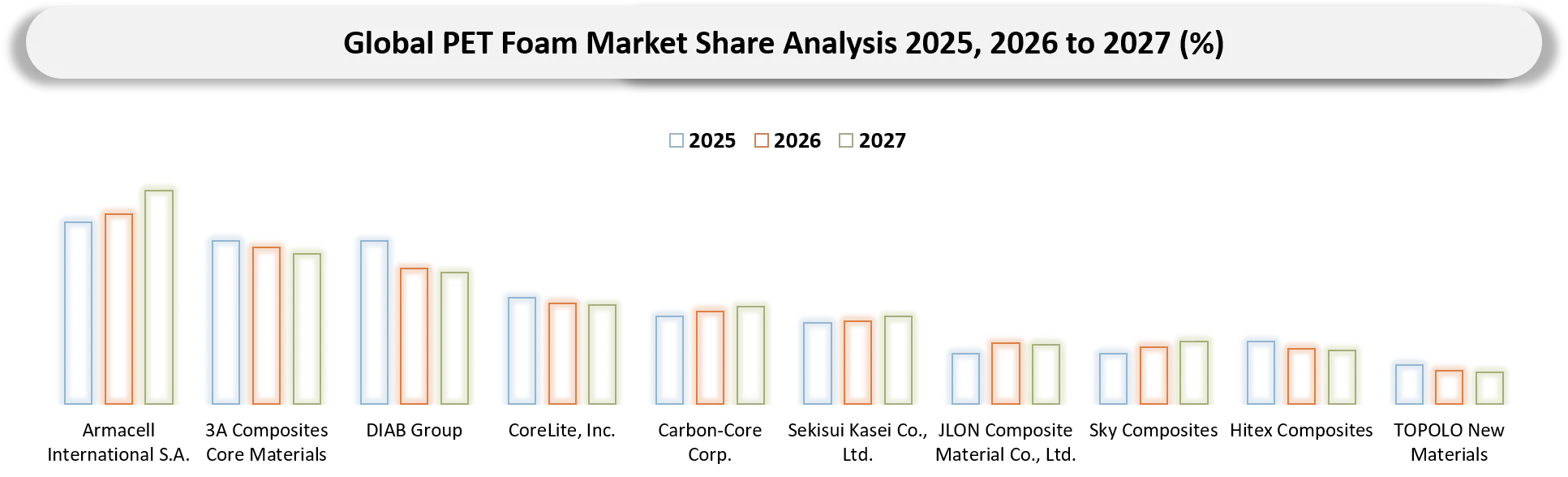
- The market is characterized by three key participant groups: global structural PET foam manufacturers and composite-core suppliers, including Armacell International S.A., 3A Composites Core Materials, DIAB Group, CoreLite, Inc., and Sekisui Kasei Co., Ltd., which compete through broad PET foam portfolios for wind energy, transportation, marine, construction, and industrial applications; specialized PET foam and composite-material manufacturers, including Carbon-Core Corp., JLON Composite Material Co., Ltd., Sky Composites, Hitex Composites, and TOPOLO New Materials, which focus on application-specific foam grades, processing capabilities, and regional supply; while Armacell, DIAB, 3A Composites, and CoreLite strengthen their competitive positions through product diversification, recycled-PET solutions, and higher-performance structural cores. The competitive environment is therefore driven by manufacturing scale, foam density and mechanical performance, recycled-content capability, application breadth, and regional production capacity. Recent 2025–2026 industry data indicates that the PET Foam Core market remains concentrated, with the top two manufacturers accounting for approximately 60% of the market, highlighting the importance of scale among leading suppliers.
- Key players include Armacell International S.A., 3A Composites Core Materials, DIAB Group, CoreLite, Inc., Carbon-Core Corp., Sekisui Kasei Co., Ltd., JLON Composite Material Co., Ltd., Sky Composites, Hitex Composites, and TOPOLO New Materials.
Key Developments
- March 2026: Diab Group, a Sweden-based advanced composite-core materials manufacturer, and CompPair, a Switzerland-based composite-materials technology company, partnered to develop self-healing composite sandwich structures for aerospace, mobility, and industrial applications.
- January 2026: Gurit Holding AG, a Switzerland-based advanced composite-materials manufacturer, announced a new distribution partnership with Amari Plastics, a UK-based plastics distributor, to expand access to Gurit PET structural foam across the UK and Ireland.
- February 2026: Diab Group, a Sweden-based manufacturer of advanced composite core materials, and CompPair, a Switzerland-based composite-materials technology company, announced a partnership to develop healable composite sandwich structures for aerospace, mobility, and industrial applications.
- March 2025: Sky Composites, a Switzerland-based advanced composite-materials supplier, participated in JEC World 2025 in Paris from March 4–6, 2025, showcasing lightweight, high-strength composite solutions for the aviation, maritime, automotive, and wind-energy industries.
Key Procurement Priorities and Buyer Evaluation Criteria
- Organizations procuring PET Foam are increasingly selecting suppliers based on their ability to provide lightweight, high-strength, dimensionally stable, and consistent structural core materials that can meet the mechanical and processing requirements of wind-turbine blades, transportation, marine, construction, and industrial composite applications.
- The procurement decision-making process is increasingly influenced by the shift toward larger wind-turbine blades, lightweight transportation structures, recyclable composite materials, and sustainability-focused manufacturing, which increases the importance of PET foam suppliers' recycled-content capabilities, product consistency, and ability to support high-volume production.
- Buyers consider factors such as foam density, compressive and shear strength, tensile properties, thermal stability, fatigue resistance, water absorption, dimensional stability, fire performance, and compatibility with resin-infusion and sandwich-manufacturing processes when evaluating PET foam suppliers.
Why Choose DataM?
- Technological Innovations: Explores advancements in PET foam manufacturing, including recycled PET feedstocks, improved cell structures, high-strength grades, fire-resistant formulations, and lightweight structural core technologies, enabling improved mechanical performance, weight reduction, durability, and sustainability across wind energy, transportation, marine, construction, and industrial applications.
- Product Performance & Market Positioning: Evaluates how different players differentiate PET foam solutions based on density, compressive and shear strength, thermal stability, fatigue resistance, resin uptake, water absorption, recyclability, and processing compatibility, highlighting how leading suppliers address demanding structural requirements while balancing performance, weight, and cost.
- Real-World Evidence: Highlights the adoption of PET foam in wind-turbine blades, electric vehicles, rail transportation, marine structures, building panels, and industrial composite components, demonstrating benefits such as lightweight construction, structural reinforcement, improved durability, and reduced material consumption.
- Market Updates & Industry Changes: Tracks key developments such as new recycled PET foam grades, production-capacity expansions, sustainability initiatives, application-specific product launches, and investments in wind-energy and composite manufacturing across Asia-Pacific, North America, and Europe, supporting the transition toward lightweight and circular material solutions.
- Competitive Strategies: Analyzes how leading companies expand through product innovation, manufacturing-scale expansion, recycled-material integration, strategic partnerships, application diversification, and development of customized foam grades to address increasing demand from wind energy, transportation, marine, construction, and industrial composite markets.
- Pricing & Market Access: Explains PET foam pricing variations based on foam density, thickness, mechanical performance, recycled content, processing requirements, order volume, and application specifications, along with market access through direct manufacturers, composite-material distributors, fabricators, and regional supply networks.
- Market Entry & Expansion: Identifies growth opportunities driven by wind-turbine blade enlargement, renewable-energy investments, lightweight electric and transportation components, marine applications, sustainable construction, and increasing use of recycled materials, while outlining strategies such as regional manufacturing expansion, product differentiation, recycled-feedstock integration, and partnerships with composite manufacturers.
Target Audience
- PET Foam Manufacturers & Material Producers
- Wind Turbine OEMs & Blade Manufacturers
- Composite Manufacturers & Fabricators
- Automotive, Rail & Transportation Manufacturers
- Marine & Boat Manufacturers
- Building & Construction Companies
- Raw Material & Recycling Companies


























































