


Permanent Magnet Market Size and Overview
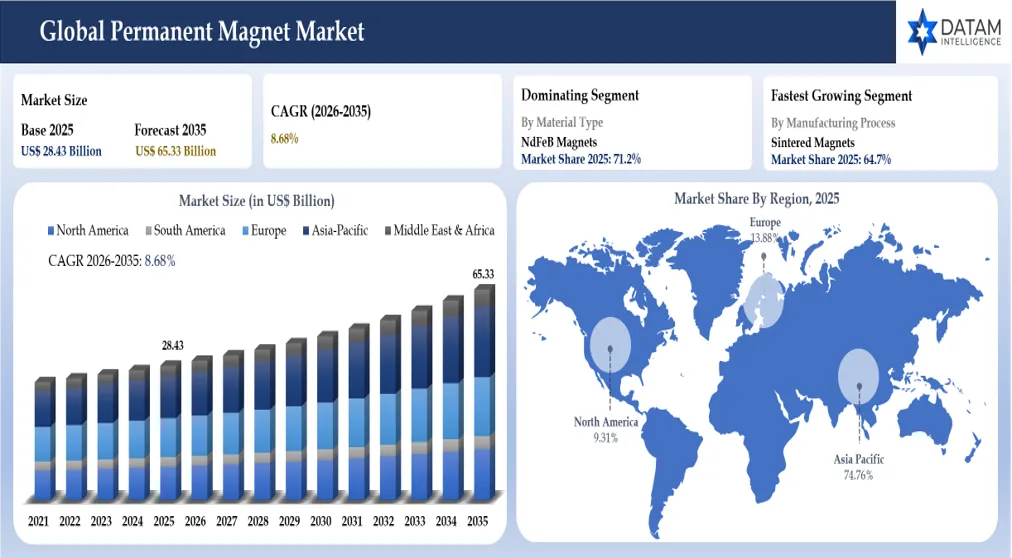
The global permanent magnet market reached US$ 28.43 billion in 2025 and is expected to reach US$ 65.33 billion by 2035, growing with a CAGR of 8.68% during the forecast period 2026-2035.
The market for permanent magnets is being boosted by the growing use of high-efficiency neodymium-iron-boron (NdFeB) permanent magnets in motors for electric vehicles, systems for wind energy generation, automation in industries and production of electric equipment with energy saving characteristics. The strong magnetic effect enables producers to manufacture engines with lower dimensions but with better torque density and efficiency. Ferrite magnets are still actively used in applications with low price sensitivity such as home appliances and traditional engines, while samarium-cobalt (SmCo) magnets are used in tasks requiring stable performance under high temperatures. Increase in the scope of electrification, introduction of robotics and development of precision motion control are causes of growing demand for permanent magnets in various areas of automobile, industrial and electronic spheres.
The competitiveness of this sector is significantly dependent on access to rare-earth elements and the efficiency of their production as well as meeting the requirements in terms of application-based performance. The rare-earth element processing capabilities that China has and its ability to manufacture magnets on a large scale are giving it an advantage in this area, while the manufacturers in Japan, Europe and North America are trying to diversify the sources and increase the production capacity within the region. Dysprosium and terbium could increase the stability of high-performance neodymium magnets under high temperature but their availability and prices present a problem for the producers. The manufacturers have been working on improving the process of grain boundary diffusion, utilizing heavier rare earths more efficiently, recycling their product and researching new types of magnets.
Permanent Magnet Market Key Takeaways
- Neodymium Iron Boron (NdFeB) Magnets were the leading type of magnets within the global permanent magnets market during 2025, due to their strong magnetic power, small size and application in a wide range of fields including Electric Vehicle Tractors, Industrial Automation and Electronics.
- The sintered magnets constitute an important manufacturing segment that grows at an estimated industry CAGR of 9.8% from 2026 to 2035. Growth will be fueled by the rising demand for high-end magnets in electric mobility, wind energy generation and industrial motors.
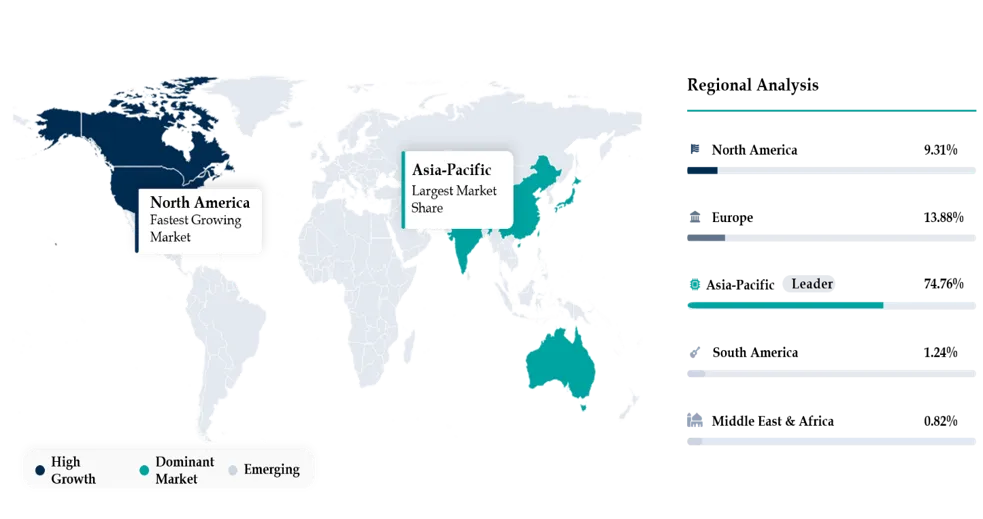
- The Asia Pacific region was the leading regional market for the global permanent magnet market in 2025 due to the existence of a rare earths supply chain in China and extensive magnet manufacturing capabilities, combined with demand from electric vehicles manufacture, consumer electronics, machinery and renewables.
- Competition exists within the market through NdFeB, Samarium-Cobalt (SmCo), ferrite and alnico magnets based on the performance of their magnetic properties, high temperature stability, material efficiencies, cost-effectiveness and applications in developing specific products.
- The increasing production of electric vehicles, wind energy projects, industrial robotics and efficient motor systems presents prospects for growth for manufacturers of permanent magnets. Nonetheless, the instability in prices of rare-earth metals, limited processing capacity, manufacturing costs and technical difficulties in developing alternative materials are major constraints in the market.
Permanent Magnet Industry Trends and Strategic Insights
- There has been growing demand for performance-enhanced NdFeB magnets within electric car traction motors because of their magnetic energy density that can lead to small-sized electric motors, high torque generation and improved drivetrain efficiency.
- Manufacturers have developed NdFeB magnets with reduced content of heavy rare earths through grain-boundary diffusion and structural engineering to enhance high-temperature coercivity while relying less on dysprosium and terbium.
- The adoption of direct drive and permanent magnet synchronous generators in offshore wind applications is driving the need for magnets with high power density, durability and low maintenance in large turbine applications.
- The diversification of the regional supply chain is gaining importance because the concentration of rare earth processing and magnet production is increasing the risk of export restrictions and material price instability for industries down the value chain.
- Investments in recycling the magnets are becoming important because the manufacturing companies are trying to recover neodymium, praseodymium, dysprosium and other such materials from the used components of electric vehicles and wind turbines.
Permanent Magnet Market Scope
| Metrics | Details | |
| 2025 Market Size | US$ 28.43 Billion | |
| 2035 Projected Market Size | US$ 65.33 Billion | |
| CAGR (2026-2035) | 8.68% | |
| Largest Market | North America | |
| Fastest Growing Market | Asia-Pacific | |
| By Material Type | Neodymium Iron Boron (NdFeB) Magnets, Samarium Cobalt (SmCo) Magnets, Ferrite (Ceramic) Magnets, Alnico Magnets and Other Permanent Magnets | |
| By Manufacturing Process | Sintered Magnets, Bonded Magnets, Cast Magnets and Other Manufacturing Processes | |
| By Application | Automotive and Electric Mobility, Industrial Motors and Generators, Wind Energy, Consumer Electronics, Industrial Automation and Robotics, Medical Equipment, Aerospace and Defense, Data Centers and Other Applications | |
| By Peak Operating Temperature | Up to 120°C, Above 120°C to 200°C, Above 200°C to 350°C and Above 350°C to 550°C | |
| By Magnetic Property | Isotropic Magnets and Anisotropic Magnets | |
| By Region | North America | U.S., Canada, Mexico |
| Europe | Germany, UK, Russia, France, Spain, Italy, Poland | |
| Asia-Pacific | China, India, Japan, Australia, South Korea, Indonesia, Malaysia, Singapore, Vietnam, Thailand, Philippines, Taiwan | |
| South America | Brazil, Argentina | |
| Middle East and Africa | UAE, Saudi Arabia, South Africa, Israel, Turkiye, Nigeria | |
| Report Insights Covered | Competitive Landscape Analysis, Company Profile Analysis, Market Size, Share, Growth | |
Why does this report matter in 2026?
The report on the market for permanent magnets is especially pertinent in 2026 because producers of automobiles, wind turbines, industrial motors, robotics and high-tech electronics are relying more and more on magnets with a high energy density of magnetic fields, heat resistance and performance. NdFeB magnets are still crucial for the design of compact and efficient motors, whereas ferrite, SmCo and alnico magnets are utilized for the other uses where cost, temperature and performance conditions may vary. The knowledge about the demand in these types of magnets, industries and regions can help the companies to estimate the changes in technical needs, business opportunities and costs of production.
Supply chain resilience is yet another important factor that should be considered in 2026 because it is affected by the availability of rare earths, processing capacity and magnet production capabilities. This report can aid the assessment of exposure to supply problems related to neodymium, praseodymium, dysprosium and terbium as well as help in discovering opportunities in regional magnet manufacturing, reduction of heavy rare earth content in magnets and in recycling technologies. Through the analysis of the manufacturing capabilities, special requirements, investment preferences and competition, the report assists in making the right choices concerning suppliers, capacity building, technology and sourcing.
Permanent Magnet Market White Space & Investment Opportunities
- Production of heavy-rare-earth-free and dysprosium-limited neodymium-iron-boron magnets is an area where companies can benefit from investing money to provide coercive magnets for use in electric vehicles and at the same time not rely on fluctuating rare earth prices.
- Creation of local facilities producing sintered NdFeB magnets creates opportunities for serving electric vehicle manufacturers, industrial motors and renewable energy equipment manufacturers that need geographical diversity in their supply chain.
- The automation of magnet recycling and rare earth recovery offers investment opportunities from end-of-life electric vehicle motors, wind generator turbine and other equipment, especially by recycling magnetic alloys to produce new magnets.
- High-temperature samarium-cobalt magnets and improved NdFeB magnets provide potential areas of application for aircraft, defense-related equipment, high-speed motors and heavy industry where standard magnets could be subject to performance deterioration at higher temperatures.
- There are opportunities in providing specialized permanent magnets for robotic devices, collaborative robots, precise actuators and servo systems where manufacturers would have to work with sophisticated magnet shapes, tailored magnetic circuits, precise coatings and performance testing according to particular applications.
Permanent Magnet Future Market Transformation
The permanent magnet market is poised to experience an evolutionary shift due to the increasing demand for magnets with greater magnetic energy density, enhanced temperature stability and lower material intensity arising from the development of electric vehicle motor designs, offshore wind generators, industrial robotics and power system efficiency. Improvements in grain boundary diffusion, optimized microstructure design and reduced heavy-rare earth NdFeB formulations may result in enhanced high-temperature capabilities while reducing the dependency on dysprosium and terbium elements. On the other hand, there will be an expansion of closed-loop recycling, reuse and recovery of rare earth elements in order to develop substitute raw material sources and decrease exposure to potential disruptions in the supply of the materials. The diversification of the supply chain is likely to result in the development of rare earth element processing, alloy manufacturing and magnet production capabilities within different regions, although large-scale operation of these capabilities will need significant investments and technical know-how. The future competition within the market will increasingly favor companies that integrate advanced magnetic materials, precision manufacturing and application design with alternative magnet technologies.
Permanent Magnet Market Buyer Decision-Making Criteria
Buyers in the permanent magnet business consider the suppliers capability to fulfill the magnetic performance needs of their applications, along with the operational parameters and production tolerances involved, plus long-term supply agreements. Manufacturers of electric vehicles focus on magnetic energy density, coercivity, temperature resistance and demagnetization resistance, while wind turbines and industrial motor manufacturers focus on reliability, corrosion resistance, longevity and product consistency. Purchasing departments also consider rare earths' material availability, pricing, traceability, manufacturing capability and conformity to customers’ and industry’s standards. Qualification processes, material certification and supplier reliability play an important role in case of aerospace, defense and other critical industries. In the end, total component cost and its performance throughout its life cycle is balanced against risks associated with supply chain and customization options available to the supplier.
Major Buyer Decision-Making Criteria
- Magnetic Performance
- Thermal Stability
- Material Composition and Quality
- Corrosion Resistance and Protective Coatings
- Dimensional Accuracy and Customization
- Total Cost of Ownership
- Supply Reliability and Lead Times
- Quality Certification and Traceability
- Supplier Technical Support
- Sustainability and Material Recovery
Permanent Magnet Market Economic & Investment Analysis
Permanent magnet industry outlook depends largely on the price of rare-earth materials, production cost and demand for magnets from the automotive, wind power generator, industrial automation and robotics markets. The prices of neodymium, praseodymium, dysprosium and terbium have a great impact on the cost of NdFeB magnets production. There are additional production costs for sintering, machining, coating and quality control and therefore efficiency of production process, good sources of raw materials and capacity utilization are important factors of business success.
Investment opportunities are emerging in regional magnet manufacturing, new formulations of NdFeB magnets, rare earth reduction from heavy-rare earth minerals and rare earth recycling as firms try to enhance the resilience of their supply chains and optimize the utilization of materials. These include investments in automated manufacturing plants, grain boundary diffusion techniques and recycling in a closed-loop system. Long-term investment prospects would depend upon the capability of the manufacturers to produce magnets in large quantities cost-effectively, develop customer contracts and satisfy increasing demand from electric mobility, renewable energy, aerospace and industrial electrification sectors.
Permanent Magnet Investment Trends in the Market
- The manufacturers are making investments in sintered NdFeB production line, powder metallurgy processes, precise sintering and magnet fabrication for improving the magnetic properties, production consistency and manufacturing yield rates of electric vehicles and industrial motors.
- The strategic investments will be made in the expansion of rare earth elements separation, alloying and magnet production outside existing production centers to enhance regional chain supply resilience and mitigate risks due to geopolitical issues and export restrictions.
- The magnet manufacturers and technology firms are making investments in grain boundary diffusion, rare earth elements reduction and coercivity enhancement technologies for manufacturing high-performing magnets using less dysprosium and terbium.
- Investments in Rare earth magnet recycling is getting more attention using hydrometallurgical recovery, hydrogen treatment and magnet to magnet recycling technology that can help in recovering the material used in electric vehicle motors, wind turbine applications and electronic products.
- Capital expenditure is increasingly going into the application-specific magnet design and test centers for the EV traction system, offshore wind turbine generators, aerospace parts and industrial robotics applications that are affected by temperature stability, corrosion resistance, magnetic uniformity and reliability.
Strategic Indicators for Permanent Magnet Market
High Regulation Impact
Permanent magnet industry is subject to considerable regulatory impact owing to regulations concerning mining, refining, processing and exporting of rare earth minerals, especially neodymium, praseodymium, dysprosium and terbium that are used in performance NdFeB magnets. Regulations related to environmental impacts of mining waste, chemical treatment, energy use and dangerous materials also affect costs of production and plant expansion. Moreover, trade regulation, classification of strategic materials, licensing for export and initiatives on domestic sourcing will have impact on international availability and acquisition of magnets. Quality, traceability and safety regulations associated with specific applications are also important for manufacturers providing automotive, aerospace, military and industrial equipment producers with magnets. Thus, regulatory trends constitute an important strategic signal for analysis of supply chain risks, production capacity in different regions, mineral sourcing risks and competitive situation among manufacturers of permanent magnets.
High Investment Activity
Investment in the permanent magnet industry is becoming more directed at the expansion of sintered NdFeB production capacity, the development of heavy rare earth reduced magnet grades and the establishment of regional rare earth processing and recycling facilities. The companies are investing in automation, grain boundary diffusion and material recovery to enhance their magnetic properties, lessen their reliance on critical resources and ensure a secure supply chain. Such investments have become very relevant for electric car motors, wind turbines and automation, where reliable magnet supply and consistent performance are essential.
Supply Chain Disruption
There is a possibility of disruption within the supply chain in the permanent magnets industry as a result of the geographical nature of mining, separating, refining and magnet manufacture of the minerals neodymium, praseodymium, dysprosium and terbium that are used in the high-strength NdFeB magnets. Such disruptions include export controls, political disputes, production disruptions, as well as changes in the price of rare earth minerals. Due to the lack of other sources and difficulties in qualifying the suppliers, producers are forced to diversify their suppliers, enter into contracts for rare earth minerals, produce in different regions, as well as recycle rare earth minerals.
Pricing Volatility
Price volatility in the permanent magnet industry is associated with changes in the prices of NdPr, dysprosium and terbium materials that directly affect the production cost of NdFeB permanent magnets. In December 2025, the domestic NdPr oxide price index in China was ¥593,500 per tonne and in February 2026 it was ¥850,000 per tonne. The rise in the domestic NdPr oxide index is about 43.1%. As of September 24, 2026, the benchmark level stood at ¥738,000 per ton. At the same time, the price of dysprosium oxide in North America was US$3,250 per kg in September 2026, while that of August 2026 stood at US$2,300 per kg. It is important to note that these statistics reflect the cost of rare earth oxides, not magnets, but they still serve as an example of raw material fluctuations' impact on business.
Procurement Pressure
Pressure on procurement is increasing in the permanent magnet industry due to competition among electric vehicle makers, wind turbine makers and industrial motor makers to secure steady sources of NdFeB magnets and rare earth materials. Purchasers are faced with difficulty in securing steady grades of neodymium, praseodymium, dysprosium and terbium along with handling issues related to price variation, export license conditions, minimum order requirements and qualifying suppliers. Specifications for high-performance magnets in terms of coercivity, thermal performance, corrosion resistance and dimensional tolerance further restrict the list of technically capable suppliers. Therefore, suppliers have become more focused on entering into long-term supply contracts, exploring multiple sources for supplies, tracking the sources of materials and adopting regional procurement approaches.
New Technology Adoption
The new developments in the permanent magnet industry include grain boundary diffusion, use of reduced heavy rare earth content in NdFeB alloys, sintering technology and automated manufacturing process. Grain boundary diffusion involves an increase in coercivity through accumulation of elements like dysprosium and terbium in the grain boundaries, possibly leading to a reduction in the total amount of heavy rare earths used while resisting demagnetization in high temperature conditions. The adoption of magnet simulation, automatic testing and coatings to increase corrosion resistance is also being considered by manufacturers. Hydrogen processing and magnet recycling are among the developments in the permanent magnet industry.
Regional Expansion Opportunity
Expansion of the permanent magnet industry on the regional level is moving more and more towards the establishment of localized manufacturing capabilities for NdFeB magnets and rare earths processing in countries other than China to diversify their supply chain and gain access to vital raw materials. Opportunities for expansion in the United States and Europe relate to the manufacturing of magnets for electric vehicle motors and wind turbine generators and industrial electrification, whereas the opportunities in Japan and South Korea have to do with the manufacture of high-performance magnets for precision motors and robotics and advanced electronics. Success in expansion depends upon the availability of reliable neodymium-praseodymium feedstock, establishing cost-effective sintering and magnet manufacturing processes and satisfying the qualification criteria of our automotive and industrial customers.
Government Policy Support
The policy support from governments in the permanent magnet sector is gradually shifting towards ensuring adequate rare earth supplies, increasing domestic magnet manufacturing and decreasing reliance on geographic concentration of magnet processing capability. In the United States, the incentives related to domestic supply chains of critical minerals and strategic materials help efforts aimed at improving the separation of rare earths and the production of magnets, while the Critical Raw Materials Act of the European Union seeks to ensure more regional processing, extraction and recycling capabilities of strategic materials. The management and export control of China’s rare earth also impact the availability and procurement methods for neodymium, praseodymium, dysprosium and terbium. Such policies will dictate investments, material supply chain, recycling methods and competitiveness of permanent magnet manufacturers.
Pricing Intelligence
Pricing information related to the permanent magnets industry is affected by the magnet grade, rare earth material type, magnetic properties, machining accuracy and purchase quantity. Sintered neodymium-iron-boron (NdFeB) magnets are usually more expensive than ferrite magnets as they have better magnetic energy density and ability to be used in compact EV traction motors, robotics and advanced generators. In regard to NdFeB magnets, high coercive force grades, developed to work at higher temperatures, may be characterized by additional expenses as they require special formulas, technology and the presence of rare earth elements. Thus, buyers not only consider the cost per kilogram, but also the magnetic properties, coating, tolerances, certification and supply for the future, which makes application-based cost an important component.
| HS Code | Reporter | Trade Flow | 2025 Trade Value | Interpretation |
| 850511 | China | Exports | US$ 3.00 billion | China is a major exporter of metal-based permanent magnets, supporting global demand from automotive, electronics, industrial machinery and renewable energy applications. |
| 850511 | Japan | Exports | US$ 431 million | Japan's exports reflect its role in supplying precision-engineered permanent magnets for automotive motors, electronics and industrial applications. |
| 850511 | Japan | Imports | US$ 686 million | Imports indicate demand for metal-based permanent magnets used in Japanese manufacturing and downstream industrial applications. |
| 850511 | Germany | Imports | US$ 668 million | Germany's imports reflect demand from its automotive manufacturing, industrial automation and electrical equipment sectors. |
Note: Trade data is based on HS Code 850511, which covers permanent magnets and articles intended to become permanent magnets, of metal, after magnetization. The reported trade values represent international merchandise trade, not the total permanent magnet market size.
AI Impact Analysis of Permanent Magnet Market
Artificial intelligence is revolutionizing the development of permanent magnets through faster discoveries, better compositions and improved performance prediction of magnetic materials. Using machine learning algorithms will allow researchers to study the relations between chemical compositions, grain structure, sintering parameters, coercivity, remanence and thermal stability that will enable manufacturers to discover good formulas of the neodymium-iron-boron magnets with minimum amounts of dysprosium and terbium. The process of designing magnet shapes for use in electric cars, wind turbines and industrial servomotors will be supported by magnetic simulations using AI technologies. It is necessary to balance the performance of the magnetic field, material usage and working temperature conditions.
In terms of manufacturing, there is the possibility for process monitoring, computer vision and AI to detect any dimensional defects, coatings, or magnet defects. Predictive analytics can help in enhancing equipment maintenance, production yield and raw material logistics, through the connection between the process and the manufacturing results and material requirements. AI can enhance rare-earth recycling through material identification and optimization processes in terms of retrieving magnets from end-of-life electric motor or electronic products. Nevertheless, the efficiency of the AI will depend on the availability of industrial data and connection with production processes, through physical testing.
Disruption Analysis of Permanent Magnet Market
The permanent magnet industry is vulnerable to disruptive change resulting from initiatives to minimize dependency on rare earths and improve the economics of magnet manufacture. Technical developments in grain-boundary diffusion and heavy-rare-earth-minimized NdFeB formulas may alter the cost equation for manufacturers by preserving coercivity levels but reducing the need for dysprosium and terbium. On the other hand, improvements in the development of rare-earth-free magnets, such as those utilizing manganese and iron nitride magnet formulas, may pose a competitive threat to traditional magnet formulas in some applications.
Another form of disruption arises as a result of the redesign of permanent magnet supply chain systems based on regional manufacture, recycling and new motor designs. Direct-drive wind turbines and high-efficiency electric vehicle traction motors have continued to contribute to demand for special magnets, whereas certain types of motors may be able to limit the need for permanent magnets using induction and synchronous electrical excitation. Recovery of magnets from used electric vehicle motors, wind generators and electronics may also create alternate sources of raw materials, thereby impacting the strategy and competitiveness of businesses. The rate of disruption will be determined by the cost of production, qualification timescales, performance needs for the application and scalability of the new technologies.
Permanent Magnet Market BCG Matrix: Company Evaluation
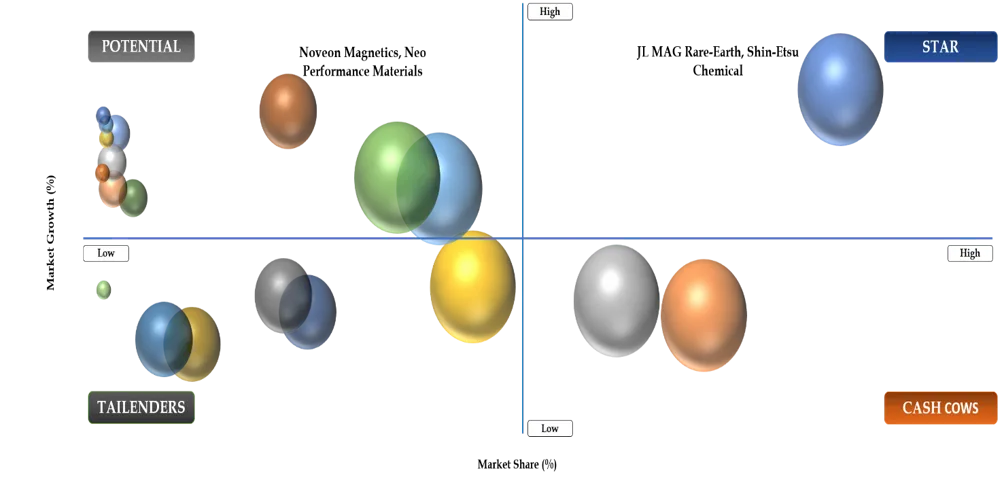
STAR
JL MAG Rare-Earth, Shin-Etsu Chemical, Proterial and MP Materials are positioned as Stars because of their involvement with applications growing at a very fast pace, such as electric vehicles' traction motors, wind turbines, industrial robots and energy efficient motors. The strengths of these companies are based on advanced NdFeB magnets manufacturing, as well as their ability to capitalize on increased interest in local rare earth magnets production. Investment in production capacity and high temperature magnet grades will remain crucial for future success.
POTENTIAL
Noveon Magnetics, Neo Performance Materials, Ningbo Yunsheng and Yantai Zhenghai Magnetic Material are some of the companies that have a future scope with respect to the expanding market beyond existing production facilities and the growing need for high-performing NdFeB magnets. The success of these companies is dependent on commercial manufacturing scalability, access to sources of neodymium and heavy rare earth elements, efficient yields in manufacturing and qualification of these magnets for use in automotive and industrial segments. Firms that succeed in integrating resilience in the supply chain together with efficient magnet production can improve their market position in anticipation of increasing demand for electric mobility, automation and renewable energy equipment.
Permanent Magnet Market Dynamics
Driver Impact Analysis
| Driver | Market Growth Impact (%) | Demand Concentration | Impacted Use Case | Strategic Impact |
| Rising Adoption of Electric Vehicles | 30% | China, Europe, North America | EV traction motors, hybrid vehicle motors, electric power steering | Increases demand for high-performance NdFeB magnets with high torque density, compact size and thermal stability. |
| Expansion of Wind Energy Installations | 25% | China, Europe, North America | Direct-drive and geared wind turbine generators | Supports demand for durable, high-efficiency permanent magnets and long-term supply agreements with wind turbine manufacturers. |
| Growing Industrial Automation and Robotics | 20% | China, Japan, South Korea, Germany, United States | Servo motors, robotic actuators, precision motion systems | Encourages development of compact, high-coercivity magnets with consistent performance and tight manufacturing tolerances. |
Increasing Demand for Energy-Efficient Electronics and Electrical Equipment | 15% | Asia-Pacific, Europe, North America | Consumer electronics, speakers, sensors, small motors, industrial equipment | Supports demand for application-specific NdFeB and ferrite magnets, improving opportunities for manufacturers with diversified product portfolios. |
Driver: Rising Demand for High-Performance NdFeB Magnets in Electric Vehicle Traction Motors
The growth of electric vehicle production has led to an increase in the need for high-performance NdFeB (neodymium iron boron) permanent magnets, which allows traction motors to provide remarkable torque and power in small and lightweight designs. Automakers need to utilize magnets that keep their magnetic characteristics in high-temperature and demanding driving conditions, creating a space for high coercivity and consistent quality manufacturers. Increased demand is making advanced magnet engineering as well as automotive-grade certification very significant, together with the reliable production capacities of the permanent magnet supply chain.
Restraint Impact Analysis
| Restraint | Drag on Market Growth (%) | Primary Impact Area | Impacted Use Case | Strategic Impact |
Volatility in Rare-Earth Element Prices and Supply | 30% | Raw material procurement and production costs | NdFeB magnets for EV traction motors and wind turbine generators | Pressures manufacturing margins and complicates long-term pricing agreements, encouraging diversified sourcing and reduced heavy-rare-earth content. |
High Manufacturing Costs and Capital Requirements | 25% | Production economics and capacity expansion | High-performance sintered NdFeB and SmCo magnets | Raises barriers to entry and limits cost competitiveness, increasing the importance of production automation, process efficiency and capacity utilization. |
Geographic Concentration of Rare-Earth Processing and Magnet Manufacturing | 25% | Supply-chain resilience and material availability | Automotive motors, industrial automation and renewable energy systems | Exposes manufacturers to export restrictions, geopolitical risks and supply interruptions, encouraging regional production and strategic sourcing partnerships. |
Technical Limitations and Qualification Requirements for Alternative Magnets | 20% | Material substitution and product development | High-temperature motors, compact actuators and specialized industrial equipment | Slows adoption of rare-earth-free alternatives because magnetic strength, coercivity, thermal stability and service-life requirements must meet application-specific standards. |
Restraint: Dependence on Rare-Earth Supply Chains and Exposure to Material Price Volatility
The permanent magnet industry is exposed to the issues of price and supply risk since its dependency on neodymium, praseodymium, dysprosium and terbium for high-performing NdFeB magnets. Since China is the key manufacturer of rare-earth processing and magnets in the world, any political dystopia may cause supply issues for global manufacturers due to limitations on exports from China. This situation brings us to the volatility of material prices that reduce profit margins and negatively affect long-term contracts. Moreover, getting rid of heavy rare earth elements requires some effort in material design in order to have its coercivity and thermal stability preserved. This problem may lead to decreasing cost-effectiveness and hindering the development of production capacities abroad.
Permanent Magnet Market Segment Analysis
The global permanent magnet market is segmented based on the material type, manufacturing process, application, peak operating temperature, magnetic property and region.
By Material Type
NdFeB Magnets Lead Demand Due to Their Superior Magnetic Strength
NdFeB magnets represented about 71.2% of market shares in 2025 owing to the high magnetic power as well as being appropriate for small and energy-efficient systems. The high usage of these magnets in electric traction vehicles motors, wind generators, industrial robots and precise machines is a major source of demand in the segment. The rising trend of electrification and high torque density requirements has further boosted the position of NdFeB magnets in the market.
By Manufacturing Process
Demand for High Energy Density Magnets Supports Sintered Magnet Growth
The market for sintered magnets will undergo expansion at CAGR of 9.8 % during 2026–2035 as a result of increasing demand for high-performance magnets for electric vehicles, industrial motors, robotics and wind energy systems. High magnetic energy density of sintered magnets qualifies them for usage in operations that require high magnetic output for small-size designs. Due to the higher manufacturing precision and material use efficiency, manufacturers are obtaining superior consistency of their products and improving performance characteristics for stringent automotive and industrial applications.
Permanent Magnet Market Geographical Penetration
U.S. Permanent Magnet Market Landscape
The market for permanent magnets in the United States is driven by the demand for NdFeB magnets with high magnetic properties in electric motor vehicles, aerospace/defense applications, industrial machinery, robotics and renewable energy technology. One of the strategic priorities for the country is to build its own more resilient supply chain for these materials from rare earth minerals separation to magnet manufacturing. Investments in domestic magnet manufacturing, development of advanced magnet technologies and rare earth recycling is creating business opportunities for manufacturers supplying automotive and defense industries, which have very high performance and sourcing specifications. Nonetheless, growth in the commercial sphere is limited by rivalry with well-established Asian magnet producers, costly manufacturing processes, availability of rare-earth materials and qualification process for new magnet suppliers.
Japan Permanent Magnet Market Outlook
The permanent magnets sector of Japan can be attributed to the country’s extensive knowledge in high-end magnetic materials, precise manufacturing, automotive design and high-performance electrical equipment. The demand for NdFeB magnets is driven by the need for the same in hybrid and electric vehicle motors, automation and robotics, energy-efficient industrial motors and electronics, whereas samarium cobalt magnets find uses in specific applications. There is a trend in the Japanese industry aimed at improving the performance of magnets by minimizing the usage of heavy rare earths, advanced grain boundary diffusion and improved corrosion protection to mitigate issues associated with higher costs and material supply risks. Moreover, among the country’s national priorities, one should note a need to diversify sources of rare earths, develop recycling processes and high-quality magnet materials that would reduce reliance on concentrated supply chains outside of Japan.
China Permanent Magnet Market Trends
In China, the permanent magnet industry has the advantage of having a huge capability in mining and separating of rare earths, refining and alloying and magnet production, thus contributing to the country being a major supplier of sintered NdFeB magnets for the global automobile, electronics, industrial equipment and renewable energy markets. Demand is generated domestically from electric vehicles, wind turbines, industrial automation and consumer electronics, motivating manufacturers to invest in increasing the manufacture of high performance magnets. China has seen its producers increase the development of high coercive NdFeB products, decreasing the use of heavy rare earth elements using grain boundary diffusion and magnet recycling. Government regulation on the extraction, processing and exportation of rare earth elements also affects global supply and prices. However, the industry in China still faces some difficulties such as raw material price fluctuations, environmental considerations, trade limitations internationally and efforts by foreign buyers to diversify their sources of magnets.
Permanent Magnet Market Competitive Landscape
- The permanent magnet industry comprises many competitors including Shin-Etsu Chemical Company Limited, TDK Corporation, Proterial and JL MAG Rare-Earth, who compete by virtue of their sintered NdFeB production capacities, magnetic qualities, product reliability and ability to satisfy customer qualification requirements.
- Chinese companies utilize highly developed systems of the rare metals supply system, establish their methods of separating and refining rare metals from ores and possess great production facilities that allow them to produce a big number of magnets. As a result, these companies create problems with pricing and competitiveness for other companies willing to establish permanent magnets production in their regions.
- Key companies are differentiating themselves with their product lines through NdFeB materials that have high coercivity, grain boundary diffusion technology, low dysprosium and terbium levels and better thermal stability to address the challenging conditions of electric vehicles and industrial applications.
- Beyond the manufacture of magnets, strategic competition is moving towards entering into long-term agreements on supply, partnering for manufacturing within specific regions and building relationships with producers of electric vehicles, wind turbines and industrial motors to guarantee demand.
- Businesses are positioning themselves competitively by way of investing in rare earth recycling technologies, other magnet materials, manufacturing technologies and application-specific engineering while considering production costs, material availability, performance specifications and sustainability in the supply chain.
Public Company Q1-Q2 2026 Performance Comparison
The table below compares five publicly listed companies with direct exposure to the permanent magnet market. Financial figures are company-wide unless otherwise specified; permanent-magnet-specific revenue is shown only where separately disclosed.
| Company | Q1–Q2 2026 Performance | Permanent Magnet Exposure | Key Performance Driver |
| Neo Performance Materials Inc. | Q1 revenue: US$155.0 million; Q2 revenue: US$205.7 million. H1 revenue: US$360.7 million. | Magnequench magnetic powders and bonded magnet materials; sintered magnet manufacturing expansion. | Higher rare-metals volumes, favorable pricing and demand for magnets used in automotive and industrial applications. |
| MP Materials Corp. | Q1 revenue plus PPA income: US$132.9 million; Q2: US$126.1 million. H1 total: US$259.0 million, including contractual PPA income. | Rare-earth materials, NdPr production and US-based permanent magnet manufacturing. | NdPr production, magnet manufacturing expansion and price-protection agreements. |
| JL MAG Rare-Earth Co., Ltd. | Q1 revenue: approximately US$282.0 million; Q2: approximately US$384.8 million. H1 total: US$666.8 million. | High-performance NdFeB permanent magnets for electric vehicles, wind power, robotics and industrial motors. | Growing demand for high-performance magnets and expansion of production capacity. |
| Ningbo Yunsheng Co., Ltd. | Q1 revenue: approximately US$207.5 million; Q2: approximately US$253.6 million. H1 total: US$461.1 million. | NdFeB permanent magnets for new-energy vehicles, consumer electronics and industrial applications. | Rising demand from electric vehicles and other industrial applications. |
| Yantai Zhenghai Magnetic Material Co., Ltd. | Q1 revenue: approximately US$189.0 million; Q2: approximately US$288.3 million. H1 total: US$477.3 million. | High-performance NdFeB permanent magnets, particularly for automotive and other advanced applications. | Improved sales volumes, EV-related demand and product-mix optimization. |
Note: H1 2026 represents the first six months of 2026 (January–June). MP Materials figures include pricing participation agreement (PPA) income and are therefore not directly comparable with conventional revenue figures. Reported company-wide revenue may also include products and activities beyond permanent magnets; the figures should not be interpreted as permanent magnet specific revenue.
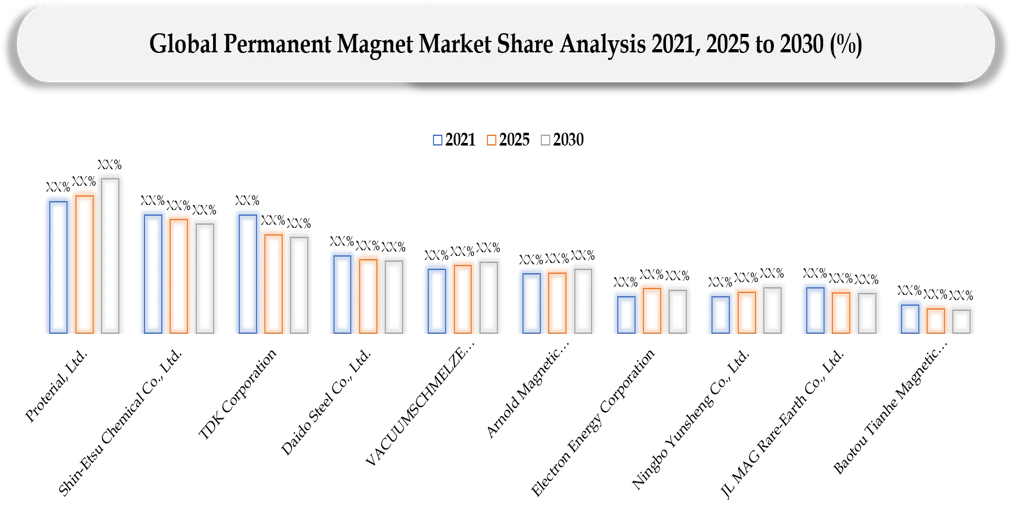
Key Companies of Permanent Magnet Market
- Proterial, Ltd. (Japan)
- Shin-Etsu Chemical Co., Ltd. (Japan)
- TDK Corporation (Japan)
- Daido Steel Co., Ltd. (Japan)
- VACUUMSCHMELZE GmbH & Co. KG (Germany)
- Arnold Magnetic Technologies (United States)
- Electron Energy Corporation (United States)
- Ningbo Yunsheng Co., Ltd. (China)
- JL MAG Rare-Earth Co., Ltd. (China)
- Beijing Zhong Ke San Huan High-Tech Co., Ltd. (China)
- Baotou Tianhe Magnetic Technology Co., Ltd. (China)
- Earth-Panda Advance Magnetic Material Co., Ltd. (China)
- Yantai Zhenghai Magnetic Material Co., Ltd. (China)
- Noveon Magnetics, Inc. (United States)
- Neo Performance Materials Inc. (Canada)
- Magnetfabrik Bonn GmbH (Germany)
- MP Materials Corp. (United States)
- Chengdu Galaxy Magnets Co., Ltd. (China)
- Yantai Dongxing Magnetic Materials Inc. (China)
- AT&M (Advanced Technology & Materials Co., Ltd.) (China)
Company Profiles of Permanent Magnet Market
Proterial, Ltd.
Proterial, Ltd. is an advanced materials company in Japan and a well-known player in the permanent magnet industry based on its range of high-grade NdFeB (neodymium-iron-boron) magnets. Proterial, Ltd. produces magnetic materials to produce motors for automobiles and industries with excellent magnetic properties.
Competitive priorities include the development of high-performance NdFeB materials, heat and coercivity improvements, meeting demands of electric vehicles’ motors, production optimization and sustainable material supply.
Shin-Etsu Chemical Co., Ltd.
Shin-Etsu Chemical Co., Ltd. is one of Japan's largest chemical companies which has its market share in the rare earth permanent magnets industry. Shin-Etsu specializes in high-performance magnetic material NdFeB magnets that are used in motor vehicles and industrial machines, electronics and energy products.
The competitive priorities of Shin-Etsu Chemical Co., Ltd. are development of high-performance magnets; development of temperature-resistant magnets; development of magnets for electrified powertrains; production efficiency; rare earths sourcing.
TDK Corporation
The TDK Corporation is a Japanese company that provides electronics and material-based products, with magnetic material range that includes ferrite magnets among other magnetic components utilized in automobile systems, consumer electronic products, industrial equipment and information technology. Being specialized in magnetic materials and electronic components, the company is suited for applications involving magnetic material performance, miniaturization and energy-efficient power conversion.
The competitive priorities of the company include development of magnetic materials specific to applications, increase in automotive and industrial market presence, component miniaturization, energy-efficient solutions and utilization of magnetic materials in advanced electronic systems.
Daido Steel Co., Ltd.
The Daido Steel Corporation is an industry that specializes in specialty steels and advanced materials and it also has its own permanent magnets technology. The magnets of this company specialize in producing high-performance magnets for difficult environments. Specialty material knowledge possessed by the company helps create magnets tailored to certain environments.
Competitive focus of the company is related to increasing performance of magnets at higher temperatures, designing special materials for electrified vehicles and industrial machines, increasing product quality, enhancing manufacturing process and expanding applications in advanced mobility system.
VACUUMSCHMELZE GmbH & Co. KG
VACUUMSCHMELZE (VAC) is an established advanced magnetic materials business in Germany. This company creates permanent magnets and other exclusive magnetic products that can be used in various fields, including industry, automobiles, energy and aircraft. The selection of VAC includes high-performance rare earth magnets and colored products made for complex conditions. VAC's competitive advantages include its materials knowledge, ability to design custom products and fulfilling specific magnetic and thermal needs.
VAC's competitive priorities consist of providing magnets for use in electric vehicles and efficient motors, developing products for harsh conditions, improving material efficiency, providing engineering assistance and enhancing supply chain resiliency.
Arnold Magnetic Technologies
Arnold Magnetic Technologies is an American company that provides its customers with various types of magnets, including assemblies and special magnetic materials. Products offered by this company range from rare earth magnets to alnico magnets as well as other magnets used in such industries as aerospace and defense, medicine, automobile industry, industrial motors and energy.
Competitive priorities of this company include development of high performance magnets for electrification, further development of aerospace and medical applications, more customized magnetic assemblies, strict quality control and diversified magnet supply chains.
Permanent Magnet Market Major Pain Points
- The fact of having only a few states concentrated on the extraction of neodymium, praseodymium, dysprosium and terbium exposes manufacturers of permanent magnets to banning exports as a result of geopolitical tensions and the lack of essential raw materials.
- The creation of advanced sintered neodymium-iron-boron magnets requires a relevant powder treatment and sintering in a certain atmosphere and also differs in accurate machining and surface processing, which resulted in the necessity of considerable investments as well as operating expenses.
- Nd-Fe-B magnets are vulnerable to corrosion and lose their magnetic abilities at high temperatures, which calls for changing alloys, adding coatings and using methods of thermal management, which makes the production process very complicated.
- The process of recovering the rare earth elements from electric motor drives used in vehicles, wind generators and various electronics is not easy, because magnets are usually attached, coated, or integrated into more complicated constructions.
- The manufacturers of permanent magnets must undergo a strict qualifying process by manufacturers of electric vehicles, aerospace products, wind energy and industrial motors due to magnetic characteristics and reliability issues.
Permanent Magnet Market Recent Developments
- September 2026 - Neo Performance Materials Inc.: The sintered rare-earth magnet plant in Estonia by Neo came online to deliver magnets to a Tier 1 customer that is an electric vehicle traction motor manufacturer.
- September 2026 - Neo Performance Materials Inc.: Neo has signed an MOU with Rainbow Rare Earths to obtain future neodymium-praseodymium oxide and heavy rare-earth goods from Phalaborwa project in South Africa, helping in raw material diversification in magnet manufacturing.
- August 2026 - MP Materials Corp.: MP Materials stated a 41% increase in NdPr production year over year to 840 tons and a 127% rise in NdPr sales to 1,006 tons. Its Magnetics Segment made revenue of US$16.5 million in the quarter.
- August 2026 - Government of India: India’s Ministry of Heavy Industries received 20 bids through its program for setting up integrated plants for manufacturing rare-earth permanent magnets, which is part of the effort to create its own capacity for manufacturing NdFeB magnets.
- August 2026 - Neo Performance Materials Inc.: Neo inked a long-term deal with Carester to source heavy rare earth oxides for its magnets manufacturing plants, ensuring access to the feedstock and building a stronger European rare earths supply chain.
Analyst View / Opinion on Permanent Magnet Market
- The permanent magnets industry is poised for strong growth due to the growing need for high magnetic energy density and effective motor designs in applications such as electric vehicles, wind energy generation and automation and robotics, which call for more advanced grades of NdFeB magnets.
- In the long term, the competitive edge of the permanent magnets industry will lie in its ability to reduce its dependency on dysprosium and terbium without impacting coercivity and thermal resistance in electric vehicle and industrial motor applications.
- The regional diversification of the rare earths processing and the production of rare earth magnets would have a dramatic effect on the competitive landscape, providing new players from other nations an opportunity, although this would require significant financial outlay, dependable sourcing of raw materials and customer qualification.
- Recycling of rare earth magnets represents a potential avenue going forward, although it hinges upon the availability of stable end-of-life magnet supply, an efficient process for their separation and the production of recycled materials capable of meeting stringent specifications.
- Firms that possess the capability to formulate advanced magnets, utilize specialized engineering, employ automated manufacturing and enter into customer agreements are well-positioned to take advantage of potential applications in electric mobility, offshore wind power, aerospace technology and precision industrial machinery.
Target Audience of Permanent Magnet Market
| INDUSTRY | WHO SHOULD BUY THIS REPORT? | REASON TO BUY THIS REPORT |
| Automotive and Electric Vehicles | Automotive OEMs and EV motor manufacturers | Assess NdFeB magnet demand, motor design requirements, supplier availability and growth opportunities in electric mobility. |
| Renewable Energy | Wind turbine manufacturers and renewable energy developers | Evaluate permanent magnet requirements for wind turbine generators and identify opportunities in renewable energy installations. |
| Electrical and Electronics | Electronics manufacturers and component suppliers | Understand demand for NdFeB and ferrite magnets in speakers, sensors, actuators and compact electronic devices. |
| Industrial Automation and Robotics | Robotics companies and industrial automation equipment manufacturers | Identify magnet requirements for servo motors, robotic actuators and precision motion systems. |
| Permanent Magnet Manufacturing | Magnet producers and magnetic materials companies | Benchmark competitors, evaluate magnet technologies and identify opportunities for manufacturing capacity expansion. |
| Rare Earth Materials | Rare-earth miners, processors and material suppliers | Assess demand for neodymium, praseodymium, dysprosium and terbium and evaluate downstream integration opportunities. |
| Aerospace and Defense | Aerospace OEMs and defense equipment manufacturers | Analyze demand for high-temperature SmCo and specialized NdFeB magnets in precision motors, actuators and control systems. |
| Medical Equipment and Healthcare Technology | Medical equipment manufacturers and healthcare technology companies | Evaluate permanent magnet applications in medical devices, instruments and selected imaging systems. |
| Investment and Financial Services | Private equity firms, venture capital investors and institutional investors | Assess market growth opportunities, manufacturing economics, supply-chain risks and potential investment targets. |
| Procurement and Supply Chain | Strategic sourcing teams, procurement managers and industrial distributors | Compare sourcing regions, supplier capabilities, material dependencies and long-term supply security for permanent magnets. |
Why Choose DATAM?
- Data-Driven insights: Dive into detailed analyses with granular insights such as pricing, market shares and value chain evaluations, enriched by interviews with industry leaders and disruptors.
- Post-Purchase Support and Expert Analyst Consultations: As a valued client, gain direct access to our expert analysts for personalized advice and strategic guidance, tailored to your specific needs and challenges.
- White Papers and Case Studies: Benefit quarterly from our in-depth studies related to your purchased titles, tailored to refine your operational and marketing strategies for maximum impact.
- Annual Updates on Purchased Reports: As an existing customer, enjoy the privilege of annual updates to your reports, ensuring you stay abreast of the latest market insights and technological advancements. Terms and conditions apply.
- Specialized Focus on Emerging Markets: DataM differentiates itself by delivering in-depth, specialized insights specifically for emerging markets, rather than offering generalized geographic overviews. The approach equips our clients with a nuanced understanding and actionable intelligence that are essential for navigating and succeeding in high-growth regions.
- Value of DataM Reports: Our reports offer specialized insights tailored to the latest trends and specific business inquiries. The personalized approach provides a deeper, strategic perspective, ensuring you receive the precise information necessary to make informed decisions. The insights complement and go beyond what is typically available in generic databases.
What DATAM Uniquely Provides
- DATAM provides an in-depth analysis of the permanent magnet industry by types of magnet, such as NdFeB, SmCo, ferrite and alnico, pointing out differences in magnetic characteristics, thermal characteristics, pricing and applicability to various end-user industries.
- DATAM analyzes the demand for applications in electric cars, wind turbines, industrial motors, robotics, aerospace and consumer electronics to find application-specific opportunities and new requirements for high performance permanent magnets.
- DATAM studies rare earth supply chain dependencies of materials such as neodymium, praseodymium, dyspromium and terbium in order to evaluate price exposure, sources and manufacturing issues.
- DATAM performs an analysis on technologies associated with high coercivity NdFeB magnets, reduction of heavy rare earths, replacement magnet chemistries and recycling to provide insights on future competitive advantages and investments.
- DATAM offers competitive insights into the permanent magnet industry through the evaluation of manufacturing capabilities, products, geographic expansion, customers and technologies for strategic decision-making and investments.


























































