


Global Peptide CDMO Market Size Overview
The global peptide CDMO market reached US$ 4.59 billion in 2025 and is expected to reach US$ 29.12 billion by 2035, growing with a CAGR of 20.3% during the forecast period 2026-2035.
The market covers outsourced process development, analytical services, peptide API manufacturing, drug-product manufacturing and fill-finish across discovery, clinical and commercial stages. Growth is being led by GLP-1, GIP/GLP-1 and next-generation multi-agonist therapies, while oncology, rare-disease and peptide-conjugate pipelines sustain demand for complex, lower-volume manufacturing.
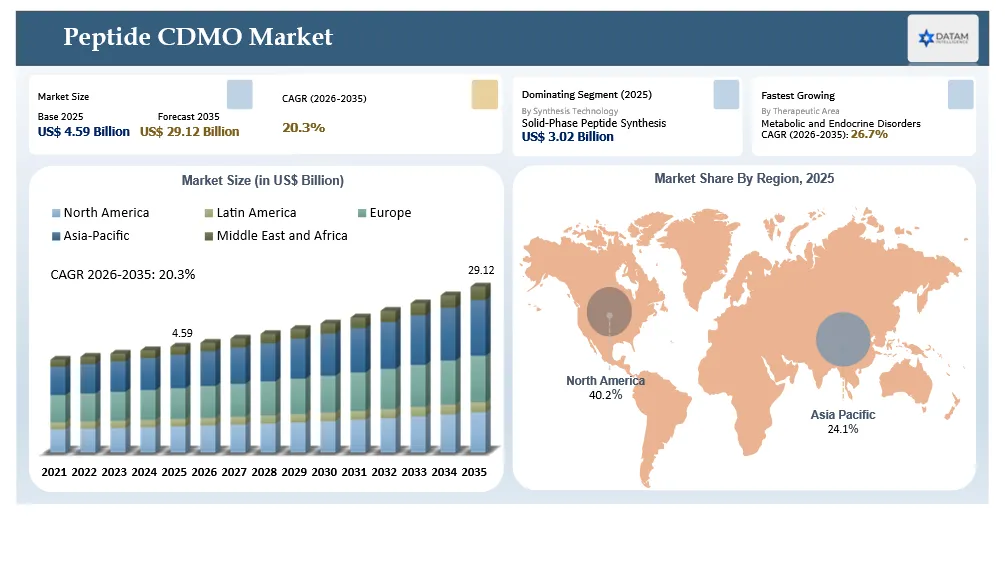
The industry is transitioning from specialist chemistry services toward industrial-scale pharmaceutical production. Commercial metabolic programs can require peptide volumes substantially above historical campaign sizes, increasing demand for validated synthesis, high-throughput purification, lyophilization, solvent management and analytical-release capacity. Sponsors are also prioritizing secure access to protected amino acids, resins and specialty building blocks. These requirements are driving large-scale facility investments, customer-backed capacity agreements and acquisitions intended to expand technical capability, production scale and geographic reach.
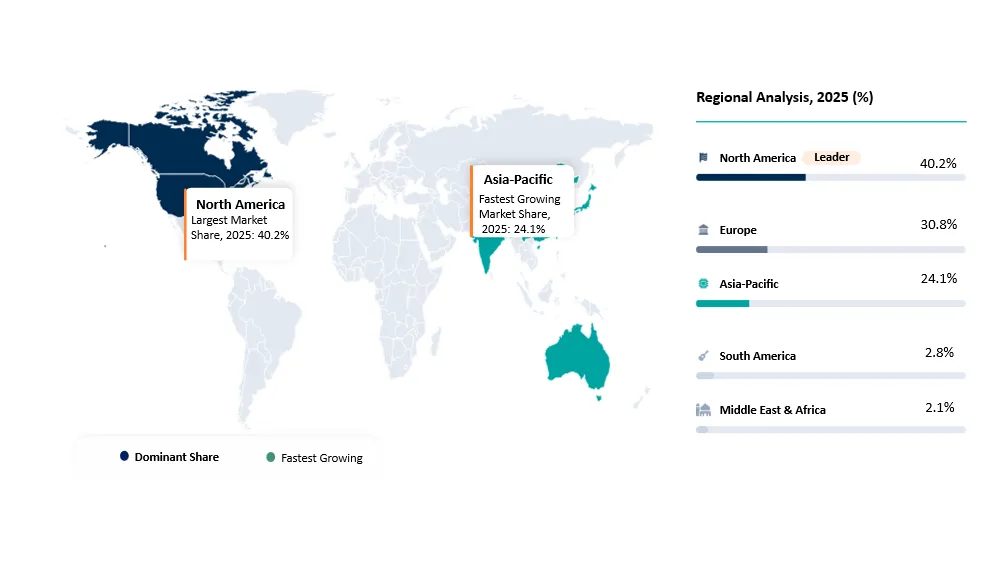
North America remains the largest demand market, supported by its concentration of peptide innovators, biotechnology funding and commercial metabolic-drug programs. Europe maintains a strong specialist manufacturing base and established large-scale chemistry expertise. Asia-Pacific is expected to record the fastest regional growth as China and India expand peptide capacity and integrated CRDMO platforms, while South Korea demonstrates increasing strategic interest in the modality. Competitive advantage will increasingly depend on qualified capacity, process economics, regulatory performance and reliable development-to-commercial execution.
Global Peptide CDMO Market Key Takeaways
- GLP-1 and next-generation multi-agonist programs are redefining commercial peptide-manufacturing scale, accelerating dedicated infrastructure investment, customer prepayments and long-term capacity-reservation agreements.
- Peptide API manufacturing represents the largest service-based revenue pool because synthesis, purification, lyophilization and impurity control account for a substantial share of technical complexity and outsourced contract value.
- Metabolic and Endocrine Disorders are expected to be the fastest-growing therapeutic segment, recording an estimated CAGR of 26.7% during 2026-2035 as obesity, diabetes and cardiometabolic pipelines advance toward commercialization.
- SPPS remains the dominant synthesis technology, generating approximately US$3.02 billion and accounting for 65.8% of the market in 2025. Hybrid, continuous and enzymatic approaches are gaining adoption for selected complex peptides.
- Purification throughput, solvent management and lyophilization capacity are becoming as strategically important as synthesis reactor volume, particularly for long, hydrophobic, modified and high-volume peptides.
- Sponsors increasingly prefer integrated CDMOs that combine process development, peptide API manufacturing, formulation, fill-finish, analytical testing, regulatory support and packaging within coordinated service networks.
- North America leads customer demand with an estimated 40.2% share in 2025, Europe maintains a strong specialist manufacturing base and Asia-Pacific is expanding through large-scale CRDMO platforms and cost-competitive capacity.
- Long-term leadership will depend on validated scale, regulatory performance, process economics, supply security, geographic redundancy and the ability to support both high-volume metabolic products and technically complex specialty peptides.
Global Peptide CDMO Market Industry Trends and Strategic Insights
- Peptide manufacturing is transitioning from flexible, campaign-based specialty production toward dedicated, high-utilization assets designed for large-volume metabolic and multi-agonist therapies.
- Long-term supply agreements, customer prepayments, minimum-volume commitments and capacity reservations are becoming important mechanisms for securing commercial capacity and supporting capital-intensive facility expansion.
- Large-scale SPPS investments increasingly include solvent recovery, optimized resin utilization, automated process controls, high-throughput chromatography and expanded lyophilization capacity to improve yield, throughput and cost efficiency.
- Acquisitions and strategic investments are becoming important routes for diversified CDMOs to obtain peptide expertise, qualified infrastructure and established customer relationships without relying exclusively on greenfield development.
- Integrated API-to-drug-product models are gaining strategic relevance as sponsors seek to reduce external handoffs, simplify governance, limit technology-transfer risk and accelerate progression from clinical development to commercial launch.
- Peptide conjugates, lipidated and long-acting peptides, cyclic structures, multi-agonists and oral peptide formulations are increasing technical complexity and expanding demand for premium process-development, analytical, purification and formulation services.
Global Peptide CDMO Market Scope
| Metrics | Details | |
| 2025 Market Size | US$ 4.59 Billion | |
| 2035 Projected Market Size | US$ 29.12 Billion | |
| CAGR (2026-2035) | 20.3% | |
| Largest Market | North America | |
| Fastest Growing Market | Asia-Pacific | |
| By Service Type | Process Development, Analytical Development and Testing, Peptide API Manufacturing, Drug Product Manufacturing, Fill-Finish Services, Stability Testing, Regulatory and CMC Support, Packaging and Logistics | |
| By Peptide Type | Linear Peptides, Cyclic Peptides, Modified and Long-Acting Peptides, Peptide Conjugates, Multi-Agonist and Complex Peptides, Other Peptides | |
| By Synthesis Technology | Solid-Phase Peptide Synthesis (SPPS), Liquid-Phase Peptide Synthesis (LPPS), Hybrid SPPS/LPPS, Chemoenzymatic and Enzymatic Synthesis, Recombinant and Biosynthetic Approaches | |
| By Discovery Phase | Discovery and Preclinical, Phase I, Phase II, Phase III, Commercial | |
| By Drug Substance / Drug Product | API, Sterile Injectable Drug Product, Oral Peptide Drug Product, Other Finished Dosage Forms | |
| By Therapeutic Area | Metabolic and Endocrine Disorders, Oncology, Cardiovascular Diseases, Rare Diseases, Infectious Diseases, Neurological Disorders, Other Therapeutic Areas | |
| By End User | Large Pharmaceutical Companies, Small and Mid-Sized Pharmaceutical Companies, Biotechnology Companies, Academic and Research Institutes, Other End Users | |
| By Engagement Model | Standalone Service Contracts, Integrated Development-to-Commercial Agreements, Long-Term Capacity-Reservation Agreements, Strategic Partnerships and Co-Investment, Other Engagement Models | |
| By Region | North America | U.S., Canada, Mexico |
| Europe | Germany, UK, France, Spain, Italy, Poland | |
| Asia-Pacific | China, India, Japan, Australia, South Korea, Indonesia, Malaysia, Singapore, Vietnam, Thailand, Philippines, Taiwan | |
| South America | Brazil, Argentina | |
| Middle East and Africa | Israel, Saudi Arabia, UAE, Turkiye, South Africa, Nigeria | |
| Report Insights Covered | Competitive Landscape Analysis, Company Profile Analysis, Market Size, Share, Growth | |
Why does this report matter in 2026?
2026 represents a strategic inflection point for peptide outsourcing, as sponsors secure commercial-scale capacity several years ahead of anticipated demand. Bachem announced a long-term supply collaboration supporting investment of more than CHF 500 million (approximately US$617 million) in its large-scale Sisslerfeld facility. CordenPharma completed its acquisition of AmbioPharm in August 2026, adding peptide API capabilities in the United States and China. Samsung Biologics’ tender offer for PolyPeptide Group further demonstrates the strategic importance of peptide manufacturing within global CDMO portfolios.
Operating results also indicate sustained demand for specialized peptide and TIDES services. WuXi AppTec reported Q1 2026 TIDES revenue of RMB 2.38 billion (approximately US$345 million), alongside 28% customer growth and 59% molecule growth year over year. Piramal Pharma reported 19% year-over-year growth in its CDMO business during Q1 FY2027. However, diversified-CDMO revenue should not be treated as entirely peptide-related, making platform-level capacity and project-pipeline analysis essential.
The report matters because peptide CDMO services are not commercially interchangeable. Economics differ materially across early-stage synthesis, multi-kilogram commercial campaigns, high-volume metabolic peptides, complex conjugates, oral formulations and sterile drug products. Manufacturing scale, synthesis technology, purification intensity, regulatory track record, geographic redundancy and contract structure directly influence pricing, capacity access and partner selection. The report therefore helps sponsors, investors and CDMOs assess capacity risk, competitive positioning and outsourcing opportunities across the peptide development lifecycle.
Global Peptide CDMO Market White Space & Investment Opportunities
- Commercial-Scale Peptide API Capacity: The most significant capacity gap lies in validated, large-volume peptide API manufacturing. Metabolic and multi-agonist therapies require production volumes substantially above historical peptide campaigns, creating opportunities for high-throughput synthesis, purification and lyophilization assets.
- Integrated API-to-Drug-Product Services: CDMOs combining peptide drug-substance manufacturing with formulation, sterile fill-finish and analytical release can reduce technology-transfer risk, shorten timelines and secure higher-value development-to-commercial contracts.
- Sustainable Peptide Manufacturing: Lower-solvent processes, solvent recovery, optimized resin utilization and aqueous or alternative-chemistry platforms offer opportunities to reduce manufacturing costs, waste generation and the environmental burden of conventional SPPS.
- Advanced Synthesis Platforms: Hybrid SPPS/LPPS, chemoenzymatic synthesis and continuous processing can improve yield and process economics for selected long, modified or complex peptides. Scalable and GMP-validated platforms could become meaningful competitive differentiators.
- Geographically Resilient Supply Networks: Asia-Pacific offers opportunities for cost-competitive and regionally diversified capacity, while investment in the United States and Europe is supported by sponsor demand for localized manufacturing, supply-chain resilience and dual-sourcing arrangements.
- High-Complexity Peptide Modalities: Peptide conjugates, modified and long-acting peptides, oral peptide formulations and next-generation multi-agonists require specialized analytical, purification and formulation capabilities. These segments offer stronger differentiation and potentially lower price competition than conventional linear-peptide manufacturing.
Global Peptide CDMO Market Future Market Transformation
The peptide CDMO market is expected to evolve from a fragmented specialty-synthesis industry into a tiered global manufacturing network. Large providers will operate dedicated or contractually reserved assets for high-volume metabolic and multi-agonist peptides, while specialist CDMOs will address complex oncology, rare-disease and early-stage programs. Sponsors are likely to secure capacity earlier, qualify secondary suppliers and establish regional supply options for strategically important APIs.
Solid-phase peptide synthesis will remain the principal manufacturing platform, but its solvent intensity, waste generation and scale limitations will accelerate process innovation. Hybrid SPPS/LPPS, flow-based processing, optimized coupling chemistry, advanced resins, enzymatic ligation, membrane separations and continuous chromatography will be adopted selectively where they improve yield, purity or cost. Digital process control, predictive maintenance and advanced analytics will strengthen batch consistency, deviation management and asset utilization.
By 2035, leading peptide CDMOs will provide integrated capabilities spanning process development, analytical development, clinical and commercial API manufacturing, drug-product production, fill-finish, regulatory support and lifecycle management. Competitive advantage will depend less on installed synthesis capacity alone and increasingly on validated scale, process economics, purification efficiency, regulatory performance, raw-material security and geographic redundancy. Providers capable of advancing molecules from gram-scale development to multi-kilogram or larger commercial production within a consistent quality framework will be best positioned to secure long-term partnerships and capacity-reservation agreements.
Global Peptide CDMO Market Buyer Decision-Making Criteria
Major Buyer Decision-Making Criteria:
- Peptide-Specific Technical Expertise
- Process Scalability and Commercial Capacity
- Product Quality and Regulatory Compliance
- Analytical and Impurity-Control Capabilities
- Project Timelines and Delivery Reliability
- Technology-Transfer and Scale-Up Performance
- Integrated API and Drug-Product Capabilities
- Supply-Chain Resilience and Geographic Redundancy
- Sustainability and Solvent-Management Practices
- Total Cost of Ownership and Contract Flexibility
Pharmaceutical and biotechnology buyers prioritize demonstrated peptide expertise, regulatory performance and the ability to scale production from discovery quantities to commercial volumes without compromising yield, purity or batch consistency. For late-stage and commercial projects, access to validated synthesis, purification and lyophilization capacity can outweigh the lowest quoted price. Buyers also evaluate on-time delivery history, quality-system maturity, inspection outcomes, data integrity, raw-material qualification and business-continuity arrangements.
Technical evaluation becomes more demanding for long, cyclic, modified, conjugated and multi-agonist peptides. Sponsors assess the CDMO’s ability to control sequence-related impurities, racemization, aggregation, solubility and purification losses while handling non-natural amino acids and specialized conjugation chemistries. Total cost assessment extends beyond unit pricing to include development effort, yield, solvent consumption, failure risk, technology-transfer costs and capacity commitments. Integrated API, drug-product and fill-finish providers can gain an advantage by reducing handoffs and accelerating development. However, selection depends on coordinated governance, transparent project management, harmonized quality systems and effective transfer between manufacturing sites. Long-term partners must also offer capacity visibility, supply reliability and contractual flexibility as forecast volumes and development timelines change.
Global Peptide CDMO Market Economic & Investment Analysis
Peptide CDMO economics are primarily determined by capacity utilization, synthesis yield, raw-material costs, solvent intensity, purification recovery and campaign scale. Large commercial metabolic and multi-agonist programs can support dedicated assets, capacity-reservation agreements and long-term revenue visibility. However, dependence on a limited number of high-volume molecules creates customer-concentration, demand-forecasting and asset-utilization risks. Early-stage portfolios provide greater customer and molecule diversification but carry higher clinical attrition, smaller campaign sizes and less predictable capacity requirements. Competitive CDMOs must therefore balance anchor commercial contracts with a diversified development pipeline capable of generating future late-stage and commercial projects.
Capital intensity is increasing as peptide manufacturing expands to substantially larger production volumes. New facilities require investment not only in synthesis equipment but also in solvent storage and recovery, explosion protection, chromatography, lyophilization, waste treatment, analytical laboratories and validated utilities. Investment evaluation should distinguish announced nameplate capacity from installed, GMP-qualified and customer-committed capacity. Key considerations include construction and validation timelines, utilization ramp-up, regulatory inspection readiness, customer contract coverage, pricing structures and potential cost overruns. Investors should also assess whether capacity is flexible across different peptide sequences and campaign sizes or dependent on a small number of specific programs. Facilities combining strong contract visibility, scalable purification infrastructure, raw-material security and efficient solvent management are likely to deliver more resilient returns.
Global Peptide CDMO Market Investment Trends
- Expansion of High-Volume API Capacity: Capital investment is concentrating on commercial-scale peptide API facilities serving GLP-1, multi-agonist and other metabolic therapies whose volume requirements exceed those of traditional peptide programs.
- M&A-Led Platform Expansion: Large CDMOs are using acquisitions and strategic investments to enter peptide manufacturing, accelerate capability development and obtain established customer pipelines without relying exclusively on lengthy greenfield projects.
- Customer-Backed Capacity Financing: Long-term supply agreements, capacity reservations, customer prepayments and minimum-volume commitments are increasingly supporting dedicated capacity investments while improving revenue visibility and reducing utilization risk.
- Investment Beyond Synthesis Assets: Capital expenditure is extending to chromatography, lyophilization, analytical laboratories, solvent recovery, waste treatment, automation and digital batch-control systems because downstream operations frequently determine commercial throughput.
- Integrated API-to-Drug-Product Networks: CDMOs are investing across process development, peptide API manufacturing, formulation and fill-finish to capture a larger share of customer spending, reduce external handoffs and strengthen long-term relationships.
- Geographic Diversification of Supply: China and India continue to expand advanced peptide development and manufacturing capabilities, while South Korean investment interest is increasing through strategic transactions. Simultaneously, new capacity in the United States and Europe is being supported by sponsor demand for localized production and dual-source supply networks.
Strategic Indicators for the Global Peptide CDMO Market
High Regulatory Impact
Peptide APIs and finished drug products require GMP-compliant manufacturing, validated analytical methods, detailed impurity characterization, complete data integrity and controlled process changes. Regulatory scrutiny intensifies during commercial scale-up, site transfer or secondary-source qualification because sponsors must demonstrate process comparability, raw-material traceability and consistent product quality.
High Investment Activity
The industry is undergoing a capital-intensive capacity-expansion cycle. CDMOs are using large greenfield investments, brownfield expansions, acquisitions and customer-backed supply agreements to secure synthesis, purification and lyophilization capacity, particularly for high-volume metabolic and multi-agonist peptides.
Elevated Supply-Chain Risk
Peptide production depends on protected amino acids, resins, coupling reagents, solvents and specialized building blocks sourced through globally distributed supply chains. Supplier concentration, extended lead times, transportation disruption and quality failures can interrupt campaigns, encouraging dual sourcing, local qualification and strategic inventory.
Moderate-to-High Pricing Volatility
Contract pricing varies considerably according to sequence length, molecular complexity, batch scale, purity requirements, synthesis yield and purification recovery. High-volume agreements can reduce unit prices, but raw-material, solvent, energy and capacity-reservation provisions may create price variability over the contract term.
High Procurement Pressure
Large pharmaceutical sponsors increasingly negotiate multi-year supply contracts, secondary-source arrangements, performance obligations and capacity-reservation terms. Procurement decisions now evaluate validated capacity, delivery reliability, geographic redundancy, sustainability performance and business-continuity planning alongside quoted price.
Accelerating Technology Adoption
CDMOs are adopting automated and intensified SPPS, hybrid synthesis, continuous processing, enzymatic ligation, advanced chromatography, process analytical technology and AI-enabled process optimization. Adoption remains molecule-specific and depends on demonstrable improvements in yield, purity, throughput and manufacturing cost.
Strong Regional Expansion Opportunity
The United States and Europe remain attractive for localized supply, regulatory familiarity and proximity to major pharmaceutical customers. China and India offer expanding peptide capabilities, cost advantages and integrated development services. Sponsors are increasingly evaluating dual-continent manufacturing strategies to strengthen supply resilience.
Mixed Government Policy Impact
Policies supporting domestic pharmaceutical production, strategic supply-chain resilience and advanced manufacturing can facilitate investment in new facilities. Conversely, tighter environmental, worker-safety and hazardous-waste requirements can increase permitting complexity and capital expenditure for solvent-intensive peptide manufacturing.
Pricing Intelligence
Early-stage GMP peptide programs generally command higher per-gram pricing because process development, analytical validation and quality-release costs are allocated across small batch volumes. Commercial programs achieve lower unit costs through larger campaigns and improved asset utilization but generate substantially higher total contract values. Effective price benchmarking should therefore compare equivalent sequence complexity, purity, batch scale, development stage, service scope and contractual capacity commitments.
Disruption Analysis of Peptide CDMO Market
The scale of demand from GLP-1, multi-agonist and other metabolic therapies is reshaping the peptide CDMO market. Manufacturing operations historically designed for gram-to-multi-kilogram campaigns must now accommodate substantially larger and more frequent commercial production runs. The transition is affecting reactor configuration, purification throughput, lyophilization capacity, solvent storage, waste treatment and raw-material procurement. Validated commercial capacity is consequently becoming a strategic resource secured through long-term supply agreements and capacity-reservation commitments.
Industry consolidation is also changing competitive dynamics. Diversified CDMO groups are using acquisitions and strategic transactions to obtain established peptide capabilities, customer relationships and qualified manufacturing infrastructure. Simultaneously, specialist providers are using anchor-customer commitments to support large-scale capacity investments and strengthen their market positions.
Manufacturing innovation is accelerating through hybrid synthesis routes, optimized coupling chemistry, enzymatic ligation, continuous processing and advanced purification methods. These approaches aim to improve yield while reducing solvent consumption, cycle times and production costs. Digital process control, predictive analytics and automated batch monitoring can further improve consistency, deviation management and asset utilization. Collectively, these changes favor CDMOs that combine validated scale, process innovation, capital access and integrated API-to-drug-product capabilities. Smaller providers without differentiated expertise or secure capacity access may face increasing competitive pressure.
Market access will represent another source of disruption as premium therapies must demonstrate clear value over established and lower-cost treatments. Companies combining differentiated clinical outcomes, convenient administration, strong safety profiles and compelling pharmacoeconomic evidence will be best positioned to influence treatment guidelines, secure reimbursement and reshape the future NCFB treatment pathway.
Global Peptide CDMO Market BCG Matrix: Company Evaluation
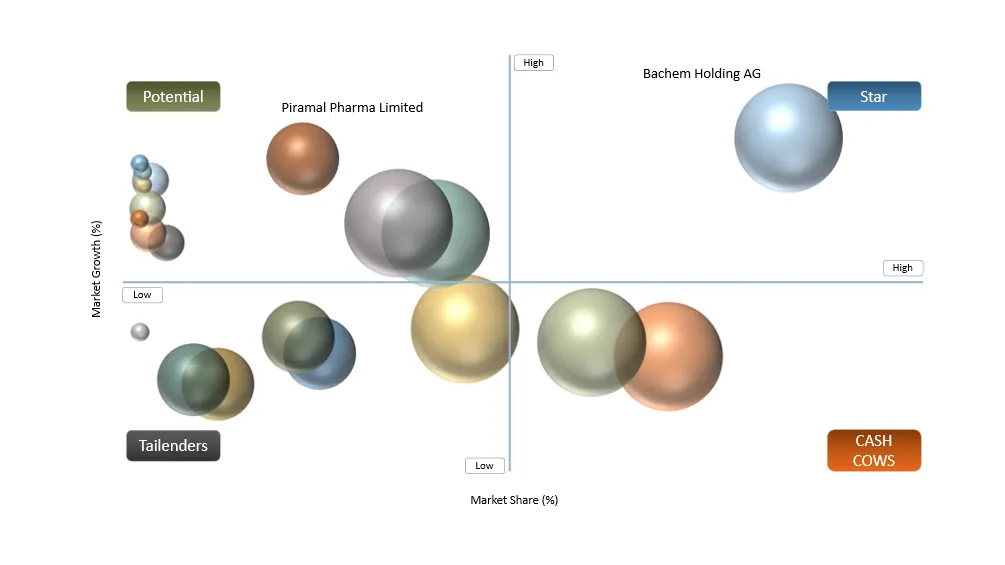
STAR
Bachem Holding AG, PolyPeptide Group AG, CordenPharma and WuXi AppTec Co., Ltd. are positioned as Stars due to their specialized peptide platforms, commercial-scale manufacturing capacity, global customer relationships and continued investments in high-volume peptide production. Their leadership is reinforced by end-to-end development capabilities, established regulatory records and strong positioning in complex peptides, conjugated peptides and metabolic peptide programs.
POTENTIAL
Piramal Pharma Limited, Neuland Laboratories Limited, Asymchem Laboratories (Tianjin) Co., Ltd., Almac Group Limited and Pharmaron Beijing Co., Ltd. are positioned as Potential players. Each company possesses credible peptide development, process scale-up and GMP manufacturing capabilities but currently operates with a comparatively smaller peptide-specific commercial footprint than the Stars. Their progression will depend on capacity utilization, late-stage customer conversions, regulatory execution and differentiation in complex peptides, integrated drug substance-drug product services and flexible clinical-to-commercial manufacturing.
Global Peptide CDMO Market Dynamics
Driver Impact Analysis
| Driver | Market Growth Impact | Primary Demand Base | Impacted Use Case | Driver |
Surging GLP-1 and Metabolic Peptide Demand Accelerates Commercial-Scale CDMO Capacity Expansion | Very High | North America and Europe | Commercial peptide API and drug-product manufacturing | Surging GLP-1 and Metabolic Peptide Demand Accelerates Commercial-Scale CDMO Capacity Expansion |
Expanding Clinical Peptide Pipelines Sustain Demand Across Development and Manufacturing Stages | High | Global pharmaceutical and biotechnology companies | Clinical supply, process development and specialty-peptide manufacturing | Expanding Clinical Peptide Pipelines Sustain Demand Across Development and Manufacturing Stages |
Increasing Outsourcing of Complex Peptides Drives Integrated Development and Manufacturing Demand | High | Large pharmaceutical and biotechnology companies | API manufacturing, analytical services, formulation and fill-finish | Increasing Outsourcing of Complex Peptides Drives Integrated Development and Manufacturing Demand |
Process Intensification Improves Peptide Manufacturing Economics, Capacity Utilization and Sustainability | Medium-High | Leading peptide CDMO facilities | Synthesis yield, purification, cycle-time reduction and solvent management | Process Intensification Improves Peptide Manufacturing Economics, Capacity Utilization and Sustainability |
Driver: Surging GLP-1 and Metabolic Peptide Demand Accelerates Commercial-Scale CDMO Capacity Expansion
Rapid adoption of GLP-1 therapies and the advancing pipeline of dual and triple agonists are creating a structural increase in outsourced peptide manufacturing demand. Metabolic therapies target large patient populations and require recurring commercial volumes substantially above traditional oncology, rare-disease and specialty-peptide programs. Demand is shifting the CDMO model from flexible campaign-based production toward dedicated manufacturing trains, capacity-reservation agreements and multi-year supply contracts. In March 2025, CordenPharma announced an investment exceeding €500 million (approximately US$540 million) in a Swiss facility designed with more than 5,000 litres of SPPS reactor capacity for GLP-1 and other peptide projects.
The investment requirement extends beyond synthesis reactors to chromatography, lyophilization, analytical release, solvent management, waste treatment and raw-material procurement. In July 2026, Bachem committed more than CHF500 million (approximately US$617 million) to its Sisslerfeld facility under a strategic collaboration incorporating prepayments and long-term supply commitments. Such customer-backed investments demonstrate that access to validated commercial capacity, purification throughput and reliable supply is becoming a decisive consideration in CDMO selection.
Restraint Impact Analysis
| Restraint | Drag on Market Growth | Primary Impact Area | Impacted Use Case | Strategic Impact |
Limited Qualified Commercial-Scale Capacity Delays Launches and Raises Capacity-Reservation Costs | High | Commercial readiness | High-volume peptide API manufacturing | Extends lead times, increases reservation costs and limits sponsor flexibility |
Raw-Material and Solvent Dependence Increases Cost Volatility and Supply-Disruption Risk | Medium-High | Cost and supply continuity | SPPS campaigns | Encourages dual sourcing, safety-stock accumulation and local supplier qualification |
Purification Bottlenecks and Yield Losses Weaken Economics for Complex Peptide Programs | High | Process economics | Long, modified and complex peptides | Increases cost per gram, extends campaign duration and constrains commercial scalability |
SPPS Environmental Intensity Elevates Compliance Costs and Constrains Large-Scale Expansion | Medium | Sustainability and permitting | Commercial-scale manufacturing | Increases solvent-recovery, waste-treatment and environmental-compliance requirements |
Restraint: Limited Qualified Commercial-Scale Capacity Delays Launches and Raises Capacity-Reservation Costs
Commercial peptide capacity remains constrained because announced reactor volume does not immediately translate into customer-ready manufacturing capability. New assets must complete construction, equipment commissioning, process qualification, analytical-method validation and regulatory inspection before supporting commercial supply. Capacity constraints also extend beyond synthesis to chromatography, lyophilization, solvent handling and quality-control release. Insufficient capacity in any of these operations can delay process validation, inventory build-up and geographic product launches, particularly for high-volume metabolic and multi-agonist peptides.
Limited availability is encouraging sponsors to reserve manufacturing slots years in advance through prepayments, minimum-volume commitments and long-term supply agreements. Such arrangements improve supply security but raise financial exposure when clinical timelines, regulatory approvals or demand forecasts change. Smaller biotechnology companies may face greater difficulty securing priority capacity because established pharmaceutical companies can offer larger campaigns and longer contractual commitments. CDMOs must balance dedicated assets for anchor customers against flexible capacity for other programs, while buyers increasingly qualify secondary suppliers to reduce dependency. Consequently, access to validated end-to-end capacity can become more important than quoted manufacturing price when selecting a commercial peptide CDMO.
Global Peptide CDMO Market Segment Analysis
The global peptide CDMO Market is segmented based on the service type, peptide type, synthesis technology, discovery phase, drug substance/drug product, therapeutic area, end user, engagement model and region.
SPPS Anchors Market Scale While Metabolic and Endocrine Peptides Drive Future Growth
Solid-Phase Peptide Synthesis (SPPS) dominated the global peptide CDMO market in 2025, generating approximately US$3.02 billion and accounting for 65.8% of total revenue. Its leadership reflects broad applicability across linear, cyclic, modified and conjugated peptides, alongside established automation, regulatory familiarity and scalability from discovery to commercial production. SPPS also supports rapid sequence modification and non-natural amino-acid incorporation, making it the preferred platform for complex therapeutic candidates. However, high solvent consumption, resin costs and downstream purification requirements are increasing pressure on CDMOs to improve coupling efficiency, recovery yield and waste management.
Metabolic and Endocrine Disorders are forecast to become the fastest-growing therapeutic segment, recording a CAGR of approximately 26.7% during 2026-2035. Expansion is being driven by GLP-1 therapies, dual and triple agonists, long-acting peptides and next-generation treatments for obesity, diabetes and related cardiometabolic conditions. Large addressable patient populations and recurring commercial demand are shifting manufacturing requirements from conventional kilogram-scale campaigns toward substantially higher production volumes. CDMOs with validated commercial capacity, high-throughput purification, reliable raw-material access and integrated API-to-drug-product capabilities are consequently positioned to secure long-term supply agreements and capacity-reservation contracts.
Global Peptide CDMO Market Geographical Penetration
U.S. Peptide CDMO Market Landscape
The U.S. represents the largest peptide CDMO demand market, supported by its concentration of biotechnology companies, metabolic-drug developers and global pharmaceutical launch activity. Demand is shifting from clinical-scale synthesis toward commercial peptide API, complex conjugates, sterile injectables and integrated launch support. Domestic buyers increasingly prioritize local capacity, supply continuity and secondary-source qualification, although European and Asian CDMOs remain important partners. In March 2026, CordenPharma Colorado leased a 64,000-square-foot facility in Boulder to expand its peptide development laboratories. The company is also expanding its Colorado SPPS capacity to more than 42,000 litres by 2028. These investments indicate rising demand for development-to-commercial continuity, validated capacity and high-throughput downstream processing within the United States.
Germany Peptide CDMO Market Outlook
Germany is an important European centre for peptide process development, specialty chemistry and integrated pharmaceutical manufacturing. Its competitive position is supported by experienced scientific talent, established GMP infrastructure, regulatory familiarity and proximity to major European pharmaceutical customers. Demand is strongest for early-stage API development, complex peptide synthesis, analytical services and transfers into injectable or oral drug-product manufacturing. In 2025, CordenPharma reported that its Frankfurt Peptide Centre of Excellence had added 1,000 square metres of GMP space for gram-to-kilogram early-phase API production. The site connects with the company’s German oral-drug-product operations in Plankstadt and European injectable capabilities. Germany’s opportunity lies in technically demanding clinical programs and integrated development pathways rather than competing exclusively for very-high-volume commodity production.
Japan Peptide CDMO Market Outlook
Japan combines established peptide science, stringent quality expectations and a pharmaceutical customer base focused on differentiated therapies. Demand is concentrated in high-value clinical programs, long-acting peptides, oncology, metabolic therapies and peptide-drug conjugates. Japanese sponsors frequently use international CDMO networks, creating opportunities for local providers that can coordinate domestic development with global commercial supply. Japan’s peptide ecosystem is supported by Ajinomoto’s AJIPHASE liquid-phase peptide platform and CORYNEX biosynthetic production technology. The Japan Pharmaceutical Manufacturers Association identified 108 domestic emerging biopharma companies with clinical-stage assets as of February 2025, indicating a meaningful potential outsourcing base. Competitive differentiation will depend on complex chemistry, analytical quality, regulatory documentation and reliable technology transfer between Japanese development facilities and overseas commercial manufacturing sites.
China Peptide CDMO Market Outlook
China is rapidly moving from research-scale peptide synthesis toward integrated clinical and commercial manufacturing. Its advantages include large chemistry workforces, expanding SPPS infrastructure, competitive operating economics and CRDMO models linking discovery with development and manufacturing. WuXi AppTec reported that its TIDES revenue increased 96% year over year to RMB 11.37 billion (approximately US$1,580 million) in 2025, while TIDES customers and molecules grew 25% and 45%, respectively. The company also completed its Taixing peptide expansion, taking total SPPS reactor volume above 100,000 litres. Geopolitical scrutiny and sponsor diversification may constrain selected Western projects, but domestic and Asia-Pacific demand supports continued expansion. Chinese CDMOs will increasingly compete on regulated commercial execution, integrated services and capacity scale rather than price alone.
Brazil Peptide CDMO Market Outlook
Brazil is an emerging downstream opportunity within the peptide manufacturing ecosystem, driven by rising demand for obesity, diabetes and other chronic-disease therapies. Specialist peptide API capacity remains limited, making near-term opportunities more attractive in formulation, sterile fill-finish, packaging, quality control and technology transfer. In April 2025, Novo Nordisk announced an investment of BRL 6.4 billion (approximately US$1,100 million) in its Montes Claros site to expand injectable production, including GLP-1 products; the project is expected to create 600 permanent jobs. A 2025 Brazilian government publication cited estimates that approximately 31% of Brazilians live with obesity. Long-term CDMO potential depends on local technical capability, regulatory alignment, commercial volumes and regional supply partnerships.
Global Peptide CDMO Market Competitive Landscape
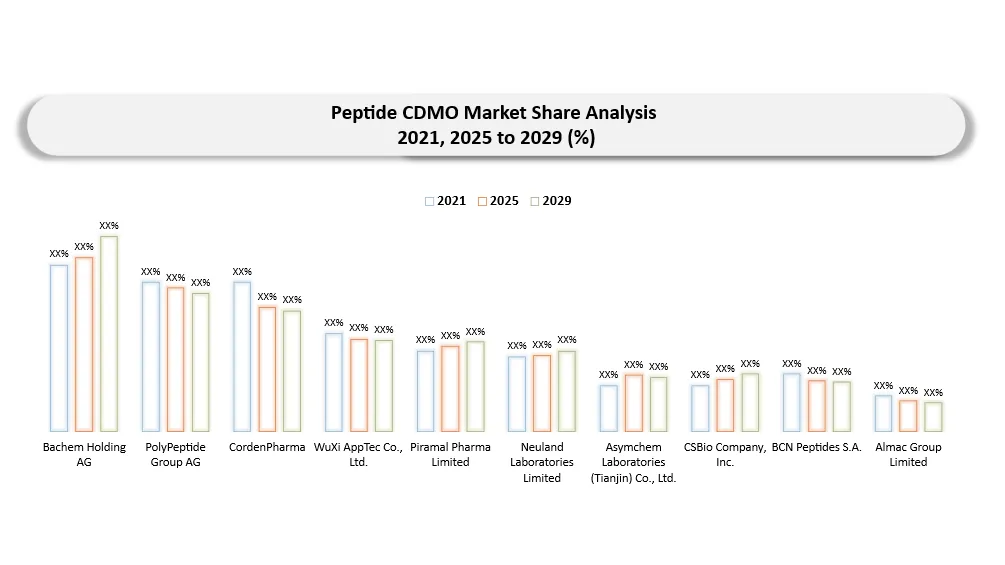
Competition is intensifying around validated clinical-to-commercial peptide manufacturing capacity, with Bachem Holding AG, PolyPeptide Group AG, CordenPharma and WuXi AppTec Co., Ltd. maintaining leading positions through established regulatory records, large-scale synthesis platforms and active capacity expansion. Piramal Pharma Limited, Neuland Laboratories Limited, Asymchem Laboratories (Tianjin) Co., Ltd., Almac Group Limited and Pharmaron Beijing Co., Ltd. compete through integrated process development, analytical, active pharmaceutical ingredient and drug-product capabilities. Specialized participants, including Medtide Inc., BCN Peptides S.A., ScinoPharm Taiwan, Ltd., EUROAPI and Apeloa Pharmaceutical Co., Ltd., strengthen competition in complex, generic and commercial-scale peptides.
Industry consolidation and capacity-backed partnerships are reshaping competitive positioning. CordenPharma completed its acquisition of AmbioPharm in August 2026, while Samsung Biologics announced a tender offer for PolyPeptide Group in July 2026. Ajinomoto Co., Inc., Olon S.p.A., Biosynth AG, Shilpa Medicare Limited, Granules India Limited and CSBio Company, Inc. provide differentiated synthesis, fermentation, discovery or manufacturing capabilities. Competitive advantage increasingly depends on scale validation, yield retention, impurity control, purification throughput, geographic redundancy, sustainable processing and integrated supply from peptide synthesis through finished drug product.
Public Company Latest Reported Performance Comparison
| Public Company | Latest Reported Performance | Peptide CDMO Exposure | Growth Drivers |
| Bachem Holding AG | FY2025 sales reached CHF 695.1 million, increasing 14.8% year over year and 19.2% in local currencies. EBITDA reached CHF 214.7 million, with a 30.9% margin. | Specialist peptide and oligonucleotide CDMO supporting development and active pharmaceutical ingredient manufacturing from clinical stages through commercial-scale supply. | Building K production ramp-up, long-term volume commitments, metabolic peptide demand, broader TIDES pipeline and planned investment exceeding CHF 500 million in Sisslerfeld. |
| PolyPeptide Group AG | FY2025 revenue reached EUR 389.3 million, increasing 15.6% year over year and 16.0% at constant currency. EBITDA increased 84.4% to EUR 46.8 million, with a 12.0% margin. | Specialist CDMO focused on peptide-based active pharmaceutical ingredients, intermediates and clinical-to-commercial manufacturing services. | Metabolic therapeutics, Belgian capacity utilization, Malmö and Ambernath expansions, increasing commercial production volumes and customer-supported capital investments. |
| WuXi AppTec Co., Ltd. | Q1 2026 total revenue reached RMB 12.44 billion, increasing 28.8% year over year. TIDES revenue reached RMB 2.38 billion, increasing 6.1%, while TIDES customers and molecules increased 28% and 59%, respectively. | Integrated TIDES platform providing peptide and oligonucleotide discovery, process development, analytical services and drug-substance and drug-product manufacturing. | Customer additions, molecule progression, increasing commercial projects, capacity ramp-up and more than 100,000 litres of solid-phase peptide synthesis reactor volume. |
| Neuland Laboratories Limited | FY2026 revenue reached approximately USD 215 million, representing record annual revenue supported by commercial new chemical entity programs. Peptide-specific revenue was not separately disclosed. | Peptide CDMO providing process development, analytical validation, solid-phase, liquid-phase and hybrid synthesis and good manufacturing practice production through commercial supply. | Commercial new chemical entity programs, dedicated peptide development infrastructure, complex peptide projects, new customer collaborations and planned manufacturing-capacity expansion. |
| Piramal Pharma Limited | Q1 FY2027 revenue from operations reached INR 2,270 crore, increasing 17% year over year. CDMO revenue reached INR 1,187 crore, increasing 19%, while company EBITDA increased 72% to INR 285 crore. | Diversified CDMO with peptide active pharmaceutical ingredient development and manufacturing capabilities at its Turbhe facility, supported by wider drug-substance and drug-product services. | Higher order inflows, improved capacity utilization, expanded commercial coverage, supply-chain diversification, complex API demand and integrated clinical-to-commercial services. |
Market Ecosystem Table
| Value-Chain Sector | Representative Companies | Role in Peptide CDMO Ecosystem |
| Protected Amino Acids and Building Blocks | Bachem Holding AG, Merck KGaA, Iris Biotech GmbH, Watanabe Chemical Industries, Ltd., Evonik Industries AG | Supply protected amino acids, non-natural amino acids, linkers, specialty building blocks and other peptide synthesis inputs. |
| Resins, Reagents and Solvents | Merck KGaA, Thermo Fisher Scientific Inc., Ecolab Inc., BASF SE, Evonik Industries AG | Provide solid-phase peptide synthesis resins, coupling reagents, solvents, purification materials and processing chemicals. |
| Synthesis and Purification Equipment | CEM Corporation, Gyros Protein Technologies AB, Sartorius AG, Danaher Corporation, Agilent Technologies, Inc. | Supply peptide synthesizers, chromatography systems, filtration technologies, process analytical technology and analytical instruments. |
| Specialist Peptide CDMOs | Bachem Holding AG, PolyPeptide Group AG, CordenPharma, Medtide Inc., CSBio Company, Inc., BCN Peptides S.A. | Develop and manufacture peptide active pharmaceutical ingredients from preclinical and clinical supply through commercial-scale production. |
| Integrated Peptide CRDMOs and CDMOs | WuXi AppTec Co., Ltd., Piramal Pharma Limited, Asymchem Laboratories (Tianjin) Co., Ltd., Pharmaron Beijing Co., Ltd., Almac Group Limited | Integrate peptide process development, analytical development, active pharmaceutical ingredient manufacturing, regulatory support and selected drug-product services. |
| Drug-Product and Fill-Finish Partners | Vetter Pharma International GmbH, PCI Pharma Services, Thermo Fisher Scientific Inc., Piramal Pharma Limited, CARBOGEN AMCIS | Convert peptide active pharmaceutical ingredients into sterile injectables, lyophilized products, prefilled delivery formats and other commercial dosage forms. |
| Pharmaceutical and Biotechnology Sponsors | Eli Lilly and Company, Novo Nordisk A/S, Amgen Inc., F. Hoffmann-La Roche Ltd, Pfizer Inc., Viking Therapeutics, Inc. | Generate peptide development pipelines and outsource process development, clinical manufacturing and commercial production requirements. |
| Testing, Analytical and Regulatory Services | Eurofins Scientific SE, SGS Société Générale de Surveillance SA, Intertek Group plc, Charles River Laboratories International, Inc., Pharmaron Beijing Co., Ltd. | Provide analytical characterization, impurity profiling, stability testing, method validation, quality-control testing and regulatory support. |
Key Companies of Peptide CDMO Market
- Bachem Holding AG (Switzerland)
- PolyPeptide Group AG (Switzerland)
- CordenPharma (Switzerland)
- WuXi AppTec Co., Ltd. (China)
- Piramal Pharma Limited (India)
- Neuland Laboratories Limited (India)
- Asymchem Laboratories (Tianjin) Co., Ltd. (China)
- CSBio Company, Inc. (United States)
- BCN Peptides S.A. (Spain)
- Almac Group Limited (United Kingdom)
- Ajinomoto Co., Inc. (Japan)
- EUROAPI (France)
- Olon S.p.A. (Italy)
- Medtide Inc. (China)
- Biosynth AG (Switzerland)
- ScinoPharm Taiwan, Ltd. (Taiwan)
- Pharmaron Beijing Co., Ltd. (China)
- Shilpa Medicare Limited (India)
- Granules India Limited (India)
- Apeloa Pharmaceutical Co., Ltd. (China)
Global Peptide CDMO Market Major Pain Points
- Constrained Commercial-Scale Capacity: Limited availability of validated large-scale peptide synthesis, purification and lyophilization capacity restricts manufacturing flexibility, extends project timelines and creates competition for qualified production slots.
- Critical Raw-Material Exposure: Long lead times and limited qualified suppliers for protected amino acids, synthesis resins, coupling reagents and custom building blocks increase procurement costs and expose peptide programs to supply disruptions.
- Solvent-Intensive Manufacturing: Conventional solid-phase peptide synthesis consumes substantial quantities of solvents, generating high operating costs, significant waste volumes and increasing environmental-compliance requirements.
- Scale-Up Yield Erosion: Longer sequences, complex structures and chemical modifications can reduce coupling efficiency and increase deletion sequences, aggregation, epimerization and impurity accumulation during commercial scale-up.
- Downstream Capacity Bottlenecks: Purification, chromatography, desalting, filtration, lyophilization and analytical release can constrain overall throughput even when sufficient peptide synthesis capacity is available.
- Capital-Intensive Expansion: Good manufacturing practice facility construction, equipment installation, process qualification and regulatory approval require substantial capital expenditure and multi-year implementation timelines.
- Customer Concentration Risk: Dependence on a limited number of high-volume metabolic peptide programs exposes CDMOs to clinical setbacks, demand revisions, contract renegotiations and capacity-underutilization risks.
- Complex Technology Transfer: Moving peptide processes between manufacturing sites requires extensive comparability studies, analytical bridging and impurity-profile alignment, increasing transfer timelines, costs and regulatory risks.
Global Peptide CDMO Market Recent Developments
- August 2026: CordenPharma completed the acquisition of AmbioPharm, adding peptide manufacturing facilities in the United States and China and expanding its solid-phase, liquid-phase and hybrid peptide synthesis capabilities.
- July 2026: Samsung Biologics announced a tender offer to acquire PolyPeptide Group AG for CHF 44.31 (approximately USD 54.70) per share, representing a strategic entry into specialized peptide active pharmaceutical ingredient development and manufacturing.
- July 2026: Bachem Holding AG announced a long-term peptide supply collaboration supporting an investment of more than CHF 500 million (approximately USD 617 million) in a large-scale Sisslerfeld facility expected to begin commercial production in 2030.
- April 2026: Bachem Holding AG inaugurated Building K at its Bubendorf site, expanding industrial-scale manufacturing capacity for peptide and oligonucleotide active pharmaceutical ingredients.
- April 2026: WuXi AppTec reported first-quarter TIDES revenue of RMB 2.38 billion (approximately USD 345 million), with development and manufacturing customers increasing by 28% and supported molecules increasing by 59% year over year.
- December 2025: PolyPeptide Group AG and Lupin Manufacturing Solutions Limited formed a strategic alliance to strengthen raw-material sourcing, integrated procurement and supply-chain resilience for large-scale peptide manufacturing.
- October 2025: PolyPeptide Group AG announced an expansion of its Ambernath facility in India, which is expected to more than triple production capacity and strengthen complex peptide development capabilities.
- March 2025: CordenPharma announced an investment exceeding €500 million (approximately USD 540 million) in a new peptide manufacturing facility in Muttenz, Switzerland, featuring more than 5,000 litres of solid-phase peptide synthesis reactor capacity.
Analyst View / Opinion on Peptide CDMO Market
- The peptide CDMO market has entered a multi-year capacity build-out rather than a short-term investment cycle. Commercial metabolic and multi-agonist therapies require sustained production volumes considerably above those of traditional peptide programs.
- Validated commercial-scale capacity will remain strategically constrained through the late 2020s. Competitive capacity must combine large-scale synthesis with sufficient chromatography, lyophilization, solvent-management and analytical-release infrastructure.
- Bachem Holding AG, PolyPeptide Group AG, CordenPharma and WuXi AppTec Co., Ltd. are among the best-positioned providers in peptide manufacturing scale and expansion. Other CDMOs can differentiate through complex chemistry or integrated API, drug-product and fill-finish services.
- Acquisitions, strategic investments and customer-backed capacity agreements will remain important because greenfield facilities require substantial capital, lengthy construction and validation timelines and confidence in long-term customer demand.
- Process intensification, solvent recovery, improved coupling efficiency and waste reduction will move beyond ESG positioning. At commercial scale, these capabilities directly influence production costs, facility throughput and regulatory acceptance.
- Long-term market leaders will combine peptide chemistry expertise, purification efficiency, regulatory performance, reliable raw-material sourcing and geographic redundancy. The strongest providers will scale projects from discovery quantities to commercial production within a consistent quality system while minimizing repeated technology transfers.
Global Peptide CDMO Market Target Audience
| INDUSTRY | WHO SHOULD BUY THIS REPORT? | REASON TO BUY THIS REPORT |
| Pharmaceuticals | Manufacturing, procurement, CMC and business-development teams | Assess capacity, partner fit, commercial supply risk and outsourcing strategy |
| Biotechnology | Founders, technical operations and development leaders | Select CDMO partners and plan scale-up from clinical to commercial stages |
| Peptide CDMOs | Executives, strategy and investment teams | Benchmark competitors, capacity, service gaps and geographic expansion |
| Raw Materials | Amino-acid, resin, reagent and solvent suppliers | Forecast demand created by peptide capacity additions and commercial programs |
| Equipment & Technology | Synthesis, chromatography, filtration and automation providers | Identify site expansions and technology adoption opportunities |
| Investors & Consulting | Private equity, institutional investors and strategy advisors | Evaluate growth, consolidation, capex intensity and competitive positioning |
| Regulatory & Quality | Consultants, laboratories and validation providers | Understand compliance burden, testing demand and inspection-related opportunities |
Why Choose DATAM?
- Data-driven analysis combining market sizing, pipeline demand, manufacturing capacity, company performance and country-level opportunity.
- Post-purchase analyst consultations for partner selection, market entry, capacity strategy and investment questions.
- Annual report updates covering M&A, new plants, capacity additions, commercial launches and regulatory developments.
- Specialized focus on emerging markets and manufacturing ecosystems rather than broad regional summaries.
- Actionable analysis linking peptide demand with process technology, supply chain, pricing and CDMO strategy.
What DATAM Uniquely Provides
- Ten-year forecasts across eight segmentation categories and five regions.
- Peptide-specific analysis separating early-stage specialty work from large-scale commercial metabolic demand.
- Competitive benchmarking of specialist peptide CDMOs and diversified global outsourcing platforms.
- Capacity and ecosystem analysis covering raw materials, synthesis, purification, drug product and end customers.
- Public-company performance comparison using current 2026 disclosures.
- Strategic recommendations for sourcing, investment, partnership and capacity expansion.


























































