


Para-Aminophenol Market Size and Overview
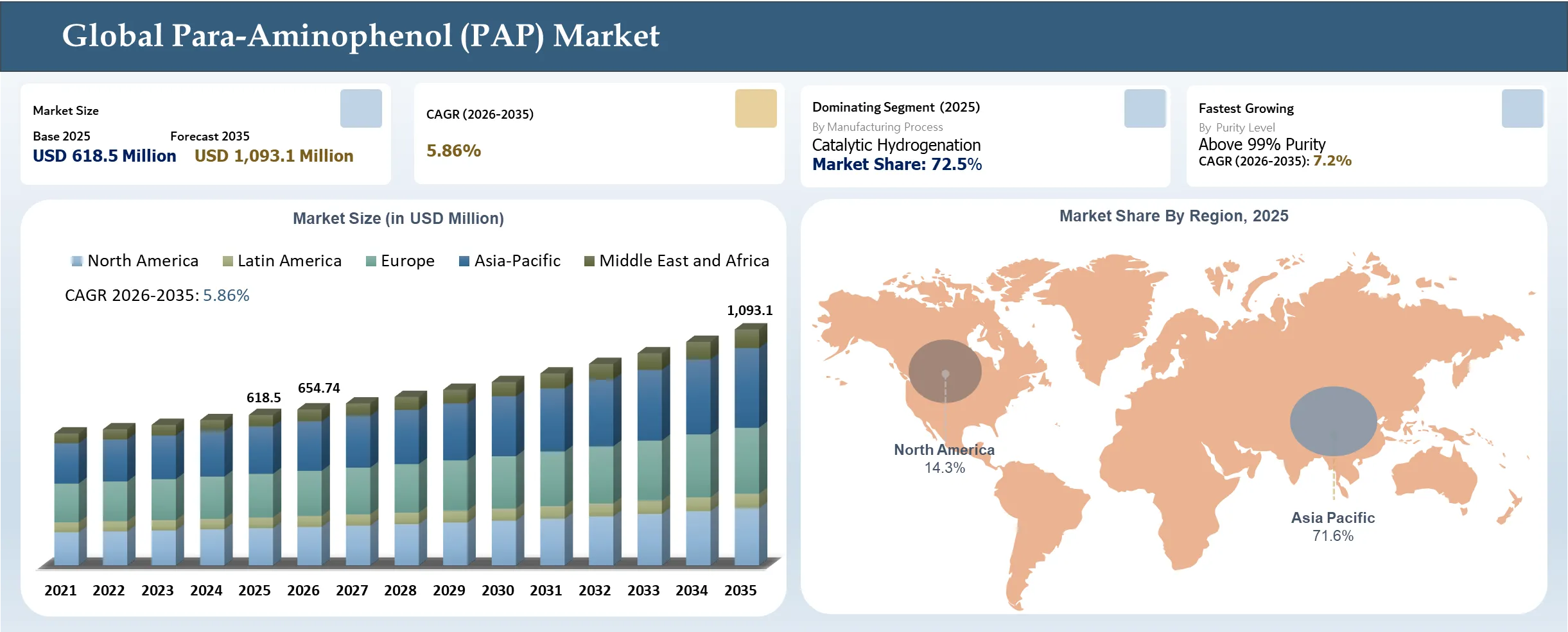
The global para-aminophenol market was valued at USD 618.5 million in 2025 and is projected to reach USD 1,093.1 million by 2035, growing at a CAGR of 5.86% from 2026 to 2035. The market growth is primarily driven by increasing paracetamol (acetaminophen) production, as para-aminophenol serves as a critical chemical intermediate in its manufacturing process. Pharmaceutical manufacturers' emphasis on securing reliable supplies of active pharmaceutical ingredient (API) intermediates is strengthening demand for high-purity PAP, particularly across India and China.
The market is also influenced by the concentration of PAP manufacturing capacity in Asia, dependence on upstream raw materials such as nitrobenzene and hydroquinone, and environmental compliance requirements associated with chemical manufacturing. In September 2026, according to the Press Information Bureau (PIB), Government of India, Meghmani LLP established a 13,500 MT per annum Para-Aminophenol manufacturing facility in Gujarat, India, with an investment of ₹60.46 crore (USD 6.72 million), recording cumulative production worth ₹687 crore (USD 76.33 million).
Para-Aminophenol Market Key Takeaways
Para-Aminophenol Market Trends & Disruptions Impacting Customers' Customers
The global para-aminophenol (PAP) market is witnessing increasing backward integration as pharmaceutical manufacturers expand captive intermediate production to improve cost competitiveness and reduce dependence on external suppliers. In October 2026, according to IOL Chemicals and Pharmaceuticals, the company expanded its acetic anhydride manufacturing capacity to 32,000 metric tons per annum in 2026, strengthening the availability of a critical chemical input used in converting PAP into paracetamol. The trend is expected to strengthen captive PAP consumption and encourage investments in continuous manufacturing technologies, while increasing competitive pressure on standalone PAP suppliers through 2030.
The market is experiencing significant disruption as large-scale paracetamol manufacturers increasingly internalize intermediate production, challenging the conventional merchant PAP supply chain. The transition is particularly evident among Indian pharmaceutical manufacturers, where investments in captive PAP and upstream chemical production are reducing reliance on third-party suppliers. As integrated manufacturers gain greater control over raw material procurement, production costs and intermediate quality, independent PAP producers face increasing pressure to maintain their customer base and pricing competitiveness.
Para-Aminophenol Market Dynamics
Driver Impact Analysis
| Driver | Market Growth Impact (%) |
| Government Support for Domestic PAP Manufacturing to Reduce Import Dependency | 1.2% |
| Growing Pharmaceutical Supply Chain Diversification to Strengthen PAP Procurement | 1.5% |
| Rising International Demand for Paracetamol APIs to Boost PAP Consumption | 2.1% |
Government Support for Domestic PAP Manufacturing to Reduce Import Dependency
Government-backed pharmaceutical manufacturing initiatives are emerging as a significant growth driver for the global para-aminophenol (PAP) market, particularly in India, where import substitution and domestic production of critical drug intermediates have become strategic priorities. In March 2026, according to the Press Information Bureau (PIB), Government of India, the Production Linked Incentive (PLI) Scheme for Bulk Drugs has an approved financial outlay of ₹6,940 crore (USD 771.11 million), targeting domestic manufacturing of 41 critical pharmaceutical products, including Para-Aminophenol.
Restraint Impact Analysis
| Restraint | Drag on Market Growth (%) |
| Volatility in Phenol and Nitrobenzene Prices Pressures PAP Production Margins | 0.9% |
| Strict Quality Requirements Limit Pharmaceutical-Grade PAP Supplier Qualification | 0.6% |
Volatility in Phenol and Nitrobenzene Prices Pressures PAP Production Margins
Fluctuations in phenol and nitrobenzene prices represent a significant restraint on the global para-aminophenol (PAP) market, particularly for manufacturers relying on externally sourced aromatic chemical intermediates. Nitrobenzene is a key feedstock in the conventional PAP manufacturing route, while phenol is relevant to alternative production pathways through hydroquinone. Price movements across these upstream chemicals are influenced by benzene costs, crude oil fluctuations, plant operating rates and regional supply-demand imbalances.
Para-Aminophenol Market: Commercial Use Cases Across Industries
| COMPANY | USE CASE | BENEFITS |

| Para-Aminophenol (PAP) serves as a critical chemical intermediate in pharmaceutical manufacturing, particularly for producing paracetamol (acetaminophen) through acetylation. Anhui Bayi Chemical participates in the upstream aromatic chemical supply chain, supporting PAP production for pharmaceutical applications and downstream API manufacturers.
| Supports large-scale paracetamol manufacturing, strengthens pharmaceutical intermediate supply availability, enables consistent raw material sourcing, and improves production continuity for API manufacturers. |

| Haihang Industry supplies Para-Aminophenol (4-Aminophenol) for pharmaceutical synthesis and industrial chemical applications, including dye intermediates, photographic developing agents and specialty organic compounds. Its chemical distribution activities support manufacturers requiring PAP for different downstream formulations and synthesis processes. | Enables access to PAP across pharmaceutical and specialty chemical industries, supports diversified chemical procurement, facilitates sourcing for multiple industrial applications, and reduces dependence on a limited number of chemical supply channels. |
Market Ecosystem
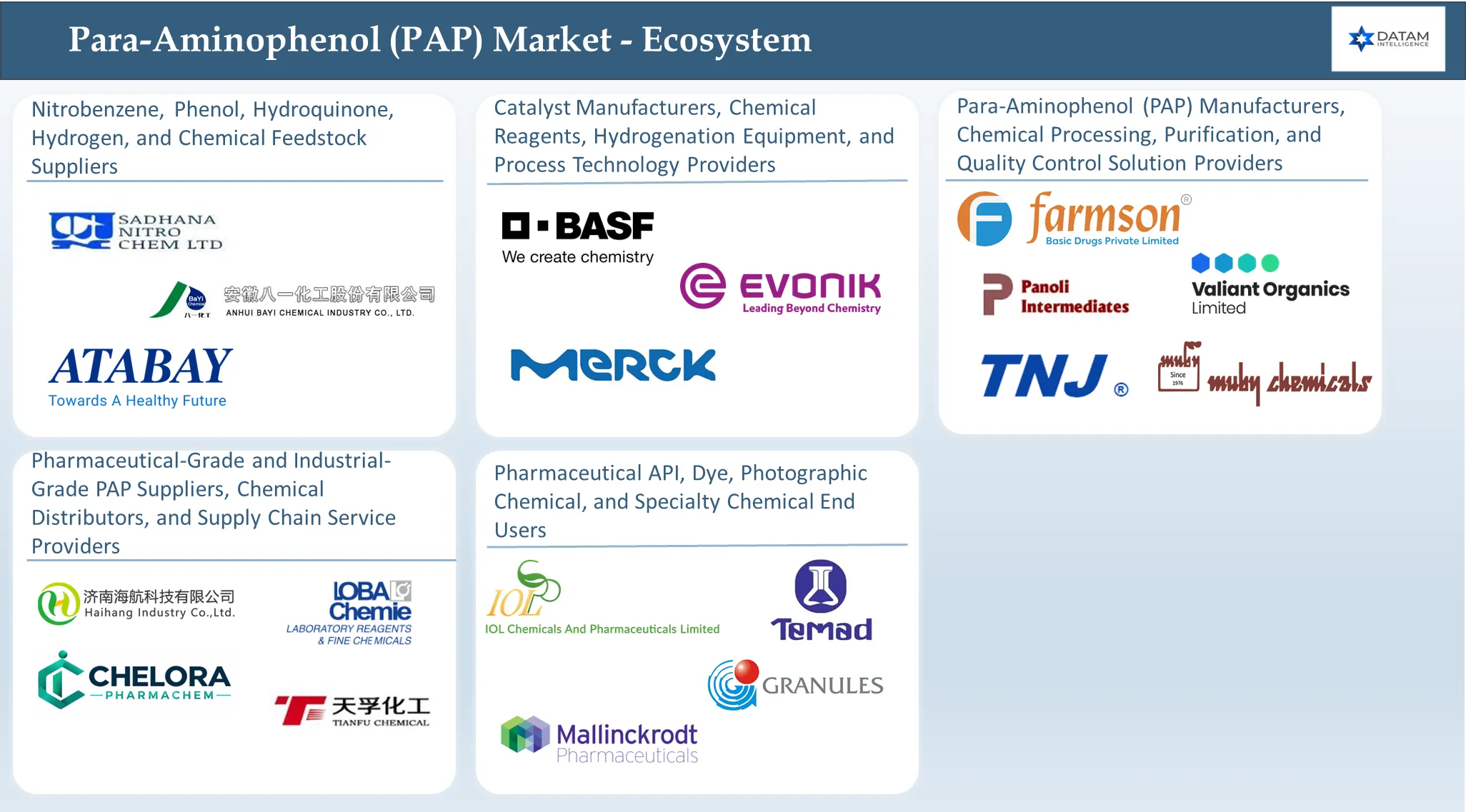
The global Para-Aminophenol (PAP) market is an interconnected ecosystem where raw material suppliers, chemical manufacturers, pharmaceutical companies, distributors, and regulatory authorities collaborate to support the production and commercialization of PAP across pharmaceutical and industrial applications. Companies in the market, including Anhui Bayi Chemical, Valiant Organics, Farmson Pharmaceutical Gujarat, and Haihang Industry, participate in the manufacturing and supply of PAP, primarily used as a critical intermediate in paracetamol production, alongside applications in dyes, photographic chemicals, and specialty chemical synthesis.
Upstream suppliers of nitrobenzene, phenol, and hydroquinone, together with chemical processing companies and pharmaceutical intermediate distributors across Asia-Pacific, North America, Europe, and the Middle East & Africa, support raw material procurement, chemical synthesis, quality assurance, and downstream distribution. According to the CSIR-National Chemical Laboratory (NCL), India, its indigenous PAP manufacturing technology demonstrates 85–90% product yield and 95–97% purity, using a recyclable non-noble-metal catalyst and an organic-solvent-free process, highlighting opportunities for improved manufacturing efficiency and reduced environmental impact.
Para-Aminophenol Market Segment Analysis
By Grade
The market is segmented by grade into pharmaceutical grade, technical/industrial grade, and cosmetic grade, reflecting differences in product specifications, impurity control, regulatory requirements, and downstream applications. Pharmaceutical-grade PAP is primarily used in paracetamol API manufacturing, where consistent chemical composition, controlled impurities, and reliable batch-to-batch quality are essential for pharmaceutical production.
By Form
The market is segmented by form into powder and crystalline forms, with product selection influenced by handling characteristics, particle size distribution, dissolution behavior, storage stability, and downstream processing requirements. Powdered PAP supports chemical synthesis operations requiring controlled material feeding, mixing, and dissolution, particularly in pharmaceutical intermediate manufacturing. Crystalline PAP is supplied for applications where defined physical characteristics, filtration performance, and consistent material handling are important to processing efficiency.
By Manufacturing Process
The global para-aminophenol market is segmented by manufacturing process into catalytic hydrogenation, iron powder reduction, and other chemical synthesis routes, reflecting differences in feedstock selection, reaction efficiency, waste generation, and manufacturing economics. Catalytic hydrogenation processes are used to convert nitroaromatic intermediates into PAP under controlled reaction conditions, with catalyst selection, hydrogen consumption, product selectivity, and purification requirements influencing production costs. Iron powder reduction represents an alternative chemical reduction pathway but can generate substantial iron-containing waste, increasing separation, treatment, and disposal requirements.
By Purity Level
The global market is segmented by purity level into above 99%, 98–99%, 95–98%, and below 95%, reflecting the chemical specifications required across pharmaceutical, industrial, and research applications. Purity is a critical purchasing parameter because residual starting materials, reaction by-products, oxidation products, and other impurities can influence downstream synthesis efficiency and finished-product quality.
By Application
The market is segmented by application into paracetamol intermediates, dyes and colorants, rubber antioxidants, photographic chemicals, and other specialty chemical applications. Paracetamol manufacturing represents the principal downstream application, as PAP undergoes acetylation to produce acetaminophen, an extensively used analgesic and antipyretic active pharmaceutical ingredient. In dye and colorant manufacturing, PAP serves as an aromatic intermediate for selected oxidative hair coloring systems and specialty dye synthesis processes, while rubber chemical applications involve its use as a precursor in certain antioxidant-related chemical formulations.
Para-Aminophenol Market Geographical Penetration
Expanding PAP Manufacturing Capacity and Pharmaceutical Supply Chain Integration Strengthen Asia-Pacific's Market Dominance
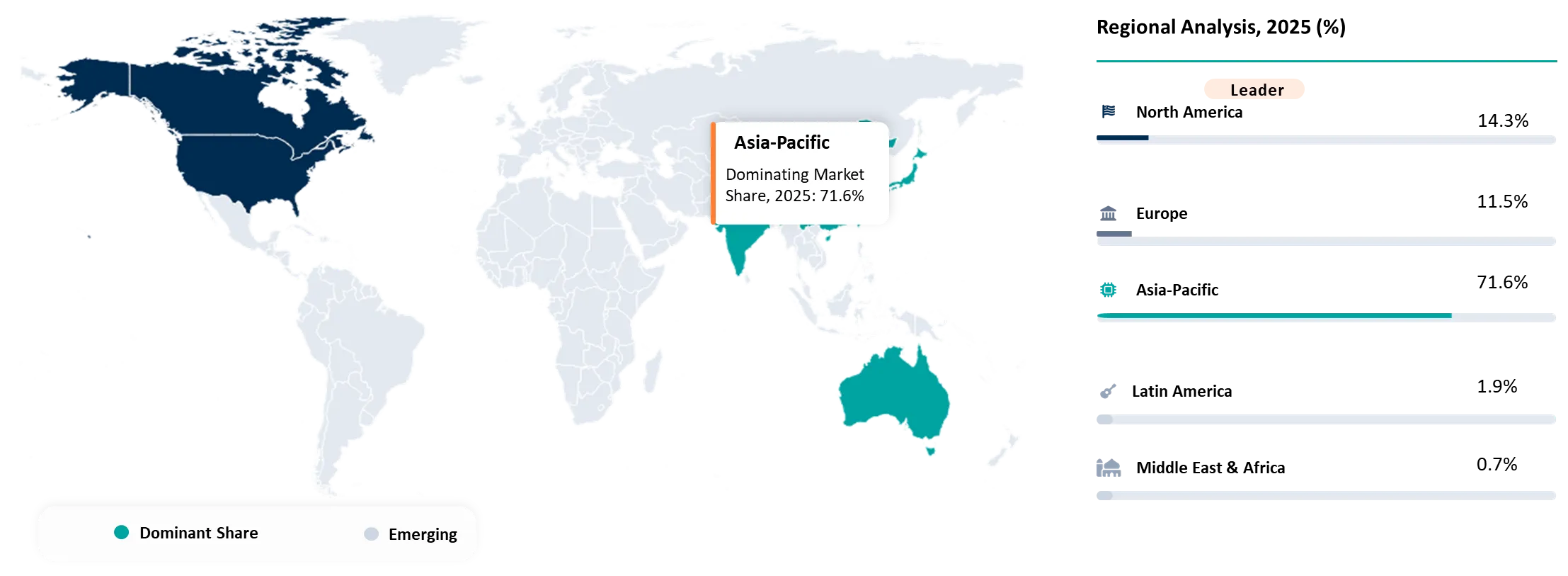
Asia-Pacific dominates the global para-aminophenol (PAP) market, accounting for 71.6% of global market share in 2025, supported by concentrated chemical intermediate manufacturing, extensive paracetamol API production, and established pharmaceutical supply chains across China and India. China's established aromatic chemical production infrastructure and India's expanding domestic pharmaceutical manufacturing capabilities are strengthening the region's competitive advantage. Increasing investments in backwards-integrated paracetamol manufacturing, continuous PAP production technologies, and pharmaceutical supply chain localization are further supporting regional market development.
For example, in January 2025, Sadhana Nitro Chem Limited, an India-based company, completed the acquisition of Calchem Industries (India) Limited for ₹9.5 crore (USD 1.06 million), including its manufacturing plant, land, and machinery in Roha, Maharashtra, adjacent to Sadhana Nitro Chem's existing facility. The acquired industrial site spans about 14.5 acres and is located about 250 meters from the company's existing manufacturing facility, creating opportunities for infrastructure integration and reduced internal logistics costs. As an established PAP and speciality chemical manufacturer, Sadhana Nitro Chem's acquisition illustrates how Indian chemical producers are consolidating industrial assets to strengthen manufacturing infrastructure and operational flexibility.
Para-Aminophenol Market BCG Matrix: Company Evaluation
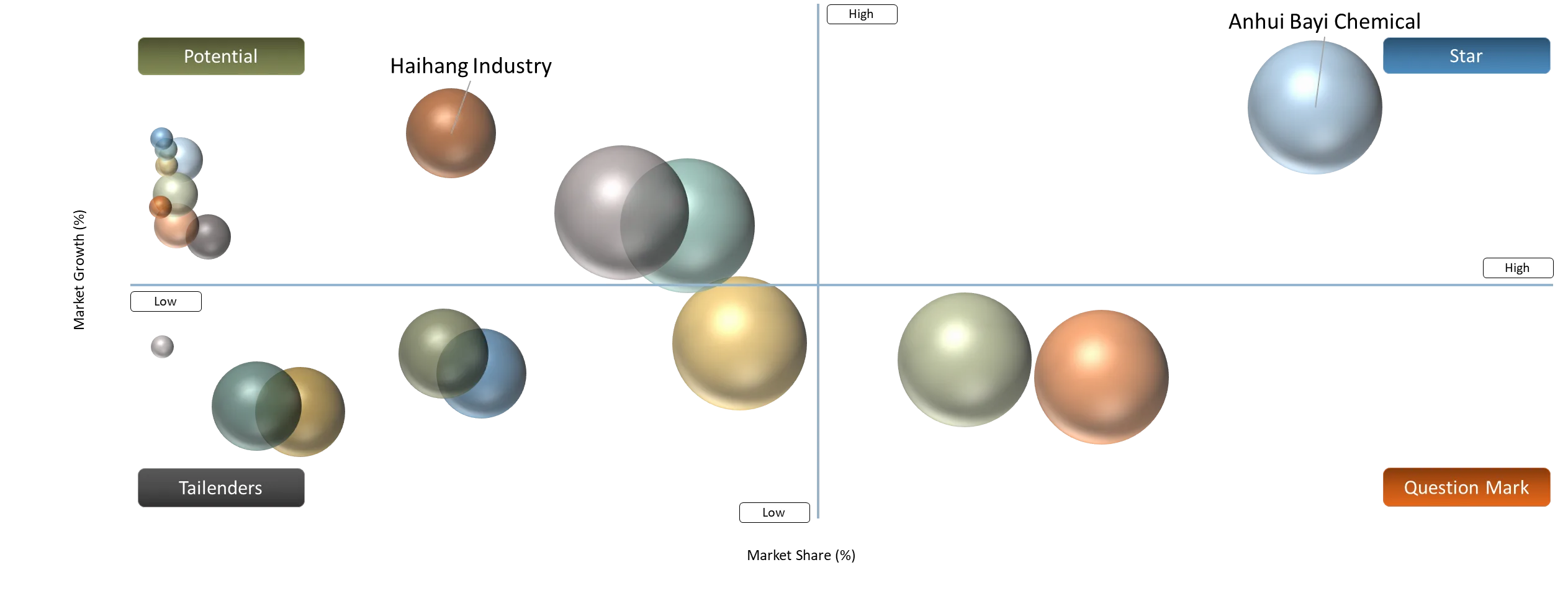
Anhui Bayi Chemical, recognized as a leading player in the para-aminophenol (PAP) market and positioned in the stars category, specializes in manufacturing PAP and chemical intermediates used in pharmaceutical and industrial applications. The company benefits from its established manufacturing capabilities, access to upstream chemical feedstocks, and presence in China's pharmaceutical intermediate supply chain.
Another significant player is Haihang Industry, positioned in the potentialcategory. The company is strengthening its market presence through its diversified portfolio of pharmaceutical intermediates and specialty chemicals, including PAP, supported by international chemical sourcing and distribution networks. Its growth opportunities are driven by increasing demand for pharmaceutical-grade PAP, supplier diversification, and expanding relationships with pharmaceutical and specialty chemical manufacturers.
Para-Aminophenol Market Competitive Landscape
Key Market Players
- Anhui Bayi Chemical (China)
- Haihang Industry (China)
- Hefei TNJ Chemical Industry Co., Ltd. (China)
- Farmson Basic Drugs Pvt. Ltd. (India)
- Atabay Pharmaceutical (Turkey)
- Sadhana Nitro Chem Ltd. (India)
- Valiant Organics Ltd. (India)
- Panoli Intermediates Pvt. Ltd. (India)
- Muby Chemicals (India)
- Loba Chemie Pvt. Ltd. (India)
Para-Aminophenol Market Scope
| Metrics | Details |
| 2025 Market Size | USD 618.5 Million |
| 2035 Projected Market Size | USD 1,093.1 Million |
| CAGR (2026-2035) | 5.86% |
| Years Considered | 2025 - 2035 |
| Base Year | 2025 |
| Forecast Period | 2025 - 2035 |
| Units Considered | Value (USD Million) |
| Report Insights Covered | Competitive Landscape Analysis, Company Profile Analysis, Market Size, Share, Growth |
| Segments Covered |
|
| Region Covered | North America, Europe, Asia-Pacific, Latin America, Middle East and Africa |
Para-Aminophenol Market: Target Audience and Strategic Intelligence Requirements
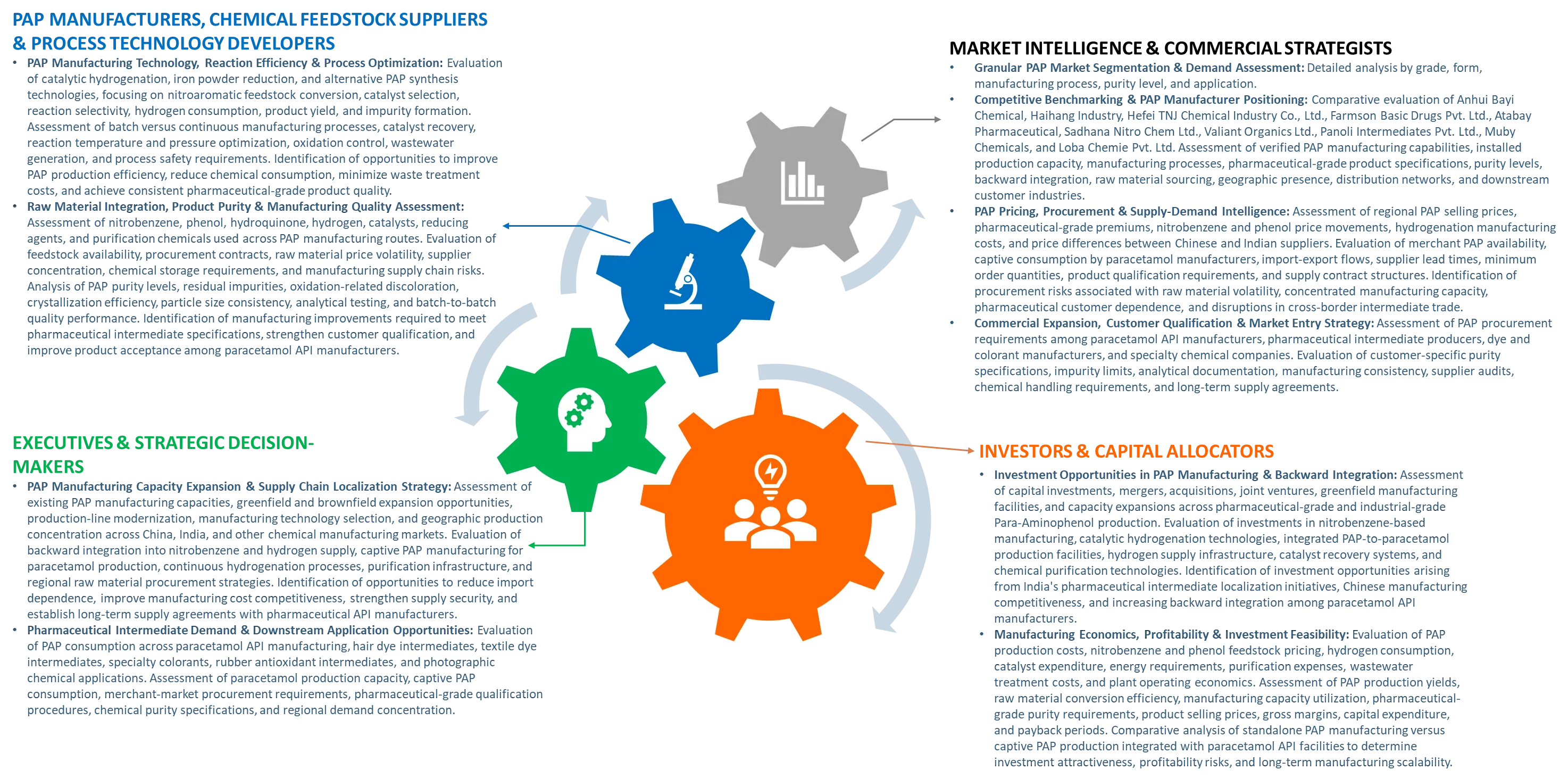
Addressing Client Priorities Through Customized Para-Aminophenol Research
CLIENT REQUIREMENT | RESEARCH CUSTOMIZATION PROVIDED | STRATEGIC VALUE TO CLIENTS |
Evaluating merchant PAP demand versus captive consumption by paracetamol manufacturers | Assessed PAP consumption across independent paracetamol API manufacturers and backwards-integrated producers, including captive utilization, external procurement volumes, manufacturing capacity, and regional sourcing patterns in China, India, and other pharmaceutical manufacturing markets. | Helps clients estimate the commercially accessible PAP market, distinguish captive demand from merchant sales opportunities, and identify pharmaceutical manufacturers with potential external procurement requirements. |
Developing market entry and long-term supply strategies for pharmaceutical-grade PAP | Assessed regional market accessibility, pharmaceutical API customer qualification cycles, supply contract structures, minimum order quantities, technical documentation, distribution partnerships, and competitive pricing strategies for new PAP suppliers. | Supports market entry planning, establishment of pharmaceutical customer relationships, development of recurring supply contracts, and sustainable expansion in the merchant PAP market. |
Key Developments
- September 2026: Meghmani LLP, an India-based chemical and pharmaceutical intermediate manufacturing company, was highlighted by India's Ministry of Chemicals and Fertilisers for establishing a 13,500 metric tons per annum (MTPA) Para-Aminophenol (PAP) manufacturing facility at Dahej, Gujarat, under the Production Linked Incentive (PLI) Scheme for Bulk Drugs.
- November 2025: Farmson Basic Drugs Pvt. Ltd., an India-based pharmaceutical API and chemical intermediate manufacturing company, inaugurated its Unit-VI Acetic Anhydride manufacturing facility in Nandesari, Gujarat, with an investment of ₹300 crore (USD 34 million).
- July 2026: CSIR-National Chemical Laboratory (CSIR-NCL), an India-based government-funded chemical research and technology development institute, has developed an innovative catalytic process for manufacturing Para-Aminophenol (PAP) from p-Chloronitrobenzene (PNCB).
- March 2025: IOL Chemicals and Pharmaceuticals Limited, an India-based pharmaceutical API and specialty chemical manufacturing company, commenced operations at its new Unit 11 paracetamol manufacturing facility in Barnala, Punjab, with a capital investment of ₹155.51 crore (USD 18 million).


























































