


Oral Selective Estrogen Receptor Degrader (SERD) Market Size
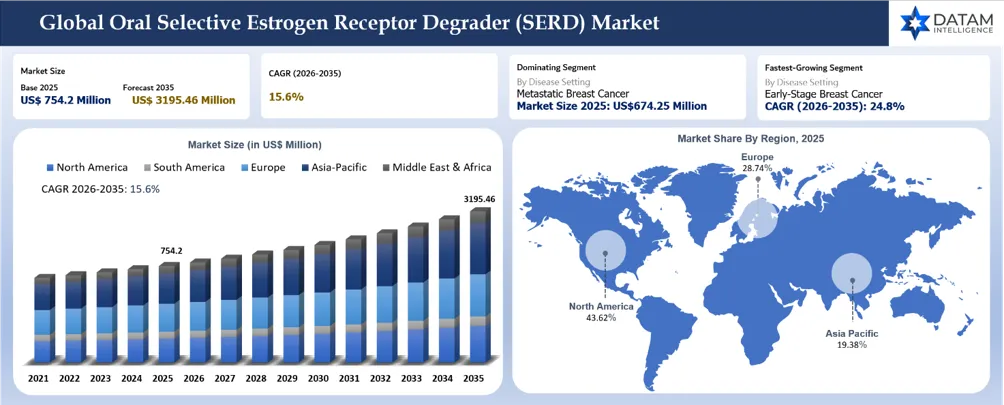
The global oral selective estrogen receptor degrader (SERD) market reached US$754.2 million in 2025 and is expected to reach US$3195.46 million by 2035, growing with a CAGR of 15.6% during the forecast period 2026-2035.
Market growth is being driven by the transition from conventional endocrine therapy toward biomarker-guided estrogen receptor degradation, particularly in ER-positive, HER2-negative breast cancer. Increasing recognition of ESR1 mutations as a major mechanism of endocrine resistance is strengthening demand for oral SERDs in patients progressing after aromatase inhibitors and CDK4/6 inhibitor-based regimens. Oral administration also offers an important convenience advantage over injectable fulvestrant, supporting treatment persistence and broader physician acceptance.
Commercial momentum is accelerating through approved and late-stage assets including elacestrant, imlunestrant, camizestrant and giredestrant. Competitive differentiation is increasingly centered on progression-free survival, efficacy in ESR1-mutated disease, activity following prior CDK4/6 inhibitor exposure, combination compatibility, tolerability and the ability to support biomarker-triggered treatment switching before radiographic progression. Companion diagnostics and circulating tumor DNA monitoring are therefore becoming increasingly important components of the treatment pathway.
The next major growth inflection is expected to come from expansion into earlier-stage and adjuvant breast cancer, where eligible patient volumes and treatment duration can be substantially higher. Future market leadership will depend on successful label expansion, durable clinical outcomes, favorable safety profiles, reimbursement acceptance, diagnostic integration and evidence supporting treatment sequencing across monotherapy and combination settings.
Oral Selective Estrogen Receptor Degrader (SERD) Market Key Takeaways
- Sustained Market Expansion Through 2035: The global oral selective estrogen receptor degrader (SERD) market was valued at US$754.2 million in 2025 and is projected to reach US$3,195.46 million by 2035, registering a CAGR of 15.6% during 2026-2035, supported by expanding biomarker-guided treatment and broader use of oral endocrine therapies.
- Metastatic Breast Cancer Maintains Market Leadership: The metastatic breast cancer segment generated an estimated US$674.25 million in 2025, supported by current approvals, strong use in ER-positive, HER2-negative disease and increasing treatment of patients with ESR1 mutations and prior endocrine resistance.
- Early-Stage Breast Cancer Emerges as the Primary Growth Engine: The early-stage breast cancer segment is projected to expand at an estimated 24.8% CAGR during 2026-2035, driven by adjuvant development programs, longer treatment duration and potential expansion of oral SERDs into larger patient populations before metastatic progression.
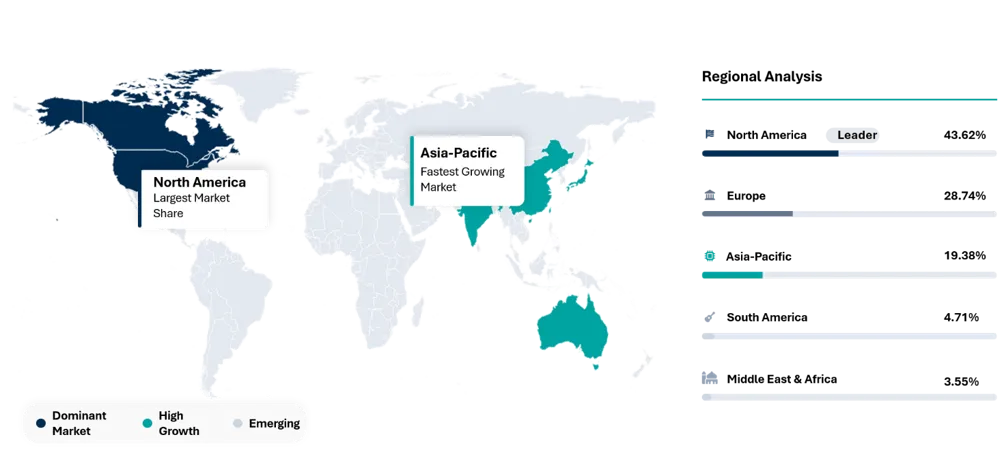
- North America Maintains Regional Dominance: North America accounted for an estimated 43.62% of the global market in 2025, supported by early regulatory approvals, strong ESR1 testing infrastructure, established oncology networks, specialty-pharmacy access and rapid adoption of biomarker-driven treatment strategies.
- Biomarker-Guided Treatment Reshapes Competitive Strategy: Future market leadership will increasingly depend on ESR1 mutation coverage, ctDNA-guided treatment switching, post-CDK4/6 efficacy, combination compatibility and early-stage expansion. Companies demonstrating clinically meaningful differentiation, favorable tolerability and strong companion-diagnostic integration will be better positioned to secure physician adoption and reimbursement.
Oral Selective Estrogen Receptor Degrader (SERD) Market Industry Trends and Strategic Insights
- The market is transitioning from conventional endocrine treatment pathways toward biomarker-guided oral estrogen receptor degradation, with ESR1 mutation detection increasingly influencing treatment selection, sequencing and switching decisions in ER-positive, HER2-negative breast cancer.
- Commercial adoption is broadening beyond later-line monotherapy, supported by the growing use of oral SERDs in combination with CDK4/6 inhibitors and increasing interest in molecularly guided switching before radiographic progression.
- ESR1 mutation testing and circulating tumor DNA monitoring are becoming critical strategic enablers, allowing earlier identification of endocrine resistance and creating stronger demand for companion diagnostics, repeat molecular testing and precision treatment pathways.
- Early-stage and adjuvant breast cancer represent the next major expansion frontier, as successful late-stage programs could move oral SERDs into larger patient populations with longer treatment duration and significantly greater lifetime commercial value.
- Sustainable competitive advantage will depend on progression-free survival, activity after prior CDK4/6 exposure, efficacy across ESR1 variants, tolerability, combination flexibility and evidence supporting earlier treatment use. Companies with differentiated clinical data, strong diagnostic integration, payer evidence and global commercialization capabilities will be better positioned to secure long-term market leadership.
Oral Selective Estrogen Receptor Degrader (SERD) Market Scope
| Metrics | Details | |
| 2025 Market Size | US$754.2 Million | |
| 2035 Projected Market Size | US$3195.46 Million | |
| CAGR (2026-2035) | 15.6% | |
| Largest Market | North America | |
| Fastest Growing Market | Asia-Pacific | |
| By Drug | Elacestrant, Imlunestrant, Camizestrant, Giredestrant, Other Oral SERDs | |
| By Disease Setting | Early-Stage Breast Cancer, Locally Advanced Breast Cancer, Metastatic Breast Cancer | |
| By Treatment Approach | Monotherapy, Combination Therapy | |
| By Line of Therapy | First-Line, Second-Line, Third-Line and Later | |
| By ESR1 Mutation Status | ESR1-Mutated, ESR1 Wild-Type | |
| By Age Group | Below 50 Years, 50-64 Years, Above 65 Years | |
| By Commercial Status | Approved and Commercialized, Regulatory Review, Clinical Development | |
| By End User | Hospitals, Specialty Oncology Clinics, Ambulatory Centers, Others | |
| By Distribution Channel | Hospital Pharmacies, Specialty Pharmacies, Retail Pharmacies, Online Pharmacies | |
| By Region | North America | U.S., Canada, Mexico |
| Europe | Germany, UK, France, Spain, Italy, Poland | |
| Asia-Pacific | China, India, Japan, Australia, South Korea, Indonesia, Malaysia, Singapore, Vietnam, Thailand, Philippines, Taiwan | |
| South America | Brazil, Argentina | |
| Middle East and Africa | Israel, Saudi Arabia, UAE, Turkiye, South Africa, Nigeria | |
| Report Insights Covered | Competitive Landscape Analysis, Company Profile Analysis, Market Size, Share, Growth | |
Why does this report matter in 2026?
The global oral selective estrogen receptor degrader (SERD) market report matters in 2026 because the treatment landscape is moving from a narrow post-endocrine-therapy opportunity toward a broader, biomarker-driven breast cancer strategy. In September 2026, the FDA granted accelerated approval to AstraZeneca’s camizestrant in combination with a CDK4/6 inhibitor for patients with emerging ESR1 mutations during first-line therapy, while Eli Lilly’s imlunestrant received an expanded combination approval with abemaciclib. These developments reinforce the commercial importance of ESR1 testing, treatment sequencing and combination regimens in ER-positive, HER2-negative advanced breast cancer.
The report is particularly relevant for identifying where the next phase of value creation may emerge across early-stage disease, first-line treatment, companion diagnostics and next-generation oral endocrine therapy. Roche’s giredestrant is under FDA Priority Review for adjuvant treatment of stage I–III ER-positive, HER2-negative breast cancer, with a decision expected by November 30, 2026, potentially expanding oral SERDs into the curative setting. At the same time, mixed late-stage trial outcomes, including SERENA-4, underline the need to differentiate assets by clinical setting, biomarker strategy and combination partner rather than treating oral SERDs as a uniform drug class.
Oral Selective Estrogen Receptor Degrader (SERD) Market White Space & Investment Opportunities
- Expansion Into Earlier-Stage Breast Cancer: Invest in oral SERD development for adjuvant and early-stage ER-positive, HER2-negative breast cancer, where successful expansion beyond advanced and metastatic disease could significantly broaden the eligible patient population and treatment duration.
- Biomarker-Driven Patient Selection: Develop stronger ESR1 mutation detection strategies using circulating tumor DNA and tissue-based genomic testing to identify patients earlier, support treatment switching before clinical progression and improve selection of patients most likely to benefit from oral SERD therapy.
- Next-Generation Oral SERD Development: Advance differentiated oral SERDs with deeper estrogen receptor degradation, improved bioavailability, stronger activity against ESR1 mutations, favorable tolerability and reduced resistance risk. Opportunities remain for molecules capable of delivering durable efficacy across both monotherapy and combination settings.
- Combination Therapy Optimization: Generate clinical evidence for oral SERDs in combination with CDK4/6 inhibitors, PI3K/AKT/mTOR pathway inhibitors and other targeted therapies. Defining the most effective combination partner by treatment line, mutation profile and prior therapy represents a major commercial and clinical opportunity.
- Treatment-Sequencing and Resistance Management: Invest in evidence defining when oral SERDs should be introduced relative to aromatase inhibitors, fulvestrant, CDK4/6 inhibitors and other endocrine therapies. Earlier molecular switching strategies and post-progression treatment pathways remain important white-space areas as resistance patterns become more complex.
- Geographic Access and Commercial Expansion: Expand regulatory approvals, reimbursement and specialist access across emerging markets where genomic testing and next-generation endocrine therapies remain underpenetrated. Real-world evidence linking ESR1 testing, treatment duration, progression-free outcomes and healthcare utilization can further support payer acceptance and broader adoption.
Oral Selective Estrogen Receptor Degrader (SERD) Market Future Transformation
The global oral SERD market is expected to transform from a predominantly later-line endocrine therapy segment into a broader precision-oncology platform spanning earlier treatment settings, biomarker-guided switching and combination-based care. ESR1 mutation monitoring through circulating tumor DNA is likely to become more integrated into routine treatment decisions, enabling clinicians to identify emerging endocrine resistance before radiographic progression and introduce oral SERDs earlier. Commercial differentiation will increasingly depend on performance after CDK4/6 inhibitor exposure, mutation coverage, tolerability, dosing convenience and compatibility with targeted combinations rather than oral administration alone.
The next phase of market evolution will be shaped by expansion into early-stage and adjuvant breast cancer, deeper integration with companion diagnostics and stronger evidence on treatment sequencing. Successful progression into these settings could materially enlarge the addressable population and extend treatment duration, while also raising the bar for safety and long-term outcome data. Competition is expected to intensify as conventional SERDs face CERAN/SERD hybrids, chimeric estrogen receptor degraders and other next-generation endocrine approaches. Companies that combine clinically differentiated molecules with strong biomarker strategies, global access planning and real-world evidence capabilities will be better positioned to capture long-term value.
Oral Selective Estrogen Receptor Degrader (SERD) Market Buyer Decision-Making Criteria
Major Buyer Decision-Making Criteria:
- Magnitude and Durability of Progression-Free Survival Benefit
- Overall Survival and Long-Term Clinical Outcomes
- Activity in ESR1-Mutated Tumors
- Effectiveness After Prior Endocrine Therapy
- Performance Following CDK4/6 Inhibitor Exposure
- Efficacy Across Early-Stage and Advanced Breast Cancer Settings
- Monotherapy Versus Combination-Therapy Benefit
- Safety, Tolerability and Long-Term Treatment Continuation
- Oral Dosing Convenience and Treatment Adherence
- Biomarker and Companion Diagnostic Requirements
- Resistance Profile and Effectiveness Against Emerging ESR1 Mutations
- Drug–Drug Interaction and Monitoring Requirements
- Treatment Sequencing and Guideline Positioning
- Pricing, Reimbursement and Overall Healthcare Budget Impact
- Physician Experience, Real-World Evidence and Patient-Support Programs
Oral Selective Estrogen Receptor Degrader (SERD) Market Investment Trends
- Capital allocation is increasingly shifting toward late-stage oral SERD programs, label expansion and commercialization infrastructure as companies compete to move beyond post-progression metastatic disease into first-line and early-stage ER-positive, HER2-negative breast cancer.
- Investment is accelerating in ESR1-focused precision oncology, including circulating tumor DNA monitoring, companion diagnostics and molecular surveillance platforms that can identify emerging resistance mutations and support treatment switching before radiographic progression.
- Combination-treatment strategies are attracting greater funding, particularly oral SERDs paired with CDK4/6 inhibitors, PI3K/AKT/mTOR pathway inhibitors and other targeted agents designed to deepen endocrine response and delay therapeutic resistance.
- Investors are prioritizing differentiated next-generation oral SERDs with stronger receptor degradation, activity against multiple ESR1 mutations, favorable safety profiles, convenient dosing and potential utility across both monotherapy and combination settings.
- Early-stage breast cancer is becoming a major investment frontier, with substantial resources directed toward adjuvant trials that could expand oral SERDs from a relatively narrow advanced-disease market into larger, longer-duration treatment populations.
- Companies are allocating increasing resources to real-world evidence, treatment-sequencing studies and health-economic analysis to demonstrate persistence, progression-free benefit, reduced treatment burden and payer value, supporting reimbursement, guideline inclusion and broader adoption across major oncology markets.
Strategic Indicators for Global Oral Selective Estrogen Receptor Degrader (SERD) Market
High Regulation Impact
The oral SERD market faces high regulatory scrutiny because therapies are being developed for long-duration use across advanced, metastatic and potentially early-stage ER-positive, HER2-negative breast cancer. Regulators assess progression-free survival, overall survival, treatment-emergent adverse events, endocrine resistance, drug interactions and biomarker-defined efficacy, particularly in patients with ESR1 mutations. Expansion into earlier treatment settings raises the evidentiary requirement further because tolerability and long-term safety become increasingly important in patients with longer expected survival. Developers must support approvals with adequately powered randomized trials, robust subgroup analyses, companion-diagnostic validation and post-marketing pharmacovigilance. Regulatory requirements therefore increase development costs and timelines while favoring companies with strong oncology trial infrastructure, biomarker capabilities and established global regulatory execution.
High Investment Activity
Investment activity remains strong as pharmaceutical companies pursue next-generation oral SERDs, combination regimens and earlier-line expansion opportunities. Capital is increasingly directed toward Phase III development, ESR1-focused biomarker strategies, circulating tumor DNA monitoring and combinations with CDK4/6 inhibitors and other targeted agents. Early-stage and adjuvant breast cancer represent particularly attractive investment areas because successful entry could substantially increase eligible patient volumes and treatment duration. Investors are also evaluating licensing, co-development and acquisition opportunities around differentiated estrogen receptor degraders. Funding decisions increasingly depend on clinical differentiation, resistance coverage, tolerability, combination compatibility and the ability to demonstrate value beyond established endocrine therapies such as aromatase inhibitors and fulvestrant.
High New Drug-Class Adoption
Adoption of oral SERDs is strengthening as the treatment paradigm moves toward more convenient, biomarker-guided endocrine therapy. Oral administration offers an important practical advantage over injectable fulvestrant, while activity in ESR1-mutated disease provides a clear precision-oncology use case. Adoption is expected to be strongest among patients progressing after prior endocrine therapy and CDK4/6 inhibitor exposure, with additional growth potential from first-line molecular switching and combination approaches. Competition will increasingly extend beyond conventional SERDs to CERAN/SERD hybrids, chimeric estrogen receptor degraders and other next-generation endocrine mechanisms. Prescribers will differentiate products based on progression-free survival, mutation coverage, safety, dosing convenience, combination flexibility and durability of response rather than mechanism novelty alone.
Regional Expansion Opportunity
Regional expansion potential is significant because ER-positive breast cancer represents a large treatment population globally, while access to ESR1 testing, genomic profiling and next-generation endocrine therapies remains uneven. The United States offers the strongest near-term commercial environment due to established precision-oncology infrastructure, specialty-pharmacy networks and comparatively rapid uptake of biomarker-guided treatments. Europe provides substantial opportunity but requires country-specific reimbursement and health-technology assessment strategies. Japan and China are increasingly important because of large patient populations, expanding molecular diagnostics and active regional clinical development. Latin America, the Middle East and emerging Asian markets provide longer-term potential as oncology infrastructure, genomic testing access and reimbursement improve. Successful expansion will depend on local evidence generation, diagnostic availability, physician education and reliable specialty distribution.
Government Policy Support
Government influence is increasingly important through regulatory pathways, companion-diagnostic requirements, public reimbursement, oncology treatment guidelines and precision-medicine initiatives. Regulatory agencies are facilitating development of biomarker-driven therapies where clinical evidence demonstrates meaningful benefit in clearly defined patient populations. Public health systems also shape adoption through genomic-testing coverage, reimbursement eligibility, treatment sequencing requirements and health-technology assessments. Policy support is strongest where molecular diagnostics are integrated into routine oncology care, while markets with limited reimbursement for ESR1 testing may experience slower uptake. Companies should therefore align drug and diagnostic strategies, generate country-specific pharmacoeconomic evidence and support real-world outcome studies demonstrating improvements in treatment durability, progression control and healthcare-resource utilization.
Value-Based Pricing Intelligence
Value-based pricing for oral SERDs will increasingly depend on demonstrated clinical differentiation rather than oral convenience alone. Payers are likely to assess progression-free survival, overall survival, quality of life, treatment duration, ESR1-specific efficacy, post-CDK4/6 activity and incremental benefit when used in combination regimens. Pricing potential will vary by treatment setting, with advanced disease, molecularly guided switching and early-stage adjuvant use each carrying different value thresholds. Combination therapy can improve clinical outcomes but may also increase total treatment cost and reimbursement scrutiny. Manufacturers that combine broad eligible populations, favorable safety, convenient dosing, durable disease control, companion-diagnostic integration and credible real-world evidence will be better positioned to justify premium pricing and secure favorable formulary access.
AI Impact Analysis of Oral Selective Estrogen Receptor Degrader (SERD) Market
Artificial intelligence is increasingly influencing the oral SERD market by improving drug discovery, biomarker identification and patient stratification. AI-enabled molecular design platforms can accelerate screening of compounds against estrogen receptor variants, including clinically relevant ESR1 mutations, while predictive modeling can help optimize binding affinity, degradation efficiency, pharmacokinetics and safety profiles before compounds enter expensive late-stage development. In parallel, machine-learning approaches applied to genomic, circulating tumor DNA and clinical datasets can improve identification of patients most likely to benefit from oral SERDs, supporting more precise treatment selection and potentially reducing trial-enrollment inefficiencies.
The commercial impact of AI is likely to become stronger as oral SERDs move into earlier-stage disease and combination-treatment strategies. AI-supported real-world evidence platforms can analyze sequencing patterns, treatment persistence, resistance emergence and outcomes across large patient populations, helping manufacturers refine label-expansion strategies and payer value propositions. Digital pathology and longitudinal biomarker analytics may also support earlier detection of endocrine resistance, enabling molecularly guided switching before clinical progression. Over time, companies that integrate AI across discovery, trial design, biomarker development and post-launch evidence generation should be better positioned to differentiate assets, shorten development cycles and improve commercial targeting in an increasingly competitive oral SERD landscape.
Disruption Analysis of Oral Selective Estrogen Receptor Degrader (SERD) Market
The oral SERD market is being reshaped by the transition from conventional endocrine sequencing toward biomarker-triggered, earlier intervention strategies. Increasing use of ESR1 mutation monitoring through circulating tumor DNA enables emerging endocrine resistance to be identified before radiographic progression. This is expanding the role of oral SERDs from predominantly post-progression therapy toward earlier switching within first-line treatment pathways. Oral administration is also challenging injectable fulvestrant by reducing treatment burden and supporting more convenient long-term endocrine therapy, while combinations with CDK4/6 inhibitors are strengthening the position of SERDs beyond monotherapy.
Competition is intensifying as multiple estrogen receptor-targeting mechanisms progress through clinical development. Conventional oral SERDs increasingly compete with CERAN/SERD hybrids, PROTAC-based estrogen receptor degraders and other next-generation ER-targeted therapies designed to overcome endocrine resistance. This raises the differentiation threshold for new entrants, as receptor degradation alone is unlikely to be sufficient. Commercial advantage will increasingly depend on efficacy across ESR1 variants, activity following CDK4/6 inhibitor exposure, tolerability, biomarker strategy, combination compatibility and expansion potential in early-stage breast cancer.
Oral Selective Estrogen Receptor Degrader (SERD) Market BCG Matrix: Company Evaluation
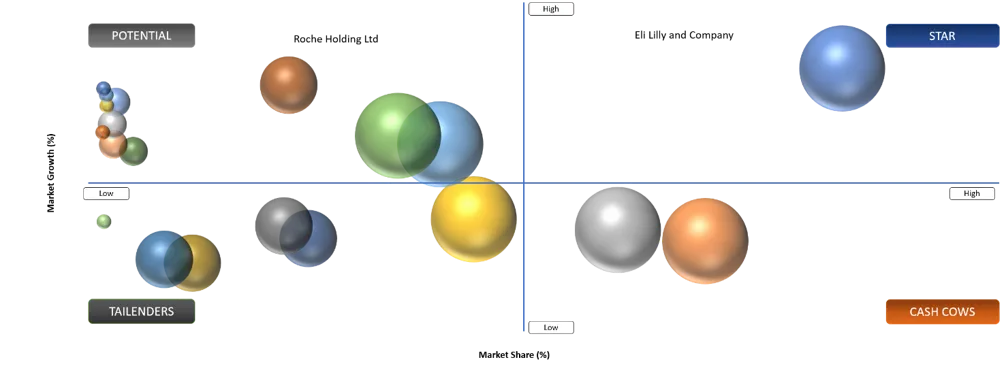
STAR
Eli Lilly and Company, AstraZeneca PLC and Menarini Group are positioned in the Star category based on their commercialized oral SERD portfolios, regulatory momentum, late-stage clinical evidence and ability to scale adoption across major oncology markets. Eli Lilly strengthened its position through INLURIYO (imlunestrant), including the September 2026 U.S. approval of imlunestrant in combination with Verzenio for ESR1-mutated advanced or metastatic breast cancer. AstraZeneca has emerged as a major competitor through ETCAMAH (camizestrant), which received approvals in the European Union and United States during 2026 for biomarker-guided first-line switching with a CDK4/6 inhibitor following detection of an emerging ESR1 mutation.
Menarini maintains an established commercial position through ORSERDU (elacestrant) and continues to expand the asset through combination and adjuvant development programs. Its 2026 clinical strategy includes evaluating elacestrant with targeted agents such as capivasertib while exploring earlier-stage treatment opportunities. Future leadership within the star category will increasingly depend on expansion beyond narrow ESR1-mutated metastatic populations, demonstration of durable survival benefit, integration with circulating tumor DNA monitoring, successful combination strategies and broader reimbursement across international markets.
POTENTIAL
Roche Holding Ltd, Olema Pharmaceuticals, Inc., InventisBio Co., Ltd., Jiangsu Hengrui Pharmaceuticals Co., Ltd., Simcere Pharmaceutical Group Limited, Shenzhen Forward Pharmaceuticals Co., Ltd., Kind Pharmaceuticals Co., Ltd., VyBio Therapeutics and Luoxin Pharmaceutical Group Stock Co., Ltd. are positioned in the Potential category because they are advancing investigational or next-generation estrogen receptor-degrading programs with opportunities to challenge established commercial players.
Roche represents the most advanced potential challenger through giredestrant, which is under U.S. FDA review in both advanced and early-stage ER-positive breast cancer. The Phase III lidERA program showed a 30% reduction in the risk of invasive disease recurrence or death versus standard endocrine therapy in early-stage disease, creating a potential pathway for oral SERDs to enter the substantially larger adjuvant setting. Roche is also pursuing giredestrant plus everolimus following positive Phase III evERA results. Olema, InventisBio, Hengrui, Simcere and other emerging developers broaden competition through differentiated oral SERD and next-generation ER-degrading assets. Progression toward the Star category will depend on pivotal-trial success, regulatory approvals, activity across ESR1 mutations, post-CDK4/6 efficacy, tolerability, combination compatibility, manufacturing scalability and the ability to establish commercially meaningful differentiation from already approved oral SERDs.
Oral Selective Estrogen Receptor Degrader (SERD) Market Dynamics
Driver Impact Analysis
| Driver | Market Growth Impact (%) | Demand Concentration | Impacted Use Case | Strategic Impact |
Rising ESR1 Mutation Testing and Biomarker-Guided Therapy Selection | 15.4% | High across the U.S., Germany, France, Italy, Spain, the U.K. and Japan; rising in China and selected Asia-Pacific markets | Use of oral SERDs in ER-positive, HER2-negative advanced or metastatic breast cancer patients with ESR1-mutated disease, particularly after prior endocrine therapy | Expands the commercially addressable biomarker-defined patient pool, strengthens the value of companion diagnostics and supports premium positioning for oral SERDs in precision oncology pathways. |
Shift from Injectable Fulvestrant Toward Convenient Oral Endocrine Degradation | 13.8% | High across North America and Western Europe; moderate but increasing across urban oncology centers in Asia-Pacific | Replacement or partial displacement of intramuscular fulvestrant in patients requiring estrogen receptor degradation with better administration convenience | Improves patient convenience, reduces treatment-administration burden and enhances physician interest in oral endocrine sequencing, thereby accelerating adoption in routine oncology practice. |
Expansion of Oral SERDs into Combination Regimens with CDK4/6 Inhibitors | 12.9% | Strongest in mature oncology markets with high CDK4/6 inhibitor penetration, including the U.S., EU5 and Japan | Combination treatment in HR-positive, HER2-negative advanced breast cancer, especially in patients with endocrine resistance or emerging ESR1 mutations | Increases revenue per treated patient, broadens treatment-line utilization and positions oral SERDs as a core component of next-generation endocrine combination strategies rather than a narrow salvage therapy class. |
Clinical and Regulatory Progression into Earlier-Line and Early-Stage Breast Cancer | 11.6% | Highest future demand concentration expected in the U.S. and Europe, followed by Japan and selected Asia-Pacific markets | Potential use in first-line metastatic settings, treatment-switch strategies and early-stage/adjuvant breast cancer | Significantly enlarges long-term market opportunity by moving oral SERDs beyond later-line metastatic use into larger-volume treatment settings with longer therapy duration and broader prescriber adoption. |
Driver: Shift from Injectable Fulvestrant Toward Convenient Oral Endocrine Degradation
The shift from injectable fulvestrant toward oral estrogen receptor degradation is becoming an important adoption driver for the global oral SERD market, particularly in ER-positive, HER2-negative advanced breast cancer. Fulvestrant established estrogen receptor degradation as a clinically relevant endocrine strategy, but its intramuscular administration creates practical treatment burden through recurring healthcare visits and injection-related inconvenience. Oral SERDs provide a more convenient alternative by allowing home-based dosing while preserving the therapeutic objective of estrogen receptor antagonism and degradation. Eli Lilly notes that 77% of surveyed metastatic breast cancer patients preferred daily oral medication over recurring intramuscular injections, highlighting the patient-experience advantage of oral endocrine therapy.
Commercial momentum is strengthening as oral SERDs demonstrate efficacy against biomarker-defined endocrine-resistant disease. Imlunestrant is administered orally once daily and showed median progression-free survival of 5.5 months versus 3.8 months with predominantly fulvestrant in ESR1-mutated disease in EMBER-3. FDA approvals of imlunestrant and camizestrant have further broadened oral SERD use across post-endocrine and molecularly guided treatment settings. As prescribing familiarity increases, oral administration can support treatment persistence, reduce administration burden and strengthen the competitive positioning of next-generation SERDs against injectable endocrine therapy.
Restraint Impact Analysis
| Restraint | Drag on Market Growth (%) | Primary Impact Area | Impacted Use Case | Strategic Impact |
Restricted Label Breadth and Dependence on ESR1 Mutation Testing | 13.4% | Patient identification, diagnostic access and treatment eligibility | Use of oral SERDs in ER-positive, HER2-negative advanced or metastatic breast cancer, especially where prescribing is tied to ESR1-mutated populations and companion testing | Narrows the immediately addressable patient pool, makes uptake dependent on liquid biopsy or tissue-testing infrastructure and slows adoption in markets where molecular testing penetration remains inconsistent. |
Mixed Late-Stage Trial Outcomes and Uneven Class Differentiation | 12.7% | Prescriber confidence, class perception and formulary positioning | Adoption across first-line, post-endocrine and early-stage settings, where physicians and payers compare asset-specific efficacy rather than viewing oral SERDs as a uniform class | Creates a more selective adoption curve, raises the evidentiary bar for new entrants and shifts competition from class expansion to molecule-level differentiation on efficacy, safety and setting-specific performance. |
Reimbursement Scrutiny Around Combination Cost and Incremental Benefit | 11.9% | Payer access, budget impact and health technology assessment | Oral SERDs used in combination with CDK4/6 inhibitors or other targeted agents, particularly in high-cost metastatic treatment pathways | Delays broad reimbursement, pressures manufacturers to generate strong comparative and pharmacoeconomic evidence and may restrict uptake to biomarker-defined or later-line patients until clear value is demonstrated. |
Entrenched Treatment Sequencing and Competition from Established Endocrine Standards | 10.8% | Treatment sequencing, physician switching behavior and market penetration speed | Competition against aromatase inhibitors, fulvestrant-based regimens and other endocrine-targeted options across recurrent and resistant breast cancer settings | Slows share capture because physicians often reserve switching until progression or clear mutation-driven need, limiting near-term displacement of established endocrine backbones despite oral convenience advantages. |
Restraint: Restricted Label Breadth and Dependence on ESR1 Mutation Testing
Restricted label breadth remains a meaningful constraint on the global oral SERD market, because several currently approved oral SERDs are concentrated in narrowly defined ER-positive, HER2-negative, ESR1-mutated advanced or metastatic breast cancer populations. This limits immediate use across the broader hormone receptor-positive breast cancer population and makes commercial uptake dependent on genomic confirmation before treatment. In practice, access can be constrained where circulating tumor DNA testing, tissue-based sequencing, companion diagnostics or repeat molecular monitoring are not routinely available. The result is a more complex treatment pathway in which diagnostic availability, turnaround time and reimbursement directly influence whether an eligible patient can receive an oral SERD.
From a market perspective, this biomarker dependence creates both volume and access friction. Physicians may continue established endocrine sequencing where ESR1 status is unknown, while payers can restrict reimbursement to patients who meet the exact approved molecular criteria. Emerging strategies such as serial ESR1 monitoring and earlier molecular switching may expand the opportunity, but they also increase testing frequency, care coordination and health-system complexity. Until broader-label indications are secured, especially in ESR1 wild-type, first-line or early-stage disease, market expansion will remain uneven across geographies and healthcare systems.
Oral Selective Estrogen Receptor Degrader (SERD) Market Segment Analysis
The global oral selective estrogen receptor degrader (SERD) market is segmented based on the drug, disease setting, treatment approach, line of therapy, ESR1 mutation status, age group, commercial status, end user, distribution channel and region.
Metastatic Breast Cancer Leads Current Oral SERD Adoption as Early-Stage Disease Emerges as the Fastest-Growing Opportunity
The metastatic breast cancer segment dominated the global oral SERD market in 2025, reflecting the concentration of current approvals and commercial use in ER-positive, HER2-negative advanced or metastatic disease. Based on DataM modeling, the segment accounted for approximately US$674.25 million in 2025. Demand is supported by use in patients with endocrine-resistant disease, particularly those with ESR1 mutations and prior exposure to aromatase inhibitors or CDK4/6 inhibitors. Commercialized oral SERDs such as elacestrant and imlunestrant have strengthened this segment by offering biomarker-guided treatment options with oral dosing convenience relative to injectable endocrine therapy.
The early-stage breast cancer segment is expected to record the fastest growth during 2026–2035, at an estimated CAGR of 24.8%. Growth is being driven by ongoing efforts to move oral SERDs into adjuvant and earlier treatment settings, where the eligible patient population is substantially larger and treatment duration can be longer. Positive late-stage development programs, particularly around giredestrant and other next-generation assets, are increasing the probability of broader use before metastatic progression. Over the forecast period, successful regulatory approvals, long-term safety evidence, recurrence-reduction data and payer acceptance will determine the pace at which early-stage use transitions from pipeline opportunity to a major revenue pool.
Oral Selective Estrogen Receptor Degrader (SERD) Market Geographical Penetration
U.S. Oral Selective Estrogen Receptor Degrader (SERD) Market Landscape
The U.S. oral SERD mrket is entering a broader biomarker-driven treatment phase, supported by regulatory expansion beyond a single post-progression oral SERD option. In September 2025, the FDA approved imlunestrant for adults with ER-positive, HER2-negative, ESR1-mutated advanced or metastatic breast cancer after progression on endocrine therapy. The pivotal EMBER-3 trial enrolled 874 patients, providing a substantial evidence base for adoption in biomarker-selected disease. In September 2026, the FDA further approved imlunestrant with abemaciclib, strengthening the role of all-oral combination therapy in endocrine-resistant breast cancer.
The U.S. market is also shifting toward earlier molecular intervention rather than waiting for radiographic progression. In September 2026, the FDA granted accelerated approval to camizestrant with a CDK4/6 inhibitor for patients with emerging ESR1 mutations detected during first-line aromatase inhibitor plus CDK4/6 therapy. AstraZeneca reported that the SERENA-6 regimen reduced the risk of disease progression or death by 56% in this selected population. The market is therefore increasingly shaped by ESR1 testing penetration, treatment switching before progression, combination-based endocrine strategies and growing physician familiarity with oral estrogen receptor degradation.
Japan Oral Selective Estrogen Receptor Degrader (SERD) Market Outlook
The Japan oral SERD market is moving toward a more biomarker-led treatment model, supported by increasing use of ESR1 mutation testing and the entry of next-generation oral endocrine therapies for HR-positive, HER2-negative breast cancer. Japan’s National Cancer Center projects approximately 98,800 new breast cancer cases in 2025, including about 98,100 cases among women, creating a substantial underlying population for endocrine treatment. Imlunestrant is already positioned in Japan for patients with ESR1-mutated, hormone receptor-positive, HER2-negative unresectable or recurrent breast cancer progressing after endocrine therapy, reinforcing the role of molecular testing in treatment selection.
The market outlook is increasingly shaped by earlier detection of endocrine resistance, expansion of liquid-biopsy testing and greater integration of oral SERDs into treatment sequencing. In EMBER-3, ESR1 mutations were identified in 42% of patients receiving imlunestrant monotherapy, highlighting the commercial relevance of biomarker-defined populations. Longer term, opportunities should broaden as oral SERDs progress into earlier disease settings and combination strategies with CDK4/6 inhibitors. Japan’s strong oncology infrastructure, centralized specialist care and established genomic-testing environment should support adoption, although reimbursement requirements, diagnostic access and competition from established endocrine regimens will continue to influence penetration.
Oral Selective Estrogen Receptor Degrader (SERD) Market Competitive Landscape
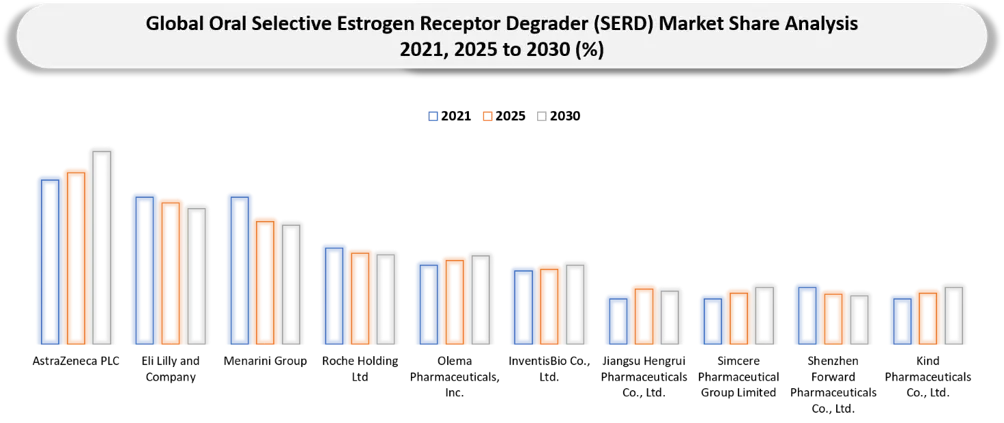
- The global oral SERD market is becoming increasingly concentrated around a small group of large oncology companies and specialized biotechnology developers competing on clinical differentiation rather than mechanism alone. AstraZeneca, Eli Lilly, Menarini Group and Roche are shaping the commercial landscape through approved or late-stage assets, while Olema Pharmaceuticals, InventisBio, Hengrui Pharmaceuticals and Simcere are advancing next-generation programs. Competitive positioning is increasingly determined by efficacy in ESR1-mutated disease, progression-free survival, activity after prior CDK4/6 inhibitor exposure, combination compatibility, tolerability and potential expansion into earlier-stage breast cancer.
- Competition is also shifting toward portfolio depth, biomarker integration and treatment-setting expansion. Companies with strong companion-diagnostic strategies and circulating tumor DNA capabilities are better positioned to support earlier identification of endocrine resistance and biomarker-guided switching. Smaller developers are seeking differentiation through broader mutation coverage, improved oral pharmacology and activity in heavily pretreated populations, while larger pharmaceutical companies benefit from established oncology sales infrastructure, payer relationships and global trial networks. Over the forecast period, licensing, co-development and strategic partnerships are expected to remain important as companies seek to accelerate late-stage development, geographic expansion and access to differentiated estrogen receptor-degrading platforms.
Key Companies of Oral Selective Estrogen Receptor Degrader (SERD) Market
- AstraZeneca PLC (United Kingdom)
- Eli Lilly and Company (United States)
- Menarini Group (Italy)
- Roche Holding Ltd (Switzerland)
- Olema Pharmaceuticals, Inc. (United States)
- InventisBio Co., Ltd. (China)
- Jiangsu Hengrui Pharmaceuticals Co., Ltd. (China)
- Simcere Pharmaceutical Group Limited (China)
- Shenzhen Forward Pharmaceuticals Co., Ltd. (China)
- Kind Pharmaceuticals Co., Ltd. (China)
- VyBio Therapeutics (China)
- Luoxin Pharmaceutical Group Stock Co., Ltd. (China)
- Atossa Therapeutics, Inc. (United States)
- Accutar Biotechnology Inc. (United States)
- Sermonix Pharmaceuticals Inc. (United States)
Oral Selective Estrogen Receptor Degrader (SERD) Market Major Pain Points
- Narrow Biomarker-Defined Eligibility: Many oral SERD indications remain concentrated in ER-positive, HER2-negative, ESR1-mutated advanced or metastatic breast cancer, limiting the immediately addressable population and making commercial uptake dependent on timely genomic testing and companion-diagnostic access.
- Uneven ESR1 Testing and Molecular Monitoring: Availability of circulating tumor DNA testing, tissue sequencing and repeat mutation monitoring varies significantly across countries and care settings. Inconsistent testing can delay identification of eligible patients and reduce adoption of biomarker-guided treatment switching.
- Heterogeneous Clinical Response Across Treatment Settings: Oral SERD efficacy varies by ESR1 status, prior endocrine exposure, CDK4/6 inhibitor use, disease stage and combination partner. This complicates therapy selection and requires physicians to interpret increasingly complex subgroup and sequencing evidence.
- Limited Differentiation Across a Crowded Endocrine Landscape: Oral SERDs must compete with aromatase inhibitors, fulvestrant, CDK4/6 inhibitors, PI3K/AKT/mTOR-targeted therapies and emerging estrogen receptor degraders. New entrants require clear advantages in efficacy, safety, resistance coverage or treatment setting to gain meaningful share.
- Resistance Evolution and Treatment-Sequencing Complexity: Endocrine resistance continues to evolve through ESR1 mutations and other molecular pathways. Determining when to introduce an oral SERD, whether to switch before progression and which combination partner to use remains a major clinical and commercial challenge.
- High Evidence Requirements for Earlier-Stage Expansion: Moving oral SERDs into first-line and adjuvant settings requires robust long-term safety, recurrence and survival data. The evidentiary threshold is substantially higher when treating patients with longer expected survival and potentially curative disease.
- Combination-Therapy Cost and Reimbursement Pressure: Pairing oral SERDs with CDK4/6 inhibitors or other targeted agents can increase total treatment costs. Payers may require stronger comparative and health-economic evidence before granting broad reimbursement, particularly outside highly selected biomarker-defined populations.
- Uneven Global Access and Commercial Readiness: Advanced molecular diagnostics, specialty oncology infrastructure, reimbursement pathways and physician familiarity remain concentrated in major developed markets. Limited testing access, slower regulatory approval and weaker reimbursement in emerging markets can delay broader penetration.
Oral Selective Estrogen Receptor Degrader (SERD) Market Recent Developments
- September 2026: Eli Lilly secured U.S. FDA approval for INLURIYO (imlunestrant) in combination with Verzenio (abemaciclib) for ER-positive, HER2-negative, ESR1-mutated advanced or metastatic breast cancer, strengthening its position in biomarker-defined combination therapy and expanding the commercial relevance of oral SERDs beyond monotherapy.
- September 2026: AstraZeneca received U.S. FDA accelerated approval for ETCAMAH (camizestrant) with a CDK4/6 inhibitor in patients with emerging ESR1 mutations during first-line therapy, establishing a differentiated treatment model based on molecular progression rather than waiting for radiographic progression.
- September 2026: AstraZeneca reported that the Phase III SERENA-4 trial did not meet its primary progression-free survival endpoint in the broad first-line advanced breast cancer population, underscoring that future oral SERD adoption will depend on biomarker selection, treatment timing and setting-specific clinical differentiation.
- July 2026: AstraZeneca obtained European Union approval for ETCAMAH (camizestrant) in combination with palbociclib, ribociclib or abemaciclib for ESR1-mutated advanced breast cancer, broadening access to ctDNA-guided treatment switching across major European oncology markets.
- June 2026: Roche received U.S. FDA Priority Review for giredestrant in stage I to III ER-positive, HER2-negative early breast cancer, signaling a potential expansion of the oral SERD category from metastatic treatment into the substantially larger adjuvant setting.
- September 2025: Eli Lilly received U.S. FDA approval for INLURIYO (imlunestrant) as monotherapy for adults with ER-positive, HER2-negative, ESR1-mutated advanced or metastatic breast cancer, expanding the number of commercially available oral SERDs in the U.S. market.
Analyst View / Opinion on Oral Selective Estrogen Receptor Degrader (SERD) Market
- The market is transitioning from conventional endocrine sequencing toward biomarker-driven oral estrogen receptor degradation, with ESR1 mutation testing increasingly influencing treatment selection in ER-positive, HER2-negative breast cancer.
- Elacestrant, imlunestrant and camizestrant are strengthening commercial validation of the oral SERD class, while giredestrant and other late-stage assets are expanding competitive focus toward first-line, combination and early-stage treatment settings.
- Treatment selection will increasingly depend on ESR1 mutation status, prior endocrine therapy, previous CDK4/6 inhibitor exposure, disease setting, treatment line, resistance profile, combination eligibility, safety and dosing convenience.
- ctDNA-guided switching, next-generation SERDs, CERAN/SERD hybrids and other estrogen receptor-degrading platforms are expected to broaden competition beyond conventional post-progression endocrine therapy.
- Sustainable market leadership will require evidence demonstrating meaningful progression-free survival, activity across ESR1 variants, durable disease control, favorable tolerability and clinically differentiated outcomes after prior CDK4/6 inhibitor therapy.
- Commercial success will depend on oncologist education, companion-diagnostic availability, treatment-sequencing evidence, reimbursement support, specialty-pharmacy infrastructure, real-world evidence and successful expansion into early-stage breast cancer and broader geographic markets.
Oral Selective Estrogen Receptor Degrader (SERD) Market Target Audience
| INDUSTRY | WHO SHOULD BUY THIS REPORT? | REASON TO BUY THIS REPORT |
Pharmaceutical and Biotechnology Companies | Approved oral SERD manufacturers, clinical-stage developers, oncology-focused biotechnology companies and endocrine-therapy developers | Assess market potential, competitive positioning, pipeline gaps, treatment-setting expansion, ESR1-driven opportunities and commercialization strategies across approved and investigational oral SERDs. |
Diagnostic and Precision Oncology Companies | Companion diagnostic developers, liquid biopsy companies, circulating tumor DNA testing providers, molecular diagnostic companies and genomic profiling laboratories | Identify opportunities in ESR1 mutation detection, biomarker-guided patient selection, treatment monitoring and molecularly guided therapy switching. |
| Healthcare Providers | Medical oncologists, breast cancer specialists, comprehensive cancer centers, specialty oncology clinics and multidisciplinary care teams | Understand evolving treatment sequencing, oral SERD utilization, ESR1 testing requirements, combination strategies and positioning across early-stage and advanced breast cancer. |
Payers and Market Access Organizations | Health insurers, pharmacy benefit managers, health technology assessment bodies, reimbursement consultants and market-access teams | Evaluate eligible patient populations, comparative clinical value, treatment duration, budget impact, reimbursement requirements and access implications of oral SERD therapies. |
Patient Advocacy and Support Organizations | Breast cancer advocacy organizations, patient-support networks, survivorship groups and caregiver organizations | Understand emerging treatment options, oral therapy convenience, biomarker testing, treatment access, adherence requirements and unmet needs across endocrine-resistant breast cancer populations. |
Government and Regulatory Bodies | Drug regulatory agencies, public health authorities, reimbursement agencies, oncology policy organizations and healthcare policymakers | Support regulatory assessment, treatment-access frameworks, companion diagnostic requirements, pharmacovigilance and evidence-based breast cancer treatment policies. |
Investors and Financial Institutions | Private equity firms, venture capital investors, institutional investors, investment banks and healthcare-focused investment funds | Evaluate clinical-stage assets, regulatory milestones, market-entry opportunities, licensing potential, pipeline differentiation, partnerships and acquisition prospects. |
Market Research and Consulting Firms | Strategy consultancies, competitive intelligence teams, healthcare research firms and life-sciences advisory organizations | Support market-entry planning, portfolio strategy, competitive benchmarking, opportunity assessment, pipeline analysis and commercial due diligence. |
| Research Organizations | Clinical research organizations, academic medical centers, breast cancer research institutes, universities and translational research centers | Analyze clinical-trial activity, patient recruitment, ESR1 biomarker development, endocrine-resistance mechanisms, combination strategies and remaining research gaps. |
Specialty Pharmacies and Distributors | Specialty pharmacies, hospital pharmacies, pharmaceutical distributors, oncology drug wholesalers and home-delivery providers | Assess distribution models, specialty-drug handling requirements, patient onboarding, adherence support, reimbursement coordination and access pathways for oral SERD therapies. |
Why Choose DATAM?
- Data-Driven Insights: Access granular intelligence on the global oral selective estrogen receptor degrader (SERD) market covering market size, drug-level shares, treatment rates, eligible patient populations, disease-setting segmentation, ESR1 mutation status, line of therapy, combination use, clinical pipelines, competitive positioning and regional access dynamics, supported by primary interviews with oncology and pharmaceutical industry experts.
- Post-Purchase Support and Expert Analyst Consultations: Engage directly with our healthcare analysts for customized guidance on patient segmentation, treatment sequencing, ESR1-driven therapy selection, portfolio positioning, market entry, competitor benchmarking, market-access planning and commercialization strategies.
- White Papers and Case Studies: Receive periodic insights on oral SERD innovation, regulatory developments, label expansions, clinical trial readouts, companion diagnostics, CDK4/6 inhibitor combinations, emerging endocrine-resistance strategies and evolving oncologist prescribing patterns.
- Annual Updates on Purchased Reports: Stay informed through annual updates covering regulatory approvals, pipeline progression, clinical outcomes, product launches, licensing agreements, geographic expansion, pricing developments and competitive shifts. Terms and conditions apply.
- Specialized Focus on Emerging Markets: Gain country-specific intelligence on diagnosed and treatment-eligible breast cancer populations, ESR1 testing availability, oncology infrastructure, oral endocrine therapy adoption, reimbursement conditions and commercial opportunities across high-growth emerging markets.
- Value of DataM Reports: Obtain tailored intelligence addressing specific business questions related to ESR1-mutated disease, treatment resistance, therapy differentiation, sequencing strategies, combination opportunities, early-stage expansion, companion diagnostics, market access, competitive disruption and investment priorities beyond generic databases.
What DATAM Uniquely Provides
- In-depth segmentation of the oral selective estrogen receptor degrader (SERD) market by drug, disease setting, treatment approach, line of therapy, ESR1 mutation status, age group, commercial status, end user, distribution channel and region.
- Competitive analysis of leading oral SERD companies covering clinical efficacy, progression-free survival, activity in ESR1-mutated disease, post-CDK4/6 performance, safety, dosing convenience, combination compatibility, pipeline maturity, regulatory status and commercialization strategy.
- Comprehensive assessment of diagnosed and treatment-eligible populations including ER-positive, HER2-negative breast cancer patients, ESR1-mutated populations, early-stage and metastatic disease cohorts, endocrine-resistant patients, prior-treatment status, biomarker-testing rates, treatment sequencing and regional access dynamics.
- Actionable intelligence on pricing, reimbursement and market access covering companion-diagnostic requirements, regulatory pathways, ESR1 testing adoption, therapy sequencing, payer restrictions, specialty-pharmacy access, licensing activity, strategic partnerships and investment opportunities.
- Analyst forecasts identifying high-growth treatment settings and competitive opportunities across monotherapy, CDK4/6 inhibitor combinations, early-stage expansion, biomarker-guided switching, next-generation SERDs, CERAN/SERD hybrids and other emerging estrogen receptor-targeted therapies.


























































