


Oil Skimmers Market Overview
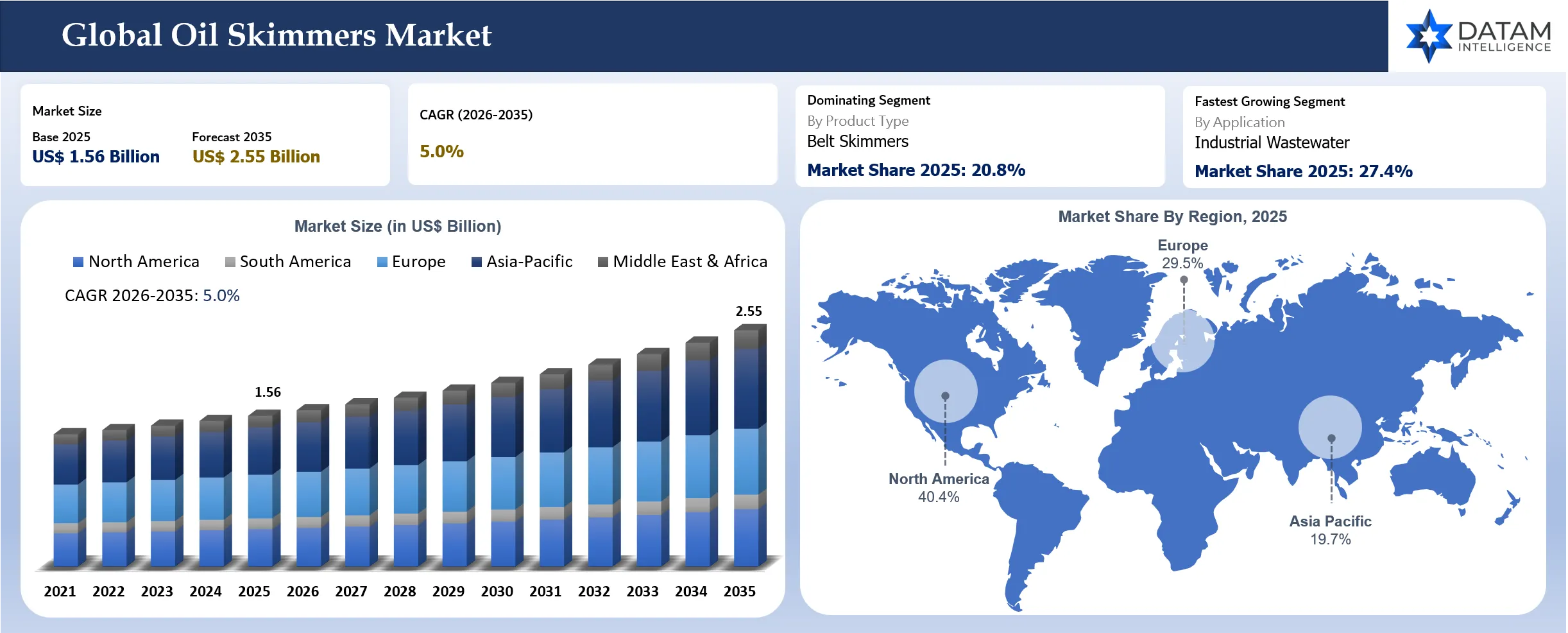
The global oil skimmers market reached US$ 1.56 billion in 2025 and is expected to reach US$ 2.55 billion by 2035, growing with a CAGR of 5.0% during the forecast period 2026-2035. Oil skimmers are increasingly being deployed not only for emergency marine oil spill response but also for continuous oil removal from manufacturing plants, refineries, power stations, mining operations, food processing facilities, and metalworking industries where oily wastewater treatment has become a regulatory requirement. Rising industrial automation is also driving demand for high-efficiency belt, disc, drum, and tube skimmers capable of operating continuously with minimal maintenance. According to the U.S. Environmental Protection Agency (EPA), mechanical skimmers remain one of the primary technologies for recovering floating oil during spill response, with different skimmer technologies selected based on oil type and sea conditions.
ITOPF (International Tanker Owners Pollution Federation) reported that only six tanker spills (three large and three medium) occurred globally in 2025, releasing approximately 4,000 tonnes of oil, significantly lower than the approximately 10,000 tonnes recorded in 2024. Although major tanker spills have declined substantially over previous decades due to improved regulations and vessel safety, every incident requires rapid deployment of containment booms and high-capacity skimmers, while industrial facilities continue investing in permanent oil recovery systems to meet stricter wastewater discharge regulations. These developments are shifting the market from reactive spill cleanup equipment toward integrated environmental protection and industrial fluid management solutions.
Government regulations and environmental monitoring programs are further accelerating adoption of advanced oil skimming technologies worldwide. Maritime authorities and environmental agencies are strengthening national oil spill contingency plans while investing in digital monitoring, forecasting, and emergency response infrastructure that depends on rapid mechanical oil recovery. For example, India's Indian National Centre for Ocean Information Services (INCOIS) operates the Online Oil Spill Advisory System (OOSA), which provides up to 96-hour oil spill trajectory forecasts to support the Indian Coast Guard, regulators, and emergency responders in planning containment and cleanup operations. Similarly, the U.S. National Oceanic and Atmospheric Administration (NOAA) continues expanding its incident response capabilities, documenting 158 pollution incidents in 2025 through its IncidentNews platform to coordinate environmental response activities. At the international level, the International Maritime Organization (IMO) continues strengthening marine pollution prevention frameworks and operational preparedness, encouraging ports, offshore operators, and coastal authorities to modernize oil spill response equipment.
Oil Skimmers Market Key Takeaways
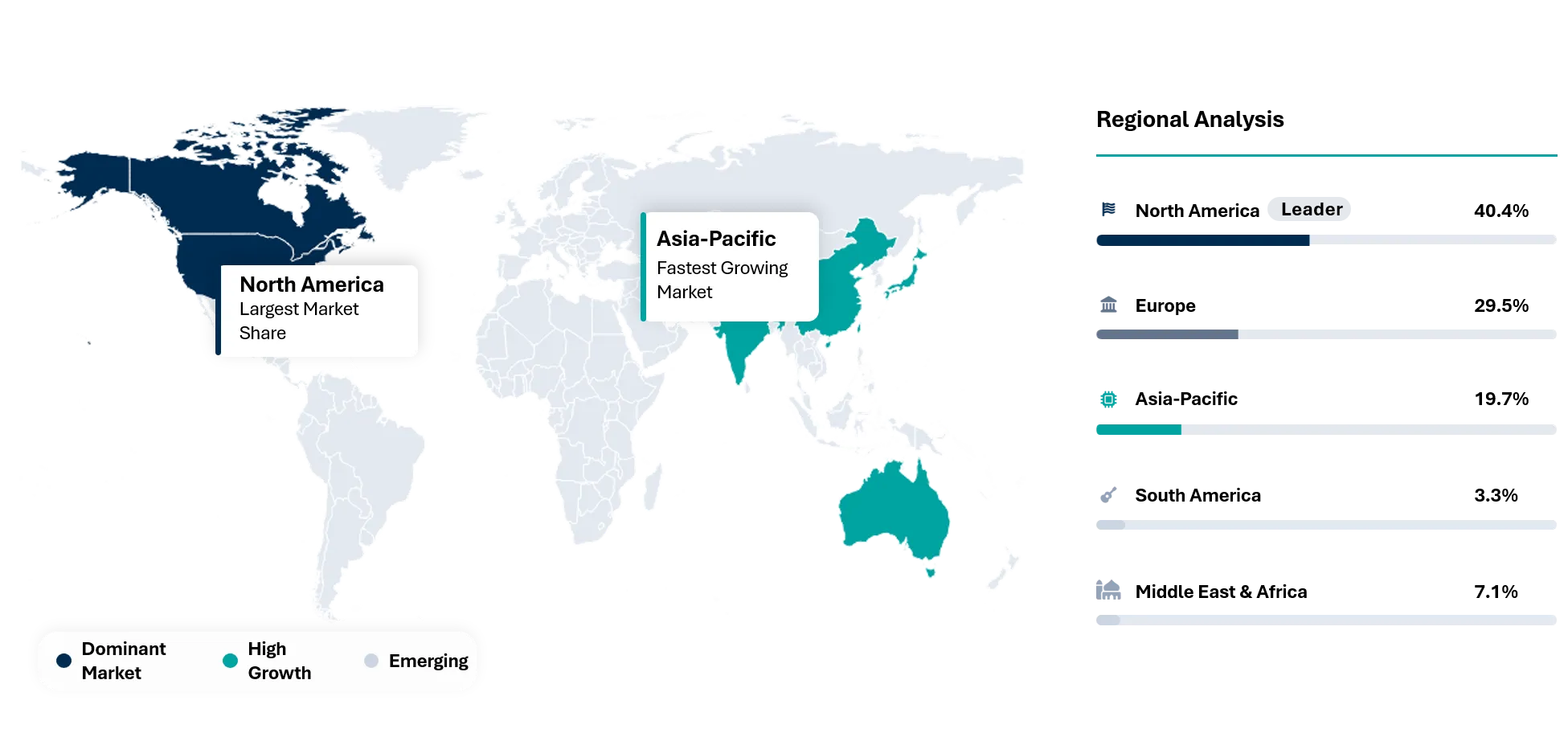
- North America is dominating the global oil skimmers market, accounting for 40.4% share in 2025, while Asia-Pacific is projected to register the fastest CAGR of 6.8% between 2026 and 2035.
- In 2025, belt oil skimmers led the market with an estimated 20.8% share, driven by their high oil recovery efficiency, low maintenance requirements, and widespread adoption across industrial wastewater treatment applications.
- Tube oil skimmers represent the fastest-growing product segment during the forecast period, expected to expand at a CAGR of 7.2% between 2026 and 2035, supported by increasing demand from compact industrial systems and small-scale oil-water separation applications.
- The tightening environmental regulations on industrial wastewater discharge and increasing investments in sustainable water treatment infrastructure are major factors accelerating demand and technological innovation in the global oil skimmers market.
- Abanaki Corporation, Oil Skimmers, Inc., and Elastec have established themselves as leading players in the market through continuous product innovation, expansion of industrial oil recovery solutions, strong global distribution networks, and strategic partnerships across manufacturing, marine, and wastewater treatment industries.
Oil Skimmers Market Scope
| Metrics | Details | |
| 2025 Market Size | US$ 1.56 Billion | |
| 2035 Projected Market Size | US$ 2.55 Billion | |
| CAGR (2026-2035) | 5.0% | |
| Largest Market | North America | |
| Fastest Growing Market | Asia-Pacific | |
| By Product Type | Belt Skimmers, Tube Skimmers, Disc Skimmers, Drum Skimmers, Weir Skimmers, Brush Skimmers, Rope Mop Skimmers, Floating Suction Skimmers, Hybrid Skimmers, Others | |
| By Installation | Fixed, Portable, Floating, Skid Mounted, Trailer Mounted, Others | |
| By Application | Industrial Wastewater, Machine Tool Coolant Maintenance, Oil Spill Response, Stormwater and Retention Ponds, Groundwater Remediation, Produced Water and Refinery Wastewater, Food Processing Wastewater, Marine Bilge and Harbor Cleanup, Others | |
| By End-User | Oil and Gas Operators, Manufacturing Plants, Marine and Port Authorities, Municipal Wastewater Facilities, Mining and Metals Facilities, Power Plants, Food and Beverage Processors, Environmental Service Providers, Others | |
| By Region | North America | U.S., Canada, Mexico |
| Europe | Germany, UK, France, Spain, Italy, Poland | |
| Asia-Pacific | China, India, Japan, Australia, South Korea, Indonesia, Malaysia, Singapore, Vietnam, Thailand, Philippines, Taiwan | |
| South America | Brazil, Argentina | |
| Middle East and Africa | UAE, Saudi Arabia, South Africa, Israel, Turkiye | |
| Report Insights Covered | Competitive Landscape Analysis, Company Profile Analysis, Market Size, Share, Growth | |
Why does this report matter in 2026?
The global oil skimmers market is entering a phase of accelerated industrial adoption in 2026 as industries strengthen environmental compliance, wastewater management, and oil recovery practices across manufacturing, marine, mining, and energy operations. Growing regulatory emphasis on preventing oil contamination, reducing industrial discharge, and improving water treatment efficiency is driving investments in advanced oil skimming technologies across North America, Europe, Asia-Pacific, and other major industrial regions. The transition is shifting the market from conventional spill response applications toward continuous industrial fluid management and sustainable resource recovery solutions with stronger long-term commercial potential.
At the same time, oil skimmer manufacturers are facing increasing demand to deliver highly efficient, durable, and application-specific systems capable of operating under diverse industrial conditions. Continuous advancements in belt, disc, drum, tube, and floating oil skimmer technologies are strengthening competitive differentiation through higher oil recovery efficiency, lower maintenance requirements, and improved automation capabilities. Buyers, industrial operators, and environmental stakeholders now require deeper visibility into recovery efficiency, compatibility with varying oil viscosities, operating environments, maintenance costs, regulatory compliance, system durability, aftermarket service capabilities, and technology innovations to optimize wastewater treatment performance, reduce operational costs, and support long-term environmental sustainability initiatives.
White Space & Investment Opportunities
- Smart, IoT-enabled oil skimmers with remote monitoring remain underpenetrated across industrial wastewater treatment facilities.
- Compact oil skimmers for decentralized manufacturing plants and small wastewater systems present strong commercialization potential.
- Localized manufacturing in India, Southeast Asia, Latin America, and the Middle East can strengthen regional supply chains and reduce import dependence.
- Retrofit packages for existing separators, tanks, pits, and coolant systems offer attractive recurring aftermarket revenue opportunities.
Future Market Transformation
By 2035, the global oil skimmers market will evolve from standalone mechanical equipment toward intelligent fluid management solutions integrated with digital industrial infrastructure. Suppliers will increasingly offer connected skimming systems, predictive maintenance software, fluid-quality monitoring, automation support, and lifecycle service contracts alongside conventional equipment. Business models will shift toward equipment-as-a-service, remote monitoring subscriptions, customized wastewater optimization, and long-term maintenance partnerships. Oil skimmers will become smarter, more energy-efficient, modular, and seamlessly integrated into Industry 4.0 manufacturing, helping industries improve environmental compliance, reduce operating costs, and maximize oil recovery efficiency.
Buyer Decision-Making Criteria
Industrial buyers typically evaluate oil skimmer suppliers based on oil recovery efficiency, compatibility with process fluids, equipment reliability, maintenance requirements, operating costs, and compliance with environmental regulations. Skimming performance under varying oil viscosities and contamination levels serves as the primary qualification factor, while durability, ease of installation, and aftermarket service often determine supplier selection. Buyers increasingly prefer vendors offering customized skimming solutions, rapid technical support, spare parts availability, and automation capabilities. Companies operating multiple manufacturing facilities also favor suppliers capable of providing standardized solutions and consistent service across global locations.
Economic & Investment Analysis
Higher interest rates may delay capital equipment purchases and industrial expansion projects, while tightening environmental regulations and increasing wastewater treatment investments continue to support long-term demand. Inflation in raw materials, fabrication, transportation, and labor can pressure manufacturer margins unless supported by long-term procurement agreements and operational efficiencies. Regional manufacturing diversification across Asia-Pacific, North America, and the Middle East is driving investments in localized production and service networks. Even during periods of slower industrial output, recurring demand for wastewater treatment, coolant management, and oil recovery applications supports stable market growth. Investment is increasingly directed toward automated skimming technologies, digital monitoring platforms, energy-efficient systems, corrosion-resistant materials, and customized industrial solutions that improve operational efficiency and regulatory compliance.
Investment Trends in the Oil Skimmers Market
Investment is shifting from conventional mechanical oil skimmers toward intelligent, automated, and sustainable oil recovery technologies.
- Smart oil skimmers with IoT connectivity and remote performance monitoring.
- Automated oil recovery systems integrated with industrial wastewater treatment plants.
- Regional manufacturing and service facilities near major industrial and manufacturing hubs.
- Corrosion-resistant, energy-efficient, and recyclable materials for longer equipment life and reduced operating costs.
Disruption Analysis - Oil Skimmers Market
Traditional belt and tube skimmers continue to dominate application segment as the industries are rapidly adopting automated, sensor-enabled, and low-maintenance skimming systems capable of continuous oil removal with minimal operator intervention. The integration of Industrial Internet of Things (IIoT), predictive maintenance, remote monitoring, and intelligent fluid management platforms is shifting competition from standalone equipment toward connected industrial fluid recovery solutions.
Competitive dynamics are also evolving as companies increasingly bundle oil skimmers with complete fluid management, filtration, and wastewater treatment solutions instead of marketing standalone equipment. Digital service offerings, lifecycle maintenance contracts, and customized engineering support are becoming important competitive differentiators. Emerging industrial economies across Asia-Pacific, South America, and the Middle East are creating additional disruption by increasing investments in manufacturing capacity, industrial wastewater infrastructure, and environmental compliance programs.
BCG Matrix: Company Evaluation

STAR
The stars segment of the global oil skimmers market consists of established manufacturers with broad industrial portfolios, strong engineering capabilities, and extensive global distribution networks. Companies such as Abanaki Corporation, Elastec, Oil Skimmers Inc., and Friess GmbH maintain leadership through continuous product innovation, customized skimming technologies, and strong relationships across manufacturing, automotive, steel, wastewater treatment, and marine sectors.
POTENTIAL
The potential players category includes regional manufacturers, fluid management specialists, and environmental equipment companies that possess significant expansion opportunities but comparatively lower global market penetration. Companies such as Megator Ltd., SRS Engineering Corporation, Amiad Water Systems, and E-COS are strengthening their competitive positions through niche product development, regional distribution expansion, and industry-specific customization.
Oil Skimmers Market Dynamics
Driver Impact Analysis
| Driver | Market Growth Impact (%) | Demand Concentration | Impacted Use Case | Strategic Impact |
Growing Adoption of Industrial Wastewater Treatment and Environmental Compliance | 5.30% | North America, Europe, China, India, and industrial manufacturing hubs | Industrial wastewater treatment, oil-water separation, regulatory compliance | Drives demand for efficient oil recovery systems while supporting environmental sustainability and stricter discharge compliance |
Increasing Expansion of Marine, Offshore, and Port Operations | 4.90% | North America, Europe, Middle East, Southeast Asia, and major coastal economies | Oil spill response, harbor maintenance, offshore platforms, shipyards | Strengthens deployment of oil skimmers for spill preparedness and marine environmental protection |
Rising Investments in Oil & Gas Production, Refineries, and Petrochemical Facilities | 4.60% | Middle East, North America, Asia-Pacific, and Latin America | Crude oil recovery, refinery wastewater management, storage tank maintenance | Enhances operational efficiency by reducing oil losses and improving hydrocarbon recovery across industrial facilities |
Growing Demand for Automated and High-Efficiency Oil Recovery Technologies | 4.20% | Advanced manufacturing regions, industrial processing plants, and municipal utilities | Continuous oil removal, CNC machining fluids, coolant recycling, industrial water treatment | Accelerates adoption of automated skimming systems that reduce maintenance costs, improve productivity, and support sustainable operations |
Rising Industrial Wastewater Treatment Requirements
Industrial wastewater management has become one of the strongest growth drivers for the oil skimmers market. Manufacturing plants increasingly seek technologies capable of removing floating oils before wastewater enters biological or chemical treatment systems, improving treatment efficiency while reducing operating costs.
According to the UN World Water Development Report 2024, industries account for nearly 19% of global freshwater withdrawals, while industrial water demand continues increasing with expanding manufacturing capacity. The International Energy Agency (IEA) estimates global refinery throughput remained above 80 million barrels per day during 2025, generating substantial quantities of oily wastewater requiring effective oil-water separation before discharge or reuse. In the United States, the EPA's Effluent Guidelines Program continues regulating wastewater discharges across numerous industrial sectors, encouraging facilities to install oil removal technologies that reduce hydrocarbon concentrations before discharge. Furthermore, increasing adoption of water recycling systems across manufacturing plants is making recovered oil economically valuable, allowing facilities to reuse lubricants while minimizing hazardous waste disposal costs.
Restraint Impact Analysis
| Restraint | Drag on Market Growth (%) | Primary Impact Area | Impacted Use Case | Strategic Impact |
High Initial Installation and Equipment Costs | 4.30% | Capital investment and project feasibility | Industrial wastewater treatment, oil recovery systems, manufacturing facilities | Limits adoption among small and medium-sized industries and delays replacement investments |
Limited Efficiency in Complex or Emulsified Oil-Water Mixtures | 3.90% | Oil recovery performance and separation efficiency | Food processing, chemical processing, metalworking fluids, offshore applications | Reduces operational effectiveness in challenging wastewater environments and increases dependence on secondary treatment systems |
Ongoing Maintenance Requirements and Component Wear | 3.70% | Equipment reliability and operating costs | Continuous industrial operations, mining, marine, and power generation facilities | Increases lifecycle costs and unplanned downtime, affecting long-term return on investment |
Availability of Alternative Oil-Water Separation Technologies | 4.10% | Technology competitiveness and purchasing decisions | API separators, dissolved air flotation (DAF), coalescing separators, centrifuges | Intensifies competitive pressure and slows oil skimmer adoption in facilities requiring integrated wastewater treatment solutions |
Increasing Regulatory Pressure Remains a Major Challenge
Although oil skimmers offer significant operational and environmental benefits, market expansion is constrained by the high diversity of industrial wastewater characteristics and varying regulatory requirements across countries. Oil skimmers perform differently depending on oil viscosity, emulsification, suspended solids, temperature, and flow conditions, often requiring customized solutions.
The Organisation for Economic Co-operation and Development (OECD) estimates that global investment requirements for water infrastructure will continue increasing substantially through 2050 as industrial facilities modernize wastewater treatment systems. Small and medium-sized manufacturers frequently delay upgrading separation equipment because of capital expenditure constraints despite tightening regulations.
Additionally, heavily emulsified wastewater often requires complementary technologies such as dissolved air flotation (DAF), coalescers, or membrane filtration, increasing total project costs. Regional differences in discharge standards further complicate product standardization, requiring manufacturers to customize solutions for individual industries and jurisdictions.
Segmentation Analysis
The global oil skimmers market is segmented based on the product type, installation, application, end-user and region.
Oil Skimmers Market By End-User
Manufacturing Industry Leads Equipment Adoption
Manufacturing remains the largest end-use sector for oil skimmers because machining, grinding, metal finishing, die casting, and coolant systems continuously generate tramp oils that reduce coolant life and machine efficiency.
According to the United Nations Industrial Development Organization (UNIDO), global manufacturing value added continued expanding during 2024–2025, driven by industrial recovery and investments in advanced manufacturing technologies. Removing tramp oil from coolant systems can significantly extend coolant life, reduce bacterial growth, improve machining quality, and lower maintenance costs.
Major automotive, aerospace, heavy machinery, and metal fabrication facilities increasingly deploy automated oil skimming systems integrated with centralized coolant management. Industrial operators are prioritizing preventive maintenance and sustainability initiatives that reduce hazardous waste generation while improving productivity and extending equipment life.
Oil Skimmers Market By Application
Marine and oil spill response applications continue expanding.
Marine operations remain an important application segment as governments and port authorities strengthen preparedness for oil spill response and harbor pollution control. Oil skimmers are widely deployed during spill containment operations, terminal maintenance, offshore production activities, and vessel servicing.
According to the International Tanker Owners Pollution Federation (ITOPF), the long-term trend shows a substantial decline in major tanker oil spills over recent decades due to improved prevention measures, yet accidental releases continue to require rapid recovery equipment. Meanwhile, the International Maritime Organization (IMO) continues strengthening implementation of the International Convention for the Prevention of Pollution from Ships (MARPOL), encouraging ports, offshore operators, and shipping companies to maintain effective oil recovery capabilities.
Growing offshore energy activities, expanding port infrastructure, and stricter environmental response requirements are increasing procurement of portable, floating, and weir-type oil skimmers for emergency spill response operations.
Geographical Penetration
U.S. Oil Skimmers Market Landscape
The United States represents one of the most technologically advanced and regulation-driven markets for oil skimmers, supported by stringent environmental compliance standards, extensive industrial infrastructure, and continuous investments in water pollution control. Demand is primarily generated from the oil & gas, petrochemical, manufacturing, power generation, mining, marine, and wastewater treatment sectors, where companies increasingly deploy oil skimmers to recover floating hydrocarbons while reducing disposal costs and improving sustainability. The U.S. Environmental Protection Agency (EPA) continues to strengthen industrial wastewater discharge compliance through the National Pollutant Discharge Elimination System (NPDES), encouraging industries to install efficient oil-water separation technologies.
According to the U.S. Environmental Protection Agency (EPA), the United States operates more than 16,000 publicly owned wastewater treatment systems, while industrial facilities collectively discharge billions of gallons of treated wastewater daily under regulated permits, creating significant demand for oil recovery technologies. The U.S. Coast Guard and National Oceanic and Atmospheric Administration (NOAA) also maintain extensive oil spill preparedness and response programs, reinforcing the need for high-performance skimming equipment for emergency deployments. Increasing modernization of industrial wastewater infrastructure and stricter environmental penalties are encouraging manufacturers to replace conventional oil removal methods with automated drum, belt, tube, and disc skimmers.
Japan Oil Skimmers Market Outlook
Japan's oil skimmers market is driven by advanced manufacturing, strict environmental regulations, and the country's long-standing emphasis on industrial efficiency and water quality management. Precision manufacturing industries, including automotive, electronics, steel, chemicals, and machinery production, increasingly utilize oil skimmers to remove tramp oils from machining fluids, extending coolant life while reducing maintenance costs. The Ministry of the Environment, Japan continues implementing rigorous Water Pollution Control regulations that encourage industrial facilities to improve wastewater treatment performance and reduce hydrocarbon discharge into public water bodies.
According to the Ministry of Land, Infrastructure, Transport and Tourism (MLIT), Japan maintains one of the world's most advanced wastewater treatment systems, with sewerage coverage exceeding 80% of the national population, supporting continuous investments in treatment technologies. Additionally, Japan's extensive coastline and busy maritime industry create consistent demand for portable and high-capacity oil skimmers for spill preparedness at ports, shipyards, and coastal industrial facilities.
China Oil Skimmers Market Trends
China represents one of the fastest-evolving markets for oil skimmers due to rapid industrialization, expanding manufacturing capacity, large-scale wastewater treatment investments, and increasingly stringent environmental enforcement. The country's petrochemical, steel, automotive, mining, shipbuilding, and heavy machinery industries generate substantial demand for oil recovery systems capable of removing floating oils from industrial wastewater and machining fluids. The Ministry of Ecology and Environment (MEE) continues strengthening pollution control under China's environmental protection policies, encouraging industries to adopt advanced oil-water separation equipment.
According to the National Bureau of Statistics of China, the country's total industrial output remains among the largest globally, supporting sustained demand for industrial fluid management technologies. China also continues expanding wastewater infrastructure, with the Ministry of Housing and Urban-Rural Development (MOHURD) reporting continued investments in municipal sewage treatment capacity and wastewater reuse projects across major provinces, creating additional opportunities for oil skimmer deployment.
Competitive Landscape
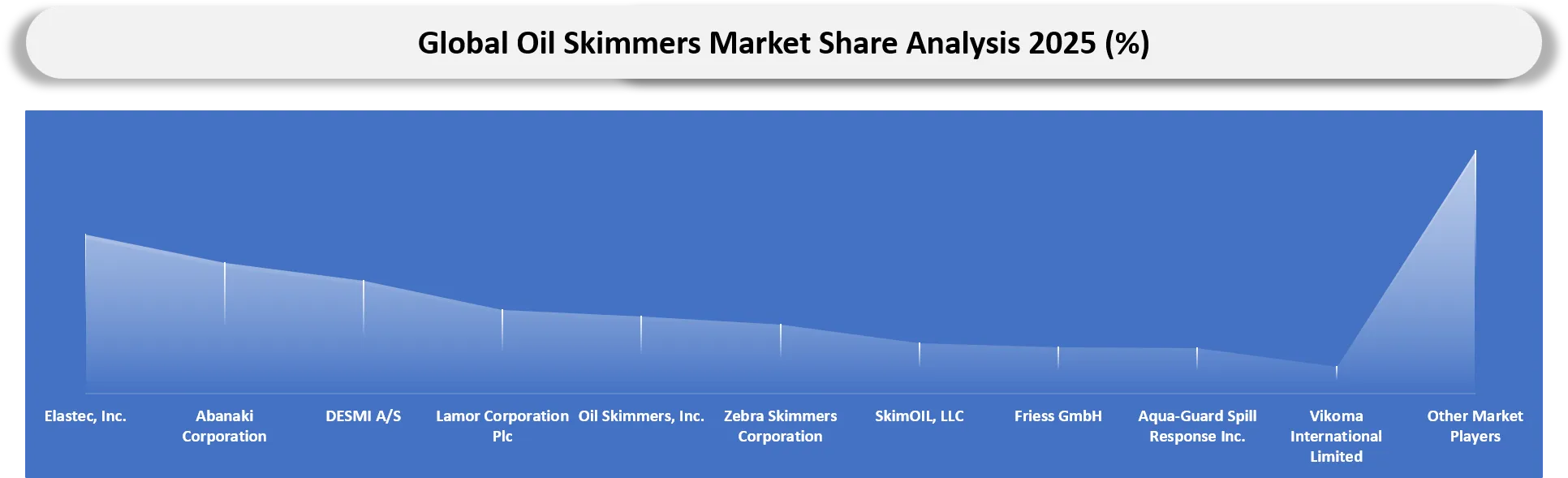
- The global oil skimmers market is characterized by competition among specialized fluid management equipment manufacturers, industrial wastewater treatment companies, and environmental engineering solution providers. Competition focuses on oil recovery efficiency, automation capabilities, energy consumption, durability, corrosion resistance, and ease of maintenance across diverse industrial environments.
- Manufacturers are increasingly investing in automated belt, tube, disc, and weir skimmer technologies integrated with IIoT sensors, remote monitoring platforms, corrosion-resistant materials, and predictive maintenance capabilities.
- Strategic emphasis is also shifting toward customized solutions for industrial wastewater reuse, offshore spill response, and sustainable manufacturing operations, while product innovation increasingly focuses on improving oil recovery efficiency, reducing maintenance requirements, and supporting global environmental compliance initiatives.
Key Companies
- Elastec, Inc.
- Abanaki Corporation
- DESMI A/S
- Lamor Corporation Plc
- Oil Skimmers, Inc.
- Zebra Skimmers Corporation
- SkimOIL, LLC
- Friess GmbH
- Aqua-Guard Spill Response Inc.
- Vikoma International Limited
- Megator Corporation
- Ultraspin Technology Pty Ltd
- Wayne Products, Inc.
- E-COS Co., Ltd.
- Eriez Manufacturing Co.
Major Pain Points
- High costs associated with installation, customization, and long-term maintenance of oil skimming systems.
- Declining skimming efficiency in emulsified, high-viscosity, or debris-laden oil-water mixtures.
- Frequent maintenance requirements due to clogging, wear, and component fouling in harsh environments.
- Limited compatibility with varying tank sizes, fluid characteristics, and industrial operating conditions.
- Difficulty achieving continuous oil recovery in fluctuating water levels and dynamic process environments.
- Rising environmental compliance requirements increasing operational complexity and equipment upgrade costs.
- Energy consumption and operating expenses affecting total cost of ownership for end users.
- Shortage of skilled personnel for system selection, optimization, and preventive maintenance activities.
- Competition from alternative oil-water separation technologies offering higher automation and efficiency.
- Supply chain disruptions and raw material price volatility increasing equipment manufacturing costs and delivery timelines.
Recent Developments
- July 2026: ELASTEC, Inc. launched its Fall 2026 Oil Spill Response Workshops, expanding hands-on responder training alongside industrial oil recovery and environmental equipment programs.
- August 2025: ELASTEC, Inc. published research demonstrating brush skimmer efficiency for recovering modern low-viscosity marine fuels, supporting improved oil spill response performance under evolving environmental regulations.
Analyst View / Opinion
- Rising industrial wastewater treatment investments are accelerating demand for high-efficiency oil skimmers across manufacturing, mining, and energy facilities.
- Tightening environmental discharge regulations are shifting purchasing decisions toward automated, continuous oil recovery systems with higher operational efficiency.
- Belt and tube oil skimmers are gaining wider adoption due to their low maintenance requirements, reliable operation, and cost-effective oil recovery.
- Industrial automation trends are increasing demand for smart oil skimmers equipped with remote monitoring, predictive maintenance, and IoT-enabled performance tracking.
- Expansion of metalworking and CNC machining industries is strengthening demand for oil skimmers that improve coolant life and reduce disposal costs.
- Asia-Pacific is emerging as the primary demand center, supported by rapid industrialization, expanding manufacturing capacity, and stricter environmental compliance initiatives.
- Demand is shifting from standalone oil skimmers toward integrated fluid management solutions that combine separation, filtration, and recycling capabilities.
- Sustainability initiatives are encouraging industries to recover reusable oils, lower hazardous waste generation, and reduce overall operating expenses through efficient skimming systems.
- Manufacturers are increasingly differentiating through customized skimmer designs tailored for specific fluids, tank configurations, operating environments, and industry applications.
Target Audience
| INDUSTRY | WHO SHOULD BUY THIS REPORT? | REASON TO BUY THIS REPORT |
| Oil & Gas Companies | Maintenance Managers, Operations Engineers, Plant Reliability Teams | Evaluate oil skimmer adoption for hydrocarbon recovery, wastewater treatment and regulatory compliance |
| Manufacturing & Industrial Plants | Plant Managers, EHS Managers, Maintenance Supervisors | Optimize coolant and lubricant recovery while reducing waste disposal and operating costs |
| Metalworking & Machining Companies | Production Managers, Coolant Management Teams, Process Engineers | Assess skimmer solutions for extending coolant life and improving machining efficiency |
| Wastewater Treatment Companies | Water Treatment Engineers, Process Managers, Environmental Compliance Teams | Analyze oil removal technologies for industrial effluent treatment and water reuse applications |
| Marine & Shipbuilding Companies | Port Operations Managers, Marine Engineers, Environmental Protection Teams | Evaluate oil skimmers for spill response, bilge water treatment and marine pollution prevention |
| Chemical & Petrochemical Companies | Process Engineers, HSE Managers, Refinery Operations Teams | Understand skimmer requirements for oil-water separation, process efficiency and environmental compliance |
| Food & Beverage Processing Companies | Plant Engineering Teams, Sanitation Managers, Utility Managers | Identify oil skimming solutions for wastewater management and sustainable production operations |
| Oil Skimmer Manufacturers & Industrial Equipment Suppliers | Product Development Teams, Sales Managers, Strategic Planning Teams | Benchmark product innovations, competitive positioning and emerging application opportunities |
| Government Agencies & Environmental Organizations | Environmental Regulators, Pollution Control Authorities, Infrastructure Planning Teams | Support industrial wastewater management, spill mitigation strategies and environmental policy implementation |
| Investors, Private Equity & Consulting Firms | Investment Analysts, Strategy Consultants, Market Intelligence Teams | Evaluate market growth opportunities, competitive landscape and technology adoption across industrial sectors |
Why Choose DATAM?
- Data-Driven insights: Dive into detailed analyses with granular insights such as pricing, market shares and value chain evaluations, enriched by interviews with industry leaders and disruptors.
- Post-Purchase Support and Expert Analyst Consultations: As a valued client, gain direct access to our expert analysts for personalized advice and strategic guidance, tailored to your specific needs and challenges.
- White Papers and Case Studies: Benefit quarterly from our in-depth studies related to your purchased titles, tailored to refine your operational and marketing strategies for maximum impact.
- Annual Updates on Purchased Reports: As an existing customer, enjoy the privilege of annual updates to your reports, ensuring you stay abreast of the latest market insights and technological advancements. Terms and conditions apply.
- Specialized Focus on Emerging Markets: DataM differentiates itself by delivering in-depth, specialized insights specifically for emerging markets, rather than offering generalized geographic overviews. The approach equips our clients with a nuanced understanding and actionable intelligence that are essential for navigating and succeeding in high-growth regions.
- Value of DataM Reports: Our reports offer specialized insights tailored to the latest trends and specific business inquiries. The personalized approach provides a deeper, strategic perspective, ensuring you receive the precise information necessary to make informed decisions. The insights complement and go beyond what is typically available in generic databases.


























































