


Nuclear Fuel Fabrication Market Size and Overview
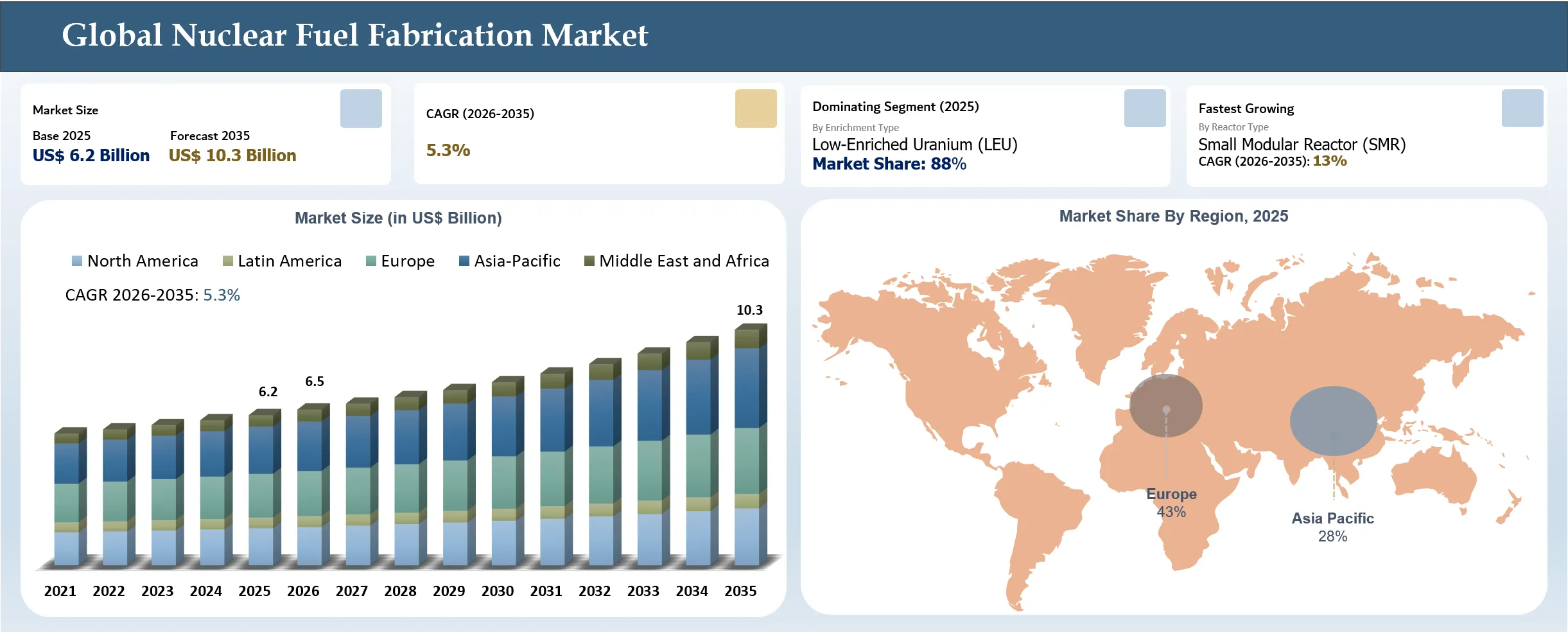
The global Nuclear Fuel Fabrication market reached USD 6.2 billion in 2025 and is expected to reach USD 10.3 billion by 2035, growing with a CAGR of 5.3% during the forecast period 2026-2035. The market is witnessing steady growth, driven by increased investments in nuclear power generation, fuel security plans, and reactor developments. According to the World Nuclear Association (WNA), the need for uranium reactors has been estimated at over 68,920 tonnes of uranium (tU) in 2025 and is projected to increase to just above 150,000 tU in 2040, while the upper scenario indicates over 204,000 tU and the lower scenario predicts over 107,000 tU by 2040. According to the Reuters article, the world had nearly 420 operating reactors, 63 reactors under construction, and more than 60 reactors receiving lifetime extensions in 2025. This indicates that there will be continued demand for fuel fabrication. Besides, the Department of Energy (DOE) has sped up domestic production of HALEU and fabrication capacity in 2025–2026 to facilitate advanced reactors and SMRs. At the same time, other corporations such as Framatome, Westinghouse Electric Company, BWX Technologies, Global Nuclear Fuel (GNF), and TVEL have expanded their advanced fuel development and fabrication capabilities. Nonetheless, tough licensing for nuclear fuel, long qualification processes of fuels, and capital-intensive manufacturing plants have continued to impact the growth rate of the market.
This collaboration improves the nuclear fuel manufacturing capability in the region and makes the supply chain more resilient for deploying advanced reactors in Europe and North America. In March 2026, according to the Nasdaq press release, Framatome and NuScale Power have extended their strategic collaboration aimed at improving the global nuclear fuel fabrication supply chain, including fabricating fuels in Europe and the USA. As per the terms of the agreement, the European facilities of Framatome will be responsible for manufacturing the fuel assemblies for NuScale's European SMR projects, while the company's facility in Richland, Washington, will be in charge of qualifying and producing the NuFUEL-HTP2 approved by the NRC for American projects. The contract involves fabricating not less than 444 fuel assemblies for NuScale's first American client, and deliveries are scheduled for 2030.
White-Space Opportunities for Advanced Nuclear Fuel Fabrication Infrastructure
In August 2025, according to POWER Magazine, the U.S. Department of Energy (DOE) announced the second round of High-Assay Low-Enriched Uranium (HALEU) allocations to accelerate the commercialization of advanced nuclear reactors and strengthen the domestic nuclear fuel fabrication supply chain. Rather than direct cash grants, the DOE is providing government-owned HALEU material through its HALEU Availability Program, with the greatest strategic investment directed toward advanced nuclear fuel fabrication, particularly TRISO fuel manufacturing, which is essential for high-temperature gas-cooled reactors and microreactors. The allocations also support fuel qualification and irradiation testing, fuel performance validation, reactor demonstration projects, advanced fuel research and development, licensing activities, and domestic HALEU supply chain expansion to reduce reliance on foreign enriched uranium sources. The DOE allocated more than 700 kilograms of HALEU in this second round, with Standard Nuclear Inc. receiving approximately 525 kg to establish and expand TRISO fuel fabrication, Radiant Industries receiving approximately 140 kg to support fuel qualification and development for its portable microreactor program, and Westinghouse Electric Company receiving approximately 65 kg for the development and qualification of advanced reactor fuel technologies. This allocation represents a significant opportunity for expanding U.S.-based nuclear fuel fabrication capabilities and accelerating commercial deployment of advanced reactors. In the United States, the Intermountain-West Energy Corridor Tech Hub received a US$31 million federal award to accelerate advanced nuclear fuel fabrication, fuel testing, and workforce development across Idaho and Wyoming, while the DOE also extended a US$110 million contract with Centrus Energy to continue domestic HALEU production, ensuring a reliable supply of enriched uranium for advanced reactor fuel fabrication. Additional federal investments have also supported companies such as Oklo and Terrestrial Energy in establishing advanced fuel manufacturing facilities for next-generation reactor technologies.
The DOE's HALEU allocation is expected to generate substantial opportunities across the advanced nuclear fuel value chain. Standard Nuclear Inc. is positioned to benefit the most through the expansion of its TRISO fuel fabrication facilities, enabling commercial-scale production of advanced nuclear fuel. Radiant Industries will utilize the allocated HALEU to advance fuel qualification, reactor testing, and commercialization of its compact microreactor technology, while Westinghouse Electric Company will leverage the material to support advanced fuel development and licensing activities for next-generation reactors. The initiative also creates indirect opportunities for nuclear engineering firms, fuel component manufacturers, reactor developers, fuel testing laboratories, and quality assurance service providers involved in fuel pellet manufacturing, coated particle fuel production, irradiation testing, fuel assembly development, and regulatory certification. By prioritizing domestic fuel fabrication capacity and advanced fuel technology development, the DOE's investment strengthens the U.S. nuclear fuel ecosystem, enhances supply chain security, and supports the long-term commercialization of advanced reactors requiring HALEU-based fuels.
Nuclear Fuel Fabrication Market Key Takeaways
- Europe captured the largest share of the global market in 2025 with 43% market share. Meanwhile, the Asia-Pacific region is projected to be the fastest-growing market over the forecast period.
- Low-Enriched Uranium (LEU) fuel dominated the market with an 88% share in 2025. This dominance is backed by a global fleet operating 308 PWRs and 45 BWRs out of 417 total commercial reactors.
- Global uranium reactor demand was estimated at over 68,920 tonnes of uranium (tU) in 2025. Demand is projected to surpass 150,000 tU by 2040, with high-end scenarios reaching over 204,000 tU.
- The U.S. Department of Energy allocated over 700 kg of HALEU in its second round of distribution. Standard Nuclear Inc. received approximately 525 kg, Radiant Industries received 140 kg, and Westinghouse received 65 kg.
Nuclear Fuel Fabrication Market Industry Trends and Strategic Insight
- Commercialization of HALEU is reshaping fabrication technologies. Fuel fabricators are expanding capabilities to manufacture High-Assay Low-Enriched Uranium (HALEU) fuels, as advanced reactor designs including SMRs, microreactors, molten salt reactors, and high-temperature gas-cooled reactors require uranium enriched between 5% and 19.75%.
- Advanced reactor deployment is diversifying fuel fabrication portfolios. Nuclear fuel manufacturers are investing in dedicated production lines for TRISO fuels, metallic fuels, accident-tolerant fuels (ATFs), and advanced ceramic fuels, moving beyond conventional UO₂ fuel assemblies.
- Domestic nuclear fuel supply chain localization has become a strategic priority. Countries including the United States, Canada, France, the United Kingdom, Japan, and South Korea are strengthening domestic conversion, enrichment, and fabrication capabilities to reduce dependence on external suppliers.
- Integrated fuel cycle capabilities are strengthening competitive positioning. Companies with in-house capabilities spanning uranium conversion, enrichment, fuel fabrication, engineering support, and spent fuel services are securing stronger long-term utility relationships by offering end-to-end nuclear fuel solutions instead of standalone fabrication services.
- Long-term government-backed procurement is reducing investment risk. Multi-year public funding programs, strategic fuel reserve initiatives, and national HALEU availability programs are improving project bankability and encouraging private investment in new fabrication facilities, enrichment capacity, and advanced fuel qualification programs.
Nuclear Fuel Fabrication Market Scope
| Metrics | Details | |
| 2025 Market Size | USD 6.2 Billion | |
| 2035 Projected Market Size | USD 10.3 Billion | |
| CAGR (2026-2035) | 5.3% | |
| Largest Market | Europe | |
| Fastest Growing Market | Asia-Pacific | |
| By Fuel Type | Uranium Dioxide (UO₂) Fuel, Mixed Oxide (MOX) Fuel, High-Assay Low-Enriched Uranium (HALEU) Fuel, TRISO Fuel, Metallic Nuclear Fuel, Others | |
| By Reactor Type | Pressurized Water Reactor (PWR), Boiling Water Reactor (BWR), Pressurized Heavy Water Reactor (PHWR), CANDU Reactor, Gas-Cooled Reactor (AGR/HTGR), Fast Neutron Reactor (FNR), Small Modular Reactor (SMR), Others | |
| By Fabrication Process | Pellet Fabrication, Fuel Rod Fabrication, Fuel Assembly Fabrication | |
| By Enrichment Type | Low-Enriched Uranium (LEU), High-Assay Low-Enriched Uranium (HALEU), Mixed Oxide (MOX), Others | |
| By Application | Commercial Nuclear Power Plants, Research Reactors, Advanced Nuclear Reactors, Naval Nuclear Propulsion, Medical Isotope Production Reactors, Government & National Nuclear Laboratories, Others | |
| By Region | North America | U.S., Canada, Mexico |
| Europe | Germany, UK, France, Spain, Italy, Poland | |
| Asia-Pacific | China, India, Japan, Australia, South Korea, Indonesia, Malaysia | |
| Latin America | Brazil, Argentina | |
| Middle East and Africa | UAE, Saudi Arabia, South Africa, Israel, Türkiye | |
| Report Insights Covered | Competitive Landscape Analysis, Company Profile Analysis, Market Size, Share, Growth | |
Nuclear Fuel Fabrication Market Disruption Analysis
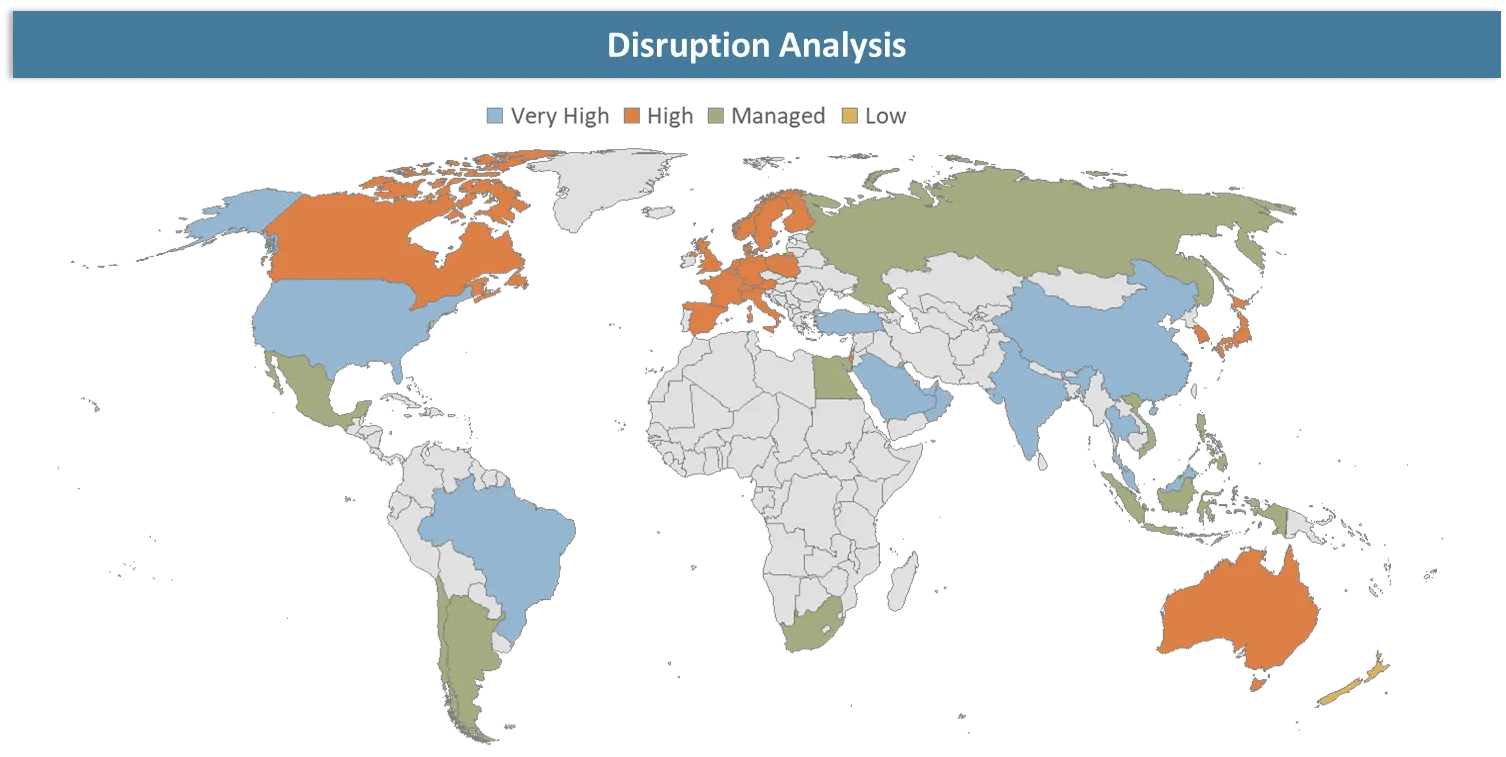
Transition from Conventional LEU Fuel to HALEU-Based Fuel Fabrication Reshaping the Nuclear Fuel Manufacturing Landscape
The disruption in the Nuclear Fuel Fabrication Market is primarily driven by a shift from traditional low-enriched uranium (LEU) fuel to high-assay low-enriched uranium (HALEU) fuel fabrication, as advanced reactors and SMRs need fuel fabrication with an enrichment level of up to 19.75% of U-235. The current LEU fabrication facilities are not prepared for HALEU fuel fabrication and require considerable modifications in their manufacturing machinery, material handling system, licensing, and QA process. This shift in fuel fabrication is changing global investment priorities and forcing governments and nuclear fuel suppliers to develop specialized fuel fabrication infrastructure and fuel qualification programs for HALEU fuel fabrication.
Moreover, the commercialization of advanced reactors is affecting the traditional nuclear fuel supply chain by redirecting investments from large-volume LEU fuel assembly fabrication to advanced fuel fabrication processes for HALEU, TRISO, metallic and other advanced fuels. Centrus Energy delivered 900 kg of HALEU in accordance with its contractual obligations to the DOE in 2025 and started moving towards commercial-scale HALEU production, demonstrating how quickly the industry is moving away from traditional fuel fabrication systems towards advanced fuel manufacturing systems.
Nuclear Fuel Fabrication Market BCG Matrix: Company Evaluation
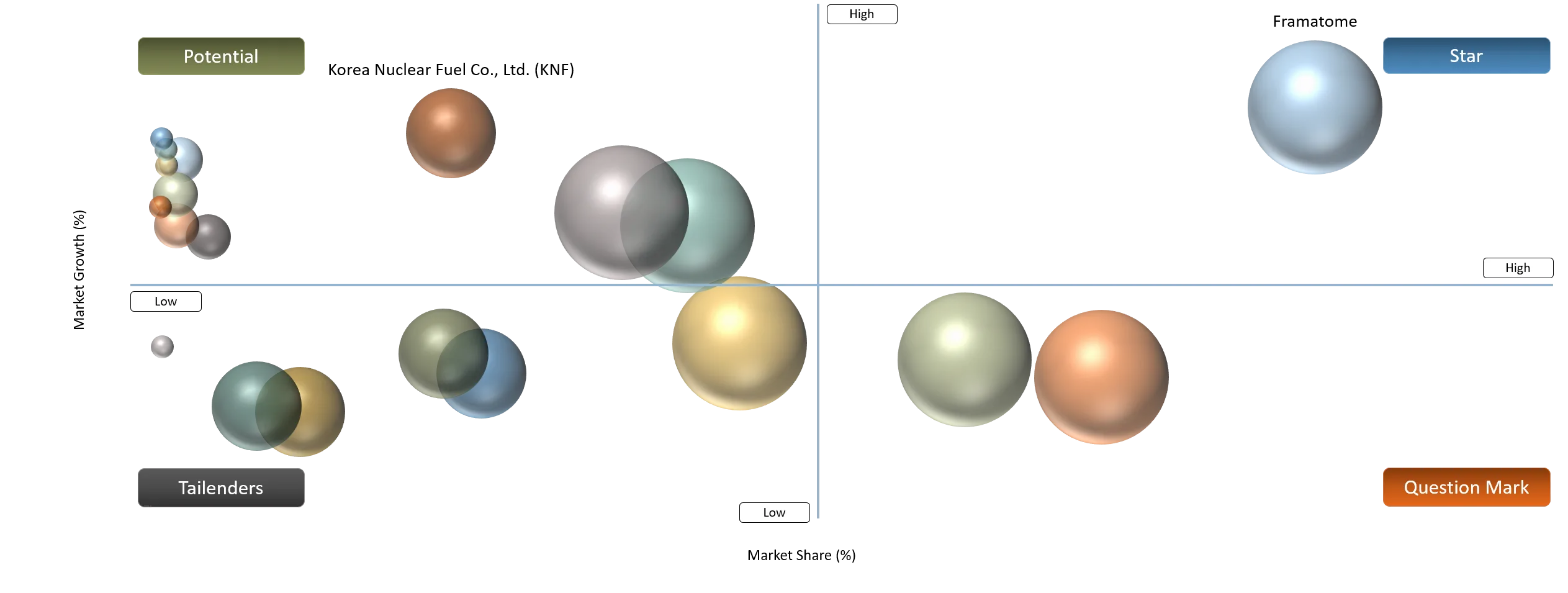
Stars include Framatome and Westinghouse Electric Company due to their extensive global nuclear fuel fabrication capabilities, diversified reactor fuel portfolios, and long-standing supply agreements with commercial nuclear utilities. Both companies manufacture fuel assemblies for multiple reactor technologies, including PWRs, BWRs, VVERs, and advanced reactors, while actively investing in High-Assay Low-Enriched Uranium (HALEU) and Accident-Tolerant Fuel (ATF) programs. BWX Technologies (BWXT) also falls within the Stars category because of its leadership in TRISO fuel manufacturing, advanced reactor fuel development, and strategic role in supporting U.S. Department of Energy advanced nuclear programs. Question Marks include Orano, Cameco Corporation, and X-energy. Although these companies possess strong positions across the nuclear fuel value chain, they are expanding their presence in advanced nuclear fuel fabrication rather than dominating conventional commercial fuel assembly production.
The Potential category comprises Korea Nuclear Fuel Co., Ltd. (KNF), Mitsubishi Nuclear Fuel Co., Ltd. (MNF), and Nuclear Fuel Complex (NFC). These companies maintain strong domestic fuel fabrication capabilities and supply national reactor fleets, while gradually expanding advanced fuel technologies and reactor-specific fuel development. Tailender include General Atomics because its nuclear fuel activities remain concentrated on specialized TRISO fuel technologies and advanced reactor programs rather than large-scale commercial fuel assembly manufacturing.
Nuclear Fuel Fabrication Market Dynamics
Driver Impact Analysis
| Driver | Market Growth Impact (%) | Demand Concentration | Impacted Use Case | Strategic Impact |
Expansion of new nuclear power plants and reactor life-extension programs is increasing long-term demand for reactor-ready nuclear fuel assemblies. | 35% | Commercial nuclear utilities, existing reactor fleets, new-build nuclear projects | Fuel assemblies for PWRs, BWRs, PHWRs and reactor reloads | Creates recurring long-term fuel supply contracts and expands fabrication capacity investments. |
Commercial deployment of Small Modular Reactors (SMRs) and advanced reactors is accelerating investment in HALEU and next-generation fuel fabrication capabilities. | 29% | SMR developers, advanced reactor vendors, government demonstration projects | HALEU fuel, TRISO fuel, metallic fuel fabrication | Accelerates commercialization of advanced fuels and establishes new high-value fabrication infrastructure. |
Government initiatives to establish resilient domestic nuclear fuel supply chains are driving investments in nuclear fuel fabrication infrastructure. | 23% | National nuclear agencies, domestic fuel manufacturers, strategic fuel programs | Domestic fuel fabrication plants and HALEU production facilities | Strengthens domestic manufacturing capacity, reduces import dependence, and improves fuel security. |
Increasing global focus on energy security and low-carbon electricity generation is strengthening procurement of fabricated nuclear fuel for existing and planned reactor fleets. | 21% | Nuclear utilities, public energy companies, national power authorities | Long-term nuclear fuel procurement and reactor life-cycle fuel supply | Supports sustained fuel demand, encourages reactor lifetime extensions, and increases investment in advanced fabrication technologies. |
Expansion of new nuclear power plants and reactor life-extension programs is increasing long-term demand for reactor-ready nuclear fuel assemblies
The rising demand for nuclear fuel assemblies due to the growth of nuclear power plant capacity and the lifetime extension of existing reactors. All new reactors need the installation of an initial core of fuel assemblies and reloads during the service life. Meanwhile, the lifetime extension ensures that there will be a constant demand for replacement fuel during many decades. The International Energy Agency says that in 2025, the generation of nuclear power electricity will set a record due to reactor restarts in Japan, increased electricity production in the US and France, and the construction of new reactors, especially in Asia. In addition, the International Atomic Energy Agency says that over 60 reactors are under construction in 2025-2026.
The planned construction of additional nuclear reactors and the extension of the lifetimes of current reactors in Europe is expected to generate long-term demand for nuclear fuel assemblies and other fuel cycle services. In June 2025, according to the European Commission's Nuclear Illustrative Programme (PINC) Staff Working Document (SWD(2025) 160), the European Union would spend about €241 billion (or US$275 billion) on nuclear power plants up to 2050, with €205 billion spent on the construction of new large reactors, €36 billion spent on the lifetime extension of reactors, and other expenditures on SMRs, AMRs, and the nuclear fuel cycle. As noted in the document, building new nuclear capacity as well as the reactor operating life extensions would lead to an increased need for reactor nuclear fuel assemblies.
Restraint Impact Analysis
| Restraint | Drag on Market Growth (%) | Primary Impact Area | Impacted Use Case | Strategic Impact |
Limited commercial availability of High-Assay Low-Enriched Uranium (HALEU) constrains advanced reactor fuel fabrication capacity. | 27% | Advanced fuel supply chain and enrichment availability | HALEU fuel fabrication for SMRs, microreactors, and Generation IV reactors | Delays commercialization of advanced reactors and limits scaling of next-generation fuel manufacturing. |
Dependence on uranium conversion and enrichment services creates supply chain vulnerabilities for fabricated nuclear fuel production. | 23% | Front-end nuclear fuel cycle (conversion & enrichment) | LEU and HALEU fuel assembly production | Increases procurement risks, lead times, and dependence on a limited number of qualified suppliers. |
Geopolitical disruptions affecting nuclear fuel trade and enrichment services create procurement risks for global fuel fabricators. | 21% | International nuclear fuel trade and strategic sourcing | Cross-border fuel fabrication contracts and reactor fuel supply | Accelerates regional supply chain diversification while increasing operating and sourcing costs. |
Limited number of qualified nuclear fuel fabrication facilities worldwide restricts manufacturing scalability and supply flexibility. | 18% | Fuel fabrication infrastructure and production capacity | Commercial reactor fuel assemblies and advanced fuel manufacturing | Restricts rapid capacity expansion, extends delivery schedules, and raises barriers for new market entrants. |
Limited commercial availability of High-Assay Low-Enriched Uranium (HALEU) constrains advanced reactor fuel fabrication capacity
The limited commercial availability of High-Assay Low-Enriched Uranium (HALEU) has become one of the key restraints for the Nuclear Fuel Fabrication market, especially for advanced reactors and SMR fuel fabrication. In contrast to traditional Low-Enriched Uranium (LEU), HALEU needs to be produced with the help of special enrichment, transportation, and fabrication facilities that are not yet developed. Insufficient availability of HALEU has impeded the process of qualification of the fuel and created additional uncertainties during the procurement process, resulting in the inability of fuel fabricators to ramp up production for future generation reactors. Based on WNA statistics, the demand for HALEU will grow sharply over the course of the decade as many advanced reactor designs move towards the commercialization stage.
The lack of commercial availability of HALEU is hampering the ramp-up of production of advanced nuclear fuels, delaying the development timelines of the next-generation reactors. In February 2026, according to the World Nuclear Association (WNA), High-Assay Low-Enriched Uranium (HALEU) contains more than 5% and less than 20% uranium-235 and is required by the majority of next-generation reactors, including SMR and microreactors. The organization underscores that HALEU production for commercial use is highly constrained. Consequently, it poses a key bottleneck in the manufacturing of advanced reactor fuels. With the increasing demand for HALEU fuels, increasing enrichment and fuel fabrication capacity in order to facilitate commercial development of advanced nuclear technologies has become critical.
Nuclear Fuel Fabrication Market Segment Analysis
The global Nuclear Fuel Fabrication market is segmented based on fuel type, reactor type, fabrication process, enrichment type, application, and region.
Adoption of Low-Enriched Uranium (LEU) Fuel Sustaining Dominance in Commercial Nuclear Fuel Fabrication
The Low Enriched Uranium (LEU) segment dominated the Nuclear Fuel Fabrication Market, with an 88% market share in 2025. Low-enriched uranium is still the most commonly employed type of fuel used in PWRs and BWRs that form the majority of the operational nuclear reactors installed globally. The presence of an established licensing regime, fabrication infrastructure, and compatibility with the current reactor designs are some of the reasons why the Low-Enriched Uranium fuel has become the most favorable enrichment type for nuclear power plants.
Simultaneously, the growth of nuclear power generation plants supports the supremacy of the LEU fuel manufacturing process. As per the IAEA PRIS database, there were 308 PWRs and 45 BWRs out of 417 commercial reactors operating globally; hence, the light-water reactors represent a larger part of the world's commercial reactor fleet. Besides, IEA also forecasted a record output of nuclear power generation in 2025 because of the commissioning of new reactors, reactor restarts, and lifetime extension, which still largely depend on LEU fuel. While advanced fuels including HALEU fuel are becoming increasingly popular for small modular reactors (SMR) and Gen IV reactors, the supremacy of LEU is anticipated to continue during the forecast period due to the vast number of light-water reactors and regular fuel reloading needs.
Nuclear Fuel Fabrication Market Geographical Penetration
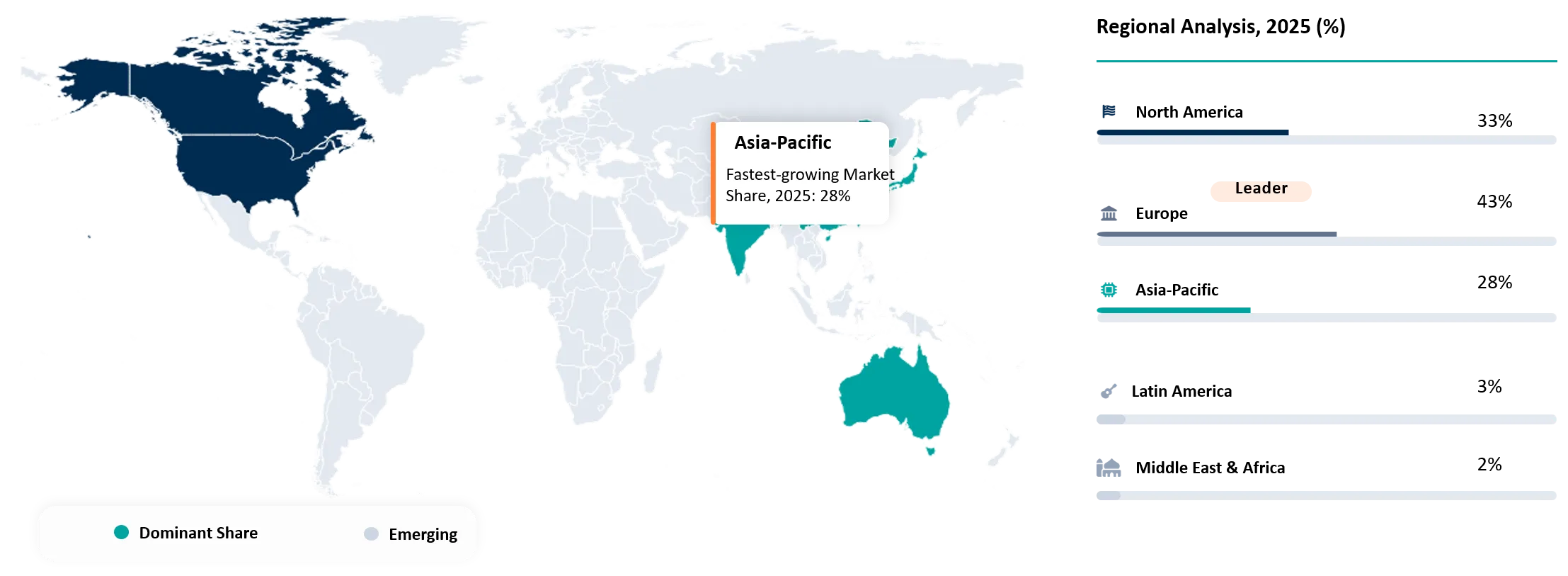
Established Nuclear Fuel Cycle Infrastructure and Fuel Supply Diversification Strengthening Europe's Market Leadership
Europe region dominated the Nuclear Fuel Fabrication Market, holding around 43% market share in 2025, owing to its efficient nuclear fuel cycle infrastructure, a significant number of commercial reactors, and expertise in fuel fabrication. Some of the prominent players in the region include Framatome and Orano, which have sophisticated facilities for fuel fabrication, conversion, and fuel engineering to cater to their commercial reactors. Increasing initiatives for diversification of nuclear fuel supplies and minimizing reliance on external enrichment and fabrication services have boosted the production of nuclear fuels in Europe.
This collaboration will enhance the production of next-generation SMR nuclear fuel assemblies and increase the supply chain resilience in both Europe and North America. In March 2026, Framatome, a France-based nuclear technology and fuel cycle company, and NuScale Power, a U.S.-based small modular reactor (SMR) technology developer, expanded their long-term strategic partnership to strengthen the global nuclear fuel fabrication supply chain. Under the agreement, Framatome will manufacture nuclear fuel assemblies for NuScale's European SMR projects and qualify the NuFUEL-HTP2 fuel design at its Richland, Washington facility for U.S. deployments.
France Nuclear Fuel Fabrication Market Trends
France holds the dominant position in the European Nuclear Fuel Fabrication Market, due to its comprehensive nuclear fuel cycle, the existence of a large number of reactors, and the capability of fuel manufacture. In France, there exist Framatome and Orano, which are among the top nuclear fuel firms in the world. They possess uranium conversion plants, enrichment plants, MOX fuel fabrication plants, and fuel fabrication plants that are used in the feeding of commercial reactors not only in Europe but even in other parts of the world.
Through such an approach, it is clear that the international fuel cycle partnerships will play a key role in ensuring the future availability of recyclable nuclear materials for the production of future fuel fabrication processes. In April 2026, Kansai Electric Power Co., Inc., a Japan-based electric utility company, announced that it plans to reprocess approximately 200 metric tons of spent nuclear fuel in France under its long-standing fuel cycle strategy. The spent fuel will be reprocessed by Orano, a France-based nuclear fuel cycle company, at its La Hague reprocessing facility to recover reusable uranium and plutonium for future nuclear fuel production.
UK Nuclear Fuel Fabrication Market Outlook
The United Kingdom plays a significant role in the nuclear fuel fabrication market in Europe due to its well-developed infrastructure of nuclear fuel production, capabilities of its fuel cycle, and active government policy in favor of nuclear power development. The UK has a well-established tradition of nuclear fuel fabrication via plants like Westinghouse Springfields that produce nuclear fuel products for domestic and overseas reactors. The UK nuclear fuel industry is supported by capabilities covering uranium production, fuel fabrication, enrichment, and reactor fuel.
The contract will enhance the nuclear fuel supply chain in the UK by ensuring that the crucial services of enrichment and fabrication are in place for the new reactor build. In October 2025, Sizewell C, a UK-based nuclear power project company developing the 3.2 GW Sizewell C nuclear power plant, signed multi-year nuclear fuel supply agreements with Urenco and Framatome to secure fuel requirements for the future reactor. Urenco, headquartered in the United Kingdom and operating as an international uranium enrichment company, will provide uranium enrichment services, while Framatome, headquartered in France and operating as a nuclear technology and fuel cycle company, will supply fabricated nuclear fuel assemblies.
Nuclear Fuel Fabrication Market Competitive Landscape
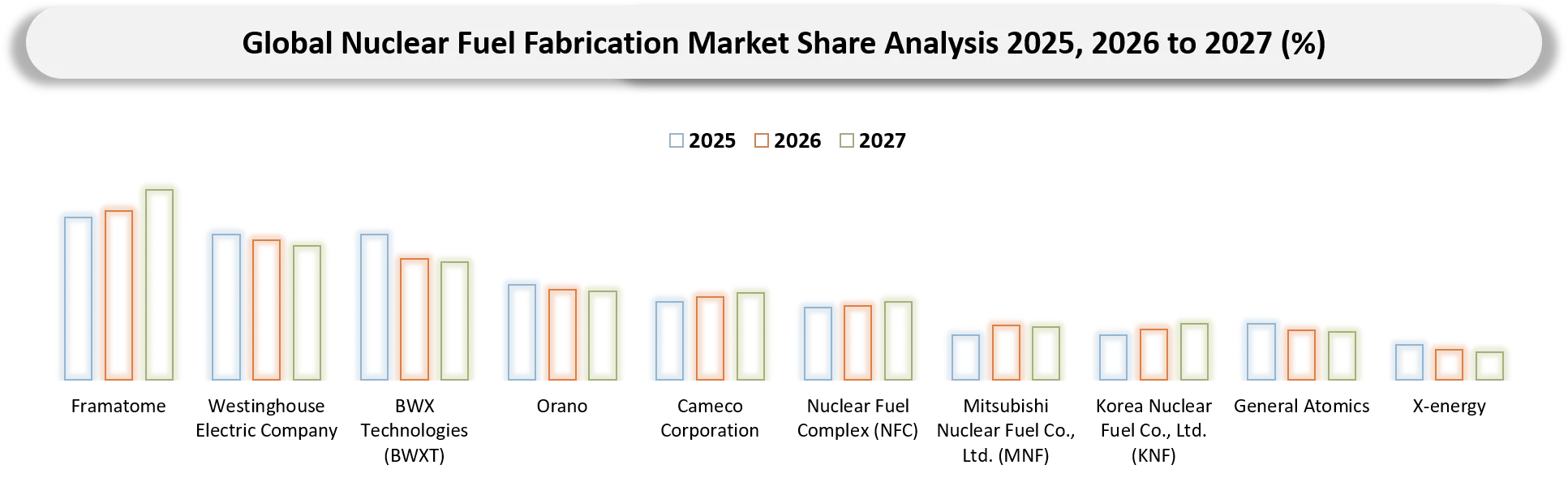
- The Nuclear Fuel Fabrication Market is characterized by three key participant groups: integrated nuclear fuel cycle companies, specialized fuel fabrication providers, and advanced reactor fuel developers. Framatome, Westinghouse Electric Company, Orano, Cameco Corporation, Nuclear Fuel Complex (NFC), Mitsubishi Nuclear Fuel Co., Ltd. (MNF), and Korea Nuclear Fuel Co., Ltd. (KNF) represent major conventional fuel fabrication players with established capabilities in uranium conversion, fuel assembly manufacturing, and reactor-specific fuel technologies. Framatome and Westinghouse collectively maintain a strong position in the global light-water reactor fuel market, supplying fuel assemblies to utilities across Europe, North America, and Asia. Orano contributes through its integrated front-end nuclear fuel cycle capabilities, including uranium conversion, enrichment, and fabrication services. In the advanced reactor segment, companies such as General Atomics and X-energy are developing next-generation fuel solutions, including TRISO-based fuels and HALEU-enabled fuel technologies to support SMRs and advanced reactors. The competitive landscape is increasingly shaped by fuel security initiatives, localization of nuclear supply chains, and rising demand for advanced fuels driven by new nuclear deployment programs.
- Key players include Framatome, Westinghouse Electric Company, BWX Technologies (BWXT), Orano, Cameco Corporation, Nuclear Fuel Complex (NFC), Mitsubishi Nuclear Fuel Co., Ltd. (MNF), Korea Nuclear Fuel Co., Ltd. (KNF), General Atomics, and X-energy.
Nuclear Fuel Fabrication Market Recent Developments
- December 2025: Hungary announced plans to diversify nuclear fuel supplies for the Paks Nuclear Power Plant (NPP) by introducing U.S.-supplied nuclear fuel after 2028.
- October 2025: Oklo Inc., a U.S.-based advanced nuclear technology company, and newcleo, a France-based advanced nuclear reactor developer, signed a strategic partnership with Blykalla, a Sweden-based advanced nuclear technology company, to develop advanced nuclear fuel fabrication and manufacturing infrastructure in the United States.
- March 2026: Oklo Inc., a U.S.-based advanced nuclear technology company, and Centrus Energy Corp., a U.S.-based uranium enrichment and nuclear fuel services company, announced plans to pursue a strategic joint venture to advance nuclear fuel services in Ohio.
- November 2025: Terrestrial Energy Inc., a Canada-based and operating as an advanced nuclear technology company developing Generation IV Integral Molten Salt Reactor (IMSR) systems, expanded its manufacturing and supply agreement with Springfields Fuels Limited, a subsidiary of Westinghouse Electric Company, a U.S.-based operating as a nuclear reactor technology and nuclear fuel manufacturing company.
- March 2026: Aalo Atomics, a U.S.-based advanced nuclear technology company, signed a fuel fabrication contract with Global Nuclear Fuel (GNF), a U.S.-based nuclear fuel manufacturing company and strategic alliance led by GE Vernova with Hitachi Ltd.
- July 2026: Framatome, a France-based nuclear technology and fuel cycle company and subsidiary of Électricité de France (EDF), received approval from German authorities to produce nuclear fuel rods at its Advanced Nuclear Fuels (ANF) facility in Lingen, Germany, in cooperation with TVEL/Rosatom, a Russia-based state-owned nuclear fuel and technology company.
Key Procurement Priorities and Buyer Evaluation Criteria
- Firms buying nuclear fuel assembly manufacturing services are now inclined towards choosing vendors that can offer quality fuel assemblies that meet the required standards and specifications for nuclear safety. Suppliers that have capability in fabricating quality fuel assembly components along with experience are favored by the buyers.
- The decision making in the area of procurement is more and more affected by the rise of emphasis on energy security, diversity of nuclear fuel supply chains, emergence of novel types of nuclear reactors like SMRs, and increasing demand for new fuel types like HALEU and TRISO fuels. Utilities and governments are considering suppliers with regard to fuel availability and supply chain resilience.
- Customers take into consideration such factors as the reliability of fuel assemblies, performance during irradiation, quality control during manufacturing, certification, enrichment compatibility, source of uranium, and operating history while choosing their partners in nuclear fuel manufacturing. Compatibility of offered fuel solutions with PWRs, BWRs, Advanced Reactors, and SMRs is increasingly becoming an important factor in evaluating suppliers.
- Supplier competencies in fuel development, increased fabrication capability, digital monitoring technology, quality assurance programs, and international nuclear standardization are some other areas that are considered in the buyer evaluation process. Organizations with capabilities for the nuclear fuel cycle, such as uranium refining, enrichment, fabrication, and advanced fuels, are considered to be more suitable for forming partnerships.
- The procurement decisions are even more influenced by the capability of suppliers to ensure the safety and diversification of fuel supplies, minimize reliance on geopolitically concentrated sources, and help governments in their efforts towards expansion of nuclear energy programs. Suppliers that have partners globally, possess advanced technology plants, and specialize in next-generation reactor fuel technology enjoy an edge in the market.
Why Choose DataM?
- Technological Innovations: Explores advancements in nuclear fuel fabrication technologies, including improved fuel assembly designs, accident-tolerant fuels (ATF), High-Assay Low-Enriched Uranium (HALEU) fuels, and TRISO fuel development, enabling enhanced reactor safety, higher fuel efficiency, longer operating cycles, and support for next-generation nuclear reactors such as Small Modular Reactors (SMRs) and advanced reactors.
- Product Performance & Market Positioning: Evaluates how leading nuclear fuel fabricators differentiate their offerings through fuel reliability, irradiation performance, manufacturing precision, regulatory compliance, and compatibility with different reactor technologies, highlighting the competitive positioning of companies providing fuel solutions for Pressurized Water Reactors (PWRs), Boiling Water Reactors (BWRs), heavy-water reactors, and advanced reactor systems.
- Real-World Evidence: Highlights the adoption of nuclear fuel fabrication solutions across commercial nuclear power plants, research reactors, and emerging advanced reactor projects, demonstrating benefits such as improved fuel utilization, enhanced operational safety, reduced maintenance requirements, and optimized reactor performance through advanced fuel designs.
- Market Updates & Industry Changes: Tracks key developments including nuclear fuel fabrication capacity expansions, HALEU production initiatives, long-term fuel supply agreements, advanced reactor fuel qualification programs, and government-supported nuclear energy investments across North America, Europe, and Asia-Pacific, supporting the transition toward resilient and diversified nuclear fuel supply chains.
- Competitive Strategies: Analyzes how leading companies such as Framatome, Westinghouse Electric Company, Orano, BWX Technologies (BWXT), Cameco Corporation, Nuclear Fuel Complex (NFC), Mitsubishi Nuclear Fuel, Korea Nuclear Fuel, General Atomics, and X-energy strengthen their market positions through technology development, strategic partnerships, fabrication facility modernization, and expansion into advanced nuclear fuel markets.
- Pricing & Market Access: Explains cost variations based on uranium feedstock prices, enrichment requirements, fuel design complexity, fabrication processes, regulatory certification, and reactor compatibility, while evaluating market access through long-term utility contracts, government procurement programs, nuclear operators, and integrated fuel-cycle partnerships.
- Market Entry & Expansion: Identifies growth opportunities driven by global nuclear capacity expansion, SMR commercialization, energy security initiatives, and demand for advanced fuels, while outlining strategies such as localization of fuel manufacturing, development of HALEU supply chains, strategic alliances, and investment in next-generation fabrication capabilities to expand across global nuclear markets.
Target Audience
- Nuclear Fuel Manufacturers & Fabrication Companies
- Nuclear Power Plant Operators & Utility Companies
- Advanced Reactor & Small Modular Reactor (SMR) Developers
- Government Bodies & Nuclear Regulatory Authorities
- Nuclear Fuel Cycle Companies & Uranium Suppliers
- Research Institutions & Nuclear Technology Organizations
- Engineering, Procurement & Construction (EPC) Companies


























































