


Nicotinamide Mononucleotide Market Size and Overview
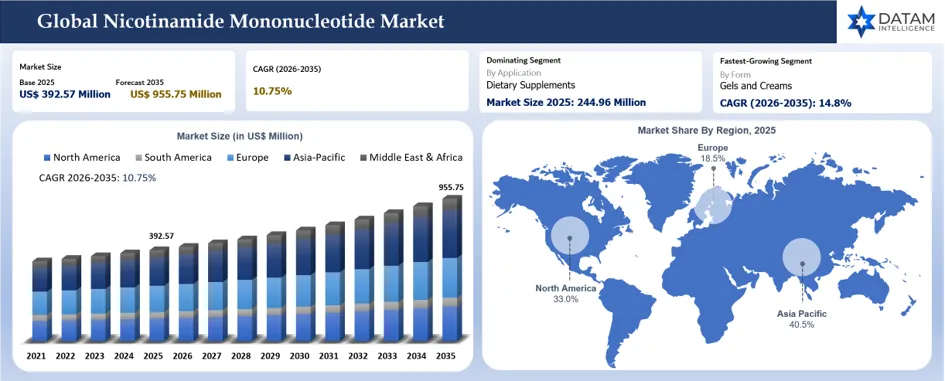
The global nicotinamide mononucleotide market reached US$392.57 million in 2025 and is expected to reach US$955.75 million by 2035, growing with a CAGR of 10.75% during the forecast period 2026-2035.
Market growth is shifting beyond niche anti-aging supplementation toward a broader healthy-aging ecosystem covering dietary supplements, functional foods and beverages, cosmetics, personal care and laboratory research. Dietary supplements remain the leading application because of convenient daily consumption, recurring demand and broad availability across online retailers, pharmacies and wellness stores.
Competition is increasingly determined by product purity, manufacturing method, formulation performance, clinical substantiation and supply-chain transparency. Enzymatic synthesis and microbial fermentation are gaining commercial relevance by supporting high-purity output, scalable production and improved process efficiency. Finished products also capture greater value through branding, formulation, packaging and direct-to-consumer distribution.
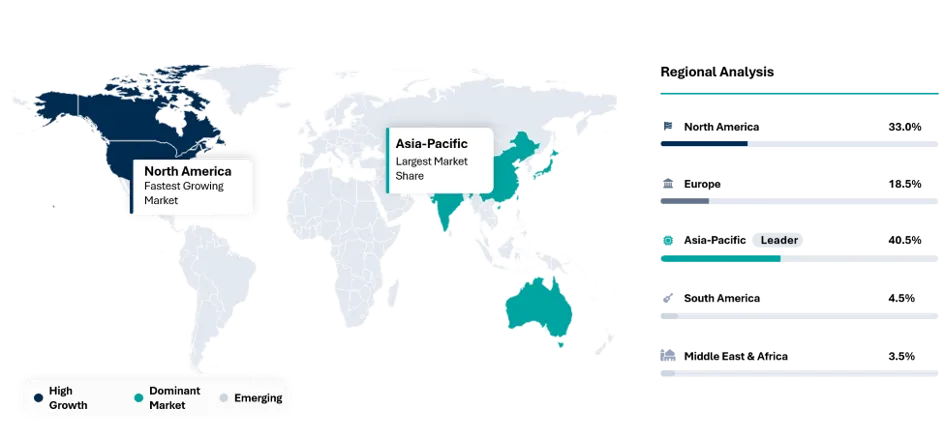
Asia-Pacific maintains regional leadership through Japan’s established healthy-aging market and China’s concentrated ingredient-manufacturing capabilities. Future competitive advantage will depend on regulatory compliance, human clinical evidence, third-party testing, ingredient traceability and differentiated delivery formats such as liposomal liquids, sublingual products, combination supplements, gels and creams.
Nicotinamide Mononucleotide Market Key Takeaways
- Sustained Market Expansion Through 2035: The global nicotinamide mononucleotide market was valued at US$392.57 million in 2025 and is projected to reach US$955.75 million by 2035, registering a CAGR of 10.75% during 2026-2035.
- Dietary Supplements Maintain Application Leadership: Dietary supplements accounted for an estimated 62.4% market share, equivalent to approximately US$244.96 million in 2025, supported by recurring consumption of capsules, tablets and powders.
- Gels and Creams Emerge as the Primary Growth Engine: Gels and creams are projected to register an estimated 14.85% CAGR during 2026-2035, driven by increasing NMN incorporation into premium skincare, anti-aging cosmetics and dermocosmetic formulations.
- Asia-Pacific Maintains Regional Dominance: Asia-Pacific leads the market owing to Japan’s established healthy-aging supplement industry, high consumer acceptance and clinical-research activity alongside China’s concentrated NMN ingredient manufacturing and fermentation capabilities.
- Clinical Credibility Reshapes Competitive Strategy: Future leadership will depend on human clinical evidence, regulatory compliance, high-purity production, third-party testing and ingredient traceability. Differentiated formulations such as liposomal liquids, sublingual products and combination supplements could support premium positioning.
Nicotinamide Mononucleotide Market Industry Trends and Strategic Insights
- The market is transitioning from a niche anti-aging ingredient category toward a broader healthy-aging platform spanning dietary supplements, functional foods and beverages, cosmetics, personal care and laboratory research applications.
- Dietary supplements remain the principal application segment because capsules, tablets and powders provide dosage precision, convenient daily consumption and broad availability through online retailers, pharmacies and wellness stores.
- Product differentiation is increasingly centered on NMN purity, dosage strength, ingredient traceability, manufacturing method, independent laboratory testing and formulation quality. Above 99% purity products command premium positioning among quality-conscious consumers.
- Enzymatic synthesis and microbial fermentation are strengthening commercial scalability by supporting high-purity output, improved process efficiency and more consistent production. Adoption will depend on manufacturing economics, yield optimization and dependable raw-material supply.
- Sustainable competitive advantage will require more than anti-aging positioning. Companies demonstrating regulatory compliance, human clinical evidence, transparent labeling, reliable supply and differentiated delivery through liposomal liquids, sublingual products, combination supplements, gels and creams will be better positioned to capture premium demand.
Nicotinamide Mononucleotide Market Scope
| Metrics | Details | |
| 2025 Market Size | US$392.57 Million | |
| 2035 Projected Market Size | US$955.75 Million | |
| CAGR (2026-2035) | 10.75% | |
| Largest Market | Asia-Pacific | |
| Fastest Growing Market | North America | |
| By Product Category | Bulk Nicotinamide Mononucleotide Ingredients, Finished Nicotinamide Mononucleotide Products | |
| By Grade | Food and Dietary Supplement Grade, Cosmetic Grade, Pharmaceutical Grade, Research Grade | |
| By Purity | Below 98%, 98% to 99%, Above 99% | |
| By Production Method | Enzymatic Synthesis, Microbial Fermentation, Chemical Synthesis | |
| By Form | Powder, Capsules, Tablets, Liquids, Gels and Creams, Other Dosage Forms | |
| By Application | Dietary Supplements, Functional Foods and Beverages, Cosmetics and Personal Care, Pharmaceutical Development, Laboratory Research, Others | |
| By Distribution Channel | Direct Sales, Specialty Distributors, Pharmacies and Drugstores, Health and Wellness Stores, Online Retail | |
| By Region | North America | U.S., Canada, Mexico |
| Europe | Germany, UK, France, Spain, Italy, Poland | |
| Asia-Pacific | China, India, Japan, Australia, South Korea, Indonesia, Malaysia, Singapore, Vietnam, Thailand, Philippines, Taiwan | |
| South America | Brazil, Argentina | |
| Middle East and Africa | Israel, Saudi Arabia, UAE, Turkiye, South Africa, Nigeria | |
| Report Insights Covered | Competitive Landscape Analysis, Company Profile Analysis, Market Size, Share, Growth | |
Why does this report matter in 2026?
In 2026, the global nicotinamide mononucleotide market sits at a critical transition from early-stage longevity interest toward a more evidence-driven and regulated commercial category. Demand is expanding across dietary supplements, functional wellness products, cosmetics and laboratory research, while buyers are placing greater emphasis on purity, clinical substantiation, stability and traceable production. This report matters because it separates genuine NMN revenues from broader NAD precursor claims, establishes a defensible market boundary and quantifies demand without double counting ingredient and finished-product sales.
It also provides decision-makers with a view of competitive positioning, production economics, pricing, regulatory exposure and regional commercialization opportunities. Manufacturers can benchmark enzymatic and alternative synthesis routes, evaluate capacity requirements and identify attractive customer segments. Supplement brands can assess formulation trends, channel performance, partnership opportunities and suppliers. Investors and market entrants can distinguish scalable platforms from marketing-led propositions, evaluate risk and prioritize markets with stronger regulatory and consumer fundamentals. The analysis therefore supports portfolio strategy, market entry and investment decisions.
Nicotinamide Mononucleotide Market White Space & Investment Opportunities
- Human Clinical Validation And Dose Optimization: Invest in well-designed clinical studies establishing dose-response relationships, long-term safety, target population benefits and validated biomarkers connecting NMN supplementation with NAD levels, metabolic performance, physical function and healthy aging outcomes.
- Cost-Efficient Enzymatic Manufacturing: Develop scalable enzymatic and fermentation-based production platforms that improve conversion efficiency, reduce solvent usage, lower manufacturing costs and deliver consistent high-purity NMN across commercial production batches.
- Stability And Shelf-Life Improvement: Invest in temperature-stable NMN ingredients, moisture-resistant formulations, protective packaging and degradation monitoring solutions suitable for international transportation, ambient storage and warm-climate markets.
- Advanced Delivery And Bioavailability: Advance liposomal, sublingual, sustained-release, microencapsulated and targeted-delivery formulations supported by comparative pharmacokinetic evidence demonstrating improved absorption, stability and conversion into NAD.
- Standardized Quality And Traceability: Establish batch-level identity, purity, potency, residual-solvent, heavy-metal and microbiological testing supported by digital certificates of analysis, authenticated sourcing and independent laboratory verification.
- Regulatory-Compliant Geographic Expansion: Develop country-specific commercialization strategies addressing differences in NMN classification, claims, dosage requirements and distribution rules. Significant opportunities exist in compliant formulations, research-grade supply, branded ingredients and partnerships with nutraceutical, cosmetic and functional wellness manufacturers.
Nicotinamide Mononucleotide Market Future Transformation
Over the next decade, the global nicotinamide mononucleotide market will move from largely premium, direct-to-consumer longevity supplements toward a more scientifically validated, quality-controlled and application-diversified category. Conventional NMN powders and capsules will remain important, while demand will increasingly shift toward clinically supported dosages, high-purity ingredients, liposomal delivery, sustained-release formulations and temperature-stable products. Greater adoption across healthy-aging supplements, functional nutrition, cosmetics and laboratory research will expand the addressable market beyond early longevity enthusiasts.
Market transformation will accelerate through enzymatic synthesis, fermentation technologies, improved purification and scalable manufacturing platforms that reduce production costs and strengthen batch consistency. Competition will shift from purity and dosage claims toward differentiated evidence covering bioavailability, NAD elevation, long-term safety, stability and measurable consumer outcomes. Regulatory classification, permitted claims and quality requirements will continue to influence commercialization across countries. Commercial success will depend on clinical substantiation, transparent testing, traceable sourcing, intellectual property, reliable production and multichannel distribution. Companies combining cost-efficient manufacturing with defensible delivery technologies, trusted branded ingredients, country-specific regulatory strategies and partnerships with nutraceutical, cosmetic and functional wellness manufacturers will be positioned to capture the next phase of market growth.
Nicotinamide Mononucleotide Market Buyer Decision-Making Criteria
Major Buyer Decision-Making Criteria:
- NMN Purity And Beta-NMN Identity
- Batch-to-Batch Potency And Quality Consistency
- Manufacturing Method And Production Scalability
- Clinical Evidence And NAD Elevation Data
- Bioavailability And Absorption Performance
- Stability, Shelf Life And Storage Requirements
- Heavy-Metal, Microbial And Residual-Solvent Testing
- Regulatory Documentation And Market-Specific Compliance
- Ingredient Traceability And Certificate-of-Analysis Transparency
- Formulation Compatibility And Delivery Technology
- Production Capacity, Minimum Order Quantity And Lead Time
- Pricing, Supply Reliability And Total Procurement Cost
- Intellectual Property And Branded-Ingredient Support
- Supplier Reputation, Technical Assistance And Geographic Coverage
Nicotinamide Mononucleotide Market Economic & Investment Analysis
The nicotinamide mononucleotide market is becoming an attractive healthy-aging investment segment, supported by rising consumer interest in NAD restoration, premium-priced supplements and expanding applications across nutraceuticals, cosmetics and laboratory research. Competition is extending beyond conventional powders and capsules toward liposomal, sublingual, sustained-release and combination formulations. Market pressure increasingly centers on purity, bioavailability, clinical evidence, dosage convenience, temperature stability, traceability and verified batch quality. Scalable ingredient manufacturers and trusted consumer brands are positioned to capture greater value.
Investment is shifting toward cost-efficient biosynthesis, branded ingredients, advanced delivery technologies and clinical validation. EffePharm, Bontac and SyncoZymes are strengthening supply through enzymatic manufacturing, while ProHealth, Renue By Science, Wonderfeel and Codeage differentiate through innovation and positioning. Future value creation will depend on manufacturing yield, cost reduction, shelf-life improvement, regulatory compliance and geographic diversification. However, ingredient classifications, inconsistent quality, limited long-term evidence and price competition elevate risk. Companies combining defensible production technology, independent testing, credible evidence and diversified distribution should attract partnerships and investment.
Global Nicotinamide Mononucleotide Market Investment Trends
- Capital allocation is increasing toward enzymatic synthesis, fermentation capacity, purification infrastructure and scalable production systems that lower NMN manufacturing costs while maintaining high purity and batch consistency.
- Branded NMN ingredients are attracting investment because clinical substantiation, traceable sourcing, intellectual property and formulation support enable suppliers to differentiate beyond commodity-grade powder and secure premium business-to-business contracts.
- Investment is accelerating across liposomal, sublingual, sustained-release and microencapsulated delivery technologies seeking improved bioavailability, temperature stability, dosage convenience and measurable NAD elevation.
- Investors increasingly prioritize companies capable of serving nutraceutical, functional food, cosmetic, pharmaceutical-development and laboratory-research customers while maintaining market-specific regulatory documentation and quality standards.
- Digital investment is targeting direct-to-consumer platforms, subscription models, personalized longevity programs, batch-verification systems and consumer education tools designed to strengthen retention, transparency and brand credibility.
- Companies are allocating greater resources to human clinical trials, pharmacokinetic studies and long-term safety evidence connecting NMN dosage with NAD levels, metabolic function, physical performance and healthy-aging outcomes.
Strategic Indicators for Global Nicotinamide Mononucleotide Market
High Regulation Impact
The nicotinamide mononucleotide market faces significant regulatory scrutiny because NMN is marketed as a dietary supplement or novel food while also being investigated for potential therapeutic applications. Regulators evaluate ingredient identity, purity, manufacturing consistency, toxicology, dosage, stability, labeling and human safety evidence. The European Food Safety Authority’s 2026 favorable scientific opinion on chemically synthesized β-NMN represents an important regulatory milestone but does not itself constitute final European Commission authorization. Requirements remain inconsistent across countries, increasing compliance costs and favoring manufacturers with strong quality-control, traceability and regulatory capabilities.
High Investment Activity
Investment activity is expanding across enzymatic synthesis, fermentation, high-purity ingredients, liposomal delivery, stabilized formulations and branded healthy-aging products. Ingredient manufacturers are investing in production scalability, patents and international distribution while consumer brands are allocating capital toward clinical substantiation, direct-to-consumer channels and premium formulations. Strategic interest is also increasing across NMN-based skincare, functional beverages, meal replacements and companion-animal wellness. Investors increasingly prioritize businesses with defensible manufacturing processes, verified purity, third-party testing and reliable raw-material sourcing. Regulatory uncertainty, limited long-term clinical evidence and intense price competition remain important execution risks. Companies combining scalable production, scientific credibility and diversified applications should attract stronger partnership, licensing and acquisition interest.
High New Product-Format Adoption
NMN adoption is expanding beyond conventional capsules and powders into tablets, sublingual products, liquids, liposomal formulations, combination supplements, functional foods and skincare products. Combination products incorporating resveratrol, trimethylglycine, sulforaphane and other healthy-aging ingredients are increasing portfolio differentiation. Consumer preference is shifting toward convenient formats, transparent dosage information and independently verified purity. However, claims concerning superior absorption or bioavailability require credible evidence. Future adoption will depend on demonstrated stability, formulation performance, dosage convenience, product authenticity and acceptable pricing. Companies offering differentiated delivery formats supported by human evidence and responsible health claims will be better positioned than brands relying primarily on high dosage or longevity-focused marketing.
Regional Expansion Opportunity
Regional expansion potential remains substantial because consumer awareness, regulatory treatment and supplement adoption differ considerably across countries. Japan has developed a strong premium NMN supplement and specialty retail ecosystem while China plays an important role in ingredient manufacturing, biosynthesis and export supply. The United States offers significant direct-to-consumer potential following reduced regulatory uncertainty but requires careful compliance with dietary-supplement labeling and claims requirements. Europe presents long-term opportunity following EFSA’s favorable scientific assessment, subject to final authorization and country-level commercialization conditions. India, South Korea, Australia, the Middle East and Southeast Asia offer additional growth opportunities as healthy-aging awareness and online supplement purchasing increase. Successful expansion requires localized pricing, regulatory planning, quality certification and dependable distribution.
Government Policy Support
Government influence is exercised through novel-food assessments, dietary-supplement regulations, import controls, labeling standards, manufacturing requirements and advertising enforcement. Regulatory developments in the United States and Europe could improve market legitimacy while establishing clearer conditions for responsible commercialization. Policy support remains uneven because NMN may be classified differently depending on jurisdiction, intended use and product claims. Authorities are also increasing scrutiny of unsubstantiated anti-aging, disease-prevention and age-reversal claims. Manufacturers should invest in regulatory documentation, batch-level testing, adverse-event monitoring and transparent consumer communication. Stronger harmonization of purity specifications, maximum intake levels and labeling requirements would improve product comparability, reduce counterfeit risks and support sustainable market development.
Value-Based Pricing Intelligence
Value-based pricing in the NMN market increasingly depends on verified purity, formulation quality, clinical substantiation and brand credibility rather than dosage strength alone. Premium products must demonstrate ingredient traceability, manufacturing consistency, stability and independent laboratory testing. Pricing potential varies across bulk ingredients, standard supplements, liposomal products, combination formulations, functional foods and premium skincare. Consumers also compare cost per daily dose, subscription discounts and product certifications when selecting brands. Manufacturers combining high-purity NMN, convenient administration, credible human evidence and transparent quality documentation will be better positioned to maintain premium pricing. Weak differentiation and limited clinical evidence may intensify discounting, private-label competition and customer acquisition costs.
Disruption Analysis of Nicotinamide Mononucleotide Market
The nicotinamide mononucleotide market faces disruption from regulatory uncertainty, rapid price compression, inconsistent product quality and evolving scientific evidence. Changes in ingredient classification or permitted health claims can quickly alter market access, retailer participation and consumer confidence across countries. Meanwhile, expanding Asian manufacturing capacity and lower-cost enzymatic synthesis are shifting NMN from a scarce premium ingredient toward a more competitive commodity. Products with weak purity documentation, undeclared degradation or unsupported efficacy claims could trigger reputational damage and tighter oversight across the broader category.
Advanced delivery platforms, clinically validated branded ingredients and supply models will create disruption. Liposomal, sustained-release and microencapsulated formulations may challenge powders and capsules if they demonstrate superior stability or bioavailability. Ingredient manufacturers moving downstream into finished products could pressure independent brands, while supplement companies may secure exclusive supply or acquire differentiated technologies. Competitive substitution from nicotinamide riboside, NAD products and other longevity ingredients will intensify. Winners will be companies that combine defensible manufacturing economics, clinical evidence, transparent testing and regulatory agility. Businesses relying on marketing claims, premium pricing or undifferentiated formulations will face margin and retention pressure.
Nicotinamide Mononucleotide Market BCG Matrix: Company Evaluation
STAR
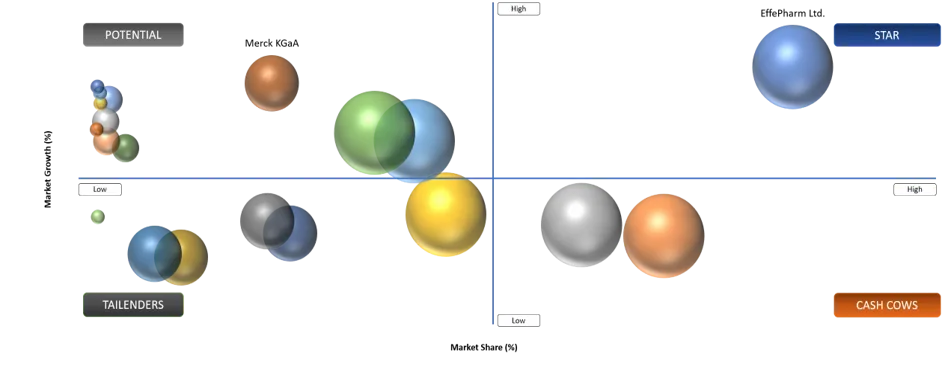
EffePharm Ltd., Bontac Bio-Engineering Co., Ltd., GeneHarbor Biotechnologies Ltd., SyncoZymes Co., Ltd., MIRAILAB BIOSCIENCE Inc. and ProHealth, Inc. are positioned in the Star category based on their established NMN portfolios, manufacturing capabilities, product diversification and market visibility. EffePharm leads through its UTHEVER branded ingredient, while Bontac and SyncoZymes strengthen the upstream market through enzymatic production and scalable coenzyme manufacturing.
GeneHarbor contributes proprietary biosynthesis capabilities, while MIRAILAB BIOSCIENCE offers supplements, cosmetics and other NMN-based products. ProHealth maintains a broad finished-product portfolio covering powders, capsules, tablets, lozenges and liposomal formulations. Continued leadership will depend on clinical substantiation, production efficiency, regulatory compliance, international distribution, ingredient traceability and consumer confidence.
POTENTIAL
Renue By Science, DoNotAge.org, Wonderfeel, Double Wood Supplements, Codeage LLC, PartiQlar, NutraBio Labs, Inc., Nutricost, Toniiq LLC and Youth And Earth are positioned in the potential category because of their growing presence in high-purity, liposomal, sublingual, sustained-release and combination NMN formulations.
Merck KGaA, Tokyo Chemical Industry Co., Ltd., Cayman Chemical Company and MedChemExpress LLC also hold potential through their research-grade NMN portfolios and established laboratory distribution networks. Progression toward the Star category will depend on stronger clinical validation, broader commercial penetration, formulation differentiation, reliable ingredient sourcing, repeat purchases, geographic expansion and regulatory clarity.
Nicotinamide Mononucleotide Market Dynamics
Driver Impact Analysis
| Driver | Market Growth Impact (%) | Demand Concentration | Impacted Use Case | Strategic Impact |
Regulatory Clarification Supporting NMN Supplement Commercialization Across Major Markets | 16.8% | High across the United States, Japan and Europe | Dietary supplements, functional nutrition and direct-to-consumer NMN products | Regulatory Clarification Supporting NMN Supplement Commercialization Across Major Markets |
Growing Consumer Spending on NAD⁺ Restoration and Cellular Healthy-Aging Products | 15.4% | High across North America and Asia-Pacific; increasing across Europe | Healthy-aging supplements, energy support, metabolic wellness and preventive nutrition | Growing Consumer Spending on NAD⁺ Restoration and Cellular Healthy-Aging Products |
Expansion of High-Purity Enzymatic and Fermentation-Based NMN Production Capacity | 13.7% | Concentrated across China, Japan and specialized global ingredient suppliers | High-purity bulk NMN, private-label supplements and research-grade ingredients | Expansion of High-Purity Enzymatic and Fermentation-Based NMN Production Capacity |
Portfolio Diversification Into Liposomal Formulations, Functional Nutrition and NMN-Based Skincare | 11.9% | Strong across premium supplement, functional-food and beauty markets | Liposomal supplements, combination products, beverages, meal replacements and anti-aging skincare | Portfolio Diversification Into Liposomal Formulations, Functional Nutrition and NMN-Based Skincare |
Driver: Regulatory Clarification Supporting NMN Supplement Commercialization Across Major Markets
Regulatory clarification is becoming an important growth catalyst for the NMN market by reducing uncertainty across product development, investment and distribution decisions. Clearer requirements concerning ingredient identity, manufacturing quality, safety documentation, labeling and permitted health claims enable manufacturers to establish more reliable commercialization strategies. Regulatory transparency also encourages retailers and distributors to onboard compliant NMN products while limiting exposure to mislabeled, adulterated or scientifically unsupported offerings.
Europe moved toward a clearer pathway in 2026 when EFSA concluded that chemically synthesized beta-NMN with at least 99% purity is safe for adults, excluding pregnant and lactating women, at intake levels up to 300 mg daily. Although the scientific opinion does not constitute final European Commission authorization, it establishes an important reference point for product safety and standardization. Greater regulatory alignment should favor suppliers with comprehensive safety dossiers, batch-level traceability, verified purity and responsible marketing practices while accelerating premium product launches, distribution partnerships and manufacturing-capacity investment across regulated markets.
Restraint Impact Analysis
| Restraint | Drag on Market Growth (%) | Primary Impact Area | Impacted Use Case | Strategic Impact |
Limited Long-Term Human Evidence Supporting Sustained NMN Efficacy and Safety | 14.6% | Consumer confidence, healthcare-professional acceptance and repeat purchases | Long-term NMN supplementation for cellular health, energy metabolism and healthy aging | Restricts evidence-based claims, weakens institutional acceptance and increases the need for larger and longer-duration human trials |
Divergent Regulatory Classifications Restricting Cross-Border Product Commercialization | 13.8% | Product registration, imports, labeling and international distribution | Dietary supplements, novel-food products and functional nutrition containing NMN | Delays market entry, increases compliance costs and limits the ability to standardize products across countries |
Inconsistent Ingredient Purity, Label Accuracy and Batch-Level Quality Verification | 12.7% | Product safety, brand credibility, supplier qualification and consumer trust | Capsules, powders, tablets, liquids and combination NMN formulations | Increases counterfeit and adulteration risks while requiring stronger traceability, independent testing and supplier-audit systems |
Premium Pricing Pressure Amid Weak Clinical Differentiation Between Competing NMN Brands | 11.5% | Consumer affordability, customer retention and brand profitability | High-purity NMN supplements, liposomal products and premium healthy-aging formulations | Encourages price comparison and discounting, raises customer-acquisition costs and limits adoption among price-sensitive consumers |
Restraint: Limited Long-Term Human Evidence Supporting Sustained NMN Efficacy and Safety
Limited long-term human evidence remains a central restraint on NMN market development. Existing clinical studies generally involve relatively small participant groups, short intervention periods and varying dosage levels, making it difficult to establish sustained benefits across aging, metabolic health, physical performance and cognitive function. Differences in participant age, baseline health and measured outcomes also prevent direct comparison between studies and weaken the scientific basis for broad product claims.
Evidence gaps create commercial challenges for manufacturers seeking healthcare-professional endorsement, premium pricing and durable consumer confidence. Uncertainty concerning prolonged intake, interactions with medicines and outcomes among individuals with chronic conditions may discourage adoption beyond wellness-focused consumers. Companies must therefore balance commercialization with responsible communication and avoid positioning NMN as a proven treatment or age-reversal solution. Investment in larger randomized trials, standardized biomarkers, longer follow-up periods and post-market safety monitoring will be essential. Brands generating reproducible human evidence can differentiate themselves, strengthen regulatory submissions and reduce dependence on influencer-led marketing in the increasingly scrutinized global NMN market.
Nicotinamide Mononucleotide Market Segment Analysis
The global nicotinamide mononucleotide market is segmented based on the product category, grade, purity, production method, form, application, distribution channel and region.
Dietary Supplements Anchor Market Value, While NMN Gels and Creams Define the Fastest-Growing Segment Opportunity
Dietary supplements dominate the application landscape, accounting for an estimated 62.4% of the global market and approximately US$244.96 million in 2025. Demand is concentrated across capsules, tablets and powders because these formats provide dosage precision, convenient daily consumption and broad availability through online retailers, pharmacies and wellness stores. Finished NMN products generate greater value than bulk ingredients owing to branding, formulation, packaging and distribution margins. Food and dietary supplement grade remains the leading grade, while above 99% purity commands premium positioning among consumers prioritizing product quality and independent testing. Enzymatic synthesis maintains strong commercial relevance because it supports high purity, process efficiency and scalable production.
Gels and creams are projected to be the fastest-growing form, advancing at an estimated CAGR of 14.85% during 2026-2035 as NMN moves into premium skincare and dermocosmetic formulations. Liposomal liquids, sublingual products and combination supplements are also gaining attention, although manufacturers must substantiate claims concerning absorption and performance. Online retail remains commercially important for consumer reach and subscription sales, while direct sales and specialty distributors dominate bulk ingredient procurement. Future segment leadership will depend on clinical credibility, regulatory compliance, traceability and formulation differentiation.
Nicotinamide Mononucleotide Market Geographical Penetration
U.S. Nicotinamide Mononucleotide Market Landscape
The U.S. represents a strategically important NMN market, supported by high supplement penetration, premium wellness spending and extensive direct-to-consumer distribution. A 2025 Consumer Healthcare Products Association survey found that 83% of U.S. voters use dietary supplements, while 92% believe supplements positively affect their health, wellness and quality of life. This established consumption base supports NMN adoption among longevity-focused, middle-aged and performance-oriented consumers seeking products positioned around cellular energy and NAD⁺ support.
Commercial conditions improved after the FDA concluded in 2025 that NMN is not excluded from the dietary-supplement definition, reducing a source of category uncertainty. Competition now centers on verified purity, dosage transparency, third-party testing, delivery format and clinical credibility rather than ingredient novelty alone. Online marketplaces, supplement retailers and subscription models remain critical routes to market. However, limited long-term human evidence and scrutiny of anti-aging claims create reputational and compliance risks. Suppliers that combine traceable ingredients, compliant communication and credible human research should gain retailer acceptance and pricing resilience.
Canada Nicotinamide Mononucleotide Market Outlook
Canada offers a growth market for NMN, supported by population aging, wellness spending and a natural-health-product channel. Statistics Canada reported that 8.1 million residents were aged 65 or older in July 2025, representing 19.5% of the population. This base supports demand for products positioned around healthy aging, energy and metabolic wellness through pharmacies, practitioner channels and e-commerce platforms.
Commercial success depends heavily on Health Canada authorization and evidence quality. Natural health products require a product licence and an eight-digit Natural Product Number before sale, creating an entry threshold compared with regulated online markets. Health Canada’s licensed-product database already includes NMN formulations with permitted health-maintenance positioning, demonstrating a viable pathway for compliant commercialization. Competition will increasingly center on ingredient purity, dosage transparency, manufacturing quality, clinical substantiation and bilingual labeling. Suppliers securing authorization, Canadian distribution and practitioner engagement should outperform unlicensed cross-border sellers. However, limited long-term human evidence and restrictions on anti-aging claims will continue to constrain positioning and require disciplined consumer communication.
Japan Nicotinamide Mononucleotide Market Outlook
Japan represents a leading NMN market, supported by its aging population, preventive-health culture and acceptance of functional ingredients. Government estimates reported 36.19 million people aged 65 or older in September 2025, equal to 29.4% of the population. This demographic profile creates a concentrated consumer base for NMN supplements positioned around healthy aging, cellular energy and wellness through pharmacies, department stores, specialty retailers and e-commerce channels.
Market development is shifting from online supplement sales toward broader lifestyle commercialization. In September 2025, MIRAILAB BIOSCIENCE opened what it described as Japan’s first operated NMN specialty store in Ginza, followed by an Osaka location in August 2026. Such investment demonstrates emphasis on physical retail, product education and premium customer engagement. Competition will increasingly depend on high-purity beta-NMN, formulation stability, dosage transparency, domestic manufacturing credibility and evidence-based communication. Companies combining quality standards with diversified formats across capsules, functional nutrition and skincare should capture stronger consumer loyalty, although premium pricing and limited long-term clinical evidence remain constraints.
Germany Nicotinamide Mononucleotide Market Trends
Germany offers a regulation-sensitive NMN market, supported by population aging, health awareness and demand for positioned supplements. Destatis reported that people aged 65 and older represented 23.2% of Germany’s population in 2024, while its 2025 projection indicated that one in four residents will be aged 67 or older by 2035. This trajectory supports demand for healthy-aging products but also increases expectations for safety, quality and credible evidence.
The trend is movement toward regulatory-led market development. In May 2026, EFSA concluded that synthesized beta-NMN is safe for adults, excluding pregnant and lactating women, at up to 300 mg daily. The opinion supports ingredient standardization but does not authorize placement across the European Union. German suppliers should therefore prioritize novel-food compliance, verified purity, German-language labeling and conservative health claims. Pharmacies, practitioner channels and supplement retailers are likely to favor evidence-backed products over unverified imports. Premium pricing will remain possible where brands demonstrate traceability, formulation stability, independent testing and transparent dosage information.
Nicotinamide Mononucleotide Market Competitive Landscape
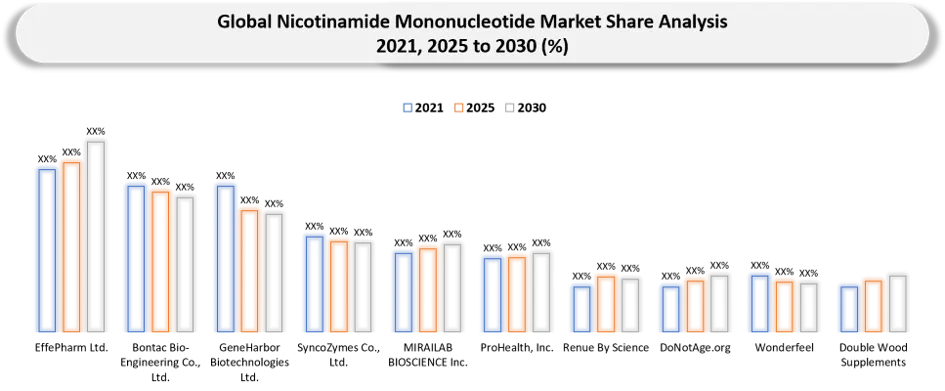
- The global nicotinamide mononucleotide market is fragmented across upstream ingredient manufacturers, consumer supplement brands and research-grade chemical suppliers. EffePharm Ltd., Bontac Bio-Engineering Co., Ltd., GeneHarbor Biotechnologies Ltd. and SyncoZymes Co., Ltd. compete through enzymatic synthesis, high-purity output, production scalability and branded ingredient strategies. MIRAILAB BIOSCIENCE Inc. and ProHealth, Inc. strengthen downstream competition through powders, capsules, tablets, sublingual products and advanced formulations. Merck KGaA, Tokyo Chemical Industry Co., Ltd., Cayman Chemical Company and MedChemExpress LLC serve specialized laboratory and pharmaceutical research requirements.
- Competition is increasingly shifting from basic purity and price toward clinical substantiation, batch-level testing, temperature stability, bioavailability and supply-chain transparency. Liposomal delivery, sustained-release technology and multi-ingredient combinations are becoming important differentiation areas for Wonderfeel, Codeage LLC, PartiQlar and other consumer-facing participants. Established producers benefit from manufacturing scale and distributor relationships, while digital-native brands compete through subscriptions, direct-to-consumer sales and premium positioning. Future market leadership will depend on regulatory readiness, credible human evidence, cost-efficient production, intellectual property protection and geographic diversification. Strategic partnerships between ingredient producers, formulation specialists and finished-product brands are expected to accelerate commercialization and reinforce customer confidence.
Key Companies of Nicotinamide Mononucleotide Market
- EffePharm Ltd. (China)
- Bontac Bio-Engineering Co., Ltd. (China)
- GeneHarbor Biotechnologies Ltd. (China)
- SyncoZymes Co., Ltd. (China)
- MIRAILAB BIOSCIENCE Inc. (Japan)
- ProHealth, Inc. (United States)
- Renue By Science (United States)
- DoNotAge.org (United Kingdom)
- Wonderfeel (United States)
- Double Wood Supplements (United States)
- Codeage LLC (United States)
- PartiQlar (Lithuania)
- NutraBio Labs, Inc. (United States)
- Nutricost (United States)
- Toniiq LLC (United States)
- Youth And Earth (United Kingdom)
- Merck KGaA (Germany)
- Tokyo Chemical Industry Co., Ltd. (Japan)
- Cayman Chemical Company (United States)
- MedChemExpress LLC (United States)
Nicotinamide Mononucleotide Market Major Pain Points
- Regulatory Uncertainty and Uneven Market Access: Different regulatory classifications, novel-food requirements and dietary-supplement rules across countries create uncertainty for NMN manufacturers, distributors and investors.
- Limited Long-Term Human Clinical Evidence: Insufficient large-scale and long-duration clinical trials restrict definitive conclusions regarding NMN’s efficacy, optimal use and long-term safety across diverse populations.
- Inconsistent Product Quality and Purity: Differences in raw-material purity, manufacturing processes, storage conditions and independent testing increase the risk of degraded, contaminated or inaccurately labeled NMN products.
- Lack of Standardized Dosage Guidelines: Widely varying dosage levels and the absence of universally accepted intake recommendations make product comparison difficult and may create consumer safety concerns.
- Unsubstantiated Anti-Aging Claims: Aggressive longevity and age-reversal claims frequently exceed available clinical evidence, increasing regulatory scrutiny and weakening consumer and healthcare-professional confidence.
- Premium Pricing and Consumer Affordability: High-purity ingredients, specialized production and quality-control requirements increase product costs, restricting adoption among price-sensitive consumers and encouraging demand for lower-quality alternatives.
Nicotinamide Mononucleotide Market Recent Developments
- August 2026: MIRAILAB BIOSCIENCE Inc. opened the MIRAILAB Wellness Branch in Osaka, expanding its directly operated specialty retail network for NMN supplements, skincare products and wellness solutions.
- July 2026: MIRAILAB BIOSCIENCE Inc. launched NMN PURE 3000 for PETS, extending NMN supplementation beyond human healthy-aging applications into the companion-animal wellness market.
- June 2026: Bontac Bio-Engineering Co., Ltd. showcased its NAD⁺-related ingredient portfolio at CPHI China 2026, strengthening its commercial focus on high-purity coenzymes, pharmaceutical intermediates and scalable biosynthesis.
- May 2026: The European Food Safety Authority published a favorable scientific opinion concluding that chemically synthesized β-NMN with at least 99% purity is safe for adults at doses of up to 300 mg daily, excluding pregnant and lactating women.
- January 2026: MIRAILAB BIOSCIENCE Inc. launched NMN + Sulforaphane Plus, containing 3,000 mg of NMN per bottle and targeting demand for multi-ingredient healthy-aging formulations.
- December 2025: The U.S. Food and Drug Administration confirmed that NMN is not excluded from the statutory definition of a dietary supplement, reversing its earlier position and reducing regulatory uncertainty in the United States.
- October 2025: EffePharm Ltd. presented its UTHEVER NMN ingredient and LipoAvail delivery technology at SupplySide Global 2025, emphasizing product traceability, advanced delivery and formulation partnerships.
- August 2025: MIRAILAB BIOSCIENCE Inc. launched NMN Prisma Serum, combining NMN with PLGA-based delivery technology and expanding NMN commercialization into premium skincare applications.
- April 2025: Bontac Bio-Engineering Co., Ltd. secured a Chinese patent covering an amorphous crystal form and preparation method for reduced β-NMN disodium salt, strengthening its intellectual-property position in the NAD⁺ precursor market.
Analyst View / Opinion on Nicotinamide Mononucleotide Market
- The market is shifting from niche anti-aging supplementation toward a broader healthy-aging platform spanning dietary supplements, functional beverages, premium skincare and research applications.
- Dietary supplements will remain the principal revenue contributor, supported by consumer preference for capsules, tablets and powders offering dosage convenience, recurring consumption and broad online availability.
- Purchasing decisions will increasingly depend on purity, formulation, dosage strength, manufacturing method, third-party testing, ingredient traceability and compliance with country-specific regulations.
- Microbial fermentation and enzymatic synthesis will strengthen production economics by supporting high-purity output, scalable capacity and potentially lower manufacturing costs than conventional chemical synthesis.
- Gels, creams, liposomal liquids, sublingual products and combination formulations represent differentiated growth opportunities, although absorption, efficacy and healthy-aging claims require stronger human evidence.
- Sustainable market leadership will depend on regulatory compliance, clinical substantiation, transparent labeling, reliable supply and formulation differentiation, alongside credible consumer education that separates evidence-based benefits from overstated longevity claims.
Nicotinamide Mononucleotide Market Target Audience
| INDUSTRY | WHO SHOULD BUY THIS REPORT? | REASON TO BUY THIS REPORT |
| NMN Ingredient Manufacturers | NMN producers, fermentation companies, enzymatic synthesis companies and contract manufacturers | Assess demand by purity grade, production technology, dosage format and application while identifying capacity expansion and customer opportunities. |
| Dietary Supplement Companies | Supplement manufacturers, healthy-aging brands, nutraceutical companies and private-label providers | Evaluate consumer demand, product formats, dosage strengths, competitive positioning, pricing and portfolio expansion opportunities. |
| Pharmaceutical and Biotechnology Companies | NAD⁺ research companies, drug developers, biotechnology firms and clinical-stage organizations | Track clinical evidence, intellectual property, NAD⁺ precursor research and potential therapeutic applications of NMN. |
| Functional Food and Beverage Companies | Functional food producers, beverage manufacturers, nutrition brands and formulation companies | Identify opportunities for incorporating NMN into beverages, meal replacements, nutrition powders and fortified food products. |
| Cosmetics and Personal Care Companies | Skincare manufacturers, beauty brands, cosmetic ingredient companies and dermatology-focused businesses | Assess NMN opportunities across serums, creams, anti-aging skincare and premium beauty formulations. |
| Raw Material Suppliers and Distributors | Ingredient suppliers, chemical distributors, nutraceutical wholesalers and importers | Understand sourcing patterns, purity requirements, supplier competition, pricing, quality standards and geographic demand. |
| Retailers and E-Commerce Platforms | Pharmacies, specialty nutrition retailers, online marketplaces and direct-to-consumer platforms | Evaluate product demand, brand performance, customer preferences, pricing tiers and channel-specific growth opportunities. |
| Research Organizations | Clinical research organizations, universities, research institutes and longevity laboratories | Analyze clinical-trial activity, safety evidence, bioavailability research, dosage studies and unresolved scientific questions. |
| Government and Regulatory Bodies | Food-safety authorities, dietary-supplement regulators, customs agencies and public-health organizations | Support regulatory classification, novel-food assessment, labeling requirements, import controls and consumer-protection policies. |
| Investors and Financial Institutions | Private-equity firms, venture-capital investors, institutional investors and investment banks | Evaluate market potential, regulatory risks, company positioning, production scalability and partnership or acquisition opportunities. |
| Market Research and Consulting Firms | Strategy consultancies, competitive-intelligence teams and healthcare research firms | Support market-entry planning, competitive benchmarking, opportunity assessment and commercial due diligence. |
Why Choose DATAM?
- Data-Driven Insights: Access granular NMN market intelligence covering market size, product-form shares, purity grades, dosage ranges, application segments, consumer adoption, distribution channels, pricing, competitive positioning and country-level regulatory dynamics, supported by primary interviews with industry experts.
- Post-Purchase Support and Expert Analyst Consultations: Engage directly with our analysts for customized guidance on product positioning, supplier selection, market entry, portfolio expansion, competitor assessment, pricing strategy and commercialization opportunities across supplements, functional foods and personal care.
- White Papers and Case Studies: Receive periodic insights covering NMN research, manufacturing innovations, clinical evidence, regulatory developments, product launches, delivery technologies, ingredient combinations and evolving healthy-aging consumer preferences.
- Annual Updates on Purchased Reports: Stay informed through annual updates covering regulatory decisions, clinical findings, patent activity, capacity expansions, product launches, partnerships, pricing developments and competitive shifts. Terms and conditions apply.
- Specialized Focus on Emerging Markets: Gain country-specific intelligence on consumer awareness, disposable income, regulatory pathways, supplement adoption, distribution infrastructure, local manufacturers and commercialization opportunities across high-growth emerging markets.
- Value of DataM Reports: Obtain tailored intelligence addressing specific business questions concerning NMN purity, bioavailability, dosage, sourcing, clinical substantiation, supplier benchmarking, product differentiation, regulatory compliance, channel strategy and investment priorities beyond generic databases.
What DATAM Uniquely Provides
- In-depth segmentation of the nicotinamide mononucleotide market by product category, grade, purity, production method, form, application, distribution channel and region.
- Competitive analysis of leading NMN companies covering product portfolios, ingredient purity, formulation technology, dosage strength, clinical substantiation, quality certifications, pricing, distribution reach, brand positioning and commercialization strategy.
- Comprehensive assessment of NMN demand across healthy-aging consumers, fitness-oriented users, middle-aged and older adults, premium supplement buyers, functional-food applications, cosmetics and personal care, research applications and companion-animal wellness.
- Actionable intelligence on NMN pricing, regulatory pathways, sourcing models, production technologies, supply-chain traceability, product-quality testing, patent activity, retail strategies, licensing arrangements, strategic partnerships and investment opportunities.
- Analyst forecasts highlighting high-growth product formats, commercially attractive consumer groups, country-level expansion opportunities and emerging competitive threats across capsules, tablets, powders, liquid formulations, combination supplements, functional foods and NMN-based skincare products.


























































