


Neurosensory Supplements Market Size and Overview
The global Neurosensory Supplements market reached an estimated US$ 11.84 billion in 2025 and is expected to reach US$ 24.96 billion by 2035, growing at a CAGR of 7.7% during 2026-2035. The market includes nutritional products supporting normal vision, cognitive performance, auditory wellness, balance, sensory resilience and multi-sensory healthy aging. Growth is supported by population aging, greater consumer attention to brain and eye health, sustained digital-screen exposure and wider availability of condition-positioned supplements through online and pharmacy channels.
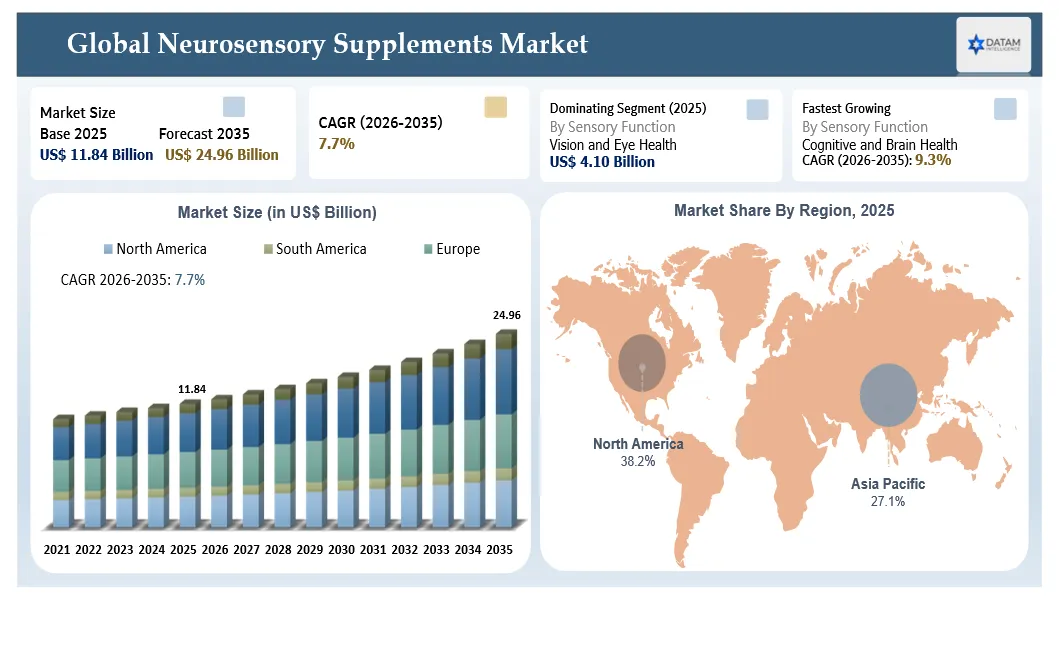
Vision and eye-health products represent the largest sensory-function segment because lutein, zeaxanthin, omega-3s, zinc and antioxidant formulations have an established retail presence. Cognitive and brain-health supplements are expected to grow fastest as consumers seek support for memory, concentration, stress resilience and healthy aging. Hearing and balance formulations remain smaller but are attracting interest from aging consumers and practitioner-led brands. The category is evolving from broad multivitamin positioning toward more specific sensory-function claims supported by ingredient dosing, clinical substantiation and transparent sourcing.
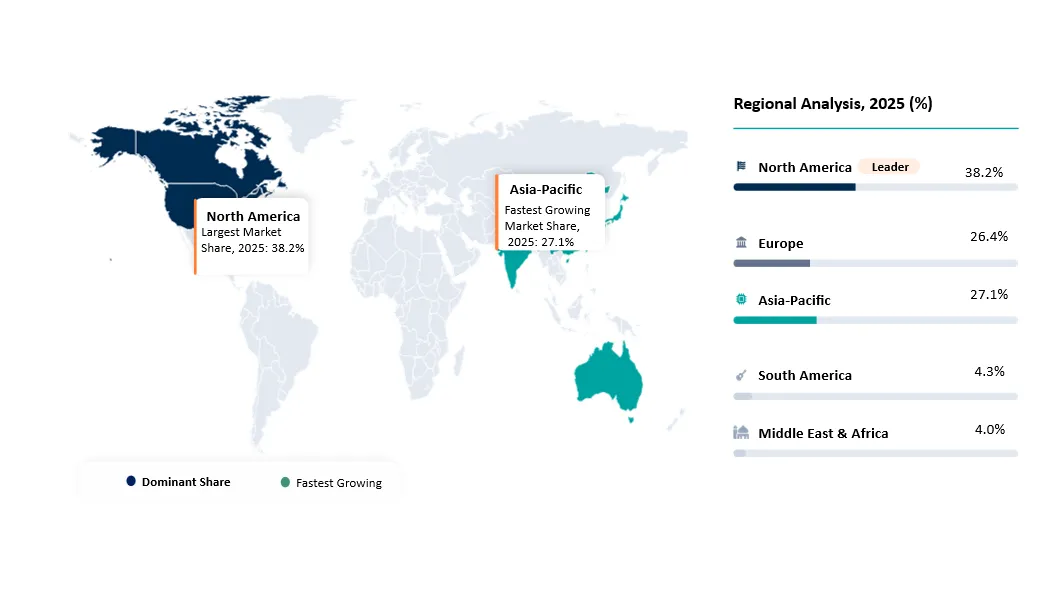
North America leads through high supplement penetration, established specialty retail, strong direct-to-consumer brands and consumer willingness to pay for premium formulations. Europe is shaped by stricter claims controls and evidence requirements. Asia-Pacific is expected to grow fastest through expanding middle-class demand, healthy-aging programs, e-commerce and strong consumer familiarity with traditional botanical ingredients. Competitive advantage increasingly depends on trustworthy claims, clinically relevant doses, third-party testing and the ability to connect supplementation with digital assessment, practitioner guidance and repeat-purchase programs.
| Metric | Details |
| 2025 Market Size | US$ 11.84 Billion |
| 2035 Projected Market Size | US$ 24.96 Billion |
| CAGR 2026-2035 | 7.7% |
| Largest Sensory Function | Vision and Eye Health, 34.6% share in 2025 |
| Fastest-Growing Sensory Function | Cognitive and Brain Health, 9.3% CAGR |
| Largest Region | North America, 38.2% share in 2025 |
| Fastest-Growing Region | Asia-Pacific, 9.0% CAGR |
| Largest Dosage Form | Tablets and Capsules, 43.1% share in 2025 |
Neurosensory Supplements Market Key Takeaways
- Vision and eye-health supplements accounted for an estimated 34.6% of global market value in 2025, supported by established carotenoid and antioxidant formulations.
- Cognitive and brain-health products are projected to expand at a 9.3% CAGR during 2026-2035 as consumers prioritize memory, focus and healthy cognitive aging.
- Tablets and capsules represented approximately 43.1% of sales in 2025, while gummies and chewables are expected to grow at an 8.8% CAGR.
- Older adults generated an estimated 36.9% of 2025 demand because sensory decline, poly-nutrient needs and preventive health spending increase with age.
- North America held an estimated 38.2% share in 2025, reflecting strong retail access, high supplement usage and established premium brands.
- Asia-Pacific is forecast to grow at about 9.0% annually through 2035, driven by aging populations, e-commerce and preventive nutrition adoption.
- Online marketplaces and direct-to-consumer channels represented nearly 31.4% of 2025 sales and will continue to gain share through subscriptions and personalized bundles.
- Clinical substantiation and claim compliance are becoming stronger purchase criteria as regulators and consumers scrutinize sensory and cognition-related claims.
Neurosensory Supplements Industry Trends and Strategic Insights
- Product development is moving from general wellness toward function-specific formulations for eye comfort, cognitive performance, hearing support and healthy sensory aging.
- Brands are combining carotenoids, omega-3s, magnesium, B vitamins, botanical nootropics and adaptogens to create broader multi-pathway products.
- Digital-screen exposure is increasing demand for products positioned around eye strain, visual comfort and sustained concentration among students and professionals.
- Healthy-aging brands are linking vision, cognition and balance in multi-sensory bundles aimed at preserving independence and daily function.
- Practitioner and pharmacy channels are gaining importance for higher-priced products that require explanation, dosing guidance and confidence in ingredient quality.
- Third-party testing, transparent sourcing and clinically meaningful doses are becoming stronger differentiators than long ingredient lists.
- Personalization platforms are using questionnaires, purchase history and wearable data to recommend product combinations and improve retention.
- Regulators continue to distinguish structure-function claims from disease claims, increasing the need for careful language and substantiation.
Neurosensory Supplements Market Scope
| Metrics | Details |
| 2025 Market Size | US$ 11.84 Billion |
| 2035 Projected Market Size | US$ 24.96 Billion |
| CAGR | 7.7% |
| Largest Market | North America |
| Fastest Growing Market | Asia-Pacific |
| By Sensory Function | Vision and Eye Health, Hearing and Auditory Support, Cognitive and Brain Health, Balance and Vestibular Support, Taste and Smell Support, Multi-Sensory Healthy Aging |
| By Ingredient Category | Vitamins and Minerals, Omega-3 Fatty Acids, Carotenoids, Botanicals and Adaptogens, Amino Acids and Nootropic Nutrients, Probiotics and Gut-Brain Ingredients, Combination Formulas |
| By Product Type | Single-Ingredient Supplements, Multi-Ingredient Formulas, Condition-Positioned Formulas, Daily Preventive Wellness Products, Professional and Practitioner-Directed Products |
| By Dosage Form | Tablets and Capsules, Softgels, Gummies and Chewables, Powders and Sachets, Liquids and Drops, Functional Shots and Beverages |
| By Consumer Group | Children and Adolescents, Adults, Older Adults, Digital-Screen-Intensive Consumers, Athletes and High-Performance Users, Professionals and Students |
| By Distribution Channel | Pharmacies and Drugstores, Supermarkets and Hypermarkets, Specialty Nutrition Stores, Online Marketplaces, Direct-to-Consumer, Healthcare and Practitioner Channels |
Why does this report matter in 2026?
In 2026, neurosensory wellness is becoming a distinct commercial category rather than a loose combination of eye-health and brain-health products. Consumers increasingly connect vision, hearing, balance, cognition and healthy aging as linked dimensions of functional independence. This creates opportunities for brands that can build coherent product systems while avoiding exaggerated disease claims. The report helps separate credible, evidence-led growth areas from crowded formulations based mainly on marketing language.
The timing matters because regulation and consumer scrutiny are rising alongside category demand. In the United States, dietary supplement companies remain responsible for product safety, truthful labeling and substantiation of structure-function claims. Products cannot legally claim to diagnose, treat, cure or prevent disease unless regulated as drugs. These requirements make claim architecture, clinical evidence and quality systems central to commercial strategy rather than secondary legal tasks.
The market is also being reshaped by digital commerce and personalized nutrition. Subscription models, quiz-based recommendations and targeted advertising can lower customer-acquisition barriers but also increase scrutiny of claims and testimonials. Companies need clearer segmentation by consumer need, ingredient evidence, dosage form and channel. This report supports portfolio prioritization, retailer strategy, ingredient sourcing, partnership decisions and investment screening through 2035.
Neurosensory Supplements Market White Space & Investment Opportunities
- Multi-sensory healthy-aging formulations combining eye, cognition and balance support for older adults.
- Evidence-led hearing and vestibular wellness products with clear boundaries between nutritional support and disease treatment.
- Digital-screen wellness bundles combining carotenoids, omega-3s, hydration and cognitive-support nutrients.
- Practitioner-grade formulations with transparent dosing, third-party testing and professional education.
- Personalized subscription programs that adjust products by age, diet, medication profile and sensory concerns.
- Low-sugar gummies, powders and functional shots designed for consumers who resist traditional capsules.
- Ingredient platforms supported by bioavailability data, clinical endpoints and branded intellectual property.
- Asia-Pacific localization using regionally accepted botanicals while maintaining global quality and claims standards.
Neurosensory Supplements: Future Market Transformation
The market will shift from isolated single-function products toward integrated sensory-health portfolios. Vision, cognition, hearing and balance share common consumer drivers such as aging, oxidative stress, vascular health, metabolic status and lifestyle exposure. Brands will increasingly organize products by functional pathways and life stages rather than by isolated ingredients. This supports bundles, subscriptions and cross-selling but requires clear explanation of what each product can reasonably support.
Evidence quality will become more visible. Retailers and practitioners will ask for finished-product data, clinically relevant ingredient doses, stability information and reliable quality controls. Products that use proprietary ingredients may gain advantage when they provide stronger documentation and consistent supply. At the same time, simple formulations can remain competitive when they are transparent, affordable and easy to understand.
Digital assessment will influence product discovery and retention. Vision-screening tools, cognitive questionnaires, sleep tracking and lifestyle data may guide product recommendations, although these systems must avoid medical diagnosis without appropriate oversight. By 2035, leading companies are likely to combine supplements with education, digital monitoring and professional referral pathways. The commercial model will therefore extend beyond product sales into recurring support and data-informed consumer engagement.
Neurosensory Supplements Market Buyer Decision-Making Criteria
Consumers evaluate neurosensory supplements through perceived need, ingredient familiarity, expected benefit, price, dosage convenience and trust. Older adults may prioritize physician or pharmacist recommendations, while younger consumers often discover products through digital content and online reviews. Claims related to memory, hearing or vision are sensitive because they can imply disease treatment. Clear structure-function language, realistic expectations and transparent labeling therefore influence trust and repeat purchase.
Retailers assess category growth, margin, brand support, evidence quality, complaint risk and shelf differentiation. Practitioner channels place greater weight on ingredient dose, interactions, quality certifications and clinical relevance. Investors examine repeat purchase, customer-acquisition efficiency, subscription retention, gross margin, regulatory exposure and the defensibility of branded ingredients or clinical data. Products that combine credible positioning with strong operational execution are more likely to sustain premium pricing.
Neurosensory Supplements Market Economic & Investment Analysis
The market benefits from recurring consumption and relatively low manufacturing capital compared with pharmaceuticals, but economic performance varies sharply by formulation and channel. Commodity vitamin products face price competition and retailer power. Premium carotenoid, omega-3, nootropic and botanical formulations can support higher margins when they use branded ingredients, practitioner endorsement or clear clinical positioning. Customer acquisition is often the largest variable cost for direct-to-consumer brands, making repeat purchase and subscription retention critical to unit economics.
Investment value is concentrated in businesses that control differentiated ingredients, trusted brands, practitioner access or efficient digital distribution. Contract manufacturing lowers entry barriers but can reduce formulation uniqueness and create dependence on shared suppliers. Strategic buyers often favor companies with clean compliance histories, evidence-backed products and diversified channels. Brands with excessive reliance on paid social media or unsubstantiated claims carry higher diligence risk.
Regional economics differ. North America offers premium pricing and direct-to-consumer scale but also high marketing costs and litigation exposure. Europe has tighter claim controls that can slow launch but may reward companies with stronger evidence. Asia-Pacific provides faster volume growth and e-commerce reach, though localization, registration and distributor economics vary. Companies should model gross margin, regulatory cost, channel discounting, return rates and customer lifetime value by region rather than applying one global assumption.
From an investment perspective, the category should be evaluated by need state, evidence level and replenishment behavior. Eye-health and general cognitive products provide larger established revenue pools. Hearing, balance and taste-smell support offer smaller but less crowded opportunities. Multi-sensory healthy-aging platforms may create the strongest long-term portfolio value if they maintain disciplined claims and avoid over-complex formulations.
Neurosensory Supplements Investment Trends in the Market
- Capital is moving toward healthy-aging platforms that combine cognitive, visual and mobility-related support under one consumer proposition.
- Ingredient suppliers are investing in branded carotenoids, omega-3s, magnesium formats and botanical extracts supported by bioavailability and human studies.
- Direct-to-consumer companies are funding subscription programs, personalized quizzes and retention analytics to improve recurring revenue.
- Pharmacy and practitioner brands are expanding professional education and third-party testing to justify premium positioning.
- Investors are screening claim language and regulatory history more closely because neurosensory benefits can easily drift into disease claims.
- Partnerships between supplement brands, digital-health platforms and assessment providers are emerging around personalized recommendations.
- Asia-Pacific expansion is attracting investment in localized formulations, e-commerce operations and local manufacturing partnerships.
- M&A interest is favoring brands with cross-category reach across eye health, cognition, sleep, stress and healthy aging.
Strategic Indicators for the Neurosensory Supplements Market
High Regulation Impact
Dietary supplements are regulated differently from drugs. In the U.S., manufacturers are responsible for safety, labeling and substantiation. Structure-function claims require support and cannot imply treatment of disease. European and other markets impose additional ingredient and claims controls. Regulatory competence therefore influences launch speed, retailer acceptance and brand value.
High Investment Activity
Investment is increasing around healthy aging, cognitive wellness, eye health and personalized nutrition. Capital favors brands with strong retention, clinically relevant formulations, credible founders and diversified channels. Ingredient suppliers with proprietary data can also attract strategic partnerships.
Supply Chain Disruption
Omega-3 oils, botanical extracts, specialty carotenoids and minerals depend on variable agricultural, marine and chemical supply chains. Quality variation, contamination risk and long lead times can affect availability. Dual sourcing, specification control and supplier audits are essential.
Pricing Volatility
Commodity vitamins face price competition, while premium ingredients can fluctuate with harvests, extraction capacity and branded-ingredient fees. Retail promotions and digital advertising costs also influence net realized price. Companies need disciplined SKU and channel economics.
Procurement Pressure
Large retailers demand reliable fill rates, promotional support, documentation and favorable payment terms. Practitioner channels require stronger technical support. Direct-to-consumer brands reduce retailer dependence but take on acquisition and fulfillment costs.
New Technology Adoption
Microencapsulation, improved omega-3 stabilization, bioavailable mineral formats, low-sugar gummies and digital personalization are changing product design. Adoption depends on cost, consumer understanding and demonstrated value.
Regional Expansion Opportunity
Asia-Pacific, the Gulf and selected Latin American markets offer growth through aging populations, pharmacy expansion and e-commerce. Success requires local claim compliance, flavor adaptation, price architecture and trusted distribution partners.
Government Policy Support
Healthy-aging policy, nutrition education and preventive care can support category awareness, but governments generally do not endorse specific supplements. Policy is more influential through labeling, quality standards and consumer protection.
Pricing Intelligence
Premium pricing is most defensible when products use clinically relevant doses, documented sourcing and professional endorsement. Bundle discounts and subscriptions can improve retention but should not hide weak standalone economics.
AI Impact Analysis of Neurosensory Supplements Market
AI is being used to analyze consumer reviews, search behavior, product combinations and churn patterns. Brands can identify emerging needs such as digital eye strain, memory concerns or balance support and refine messaging more quickly. Recommendation engines can assemble personalized bundles based on age, diet, lifestyle and product preferences. These systems must avoid presenting a supplement recommendation as a diagnosis or medical treatment.
AI can also support formulation screening by organizing published evidence, ingredient interactions and target populations. Quality teams can use anomaly detection for batch data and adverse-event monitoring. Marketing teams can improve segmentation, but automated content creates compliance risk when generated claims exceed approved positioning. Human review, evidence libraries and controlled claim vocabularies are therefore necessary.
Disruption Analysis of Neurosensory Supplements Market
Direct-to-consumer distribution is disrupting traditional category development by allowing small brands to launch narrow formulations and build communities around specific needs. This improves speed but increases customer-acquisition costs and exposes brands to rapid imitation. Retailers are responding with exclusive products, private labels and stricter evidence requirements.
Personalization is disrupting the one-size-fits-all multivitamin model. Consumers increasingly expect formulas aligned with age, screen exposure, sleep, stress and sensory concerns. Digital tools can support this transition, though most products remain standardized. A further disruption comes from medical and digital interventions that compete for consumer spending. Supplement brands must define a credible role alongside clinical care rather than overstate outcomes.
Neurosensory Supplements Market BCG Matrix: Company Evaluation
| Category | Representative Companies | Strategic Interpretation |
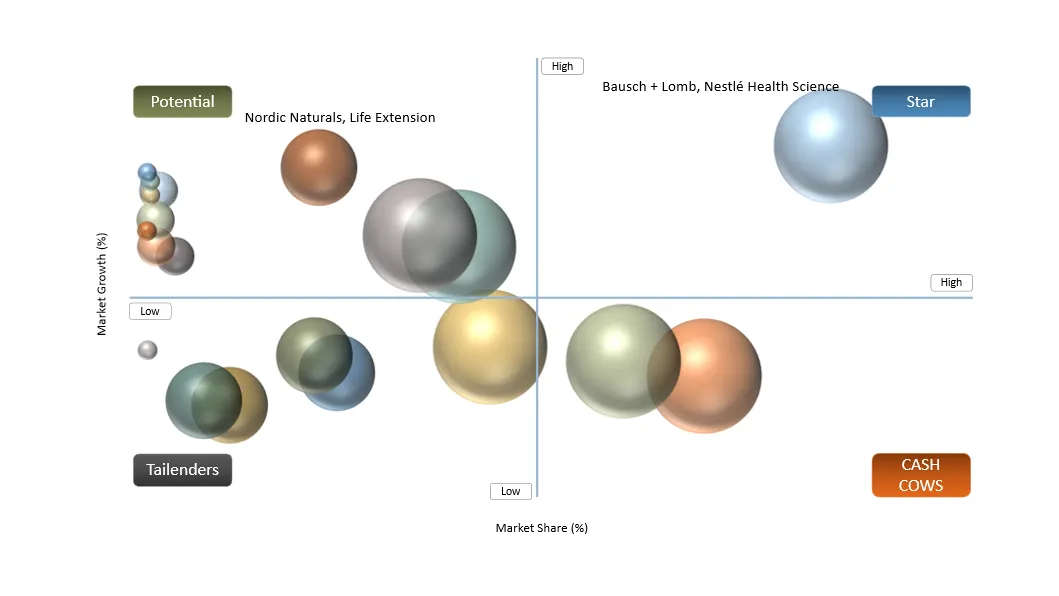
| Stars | Bausch + Lomb, Nestlé Health Science, Thorne | Strong brand or channel presence in fast-growing eye, cognition and healthy-aging segments. |
| Potential | Nordic Naturals, Life Extension, Onnit, Neuriva | Differentiated formulations and growing consumer relevance, with scale dependent on evidence and channel expansion. |
| Cash Cows | Nature’s Bounty, NOW Foods, Pharmavite, Amway | Large established portfolios and broad distribution in mature vitamin and supplement categories. |
| Tailenders | Small single-SKU and weakly substantiated brands | Limited differentiation, high paid-media dependence and elevated compliance risk. |
Stars combine established market access with strong exposure to high-growth sensory-health categories. Potential players have differentiated products or communities but need wider distribution, stronger clinical support or improved retention. Cash Cows benefit from scale and broad consumer trust, while Tailenders face pressure from retailer rationalization and rising evidence expectations.
Neurosensory Supplements Market Dynamics
Driver Impact Analysis
| Driver | Market Growth Impact | Demand Concentration | Impacted Use Case | Strategic Impact |
| Aging populations | High | Older adults | Vision, cognition, hearing and balance | Expands recurring preventive-health demand. |
| Digital-screen exposure | High | Students and professionals | Eye comfort and concentration | Creates younger consumer entry points. |
| Healthy-aging awareness | High | Global premium consumers | Multi-sensory wellness | Supports bundles and premium positioning. |
| E-commerce expansion | Medium-High | Urban consumers | Discovery and subscriptions | Improves reach but increases acquisition competition. |
Driver: Healthy Aging and Preventive Sensory Support
Longer life expectancy increases the number of consumers concerned about maintaining vision, hearing, cognition and balance. Supplements are often purchased before a diagnosed condition, which makes preventive positioning commercially important. Brands can expand demand through education and age-specific formulations, but they must communicate realistic benefits and encourage appropriate clinical evaluation when symptoms suggest disease.
Restraint Impact Analysis
| Restraint | Drag on Market Growth | Primary Impact Area | Impacted Use Case | Strategic Impact |
| Inconsistent evidence | High | Claims and trust | Cognitive and hearing support | Limits premium pricing and retailer confidence. |
| Quality variation | High | Brand reputation | All segments | Raises testing and sourcing requirements. |
| Regulatory claim limits | Medium-High | Marketing | Disease-adjacent positioning | Restricts aggressive messaging. |
| Consumer skepticism | Medium | Retention | Premium products | Requires transparent evidence and realistic expectations. |
Restraint: Evidence Gaps and Disease-Adjacent Claims
Neurosensory outcomes are complex and can be influenced by age, medication, sleep, metabolic health and diagnosed disease. Evidence for a single ingredient may not transfer directly to a finished product. Marketing can also imply treatment of hearing loss, dementia, macular degeneration or vertigo, creating compliance risk. Companies need claim-by-claim substantiation, finished-product rationale and clear referral guidance.
Neurosensory Supplements Market Segment Analysis
The global Neurosensory Supplements market is segmented by sensory function, ingredient category, product type, dosage form, consumer group, distribution channel and region.
By Sensory Function
Vision and Eye Health Will Remain the Largest Segment
Vision and eye-health products lead because consumers recognize ingredients such as lutein, zeaxanthin, zinc and omega-3s and because the category has established pharmacy and practitioner support. Cognitive products will grow faster as memory, focus and healthy-aging concerns expand. Hearing, balance and taste-smell support remain smaller and require careful evidence-led positioning.
By Ingredient Category
Vitamins, Minerals and Carotenoids Will Anchor Category Revenue
Vitamins and minerals remain the broadest ingredient base due to familiarity, affordability and use across eye, cognition and healthy-aging products. Carotenoids maintain a strong position in eye health. Omega-3s support both visual and cognitive positioning. Botanicals and nootropic nutrients provide faster innovation but face greater evidence and claim scrutiny.
By Product Type
Multi-Ingredient Formulas Will Lead Commercial Value
Multi-ingredient formulas dominate premium neurosensory positioning because they address several pathways and simplify consumer routines. Their success depends on clinically relevant doses and transparent rationale. Single-ingredient products remain important where consumers seek a known nutrient or practitioner recommendation.
By Dosage Form
Tablets and Capsules Will Remain Largest While Gummies Grow Fastest
Tablets and capsules lead through manufacturing efficiency, dosing flexibility and shelf stability. Softgels are important for omega-3s and lipid-soluble carotenoids. Gummies and chewables are expanding among younger adults but must manage sugar, stability and dose limitations. Powders and shots create opportunities for functional performance positioning.
By Consumer Group
Older Adults Will Generate the Largest Revenue Pool
Older adults account for the largest share because sensory and cognitive concerns increase with age. Adults exposed to long screen hours create a faster-growing digital-wellness segment. Students and professionals seek focus and eye-comfort products, while athletes may prioritize reaction, concentration and visual performance.
By Distribution Channel
Online and Direct-to-Consumer Channels Will Gain Share
Pharmacies retain trust for eye and healthy-aging products, while online channels gain share through education, reviews, bundles and subscriptions. Practitioner channels support premium evidence-led products. Retail success depends on clear navigation because neurosensory needs cross conventional eye-health, brain-health and multivitamin aisles.
Neurosensory Supplements Market Geographical Penetration
| Region | 2025 Share | 2026-2035 CAGR | Strategic Position |
| North America | 38.2% | 7.1% | Largest market |
| Europe | 26.4% | 6.5% | Evidence-led premium market |
| Asia-Pacific | 27.1% | 9.0% | Fastest-growing region |
| South America | 4.3% | 7.4% | Emerging pharmacy and e-commerce demand |
| Middle East and Africa | 4.0% | 7.8% | Premium urban and pharmacy-led growth |
U.S. Neurosensory Supplements Market Outlook
The U.S. is the largest national market due to high supplement penetration, strong pharmacy and e-commerce infrastructure and broad consumer interest in eye and brain health. Growth is shifting toward condition-positioned products, subscriptions and premium ingredients. Regulatory discipline is essential because structure-function claims require substantiation and products cannot legally claim to treat disease.
Canada Neurosensory Supplements Market Outlook
Canada combines high supplement usage with a regulated natural-health-product framework. Consumers favor recognized ingredients, bilingual labeling and pharmacy trust. Opportunities are strongest in healthy aging, digital eye comfort and practitioner-led products.
Germany Neurosensory Supplements Market Outlook
Germany is a leading European market with strong pharmacy influence and consumer preference for quality and evidence. Claims constraints favor straightforward formulations and professional recommendation. Eye-health and healthy-aging products have established demand.
UK Neurosensory Supplements Market Outlook
The UK has a dynamic online supplement market and high interest in cognition, stress and digital wellness. Retailers increasingly scrutinize claims and quality. Subscription and personalized-nutrition models are gaining traction.
France Neurosensory Supplements Market Outlook
France offers growth through pharmacies, para-pharmacies and beauty-wellness crossover. Consumers value ingredient provenance and professional guidance. Formulations linking cognition, sleep and stress are expanding.
Japan Neurosensory Supplements Market Outlook
Japan is strategically important because of population aging, high functional-food awareness and demand for vision, cognition and mobility support. Local evidence, dosage expectations and approved claim frameworks influence product design.
China Neurosensory Supplements Market Outlook
China is a large emerging market supported by e-commerce, cross-border sales and growing healthy-aging demand. Trust, authenticity and local registration are central. Premium imported ingredients can perform well when supported by education.
India Neurosensory Supplements Market Outlook
India is expanding through digital commerce, urban preventive health and a large young professional population. Cognitive performance, eye comfort and general wellness offer growth, while price sensitivity requires tiered products.
Australia Neurosensory Supplements Market Outlook
Australia has strong complementary-medicine usage and established pharmacy brands. Quality, practitioner recommendation and export-oriented manufacturing support the market. Healthy aging and eye health are core segments.
Brazil Neurosensory Supplements Market Outlook
Brazil combines pharmacy strength with social-commerce growth. Products for cognitive energy, eye health and healthy aging are gaining attention, but affordability and regulatory registration affect adoption.
Middle East and Africa Neurosensory Supplements Market Outlook
Growth is concentrated in Gulf markets, Israel and South Africa, where pharmacy and premium wellness channels are developed. Opportunities include imported eye-health, cognition and healthy-aging products. Wider regional expansion is limited by affordability and fragmented distribution.
Regional Strategic Trends Summary
- North America is moving toward personalized bundles, subscriptions and premium evidence-led products.
- Europe rewards conservative claims, pharmacy credibility and documented ingredient quality.
- Japan leads in age-focused functional nutrition and structured claim frameworks.
- China and India provide strong e-commerce growth but require localization and price segmentation.
- Gulf markets offer premium imported-product demand through pharmacies and wellness clinics.
- Latin America is expanding through pharmacy chains, social commerce and affordable multi-benefit formulas.
Neurosensory Supplements Market Competitive Landscape
- Competition spans global supplement groups, eye-health specialists, cognitive-wellness brands, practitioner companies and ingredient-led start-ups.
- Large companies benefit from distribution, procurement and consumer trust, while specialist brands differentiate through clinical positioning and targeted communities.
- Private labels compete in commodity vitamins, increasing pressure on brands to provide formulation, evidence or service differentiation.
- Digital brands can scale quickly but face high acquisition costs, platform dependence and claim-compliance risk.
- Partnerships with pharmacies, optometrists, audiologists, nutritionists and healthy-aging platforms can strengthen credibility and referral.
Competitive intensity is highest in eye health and cognitive wellness, where shelf space and digital advertising are crowded. Hearing, balance and multi-sensory aging are less mature but require careful evidence and consumer education. Market leadership will depend on trusted claims, quality systems, ingredient sourcing, repeat-purchase economics and channel diversification.
Key Companies of Neurosensory Supplements Market
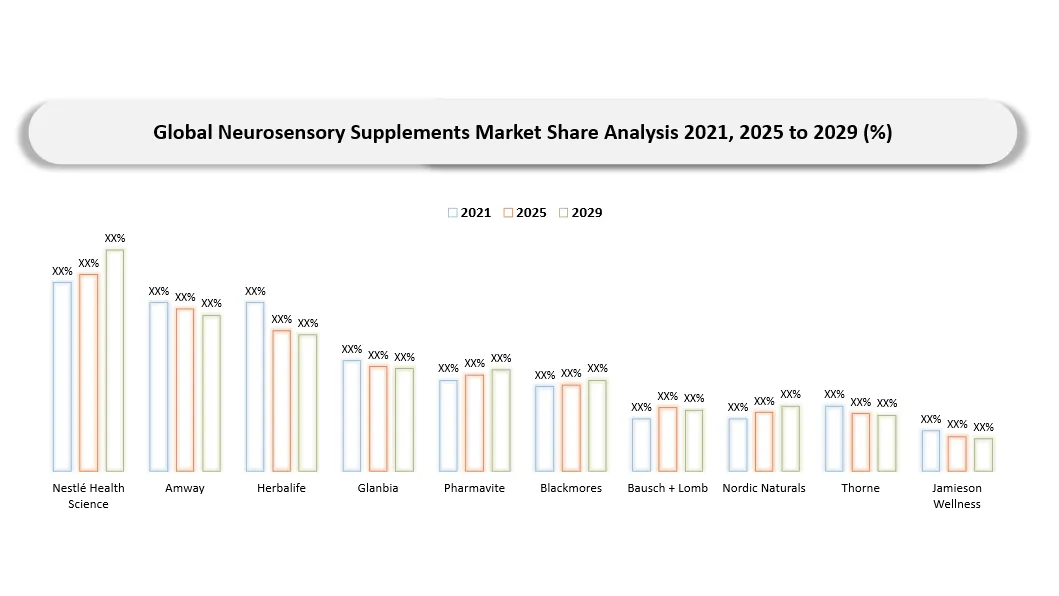
- Bausch + Lomb
- The Nature’s Bounty Co.
- Nestlé Health Science
- Amway
- Herbalife
- Glanbia
- NOW Foods
- Life Extension
- Thorne
- Nordic Naturals
- Church & Dwight
- Pharmavite
- Jamieson Wellness
- Blackmores
- Swisse Wellness
- Ocuvite
- PreserVision
- Quincy Bioscience
- Neuriva
- Onnit
Neurosensory Supplements Market Major Pain Points
- Inconsistent clinical evidence across ingredients and finished products.
- Risk of disease-adjacent or misleading claims.
- Variable ingredient quality, oxidation and stability.
- Consumer confusion between prevention, support and treatment.
- High customer-acquisition costs in digital channels.
- Dose limitations in gummies and compact formats.
- Interactions with medicines and need for professional guidance.
- Fragmented category placement across eye, brain and healthy-aging aisles.
Neurosensory Supplements Market Recent Developments
- 2026: U.S. supplement-industry stakeholders continued discussions with FDA on how the definition of dietary ingredients should apply to newer wellness compounds, highlighting continued regulatory uncertainty around novel ingredients.
- 2025-2026: Major retailers expanded brain-health, eye-health and healthy-aging assortments, with stronger emphasis on third-party testing, transparent dosing and subscription replenishment.
- 2025-2026: Product launches increasingly combined magnesium, L-theanine, B vitamins, omega-3s, carotenoids and botanical nootropics in multi-pathway cognitive and visual-wellness formulas.
- 2025-2026: Direct-to-consumer brands increased use of quizzes and digital personalization to recommend age, lifestyle and need-specific supplement bundles.
- 2025-2026: Ingredient suppliers expanded clinical and bioavailability support for branded carotenoids, omega-3 concentrates and mineral formats used in sensory-health products.
Analyst View / Opinion on Neurosensory Supplements Market
- The market will sustain growth because vision, cognition, hearing and balance are central to independence and quality of life across aging populations.
- Vision and cognitive products will remain the revenue anchors, while hearing and balance offer less crowded but more evidence-sensitive white spaces.
- Brands should avoid broad neurological promises and build claims from ingredient dose, finished-product rationale and consumer-relevant endpoints.
- Older adults remain the largest revenue pool, but younger screen-intensive consumers provide an important acquisition pathway.
- Online growth will continue, although pharmacy and practitioner endorsement will remain important for high-trust sensory categories.
- Long-term winners will combine quality, evidence, clear positioning and strong retention rather than relying on novelty or influencer marketing.
Neurosensory Supplements Market Target Audience
| Industry | Who Should Buy This Report? | Reason to Buy This Report |
| Supplement Brands | Portfolio, innovation, marketing and business-development teams | Prioritize sensory functions, ingredients, formats and channels. |
| Ingredient Suppliers | Carotenoid, omega-3, mineral, botanical and nootropic suppliers | Identify formulation demand and partnership opportunities. |
| Retail and Pharmacy | Category managers, pharmacy chains and e-commerce operators | Optimize assortment, pricing and category navigation. |
| Healthcare and Practitioners | Nutritionists, pharmacists, optometrists and wellness providers | Understand product evolution and evidence expectations. |
| Contract Manufacturing | Formulators, manufacturers and packaging suppliers | Assess demand for dosage forms and quality capabilities. |
| Investors and Consulting | Private equity, venture capital and strategy teams | Evaluate market growth, brand quality and regulatory risk. |
Why Choose DATAM?
- Data-driven insights combining market sizing, consumer behavior, ingredient trends and country-level access.
- Post-purchase analyst consultations for portfolio strategy, market entry and custom segmentation.
- Annual updates covering launches, regulation, partnerships and competitive change.
- Specialized focus on emerging categories and underserved market white spaces.
- Actionable analysis connecting evidence, formulation, channel economics and buyer criteria.
What DATAM Uniquely Provides
- Ten-year forecasts across sensory function, ingredients, product type, dosage form, consumer group, channel and region.
- Detailed separation of vision, cognition, hearing, balance, taste-smell and multi-sensory healthy aging.
- Buyer-focused analysis of evidence, claims, quality, pricing and repeat purchase.
- Country-level views linking demographics, retail, regulation and e-commerce.
- Strategic recommendations for partnerships, product design and channel expansion.


























































