


Natural Dyes Market Overview
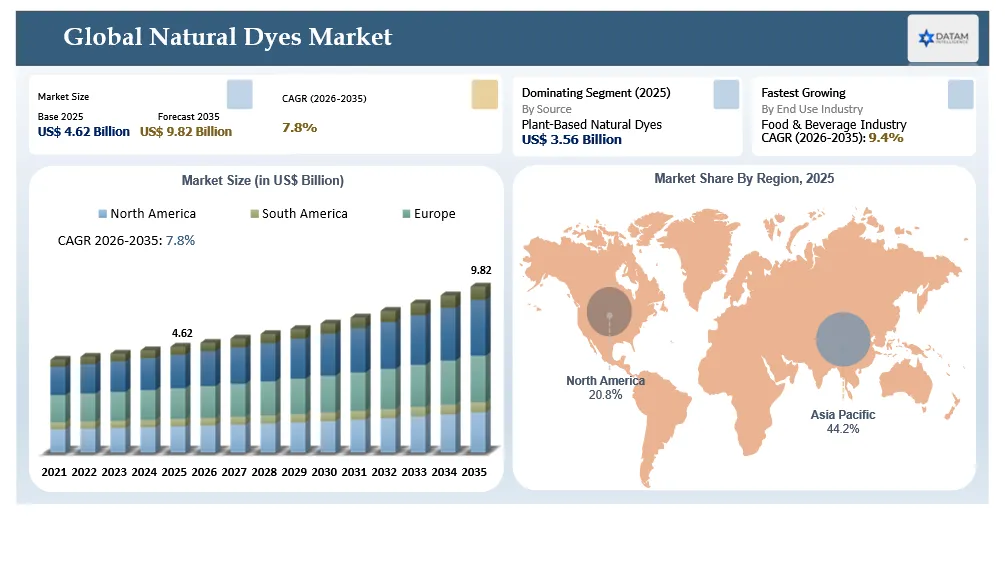
The global natural dyes market reached US$ 4.62 billion in 2025 and is expected to reach US$ 9.82 billion by 2035, growing with a CAGR of 7.8% during the forecast period 2026-2035.
The natural dyes market is experiencing steady growth due to increasing efforts towards sustainability, changing regulations and rising preference of customers for ingredients derived from nature within different end-use industries. The Textiles Industry, which uses around 70 billion kg of dyes on an annual basis throughout the world, is seen making an effort towards utilizing eco-friendly dye solutions due to pollution caused by effluents and risks involved with synthetic dyes. Dyeing and finishing activities of Textiles Industry form almost 20% of industrial water pollution in the world, which makes companies opt for environmentally friendly dye solutions. Moreover, the global trend of Clean Label further promotes market growth due to rising preference for products made from natural ingredients.
Innovations in technology are significantly increasing the commercial viability of natural dyes. More advanced extraction technologies can increase the efficiencies of pigment extraction by 20% to 35%, as compared to the traditional methods of pigment extraction, whereas enzyme-based extraction has been found to decrease the amount of energy consumed by up to 30% in the manufacturing process of pigments. Additionally, sustainable dyeing technologies that make use of natural dyes can help cut down water usage by 25% to 40% through their integration with optimized low-liquor ratio dyeing systems. Increased investment in bio-based manufacturing techniques and vertical supply chains is being made to ensure increased color stability and sustainability. Sustainable pigment production and superior product formulations will continue to increase the commercial applications of natural dyes in the forecast period.
Natural Dyes Market Key Takeaways
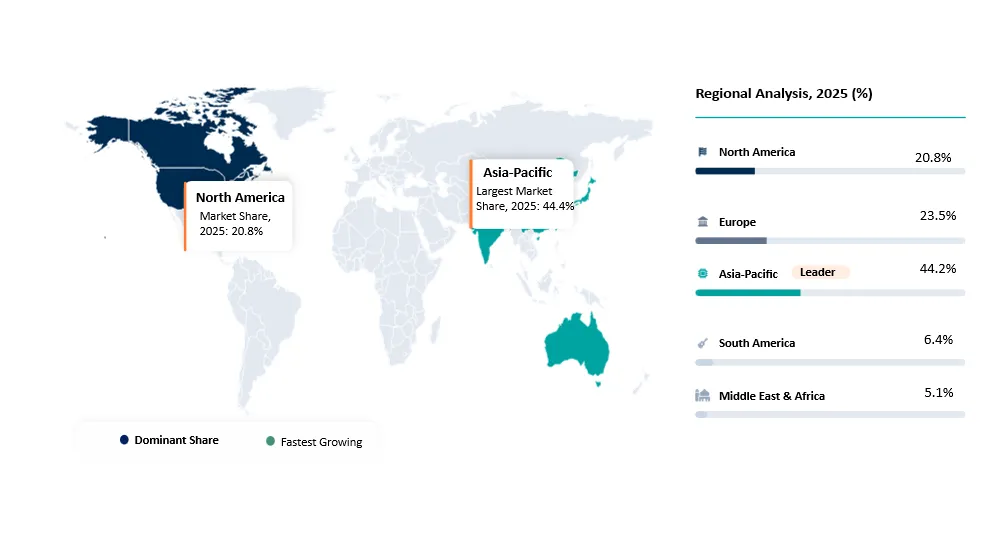
- The Asia Pacific region accounted for 44.2% of the Natural Dyes market in 2025, owing to their availability of abundant feedstock, large scale textile production environment and increasing turmeric, indigo and annatto based pigment production.
- The market share of natural colorants in the food colors market is around 40% in 2025 due to the increasing acceptance of clean label and naturally derived ingredients in food and beverages applications.
- The fermentation process used in producing pigments reduces manufacturing cycle time by 50% in comparison with the traditional agricultural method of extracting pigments.
- Commercialization of high-quality natural dyes is being observed in various applications including sustainable textiles, nutraceuticals and cosmetics because of the growing regulations on environment-friendly and natural coloring agents.
- Plant-based natural dyes have held the largest share in the global Natural Dyes market demand in 2025 due to the wide availability of raw material, economical nature and versatility in use.
Natural Dyes Industry Trends and Strategic Insights
- The Asia Pacific region accounted for 44.2% of the Natural Dyes market in 2025, owing to their availability of abundant feedstock, large scale textile production environment and increasing turmeric, indigo and annatto based pigment production.
- The market share of natural colorants in the food colors market is around 40% in 2025 due to the increasing acceptance of clean label and naturally derived ingredients in food and beverages applications.
- The fermentation process used in producing pigments reduces manufacturing cycle time by 50% in comparison with the traditional agricultural method of extracting pigments.
- Commercialization of high-quality natural dyes is being observed in various applications including sustainable textiles, nutraceuticals and cosmetics because of the growing regulations on environment-friendly and natural coloring agents.
- Plant-based natural dyes have held the largest share in the global Natural Dyes market demand in 2025 due to the wide availability of raw material, economical nature and versatility in use.
Natural Dyes Market Scope
| Metrics | Details | |
| 2025 Market Size | US$ 4.62 Billion | |
| 2035 Projected Market Size | US$ 9.82 Billion | |
| CAGR (2026-2035) | 7.8% | |
| Largest Market | Asia Pacific | |
| Fastest Growing Market | Asia-Pacific | |
| By Source | Plant-Based Natural Dyes, Animal-Based Natural Dyes, Mineral-Based Natural Dyes and Microbial-Based Natural Dyes | |
| By Product Type | Indigo Dyes, Anthraquinone Dyes (Madder-Based), Curcumin Dyes (Turmeric-Based), Carotenoid Dyes (Annatto and Safflower-Based), Flavonoid Dyes, Carmine Dyes, Chlorophyll-Based Dyes, Tannin-Based Dyes and Other Natural Dyes | |
| By Form | Powder, Liquid, Paste and Granules | |
| By Extraction Process | Aqueous Extraction, Solvent Extraction, Enzyme-Assisted Extraction, Supercritical Fluid Extraction, Fermentation-Based Production and Other Extraction Methods | |
| By Color | Red, Blue, Yellow, Green, Brown, Black, Orange, Purple and Other Shades | |
| By End-Use Industry | Textile Industry, Food & Beverage Industry, Cosmetics & Personal Care Industry, Pharmaceutical Industry, Paints, Inks & Coatings Industry, Packaging Industry and Others | |
| By Distribution Channel | Direct Sales (B2B), Distributors and Wholesalers, Online Retail, Specialty Stores and Others | |
| By Production Method | Traditional Extraction, Biotechnological Production, Fermentation-Based Production and Synthetic Biology-Based Natural Dyes | |
| By Region | North America | U.S., Canada, Mexico |
| Europe | Germany, UK, France, Spain, Italy, Poland | |
| Asia-Pacific | China, India, Japan, Australia, South Korea, Indonesia, Malaysia, Singapore, Vietnam, Thailand, Philippines, Taiwan | |
| South America | Brazil, Argentina | |
| Middle East and Africa | UAE, Saudi Arabia, South Africa, Israel, Turkiye | |
| Report Insights Covered | Competitive Landscape Analysis, Company Profile Analysis, Market Size, Share, Growth | |
Why does this report matter in 2026?
Natural Dyes market enters an important stage in 2026 as there is increasing emphasis from industries for sustainable colors, which have their source in nature due to new and upcoming regulations for the use of sustainable and eco-friendly products by consumers. Restrictions in the use of chemical colors in various industries like food products, cosmetic and textile industries are leading to an increased investment in biological coloring agents and eco-friendly dyeing processes.
Some of the strategic initiatives witnessed in the Natural Dyes market include investment in biotechnology-driven production of pigments, innovations in enzyme-driven and fermentation extraction methods and the growth of facilities involved in the manufacture of natural colors. Increasing attention has been directed towards the adoption of sustainable sources of feedstock as well as the development of natural pigments that exhibit superior performance. The Asia-Pacific region is becoming an important production center due to the abundance of botanical feedstocks in addition to the growth in the manufacturing facilities. Moreover, increasing demand for clean-label foods and beverages is leading to the development of specialized natural colors used in premium applications.
Natural Dyes Market White Space & Investment Opportunities
- Dyes for Premium Sustainable Textiles: There is growing consumer demand for more eco-friendly and biodegradable dyes for premium fashion wear, thus creating an opportunity for the development of high-performance dyes.
- Naturally Derived Colors for Clean-Label Foods: The growing trend of replacing artificial colors in foods is leading to more investments in natural pigments for beverages, confections, dairy products and nutraceuticals.
- Extraction Technologies: There are investment prospects in technologies for extracting pigments using enzymes and low water content technologies, which increase the output yield while decreasing cost and environmental impact.
- Botanical Raw Material Supply Chains: Vertically integrated models covering cultivation of feedstock, pigment extraction and formulation provide an opportunity to secure supply and reduce volatility of raw material pricing.
- Natural Pigments for Cosmetic and Personal Care Applications: The increasing consumer inclination towards natural beauty products is providing substantial scope for the manufacture of specialty natural pigments that can be used in skin care, color cosmetics and personal care preparations. Moreover, growing demand for multifunctional ingredients is also widening the application scope for natural dyes in premium cosmetic formulations.
Natural Dyes Future Market Transformation
Natural Dyes are anticipated to undergo substantial changes during the forecast period owing to technological advancements in biotechnology-based pigment production and manufacturing processes. The use of fermentation-based production technologies has been gaining prominence to address critical issues concerning color uniformity, seasonal dependence on feedstock and capacity to produce on an industrial scale. Pigment manufacturers are deploying enzyme-assisted and water-efficient extraction technologies to enhance pigment yields along with minimizing the use of energy resources. The development of such technology is expected to make natural dyes economically viable in high-end applications including luxury textiles, organic food items, cosmetics and nutraceuticals.
Moreover, the competitive dynamics are shifting away from traditional feedstocks-driven manufacturing processes towards vertical integration of value chains that cover plant growing, pigment extraction, formulation and special applications. Growing regulatory pressures on synthetic colorants and rising preference for biodegradable materials are fostering the development of sustainable dyeing processes across the globe. In addition, the collaboration between biotech companies, ingredient suppliers and textile makers will likely drive innovation and strengthen the supply chain for the industry.
Natural Dyes Market Buyer Decision-Making Criteria
Natural Dyes buyers have become more interested in performance, compliance and logistics than prices alone. Purchase decisions are largely driven by considerations like color retention, lot to lot repeatability, wash and light fastness characteristics and process compatibility, especially with textile and food products. Suppliers are also being selected by manufacturers based on their capacity to supply raw materials from sustainable sources and meet quality requirements of natural ingredients at an international level.
Cost competitiveness is still a crucial factor in buying decisions; yet, the higher cost of certified natural and biodegradable colors for their clean-label and sustainable initiatives is becoming acceptable for premium end-users. Buyers will consider other factors like year-round availability of raw materials, scalability of production capacity, tailored colorants development and long-term procurement contracts to protect themselves from potential problems during the purchasing process. It will give a competitive edge to manufacturers which have vertically integrated sources and technically equipped facilities to develop long-term business relationships.
In terms of commercial replacement of artificial dyes with natural dyes, there is considerable time, cost and qualification required from the side of various consuming industries. It is necessary to test formulation compatibility, stability of color, processing performance and supply performance of natural dyes prior to moving forward with natural alternative use. Activities of product development and optimization will be followed by a customer qualification process in most cases, especially for applications such as food, cosmetics and textiles. In addition, regulatory approvals and compliance assessment will extend commercialization period in case the product is designed for international market consumption. Moreover, pilot formulations of natural dyes might need several attempts in order to make them commercially viable due to cost reasons.
Natural Dyes Market Economic & Investment Analysis
Natural Dyes industry is experiencing increasing investments into technologies for sustainable production of pigments, processes that utilize biotechnological innovations and high-quality natural colors. Investments are being made into fermentation-based pigment production, enzymatic extraction techniques and vertical integration of supplies, helping to secure supplies and improve production efficiency. Strategic investments into manufacturing facilities for natural colors, along with product innovation programs, will help accelerate the commercialization of premium natural pigments for use in food, cosmetic and textiles sectors. The Asia Pacific region is receiving significant investments because of the presence of a variety of botanic feedstocks and cost-effective manufacturing environment.
Commercial pricing continues to be one of the primary drivers that affect decision-making regarding investment in the Natural Dyes market. The price difference between food grade and cosmetic grade natural dyes and their synthetically-made counterparts is due to high prices of materials, extraction techniques and stringent quality specifications. Specialty-grade natural dyes like annatto and cochineal are generally priced at US$ 50–80 per kilogram, while there are some artificial colorants for foods available commercially for US$ 10-20 per kilogram. Additionally, the commercial cost associated with substitution of synthetic dyes goes beyond pigment prices and also involves product reformulation, customer validation, compliance analysis and process improvements in production. Therefore, sustainable procurement, improved extraction techniques and robust supply chains are anticipated to offer lucrative opportunities for players in the Natural Dyes market.
Natural Dyes Investment Trends in the Market
- Venture capital funding and corporate investments are increasingly being made in biotech firms working on natural pigment production using fermentation technology.
- Major raw material producers are now investing in expanding their natural colors range through acquisition and strategic partnerships for positioning themselves well in the market for clean label food, cosmetics and nutraceuticals.
- Increasing investments are also being made in contract manufacturing and private labeling of premium natural colors used in sustainable clothing and consumer products.
- Companies are using traceable and certified sources for botanical ingredients to cope up with the rising demand for sustainable and compliance-based natural colorants solutions in global markets.
- The R&D investment is rising in the direction of multifunctional natural dye systems with antimicrobial, antioxidant and UV protection functions.
Strategic Indicators For Natural Dyes Market
High Regulation Impact
Natural Dyes Market is noted for its high degree of regulation impact due to the presence of strict regulatory rules concerning ingredient safety, labeling, environmental compliance and sustainability in the manufacturing process for key end-use industries. The growth in regulatory regulations limiting the use of artificial colorants in food, cosmetic products and textile applications is fueling the adoption of natural options around the world. Further, there is a need to comply with changing rules concerning allowable colorants, product traceability, contamination and effluent discharge regulations. Increasing importance of clean label claims, certifications related to sustainability and environmentally friendly production processes is impacting product development and investments.
High Investment Activity
Investment trends in the Natural Dyes market are being fueled by rising demands for clean label ingredients, sustainable textile coloring products and biotech enabled pigment manufacturing technologies. Manufacturers in the market have been making significant investments in their manufacturing processes, modern extraction techniques and vertical sourcing approaches in order to build stronger supply chains and enable commercial production. In February 2025, Oterra opened a new color blending and application center in Kerala, India, catering to customers from India, Asia Pacific and Middle East regions. The center includes manufacturing, blending and application laboratories and employs about 120 people. Additionally, strategic partnerships involving development of commercial grade biotechnology derived pigments are becoming common in the industry. For instance, Oterra entered into a multi million dollar partnership with Debut in 2026 to produce natural substitutes for artificial red color food additives. Increased investment in premium natural pigments for applications in food, cosmetics and nutraceuticals is likely to drive the commercial potential of the Natural Dyes market over the forecast period.
Supply Chain Disruption
The supply chains of the Natural Dyes industry are at moderate to high risk of disruption because of their heavy reliance on agricultural inputs like turmeric, annatto, indigo and cochineal, which can be affected by the seasons, climate and changes in yield rates. Moreover, the geographic location of the input sources in Asia-Pacific and Latin America adds additional risks to the supply chain of price and logistical volatility. Hence, companies have turned to diversification of their sourcing and vertically integrated supply chain structures to ensure the year-round availability of the inputs and product consistency across applications.
Pricing Volatility
The market for Natural Dyes displays moderate to significant levels of pricing volatility due to changes in the availability of agricultural raw materials feedstocks, seasonal harvesting periods and complex and labor-intensive processes of dye extraction. The prices of natural raw materials like turmeric, annatto and cochineal may vary within 15-30% annually according to crop harvest, climatic conditions and regional supply characteristics. Moreover, natural dyes tend to be sold at a significant premium in comparison with traditional chemical dyes as their pigment content is lower, the process of purification is more sophisticated and sourcing is more expensive. Disruptions in global logistics and increased demand for natural ingredients have added short-term price fluctuations in the prices of both food and cosmetic grades of natural colorants.
Procurement Pressure
The procurement situation of the Natural Dyes industry is marked by medium to high procurement risk considering the concentration of its source materials from specific regions as well as seasonal availability. Procurement expenses fluctuate based on the yield of agricultural products, sustainable certification standards and low availability of pure natural colors which are needed for use in food and cosmetics industries. Premium natural dyes that are used for some specialties cost 20 to 40 percent more than common dyes due to extra processing and quality control measures. Additionally, companies are looking for suppliers that can provide the raw materials all-year round, ensure consistent coloring and follow international quality standards.
New Technology Adoption
Technologies like enzyme-based extraction, microbial fermentation, membrane filtration, spray drying and microencapsulation are increasingly being adopted in the Natural Dyes market in order to ensure improved pigment stability, color uniformity and scale-up of operations. Pigments obtained from fermentation platforms are increasingly being utilized by manufacturers for the creation of natural pigments like bio-indigo and specialty carotenoids, thereby minimizing the dependency on agricultural sources which are seasonal in nature. The application of microencapsulation technologies is increasing within both the food and cosmetics industry as a result of the improved stability of natural colorants with respect to temperature, light exposure and pH variations that can be achieved through these technologies. Additionally, low liquor ratio dyeing technologies are enabling sustainable adoption of natural dyes in textile manufacturing due to minimized water usage and improved efficiency of dye uptake.
Regional Expansion Opportunity
The Natural Dyes market is experiencing considerable potential for regional expansion due to the commercialization of clean-label ingredients and sustainable solutions for textile dyeing. The APAC region has dominated the market with a 44.2% share in 2025 and is the most promising region for the expansion of production capacity as it is endowed with plenty of botanical sources such as turmeric and indigo, well-established ecosystem of textiles manufacturing and cost-efficient production. North America is experiencing rising demand for naturally produced colorants for foods and premium cosmetic ingredients with manufacturers increasingly substituting synthetic colorants in their clean-label products. Europe is a favorable region for investment thanks to high demands for sustainability and investments into environment-friendly solutions for the textile and cosmetic industry. In addition, Latin American countries represent emerging markets where natural pigments production is gaining momentum, particularly special dyes from insects and MEA has increasing demands for premium natural ingredients used in food and personal care products.
Government Policy Support
Governments have introduced supportive regulations to incentivize manufacturers to follow sustainable manufacturing practices and produce environmentally-friendly textiles along with naturally-sourced food additives. In Europe, initiatives taken under the European Green Deal and the EU Strategy for Sustainable and Circular Textiles are pushing manufacturers to use sustainable and efficient raw material and production methods in the entire value chain of the textile industry. Moreover, regulatory mandates related to food additives in leading markets are promoting the use of naturally-sourced colorants in clean label foods and beverages. Furthermore, governments of Asia Pacific regions are facilitating innovation in biotechnology, sustainable agriculture and value-added processing of botanicals, thereby improving the supply network of natural pigments. Such supportive policies have led to the increasing inclination of manufacturers towards sustainable sourcing, extraction technologies and natural color formulations, providing positive growth opportunities for the Natural Dyes market.
Pricing Intelligence
Natural Dyes market features premium pricing systems as a result of the need for sustainable feedstock, unique extraction systems and high purity specifications across end-use applications. The cost of food grade and cosmetics grade natural coloring agents tends to be 25%-35% higher compared to industrial grades due to the increased demand for purifying, quality and compliance requirements. Specialized natural colorants used in premium products may provide gross profit margins of 30%-40% to producers as they have higher value and limited availability. Pricing systems will also depend on the degree of color concentration, certification demands, stability characteristics and customization requirements. Natural coloring agents that are application specific tend to have price premiums compared to normal natural dye solutions.
| HS Code | Reporter | Trade Flow | 2025 Trade Value | Interpretation |
| 320300 | India | Export | US$ 104.5 Million | Leading exporter of vegetable dye extracts and botanical colorants supported by its extensive agricultural feedstock base and well-established natural ingredient processing capabilities. |
| 320300 | China | Export | US$ 322.1 Million | Significant global producer and exporter of natural pigments and biotechnology-enabled color solutions supported by large-scale manufacturing capabilities and investments in specialty ingredients. |
| 320300 | United States | Import | US$ 205.8 Million | Strong demand for clean-label food colorants, naturally derived cosmetic ingredients and premium consumer products continues to support substantial import volumes of natural colorants. |
| 320300 | Germany | Import | US$ 137.4 Million | A major European import market for natural colorants, driven by growing demand across sustainable textiles, premium cosmetics and clean-label food applications. |
Disruption Analysis of Natural Dyes Market
The Natural Dyes industry is facing a structural change on account of technological advancements, regulatory changes and shifts in consumer preferences towards sustainable products. The use of biotechnology in producing pigments has changed the existing methods of dye extraction through agriculture because biotechnology allows scalability, color stability and availability throughout the year. At the same time, regulations concerning synthetic dyes are making manufacturers switch to natural solutions.
Supply chain management has become another notable cause of market disruption. Due to the seasonal nature of botanically derived feedstocks, the industry is susceptible to climatic changes and shortages in supply of materials, leading to the adoption of vertical integration in the process of sourcing and adopting sustainable cultivation practices. Moreover, growing popularity of premium products with clear labeling and multipurpose natural pigments is broadening the scope of applicability of natural dyes from the production of textiles into other commercial fields.
Natural Dyes Market BCG Matrix: Company Evaluation
STAR
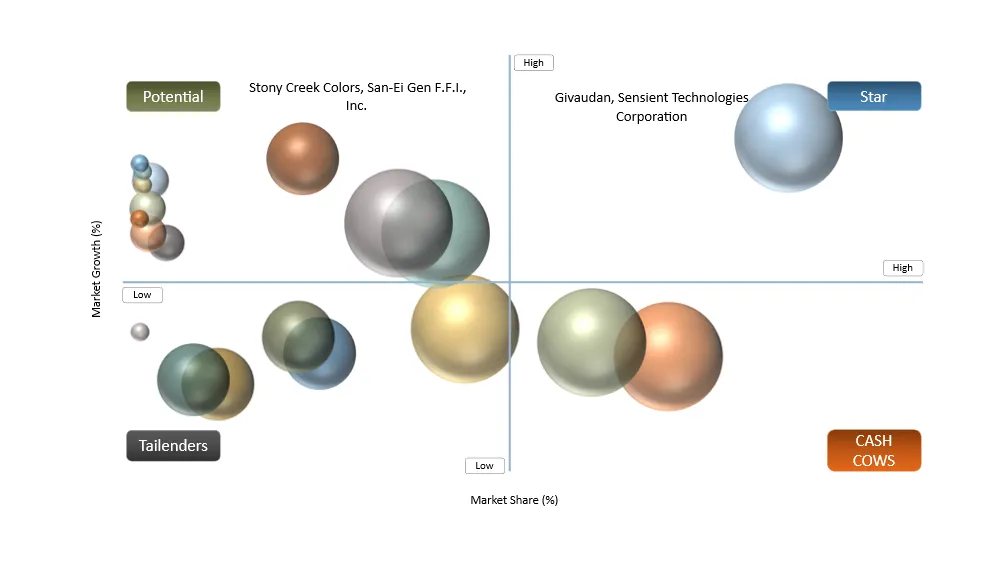
Firms like Givaudan, Sensient Technologies Corporation, Oterra, dsm-firmenich, Symrise AG and Kalsec Inc. fall under the category of STAR players due to their high levels of global presence, diversified portfolio of natural colors and heavy investments in R&D activities. These industry leaders take advantage of their strong production facilities, distribution networks and locations in food & beverages, cosmetics and speciality natural pigments. Their sustained investments in sustainable sourcing as well as innovation in pigments further help them compete in the Natural Dyes industry.
POTENTIAL
Some of the companies that have been classified as part of the POTENTIAL quadrant include Stony Creek Colors, San-Ei Gen F.F.I., Inc., ROHA Dyechem Pvt. Ltd., Kiri Industries Limited and Zhejiang Xinguang New Materials Co., Ltd. This is because these companies are gradually gaining grounds in specialty natural pigments and sustainable coloration technology. These firms are making efforts towards securing their position in the market through product diversification, sustainable production techniques and developing their regions. There are likely to be many growth opportunities in the coming period for these market players.
Natural Dyes Market Dynamics
Driver Impact Analysis
| Driver | Market Growth Impact (%) | Demand Concentration | Impacted Use Case | Strategic Impact |
Growing Demand for Clean-Label Food Colorants | 5.80% | Food & Beverage Manufacturers | Natural color formulations for beverages, confectionery and dairy products | Accelerates investments in food-grade natural pigments and portfolio expansion |
Rising Adoption of Sustainable Textile Dyeing Technologies | 5.20% | Sustainable Apparel and Textile Manufacturers | Eco-friendly dyeing of premium textiles and fashion products | Supports commercialization of biodegradable and low-impact natural dyes |
Regulatory Restrictions on Synthetic Colorants | 4.90% | Food, Cosmetics and Textile Industries | Replacement of synthetic dyes with naturally derived alternatives | Creates long-term opportunities for regulatory-compliant natural color solutions |
Advancements in Biotechnology-Based Pigment Production | 4.50% | Specialty Pigment and Ingredient Manufacturers | Fermentation-based and high-performance natural pigment production | Improves production scalability, color consistency and supply chain resilience |
Driver: Growing Demand for Clean-Label and Sustainable Color Solutions
The rising demand for sustainable coloring solutions continues to be the key factor driving growth in the Natural Dyes Market. The rising preferences among consumers toward naturally derived components along with eco-friendly production techniques are driving the usage of natural dyes in various sectors such as food & beverages, cosmetics and textiles. The increased regulations on certain chemical colorants and the rising environmental commitment of companies worldwide have been fueling market growth. The natural colorants have taken a major chunk of the global market of food colors, whereas the use of naturally dyed and biodegradable products among premium apparels has been gaining popularity. Such trends are leading to increased investments by manufacturers in advanced extraction techniques, high-quality pigments and sustainable feedstocks, which offer huge growth potential for the industry.
Restraint Impact Analysis
| Restraint | Drag on Market Growth (%) | Primary Impact Area | Impacted Use Case | Strategic Impact |
Limited Color Stability and Performance Characteristics | 3.80% | Product Performance | High-temperature food processing and industrial textile dyeing | Increases R&D investments in pigment stabilization technologies and specialty formulations |
High Production Costs Compared with Synthetic Dyes | 3.50% | Manufacturing Economics | Food-grade, cosmetic-grade and premium textile applications | Restricts adoption in cost-sensitive end-use industries and necessitates value-based pricing strategies |
Dependence on Seasonal and Agricultural Feedstocks | 3.20% | Raw Material Supply Chain | Botanical pigment production and specialty natural dye manufacturing | Encourages vertically integrated sourcing models and diversified feedstock procurement strategies |
Regulatory and Certification Compliance Requirements | 2.90% | Quality and Regulatory Compliance | Global commercialization of natural color solutions | Increases compliance costs while extending product development and market approval timelines |
Restraint: High Production Costs and Limited Industrial Scalability
High manufacturing costs and lack of industrial scalability have remained among the key issues facing the Natural Dyes industry. Manufacturing of natural dyes depends highly on agriculture-based raw materials, seasonal availability and intensive extraction methods, making their manufacturing costs relatively high compared to synthetics. The ability to produce consistent colors, pigment concentration as well as availability of raw materials all year round have remained among the major manufacturing challenges especially for large scale industrial applications. The strict quality and purity standards required for the manufacture of food grade and cosmetics grades have also posed some challenges requiring further investment in manufacturing processes and technology.
Natural Dyes Market Segment Analysis
The global natural dyes market is segmented based on the source, product type, form, extraction process, color, end-use industry, distribution channel, production method, and region.
By Source: Plant-Based Natural Dyes
Plant-Based Natural Dyes Lead the Market Through Sustainable and Large-Scale Commercial Adoption
The natural dyes derived from plants continue to dominate the global natural dyes market due to their readily available raw material source, scalability of production process and wide usability in various end-user industries. This segment represents the larger share of demand in the market owing to the extensive use of indigo, turmeric, annatto, madder, pomegranate and pigments obtained from chlorophyll in textiles, food & beverages, cosmetics and pharmaceutical industries. Availability of large-scale plantation of botanical raw material in the Asia-Pacific region, including India and China, is another reason which is strengthening its position in the market. Plant based dyes also offer better biodegradable properties and hence their usage is increasing in sustainable products.
By End-Use Industry: Food & Beverage Industry
Rising Clean-Label Product Demand Positions the Food & Beverage Industry as the Fastest-Growing Segment
The Food & Beverage Industry is expected to witness the highest growth rate throughout the forecast period attributed to the quick development of the clean-label products portfolio as well as the growing focus on natural ingredients by regulatory bodies. In the food industry, there is an increased use of natural colorants in place of synthetic dyes in terms of curcumin, annatto, beetroot extract, chlorophyll and carotenoids. The commercialization of premium and organic food products in addition to consumer inclination towards minimal processing is propelling the segment growth. Technological developments in pigment stabilization and formulations are also enhancing the heat stability and pH stability of natural colorants that enable their use in processed foods. This will make the Food & Beverage Industry the most appealing high growth segment in the Natural Dyes market during the forecast period.
| Parameter | Natural Dyes | Synthetic Dyes |
| Colour Strength | Moderate to High (application dependent) | High and highly uniform |
| Cost in Use | Higher owing to greater pigment loading and purification requirements | Lower owing to high color intensity and manufacturing efficiencies |
| Wash Fastness | Moderate; improving with advanced formulations and mordant technologies | High across most industrial applications |
| Light Fastness | Moderate and pigment-specific | High and highly consistent |
| Heat Stability | Moderate; specialty formulations offer improved thermal stability | High and suitable for demanding processing conditions |
| pH Stability | Moderate and formulation dependent | High across a broad pH range |
| Batch Consistency | Moderate to High with advanced extraction and quality control technologies | Very High owing to standardized chemical synthesis |
| Lead Time | Longer due to feedstock sourcing, extraction and qualification requirements | Shorter due to established large-scale manufacturing capabilities |
| Minimum Order Quantity | Generally higher for specialty and food-grade formulations | Lower owing to mature supply chains and commoditized production |
| Environmental Impact | Low; biodegradable and sustainably sourced alternatives are increasingly preferred | Higher owing to petrochemical feedstocks and environmental concerns associated with certain synthetic colorants |
Natural Dyes Market Geographical Penetration
U.S. Natural Dyes Market Landscape
The United States is regarded as a major market for natural dyes & colorants due to the rising demand for clean-label food products, organic cosmetics and sustainable textiles. The strict regulations on the use of food additives along with the increased inclination towards organic foods devoid of artificial colorants are contributing towards the rapid rise of natural pigments usage in beverages, confections, dairy products and nutraceuticals. Moreover, rising R&D activities in biotechnology-based pigment manufacturing as well as premium natural ingredients development have helped in promoting the commercialization of premium natural dyes in various applications. Increasing demand for plant-based and organic consumer goods in the United States has made the region a significant consumption market for natural dyes & colorants globally.
Japan Natural Dyes Market Outlook
The Natural Dyes market in Japan is driven by the high demand for highly purified and specialized natural colorants in application areas such as food, cosmetics and premium textiles. The ongoing efforts in Japan towards quality and safety of ingredients as well as sustainability of manufacturing processes will drive the increasing use of natural pigments. The increasing interest in Japan towards formulations with better color fastness and performance is driving Japanese players to invest in advanced formulations. Also, the increasing trend towards functional foods, naturally sourced cosmetic ingredients and traditional dyeing methods will create opportunities for specialized natural dyes.
China Natural Dyes Market Trends
China continues to be a major manufacturing base for the Natural Dyes industry on account of the country's large-scale manufacturing abilities, competitive logistics and development in biotechnology sector. The country holds an important position in the manufacture of botanical pigments and natural colors that are used in food, cosmetics, medicines and textiles. There is a growing interest from the Chinese government in promoting sustainable manufacturing operations as well as investments in bio-materials, thus driving the use of advanced extraction and fermentation-based manufacturing processes. Additionally, increasing domestic demand for products with green labels and eco-friendly textiles is also pushing manufacturers to develop more natural dyes.
Natural Dyes Market Competitive Landscape
- Global ingredient leaders like Givaudan, Oterra, Sensient Technologies Corporation, dsm-firmenich and Symrise AG characterize the market by using diverse natural color portfolios, advanced distribution channels and strong R & D capacities for competition.
- Companies such as ADM, IFF, Kalsec Inc. and DIC Corporation help themselves strengthen their positions in the market through extending the ranges of clean-label ingredients and investing in special formulations of natural pigments for usage in food, beverage and cosmetics.
- Textile players such as Archroma and DyStar Group utilize sustainable dye technologies and eco-friendly coloring solutions for taking advantage of the search of natural dyes for use in premium textiles.
- Newly emerged players, among whom are Stony Creek Colors, ROHA Dyechem Pvt. Ltd., San-Ei Gen F.F.I., Inc. and Zhejiang Xinguang New Materials Co., Ltd., are extending their presence through innovations in products, regional expansion efforts and innovative capabilities of usage of biotechnology in dye production.
- The competition shifts towards sustainable sourcing of raw materials, latest extraction technologies, compliance with regulations, as well as vertically integrated business models.
Natural Dyes Market Key Companies
- Archroma (Switzerland)
- Givaudan (Switzerland)
- Sensient Technologies Corporation (United States)
- ADM (United States)
- IFF (United States)
- dsm-firmenich (Switzerland)
- Oterra (Denmark)
- Kalsec Inc. (United States)
- DIC Corporation (Japan)
- Symrise AG (Germany)
- Novonesis A/S (Denmark)
- DyStar Group (Singapore)
- San-Ei Gen F.F.I., Inc. (Japan)
- T. Hasegawa Co., Ltd. (Japan)
- ROHA Dyechem Pvt. Ltd. (India)
- Kiri Industries Limited (India)
- Stony Creek Colors (United States)
- Kiwa Bio-Tech Products Group Corporation (China)
- Zhejiang Xinguang New Materials Co., Ltd. (China)
Natural Dyes Market Major Pain Points
- Poor color stability and poor performance properties hinder the use of natural dyes in high-temperature processing environments and in industries where better wash stability, light stability and pH stability are needed.
- High cost of production and low pigment yield lead to higher manufacturing costs, hindering the commercial use of natural dyes in many industries.
- Seasonal dependence on plant-based raw materials poses risks of supply interruptions and raw material price volatility.
- Batch-to-batch color uniformity continues to be an area of concern that requires further investment in extraction technology, quality assurance and formulation.
- Strict regulations and certifications needed for markets around the world lead to increased costs and delays in developing products, especially when the end use is for natural colorants used in foods and cosmetics.
Natural Dyes Market Recent Developments
- February 2025: Oterra opened a new color mixing and application center in Kerala, India, which increased its manufacturing and technical capacity for natural color solutions in the Asia-Pacific and the Middle East regions. This is an important milestone that helps Oterra manufacture natural color solutions for food and beverages.
- April 2025: Sensient Technologies Corporation made an announcement concerning the expansion of its natural color solution business in order to help food companies use natural colors instead of petroleum-based synthetic colors in their products.
- November 2025: Oterra signed a partnership agreement with Seprify to develop and introduce a new natural color solution, which will replace the synthetic whitening agent, titanium dioxide, in food and beverage products.
- May 2026: Oterra made an announcement that Oterra is partnering with Debut with the goal of developing and scaling biotechnology enabled natural colors in order to replace Red 40 food coloring agents.
- July 2026: Oterra released new liquid natural blue color solutions which will enable formulation flexibility, color performance and efficiency within the food and beverages category.
Analyst View / Opinion on Natural Dyes Market
- The Natural Dyes Market is shifting from being limited to niche uses to being commercialized on a mass scale, driven by the fast-growing need for environmentally friendly ingredients and colors used in the manufacturing of sustainable textiles and products overall.
- Biotech-based pigments and improved extraction technologies will be instrumental in overcoming current issues with color uniformity, scalability and constant feedstock supply, allowing for better growth prospects of the market.
- The Food & Beverage segment is expected to remain the primary growth driver of the Natural Dyes market as manufacturers increasingly replace synthetic food colorants with naturally derived alternatives in response to evolving regulatory requirements and growing clean-label product demand.
- Organizations that have the capability to ensure sustainable and traceable sourcing of their feedstocks along with providing high-performing natural colors will have a definite competitive edge during the forecast period.
- Strategic investments in high-quality natural pigments, multi-functional colorants and sustainable manufacturing technologies will increase the use of natural dyes in value-added end-use sectors, paving the way for future innovation-driven growth in the market till 2035.
Natural Dyes Market Target Audience
| INDUSTRY | WHO SHOULD BUY THIS REPORT? | REASON TO BUY THIS REPORT |
| Food & Beverage | Natural color manufacturers, food ingredient suppliers and beverage producers | To evaluate clean-label colorant trends, regulatory developments and emerging application opportunities in natural food pigments. |
| Textiles & Apparel | Textile manufacturers, sustainable fashion brands and dye formulators | To assess demand trends for eco-friendly dyeing technologies and sustainable textile coloration solutions. |
| Cosmetics & Personal Care | Cosmetic ingredient suppliers, formulators and beauty product manufacturers | To identify growth opportunities in naturally derived pigments and premium cosmetic formulations. |
| Pharmaceuticals & Nutraceuticals | Pharmaceutical companies, nutraceutical manufacturers and ingredient suppliers | To understand the adoption of natural colorants in health-focused and specialty product applications. |
| Specialty Chemicals | Pigment manufacturers, specialty chemical companies and formulation developers | To analyze technological advancements in extraction processes and biotechnology-enabled pigment production. |
| Biotechnology | Biotechnology firms and fermentation technology developers | To evaluate commercialization opportunities for bio-based pigment production and sustainable manufacturing technologies. |
| Agriculture & Botanical Ingredients | Botanical extract producers, feedstock suppliers and agricultural cooperatives | To assess raw material demand trends, sustainable sourcing opportunities and supply chain developments. |
| Packaging & Printing | Sustainable packaging manufacturers and printing ink producers | To identify opportunities for biodegradable and naturally sourced coloring solutions in packaging applications. |
| Investment & Consulting | Private equity firms, venture capital investors and strategy consultants | To evaluate investment trends, competitive positioning and high-growth market segments across the value chain. |
| Research Institutions & Regulatory Bodies | Academic institutions, industry associations and regulatory organizations | To gain insights into technological innovations, sustainability trends and evolving regulatory frameworks shaping the Natural Dyes market. |
Why Choose DATAM?
- Data-Driven insights: Dive into detailed analyses with granular insights such as pricing, market shares and value chain evaluations, enriched by interviews with industry leaders and disruptors.
- Post-Purchase Support and Expert Analyst Consultations: As a valued client, gain direct access to our expert analysts for personalized advice and strategic guidance, tailored to your specific needs and challenges.
- White Papers and Case Studies: Benefit quarterly from our in-depth studies related to your purchased titles, tailored to refine your operational and marketing strategies for maximum impact.
- Annual Updates on Purchased Reports: As an existing customer, enjoy the privilege of annual updates to your reports, ensuring you stay abreast of the latest market insights and technological advancements. Terms and conditions apply.
- Specialized Focus on Emerging Markets: DataM differentiates itself by delivering in-depth, specialized insights specifically for emerging markets, rather than offering generalized geographic overviews. The approach equips our clients with a nuanced understanding and actionable intelligence that are essential for navigating and succeeding in high-growth regions.
- Value of DataM Reports: Our reports offer specialized insights tailored to the latest trends and specific business inquiries. The personalized approach provides a deeper, strategic perspective, ensuring you receive the precise information necessary to make informed decisions. The insights complement and go beyond what is typically available in generic databases.
What DATAM Uniquely Provides
- A detailed report that provides an analysis of the Natural Dyes market during the forecast period from 2025 to 2035, providing a thorough analysis of the growth drivers, restraints, trends and future transformation of the market.
- Segmentation analysis based on source, product type, form, extraction process, color, end-use industry, distribution channel and production method, which will help the reader to find the most lucrative and valuable opportunities in the market.
- Competitive Intelligence that covers information about the major market players, strategic moves, BCG Matrix, investments, prices, procurement and supply chain disruptions.
- Evaluations at the country level of major production and consumption markets, considering regulatory issues, technological developments, sustainability in sourcing and regional growth potential.
- Insights on pigments manufacture through biotechnology, innovations in clean label products, sustainable manufacturing technologies and investment potentials that will transform the Natural Dyes market during the forecast period.
Questions This Report Answers
- Which types of products, sources of materials and application sectors will be most dominant in the Natural Dyes industry and which segments will have the highest growth rates up to 2035?
- How are changing clean-label regulations, sustainable development trends and legislative changes impacting demand for natural dyes in the food, cosmetics and textiles industries?
- What recent innovations in production technology, pigment extraction and specialized formulations are driving the future of natural dyes?
- Who are the key players operating in the world of the Natural Dyes market, what strategic initiatives are being taken by them and how is investment in sustainability and innovation shaping the competition dynamics?
- Which are the regions that will offer lucrative growth opportunities in the future and how would developments in the supply chain, pricing and procurement dynamics impact the market growth over the forecast period?


























































