


Natural and organic Personal Care Products Market Overview
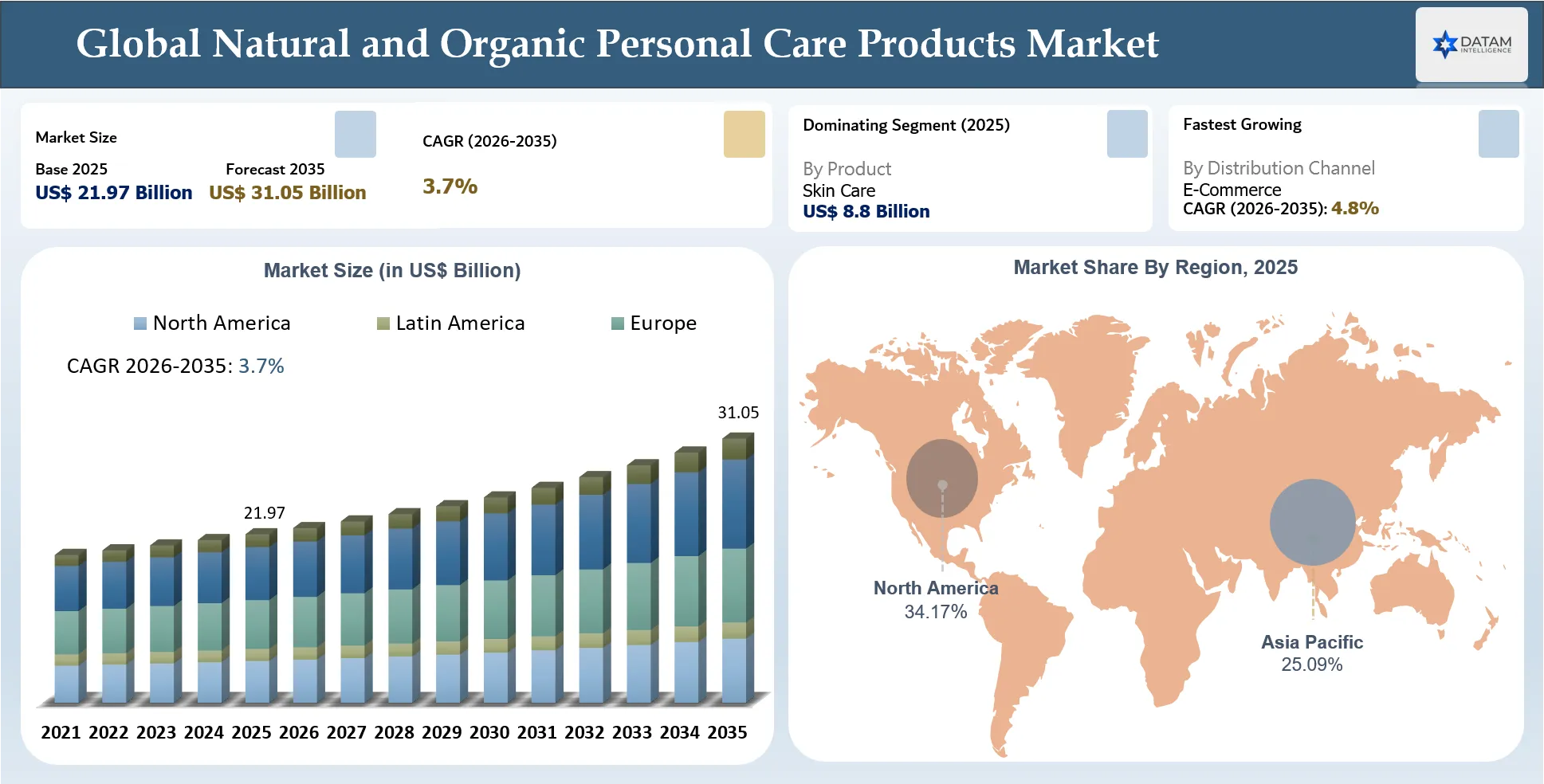
The global natural and organic personal care products market reached US$ 21.97 billion in 2025 and is expected to reach US$ 31.05 billion by 2035, growing with a CAGR of 3.7% during the forecast period 2026-2035.
Rising consumer awareness toward the health, wellness and environmental sustainability aspects has contributed to steady growth of the global natural and organic personal care products market. Consumers are rapidly moving towards the use of clean-label, plant-based and chemical-free personal care products due to growing awareness of ill-effects. Demand is rapidly growing for natural products that make use of natural oils, herbal extract, organic herbs, active naturally derived components, etc. Skin care, cosmetics, hair care, oral care, bath & body care and baby care segments are gaining prominence from such products.
The increasing adoption of organic, cruelty-free and vegan personal care products are boosting up the market growth. Moreover, product innovation, biotechnology developments and adaptation of sustainable production processes have supported market growth, to a larger extent. Research and development is focused on developing products using biotechnological derivatives and green chemicals. Innovations in terms of personalized beauty solutions driven by artificial intelligence are on high growth as well. Digital marketing, e-commerce and direct-to-consumer models have boosted the penetration of organic products and have developed relationships between brands and consumers.
With growing spending on cosmetics from premium segments and rising income across the world, especially from the developing regions, the natural and organic personal care products market continues to expand. Stringent regulations on product labeling, organic certifications, safety of ingredients and environmental effects of products are driving companies to enhance the transparency and quality of products and invest in responsible practices like sustainable procurement, manufacturing etc. Though raw material price fluctuations and premium pricing are hurdles that are encountered by market participants, innovative strategies adopted and investment in sustainable production practices will aid the market’s growth for a long period. Changing consumer preferences towards more natural, sustainable, effective and safe personal care products are the fundamental driving forces for the market, in the near future.
Key Takeaways
- Aided by escalating customer demand for clean label, vegan and all natural cosmetics & personal products, global natural and organic personal care market is poised for considerable growth during the forecasting years.
- Increased awareness about wellness, sustainability, ingredient efficacy and eco friendly practices will propel growth in all naturally oriented products worldwide.
- Skin Care products will dominate the market space, propelled by the growing consumer inclination for products formulated to address needs pertaining to aging, moisturization and sensitivity, among other conditions, using entirely natural active ingredients.
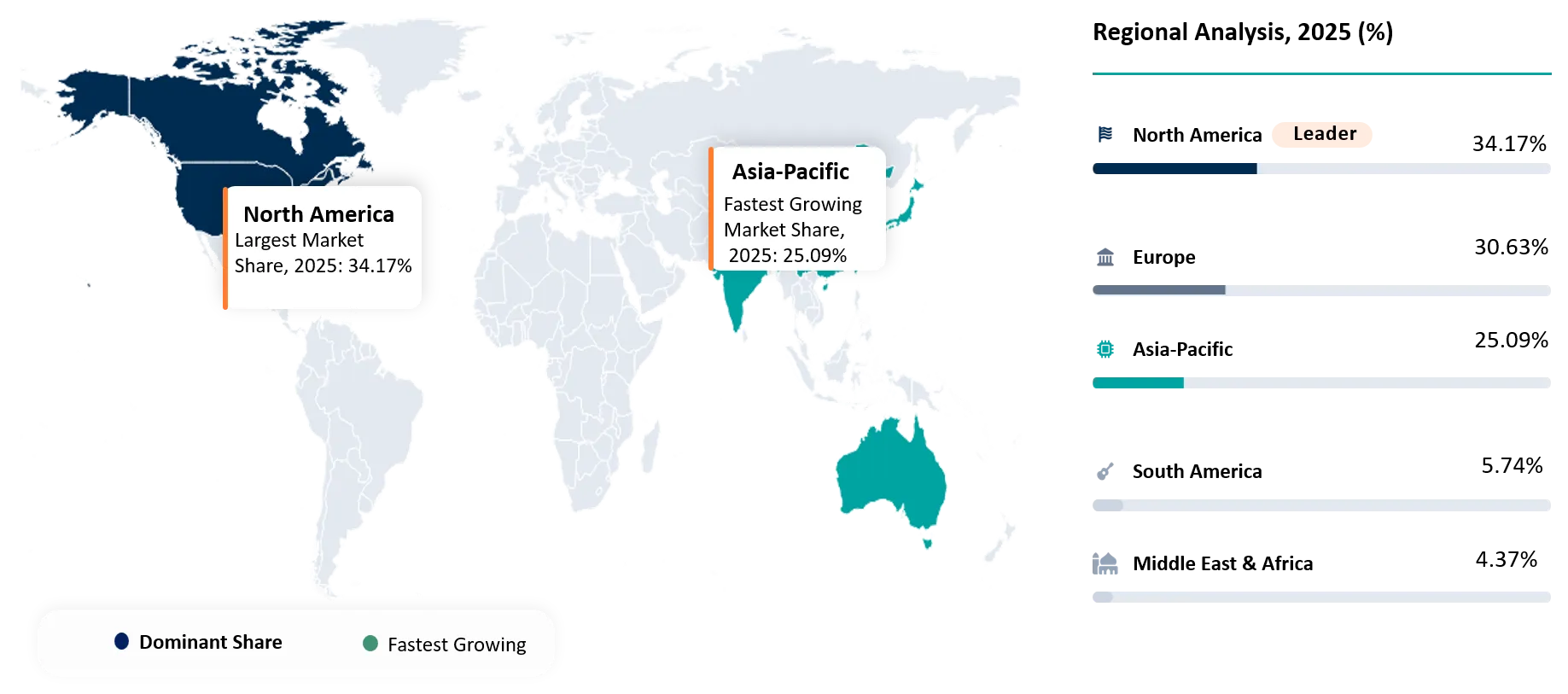
- Asia Pacific will expand at the speediest pace, while the markets in North America and Europe will take centre stage, driven by market innovation.
- Companies are increasingly venturing into investing in biotechnology for ingredient development, expanding sustainable product portfolios and implementing greener packaging and manufacturing processes.
- The increasing online sales on e-commerce and DTC sites and a widespread adoption of digital marketing strategies is further stimulating overall growth in the sector globally.
- Regulatory standards, sustainable sourcing practices and certifications are gradually emerging as key determining elements of overall growth and will continue to shape the market landscape.
- Over the coming few years, steady growth in this global marketplace will be fuelled by extensive ongoing product development and partnerships as well as expansion in new and up coming markets.
Natural and Organic Personal Care Products Industry Trends and Strategic Insights
- Aided by escalating customer demand for clean label, vegan and all natural cosmetics & personal products, global natural and organic personal care market is poised for considerable growth during the forecasting years.
- Increased awareness about wellness, sustainability, ingredient efficacy and eco friendly practices will propel growth in all naturally oriented products worldwide.
- Skin Care products will dominate the market space, propelled by the growing consumer inclination for products formulated to address needs pertaining to aging, moisturization and sensitivity, among other conditions, using entirely natural active ingredients.
- Asia Pacific will expand at the speediest pace, while the markets in North America and Europe will take centre stage, driven by market innovation.
- Companies are increasingly venturing into investing in biotechnology for ingredient development, expanding sustainable product portfolios and implementing greener packaging and manufacturing processes.
- The increasing online sales on e-commerce and DTC sites and a widespread adoption of digital marketing strategies is further stimulating overall growth in the sector globally.
- Regulatory standards, sustainable sourcing practices and certifications are gradually emerging as key determining elements of overall growth and will continue to shape the market landscape.
- Over the coming few years, steady growth in this global marketplace will be fuelled by extensive ongoing product development and partnerships as well as expansion in new and up coming markets.
Market Scope
| Metrics | Details | |
| 2025 Market Size | US$ 21.97 Billion | |
| 2035 Projected Market Size | US$ 31.05 Billion | |
| CAGR (2026-2035) | 3.7% | |
| Largest Market | North America | |
| Fastest Growing Market | Asia-Pacific | |
| By Product | Skin Care, Hair Care, Oral Care, Bath and Body Care, Cosmetics and Makeup, Fragrances, Baby CareMen's Grooming Products andOthers | |
| By Ingredient Type | Plant-Based Ingredients, Essential Oils, Botanical Extracts, Natural Oils and Butters, Organic Ingredients, Mineral-Based Ingredients and Others | |
| By Application | Cleansing, Moisturizing and Hydration, Anti-Aging, Sun Protection, Hair Nourishment and Repair, Oral Hygiene, Baby Care, Cosmetic Enhancement, Aromatherapy and Wellness and Others | |
| By End-User | Individual Consumers, Salons and Spas, Beauty and Wellness Centers, Healthcare and Dermatology Clinics, Hospitality Industry, Retail Chains and Others | |
| By Distribution Channel | Supermarkets and Hypermarkets, Specialty Stores, Pharmacies and Drug Stores, E-Commerce, Direct Sales, Convenience Stores And Others | |
| By Region | North America | U.S., Canada, Mexico |
| Europe | Germany, UK, France, Spain, Italy, Poland | |
| Asia-Pacific | China, India, Japan, Australia, South Korea, Indonesia, Malaysia, Singapore, Vietnam, Thailand, Philippines, Taiwan | |
| South America | Brazil, Argentina | |
| Middle East and Africa | UAE, Saudi Arabia, South Africa, Israel, Turkiye | |
| Report Insights Covered | Competitive Landscape Analysis, Company Profile Analysis, Market Size, Share, Growth | |
Why does this report matter in 2026?
A robust momentum to the global natural and organic personal care products market entering 2026, the growing emphasis on health, wellness and sustainability amongst consumers has paved the way for rapid expansion. Consumers are steadily opting for clean-label, plant-based and chemical-free personal care items and seeking ingredients transparency, safety as well as responsible sourcing of the products. The rising trend of vegan, cruelty-free and certified organic products among the target audience compels brands to manufacture products with innovative formulation in order to adapt with current consumer preferences along with tough existing regulatory requirements.
The global natural and organic personal care products market is also witnessing the advent of rapid breakthroughs in technology, including artificial intelligence (AI), biotechnology and e-commerce which is revolutionizing the industry by helping brand with enhanced product personalization, sustainable ingredient supply chain, eco-friendly packaging, green technologies and improved customer outreach.
Henceforth, any of the business that aligns with sustainability, innovative product range, adherence to legal compliance as well as Digital Transformation, it will have an optimum scope to thrive the future market.
White Space & Investment Opportunities
- Product Line Extension to incorporate an increasing amount of premium clean label and certified organic ranges, satisfying growing consumer preference for safety, natural ingredients, organic benefits, chemical-free product ranges and enhanced product sustainability.
- Introduction of Biotechnology sourced natural ingredients for superior product formulation with innovative, high-performance formulations with increased product stability and durability.
- Advancement of Personalised beauty based on the AI Skin Diagnosis concept including AI-driven beauty consultations, product personalisation and a direct-to-consumer approach (DTC).
- Growth in emerging markets within Asia Pacific, South America and the Middle East on the back of a rising consumer disposable income and wellness awareness.
- Deployment of Eco-Friendly packaging products inclusive of refillable and recyclable and biodegradable formats responding to future legislation and demand from eco-conscious consumers.
- Strengthening e-commerce and omnichannel distribution networks to improve customer reach, digital engagement and brand visibility.
- Acquisitions and collaborations with key clean beauty start-ups, raw ingredient manufacturers providing natural and organic products or innovative biodegradable and recyclable packaging technologies and with key B2C digital platforms.
- Innovation of Functional Personal Care Product including those which harness the power of botanical extracts, probiotics, adaptogenic herbs and “Microbiome friendly” nutrients for increasingly informed and science-driven consumer trends.
Future Market Transformation
Over the next decade, the market for natural & organic personal care products is set to undergo a profound evolution with focus on sustainability, clean-label innovation and adoption of digital technologies. It is now expected that innovations in biotechnology, green chemistry, and AI-based personalization will result in most innovative and highly effective yet completely eco friendly personal care products. Furthermore, there is an increasing consumer trend towards clean label and evidence backed natural product usage. Consumers will increasingly demand ingredient transparency, clinically proven natural formulations, refillable packaging and ethical sourcing, encouraging companies to invest in sustainable innovation across the value chain.
Market will witness an adoption of greater sustainable and ethical production practices with growing trend towards circular economy in smart factories and expansion of digital commerce channels for sales and distribution of products. Use of AI based consumer insights, Direct-to-consumer( DTC) business models and omnichannel retailing will eventually play a critical role in shaping buying behaviors and fostering customer relations. Companies that can successfully navigate all the innovation, sustainability, compliance & digital transformation will stand to be the future leaders in the natural & organic personal care market.
Buyer Decision-Making Criteria
When purchasing natural and organic personal care products, buyers weigh various purchasing decisions primarily driven by quality of ingredients, safety and certifications, instead of just cost. Modern buyers opt for natural, certified organic and plant-derived products that are free from chemicals.Along with efficacy of the product, sustainability features like vegan and cruelty-free formulation, eco-friendly packaging and ethically sourced raw materials are the factors that buyers look for in the natural and organic personal care products. Availability of the product, consistent supply and quality, regulatory standards, competitive price and efficient after-sale support are few other considerations in case of making long term purchase decisions.
Economic & Investment Analysis
Market Investments gain strength from demand for 'Clean Beauty'. The global natural and organic personal care products market is drawing significant investments. This rise in investment is being fueled by increasing consumer demand for natural and organic, premium and clean-label beauty product assortments. A rise in disposable incomes, growing awareness towards health & wellness and growing market demand from consumers are prompting manufacturers to channel significant capital towards innovation, R&D and capacity expansion.
Moreover, increasing investments in biotechnology derived ingredients, eco-friendly packaging and sustainable sourcing is aiding the long term outlook for the growth of the market. The market players are also increasingly investing in digital transformation which includes the development and deployment of personalized AI based products and the expansion of e-commerce and D2C businesses, enabling improved customer relationships and process operations. Higher costs of production and adherence to regulatory policies, combined with the fluctuation in price of essential commodities are few hurdles that remain as investment challenges. However, companies that adhere to sustainable production, offer transparent ingredients, engage into business alliances and aim at expanding their business into newly emerging markets, is projected to reap the benefit of a positive outlook.
Investment Trends in the Market
- Elevating spending on biotechnology produced natural ingredients and plant based formulations for novel, high performance personal care products.
- Capital expenditures for sustainable sourcing, cultivation of organic ingredients and green production will skyrocket, meeting environmental standards and regulations.
- Growing investments in eco-friendly, recyclable and refillable packaging to support sustainability initiatives and reduce plastic waste.
- Enhanced customer reach and branding are strengthened via increasing use of digital commerce, direct to consumers platforms and sophisticated digital marketing strategies.
- Advanced customer engagement, in depth insights and enhanced product personalization, can be achieved with investments in Artificial Intelligence driven skin care analysis and personalized beauty technologies.
- Expanding product offerings and global reach through Mergers & Acquisitions, while cementing competitive standing with strategic alliances, demands increased financial resource.
- An amplified level of output and more advanced manufacturing operations will ensure product consistency, quality and supply chain agility as part of expanded manufacturing capacity investment.
- Rising investments in developing economic regions, such as the Asia Pacific market, South American and Middle East will exploit and fulfill increased demand for natural and organic personal care products.
Natural and Organic Personal Care Products Market Strategic Indicators
High Regulation Impact
The natural & organic personal care product market has a highly regulated operating environment as industry players need to adhere to stringent rules and regulations related to ingredients safety, labeling, organic certifications, claims, manufacturing process and the environment. The regulatory landscape for natural & organic personal care products in major economies such as the US, Europe, Japan and others has become very stringent and continues to evolve for ensuring the safety of the product, accuracy in labeling and for protection of the environment. Many product manufacturers adhere to various regulations & acquire various organic certifications, namely USD Organic, COSMOS Organic, ECOCERT, NATURUE and VEGAN to lend credibility to their products and to gain access to a high-priced market segment. To meet the demand of such regulations, product manufacturers invest continuously in areas such as quality assurance, trace ability of ingredients, product quality and testing, documentation process and sustainability sourcing.Companies also need to support their product claim of being natural, organic, clean beauty and cruelty-free via authoritative certifications and scientific proof or will have to face regulatory penalty and lose consumer trust and face public criticism.
High Investment Activity
High investments in research & development are seen to be poured into creating new product portfolios incorporating botanical extracts, biotechnology-extracted ingredients, probiotics, natural compounds, etc which ensures a high standard of efficacy. Furthermore, investments are allocated into creating manufacturing capabilities in a bid to develop green manufacturing technologies, implement robust quality control, as well as bolster their efforts to source sustainably certified raw materials to ensure a reliable availability in the market.
The major focus of investment will be in the space of packaging where sustainable solutions comprising of recyclable, reusable and biodegradable materials will be introduced to adapt with stringent regulations as well as increased customer preference for such products. AI and Big data technologies along with digital commerce and a direct to consumer (DTC) model will also receive an investment focus with the intent to facilitate personalization, customer service and an efficient supply chain in the ecosystem. Strategic mergers, acquisitions and partnerships between clean beauty enterprises and businesses in biotechnology & ingredient innovation will have substantial growth impact for regional expansion and competitive positioning.
Supply Chain Disruption
In the natural and organic personal care products industry, the demand for botanical extracts, essential oils, organic herbs, plant-based oils and other nature-derived components dictates how sustainable is the supply chain, which as a result can be exposed to several types of supply shocks. A number of factors such as changes in seasonal harvests, harsh weather conditions, climate fluctuations, geopolitical unrests, imposing of trade barriers, fluctuating yield volumes may directly impact the availability, quality and costs of the raw inputs. Moreover, the procurement process of organically sourced ingredients entails following specific certification standards and demands in place, while traceability factors can further escalate complexity and delay the supply process. In order to deal with such conditions, several players are pursuing strategies including multiple source providers, long-term ingredient sourcing deals, as well as planting dedicated crops or cultivating areas for planting certain crops with partners in organic methods, while integrating advanced digital supply chain tools for greater resilience. Companies are also focusing on localized sourcing, strategic inventory management and supplier risk assessment to minimize disruptions and ensure a stable supply of high-quality ingredients. Strengthening supply chain resilience has become a critical competitive strategy, enabling manufacturers to maintain production continuity, manage costs effectively and meet growing consumer demand for natural and organic personal care products.
Pricing Volatility
The pricing volatile factor is a very serious issue in the natural and organic personal care products market, on account of supply and price volatility related to certified organic ingredients, botanical extract, essential oils, natural oil, sustainable packaging material. Seasonal harvesting, climate change, agricultural productivity, supply-demand shocks, political situation, logistic services directly impact raw material price. This raises procurement cost and makes production and pricing plans unpredictable for manufacturers.
Moreover, in order to manage price risks, most of the players are signing up to long-term contracts with the suppliers, diversifying sourcing strategies, procuring locally and carrying adequate stock. Companies are also investing in sustainable plantation methods and sustainable supply-chain agreements to make themselves less subject to prices in this market. Well formulated cost structure and pricing policy is now critical in order to be in line for profitable market.
Procurement Pressure
As manufacturers try to build secure sources for a stream of certified organic raw ingredients, botanicals, oils, natural active ingredients and sustainable packaging solutions, pressure on the procurement system within the natural and organic personal care product manufacturing sectors is becoming a very real issue. Because the supply chain relies on the production cycle of agricultural products and many small and scattered suppliers, it is not only providing harder to ensure ongoing quality, product tracking, certification compliance and reliable source ethics. The whole process of procuring materials is increasingly complicated by supply availability, a high volume of demand, seasonal availability and high lead times resulting in greater sourcing costs.
As a result, many manufacturers have started to focus more on long term supplier relationships, sourcing diversification, supplier qualification systems and even digitally automated procurement systems. Manufacturers have started working on sourcing locally and forming sustainable agricultural farming partnerships with end to end transparency across the entire chain to guarantee consistent quality. Effective procurement management has become a strategic priority for maintaining product quality, regulatory compliance, cost competitiveness and long-term business resilience in the natural and organic personal care products market.
New Technology Adoption
The natural and organic personal care market is fast on the trajectory of incorporating technologically advanced processes to fortify the overall framework of product creation, manufacturing practices and consumer engagement. The manufacturers are gaining steam by utilizing artificial intelligence (AI), biotechnology, green chemistry and analytics to build the right products of desire, such as hyper-customized skin care treatments, novel, high-performance natural ingredients, along with rapidly decreasing product development times. The deployment of AI-driven skin diagnostics, online beauty assessments and unique product recommendations is instrumental in remolding how customers get involved with these cosmetic formulations and concurrently permitting the beauty corporations with an unprecedented glimpse into developing consumer preferences.
Technological penetration is as well extending through the operations for manufacturing and in supply chains.
Enterprises are devoting assets to automation, automated quality checking systems, the utilization of ecological extraction methodologies and digitalized manufacturing procedures so as to boost the effectiveness of manufacturing. In addition, blockchain-enabled ingredient traceability, digital procurement platforms and advanced supply chain analytics are strengthening transparency, regulatory compliance and sourcing efficiency. These technological advancements are helping manufacturers improve operational performance, enhance product quality and maintain a competitive advantage in the global natural and organic personal care products market.
Regional Expansion Opportunity
The natural and organic personal care products market presents tremendous regional growth avenues particularly in Asia-Pacific, South America, Middle East and Africa, attributed to burgeoning per capita income, urbanization and elevated health consciousness and sustainable living habits. Increasing consumption of clean-label, plant-based and certified organic products among populations in the developing region is creating lucrative avenues for new product assortment and market expansion. Furthermore, key players are actively investing in product localization, expanding the distribution channels, consolidating the digital channels and forming strategic associations with distributors and retailers in their respective regions to expand their footprint and achieve operational synergy, which include adaptation to the local preferences and standards, satisfying the region-specific standards and implementing eco-friendly sources.
Government Policy Support
The role of government in driving growth in the natural and organic personal care products market is substantial, driven by regulations focused on consumer safety, responsible sourcing and the adoption of eco-friendly materials. Governments around the world are moving toward more stringent guidelines for ingredient disclosure, organic certification standards, cosmetic labeling requirements and packaging solutions that are in line with environmental sustainability. Governments are also introducing incentives and promoting best practices that would lead to sustainable production processes by the manufacturers in the industry. Government policies have been a key driver in fostering greater quality of products, instilling more confidence among consumers and increasing market transparency.
Governments are also incentivizing and supporting sustainable agriculture, organic farming and green manufacturing via subsidies, R&D and funding for sustainable initiatives. They are encouraging more circular economy initiatives, less plastic waste and reduced carbon emissions. The push for biodegradable packaging materials, natural and renewable sources and less toxic production procedures is also a key aspect of the government's support for organic and natural personal care industry growth.
Import Export and Pricing Intelligence
Driven by a rise in clean label and plant-based preference for beauty products in both developed and developing countries, the natural and organic personal care products sector continues to witness global growth. Europe and North America are key importers of premium natural and organic personal care products, as market players recognize the rising consumer demand for effective beauty products made from safe ingredients that don’t damage the skin or environment. Major exporters include East Asian countries, including China, Japan, India and South Korea,owing to their extensive use of botanical extracts and plants in products, abundant plant sources available locally and an increased investment into organic cosmetic manufacturing and processing of organic ingredients.
Global prices for natural and organic personal care products are driven by product innovation in clean and effective formulations, consumer purchasing ability and demand, availability of organically certified raw materials such as plant extract and botanical essentials oil, regulatory environment, sustainable sourcing and packaging and increasing awareness of natural ingredient in beauty products. The global natural and organic personal care products market is an extensive product, as the same is being provided by the small scale entrepreneurs to large scale Manufacturers and the market for this category is growing rapidly.
| HS Code | Reporter | Trade Flow | 2025 Trade Value | Interpretation |
| 3304 | European Union | Imports | US$18–20 Billion | The EU is the largest importer of premium skincare and organic personal care products, driven by high consumer demand and strict quality standards. |
| 3304 | United States | Imports | US$12–14 Billion | Strong demand for premium, clean-label and natural beauty products continues to support high import volumes. |
| 3304 | South Korea | Exports | US$8–10 Billion | South Korea remains a leading exporter of skincare and beauty products through continuous innovation and strong global brand presence. |
| 3304 | France | Exports | US$7–9 Billion | France continues to be a major exporter of premium cosmetics and natural personal care products supported by globally recognized beauty brands. |
AI Impact Analysis
AI is fueling change in the natural and organic personal care industry by speeding up innovation cycles, streamline processes and personalize offerings. AI is being leveraged to pinpoint trending consumer demands, evaluate ingredient performance and craft customized solutions that account for age, skin tone, hair type, lifestyle and environmental impact. Ultimately it’s cutting down product cycles and leading to new products that land on shelves with a better chance of success.
AI can further boost manufacturing performance in Predictive maintenance, Automated quality inspection, Demand Forecasting and Inventory optimization. Machine Learning is leveraged to better procure materials, reduce production scrap and guarantee consistent quality and facilitate sustainable production. AI-driven supply chain management enhances inventory planning and minimizes disruptions by predicting demand fluctuations and optimizing logistics.
AI is transforming retail consumer purchase decisions with virtual skin consultations and personalized product suggestions to AI beauty advisors. Retail brands also use AI for analyzing customer reviews, trend insights, as well as digital campaigns. As AI matures, its application is likely to improve product customization, optimize retail operations and boost consumer happiness for brands in natural and organic personal products.
Disruption Analysis
The natural and organic personal care market is on the cusp of a massive overhaul, with a massive swing occurring among consumers towards clean label, eco-conscious and responsibly sourced beauty products. The growing consciousness of safety of Ingredients, Sustainability and Product Transparency is disrupting traditional Personal Care formulas. Hence, consumers are actively searching for an overhaul and replacement of synthetic Chemicals. Clean Beauty innovators are disrupting traditional Personal Care Brands and companies; those that are failing to adapt to the consumer trends are at risk of declining sales.
In parallel, developments in areas such as biotechnology, green chemistry and sustainable sourcing for ingredients are changing the competitive environment. Brands are increasingly using plant-based active ingredients, biofermented ingredients, biodegradable packaging and making sustainable practices part of their production in response to regulatory and consumer demand, which not only adds value but also provides differentiated product offerings.
The fast growth of ecommerce, DTC (direct-to-consumer) strategy, social media engagement and influencer led decisions are also altering retail dynamics, impacting product discovery thereby fostering the need to increase investments in social and AI-based customer relations efforts. Brands that are better positioned to integrate the trends around product innovation, green products and practices, digital acceleration and resilient supply chains will likely continue to flourish.
BCG Matrix: Company Evaluation
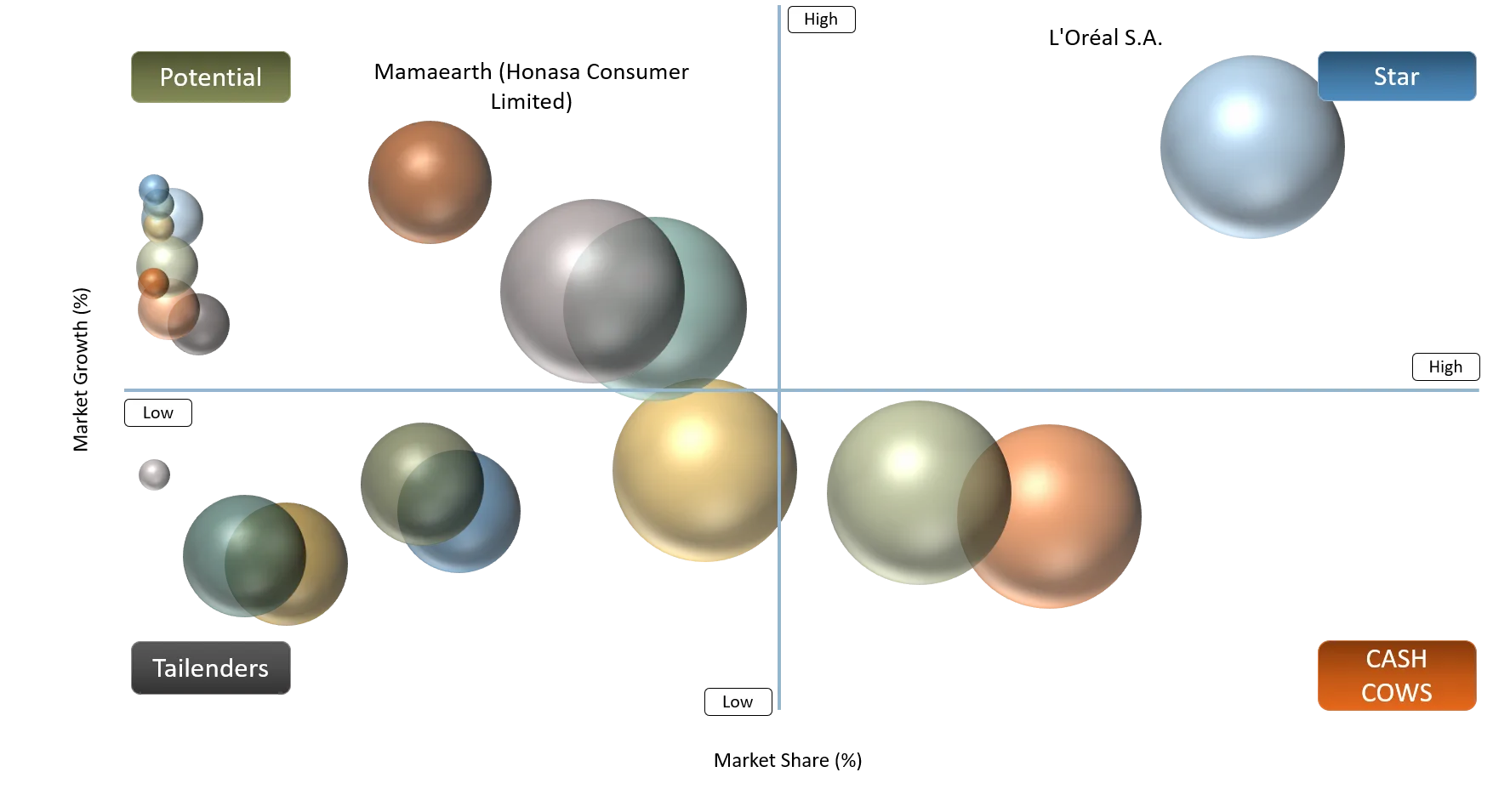
STAR
Stars in the natural and organic personal care products market include L'Oréal S.A., The Estée Lauder Companies Inc., Unilever PLC, Procter & Gamble Co., Natura &Co Holding S.A., Beiersdorf AG, Shiseido Company, Limited and Amway Corporation. These companies have strong global market presence, extensive product portfolios, well-established distribution networks and significant investments in research and development. They keep the leading posture on this expanding market place due to their persistent work on clear-label compounds, sustainable packs, superior-end product development and digital consumer participation.
POTENTIAL
Mamaearth (Honasa Consumer Limited), Forest Essentials, Himalaya Wellness Company, Weleda AG, The Body Shop International Limited, Burt's Bees (The Clorox Company), Avalon Organics, Juice Beauty, Dr. Hauschka, Arbonne International LLC and Oriflame Holding AG are classified as Potential. The growing popularity of clean beauty products, naturally sourced and organic ingredients and sustainably formulated personal care products is fueling rapid growth for the potentials. The companies are strategically focusing on innovation, targeting the premium market segment, investing heavily in digital marketing, expanding their e-commerce footprint and strengthening the sourcing process for their organic products, to enhance their market position and become future industry leaders.
Market Dynamics
Driver Impact Analysis
| Driver | Market Growth Impact (%) | Demand Concentration | Impacted Use Case | Strategic Impact |
Rising consumer preference for clean-label and chemical-free personal care products | 28–30% | High | Skin Care, Hair Care, Bath & Body Care | Drives product innovation and premium product demand |
Growing awareness of health, wellness and sustainable lifestyles | 22–24% | High | Skin Care, Oral Care, Baby Care | Expands consumer adoption across all demographics |
Increasing demand for vegan, cruelty-free and certified organic products | 16–18% | Medium-High | Cosmetics, Skin Care, Personal Hygiene | Encourages certification, sustainable sourcing and brand differentiation |
Expansion of e-commerce and direct-to-consumer (DTC) channels | 12–15% | Medium | All Product Categories | Improves market accessibility and customer engagement |
Driver: Rising Consumer Preference for Clean-Label and Natural Personal Care Products
Growing consumer preference for clean-label and natural personal care products is the main market growth driver. Increasing consumer focus towards the side effects of synthetic ingredients in terms of environmental and health well-being results in a growing demand for products that contains naturally derived, organic and plant-based ingredients. Consumers are thus spurring product launches with natural and organic, cruelty-free and vegan ingredients as market players are inclined to invest in developing innovative eco-friendly product lines in terms of sustainable sourcing, ethical packaging and Ingredient transparency.
Restraint Impact Analysis
| Restraint | Drag on Market Growth (%) | Primary Impact Area | Impacted Use Case | Strategic Impact |
High cost and limited availability of certified organic ingredients | 24–26% | Raw Material Procurement | Skin Care, Hair Care, Cosmetics | Increases production costs and reduces manufacturer margins |
Stringent regulatory and certification requirements | 20–22% | Regulatory Compliance | Organic & Certified Products | Extends product development and market entry timelines |
Premium pricing compared to conventional personal care products | 16–18% | Consumer Adoption | Mass Market Products | Limits adoption among price-sensitive consumers |
Supply chain disruptions and seasonal availability of natural ingredients | 12–14% | Supply Chain | All Product Categories | Affects production continuity and inventory planning |
Restraint: High Cost and Limited Availability of Certified Organic Ingredients
The high cost of certified organic inputs and their restricted availability continues to be one of the significant constraints driving down market growth. The higher price of natural botanical extracts, essential oils and certified organic inputs compared to synthetic ingredients is attributable to small scale cultivation, seasonal dependence of yields and complex certification procedures. These constraints tend to escalate the production cost and elevate final product costs that ultimately limit usage among budget-conscious consumer segments. Furthermore, the sourcing and handling of raw materials may be restricted because of the disruptions in the natural supply chain and availability of raw materials which impacts production planning.
Segmentation Analysis
The global natural and organic personal care products market is segmented based on product, ingredient type, application, end user, distribution channel and region.
By Product
Skin Care Dominates the Market
Based on segment, skin care is the leading segment by a high margin in natural and organic personal care products. The major driving factors the natural skin care are rising demand for skin healthy and clean beauty products, long-term effects of artificial ingredients. With this, demand for products with natural active ingredients such as botanicals, plant extracts, essential oils and natural antioxidants, is leading to the growth in adoption of natural organic based moisturizers, cleaners, serums, anti-aging formulas and sunscreen solutions.
Furthermore, customers have a growing affinity for skincare products with organic content and without harsh chemical preservatives, such as parabens, silicones, sulfates, artificial scents, along with preference for vegan-friendly, eco-friendly and cruelty-free offerings. Product development and premiumization, coupled with increasing demand for customized natural products will continue to strengthen the share of the natural organic based skin care segment throughout the estimated timeframe.
By Distribution Channel
E-Commerce Emerges as the Fastest-Growing Distribution Channel
The e-commerce sector is projected to exhibit the fastest growth throughout the forecast timeframe on account of burgeoning internet penetration, penetration of smartphones and alteration of the purchase behavior of the consumers. Consumers obtain wide assortment of natural and organic personal care items, informative product specifications on ingredients, customer testimonials and ratings, subscription options as well as favorable pricing through the on-line channels. Rise of direct-to-consumer (DTC) brands, increased usage of social trade networks and campaigns as well as growth in personalized product recommendations through AI technologies fueled fast adoption of on-line shopping for various products. Convenience of house deliveries, exciting deals as well as offers, plus an omnichannel retail method encourage clients to opt for high-quality natural and organic personal care products from on the internet sources, making this category a key part of market development.
Market Segmentation
- By Product
- Skin Care
- Hair Care
- Oral Care
- Bath and Body Care
- Cosmetics and Makeup
- Fragrances
- Baby Care
- Men's Grooming Products
- Others
- By Ingredient Type
- Plant-Based Ingredients
- Essential Oils
- Botanical Extracts
- Natural Oils and Butters
- Organic Ingredients
- Mineral-Based Ingredients
- Others
- By Application
- leansing
- Moisturizing and Hydration
- Anti-Aging
- Sun Protection
- Hair Nourishment and Repair
- Oral Hygiene
- Baby Care
- Cosmetic Enhancement
- Aromatherapy and Wellness
- Others
- By End-User
- Individual Consumers
- Salons and Spas
- Beauty and Wellness Centers
- Healthcare and Dermatology Clinics
- Hospitality Industry
- Retail Chains
- Others
- By Distribution Channel
- Supermarkets and Hypermarkets
- Specialty Stores
- Pharmacies and Drug Stores
- E-Commerce
- Direct Sales
- Convenience Stores
- Others
Geographical Penetration
U.S. Natural and Organic Personal Care Products Market Landscape
The United States accounts for one of the largest and mature markets for natural & organic personal care products due to growing consumer consciousness towards safety concerns, the disposable income of people and the demand for natural ingredients based products for beauty and wellness. Consumer is opting for naturally derived active compound ingredients, plant extracted, botanical ingredients, natural derived oil to prevent their body and skin from synthetic ingredients like Sulphates, Parabens, Artificial fragrances, Phthalates, etc. However, skin care holds the highest market share, followed by hair care, Bath and body, cosmetics.
Due to the growing awareness about the benefits and adverse effects, organic, vegan, Cruelty-free and Sustianibly sourced ingredients are now of utmost importance in personal care formulation in US which have boosted the use of Biotechnology-based natural ingredients. Additionally, the increased concern toward environmental safety has brought innovative environmentally safe and green packaging and refillable product, while direct-to-consumer (DTC) business models supported by the ever-growing e-commerce channels and direct communication channels such as social media.Future projections of wellness and a sustainable lifestyle across consumer segment in US would further add up to increase the demand of natural & organic ingredients for its products. The role of governmental policies on ingredient safety and sustainability can further mould and develop the USA natural & organic personal care products market.
Japan Natural and Organic Personal Care Products Market Outlook
Consumers in the natural and organic personal care product segment place high demands on product safety, effectiveness and quality of ingredients. The natural and organic category for consumers often consists of items formulated with plant derived ingredients, ferments, natural oils and extracts which deliver a tangible skin or hair benefits with the least amount of synthetic chemical use. Growing concern over sensitive skin and the desire to invest in a healthy aged appearance continue to boost the market in the country.
The Japan’s cosmetic industry continues to innovate using conventional Japanese herbs (green tea, rice bran, camellia oil, yuzu) combined with the latest advances in technology. Skin care premium category lead sales in natural and organic products category. Natural hair, natural body care and natural men's care products also grew in sales and product consumers often desire to purchase vegan, cruelty-free, ethically and sustainably sourced, packaged in environmentally conscious ways. The rising elderly population in the country further drives the demand for anti-aging (age management), moisturising (hydrating) and sensitive skin solutions made using the natural and organic category for skin and body.
China Natural and Organic Personal Care Products Market Trends
China remains one of the fastest-growing markets for natural and organic personal care products, propelled by rising income levels, quick urbanization process and enhancing consumer consciousness toward health, welfare, as well as lifestyle sustainability. Consumers are inclined to make use of products labelled “clean” formulated using herbal extract products, natural components and ancient chinese natural ingredients avoiding sulphates, parabens, perfumes or fragrances or other chemicals that can harm the body. The most profitable market category is advanced cosmetic treatments. E commerce has revolutionised market with use of live-streaming as well as social media channels along with ecommerce websites impacting purchasing preferences a lot.
Millennial in addition to Gen Z customer group look for certified organic, vegan and environment beneficial items, no matter any sort of test on wild life. Several brands have rapidly emerged as they utilize natural ingredients as well as the classical chinese herbal medicines in their skin care solutions . International brand names are able to grow their client base in Chinese region, making localized item variants along with marketing via electronic channels. It may not be ignored that sustainability has gained importance and also companies are paying for packing systems and natural components. The market expansion will also rely on continued progressiveness in goods along with advanced offerings in addition to a growth in online market place.
Competitive Landscape
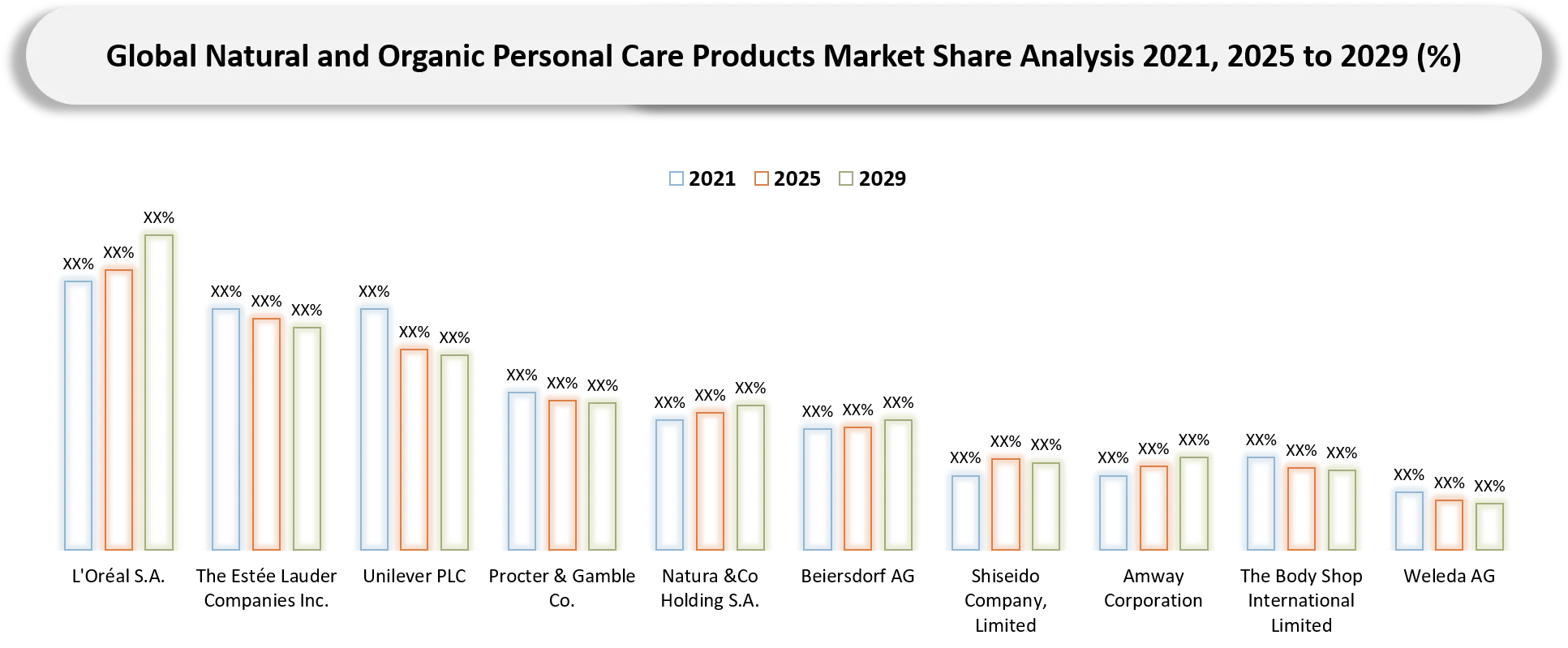
- The market is characterized by the presence of multinational beauty corporations, well-established natural personal care companies and innovative new players focusing on beauty with an eco-friendly product offering.
- The competitive rivalry is fuelled by factors such as the availability of natural & organic ingredients, product quality & clean formulations, certifications, brand image, pricing strategies and the extent of sustainability efforts made by key industry participants.
- Key differentiators for companies include a focus on innovation (including biotechnology based ingredients and premium product development), environmentally responsible packaging, as well as clean-label and certified products.
- Digital marketing channels, e-commerce, direct-to-consumer (DTC) platforms and collaborations with social media influencers are becoming indispensable tools for enhancing brand exposure and attracting consumers.
- In order to stay ahead, it would be important for businesses to benchmark product portfolios and their relative strengths in terms of Certifications, distribution network research & development capabilities, ingredient transparency, sustainability standards and presence across global markets.
Company Coverage Preview
The global market for natural and organic personal care products is fragmented, with several multinational consumer goods companies, existing natural beauty brands and start-ups focusing on natural and clean formulations. Competitors mainly compete on factors such as product innovation, ingredient transparency, availability of ingredients sustainably, clean label formulations, company reputation, compliance with certifications, distribution network availability, as well as product pricing. Manufacturers also invest considerably in R&D processes, natural ingredients sourced through bio-tech & sustainable packaging technologies and digital innovation to enhance their market presence.
The global natural and organic personal care products market continues to be a space with significant global players, especially the global consumer goods leading companies, L'Oral S.A, The Este Lauder Companies Inc., Unilever PLC, Procter & Gamble Co., Natura &Co Holding S.A., Beiersdorf AG, Shiseido Company, Limited and Amway Corporation.
The strong international distribution capabilities, broad range of products, commitment to sustainability and ongoing R&D processes of the companies are the factors shaping their competitiveness. Companies are gradually broadening their offerings for natural and organic care products and utilizing digital marketing to engage their audiences. Specialty brands that compete in the natural personal care space such as Weleda AG, The Body Shop International Limited, Burt's Bees, Himalaya Wellness Company, Forest Essentials, Mamaearth, Juice Beauty and Dr. Hauschka have further expanded their reach by launching certified organic and plant-based product portfolios, offering 100% natural, vegan, cruelty-free and environmentally conscious products with sustainable sourcing.
Key Companies
- L'Oréal S.A.
- The Estée Lauder Companies Inc.
- Unilever PLC
- Procter & Gamble Co.
- Natura &Co Holding S.A.
- Beiersdorf AG
- Shiseido Company, Limited
- Amway Corporation
- The Body Shop International Limited
- Weleda AG
- Burt's Bees (The Clorox Company)
- Himalaya Wellness Company
- Forest Essentials
- Mamaearth (Honasa Consumer Limited)
- Aveda Corporation
- Dr. Hauschka (WALA Heilmittel GmbH)
- Juice Beauty
- Avalon Organics
- Arbonne International LLC
- Oriflame Holding AG
Major Pain Points
- Rising costs and lack of availability of certified organic ingredients, plant extracts and essential oils raises cost of goods and put pressure on manufacturer margins.
- Complicated regulations concerning product safety, ingredient disclosure, organic certifications and environmental standards raises compliance costs and product approval timelines.
- Growing issues of counterfeit products and false claims of “natural” or “organic” erodes consumer trust and makes brand differentiation challenging.
- Difficulty with ensuring the consistent quality, traceability and sustainably sourced nature of natural ingredients due to seasonal variations and agricultural supply constraints.
- Premium pricing compared to conventional personal care products limits adoption among price-sensitive consumers, particularly in developing markets.
- Increasing customer demand for transparency of ingredients, certified organic status, cruelty-free claims, sustainable packaging and substantiated performance of products, puts an extra strain on the selection process for the buyer.
- Fierce competition from large international, regional and start-up clean beauty competitors create a high degree of price pressure.
- Pace of changing customer demands, skin beauty needs and trend demands continuous research and product development along with marketing in social media channels and product refreshment, which increase operational costs and complexity.
Recent Developments
- March 2026: L'Oréal S.A. expanded its natural and organic beauty portfolio by investing in biotechnology-derived ingredients, sustainable formulations and refillable packaging solutions to strengthen its clean beauty offerings.
- February 2026: The Estée Lauder Companies Inc. accelerated investments in premium plant-based skincare products and AI-powered personalized beauty solutions to enhance consumer engagement and expand its luxury natural beauty portfolio.
- December 2025: Unilever PLC strengthened its position in the natural personal care market through continued investments in sustainable sourcing, eco-friendly packaging and clean-label product innovation across its beauty and personal care brands.
- September 2025: Natura &Co Holding S.A. expanded its sustainably sourced ingredient portfolio and increased investments in regenerative agriculture and carbon-neutral manufacturing to reinforce its leadership in the natural and organic beauty sector.
- June 2025: Beiersdorf AG introduced new naturally derived skincare formulations and expanded its sustainable packaging initiatives, focusing on reducing plastic usage and meeting growing consumer demand for environmentally responsible personal care products.
Analyst View / Opinion
- Increasing inclination among consumers towards the usage of natural or clean-labeled, plant-based and chemical free personal care products is likely to be a significant driver for the market’s long term growth.
- The rising consumer preference for the usage of vegan, cruelty-free, certified organic and sustainable source based products are projected to accelerate the industry wide product development activities.
- Market participants investing in biotechnological ingredients, environmentally conscious product packaging, AI-Powered personalization and the growth of online retailing and e-commerce are anticipated to further fortify their competitive position and gain a strong competitive advantage against other players in the market.
- With rapid acceleration in e-commerce, along with the expansion of the direct-to-consumer (DTC) business and increase in beauty & wellness literacy of consumers across geographies will pave up substantial opportunities in developed and emerging economies of the world.
- Nonetheless, high pricing practices, adherence to compliance regulations, the need to meet certifications and instability in the availability of the key raw ingredients will pose the significant challenges for all the key market players.
- Continued investments in R&D capabilities, ingredient transparency and the implementation of sustainable production methods will support the differentiation of product and sustain brand loyalty among consumers.
- In regional analysis, Asia-Pacific region is expected to continue its stronghold and become the leading region in terms of fastest paced growth in the global market, while North America as well as Europe regions are expected to remain leaders in the market of the premium natural & organic products.
- The global natural and organic personal care market is predicted to exhibit a stable growth trend owing to consumer awareness on harmful chemicals, commitment towards sustainable practices and constant innovation trends of organic products.
Target Audience
| INDUSTRY | WHO SHOULD BUY THIS REPORT? | REASON TO BUY THIS REPORT |
| Beauty & Personal Care | Cosmetic and Personal Care Product Manufacturers | Understand market trends, consumer preferences, competitive landscape and growth opportunities. |
| Consumer Goods | Brand Owners and Private Label Manufacturers | Develop new product strategies, identify emerging market segments and strengthen brand positioning. |
| Chemicals & Ingredients | Botanical Extract, Essential Oil and Natural Ingredient Suppliers | Evaluate ingredient demand, sourcing opportunities and partnerships with personal care manufacturers. |
| Retail & E-commerce | Retailers, Supermarkets, Specialty Stores and E-commerce Platforms | Optimize product assortment, identify high-growth categories and improve inventory planning. |
| Packaging | Sustainable Packaging and Packaging Material Manufacturers | Assess demand for eco-friendly packaging solutions and emerging sustainability trends. |
| Investment & Finance | Investors, Private Equity Firms and Venture Capitalists | Identify high-growth companies, investment opportunities and market risks. |
| Healthcare & Wellness | Dermatology Clinics, Wellness Centers and Beauty Salons | Understand product innovations, consumer demand and opportunities for premium natural and organic personal care offerings. |
| Beauty & Personal Care | Cosmetic and Personal Care Product Manufacturers | Understand market trends, consumer preferences, competitive landscape and growth opportunities. |
| Consumer Goods | Brand Owners and Private Label Manufacturers | Develop new product strategies, identify emerging market segments and strengthen brand positioning. |
| Chemicals & Ingredients | Botanical Extract, Essential Oil and Natural Ingredient Suppliers | Evaluate ingredient demand, sourcing opportunities and partnerships with personal care manufacturers. |
Why Choose DATAM?
- Data-Driven insights: Dive into detailed analyses with granular insights such as pricing, market shares and value chain evaluations, enriched by interviews with industry leaders and disruptors.
- Post-Purchase Support and Expert Analyst Consultations: As a valued client, gain direct access to our expert analysts for personalized advice and strategic guidance, tailored to your specific needs and challenges.
- White Papers and Case Studies: Benefit quarterly from our in-depth studies related to your purchased titles, tailored to refine your operational and marketing strategies for maximum impact.
- Annual Updates on Purchased Reports: As an existing customer, enjoy the privilege of annual updates to your reports, ensuring you stay abreast of the latest market insights and technological advancements. Terms and conditions apply.
- Specialized Focus on Emerging Markets: DataM differentiates itself by delivering in-depth, specialized insights specifically for emerging markets, rather than offering generalized geographic overviews. The approach equips our clients with a nuanced understanding and actionable intelligence that are essential for navigating and succeeding in high-growth regions.
- Value of DataM Reports: Our reports offer specialized insights tailored to the latest trends and specific business inquiries. The personalized approach provides a deeper, strategic perspective, ensuring you receive the precise information necessary to make informed decisions. The insights complement and go beyond what is typically available in generic databases.
What DATAM Uniquely Provides
- Client focused market insights aligning demand drivers and the entire value chain of product attributes-market, product category, ingredient, application, end-user, distribution channel and regional consumption.
- Bottom-up market estimation and forecasts based on sales and purchasing behavior, retail channels, brand performance and regional demand patterns.
- Competitive benchmarking covering product portfolios, ingredient innovation, certifications, sustainability initiatives, pricing strategies, distribution networks and brand positioning.
- Procurement Intelligence on ingredient and raw materials availability, pricing and risk across the supply chain (sourcing, sustainability, quality, safety, authenticity).
- Insights into consumer purchasing habits and expectations of natural & organic cosmetic products – including ‘clean’ beauty preferences, ingredient considerations and e-commerce consumption behaviors.
- Risk landscape including regulatory, certification and accreditation bodies, ingredient cost variability and counterfeit products.


























































